To the Graduate Council:
I am submitting herewith a dissertation written by Crystal Renee Rice entitled
“Comparing Recent High School Graduates Placed in Developmental and College-Level Mathematics Courses.” I have examined the final electronic copy of this dissertation for form and content and recommend that it be accepted in partial fulfillment of the
requirements for the degree of Doctor of Philosophy, with a major in Education.
______________________________ Major Professor
We have read this dissertation and recommend its acceptance:
______________________________
______________________________
______________________________
Accepted for the Council:
______________________________ Vice Provost and Dean of the
Graduate School
Original signatures are on file with official student records.
Dr. Vena M. Long
Dr. P. Mark Taylor
Dr. C. E. Roeske Dr. David F. Anderson
COMPARING RECENT HIGH SCHOOL GRADUATES PLACED
IN DEVELOPMENTAL AND COLLEGE-LEVEL MATHEMATICS COURSES
A Dissertation Presented for the Doctor of Philosophy
Degree
The University of Tennessee, Knoxville
ACKNOWLEDGEMENTS
I want to thank everyone at the University of Tennessee who was involved with my dissertation. I appreciate Dr. Vena Long, chair of my doctoral committee, for her guidance and direction throughout the entire process. I also want to acknowledge Dr. P. Mark Taylor, Dr. Edward Roeske, and Dr. David Anderson for agreeing to serve on my committee and for their input into my dissertation. Thanks to Cary Springer for her assistance with the statistical analysis.
I appreciate the support of the administration, faculty, and staff at Walters State Community College. I especially want to thank all of my colleagues in the mathematics department for their interest and encouragement in my dissertation. Thanks to Rosetta Wilson for her assistance with the survey. I am grateful to the faculty members at both of the participating community colleges for their efforts in distributing and collecting the surveys.
I want to recognize the Appalachian Collaborative Center for Learning, Assessment, and Instruction in Mathematics (ACCLAIM) for initiating a doctoral program focused on rural mathematics education. Through this program, I have been given the opportunity to participate in many high quality courses and professional developmental experiences. I appreciate the support and companionship of my fellow cohort members: Barbie, Bill, Brenda, Brian, Caroline, Christie, Craig, Debbie, Frank, Karla, Judy, Julianna, and Sue.
ABSTRACT
The purpose of this study was to determine any significant differences among recent high school graduates placed in developmental and college-level mathematics courses. The focus of the investigation was on students’ high school course-taking patterns in mathematics and their attitudes and beliefs towards mathematics. High school location was also considered.
The study was conducted at two community colleges in east Tennessee. Students placed in both developmental and college-level mathematics courses completed surveys at the beginning of the fall semester 2006. Four scales of the Fennema-Sherman
Mathematics Attitudes Scales (1976), along with the Indiana Mathematics Belief Scales (Kloosterman & Stage, 1992), were used to assess students’ attitudes and beliefs towards mathematics. Data analysis was limited to recent high school graduates (students who graduated from high school in the spring of 2006) who were taking a mathematics course for the first time in college.
No significant differences were found among rural and non-rural recent high school graduates with regard to mathematics course-taking patterns in high school and attitudes and beliefs towards mathematics. Furthermore, rural students were no more likely to be placed in developmental mathematics courses upon entering college than were non-rural students.
TABLE OF CONTENTS
Chapter Page
I. INTRODUCTION...1
The Problem...2
Purpose of the Study...8
Research Questions...8
Need for the Study...8
Assumptions...12
Limitations...13
Delimitations...13
Definitions of Terms...14
Organization of the Study...15
II. REVIEW OF THE LITERATURE...16
Course-Taking Patterns...16
Attitudes and Beliefs Towards Mathematics...24
Attitudes/Beliefs and Course-taking Interaction...32
School Location...34
Rural Education, Attitudes, and Course-taking Interaction...38
Summary...43
III. METHODS AND PROCEDURES...45
Research Questions...45 Setting...46 Participants...48 Instruments...48 Data Collection...52 Data Analysis...54 IV. FINDINGS...59 School Location...59 Course-Taking Patterns...61
Attitudes and Beliefs Towards Mathematics...70
Summary...75
V. CONCLUSION...78
Summary of the Study...79
Findings...80
Discussion...83
Conclusions...91
LIST OF TABLES
Table Page
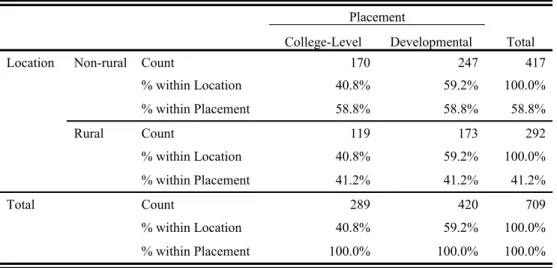
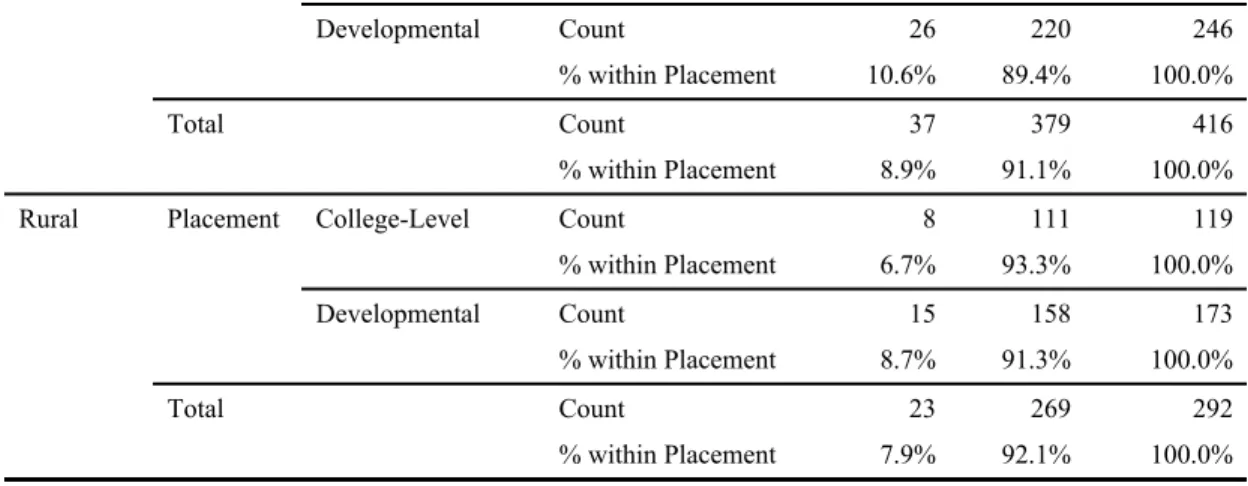
4.1: Number of Students by Placement and Location...60
4.2: Number of Mathematics Courses...62
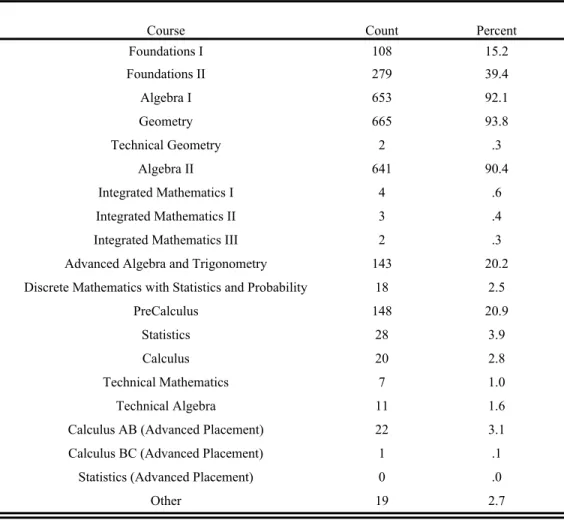
4.3: Number of Students by Mathematics Course...63
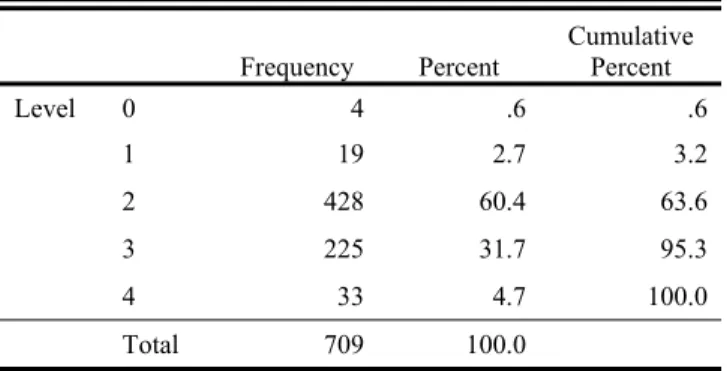
4.4: Frequency of Students at Level of Mathematics...64
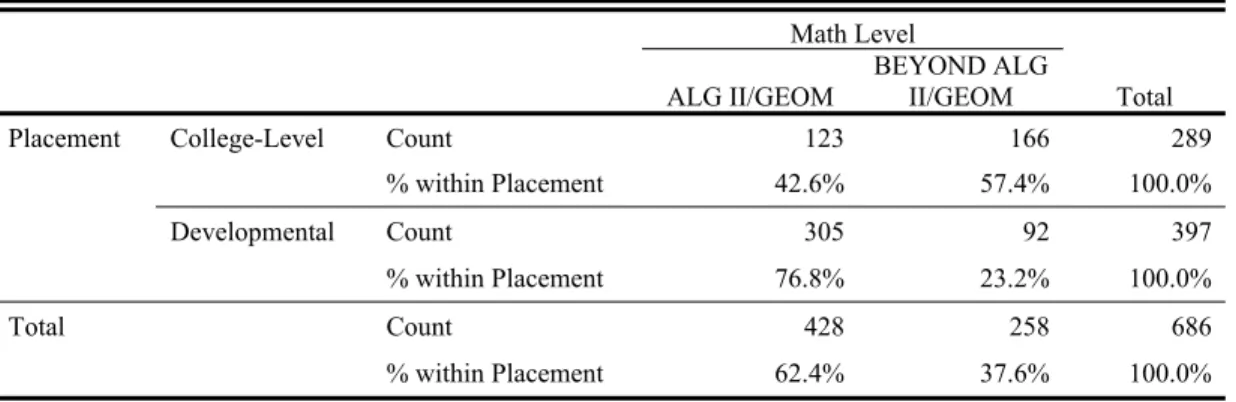
4.5: Number of Students by Level of Mathematics and Placement...65
4.6: Level of Mathematics by Location and Placement...66
4.7: Mathematics During Junior Year by Placement...67
4.8: Mathematics During Junior Year by Location and Placement...69
4.9: Mathematics During Senior Year by Placement...69
4.10: Mathematics During Senior Year by Placement and Location...70
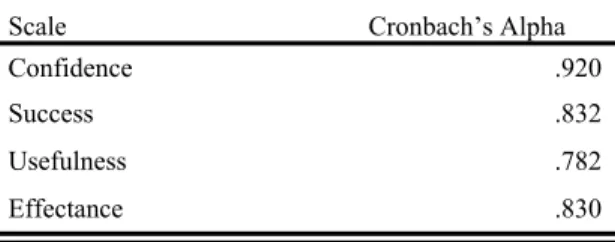
4.11: Reliability Statistics for Attitudes Scales...71
4.12: MANOVA Test Results for Hypothesis 6...72
4.13: Mean Scale Scores in Attitudes Towards Mathematics...73
4.14: Reliability Statistics for Belief Scales...74
4.15: MANOVA Test Results for Hypothesis 7...75
LIST OF FIGURES
Figure Page
A-1. Mathematics Education Experience Instrument...106
A-2. Indiana Mathematics Belief Scales Instrument...107
A-3. Fennema-Sherman Mathematics Attitudes Scales Instrument...109
CHAPTER I INTRODUCTION
A study conducted through the U.S. Department of Education, National Center for Education Statistics (NCES), reports that 28% of entering college freshmen enrolled in at least one remedial reading, writing, or mathematics course in fall 2000 (Parsad & Lewis, 2003). Remedial courses were defined as “courses in reading, writing, or mathematics for college-level students lacking those skills necessary to perform college-level work at the level required by the institution” (Parsad & Lewis, 2003, p.3). According to NCES, more remedial courses were offered in mathematics than in reading or writing in fall 2000 (Parsad & Lewis, 2003). A larger proportion of institutions offered three or more courses in remedial mathematics (40%) as compared to reading (24%) and writing (23%). Likewise, NCES also reports that the proportion of freshmen enrolled in remedial
coursework was larger for mathematics (22%) than for reading (11%) and writing (14%). Additionally, more freshmen enrolled in remedial mathematics at public 2-year colleges (35%) than at public 4-year colleges (16%). Community colleges tend to enroll large numbers of entering freshmen in remedial/developmental mathematics. For example, “at two-year colleges in SREB [Southern Regional Education Board] states, the percentage of students who take remedial math range from less than 30 percent to more than 75 percent” (Abraham & Creech, 2000, p. 12).
school. Developmental mathematics courses are essential and difficult for this group of students. The majority of the developmental mathematics students at community colleges are traditional aged (24 or younger) however. Many of these students include recent high school graduates who have not demonstrated the algebraic skills needed for college-level mathematics.
The Problem
Haycock and Huang (2001) note that the average performance of 17-year-olds on the National Assessment of Educational Progress (NAEP) has gone up between 10 and 13 points in mathematics since the early 1980’s. Although there have been gains in mathematics, “only about 1 in 12 of all 17 year-olds can comfortably do multi-step problem-solving and elementary algebra – a finding that may surprise those who know that 91% of those students took at least one algebra course” (Haycock & Huang, 2001, p. 5). Based on NAEP data, students seem to make more growth between grades 5 and 8 than they do during their high school years (Haycock & Huang, 2001). Haycock and Huang (2001) conclude, “Virtually all of the gains in mathematics…during the last decade can be attributed to increased learning prior to high school” (p. 5).
Too many recent high school graduates are unprepared for college-level
Recently, Tennessee implemented the Gateway Tests “to raise the academic bar for all high school students and add accountability for students’ academic performance” (Tennessee Department of Education, n.d.a, p.1). Beginning with the entering freshmen of 2001 (exiting graduates in 2005), students are required to pass three different Gateway Tests: English II, Biology, and Algebra I. The state maintains that “the examinations will help students to improve their performance and help prepare them for the ACT, SAT and Work Keys and successful entry into postsecondary educational programs” (Tennessee Department of Education, n.d.b, p. 1). Students must pass all three courses in addition to the corresponding Gateway Tests in order to receive a high school diploma.
Given the fact that all high school graduates are required to take Algebra I and pass the Algebra I Gateway Test in Tennessee, one might assume that this would lead to higher mathematics achievement, thus reducing the need for mathematics remediation in college. Yet, a significant number of recent high school graduates are still being placed in developmental mathematics courses upon entering college. Not all recent high school graduates have to take developmental mathematics courses; many are placed in college-level mathematics courses. So, what makes the difference between these two groups of students?
Students’ course-taking patterns, along with their attitudes and beliefs towards mathematics, have been shown to have an effect on mathematics achievement.
sections provide further discussion of the relationships between course-taking patterns, attitudes and beliefs, school location, and mathematics achievement.
Course-Taking Patterns
Course-taking behavior of high school students has been a topic of educational research for several years, particularly in the area of mathematics (Trusty, 2002). “Most studies on course-taking have addressed its influences on high school achievement outcomes” (Trusty, 2002, p. 464). Research suggests that course-taking is a powerful indicator of mathematics achievement (Haycock & Huang, 2001). Several studies show a positive relationship between the quantity of mathematics courses taken in high school and mathematics achievement (e.g., Hoffer, Rasinski, & Moore, 1995). Other studies find advanced mathematics course-taking to be more predictive of achievement (e.g., Hoffer, 1997). SREB data also suggest that students who take a mathematics course during their senior year of high school have higher mathematics achievement upon graduation (Bottoms & Carpenter, 2003).
In regard to college readiness, studies show the level of mathematics preparation in high school to be predictive of remedial placement in college (e.g., Hoyt & Sorensen, 2001). ACT (2004b) data suggest that there is a strong positive relationship between mathematics course-taking and college readiness. ACT research also shows that
students’ academic preparedness for college depends upon both the amount and specific kinds of mathematics courses taken in high school, with Algebra I and higher-level courses making the most difference (Noble, 2004).
of high school graduates who had completed a college preparatory mathematics courses needed remediation upon entering college (Oudenhoven, 2002). ACT research indicates that less than half of ACT-tested graduates who take a college preparatory curriculum are ready for college algebra (Noble, 2004).
Attitudes and Beliefs
Beliefs and attitudes have also been a topic of educational research in the area of mathematics. Attitudes have long been thought to affect performance in some way (Aiken, 1970). In particular, a strong relationship has been assumed between attitude and mathematics achievement; hence, most studies have primarily focused on examining this correlation (Ma & Kishor, 1997).
Although there have been numerous studies on attitude and mathematics
achievement, little consensus exists in the research literature (Ma & Kishor, 1997). In a meta-analysis, Ma and Kishor (1997) found a weak, yet reliable positive relationship between attitude and mathematics achievement at the elementary and secondary school levels. This relationship was shown to be stronger and practically meaningful at the secondary school level. More recently, Schreiber (2002) also found a positive
relationship between attitude and mathematics achievement with advanced mathematics students.
Epistemological beliefs have also been shown to have an effect on mathematics achievement (Schoenfeld, 1985; Schommer, 1993; Schommer, Calvert, Gariglietti, & Bajaj, 1997). Schoenfeld (1985) found that high school students who had low
(1997) found that the more students believed in quick learning, the lower their mathematics grade point average.
Recent analysis of NAEP data indicates several relationships between
mathematics attitudes, beliefs, and achievement (Braswell, Lutkus, Grigg, & Santapau, 2001). Based on the 2000 data, students who liked mathematics had higher test scores. Students who said that they would not study mathematics if given the choice had lower test scores. Students who believed that there is only one way to solve a problem had lower test scores. Students who believed that mathematics involved mostly memorizing facts also had lower test scores.
Attitudes/Beliefs and Course-Taking Interaction
Research shows that students’ course-taking patterns are influenced by their attitudes toward mathematics (e.g., Thorndike-Christ, 1991). Thorndike-Christ (1991) found attitudes towards mathematics to be predictive of optional course-taking in mathematics for middle and high school students. In addition, students in more accelerated “tracks” had a more positive attitude and a greater intention of taking additional mathematics courses once they became optional (Thorndike-Christ, 1991). School Location
there are no significant differences in the performance of rural and non-rural students (e.g., Fan & Chen, 1999; Hopkins, 2004; Winters, 2003).
While rural issues have been a topic of educational research, the intersection between rural education research and mathematics education research is small (Howley, 2002a). Current studies have highlighted the differences in achievement among rural and non-rural students. Howley (2002b) found no national rural/non-rural achievement gap in mathematics. At the state level however, Lee and McIntire (2000) found that
variability does exist among rural versus non-rural mathematics achievement, sometimes favoring rural students, sometimes favoring non-rural students.
Rural Education, Attitudes, and Course-Taking Interaction
Cobb, McIntire, and Pratt (1989) found that non-rural students place more
importance on educational aspirations than do rural students. Gibbs (1998) suggests that rural students are less likely to pursue further higher education than are non-rural
students. In fact, high school and college completion rates have been shown to be lower for rural students than for non-rural students (Herzog & Pittman, 1995).
Purpose of the Study
The purpose of this study is to determine any significant differences among recent high school graduates placed in developmental and college-level mathematics courses. In particular, the study will focus on students’ high school course-taking patterns in
mathematics and their attitudes and beliefs towards mathematics. High school location (rural/non-rural) is also examined.
Research Questions
1. Are there any significant differences in the mathematics placement
(developmental/college-level) among recent high school graduates with regard to high school location (rural/non-rural)?
2. Are there any significant differences in the mathematics course-taking patterns among recent high school graduates with regard to placement (developmental/college-level mathematics courses) and high school location (rural/non-rural)?
3. Are there any significant differences in the attitudes and beliefs towards mathematics among recent high school graduates with regard to placement
(developmental/college-level mathematics courses) and high school location (rural/non-rural)?
Need for the Study
expectations…lower their self-concepts, and make it more difficult for them to shed the image of being at risk students” (p. 8).
Hoyt and Sorensen (2001) note that college remediation yields greater costs to students and the public. Since many of the topics covered in developmental courses are a repeat of those previously presented in high school, taxpayers, colleges, and students themselves end up paying for the same education that should have been received prior to college. Tennessees’ colleges and universities appropriations have continued to decrease through the years. The Tennessee Higher Education Commission (THEC) recognizes that this poor funding situation is exacerbated by the need for remediation in college (THEC, 2002b).
Research shows that students who need extensive remediation are less likely to be successful in college (Oudenhoven, 2002). Ignash (1997) suggests that there is a difference in the persistence and success rates of students who need only one remedial course as compared to three or four. In a study by Adelman (1998), a relationship was found between the need to take remedial education courses and the probability of achieving a degree. As the need for remediation increased, the degree completion rates fell. Only 35% of students who needed five or more developmental courses completed a degree, compared to 60% who needed no remediation.
THEC (2002b) presumes that the need for remedial/developmental coursework “affects the dismal persistence-to-graduation rates – 47% at public universities and 23% at public two-year institutions” in Tennessee (p. 2). In fall 2000, only 12.26% of first-time full-first-time freshmen requiring a mix of both remedial and developmental courses graduated within six years in Tennessee 2-year institutions (THEC, 2002a). The
graduation rate for those requiring only developmental courses was 24.71%, while those students needing no remediation had a graduation rate of 38.97%.
Today, 60% of jobs require some education beyond high school (Bottoms & Feagin, 2003). This number is projected to reach 85% by the year 2020 (Bottoms & Feagin, 2003). “Improving college readiness is crucial to the development of a diverse and talented labor force that is able to maintain and increase U.S. economic
residents have a bachelor degree or higher compared to the national average of 25.2% (THEC, 2002b).
THEC (2002b) and SREB (2000) affirm that “too many students enter college not prepared to do college level work” (THEC, 2002b, p. 1). A goal in The Condition of Higher Education in Tennessee report states, “the percentage of first-time freshmen 18 years or younger (2001 h.s. grads) taking developmental studies courses at the university level will be reduced by 20 percent” (THEC, n.d., p.6). The Statewide Master Plan for Tennessee Higher Education2000-2005 document identifies the need for P-16 (pre-school through college) reform as one of its current goals (THEC, 2000). P-16 education is focused on transitioning students from one level of education to the next, which
includes the transition from 12th grade to college (THEC, 2002b). All graduates should be ready to pursue postsecondary education without remediation (Barth, 2001).
Hoyt and Sorensen (2001) recommend collaboration between colleges and high schools to help reduce the need for remediation among recent high school graduates. Creech (1992) and Ignash (1997) suggest that colleges make high schools aware of how prepared their students are for college-level work with college readiness reporting systems (Creech, 1992). Such systems could group students by their high school graduation date and include reports on the courses they completed in high school
This study will provide information about the differences in students’ high school course-taking patterns in mathematics among recent high school graduates placed in developmental and college-level mathematics courses. In addition, differences in students’ attitudes and beliefs towards mathematics, which may also have an affect on both achievement and course-taking patterns in mathematics, will also be reported. This study will also provide specific information concerning how these differences occur based on high school location (rural/non-rural). Hence, this study will add to the knowledge base of rural mathematics education, which is minimal.
The information provided in this study could be useful to both high schools and colleges. High schools could use this information to identify students that might be at-risk of placing in developmental mathematics courses upon entering college. With proper interventions in high school, the amount of mathematics remediation needed in college could be reduced. Rural high schools, in particular, might find this information useful.
Colleges could use this information to foster collaboration between themselves and area high schools. Developmental mathematics instructors might also find this information useful. Ignash (1997) suggests that educators inform themselves about the particular characteristics of developmental students in an effort to develop effective programs that address the students’ needs and provide them with the tools necessary to succeed.
Assumptions
patterns and high school location and the attitudes and belief instruments administered in the study.
3. Students’ mathematical attitudes and beliefs can be measured.
4. The instruments selected to measure students’ attitudes and beliefs are valid and reliable.
5. The researcher introduced no bias into the study. Limitations
Student responses to the instrument related to mathematics course-taking patterns and high school location will be self-reported and may be inaccurate. Student responses to the mathematics attitudes and belief instruments only represent what students perceive and are willing to share about their actual attitudes and beliefs. In addition, due to the length of the survey, students may not give an appropriate amount of time and
consideration to each item.
Delimitations
This study will be limited to mathematics students attending two community colleges in east Tennessee during the fall semester of 2006. Therefore, the results of the study will be limited in generalizability.
students’ attitudes and beliefs will not be affected by their current mathematics course in college.
Students who are not enrolled in lecture courses (face-to-face instruction) will be excluded from the study. This will preclude some students from participating; however this should not affect the results of the study since the majority of students at both community colleges are enrolled in lecture courses. Students under the age of 18 will also be excluded from the study. Again, this will preclude some students from
participating in the study; however this should not affect the results since the majority of recent high school graduates are at least 18 years of age.
Definitions of Terms
1. Recent high school graduates: Students who graduated high school in the spring of 2006.
2. Developmental mathematics students: Students who indicate a lack in the ability to do algebraic computations (THEC, 2002a). In Tennessee Board of Regents (TBR) colleges, students with an ACT mathematics score less than 19 are placed in developmental mathematics courses.
3. College-level mathematics students: In TBR colleges, students with an ACT mathematics score of at least 19 are placed in college-level mathematics courses. 4. Non-rural high school: High school having a Locale code of 1 though 6, as defined
by the NCES.
5. Rural high school: High school having a Locale code of 7 or 8, as defined by the NCES.
proximity to metropolitan areas and on population size and density. The codes are assigned based on the addresses of the individual schools and are assigned at the school level.
7. Attitude towards mathematics: A favorable or unfavorable response to mathematics. 8. Epistemological belief toward mathematics: Beliefs about the nature of knowledge
and learning of mathematics (Schommer, Crouse, & Rhodes, 1992). Organization of the Study
The study is composed of five major chapters. Chapter I includes an introduction to the study, a statement of the problem and purpose, need for the study, assumptions, limitations, delimitations, definitions of terms, and an organization of the study. In Chapter II, a literature review focuses on course-taking patterns in mathematics, attitudes and beliefs towards mathematics, and high school location, stressing each one’s effect on mathematics achievement and preparedness for college. An explanation of the
CHAPTER II
REVIEW OF THE LITERATURE
The purpose of this study is to determine any significant differences among recent high school graduates placed in developmental and college-level mathematics courses. In particular, the study will focus on students’ high school course-taking patterns in
mathematics and their attitudes and beliefs towards mathematics. In addition, the study will provide specific information concerning how these differences occur based on high school location (rural/non-rural).
This chapter summarizes the findings from a review of the literature addressing the three main areas related to the study. These areas include: high school course-taking patterns in mathematics, beliefs and attitudes towards mathematics, and high school location (rural/non-rural). More specifically, the literature review focuses on the influences of each these areas on mathematics achievement and preparedness for mathematics in college. Relationships among the different areas are also explored.
Course-Taking Patterns
During the 1960s and 1970s, American high schools began to offer more
In regard to mathematics achievement, standardized test scores dropped and American students performed quite poorly on international comparisons of mathematics and science proficiency (National Commission on Excellence in Education, 1983). Most Asian and many European countries outperformed the United States, as documented by the First and Second International Mathematics Studies conducted in the early 1960s and early 1980s (Stigler & Hiebert, 1999). In response, the National Commission on
Excellence in Education released a report entitled, A Nation at Risk, in 1983.
Commission members offered several recommendations, including the strengthening of high school graduation requirements. Students were recommended to complete a minimum of three mathematics courses in high school (Teitelbaum, 2003).
Educators and policymakers supported the National Commission on Excellence in Education, placing “much of the blame on student course-taking patterns for America’s poor performance on standardized and internationally administered tests” (Teitelbaum, 2003, p. 32). Several states and local districts responded by establishing or strengthening high school graduation mathematics course requirements (Hoffer, et al., 1995;
There is a large amount of research supporting the notion that taking more mathematics courses in high school raises student proficiency in mathematics. Several studies have shown a positive relationship between the number of credits earned in mathematics and student achievement (Welch, Anderson, & Harris, 1982; Schmidt, 1983; Gamoran, 1987; Hoffer et al., 1995). These studies utilized data sets from nationally representative surveys of high school students taken over the past several decades.
Schmidt (1983) studied the effect of quantity of high school mathematics on achievement, while controlling for background characteristics. He analyzed data from the National Longitudinal Study of the High School Class of 1972 (NLS-72), a study designed and conducted by the NCES. Schmidt found a strong positive relationship between mathematics test scores and number of hours of mathematics instruction. The relationship remained substantially intact even after accounting for selected student background characteristics; “the largest effect on mathematics achievement is clearly and dramatically the quantity of schooling in mathematics” (p. 329). Schmidt replicated these results using ACT mathematics scores provided in the NLS-72 data.
In a more recent study, Hoffer et al. (1995) examined the relationship between the number of mathematics courses taken in high school and mathematics achievement using 1988 (8th grade cohort) and 1992 (senior cohort) National Education Longitudinal Study (NELS) data. There was a strong positive correlation between student test score gains (from 8th grade to 12th grade) and the number of mathematics courses students completed in high school. Students who completed more mathematics courses showed greater achievement score gains during high school, regardless of social background.
Gamoran (1987) analyzed sophomore and senior cohort data from the High School and Beyond Longitudinal Study (HSBLS) conducted in 1980 and 1982. He found that taking additional mathematics courses in high school raised mathematics
achievement. However, Gamoran also concluded that taking advanced mathematics courses had a more powerful effect on mathematics achievement. Other studies have produced similar results for the same data set (Jones, Davenport, Bryson, Bekhuis, & Zwick, 1986; Jones, 1987; Lee & Bryk, 1989). All of these studies found a strong relationship between mathematics test scores and number of years of advanced mathematics courses. Other studies based on NELS data also suggest enrollment in advanced mathematics courses to be a powerful determinant of mathematics proficiency (Rock, Ownings, & Lee, 1994; Rock and Pollack, 1995; Hoffer, 1997; Thomas, 2002; Teitelbaum, 2003).
showed little growth in understanding complex mathematical concepts and multi-step problem solving skills. Higher mathematics gains were associated with advanced course-taking. Rock et al. (1994) concluded, “Course-taking patterns in mathematics between 8th grade and 10th grade is an important factor in explaining increased mathematics
proficiency at the 10th grade level,” even after controlling for 8th grade math proficiency (p. 7). In a follow-up study, Rock and Pollack (1995) found that students who took more advanced courses (including pre-calculus and calculus) showed greater gains between 10th and 12th grades as well.
Hoffer (1997) studied the relationship between graduation requirements in mathematics and increases in student achievement in mathematics, as measured by 8th grade to 12th grade test score gains (NELS). Linear regression statistical techniques suggested that a three-course mathematics requirement was not associated with student achievement in mathematics. In other words, students who attended schools requiring three years of mathematics did not make significant mathematical gains compared with students who attended schools requiring less than three years of mathematics. Hoffer found the level of mathematics to be positively associated with mathematics achievement however. Mathematics course level had a very strong effect on mathematics achievement gains from 8th grade to 12th grade. Teitelbaum’s (2003) study from the same data set yielded similar conclusions. He also found that a three-course requirement in
SREB data suggest that students who take a mathematics course during their senior year of high school have higher mathematics achievement upon graduation (Bottoms & Carpenter, 2003). This may be due to the fact that these students are “more than twice as likely to complete Algebra III/trigonometry; three times more likely to complete pre-calculus, calculus, or advance placement mathematics; and three and one-half times more likely to take four mathematics credits” (Bottoms & Carpenter, 2003, p. 13). It should be noted however that students can earn three or four credits of
mathematics without ever advancing past Algebra I (Creech, 1997). Course-Taking Patterns and College Preparedness
Average ACT and SAT scores are below the national average in SREB states (Creech, 1997). Low ACT scores result in the need for mathematics remediation in college. According to SREB studies, fewer students who complete college preparatory courses require mathematics remediation upon entering college (Creech, 1997). SREB also notes that recent high school graduates who do not take a mathematics course during their senior year of high school are among remedial mathematics students in college (Creech, 1997).
In order to reduce mathematics remediation in college, Adelman (1998)
recommends that high school educators work to intensify the curriculum, including the amount and kind of mathematics that is required. Supporting this notion, ACT (2004b) data suggest that there is a strong positive relationship between mathematics course-taking and college readiness. ACT research shows that students’ academic preparedness for college, as reflected by their ACT scores, not only depends on the number of
2005; Noble, 2004). Algebra I and higher-level mathematics courses seem to make the most difference in raising achievement (Bottoms & Feagin, 2003). Students who take more college preparatory mathematics courses (Algebra I and higher) score higher on the ACT mathematics test (McLure, 1998). Upper-level courses beyond Algebra II have a strong impact on ACT mathematics scores (ACT, 2004a; ACT, 2004b).
Students taking Algebra 1, Algebra 2, and Geometry typically score 1.8 points higher on the ACT Mathematics test than students taking less than Algebra 1, Algebra 2, and Geometry. In comparison, students taking these three courses plus Trigonometry and Calculus, or Trigonometry, Calculus, and Other Advanced Math, typically score 5½ points higher on the ACT Mathematics test than students taking the three mathematics courses only (Noble, 2004, ¶ 6).
ACT maintains that taking upper-level mathematics courses is associated with significant increases in ACT Mathematics scores regardless of prior achievement and grade level at the time of testing (Noble, 2004). ACT recommends that high school students take at least three years of mathematics, including Algebra II and higher, to prepare themselves for college (ACT, 2003). SREB (2000) recommends four years of mathematics, including Algebra I, Algebra II, and higher.
developmental mathematics, while over half of those who did take Algebra II were still placed in developmental mathematics. Only those students taking higher-level courses, such as trigonometry, precalculus and calculus were less likely to be placed in
developmental mathematics.
Berry (2003) conducted a study at North Arkansas College (Northark) to determine whether high school students who took college preparatory mathematics placed into and succeeded in college-level mathematics courses. A three-year analysis of high school transcript data for entering freshmen at Northark examined both level of mathematics and presence of math during the senior year. Seventy-three percent of students who took a course higher than Algebra II placed in college-level mathematics courses as compared to only 29% of students whose highest course was Algebra II. Berry concluded that students taking a fourth year of mathematics (more advanced than Algebra II) had a better chance of placing in college-level mathematics courses.
Often times, students elect not to take a mathematics course during their senior year of high school (Rock & Pollack, 1995). Some students do not even take any
mathematics during their last two years of high school (Perin & Charron, 2003). Even so, “there has been a trend toward more academically intensive course-taking” (Trusty, 2002, p. 464). Greater numbers of students are completing more advanced mathematics courses in high school according to NCES (2004). The percentage of high school graduates who had completed advanced mathematics courses (above algebra II and geometry I)
increased from 26% in 1982 to 45% in 2000 (NCES, 2004).
found that nearly 70% of the students enrolled in Intermediate Algebra at one university had taken three to four years of mathematics (at the algebra I level and above) in high school. Hoyt and Sorensen (2001) found high developmental mathematics placement rates among students who had successfully completed college preparatory mathematics courses in high school. Similarly, a 1998 Maryland study found that 40% of high school graduates who had completed a college preparatory curriculum needed mathematics remediation in college (Oudenhoven, 2002). ACT research indicates that less than half of ACT-tested graduates who take college preparatory core coursework are ready for
College Algebra (Noble, 2004).
Attitudes and Beliefs Towards Mathematics
In 1989, the National Research Council (NRC) released Everybody Counts: A Report to the Nation on the Future of Mathematics Education, which focused on the need for reform in U.S. mathematics education. Everybody Counts illuminated the fact that Americans tend to think that mathematical ability is innate rather than achievable by individual effort or opportunity to learn. Due to this, parents, students, teachers, and policy makers often accept or expect poor achievement in mathematics, which in turn lowers expectations (NRC, 1989). “Only in mathematics is poor school performance socially acceptable” (NRC, 1989, p. 74). Everybody Counts put considerable emphasis on the need to change the publics’ beliefs and attitudes toward mathematics; “as attitudes about the importance of mathematics improve, so will expectations for mathematics education” (NCR, 1989, p. 82).
contributions of innate ability and effort to achievement” (p. 221). As already noted, U.S. students lag behind Chinese and Japanese students in mathematics achievement scores (Stigler & Heibert, 1999). In The Learning Gap, Stevenson and Stigler (1992) highlight an important attitudinal difference between Americans and Asians in this regard. The emphasis is on effort in Asian countries (Stevenson & Stigler, 1992). Therefore, lack of achievement is contributed to insufficient effort rather than innate ability (Stevenson & Stigler, 1992).
McLeod (1992) suggests that affective issues, such as attitudes and beliefs, play an important role in the teaching and learning of mathematics. McLeod (1992) reiterates the NCR, “The improvement of mathematics education will require changes in the affective responses of both children and adults” (p. 575). In addition to the NCR, other U.S. reform movements have called attention to affective issues in mathematics
education (McLeod, 1992). In 1989, the National Council of Teachers of Mathematics (NCTM) released the Curriculum and Evaluation Standards for School Mathematics, which outlined major educational goals for students. Two of these goals included that students “learn to value mathematics” and “become confident in their ability to do mathematics” (NCTM, 1989, Introduction section). In NCTM’s (2000) most recent document, Principles and Standards for School Mathematics, the teaching principle maintains that teachers are instrumental in shaping students’ confidence in and disposition toward mathematics.
confidence as they transitioned from high school to college. Nearly 51% of first-time students at two-year colleges agreed with the statement, “I have a hard time
understanding and solving complex math problems” (Noel-Levitz, 2006). Attitudes
Attitude represents one component of the affective domain (McLeod, 1992). Aiken (1970) defined the term attitude as “a learned predisposition or tendency on the part of an individual to respond positively or negatively to some object, situation, concept, or another person” (p. 551). Neale (1969) referred to attitude toward
mathematics as a “a liking or disliking of mathematics, a tendency to engage in or avoid mathematics activities, a belief that one is good or bad at mathematics, and a belief that mathematics is useful or useless” (p. 632).
Attitudes have long been thought to affect performance in some way (Aiken, 1970). In particular, a strong relationship between attitude and mathematics achievement has been assumed in both theory and practice (Ma & Kishor, 1997). Numerous studies have been reported on the relationship between attitude toward mathematics and achievement, however, little consensus exists in the research literature (Ma & Kishor, 1997).
Aiken (1970) presented a narrative review of the literature (for the years prior to 1970) pertaining to the effects of attitudes on achievement in mathematics. Aiken (1970) proposes, “The relationship of attitudes…to performance appears to be especially
students tended to have a more positive than negative attitude toward mathematics. He also suggested that students’ attitudes change over time; “A number of studies point to the persistence of negative attitudes toward mathematics as students ascend the academic ladder” (Aiken, 1970, p. 556). In other words, as students get older, their attitudes become more negative (Aiken, 1970).
More recently, Ma and Kishor (1997) conducted a meta-analysis to investigate the relationship between attitude toward mathematics (ATM) and achievement in
mathematics (AIM) at the elementary and secondary levels. They explored both a general and causal relationship between ATM and AIM. Ma and Kishor (1997) extended Neale’s (1969) definition of ATM to include “students’ affective responses to the
easy/difficult as well as the importance/unimportance of mathematics” (p. 27). A systematic search (computer-based and manual) resulted in a sample of 113 studies involving 82,941 students in 12 grade levels for the years 1966 to 1993. In their meta-analysis, Ma and Kishor found a positive and reliable general relationship between ATM and AIM. Although the effect size (.12) was statistically significant, the relationship was deemed too weak for educational use. A causal relationship of ATM on AIM was not found to be statistically significant, also due to a low effect size (.08). In regard to grade level, the relationship between ATM and AIM was determined to be statistically
significant in each grade group. Ma and Kishor suggest, “The ATM-AIM relationship may not be strong at the elementary school level, but may be strong enough for practical considerations at the secondary school level” (p. 40).
between attitude and achievement in mathematics (Braswell, Lutkus, Grigg, Santapau, Tay-Lim, & Johnson, 2001; Schreiber, 2002; Patterson, Emmett, Decker, Eckert, Klaus, Wendling, & Papanastasiou, 2003). These studies utilized data sets from nationally representative surveys of U.S. high school students in recent years.
Using 1995 Trends in International Mathematics and Science Study (TIMSS) data, Patterson et al. (2003) analyzed the effect of certain factors, including attitude toward mathematics, on student’s advanced mathematics performance scores. U.S. students in their final year of high school were specifically studied. Of those students, more than 70% agreed that they liked mathematics and believed it was important. “Student math attitude accounted for 13.1% of the variance in mean advanced
mathematics scores….in fact, it contributed more than the other factors combined” (pp. 102-103). Attitude toward mathematics had a significant effect on advanced mathematics achievement. This result supports the findings of Ma and Kishor (1997). Patterson et al. actually attained a greater effect size than Ma and Kishor (.11 as compared to .08).
Utilizing the same data set as Patterson et al. (2003), Schreiber (2002) reached similar conclusions. Using hierarchical linear modeling, he also found attitude to be a significant predictor of advanced mathematics achievement among high school students. Schreiber observed a significant negative relationship between attitude towards
Analysis of 2000 NAEP mathematics data indicates that “the attitudes of
students…relate rather strongly to performance” (Braswell et al., 2001, p. 178). Students at grades 4, 8, and 12 were asked to respond to statements such as, “I like math” and “Math is useful for solving problems.” Braswell et al. (2001) found a positive
relationship between students’ attitudes towards mathematics and their performance on the mathematics assessment at all three grade levels. Students who agreed that they liked math and that math is useful for solving problems had the highest average scores. The NAEP data also shows that “students’ attitudes towards mathematics have changed since the early 1990s…fewer eighth- and twelfth-grade students reported liking math” (p. 178). Additionally, the percentage of 12th graders that agreed that math is useful for solving problems decreased from 73% in 1990 to 61% in 2000.
In the literature, the use of the term attitude often includes the term beliefs (e.g., Neale, 1969; Ma & Kishor, 1997). McLeod (1992) maintains, “It is difficult to separate research on attitudes from research on beliefs” (p. 582). Hence, research findings related to attitude often encompass students’ beliefs as well.
Beliefs
Beliefs represent another component of the affective domain (McLeod, 1992). McLeod (1992) argues, “The role of beliefs is central in the development of students’ emotional and attitudinal responses to mathematics” (p. 579). Bassarear (1991) suggests that the term beliefs “focuses on students’ beliefs about the nature of mathematics, the nature of learning mathematics, and the nature of problem solving” (p. 44).
Garofalo (1989) proposes that beliefs influence how students’ think about,
how students’ learn and study mathematics (Garofalo, 1989; Mtetwa & Garofalo, 1989). Furthermore, evidence suggests that beliefs influence academic achievement among secondary students in mathematics (Schommer, Crouse, & Rhodes, 1992; Stage & Kloosterman, 1995; Braswell et al., 2001).
Schommer et al. (1992) examined the relationship between students’
epistemological beliefs and mathematical text comprehension among college students. Epistemological beliefs are referred to as “beliefs about the nature of knowledge and learning” (Schommer et al., 1992, p. 435). Schommer, et al. (1992) focused on students’ belief in simple knowledge, meaning that “knowledge is best characterized as isolated facts” (p. 435). Students who believe in simple knowledge are likely to concentrate on memorizing the facts, while failing to make connections between the facts, and then discontinuing study once the facts can be remembered (Schommer et al., 1992). Schommer et al. (1992) found belief in simple knowledge predicted both
metacomprehension and comprehension of statistical text. Using path analysis,
Schommer et al. (1992) established a link between students’ belief in simple knowledge, their study strategies, and consequently their test performance. “Students who believed that knowing isolated facts was adequate to understand the material assumed that they had understood the text when their test performance indicated that they did not” (p. 441). Hence, “belief in simple knowledge predicted test performance;” the more a student believed in simple knowledge, the lower they scored on the statistical tests (Schommer et al., 1992, p. 441).
grades 4, 8, and 12 were asked to respond to the statement, “Math is mostly memorizing facts.” Students who agreed with this statement had the lowest average scores at all three grade levels. On a more positive note, “the percentage of students who disagreed that math was mostly memorizing facts increased at all three grade levels between 1992 and 2000” (Braswell et al., 2001, p. 178).
The 2000 mathematics NAEP data also provides information on students’ beliefs about the nature of mathematics and problem solving (Braswell et al., 2001). For
example, students were asked to respond to the statement, There is “only one way to solve a problem.” Students who agreed with this statement had the lowest average scores at all three grade levels. Unfortunately, the percentage of 12th grade students who
disagreed with this statement decreased between 1996 and 2000 (Braswell et al., 2001). McLeod (1992) suggests, “Research on beliefs has been highlighted by the results of research on problem solving….Schoenfeld’s studies (1985) of the belief systems of problem solvers are important examples” (p. 579). Schoenfeld’s studies primarily
work rather than luck; and some people are good at mathematics while others aren’t (Schoenfeld, 1989).
Kloosterman and Stage (1992) developed and validated an instrument to measure high school and college students’ beliefs about the nature of mathematics and
mathematics learning; special emphasis was placed on problem solving. The Indiana Mathematics Belief Scales consists of the following five scales: (1) Difficult Problems – I can solve time-consuming mathematics problems, (2) Steps – There are word problems that cannot be solved with simple step-by-step procedures, (3) Understanding –
Understanding concepts is important in mathematics, (4) Word Problems – Word
problems are important in mathematics, and (5) Effort – Effort can increase mathematical ability. Stage and Kloosterman (1995) used these scales to examine the relationship between gender, beliefs, and achievement in a college remedial algebra course. Student responses indicated the following:
apprehension about doing time-consuming mathematics problems and uncertainty about the importance of understanding as opposed to getting the correct
answer….slight disagreement with the notion that not all word problems can be solved simply by following a series of steps….uncertainty regarding the notion that word problems are an important part of mathematics….modest agreement with the notion that working harder could improve personal ability in
mathematics. (pp. 301-302)
Stage and Kloosterman (1995) found both the Difficult Problems and Steps belief scale scores to be predictive of final grade for female students.
Attitudes/Beliefs and Course-taking Interaction
study math if given the choice” (Braswell et al., 2001, p. 178). This percentage significantly decreased from 47% to 43% in 2000 (Braswell et al., 2001, p. 178). Walmsley (2000) suggests that American high school students exhibit negative mathematics attitudes in transition from high school to college.
The U.S. Department of Education advocates, “students’ beliefs about the nature of mathematics may be key to their decisions to pursue mathematics” (Campbell, Voelkl, & Donahue, 2000, p. 91). Walmsley (2000) suggests that a students’ decision to
discontinue study in mathematics is often related to their attitude towards mathematics. Students’ course-taking patterns are likely influenced by their attitudes toward
mathematics (Thorndike-Christ, 1991). Thorndike-Christ (1991) examined the relationship between attitude and various other factors, including mathematics “track” and course-taking plans in mathematics. Subjects in the study included 1,516 male and female students enrolled in public middle and high schools. Thorndike-Christ found all of the attitudinal variables of the Fennema-Sherman Mathematics Scales (Fennema & Sherman, 1976) to be predictive of optional course-taking. The strongest relationships involved the following attitudinal variables:
Perceived usefulness of mathematics (r = .41), those who felt that mathematics would be useful to them in their future lives expressed greater likelihood of enrolling in mathematics courses once such enrollment became optional;
students. Students in more advanced mathematics courses had more positive attitudes towards mathematics and a greater intention of taking optional mathematics courses. Ma and Willms (1999) also found attitude to have a significant effect on students’
participation in advanced mathematics courses in the last two years of high school and particularly in the transition from 11th to 12th grade.
School Location
In 2003, approximately 51% of the public school districts in the United States were located in rural areas, according to the locale codes provided by the NCES. A student may be classified as having received either a rural or non-rural education
depending on the location of the school. The general public typically views most aspects of rural communities, including education, negatively (Herzog & Pittman, 1995).
“Rural education has often been discussed as a deficit model of instruction” (Lee & McIntire, 2000, p. 1). This tends to support the notion that rural schools are inferior to their metropolitan counterparts (Greenberg & Teixeira, 1998; Fan & Chen, 1999). This also implies that significant differences in educational outcomes, such as academic performance, exist between rural and non-rural students (Creech, 1992; Greenberg & Teixeira, 1998; Fan & Chen, 1999). Herzog and Pittman (1995) note that a persistent problem of student achievement has been documented in rural communities.
Differences in educational outcomes among rural and non-rural students have been debated among researchers (Fan & Chen, 1999). Edington and Koehler (1987) suggest that an increasing number of studies have begun to examine the academic
2004; Winters, 2003) fail to find any significant differences in the achievement of rural and non-rural students. Some studies (Lee & McIntire, 2000; Winters, 2003) have even found rural students to outperform non-rural students in mathematics.
Greenberg and Teixeira (1998) analyzed NAEP mathematics data (17 year-olds), beginning with 1975 and going through 1994. Although rural students’ mathematics scores were slightly lower than non-rural students’ mathematics scores, no significant differences in mathematics achievement were found among rural and non-rural students. In a similar, but more in-depth study, Howley (2002b) compared rural students’
mathematics achievement to the national average. Analyzing NAEP mathematics scores for 4th, 8th, and 12th graders, between 1978 and 2000, Howley (2002b) noticed the
following two trends: “First, across 25 years of testing, there has been little change – increase or decrease – in the mathematics performance of rural students. Second, the performance of rural students differs not at all from the national average in all this time” (p. 9). Howley (2002b) notes that although the research literature is limited in this area, there are three recent empirical studies (Haller et al., 1993; Fan & Chen, 1999; Lee & McIntire, 2000) that provide a “comprehensive picture of mathematics achievement among rural students” (p. 9). These studies also utilized data sets from nationally representative surveys of middle and high school students.
effect of school size on students’ higher-order thinking skills in mathematics. Likewise, no correlation was found between a school’s location (rural/non-rural) and students’ achievement on tests of higher-order thinking skills in mathematics.
Fan and Chen (1999) examined the academic achievement of rural, suburban, and urban high school students. Using the first three waves of data from the NELS (1988, 1990, and 1992 for 8th, 10th, and 12th graders), performance comparisons were made in reading, mathematics, science, and social studies. Multivariate analysis of variance revealed no systematic evidence that rural students performed worse than suburban or urban students in any subject, including mathematics. Fan and Chen concluded,
variance in rural mathematics achievement, where instructional resources, safe/orderly climate and collective support were found to be significant predictors. Lee and McIntire suggested, “Rural students in states where they have access to instructional resources, safe/orderly climate and collective support tend to perform better than their counterparts in states where they don’t” (p. 171). Further analysis also indicated that the six schooling conditions accounted for 45% of the total variance in the state-level rural/non-rural mathematics achievement gap. “This implies that states which equalize schooling conditions across type of location, addressing school input, process and context variables together, would have relatively small achievement gap between rural and non-rural students” (Lee & McIntire, 2000, p. 173).
Based on these studies, Howley (2002b) makes some notable conclusions. These include: (a) there is no mathematics achievement gap among rural and non-rural students at the national level, (b) only 40% of states exhibit a mathematics achievement gap among rural and non-rural students at the state level, with 20% of these states favoring rural students, and (c) schooling conditions account for a large percentage of the state-level variation in the mathematics achievement gap among rural and non-rural students. Howley (2002b) suggests that such variability also exists at the district, school, and classroom level.
Rural Achievement in Tennessee
Tennessee with regard to several variables, including school location. Based on the 2002 Tennessee Comprehensive Assessment Program (TCAP) scores, he found a significant difference in the mathematics achievement of 8th grade rural and non-rural students, where rural students outperformed non-rural students. At the high school level, no significant difference was found between 12th grade rural and non-rural students’ 2002 ACT mathematics scores. Hopkins (2004) also examined the mathematics achievement of middle and high school students in the state of Tennessee with regard to school location. Excluding large city students, she found no significant difference between middle school rural and non-rural students’ mathematics achievement on the 2003 TCAP; however, high school non-rural students scored significantly higher on the 2003 ACT mathematics assessment than did rural students. In an earlier study by Pinkerton (1996), non-rural students significantly outperformed rural students on the 1994 mathematics ACT assessment in the state of Tennessee.
Rural Education, Attitudes, and Course-taking Interaction
DeYoung (2003) notes that through the years, American education has evolved into “a context primarily for creating academic achievement and therefore for enabling upward social and economic ability” (p. 7). By 1950, more students were using their high school education as preparation for college rather than for vocational purposes (DeYoung, 2003). “In metropolitan and then suburban America, rising expectations of more schooling, and the consequent prolonging of entry into adult statuses, outpaced these developments in many rural communities” (DeYoung, 2003, p. 9).
increased for all students, non-rural students have always completed more schooling in both high school and college (Herzog & Pittman, 1995). From 1960 through 1980, rural students’ high school completion rates remained around 10% lower than their
metropolitan counterparts (Herzog & Pittman, 1995). By 1990, this gap had only been reduced to 7.8% (Herzog & Pittman, 1995). The gap in college completion rates among rural and non-rural students increased from 3.4% in 1960 to 9.5% in 1990 (Herzog & Pittman, 1995).
Parental and community involvement has been considered a possible contributor to rural/non-rural differences in educational outcomes (Fan & Chen, 1999). Edington and Koehler (1987) suggest that there is much support for the school in small communities. The school is often the center of activity (Edington & Koehler, 1987; DeYoung &
Lawrence, 1995). Conversely, DeYoung and Lawrence (1995) propose that in poor rural communities, there is often less parental and community involvement in education. Additionally, rural communities often maintain lower expectations for students’
educational and career aspirations than their non-rural counterparts (Edington & Koehler, 1987; Cobb et al., 1989; DeYoung & Lawrence, 1995). DeYoung (2003) hypothesizes:
Many rural communities still resist the idea that their schools are primarily sites for teaching academic skills to students who will leave with them for
elsewhere….At the same time, some rural high school students still resist the idea that they are to gain academic skills to leave home and their local economy to pursue college and jobs elsewhere in the country. (p. 13)
frequently than urban and suburban students (Cobb et al., 1989). Rural high school students did not aspire to attain as much higher education as their urban and suburban counterparts (Cobb et al., 1989). Rural high school students did not seem as confident in their abilities to complete a college education as did urban and suburban students (Cobb et al., 1989). Additionally, rural students perceived their parents to be “much less often supportive of full-time college…than their urban counterparts and more supportive of full-time jobs, trade schools, and the military” (Cobb et al., 1989, p. 13).
Rural high school graduates often “experience conflict between career aspirations and their preferences for a future residential location” (Silver & Castro, 2003, p. 8). Rural students are much less likely to live in a county that has a college, unlike urban students (Gibbs, 1998). Parents and children in rural areas recognize that a college education and future career choices often leads to temporary and in many cases
permanent relocation from the community (Silver & Castro, 2003). Although “rural high school graduates are less likely than urban [high school graduates] to pursue further schooling” (Gibbs, 1998, p. 66), Cobb et al. (1989) found that rural students expressed more willingness to leave home for a job than did urban students.
As discussed, it is likely that some rural students may not be interested in
however. DeYoung (2002) suggests that some rural communities may lack the necessary resources to provide such academic possibilities.
Availability of resources has also been considered a possible contributor to rural/non-rural differences in educational outcomes (Fan & Chen, 1999). In rural
schools, availability of resources is often related to limited curricula (Fan & Chen, 1999). Large high schools are usually able to offer more courses and more extensive programs of study than smaller high schools can (Haller et al., 1993). Large urban schools also tend to offer more advanced courses than smaller schools do (Barker, 1985; Haller et al., 1993). Rural schools are disadvantaged in that they may not be able to offer advanced or specialized courses, especially in critical areas such as mathematics and science (Herzog & Pittman, 1995; Ballou & Podgursky, 1998). Silver and Castro (2003) suggest that rural students’ limited options in advanced course-taking also includes Advanced Placement (AP) courses.
There is a real concern that rural students are affected by limited curricula offered in public high schools (Jago, 2000). Several studies have examined the differences in course offerings and student enrollment in advanced courses among rural and non-rural schools (Haller et al., 1993; Ballou & Podgursky, 1998; Finn et al., 2002). These studies utilized data sets from nationally representative surveys of high schools.
were less than in more urbanized settings” (Finn et al., 2002, p. 356). In fact, there was a significant difference in the number of advanced mathematics courses offered among rural and urban/suburban schools. Additionally, rural schools offered significantly fewer semesters of calculus than did non-rural schools. With respect to students’ course-taking, “urbanicity was significantly related to the years of mathematics taken, the highest level taken, and the ratio of advanced to basic coursework. The effect is attributable entirely to the disadvantage of students in rural schools” (Finn et al., 2002, p. 358).
Ballou & Podgursky (1998) compared advanced course-taking among rural and non-rural students. Based on data from the 1987-88 Schools and Staffing Survey, a study conducted by the NCES, Ballou & Podgursky found that rural students were less likely to participate in advanced mathematics courses than their suburban counterparts.
Interestingly, however, students in non-metro towns spent more time in AP courses (Ballou & Podgursky, 1998).
Summary
A literature review of mathematics course-taking patterns, beliefs and attitudes towards mathematics, and school location was done. Specifically, each topic was discussed in relation to mathematics achievement and college preparation.
Interrelationships among the topics were also noted. Particular emphasis was placed on high school students.
Studies have shown that there is a positive relationship between the quantity of mathematics courses completed in high school and mathematics achievement. Other studies have found that the level of mathematics courses seems to be a more powerful predictor of mathematics achievement. Level of mathematics courses have also been shown to be predictive of college-level mathematics placement.
A general relationship, although sometimes weak, between attitude and
mathematics achievement has been shown. The effect was found to be stronger in the secondary grades than in the elementary grades. Attitudinal studies have often included students’ beliefs. A relationship between epistemological beliefs and mathematics performance has also been shown.
CHAPTER III
METHODS AND PROCEDURES
In the fall of 2006, the researcher conducted a study at two community colleges in east Tennessee. Students placed in developmental and college-level mathematics courses completed surveys at the beginning of the semester. Data collected from recent high school graduates were analyzed using both descriptive and inferential statistical procedures. This chapter provides a description of the methodology employed in the study.
Research Questions
The purpose of this study is to compare recent high school graduates placed in developmental and college-level mathematics courses. The focus of the investigation is on students’ high school course-taking patterns in mathematics and their attitudes and beliefs towards mathematics. High school location is also considered. The specific research questions are as follows:
1. Is there a significant difference in the mathematics placement
(developmental/college-level) among recent high school graduates with regard to high school location (rural/non-rural)?
2. Are there any significant differences in the mathematics course-taking patterns among recent high school graduates with regard to placement (developmental/college-level mathematics courses) and high school location (rural/non-rural)?
3. Are there any significant differences in the attitudes and beliefs towards mathematics among recent high school graduates with regard to placement
(rural/non-rural)?
Setting Community Colleges
Two community colleges in the east Tennessee region participated in the study. Both of these colleges are TBR institutions that have an “open-door” admissions policy. Any student who has a high school diploma or a General Educational Development (GED) Certificate may be admitted.
Remedial/Developmental Mathematics
At TBR community colleges, a sequence of three remedial/developmental mathematics courses (DSPM 0700, DSPM 0800, and DSPM 0850) focusing on pre-algebra and pre-algebra topics are offered. DSPM 0700 is a pre-pre-algebra course that includes topics such as fractions, percents, decimals, and geometry. DSPM 0800 extends the topics of DSPM 0700 and includes content such as algebraic expressions, linear
equations, inequalities, and functions. DSPM 0850 extends the topics of DSPM 0800 and includes content such as polynomial, quadratic, rational, and radical functions.
THEC specifies DSPM 0700 as a remedial course. Students in a remedial mathematics course lack the ability to do basic arithmetic (THEC, 2002a). DSPM 0800 and DSPM 0850 are specified as developmental courses. Students in a developmental mathematics course lack the ability to do algebraic computations (THEC, 2002a). Mathematics Placement
Entering freshmen (under the age of 21) at TBR institutions are placed in