SCALING AN EVIDENCE-‐BASED VOLUNTARY MEDICAL MALE CIRCUMCISION DEMAND CREATION INTERVENTION FOR ADOLESCENTS IN SUB-‐SAHARAN AFRICA
Jeff DeCelles
A dissertation submitted to the faculty at the University of North Carolina at Chapel Hill in partial fulfillment of the requirements for the degree of Doctor of Public Health in the Department of Health Policy and Management in the Gillings School of Global Public Health.
Chapel Hill
2018
Approved by:
Harsha Thirumurthy Sandra Greene Abigail Harrison Audrey Pettifor
© 2018 Jeff DeCelles ALL RIGHTS RESERVED
ABSTRACT
Jeff DeCelles: Scaling An Evidence-‐Based Voluntary Medical Male Circumcision Demand Creation Intervention For Adolescents In Sub-‐Saharan Africa
(Under the direction of Harsha Thirumurthy)
Clinical trials have shown that voluntary medical male circumcision (VMMC) can reduce female-‐to-‐male transmission of HIV in sub-‐Saharan Africa by up to 60%. UNAIDS and the World Health Organization (WHO) have identified 14 countries in sub-‐Saharan Africa as VMMC priority countries. Since 2007, more than 15 million males in these countries have undergone VMMC. However, an estimated 5 million circumcisions are still needed to achieve the 80% coverage target. To fill this gap, demand creation interventions are needed to provide education, motivation, and support to encourage men and
adolescent boys to undergo the procedure.
Findings suggest scalable VMMC demand creation interventions should: (1) utilize ongoing programmatic data to become more affordable, reach larger numbers, and iteratively improve quality; (2) implement a targeted approach to address individual barriers; and (3) continually innovate to stay relevant and effective.
This study found it is critical to take a “consortium approach” to scaling VMMC demand creation interventions, in which African governments, community members, implementing organizations, and donors participate are engaged from the “pre-‐planning” phase through scale-‐up. Key informants identified barriers to scaling demand creation interventions, including difficult funding structures, challenges engaging government, and supply side barriers.
Key informants described VMMC strategies as transitioning from an emergency response to a maintenance approach as several countries make progress towards VMMC coverage. Government adoption was identified as a pathway to sustainability, yet key informants were skeptical that governments would fully adopt all aspects of VMMC activities.
These findings have informed a Plan For Change for Grassroot Soccer, a sport-‐based adolescent health organization that seeks to scale its VMMC demand creation intervention.
To Oriana, Olive, and Wolf for always providing support, motivation, and laughs. You deserve this doctorate as much as I do. I can’t thank you enough for selflessly sharing me
the past few years.
ACKNOWLEDGEMENTS
Thank you to the incredible Harsha Thirumurthy for your service as a supportive, efficient, and inspirational Chair and to my committee members Abigail Harrison, Audrey Pettifor, Byron Powell, and Sandra Greene for your guidance and insight. To Tommy Clark, I can’t thank you enough for your unwavering support throughout this entire journey. Thank you to the UNC faculty, especially Pam Silberman and Sue Babich for your generosity and dedication. To my Cohort 11 colleagues, thank you so much for sharing your brilliance and modesty. I can’t express how fortunate I feel to call you my friends.
Thank you Rebecca Hershow, Jamison Merrill, Kate Merrill, and Nokuthula Skhosana for data collection and transcription. To Zak Kaufman, thank you for encouraging me to “punch above my weight limit” as a researcher. I also wish to acknowledge Methembe Ndlovu, Kenneth Bhauti, Bhekimpilo Moyo, David Ross, Helen Weiss, and the MCUTS study team; the late George Miiro and the MENISCUS study team; and Dino Rech, Alfred Adams, Sabelo Mlambo, and Joris Vandelanotte from CHAPS Swaziland. To all my interview participants, I am extremely grateful for your time and am humbled by your expertise.
needed to sit down and actually write this thing. Thank you Chris Barkley, Chelsea Coakley, and the entire GRS staff for seeing the value in this study and for helping me get through it.
Finally, I wish to acknowledge the Grassroot Soccer coaches throughout the world, who are the most caring and dedicated women and men I have ever known.
TABLE OF CONTENTS
LIST OF TABLES ... x
LIST OF FIGURES ... xi
LIST OF ABBREVIATIONS ... xii
CHAPTER 1: INTRODUCTION ... 1
OVERVIEW OF DISSERTATION TOPIC ... 1
DISSERTATION QUESTION ... 2
SIGNIFICANCE OF THE STUDY ... 3
BACKGROUND ... 3
INTERVENTION DESIGN ... 9
CHAPTER 2: LITERATURE REVIEW ... 12
INTRODUCTION ... 12
SEARCH DATABASES ... 13
SEARCH STRATEGY ... 13
ARTICLE REVIEW PROCESS ... 14
CHARACTERISTICS OF INCLUDED STUDIES ... 15
RESULTS ... 15
DISCUSSION ... 19
CHAPTER 3: STUDY DESIGN AND METHODOLOGY ... 23
CONCEPTUAL MODEL ... 23
OBSERVATION ... 29
DATA ANALYSIS ... 30
LIMITATIONS ... 31
IRB AND CONFIDENTIALITY ISSUES ... 32
CHAPTER 4: FINDINGS ... 33
KEY THEMATIC AREAS ... 34
1. ROLE OF DEMAND CREATION IN VMMC STRATEGIES ... 37
2. CRITERIA FOR SCALABLE INTERVENTIONS ... 39
3. PRIORITY LOCATIONS ... 44
4. CONSORTIUM APPROACH ... 48
5. MEASUREMENT ... 64
6. BARRIERS TO SCALE ... 71
7. SUSTAINABILITY ... 74
CHAPTER 5: DISCUSSION ... 82
CONCLUDING REMARKS ... 89
CHAPTER 6: PLAN FOR CHANGE ... 90
SCALABLE UNIT ... 90
KEY SCALING QUESTIONS AND ACTION STEPS ... 94
COUNTRY PRIORITIZATION EXERCISE ... 99
APPENDIX A: KEY INFORMANT INTERVIEW GUIDES ... 103
LIST OF TABLES
Table 1: Search Terms ... 14
Table 2: Characteristics of key informants ... 26
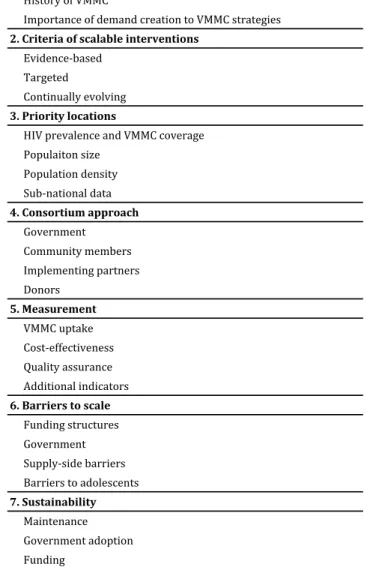
Table 3: Key thematic areas ... 34
Table 4: Key considerations for VMMC demand creation scale up (rank) ... 47
Table 5: MTC scalable unit ... 90
Table 6: Countries for demand creation scale-‐up ... 100
Table 7: High-‐, mid-‐, and low priority VMMC demand creation countries ... 101
LIST OF FIGURES
Figure 1: Diffusion of Innovations and Theory of Adoption of VMMC ... 10
Figure 2: Identification and inclusion of studies ... 14
Figure 3: IHI Framework for Going to Full Scale ... 23
LIST OF ABBREVIATIONS
ACT Action Catalyst Tools
AIDS Acquired Immune Deficiency Syndrome ART Antiretroviral Therapy
CBO Community Based Organization
CDC Centers for Disease Control and Prevention
CHAPS The Centre for HIV and AIDS Prevention Studies
COP Country Operational Plan
DREAMS Determined, Resilient, Empowered, AIDS-‐free, Mentored, and Safe
FGFS Framework for Going to Full Scale
GRS Grassroot Soccer
HIV Human Immunodeficiency Virus
HPV Human papillomavirus
IPC Interpersonal Communication
INGO International Non-‐governmental Organization
IHI Institute for Health Improvement
OGAC Office of the U.S. Global AIDS Coordinator
MCUTS Male Circumcision Uptake Through Soccer
MENISCUS Menstrual Health and School Absenteeism Among Adolescent Girls in Uganda
MOE Ministry of Education
MOH Ministry of Health
MTC Make The Cut
PEPFAR President's Emergency Plan for AIDS Relief
PMTCT Prevention of mother-‐to-‐child transmission
PPP Public-‐Private Partnership
RCT Randomized Controlled Trial
SMS Short Message Service
SRH Sexual and Reproductive Health
TOC Training of Coaches workshop
VMMC Voluntary Medical Male Circumcision
UNAIDS The Joint United Nations Programme on HIV/AIDS
USAID United States Agency for International Development
CHAPTER 1: INTRODUCTION
Overview of dissertation topic
Approximately 70% of all new HIV infections occur in Sub-‐Saharan Africa, where approximately 25 million people are living with HIV.1 Three randomized controlled trials
have shown that voluntary medical male circumcision (VMMC) can reduce female-‐to-‐male transmission of HIV in sub-‐Saharan African countries by 50-‐60%.2,3,4 Mathematical models
have estimated that, between 2011 and 2025, more than 3.3 million new HIV infections could be averted through increased scale-‐up and uptake of VMMC.5 Additionally, VMMC
appears to be a cost-‐effective HIV prevention method, with survival benefits comparing favorably to the implementation and scale-‐up of Anti-‐retroviral treatment (ART), which is widely accepted as a highly cost-‐beneficial HIV intervention to improve survival services.6
UNAIDS and the World Health Organization (WHO) have identified 14 sub-‐Saharan African countries as VMMC priority countries, as these countries have generally low circumcision coverage and high HIV prevalence rates.7 Since 2007, nearly 11.6 million males in the
VMMC priority countries have undergone VMMC, suggesting great progress has been made in scaling up VMMC services. However, an estimated 9.4 million circumcisions are still needed to achieve 80% coverage.8,9 To meet this level of coverage, there is a need to
This study explores critical factors related to scaling VMMC demand creation interventions, with special attention paid to scaling interventions targeting adolescents. Adolescent males are considered an important demographic to target with VMMC demand creation initiatives.10 Grassroot Soccer, an international HIV prevention organization, seeks
to scale its evidence-‐based VMMC demand creation intervention with adolescents in the VMMC priority countries. This paper applies findings from primary research to provide guidance to scale GRS’s VMMC demand creation intervention.
Dissertation question
How can an evidence-‐based adolescent male circumcision demand creation intervention be scaled to national levels in sub-‐Saharan African countries?
Aim 1: Establish an evidence base of what works in VMMC demand creation (literature review)
Aim 2: Establish key criteria for scaling evidence-‐based VMMC demand creation interventions
Sub-‐Aim 2.1: Establish key criteria for scaling evidence-‐based VMMC demand creation interventions specifically for adolescents (key informant interviews)
Sub-‐Aim 2.2: Provide general guidance on scaling health interventions (Key informant interviews)
Significance of the study
At least five VMMC demand creation interventions have shown promising evidence of increased uptake of VMMC; however these interventions have not been scaled in efforts to help meet the target of 80% VMMC coverage in the VMMC priority countries. This study is valuable to a range of stakeholders that are dedicated to closing this gap in VMMC coverage. First, the literature review benefits HIV prevention organizations and
researchers through the identification of key research findings from the most rigorous VMMC demand creation studies. Second, this study benefits stakeholders such as NGOs and service providers through the identification of best practices in scaling VMMC demand creation initiatives. Third, this study includes an action plan for Grassroot Soccer to support its efforts to scale its demand creation intervention. Fourth, this study helps strengthen the evidence base of sport-‐based HIV prevention, a fast-‐growing field of study that lacks a strong evidence base.11 Finally, this study provides general guidance on scaling
health interventions that can be useful to health leaders in Sub-‐Saharan Africa.
Background
VMMC. Circumcision has been practiced as a cultural and religious practice in many
regions of Africa for centuries12 and approximately 62% of African males are circumcised.13
Researchers first began exploring the connection between HIV and circumcision upon discovering generally lower HIV prevalence rates in high-‐circumcising areas.13 Three
randomized controlled trials have since shown that voluntary medical male circumcision (VMMC) reduces female-‐to-‐male sexual transmission of HIV in sub-‐Saharan Africa by 50-‐ 60%.2,3,4 VMMC has been shown to reduce a male’s HIV risk for three main reasons: 1) The
body; 2) The foreskin is rich in Langerhans cells, which are easily targeted by HIV; 3) After circumcision, the skin on the head of the penis hardens and becomes less likely to tear during sex. Little to no evidence exists that suggests men adopt riskier sexual behaviors once they undergo circumcision.14 Mathematical models have estimated that, between
2011 and 2025, more than 3.3 million new HIV infections could be averted through
increased scale-‐up and uptake of VMMC.5 Additionally, VMMC appears to be a cost-‐effective
HIV prevention method, with survival benefits comparing favorably to the intervention implementation and scale-‐up of Anti-‐retroviral treatment, which is widely accepted as a highly cost-‐beneficial HIV intervention to improve survival services.6 It has also been
projected that 80% VMMC coverage in priority countries could save more than $16.5 billion in treatment and care costs by 2025.8
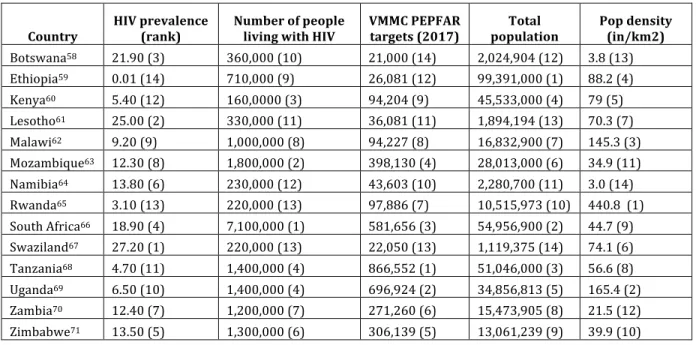
UNAIDS and the World Health Organization (WHO) have identified Botswana, Ethiopia, Kenya, Lesotho, Malawi, Mozambique, Namibia, Rwanda, South Africa, Swaziland, Uganda, Tanzania, Zambia, and Zimbabwe as VMMC priority countries, as these countries have generally low circumcision coverage and high HIV prevalence rates.7 The protective
benefits of circumcision have only recently been widely recognized15 and demand creation
initiatives have been launched in several African countries to help educate men on the protective benefits and motivate them to undergo the procedure.7
Demand creation. “Demand generation” or “demand creation” initiatives are intended to increase knowledge of, and demand for health products or services through social and behavior change communication and social marketing techniques.16 Demand
communication, and advocacy to increase demand for services.16 Demand creation initiatives have been shown to be effective in increasing demand for HIV-‐related services
such as condoms,17 couples HIV counseling and testing,18 and uptake of antiretroviral
therapy.19
Grassroot Soccer (GRS) is an international adolescent health organization that leverages the power of soccer to educate, inspire, and mobilize youth in developing countries to overcome their greatest health challenges, live healthier, more productive lives, and be agents for change in their communities. GRS uses the power of soccer to help boys and girls ages 10-‐19 access mentors, information, and health services they need to make educated choices about pressing health challenges such as HIV, sexual health, gender-‐ based violence, and malaria. GRS has reached over two million young people in nearly 50 countries with adolescent-‐friendly health education. Since its inception, GRS has conducted more than 30 research projects with research partners such as the London School of
Hygiene and Tropical Medicine (LSHTM), Population Council, and the International
Coalition for Research on Women (ICRW) on topics such as comprehensive HIV knowledge, sexual behavior change, anti-‐retroviral treatment, and gender norms.20
GRS VMMC uptake findings. In partnership with the LSHTM, the National
University of Science and Technology (NUST) in Bulawayo, Zimbabwe, Brown University, and Population Services International (PSI) Zimbabwe, GRS conducted the first two
teams in Bulawayo, Zimbabwe. The trial enrolled 47 soccer teams and 736 men and demonstrated the MTC intervention increased VMMC uptake almost 10-‐fold [4.8% uptake among uncircumcised intervention participants, compared with 0.5% among control participants; odds ratio (OR), 9.81; 95% confidence interval (CI), 0.93 to 103.2; P = 0.06].21
Both quantitative and qualitative findings from MCUTS suggested the intervention was more acceptable among the younger men (18–20 years) in the trial.22 Based on these
findings, the MTC intervention was modified to focus on male secondary students in
Bulawayo. The second trial (MCUTS II) showed strong evidence of demand creation among adolescent boys. Analysis restricted to participants who reported being uncircumcised at baseline showed the intervention increased VMMC uptake by approximately 7.6% (12.2% vs. 4.6%, odds ratio = 2.65; 95% confidence interval, 1.19 to 5.86). Preliminary costing analysis shows these results translate to a demand creation cost1 of approximately $49 per
additional VMMC client.23
GRS process evaluation. A process evaluation of both the adult male and
adolescent iterations of MTC was conducted to explore the perceived effect of the different intervention components. Researchers conducted 29 interviews with circumcised (n = 13) and uncircumcised participants (n = 16). Additionally, researchers conducted seven
interviews and two focus group discussions with MTC coaches. While a factorial study could potentially isolate the effect of the different intervention components on VMMC uptake, this type of study was likely costly and time consuming. Furthermore, process evaluations can help interpret outcome evaluation findings within the social context in
which the intervention is delivered,24 which can help inform intervention revisions in a
new setting outside Bulawayo, Zimbabwe.
Findings demonstrate high program acceptability and suggest the coach-‐participant relationship as a highly influential factor in participants’ decision to undergo VMMC.
Participants and coaches identified the circumcised coach’s personal story, follow-‐up, and accompaniment to the clinic as critical intervention components to increase uptake. Meanwhile, intervention components such as mass SMSs and a soccer-‐based poster were not perceived as influential in participants’ decision to undergo VMMC. 22 The effect of a
small soccer-‐based incentive (t-‐shirt or ticket to a soccer match, both valued at USD 5) was unclear. Participants offered incentives were slightly more likely to undergo VMMC
(15.4%) than among those who were not (9.5%) (OR = 1.88, 95% CI: 0.68 to 5.23);23
however, qualitative findings demonstrated mixed reactions to the incentives. Some participants felt that incentives increased their motivation to go for VMMC, while others did not feel the incentives were influential.22
GRS feasibility studies. While RCTs are considered the “gold standard” for
intervention studies because they allow researchers to determine causal inference,25
additional research is needed to determine intervention validity and impact outside of a highly controlled setting.26 Bowen, et al call for additional feasibility studies of evidence-‐
based interventions because “community constraints…are prioritized over optimal conditions and settings— specifically testing the fit of interventions in real-‐world
settings.”26 Following this logic, GRS saw the need to conduct feasibility studies after the
generalizable beyond Bulawayo, Zimbabwe. GRS collaborated on two feasibility studies in 2016 in Swaziland and Uganda to gain insight into the efficacy and acceptability of MTC outside of a clinical setting in Zimbabwe. The aims of the feasibility studies were to learn:
1. Whether MTC retains its efficacy outside of Bulawayo, Zimbabwe 2. Whether MTC remains effective when implemented by partner
organizations, as opposed to direct implementation by GRS
3. Whether MTC can be implemented on a scale that will generate meaningful absolute numbers of VMMCs conducted
4. Whether MTC is accepted by adolescent participants, coaches, and implementing organizations in other settings
These feasibility studies are less rigorous than the Zimbabwe RCTs in that communities and participants were not randomly selected and there were no control groups. However, the feasibility studies met the following minimum requirements:
1. VMMC uptake was measured via clinical uptake, as opposed to self-‐reported VMMC status or other measures
2. Studies include a qualitative component to triangulate and interpret quantitative findings
3. Studies were conducted in partnership with a credible external research institution
Ugandan “coaches” iteratively modified the intervention based on challenges during
implementation. For example, upon observing lower-‐than-‐expected VMMC enrollment, the Uganda outreach workers identified parental consent as a barrier to uptake. In response, they developed a short video on MTC and conducted home visits to educate and motivate participants’ parents about MTC and VMMC.
The Center for HIV Prevention Studies (CHAPS) Swaziland implemented MTC as part of a VMMC demand creation campaign that reached approximately 15,000 adolescent boys throughout the Hhohho region and found more than 3,300 boys underwent VMMC over four months.28 A key difference between the Swaziland study and the Zimbabwe
studies is that CHAPS Swaziland worked closely with the Ministry of Health and several other implementing partners as part of a large campaign. In the Zimbabwe studies, GRS was the sole implementing organization.
While the Uganda and Swaziland feasibility studies were not rigorous trials, these results provide encouraging evidence that MTC can be effective in different settings. The MCUTS II trial produced some of the most encouraging evidence of VMMC demand creation to date and comprises GRS’ strongest biomedical evidence of HIV prevention to date. Based on these findings, as well as ongoing pilots in multiple countries, GRS seeks to scale MTC to the 14 VMMC priority countries, primarily through its implementing partners.
Intervention Design
MTC session consists of an interactive educational game, a personal story shared by the Coach, and a group discussion. The educational game utilizes the popularity of soccer among Zimbabwean males to provide accurate information, dispel myths, and initiate discussions on a potentially sensitive topic, an approach shown to improve HIV-‐related knowledge, attitudes, and behaviors.11 Following Rogers’ Diffusion of Innovations30 theory,
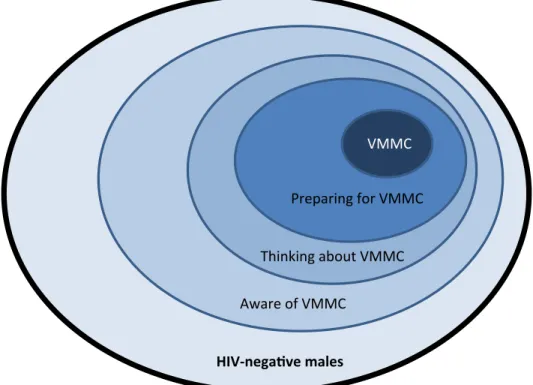
the activities in MTC are designed to help participants move along the behavior change spectrum (see Figure 1). For example, the educational activity can help move participants from “uninformed” to “informed” and the motivational story can help participants move from “preparing” for VMMC to actually undergoing the procedure.
Figure 1: Diffusion of Innovations and Theory of Adoption of VMMC31
During the interactive and educational soccer penalty shootout, the goalkeeper metaphorically tries to protect himself from HIV infection. In the first round, the
goalkeeper represents an uncircumcised man who does not use condoms, frequently failing
!! !!
!! !!
!!
Thinking!about!VMMC Preparing!for!VMMC
VMMC
Aware!of!VMMC
to stop the ball, representing high HIV risk. In the next round, after participants identify that VMMC can reduce the goalkeeper’s HIV risk, the goal’s width is reduced. In this round, fewer goals are scored, representing the partial protection offered by VMMC. In the final round, four additional defenders help block the goal, representing the combined protection of VMMC and consistent condom use. In this final round, very few goals are scored, if any, representing the protective benefit of being circumcised and using condoms. Key messages communicated during the activity focus on the health benefits of VMMC, including
improved hygiene and protection from sexually transmitted infections.
In line with social learning theory32 circumcised coaches then share their own
experiences and build participants’ self-‐efficacy to undergo VMMC through personal stories. Coaches build personal connections with participants and address barriers to VMMC, such as fear of pain during and after the surgery and perceived benefits, such as decreased risk of HIV infection and improved hygiene.33 These personal stories help
coaches facilitate discussions with participants on their own perceived barriers and enablers. In the week following intervention delivery, coaches follow-‐up with participants who express interest in receiving VMMC during the interpersonal session and schedule transport to the VMMC clinic.
CHAPTER 2: LITERATURE REVIEW Introduction
In March 2016, I conducted a literature review of completed randomized controlled trials (RCTs) of voluntary medical male circumcision (VMMC) demand creation
interventions in sub-‐Saharan Africa. Several different VMMC demand creation initiatives have been implemented in sub-‐Saharan Africa, including mass media campaigns,
interpersonal communication, text message campaigns, and advocacy from community leaders.15 Evaluation of the effectiveness of these interventions has been conducted using a
range of methods. The purpose of this literature review was to synthesize findings from published and grey literature on all completed Randomized Controlled Trials (RCTs) of VMMC demand creation interventions to:
Search databases
I chose two electronic search databases to access articles on VMMC demand creation. I selected PubMed because it contains more than 25 million citations and generally includes articles on rigorous trials, such as RCTs. I have also utilized EconLit, a search database of economic studies, as some VMMC trials utilize economic research methods to measure the effectiveness of incentive programs to increase uptake of VMMC.
In addition to these two online databases, I included unpublished or “grey”
literature in my review to include VMMC demand creation RCTs that have been completed, but not yet been published. However, the inclusion of grey literature can introduce bias as unpublished studies may be an unrepresentative sample of all unpublished studies.34 I have
analyzed conference presentations for these studies, not the unpublished articles. Finally, I also conducted a hand-‐search of the literature, including articles that have been sent to me by colleagues.
Search strategy
Table 1 shows my search terms. Inclusion of different intervention types, such as incentives, mobile technology, peer referrals, mass media campaigns, and sport-‐based methodologies in my search terms did not improve the search.
Table 1: Search Terms
Article review process
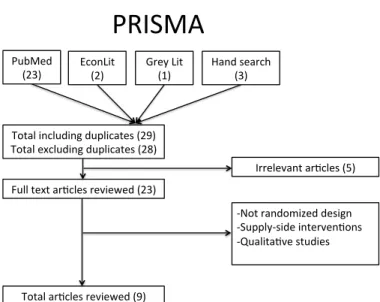
Figure 2 shows a PRISMA diagram for including and excluding articles. A search of the literature yielded 28 articles, excluding duplicates. I conducted an abstract review and excluded five articles. I reviewed 23 full-‐text articles, of which 14 were excluded. This review includes nine articles that fit all selection criteria.
Figure 2: Identification and inclusion of studies
PRISMA'
PubMed'
(23)' EconLit'(2)' Grey'Lit'(1)' Hand'search'(3)'
Total'including'duplicates'(29)' Total'excluding'duplicates'(28)'
Full'text'arGcles'reviewed'(23)'
Irrelevant'arGcles'(5)'
KNot'randomized'design'' KSupplyKside'intervenGons' KQualitaGve'studies' '
Characteristics of included studies
Only individually and cluster-‐randomized controlled trials (RCTs/cRCTs) measuring VMMC demand creation conducted in the 14 UNAIDS and WHO VMMC priority countries were eligible for inclusion. Restricting the search to only RCTs allowed access to the most rigorous demand creation evidence and the ability to infer causality between the
intervention and VMMC uptake. Included studies utilized biomedical (clinic) data to measure VMMC uptake and excluded other methods such as self-‐reported circumcision status, which have been shown to be less reliable.35 Non-‐randomized controlled studies
and qualitative studies were also excluded.
Articles included in this review evaluated interventions such as monetary and non-‐ monetary incentives, mobile technology, peer referrals, mass media campaigns, and sport-‐ based methodologies to increase VMMC uptake. Supply-‐side intervention studies were not included. Finally, unpublished studies or “grey” literature were included in the review if the studies fit all other criteria.
Results
VMMC demand creation is a relatively new field, with all studies included in the review having taken place since 2012. My search yielded important results related to study design, VMMC uptake results, and cost-‐effectiveness estimates.
Characteristics. My search strategy yielded nine articles that met all search criteria. Eight of the studies have been published,23,36–42 while the remaining study was presented at
controlled trials of VMMC demand creation interventions that were ongoing as of
November 2016 were not included in this review. Eight studies took place in one of four countries (Kenya, South Africa, Zambia, and Zimbabwe) and one study took place in both Uganda and South Africa. All studies utilized a randomized design and measured VMMC via clinic data, as opposed to self-‐reported VMMC status or other methods.
Five of the studies measured the impact of incentives on VMMC uptake. The types of incentives included food vouchers,36,37 cash transfers or reimbursements,39,41 or non-‐
monetary soccer-‐based incentives including t-‐shirts and tickets to soccer matches.23 One
incentive study evaluated an intervention utilizing a lottery incentive scheme, in which men who underwent VMMC had the chance of winning a range of incentives worth between approximately $1.96 and $93.41;37 the remaining incentive studies measured
straight incentive schemes, in which males undergoing VMMC were given a uniform incentive. Additionally, two studies measured the effect of a mobile phone messaging platform,40,42 and one measured the effect of a four-‐session educational session.38
Interestingly, none of the nine interventions that were evaluated appear to have been implemented beyond the RCTs, either in larger-‐scale research trials or through scaled implementation.
Study design. All studies utilized a randomized design and measured VMMC uptake via clinic data. Sample sizes of included studies ranged from 736 participants21 to 1,652
participants.42 Six of the studies were able to target men who were self-‐reported to be
uncircumcised at baseline,33–36,38,39 while three studies did not screen participants before
the trial 41,21,23 Additionally, all studies measured VMMC uptake among adult males, except
a priority for governments and service providers,5 yet adolescents have been shown to be
more willing to undergo VMMC,33 which could help explain differences in uptake.
Studies lasted between two months36 and 12 months.38 No studies presented
findings on the duration of time after intervention delivery in which participants
underwent VMMC (e.g. it is unknown whether participants generally sought VMMC in the days immediately following the intervention or several months following the intervention). This information could inform future VMMC uptake trials and interventions.
Outcomes. VMMC uptake is the main outcome of each of the studies in this review. The findings on uptake varied greatly, from one intervention showing 48% uptake40 to one
showing under 2% VMMC uptake.42
Both the Spear & Shield intervention in Zambia38 and the SMS trial in Uganda and
South Africa40 found considerably higher uptake in both the intervention groups and
control groups than the other trials. The Spear & Shield intervention found VMMC uptake of 40% in the intervention group and 24% in the control group;38 The SMS trial in Uganda
and South Africa found 48% uptake among participants receiving text messages, 47% uptake among participants receiving lay counselor visits, and 28% among participants receiving standard direct referral (control group)40 The next highest evidence of uptake
was from the MCUTS II study in Zimbabwe, which showed uptake of approximately 12.2% compared to 4.6% in the control group.23 Interestingly, while absolute uptake in the
In general, small incentives ($5 to $15) appear to have modest, yet promising effect on VMMC uptake. Four of the five incentive studies showed participants offered incentives were significantly more likely to undergo VMMC. Wilson et al. found providing
compensation worth approximately $10 significantly increased VMMC uptake by 2.4 percentage points.41 Thirumurthy et al. found participants offered food vouchers valued at
$8.75 (6.6% uptake) and those offered $15.00 (9.0%) had significantly higher VMMC uptake than the control group (1.6%). In the lottery study, Thirumurthy et al. again found significant uptake among participants receiving a straight incentive via a food voucher (8.8%), yet found only 3.3% of participants offered a lottery incentive underwent VMMC.37
Kaufman et al. found intervention participants that were offered an additional incentive were significantly more likely to undergo VMMC (8.8%) than intervention participants that were not offered incentives (6.0%) as well as control participants (4.6%).23 These findings
suggest straight incentives are likely more effective than lottery-‐based incentives and adding small incentives to existing VMMC demand creation interventions could further increase VMMC uptake.
Cost-‐effectiveness. Service providers and researchers are searching for demand creation interventions that can be scaled throughout the 14 WHO/UANDS VMMC priority countries. Cost per circumcision generated and HIV infections averted are crucial figures to demonstrate which interventions are cost-‐effective and worthy to be scaled beyond an impact evaluation. Four of the studies in this review provided some cost-‐effectiveness figures.23,37,39,41 However, these studies presented different measurements of cost-‐
account the control group) to be approximately $45.3123 and Wilson et al. estimated the
cost to avert an HIV infection to be between $450-‐1,350.41,42 Interestingly, the studies that
showed the highest change in VMMC uptake38,40 did not provide any cost-‐effectiveness
figures. Finally, none of the studies cited provided formulas used in their cost-‐effectiveness calculations.
Discussion
The purpose of this review was to synthesize results, methods, and interpretations of existing randomized studies of VMMC demand creation interventions in sub-‐Saharan Africa. The findings from this review provide a basis of knowledge of VMMC demand creation interventions and identify current gaps in knowledge and opportunities for further research, specifically related to national adoption and scaling of interventions.
The participants in the studies varied in terms of VMMC status at baseline. Six of the studies were able to target men who were self-‐reported to be uncircumcised at baseline,36– 40,42 while three studies were unable to screen participants before the trial and worked
with the general male population either in households,41 soccer teams,21 or schools.23 This
is important when considering which interventions to scale because those that are able to target uncircumcised men will likely be more cost-‐effective than those that target the general population. This is especially relevant in countries such as Kenya, where over 45% of adult males are circumcised,36 which is considerably higher than other countries.
However, it could be logistically difficult and potentially unethical to identify
incentive interventions could be promoted widely through the community, with only uncircumcised men eligible to take advantage of the program. In this case, implementers would not waste time and resources identifying uncircumcised males and would not risk exposing one’s VMMC status.
The biomedical evidence of VMMC on HIV risk reduction is well established and there is great potential to measure the impact of VMMC demand creation interventions in terms of cost-‐effectiveness and HIV infections averted. This strong biomedical base of knowledge combined with the relatively short duration of VMMC trials can make impact measurement simpler and quicker than long-‐term behavior change methods such as condom use or sexual partner reduction. However, given the lack of standardized methods to measure cost-‐effectiveness across different studies, it is difficult to compare
interventions and provide insight into which interventions are the most cost-‐effective and scalable. This exposes the need for consistent and transparent cost-‐effectiveness
calculations that can be performed in different settings. Future research can apply
consistent cost-‐effectiveness formulas to existing studies included in this review as well as future demand creation studies.
While small incentives appear promising in generating demand for VMMC, it is important to note the strict PEPFAR guidelines on the provision of incentives and reimbursement, which can affect the acceptability and scalability of incentive
interventions. The PEPFAR guidelines prohibit all forms of incentives or payments based on individual VMMC uptake to protect males against coercion and to prevent the creation of unsustainable VMMC demand creation initiatives; however, compensation for
guidelines and receive approval from the Ministry of Health.43 These guidelines present a
challenge to scaling effective incentive programs, as the guidelines can make interventions logistically complex and unappealing to implementers due to the contentious nature of incentives. In addition to a strong evidence base, policy such as these PEPFAR guidelines must be considered is assessing the scalability of demand creation initiatives.
This review also exposed a dearth of knowledge on the effectiveness of VMMC demand-‐creating interventions at the population level. No study included in the review included a sample size larger than 2,000 participants and to date it appears none of the interventions have been subsequently implemented on a larger scale. This is important because effectiveness is likely to vary between a clinical setting and large-‐scale
implementation. Given the WHO/UNAIDS targets of 80% VMMC coverage in the 14 priority countries, there is a need to understand the obstacles to scaling effective evidence-‐based VMMC demand creation interventions at the regional or national levels. Furthermore, additional research with policy makers and governments is necessary to determine how encouraging results from VMMC demand creation interventions can be scaled up
nationally.
This review had several limitations. First, one of the studies remains unpublished to date,21 which could introduce bias, as this study may not be representative of all
across multiple regions and countries using identical research methods. Third, VMMC demand creation is a growing field of study. Several demand creation trials are currently underway or awaiting publication, which could limit the relevance of this review once additional trials are completed. Finally, the included studies appear to be of high quality, as evident in the use of a rigorous randomized design and all studies having obtained IRB approval from both US and local research institutions. However, I did not assess quality using an existing assessment.
Overall, there is encouraging evidence that demand creation interventions such as interpersonal education sessions and provision of small incentives can increase uptake of VMMC. To date, no study has found a “silver bullet” to increase demand for VMMC, and further research is necessary to identify and refine demand creation interventions that can be scaled to national and international levels. While the cost-‐effectiveness of VMMC has been well documented, it is necessary to establish consistent mathematical modeling methods in order to compare cost-‐effectiveness across demand creation interventions.
CHAPTER 3: STUDY DESIGN AND METHODOLOGY
Conceptual model
The conceptual framework for this study follows the Institute for Health
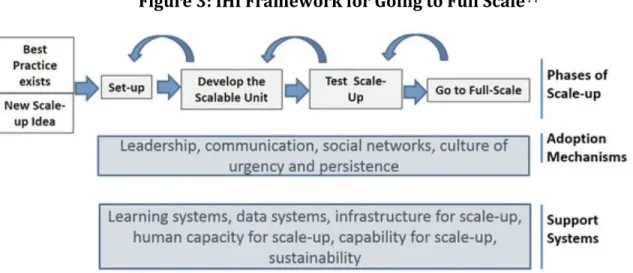
Improvement (IHI) Framework for Going to Full Scale (FGFS). This model presents four phases necessary to scale evidence-‐based interventions in Africa: 1) Set-‐up; 2) Develop the scalable unit; 3) Test of Scale-‐up; and 4) Go to full scale. The FGFS was based on a thorough literature review of systematic reviews of scale-‐up of health care initiatives as well as theories and models for scale up between 2010-‐2014. This model was also tested in large-‐ scale scale-‐up initiatives in South Africa (improving perinatal PMTCT of HIV) and Ghana (scale up of maternal and child health programming).44 Key Informant Interviews were
based on the components of this model in order to provide content and recommendations for my Plan For Change.
Figure 3: IHI Framework for Going to Full Scale44
I chose to follow the FGFS for several reasons. First, this model is based on a formative as opposed to a summative approach to scale, which supports the creation of several opportunities to reflect and redesign the intervention at each phase. This approach is in line with GRS’s approach to conduct a number of feasibility studies to test the efficacy and acceptability of MTC in different settings to iteratively adapt and improve the
intervention while scaling. Second, this model places an emphasis on developing the “scalable unit,” which is described as the “smallest representative facsimile of the system targeted for full-‐scale implementation” (page 5). This is important because cost-‐
effectiveness is a crucial component of successful demand creation initiatives and the MTC intervention was designed to be GRS’ most efficient and cost-‐effective intervention.
Following the FGFS helped establish the components of the scalable unit, including a lean yet effective intervention. Finally, the IHI Model has been tested in sub-‐Saharan African countries, which takes into consideration limited resources and challenges related to access to healthcare, which are essential considerations for scaling healthcare initiatives in Africa.
I conducted a qualitative evaluation to gain insight into the crucial considerations for scaling VMMC demand creation interventions. Interviews also provided insight specifically related to scaling Make The Cut. Following the FGFS conceptual model, the qualitative study provides insight into the phases of scale-‐up, adoption mechanisms, and support systems.
Key informant Interviews
I interviewed key informants from a range of backgrounds related to scaling VMMC demand creation interventions. I selected Key Informant Interviews as a method because the identified subjects are insiders with special knowledge related to VMMC demand creation and scaling interventions.45 I chose key informants over in-‐depth interviews with
MTC participants, such as students or coaches, because their views of the intervention were already captured in a process evaluation of Make The Cut.22
Key informants were senior leaders from African government health departments, VMMC implementing organizations, funding organizations, and GRS. Additionally, I
interviewed individuals who have overseen the successful scaling of non-‐VMMC adolescent health interventions (referred to as “scaling experts.”). Key informants were selected due to their senior roles within influential organizations in the VMMC field and their
comprehensive understanding of the VMMC field. Key informants from GRS were selected based on their familiarity with the organization’s strategy, fundraising, and research. Initially, an estimated 20-‐25 interviews were proposed; however a total of 26 individuals were interviewed for this study, at which point responses had reached a saturation point.46 In total, 31 individuals were contacted, but four did not respond to
recruitment email; one individual responded after data collection had already been completed. To identify potential key informants, I constructed a table of relevant
Table 2: Characteristics of key informants
Subjects were selected to represent a diverse range of experiences and
backgrounds. Forty-‐eight percent of subjects were male (n=15) and 42% were female (n=11). Forty-‐six percent of interview subjects were of African origin (n=12), 43% were from the United States and Canada (n=11), and 12% were from Europe and South America (n=3). To solicit views from VMMC priority countries with varying progress towards VMMC coverage, I selected one key interview from Kenya, which had exceeded its 2015 VMMC targets (108%), as well as one key informant from Mozambique, which has only achieved 53% of its 2015 target.47 Additionally, interviews were conducted with key informants
from countries where GRS directly implements as part of its “flagship” sites: South Africa
Interview)Subject)Type Number)of)subjects)interviewed
Internal((GRS) 8((31%)
External((non5GRS) 18((69%)
Implementing(organizations 7((27%)
Funders 4(((15%)
Government 5((19%)
Scaling(experts 2((8%) Sex
Male 15((58%)
Female 11((42%)
Origin
Africa 12)(46%)
South)Africa 3
Zimbabwe 3
Zambia 2
Kenya) 1
Mozambique 1
Swaziland 1
Uganda 1
US 11)(42%)
Europe 2)(8%)
South)America) 1)(4%)
countries where GRS has implemented MTC through partnerships, including Uganda (n=1), Kenya (n=1), and Swaziland (n=1).
External stakeholders. Eighteen “external” stakeholders (non-‐GRS staff members) were interviewed to provide insight on barriers and opportunities to scale MTC and VMMC demand creation interventions in general. External stakeholders were purposefully
selected from implementing organizations (n=8), government (n=5), funding organizations (5), and organizations that have successfully scaled behavioral interventions outside of VMMC (n=2).
Internal stakeholders (GRS). Eight “internal” stakeholders (GRS staff members) were purposefully selected from GRS senior leadership team to provide insight into
barriers and opportunities to scaling MTC and how it relates to the organization’s strategic priorities. Additionally, GRS staff members were also able to speak on behalf of partner NGOs that implement VMMC demand creation interventions. Interviews were conducted with individuals responsible for organizational strategy, business development, and partnership development.
smaller community-‐based organizations (CBOs). In response, all external key informants represented large INGOs that regularly receive PEPFAR funding and implement in multiple countries in Sub-‐Saharan Africa.
Government. Government officials were identified as key informants critical to
understanding how to scale VMMC demand creation interventions. I interviewed two key informants from international governing bodies and three from African ministries, all of whom were directly responsible for VMMC activities. African Ministries of Health and Education were identified as important stakeholders, as they establish national strategic frameworks and targets related to VMMC. It was also important to obtain the views of VMMC personnel from both the US government and the World Health Organization (WHO). The U.S. Global AIDS Coordinator and Special Representative for Global Health Diplomacy (OGAC) oversees the President’s Emergency Plan for AIDS Relief (PEPFAR). As the leading funder of VMMC services in Africa, PEPFAR pledged $98 million to VMMC services in 2016 and a is a key influencer in VMMC strategy.48 The WHO provides influential strategic
directions on VMMC through its Framework for VMMC for 2016-‐2022.49
Scaling experts. Finally, I interviewed two key informants responsible for
successfully scaling non-‐VMMC, evidence-‐based health interventions in Africa in order to learn lessons and best practices that can be applied to VMMC demand creation. I selected experts that had scaled programs specifically for adolescents in order to gain insight that could be applied to scaling VMMC demand creation. The initial protocol called for