Medication Errors in Adolescents using Asthma Controller Medications
By Henry Clark
Honors Thesis
UNC Eshelman School of Pharmacy University of North Carolina at Chapel Hill
March 2nd, 2020
Approved:
Betsy Sleath, PhD
Abstract
Background/Introduction:
Frequent medication errors have been observed in adult populations using inhaled
asthma controller medications for respiratory diseases including asthma and COPD. These errors
are associated with higher rate of exacerbations and decreased patient outcomes. Little research
has been reported demonstrating medication errors in the adolescent asthma population. This
study aims to bridge the gap in literature, demonstrating the number and types of errors
adolescents and caregivers report regarding adolescent use of asthma controller medications.
Methods:
Forty-six providers from four pediatric primary care practices in North Carolina
participated in the study. Adolescents that met inclusion criteria were interviewed about their
asthma controller medication use while caregivers were asked to compete a written questionnaire
reporting knowledge of their adolescent’s medication use. Inclusion criteria included: ages 11 to
17 years old, spoke and read English or Spanish, had persistent asthma, were present for an acute
or follow-up asthma visit or a well-child visit, and had previously visited the clinic at least once
for asthma. Answers reported by adolescents and caregivers were compared to the prescribed
administration instructions in the adolescent’s medical record. Discrepancies between reported
use and prescribed instructions outlined in the adolescent’s medical record were defined as an
error. Descriptive and regression statistical analysis was applied to the dataset using IBM SPSS
Statistics software.
Results:
Three hundred and nineteen adolescents participated in the study. Thirty-eight percent of
errors and 5% reported three or more errors. Forty-two percent of caregivers reported one error
in adolescents using asthma controller medications. Fourteen percent reported two errors, while
6% reported three or more errors. The type of error most frequently reported by both adolescents
and caregivers was not taking the medication at all, reported by 32% of adolescents and 29% of
caregivers. The medication associated with the most reported errors was QVAR, reported by
32% of adolescents and 31% of caregivers.
Conclusions:
Both adolescents and caregivers commonly report errors in adolescent use of asthma
controller medication. Providers and pharmacists can work to educate adolescent patients on
asthma controller medication use to prevent medication errors.
Introduction
An estimated 6 million children are diagnosed with asthma, making it one of the most
common chronic illnesses among adolescents.1 Asthma is characterized by chronic airway
inflammation, leading to airflow obstruction and bronchial hyperresponsiveness.2 This causes
clinical symptoms including shortness of breath, chest tightness, coughing, wheezing, and
difficulty breathing.2 These asthma symptoms can have a large impact on the adolescent’s
quality of life by limiting school, social and physical activities.3 Management of this chronic
illness often requires repeated physician visits and is associated with increased emergency
department visits.4 Standard of care for patients with persistent asthma includes long term control
medications that reduce airway inflammation, relieve symptoms and prevent exacerbations.3,5
According to the National Heart, Lung, and Blood Institute asthma practice guidelines, the
preferred treatment for persistent asthma consists of low dose inhaled corticosteroids (ICS), with
montelukast, or oral corticosteroids). Oral tablets including cromolyn or montelukast can be used
as alternative treatment.1,5
Caregiver involvement has been studied in adolescent populations, with increased
involvement associated with better patient outcomes.6 Excessive self-care autonomy at
inappropriate ages of adolescent patients has also been associated with decreased medication
adherence in the adolescent population.7 This work has been translated directly to the adolescent
asthma population, with increased ED visits in adolescents with caregivers suffering from
psychological health illnesses such as depression.8 By analyzing both adolescent self-reported
medication use and caregiver reporting, this study aims to provide more depth on caregiver
involvement in adolescent asthma management.
Medication errors can be defined as preventable events that lead to inappropriate
medication use.9 These errors are highly prevalent among the adolescent population in a variety
of medication classes.10,11 Previous research focuses on over-the-counter acetaminophen and
chemotherapy medication, leading to toxicity and hospitalization of this population.10-14
However, little research has been performed regarding the types of errors that adolescents make
in using asthma controller medications.
Previous research has studied the misuse of inhalers in the adult COPD and asthma
populations. A cross-sectional study analyzing errors in the outpatient respiratory care setting
found at least one incorrect step in 48.2% of patient inhalation demonstrations while using
COPD controller inhalers.15 Melani, et al. analyzed medication errors associated with controller
inhalers in both adult COPD and asthma populations, finding errors in metered dose inhalers
(MDI), dry powder inhalers (DPI), and Turbohalers (12%, 35%, and 44%, respectively).16 A
with < 40% of patients able to perform appropriate inhalation technique compared to package
insert instructions leading to increased exacerbations in past 3 months.17 Despite the extensive
body of research reporting medication errors in the adult asthma and COPD population, there is a
lack of evidence in medication errors in regard to the pediatric asthma population. This study
aims to bridge the gap in literature and determine the number and types of medication errors in
the adolescent asthma population.
Methods
Study Population
Forty-six providers from four pediatric primary care practices in North Carolina agreed to
participate in the study. The primary care practices included one academic practice and three
private practices. The principal investigator visited each clinic to obtain written provider consent.
Participants in the study were enrolled from June 2015 to November 2016. Staff from each
practice explained the study to families attending the primary care practice for asthma
management in adolescent patients. Families interested in the study were then referred to a
research assistant to learn more. Research assistants explained the study to families during the
pre-visit wait time where they obtained adolescent assent and caregiver consent and completed
HIPAA forms. Research assistants then administered eligibility screeners for the study.
Adolescents were eligible if they met the following inclusion criteria: ages 11 to 17 years
old, spoke and read English or Spanish, had persistent asthma, were present for an acute or
follow-up asthma visit or a well-child visit, and had previously visited the clinic at least once for
asthma. Persistent asthma was defined using the National Health Lung and Blood Institute
Guidelines – experiencing related daytime symptoms more than twice a week,
controller therapies for asthma.1 Caregivers were eligible if they were greater than 18 years of
age, spoke and read English or Spanish, and were legal guardian of the adolescent.
Four hundred and sixty-nine adolescents were initially screened for study inclusion. Out
of these 469, 319 were on controller medications reported in their medical records and met
inclusion criteria. Controller asthma medications included: Montelukast, QVAR Redihaler,
ProAir HFA, Proventil HFA, Ventolin HFA, Advair, Symbicort, Xopenex HFA, and
Pulmicort Flexhaler. Adolescents and caregivers were both provided $25 for their time.
Adolescent and Caregiver Reported Errors
Adolescents were interviewed for the study after meeting with their primary care
provider. In the interview, adolescents were asked the following questions regarding the use of
their asthma controller medications:
• Medication name?
• How many days did you (adolescent) use it in the past week?
• How many times per day did you (adolescent) use it?
• How many pills or puffs did you (adolescent) use each time?
• How many times did you (adolescent) miss taking it?
• How well does the medicine work for you (adolescent)?
Caregivers were asked to complete a written questionnaire with the same questions
regarding their adolescent’s medication use stated above. Information from the adolescent
interviews and caregiver questionnaire was extracted and compared to the adolescent’s medical
record. Medication errors were defined by analyzing discrepancies in reported adolescent use
Medical Record Extraction
Each adolescent’s medical record had information abstracted by the research assistant
twelve months before the baseline visit. Information extracted from the medical record included
the intended administration schedule of each prescribed asthma controller medication. All
medications prescribed for asthma control use were extracted and included in the study. Any
additional medication not prescribed for asthma diagnosis was omitted. Adolescent age was
extracted from the medical record.
Patient Sociodemographic Factors
Caregivers were asked a variety of questions regarding sociodemographic factors of the
adolescent, caregiver and household, including primary language spoken at home, race, total
annual household income, and adolescent’s health insurance type.
Adolescent age was extracted from medical record and measured as continuous variable.
Adolescent and caregiver gender was measured as dichotomous variable. Languages spoken at
home were measured as a dichotomous variable (English or Spanish). Adolescent race/ethnicity
was organized as five categories: white, African American, native American/American Indian,
Hispanic, other. Caregiver race was measured by dichotomous variable (white or non-white).
Total self-reported household alumni was categorized into 6 categories: less than $10,000,
$10,000-$19,999, $20,000-$29,999, $30,000-$49,999, $50,000-$69,999 and $70,000 or more.
Type of health insurance was measured as dichotomous variable (Medicaid or other). Asthma
severity was measured as dichotomous variable, classified as mild persistent vs moderate/severe
Data Analysis
All analyses were conducted using IBM SPSS Statistics. Descriptive statistics were
computed for the number and types of errors that were reported by both adolescents and
caregivers. Descriptive statistics were computed for the adolescent and caregiver
sociodemographic characteristics were imported from an existing dataset. Multivariable
regression was utilized to predict whether sociodemographic factors were associated with
adolescents and caregivers reporting one or more errors in using asthma controller medication.
Results
Table 1 demonstrates the youth and caregiver demographic characteristics. Fifty-seven of
patients were male. The average adolescent age was 13.2 years old (SD 1.9) and ranged from 11
to 17 years old. Thirty-six percent of adolescents were Caucasian, 37.2% African American,
13% Hispanic, 11% Native American. Ninety-one percent of adolescents reported English as
their primary language at home, while nine percent reported Spanish.
Table 2 demonstrates the typology of errors created comparing reported use to
administration instructions as prescribed in the adolescent’s medical record. Errors included:
extra single administration doses, too few single administration doses, taking too frequently per
day, not taking enough times per day, missing 1-3 doses per week, missing 3+ doses per week,
not taking at all, or does not know names of all medication.
Table 3 demonstrates the number of errors detected for adolescents and caregivers by
comparing their reported medication use to the medication directions in the medical record.
Many errors were detected for both adolescents and caregivers, 58% and 61% respectively.
three or more errors. Forty-two percent of caregivers reported one error, 14% reported two
errors, 6% reported three or more errors.
Table 4 demonstrates the types of errors reported by adolescents and caregivers. The
three most commonly reported errors by adolescents were not making the medication at all,
missing three or more doses per week, and not taking the medication enough times per day.
Thirty-two percent of adolescents reported not taking the medication at all. Fifteen percent of
adolescents reported missing three or more doses per week. Ten percent of patients reported not
taking the medication enough times per day. The three most commonly reported errors by
caregivers were not taking the medication at all, missing three or more doses per week, and
missing 1-3 doses per week. Twenty-nine percent of caregivers reported the adolescent not
taking the medication at all. Fourteen percent of caregivers reported missing three or more doses
per week. Nine percent of caregivers reported missing 1-3 doses per week. The most commonly
reported errors for both adolescents and caregivers was not taking the medication at all and
missing three or more doses per week. The least commonly reported for both adolescents and
caregivers was taking doses too frequently per day, 4% and 3% respectively.
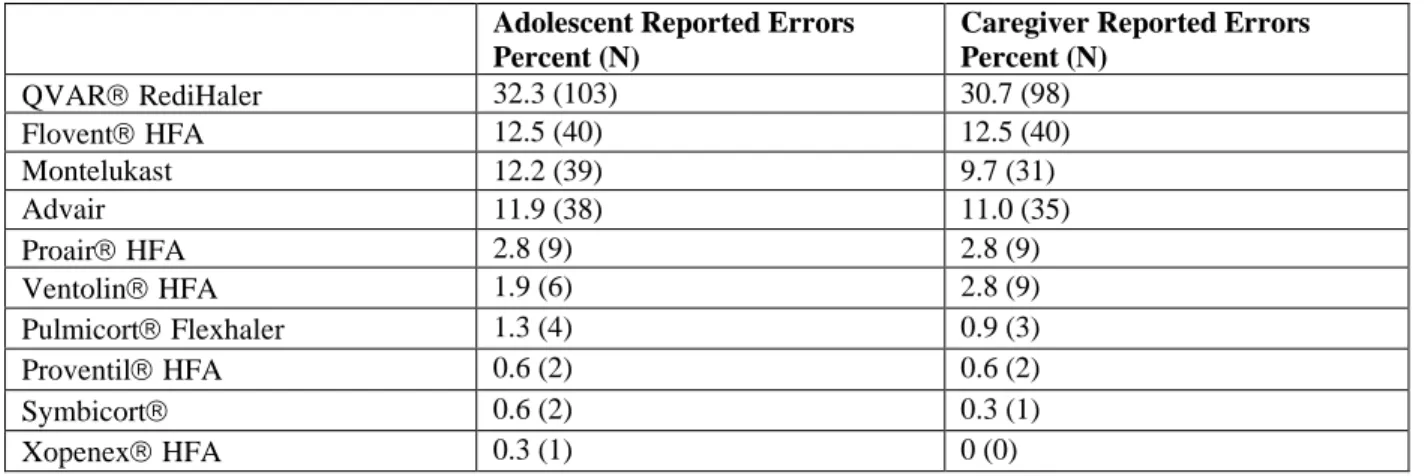
Table 5 demonstrates the number of errors associated with each type of controller
medication. Thirty-two percent of adolescents reported errors associated with QVAR
Redihaler, use, the highest amount across each type of controller medications. Thirteen percent
reported errors with Flovent HFA, while 12% of adolescents reported errors with Montelukast.
The three medications with the highest number of errors reported by caregivers were QVAR
Discussion
Caregivers were more likely to report errors than adolescents (61.4% caregivers vs 58%
adolescents). When adolescents and caregivers do report errors, the most common reported error
across both groups is not taking the medication at all. The second most commonly reported
errors was missing three or more doses per week. No significant discrepancies in medication
error reporting was observed between adolescent and caregiver answers. These findings
demonstrate that although slight deviations may occur, adolescents and caregivers are generally
consistent in their involvement in the adolescent’s asthma controller medication use. Both
caregivers and adolescents reported the most medication errors with QVAR Redihaler, (32%
adolescents, 31% caregivers) with Flovent being second medication with the most errors (13%
adolescents, 13% caregivers).
Previous research has analyzed medication errors in the adolescent cancer population.
Walsh et al., reported 17% of patients reported non-adherence in the adolescent population,
while 13% of patients reported missing doses in the last 7 days for any medicine used in the
cancer treatment, both chemotherapy and supportive meds.10 Similar to asthma controller
medication, chemotherapy and supportive meds may have difficult administration techniques and
instructions for adolescents. This creates opportunity for both adolescents and caregivers to
misinterpret appropriate administration schedule and/or instructions, leading to errors in the
population. Our study found similar information in regard to the errors that were reported.
Medications that had strict administration schedule had more errors reported than as needed
medication.
Another clinical area that has research regarding the number and types of errors that are
population, these medications are associated with high risks of medication errors. Alander et al.,
studied medication errors in regard to over-the-counter acetaminophen. In this study, 3% of
errors were identified as unintentional dosing errors due to either excess medication
self-medicated by the adolescent or provided unintentionally by the caregiver.13 We found that both
adolescents and caregivers were likely to report medication errors when using the medication,
demonstrating the clinical need for both adolescent patients and caregivers to be educated in
regard to correct medication use.
There is a current gap in knowledge regarding misuse of medications in the adolescent
population, particularly in using asthma controller medications. The results of this study can be
used to improve the communication between physicians and patients regarding using asthma
controller medications. By learning the types of errors that adolescents and caregivers make,
physicians can address relevant concerns in follow up visits regarding chronic asthma
management. Physicians can utilize this information to ensure that both adolescent patients and
caregivers are appropriately educated on asthma controller medications in order to decrease
unnecessary follow up visits and improve patient outcomes.
The pharmacist’s role in healthcare includes providing patients with information to take
their medications appropriately. Utilizing this information, pharmacists in the community setting
will be able to cater their patient education in order to maximize patient care in the adolescent
asthma population. Emphasizing the importance of adherence in the adolescent patient
population while using scheduled controller medication can decrease need for rescue inhalers.
There are various limitations that exist within this study. One limitation is that providers
may not accurately report how patients should be using the medication in the medical record or
falsely increase the number of errors reported when comparing patient use to an incorrect
medical record. The patients included in this study were attending pediatric clinics instead of
specifically pulmonology clinics, which may have limited generalizability to those with severe
asthma diagnosis. The patients in this study were only in North Carolina, which may not be
representative of the entire U.S. adolescent population. The adolescent and caregiver reports may
not assess all types of errors (incorrect spacer use, incorrect inhalation technique, etc) which is a
limitation in our study. Despite the limitations, the study plays a key role in improve the
communication that both physicians and pharmacists have with adolescents in regard to their
asthma controller medications.
Future research can be performed to assess provider and pharmacist interventions in
reducing the amount of medication errors adolescents report regarding asthma controller use. A
future study idea is to analyze number and types of errors reported before and after pharmacist
counseling interventions on the adolescent asthma population. This analysis may can the impact
of community pharmacists to reduce the amount of medication errors this patient population.
Providers can utilize this information when establishing routine care with pediatric asthma
Acknowledgements
SD provided oversight during data analysis methods and statistic use. DMC was an investigator
for the original study, contributed to the development of this study, and critically edited the
manuscript. BLS conceived the study, oversaw the collection, analysis, and interpretation of
data, and edited the manuscript critically.
Funding Support
This work was supported through a Patient-Centered Outcomes Research Institute (PCORI)
Program Award (1402-09777). Drs. Sleath and Reuland are also supported by the National
Center for Advancing Translational Sciences (NCATS), National Institutes of Health, through
Grant Award Number 1UL1TR001111.
Conflicts of Interest
The authors report no conflicts of interest. The authors alone are responsible for the content and
References
1. Guidelines for the diagnosis and management of asthma. National Heart, Lung, and Blood Institute. 2007.
2. Potter PC. Current guidelines for the management of asthma in young children. Allergy, Asthma & Immunology Research. 2010;2(1):1-13.
3. Avani C. Modi, Alexandra L. Quittner; Barriers to Treatment Adherence for Children with Cystic Fibrosis and Asthma: What Gets in the Way?, Journal of Pediatric Psychology, Volume 31, Issue 8, 1 September 2006, Pages 846–858,
4. Sonney J, Insel KC, Segrin C, Gerald LB, Ki Moore IM. Association of Asthma Illness
Representations and Reported Controller Medication Adherence Among School-Aged Children and Their Parents. J Pediatr Health Care. 2017 Nov -Dec;31(6):703-712.
5. Szefler SJ, Chipps B. Challenges in the treatment of asthma in children and adolescents. Ann Allergy Asthma Immunol. 2018 Apr;120(4):382-388.
6. Wysocki T, Nansel TR, Holmbeck GN, et al. Collaborative involvement of primary and secondary caregivers: associations with youths' diabetes outcomes. J Pediatr Psychol. 2009;34(8):869–881. doi:10.1093/jpepsy/jsn136
7. Wysocki T, Taylor A, Hough BS, Linscheid TR, Yeates KO, Naglieri JA. Deviationfrom developmentally appropriate self-care autonomy. Association with diabetes outcomes. Diabetes Care. 1996 Feb;19(2):119-25.
8. Bartlett SJ, Kolodner K, Butz AM, Eggleston P, Malveaux FJ, Rand CS. Maternal Depressive
Symptoms and Emergency Department Use Among Inner-city Children With Asthma. Arch
Pediatr Adolesc Med. 2001;155(3):347–353.
9. Bitsko MJ, Everhart RS, Rubin BK. The adolescent with asthma. Paediatric Respiratory Reviews. 2014;15(2):146-153.
10.Walsh KE, Roblin DW, Weingart SN, et al. Medication Errors in the Home: A Multisite Study of Children With Cancer. Pediatrics. 2013;131(5):e1405-e1414.
11.Walsh K, Ryan J, Daraiseh N, Pai A. Errors and Non-adherence in Pediatric Oral Chemotherapy Use. Oncology. 2016;91(4):231-236.
12.Walsh KE, Stille CJ, Mazor KM, et al. Using Home Visits to Understand Medication Errors in Children. In: Henriksen K, Battles JB, Keyes MA, et al., editors. Advances in Patient Safety: New Directions and Alternative Approaches (Vol. 4: Technology and Medication Safety). Rockville (MD): Agency for Healthcare Research and Quality (US); 2008
13.Alander SW, Dowd MD, Bratton SL, et al. Pediatric acetaminophen overdose: risk factors associated with hepatocellular injury. Arch Pediatr Adolesc Med. 2000;154:346–350 14.Li S, Lathcer B, Crain E. Acetaminophen and ibuprofen dosing by parents. Pediatr Emerg
Care. 2000;16:394–397.
15.Duarte-de-Araújo A, Teixeira P, Hespanhol V, Correia-de-Sousa J. COPD: misuse of inhaler devices in clinical practice. Int J Chron Obstruct Pulmon Dis. 2019;14:1209–1217.
16.Melani, Andrea S. et al. Inhaler mishandling remains common in real life and is associated with reduced disease control. Respiratory Medicine. 2011 Jun;105(6):930-8.
Table 1: Youth and caregiver demographic and youth asthma-related characteristics (N=359)
Characteristics Percent (N)
Youth Gender
Male 57.1 (205)
Female 42.9 (154)
Youth Race/Ethnicity
Caucasian 36.2 (130)
African American 37.2 (134)
Hispanic 12.5 (45)
Native American 11.4 (41)
Other 2.5 (9)
Asthma Severity
Mild 46.8 (168)
Moderate/Severe 53.2 (191)
Caregiver Gender
Male 13.6 (49)
Female 86.4 (310)
Caregiver Race
Caucasian 46.0 (165)
Non-Caucasian 54.0 (194)
On Controller Medication
Yes 88.9 (319)
No 11.1 (40)
Primary Language Spoken at Home
English 91.5 (292)
Spanish 8.5 (27)
Reason For Visit
Asthma 66.6 (239)
Other 33.4 (12)
Household Total Annual Income
Less than $10,000 16.4 (59) $10,000-$19,999 15.3 (55) $20,000-$29,999 18.7 (67) $30,000-$49,999 13.1 (47) $50,000-$69,999 13.1 (47) $70,000 or more 23.4 (84)_
Has Medicaid as Health Insurance
Yes 54.6 (196)
No 45.4 (163)
Mean (SD), Range Youth Age 13.2 (1.9), 11-17
Years Living with Asthma 9.5 (4.1), 1-17
Caregiver Age 42.6 (8.6), 19-76
Table 2: Typology of Errors
Type of Error Error Definition
Extra single administration doses Two puffs (or more) instead of one puff per administration
Too few single administration doses One puff instead of two puffs per administration Taking too frequently per day Twice daily (or more) administration instead of
prescribed once daily administration
Not taking enough times per day Once daily administration instead of prescribed twice daily administration
Missing 1-3 doses per week Missing less than three doses in a seven-day period Missing three or more doses per week Missing more than three doses in a seven-day period Not taking at all Does not report taking medication although listed on
medical record
Does not know names of all medication Reports medication with descriptive factors instead of name (i.e red inhaler, tablet, etc)
Table 3: Number of Errors Reported by Adolescents and Caregivers (N=319)
Reported Errors Adolescents Reporting Errors Percent (N = 319)
Caregivers Reporting Errors Percent (N = 319)
0 42.0 (134) 38.6 (123)
1 37.6 (120) 41.7 (133)
2 157.7 (50) 13.5 (43)
3+ 4.70 (15) 6.26 (20)
Table 4: Types of Errors Reported by Adolescents and Caregivers (N=319)
Error Type Adolescent Reporting Errors: Percent (N)
Caregiver Reporting Errors Percent: Percent (N)
Not Taking At All 31.9 (102) 28.8 (92)
Missing 3+ Doses Per Week 15.4 (49) 14.4 (46) Not Taking Enough Times Per Day 9.40 (30) 7.52 (24) Missing 1-3 Doses Per Week 8.77 (28) 9.09 (29) Does Not Know Names of All
Medication
8.77 (28) 6.58 (21)
Too Few Single Administration Doses
3.76 (12) 5.64 (18)
Table 5: Number of Errors Reported for Each Controller Medication (N=319)
Adolescent Reported Errors Percent (N)
Caregiver Reported Errors Percent (N)
QVAR RediHaler 32.3 (103) 30.7 (98)
Flovent HFA 12.5 (40) 12.5 (40)
Montelukast 12.2 (39) 9.7 (31)
Advair 11.9 (38) 11.0 (35)
Proair HFA 2.8 (9) 2.8 (9)
Ventolin HFA 1.9 (6) 2.8 (9)
Pulmicort Flexhaler 1.3 (4) 0.9 (3)
Proventil HFA 0.6 (2) 0.6 (2)
Symbicort 0.6 (2) 0.3 (1)