Clean Formula
for Success
Formula E is making a
stand at the highest level
of motorsport – but what
is happening in the lower
formulae?
With the rise in popularity of Formula E, electric vehicle racing is beginning to conquer the world of motorsport - bringing the support of not only seasoned motorsport fans, but also new, fresh to the scene technology enthusiasts. However, while fans are currently dazzled by the fantastic display of racing action and technology excellence, the time will inevitably come when they too will want a taste of the action.
Motorsport has always been characterised by its entry-level formulae. These classes have always been there, feeding the bigger classes by providing a stage for new talent to develop and show itself to team
managers eager to sign the next champion. Not only that, but lower formulae are also where racing enthusiasts can emulate their idols. Either way, both the aspiring professional driver and the hobbyist have the opportunity to race alternative versions of the desired and admired racing cars of higher formulae.
Despite the less advanced chassis and the smaller engines making for slower, and more importantly, safer cars they are still capable of putting everyone on the edge of their seats with close racing action and highly disputed contests. Single make championships excel in providing race action largely as a result of every driver on track having access to the same equipment. Not only does this format lend itself to exciting racing that both fans and drivers love, but it does so at a sensible cost – foregoing the need for expensive technological development essential to success in open formulae.
The question is, where can the electric vehicle enthusiast
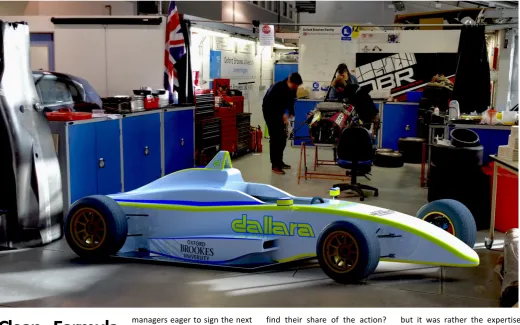
find their share of the action? Where is the starting formula that allows the fans to have a taste of what electric racing is all about? The answer to these questions is currently being developed at Oxford Brookes University (OBU) in collaboration with one of the world’s largest racing car manufacturers: Dallara Automobili.
Plugging the gap
Back in 2014 the OBU Department of Mechanical Engineering and Mathematical Sciences received a visit from Andrea Toso – Head of R&D and US Racing Business Leader at Dallara. This visit would kick-start a project that will fulfil electric racing dreams everywhere.
FIGURE 1
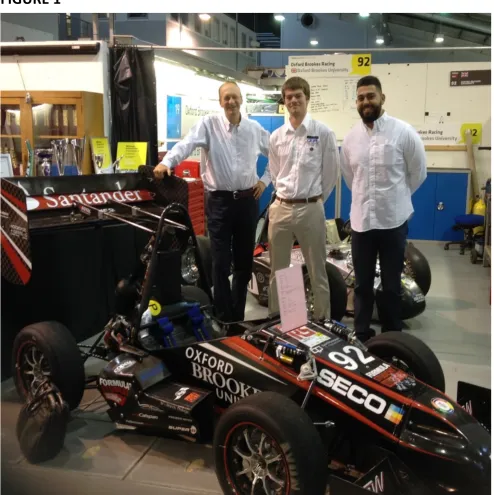
OBU’s impressive facilities - which include equipment such as a Scanning Electron Microscope, 4 engine dynamometer test cells, a wind tunnel, and a 4 Post dynamic test rig - enticed Andrea to visit,
but it was rather the expertise and the culture of attention to detail embedded within OBU that impressed Dallara the most. The signs are everywhere, from having one of the top UK Formula SAE teams, strong industrial partnerships and the recognition of the talent of OBU graduates from leading motorsport and automotive manufacturers.
Dallara quickly recognised the clues that pointed to the ability to conduct a successful ambitious project and so decided to make a move.
Having recognised a gap in the market Dallara, the manufacturer of every Formula E car on the grid, approached the Department of Mechanical Engineering and Mathematical Sciences with the idea of developing an affordable electric racing vehicle.
down to the formula and business model were to be developed by Oxford Brookes’ MSc students guided at every step of the way by experts from Dallara. To ensure the success of the project at all levels the motorsport vehicle design expertise of the Department of Mechanical Engineering and Mathematical Sciences was supported by the business strategy and development knowledge from the Business School. This breadth of knowledge coupled with the chance to work on a real, large scale project provides an excellent learning opportunity for the students, and crucially prepares them for employment. The Department is very keen on this - 92% of graduates go on to employment; many in F1, Formula E and other major suppliers to the automotive industry.
The project is scheduled for 4 years and is now mid-way through completion. More than 100 postgraduate MSc students will have collectively contributed over 60,000 hours for the success of this project by the end of the fourth year. The numbers alone show the commitment and ambition of this institution. However, it’s the quality of their work that really shows why they were chosen for such an important step for the manufacturer - and more importantly for motorsport.
Electric fences to jump
The design, manufacturing and commercialisation of a vehicle and racing series is a challenging task at the best of times and it only becomes more difficult when the vehicle in question is electric. Plenty of organisational and engineering challenges arise in this area - some from the lack of knowledge and experience with the electric powertrain, some from the uncertainty of the customers’ reaction to a technology in its relative infancy.
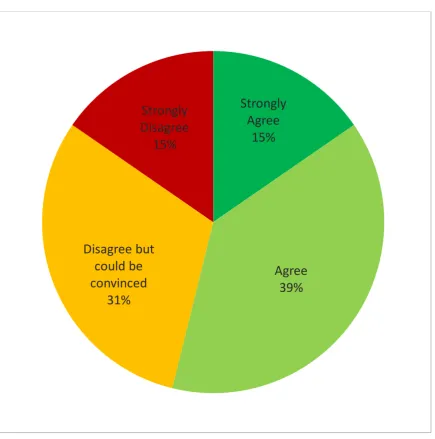
The Business School helped to support the difficult task of characterising the market and determining the business model most likely to succeed. A thorough analysis of conventional series and vehicles was performed to position Formula Club-E in the market as attractively as possible.
FIGURE 2
The performance of electric cars is largely unknown when compared to their internal combustion counterparts, and there is a serious concern regarding the safety of these systems - with careful precautions being taken at this stage.
The level of detail of the analysis undertaken highlights the commitment to this project - making it impossible to ignore this as a serious bid for the future of affordable electric racing.
Defining
the
winning
Formula
The possibilities that arise from starting with a blank sheet can soon turn into a conceptually confusing product if care is not taken to define the right goals. Oxford Brookes is all too aware of this and very early in the project started to define the character of this vehicle.
Developed for a less experienced or even amateur group of drivers the driving experience had to be simplified. All too often nowadays cars are equipped with so much technology that the driving experience is diluted by the devices implemented to make the car faster. Even though the lowest lap time may be the ultimate goal for some others are discouraged by all the experience, preparation and budget that a fast car requires.
With this in mind the Formula Club-E is meant to
feature the very latest technology and yet be fundamentally simple. Focusing on the enjoyment of the driver at manageable speeds for the less experienced. Regardless of having a clear idea of their goal Oxford Brookes could not risk getting this formula wrong. As such, not only were most ideas considered - they were fully developed and tested. This approach eliminates any doubts that the final design will be anything other than the optimal design.
It is important to realise just how complex a study like this is. Every parameter tested is coupled with at least one other area of the vehicle making this a multi-dimensional problem of optimisation. The cooperation between groups of different development areas is paramount.
FIGURE 3
Simulating the future
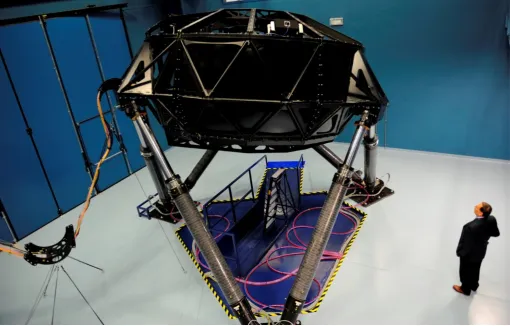
None of this would be possible without extensive use of simulation tools. Starting from a solid base of expertise in vehicle simulation and modelling the Department of Mechanical Engineering and Mathematical Sciences continues to push for better, faster and more reliable simulations. DYMOLA was adopted as a tool to build the advanced ‘virtual prototype’ models required. Upon completion and assembly of all the individual models testing will be undertaken at the state of the art Dallara Driver-in-Loop simulator, allowing test drivers to experience the vehicle before it comes to reality as a physical product. Feedback on the vehicle performance can be gathered and improvements tried before production costs are incurred.
FIGURE 4
One of the areas where knowledge is evolving the most is undoubtedly the powertrain. The motor and batteries are large, expensive, heavy and crucial components that require the upmost care when being specified. One of the benefits of Formula Club-E will be to help organisations like Tesla raise public awareness and acceptance of electric vehicle technology – though it has to be recognised that significant challenges for mass take-up of the technology exist in the supply chain, such as the supply of rare minerals.
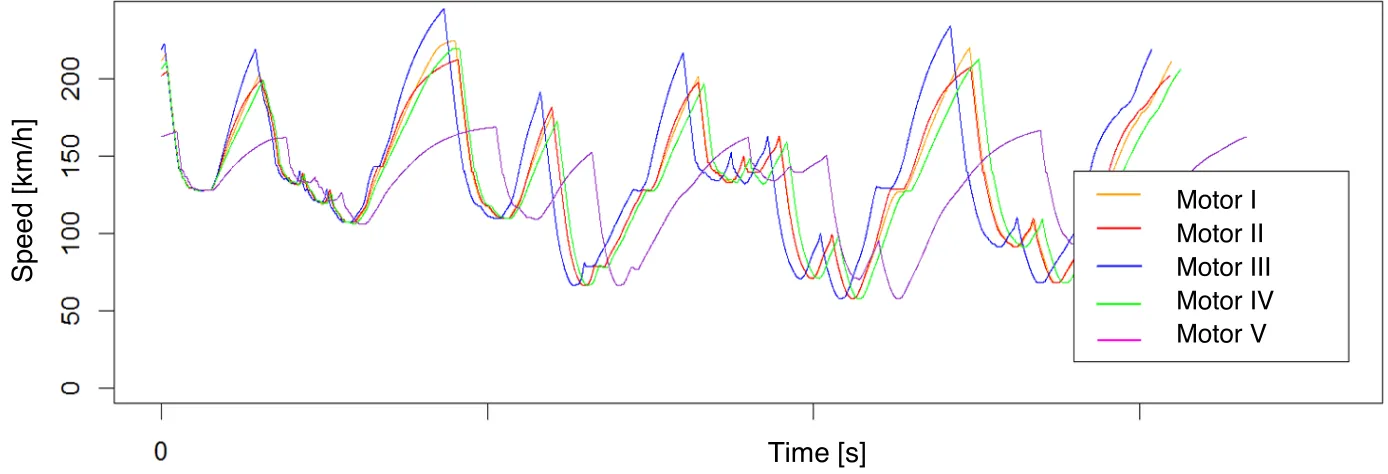
After considering torque vectoring strategies, a single motor was determined to be the ideal solution in view of efficiency and cost control. Most suitable motor options available in the market have been simulated. However, since this is a constantly evolving technology new solutions are always being considered when they become available.
As far as powertrain performance is concerned currently the biggest limiting component are the batteries. With around 1/30th of the energy density of petrol they make up a large portion of the vehicle mass. Furthermore, the requirements for batteries in motorsport are also very extreme with very high power draw and charge making for aggressive usage cycles. The batteries need to be charged quickly between races, and also absorb and store the energy from regenerative braking while in use.
The importance of choosing the appropriate batteries becomes even clearer when one realises that the team even simulate where and how the vehicle will be raced. This is due to different energy levels and conditions encountered at different locations.
Keeping it safe…
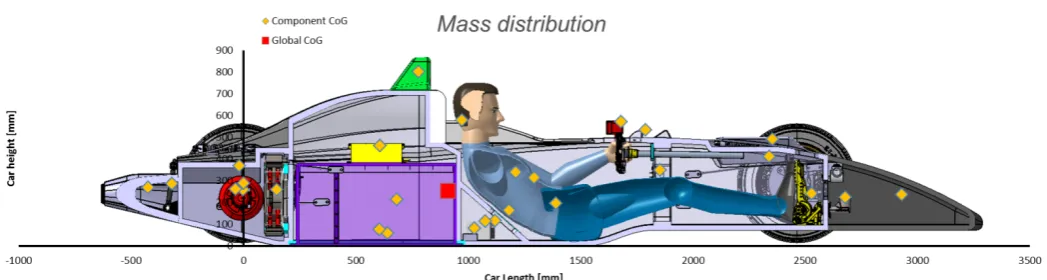
Due to vehicle dynamic considerations and the amount of mass involved batteries have to be placed in a location that will place the centre of gravity (CoG) in a favourable location. When it comes to the influence of the CoG on the dynamic behaviour of the vehicle, the more central and lower the position the better. Although using a battery composed of cells can allow for some freedom in configurations there is one major aspect that somewhat limits the creativity – safety!
FIGURE 5
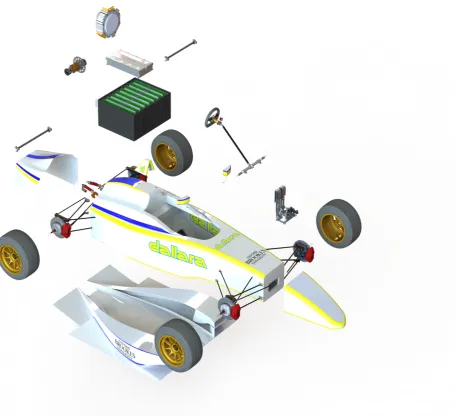
Motorsport has been making huge efforts to ensure the safety of the drivers, marshals and public. Electric batteries are not necessarily any more or less dangerous than a full tank of fuel, but battery specific considerations have to be taken into account to ensure the level of safety required. The speed at which the energy stored can inflict severe injuries makes containing that energy in the event of an accident one of the biggest priorities. In view of the priority for safety, the arrangement of the cells has been kept in a more traditional configuration, which in turn led to a solution that consists of a single unit containing all the cells behind the driver. Even though it may be more
detrimental to the vehicle dynamics than a modular design that could be spread around the driver, this solution is more robust, and more likely to meet safety regulations.
Crash scenarios have been considered and simulated to analyse the structural behaviour of the system, and instantaneous shut-off circuits relying on monitoring of power usage and demands have been developed. The crash simulations were run in LS-DYNA following FIA guidelines for safety requirements - once again highlighting the attention to detail employed throughout this project.
In fact, having so many bright minds on the case has even allowed Oxford Brookes to prepare the vehicle for future technologies and regulations. Should there be a need for it, and permission from regulatory bodies, the Formula Club-E is designed to allow for battery changes during the race, in true ‘refuelling’ style. The safety challenges here are so high that even the pinnacle of the sport - Formula E, has opted not to use it for the time being on grounds of safety. As a consequence, two cars per driver are required with a change of cars mid-race. The same scenario would not be sustainable for a low budget formula.
To incorporate a removable battery design Oxford Brookes’ students have not only to cope with existing challenges but also with the ones the solution itself creates. In other words, from the moment a battery pack is sealed, in order to guarantee safety, something else becomes a hot topic – temperature control.
FIGURE 6
…and keeping it cool
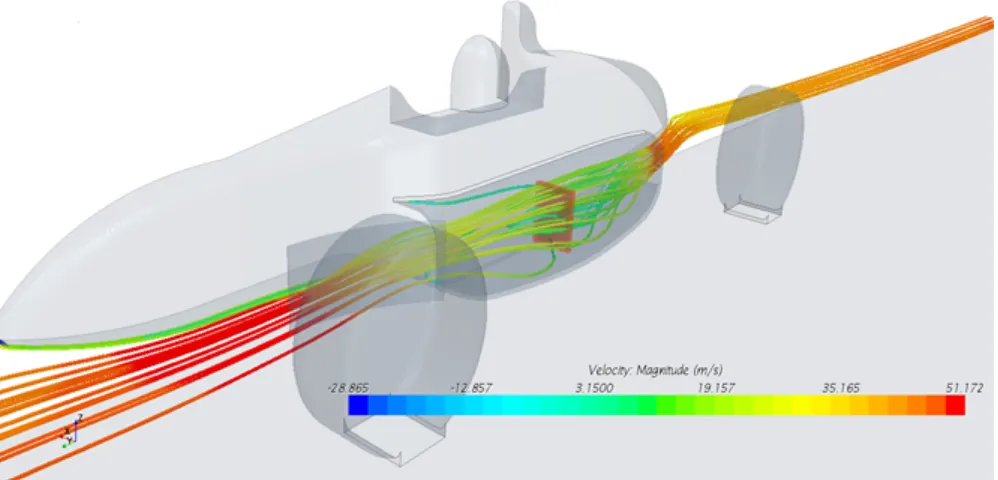
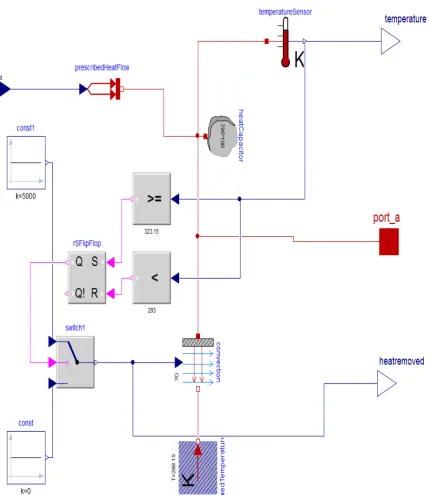
Motors and batteries have a temperature window of operation relatively small with exponentially decreasing performance when operating outside of range. If control over the temperature is lost the damage can build up to severe failures of the system. Not leaving a single detail to chance a considerable amount of effort has been made to understand the heat transfer interactions in place. Extensive thermal computational fluid dynamics, finite element analysis and DYMOLA simulations were performed, with expert training & support in the use of the software provided by Claytex Services. Many hours of modelling work later, a simulation capable of calculating real-time component temperatures was completed. This model will be one of many running simultaneously in the driver-in-loop Dallara simulator providing valuable data with a resolution down to each individual battery cell.
FIGURE 7
Currently simulations are being carried for charge/ discharge cycles for the duration of the whole event, including track driving, energy recovery and battery recharging with the vehicle stationary.
More than a concept
The scale of the project coupled with meticulous analysis that is being undertaken in Oxford Brookes and Dallara’s Formula Club-E project conveys a sense of purpose - of something that will not settle for being a mere concept.
FIGURE 8
Currently at the midway point the project has a few questions to be answered and components to be finalised. The simulation models developed are prepared for this, and alternative emerging technologies can now be rapidly simulated and evaluated, thus the team are actively looking for partners to help contribute to the project. In fact, they have much industrial support for the project, including some famous names such as David Brabham, Allan McNish and Petter Solberg. If you would like to add your name to the list the team are inviting people to contact
with the subject “Dallara”. The answer to budget electric racing is coming - and not surprisingly - by the hands of two world leading organisations in Motorsport engineering: Oxford Brookes University and Dallara Automobili.
Authors
Miguel Fernandez Ferreira – Technical Instructor, Department of Mechanical Engineering & Mathematical Sciences, Oxford Brookes University
Andrew Bradley – Senior Lecturer, Department of Mechanical Engineering & Mathematical Sciences, Oxford Brookes University
Andrea Toso – Head of R&D and US Racing Business Leader, Dallara Automobili
FIGURE 1
FIGURE 2
Market survey - Is electric racing the future of motorsport?
Strongly
Agree
15%
Agree
39%
Disagree but
could be
convinced
31%
Strongly
Disagree
FIGURE 3
FIGURE 4
Figure 5
Figure 6
Figure 7
Figure 8
Speed profiles for various motor choices
Sp
e
e
d
[
k
m
/h
]