TECHNOLOGY, ENGINEERING, AND MATHEMATICS (STEM)
BELIEFS AND INTERESTS
A Dissertation by
HEATHER SHANNON DEGENHART
Submitted to the Office of Graduate Studies of Texas A&M University
in partial fulfillment of the requirements for the degree of DOCTOR OF PHILOSOPHY
May 2007
TECHNOLOGY, ENGINEERING, AND MATHEMATICS (STEM)
BELIEFS AND INTERESTS
A Dissertation by
HEATHER SHANNON DEGENHART
Submitted to the Office of Graduate Studies of Texas A&M University
in partial fulfillment of the requirements for the degree of DOCTOR OF PHILOSOPHY
Approved by:
Chair of Committee, Gary J. Wingenbach Committee Members, Julie Harlin
Larry Johnson
James R. Lindner
Head of Department Christine D. Townsend
May 2007
ABSTRACT
Relationship of Inquiry-Based Learning Elements on Changes in Middle School Students’ Science, Technology, Engineering, and Mathematics (STEM) Beliefs and
Interests. (May 2007)
Heather Shannon Degenhart, B.A., West Texas A&M University; B.S., West Texas A&M University; M.S., West Texas A&M University
Chair of Advisory Committee: Dr. Gary J. Wingenbach
The purpose of this study was to develop a model describing the relationship of inquiry-based teaching elements on middle school students’ science, technology, engineering, and mathematics (STEM) interests and belief changes. The study utilized pretest/posttest, correlational, and longitudinal designs. Classroom inquiry data (N = 139) and middle school students’ attitudinal data (N = 1779) were collected in middle school classrooms within a 40 mile radius of Texas A&M University during the 2004-2005 and 2004-2005-2006 school years.
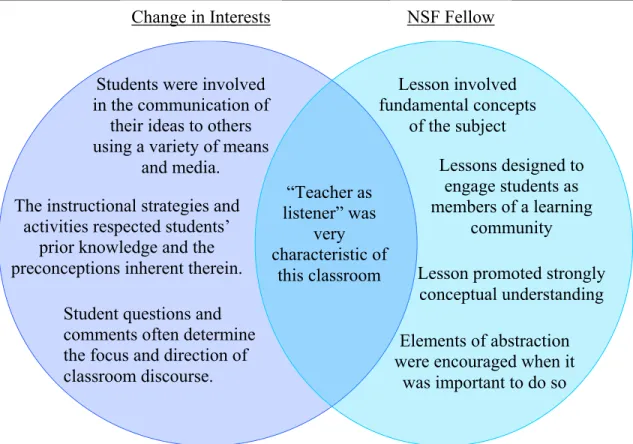
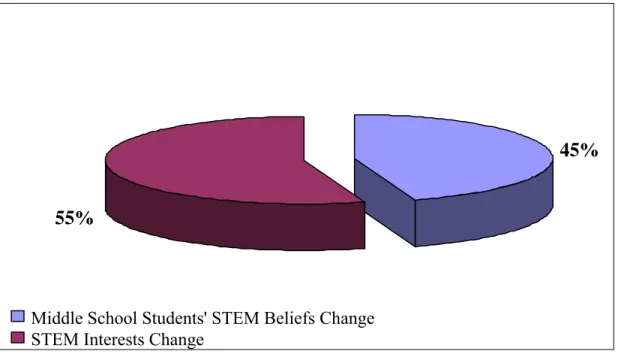
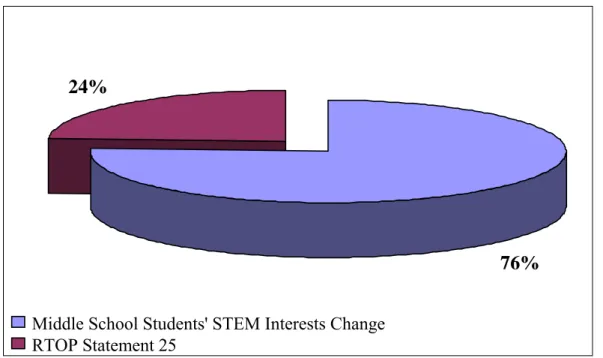
Results indicated 24% of the variation in middle school students’ change in science, technology, engineering, and mathematics (STEM) interests was explained by the inquiry-learning element “teacher as listener” was very characteristic of this classroom.” STEM interest change explained 55% of the variation in middle school students’ STEM belief change. Analyses indicated NSF Fellows and teachers affected the rate at which middle school students’ STEM beliefs and interests changed. Middle
school students’ STEM interests and beliefs remained significantly unchanged from pre- to post-NSF Fellow each year of the study. Classroom inquiry levels did significantly increase from beginning of school-year to end of school-year each year of the project. NSF Fellows had a positive relationship with the one inquiry element “teacher as listener” was very characteristic of the classroom; which explained middle school students’ change in STEM interests. NSF Fellows had negative relationships with the inquiry elements, lessons involved fundamental concepts of the subject; lessons were designed to engage students as members of a learning community; lessons promoted strong conceptual understanding; and elements of abstraction were encouraged when it was important to do so. No inquiry elements were associated with middle school
students’ change in STEM beliefs. Middle school students’ change in STEM interests were positively associated with three inquiry elements, “teacher as listener” was very characteristic of the classroom; students were involved in the communication of their ideas to others using a variety of means and media; and student questions and comments often determine the focus and direction of classroom discourse. The inquiry element, instructional strategies and activities respected students’ prior knowledge and the preconceptions inherent therein, was negatively associated with changes in middle school students’ STEM interests.
DEDICATION
This is dedicated to my parents, Howard and Sondra Degenhart, who always told me I could do whatever I set my mind to. My brother, Jeff Degenhart, for influencing me to return to school, one more time. My grandparents, Bill and Wanda Bedwell, for their love and support. And my niece, Amber Degenhart, for just being her.
ACKNOWLEDGMENTS
First and foremost I would like to thank God for helping me through this process. There are many people I would like to thank for sticking by me and encouraging me during the PhD. process: My parents and family for their love, support, patience and constant encouragement. My good friend, James Johnson who listened and gave doses of common sense and reality when frequently needed during this process. Drs. Traylor, Abdullah, and Colette, who told me I could make it through a PhD. program. And I would definitely like to thank Dr. Andy Vestal for the understanding and extra time he allowed me to complete this paper, and his frequent reminders that completing the dissertation, not work, was the priority.
I would like to thank my committee, Drs. Larry Johnson, Julie Harlin, James Lindner, and Gary Wingenbach for allowing me the opportunity to be a part of the PEER GK-12 program. I would especially like to thank my committee chair, Dr. Gary
Wingenbach, for his patience, help, advice, high expectations, and meticulous attention to detail. I feel very lucky to have worked with such a straight-forward professional. I deeply appreciate the honest and constructive criticism as well as his patience with frequent questions and interruptions. He must have felt several time like hitting the “play” button on a recording of “Check your APA manual” as soon as I knocked on the door. Thank you for increasing the quality of work I expect from myself, keeping me challenged, and not allowing me to become complacent with my work!
TABLE OF CONTENTS
Page
ABSTRACT ...iii
DEDICATION ...v
ACKNOWLEDGMENTS...vi
TABLE OF CONTENTS ...vii
LIST OF TABLES ...xi
LIST OF FIGURES...xv
CHAPTER I INTRODUCTION...1
Federal Educational Reform...2
Research Questions ...7
Purpose of the Study ...7
Research Objectives ...8
Theoretical Framework ...8
Significance of the Study ...11
Definitions...12 Delimitations ...16 Limitations ...16 II REVIEW OF LITERATURE...17 Call to Reform...17 Scientist/Educator Partnerships...19
Barriers to Integrative Educator/Scientist Partnerships ...21
Inquiry ...22
Student Benefits from Inquiry Learning ...28
Negative Aspects of Inquiry-Based Instruction ...30
Barriers to Inquiry-Based Instruction...31
Issues in Measuring the Effects of Inquiry-Based Learning ...33
The Partnership for Environmental Education and Rural Health (PEER)...36
Goals and Objectives...38
CHAPTER Page
III METHODOLOGY...40
Population and Sample...40
Instrumentation...41
Data Collection...44
Data Analysis ...45
IV RESULTS...53
STEM Attitudinal Demographics...53
Cumulative Two-Year Student Demographics ...53
Year 1: 2004-2005 Student Demographics ...56
Year 2: 2005-2006 Student Demographics ...57
Middle School Students’ Pre/Post-NSF Fellow Beliefs...59
Year 1: 2004-2005 Student Beliefs ...59
Year 2: 2005-2006 Student Beliefs ...61
Cumulative Two-Year Student Beliefs ...62
Middle School Students’ Pre/Post-NSF Fellow Interests ...65
Year 1: 2004-2005 Student Interests...65
Year 2: 2005-2006 Student Interests...66
Cumulative Two-Year Student Interests ...68
Summed Student Beliefs and Interests...69
Year 1: 2004-2005 Summed Student Beliefs and Interests...69
Year 2: 2005-2006 Summed Student Beliefs and Interests...71
Cumulative Two-Year Summed Student Beliefs and Interests...72
Differences between Students Pre-and Post-NSF Fellow Beliefs and Interests ...73
Objective One...75
Changes in STEM Beliefs by NSF Fellow...75
Changes in STEM Beliefs by Grade Level ...77
Changes in STEM Beliefs by STEM Subject ...79
Changes in STEM Beliefs by Gender ...81
Changes in STEM Beliefs by Teacher ...83
Changes in STEM Beliefs by NSF Fellow and Teacher...85
Objective Two ...86
Changes in STEM Interests by NSF Fellow ...86
Changes in STEM Interests by Grade Level...88
Changes in STEM Interests by STEM Subject ...90
CHAPTER Page
Changes in STEM Interests by Teacher...94
Changes in STEM Interests by NSF Fellow, Grade Level, and Teacher ...96
Objective Three ...97
Demographics for RTOP Data ...97
Significant Differences in Mean RTOP Scores by Semester, Teacher, Subject, Observation, and NSF Fellows’ Gender...101
Cumulative Two-Year RTOP Data ...101
Year 1: 2004-2005 RTOP Data...102
Year 2: 2005-2006 RTOP Data...103
Significant Differences in Mean RTOP Scores by NSF Fellow, Grade Level, and Location...105
Cumulative Two-Year RTOP Data ...105
Year 1: 2004-2005 RTOP Data...105
Year 2: 2005-2006 RTOP Data...108
Correlation Analysis of RTOP Construct One: Lesson Design and Implementation and NSF Fellow...109
Correlation Analysis of RTOP Construct Two: Propositional Knowledge and NSF Fellow...110
Correlation Analysis of RTOP Construct Three: Procedural Knowledge and NSF Fellow...112
Correlation Analysis of RTOP Construct Four: Communicative Interactions and NSF Fellow ...114
Correlation Analysis of RTOP Construct Five: Student/Teacher Relationships and NSF Fellow...117
Correlations for RTOP Constructs, Cumulative Scores, and NSF Fellows ...118
Objective Four...120
Middle School Students’ Change in STEM Beliefs and Interests by RTOP Statement ...120
Objective Five ...123
Correlations for Middle School Students’ Change in STEM Beliefs and Interests by Other Variables of Interest...123
Middle School Students’ Change in STEM Beliefs Regression Analyses ...124
Middle School Students’ Change in STEM Interests Regression Analyses ...126
V SUMMARY, CONCLUSIONS, AND RECOMMENDATIONS...129
Summary ...130
Page Objective One...131 Objective Two ...132 Objective Three ...133 Objective Four...135 Objective Five ...136 Conclusions ...139 Recommendations ...141 REFERENCES...145
APPENDIX A PRE-NSF FELLOW STUDENT INTEREST SURVEY-SCIENCE...158
APPENDIX B PRE-NSF FELLOW STUDENT INTEREST SURVEY-TECHNOLOGY ...161
APPENDIX C PRE-NSF FELLOW STUDENT INTEREST SURVEY-ENGINEERING ...164
APPENDIX D PRE-NSF FELLOW STUDENT INTEREST SURVEY-MATH...167
APPENDIX E POST-NSF FELLOW STUDENT INTEREST SURVEY-SCIENCE...170
APPENDIX F POST-NSF FELLOW STUDENT INTEREST SURVEY-TECHNOLOGY ...173
APPENDIX G POST-NSF FELLOW STUDENT INTEREST SURVEY-ENGINEERING ...176
APPENDIX H POST-NSF FELLOW STUDENT INTEREST SURVEY-MATH...179
APPENDIX I REFORMED TEACHING OBSERVATION PROTOCOL-EVALUATION FORM ...182
APPENDIX J REFORMED TEACHING OBSERVATION PROTOCOL-TRAINING GUIDE...187
LIST OF TABLES
TABLE Page
1 Reliability Coefficients for Pre-and Post-Beliefs and Interests...50
2 Reliability Coefficients RTOP Constructs ...51
3 RTOP Inter-rater Reliabilities: Years One, Two, and Cumulative ...52
4 Cumulative Two-Year Student Frequencies by Factor (N = 1779) ...55
5 Year 1: 2004-2005 Student Frequencies by Factor (N = 1145) ...57
6 Year 2: 2005-2006 Student Frequencies by Factor (N = 634) ...58
7 Year 1: 2004-2005 Descriptive Statistics for Middle School Students’ STEM Beliefs (N = 1145) ...60
8 Year 2: 2005-2006 Descriptive Statistics for Middle School Students’ STEM Beliefs (N = 634) ...62
9 Cumulative Two-Year Descriptive Statistics for Middle School Students’ STEM Beliefs Two-Year Cumulative Data (N = 1779) ...64
10 Year 1: 2004-2005 Descriptive Statistics for Middle School Students’ STEM Interests (N = 1145)...66
11 Year 2: 2005-2006 Descriptive Statistics for Middle School Students’ STEM Interests (N =634)...67
12 Cumulative Two-Year Descriptive Statistics for Middle School Students’ STEM Interests (N = 1779)...69
13 Year 1: 2004-2005 Descriptive Statistics for Middle School Students’ STEM Beliefs and Interests (N = 1145)...70
14 Year 2: 2005-2006 Descriptive Statistics for Middle School Students’ STEM Beliefs and Interests (N = 634)...71
15 Cumulative Two-Year Descriptive Statistics for Middle School Students’ STEM Beliefs and Interests (N = 1779)...73
TABLE Page 16 Paired samples t tests for Science, Math, Technology, and All
Subjects by Year and Cumulative Two-Year Data ...74
17 Repeated Measures ANOVA for STEM Beliefs by NSF Fellow ...76
18 Repeated Measures ANOVA for STEM Beliefs by Grade Level...78
19 Repeated Measures ANOVA for STEM Beliefs by Subject...80
20 Repeated Measures ANOVA for STEM Beliefs by Gender...82
21 Repeated Measures ANOVA for STEM Beliefs by Teacher...84
22 Repeated Measures ANOVA for STEM Beliefs by NSF Fellow and Teacher...86
23 Repeated Measures ANOVA for STEM Interests by NSF Fellow ...87
24 Repeated Measures ANOVA for STEM Interests by Grade Level ...89
25 Repeated Measures ANOVA for STEM Interests by STEM Subject ...91
26 Repeated Measures ANOVA for STEM Interests by Gender...93
27 Repeated Measures ANOVA for STEM Interests by Teacher ...95
28 Repeated Measures ANOVA for STEM Interests by NSF Fellow, Grade Level, and Teacher...97
29 Demographics for RTOP Observations (N=139)...100
30 Cumulative Two-Year RTOP Data Independent t tests by Semester, Teacher, Subject, Observation, and NSF Fellows’ Gender...102
31 Year 1: 2004-2005 RTOP Data Independent t tests by Semester, Teacher, Subject, Observation, and NSF Fellows’ Gender...103
32 Year 2: 2005-2006 RTOP Data Independent t tests by Semester, Teacher, Subject, Observation, and NSF Fellows’ Gender...104
TABLE Page 33 Cumulative One-way ANOVA ...106
34 Year One: 2004-2005 One-way ANOVA ...107 35 Year Two: 2005-2006 One-way ANOVA ...108 36 Pearson r Correlations for RTOP Construct One: Lesson Design and
Implementation and NSF Fellow ...110 37 Pearson r Correlations for RTOP Construct Two: Propositional
Knowledge and NSF Fellow ...112 38 Pearson r Correlations for RTOP Construct Three: Procedural
Knowledge and NSF Fellow ...114 39 Pearson r Correlations for RTOP Construct Four: Communicative
Interactions and NSF Fellow...116 40 Pearson r Correlations for RTOP Construct Five: Student/Teacher
Relationships and NSF Fellow...118 41 Pearson r Correlations for RTOP Constructs, Cumulative Scores,
and NSF Fellows ...119 42 Pearson r Correlations for Middle School Students’ Change
in STEM Beliefs and Interests by RTOP Statement ...121 43 Pearson r Correlations for Middle School Students’ Change
in STEM Beliefs and Interests by Other Variables of Interest...124 44 ANOVA Table for Regression model of Change in STEM
Interest on Middle School Students’ Change in STEM Beliefs...125 45 Summary of Forced Entry Regression Analysis for Change
in STEM Interests Explaining Change in Belief...125 46 ANOVA Table for Regression model of RTOP Statements One, 16,
19, and 25 on Middle School Students’ Change in STEM Interests...126 47 ANOVA Table for Stepwise Regression Model of RTOP Statement 25
TABLE Page 48 Summary of Stepwise Regression Analysis for RTOP Statement 25
LIST OF FIGURES
FIGURE Page 1 Venn Diagram of Relationship of NSF Fellow to Inquiry Elements
Affecting Middle School Students’ STEM Interests Change ...136 2 Proportion of Middle School Students’ STEM Belief Change as a
Function of Middle School Students’ STEM Interest Change...137 3 Proportion of Middle School Students’ STEM Interests Change as a
CHAPTER I
INTRODUCTION
The United States is facing a crisis. The pool of talent in science, technology, engineering, and mathematics (STEM), which the U. S. relies on for innovation and economic growth is shrinking, while demand for STEM trained professionals rapidly continues to increase (NCTS, 2000; NSF, 2003). The American public’s decreasing science literacy, decreasing enrollment and retention in math and science related fields, and projected job demand increases in these fields creates much concern about the United States’ future safety and economic stability (McCallister, Lee, & Mason, 2005; Munn, O’Neill Skinner, Conn, Horsma, & Gregory, 1999; NCTS, 2000).
Increasing demand for STEM professionals is expected to far exceed the
available supply as retirement numbers and international competition increases (NCTS, 2000). This shortage generates much concern for the economic stability and security of the American economy as STEM fields account for half of America’s productivity gains in the last 50 years (Bybee & Fuchs, 2006; NCTS, 2000). STEM’s creation of millions of highly-skilled, high-wage jobs has allowed United States citizens to enjoy a high standard of living, and current evidence indicates the shrinking supply of STEM
professionals has started to limit economic growth (NCTS, 2000). “The U.S. Department of Labor estimates that 60% of the new jobs being created in our economy today will require technological literacy while only 22% of the young people entering the job market now actually possess those skills” (NSF, 2003, p. 7). These numbers are
particularly disturbing as the technologically advanced global market requires the United States to maintain a workforce of well-trained and well-educated young people in STEM disciplines for continued economic growth and leadership in the world economy (Bybee & Fuchs, 2006; ERS, 2003; Isreal, Beaulieu, & Hartless, 2001; NSF, 2003).
Traditionally the United States relied on domestic and foreign STEM graduates for an innovative, competitive STEM workforce. Increased foreign expansion of advanced STEM education programs and competition for STEM trained professionals combined with decreasing domestic student interest and enrollment in STEM career fields threatens the continued availability of this talent pool. Foreign expansion of advanced STEM educational programs has resulted in declining numbers of foreign graduate students seeking STEM degrees in the United States (NSTC, 2000).
This declining enrollment of foreign graduate students affects the availability of STEM professionals in the United States, as traditionally half of these students chose employment in the U. S. upon completion of their degrees. With fewer foreign students entering and staying in the American STEM talent pool, the United States must focus on increasing its shrinking domestic pool of STEM professionals. If the current negative trend is not reversed, the United States faces two potentialities in order to fill future STEM positions: outsourcing or importing STEM professionals from other countries (NSTC, 2000).
Federal Educational Reform
Recognizing the need to reform education to meet future demand and ensure economic stability and security, the United States has enacted federal legislation to
increase the quality of public education; close student achievement gaps; and produce a population that meets “proficiency” levels in all core academic subjects (Reeves, 2003). The No Child Left Behind (NCLB) Act of 2001 built on existing federal education legislation and expanded the federal governments’ role in public education. The purpose of the act was to hold schools accountable for the academic achievement, or lack thereof, of students. A system of rewards and sanctions was implemented based on the level of attainment of state-mandated academic achievement goals (Reschovsky & Imazeki, 2003). The NCLB act “required stronger school accountability, more stringent qualifications for teachers, and an emphasis on programs and strategies with demonstrated effectiveness” (Reeves, 2003, p. 1).
The NCLB legislation required states to develop content standards in core academic subjects such as reading, mathematics, and science (Linn, Baker, &
Betebenner, 2002). NCLB also required states to develop and meet Adequate Yearly Progress (AYP) student achievement objectives for all students and demographic groups or face progressively strict government sanctions (Linn et al., 2002; Reeves, 2003). AYP would be determined by student scores on state-mandated, standards-base achievement tests. Those schools not meeting AYP on state performance goals would face state interventions (Reeves, 2003; Reschovsky & Imazeki, 2003).
The NCLB act required all teachers in the core academic subjects, such as math and science, be “highly qualified” within five years. A highly qualified teacher was defined as being state licensed and certified with demonstrated subject-matter competency (Reeves, 2003). This was particularly important as not all teachers were
certified in their content area and many were teaching outside of their subject area (Achieve, 2002; Reeves, 2003). This lack of certification and out-of-field teaching assignment was of special concern as student achievement has been linked in
educational research to teachers’ content knowledge, certification status, education level, and standards-based evaluations (Darling-Hammond, 1999; Darling-Hammond,
Holtzman, Gatlin, & Heilig, 2005; Humphrey, Stewart, & Linhardt, 1994; McCutchen et al., 2002). Students’ classroom experiences are important factors which affect learning. Subject matter and poor teaching have negative affects on students’ persistence in select subjects like science and engineering, and students may leave science altogether due to poor teaching (Colbeck, Cabrera, & Terenzini, 2000; Gibson & Chase, 2002).
The NCLB Act called “for research that enables the successful development and implementation of science-based programs and practices in K-12 education” (NSF, 2003, p. 25). The majority of students’ learning experiences involve low-level tasks which contribute to poor attitudes towards school and learning and deficiencies in content and process understanding (Blumenfeld et al., 1991). Development of negative attitudes is most noticeable during the middle school years, a time when critical changes have life-long affects (Anderman & Maehr, 1994).
Not only do students’ become progressively negative toward mathematics and science at higher grade levels, but the “disconnect” between scientific content and real-world application increases (Morell & Ledermann, 1998; Weinburgh, 2003). The result of this disconnect is many middle school students unaware of connections between science related careers and classroom content (Atwater et al., 1995). The middle school
years are “frequently the point [in] which American students fail to learn challenging content” (Achieve, 2002 p. 23). For example, the National Center for Education Statistics (NCES) reported that only 32% of the United States’ eighth grade students scored at or above the proficient level in science, while 39% scored below the basic level (NCES, 2002). This trend must be reversed as low education levels have been associated with persistent poverty, a low-wage economy, and an unstable workforce (ERS, 2003).
Research indicates a relationship between middle school students’ attitudes toward science and science education and their future career plans in science (Atwater et al., 1995). The steady decline in American secondary school students’ STEM interests and increased negativity toward STEM subjects has resulted in decreasing numbers of American young people entering post-secondary training and professional careers in STEM areas (NSTC, 2000).
To reverse the negative trend, the National Council of Teachers of Mathematics (NCTM) looks for new, improved methods to reform education so that meaningful, context-rich learning environments are created for students (Harris, Marcus, McLaren, & Fey, 2001). Davis et al. (2003) stated “There are several distinguishing characteristics of this reform effort. It relies heavily on a constructivist educational philosophy; it
promotes inquiry and student-centered instruction; and it aims for excellence for all children” (p. 121). It has been found that students who are involved in problem-based curricula demonstrated increased higher-order thinking skills and more positive attitudes toward the subject matter than those students involved in a traditional curricula approach (Harris et al., 2001).
The National Science Foundation (NSF) funds research into effective GK-12 STEM (Science, Technology, Engineering, and Mathematics) educational programs. It is “the principal federal agency charged with promoting science and engineering education at all levels and in all settings, from pre-kindergarten through career development” (NSF, 2003, p. 3). The mission of NSF is “to promote the progress of science; to advance the national health, prosperity, and welfare; to secure the national defense; and for other purposes.”
The Partnership for Environmental Education and Rural Health (PEER) GK-12 program was an interdisciplinary program developed at Texas A&M University funded by a combination of two NSF grants, “Integrating Environmental Health Science in Rural Schools” and “Environmental and Rural Health Education Partnership.” The PEER GK-12 project utilized an interdisciplinary partnership between different STEM colleges and departments within the Texas A&M University system, graduate and undergraduate fellows from diverse STEM disciplines, and public middle school math and science teachers and students within a 40 mile radius of College Station, Texas. PEER placed STEM graduate students (termed NSF Fellows) in middle school science and mathematics classrooms to promote and create authentic inquiry lessons and serve as both teacher content resources and student role models. The goals of the project were to enhance the quality of middle school student educational experiences using inquiry learning and to improve middle school student’s attitudes toward the STEM areas.
Research Questions
The following research questions were developed to guide the conduct of this study:
1. Does the prolonged involvement of an NSF Graduate Fellow significantly affect the change in middle school students’ STEM beliefs?
2. Does the prolonged involvement of an NSF Graduate Fellow significantly affect the change in middle school students’ STEM interests?
3. Does a significant relationship exist between NSF Fellows and classroom inquiry levels?
4. Does a significant relationship exist between classroom inquiry levels and middle school students’ changes in STEM interests and beliefs? 5. What is the relationship between inquiry-based teaching constructs
and changes in middle school students’ STEM beliefs and interests? Purpose of the Study
The purpose of this study was to develop a model which quantifies middle school students’ STEM interest and belief change as a function of the elements of inquiry-learning constructs. Twenty-five individual elements of inquiry-based inquiry-learning were divided into the four inquiry learning constructs used in the analysis. These elements were identified by the Arizona Collaborative for Excellence in the Preparation of Teachers (ACEPT) at Arizona State University (Sawada et al., 2002) in the Reformed
Observation Teaching Protocol (RTOP). The four constructs are propositional
knowledge; procedural knowledge; student/student relationships; and student/teacher relationships. This study determined if NSF Fellows’ consistent classroom interaction affects both classroom inquiry levels and middle school students’ STEM interests and beliefs.
Research Objectives
To accomplish the purposes of the study, the following objectives were established:
1. Determine if prolonged classroom involvement of the NSF Fellow significantly affected changes in middle school students’ STEM beliefs; 2. Determine if prolonged classroom involvement of the NSF Fellow
significantly affected changes in middle school students’ STEM interests; 3. Determine if a significant relationship existed between NSF Fellow and
classroom inquiry levels;
4. Determine if a significant relationship existed between classroom inquiry levels and middle school students’ STEM interests and belief changes; 5. Develop a model which describes the relationship of inquiry-based teaching
constructs on middle school students’ STEM interests and belief changes. Theoretical Framework
Inquiry-based learning is grounded in constructivist learning theory, incorporating the theories of Dewey (contextual learning), Piaget (cognitive
(socio-cultural constructivism), Bruner (discovery learning), Bandura (social learning and self efficacy), and Lave and Wenger (situated learning, communities of practice).
Dewey believed all meaningful learning occurred through real-world contexts, and students’ ability to use concepts in the creation of more complex models or representations demonstrated a deeper understanding of those concepts than did a traditional knowledge test (Dewey, 1907). Like Dewey, Lave believed that the situation affects the learning; an idea he termed situated learning (Lave, 1988). The situated learning aspect of inquiry-based learning involves students in contextual, real-world problem solving using authentic techniques and procedures which they can apply to similar problems in different situations (Lave, 1988).
The emphasis of students’ using debate, active reflection, collaboration, pre-existing knowledge, and development of critical thinking skills draws heavily from the work of Jean Piaget. Piaget proposed that the development of logical reasoning in children occurs in stages, and children either accommodate what they know to
incorporate new knowledge, or assimilate new knowledge (Piaget, 1954). Piaget al.so proposed that students’ debating ideas with peers was essential in their cognitive development and that knowledge must be “constructed” through students’ experiences and active reflection if understanding is to occur. Merely “giving” students information, as in rote learning, will not lead to understanding (Piaget, 1954; Piaget, Inhelder, & Zwart, 1973).
Students’ use of collaboration and discourse as a means of constructing
maintained students learn best through social interactions with more knowledgeable peers, teachers, and others, providing a “scaffold” (or support) for the student’s acquisition of more complex knowledge (Vygotsky, 1978).
Cobern, like Piaget, believed that understanding was built on pre-existing knowledge and experiences, and influenced inquiry-based learning. Cobern further recommended that the prior experiences and knowledge students bring with them to the classroom should be valued and incorporated in the lesson design (Cobern, 1991). Therefore, students’ knowledge and experiences are actively solicited and used in the course of the inquiry-based learning activity.
Bruner recommended students be engaged actively in the discovery of principles and the discussion of ideas and concepts with peers and teachers. Students should be reflective learners and should become personally engaged with the material (Bruner, 1971). Bruner recommended students’ questions be encouraged and integrated into the classroom instruction. Bruner believed that the university and intellectual communities should have an active role in education, and proposed that effective learning occurs through conversation and discussion between the more knowledgeable and the less knowledgeable (Bruner). Bruner’s work supports the student-centered, collaborative nature of inquiry, its emphasis on critical thinking, knowledge construction, and aversion to rote learning and reliance on procedures only.
Bandura’s theory of modeling proposed that students’ will observe and imitate the actions and behaviors of those they perceive to be of the same or higher status (Bandura, 1986). Students’ collaboration and dialogue with peers, teachers, and experts
on authentic problems allows them to learn, adopt, and demonstrate the skills and behaviors of more competent members of the collaboration.
Wenger’s work promoted inquiry-based learning through the belief that learning occurs between everyone in a community of practice (Wenger, McDermott, & Snyder, 2002). Students’ collaboration with practitioners allows them to participate in that field’s community of practice. “Communities of practice are groups of people who share a concern, a set of problems, or a passion about a topic, and who deepen their knowledge and expertise in this area by interacting on an ongoing basis” (Wenger et al., 2002, p. 4). Communities of practice encourage participants to admit knowledge gaps, share ideas, ask difficult questions, and carefully listen to other members of the community (Wenger et al., 2002). When students join a community of practice, they adopt the attributes and language modeled by that community (also Bandura’s modeling theory). As students continue to participate in a community of practice, they become more confident and competent moving toward the role of “expert” for others who are just entering that community (Wenger et al., 2002).
Significance of the Study
Research on the positive effects of inquiry-based learning on middle school students’ interests and beliefs about STEM subjects is qualitative or incidental. No studies of inquiry-based learning and students’ attitudes using quantitative research methodologies have yet been found. Improved attitudes have yet to be quantifiably linked to specific characteristics of inquiry-based learning.
Definitions
1. Basic-denotes partial mastery of prerequisite knowledge and skills that are fundamental for proficient work at each grade (NCES, 2002, p. 1).
2. Proficient-represents solid academic performance for each grade assessed. Students reaching this level have demonstrated competency over challenging subject matter, including subject-matter knowledge, application of such knowledge to real-world situations, and analytical skills appropriate to the subject matter (NCES, 2002, p. 1).
3. Advanced-signifies superior performance (NCES, 2002, p. 1).
4. Highly qualified teacher as defined by the No Child Left Behind Act of 2001; Title IX, Section 9101
a) When the term “highly qualified teacher” is used with respect to any public elementary school or secondary school teacher teaching in a State, it means that
i. The teacher has obtained full State certification as a teacher (including certification obtained through alternative routes to certification) or passed the State teacher licensing examination, and holds a license to teach in such State, except that when the term is used with respect to any teacher teaching in a public charter school, the term means that the teacher meets the certification or licensing requirements set forth in the State’s
public charter school law (see entry below for the definition of a highly qualified charter school teacher); and
ii. The teacher has not had certification or licensure requirements waived on an emergency, temporary, or provisional basis. 2. When the term “highly qualified teacher” is used with respect to
a. An elementary school teacher who is new to the profession, it means that the teacher has met the requirements of paragraph (A) above, and:
i) Holds at least a bachelor’s degree; and
ii) Has demonstrated, by passing a rigorous State test, subject knowledge and teaching skills in reading, writing, mathematics, and other areas of the basic elementary school curriculum (which may consist of passing a State-required certification or licensing test or tests in reading, writing, mathematics, and other areas of basic elementary school curriculum); or
b. A middle school or secondary teacher who is new to the profession, it means that the teacher has met the requirements of paragraph (A) above, holds at least a bachelor’s degree, and has demonstrated a high level of competency in each of the academic subjects in which the teacher teaches by
i) Passing a rigorous State academic subject test in each of the academic subjects in which the teacher teaches (which may consist of a passing level of performance on a State-required certification or licensing test or tests in each of the academic subjects in which the teacher teaches); or
ii) Successful completion, in each of the academic subjects in which the teacher teaches, of an academic major, a graduate degree, coursework equivalent to an undergraduate academic major, or advanced certification or credentialing.
3. When the term “highly qualified teacher” is used with respect to an elementary, middle, or secondary school teacher who is not new to the profession, it means that the teacher has met the requirements of paragraph (A) above, holds at least a bachelor’s degree, and
a. Has met the applicable standard in the clauses of subparagraph (B), which includes an option for a test; or
b. Demonstrates competence in all the academic subjects in which the teacher teaches based on a high objective uniform State standard of evaluation that-
i) Is set by the State for both grade appropriate academic subject matter knowledge and teaching skills;
ii) Is aligned with challenging State academic content and student academic achievement standards and developed in consultation with core content specialists, teachers, principals, and school administrators;
iii) Provides objective, coherent information about the teacher’s attainment of core content knowledge in the academic subjects in which a teacher teaches;
iv) Is applied uniformly to all teachers in the same academic subject and the same grade level throughout the State;
v) Takes into consideration, but not be based primarily on, the time the teacher has been teaching in the academic subject;
vi) Is made available to the public upon request; and
vii) May involve multiple, objective measures of teacher competency (as cited in Texas Education Agency, 2007, p. 1)
Delimitations
The population of this study was delimited to a voluntary population of middle school teachers and their students within a 40-mile radius of College Station, TEXAS during the school years 2004-2005 and 2005-2006. Further, the study was delimited to those students whose completed pre-and post-NSF Fellow interests and beliefs
instruments could be positively matched for each year of the study. Limitations
This study involved a localized, voluntary sample; therefore caution should be exercised in generalizing results from this study to a broader population. As the
evaluation team did not personally administer the pre-and post-NSF Fellow beliefs and interests instruments, bias may have been introduced into the data due to differences in teacher and NSF Fellow administration, students’ perception of response anonymity, and social acceptability of responses.
CHAPTER II
REVIEW OF LITERATURE
This chapter presents the need for educational classroom reform; the benefits and drawbacks of scientist/teacher collaborations; the benefits of inquiry learning; the
negative aspects of inquiry learning; the barriers to implementation of inquiry learning; the issues in measuring the effects of inquiry learning; the PEER program; and
recommendations for further research on the affect of the inquiry-based learning approach on student interests and beliefs.
Call to Reform
Knowledge acquisition and use in the traditional school setting is vastly different from acquisition and use in real-world settings (Roth & Bowen, 1995). “The idea that most school activity exists in a culture of its own is central to understanding many of the difficulties of learning in school” (Brown et al., 1989, p. 35.). School science programs rarely provide students with explanations of real-world phenomena using essential scientific ideas coherently nor do they build on students’ ideas, help students correct the misconceptions, or fill the essential knowledge gaps which are very resistant to change (Blumenfeld et al., 1991; Kesidou & Roseman, 2002). Further, most classroom
instruction has little relation to students’ every-day lives, does not interest them, and neglects contextual learners (Kolodner et al., 2003).
Students must be taught “how” to learn, they do not know how to read text critically, know what questions to ask, when to question, and where and how to find answers. “This kind of skill is learned by doing, by exercise, and is taught by guiding the
doing” (Schwab & Bradwein, 1962, p. 67) “When instruction is not powerful, students must rely on their background knowledge and general intelligence to solve problems’ (Pine et al., 2006).
State and national expectations of student achievement are continually being increased to correct low science literacy and performance scores and counter the persistent negative attitude trend of students. The National Council of Teachers of Mathematics (NCTM) actively seeks educational reforms which create meaningful, context-rich learning environments for students; effectively increasing student performance to reach these new standards in teacher-friendly contexts (Harris et al., 2001). The National Science Foundation’s Collaboratives for Excellence in Teacher Preparation (CETP) defined educational reform as predicating
student’s using data to justify opinion, experiencing ambiguity as a result of learning, and learning from one another. Additionally, reform presupposes that teachers do not emphasize lecture, but rather stress a problem-solving approach and foster active learning. (Frantz, Lawrenz, Kushner, & Miller, 1998; as cited in Sawada et al., 2002)
Reformed teaching is constructivist, student-centered, promotes inquiry-based learning, strives for mastery of all students, and enhances students’ learning (Davis et al., 2003; Sawada et al., 2002). Teachers should be student-centered, constantly adapting
classroom instruction to students’ current level of understanding (Ruiz-Primo & Furtak, 2007).
Several educational reform methods such as integrated curriculum,
teacher/scientist collaborations, and inquiry learning, long in use in the agricultural classroom, are being implemented in core curriculum classrooms with varying levels of success (Balschweid, 2002; Caton, Brewer, & Brown, 2000; Davis et al., 2003; Evans, Abrams, Rock, & Spencer, 2001; Finson, 2002; Harris et al., 2001; Munn et al., 1999; Parr & Edwards, 2004; Sawada et al., 2002; Tanner, Chatman, & Allen, 2003;
Thompson, 1998; Tretter & Jones, 2003; Trexler & Suvedi, 1998; Weinburgh, 2003). Effective methods that support teachers embracing inquiry in the classroom should be investigated as teachers may need help with content, implementing and managing projects, and utilizing new forms of instruction (Blumenfeld et al., 1991; Crawford, 2000).
Scientist/Educator Partnerships
Many teachers have little to no actual experience conducting scientific research, and have only a superficial understanding of the content and processes they teach students (Singer, Marx, Krajcik, & Chambers, 2000). Collaborations between scientists and educators increase students’ positive attitudes toward science, student scientific literacy levels, teacher content knowledge, scientific content, educational effectiveness, and inquiry learning (Caton et al., 2000; Davis et al., 2003; Evans, Abrams, Rock, & Spencer, 2001; Finson, 2002; Munn et al., 1999; Tanner, Chatman, & Allen, 2003; Weinburgh, 2003). Scientists’ active participation in classrooms increases students’ potential to learn about science’s real-world applications and wide range of career options, closing the existing gap in student understanding between science content and
science careers (Atwater et al., 1995; Caton et al., 2000; Munn et al., 1999; Tanner et al., 2003; Weinburgh, 2003).
Scientists collaborating with educators in the classroom are able to share their excitement and enthusiasm for their field with students, and potentially improve the scientific classroom content (Caton et al., 2000; Munn et al., 1999). Through
collaboration with peers and experts, teachers can witness the practical application and benefit of inquiry activities and change their perceptions and practices (Anderson, 2002). Collaboration with scientists allows students and teachers alike the opportunity to
acquire the language and behaviors of scientists (Brown, Collins, & Duguid, 1989). Scientists also benefit from these collaborations in that they became more familiar with the principles of science education and effective teaching practices and incorporate this knowledge into their own teaching practices (Caton et al., 2000).
Scientist/educator collaborations are also successful in changing college and high school students’ stereotypical images of scientists. Students’ negative attitudes toward science are reinforced by the popular stereotypical image of science as a lonely
profession and scientists as white males in lab coats with facial hair and glasses working in chemistry labs (Finson, 2002). The degree to which a person holds a stereotype directly affects the likelihood of that individual choosing science courses and pursuing science-related careers (Finson).
This notion may be true especially for females and minorities educated by teachers who subconsciously hold stereotypical images of scientists, and who transfer their images to students either consciously or unconsciously (Finson, 2002). Scientists
who do not conform to this preconceived stereotype have the potential to serve as positive role models for students, especially for female and minority students (Finson). Studies indicate that as a result of interaction with scientists, students learned that scientists were “real” people who enjoyed their work and were not the solitary, lonely people so often portrayed as the stereotypical scientist. Research also indicates personal role models and professionals in a field influence the decision to enter a field of study. Scientist classroom participation also increases students’ potential to realize the vast array of STEM career opportunities and increase their opportunities to experience in-depth inquiry with real-world application (Caton et al., 2000; Munn et al., 1999; Tanner et al., 2003; Weinburgh, 2003; Wildman & Torres, 2001).
Barriers to Integrative Educator/Scientist Partnerships
Interdisciplinary barriers have negative affects on communication and integration efforts not only between disciplines at the secondary and collegiate levels, but also between partnerships of secondary educators and university faculty (Carr, 2002; Davis et al., 2003; Caton et al., 2000; Thompson, Collins, Metzgar, Joeston, & Shepherd, 2002). Interdisciplinary barriers are cultural barriers involving status, differences in the way teaching and learning are viewed, and different definitions and connotations for terms between educators and universities, as well as between university departments. These cultural barriers hinder effective collaboration and communication and lead to
misunderstandings (Carr, 2002; Davis et al., 2003; Thompson et al., 2002).
To overcome interdisciplinary barriers and keep the core disciplines working together, it is vital to have a common goal. Keeping the disciplines focused on a
common objective increases the levels of collaboration, inquiry learning, and allows students to be participants in the scientific community of practice (Brown et al., 1989; Caton et al., 2000; Krajcik et al., 1998; McGehee, 2001; Singer et al., 2000; Toulmin, 1982).
Inquiry
Scientist/educator collaborations increase inquiry-based learning methods which use problem-solving approaches to teach concepts, and provide in-depth student learning (McGehee, 2001). Inquiry’s goal is to identify cause and effect and mainly targets older and adolescent children (Kuhn, Black, Keselman, & Kaplan, 2000). Inquiry learning is “hands-on, minds-on.” Students are actively engaged in the learning process not only physically, but mentally. The inquiry approach is not merely “hands-on” activities unconnected to essential content (Crawford, 2000).
The concept of inquiry as a teaching technique is derived from the method used in scientific research termed “scientific inquiry” a way of thought guided by specific assumptions and principles (Rutherford, 1964; Schwab & Brandwein, 1962; Welch, Klopper, Aikenhead, & Robinson, 1981). Schwab and Brandwein (1962) believed that concepts guided, not resulted from inquiry. Inquiry confirmed or disproved the concepts under investigation and the important result from inquiry investigations was not learning facts but learning the types of associations and their consequences (Schwab &
Brandwein, 1962). Schwab and Brandwein identified two types of inquiry that composed a cycle in the scientific process-fluid and stable inquiry.
Fluid inquiry (or enquiry as spelled by Schwab & Brandwein, 1962) most closely identifies with the modern concept of inquiry. Fluid inquiry was defined by Schwab and Brandwein as: “a mode of investigation which rests on conceptual innovation, proceeds through uncertainty and failure, and eventuates in knowledge which is contingent, dubitable, and hard to come by” (p. 5). In fluid inquiry, understandings (concepts) constantly change as the they are acquired through inquiry, therefore knowledge is constantly building upon itself and is not static (Schwab & Bradwein). Fluid inquiry results in the testing of scientific principles (concepts) and the creation of new principles which guide new scientific investigations. Fluid inquiry is concerned with invention and failure is integral to the process (Schwab & Bradwein).
Unlike fluid inquiry, stable inquiry treats scientific principles as facts to be used in investigation, not to be investigated themselves. Stable inquiry accumulates scientific principles, not questions them, and “usually finds what it is looking for” (Schwab & Bradwein, 1962, p. 16). Schwab and Bradwein indicated stable inquiry was limiting as it will reach a point in which accepted principles will no longer apply, be able to define effective problems to be researched, and will give contradictory data (Schwab & Bradwein).
Rutherford (1964) also described two different types of inquiry: inquiry as
content and inquiry as technique. Inquiry as content is similar to Schwab and Bradwein’s (1962) stable inquiry and “acknowledges there is a pattern of inquiry characteristic of a given science, or of a given field within a science, and that such patterns form an integral part of what science ‘is’” (Rutherford, 1964, p. 80). Scientific concepts could only be
truly understood through the context of their discovery and the questions they generated (Rutherford). Inquiry as technique is similar to Schwab and Bradwein’s (1962) fluid inquiry and is what is commonly referred to by the inquiry method. It is the strategy used to teach a specific scientific concept (Rutherford). Rutherford believed inquiry as
content and inquiry as technique were equally important and the type of inquiry implemented would depend on the topic being investigated. Rutherford proposed that understanding inquiry as content did not depend on understanding inquiry as technique.
In order to analyze junior high school science textbooks, Tafoya, Sunai, and Knecht (1980) operationalized inquiry as consisting of five key elements and developed four classifications of inquiry-based activities. The five elements comprising inquiry were 1) no authoritarian answers; 2) students able to empirically verify the knowledge claims of curricula; 3) students actively investigating in different instructional settings using a variety of materials; 4) students involved in “all phases of knowledge generation at their cognitive level . . . and 5) [inquiry] involves the complete inquiry
process-assuming, observing, inferring, hypothesizing, testing, and revising ideas and concepts on the basis of new information” (Tafoya et al., 1980, p. 44).
The four levels of inquiry activities were described as either confirmation, structured-inquiry, guided inquiry, or open-inquiry, and reflected different levels of learners’ independent inquiry (Tafoya et al., 1980). The four levels of inquiry were defined as
a) Confirmation. A concept or principle is presented and the student performs some exercise to confirm it. She/he knows what is supposed to happen and the procedure has been carefully outlined for the student to follow.
b) Structured inquiry. The student is presented with a problem but does not know the results beforehand. Procedures are outlined. Selection of activities and materials is structured to enable the student to discover relationships and to generalize from data collected.
c) Guided inquiry. In this level of inquiry only the problem to investigate is given the student. The student directs his/her own procedures and methods of collecting data from which concepts or principles are discovered and
generalized.
d) Open inquiry. The student formulates both the problem and the procedure for solving the problem, interprets the data, and arrives at conclusions (Tafoya et al., 1980, p. 49-47).
Research by Welch et al. (1981) determined three main themes of inquiry:
science process skills, nature of scientific inquiry, and general inquiry processes. Science process skills and general inquiry process were intellectual processes. Science process skills involve the normally understood processes associated with scientific
investigations: the search and identification of solutions; observation; measurement; data interpretation; generalization; and theory building, testing, and revision (Welch et al., 1981). General inquiry primarily involved strategies for “problem-solving, uses of evidence, logical and analogical reasoning, clarification of values, decision-making, and
safeguards and customs of inquiry” (Welch et al., 1981, p. 34). Scientific ethics were included in general inquiry. The nature of scientific inquiry was the philosophical element of inquiry and was concerned with the “social and psychological context” of inquiry (Welch et al., 1981, p. 34).
Welch et al. (1981) stated the characteristics of effective classroom inquiry relied on the curriculum, the classroom, and characteristics of the teacher. Effective inquiry relied heavily on the teacher’s personal value of inquiry, efforts to promote and enable inquiry in others. In the inquiry classroom the various instructional methods of
“discussion, investigative laboratories, student-initiated inquiries, lectures, debates” (p. 35) should be in use. Welch et al. (1981)….
Teachers serve as role models in deliberating issues, in examining values, in admitting error, and in confronting areas of their own ignorance. The classroom atmosphere is conducive to inquiry. It is easy for students to ask questions. Risk-taking is encouraged and student formulations of responses are listened to, clarified, and deliberated with high frequency of student-student transactions. Classroom climates stimulate a thorough, thoughtful exploration of objects and events, rather than a need to finish the text. Inquiry transactions are concerned with students developing meaning. Thus, in an inquiry classroom there is a time for doing . . . a time for reflection . . . a time for feeling . . . and a time for assessment. (p. 35)
To standardize inquiry in educational terms and decrease confusion of what constituted inquiry-based learning, the National Research Council (1996) defined inquiry as an activity involving
Observations; posing questions; examining books and other sources of information to see what is already known; planning investigations; reviewing what is already known in light of experimental evidence; using tools to gather, analyze, and interpret data; proposing answers, explanations, and predictions; and communicating the results. (p. 23)
The National Research Council (2000) reinforced this definition and listed the five essential elements of classroom inquiry applicable to all grade levels:
1. Learners are engaged by scientifically oriented questions.
2. Learners give priority to evidence, which allows them to develop and evaluate explanations that address scientifically oriented questions. 3. Learners formulate explanations from evidence to address scientifically
oriented questions.
4. Learners evaluate their explanations in light of alternative explanations, particularly those reflecting scientific understanding.
5. Learners communicate and justify their proposed explanations. (NRC, 2000, p. 25)
A lesson would be considered “full inquiry” if all five of these elements were present in the lesson. The lesson would be considered “partial inquiry” if one or more elements were missing (NRC, 2000). Partial inquiry accompanied by direct instruction was
considered the most effective instructional strategy if students had extensive prior knowledge of a phenomena (NRC, 2000). Anderson (2002) identified three closely interrelated distinctions in the literature when discussing inquiry: Scientific inquiry, inquiry learning, and inquiry teaching. Scientific inquiry is the abilities and processes used by scientists. Inquiry learning is the process that students engage in for learning. Inquiry teaching is the process whereby teachers teach.
Student Benefits from Inquiry Learning
The inquiry approach is student-centered whereby students actively construct their knowledge, and teachers serve as facilitators stressing the process as opposed to the outcome of learning (EBC, 2004). Inquiry should be contextual, student-centered, involve ill-defined problems, encourage collaboration, use essential concepts, build on students’ pre-existing knowledge, encourage reflection, encourage the generation of products and representations, involve real problems, and have a driving question (Blumenfeld et al., 1991; Brown et al., 1989; Crawford, 2000; Krajcik et al., 1998; Marks, 2000; Roth & Bowen, 1995; Singer et al., 2000; Toulmin, 1982). Students involved in problem-based curricula demonstrate increased higher-order thinking skills and more positive attitudes toward subject matter than students involved in traditional curricula (Harris et al., 2001). Through actually using subject matter content, inquiry-based learning develops students’ problem-solving and information-processing skills. Students easily construct in-depth knowledge due to their high interest and engagement in the inquiry project (EBC, 2004). “Learning becomes almost effortless when
Inquiry, or project learning, encourages students to collaborate with peers, teachers, and the community, and encourages students’ use of technological tools (Krajcik et al., 1998). Inquiry increases the emphasis on critical thinking and conceptual learning while decreasing the emphasis of rote and procedural learning (McGehee, 2001). The use of relevant and personally meaningful problems increases student engagement with the subject matter, and engagement has been linked to students’ pursuing college educations (Marks, 2000). Inquiry-based approaches improve student learning, participation, classroom scores, attendance, and student attitudes toward subject matter while decreasing antagonistic behavior and disruptions (Lent, Brown, & Hackett, 1994; Moa, Chang, & Barufaldi, 1998; Sawada et al., 2002; Tretter & Jones, 2003). Students are more self-directed and achieve significant gains in study skills and subject content (McGehee, 2001).
Inquiry activities based on National Science Education Standards increase overall student achievement and decrease the achievement gaps of females and students of lower socio-economic status (Von Secker & Lissitz, 1999). Lower socio-economic status, female, Spanish speaking, and low achieving students also make greater gains relative to more privileged students (Lee et al., 2006). Mao, Chang, and Barufaldi (1998) found inquiry-based instructional methods in earth-science yielded a significant
improvement in students’ understanding of concepts and performance on questions involving higher-order cognitive skills over traditional instructional methods.
During open-inquiry investigations students cover more topics than contained in the regular curricula in greater depth (Roth, 1998). Students trained by inquiry methods
ask more and higher-level (questions requiring more investigation to answer) questions than students trained by traditional methods. Their questions have a greater degree of relevancy and inquiry-trained students demonstrate increased willingness to pursue further investigations and will choose more difficult questions for further investigations. Inquiry-trained students indicate greater degrees of motivation and thoroughness and are able to transfer the abilities and skills learned through inquiry-based instruction to other activities (Hofstein, Navon, Kipnis, & Mamlok-Naaman, 2005).
Pine et al. (2006) found fifth-grade students performed significantly better in biology on Third International Mathematics and Science Study (TIMSS) items than students taught via text only. Lee et al. (2006) indicated fourth-grade students made greater significant gains and understanding in controlling variables and supporting theories with data than third-grade students after inquiry-based instruction, supporting the effectiveness of inquiry-based instruction for adolescents and older children (Kuhn et al., 2000)
Negative Aspects of Inquiry-Based Instruction
Inquiry may not be effective for student achievement and cognitive development and because of how inquiry is implemented in the classroom. Also, students with poor cognitive skills may find inquiry frustrating and give up on the inquiry process (Kuhn, Black, Keselman & Kaplan, 2000; Pizzini, Shepardson, & Abell, 1991).
Teacher understanding of true inquiry is lacking in many instances. The majority of science activities in textbooks labeled as “inquiry” are confirmation level activities with some structured inquiry level activities. Textbooks contain few to no
guided-inquiry or open-guided-inquiry level activities (Pizzini et al., 1991). Therefore the majority of teachers use only confirmation level or “cookbook” inquiry activities in the mistaken belief they are true inquiry activities (Pine et al., 2006). Confirmation level inquiry is termed “cookbook” because students methodically follow the steps of the investigation just as if they were following a recipe (Barrow, 2006).
The majority of textbook inquiry activities do not allow students to generate their own research questions, determine how to control variables, utilize multiple
observations, seek alternative interpretations, detect biased data or experimental flaws. The predominate use of confirmation level inquiry does not develop the higher-order thinking and reasoning skills present in authentic science investigations. Therefore, students have unrealistic perceptions of science, superficial observational skills, and beliefs that scientific investigation is unrelated to the “real-world,” simplistic, absolute, and step-by-step (Chinn & Malhotra, 2002).
Barriers to Inquiry-Based Instruction
Limited implementation of inquiry-based learning in classrooms may be due to several teacher-related factors. Many teachers focus on procedure rather than the process of creating knowledge, limiting students’ inquiry-learning experiences (Ruiz-Primo & Furtak, 2007). Other teacher-related factors which decrease inquiry-based learning are: poor preparation in inquiry-based methods; lack of actual research experience; lack of depth in content knowledge; the inability to facilitate meaningful discussions of the results and implications from students’ investigations; uncertainty of assessment criteria; the perception of classroom management difficulties; reliance on the textbook; beliefs
that only upper-level students would benefit from inquiry activities; the persistent
confusion of what inquiry truly is; the prevailing belief that facts and vocabulary must be taught; and students must be prepared academically for the next grade (Anderson, 2002; Pine et al., 2006; Hofstein et al., 2005; Welch et al., 1981).
Teachers have many issues competing for their instructional time in the classroom such as: “disciplining, ‘basics’, mainstreaming, integration, and
accountability” (Welch et al., 1981). Therefore, the perception of not having enough instructional time may be another barrier to teacher implementation of inquiry-based learning as in true inquiry-based learning, students require more time for the learning process (Barrow, 2006; Chinn & Malhotra, 2002; Hofstein et al., 2005).
Available funding may also be a limiting factor in the implementation of inquiry-based learning in the classroom. Quality hands-on inquiry requires innovative curriculum, scientific equipment, non-text materials and supplies, and competent
teachers to implement inquiry-based activities. As teachers become more knowledgeable in both content and inquiry methods they need increased access to materials and
equipment, therefore making the quality of inquiry-based learning dependent on the level of support (both financial and administrative) available (Chinn & Malhotra, 2002; Lee, Buxton, Lewis, & LeRoy, 2006; Welch et al., 1981).
Anderson (2002) identified three specific barriers (technical, political, and cultural) to the implementation of inquiry-based instruction. Technical barriers to inquiry-based instruction were assessment, level of dependence on textbooks, class management issues, teachers’ lack of appropriate professional development and
inexperience with facilitation and constructivist teaching, learner difficulties
transitioning to active learning, and the subjective nature of judgments. Political barriers included funding issues, parents’ misperceptions of inquiry instruction, and ideological conflicts among teachers. Cultural barriers were the curricular materials in use,
perception of assessments’ utility, and the need to prepare students for the next educational level (Anderson, 2002).
Other barriers to adoption may be the relative difficulty students’ first experience with the inquiry process: the inability to formulate good questions, difficulty defining a problem, inexperience with creating procedures for data collection and interpretation, and neglect to use representations for data interpretation. All of which may require scaffolding by the teacher to correct (Krajcik et al., 1998). The age at which inquiry is implemented may also be a barrier as Kuhn et al. (2000) indicated that early adolescents may not have the necessary cognitive skills for effective inquiry learning.
Issues in Measuring the Effects of Inquiry-Based Learning Tafoya et al. (1980) developed the Assessment of Inquiry Potential (AIP) instrument to classify the potential for inquiry learning in science curricula based on a model developed in 1973 by Knecht at Michigan State University. Knecht’s model was based on the National Science Teachers’ Association (NSTA) goals of Science
Education statement and provided “the conceptualization and techniques for program analysis in terms of the degree to which students participate in processes of knowledge generation” (Tafoya et al., 1980, p. 44). Curricular materials could be objectively ranked for their potential to contribute to the goals of science education using the AIP
instrument. The AIP did not quantify the actual level of inquiry present when materials were presented, only the materials’ potential for inquiry instruction.
Sawada et al. (2003) developed and used a highly inductive instrument, the Reformed Teaching Observation Protocol (RTOP), as an evaluation instrument of reformed teaching methods in science and mathematics classrooms. The RTOP was based on science and mathematics standards developed by the National Council for Teachers of Mathematics (NCTM), the National Research Council (NRC), and the American Association for the Advancement of Science (AAAS) (Sawada et al., 2003). The instrument was a criterion referenced, holistic approach which could be used to define classroom inquiry and provide a means of quantifying the level of inquiry-based learning present in science and mathematics classrooms. The RTOP was grounded in student-centered, constructivist learning theory, and contained 25 statements divided into three constructs: (1) lesson design and implementation; (2) content, and (3) classroom culture. The lesson design and implementation construct consisted of inquiry-learning characteristics corresponding to those outlined by the National Research Council (1996, 2000) and Welch et al. (1981) such as: recognizing students’ prior knowledge, engaging students in a community of learners, and pursuit of student generated investigations.
Content was subdivided into the two constructs of propositional knowledge which focused on the quality of what was being taught and procedure knowledge which focused on the inquiry process (how material was being taught). Classroom culture was also subdivided into two constructs of student-to-student interactions/relationship. This construct focused on the frequency, quality, and type of discussion and interaction