Contents lists available atScienceDirect
International
Journal
of
Hygiene
and
Environmental
Health
j o u r n a l h o m e p a g e :w w w . e l s e v i e r . c o m / l o c a t e / i j h e h
The
exposome
in
practice:
Design
of
the
EXPOsOMICS
project
P.
Vineis
a,∗,
M.
Chadeau-Hyam
a,
H.
Gmuender
b,
J.
Gulliver
a,
Z.
Herceg
c,
J.
Kleinjans
d,
M.
Kogevinas
e,
S.
Kyrtopoulos
f,
M.
Nieuwenhuijsen
e,
D.H.
Phillips
g,
N.
Probst-Hensch
h,
A.
Scalbert
c,
R.
Vermeulen
i,
C.P.
Wild
c,
The
EXPOsOMICS
Consortium
1 aMRC-PHECentreforEnvironmentandHealth,SchoolofPublicHealth,ImperialCollegeLondon,UKbGenedataAG,Basel,Switzerland
cInternationalAgencyforResearchonCancer(IARC),Lyon,France
dMaastrichtUniversity,DepartmentofHealthRiskAnalysisandToxicology,Maastricht,Netherlands eBarcelonaInstituteforGlobalHealth(ISGlobal),Barcelona,Spain
fNationalHellenicResearchFoundation,InstituteofBiology,MedicinalChemistryandBiotechnology,DivisionofOrganicandMedicinalChemistry,Athens, Greece
gKing’sCollegeLondon,AnalyticalandEnvironmentalSciencesDivision,MRC-PHECentreforEnvironmentandHealth,London,UK
hSwissTropicalSchoolofPublicHealth,DepartmentofEpidemiologyandPublicHealth,Basel,SwitzerlandandUniversityofBasel,Basel,Switzerland iUtrechtUniversity,InstituteforRiskAssessmentSciences,EnvironmentalEpidemiologyDivision,Utrecht,Netherlands
a
r
t
i
c
l
e
i
n
f
o
Articlehistory: Received5July2016
Receivedinrevisedform12August2016 Accepted16August2016
a
b
s
t
r
a
c
t
EXPOsOMICSisaEuropeanUnionfundedprojectthataimstodevelopanovelapproachtotheassessment ofexposuretohighpriorityenvironmentalpollutants,bycharacterizingtheexternalandtheinternal componentsoftheexposome.Itfocusesonairandwatercontaminantsduringcriticalperiodsoflife. Tothisend,theprojectcentreson1)exposureassessmentatthepersonalandpopulationlevelswithin existingEuropeanshortandlong-termpopulationstudies,exploitingavailabletoolsandmethodswhich havebeendevelopedforpersonalexposuremonitoring(PEM);and2)multiple“omic”technologiesforthe analysisofbiologicalsamples(internalmarkersofexternalexposures).Thesearchfortherelationships betweenexternalexposuresandglobalprofilesofmolecularfeaturesinthesameindividualsconstitutes anoveladvancementtowardsthedevelopmentof“nextgenerationexposureassessment”for environ-mentalchemicalsandtheirmixtures.Thelinkagewithdiseaserisksopensthewaytowhataredefined hereas‘exposome-wideassociationstudies’(EWAS).
©2016TheAuthors.PublishedbyElsevierGmbH.ThisisanopenaccessarticleundertheCC BY-NC-NDlicense(http://creativecommons.org/licenses/by-nc-nd/4.0/).
1. Introductionandstudydesign
Itisgenerallyacceptedthatthemajorityofimportantchronic diseasesarelikelytoresultfromthecombinationofenvironmental exposurestochemicalandphysicalstressorsandhuman genet-ics.Thereisalsoevidencethattheeffectsarelocation-specificand influencedbyclimatic,lifestyleandsocioeconomiccharacteristics. Althoughinformationonbothenvironmentalandgeneticcauses
Abbreviations:PEM,personalexposuremonitoring;GIS,geographicinformation system;EWAS,exposome-wideassociationstudies;STS,experimentalshort-term studies;MCO,mother-childcohorts;ALTS,adultlong-termstudies;LUR,land-use regression;DBP,disinfectionby-products;OP,oxidativepotential;UFP,ultrafine particles;PM,particulatematter.
∗Correspondingauthorat:MRC-PHECentreforEnvironmentandHealth,School ofPublicHealth,ImperialCollegeLondon,NorfolkPlace,W21PG,LondonUK.
E-mailaddress:[email protected](P.Vineis).
of disease is growingas a result oflarge-scale epidemiological research,exposuredata(including diet,lifestyle, environmental andoccupationalfactors)isoftenfragmentary(intimeanddepth), non-standardized,atcruderesolutionandoftendoesnotinclude
1TheEXPOsOMICSConsortiumincludes(inalphabeticorder):AndreF.S. Ama-ral,TobyAthersuch,SabrinaBertinetti,MarcChadeau-Hyam,LedaChatzi,TheoDe Kok,MichaelaDijmarescu,AlmudenaEspinPerez,MarioFernandez,ClaudiaGalassi, AkramGhantous,HansGmuender,JohnGulliver,JohnHenderson,ZdenkoHerceg, GerardHoek,MedeaImboden,PoojaJain,DebbieJarvis,FrankKelly,Pekka Keski-Rahkonen,JosKleinjans,ManolisKogevinas,JulianKrauskopf,SoteriosKyrtopoulos, DavidMorley,NahidMostafaviMontazeri,AlessioNaccarati,TimNawrot,Mark Nieuwenhuijsen,GeorgiadisPanos,DavidPhillips,MichellePlusquin,George Pre-ston,NicoleProbst-Hensch,AndreaRanzi,StephenRappaport,LaiaFontRibeira, LorenzoRichiardi,SusanM.Ring,OliverRobinson,AlbertoRodriguez,Augustin Scal-bert,TerrenceSimmons,MartynT.Smith,JordiSunyer,SoniaTarallo,Veronique Terrasse,MingTsai,ErikvanNunen,KarinvanVeldhoven,RoelC.H.Vermeulen, CristinaM.Villanueva,PaoloVineis,JelleVlaanderen,MartineVrijheid,Christopher P.Wild,TimoWittenberger.
http://dx.doi.org/10.1016/j.ijheh.2016.08.001
1438-4639/©2016TheAuthors.PublishedbyElsevierGmbH.ThisisanopenaccessarticleundertheCCBY-NC-NDlicense(http://creativecommons.org/licenses/by-nc-nd/
ARTICLE IN PRESS
G Model
IJHEH-12963; No.ofPages10
2 P.Vineisetal./InternationalJournalofHygieneandEnvironmentalHealthxxx(2016)xxx–xxx
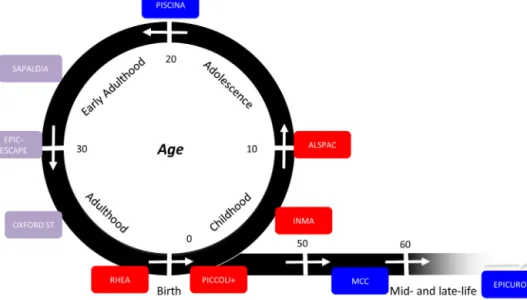
Box 1: A conceptual model of life-course disease risk. Population studies of chronic diseases have traditionally recruited middle-aged subjects. However, there is strong evi-dence that (a) the risk of disease is influenced by early exposures, includingin utero; (b) life-stages include critical (bearing long-term effects) and sensitive periods (susceptible to large effects) (Ben-Shlomo and Kuh, 2002). The idea of a sequence ofcritical andsensitive periods leads to the con-cept of “chain of risk”, i.e. the interplay of early exposures and late exposures. To use this concept in practice implies having access to multiple life-stages in exposure assessment and epidemiological studies, and repeated measurements of biomarkers at different time windows. This approach requires an inter-generational epidemiological study design and novel statistical analyses.
estimatesattheleveloftheindividual.Theinformationon environ-mentalfactorsisoftenincompleteorinaccurateandthesubsequent estimationofoverallrisksassociatedwiththesefactorsisseverely hindered.Asaresult,importantassociationscangoundetected. Thislimitationhasrecently beenframed within thecontext of theexposome,theenvironmentalcounterpartofthegenome.The conceptoftheexposomereferstothetotalityofenvironmental exposuresfromconceptiononwards,andhasbeendescribed in detailelsewhereincludingitsexternalandinternalcomponents (Wild,2005;RappaportandSmith,2010;Anon,2016;Vineisetal., 2009).
The context of EXPOsOMICS is the rapidly developing field ofexposureassessment,includingtheuseofomictechnologies, accordingtotheconceptoftheexposome.Historically,akeyevent wasthepublicationofthereportToxicityTestinginthe21stCentury: AVisionandaStrategybytheUSNationalResearchCouncilin2007. Theprimarygoalsofthereportwere,amongothers:“(1)toprovide broadcoverageofchemicals,chemicalmixtures,outcomes,andlife stages,(2)toreducethecostandtimeoftesting,(3)todevelop amorerobustscientificbasisforassessinghealtheffectsof envi-ronmental agents” ( http://www.nap.edu/catalog/11970/toxicity-testing-in-the-21st-century-a-vision-and-a).EXPOsOMICSaimsat partiallycoveringpoints1(mixtures,outcomes,andlifestages)and 3.
Bycomprehensivelyaddressingtheintegrationoftheexternal andtheinternalexposomesattheindividuallevel,EXPOsOMICS providesaholisticandconsolidatedapproachtoexposurescience. BuildinguponseveralEU-fundedresearchprojectswithrichsetsof healthdata,exposuredata,biomarkermeasurementsandpublicly availabledatasources,thismultidisciplinaryproject:
− Pools and integrates information from short-term, experimental human studies and long-term epidemiological cohorts/consortia–includingadults,childrenandnewborns–to enablefocused investigationstorefine environmentalexposure assessmentbasedontheconceptoflife-courseepidemiology(Box 1andFig.1).
− Characterizes the exposome, by (a) measuringthe exter-nalcomponent of the exposomeat different critical lifestages byemployingnoveltoolsand drawingonexperiencegained in existingEUinitiatives(PEM,databasescoupledwithGIS,remote sensing),withafocusonairand waterpollution;and(b) mea-suring biomarkers of the internal exposome (xenobiotics and metabolites),usingomictechnologies(adductome,metabolome, transcriptome,epigenome,proteome).
−Integratesexternalandinternalexposuremeasuresto com-prehensivelymodelandassessexposuretoairpollutionandwater contaminationinlargepopulationcohorts,throughnovelstatistical modeling.
Togethertheseapproacheswillleadtoformulatinganew con-ceptof integrated exposure assessment at theindividual level, reducinguncertainty,andassessinghowtheserefinements influ-encediseaseriskestimatesforcombined,multipleexposuresand selecteddiseases.
Thescientificquestionstobeaddressedbytheprojectare:
(1)Isitpossibletorefineexposureassessmenttoairpollutionand watercontaminantsusingacombinationofpersonalexposure monitoringandomictechnologies?
(2)Willthat refinementlead tomoreaccurateestimatesofthe associationwithselecteddiseases,byreducingmeasurement error?
(3)Donewapproaches allowtheinvestigationof theeffects of mixturesinadditiontosinglecomponents?
(4)Dotheyimprovetheinvestigationofdose-response relation-ships?
(5)Is it possible to strengthen causal reasoning by using the “meet-in-the-middle” concept, i.e. investigate the temporal sequenceofexposure,biologicalpathwayperturbationand dis-easeonset?
(6)Isitpossibletousetheexposomeapproachtostudythe life-courseepidemiologyofenvironmentaldiseases?
2. Externalexposome(Fig.2)
Existingpopulation-basedstudiesonenvironmentalexposures, suchas theESCAPE project(http://www.escapeproject.eu/), are providingessentialinformationonthediseaserisksassociatedwith exposuretoairpollution,buttheyarelimitedintheirexposure assessmentmethodologiesandbecauseoftheuncertain biolog-icalplausibilityofassociationsthataredetected.Well-conceived, fullycontrolledshort-terminterventionstudies,suchastheOxford Street Randomized Trial (included in the present project, ref. (McCreanorandCullinanetal.,2007Dec6)),andTAPAShaveshown thatacutechangescanoccurinlungandheartfunctionatlowor verylowlevelsofexposuretoairpollutants.Analogousstudieshave beenconductedonwatercontaminants,wheregenotoxiceffects havebeenobserved(see below).Theidentificationoflong-term effects,however,hasbeenproblematic,duetothelackofthesame degreeofaccuracyinexposureassessmentasobtainedin short-termexperimentalstudies.ThefirstinnovationofEXPOsOMICSisin bringingtogetherbothtypesofinvestigationsandinlinkingPersonal ExposureMonitoring(PEM)(highprecision,usedmostlyin short-termpanelstudies)withup-to-datelanduseregressionmodeling andsatellite-basedexposureassessment.GPS-basedtechniques, smartphones,accelerometersandPEMtodetectpollutantscan pro-videaccurateandinstantestimatesofchangesinhumanexposure andinphysicalactivity(deNazelleetal.,2011;Donsetal.,2011; Dippold,2006).Inaddition,satellitemodeling(e.g.aerosoloptical depth)isusedforseveralpurposes,includingextensionof expo-suremodelstoareasnotcoveredbyothersourcesofinformation, and retrospectiveassessment. EXPOsOMICS utilises and further developsthesetechnologicaladvancesinacombinedmannerfor theassessmentofpersonalexposures,andtoexpandthe assess-menttoexposuresthathavenotbeengeo-spatiallyaddressedin Europetodate(e.g.ultrafineparticulates).Byintegrating technolo-giesthatprovideestimatesofexposuretomultiplechemicalsover relativelyprolongedtime-periods,attheleveloftheindividual sub-jectaswellaspopulations,andatdifferentlifestages,ourproject systematicallyexploresandfurtherdevelopstheconceptofthe exposome.
Fig.1.TheconceptualframeworkofExposomics(life-longintegrationofcohorts).
Fig.2. Externalexposome:frompersonalmonitoringtosatelliteintegration.
3. Internalexposome
Biomarkersofexposurethatweredevelopedduringthepast coupleof decades(e.g.DNA and proteinadducts), while repre-sentingasignificantsteptowardsthedefinitionofmoreaccurate measures of personal exposure, still suffer from the disadvan-tageofaddressingsinglechemicalsandcoveringthereforeonlya smallfractionoftheexposome.However,adaptationofbiomarker technologiesto provide a more global estimateof the internal component of the exposomeis emerging and is further devel-oped within EXPOsOMICS. For example, high-resolution LC/MS (LiquidChromatography/MassSpectrometry)metabolomicsnow permitsthedetection and characterisation oflarge numbersof smallmolecules,typicallywithmolecularmasslessthan2000Da,
in biological fluids. This includes any metabolites that can be affectedbyenvironmentalexposures,andthatcanberelatedto inflammation,oxidative stressandvarious metabolicpathways. Analogousadductomictechnologieswillbepioneeredtodetect proteinadductsinanuntargetedfashion,toprovideaglobal pic-tureofbiomarkersofindividualexposureeithertoelectrophilesor chemicalsthataremetabolicallyactivatedtoelectrophiles.Because theycan directlymodify DNA and important proteins, reactive electrophilesareimportantconstituentsoftheexposome.Because oftheirgreaterabundanceandresidencetimesinhumanblood, adductsonthecirculatingproteinshemoglobinandhumanserum albumin(HSA)arepreferabletothoseofDNAandglutathionefor characterizingadductomes(Rappaportetal.,2011).
ARTICLE IN PRESS
G Model
IJHEH-12963; No.ofPages10
4 P.Vineisetal./InternationalJournalofHygieneandEnvironmentalHealthxxx(2016)xxx–xxx
Box 2: Basic components of the EXPOsOMICS project. Phase 1.
1. We have selected and integrated subjects, samples and data from three types of existing studies: Experimental Short-Term Studies (STS), Mother-Child Cohorts (MCO) and Adult Long-Term Studies (ALTS), between them reflecting all life stages from conception to old age.
2. We have measured the external exposome component for air and water contaminants by performing extensive, repeated Personal Exposure Monitoring (PEM). Fresh blood samples have been collected from all the individuals undergoing PEM, i.e. individuals in STS and those from a representative subsam-ples from MCO and ALTS, selected on the basis of contrasting exposures as estimated by traditional exposure assessment methods. In these samples, plus already stored samples of the recalled subjects from MCO and ALTS, EXPOsOMICS has con-ducted untargeted omic analyses. The aim is to look for new biomarkers of exposure to chemicals or mixtures and evaluate intra-individual variation of the internal exposome.
Phase 2.
3. OMIC profiles were also measured in approximately 2000 stored samples from MCO and ALTS, using untargeted ana-lytical methods, with the aim of evaluating them as predictive of risk by examining their association with health effects, and also generating new hypotheses on disease etiology. 4. We combine external and internal exposome data, Land Use Regression models (LUR) and satellite data to calibrate air pol-lution exposure estimates (e.g. PM2.5, ultra-fine particles, black carbon) obtained using traditional methods in MCO/ALTS and use these refined estimates for risk assessment and burden of disease evaluations.
In addition to global data on internal markers of expo-sure,providedbythesetechnologies,theinternalcomponentof theexposomeincludesfurtherbiological profiledatagenerated byhigh-densitybiologicalanalysistechnologies.Transcriptomic, epigenomicandproteomicprofilesofbiologicalsamplesprovidea detailedpictureoftheevolvingstateofcellsundertheinfluence ofenvironmentalchemicals,thusrevealingearlymechanisticlinks withpotentialhealtheffects(Chadeau-Hyametal.,2011;Lanetal., 2004;Smithetal.,2005).
4. Populationstudies
Thelong-termcohortsusedinEXPOsOMICShavebeenselected onthebasisofthefollowingcriteria:accesstostoredbiological samples,residentialhistories(forGISbasedmodels),information onconfoundersandabilitytorecallparticipants.Largestudieshave beenselectedthatcoverwidegeographicareasandhaveawealth ofinformation includingbiomarkers,geo-referencing,follow-up data,andextensivebehaviouralandenvironmentalvariables.Asit ishypothesizedthatmanyinternalexposomesignaturesare influ-encedbyexternalexposuresbeyondairandwaterpollutants,study populationshavebeenselectedwithavailableandaccuratedataon lifestyle,anthropometry,nutritionalandenvironmentalfactors.
ThebasiccomponentsoftheprojectaredescribedinBox2. Through theintegrationof a total of 14 studiesof different types,locatedindifferentregions,theprojecthasgenerateda sub-stantialamountofnewdataofcontinent-widerelevance.Phase1 involvesrefinedexposureassessmentbasedontheexternal (Per-sonalExposureMonitoring)andtheinternal(omics)components oftheexposome,aswellas(forcomparison)exposureassessment usingtraditionalmethods.Thisisperformedinsubjects partici-patinginshort-termexperimentalstudies(STS)andinsub-setsof representativesubjectsfrompopulationcohorts.Thelatterinclude mother-childcohorts(MCO)andadultlong-termstudies(ALTS).
Recalledsubsetshave beenchosenattheextremesof exposure (asestimatedby traditional methods).For recalled subjectswe haveconductedomicanalysesonbothfreshlycollectedandstored samples,thusproviding repeatedmeasurementsoftheinternal exposome.InPhase2,omicsaretestedfortheirassociationwith healtheffectsusingadditionaluntargetedanalysesinsamplesfrom ALTSandMCO,accordingtoacase-cohortstudydesign.In addi-tion,therefinedexposureestimatesderivedfromtheexternaland internalcomponentsof theexposome, whichtakeintoaccount individualvariation,arecomparedtoestimatesderivedfrom tradi-tional,lessaccurateexposureassessmentmethods,thusleadingto acalibrationofestimatesofexposureinlong-termstudies. Sub-sequentlytheassociationofcalibrated exposureestimates with selecteddiseasesisassessed.
Advantagesofthechosenstudydesignarethatitmakesit pos-sibleto:
(a)Linkshort-termexperimentalstudies,havingcontrolled expo-sureconditions,withlong-termstudiesinthesamegeographic areas;
(b)Address the effects of common exposures at different life stages;
(c)Addressindividualvariability(inspaceandintime)through repeated PersonalExposure Monitoring and omic measure-mentsinrepeatbloodsamples;
(d)Incorporateindividualvariabilityandbiomarkersofexposure intoexposureestimatesandriskassessmentforselected dis-eases,thusreducinguncertaintyinriskmeasures.
5. Experimentalstudies,shorttermeffects(STS)
Short-termexperimentalstudiesonairpollution(OxfordStreet RandomizedTrial,ref.(McCreanorandCullinanetal.,2007);and TAPAS)areutilized.Inthesestudiesvolunteersareexposedtohigh orlowlevelsofairpollutionwithindifferenturbancontexts.During eachsession,anumberofoutcomemeasurements(lungandheart function)havebeenmadewhilesimultaneouslymeasuring PM10-2.5,PM2.5-0.1andPM0.1.Inadditiontothesemeasurements,inthe EXPOsOMICSprojectadductomics,metabolomics,transcriptomics, andepigenomicsareappliedtoevaluatetheinternalexposomeon bloodsamplescollectedbeforeandaftertheexposureperiods,to searchforbiomarkersassociatingwithacuteexposures(PEM)and acutehealtheffects.
Exposuretowatercontaminantsandtheirshort-termeffects hasbeenevaluatedin theongoing PISCINAexperimentalstudy ofswimmersinpools,whereindividualshave highexposureto waterdisinfectionby-products(DBPs)throughskinabsorptionand inhalation.Studiesonswimmershavebeenfoundtobea good modelforhigh-exposuretoDBPsindrinkingwaterinthegeneral population.ExistingPISCINAsamples(ref.(Kogevinasetal.,2010; Richardsonetal.,2010))havebeencomplemented,inthisproject, withadditionalsamplescollectedfromswimmersinpoolswith differentlevelsofwaterDBPs.Theexternalandinternalexposome havebeenmeasuredintheseindividualsbeforeandafter swim-mingand complemented,forpurposes ofphenotypicanchoring (i.e.ofcorrelatingwithphenotypiceffects)(Kogevinasetal.,2010), withmeasurementsofmicronucleiinbloodandurine,bacterial mutagenicity(ofurinesamples),andinflammationandoxidative stressmarkers.
6. Observationallife-coursestudies:mother-childcohorts (MCO)andadultlong-termstudies(ALTS)
InPhase1,measurementsoftheinternalandexternal expo-somehavebeenmadeinrepresentativesubjectsof(a)fivebirth
cohorts(RHEA,ENVIRONAGE,INMA,ALSPACandPICCOLI+),(b)the EPIC,ECRHSandSAPALDIAadultcohorts,exploitingdata gener-atedwithinthelargeESCAPEconsortiumforairpollution,and(c) astudyoncoloncancer(MCC-Spain)usedfortheinvestigationof waterpollution.
Thesedataareutilizedforin-depthstudiesaimedatthe devel-opmentofimprovedexposureestimatesbasedontheexternaland internalexposomeconceptinachronicexposurecontext.Someof theabovecohortshavestoredsamplesofvenousbloodcollected atdifferenttimesoffollow-upandmostofthebirthcohortshave cordblood.Wereconstructtheinuteroexposomebasedoncord bloodsamplesintegratingdifferentpotentialcriticalexposure win-dowsofairpollutionexposure.Epidemiologicalandpublichealth significanceoftheinuteroexposomewillbeinvestigatedbased onassociationswithchildhealthanddevelopmentincludingbirth weight,growth,obesityandotheroutcomes.
7. Exposures 7.1. Airpollution
Epidemiologicalstudieshave traditionallyassigned exposure basedonmonitoringresultsofacentralmonitoringsiteinthecity ofresidence(Jerrettetal.,2005).Inthelastdecade,methodsfor moreindividualexposureestimateshavebeenapplied,including landuseregressionmodels(LUR)anddispersionmodels(Jerrett etal.,2005;Hoeketal.,2008).Anumberofstudieshaveshown differencesbetweenlong-termaveragepersonalandambientair pollutionexposure(VanRoosbroecketal.,2005).Inthelatter stud-ies,integratedpersonalsamplerswereusedthatprovidedasingle sampleover1–2days.Hencenoassessmentofthecontributionof differentmicroenvironmentstototalexposure(anddifference)was possible.
Recentadvancesinairpollutionmonitoringtechnologymean thatpersonalmonitoringcanbeundertakenwithreal-time moni-tors,capableofloggingminute-to-minutevariabilityinexposures. Sensorsareportable and sensitive.Coupling thenewair pollu-tion monitors with GPS and accelerometry from smartphones, andinformationonpersonalactivitypatterns,thepotentialnow exists to differentiate between exposure during journeys and fixed-site locations and to assess the contribution of different micro-environmentstothemagnitudeandvariabilityof environ-mentalexposures.However,noproductexistedattheoutsetof EXPOsOMICSthatintegratedthesetechnologiesintoasingle per-sonalmonitoringsystemthatcanbedeployedwithlayusers(e.g. cohorts),aproblemthathasbeenaddressedbythecurrentproject (seebelow).
Todate,themajorityofevidenceaboutthehealtheffects of airpollutionfromepidemiologyandcontrolledexposurestudiesis basedonparticlemassasthemeasureofexposure.Consequently, regulatoryagencieshaveadoptedmass-basedambientairquality standards.Yetparticulatematter(PM)isacomplexmixture,and particlesofdifferentsizeandcompositionarelikelytohave differ-enttoxiceffects.TheEU-fundedESCAPEstudyhascomprehensively characterizedsourcesofoutdoorairpollutionanddeveloped ambi-entLURmodelsforPM10,PM2.5andNO2.Modelsarecurrentlyin developmentforelementalcomposition(XRF;X-rayfluorescence), EC/OC(elementalcarbon/organiccarbon)andPAHs(polycyclic aro-matichydrocarbons).Thereis,however,aneedtodevelopmodels forultrafineparticlesforwhichthelong-termhealtheffectshave beenpoorlystudiedbecauseofdifficultiesinexposureassessment. Thisisnowpossibleusinganinnovativemobilemonitoringdesign thathasbeen showntobereliable and cost-effectivein recent studies(Klompmakeretal.,2015;Montagneetal.,2015).
Oneof theproperties of particleslikely toreflect toxicity is theiroxidativepotential(OP).Byanalyzingthespatialand tem-poralvariabilityoftheOPofparticulatemattercollectedonfilters, thedeterminantsofthatvariationarecharacterized,andnew, spa-tiallyresolvedairpollutionmodelsforOPhavebeendeveloped. Theairpollutionmodelsalone,however,onlyprovideinformation onambientoutdoorpollutantconcentrations.Recentadvancesin GIS(e.g.routemodeling)(GulliverandBriggs,2005)and micro-environmentalmodels (e.g.indoor-to-outdoor),have ledto the developmentofmoredetailed,personalexposuremodelswhich canbefedbyrichdatasourcesondetailedpopulationtime-activity patterns.
ToadvancethestateoftheartEXPOsOMICSprovidesan inno-vative framework for air pollution external exposome, via the followingsteps:
1)Thescientificpartnershaveintegratedinstrumentsfrom equip-mentmanufacturers(e.g.DiSCminiforUFPandBGIpumpfor PM2.5)todevelopanovelintegratedpersonalmonitoring sys-tem comprising UFP and PM2.5 personal air monitors with smartphone technologyaimed at characterization of micro-environments,activitypatterns,andinhalationrates.Oneofthe maintechnologicalinnovationsisthecollectionofvarious mea-surementsandtheabilitytoaccessthemviaasinglesource(i.e. smartphone).
2)Deploy the new personal monitoring system among cohort membersinasubsetoffivestudyareas,coveringdifferentsites (e.g.citycentre,suburban,industrial,andrural),tocollectthe largestseriesofdetailedpersonalexposuremeasurementsof UFP,PM2.5andactivitydatainEuropetodate(with simultane-ouslycollectedbloodsamplesforomics).
3)DevelopmodelsinlongitudinalstudiessuchasESCAPE(http:// www.escapeproject.eu/), enriched for all the cohorts in the study,anddevelopmethodstotransferthesemodelsofair pol-lutionconcentrationsbackintime.
4)UndertakeanUFPairpollution“mobilemonitoringcampaign” inthestudyareaswherewealsoperformPEMtodevelopand validatethenewland-useregressionmodelsforUFP.
5)ApplytheOPdepletionanalysistechniquetoextendPMmetrics tolookatOP.PM2.5filterscollectedduringfixed-siteoutdoor monitoringin selectedESCAPE areas have beenanalysed to detectthespatialandtemporalvariabilityinPM2.5-relatedOP andsubsequently createnewland-useregressionmodelsfor OP.Wecompareandassessthespatio-temporaldifferencesin exposureestimatesbetweenOPwiththosefromtraditional par-ticulatemetrics(e.g.PM10,PM2.5).
6)ComparePEMsin3)abovewiththosefromresidentialaddress locationstoquantifythecorrelationbetweenthetwo.We fur-therquantify the spatial and temporal micro-environmental contributionstototalexposures.
7)Assessthepotentialforexposurevariability(or misclassifica-tion)inexposures,e.g.forUFPandPM2.5wherewehaveboth LURmodelsandmeasuredexposures.Comparetraditional(i.e. residentialaddress)andnewmethodstoinformtheomicstudies (seebelow)andhealthriskassessment.
8)DevelopanewEurope-wideairpollutionmodelforPM2.5and methodstoapplyexposuremodelsfortheotherpollutants(OP, UFP)toothercohortsandacrossEuropeforhealthrisk assess-ment.Inordertodevelopexposuremodelsforthepollutants beingstudiedintheexternalexposome,whichcanbeapplied tohealthriskassessment, thetransferability ofthenewLUR modelsandhybridmodelstoothercountries/regionsandtime periodsisinvestigated.Developmodelswhichincorporate satel-litedataeitherasvariablestoenhanceexistingapproachesoras
ARTICLE IN PRESS
G Model
IJHEH-12963; No.ofPages10
6 P.Vineisetal./InternationalJournalofHygieneandEnvironmentalHealthxxx(2016)xxx–xxx ameansofcalibrating/validatingmodelsinareaswhereroutine
monitoringdataaresparseordonotexist.
9)Provide model estimates for single and multiple exposures (i.e. mixtures) to feed into risk models (e.g. partial least-squareregression,ridgeregression,Bayesianmixturemethods) (Chadeau-Hyametal.,2013a;Agieretal.,2016a)tostudythe contribution of single compounds and combination of com-poundstoadversehealtheffectsinchildrenandadults. 7.2. Watercontamination
EXPOsOMICSmakesuseof existingshort-termexperimental studies(STS)andoflong-termpopulationstudies(MCOandALTS). Fortheshort-termscale(PISCINAstudy)directmeasurementsof specificchemicalsandmixturesinwaterhavemainlybeenused, whilefor thelife-course studiesa combination of modelswith measurementsforvalidationpurposes,smartphonetechnology, extensiveuseof databases, remote sensing and land usemaps areused.European-basedestimateshavebeenobtainedfurther throughsystematicuseofregionalandnationaldatabasesfor dis-infectionby-products(DBPs).
7.2.1. Personalandmicro-environmentalexposure measurements(Fig.2)
In the PISCINA swimming pool study, external exposure measurements include determination of an expanded range of disinfection by-products (DBP) (trihalomethanes, haloacetic acids,MX,chloramines,haloacetonitriles),overcomingtraditional approaches that measure only trihalomethanes. These chemi-calshave been measuredin air and water and/or in biological samplessuchasexhaledbreath(e.g.trihalomethanes)andurine (haloacetic acids) from study subjects. The external exposome iscomplementedwithomicanalysesandsupported(for pheno-typicanchoring)byinvitroassayssuchastheSalmonella(Ames) mutagenicitytest(Maronand Ames,1983)andmammaliancell chronicandacutecytotoxicityandtheSCGE(comet)assay(van Leeuwenet al.,2006).Biologicalsamples(blood,urine, exhaled breathcondensate)havebeenobtainedimmediatelybeforeand afterswimminginthepool.Repeatedbiologicalsampleshavebeen collectedafterswimmingtocoverdifferentformation/elimination kineticsofbiomarkers,thuscontributingtoanimproved quantita-tiveevaluationofinternalexposures.
7.2.2. Long-termexposureassessment
In the mother-child cohorts, external exposure measure-ment includes determinations of a range of DBP chemicals in drinkingwater(trihalomethanes, haloaceticacids,MX, haloace-tonitriles). Measurements for some of these chemicals are available from the EU-funded HiWate project (https://www. researchgate.net/publication/24037941HealthImpactsof Long-TermExposuretoDisinfectionBy-ProductsinDrinkingWater inEuropeHiwate).Inthecolorectalcancerstudy(MCC),exposure modelingofDBPsisbasedontheevaluationoflifetimeresidential historytogetherwiththecollectionofhistoricalinformationon DBPsintherelevantregionsandwatertoxicitytestingfromthe short-termstudies.
7.2.3. European-widewater-borneexposuremodelsforhealth riskassessment
ExposuretospecificDBPsisderivedforEuropeanpopulations fromroutinelycollectedinformationineachcountry.Thesedata, notcentrallyavailableintheEU,comefromfocuscontactpoints in each country (expanding workcompleted in INTARESE, and HiWate).Inaddition atheoreticalframework forfuture routine
evaluation of water contaminantinformation in Europe is pro-posed.
7.3. Internalexposome:omics
Bypermittingthesimultaneous analysisof largenumbersof potentialtargetswithoutrecoursetopriorhypotheses,omic tech-nologiesprovideuniqueopportunitiesforthediscoveryofanew generation of biomarkers of exposure and disease risk, signifi-cantlyenrichedbymechanisticinformation(Chadeau-Hyametal., 2011; Lan et al., 2004; Smith et al., 2005; Perera et al., 2009; Zhang et al., 2016a; Zhang et al., 2016b; Bictash et al., 2010; NicholsonandRantalainenetal.,2011;Wang-SattlerandYuetal., 2008; Holmes et al., 2008; Calderón-Garcidue ˜naset al., 2004). TheEXPOsOMICS projectbothadvancesomic technologiesthat are related toidentification and quantification of environmen-talexposure(metabolomics,adductomics)andappliesmultiplex omictechnologiesthatmeasuredownstream effectsof environ-mentalexposures(epigenome,transcripts,miRNA,proteins).Omic technologiesaredeployedinanuntargetedmannerinboththe short-termandthelong-termstudies,toatotalofapproximately 3000 samples (Table 1). The subjects for untargeted omics in Phase1wereselectedonthebasisofextremeexposures.Publicly availabletoxicogenomicsdatabaseshavebeenexploredto iden-tifycandidateomic-basedexposurebiomarkers.Databasesarethe diXAdatainfrastructure(FP7project:diXA)andtheUS Compara-tiveToxicogenomicsDataBase(http://ctdbase.org/).Thesecontain bothinvitroandinvivotoxicogenomicdataand,toadegree,omic resultsfromexposedhumans,andhavelinkstoimportantchemical toxicitydatabasessuchastheUSNTPandtheOECDeChemPortal. WewillattempttoreplicatethesignalsofPhase1inselected case-cohortstudiesforatotalofapproximately2000subjects.Oneof themainproductsoftheconsortiumwillbeendophenotypes,i.e. intermediatephenotypescommontoseveraldiseases.
Untargetedomicanalysesingeneralareconductedinsubjects forwhomtheexternalexposomehasbeenmeasuredand,where possible,allomicplatformsareusedinthesamesubjectstoenable cross-omicanalyses.
7.3.1. Metabolomics(MStechnology)(Fig.3)
Plasmaorserumsampleshavebeenanalysedbyhigh resolu-tionmassspectrometry(MS)coupledtoUPLC.Metabolicfeatures characterizingexposedgroupsareidentifiedbymultivariate statis-ticswithappropriatecorrectionfortheFalseDiscoveryRate(FDR), andeffortstoidentifythediscriminatingmetabolitesaremade.A databaseofknownbiomarkersfromthemainenvironmental con-taminantsinairandwaterasmeasuredinvariouspopulationshas beencompiled fromthescientificliteratureintothe Exposome-Explorerdatabase(http://exposome-explorer.iarc.fr/).
7.3.2. Adductomics
Applicationofadductomicstotheexposomeconceptinvolves anuntargeted investigationof theinternal exposomebased on themeasurementofcompletecategoriesoffeatures(e.g.protein adducts).Theuntargetedapproachhasbeenrealisedbyfocusing onaspecificlocusofHSA,andusingMSofhydrolysisproductsto profilecovalentmodificationsoverarangeofmasses.
7.3.3. Intermediateomicbiomarkers
Additional omic technologies for the analysis of biological moleculeshavebeenusedtomeasurethemoredownstreameffects ofenvironmentalexposures.Theseincludetheeffectonthe tran-scriptome,theepigenomeandtheproteome.Measurementshave beenconductedusing:
Table1
Characteristicsofthecohorts.
Typeofstudy Cohort StudyCharacteristics
ExperimentalStudies OxfordStreet Thestudyisarandomizedcross-overtrialontheacuteeffectsofambientexposuretotrafficand exacerbationsofcardiovascularandchronicpulmonarydisease.59adultswererecruitedfortheEXPOsOMICs project:20healthyadults,20COPD(ChronicObstructivePulmonaryDisease)and19IHD(IschaemicHeart Disease).TheywereinvitedtowalkinOxfordStreet(highexposure)orinHydePark(lowexposure),London. Aseriesofclinical,physiologicalandinflammatoryresponsesarecomparedbetweenthetwoexposuresand tothosemeasuredinhealthycontrolsundergoingsimilarexposures,aswellasvariousomicsmeasurements (transcriptomics,metabolomics,adductomics)obtainedbefore,4hafterand24hafterwalking.
TAPASBarcelona TheTAPAS2Barcelonastudyfollowsacrossoverstudydesigninvolving30healthy,non-smokingadultsin theagerangeof18–60.Volunteerswereexposedfrom8amto10amtoeitherheavilypollutedair(busystreet inmorningrushhour,trafficsite)ortolowdensetrafficairpollution(controlsite)inBarcelona,Spain.Six subjectswerestudiedsimultaneouslyoneachstudyday:threeofthemperformedmoderatephysicalactivity, ridinganergometer(intermittent15mincyclingand15minbreak)whiletheotherthreevolunteersstayedat rest.Participantsthatperformedphysicalactivityhadtocycleatsuchapacethattheirheartratewas50–70% oftheirmaximumrate.
PISCINA2 TheexperimentalPISCINA2study–consistingof60healthynon-smokingvolunteers–assesseda)exposure tochlorinationbyproductsinswimmers,b)short-termrespiratoryhealtheffectsandc)geneticdamageafter swimming.Blood,urine,andexhaledbreathcondensate(EBC)werecollectedfromthevolunteersbeforeand immediatelyafterswimminginachlorinatedpoolfor40min.Transcriptomics,metabolomics,adductomics andconcentrationsofselectedinflammatorymarkersweremeasuredinbloodsamplesobtainedbeforeand 2haftertheexperiment.
Mother-ChildCohorts RHEA Mother-Child StudyinCrete
Themother-child“Rhea”studyinCreteisaprospectivecohortexaminingapopulationsampleofpregnant womenandtheirchildren,attheprefectureofHeraklion(n=1500).Thestudyaimsaretoevaluatea) nutritional,environmental,biologicalandpsychosocialexposuresintheprenatalperiodandinearly childhood,b)theassociationoftheseexposureswiththedevelopmentofthefoetusandthechild,c)mother’s healthduringandafterpregnancy,andd)geneticsusceptibilityandtheinteractionsbetweengeneticand environmentalfactorsaffectingchildhealth.Asetof100childrenfromtheRHEA-cohortisincludedinthe EXPOsOMICSchildrenstudies,forwhichdataoncordbloodDNA-methylation,metabolomics,proteomicsand albuminadductsareavailable.
INMA
Environmentand Childhood
TheINMA−INfanciayMedioAmbiente(EnvironmentandChildhood)projectfollowsupapopulation sampleofaround3100pregnantmothersandnewborns.Newandexistingcohortsofpregnantwomenhave beenincorporatedfromsevendifferentSpanishregions.Pregnantwomenareassessedat12,20and32weeks ofgestationtocollectinformationaboutenvironmentalexposuresandfoetalgrowth.Childrenareassessedat birth,attheageof1yearandattheageof4years.Thecohortshavebeendesignedtoevaluatetheimpactof environmentalexposuresanddietonchildren’shealth.Asetof100childrenfromtheINMAcentreSabadellis includedintheEXPOsOMICSchildrenstudies,forwhichdataoncordbloodmetabolomics,proteomicsand albuminadductsareavailable.
ALSPAC TheAvon LongitudinalStudy ofParentsand Children
ALSPACrecruitedmorethan14,000pregnantwomenwithestimateddatesofdeliverybetweenApril1991 andDecember1992.Outcomesincludeprenatalandbirthhealthevents,growth,neurodevelopment, behaviouralfunctioning,lungfunctionandcardiovascularmeasurements.NitrogenoxidelevelsandPM10 estimatesbasedonhomelocationareavailablefortheinuteroandearlylifeperiod.Asetof2300children fromtheALSPACstudyisincludedintheEXPOsOMICSchildrenstudies,forwhichdataonmetabolomicsat7 yearsofageisavailable.DNAmethylationfor650childrenisavailableincordbloodandat7and15yearsof age.Alsoinformationaboutgrowthtrajectories,asthma/lungfunctionandneurocognitivetestsareavailable. Piccoli+ Piccoli+isamulticentricItalianbirthcohortthatrecruited3000new-bornsandtheirmothersin5centres: Turin,Trieste,Florence,ViareggioandRome(www.piccolipiu.it).Participantsreceiveafollow-upinterview6, 12and24monthsafterdeliveryandamedicalexaminationwhenthechildrenturn4.Growthtrajectoriesand neurocognitivetest-resultsareavailable.Asetof99childrenfromtheTurincentreisincludedinthe EXPOsOMICSchildrenstudies,forwhichdataoncordbloodDNAmethylation,metabolomics,proteomicsand albuminadductsareavailable.
EnvironAge ENVIROnmental influenceON AGEinginearlylife
TheENVIRonAGE(ENVIRonmentalinfluenceONAGEinginearlylife)cohortincludes1300mother-infant pairsandfurtherrecruitmentisongoing.Dataincludemothers’lifestyleandsocio-economicstatus, gestationalhistory,measurementsincludingthenew-borns’bloodpressure(allhealthywithgestationalage 37–42weeks),biobankedplacentaltissueandcordbloodincludingRNA/DNA,toxicmetalsincordbloodand placenta,andinuteroandearlylifeexposuretofineparticulatesandNO2usingaspatialtemporal
interpolationmethod.Asetof200childrenfromtheENVIRonAGE-cohortisincludedintheEXPOsOMICS childrenstudies,forwhichdataoncordbloodDNAmethylation,transcriptomics,metabolomics,proteomics andalbuminadductsareavailable.
AdultCohortsand Case-ControlStudies
SAPALDIA TheSAPALDIACohortwasrecruitedatbaselinein1991asrandomsamplesfrompopulationregistriesof8 differentcommunities.Theaimistoinvestigatethevariousdeterminants−includingenvironmentaland genetic−ofasthmainadults.Exposuremodelingincludedareaspecificoutdoormodelsofthekeypollutants (UFP,PM2.5,PM10,NO2andPM2.5chemicalconstituentsincludingsoot,tracemetalsandinorganicions). BloodandDNAsampleswerecollectedintoabiobankatthefirstandsecondfollow-upandthecohorthas genome-widedataonover4000participants.Sapaldiaprovides200asthmacasesandtheirmatchedcontrols toEXPOsOMICS.Matchingisbysmoking(never/timesincequitting),gender,agegroups,seasonof recruitment,yearofrecruitmentinthecohort.
European Community RespiratoryHealth Survey (Norwichand Barcelona)
TheEuropeanCommunityRespiratoryHealthSurvey(ECRHS)includedsitesinEastAngliaandin Barcelona.In1991/2randomsamplesofadultsaged20–44wereinvitedtocompleteashortquestionnaire askingaboutsymptomsofasthma(n=3000ineachcentre).Randomsubsamples(plusadditionalcaseswith symptomssuggestiveofasthma)underwentextensiveclinicalinvestigationincludingextended
questionnairesonallergicandlungsymptoms,useofhealthservicesandindoor/occupationalexposures. Spirometry(baselineand2follow-ups),andinformationonatopy(baselineandtwofollow-ups),
self-reportedrespiratorysymptoms,andallergicdiseaseswerecollected.ParticipantsinNorwich,EastAnglia participatedinPEM(seebelow).40asthmacasesand40matchedcontrolparticipatedinEXPOsOMICSfrom Barcelona,Spain.Matchingbysmoking(never/timesincequitting),gender,agegroups,seasonofrecruitment, yearofrecruitmentinthecohort.
ARTICLE IN PRESS
G Model
IJHEH-12963; No.ofPages10
8 P.Vineisetal./InternationalJournalofHygieneandEnvironmentalHealthxxx(2016)xxx–xxx Table1(Continued)
Typeofstudy Cohort StudyCharacteristics
EPICCVD EPICisamulticenterprospectivecohortstudy,whichrecruited518,408volunteersfrom23centresin10 countries(Sweden,Denmark,Norway,theNetherlands,UnitedKingdom,France,Germany,Spain,Italy,and Greece)between1992and2000.Thestudypopulationincludedvolunteersagedmostly25–70yearsatthe timeofrecruitment.Cancerincidence,mortalitydataandincidentCVDeventswereobtainedattheregional level.CasesofcardiovasculardiseaseandcontrolswereidentifiedwithinexistingcohortsofEPICItaly(Torino n=180andVaresen=208)andwitharchivedbloodsamplesavailable.InItaly,incidentcaseswereidentified viaclinicalrecordsandvalidatedbyacardiologist.Othercriteriaforselection:onlyneversmokersand ex-smokerssinceatleast1year,andanequalnumberofmenandwomen.Matchingbysmoking(never/time sincequitting),gender,agegroups,seasonofrecruitment,yearofrecruitmentinthecohort.
MultiCancer ControlStudy Spain(MCC)
MCC-Spainisamulti-case-controlstudyconductedin11Spanishprovinceswiththeaimtoevaluate environmentalandgeneticfactorsassociatedwithprevalenttumours,usingacommonsetofpopulation basedcontrols.Incidentcasesandpopulation-basedmatchedcontrols20–85yearsoldhavebeenrecruitedin Barcelona,Madrid,León,Murcia,Gipuzkoa,Navarra,Asturias,Granada,Huelva,ValenciaandCantabria provincesbetween2007and2013.Thecancersitesevaluatedarecolorectal,breast,prostate,gastricand lymphocyticchronicleukaemia.ThestudypopulationparticipatingintheEXPOsOMICSprojectincludes200 casesofcolorectalcancerand200controls.
PersonalExposure Monitoring(PEM)
PEMhavebeenperformedinsubsamplesofexistingcohortsinfivestudyAreas(Italy(ITn=42),the Netherlands(NL=44),Spain(SP=40),Switzerland(CH=48),andtheUnitedKingdom(UK=31)).InIT,NL,CH andUKadultswererecruited;inSPchildrenaged8–12yearsold.Allsubjectscarriedabackpackcontaining airpollutionsensorsandbatteries,andabeltcontainingasmartphone(andalsoseparateGPSand
accelerometerinsomeareas)for24htomeasureindividualexposuretoPM2.5andUFP.Thestudytookplace overayearperiodduringthreedifferentseasons(Summer,WinterandSpring/Autumn).AftereachPEM session,abloodsamplewascollectedforOMICsAnalysisinalladults.Tointerprettheairpollutionand biologicalmeasurements,asetofquestionnaireswasadministeredtotheparticipants.
Fig.3.InternalExposome–PISCINAstudy–Metabolomicanalysis(PLS-DAandtophits)–Exposuretodisinfectionby-productsandtheirshort-termeffectsinswimmers– Untargetedmetabolomicsofbloodsamples.N=3761metabolomicfeaturesdetected(courtesyKVanVeldhoven).
•Transcriptomics(Agilentplatform)(numberofsignalsper sam-ple:44k)
•Epigenomics:
GlobalDNAmethylation(Illuminaplatform)(numberofsignals persample:450k)
microRNAanalysis(Agilentplatform)(numberofsignals per sample>1000)
•Targetedproteomics(LuminexMultianalyteProfilingplatform forinflammation-relatedproteins)(numberofsignalspersample
∼30).
8. Dataanalyses
8.1. Dataprocessingandintegration:dataanalysis
This project has created a dedicated data infrastructure by buildingonexistingdatarepositoriestoavoidredundancy(atthe
GenedataSME).Wehavedefinedquerymethods,workflowsfor qualitycontrol,dataharmonizationandnormalizationinorderto makeallthedataavailableforintegratedanalysis.Data integra-tionincludesfivetypesofdata:(a)datafromexistingdatabases (e.g.OMI,diXA,CTDB);(b)externalexposuredatafrom experimen-tal/observationalpopulationstudies;(c)untargetedomicdata;(d) healthinformationfromcohorts,indifferentagegroups;and(e) otherexposuresfromcohorts(confounders,effectmodifiers).
Thecomplexityoftheprojectdesignanddatacollectedposes new methodological and analytical data challenges. Main such challenges are: developing data analytics to address multiple exposures (both external and internal) in exposome-phenome associationstudies; identificationof statistical tools toaddress thehierarchicalstructurewithinexternaland internalexposure data(e.g.cross-omicsanalyses);andimplementinganalyticaltools toaddressthedynamicsoftheexposome-phenomeassociations overlife.Afirstefforthasbeenmadebycomparingthe perfor-mancesoflinearregressionbasedstatisticalmethodsinassessing exposome-phenomeassociations.Inanextensivesimulationstudy usingrealisticempiricalexposomedatawehaveshownthat corre-lationbetweenexposuresisindeedamajorchallengeforexposome research,andthatcurrentstatisticalmethodsarelimitedintheir abilitytoefficientlydifferentiatetruepredictorsfromcorrelated covariates.However,somecurrentlyavailablemethodslikeGUESS andDSAdoprovideamarginallybetterbalancebetweensensitivity andFDP,althoughtheydidnotoutperformtheothermultivariate methodsacrossallscenariosandpropertiesexamined.Futurework inExposomicsisfocusedonextendingthesemethodstobeable toadopttheaforementionedcomputationalcomplexityandtobe abletoincorporateexternalinformationfrompreviousresearch, networkontologies,andbiologicalpathways.Somedetailscanbe foundinmethodologicalpapersthathaveemergedfromthe col-laborationbetweenEXPOsOMICSandHELIX(Agieretal.,2016b; Chadeau-Hyametal.,2013b).
8.2. Exposurecalibration
The multidisciplinary expertise of the EXPOsOMICS group enablesthecollection,inseveralpopulations,ofmodeled expo-suresbasedonrefinedmodelsandcuttingedgetechnologies,as wellasPEM.Basedonsamplesinwhichbothtypesofdataare avail-able,wedefinecalibrationcoefficientstooptimizethepredictionof trueexposure(fromPEMstudies)fromcombinationsofvariablesin themodeledexposurematrices.Statisticalmethodsinclude clas-sicalmeasurement errormodelsand theirBayesianalternatives providingcalibratedexposureestimatesforairandwater pollu-tants.TheresultingestimatesareusedwithinEXPOsOMICSa)for thecharacterizationoftheinternalresponsetotheexternal com-ponentoftheexposomeandb)tostudytheassociationbetween thecalibratedexposuresanddiseaseendpoints.
8.3. Development,validationandinvestigationofinternal markersofexternalexposures
EXPOsOMICShasprovidedalargerangeof−omicprofilesin populationswherePEMandcalibratedexposuresarealsoavailable. Suchanalysesrelyontheadaptation,intheexposomeconcept,of methodsemployedinGWAS.Mainlyweuseasabenchmark uni-variateapproaches(linearorgeneralizedlinearmodels)coupled toad-hocmultipletestingcorrectionandFDRcontroltechniques. Bayesianvariable selection methods, typically seeking thebest combination of markers (omic signals) topredict the outcome (exposurelevels)areusedhereforthefirsttime.Inaddition,these analysesprovideanestimateofthevarianceinindividualresponses atsimilarexposurelevels.Finally,in ordertoidentifypotential commonpatterns inthe internal signatureof exposures across
platforms,thecorrelationsbetweenprofilesfromeachplatformare analysedwithrespecttotheexternalexposures.These‘cross-omic’ analysespotentiallyidentifyfeatures ofthebiologicalpathways linkingexposuretodiseaserisk,andrelyonwell-established meth-odssuchasnetworkandclusteringmethods.
8.4. Riskanalyses
Thecalibrationalgorithmsandestimatesofmeasurementerror andinter-individualdifferencesinbiologicalresponsesareusedto performupdatedriskanalysesintheshort-andlong-termeffect studies,usingstandardparametricandnon-parametricrisk func-tionsandadvancedriskanalysisproceduresthataccountforthe contributingeffectsofoften-correlatedexposures(e.g.partialleast squareregression,ridgeregression,andBayesianmixturemodels). Intheshort-termstudies(suchastheOxfordStreetRandomized Trial) EXPOsOMICS relatesthe external and internal exposome markersandprofilestoacuteoutcomessuchaspulmonaryfunction measures,otherpatho-physiologicaloutcomes,heartfunctionand asthmaepisodes.ForPISCINA,correlationsbetweenexternaland internalexposomemarkersareinvestigatedtogetherwith geno-toxicityoutcomes.Inthelong-termstudiesthecalibratedexposure estimatesandinternalexposuremarkersareappliedtostudythe associationbetweensubfractionsofairpollution(PMs,UFP,and oxidative stresspotential), watercontaminantsand health out-comesindifferentareasofEurope.Thisprojectusescase-cohort studieswithinthepooledcohorts,intwoways.InPhase2risk esti-matesforselecteddiseasesareperformed,i.e.asthma(inadults andchildren),CVDandcoloncancerinadults,and neurodevelop-mentinchildren,foratotalofapproximately1100casesand1100 controls.Forthesesubjectstheconsortiumhascompletedataon targetedanalyses,PEM-calibratedexposureassessment,and well-phenotyped disease outcomes. We have performed untargeted omicanalysesinPhase2,toallowustogeneratenew hypothe-sesontheetiologyoftheselectedhealthoutcomes,butalsoto test whethertheomic candidatesselected fromPhase1 (asso-ciatedwithexposures)predicttheriskofdisease.Subsequently, theseanalysesareextendedtoriskanalysesofgroupsof500–1000 casesformajordiseasesthathavebeenassociatedwithair pol-lutionorwatercontamination,andthecorrespondingcontrols.In thisenlargedriskestimationexercise,exposurecalibrationbased onPhases1and2isextendedtoexposureassessmentforatotal ofseveralthousandsofsubjectsinEurope.Lastly,theinclusionof adultandchildren cohortsusingthesameexternalandinternal exposomemethodologiesallowstheinvestigationofage-specific responsestoenvironmentalexposuresatcriticallifestages. 9. Conclusionsandlessonslearned
EXPOsOMICSisoneofthefirstsizableprojectsonthe expo-some.Thoughtheoriginalconceptoftheexposomeimpliesthat thestudyofalllife-courseexposuresneedstobeconsidered,this goaliscurrentlyclearlynotachievablebyasingleinvestigation.We chosethereforetofocusonairpollutionandwatercontaminants astwocommonsetsofexposures,andtoexplorethelife-course bylinkingpopulationstudiesrecruitedatdifferentages.Thereare severalchallengesinthestudyweareundertaking,whichinclude theuncertaintyin findingmeaningfulomicsignals fromlowor verylowenvironmentalexposures;theabilitytoinvestigate mix-tures(i.e.leadingtoeffectsthataredifferentfromthesumofsingle exposures);theabilitytoinvestigatedose-responserelationships withsufficientpower;thechallengeofextrapolatingPhase2 find-ings(innestedcase-controlstudies)toPhase3,i.e.inlargercohort studies,aftercorrectionformeasurementerrors.Therearealso lim-itationsinourproject,namelythelimitedsamplesizeandthelack
ARTICLE IN PRESS
G Model
IJHEH-12963; No.ofPages10
10 P.Vineisetal./InternationalJournalofHygieneandEnvironmentalHealthxxx(2016)xxx–xxx ofrepeatedsamplesincohorts;thisisanincentivetoestablish
con-nectionswithsimilarprojectsandplanpooledormeta-analyses. Themainlessonslearnedare:(a)itisdifficulttoharmonize sev-eralsmallstudiesintheattemptoflinkingagegroups,andasingle largecohortencompassingallages,withlongfollow-upandwith repeatedsampleswouldbebettersuited.In thecurrentproject wearetakingastatisticalapproachthatlinkstogetherthe differ-entstudies,treatingthemasphasesofalife-longexperience,but thisapproachhasitsownlimitations(particularlypowerand com-parability).(b) Exposure measurement technologiesare rapidly evolvingandsuchevolutionneedstobemonitoredintheyears aheadtoallowarapidincorporationintoepidemiologicalstudies. Inspiteofcostreductionitislikelythatforalongtimeincorporation ofthenewsensorswillbepossibleonlyinhundredsorthousands ofsubjects,thusmakingtheapproachwehaveused(calibration) arealisticandconcretewayahead.(c)Thesameappliestoomic technologies,withtheadditionalneedtoevaluatetheirreliability andapplicabilitytosamplesstoredfromlargecohorts.
ThedataproducedbyEXPOsOMICSwillbemadepublicly avail-able.
Morethanadecadeaftertheoriginalpublicationofthe expo-someconcept,followedbyyearsofdiscussionsondefinitionsand challengesofimplementing theconceptintoresearch,thetime hasnowcometomovetheconceptfromtheorytopractice. EXPO-sOMICSservesasaproof-of-principleoftheexposomeconceptand throughitsimplementationitwillinformfutureexposomestudies. Conflictofinterest
Nonedeclared Acknowledgment
ThisworkhasbeensupportedbytheExposomicsECFP7grant (Grantagreementno:308610)toPV.
References
Agier,L.,etal.,2016a.Environ.HealthPerspect.,May24Epubaheadofprint.
Agier,L.,etal.,2016b.Environ.HealthPerspect.,May24inpress.
http://exposomealliance.org.
Ben-Shlomo,Y.,Kuh,D.,2002.Int.J.Epidemiol.31(April(2)),285–293.
Bictash,M.,etal.,2010.J.Clin.Epidemiol.63(September(9)),970–979.
Calderón-Garcidue ˜nas,L.,etal.,2004.Toxicol.Pathol.32
(November–December(6)),650–658.
Chadeau-Hyam,M.,etal.,2011.Biomarkers16(February(1)),83–88.
Chadeau-Hyam,M.,etal.,2013a.Environ.Mol.Mutagen.54(August(7)),542–557,
http://dx.doi.org/10.1002/em.21797,Epub2013Aug5.Review.
Chadeau-Hyam,M.,etal.,2013b.Environ.Mol.Mutagen.54(August(7)),542–557.
deNazelle,A.,etal.,2011.ISEEProceedings,Sept.
Dippold,M.,2006.Personaldeadreckoningwithaccelerometers.Universität
BremenMobileResearchCenter.
Dons,E.,etal.,2011.Atmos.Environ.45(21),3594–3602.
Gulliver,J.,Briggs,D.J.,2005.Environ.Res.97(1),10–25.
Hoek,G.,etal.,2008.Atmos.Environ.42,7561–7578.
Holmes,E.,etal.,2008.Nature453,396–400.
Jerrett,M.,etal.,2005.J.Expo.Anal.Environ.Epidemiol.15(2),185–204.
Klompmaker,J.O.,etal.,2015.Sci.TotalEnviron.508(March(1)),266–275,http://
dx.doi.org/10.1016/j.scitotenv.2014.11.088,Epub2014Dec5.
Kogevinas,M.,etal.,2010.Environ.HealthPerspect.118(11),1531–1537.
Lan,Q.,etal.,2004.Science306(December(5702)),1774–1776.
Maron,D.M.,Ames,B.N.,1983.Mutat.Res.113,173–215.
McCreanor,J.,Cullinan,P.,etal.,2007.N.Engl.J.Med.357(December(3)), 2348–2358.
Montagne,D.R.,etal.,2015.Environ.Sci.Technol.49(14(July)),8712–8720,
http://dx.doi.org/10.1021/es505791g,Epub2015Jul8;
Plewa,M.J.,etal.,2008.Washington,D.C.:AmericanChemicalSociety,36–50. Nicholson,G.,Rantalainen,M.,etal.,2011.Mol.Syst.Biol.7,525.
Perera,F.,etal.,2009.PLoSOne4(2),e4488.
Rappaport,S.M.,Smith,M.T.,2010.Science330(6003),460–461.
Rappaport,S.M.,etal.,2011.Toxicol.lett.,Apr8.
Richardson,S.D.,etal.,2010.Environ.HealthPerspect.118(11),1523–1530.
Smith,M.T.,etal.,2005.Chem.Biol.Interact.153–154(May(30)),123–127.
VanRoosbroeck,S.,etal.,2005.Atmos.Environ.41,3381–3394.
Vineis,P.,etal.,2009.Environ.Health30(8),54.
vanLeeuwen,D.M.,etal.,2006.(August(1–2)),12–22.
Wang-Sattler,R.,Yu,Y.,etal.,2008.PLoSOne3(12).
Wild,C.P.,2005.CancerEpidemiol.BiomarkersPrev.14(August(8)),1847–1850;
Wild,C.P.,2012.Int.J.Epidemiol.(January(31)),PubMedPMID:22296988.
Zhang,Y.,etal.,2016a.Ecotoxicology18(6),722–728.