THE ROLE OF EDUCATORS IN FACILITATING REFLECTIVE LEARNING IN STUDENTS
by
KANNAGI NAICKER
submitted in accordance of the requirements
for the degree of
MASTER OF ARTS
in the subject
HEALTH STUDIES
at the
UNIVERSITY OF SOUTH AFRICA
Supervisor: Professor GH van Rensburg
Student number: 05364701
DECLARATION
I declare that THE ROLE OF EDUCATORS IN FACILITATING REFLECTIVE
LEARNING IN STUDENTS is my own work and that all the sources that I have used or quoted have been indicated and acknowledged by means of complete references and that this work has not been submitted before for any other degree at any other institution.
25 February 2014
__________________ ________________
Kannagi Naicker Date
THE ROLE OF EDUCATORS IN FACILITATING REFLECTIVE LEARNING IN STUDENTS
STUDENT NUMBER: 05364701
STUDENT: KANNAGI NAICKER
DEGREE: MASTER OF ARTS
DEPARTMENT: HEALTH STUDIES, UNIVERSITY OF SOUTH AFRICA SUPERVISOR: PROFESSOR GH VAN RENSBURG
ABSTRACT
Over the last 20 years the nursing profession has widely accepted reflective practices and reflective learning as effective measures to help students provide care in a frequently changing context. The purpose of the study was to explore and describe the role of nurse educators in the facilitation of reflective learning in students. The objectives were to explore the reflective teaching practices of nurse educators, describe the learning activities that could promote reflective learning in student nurses and to determine whether the learning environment is conducive to promote reflective teaching and learning. A quantitative, explorative, descriptive study was conducted in nursing education institutions in Gauteng. A total of 121 nurse educators completed a structured questionnaire. The findings revealed that, although nurse educators agree with the importance of reflective practices in the teaching and learning environment they do not necessarily place emphasis on developing their own reflective practices. Reflective learning was not identified as a formal learning approach in the programmes the nurse educators facilitated but the educators did attempt to include reflection in the teaching and learning activities planned. Not enough emphasis is placed on the creation of a teaching and learning environment that will enhance reflection in a non-threatening context. The deeper understanding of reflective learning comes with continued personal reflective practices. Nurse educators should be taught how to facilitate reflective learning activities and how to create an environment conducive to reflection. Through reflective teaching practices students could be supported in developing into critical thinkers hence reflective learning should be a formal teaching and learning approach in nursing curricula.
Key terms:
Reflection; reflective learning; reflective learning environment; reflective practices; reflective teaching.
ACKNOWLEDGEMENTS
I want to thank the following persons for their respective contributions to this dissertation:
• A grateful thank you to my Lord and saviour, for his unconditional love and
support
• A special thank you to my colleagues, Dr E van Niekerk and Mrs L Fletcher, for
their support and encouragement
• My study supervisor, Prof GH van Rensburg, for her expert guidance and
counsel
• Mr Hennie Gerber, for his assistance and expert guidance with the statistical
analysis of data collected
• Mrs Marion Marchant, for editing the manuscript
• Mrs Rina Coetzer, for assisting with formatting and presentation of the
i
Table of contents Page
Chapter 1
Orientation to the study
1.1 INTRODUCTION ... 1
1.2 BACKGROUND TO THE STUDY ... 2
1.2.1 The source of the research problem ... 2
1.2.2 Background to the research problem ... 3
1.3 RESEARCH PROBLEM ... 4
1.4 PURPOSE AND OBJECTIVES OF THE STUDY ... 5
1.4.1 Research purpose ... 5
1.4.2 Research objectives ... 5
1.5 SIGNIFICANCE OF THE STUDY ... 5
1.6 DEFINITIONS OF TERMS ... 6
1.6.1 Learning ... 6
1.6.2 Student ... 6
1.6.3 Educator ... 7
1.6.4 Nursing education institution ... 7
1.6.5 Learning approach ... 8 1.6.6 Facilitation of learning... 8 1.6.7 Reflection ... 8 1.6.8 Reflective learning ... 8 1.6.9 Reflective practice ... 9 1.6.10 Reflective teaching ... 9
1.7 FOUNDATIONS OF THE STUDY ... 10
1.7.1 Conceptual framework... 10
1.8 RESEARCH METHODOLOGY ... 11
1.8.1 Research paradigm ... 11
1.8.2 Research design ... 11
1.8.2.1 Explorative research design ... 11
1.8.2.2 Descriptive research design ... 12
1.8.3 Target population ... 12
1.8.4 Accessible population ... 12
1.8.5 Sample and sample framework ... 13
1.8.5.1 Sample ... 13
1.8.5.2 Sample frame ... 13
1.8.5.3 Sampling and sampling procedure ... 13
1.8.6 Data collection ... 14
1.8.7 Data analysis ... 14
1.9 VALIDITY AND RELIABILITY ... 14
1.9.1 Validity ... 14
1.9.2 Reliability ... 15
1.10 ETHICAL CONSIDERATIONS ... 15
1.10.1 Protecting the rights of the participants ... 15
1.10.2 Protecting the rights of the institutions ... 16
1.11 SCOPE AND LIMITATIONS OF THE STUDY... 16
1.12 STRUCTURE OF THE DISSERTATION ... 16
ii
Table of contents Page
Chapter 2
Literature review
2.1 INTRODUCTION ... 18 2.2 REFLECTIVE LEARNING ... 19 2.2.1 Levels of reflection ... 20 2.2.2 Theory-practice integration ... 212.2.3 Reflective learning included in education programmes ... 21
2.2.4 Critical thinking and reflection ... 23
2.2.5 Development of self-awareness ... 24
2.3 THE ROLE OF THE EDUCATOR IN ESTABLISHING A REFLECTIVE LEARNING ENVIRONMENT ... 25
2.3.1 Role of the education institution ... 25
2.3.2 Time allocated for reflective learning ... 25
2.3.3 Educator self-awareness ... 26
2.3.4 Establishing a conducive environment ... 27
2.4 REFLECTIVE LEARNING ACTIVITIES ... 28
2.4.1 Reflective journaling... 28
2.4.2 Group reflective sessions ... 29
2.5 REFLECTIVE TEACHING ... 30
2.5.1 Educator training and development ... 31
2.5.2 Value of educator self-reflection ... 31
2.5.3 Reflecting on practice ... 32
2.5.4 Peer reflection ... 33
2.6 CONCLUSION ... 33
Chapter 3
Research design and method
3.1 INTRODUCTION ... 353.2 RESEARCH DESIGN ... 35
3.2.1 Research paradigm... 35
3.2.2 Research design ... 36
3.2.2.1 Explorative research design ... 37
3.2.2.2 Descriptive research design ... 37
3.3 RESEARCH METHODS ... 38
3.3.1 Population and sampling ... 38
3.3.1.1 Population ... 38
3.3.1.2 Sample ... 39
3.3.1.3 Sampling procedure ... 40
3.3.1.4 Ethical issues related to sampling ... 42
3.3.2 Data collection ... 43
3.3.2.1 Data collection approach and method ... 43
3.3.2.2 Development and testing of the data collection instrument ... 44
iii
Table of contents Page
3.3.2.3 Characteristics of the data collection instrument... 45
3.3.2.4 Data collection process ... 46
3.3.2.5 Ethical considerations related to data collection ... 48
3.3.2.5.1 Protecting the rights of the respondents ... 48
3.3.2.5.2 Protecting the rights of the institution ... 49
3.3.3 Data analysis ... 50
3.4 INTERNAL AND EXTERNAL VALIDITY OF THE STUDY ... 52
3.4.1 Internal validity ... 52
3.4.2 External validity ... 53
3.5 CONCLUSION ... 54
Chapter 4
Analysis, presentation and description of the research findings
4.1 INTRODUCTION ... 554.2 DATA MANAGEMENT AND ANALYSIS ... 55
4.3 FINDINGS OF THE STUDY ... 56
4.3.1 Section A: Biological information ... 57
4.3.1.1 Age analysis ... 57
4.3.1.2 Marital status analysis... 58
4.3.1.3 Gender analysis ... 59
4.3.1.4 Number of years of experience as an educator ... 60
4.3.1.5 Type of nursing education qualification ... 61
4.3.2 Section B: Educators’ reflective practices ... 62
4.3.2.1 Educators’ prior use of reflective learning ... 62
4.3.2.2 Educators’ application of reflection to own current practice ... 65
4.3.2.3 Educators’ facilitation of reflective learning in the classroom ... 70
4.3.2.4 Comparison of educators’ use of reflective journals and requiring their students keep a reflective journal for the duration of the programme ... 73
4.3.3 Section C: The facilitation of reflective learning ... 74
4.3.3.1 Reflective learning adopted as a teaching and learning approach in the programme the educator is currently teaching or facilitating ... 74
4.3.3.2 Availability of necessary resources for various learning activities that help students develop reflective practice ... 75
4.3.3.3 Formal time allocated in the programme schedule for reflective learning by students ... 76
4.3.3.4 Educators’ selection of the learning activities that could assist students with reflective learning .... 77
4.3.3.5 The impact of reflective learning on students’ learning ... 79
4.3.3.6 Role as a facilitator of reflective learning ... 80
4.3.3.7 The value of reflection in evaluating and/or improving an educator’s practice ... 81
4.3.3.8 Successfully able to create a learning environment that is conducive for students to practise reflective learning ... 82
iv
Table of contents Page
Chapter 5
Interpretations, conclusions, limitations and recommendations of the study
5.1 INTRODUCTION ... 84
5.2 RESEARCH DESIGN AND METHOD ... 84
5.3 INTERPRETATION OF THE RESEARCH FINDINGS ... 84
5.3.1 Demographic data... 85
5.3.2 Objective 1: To explore the reflective teaching practices of educators ... 85
5.3.3 Objective 2: To describe the various types of learning activities educators use to promote reflective learning by students ... 88
5.3.4 Objective 3: To determine whether the learning environment is conducive to promote reflective learning and teaching... 89
5.4 CONCLUSIONS... 91
5.5 RECOMMENDATIONS ... 93
5.5.1 Recommendations for professional development of educators ... 93
5.5.2 Recommendations for student support ... 94
5.5.3 Recommendations for future research studies ... 95
5.6 CONTRIBUTIONS OF THE STUDY ... 96
5.7 LIMITATIONS OF THE STUDY ... 96
5.8 CONCLUDING REMARKS ... 97
BIBLIOGRAPHY ... 98
List of Tables
Table 3.1 Number and percentage of institutions in strata of a population and sample ... 41Table 3.2 Number of institutions in sample and number of educators per type of institution ... 42
Table 3.3 Number of questionnaires returned per number of educators per type of institution ... 47
Table 4.1 Educators who applied reflective learning in own basic or post-basic education ... 64
Table 4.2 Educators who set aside time in day for self-reflection ... 66
v
Table of contents Page
List of Figures
Figure 1.1 Conceptual framework ... 10
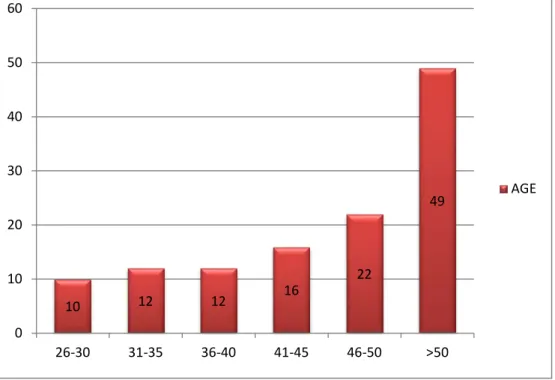
Figure 4.1 Analysis of the age groups of educators (N=121) ... 57
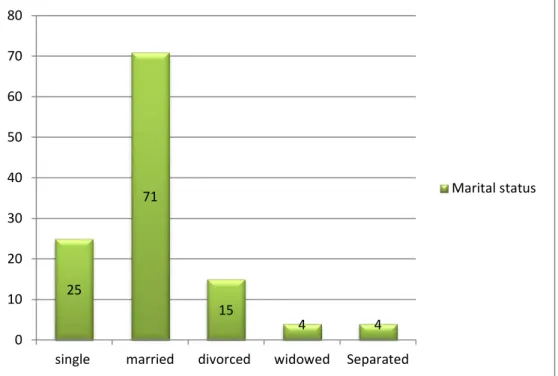
Figure 4.2 Analysis of the marital status of educators(N=119) ... 58
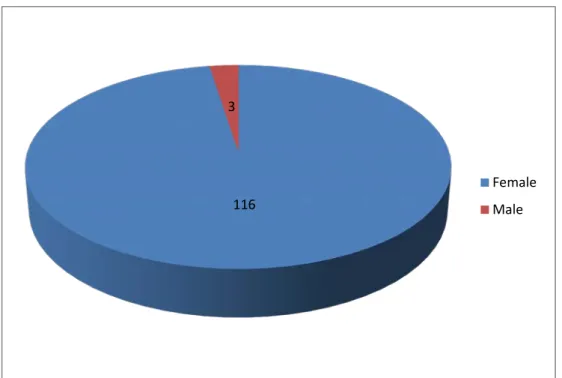
Figure 4.3 Analysis of the gender of educators (N=119) ... 59
Figure 4.4 Analysis of the number of years of experience as an educator (N=117) ... 60
Figure 4.5 Analysis of the educators’ type of nursing education qualification (N=120) ... 61
Figure 4.6 Educators who studied reflective learning as a teaching and learning approach in training as an educator (N=120) ... 62
Figure 4.7 Educators who applied reflective learning approach in own basic or post-basic education (N=120) ... 63
Figure 4.8 Educators who set aside time in their day for self-reflection (N=121) ... 65
Figure 4.9 Educators who practise reflection on own teaching practices and methods (N=120) ... 67
Figure 4.10 Educators who keep a reflective journal to record evaluation of sessions and plan the next sessions (N=120) ... 68
Figure 4.11 Educators who ask their peers to assist in evaluating their lessons (N=121) ... 69
Figure 4.12 Educators’ use of reflective learning approach in the classroom (N=121) ... 71
Figure 4.13 Educators who require students to keep a reflective journal for the duration of the programme (N=93) ... 72
Figure 4.14 Comparison of educator’ use of reflective journal in own practice and requiring their students to keep a reflective journal (N=121) ... 73
Figure 4.15 Reflective learning adopted as a teaching and learning approach in programme the educator is currently facilitating (N=119) ... 74
Figure 4.16 Necessary resources are available for use in reflective learning activities (N=113)... 75
Figure 4.17 Formal time allocated in programme schedule for reflective learning by students (N=116) ... 76
Figure 4.18 Educators’ selection of the learning activities that could assist students with reflective learning (N=121) ... 77
Figure 4.19 The impact that reflective learning has on student learning (N=119) ... 80
Figure 4.20 The value of reflection in evaluating and improving an educator’s practice (N=118) ... 81
Figure 4.21 Successfully create a learning environment conducive to students’ reflective learning (N=118) ... 82
vi
Table of contents
Abbreviations
CHE Council for Higher Education HEQC Higher Education Quality Committee NEIs Nursing Education Institutions NQF National Qualifications Framework SANC South African Nursing Council SAQA South African Qualifications Authority Unisa University of South Africa
Annexures
Annexure A Unisa Ethical Clearance Certificate Annexure B Letter to respondent
Annexure C Letter requesting permission to conduct the study Annexure D Data collection instrument
Annexure E Letter from statistician Annexure F Certificate of editing
Annexure A
Annexure B
Letter to respondent
Annexure C
Annexure D
Annexure E
Letter from statistician
Annexure F
Certificate of editing
CHAPTER 1
ORIENTATION TO THE STUDY
1.1 INTRODUCTION
Education, in South Africa and internationally, has undergone much change over the past years, with the focus moving from rote learning to higher-order thinking; from teacher-centred to student-centred approach and from lecturing as a method of teaching to more interactive and participatory methods such as group discussions. Students are required to take responsibility for their own learning, which includes evaluating and assessing their own understanding, actions, experiences and performance. Reflective learning is a learning approach adopted by education institutions, including nursing education institutions, to assist students to effectively review, evaluate and learn from their own learning. This type of learning approach requires the educator to be a facilitator of learning who supports and guides the students in their learning process (Bruce, Klopper & Mellish 2011:111).
According to Rolfe, Jasper and Freshwater (2011:196), “At the heart of a reflective model is the development of knowledge from experience”; that is, the individual tries to make sense of encountered experiences and situations. A reflective “supervisor”, who internalises the need to perform self-assessments by reflecting on own teaching practice, is better able to know when to use certain types of learning activities to help students (Rolfe et al 2011:124).
The researcher sought to conceptualise the assumption that educators are expected to facilitate reflective learning in students, but are not necessarily prepared to effectively deliver learning activities that promote reflective learning. The study also sought to determine the extent to which educators use reflective teaching in their own practice, because reflective teaching is an invaluable approach educators should use to continuously find better ways to improve their practice and assist students in their learning (Jacobs, Vakalisa & Gawe 2011:54). Finally, the study explored the role that education institutions play in promoting reflection.
1.2 BACKGROUND TO THE STUDY
1.2.1 The source of the research problem
The reflective learning approach was introduced at the nursing college where the researcher was an educator, by instituting reflective journals for students. The Gibb’s Reflective Cycle was selected to guide students; each student received a copy of this model with a journal. The researcher discovered that the students did not automatically take to recording their thoughts about nursing and their experiences in the clinical practice area. To expect the students to use reflective learning without the appropriate support and facilitation from their educator was presumptuous. Kolb (cited in Bruce et al 2011:127), in his experiential learning theory, states that reflection is inherent; hence, everyone has the ability to reflect. An individual can change, adopt or alter a learning approach with adequate motivation and facilitation (Bruce et al 2011:129). Students, however, find reflection on actions difficult, mainly owing to lack of experience with the reflective learning process; hence it is the educator’s responsibility to assist and facilitate students to become reflective thinkers. This can be achieved by creating opportunities for the students to experiment with reflection and to learn to reflect effectively (Kuiper, Persut & Kautz, 2009:76).
Simply reading about reflective learning does not equip educators to facilitate reflective learning effectively. The educator needs to practise reflection to gain a better understanding of the reflective process by reflecting on his or her own teaching style and approaches used. This is reflection on action, and will help in assisting students more effectively in their reflective learning. Educators also need to understand the different learning activities that may be used to enhance the students’ ability to learn from reflection (Brockbank & McGill 2007:18) as well as using a wide range of teaching styles that will support and promote reflective learning. The learning environment must be such that it is conducive for students to feel no threat of retribution and be comfortable with reflecting on personal actions and experiences (Taggart & Wilson 2005:6).
1.2.2 Background to the research problem
Over the last 20 years the nursing profession has widely accepted reflective practice and reflective learning as effective measures in developing competent nurse practitioners. In an attempt to help students correlate nursing theory with practice, education institutions have adopted learning by reflection as a learning approach to encourage self-awareness and promote evaluation of own practice (Foster & Greenwood 1998:165; Kuiper et al 2009:76). The aim of education therefore should be to prepare practitioners to apply theory to practice in the real world. Many education institutions identify reflective learning as a learning strategy to attain this goal (Grant, Kinnersley, Metcalf, Pill & Houston 2006:379; Geber & Nyanjom 2009:894).
Like their international counterparts, education institutions in South Africa also promote the development of reflective practitioners (Friedrich-Nel 2010:24; Ross & Kitching 2009:91), based on similar issues of poor integration between theory and practice in nursing. The controlling bodies of nursing education in South Africa (the South African Nursing Council (SANC), South African Qualifications Authority (SAQA) and the Council for Higher Education (CHE)) endorse course outcomes for students that include abilities such as critical thinking, problem solving and lifelong learning. For instance, SAQA (2010:1) provides “level descriptors” that must be met by a student on completion of a qualification. These outcomes are meant to develop the individual as a lifelong learner. Education institutions that introduce reflective learning in their programmes do so with the aim of helping the students meet the stipulated qualification outcomes (Jacobs et al 2011:332). Curricula that adopt reflective learning as part of the learning activities must allow adequate time for reflective activities; otherwise the measure will be pointless, as numerous closely spaced activities will block reflective contemplation. So education institutions that include reflective learning activities in their curricula need to promote a reflective culture within the institution and promote a collaborative environment that encourages reflective practice by all concerned (Platt 2002:33). In order for reflection to be effective as a learning approach, the learning environment should be safe, with no fear of judgement and punishment.
Educators are expected to assist and guide students to reflect on clinical practice with the aim of improving the students’ own performance. To be successful in achieving this, educators themselves must be supported and assisted by colleagues and management
to practise reflection on action, for instance by having group reflective sessions at the
education institution (Karban & Smith 2006:4). Educators need to understand the
different teaching activities that promote effective reflective learning by the students (Josten 2011:24). Necessary resources should also be readily available to aid in using the teaching activities effectively. Using critical reflective thinking measures in education will be beneficial to both educator and student; however, to ensure effectiveness, the practice of reflection must be developed, facilitated and utilised by both student and educator (Brockbank et al 2002:18; Karban & Smith 2006:4). Without adequate training of educators in the practice of reflection, and understanding the learning activities that promote the development of reflective thinkers, the training of students to use reflection as a learning approach will be limited, and probably neglected, in nursing education (Levett-Jones 2007:112). Educators need to have a strong commitment to developing themselves as reflective practitioners, which will promote their understanding and recognition of the need to structure processes and methods to support reflection and the development of reflective practitioners (Farrell 2004:5). Educators who have practised reflective learning during their own training are more likely to promote reflective learning in their students, because of personal experience and understanding.
In fact, in South Africa the general basic teaching programme includes reflective teaching as an important outcome of the curriculum (Jacobs et al 2011:54); thus the importance of reflective teaching is acknowledged and promoted by teacher training institutions. The educator as a facilitator needs the right attitude and must be open to developing and challenging his or her own beliefs and practices, in order to be successful in facilitating reflective learning. Reflective teaching helps the educators to connect with the students and to find ways to assist students to learn better (Carroll, Curtis, Higgins, Nicholl, Redmond & Timmins 2002:13; Jacobs et al 2011:54–60).
1.3 RESEARCH PROBLEM
The research problem is derived from the focus of the researcher, which in this study is on reflective learning and reflective teaching. Reflective learning plays an important role in helping students to critically analyse and learn from their actions and experiences, and to apply knowledge gained from previous experience to current practice situations and learning activities. Educators need to be skilled in the use of diverse learning activities that are known to encourage reflective learning, such as role playing,
simulation and problem-based learning activities. The educator responsible for facilitating the development of reflective students has to be suitably prepared and supported in this role in order to create and maintain an environment that is conducive to reflective learning (Farrell 2004:36). Educators themselves should regularly practise reflection by reviewing and evaluating their own teaching practices and methods to ensure an optimum and effective learning environment for students.
The question that arose from the above discussion was what the role of the educator within the learning environment is in facilitating reflective learning in students?
1.4 PURPOSE AND OBJECTIVES OF THE STUDY
The overall intention and more specific outcomes the researcher hoped for from the study are as follows:
1.4.1 Research purpose
The purpose of the study was to explore and describe the role of educators in the facilitation of reflective learning in students.
1.4.2 Research objectives
The objectives for this study were to
• explore the reflective teaching practices of educators
• describe the various types of learning activities educators use to promote
reflective learning by students
• determine whether the learning environment is conducive to promoting reflective
learning and teaching
1.5 SIGNIFICANCE OF THE STUDY
There is a significant amount of literature available on the value of reflective learning as a learning approach (Bruce et al 2011:143–154; Kuiper et al 2009:76; Thorpe 2004:327). There are a number of studies on the value of reflective teaching (Farrell
2004:5; Karban & Smith 2006:4; Levett-Jones 2007:112). However, the researcher had difficulty in finding information on the views of educators, specifically nurse educators, on the value of reflective teaching on their own practice, as well as in facilitating reflective learning by students. By focusing on the reflective practice of educators, this study aimed to contribute data that would provide more understanding of the value nurse educators place on reflective teaching, especially when facilitating reflective learning.
This study may also contribute to the increased awareness by education institutions of their role in supporting and promoting a reflective practice environment and culture. This study could contribute further by providing the information needed to create guidelines to assist educators in their understanding of reflective learning, of the learning activities that may be applied, and the use of reflective teaching to promote reflective learning. Finally, this study may add to the body of knowledge on reflective learning and reflective teaching in education by providing new and relevant information that may assist educators in their practice.
1.6 DEFINITIONS OF TERMS
The following are the key concepts identified in the study:
1.6.1 Learning
The ability to learn is to internalise information obtained and memorise it for future use. The Oxford Dictionary (2009:529) definition of learn is “gain knowledge or skill through study or experience”. It is an active process of creating knowledge by developing meaning from experiences (Bruce et al 2011:122). Synonyms for learn are to grasp, absorb, take in, familiarise or memorise. Learning therefore refers to the knowledge
and/or skills gained from experience and studying (Oxford Dictionary 2009:530).
1.6.2 Student
A student is an individual who is in the process of gaining knowledge from formal
learning of a subject/s. Synonyms for student are novice, amateur or learner (Oxford
the learning process. For the purpose of this study, the term student will be used. Furthermore, in this study the students referred to, will be those registered in the South African Nursing Council programmes R425 and R687 (SANC 1985).
1.6.3 Educator
An educator is a person who teaches at a school or college with the aim of improving
the mind and character of the students (Oxford Dictionary 2009:294, 953). Synonyms
are teacher, facilitator, and tutor. A nurse educator is a registered nurse who has successfully completed the course of study “Registration of the additional qualification in nursing education” means that the person has complied with all the requirements for the qualification and has current active status with the SANC (SANC 1987). For the purpose of this study, the term educator is used. Furthermore, the educators in this study are those employed at universities and private and public education institutions in the Gauteng Province of South Africa.
1.6.4 Nursing education institution
An education institution is an academic organisation, establishment or school serving to
educate the public (Oxford Dictionary 2009: 294, 486). As per the SANC (SANC 2013)a
nursing education institution “means a founded establishment or organization consisting of a building or complex of buildings and its associated resources for the specific purpose of offering nursing education and training programmes”. An accredited nursing education institution “means the act of granting credit or recognition with respect to a nursing education institution that complies with the Council’s prescribed accreditation requirements, criteria and standards for nursing education and training”. For the purposes of this study the above definition will apply to the nursing education institution referred to. The terms education institution and nursing education institution may be used synonymously in the study depending on the context and author preference.
1.6.5 Learning approach
A learning approach is a “plan of action” that the student adopts or is assisted with to develop the knowledge, skills and attitude required by the programme of study (Bruce et al 2011:123).
1.6.6 Facilitation of learning
To facilitate is to make something easier, to assist or promote (Oxford Dictionary
2009:334). The educator actively assists the students to participate in their own learning by providing activities that help students to tap into and assimilate existing knowledge and create new knowledge (Bruce et al 2011:111). This type of role by the educator allows the student control and responsibility for learning achieved, with the ultimate aim of individual growth and development and the internalisation of knowledge gained. The educator has to use a variety of teaching and learning activities, resources and opportunities to effectively promote learning, because the educator does not relinquish the responsibility of setting the outcomes and leading the education process (Bruce et al 2011:194). For the purpose of this study facilitation refers to the educator actively assisting students to participate in reflective learning.
1.6.7 Reflection
The Oxford Dictionary (2009:773) definition of reflection states that it is the individual’s “serious thought”. Synonyms are consideration, contemplation, pondering and deliberation. Reflection is a natural process of thinking about one’s experiences, feelings and understandings of a situation (Bowden 2003:28). Everyone has the ability to reflect; the degree of reflection varies from individual to individual. To reflect on a situation, event, idea or thought means that the individual does not jump to hasty conclusions but rather thinks carefully, based on factual information (Bruce et al 2011:155).
1.6.8 Reflective learning
Reflective learning is the articulation of knowledge in a more meaningful way, resulting in the construction of new and deeper understanding of the experience (Ip, Lui, Chien,
Lee, Lam & Lee 2012:253). Reflection is a “natural human thinking process” and reflective learning is a “systematic and deliberate” reflective process with the aim of learning (Carroll et al 2002:13; Grant et al 2006:379). Reflective learning is valuable in helping students, especially adult students, to correct their mistakes and misunderstandings from their previous learning (Thorpe 2004:327). This form of learning is not merely a mental process but involves both cognitive and emotive processes and requires active participation, involvement and commitment from the student, resulting in the student’s acting on convictions and being able to validate own actions by using higher-order thinking processes: that is, at a meta-cognitive level of thinking (Levett-Jones 2007:119). Finally, reflective learning is a learning approach that encourages students to weigh facts by a process of inner dialogue and to draw conclusions based on this review (Bruce et al 2011:143–154).
1.6.9 Reflective practice
Schon (cited in Josten 2011:24) coined the terms “reflection in action” and “reflection on action” to explain the practitioner’s knowledge that is intrinsic to his or her practice. Reflection in action means that the practitioner reflects, while in a current situation, on previous experiences and actions to assist in effectively carrying out the task or action. In reflection on action, the practitioner, after the experience or situation has occurred, thinks back on the related actions, events and feelings and how they were handled or could be handled differently, and the additional knowledge needed to improve future practice. Reflective practice, according to Thorpe (2004:327), is an extension of reflection where the individual thinks deeply about an event, problem or experience, resulting in gaining more knowledge to apply in and improve on practice. A reflective practitioner is therefore an individual who uses reflection as a tool for revisiting experiences to learn from and for making sense of the problems encountered in professional practice (Mann, Gordon & Macleod 2009:595).
1.6.10 Reflective teaching
Reflective teaching is a continuous striving to improve, change or update one’s programme delivery by a process of self-assessment, self-awareness and discussions
about one’s practice (Jacobs et al 2011:54−60). Reflective teaching is an extension of
in order to improve teaching and assist learners in achieving full potential (Thorpe 2004:327). Reflective teaching is more than correcting one’s mistakes; it is a continuous review of own teaching, both alone and by peers.
1.7 FOUNDATIONS OF THE STUDY
A conceptual framework was used as the theoretical basis of the study.
1.7.1 Conceptual framework
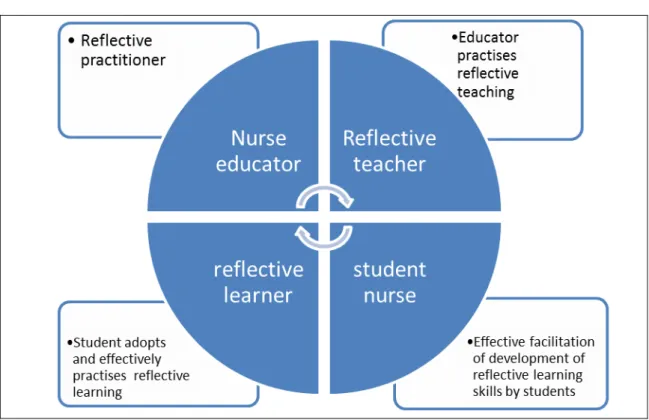
The following framework was established to explain the underlying rationale for this study:
Figure 1.1 Conceptual framework
An educator who is a reflective practitioner will be able to use reflective teaching when facilitating student learning. Reflective teaching will assist educators to facilitate reflective learning by the students (Frick, Carl & Beets 2010:421). A student who is a
reflective learner will be able to reflect on his or her own practice with the aim of developing and improving on knowledge and skills (Richard 2010:24). Students who apply reflective learning in their studies will be able to continue this ability after completing their training as reflective practitioners. The learning environment in which reflective learning and reflective teaching occur must be a threatening, non-judgemental environment that supports and promotes reflective practice.
1.8 RESEARCH METHODOLOGY
Research methodology refers to the research design, sampling of data, collection of data, the analysis of data collected and the rigour of the study. An overview of the research design and methods used in this study is given below. Chapter 3 covers a more comprehensive discussion of the research methodology.
1.8.1 Research paradigm
A research paradigm is a set of philosophical assumptions that guide the researcher’s inquiry (Polit & Beck 2012:761). The frame of reference for this study was the positivist paradigm, which focuses on the use of orderly, disciplined procedures with tight controls and an objective view. The research approach selected was the quantitative approach which, according to Polit and Beck (2012:763), is the study of phenomena by way of “precise measurement and quantification involving a rigorous and controlled design”. The quantitative approach supported this study by providing statistical data with regard to the role educators play in facilitating reflective learning.
1.8.2 Research design
Polit and Beck (2012:765) define research design as the overall plan to answer the research question and ensure the study’s integrity. The research design selected for this study was an exploratory and descriptive design.
1.8.2.1 Explorative research design
Explorative research design is used to investigate the nature of a phenomenon, how it manifests itself and the factors related to it (Polit & Beck 2012:20). Babbie (2010:92)
further states that this design is used to examine new interests and gain new insights. This design helped the researcher explore the nurse educators’ understanding of reflective learning and their reflective teaching practices.
1.8.2.2 Descriptive research design
This research design is an example of a typical/univariate/classic descriptive research design. The classic descriptive research design is a non-experimental study that describes variables as they naturally occur, with no manipulation of variables or setting and no attempt to determine the relationship between variables (Burns & Grove 2009:237–245). This design enabled the researcher to collect original data from the sample at multiple sites that might be true for the study population at large. The design helped the researcher describe the various teaching and learning activities educators use in facilitating reflective learning by students.
1.8.3 Target population
This is the complete set of people, objects or events that have common characteristics and meet the sampling criteria of the proposed study (Botma, Greeff, Mulaudzi & Wright 2010:123–131; Polit & Beck 2012:337–341). The target population of this study was all nurses registered with the SANC as nurse educators and currently practising at a nursing education institution registered with the SANC.
1.8.4 Accessible population
These are the elements or basic units of a study that meet the eligibility or inclusion criteria for the research study and are available as participants of the study (Botma et al 2010:123–131; Polit & Beck 2012:337–341). The accessible population for this study was educators practising at nursing education institutions in Gauteng, South Africa.
The eligibility criterion used for the purpose of this research was that the educators had to be practising at nursing education institutions that offered a programme/course leading to registration as a nurse, R425 and R687, with the SANC (SANC 1985), in Gauteng, South Africa.
1.8.5 Sample and sample framework
1.8.5.1 Sample
A sample is a subset or portion of the accessible population elements that participate in the research study. The sample comprised educators practising at Nursing Education Institutions (NEIs) that offered a programme/course leading to registration as a nurse with the SANC.
1.8.5.2 Sample frame
The sample frame is the list of all elements which meet the inclusion/eligibility criteria are accessible to the researcher and from which the sample is drawn (Botma et al 2010:123–131; Polit & Beck 2012:337–341).
There was no specific sample frame available for nurse educators in Gauteng. However, there were 89 NEIs in Gauteng registered with the SANC (SANC 2010); therefore a sample of NEIs was drawn from this total.
1.8.5.3 Sampling and sampling procedure
Sampling is the process of selecting a subset/portion of the accessible population that represents the entire population (Polit & Beck 2012:765). The probability sampling method, which is described by Polit and Beck (2012:762) as sample selection using random procedures, was used. To ensure representativeness of the sample, the sampling technique selected for this study was stratified random sampling. This method allows the random selection of elements from two or more strata of the population (Polit & Beck 2012:767; Botma et al 2010:128).
Thereafter, to select the actual education institutions from each stratum, the researcher used an unrestricted random sampling method, also known as selection with replacement. This probability sampling method allowed all elements in the sampling frame an equal chance of being selected (Burns & Grove 2009:349; Botma et al 2010:127). Finally, all educators at the randomly selected nursing education institutions were included in the study.
1.8.6 Data collection
Data collection is the capturing and translating of data so that the data can be analysed (Polit & Beck 2012:367). For this study the structured data collection approach was selected. The structured approach ensured that data were quantifiable by the use of numerical values.
The data collection method selected for this study was a self-report method, which is a data collection method that collects data directly from either a sample or the accessible population (Polit & Beck 2012:766).
The data collection instrument of choice for this study was a structured questionnaire. The questionnaire was a good choice for this study, as it provided greater uniformity in responses, which promoted the processing and analysing of data collected (Babbie 2010:255; Burns & Grove 2009:406).
1.8.7 Data analysis
Descriptive analysis was the data analysis method of choice for this study design. This was mainly because the study focused on exploring and describing the data available so that the information could be organised in a meaningful way and occurrences examined from different angles (Burns & Grove 2009:470; Polit & Beck 2012: 558). A statistician assisted with the data analysis, using the SAS JMP version 10.1 computer programs.
1.9 VALIDITY AND RELIABILITY
A researcher reports on the validity and reliability of the study to enhance the quality of a quantitative research study.
1.9.1 Validity
Validity refers to the degree to which a measurement validates the conclusions made in a study and the degree to which the conclusion can be drawn that the independent variable is responsible for the change in the dependent variable (Botma et al 2010:174;
159; Polit & Beck 2012:286). The research supervisor and statistician assisted the researcher in ensuring the content validity of the instrument/questionnaire. Content validity refers to the extent to which the items in the instrument represent the concepts being measured (Polit & Beck 2012: 750). A comprehensive literature review was done to ensure that the study was based on facts and evidence, hence promoting the content validity.
The face validity of the questionnaire was evaluated by the research supervisor and statistician to ensure that the questions were readable and clear and that the sequence of items ensured consistency with the correct language and formatting used.
1.9.2 Reliability
Reliability refers to the degree of consistency with which the data collection instrument measures an attribute or characteristic. Reliability therefore measures the quality and accuracy of the data collection instrument (Botma et al 2010:177). The reliability of the questionnaire was increased by including more items that covered the same concept but in different forms. The researcher pre-tested the questionnaires with educators who met the eligibility criteria but were not part of the study sample. The researcher also requested the assistance of a statistician to ensure the clarity and appropriateness of the questions.
1.10 ETHICAL CONSIDERATIONS
Ethical considerations refer to the protection of the rights of all those involved or affected by the research study.
1.10.1 Protecting the rights of the participants
The three ethical principles of beneficence, respect and justice were upheld to ensure that the respondents’ rights were protected. The right to protection and freedom from harm and discomfort was considered. The right to self-determination and full disclosure was ensured. The right to fair treatment and privacy was also given due consideration. A letter was attached to the questionnaire that aimed to assure the respondents of their rights and how the researcher sought to protect their rights (see Annexure B).
1.10.2 Protecting the rights of the institution
Ethical clearance was granted by the Higher Degrees Committee of the Department of Health Sciences, University of South Africa (Unisa) on 29 October 2012 (see Annexure A). The researcher ensured that the institution received a copy of the ethical clearance certificate and the research proposal with the request for permission to conduct the study at the institution (see Annexure C).
1.11 SCOPE AND LIMITATIONS OF THE STUDY
The study focused on the reflective teaching practices of educators that facilitate reflective learning in the classroom. The accessible population for this study was educators who practised at education institutions that offer registered nurse training programmes, in the Gauteng Province of South Africa.
To try to prevent theoretical limitations, the researcher used multiple references in developing the above aspects of this research and the study was reviewed by an appointed supervisor as well as a statistician, who assisted the researcher as needed.
The use of questionnaires is limited to the response rate of subjects. The researcher delivered questionnaires to the nursing education institutions, and explained the purpose and benefits of the study to the educators by attaching a letter to each questionnaire. The response rate of returned questionnaires was over 50%.
1.12 STRUCTURE OF THE DISSERTATION
The study consists of the following five chapters, set out as follows:
Chapter 1 Orientation to the study
Chapter 2 Literature review
Chapter 3 Research design and method
Chapter 4 Analysis, presentation and description of the research findings
1.13 CONCLUSION
This chapter was a summary of the research process followed by the researcher. A quantitative approach was selected for this study, using a descriptive explorative research design. The data collection instrument of choice was a structured self-administered questionnaire. The accessible population selected were all educators practising in nursing education institutions that offered registered nurse training programmes and were located in the Gauteng Province, South Africa. Permission from the eligible nursing education institutions was obtained in writing prior to the nurse educators being approached to participate in the study. The data analysis was completed with the assistance of a statistician. The chapter that follows is a detailed review of some of the literature available on reflection and its practice.
CHAPTER 2
LITERATURE REVIEW
2.1 INTRODUCTION
The new qualification framework and restructuring of the controlling bodies has resulted in the formation of the three quality control councils of education in South Africa. The Council for Higher Education (CHE) includes the Higher Education Quality Committee (HEQC), which is responsible for ensuring that higher education institutions deliver appropriate, effective, quality programmes. This forces higher education institutions to evaluate the delivery of their programmes and makes it imperative that educators reflect on and revisit teaching and learning approaches and practices they use to ensure quality standards are maintained.
The healthcare industry nationally and internationally has changed and become more cost conscious and quality conscious, hence demanding that practitioners be efficient, be able to work under less than optimum conditions and be flexible and highly competent (Frick et al 2010:421). The quality of nurse training is therefore receiving more academic attention, as students need to be trained to deal with this complex reality. The challenge for educators is that they have to prepare students to function in an ever-changing global healthcare environment (Richard 2010:24). Therefore educators need to be lifelong learners in order to understand and be up to date with the changes and challenges in the healthcare industry. Keeping up to date will help educators to implement appropriate teaching and learning approaches that will help the students to relate and adapt their learning to dynamic real-world situations.
Over the last 20 years the nursing profession has widely accepted reflective practice and reflective learning as effective measures to help students provide care in a frequently changing context and to develop as competent practitioners (Kuiper et al 2009:76). The academic world has embraced the concept of reflection as a valuable measure for self-awareness, the development of critical thinking and insight (Epp 2008:1379). This is a huge responsibility for educators to embrace and manage; hence the researcher has recognised the need to determine how educators perceive their role.
The purpose of this study was to explore and describe the role of educators in the facilitation of reflective learning by students. Current literature in education also refers to the importance of educators’ reflecting on their own practice in order to help improve and promote student learning (Bowden 2003:28; Friedrick-Nel 2007:24; Frick et al 2010:421). This suggests that educators should not only promote reflective practice in their students but should themselves be reflective practitioners. The researcher therefore reviewed literature available on the concepts of reflective learning, reflective teaching and the role the learning environment plays in promoting a reflective culture.
The conceptual framework for the study as it appears in Chapter 1 guided the literature reviewed. The researcher was assisted by the librarian in obtaining primary sources, but did experience difficulty in finding an adequate number of more recent articles. The researcher also found that some of the older articles had data that contributed significantly to the review; hence such references were included. More recent secondary sources also provided appropriate and relevant information and were referenced in the review.
2.2 REFLECTIVE LEARNING
Reflective learning promotes the development of higher order thinking skills, which empower students or practitioners to learn how to learn, to understand and know what they already know, and what they do not know or need to know (Richard 2010:24). Reflective learning is a structured and controlled form of reflection in which the students learn from thoughtful consideration of experiences and actions, resulting in new or revised knowledge being created (Grant et al 2006:379). Reflective learning is regarded as a powerful tool that promotes self-directed learning (Foster & Greenwood 1998:165; Kuiper et al 2009:76), and is an effective approach in preparing practitioners to apply theory to practice in the real world (Betts 2004:239; Epp 2008:1379; Frick et al 2010:421).
The role of reflective learning in developing self-awareness and in the evaluation of practical skills and knowledge is frequently encouraged as an effective and possibly vital approach to learning and development in a dynamic global environment and context. The purposeful evaluation of current knowledge and abilities leads to change, better understanding of one’s abilities, capabilities and competencies, and the
development of higher order thinking skills like problem solving and critical thinking. In the modern student and practitioner these qualities are vital, as real world situations are ever changing and vary in complexity, requiring the student and practitioner to adapt skills to meet specific needs – in fact think on their feet. Ip et al (2012:253) state that in reflecting, the nurse is able to develop a new and deeper understanding of experiences and to articulate knowledge in a more meaningful way. Ip et al (2012:253) also recommend that in helping student nurses develop reflective skills, the facilitator should aim to achieve the level of critical reflection. Reflection, if viewed as a learning strategy, can be very useful in helping students connect new and existing knowledge and skills and integrate the affective aspects of learning (Mann et al 2009:595).
2.2.1 Levels of reflection
Researchers and authors refer to different levels of development of purposeful reflection. These different levels of reflection are referred to by various names and definitions as it applies to the authors’ model and is beyond the scope of this study. (Frick et al 2010:421; Kane, Sandretto & Heath 2004:283; Pierson 1998:165). However, the significant trend within all the models is that the ability to reflect critically and constructively is developed over time, with practice and perseverance and is not always easy, as it is emotionally and psychologically stressful. It is easier to conform and accept what is, rather than critique and question one’s actions and beliefs. A study by Kane et al (2004:283) notes that the majority of study participants (16 of the 17) practised at a technical reflection level, which was the lowest level on continuum used in the study. Only three of the 17 participants in the study practised critical reflection, which was the higher meta-cognitive level of reflective practice, where the participants looked beyond the personal and considered the effects of their actions on a broader scale, including social, economic and political perspectives.
It is therefore significant that educators not only understand the different levels of reflection, but identify their role in creating activities that will help the students advance their reflective abilities. Frick et al (2010:421) suggest that teachers focus on creating reflective learning opportunities so that students develop at all three levels of reflection. For example Schaub-de Jong, Schonrock-Adema, Dekker, Verkerk and Cohen-Schotanus (2011:155) suggest that the use of reflective learning groups promotes the development of higher order skills. In order to avoid a singular approach to reflection,
which may focus on technical reflection or developing individual identity only, Mann et al (2009:595) support the use of reflective groups and state that the development of reflective abilities is deliberately stimulated in this educational context.
2.2.2 Theory-practice integration
In an attempt to help students correlate theory with practice, education institutions have adopted learning by and from reflection as a learning approach, hereby helping students to improve their own performance and understand their practice better by self-evaluation (Frick et al 2010:421; Grant et al 2006:279). Reflection on practice or in practice, as proposed by Schon (cited in Josten 2011:21), assists the students or practitioners to identify their practice knowledge and skill with the aim of identifying the gaps that they need to improve or develop on.
Newton (2004:155) states that professional practice is constantly modified to adjust to the frequently changing healthcare system. The ability to reflect meaningfully may help the practitioner or student who struggles to remain competent and up to date in a fast-changing professional environment. Riksaasen Hatlevik (2011:868) recommends that reflective skills be included in a nursing programme as a “mediator” for theory-practice integration, after finding in a study that there was a definite coherence of both skills and knowledge following the introduction of a structured reflective programme for students. Reflective practice assists registered nurses’ professional development, as it was found to be a key factor in helping the nurses bridge the gap between theory and practice (Riksaasen Hatlevik 2011:868). Epp (2008:1379) cautions that if nurses in the current context of healthcare do not reflect while planning and evaluating care, the theory-practice gap will be widened. De Swardt, Du Toit and Botha (2012:1) also endorse reflection in the form of guided reflection as resulting ultimately in a positive influence on quality patient care.
2.2.3 Reflective learning included in education programmes
Internationally, for example in the United Kingdom, United States of America and Australia, the regulatory bodies endorse the concept of reflective practice (Mann et al 2009:595). Even in Canada reflective practice is a compulsory competence of a registered nurse (Epp 2008:1379).
In South Africa the controlling bodies of education (South African Nursing Council (SANC), South African Qualification Authority (SAQA) and CHE) recognise the need to develop reflective practice skills to assist the students to relate theory to practice. These controlling bodies promote the development of reflective practitioners by endorsing course outcomes for training that include abilities such as critical thinking, problem solving and lifelong learning.
SAQA, the gatekeeper of all registered qualifications, provides “level descriptors”, which are broad outcomes related to the level of the qualification on the national qualification framework and must be met by a student on completion of a qualification. The following level descriptors are meant to develop the individual as a lifelong student (SAQA 2010:1):
• A learner is able to demonstrate an ability to assess his/her performance or the
performance of others and to take appropriate action where necessary, to take responsibility for his/her learning within a structured learning process and to promote the learning of others.
• Autonomy of learning is the extent to which a learner can undertake action of
learning independently, the extent to which a learner takes responsibility for his/her learning and the extent to which the learner is self-reflexive about and can evaluate the quality of his/her learning and eventually that of others.
The SANC, which is the professional body governing nursing, states in the draft Charter of Nursing Practice (SANC 2004:4) that some of the challenges for nursing education are to
• create nurses that are lifelong learners and critical thinkers
• develop in every nurse the ability to evaluate the quality of his/her practice
This suggests that the SANC endorses the development of critical reflective thinking practitioners as a central yet challenging task of educators.
The SANC Regulation 425 (SANC 1985:3), which refers to a four-year registered-nurse training programme, stipulates as one of the course objectives that the student “is able to evaluate personal practice continuously and accept responsibility for continuing
professional and personal development”. Again it appears that the SANC endorses reflection as essential for professional development. Nursing education institutions and nurse educators are expected to structure their programmes and lessons to promote reflective learning. Lessons need to be designed such that abstract theory is translated into tangible, real-world subject matter that the student can relate to, based on current and past experiences. Ip et al (2012:253) in their study introduced a structured programme for improving self-reflection skills of student nurses, and found that the programme was helpful in improving the students’ reflective skills.
The educator needs to understand the aims and outcomes stipulated by the national bodies that govern nursing education and practice and the role reflection will play in meeting these aims. It is important for educators to be aware of the limitations that may be unwittingly imposed as a result of focusing on certain aims or outcomes only. Some education institutions include reflective learning in their curriculum with the focus on developing competence in skills (i.e. use of reflection to look back on one’s actions with the aim of improving). Betts (2004:239) states that some institutions may use reflection to help practitioners conform to the visions and goals of the institution. In using reflection to help the practitioner understand and embrace the institutional requirements, the benefit to the institution is a practitioner who is more productive and motivated to meet the institutional requirements. The overall success of reflection depends on everyone at the institution’s collaborating and working towards a shared reflective philosophy (Richard 2010:24).
2.2.4 Critical thinking and reflection
Critical thinking, according to Bruce et al (2011:154), “is the art of reflecting on our own thinking”; hence, reflection is interwoven with critical thinking. In referring to students having the ability to think critically, the researcher assumes that the SAQA is suggesting more specifically that students should be developed as critical reflective thinkers. It is therefore up to the education institutions and educators to implement teaching and learning approaches and activities that promote the achievement of the outcomes above.
Kane et al (2004:283) describe critical reflection as developing a “habit of mind”. Practitioners like educators who habitually review their work critically are able to make their facilitation sessions worth attending. Ross and Kitching (2009:91) refer to the
critical assessment of self which leads to the understanding of oneself better, as well as understanding oneself in relation to others. It would seem that critical reflection is not just asking “how” and “what” questions, but rather asking these questions in a way that takes on a broader perspective: looking at the self or practice through a different lens. Critical reflection is considered the highest form of reflection, the one that all reflectors should aim for (Ip et al 2012:253).
2.2.5 Development of self-awareness
The role of reflection in assisting students and practitioners to become more aware of themselves, their values, beliefs and motivation, is well recognised by experts. Self-awareness in fact supports the development and use of other forms of reflection. Betts (2004:239) refers to this as a therapeutic form of reflective practice, which results in the individual’s developing more confidence, assertiveness and empathy; so self-awareness is about self-growth and not a mere observation of oneself in order to meet the expectations of others. This is supported by Ross and Kitching (2010:91), who state that through greater awareness of self, relationships and contexts the student will become more flexible when dealing with challenges and changes. Insights gained through self-awareness promote an inner self-knowledge that emerges with action, and a change of attitude resulting in better and more effective practitioners.
Geber and Nyanjom (2009:894) state that critical reflection on the self increases the ability of mentors of practitioners to use their own experiences and skills more effectively. Mentoring that promotes self-assessment and reflection results in students or mentees being more conscientious. Hubbs and Brand (2005:60) also support the view that practitioners who are self-aware or “self-discovered” are more effective and competent practitioners. In fact, some may assume that the development of self-awareness is what reflection is all about, but purposeful and constructive reflection is broader and more holistic.
Educators should therefore embrace the importance of reflective self-discovery and create opportunities for students to practise and develop this skill (Hubbs & Brand 2005:60). Student success in reflective learning depends on their attitude to reflection as well. If students find reflection useful they will exhibit a positive attitude and seek the outcomes of reflection (Ip et al 2012:253).
2.3 THE ROLE OF THE EDUCATOR IN ESTABLISHING A REFLECTIVE LEARNING ENVIRONMENT
This section explores the role the learning environment plays in promoting effective reflective learning in students.
2.3.1 Role of the education institution
Education institutions that include reflective learning in their curricula need to promote a reflective culture within the institution and promote a collaborative environment that encourages reflective practice by all concerned (Platt 2002:33; Pultorak 2010:137). Education institutions and the educators need to understand what reflective learning is and how it may assist in improving the students’ cognitive abilities. Educators need to acknowledge their responsibility to improve teaching practices and the learning environment (Josten 2011:24). Reflection should not be an “add on” to the curriculum, but should be an integral part of all aspects of learning (Karban & Smith 2006:4). The educators therefore will need support and help from the institution and colleagues to ensure their own self-development in order to establish a conducive reflective learning environment for students.
2.3.2 Time allocated for reflective learning
Adequate time must be allowed for practising reflective activities (Montshiwa 1999:20; Pultorak 2010:73), or the measure will be pointless. As has been said, numerous closely spaced activities will block students from being able to contemplate on actions and experiences fully in order to be able to learn from them. Epp (2008:1379) suggests that students be allowed formal or dedicated time at the end of a clinical day to reflect, emphasising that reflective learning is a learned skill, and needs to develop over time. Reflective learning requires deep thinking and more teacher-student interaction; therefore education institutions that have large numbers of students in classrooms, for instance, will be challenged in ensuring that reflective learning is successfully facilitated as a learning approach (Platt 2002:33). This usually results in reflection being unplanned or at times not happen at all. Educators and students need time to reflect, so reflection has to be intentionally planned and built into the daily programme and the educators’ work day (Montshiwa 1999:20; Pultorak 2010:73). Ip et al (2012:253)
recommend, following their study, that adequate time should be allocated for student reflective learning, as the students in their study cited limited time as a barrier. A number of researchers echo Mann et al (2009:595) in stating that reflection is an on-going process that needs time to develop.
2.3.3 Educator self-awareness
The educator should constantly evaluate his or her facilitation of reflective learning, such that the students’ practice of true reflection is not restricted or impeded. It is accepted that reflection aids theory-practice integration, but the educator must always be aware that he or she may, in an attempt to meet the goals or outcomes set out, limit the reflective learning activities selected and promoted to reaching these outcomes, thereby preventing the students’ holistic development as reflective practitioners.
In order for reflection to be effective as a learning approach, the learning environment should be safe, with no fear of judgement and punishment (Pultorak 2010:137), where both students and educators are able to expose and challenge their beliefs and practices with a sense of being supported and respected. Both students and educators should feel comfortable with reflecting on previous actions and experiences among peers, with no threat of retribution (Taggart & Wilson 2005:6).
According to Betts (2004:239), educators need to understand their own beliefs and intentions when facilitating the practice of reflection, and to understand that although reflection is a natural ability, not everyone has the ability to reflect critically. Practitioners also use reflection for different purposes, such as the development of competence or self-awareness or for the assessment of practice. Educators need to understand this and be aware of their own reasons for using and facilitating reflection. The importance of this is that educators who fail to understand their own beliefs, their own reflective practice abilities and the possibly restrictive effect of a programme to meet the institutional needs, may consequently limit the true reflective practice abilities of their students.
Coward (2011:883) cautions that forcing students to reflect as a form of assessment in the curriculum leads to negativity and the lack of true internalisation of reflective practice. Educators who use reflection as a teaching and learning strategy must first