Copyright by
Patricia Anne Levine-Brown 2014
The Treatise Committee for Patricia Anne Levine-Brown certifies that this is the approved version of the following treatise:
ORCHESTRATING EFFECTIVE PRACTICES IN DEVELOPMENTAL MATH: REDESIGN IN DEVELOPMENTAL EDUCATION WITHIN AN ACADEMIC
SUCCESS CENTER
Committee:
Norma V. Cantu, Supervisor
Jennifer J. Holme
John E. Roueche
Jill A. Marshall
Donald Green
Orchestrating Effective Practices in Developmental Math:
Redesign in Developmental Education within an Academic Success Center
by
Patricia Anne Levine-Brown, B.A., M.P.ADMIN., Ed.S.
Treatise
Presented to the Faculty of the Graduate School of The University of Texas at Austin
in Partial Fulfillment of the requirements
for the Degree of Doctor of Education
The University of Texas at Austin December, 2014
Dedication
Early in my teaching career, while working at an inner city community college campus in Florida, I wrote an article that appeared in a newsletter published by the institution. In that article titled, “Lessons Learned in One Tiny Classroom Can Make a Big Difference,” I wrote about being inspired by a number of students enrolled in developmental education classes, who against great odds, not only exceeded, but excelled beyond my greatest expectations. Each of them had a story that was truly remarkable, and each had experienced unbelievable heartbreak and tragedy in their short lives. Many times I found myself pre-occupied by the personal losses they encountered. Gang-related incidents, drive by shootings, gun battles with police, suicides, and
convictions for murder, robbery, and sexual assault took several of the students.
However, a number of those who struggled to move forward with their education would tell me that my encouraging words and depth of commitment to seeing them succeed had a profound effect on their lives. I had no knowledge that what I was doing did anything to propel these students forward. For the most part, I was only emulating what other teachers had done for me.
Like my students, I was juggling family, home, and career. I had no time to review the research in the field of developmental education. In fact, it never crossed my mind. I was too busy trying to determine what needed to be done to help get these students through my courses, how I might find resources to help me do that within the institution where I worked, and how I might collaborate with other faculty members who were interested in trying what was then considered innovative approaches that could
help these students. Together, we developed a fairly involved plan using a team approach that provided additional academic support to help these students succeed.
I was not aware that what we were doing was being published in research journals by John E. Roueche, Hunter Boylan, Martha Maxwell, Vincent Tinto, Patricia K. Cross, and others as best practices in developmental education. However, over the years, I would come to know this research well, and eventually I would have the opportunity to study with John E. Roueche and Hunter Boylan, two men who have contributed an outstanding body of research to the field of developmental education. What I learned from these two individuals solidified my commitment to developmental education, and that commitment opened the door for me to serve as president of the Florida College Reading Council, a board member with the Florida Developmental Education Association, and president of the National Association for Developmental Education, the largest organization of professional developmental educators in the country. Today, this association includes 39 chapters nationwide including the District of Columbia.
It is to this group of professionals, and the students they continue to serve, that I dedicate this research study. The lessons I learned so long ago continue to drive me to search for ways to improve what we are doing for this student population, many of whom would have nowhere to turn without the community college and developmental education. Also, this is dedicated to my daughter, Amanda, an educator who is now pursuing her doctorate and working as an adviser at the University of South Florida. You have helped me realize that my life and work has come full-circle. In you, I see the
passion, commitment, and drive of those dedicated to promoting educational values that cross the boundaries of race, gender, class, ability, language, appearance, and sexuality.
Acknowledgments
The list of those who helped me along this pathway begins with my dissertation chair, Professor Norma Cantu, who encouraged me to keep moving forward. Also, to my committee members, Dr. Donald Green, Dr. Kathleen Ciez-Volz, Dr. Jennifer Holme, Dr. Jill Marshall, and Dr. John E. Roueche, I extend my gratitude for your support. I am especially appreciative to Dr. Green and Dr. Ciez-Volz for their time and constant encouragement, and to Dr. Roueche, I will always be grateful for your continued support to me throughout this process. I started this journey with you, and it is important that I am completing it with you as well.
To those at Florida State College at Jacksonville who called and emailed over the years to ask, “How is it going?” I thank you with all my heart. You have no idea how important your words were to me. To Dr. Margarita Cabral-Maly, who gave me many hours of her time guiding me through the review of this study, I treasure you and the kindness you showed me.
To Dr. Hunter Boylan and Dr. Barbara Bonham, who have listened and given me advice over the years, as well as the friends I have made through my association with NADE, I cherish each of you. I also wish to thank Dr. Walter Bumphus for his guidance while he was at the University of Texas at Austin. Your smile and wave from the end of the long hallway near your office are forever burned into my memory. To Sarah Cale-Henson, who served as my editor for this Treatise, your time and talent is so appreciated.
To my friend, Leslie Coward, I thank you for your encouragement throughout this process, and I am especially appreciative for your willingness to drive hundreds of
miles to make sure all of the paperwork that had to be filed for my defense was done so in a timely manner. To my husband, Lloyd, my daughter, Amanda, my son, Lloyd III, my son-in-law, Josh, my granddaughter, Abbie, my brother, Mark, and my dear friend Joe, you are all treasured more than you know. I could never have done this without you. Now you can stop asking, “Are you done?”
Orchestrating Effective Practices in Developmental Math:
Redesign in Developmental Education within an Academic Success Center
Patricia Anne Levine-Brown, Ed.D. The University of Texas at Austin, 2014
Supervisor: Norma V. Cantu
Developmental mathematics courses are intended to help underprepared students but often are a barrier for hundreds of students who fail these courses. High failure rates prevent students from achieving their academic goals, therefore; educational institutions are looking for methods to increase success in these courses.
Such was the case at Florida State College at Jacksonville (FSCJ), where high failure rates in developmental mathematics presented problems to the institution and its students. To increase pass rates in developmental education courses, a college-wide redesign initiative introduced in 2009 led to the implementation of a research-based model for developmental education. This model would be implemented in the form of Academic Success Centers (ASC) incorporating practices tailored to increase student success and persistence.
To examine success rates of students taking developmental education courses in the ASCs, the College conducted a longitudinal predictive analytics study known as the Chi-squared Automatic Interaction Detection (CHAID). The CHAID analyzed student success and retention of 10,051 developmental mathematics students over two academic
terms. Additionally, the CHAID identified highly successful developmental mathematics teachers. These teachers, and the environment in which they taught (ASCs), became the basis of this qualitative study.
The purpose of the study was two-fold. First, it focused on identifying pedagogical practices of highly successful developmental mathematics faculty who taught in the Academic Success Centers at FSCJ. Second, it focused on the areas of impact of the ASC as an environmental factor in student success.
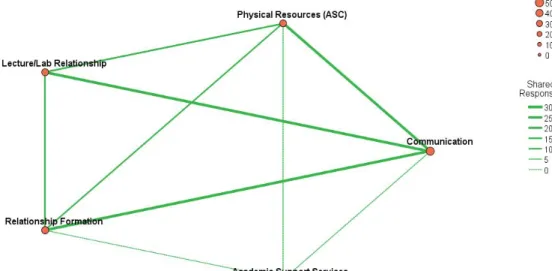
Data collected through observations, interviews, and documented analysis, along with the use of text mining, revealed that patterns emerged among participants in which they shared common beliefs about the importance of communicating with students, forming relationships with students, lecture and lab practices, the availability of physical resources, and the availability of academic support services within the environment where they interacted with their students. The intent of using the evidence from the key findings is to provide community college leaders with insight into pedagogical practices shared by highly successful developmental mathematics teachers and the role the learning environment serves in meeting students’ educational needs.
Table of Contents
List of Tables ...xiv
List of Figures ... xv
Chapter One: Introduction ... 1
Statement of Problem ... 3
Purpose of Study ... 5
Research Questions ... 6
Brief Overview of Methodology ... 6
Significance of Study ... 7
Assumptions and Limitations ... 11
Definitions of Terms ... 12
Chapter Summary ... 15
Organization of the Treatise ... 16
Chapter Two: Literature Review ... 17
Introduction ... 17
Review of the Literature ... 20
Theoretical Framework ... 36
Chapter Summary ... 38
Chapter Three: Methodology ... 40
Research Design ... 40
Qualitative Case Study ... 42
Data Collection ... 43
Data Analysis ... 45
Location of the Study ... 46
Demographics of the institution ... 47
Restatement of the Problem ... 50
Personal Statement ... 52
Chapter Summary ... 54
Chapter Four: Findings ... 55
Introduction ... 55
Organization of Findings ... 55
Organization of Chapter Contents ... 57
Significance of Information Generated Through Text Mining ... 57
Behavioral Observations ... 60
Communication ... 62
Relationship Formation ... 64
Lecture/Lab and Physical Resources ... 66
Academic Support Services ... 68
Participant Interviews ... 71
What do you perceive are the characteristics of student success? ... 71
What do you bring to the process of teaching developmental math that helps students be successful? ... 73
What techniques do you use to promote student engagement, success, and retention? ... 75
What activities do you do on the first day of class to establish the tone for the remainder of the semester? ... 76
What special qualities do you bring to developmental math instruction? ... 78
What aspects of teaching developmental math do you find most difficult? ... 80
How do you address these challenges? ... 83
How do you use instructional technology to facilitate student learning of developmental math? ... 84
What are the specific differences related to student learning between
the ASC and the traditional classroom? ... 89
What is the impact of these differences on your teaching? ... 91
Summary of Study Findings ... 94
Chapter Five: Conclusions and Recommendations ... 96
Introduction ... 96
Summary of Findings ... 96
Recommendations for Future Research ... 98
Recommendations for Practice ... 102
Conclusion ... 111 Appendix A ... 115 Appendix B ... 116 Appendix C ... 118 Appendix D ... 119 Appendix E ... 120 Appendix F ... 121 References ... 143
List of Tables
Table 1 ... 50
Table 2 ... 59
Table 3 ... 61
List of Figures Figure 1 ... 38 Figure 2 ... 58 Figure 3 ... 60 Figure 4 ... 63 Figure 5 ... 65 Figure 6 ... 68 Figure 7 ... 69
Chapter One: Introduction
The soaring costs of obtaining a college degree, coupled with increasing numbers of students arriving at educational institutions underprepared for the academic demands of college-level courses, have made developmental education one of the most debated issues in postsecondary education today. Nationally, approximately 60% of community college students are referred to one or several developmental courses (Attewell, Lavin, Domina, & Levey, 2006; Bailey, Jeong, & Cho, 2010). In some community colleges, more than 90% of entering students are deemed insufficiently prepared to start college-level work (Kerrigan & Slater, 2010). According to the Lumina Foundation (2008), nearly one-third of first-year college students require remedial education in reading, writing, or mathematics.
Unfortunately, since the 1970s community college developmental education has too often been implemented by what is referred to as a remediation only model (Keimig, 1983), also known as the stockpiling model (Boylan & Saxon, 2012). While this
scenario is especially disheartening for students, it is also particularly disappointing for faculty and administrators trying to develop and operationalize programs that can help underprepared students. This sad commentary is all too familiar to thousands of
incoming students taking some sort of assessment that places them into various levels of remediation where they experience hardships and spiral downward until they get bored, quit, run out of time and/or money, or somehow manage to pass the courses needed to get into college credit classes (Boylan & Saxon, 2012).
Even more disturbing is that a large number of students who place into
developmental courses, particularly developmental math, are prevented from achieving their educational goals because they never complete these courses (Bonham & Boylan, 2011). According to Hall and Ponton (2005), mathematics is the subject having the strongest tie to student success in degree attainment. Failing to complete developmental math and required college-level math not only prevents individuals from earning a college degree and pursuing certain professions, but also has consequences for a young adult’s likelihood of employment (Hodara, 2011). Of the 57 community colleges participating in the Achieving the Dream: Community Colleges Count initiative (www.achievingthedream.org), only one-third of students who were referred to
developmental education completed the recommended sequence of math courses, and of the students who enrolled in developmental education courses, only 20% eventually complete a required college-level math course (Bailey et al., 2010). Given the negative consequences of failing to complete developmental mathematics, it is critical to identify potential ways to improve the success of developmental mathematics students (Hodara, 2011). Presently, nowhere in the community college curriculum is the failure rate of graver concern than in developmental mathematics (Merseth, 2011). However, as Byrk and Treisman (2010) espoused, mathematics needs to be a gateway, not a gatekeeper, to a successful college education. No matter what their field of study may be, students must come to see math as an essential aspect of their everyday lives (2010).
While the research literature showed that issues in developmental education are both complex and multilayered, the literature also supported the research that the key to
building successful developmental education programs is to create strong, efficient, and effective environments with teachers who are committed to student success. In 2009, Florida State College at Jacksonville (FSCJ) began designing a model to improve the efficiency and effectiveness of its developmental education program. This model would eventually be implemented in the form of Academic Success Centers (ASCs) that incorporated practices tailored to help students persist and succeed. As Jamie Merisotis, President of the Lumina Foundation, reminded us, “All students who take that first step through the college door, no matter how tentative, deserve every chance to succeed” (Lumina Foundation, 2008, p. 1).
Statement of Problem
After decades of published research in developmental education, there is still much criticism directed at professionals in the field for both a lack of empirical evidence of any promising techniques or practices as well as rigorous research documenting its effectiveness (Boylan & Saxon, 2012; Levin & Calcagno, 2008). This criticism would appear to be abundantly evident when looking at the numbers of students taking and failing developmental mathematics courses at educational institutions across this country.
Overall, mathematics seems to be the biggest barrier for a large percentage of the community college student population (Achieving the Dream, 2006). Approximately two of three community college students referred to a remedial mathematics sequence do not complete it (Bailey et al., 2010). In a study, which included 2-year and 4-year colleges, the completion rate for the full sequence of developmental courses was lowest
in mathematics, at 21% (Schiel & Sawyer, 2002). According to a U.S. Department of Education study, the three courses with the highest rates of failure and withdrawal in postsecondary education are all developmental mathematics courses (Cullinane & Treisman, 2010). With developmental mathematics having the highest rate of failure and withdrawal, institutions look for ways to provide students opportunities to obtain
remediation in the subject area. Some studies estimate that remediation in mathematics reduces the likelihood of students dropping out and increases the likelihood that students will complete a degree. These studies also contend that students in remediation have better educational outcomes (Bettinger & Long, 2005; Martorell & McFarlin, 2010). While it would appear that remedial mathematics courses are helpful, the frustration expressed by students enrolled in developmental mathematics courses is mounting. Too many students find developmental mathematics an insurmountable impediment to their academic success (Merseth, 2011). Sierpinska, Bobos, and Knipping (2008) listed some of the frustrations articulated by students taking a university-level prerequisite
mathematics course: lack of support from the college, lack of understanding from their instructors, disinterest of faculty teaching the course, and irrelevance of course material. Student frustrations can account for the high levels of attrition of underprepared
students. John Roueche (1968) conducted one of the first studies that investigated the levels of attrition of underprepared students. Through a nationwide study of community colleges, Roueche found that approximately 90% of the students required to enroll in developmental or remedial education courses either withdrew or failed (Mireles, Offer, Ward, & Dochen, 2011).
In addition, affective factors such as negative attitudes and low motivation regarding mathematics further inhibit student success (Ferren & McCafferty, 1992). These affective factors are connected to growing frustrations from students who are prevented from achieving their educational goals because they cannot complete
developmental courses. Dismal completion figures are emerging at a time when national programs such as Achieving the Dream (ATD) report that earning a postsecondary degree has never been more critical to getting a job that pays family-supporting wages (Collins, 2009). In states participating in ATD, a multiyear national initiative designed to help more community college students complete courses, earn certificates, or transfer to other institutions to continue their studies, 60% of students are referred to developmental courses. Of those who enroll, only 15% complete all of their developmental education requirements within the first academic year. Almost half–46%–do not complete any of their developmental education requirements in the first academic year (Clery & Topper, 2008). Taking these factors into consideration, many states called for higher education institutions, primarily community colleges, to redesign developmental education
programs. These directives, often due to pressures from the public and state legislatures, are now pushing community colleges to address the needs of these students early in terms of their goals for attending college to ensure they are academically prepared to finish their educational programs.
Purpose of Study
The purpose of this qualitative study was two-fold. First, it focused on
teaching the highest level developmental mathematics course within the ASCs at FSCJ. Faculty members asked to participate in this study were identified as highly successful by a predictive analysis study, Chi-squared automatic Interaction Detection (CHAID). The CHAID contained an analysis of student success and retention in remedial
mathematics courses that included 10,051 elementary/intermediate algebra students over two academic terms.In addition, this study focused on the areas of impact of the ASC as an environmental factor in student success. For purposes of this study, student success was identified as completion of a developmental math class with a grade of C or higher and passing a standardized (state exit exam developed by the state of Florida), end-of-class assessment.
Research Questions
The following two research questions guided this study:
1. What are the pedagogical practices of developmental mathematics teachers who have the highest rates of student success?
2. What are the areas of impact of the ASC as an environmental factor in student success?
Brief Overview of Methodology
The most important contributing factor for developmental education excellence is what transpires between faculty and students in the classroom (Boylan & Saxon, 2012). Therefore, I followed a case study approach and documented teaching practices used by successful developmental math faculty in the ASC setting. I was able to search for deeper, richer meaning and understanding of the practices of these participants in this
environment by conducting interviews, classroom observations, and a detailed review of their syllabi.
By interviewing highly successful developmental math faculty, observing them in the ASC environment, and reviewing course documents they distributed to their students, I obtained meaningful data that can be used to improve professional development training for developmental mathematics faculty at FSCJ.
Significance of Study
Approximately 60% of community college students are referred to one or several developmental courses (Attewell et al., 2006; Bailey et al., 2010). Overall, mathematics appears to be the biggest barrier for a large percentage of the community college student population (Achieving the Dream, 2006). Approximately two of three community college students referred to a remedial mathematics sequence do not complete it (Bailey et al., 2010).
A 2007 Florida Department of Education study revealed that of students who failed to complete their developmental coursework, only 15% remained in college, less than 1% earned vocational or career certificates, and none finished with associate degrees within two years. Alternately, students successfully completing developmental courses appeared to be as successful as their non-developmental education counterparts. While certain parts of this report pointed out positive aspects for students enrolled in developmental education courses, higher educational institutions were being asked to make a serious attempt to reduce the need for developmental education. Therefore, it became beneficial for the state college systems to provide higher educational institutions
with support and resources to review and pilot innovative strategies and interventions for improving developmental education programs. These strategies and interventions
included setting and broadly communicating college-readiness standards, providing early assessment opportunities for high school students, and ensuring that high school and college-entrance standards and expectations are aligned (Collins, 2009).
Collins also pointed out that dual enrollment courses, which are now
implemented in a number of states as college-readiness strategies, are appealing to more students by reducing the time and cost required to earn a college degree. This incentive increased even more when high school students took these courses without paying tuition.
Furthermore, a study on outcomes in Florida and New York suggested that dual enrollment improved subsequent college performance (Karp, Calcagno, Hughes, Jeong, & Bailey, 2008). Preliminary evidence suggested that college credit in high school might be a promising preventive strategy for states looking to increase college readiness and decrease the need for developmental education (Collins, 2009).
The results of the 2007 study prompted the Florida Legislature to recommend that all colleges and universities offering developmental education courses implement certain redesign procedures, including, but not limited to, collapsing three levels of sequential courses into two, reducing instructional costs, and investigating ways to enable students to move from one course to another within a different time frame than is permitted in the traditional classroom format.
Prior to this legislative recommendation, FSCJ spent five years and $5 million developing and implementing a Quality Enhancement Plan (QEP) that focused on several initiatives to improve developmental education courses. Because the results of the QEP did not reveal any difference in the success rate of those students enrolled in remedial courses, college leaders at FSCJ already had begun looking at alternative ways to improve the persistence and success rates of students enrolled in developmental education courses (D. Green, personal communication, January 28, 2012).
In conducting research related to the redesign process, leadership at FSCJ
discovered that large populations of its students were demanding a variety of approaches to instruction. The traditional lockstep lecture format alone was not accommodating the diverse academic needs of adult learners, who benefit considerably from alternative delivery methods that allow them to complete required course work—particularly developmental (or remedial) —more effectively, efficiently, and flexibly (J. Chambers, personal communication, January 28, 2012). Consequently, it was determined that co-locating classrooms, computer labs, and tutoring resources in a supportive, nurturing learning environment (a move from a decentralized setting to a centralized setting) would serve as the approach to meeting the educational needs of developmental education students at FSCJ (D. Green, personal communication, January 28, 2012).
To adhere to legislative recommendations for redesign in developmental
education programs and to focus on developmental students’ success, FSCJ established Academic Success Centers (ASCs) that opened on all five of its campuses during fall 2010. This redesign approach for developmental education was chosen because it is
conducive to engaging a diverse population of students, both individually and
collectively, in the learning process, while reducing instructional costs and maximizing students’ abilities to progress successfully through developmental education courses (K. Ciez-Volz, personal communication, January 28, 2012). While all developmental education classes at FSCJ were moved into the ASC setting, there was a need to focus on developmental mathematics courses that had presented problems to both the institution offering these courses (FSCJ) and the students taking these courses (D. Green, personal communication, January 28, 2012).
Because the redesign approach of developmental courses at FSCJ had focused on activities to refine and improve the developmental education program, the decisions made pertaining to these courses, and the services offered to students, was data driven. The ASC model enabled FSCJ to follow field research recommendations that enabled faculty to look at the performance of students in developmental education classes, develop baseline data, determine where improvements could be made, and mark
progress against the baseline (Boylan & Saxon, 2012). In the past, much of this data was dispensed only to state officials or community college administrators. This was not the case at FSCJ. The Department of Student Analytics and Research gathered and provided information on the performance of developmental students to faculty and other College officials directly involved in developmental education activities. The process of
collecting and disseminating assessment and evaluation information is explained in Appendix A. Therefore, the results of the data gathered from this particular study will be distributed to those who can do the most to make any needed changes.
Assumptions and Limitations
Three assumptions were made in conducting this study. First, that developmental mathematics faculty, with the highest rates of student success, share a number of
practices that contribute to students successfully completing their courses. Second, that these practices could be observed in the ASC environment. However, it was expected that the subjects would act differently when they were being observed. Miles and Huberman (1994) stated that qualitative research is conducted through an intense and/or prolonged contact with a “field” or life situation (p. 6). While conducting this particular study, participants were observed in everyday classroom situations. A broad overview of the whole setting in the ASC environment was obtained rather than focusing on
individual components. The researcher remained a quiet examiner and did not make comments or share information with faculty participants while they were being observed in the classroom setting. Lastly, it was assumed that faculty would answer interview questions honestly and without reservation.
Some limitations are associated with this study. In conducting a qualitative study, there is an inability to generalize and transfer findings to another educational context. Also, the construct of the ASCs at FSCJ included different elements of effective practices in developmental education. Some of the practices used at FSCJ within the ASC model are not utilized by other institutions that have limited resources and different philosophies regarding their approach to implementing developmental education
programs—primarily the approach used to improve the pass and completion rates in developmental mathematics courses.
Definitions of Terms
Academic Success Center(ASC):A center designed to house classrooms, computer labs, and tutoring resources in a supportive, nurturing learning environment. This design, based on research in the field of developmental education, is outlined in the introduction of the literature review included within this treatise.
Behavioral Practices: Practices shaped by behavioral pedagogy that include anything an individual does when interacting with his or her physical environment.
Benchmark: A systematic process of comparing an organization’s performance on key measures to others’ performances. This process usually emphasizes comparing one’s performance not only to a performance average but also to an objective standard of excellence (Center for Community College Student Engagement [CCCSE], 2010, p. 2).
Chi-squared Automatic Interaction Detection(CHAID): A type of statistic that predicts the significant list of independent variables and calculates which variables predict student success. The participants in this study were identified through a CHAID study completed by FSCJ’s Office of Student Analytics and Research. This study yielded a significant list of 13 independent variables and calculated which of those variables predict student success. Based on the independent variables (predictors), the study generated a cluster of developmental mathematics faculty with the highest student success rates (Michalski, 2011).
Course Redesign:The process of re-conceiving whole courses to achieve better learning outcomes at a lower cost and incorporating the use, where applicable, of technology (Twigg, 2011).
Developmental Education:According to research in the field, developmental education is defined as a range of integrated courses and services governed by the principles of adult learning and development (Boylan, 2002). While the term remedial education and remediation are also used in conjunction with developmental education, the National Association of Developmental Education (NADE) began emphasizing the term developmental education versus remedial education in the 1980s. Over time, NADE began including learning assistance and support services such as assessment, tutoring, counseling, and academic advising as vital components in developmental education programs. Today, developmental education has grown to include training for students in life skills that can include time management, basic financial planning, health and wellness, problem solving, and career exploration.
Excessive Class Size: As defined by the policy at Florida State College at Jacksonville, class size in developmental education classes (mathematics, reading, and writing) will not exceed 22 student enrollees.
Master Student:Students who specialize in assisting students who are enrolled in developmental education and gateway reading, writing, and mathematics classes. These students attend faculty class/lab sessions and may tutor students in the classroom, tutoring labs, and in small group sessions outside of class.
Pedagogical Approach: The perspective used to plan and implement instructional strategies.
Persistence: The reenrollment of a college student for consecutive semesters. Redesign: Directives, often stemming from public viewpoint, state legislatures, and/or state governing bodies of higher education systems that push community colleges to address the needs of developmental students early, in terms of their goals for
attending college, to ensure that students are academically prepared to enroll and complete their educational programs.
Remediation: In education, remediation is intended to help students achieve a level of proficiency in core academic skills. In relation to developmental education programs, remediation is one intervention offered as a way of assisting underprepared students reach a level of preparedness.
Retention: The reenrollment of a college student for consecutive academic years. Student Engagement: The time and effort students devote to activities
empirically linked to desired outcomes of a college and what institutions do to induce students to take part in these activities (Kuh, 2009).
Student Success: Completion of a developmental math class with a grade of C or higher and passing a standardized end-of-class assessment. However, student success was defined differently by participants in this study. Most connected student success with teaching and learning practices and strategies and the environment created in the classroom.
Variables forCHAID: Student success is the dependent variable. Academic term, student gender, student race, student age, high school graduation, student zip code, student high school, high school city and state, campus/center, instructor name, course delivery method, same course, and previous served as the 13 independent variables. Chapter Summary
This introduction provided a brief overview of:
the national issues related to student completions in developmental education courses,
growing concerns and frustrations of students taking developmental mathematics courses,
percentages related to students both failing and withdrawing from developmental math courses,
dismal completion rates across the country in developmental mathematics courses,
directives administered to states mandating redesign of developmental education programs,
an explanation of the redesign mandate in the state of Florida, the redesign of the developmental education program at FSCJ, the creation of ASCs, and
the primary ingredients needed to implement a high-quality developmental educational program.
The purpose of this qualitative study was to identify effective classroom
practices for developmental mathematics and determine whether commonalties existed among practices currently being used by faculty within an ASC environment designed specifically for the delivery of developmental education courses and services at FSCJ. For purposes of this study, faculty members who were asked to participate in this study were identified as highly successful, via a predictive analysis study (CHAID). The predictive analysis study contained an analysis of student success and retention in developmental education courses that included 10,051 elementary/intermediate algebra students over two academic terms (FSCJ, 2012).
Organization of the Treatise
Chapter one defined the study and explained the need to look at redesigning the approach to teaching developmental education courses, especially mathematics courses that present problems to both FSCJ and the students who take developmental
mathematics courses at the institution. Chapter two examines the literature in
developmental education, the redesign of delivery methods, and course redesign within a developmental education program. Chapter three outlines the methodology and
conceptual framework for this study. Chapter four discusses the data analysis and findings. Chapter five presents the conclusions and recommendations of this study.
Chapter Two: Literature Review Introduction
As discussed in chapter one, developmental mathematics courses are often gatekeepers that keep students from succeeding in college (Deka & Lieberman, 2008). This problem is significant at institutions across the country, both in universities and community colleges (Arendale, 2002; Heber & Selingo, 2009). This chapter presents a review of the literature in developmental education as well as references to its history. Much of this literature review focuses on those elements that research indicates
contribute to the success and retention of developmental education students in reading, writing, and math. Various pedagogical approaches that emphasize learning theory and the infusion of academic support have shown great promise, including supplemental instruction (Arendale, 2000), cooperative learning (Armington, 2003), mastery learning (McClory, 2000), early start programs (Howell, Kurlaender, & Grodsky, 2010), and the use of technology (Epper & Baker, 2009). Arendale, (2000), Boylan (2002), and
Roueche and Roueche (1993) discussed the importance of having an institution
committed to the success of this student population along with the right mix of dedicated professionals and resources to design programs that can produce successful students. Therefore, focusing on developmental education programs and the services these programs commonly address, including academic preparedness, diagnostic assessment and placement, development of general and discipline-specific learning strategies, and affective barriers to learning (National Association for Developmental Education, 2012)
are important factors in improving the success rates of developmental mathematics students.
According to the National Center for Education Statistics, nearly 100% of the public community colleges in the United States offer some form of developmental education, and at least 43% of all incoming community college students take one or more developmental courses (Boylan & Saxon, 2012). However, research revealed varying percentages related to the number of students who are required to take developmental education courses. A report by Attewell, Lavin, Domina, and Levy (2006) showed that 58% of entering community college students take one or more developmental courses, while a 2007 report from the Kentucky Developmental Education Task Force indicated that between 64% and 96% of incoming Kentucky students have to take developmental mathematics.
Reports released nationally, such as the one from the Educational Testing Service (ETS), showed that student scores on the National Assessment of Education Progress in reading and mathematics have not improved in 20 years (Kirsch, Braun, Yomamoto, & Sum, 2007). American College Testing (2006) has indicated that almost half of current high school graduates do not read well enough to perform college-level reading tasks. It would appear that these reports make a case for the ongoing challenges that will continue to confront community colleges in educating students who have complex needs. While a number of public school reforms show promise, including reorganizing K-12 curriculum, large numbers of students entering postsecondary education are underprepared for college-level work (Greene & Forster, 2003).
Therefore, it is likely to take some time for these reforms to have any measurable impact on the skills of incoming community college students (Boylan & Saxon, 2012).
In reviewing the primary components needed to implement quality developmental educational and training programs, much of the research included references to alternative delivery methods that can be used in the successful redesign of courses within a developmental education program that incorporate alternative
approaches to teaching developmental mathematics. The research in developmental education (e.g., Blair, 2006; Boroch et al., 2007; Boylan, 2002) outlined a number of effective practices that emphasize, among other things, that educators connect new knowledge to prior learning, include learner-centered activities in instructional methods, and provide students with feedback through the use of ongoing assessment. Some critical components, listed in Boylan’s What Works (2002), should be incorporated in developmental education programs. These components can include, without being limited to, the following:
Making a commitment to developmental education by identifying this student population and the programs designed to help these students, as a main concern (pp. 22-25);
Providing academic advising (pp. 26-28);
Enforcing mandatory assessment, placement, and orientation (pp. 35-39); Implementing organized and efficient program evaluation (pp. 39-43);
Offering ongoing professional development and training for faculty and staff (pp. 46-49);
Providing tutoring services (pp. 49 -50);
Infusing technology within classrooms and/or laboratories (pp. 64-67); and, Utilizing varied teaching strategies (pp. 97-100).
In addition, excellence in developmental education cannot be achieved without a commitment from leadership (Boylan & Saxon, 2012). Schwartz and Jenkins (2007) explained that the effectiveness of developmental education can be enhanced if the policy environments in which these programs are delivered are committed to efficacy of developmental education, belief that it is equal in status of other college programs, persistence of underprepared students, and an intent to move students seamlessly into college-level courses (p. 23).
The combination of all of these key components and effective practices comprised the basis for the design, development, and implementation of the ASCs at FSCJ, the setting in which all full and part-time faculty who teach developmental education conduct their classes.
Review of the Literature
The offering of remedial courses in the United States has a long history. More than 370 years ago, Harvard recognized that students being admitted to college were not adequately prepared for college-level work. While students available for admission to colleges were small at the time, Harvard accommodated underprepared students by providing tutoring and other forms of remedial instruction. Over the years,
developmental education has been viewed as a way to expand access and serve community workforce and economic needs (Casazza & Silverman, 1996). This view,
characterized by democratic ideals that community colleges would provide extended educational opportunities, is founded on the idea that a population of citizens who are educated is necessary to our nation’s well-being (Gleaser, 1963) and thus was the concept on which America’s first public community college, Joliet Junior College, was established in Illinois in 1901 (Joliet Junior College, 2012).
Roueche and Roueche (1999) pointed out, “if control resides where support originates, community colleges must meet community needs” (p. 9). For decades (Arendale, 2002), developmental education programs and services in the United States have continued to provide a way to create access and enhance retention for populations of students that have been traditionally underrepresented in higher education (Hardin, 1988). Because large numbers of incoming community college students have continued to need developmental education over the course of the first half of the 21st century (McCabe, 2003), it appears that developmental education will continue to be a major responsibility for American community colleges and failure to provide developmental education is not an option for community colleges or for the country (Arendale, 2010).
Considering that developmental education represents the first instructional contact for many students with a postsecondary institution, this initial contact can have a tremendous impact on student success (Boylan & Saxon, 2012). It also follows that if a student’s first contact with a postsecondary institution is positive, then retention would be positively influenced (Boylan, Bliss, & Bonham, 1997; McCabe, 2000). Therefore, when determining the need for, or redesign of, developmental education programs, one
should begin by examining the components of effective developmental education programs.
The most effective developmental education programs are those that exist in an environment where the educational institution, as a whole, regards the program and services as the responsibility of the entire institution rather than that of a single program or a collection of services (Kiemig, 1983). Both administrators and faculty must
recognize developmental education as a primary concern, and must support the distribution of resources needed to ensure program effectiveness. In addition, student retention in developmental education programs is important, and retention must be viewed as an institutional priority (Noel, Levitz, & Saluri, 1985). When institutional resources are organized in such a way to support student development, students are more likely to succeed (Boylan, 2002, p. 23). Developmental education programs that are guided by a clearly stated philosophy that governs the day-to-day delivery of courses and services have greater retention rates than programs in which actions are not guided by such a philosophy (Donovan, 1974).
Research consistently has demonstrated that mandatory assessment and placement contribute to student success (McCabe, 2000; McCabe & Day, 1998; Roueche & Roueche, 1999). Allowing students to enroll in courses for which they are not prepared is tantamount to promoting failure (Morante, 1989). As Roueche and Roueche (1999) observed, “Universities do not hesitate to prohibit students from enrolling in courses for which they are not prepared or have not completed
prerequisites” (p. 30). Continuing the practice of mandatory assessment and placement of entering students can promote student success.
Appropriate academic advising and mandatory orientation also comprise essential components of an effective developmental education program. Advising and orientation assist students in identifying and developing their educational and
professional goals. Roueche and Roueche (1999) supported mandatory student orientations and noted that universities are far better at this practice than community colleges. Students who participate in orientations are more likely to be retained in community college than those who do not (Boylan & Saxon, 2012). Appropriate advising is the result of a carefully developed institutional plan and a commitment to student success. As catalysts of communication and agents of referral to other campus agencies, advisors must be well-informed about the nature and purpose of various academic support services, in order to make appropriate referrals (Boylan, 2002, p. 28).
A number of studies have highlighted the correlation between academic advising and student retention. Habley (1981) noted, “retention programs should focus on
services which enable students to clarify their educational and career goals and relate those goals to academic offerings” (p. 46). In Beal and Noel’s 1980 study of the retention programs of more than 900 institutions, participating administrators named inadequate academic advising as a major factor leading to student attrition. Other negative aspects mentioned included inadequate counseling systems, academic support services, career planning services, and a lack of student-faculty contact. However, a “caring attitude of faculty and staff” (with advising being one demonstration) was
ranked by the administrators as the most important retention factor on their campuses (pp. 43-45).
Successful developmental education programs utilize multiple teaching and learning strategies (Boylan, 2002; Epper & Baker, 2009). Much research has been generated over the last few years focusing on the benefit of varied teaching techniques in relation to developmental mathematics. Some of these varied teaching techniques
include mastery learning (Boggs, Shore, & Shore, 2004); mentoring programs (Visher, Butcher, & Cerna, 2010); active, collaborative, and cooperative learning methods (Barkley, Cross, & Major, 2005; Davidson & Kroll, 1991); supplemental instruction (Martin & Arendale, 1994; Phelps & Evans, 2006); integrated classroom and laboratory activities, and learning centers (Boylan, 2002; Boylan, Bonham, Claxton, & Bliss, 1992; Boylan & Saxon, 1998; Maxwell, 1997; McCabe, 2000; Perin, 2004).
Integration of classroom and laboratory activities was noted as a key element in successful developmental programs. Involving a “concerted effort to insure that what goes on in the classroom is clearly connected and specifically supported by what goes on in the laboratory,” integration “appears to be an essential component” to successful programs (Boylan, 2002, p. 64). According to Boylan, evidence of such integration entails communication between instructors and lab personnel about support of class activities via lab resources, use of lab resources and activities to support specific course goals and objectives, requirement that students participate in lab activities as part of their course assignment, and location of labs in close proximity to developmental courses they will support (Boylan, 2002, p. 65).
McCabe (2000) stated that one of the hallmarks of a successful developmental education program was the integration of laboratories and classrooms. Boylan (2002) added that when learning lab use is an integral part of the course, developmental students are more likely to persist and succeed. Access to individual and small-group tutoring, timely and topical workshops, software, and a variety of multimedia tools all serve to supplement class instruction and enrich student learning. Research supported the co-location of classrooms and labs for developmental students. The premise is that developmental students may be more likely to use various lab services and resources because of the facilities’ close proximity to classrooms (Boylan, 2002).
Required tutoring in developmental education programs represents an excellent intervention tool. At a minimum, successful developmental education programs provide tutoring in reading, writing, mathematics, and study skills (Boylan, 2002, p. 49). Both individual and group tutoring can be effective, but group tutoring appears to be more effective for developmental students (Boylan et al., 1992). As Boylan, Bliss, and Bonham (1997) stated, “The provision of tutoring by well-trained tutors, as opposed to untrained or marginally trained tutors,” distinguishes effective tutoring programs from mediocre ones (as cited in Boylan, 2002, pp. 49-50).
Exemplary tutoring programs typically involve both pre-service and in-service training for tutors with a focus on such topics as learning and motivation theory, communications skills, and adult learning theory (Boylan, 2002, p. 50).
Developmental education programs that emphasize ongoing professional development and training for both full and part-time faculty are significantly more
successful than programs that lack such an emphasis (Boylan, 2002, p. 46). Faculty who teach developmental students must remain abreast of “current research, theory, and practice” to refine their craft (Boylan, p. 46). Advisors and tutors, as well as instructors, benefit from professional development. Attendance at conferences, training institutes, and graduate courses provides valuable professional development opportunities (Boylan, 2002, pp. 46-47). Likewise, engaging faculty and staff in the reading and discussion of books and articles in developmental education, facilitating share-and-exchange sessions, and hosting external consultants promote professional growth. Boylan (2002) asserted, “Ongoing, long-term professional development programs” are considerably more effective than isolated, one-time events (p. 47). Best practice institutions promote such sharing by setting aside time for faculty members to discuss teaching and learning issues and by forming teams of instructors to exchange instructional strategies and techniques (Boylan, 2002, p. 93). Strategies can also be shared via online discussion forums or email. Distributing research articles among faculty on instructional strategies represents another way to exchange ideas.
In regard to faculty training and development, it is interesting to note that with the numbers of students failing developmental mathematics courses, most of those teaching developmental mathematics have backgrounds in mathematics or education, but they are not specifically trained in developmental mathematics. Breneman and Harrlow (1998) explained that much of the training faculty receive in developmental studies is in-service where professionals discuss their work with their peers. Boylan (2008) stressed that search committees should look to hire full-time faculty who have
experience and training in developmental mathematics. Research showed that more than 60% of the nation’s community college developmental courses are taught by adjunct or part-time faculty (Boylan, Bonham, & Bliss, 1994; Shults, 2000), and, therefore, it is important that they also be included in any ongoing professional development and training opportunities. Additionally, national survey data suggested that far more part-time than full-part-time faculty are hired to teach remedial and developmental courses than to teach any other programs or courses (Roueche, Roueche, & Milliron, 1995). Indeed, the number of developmental courses being taught by part-time faculty is substantial, clearly revealing that the quality of teaching and learning encountered by developmental
students is greatly influenced by this group of professionals.
Roueche and Roueche (1993) observed that what matters in the teaching of developmental courses is not whether those teaching are classified as full-time or part-time, but that they possess the right attitude and competence to help students succeed. The authors characterized the faculty best equipped to teach developmental education courses as (a) those who thoroughly understand a college’s goals and the complexity of this at-risk population; (b) those who have significant classroom experience and a broad repertoire of teaching techniques; (c) those who enjoy working collaboratively with other faculty; (d) those who want to be involved in faculty development activities; (e) those who want to teach remedial courses; and, (f) those who believe that at-risk students can learn and be successful (p. 26).
While adjunct faculty are often assigned positions that directly support developmental students, background education and experience in the field of
developmental education may not be prerequisites for employment in those positions. As a result, many adjunct professionals begin their assignments underprepared for the work that they are asked to do. It is essential that institutions provide both the
opportunity and incentive to support the professional development of their adjunct employees (Levine-Brown, Green, Hess, & Cabral-Maly, 2007).
A successful developmental education program, moreover, should incorporate well-coordinated formative and summative evaluation measures that are shared with faculty and staff to promote program improvement (Boylan, 2002). A detailed
explanation of the program assessment and evaluation plan for FSCJ’s ASCs is included in Appendix B. Boylan (2002) explained that “an industry standard” for evaluating developmental education programs includes the following criteria:
Completion rates for developmental courses; Grades in developmental courses;
Grades obtained in post-developmental education curriculum courses in the same subject area;
Retention rates for developmental students;
Grades in courses for which developmental students are tutored; Student satisfaction with courses and services;
Faculty satisfaction with the skills of students who participate in developmental courses and services; and,
Additionally, states have considerable influence over the performance indicators used to measure progress and the impact of state and institutional interventions. To improve outcomes, states and institutions should pay attention to intermediate measures and to milestones that developmental education students must pass en route to final success measures like graduation and transfer. Increasing knowledge of the relationship between intermediate measures and final success (e.g., graduation, transfer, and
persistence toward a credential) can inform state incentives to help students meet shorter-term goals (Collins, 2009). With these measures, colleges can analyze their performance and compare themselves to other institutions.
Evaluating developmental education programs does not necessarily mean that a college must collect and analyze complicated data. The outcomes of the developmental education program should be described in the simplest way possible—i.e., bar graphs and pie charts—for the majority of people reviewing the results to understand the data (Boylan, 2002). Keeping in mind that institutional effectiveness is a way to determine quality improvement, accountability, and informed decision making, the data collected on a developmental education program and its students will enable administrators and faculty across a college to determine how well they are serving their student population.
The evaluation component of a developmental education program is an important part of any funding proposal. Most funding agencies want to see a strong combination of formative (used for the purpose of developing or improving courses or services) and summative (used to measure the outcomes of courses or services) methods employed in
evaluating a proposed program (Boylan, 2002). Instituting such measures should enable an institution to increase funding for its developmental education program and services.
While examining some of the major elements that need to be included in the successful redesign of developmental education programs, institutions should also take a closer look at alternative methods of course delivery. These alternative methods include the use of computer-assisted software, online and hybrid class settings, and modularized curriculum that can enable students to move from one course to another within a
different time frame than what is presently permitted within the traditional classroom format (National Center for Academic Transformation [NCAT], 2008).
A shift in focus from teaching to learning has been emerging since the 1960s (Roueche & Roueche, 1993). Some of the most significant changes in instructional delivery include the use of computers in improving learning, teaching, and instructional management (O’Banion, 1989). However, the method of delivery for many
developmental education courses takes place in a lecture-based classroom setting. Developing a new delivery format does take time. Utilizing what is known about the needs of developmental students and effective practices should guide the design of these delivery formats. For example, it is well documented that developmental students frequently lack the necessary study skills and learning strategies to be successful. Assessing both cognitive and noncognitive skills of students, and integrating these into classroom instructional strategies or a lab, can promote the success of a new format. Research from NCAT (Twigg, 2005) suggested that course redesign could increase student success, while reducing instructional costs in college-credit and developmental
courses. A variety of redesign models have emerged. These include buffet, emporium, replacement, fully online, supplemental, and linked workshops (Jarmon, 2014). Courses targeted for redesign include those with high withdrawal and/or failure rates, those drawing from students with inconsistent preparation, those having difficulty getting qualified adjuncts, or those from which students have difficulty in subsequent classes (Bonham & Boylan, 2011). In addition, some institutions have used partnerships with other programs on campus, such as adult basic skills or adult literacy, individualized programs with required labs and external constraints, and integrated approaches using contextual learning related to a particular certificate or degree program, as ways to help students with very low reading, writing, and math skills (Boylan, 2002).
A number of redesign approaches have targeted developmental mathematics. According to Lucas and McCormick (2007), some approaches have accelerated developmental mathematics programs, other approaches have slowed the programs down, and still others have attempted to decrease the number of topics contained within the programs. While redesign is not specially targeted to developmental mathematics, the critical need of preparing students for postsecondary success makes developmental education a logical focus for course redesign.
While many faculty members at colleges enjoy using technology in the
classroom and modularizing content, they do not necessarily want all remediation to be conducted on the computer. But, as former secretary of education Terrel Bell noted 20 years ago, it is necessary to recognize that some teaching practices are outdated, and the best possible use of technology in the classroom can improve the American education
enterprise (1991). The impact of various forms of technology and distance education on developmental students becomes increasingly more important as more colleges are experimenting with the use of technology in developmental education (Saxon & Boylan, 2003). Faculty must be open to identifying students who should be recommended for blended or online classes. How to deal with students with very low-level reading, writing, and math skills are also valid concerns that need to be addressed.
The review and use of appropriate affective instruments to determine which students have the necessary learning strategies and skills to be successful in a blended or online course is strongly advised (Levine-Brown, Bonham, Saxon, & Boylan, 2008; Saxon, Levine-Brown, & Boylan, 2008). Research dating back nearly 30 years discussed the importance of cognitive and affective factors in relation to the success of students in mathematics (Schoenfeld, 1983). Bandura’s (1997) work in the area of social cognitive theory maintains that it is the students’ beliefs about the value of the learning
experience, their expectations of success, and their enjoyment of learning that will motivate them to engage material actively and persist in spite of initial failures. Bandura (1986) also pointed out that self-efficacy beliefs contribute to the choices people make, the effort they put forth, and the perseverance and persistence they display when facing difficulties.
High dropout and failure rates in developmental and remedial courses have resulted in many colleges making a concerted effort to redesign curriculum and delivery methods in these courses. NCAT (2008) issued reports showing that there is an
normally holds steadfast to the concept that learning must be split into standardized semester-sized chunks that are delivered by an instructor to a group of students who are physically present when the lecture occurs. Additionally, requiring that students
complete coursework in a specific sequence is extremely limiting in scope. This restrictive nature of traditional course delivery has created the demand for alternative ways to complete courses, ways that fit the learning needs of current students.
One alternative method of delivery that can meet the educational needs of students is modularized curriculum. This delivery method adheres to the lifestyle of many learners today, who are products of a fast-moving society that values time, productivity, and measurable results. These learners demand only what is necessary to the learning process and shun traditional student life distractions (Gibbons &
Wentworth, 2001).
Learning a subject well requires intensive discourse, whether the field is math (Mokros, Russell, & Economopoulos, 1995), science (Gallas, 1995), social studies (Lindquist, 1995), literature (Brady & Jacobs, 1994), or any other discipline (Coulter, Konold, & Feldman, 2000). “The learners’…need for individual dialogue” contributes as much to the teaching and learning structure as the teacher offers, in the way of course content or design (Saba, 2000, p. 4). A modularized curriculum can provide an
individualized one-on-one setting, where a student can dialogue with instructors while moving through a module at his or her own pace. One area in which students could benefit from a shift to this type of curriculum is in developmental reading, writing, and math courses.
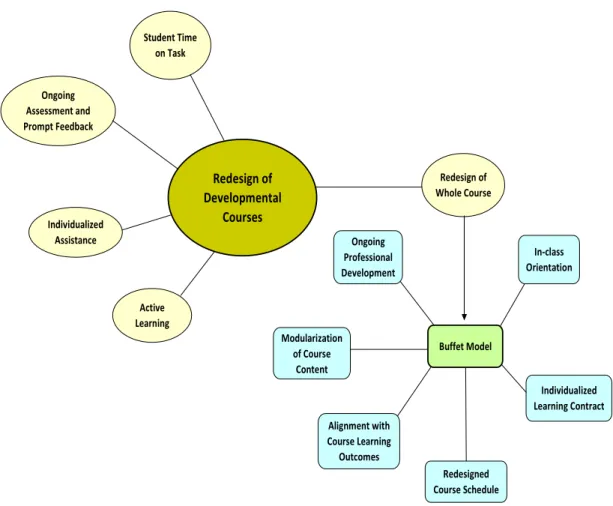
The five principles of successful course redesign—namely, an emphasis on the whole course, the encouragement of active learning, individualized assistance, ongoing assessment and prompt feedback, as well as sufficient time on task and the monitoring of student progress—comprise the basis of this initiative. Supporting an assortment of individualized paths, the NCAT’s (2008) buffet model of course redesign will customize the learning environment for each student. Integral to the initiative’s success will be “research-based best practices in developmental education,” including “the provision of comprehensive support services” such as “individualized instruction often supported by computers” (Boylan, 2002, pp. 26-27).
Students who may benefit from the modular redesign project are those who have been defined as nontraditional. For whatever reason, there are many nontraditional students who have delayed college enrollment for some time since their last connection to any high school program (Boylan & Saxon, 2012). Historically, these nontraditional learners have been defined as persons over age 25 (Whisnant, Sullivan, & Slayton, 1992). However, Knowles (1992) defined adulthood as “the point at which individuals perceive themselves to be essentially self-directing” (p. 46). Self-directedness is not necessarily correlated with age. While the age factor may be important in better understanding nontraditional students, the time these students spend away from academia (this is especially significant in relation to mathematics) increases the challenges that they must overcome in order to successfully complete a college degree (Adelman, 2006).
Nontraditional learners also require an alternative framework within which to learn. Knowles (1992) suggested that nontraditional learners need to know why they must learn something before deciding to learn it (Merriam & Brockett, 1997). This need suggests that the responsibility for learning be transferred from facilitator to learner. Facilitators of modular curriculum can learn to affect this transfer by training in the same collaborative learning model as their students: an experiential model that is
learner-centered rather than instructor-centered, dialogue-based rather than lecture-based (Gibbons & Wentworth, 2001). Alternatively, traditional learners rely heavily on an instructor’s knowledge, which is dispersed from a one-sided (teacher-to-student), lecture-based method.
According to Gibbons and Wentworth (2001), instructors have generally underutilized the experiences of traditional students as a resource for learning, considering these experiences are preexisting knowledge that merely provides a foundation upon which new knowledge will build. Nontraditional students brings a variety of life and work experiences to the classroom and are most responsive to learning models that provide an opportunity to apply theory to their experiences (Gibbons & Wentworth, 2001). Sharing of experiences openly and collaboratively within the context of the course material serves to enrich the learning process for students and their peers. Thus, those who facilitate the use of a modular curriculum can encourage a continual stream of dialogue concerning the subject matter in a