Marshall University
Marshall Digital Scholar
Theses, Dissertations and Capstones2018
Effective iPad Instruction: A Qualitative Study
Comparing Classroom Practices to the Technology
Integration Matrix
Bridget Phillips
Follow this and additional works at:https://mds.marshall.edu/etd
Part of theCurriculum and Instruction Commons,Educational Methods Commons, and the Educational Technology Commons
This Dissertation is brought to you for free and open access by Marshall Digital Scholar. It has been accepted for inclusion in Theses, Dissertations and Capstones by an authorized administrator of Marshall Digital Scholar. For more information, please [email protected],
Recommended Citation
Phillips, Bridget, "Effective iPad Instruction: A Qualitative Study Comparing Classroom Practices to the Technology Integration Matrix" (2018).Theses, Dissertations and Capstones. 1190.
EFFECTIVE IPAD INSTRUCTION: A QUALITATIVE STUDY COMPARING CLASSROOM PRACTICES TO THE TECHNOLOGY INTEGRATION MATRIX
A dissertation submitted to the Graduate College of
Marshall University In partial fulfillment of the requirements for the degree of
Doctor of Education In
Curriculum and Instruction by
Bridget Phillips Approved by
Dr. Lisa A. Heaton, Committee Chairperson Dr. Elizabeth Campbell
Dr. Kimberly McFall Dr. Raymond Singleton
Marshall University December 2018
ii
iii © 2018 Bridget Phillips ALL RIGHTS RESERVED
iv
DEDICATION
This dissertation is dedicated to my husband, children, and my parents. Brian, I thank you for your patience and understanding during this process. It has been a long five years and you have been there to listen, encourage, and many times read and edit my work. You picked up the slack and took good care of our boys when I was not able to be there. I appreciate you more than words can express. Braden and Blake, you are the most important things to me. I hope this accomplishment shows you that you can do anything you want when you make up your mind to do it and put in hard work. There were many times I wanted to give up, but thinking about the both of you and what message that would send kept me going. Mom, you and dad raised me to know that nothing in life comes easy, and with the grace of God you can accomplish anything. To my father, I know you have been with me through this whole endeavor and are looking down from heaven. I hope I have made you proud.
v
ACKNOWLEDGEMENTS
I would like to take this opportunity to show my gratitude to the many people that have helped me through this long and demanding process both in my personal and professional life. It was not easy to be able to balance schoolwork with my professional responsibilities and the stress of keeping up with a busy household of active athletic children. I would first like to say thank you to Dr. Lisa Heaton. She provided me with guidance and support, encouraging me along the way. She spent countless hours reading and editing my work when she was very busy herself. She gave me priceless advice, but allowed me to make this work my own. I would also like to thank my other committee members, Dr. Elizabeth Campbell, Dr. Kimberly McFall, and Dr. Ray Singleton. Thank you for your input and taking time to read my work. I appreciate all of you for your help throughout this process.
To my family, thank you for being supportive and patient while I worked many hours. To my work family, thank you for listening to me when I was thinking out loud and bouncing ideas off of you. To the teachers and administrators that opened up their schools and classrooms to me, without you allowing me to invade your rooms, this would not have happened. You are all wonderful teachers that took risks with your students and showed me what it means to be an effective teacher.
vi TABLE OF CONTENTS APPROVAL OF DISSERTATION ... ii DEDICATION ... iv ACKNOWLEDGEMENTS ... v LIST OF TABLES... xi ABSTRACT ... xii CHAPTER 1 ... 1 Introduction ... 1 Background ... 3
How Students of Today Learn ... 3
Constructivist Theory of Teaching ... 5
Technology Standards ... 7
Technology Integration Matrix ... 8
Problem Statement ... 9
Purpose of the Study ... 9
Research Questions ... 10
Operational Definitions ... 11
Significance of the Study ... 13
Limitations and Delimitations of the Study ... 14
CHAPTER 2 ... 16
Review of the Literature ... 16
The Influx of Technology ... 16
Economic and Political Impact ... 17
Mobile Device Integration... 20
Research Findings Specific to iPads ... 20
Pedagogical Shifts Throughout the Last Century ... 29
Teacher-Centered Versus Student-Centered Instruction ... 30
Educational Reforms ... 32
vii
Progressive Education Reform ... 34
The Great Depression and World War II ... 35
The Cold War ... 36
The Open Classrooms of the 1960’s and 1970’s ... 36
A Nation at Risk ... 37
Technology and the Internet ... 38
Students of the 21st Century ... 40
ISTE Standards ... 41
West Virginia Technology Standards ... 49
Next Steps for Educators ... 53
Essential Conditions ... 54
Instructional Practices ... 54
School and Community ... 60
Technology Integration Matrix ... 62
Summary ... 67
CHAPTER 3 ... 69
Methods ... 69
Research Questions ... 69
Research Design ... 70
Population and Sample ... 71
Instrumentation ... 74
Data Collection and Procedures ... 78
Data Analysis ... 80
Summary ... 84
CHAPTER 4 ... 85
Observations and Interviews ... 85
Forrest Elementary... 85
viii
The Classroom: Mrs. Smith ... 89
Observation 1: Mrs. Smith ... 91
Observation 2: Mrs. Smith ... 96
Observation 3: Mrs. Smith ... 99
Reflections from the Observations: Mrs. Smith ... 104
Mrs. Williams ... 109
The Classroom: Mrs. Williams ... 112
Observation 1: Mrs. Williams ... 113
Observation 2: Mrs. Williams ... 117
Observation 3: Mrs. Williams ... 120
Reflections from the Observations: Mrs. Williams ... 123
Forrest Elementary Principal: Mrs. Tanner ... 129
Lincoln Elementary... 136
Mrs. White ... 138
The Classroom: Mrs. White ... 140
Observation 1: Mrs. White ... 142
Observation 2: Mrs. White ... 146
Observation 3: Mrs. White ... 153
Reflections from the Observations: Mrs. White ... 158
Mrs. Jones ... 163
The Classroom: Mrs. Jones ... 165
Observation 1: Mrs. Jones ... 166
Observation 2: Mrs. Jones ... 170
Observation 3: Mrs. Jones ... 174
ix
Lincoln Elementary Principal: Mrs. Forgette ... 184
Softwood Elementary... 188
Mrs. Snow ... 192
The Classroom: Mrs. Snow ... 193
Observation 1: Mrs. Snow ... 195
Observation 2: Mrs. Snow ... 200
Observation 3: Mrs. Snow ... 204
Reflections from the Observations: Mrs. Snow... 207
Mrs. Lake... 216
The Classroom: Mrs. Lake ... 218
Observation 1: Mrs. Lake ... 219
Observation 2: Mrs. Lake ... 222
Observation 3: Mrs. Lake ... 227
Reflections from the Observations: Mrs. Lake ... 233
Softwood Elementary Principal: Mrs. Gerhart ... 242
CHAPTER 5 ... 251
Findings and Discussion ... 251
Research Question One ... 251
Research Question Two ... 274
Research Question Three ... 278
Research Question Four ... 283
Participant Recommendations ... 289
Recommendations for Further Research ... 290
REFERENCES ... 293
APPENDICES ... 307
x
Appendix B: The Technology Integration Matrix ... 308
Appendix C: Phillips Observation Guide... 309
Appendix D: Pre-Observation Teacher Demographic Questionnaire ... 313
Appendix E: Interview Protocols ... 314
xi
LIST OF TABLES
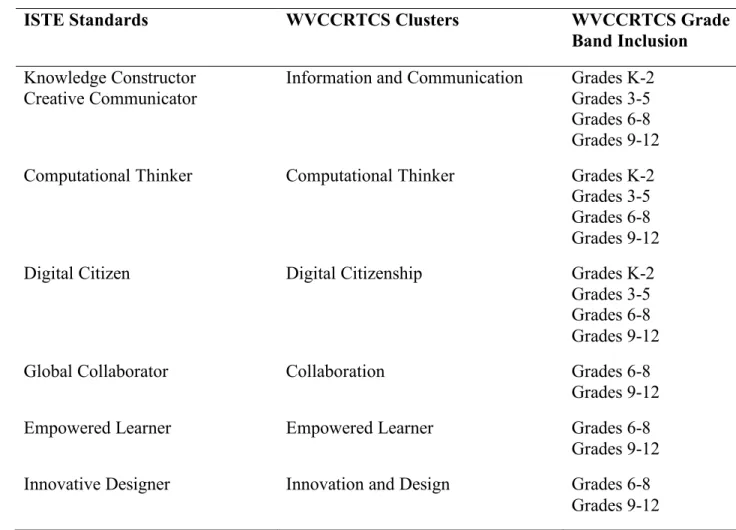
Table 1 Comparison of the WVCCRSTCS to the ISTE Standards ... 50
Table 2 Alignment of Observations to the Technology Integration Matrix ... 252
Table 3 Observations at the Adoption Level of the TIM ... 254
Table 4 Observations at the Adaptation Level of the TIM ... 256
xii
ABSTRACT
Technology has become a natural part of our students’ lives. The use of iPads in classrooms has increased, and educators are becoming more experienced using them during instruction.
Research needs to focus on providing educators with examples of effective instructional practices with iPads. To provide samples of effective instruction, this qualitative study used evidence from classroom observations and aligned the lessons to the Technology Integration Matrix (TIM). Lessons were observed and aligned to the Adoption, Adaptation, and Infusion levels of the TIM with Active, Collaborative, Constructive, and Authentic learning attributes. In addition this study investigated the perceptions teachers and principals had about their journey with iPads and the impact on their schools, classrooms, and students. Three elementary schools in West Virginia were chosen by means of purposeful sampling, and classroom observations and interviews were used as methods of data collection. Four main themes emerged from the data: lessons that fall higher on the TIM created more student ownership of their learning; iPads increased student engagement and provided more opportunities for collaboration; effective student-centered instructional practices led to more effective implementation of iPad integration versus teacher-centered instruction; and strong leadership in a school contributed to the effective implementation of iPads.
1
CHAPTER 1 INTRODUCTION
It is no secret that technology is taking the world by storm. Computers, cell phones, and other kinds of devices have had a tremendous impact on our personal and professional lives. These have also crept into our classrooms and for many have changed the way tasks are accomplished. Since its creation in 2010, the iPad has become an integral part of many
classrooms. No other device has grown at a quicker pace than the Apple iPad; in fact, there have been 4.5 million iPads sold to schools in the United States (Paczkowski, 2013). According to Ed Tech Review (2016), educators throughout the world purchased over eight million iPads in 2012, and that number has grown. Molnar (2015) stated by 2016 over half (54%) of elementary students and teachers in the United States would have access to a school-issued tablet. This number (54%) is an increase from 23% in 2012. Several school districts throughout the United States have replaced print textbooks with digital textbooks or at least have mandated legislation stating digital textbooks must be one available option for students (Fletcher, Shaffhauser, & Levin, 2012). According to Fletcher et al. (2012), states such as California, Texas, Virginia, and Indiana, to name just a few, have spent millions of dollars and changed state policy in order to support local school districts in their mission to go from print to digital textbooks. Educators need to come to the realization that technology has transformed the way we live and work in a short time and, even though it has been slower to become a part of K-12 education compared to the business world, educators should challenge themselves to learn what they can so they can provide students with everything needed to meet their diverse needs (Digital Textbook Collaborative, 2012).
2
The increase in technology means a major pedagogical shift in a time when state
educational budgets are stretched thin. School districts do not have funding to provide adequate professional development to assist with this transition so it often falls upon the teachers to learn and make changes on their own (Burns, 2010; National Education Association [NEA], 2008). When technology training is provided either face-to-face or online, there still is a faction of teachers who feel it does not fit their current needs (Adams-Becker, Freeman, Giesinger-Hall, Cummins, & Yuhnke, 2016). In fact, in a report by the NEA (2008) only 43% of the 1,934 teachers surveyed felt the technology professional development they received throughout the year was “useful” or “very useful.” Teachers surveyed stated that training was too focused on how to use the software or learning about the technology, and not enough on how to incorporate the technology into the curriculum. Fifteen years ago, this type of professional development would have been sufficient, but as more and more teachers have increased their personal use of devices and have grown comfortable with figuring out how to access digital content, many districts have incorporated a “learn-by-doing” approach to professional development (Fletcher et al., 2012). Also, with the ease of use of most devices the types of guidance needed by educators has changed. Burns (2010) addressed this issue by stating, “After 25 years of having computers in schools, we still lack an approach that ensures teachers truly understand the benefits and appropriate uses of computers for instruction and that teachers actually use technology as part of teaching and learning” (p. 1).
This study sought to take a closer look at instructional practices used by teachers that have adapted their teaching styles to include technology as part of their classroom curriculum. The overarching goal was to identify concrete examples of how educators used iPads effectively
3
and to give the readers a sense of how the teachers and principals perceived their journey with using iPads in the classrooms and schools.
BACKGROUND
Although specific research on iPads is not abundant, there have been some studies completed in the areas of teacher and administrator perceptions of iPad use (Pew Research Center, 2017), student engagement (Pressey, 2013), professional development (Bayar, 2014), and similar areas. As research builds, it is important to widen the body of research to include findings on how curriculum is impacted by the changes in how today’s students learn; with an accompanying need for teachers to begin to shift their thinking toward more constructivist views of teaching which will impact what is being done in the classroom (Oblinger & Oblinger, 2007). The following section includes examples of previous studies on iPads conducted in the areas of student engagement, increased academic success, teacher and student perceptions of iPad use in curriculum, and professional development.
How Students of Today Learn
John Dewey once said, “If we teach today as we taught yesterday, then we rob our children of tomorrow” (as quoted by Cummins, 2013, p.2). Today, the digital age is upon us. Brill and Park (2008) described the current times as the “Interaction Age,” defined as the age where it is expected students use digital content to engage with their peers to construct meaning rather than just gaining information. The authors contend that it is no longer necessary for teachers to focus solely on providing information that can be discovered by the students with one or two clicks. Children sitting in our classrooms have had common technology tools in their hands since they were very young (Apple Inc., 2008). According to Rosin (2013), a study completed by the Joan Ganz Cooney Center revealed at least two-thirds of the children in the
4
study ages four through seven have been exposed to an iPhone. Students of today have grown up with technology like iPods, computers, tablets, and cell phones as part of their everyday life; educators should not expect students to leave their devices at the door when they enter school to a classroom where traditional, passive, one-size fits all practices are taking place (Digital
Textbook Collaborative, 2012). Research shows student achievement increases when they are active and engaged in their learning, offered different styles of learning, and allowed to learn at their own pace (Apple Inc., 2008; Dwyer, 1994; Glowa & Goodell, 2016; Greaves, Hayes, Wilson, Gielniak, & Peterson, 2012; Mango, 2015). iPads can be an instructional tool that assists in providing these opportunities.
Some research demonstrates students are more engaged in classrooms that use iPads (Deimer, Fernandez, & Streepey, 2012). A study by ProCon (2016) shows an increase in
reading and math scores when iPads are used to support instruction. Houghton Mifflin Harcourt collected data in the California Riverside Unified School District. They found students using a digital version of an Algebra I textbook scored 20% higher on a standardized test than those who used the print version (ProCon, 2016). Deimer, et al., (2012) discovered the perceptions of teachers and students when it comes to the impact of iPads on academic success. The results of their study showed iPads had a positive effect on perception of learning in their classrooms and students’ active engagement. Other studies have addressed the impact iPads have in the
classroom and the effectiveness of professional development (An & Reigeluth, 2011; O’Malley, Lewis, Donehower, & Stone, 2014; Pickney & Shaughnessy, 2013).
As with every age, changes in technology have led to changes in learning. The current educational system was developed in the early 1900s for a society and economic system that no longer exists (Glowa & Goodell, 2016). Prensky (2001) found evidence of today’s students
5
thinking differently, looking at visual images as one would look at text, and exhibiting different thinking patterns. He referred to today’s digital age as a “singularity,” which is “an event that changes things so fundamentally that there is absolutely no going back” (p. 1). Educators must provide students with a means of learning that fits their generational needs and prepares them for what they are to face in the future. Without a shift from the traditional approach to teaching, this cannot be accomplished.
Constructivist Theory of Teaching
Many classrooms across the United States still function in traditional teacher-centered ways. Although it appears students are learning in this type of setting because they are passing tests and receiving grades, Sion (1999) frames this teacher-centered approach as children being taught instead of children learning, which tends to favor student disengagement. Disengagement in school has been connected to student dropout rates (Finn, 1989). In a 1998 speech, Seymour Papert, a well-known cognitive constructivist said students are realizing
that the pace of school and the mood of the school culture is out of sync with the society in which they live. And so it becomes harder and harder to get them to buy in to the idea that school is satisfying their needs. (as quoted by Bloemsma, 2013, p.2)
This traditional approach often gives our students the perception that there is not a connection with their school learning and their outside interests, which leads many to drop out at the secondary level (Cothran & Ennis, 2000).
There have been strong debates throughout the years over the traditional (teacher-centered) versus constructivist (student-(teacher-centered) methods of teaching. Morrison’s (2014) description of teacher-centered instruction shows the teacher’s role is to be the giver of information, sometimes referred to as “a sage on the stage” (p. 1). The students’ roles are to
6
receive the information as passive listeners. The focus here is on the teaching, whereas, in the student-centered learning environment the focus is on the learning. Glowa and Goodell (2016) describe the teacher’s role in the student-centered classroom as a facilitator, while students’ take ownership of their own learning with guidance from the teacher. Collaboration with other students is an integral part of instructional time. Further discussion will follow, but it is important to acknowledge the differences in teaching methods because of the impact it has on student learning.
Teachers in the traditional mindset have had success in the past, so they will need evidence to prove they can have success teaching in another manner to change the way they teach. Research from Vrasidas and McIssac (2001) shows most teachers take their pedagogical beliefs about teaching from the manner in which they were taught. When presented with the idea of using technology as part of their curriculum, those traditional teachers show hesitation. They cite reasons for their hesitation such as: little to no professional development, lack of confidence in using the devices, a shortage of devices in their classrooms, or not having the support from their administrators (Wells & Lewis, 2006). A study released by the Department of Education in 2000 found 82% of teachers in the United States said the biggest barrier they encounter to using the Internet and computers in their classrooms is the lack of release time for professional development (Vrasidas & McIssac, 2001). A more recent study by Schuck,
Aubusson, Kearney, and Burden (2013) reiterated this idea of a lack of professional
development cited by educators as a barrier to technology integration. Using technology, even in small steps, may be the answer to help teachers make the shift so they can provide their students with the learning that is needed to get them ready for college or a career in the twenty-first century.
7
Technology Standards
Teachers are increasing their personal and professional use of technology, breaking down some barriers of technology use in their classrooms. There are many teachers, though, that still feel they lack appropriate training as supported by a survey cited by the National Education Technology Plan (2017), which showed two-thirds of the teachers surveyed felt they still needed more support and training; close to half described the lack of training as one of the barriers to incorporating technology into their teaching. As more teachers use computers and tablets in their classrooms, they begin to see a shift in their teaching practices, providing
opportunities for their students to learn in new and innovative ways (Dwyer, 1994). With this in mind, it is important to have guidelines for educators and school administrators so there is an understanding about what students should know about technology, what they should know about the world around them, and how to get them there.
The International Society for Technology Education (ISTE) (2016c), created a set of standards in 1998 called the National Educational Technology Standards (NETS), with support from extensive research. ISTE has recently revamped the standards to meet the transformation of pedagogical development and technology growth. The current standards include a set of overarching goals and performance indictors and are separated into three sets - students, teachers, and administrators - and describe everything each group needs to master the standard (Morphew, 2012 as cited by Simsek & Yazar, 2016). The technology standards adopted by the West Virginia Department of Education (2018) have similar goals to the ISTE standards and are broken down into grade bands so educators at each grade band can focus on the specific
8
Standard Policies (WVBECSP), 2017). Further discussion on student standards will follow in Chapter 2.
Technology Integration Matrix
The ISTE technology standards for students, teachers, and administrators and the WVBECSP give educators a clear understanding of a framework upon which to base their integration and model their end goals. There are several different tools available for teachers to refer to that will assist them in reflecting on their practices with technology such as the SAMR Model (Romrell, Kidder, & Wood, 2014), Technological Pedagogical and Content Knowledge (TPACK) (Koehler & Mishra, 2009), and the Grapplings Technology and Learning Spectrum (Porter, 2001; Skoretz & Childress, 2013). For the purpose of this study, the researcher has chosen to use the Technology Integration Matrix (TIM). A copy of the TIM Summary Descriptors can be found in Appendix B. To assist teachers in developing their instructional practices so they can determine how to use technology tools in a meaningful way, the Florida Center for Instructional Technology (FCIT) (n.d.a) and the Florida Department of Education created a tool that teachers can use to determine if their use of instructional technology is moving their practice forward and enhancing student learning (Bartoschek & Carlos, 2013;
Welsh, Harmes, & Winkelman, 2011). The TIM was created with the purpose of providing a framework for teachers to evaluate the use of technology within their instructional environment
(Bartoschek & Carlos, 2013; Welsh, et al., 2011).
The TIM is a model K -12 educators use that evaluates and describes their level of technology integration in their classroom (Welsh, 2013, 0:23- 0:30). The matrix set-up includes consideration of five aspects of the learning environment: active, collaborative, constructive, authentic, and goal-directed; and five levels of technology integration: entry, adoption,
9
adaptation, infusion, and transformation. Further descriptions of each attribute of the learning environment and levels of technology included on the TIM, along with descriptions of other technology matrices will follow in Chapter 2.
PROBLEM STATEMENT
Research is beginning to emerge in the area of iPad use during classroom instruction. More research needs to be done to assist teachers on their journey to create a classroom environment that allows for technology to be used as a student-learning tool. As iPad
integration begins to increase and educator experiences transform, it is necessary to continue researching instructional practices with iPads that deepen the educator’s understanding of effective practices.
As previously stated, funding is not always available to provide appropriate and effective professional development for teachers, even though millions of dollars across the country are being spent on infrastructure, equipment, and support personnel (Vrasidas & McIssac, 2001). It often becomes the responsibility of teachers to learn on their own, which warrants further investigation into not just how people perceive the effectiveness of iPads, but specific examples of iPad use that effectively promotes constructivist pedagogy in classrooms. Additional research is needed to show evidence of effective instructional practices when utilizing iPads for collaborative instruction. Providing a snapshot of effective iPad instruction will let teachers move their practice forward and allow them to compare their instruction to that of other professionals.
PURPOSE OF THE STUDY
The intention of this study was to contribute to the body of research, providing examples of effective instructional practices that promote student engagement in the classroom with the
10
use of iPads. The purpose of this study was twofold: one was to identify and align instructional practices with the Technology Integration Matrix (TIM); and two was to gather data during classroom observations and individual interviews that told a story of how teachers and principals perceived their journey with iPads, how they and their schools got to the level they are, and how their one-to-one initiative got them there regarding their students, classrooms, and instructional practices.
Educators throughout the country are at different stages when it comes to having and using iPads in their classrooms. Using the TIM to align the observations provided several examples of best practices for educators to compare their own instruction. It was important to give concrete examples of classroom practices that used iPads at different levels. It was also important to get the message to educators that iPad integration is more than just the tool. Findings from this study painted a picture of the journey and experiences these educators had with iPad integration.
RESEARCH QUESTIONS
This qualitative study addressed the following research questions:
1. How are the various levels of the Technology Integration Matrix – entry, adoption, adaptation, infusion, and transformation, and the classroom attributes of active, collaborative, constructive, authentic, and goal-directed – represented as instructional practices in classrooms of elementary teachers within schools identified as part of a one-to-one cohort?
2. What are the perceptions that elementary teachers and principals participating in a one-to-one cohort have about their experiences with iPads regarding their students?
11
3. What are the perceptions teachers and principals have about their experiences with iPads regarding their classroom or school?
4. What are the perceptions that elementary teachers and principals participating in a one-to-one cohort have about their experiences with iPads in regards to their instructional or leadership practices?
OPERATIONAL DEFINITIONS
The following are operational terms defined for use in this study:
• Technology Integration Matrix - also known as TIM, was created to help educators
evaluate their level of technology integration within their classroom. This theoretical framework is based on a constructivist learning theory (Bartoschek & Carlos, 2013). The main purpose of the TIM is to evaluate a lesson looking at both levels of integration and different attributes of the classroom with a total of 25 different cells included in the table. The levels of integration are: entry, adoption, adaptation, infusion, and
transformation. The attributes of the learning environment are: active, collaborative, constructive, authentic, and goal-directed (Welsh, et al., 2011). The alignment of the instructional practices was identified through classroom observations and matched to the 25 cells of the TIM using the Phillips Observation Guide found in Appendix C.
• Perceptions of Experiences with iPads Regarding Students - These experiences
included the teacher’s and principal’s perceptions about the impact, if any, on their students, including but not limited to, impact on learning, impact on struggling learners, or any difference in academic achievement influenced by the use of iPads, and any other perceptions they have developed since implementing iPads in their instruction. The
12
teacher and principal perceptions of student experiences were gathered through face-to-face interviews with each participant and the school principal.
• Perceptions of Experiences with iPads Regarding Classroom or School -These
experiences included the teacher’s and principal’s perceptions, if any, about the culture of the school, including but not limited to, the influence on their use of iPads, the changes observed in the school due to iPad use, the supports and barriers they encountered within their schools, the impact iPads have had on their classroom management, student behavior, set-up and design of the classroom, and any other perceptions they have developed since implementing iPads in their instruction. The teacher and principal perceptions of the impact on their classrooms and schools were gathered through face-to-face interviews with each participant and the school principal.
• Perceptions of Experiences with iPads Regarding Instructional or Leadership
Practices - These experiences included the teacher’s and principal’s perceptions, if any,
about the balance between using iPads and how they ensured they were meeting the district requirements of teaching the standards, including but not limited to, their thoughts on the impact iPads have had on their pedagogical beliefs, instructional practices or evaluation of those practices, collaborative efforts with peers and staff, professional learning and growth, and any other perceptions they have developed since implementing iPads in their instruction. The teacher and principal perceptions of their instructional or leadership experiences were gathered through face-to-face interviews with each participant and the school principal.
13
SIGNIFICANCE OF THE STUDY
New ideas and technology can have a positive impact on teaching and learning (Digital Textbook Collaborative, 2012; Jonassen, 2000; Vrasidas & McIssac, 2001), but some educators have a fear of using technology because they believe they will lose authority in their classrooms since they may not be experts with the technology tools being used (Hammonds, Matherson, Wilson, & Wright, 2013). Too often teachers intend to use technology to enrich the learning taking place in the classroom, but get caught up in the bells and whistles of the device and resort to completing menial tasks not related to the standards (Ertmer, 2005). In other instances,
teachers that do not receive sufficient professional development may end up using the device to replace instruction that can be accomplished with pencil and paper instead of finding ways to use the iPad to promote student engagement (Quillen, 2011). The researcher provided examples for educators to alleviate the fears of using iPads, provided examples of lessons they can mimic that engage their students, and acted as a form of professional development to show teachers that they can use iPads to reach students in meaningful and engaging ways.
Examples of iPad use collected from this study provided models for educators to examine their own teaching practices, to determine what level of the TIM they are currently representing and consider how they may improve their own practice. Administrators benefitted from the data by using the evidence to guide teachers in their schools. Specifically, this study sought to provide teachers and administrators with a snapshot of classrooms labeled as
innovative and provided data for classrooms and schools to compare themselves to others that are on the forefront of technology integration.
The evidence demonstrated the perceptions teachers and principals have about the use of iPads in their schools. Other educators and administrators got a sense of the experiences
14
teachers from the one-to-one cohort had in their classrooms, schools, and professional
development. The data provided an understanding of the process those teachers have undergone to get to the comfort level at which they are currently practicing. What Coppola (2004) pointed out nearly fifteen years ago remains true: teachers will not incorporate new strategies if they do not see the benefit for their students’ advancement.
District leaders can use the evidence from this study to assist in planning improvements of technology integration throughout their schools. The findings from classroom observations showed different levels of iPad integration to use as a plan for reaching all teachers no matter what level they are currently practicing. In situations where districts are considering
implementing iPad instruction, this study provided positive evidence and a pathway of learning for all stakeholders. Evidence from both the observations and interviews showed leaders the systematic plan in place for this district, and the growth the educators involved in the study have taken throughout the process.
This study focused on strategies that will help teachers move their practice forward, administrators to move their school in the direction of appropriate use of iPads, and districts to have concrete examples of what their schools can strive for when using iPads in the classroom.
LIMITATIONS AND DELIMITATIONS OF THE STUDY
The researcher acknowledges the following limitations and delimitations:
1. This study is limited to three elementary schools that were chosen based on recommendations from county administrators and technology specialists; and two teachers at each school based on recommendations from the school principal. This is a qualitative study using purposeful sampling at both the county and school levels, which may not be representative of larger populations.
15
2. This study focused on teachers and administrators at the elementary level only; findings may not be generalized to middle and high school levels.
3. Circumstances of the technology tools available to the teachers may not be the same for other schools and districts due to funding and availability of iPads. 4. Observations and interviews were conducted within a period of approximately
four weeks. As noted by Simon (2011), “A study conducted over a certain interval of time is a snapshot dependent on conditions occurring during that time” (p. 2). Findings do not represent different stages throughout the year. 5. Data collected during the observations were completed on the Phillips
Observation Guide (Appendix C), which was the sole document used for observational data collection purposes. Certain observations proved to be difficult to document using this tool.
6. The data analysis is limited to the use of the TIM (Appendix B). There are other technology matrices that have been created for teachers to assess practice. The researcher feels the TIM was the most compatible tool for this particular study. 7. The data collected from the interviews relied on self-reported information. There
is an assumption the participants were thoughtful and honest when answering questions about their experiences, but there is no guarantee all participants were forthright.
8. Due to the nature of qualitative research, findings can possibly be interpreted differently by readers in different positions and contexts.
16
CHAPTER 2
REVIEW OF THE LITERATURE
This chapter offers an investigation of current research with an area of focus related to the history of technology integration and its connection to teacher pedagogical practices and how students of today learn. The chapter includes a review of the literature relevant to the focus of the study. Themes that emerged during the review include: the influx of technology, shifts in teacher pedagogy, changes in student learning, and the next steps for teachers. These areas of focus and themes support the purpose of the study.
THE INFLUX OF TECHNOLOGY
Today’s students are immersed in technology both inside and outside of school. A study conducted by Willingham (2010) shows the average American youth between the ages of eight and eighteen spends at least seven hours per day with hands on a computer, phone, watching television, or another electronic device. Prensky (2001) agrees:
Our children today are being socialized in a way that is vastly different…over 10,000 hours of video games, over 200,000 emails and instant messages sent and received; over 10,000 hours talking on digital cell phones; over 20,000 hours watching TV, over 500,000 commercials seen – all before the kids leave college. And, maybe, at the very most, 5,000 hours of book reading. (p.1)
These numbers have certainly grown since the study was conducted in 2001.
Technology has been a natural part of their lives, so much so that Prensky (2001) coined the term “Digital Natives” meaning that today’s children have grown up surrounded by smart phones, video games, and other devices and do not know anything different. In fact, in a study completed by the software group Anti-Virus Guard (AVG) (2012) in a series called Digital
17
Diaries, 58% of children ages two through five can play a basic computer game but only 42% of the children in the same age range can ride a bike; 19% can successfully access a smartphone application but only 9% can tie their own shoes; one-in-five children ages six through nine use email; almost half of the children in the six to nine year old range spend at least two hours a week online. In fact, in a study by Etherington (2013) there are an estimated four and a half million students that use tablets every day.
Economic and Political Impact
Technologies such as tablets are raking in $72 billion yearly with 42% of adults owning one (ProCon, 2016). Consumers spent $966 million on eBooks and beginning in January of 2011, Amazon sold more eBooks than print books (Kessler, 2011). In a report by McKinsey and GSM Association (GSMA) mobile education may be up to $70 billion and demand for devices to support this will be in the $32 billion range by 2020 (Rock, 2012).
More schools have begun to purchase technology tools that increase the amount of screen time students encounter daily. The Apple Classrooms of Tomorrow (ACOT) (Apple Inc., 2008) report shows that 4% of school districts in the United States were transitioning to one-to-one programs in 2003 and by 2006 that number increased to 24%. In fact, Fletcher, et al. (2012) describe the increase in the use of digital content in schools at a “year-over-year” rate of more than 100%.
Other statistics that show the enormous increase of exposure to technology were found in a 2016 report from the National Center for Education Statistics (NCES). In 2013, 71% of the United States population ages three and above accessed the Internet and classroom Internet availability increased from 8% in 1995 to 98% in 2008. A study by ProCon (2016) showed similar growth of access to the Internet with an increase in all K-12 classrooms from 51% in
18
1998, to 98% in 2008. The amount of money, time, and investment guarantees one thing: this technology is not a fad that will be going away. If nothing else, new technologies will be introduced to our students at alarming rates.
This influx of technology has not gone unnoticed at the federal level. The United States Department of Education released its National Education Technology Plan (NETP) in 2010 and provided updates in 2014 and every year since. The purpose of the NETP is to encourage districts to advance learning with the use of technology. It contains recommendations for using devices in the classroom, plans for districts to increase the amount of technology in their curriculums, and guidelines for schools so they can provide equitable access for all students. In 2011, the US Department of Education, along with the Federal Communications Commission (FCC) produced a document called the Digital Textbook Playbook (Digital Textbook
Collaborative, 2012), which builds upon the NETP and the FCC’s National Broadband Plan. The information provided assists K-12 educators and administrators with a smooth transition to digital content in the schools. It provides guidelines for broadband access within the schools including considerations for home and community broadband access, advice on the best devices to include, and ideas to improve digital learning along with development of digital textbooks.
Across the United States, school districts spend an average of $3 billion yearly on digital content, infrastructure, and hardware (ProCon, 2016). State lawmakers are recognizing the need to adjust the strict policies associated with textbook adoptions and many have begun to remove restrictions and include language that allows for digital content (Fletcher et al., 2012).
According to a report produced by the State Educational Technology Directors Association (SETDA) (Fletcher et al., 2012), more than 22 states have adjusted policy on textbook
19
allowing for initiatives that include either digital textbooks or Open Educational Resource (OER) initiatives. The changes even go so far as to allow for hardware, software and in some cases materials for flexible learning spaces.
Entire school districts are requiring all content be available as digital content (Fletcher, et al., 2012). Although it is nearly impossible to find out exact numbers of schools incorporating digital content in the classroom, the following examples from around the nation offer an idea of how quickly one-to-one initiatives, such as iPads, are becoming an essential part of classroom instruction. In the state of North Carolina, Mooresville School District provided laptops for every student in grades 4-12 beginning in 2009; the San Diego Unified School District in California began the i21 Interactive Classroom Initiative and has distributed upwards of 78,000 devices to their teachers and students (Digital Textbook Collaborative, 2012). Other states such as Maine, Texas, Virginia, West Virginia and Massachusetts have been leaders in changing legislative policy in order to allocate textbook funds to be used on digital content (Fletcher et al., 2012). Beginning in 2010 in response to decreases in the achievement gap, the
Massachusetts legislature set aside funding to help schools become innovation schools. As of 2015 there are 54 approved innovation schools throughout Massachusetts that have flexibility with curriculum, scheduling, instructional practices, and professional development (NETP, 2010).
In an effort to close the achievement gap for low-income and minority youth, schools, youths and communities are connected through a program called LRNG (2017), an acronym for learning. LRNG cities have received $50,000 grants with a purpose of redesigning learning opportunities for the age of the Internet. LRNG cities provide opportunities for youth to build real-world experience outside the classroom. In LRNG, cities become learning labs for students
20
to explore. Businesses, institutions, and organizations are connected through online
programming. Cities such as Washington, Chicago, and Philadelphia have come together as LRNG cities to make learning possible outside the school walls. These are just a few examples of how innovative states are adapting to meet the needs of students when it comes to integrating technology.
Mobile Device Integration
The introduction of mobile devices such as the Apple iPad has impacted the use of technology by creating a way for users to access the Internet without being bound to a stationary location (Pew Research Center, 2017). According to the Pew Research Center (2017), the percentage of adults owning a tablet grew from 3% in May of 2010 to 51% in November of 2016; rates of laptop and desktop computer ownership remained at 78% within the same time period.
Specific to the Apple iPad, many districts have increased the availability of iPads to their teachers and students; in fact Apple iPads account for 94% of tablets in education
(Kamenetz, 2013). Kamenetz also noted some examples of districts around the country funding iPad initiatives. Some include Horry County in South Carolina, which distributed 10,000 iPads to middle school students and California’s Coachella Valley School District, which provided 19,000 iPads. Other examples include San Diego Unified Schools that purchased 26,000 iPads, Knox Public Schools provided 56,000 iPads, and El Paso public schools dispersed 7,200 iPads (Wainwright, 2013).
Research Findings Specific to iPads
As stated earlier, the Apple iPad has been available only since 2010, so the research specific to iPad use for instruction is limited, but some studies are beginning to surface showing
21
the impact iPads have on teachers and learners, teacher perception of iPad use for instruction, how iPads are being used in classrooms, and considerations districts must include when making decisions about iPads.
Teachers and Learners
Decisions to use iPads for instructional purposes are not without controversy. Those opposed to purchasing iPads to use as everyday instructional tools feel the amount of screen time is not healthy (ProCon, 2016). O’Malley, et al. (2014) showed great costs with training, maintenance, and support for technologists. Others feel giving iPads to students may lead to misuse and may become an issue of safety. Parents have voiced concerns about giving children the responsibility of having an iPad because of theft, loss, misuse, and costs involved in
replacing devices that have been broken (Clark & Luckin, 2013), but studies have shown iPads can have a positive effect on teaching and learning (Fletcher et al., 2012; Greaves, et al., 2012; O’Malley et al., 2014). According to Schrum and Levin (2016) the current one-to-one
movement in the United States has encouraged 21st century skills that include: deeper learning,
engagement, improved writing skills, and an easier inclusion of technology integration in the classroom.
In a study by Deimer, et al. (2012), students and teachers surveyed responded positively when asked about their experiences using iPads. In other studies, iPads assisted in developing 21stcentury skills, engaging students, motivating them during instruction, and are one reason
students remained on task for longer periods of time (Bloemsma, 2013; Clark & Luckin, 2013; Greaves et al., 2012; Mango, 2015). Other studies have shown that using iPads for collaborative lessons gave students more opportunities for social interactions, increasing collaboration, because of the mobility of the device as opposed to desktop computers that tend to encourage
22
individual use or other “mouse-driven” (Clark & Luckin, 2013, p. 2) screen devices that remain in a fixed location and are not conducive for group work (Chou, Block, & Jesness, 2014; Clark & Luckin, 2013).
In 2012, Heinrich completed a study in a secondary school in the United Kingdom. Students, ages ranging from 11-18, responded positively to the use of iPads. Of the students surveyed, 69% of them stated they were more motivated to learn using iPads; 73% said they produced better quality work with iPads; 61% felt their achievement improved with the use of iPads; 73% reported working more efficiently with iPads; 65% said they were able to
collaborate with their peers more easily; and 90% stated the use of iPads in school made them happy (as cited by Hallissy, Gallagher, Ryan, & Hurley, 2013).
iPads for Instruction
When iPads are used in instruction, it expands opportunities for more varied learning activities because of the large number of apps available to teachers (Chou et al., 2014; Clark & Luckin, 2013; Hallissy, et al, 2013; Ludwig & Mayrberger, 2012). Studies have shown iPads to be an effective tool in increasing collaborative, personalized, and independent learning activities during instruction (Gielniak, Wilson, & Greaves, 2017; Global Digital Promise, 2016). iPads have been credited with enhancing learning by creating higher depth of knowledge lessons (Chou et al., 2014; Clark & Luckin, 2013). Immediate and continuous digital assessment results and monitoring are another positive seen by teachers and learners (Clark & Luckin, 2013; Hallissy et al., 2013). Other studies showed the iPad contributed to the ease of sharing resources between teacher and students (Hallissy et al., 2013; U.S. Department of Education, 2017). The body of research is growing to support inquiry-based learning strategies such as Problem-Based or Project-Based Learning (PBL) because they contribute to a deeper
23
understanding of concepts and make connections for learners (Dole, Bloom, & Kowalske, 2016). Dole, et al. (2016) also stated these connections help to transfer general knowledge to new problems or situations. According to Remijan (2016) technology has been an integral part in increasing the interest in PBL activities in K-12 schools because students can use iPads or laptops to easily conduct research, share data, or work simultaneously on projects or
presentations in real-time. According to Markham (2011) students are able to solve real world problems in PBL while learning knowledge of the core curriculum. Markham states, “As in the real world, it’s often difficult to distinguish between acquiring information and using it” (p. 38).
Studies show there are benefits for teachers who choose to incorporate iPads within their instruction. In a study by Hallissy et al. (2013), 21 teachers of various subjects and backgrounds took part in a focus group and findings recognized teachers felt iPads were instrumental in transforming and enriching their teaching practices. It was shown that the addition of iPads in the classroom caused some teachers to feel revitalized with their practice due to the results and enthusiasm they were getting from their students, but they did voice cautions about issues and challenges they may face. In the discussion from the focus group, teachers saw their students becoming more independent, but felt that some students still needed more support from the teacher than others. Other benefits that were stated included less copying, better communication between teachers and students, and the ability to give immediate feedback to their students.
The challenges teachers face that were discussed during the focus group (Hallissy et al., 2013) included: the preference of some students in having a real textbook versus an e-book, the difficulty and lack of experience that students have taking notes on an iPad versus paper and pencil, the performance of written work on tests from those students who they call the “cut and paste culture” (p. 31), and the lack of broadband access for some of their students.
24
Access to assistive tools offered by the iPad has given students with disabilities a chance to lessen the burden of learning new material and made instruction more equitable (O’Malley et al., 2014) with tools that assist hearing and visually impaired students and students with
learning disabilities. The iPad was shown to impact students diagnosed with autism because it allowed those students to contribute to instruction with the use of video and voice recordings when the students had not previously done so because of their disability (O’Malley et al., 2014). Classroom Use
When used routinely in a classroom, iPads have improved communication between teachers and students and teachers and parents (Clark & Luckin, 2013; Fletcher et al., 2012). Students surveyed liked being able to submit assignments and receive immediate feedback from their teachers with the tools iPads offer (Heinrich as cited by Clark & Luckin, 2013). Several districts are using learning management systems that organize courses and resources in one place for their teachers and students (Watson, Pape, Murin, Gemin, Vashaw, & Evergreen Education, 2014). Learning management systems have been met with encouragement and positive feedback from stakeholders. Having several communication options (email, texting, instant messaging, Remind, or Class Dojo [Schiola & Sin, 2016]) to choose from gives a wider range of parents an easier time to discuss the progress of their children (Watson et al., 2014). Remind is an instant messaging app offered for iOS devices where teachers can connect with parents to share classroom information to a whole group or to an individual (Schiola & Sin, 2016). Class Dojo is another communication app offered for iOS devices that can be used by teachers, students, and parents (Schiola & Sin, 2016). Class Dojo gives teachers the ability to share classroom experiences and communicate with students and parents by allowing them to send private messages, upload videos, pictures, or assignments. It can also be used as a behavior
25
management tool that encourages students to do their best and assigns points that can be used to earn positive rewards. iPads have been shown to provide tools that contribute to student
creativity, productivity, and self-regulation (Greaves et al., 2012; O’Malley et al., 2014), all which encourage the engagement and motivation previously discussed.
Communication between school and home can only be accomplished when students have the right tools. Findings show there is more success with iPad initiatives when students use school-issued devices (Clark & Luckin, 2013). When districts are not able to fund shared iPads or one-to-one devices, some schools choose to allow students to bring their own devices from home, or what is called Bring Your Own Device (BYOD) (Hallissy et al., 2013; Watson et al., 2014). Clark and Luckin (2013) found that the use of student personal devices has not been as successful because different types of devices use different operating systems and schools do not have as much control over the support, security, and maintenance. These are areas that must be considered by the leadership within the district when deciding whether or not to fund iPad use in their schools.
District Considerations
Research found successful iPad initiatives used similar plans when making decisions about implementing a one-to-one or shared device program before purchasing iPads for their districts. Most initiatives were started by certain groups of people such as bodies of government or school leadership, and are approached in different modes of implementation (Clark &
Luckin, 2013).
Some of the approaches included small-scale initiatives or pilot programs, where only a small group of schools were equipped with devices, trainings and support, and were monitored to see what kind of impact the implementation had on student learning. There have been
26
districts that decided to start off small with a shared device program by purchasing small sets for each classroom, one iPad for every three or four students in a room (Hallissy et al., 2013; Watson et al., 2014). Studies show this can be somewhat effective at the elementary level, but not as effective at the middle or high school level (Greaves et al., 2012). Ultimately, shared device programs are not as effective as one-to-one (Clark & Luckin, 2013; Greaves et al., 2012), but this can be an option at the beginning of implementation when funding is an issue. When iPad initiatives began, many districts were able to commit adequate funding for their
implementation, but more recently there has been a shift to shared monetary responsibility with parents or leasing options offered by Apple and other technology companies that sell tablet devices (Clark & Luckin, 2013). Using other funding options eases the financial burden on the district and may encourage the school leadership that may be hesitant about the process to pursue one-to-one programs.
One area that is prevalent in several studies (Fletcher et al., 2012; Hughes, 2012; Kopcha, 2010) is the idea of what is necessary for successful adoptions at the state and district levels when it comes to decision-making. In studies by Burden et al. and Heinrich (as cited by Clark & Luckin, 2013) several areas of consideration for districts were listed before deciding what is best for them: having a clear plan in place, appropriate professional development, considerations about personnel, adequate infrastructure, buy-in from all stakeholders, and an evaluation plan for the progress of the program so justification can be made for the
commitment.
Many of the considerations listed above were expressed in the district where this study will be conducted. In an interview with the Executive Director of Technology1, specifics of their
1 Personal communications with the Executive Director of technology is not cited due to confidentiality with the
27
implementation were discussed. Beginning in 2014, this district dedicated $14 million to the initial implementation, but it was based on a five-year lease with Apple, which calculates to $2.8 million for each year. The funding covered 15,000 iPads, a project manager, distribution support, asset tagging and provisioning support, a mobile device management system,
professional development (approximately 20-30 percent of the funding), and two full-time Apple Professional Development Specialists that stayed on-site for two years.
For the initial distribution, they began deployment of 2,200 iPads in the summer of 2014 to all teachers and principals encouraging them to become familiar with the devices over the summer. All sixth through twelfth graders received an iPad beginning in January 2015. Every student in the eight district high schools and 13 middle schools had their devices by the end of the 2014-2015 school year. Elementary students were included in the following year, 2015-2016, with a shared device model. Students in grades kindergarten through fifth grade received iPads at a four-to-one ratio, meaning one iPad for every four students.
According to the Executive Director of Technology, the district decided it would be fiscally responsible to trade in the iPads from the original distribution after three years and receive new iPads at the beginning of the 2017-2018 school year. The lease between the district and Apple extended the one-to-one ratio to all students in grades five through twelve, which resulted in deployment of 18,000 iPads. The addition of fifth grade was a deciding factor in the second deployment because the yearly lease agreement amount remained the same, so moving money or finding funding sources was not a factor.
When asked about the instructional approach to professional development the county adopted for iPads, the following is the response received from the Executive Director of Technology:
28
The instructional approach is job embedded PD. My [county technology team] coaches go into [teachers’] classrooms on a day1 week and plans a standards based lesson infusing technology in the lesson. Then they go back the next week and model and/or co-teach the lesson in the classroom. It gives the job embedded support providing teachers with what they need when they need it. The idea is to provide this basically as differentiated instruction for teachers. We meet teachers where they are and help them to make baby steps of forward movement with support that they need to keep taking steps. The Executive Director of Technology advised that in the beginning, the district’s professional development allowed the teachers to become familiar with the devices, but more recently the district has changed to a focus on student learning and providing quality standards-based instruction using the iPad as a tool that engages students in learning activities that have higher order thinking as the main goal.
When asked if there was anything else to share, the Executive Director stated:
Not really. It’s really all about the learning. Always. Not about the tech but about how we engage students in critical thinking, problem solving, collaboration, and
communication. We want them to be real world ready and all of those skills are required by the real world to be successful.
It is important to understand the impact of having rapid changes with technology in our classrooms. Our students have changed and our world has changed. Educators have to
acknowledge and respond by incorporating these technologies into the curriculum. What technology brings to learners is a chance to become motivated learners, critical thinkers, and problem solvers (An & Reigeluth, 2011). In the ACOT report (Apple Inc., 2008), the authors stated “Current data show high school graduates in jobs requiring the highest degree of
29
innovative thinking earn more than 50% more than those in jobs requiring the least innovative” (p.7).
PEDAGOGICAL SHIFTS THROUGHOUT THE LAST CENTURY
The successful integration of technology is not solely dependent on having the right equipment, infrastructure, and funding in place. It is greatly influenced by the teachers that have the responsibility of implementing lessons that include technology tools. In his meta-analysis on student achievement, John Hattie (2015), examining over 800 studies, ranked 195 important influences within a classroom having the biggest effect on student achievement and found teacher expectations and teacher efficacy had the largest effect on how students perform in the classroom. As Eileen Coppola (2004) stated in her book Powering Up, technology use in a classroom is linked to teacher pedagogy. When researchers are interested in exploring improvement in classroom practice with technology, they “must therefore design studies that begin with an investigation of pedagogical practice before investigating its antecedents” (p. 27).
It is also important to consider what classrooms looked like 100 years ago compared to now and how pedagogical beliefs have changed in the last century. What type of teaching practices have changed, which have stayed the same, and what events in society have caused these changes to take place to get us where we are today? Pajares (1992) supported this when he stated, “Little will have been accomplished if research into educational beliefs fails to provide insights into the relationship between beliefs… and teacher practices, teacher knowledge, and student outcomes” (p. 327). He also noted that, “Few would argue that the beliefs teachers hold influence their perceptions and judgments, which in turn, affects their behavior in the
30
Teacher-Centered Versus Student-Centered Instruction
For the purpose of this study, literature was examined to gain a better understanding of the type of instruction present in various classrooms. In order to understand the best way to achieve effective integration, it is important to understand teachers and pinpoint the reasons for them using technology (Ertmer, 2005). Consider the perspective of teacher-centered instruction versus student-centered instruction. Pedagogical beliefs are the driving force behind the
decisions teachers make, Coppola (2004) argues: “Good professionals will adopt technology only when they see a pedagogical reason for doing so” (p. 151). Educational reform can be expected, but what happens in a classroom when the teacher closes the door becomes the decision of the teacher and it most certainly will fit his/her belief system (Cuban, 1984; Ertmer, 2005). Seeing where teachers are in their values, practices, and beliefs about teaching will give us insight into those teachers who are more likely to incorporate technology into their
curriculum.
As described by Minter (2011), the focus of instruction is on the teacher within teacher-centered models. In teacher-teacher-centered classrooms, the teacher is usually in the front of the room, lecturing to students who sit at desks set up in forward-facing rows (Cuban, 1995). Textbooks, seatwork, and recitation followed by summative assessments are the primary source of
instruction (Minter, 2011). Very little discussion or movement from the students is occurring and only when initiated by the teacher. Dewey (1900) called this “old education… derived from a factory model of organization in which students are raw materials subjected to uniform
schooling processes” (p. 34). This traditional type of teaching still occurs in schools around the nation. This type of instruction dominated classrooms throughout the 20th Century as illustrated
31
resources: photographs, textbooks, correspondences, reports, and research studies, to provide examples of classroom practices. He described the teacher-centered classrooms during this time as organization and practices that would look similar to observers even 100 years later.
Teacher-centered practice endures because “it produces student behaviors expected by the larger society” (Cuban, 1984, p. 9). Teacher-centered beliefs are associated with
behaviorism (Deng, Chai, Tsai, & Lee, 2014) and tend to include students responding to questions only when asked by the teacher and moving around the room only when given permission, which shows that the teacher is in full control and makes all curriculum decisions. Only the teacher evaluates, and evaluation is completed solely on student learning outcomes, not the process used to reach these outcomes (Minter, 2011). Researchers agree teacher-centered instruction was structured and has sustained because it is easier to deliver material to large groups of students and is organized in a way that allowed for teachers with little
experience to be successful (Cuban, 1984; Johnson, Johnson, & Stanne, 2000; Matijevic & Opic, 2016). The teachers in this model believe their role is “to communicate knowledge in a clear and structured way, to explain correct solutions, to give students clear and resolvable problems, and to ensure calm and concentration in the classroom” (Organisation for Economic Co-operation and Development [OECD], 2009, p. 6).
Glowa & Goodell (2016) point out that “Student-centered learning models personalize learning with the use of competency-based approaches, supported by blended and online learning modalities and environments, as well as extended learning options and resources” (p. 1). Students are responsible for their learning and share ownership, with their teachers acting as support. “Here, the development of thinking and reasoning processes is stressed more than the acquisition of specific knowledge” (Staub & Stern, 2002, as quoted by OECD, 2009, p. 92).
32
The student-centered classroom looks very different from a traditional setting. The students work in small groups or individually. The seating varies from tables, desks arranged in small groups, and areas set up as collaborative centers (Minter, 2011). An observer entering into a classroom might see the teacher walking around the room checking in on groups or meeting individually with a student. The students are involved in discussions, which makes it “a noisier, messier classroom” (Cuban, 1984, p. 12). Far more is expected from the teacher prior to
instructional time to deal with classroom management and preparation: “Teachers holding this view emphasize facilitating student inquiry, prefer to give students the chance to develop solutions to problems on their own, and allow students to play active role [sic] in instructional activities” (OECD, 2009, p. 92).
EDUCATIONAL REFORMS
Educational reforms can be connected to either teacher-centered or student-centered ideologies that came about because of significant events occurring in our nation. The following is a quick overview of educational reforms that occurred in the 20th century up to the present,
the events that caused the reform, and the teaching ideology that most closely represents the reform.
The Common School Movement
The Common School Movement, led by Horace Mann, and supported by other influential education officials, was the basis of how schools were run in the early 1900s (Ramsey, 2014). Modeled after the Prussian (modern day Germany) education system, it promoted the idea of equal schooling for all children regardless of wealth and was supported by state taxes (Dotts, 2010), “where the rich and the poor meet together on equal terms, where high