SIM4NEXUS – Coupling a System Dynamic
Model with Serious
Gaming for policy analysis
Barry Evans
1*, Lydia Vamvakeridou-Lyroudia
1, Janez Susnik
2, Antonio
Trabucco
3,4, Simone Mereu
3,4, Xavier Domingo
5, Chengzi Chew
6and Dragan Savic
11 Centre for Water Systems, University of Exeter, Exeter, EX4 4QF, United Kingdom 2 IHE Delft Institute for Water Education, PO Box 3015, 2601 DA Delft, Netherlands 3 University of Sassari, Department of Science for Nature and Environmental Resources, Sassari
Italy
4 Euro-Mediterranean Center on Climate Changes, IAFES Division, Sassari, Italy 5 EURECAT, Lleida Agrifood Science and Technology Park, ICT Building, Lleida 25003, Spain
6 DHI, Agern Alle 5, Hørsholm 2970, Denmark
Abstract
Water, land, food, energy, and climate are all interconnected, comprising a coherent system (the ‘Nexus’), dominated by complexity and feedback. The interactions between these different nexus components and their responses to climate change conditions are complicated as each feedback into the other. Consequently future policies should take into account the whole Nexus, when it comes to ascertain their long term impact on the system. This paper presents the conception of a System Dynamic Model (SDM) representing the Nexus, populating it with data from various sources (including output from specific thematic models covering different Nexus components), under different climate change and socioeconomic pathway scenarios. The SDM is then converted into R scripting to be included in the Knowledge Elicitation Engine (KEE) communicating with a Serious Game (SG). Models and games are built specifically for ten Case Studies, at regional, national, continental and global level. The SG is being developed for decision making for local stakeholders to study and get acquainted to long term impacts of different policies on the Nexus. In this paper the regional Case Study of Sardinia is presented as proof of concept.
* Corresponding author
Volume 3, 2018, Pages 676–683
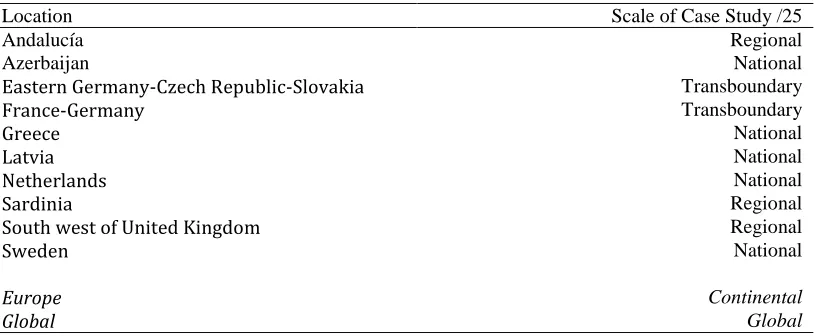
positive way looking for synergies as opposed to just identifying conflicts. The same happens with most existing simulation models, which support/simulate some of the Nexus components, but not all of them. The ongoing H2020 SIM4NEXUS project (www.sim4nexus.eu) aims to help rectify this issue via the use of a System Dynamic Modelling (SDM) approach, developed for systems at regional, national level, which then feeds into a Serious Game (SG) simulation engine. The SG can be subsequently used by decision makers and local stakeholders to try out and test long-term implications of different policies. Table 1 shows the regions being investigated during the course of the SIM4NEXUS project and their corresponding scales.
Location Scale of Case Study /25
Andalucía Regional
Azerbaijan National
Eastern Germany-Czech Republic-Slovakia Transboundary
France-Germany Transboundary
Greece National
Latvia National
Netherlands National
Sardinia Regional
South west of United Kingdom Regional
Sweden National
Europe Continental
Global Global
Table 1: Scale and location of Case Studies being examined in SIM4NEXUS project
The Case Study for Sardinia is presented here, where, based on results from previous studies (Mereu et al., 2016), SDM is being used to calculate the operational resilience of reservoirs subject to climate change, taking into account different competing water uses, i.e. agriculture, hydropower, tourism and urban demands. This paper looks to expand upon this research to incorporate additional factors into the Nexus model and allowing for the effects of policy changes by stakeholders to be examined against future climate change scenario predictions through the use of a SG.
2
Methodology
Within this research a framework was developed that describes the work flow for the creation of the SDM to represent the Food-Water-Energy nexus that can be fed into a SG to facilitate policy
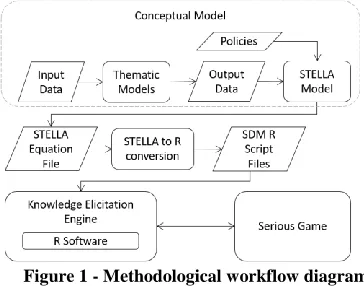
Figure 1 - Methodological workflow diagram
Figure 1 depicts the steps taken within the workflow from the Conceptual Model all the way through to the SG. Here the Conceptual Model is the main driver in the creation of the SDM. Policies can be implemented and modelled according to the following sequence: Conceptual Model (with Thematic Models as input sources) → SDM (with Policy consideration) → Converted R Script → communication with Knowledge Elicitation Engine ↔ Serious Game.
2.1
Conceptual Model
future trends:
CAPRI (a global agricultural and production model; (“CAPRI (Common Agricultural Policy Regionalised Impact Modelling System),” 2017) for irrigated area by crop
E3ME (a global economic and energy model; (“E3ME: Our Global Macro-econometric Model,” 2017) for energy production and demand by sector
GTAP project database (www.gtap.agecon.purdue.edu/) for several socio-economic factors (e.g. population growth, GDP by sector) (“GTAP (Global Trade Analysis Project),” 2017)
ISI- MIP for downscaled climate data (Hempel, Frieler, Warszawski, Schewe, & Piontek, 2013)
All other data are from local Sardinian sources, as well as locally relevant data (e.g. for reservoir operating rules and environmental flow regulations).
2.3
System Dynamic Model
Based upon the Conceptual Model an SDM is built using Stella Architect® (www.iseesystems.com). During the development of the SDM the data obtained via the thematic models and climate projections are included, and the initial state of variables, such as reservoir levels and population, are defined. The SDM itself and the interaction between its components behave as a large time-dependent and condition-dependent partial differential equations. It is the conditional components that provide the means of defining policies that govern the subsequent behaviour of the model over time. For this case study there are seven different policies for the potential users: Minimum Environmental Flows, Efficiency of the water distribution systems, Priorities under water scarcity, Methane, Energy independence of the water authority (ENAS), Tourism, and Renewable energies. As an example, for the Minimum Environmental Flows the goal is to guarantee the sustainable functioning of the ecosystems downstream of the reservoirs by allowing minimal environmental flows, thereby conserving biodiversity and ecosystem balance. For this, the player can select 3 alternative policies types:
2.4
Policy Implementation within the SDM
The basic setup of the SDM provides the framework for the flows and interactions of the thematic models where the response to future climate scenarios as Business As Usual (BAU), i.e., no action, can be analysed. However the creation of an SDM needs to consider how policies can be incorporated and applied within the model, and this step therefore needs to be considered during the conceptual stage. As highlighted in the previous section, the SDM functions as both time and condition dependent equations. Therefore via the incorporation of extra conditional statements and parameters, the effects of policy changes can be encapsulated. The initial (default) policy in the SDM that determines the volume of water released as environmental flow is as follows:
If water in the reservoir is above 20% of the reservoir capacity then 10% of the monthly basin run-off will be released.
If water in the reservoir is below 20% of the reservoir capacity then 5% of the monthly basin run-off will be released.
If water in the reservoir is below 10% of the reservoir capacity then 0% of the monthly basin run-off will be released.
Thus the flow of water to the environment may be limited to zero, during times of significant drought (low reservoir volume). In the case of fostering biodiversity conservation and wetland productivity (fisheries) however the policy requires water to be supplied (to some degree) at all times with the rules now stipulating:
If water in the reservoir is above 20% of the reservoir capacity then 20% of the monthly basin run-off will be released.
If water in the reservoir is below 20% of the reservoir capacity then 10% of the monthly basin run-off will be released.
This conservation policy can be referenced within the STELLA model via the use of IF ELSE statements in conjunction with a “BiodiversityPolicy” switch; thus it is coded (Figure 3) within the STELLA environment as follows:
Figure 3: Representing policy control within a section of the SDM equation file
2.5
R Conversion Script
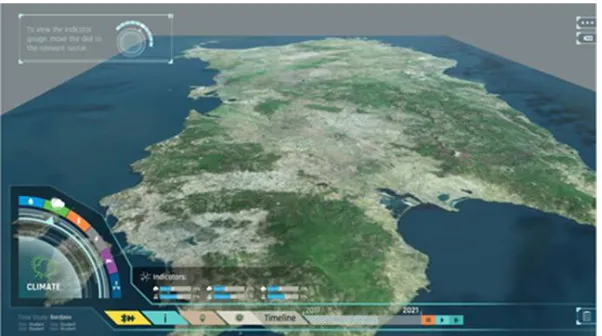
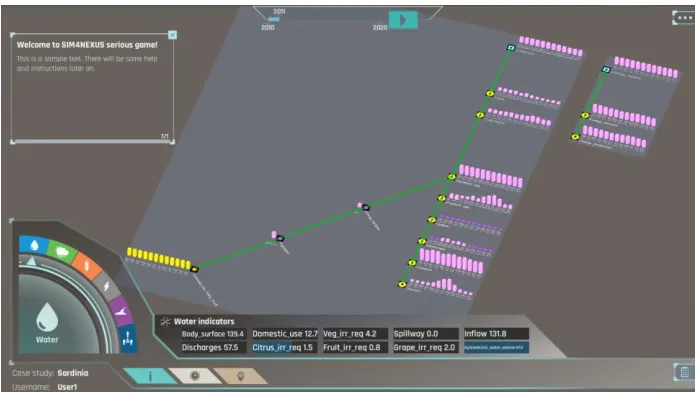
policy makers to see the implications their policies could have on the Nexus, whilst simultaneously hiding the complexities that go on behind the scenes, within the modelling deriving the information. The aim of the SG is to allow the discovery of various combinations of policies across the Nexus to achieve the objectives of each particular case study while providing also an evaluation about how nexus-compliant the combination of policies are.
In detail, when payers start a game session, they select a scenario (case study), and the desired role they want to play in the game. Depending on the role the player selects, different options (policies) will be available. The main underlying objective of the SG is to learn while playing. This means allowing the player to understand which the consequences are of making a decision (i. e. applying a policy) along time, so as to see the evolution of the different indicators, and how the various elements on the Nexus are affected. To that end, the SG is designed as a game by turns. On each turn, each player is able to see the current status of the scenario and check how close or far they are from achieving the scenario goals. Hence, considering the current status, the player decides to apply one or more policies (or stop applying one or more of them), and ends the turn. In turn, the SG asks the KEE which is the evolution of the scenario status, which is calculated by running the SDM model corresponding to the selected scenario. However, as the SDM model has to take into consideration the currently applied policies, the KEE translates the applied policies to weights in SDM input parameters, so as to run the selected combination. Result are then obtained and presented to the player, who starts the cycle again until achieving the desired scenario goals or ending the game.
It is very important to point out that by this process the player learns while playing, as the consequences of actions and selections can be easily understood. Moreover, a graphic user-friendly interface makes the experience more satisfactory, while navigating for information is much easier.
One of the novel features within the SG is the JSON tree based approach (Figure 5) used to visualise changes components over time within the nexus as a result of policy implementation. Here the model of the nexus is depicted as an interconnected branch and node based structure, where the values that dictate changes to a given node are shown as the branches that come off that node. In the example shown in Figure 5, the influences of components that are driving water levels within the reservoir (dReservoir) in the model are shown by the chain underneath, where each preceding node that is derived from other variables can be expanded upon, showing their underlying drivers/dependencies.
Figure 5: JSON Tree view of SDM policy run
3
Discussion and Conclusions
The work in this paper highlights how complex systems that depict the interactions between the land, food, energy, water and climate sectors within the nexus can be modelled against future climate scenarios. In contrast to silo based perspectives of policy impact analysis, the approach outlined here (that utilises thematic models within an SDM) allows for simulation and visualisation of the cross-sector consequences/knock-on effects that given policies may have.
The incorporation of a developed SG to the frontend of the SDM allows for the complexities of the model to be hidden from policy makers and yet still provide guidance as to how policy changes will affect regions over time and what the underlying drivers to these policies are.
The methods and tools demonstrated within this work are being developed to be both transferable and scalable and models are currently being developed at regional, national, and transboundary levels with additional “higher level” case studies looking at continental and global perspectives.
https://doi.org/10.5194/esd-4-219-2013
Mereu, S., Sušnik, J., Trabucco, A., Daccache, A., Vamvakeridou-Lyroudia, L., Renoldi, S., … Assimacopoulos, D. (2016). Operational resilience of reservoirs to climate change, agricultural demand, and tourism: A case study from Sardinia. Science of The Total Environment, 543, Part, 1028–1038. https://doi.org/http://dx.doi.org/10.1016/j.scitotenv.2015.04.066