http://mojem.um.edu.my
1
CEIT Department, Faculty of Education,
Trakya University, Edirne, TURKEY.
Corresponding Author: CEIT Department, Faculty of Education,
Trakya University, Edirne, TURKEY Email: [email protected]
ABSTRACT
Due to rapidly developing technology, the learning needs of the new generation have begun to vary, leading to an equally rapid renewal in learning and instruction. Renewal has emerged in the form of hardware and software integrated into education and the testing of new methods and models. Flipped learning is one of the new methods that have become popular especially in recent years. The model, which reverses traditional learning and instruction processes, is based on learning that can take place both, at home and in the classroom. Short videos and class notes prepared by the instructor to facilitate learning are shared with students through an online platform. In the classroom, individual and group activities are carried out to monitor learning and are focused on the areas that students are lacking in. Just as in flipped learning, Internet technologies are also a powerful tool for instructors in traditional learning. Thanks to the wide variety of Web 2.0 technologies that the new generation are familiar with, they are easily integrated into education. This study aims to encourage the integration of Web 2.0-supported flipped learning in the Learning Management Systems course and provide the views of students regarding the model. With this objective in mind, a content analysis through qualitative approach with an 11-week application was carried out with 55 third-year students in the Department of Computer and Instructional Technologies Education under the Faculty of Education at Trakya University, Edirne, Turkey. During the application, two Web 2.0 tools, Padlet and Facebook, were used to support instruction. At the end of the semester, students were asked to fill out a Course Evaluation Form which was prepared by the researcher and consisted of 6 open-ended questions. According to the result, majority of the students expressed positive views on the use of Padlet and Facebook in classroom. Findings indicated that flipped learning help students in sharing ideas and information with peers. Moreover, flipped learning generates an active teaching- learning environment which allows students to come to class with preparations on the lesson. The findings have been discussed through evaluation within the context of Technology Acceptance Model.
Keywords: Learning Management Systems, Flipped Learning, Web 2.0, Higher Education, Turkey.
January 2018, VOLUME 6, ISSUE 1, 1 - 20
E-ISSN NO: 2289 – 4489
IMPLEMENTATION OF WEB 2.0-SUPPORTED FLIPPED LEARNING
IN THE LEARNING MANAGEMENT SYSTEMS COURSE: AN
http://mojem.um.edu.my
2
INTRODUCTIONLearning and instruction have surfaced in various forms, various models and applications depending on the needs of the learner and social, cultural, economic, and technological factors. Flipped Learning, which has become popular especially in recent years, is among these models. In flipped learning, which is used in various classes at various educational levels, students learn in their own living spaces (such as in their homes, dorms, at the library, on the street, etc.). Students are able to watch the videos sent to them by their teacher as many times as they like, wherever they want, and at the speed they please (Stuntz, 2013). According to Sams and Bergmann (2013), the central idea of flipped learning is allocating more time for active learning with immediate feedback from the teacher. Brame (2013) defines flipped learning as a model that exposes students to learning material and provides them time to learn actively and gain their own learning experience outside of the classroom. In a flipped classroom, since brief explanatory notes, videos, and readings are provided to students before class, less time is set aside for instruction and class time is used to answer questions, do hands-on activities, and interact with the material (Steinmet, 2013; Toto & Nguyen, 2009). In this model, students are more active compared to a traditional classroom environment. They interact more with their peers and teachers. Teachers also become a different kind of role model. Instead of being the wise instructor at the board, they become the designer and implementer of flipped learning. Moreover, the learning process is also reversed. Individual learning takes place outside of the classroom and learning is consolidated and areas that are lacking are dealt with in the classroom.
Flipped learning consists of two phases: the first phase is when students interact with various types of media such as text, video, pictures, and animation that takes place outside of the classroom. The second phase consists of in-class learning. In this phase, students take part in student-centered active learning activities in in-class, such as interactive lectures, problem solving, laboratory experiments, collaborative design, and project creation (Albert & Beatty, 2014; Strayer, 2012). The active learning activities include: problem-solving activities, generating new ideas based on learned knowledge, systematically solving problems by dividing complex problems into sub-problems, organizing the content produced by students in one class in order to increase participation and encourage active learning, debate activities, community service projects, and making use of various techniques such as hands-on learning, inviting guest teachers, and example-based instruction, and case studies (Adam et al., 2016). Flipped learning, is a student-centred approach that offers several advantages; it stretches the boundaries of time and place, provides students the opportunity to learn at their own pace and in the way which suits them best, and offers time for interacting in class and applying and reviewing knowledge.
Nonetheless, flipped learning also has certain limitations. These limitations that may negatively affect the success of the model include technical difficulties in regards to accessing materials on online platforms, not being able to open files, challenges regarding the monitoring of students, inability to motivate learning, and inability to supply an environment and materials for students with special needs (such as students with visual, hearing, and physical impairments). Despite its limitations, it appears as though flipped learning will be thoroughly researched over the years when considering its advantages (Duerdan, 2013; Jenkins, 2012).
http://mojem.um.edu.my
3
Web 2.0 is known as both readable and writable web and can be defined as revolutionary technology that allows users to create content on the internet and share it with other users (O'Reilly, 2005). Bennet et al. (2012) define Web 2.0 as the technology which encompasses tools that allow for individual and collective web publishing, the sharing the images along with audio and video, and the creation and updating of social networks. Web 2.0 tools not only allow students to develop their interaction, collaboration, communication, technology literacy, and self-study skills, it also makes learning more meaningful. Moreover, most of them are easy and fun to use (Kayan, 2016; Morgan, 2014). Some versions are free-of-charge.In this study, we used a Web 2.0 tool, Padlet, which is a virtual bulletin board that allows the sharing of various materials, such as text, images, graphics, pictures, and videos. The background design can be freely changed while the bulletin board can be given a name. Padlet not only facilitates work and the monitoring of progress for students, it also offers teachers various advantages. Teachers may use it during individual or group work where they can share all sorts of class materials with students, create a discussion environment alongside using it to create concept maps. Padlet bulletin board may be opened to only group members or opened to the public. Padlet is compatible with web and IOS platforms (Gökduman, 2017).
The other Web 2.0 tool used in this study to support flipped learning was Facebook. According to the We Are Social's Digital in 2017 Global Overview Report, Facebook is the second most preferred platform with a usage rate of 56%. In Turkey, of the 48 million active users, 13.5 million fall in the age group of 18-24. This figure indicates that a significant number of Facebook users are individuals at university level (Ayvaz, 2017). Teachers may use Facebook to share all kinds of information and quickly respond to questions from students. Facebook may be used for individual and joint student activities. With the appropriate activities, the platform may be used to support students' internet and social media literacy and communication skills (Tosun, 2017).
In the literature, there are studies that focus on the contributions of flipped learning to student’s achievement. Although there are studies on the use of Facebook and other social media networks in higher education, no studies have examined the joint use of the two Web 2.0 technologies Facebook and Padlet in the same classroom. For this reason, the main purpose of this study is to answer the question of "What are the views, criticisms, and suggestions of the students in a flipped classroom which makes use of two Web 2.0 tools, namely Facebook and Padlet, to support learning?" In line with this purpose, the following objectives were identified within the scope of the Learning Management Systems course:
1. To explore the challenges that students faced in the implementation of the flipped learning model. And to
identify how students managed to overcome the challenges. 2. To seek the advantages that flipped learning offers for students.
3. To explore student’s views on using Padlet, and Facebook for the purpose of learning in the classroom.
One of the secondary objectives of the study included introducing future teachers with new teaching and learning methods and testing the model to determine the areas it is lacking as well as to increase its effectiveness. In addition, it is to also show students that it is possible to integrate Web 2.0 technologies in education, raising awareness regarding this topic among them. Another objective of the study was to help students to take responsibility in learning by enhancing their individual and collaborative learning skills.
THEORETICAL FRAMEWORK
http://mojem.um.edu.my
4
One of these theories is the Technology Acceptance Model (TAM) which constitutes the theoretical framework of this research. TAM aims to demonstrate the acceptance of technologies by individuals. At the same time this model accounts for the acceptance of information technologies via the causal links between individual's perceptions, tendencies, intentions and behaviours (Davis, 1989). TAM is composed of three basic elements:i. Perception of Benefit
ii. Perceived Ease of Use
iii. Individual's Behavioural Intention.
TAM suggests that the perception of benefit and perceived ease of use determine the behavioural intention of the individual. In other words, if a person finds the information technology he/she uses easy and thinks that it suits him/her, his/her intention to use the technology is positively affected. The Perception of Benefit, which is one of the elements of the model, is defined by Davis (1989) as the expression of tendencies and thoughts of individuals in terms of the increase in their job performance as a result of using any technology. The use of a technology by individuals is associated with the performance enhancement it provides to them (Keller, 2005). The Perceived Ease of Use, on the other hand is defined as the level of belief of an individual regarding the use of technology will not necessitate any effort. In other words, it is the thought of individuals in regards to the technology offered to them that is useful (Davis, 1989). The intention, which is another element of TAM refers to the readiness of individuals to exhibit a behaviour. According to TAM, an individual's acceptance or rejection of any technology primarily depends on individual's intention (Çivici & Kale, 2007). The behavioural intention with regard to utilization determines the way to use the technology (Jones & Hubana, 2006). It is emphasized that the intention of the users to use technology reflects the acceptance of the technology by the user and that the intention to use it is the premise of the technology usage behaviour (Davis, 1989).
Investigating individuals' acceptance of technology in education and determining the situation will contribute to development of TAM as well as increasing the effective use of educational technologies. Such similar researches will also support the educational systems to be more qualified. It is beneficial for such researches to increase continuously in terms of social development.
METHOD
A descriptive content analysis approach based on a qualitative research method was used to collect and analyse the data to achieve the study.
Participants
Fifty-five students studying in the Department of Computer Education and Instructional Technologies under the Faculty of Education at Trakya University, in Edirne city, Turkey, voluntarily took part in the study. None of the students had prior experience with Padlet but all of them were active users of Facebook. Moreover, the students had never taken any classes with flipped learning and had never heard of the model before.
Data Collection
http://mojem.um.edu.my
5
1. What challenges did you face in the implementation of the flipped learning model? How did you manage
to overcome such challenges?
2. What advantages did the flipped learning model offer for you?
3. What is your view regarding the use of Padlet and Facebook for the purpose of learning in the classroom?
Apart from that, students were observed while approaching the course contents through flipped learning. The data collection tool was distributed to students at the end of the 11-week application and they were asked to answer the questions in the classroom. In order to ensure objectivity, the students were asked not to write their names or student numbers on the forms.
Data Analysis
Before the data were analysed, each evaluation form was coded as Student1, Student2, ..., Student55. Then, content analysis was performed on the responses. The main goal of the content analysis is to reach the basic concepts and associations that would explain the collected data. The basic process of content analysis is to unite similar data within the framework of specific concepts and themes and to interpret them by organizing them in a way that the reader can comprehend (Sözbilir, 2009). In the content analysis of this research, the data obtained from the students were first segmented and then the meanings that each segment expresses were determined. These meanings are coded in terms of the factors of Perceived Benefit, Perceived Ease of Use and Intention within the framework of the Technology Acceptance Model. Then the codes were gathered together, commonalities between the codes were found and codes were categorized accordingly. In the next stage, these codes were cognisably explained and interpreted.
The Learning Management Systems Course
Learning Management Systems course is a course instructed for sophomore students of Trakya University, Faculty of Education, Department of Computer and Instructional Technologies Education. It is conducted three hours per week. The students learn the following topics within the scope of the course; e-learning, components of e-learning, interaction and communication in e-learning, concept of learning management system, types of learning management system, components of learning management system, comparison of learning management systems, design of learning management system. The course was taught using the following steps:
1. Before the start of the semester, the course instructor created a Facebook group called LMS_2016. The group
administrator was the instructor and the group were a closed group. (LMS=Learning Management System)
2. During the first week, students were informed about the objective and goals of the course. Afterwards, the
students were introduced to the flipped learning model and were told why and how in-class and out-of-class activities would take place.
3. In the same week, students were shown how to use Padlet with examples.
4. Students were then divided into 11 groups of 5 students. Students were given the freedom to choose their
own groups. Each group was asked to give itself a name.
5. Students were reminded on how to use Facebook and the rules that is to be followed.
6. It was ensured that all students joined the LMS_2016 group on Facebook.
7. Each group was asked to create a Padlet wall and each Padlet wall was then checked.
8. One week before the in-class lesson, a roughly 10-minute video summarizing the topic and class notes and
http://mojem.um.edu.my
6
9. During the in-class lesson, students were seated in groups. A worksheet consisting of open-ended questions
were distributed to the groups. The questions were related to the material shared in the Facebook group. Students were given 1 class hour (50 minutes) to discuss the questions and write up a report of their answers. 10. In the second hour of the class, the groups orally expressed their views one by one and discussed their
answers.
11. In the third hour of the class, the instructor corrected student’s mistakes and filled in missing areas. The instructor did a general evaluation and tried to explain certain points that students had difficulty understanding with different materials.
12. After class, the groups were asked to share their answers and the notes they took on their Padlet walls. The
instructor checked whether students did this each week. The objective here is to allow students to compile class content in an organized manner on one particular platform and easily access the content they created using their own sentences without having to waste time looking for class notes to study for exams.
13. All of the steps between 8 and 12 were repeated until the end of the semester.
14. In the last week of the semester, the students were then given a Course Evaluation Form and asked to answer
the given questions.
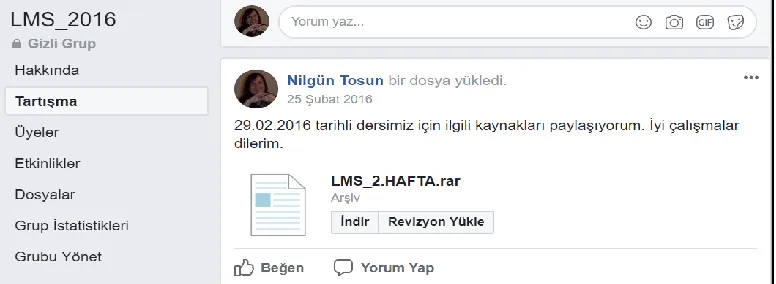
Figure 1 and Figure 2 show screenshots of the instructor making announcements on Facebook and sharing material. Figure 3 and Figure 4 show two examples of Padlet walls created by student groups.
Figure 1: An example of an announcement made in the Facebook group
http://mojem.um.edu.my
7
Figure 3: An example of a Padlet wall_1Figure 4: An example of a Padlet wall_2
FINDINGS
http://mojem.um.edu.my
8
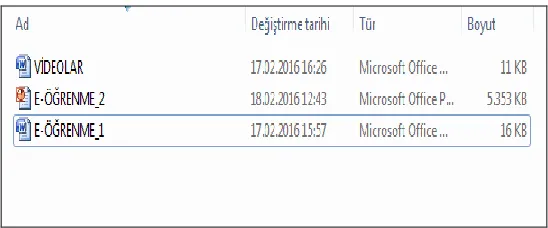
Figure 5: Course materials of the 1st week shared in Facebook groupFigure 6: Course materials of the 1st week after the file is opened through WinRAR.
http://mojem.um.edu.my
9
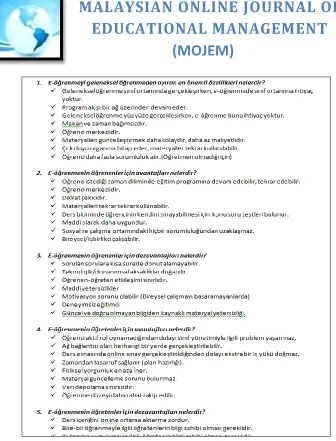
Figure 7: Worksheet of the 1st weekhttp://mojem.um.edu.my
10
Figure 8: The worksheet shared by a student group on Padlet wall after the classThis cycle for the students and instructor continued throughout the course period. At the end of the semester Course Evaluation Forms were handed out to students in class environment and they were asked to answer the given questions.
After the responses were subjected to content analysis, the findings from the Course Evaluation Forms were then presented in a manner suitable for the research questions as follows:
Question 1 - "What challenges did you encounter in flipped learning? How did you manage to overcome them?
http://mojem.um.edu.my
11
Student17: I didn't experience any difficulties.Student33: Some of the materials you shared were not in Turkish and I had difficulty understanding them. I received help from the internet.
Student5: I had to look up some terms on the internet.
Student38: We had to have internet connection to access the course material. This is sometimes caused me difficulty.
Student 50: Sometimes I had difficulty understanding the topic but I was able to understand after asking you and my peers.
Student49: I had a hard time staying motivated when studying on my own at home.
Question 2 – "What have you gained from flipped learning?”
As for this question, the students responded with: 24 of them (43%) said they learned to respect their peers' opinions, 20 students (36%) said they learned how to study on time, 16 students (29%) said they were more responsible about going to class, 14 people (25%) said they learned to share information with their peers, 13 people (24%) said they were now aware that they could generate ideas, 10 of them (18%) said they interacted more with their peers in class, another 10 people (18%) said they were more active, 5 people (0.9%) said they had the opportunity to share their ideas with everyone, and 2 people (0.36%) said they encouraged their group mates to come to class prepared. The following are examples of responses to the questions:
Student9: at first, I found it difficult to study the notes before class but, of course, this was a problem in class. I learned how to study on time.
Student7: I learned how to respect my peers' ideas.
Student2: I used to always study by memorizing. Thanks to this method, I learned to interpret information and generate ideas.
Student 22: Now I interact more with my peers in class.
Student25: I had the opportunity to share my ideas with everyone.
Student40: I think I'm more active in class.
Student54: I'm more responsible about coming to class prepared.
http://mojem.um.edu.my
12
Question 3 – "What are your positive views regarding the use of Padlet?"In regards to this question, the students’ responses were: 42 students (76%) said it was easier to study for exams, 40 students (72%) said they saved time when studying for exams, 27 people (49%) said they learned about a new application, 25 students (45%) said they would use it when they became teachers, 15 of them (27%) said doing group work was fun, and 3 students (0.54%) said they didn't face problems when they missed class. The following are examples of responses to the questions:
Student1: My exam notes were ready. Because we created the notes ourselves, it was easy to review.
Student19: Because the notes were ready and all in one place, it saved time preparing for the exam.
Student11: I learned about a new application for education.
Student49: I'll use it when I become a teacher.
Student38: Working together as a group was fun.
Student42: There were times when I missed class. I was able to keep up with class material through the application.
Question 4 – “What are your negative views regarding the use of Padlet?",
As for this question, the students responded with: 1 student (0.18%) mentioned the sending error of the application, another student (0.18%) mentioned the fact that it is internet-based, and another student (0.18%) said they did not like the website design. The following are examples of responses to the questions:
Student8: When we add something to Padlet, it's not good that the message is not sent to other group members.
Student55: The fact that it was internet-based and that we always had to have internet access to use it was problematic.
Student24: I did not like the website design.
Question 5 - "What are your positive views regarding the use of Facebook?"
In regards to this question, the student’s responses were: 47 students (85%) mentioned quick communication, 41 students (74%) mentioned easy communication, 40 people (72%) mentioned it made sharing class notes easier, 8 people (14%) said it was used in line with its intended purpose, 7 people (12%) mentioned it was comforting and motivating, and 5 other students (0.9%) said it gave them the opportunity to socialize with their classmates. The following are examples of responses to the questions:
Student29: I was able to communicate with you quickly and I received fast responses.
Student1: We were able to see your course announcements instantly.
http://mojem.um.edu.my
13
Student6: I think it was used in line with its intended purpose. I think it's useful.Student54: Sometimes there were posts not related to class that I found comforting and motivating. Thank you
Student38: I had the opportunity to meet and socialize with my peers that were not in my group.
Question 6 –"What are your negative views regarding the use of Facebook?"
In regards to this question, the studens’ responses are as following: 29 students (52%) mentioned they wished it were used in every class, 2 students (0.36%) mentioned it was distracting, and 1 student (0.18%) mentioned they could have held discussions on Facebook. The following are examples of responses to the questions:
Student41: I wish we used it in every class.
Student13: Sometimes I got distracted because you shared the notes on Facebook.
Student 51: You could have held discussions on Facebook.
Majority of the students expressed that they did not have any difficulties in the implementation of the flipped learning model and this can be explained by the "Ease of Use" factor of TAM. Students found this model easy to implement and furthermore, a few students who needed support in learning did not mention encountering difficulties with the model.
Students also stated several benefits of the flipped learning model that they have gained which are: Learning to respect the ideas of friends, gaining the habit of a timely study, a sense of responsibility in being prepared before class, learning to share information with friends, and realizing that they can produce ideas. Students became aware that each of their statements are benefits of the flipped learning model and that it is included in the “Perceived Benefit” element of TAM. With that, it can be concluded that flipped learning model is beneficial for students.
Mentions of the flipped learning model’s ease of use and its benefits might positively affect the intention and attentions of students to adopt this model. They would be interested to develop positive behaviours when adopting the flipped learning model in other courses during their student years and even when they have become teachers after graduation. According to Saade and Bahli (2005), when the users of informatics find it easy to learn using a technology, they will be more willing to use the technology.
http://mojem.um.edu.my
14
Almost half of the students stated that they will use Padlet when they become teachers and this indicates that they find this application both beneficial and easy. The easy use and beneficial aspect of Padlet would then allow the formation of positive intention amongst students in regards to the use of this application.In regards to Facebook, almost all of the students stated that the application is beneficial for them as it allows a quick and easy communication between them alongside facilitating the aspect of sharing the lecture notes. When these statements are considered within the scope of the element of "Perceived Benefit" of TAM, it is clear that students find that the usage of Facebook in education as useful. Taking in consideration the fact that all the students in this study are active Facebook users, it is clear that they find Facebook as an easy application to use in terms of learning as they are well familiar with it. Furthermore, considering that half of the students stated that they wished that Facebook be used in other courses due to the easiness and beneficial aspects of the application, it would have a positive effect on their future intentions for education later on.
IMPLICATIONS OF THE FINDINGS
New generation intensively use social networks among the variety of Web 2.0 technologies, particularly Facebook. Starting from this fact, researchers have been carrying out studies to integrate Facebook into education. These studies were focused on student achievement, attitude of student, student satisfaction, communication and interaction and collaborative learning (Sharma & Sharma, 2016; Cuesta, Eklund, Rydin & Witt, 2015; Acar ve Yenmiş, 2014; Keskin, 2014; Şendağ, Dulkadir & Hanaylı, 2014; Baran & Ata, 2013; Barczyk & Duncan, 2013; Polat, 2013; Tess, 2013; Toğay, Akdur, Yetişken & Bilici, 2013). When the literature of these studies was reviewed, it is revealed that there is a lack of studies regarding the use of Padlet application in higher education (Fisher, 2017; Berg, 2016; Fiester and Green, 2016; Byrne, 2015; DeWitt, Alias, Ibrahim, Shing & Rashid, 2014).
The Flipped Learning Model implemented in the course of Learning Management Systems mentioned in this study is one of the most significant research topics of recent years. While some researches in the literature introduced the flipped learning model, some presented on examples of its application and effects on using videos together with this model (Blair, Maharaj & Primus, 2016; Bailey, 2015; Green, 2015; Prashar, 2015; Gaughan, 2014; Mok, 2014; Westermann, 2014; Wong, Ip, Lopes, Rajagopalan, 2014; Flumerfelt & Green, 2013; Sams & Bergman, 2013). In addition, no study has been found in literature mentioning on applying Facebook and Padlet in the flipped learning model. In this regard, this study bears the qualification of being the first in the literature.
The findings of the study show that flipped learning model can be used in higher education and students have scarcely any problems in terms of implementing this model in learning. When considered within the framework of TAM, the flipped learning is a model which is easy to be used and implemented for the students. Based on the findings of the study, the students stated that flipped learning model has numerous benefits and that they find the use of Padlet and Facebook as easy and beneficial for their learning. This is in line with TAM model that ensures the formation of goodwill among the students in terms of using Web 2.0. When it is addressed generally, this research should be qualified in providing an insight to researchers and implementers due to the model applied and simultaneous use of more than one applications of Web 2.0.
DISCUSSION AND CONCLUSION
http://mojem.um.edu.my
15
technologies are being rapidly integrated into education. Therefore, in this study, flipped learning model was implemented with the support of two Web 2.0, Facebook and Padlet, in the Learning Management Systems course, and the views of students on the model were assessed.According to one of the findings, more than half of the students expressed that they did not face any difficulties in flipped learning. Even when they did not understand certain concepts and topics, the students mentioned that they received help from the internet, the instructor, and their peers. In his study, Stuntz (2013) mentioned that flipped learning offers students the opportunity to receive answers to their questions through online platforms and in-class by asking their peers and teachers. The fact that students did not face difficulties during the implementation of flipped learning indicated that this model is appropriate for their age group and therefore suitable for implementation in class.
Moreover, roughly half of the students mentioned they learned to respect the ideas of their peers thanks to flipped learning. Thanks to this model, the students also gained skills which include learning to study on time, coming to class prepared, learning to share information with their peers, learning to give up on memorization and instead to generate ideas, being more active in class, being able to share ideas with everyone, and encouraging their group mates to come to class prepared. There are studies in the literature which support this finding such as Willey and Gardner (2013) who stated that in flipped classroom, students are encouraged to engage in dialogue during classroom activities and they are able to assess themselves and their progress. According to Long (2016), flipped learning creates valuable time to allow students to actively participate in class. It is an ideal model that ensures learning is provided in line with the needs of the students, boosts student motivation and practical skills, and helps students develop their problem-solving skills, high-level thinking skills, and cooperation skills. Adam et al. (2016) also stated that this research is frequently used to facilitate the exchange of information between learners during discussion-based activities and ensure deeper interaction with class material. In flipped learning, collaborative activities encourage students to socialize, allows them to learn from each other, and allows students with various skills to support their peers (Educause Library, 2012).In the literature, there are studies which highlight that flipped learning develops the high-level thinking, problem-solving, and cooperation skills of students and has positive effects in higher education (Gillboy, Heinerichs, & Pazzaglia, 2015, Albert & Beatty, 2014, Herreid & Schiller, 2013).
A majority of the students expressed positive views about the use of Padlet in class. Most of them mentioned that they did not have to search long for class notes in order to study for exams and they saved their time thanks to this. Nearly half of the students expressed that they were pleased to learn a new application and mentioned that they would use Padlet when they became teachers. The other positive views students had was through the usage of Padlet and Facebook, doing group work was fun and that it became easier to access class notes when they missed class. Tosun (2017) expressed in her study conducted with the participation of third-year Computer and Instructional Technologies Education students, that nearly all of the students expressed positive views about Padlet including that it was beneficial, fun, easy to use, and free of charge.
http://mojem.um.edu.my
16
In regards to the application of Facebook, a majority of the students expressed positive views about its Facebook in class. Students expressed that Facebook helped the instructor to be able to quickly and easily communicate with students alongside sharing class notes for easier access to the students. Similar findings were reported by previuse researchers (Tosun, 2017; Bilen et al., 2014; Çelik, 2012; Leila & Khodabandelou, 2013; Prescott et al., 2013; Ucun, 2012). This may be due to the fact that students are active users of Facebook and therefore they are used to using the application for mainly communication purposes.Only one student expressed a negative view about the use of Facebook in class and it is due to the idea that notes sharing and announcements on social media was distracting for them. This may be due to the fact that there are a variety of distracting posts and advertisements on Facebook which could easily distracts the student’s attention. Students also expressed that they wished Facebook were used in every class and that wanted to hold discussions through it. In her study, Tosun (2017) found that practically none of the students had any negative views regarding the use of Facebook in class. They may have had positive views due to the fact that since they actively use Facebook, they were able to keep up with any class notes and announcements posted by the instructor alongside the benefit of the quick response of the instructor in responding to their question through the application.
Overall, students mostly had positive views on flipped learning model and the use of Web 2.0 technologies such as Padlet and Facebook in class. In light of the positive views and suggestions in this study, it is highly likely that the model will continuously be developed and implemented in class sessions. In the future, we will encounter various successful implementations of the flipped learning model supported with Web 2.0 technologies in higher education and different educational levels.
RECOMMENDATIONS
In light of the findings above, the following recommendations may act as a guide and reference to future researchers and implementers.
i. The effect of flipped learning on academic achievement in this student group and other student groups
may be researched by taking into consideration of the demographic features.
ii. The effect of Web 2.0 technologies on academic achievement in this student group and other student groups may be researched by taking into consideration the demographic features.
iii. An open source learning management system may be used to avoid distractions caused by irrelevant posts and advertisements on Facebook and minimize problems regarding the learning of course materials in the application itself.
iv. Flipped learning may be implemented in various courses to test its suitability and effectiveness.
v. To ensure students become familiar with more Web 2.0 technologies and encourage them to use such technologies in their professional life, Web 2.0 technologies may be used in more courses.
vi. Social media may be used more actively for purposes other than sharing notes and announcements by taking into consideration the student’s suggestions.
vii. In-service training may be offered to university instructors to establish a positive approach towards the
use of flipped learning model.
viii. In-service training may be offered to university instructors to establish a positive approach towards the
use of the appropriate Web 2.0 technologies in their courses.
ix. This study may be repeated by making use of m-learning environment design.
x. This study may be conducted with the participation of different student groups.
http://mojem.um.edu.my
17
REFERENCESAcar, S., & Yenmiş, A. (2014). A research to determine students' views on the use of social networks in education: facebook example. Electronic Journal of Vocational Colleges- BÜROKON Özel Sayısı, 55-66 (In Turkish).
Adam, M., Fisher, D., McFarland, D., Boneh, D., Klemmer, S., Noor, M., Rixner, S., Warren, J., Sainani, K., Williams, A., Everett, S., Booske, J., Zelikow, P., Diamond, L., Campbell, J. & Moses, G. (2016). Flipped Classroom Field Guide. Retrieved from https://tlc.uic.edu/files/2016/02/Flipped-Classroom-Field-Guide.pdf on 1.11.2017
Albert, M., & Beatty, B. J. (2014) Flipping the classroom applications to curriculum redesign for an introduction to management course: impact on grades. Journal of Education for Business, 89(8), 419-424.
Ayvaz, T. (2017). İnternet Ve Sosyal Medya Kullanıcı İstatistikleri 2017. Retrieved from
http://www.dijitalajanslar.com/internet-ve-sosyal-medya-kullanici-istatistikleri-2017/ on 12.11.2017
Bailey, A. (2015). Flipped learning. Training Journal. September Issue, 5-7.
Baran, B., & Ata, F. (2013). University students’ web 2.0 technologies usage, skill levels and educational usage. Education and Science, 38(169), 192-208.
Barczyk, C.C., & Duncan, D.G. (2013). Facebook in higher education courses: An analysis of students' attitudes, community of practice, and classroom community. International Business and Management, 6(1), 1-11.
Bennett, S, Bishop, A., Dalgarno, B., Waycott, J. & Kennedy, G. (2012). Implementing Web 2.0 technologies in higher education: A collective case study. Computers & Education, 59(2), 524–534.
Berg, A. (2016). Students As Producers And Collaborators: Exploring The Use Of Padlets And Videos In MFL Teaching. In C. Goria, O. Speicher, & S. Stollhans (Eds), Innovative language teaching and learning at university: enhancing participation and collaboration (59-64).
Bilen, K., Ercan, O. & Gülmez, T. (2014). The purpose of using social networks and adoption process: example of Kahramanmaras Sutcu Imam University. Journal of Education and Training Research, 3 (1), 115-123 (In Turkish).
Blair, E., Maharaj, C. & Primus, S. (2016). Performance and perception in the flipped classroom. Education and Information Technologies, 21(6), 1465-1482.
Brame, C. J. (2013). Flipping the classroom. Retrieved from http://cft.vanderbilt.edu/guides-sub-pages/flipping-the-classroom/on 01.10.2017
Byrne, R. (2015). Collaborative Research Tools. School Library Journal, March 2015, 16-17.
Cuesta, M., Eklund, M., Rydin, İ. & Witt, A.K. (2015). Using Facebook as a co-learning community in higher education. Learning, Media and Technology, 41(1), 55-72.
http://mojem.um.edu.my
18
Çivici, T., & Kale, S. (2007). Factors affecting the use of information technologies in architectural design buildings: Astructural equation model. Construction Management Congress Report Book, 30-31(In Turkish).
Davis, F. (1989). A Technology acceptance model for empirically testing new and user information systems: theory and results. Doctoral Dissertation, MIT Sloan School of Management, Cambridge, MA.
DeWitt, D., Alias, N., Ibrahim, Z., Shing, N.K. & Rashid, S.M.M. (2014). Design of a learning module for the deaf in a higher education institution using padlet. Procedia- Social and Behavioral Sciences, 176(2014), 220 – 226.
Duerdan, D. (2013). Disadvantages of a Flipped Classroom. Retrieved from http://www.360- edu.com/commentary/disadvantages-of-a-flipped-classroom.htm#
Educause Library (2012). 7 Things You Should Know About Flipped Classrooms. Retrieved from
https://library.educause.edu/resources/2012/2/7-things-you-should-know-about-flipped-classrooms
Fiester, H., & Green, T. (2016). Student use of backchannels. Tech&Trends, 6, 404-408.
Fisher, C.D. (2017). Padlet: an online tool for learner engagement and collaboration. Academy of Management Learning & Education, 16(1), 163–171.
Flumerfelt, S.,& Green, G. (2013). Using lean in the flipped classroom for at risk students. Educational Technology &Society, 16 (1), 356–366.
Gaughan, J.E. (2014). The flipped classroom in world history. The History Teacher, 47(2), 221-244.
Gilboy, M. B., Heinerichs, S., & Pazzaglia, G. (2015). Enhancing student engagement using the flipped classroom. Journal of Nutrition Education and Behavior, 47(1), 109-14.
Gökduman, Y. (2017). Padlet Nedir, Nasıl Kullanılır? Retrieved from https://www.ozeldersalani.com/blog-ara
Green, T. (2015). Flipped classrooms: an agenda for innovative marketing education in the digital era. Marketing
Education Review, 25(3), 179–191.
Herreid, C. F., & Schiller, N. A. (2013). Case Studies and the Flipped Classroom. Journal of College Science Teaching, 42 (5), 62-65.
Jenkins, C. (2012). The Advantages and Disadvantages of the Flipped Classroom. Retrieved from
http://info.lecturetools.com/blog/bid/59158/The-Advantages-and-Disadvantages-of-the-Flipped-Classroom
Jones, A.B., & Hubona, G.S. (2006). The Mediation of External Variables in The Technology Acceptance Model. Information and Management, 43, 706-717.
Kayan, M.F. (2016). Web Teknolojileri ve Eğitime Yansımaları. Retrieved from
http://www.bilimiletisimi.com/show.php?id=23219
http://mojem.um.edu.my
19
Keskin, S. (2014). Investigating Teachers’, Prospective Teachers’, And Students’ Adoption Process And UsagePurposes of Social Networks. Hacettepe Üniversitesi Sosyal Bilimler Enstitüsü Yüksek Lisans Tezi, Ankara.
Leila, K., & Khodabandelou, R. (2013). Perspective of Iranian University students about academic use of social networking sites: A study of Facebook. International Journal of Academic Research in Progressive Education and Development, 2(3), 114-123.
Long, T. (2016). Development and Initial Validation of a Flipped Classroom Adoption Inventory in Higher Education. PhD diss., University of Tennessee.
Mok, H.N. (2014). Teaching tip: the flipped classroom. Journal of Information Systems Education, 25(1), 7-11.
Morgan, H. (2014). Focus on technology: taking advantage of web 2.0 technologies: classroom blogging basics. Childhood Education, 90(5), 379-381.
O’Reilly, T. (2005). What Is Web 2.0 Design Patterns and Business Models for the Next Generation of Software. Retrieved from : http://www.oreilly.com/pub/a/web2/archive/what-is-web-20.html
Polat, O. (2013). Evaluation of Theses on the Use of Social Media Platforms as Teaching Tool in Education. Necmettin Erbakan University Educational Sciences Institute Master Thesis (In Turkish).
Prashar, A. (2015). Assessing the flipped classroom in operations management: a pilot study. Journal of Education for Business, 90(3), 126-138.
Prescott, J., Wilson, S., & Becket, G. (2013). Facebook use in the learning environment:do students want this? Learning, Media and Technology, 38(3), 345–350.
Saade, R., & Bahli, B. (2005). The impact of cognitive absorption on perceived usefulness and perceived ease of use in on-line learning: an extension of the technology acceptance model”. Information and Management, 42(2), 317-327.
Sams, A., & Bergmann, J. (2013). Flip your students’ learning. Educational Leadership, 70(6), 16-20.
Sharma, S.K., & Sharma, H. (2016). A multi-analytical approach to predict the Facebook usage in higher education. Computers in Human Behavior, 55(February 2016), 340-353.
Sözbilir, M. (2009). Nitel Veri Analizi. Retrieved from https://fenitay.files.wordpress.com/2009/02/1112-nitel-arac59ftc4b1rmada-veri-analizi.pdf on 10.11.2017
Steinmetz, A. (2013). Lecture is dead in the 21st century. Ohio Social Studies Review, 50(2), 2-4.
Strayer, J. F. (2012). How learning in an inverted classroom influences cooperation, innovation and task orientation. Learning Environments Research, 15(2), 171– 193.
Stuntz, D. F. (2013). Digital Literacy, CALL and Flipped Learning: An overview of technology use surveys and a rationale for the development of Flipped Learning-based CALL courses that enhance learning and digital skills. Josai International University Quarterly, 21(7), 71-135. Retrieved from
http://mojem.um.edu.my
20
Şendağ, S., Dulkadir, N. & Hanaylı, M.C. (2014). A survey of the frequency of Facebook use of teacher candidatesand the trends of posting on Facebook. 6th International Computer and Instructional Technologies Symposium. Gaziantep, Turkey (In Turkish).
Tess, P.A. (2013). The role of social media in higher education classes (real and virtual) – A literature review. Computers in Human Behavior, 29(2013), 60–68.
Toğay, A., Akdur, T.A., Yetişken, İ.C. & Bilici, A. (2013). The use of social networks in the educational process: a myo experience. Academic Computing 2013. Antalya, Turkey (In Turkish).
Tosun, N. (2017). An example of web 2.0 applications in higher education:
student opinions. Fatih Project Education Technologies in Education Summit on 17-18 November 2017. Ankara-TURKEY(In Turkish).
Toto, R., & H. Nguyen. (2009). Flipping the Work Design in an Industrial Engineering Course. Paper presented at 39th ASEE/IEEE Frontiers in education conference. San Antonio, TX.
Ucun, K. (2012). Vocational school students' use of social networking Facebook in general and vocational education. Unpublished Master Thesis, Sakarya University, Institute of Science, Sakarya (In Turkish).
Westermann, E.B. (2014). A half-flipped classroom or an alternative approach? primary sources and blended learning. Educational Research Quarterly, 38(2), 43-57.
Willey, K., & Gardner, A. (2013). Flipping your classroom, without flipping out: 41st SEFI Conference, 2013, Leuven, Belgium.