i tif c n e C i o c n S f l e a r n e o n i c t e a 2 nr 0
et 1
1
n I
ISC 2011
Proceeding of the International Conference on Advanced Science,
Engineering and Information Technology 2011
Hotel Equatorial Bangi-Putrajaya, Malaysia, 14 - 15 January 2011
ISBN 978-983-42366-4-9
ISC 2011
International Conference on Advanced Science, Engineering and Information Technology
ICASEIT 2011
Cutting Edge Sciences for Future Sustainability Hotel Equatorial Bangi-Putrajaya, Malaysia, 14 - 15 January 2011
SR
IE AVIUN IT NESIE
DO KB
IN N
R AG
JA A L S A A E N P M N A A L U A T Y A S
SREP A I
N I
NO OD I TAI COSSA STNEDUTS NA ISEN
Organized by Indonesian Students Association Universiti Kebangsaan Malaysia Proceeding of the
Comparative Study of 4-Switch Buck-Boost
Controller and Regular Buck-Boost
Taufik Taufik
#, Justin Arakaki
#, Dale Dolan
#, Makbul Anwari
*# Electrical Engineering Department, Cal Poly State University
1 Grand Avenue, San Luis Obispo, CA 93407, USA Tel.:+18057562318, E-mail: [email protected]
*Faculty of Electrical Engineering, Universiti Teknologi Malaysia 81310 UTM Skudai, Malaysia
Abstract— A very important characteristic that dc-dc converters require is the ability to efficiently regulate an output voltage with a wide ranging value of input voltages. A recently developed solution to this requirement is a synchronous 4-Switch Buck-Boost controller developed by Linear Technology. The Linear Technology’s LTC3780 controller chip enables the adoption of a 4-Switch switching topology as opposed to the traditional single-switch Boost topology. In this paper, the LTC3780’s 4-Switch Buck-Boost topology is analyzed and its performance is compared against those of the regular single-switch Buck-Buck-Boost topology. Results from computer simulations demonstrate the benefits of using the 4-switch approach than the conventional buck-boost method.
Keywords—Buck-boost, 4-Switch buck-boost, controller.
I. INTRODUCTION
Many applications require a dc-dc converter that is able to regulate its output voltage from a wide range of input voltages. These applications often require the output voltage to be higher than, lower than, or approximately equal to the input voltage. By utilizing a buck-boost topology, the input voltage can be either stepped-up or stepped-down to the desired voltage [1]. However, there are several unwanted characteristics that come with the basic topology of a buck-boost converter. Some problems include mediocre efficiency, polarity inversion of the output voltage relative to the input voltage, bad input current characteristics, and bad output current characteristics.
To counter these drawbacks, several existing options are available. Instead of using the traditional 1-switch buck-boost topology, a 4-switch Buck-Boost topology has been found to seamlessly transition between true synchronous buck and boost, depending on the input voltage, which in turn increases efficiency amongst other things [2][3]. Analysis of Linear’s LTC3780 controller chip, the industry’s first FSBB Controller using a single inductor, will be done and compared to the classic single switch buck-boost topology of LT3430 [4].
II. SINGLE-SWITCH BUCK-BOOST CONVERTER
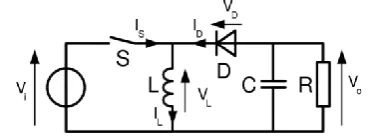
Figure 1 displays the traditional Buck-Boost topology which utilizes a single switch, an inductor, a diode, and a single output capacitor. This Buck-Boost converter topology uses the same amount of components as the Buck and the Boost converters; the only difference is the components are arranged differently [5].
The output voltage can be either higher or lower than the input voltage, hence the name Buck-Boost Converter.
Fig. 1 Traditional Buck-Boost Topology using a Single-Switch
A. Operation
When the switch is CLOSED, the diode is reverse biased creating an open circuit between the inductor and the capacitor. In this state, the inductor is directly connected to the source which results in the energy charging of the inductor. Additionally, the capacitor is discharging its energy into the load. Figure 2 depicts a visual source of the operation when the switch is CLOSED. The voltage across the load, or the output voltage of the converter, is negative due to the fact that the capacitor is discharging its energy from the ground up.
Fig. 2 Single-switch buck-boost operation with switch in CLOSED state
When the switch is OPEN, the diode becomes forward biased, which provides a path for the inductor current. Additionally, because the inductor is connected to the load and to the capacitor, it is transferring its energy to the capacitor as well as the load. Figure 3 shows the current flow and operation of the buck-boost when the switch is OPEN.
Fig. 3 Single-Switch Buck-Boost operation with switch in OPEN state
B. Drawbacks of Single-switch Buck-Boost Converter
In this topology, the input is connected to a switch which makes the input current discontinuous. Furthermore, the output is connected to a diode which also makes the output current discontinuous. Therefore, the input and the output current characteristics of a single-switch buck-boost topology are bad. Because the input and output are characterized as bad, this implies that big filtering requirements are needed to reduce these negative characteristics, further adding to the drawbacks.
Because inductor current cannot change instantaneously, losses occur in the switch. Current ripple in the input is also large due to the switch being at the input. With all these substantial losses, efficiency is decreased.
Another drawback that this topology has is its inverse polarity of the output voltage relative to the input voltage. This characteristic may not necessarily be a drawback, but rather depends on user preference.
III.FOUR-SWITCH BUCK-BOOST CONVERTER
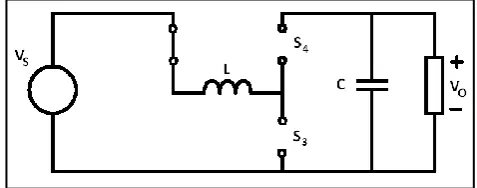
Figure 4 displays a simplified Four-Switch Buck-Boost converter topology [7][8]. Depending upon the input voltage, the converter is able to change its mode of operation, either to be in buck, boost, or buck-boost.
A. Operation
The Four-Switch buck-boot topology has three different operating modes, which depend on the input voltage [7]. For
VIN>VOUT, the FSBB is in the Buck Region; for VIN<VOUT,
the FSBB is in the Boost Region; and for VIN~VOUT, the
FSBB is in the Buck-Boost Region.
Fig. 4 Basic power stage of four-switch buck-boost converter
1) Buck Region (VIN>VOUT)
In this operating region, switch 4 is always on and switch 3 is always off. Additionally, switches 1 and 2 alternate, like a typical synchronous buck converter. Figure 5 shows the topology of the FSBB in Buck Region. This topology is that of a regular buck converter.
Fig. 5 Four-switch buck-boost converter in buck region
2) Boost Region (VIN<VOUT)
In this operating region, switch 1 is always on, and switch 2 is always off. Additionally, switches 3 and 4 alternate, like a typical synchronous boost converter. Figure 6 shows the topology of the FSBB in Boost Region. This topology is that of a regular boost converter.
Fig. 6 Four-switch buck-boost converter in boost region
3) Buck-Boost Region (VIN~VOUT)
B. Advantages over the Single-Switch Buck-Boost
By implementing a 4-switch topology buck-boost, the converter is now capable of becoming a true synchronous buck or converter, depending upon the input voltage. This means, it can have yield the good input and output current characteristics of the buck and the boost converters. Furthermore, this implies that big filtering components at the input and output are not required [9].
With a more direct connection between the input and output via an inductor, this ensures a more continuous DC current, which can minimize input and output stresses on the capacitors, as well as reducing input voltage and increasing efficiency [10].
Another advantage of the FSBB topology is that the output voltages polarity is the same as the inputs voltage, unlike the regular buck-boost topologies output polarity. This creates an easier design tool for users to utilize when searching for a DC-DC converter that can regulate an output voltage over a wide range of input voltages [11].
IV.4-SWITCH BUCK-BOOST CONVERTER USING LTC3780
A. Description
The LTC®3780 is a high performance buck-boost switching regulator controller that operates from input voltages above, below or equal to the output voltage. The constant frequency current mode architecture allows a phase-lockable frequency of up to 400 kHz. With a wide 4V to 30V (36V maximum) input and output range and seamless transfers between operating modes, the LTC3780 is ideal for automotive, telecom and battery-powered systems. This controller, developed by Linear Technology, utilizes the 4-Switch Buck-Boost topology.
Fig. 7 Four-switch buck-boost converter using LTC3780 [4]
B. Features and Functions
The LTC3780 buck-boost converter IC incorporates the following features and functions:
Single inductor architecture, which allows VIN to be
above, below, or equal to VOUT.
Wide VIN range: 4V to 36V operation
Synchronous Rectification: Up to 98% efficiency
+/- 1% output voltage accuracy: 0.8V < VOUT < 30V
Phase lockable fixed frequency: 200kHz to 400kHz
Foldback output current limiting
Output overvoltage protection
V. SIMULATION RESULTS AND DISCUSSION
In this section, performance of the 4-switch buck-boost converter using LTC3780 will be compared to that of the traditional buck-boost converter using LT3430. Comparisons of their efficiencies input and output current ripples and output voltage ripple will be performed. Figure 8 shows the schematic of the LTC3780 in buck-boost configuration used to simulate in LTspice. Figure 9 shows the schematic of the LT3430 in buck-boost configuration used to simulate in LTspice. For a fair comparison, the output voltage and current of each chip and topology will be the same, set at 12V and 0.5A.
Fig. 8 LTC3780 Buck-Boost, 12V/0.5A output, schematic in LTspice
Fig. 9 LTC3430 Buck-Boost, 12V/0.5A output, schematic in LTspice
A. Performance of LTC3780
1) Boost Region (VIN>VOUT)
Figures 10 to 18 depict some critical waveforms commonly looked at to assess the performance of a dc-dc converter. This includes the output voltage waveform, peak to peak output voltage waveform, and input current peak to peak waveform. Since the converter will operated in three regions (buck, buck-boost, and boost), some predetermined output voltage and input voltages would have to be chosen. For this paper, the output voltage is set to be 12 V which is a common dc bus voltage in battery operated systems. The input voltage for the buck operation will be set at 10V, while the boost will have 15V, and the buck-boost 12V.
Another performance measurement that was looked at is the overall efficiency of the converter at full load, which is chosen to be 0.5A in all three regions.
Fig. 11 LTC3780 output voltage peak to peak ripple - boost
Fig. 12 LTC3780 input current peak to peak ripple - boost
2) Buck-Boost Region (VIN~VOUT)
Fig. 13 LTC3780 output voltage – buck boost
Fig. 14 LTC3780 output voltage peak to peak ripple – buck boost
Fig. 15 LTC3780 input current peak to peak ripple – buck boost
3) Buck Region (VIN>VOUT)
Fig. 16 LTC3780 output voltage – buck
Fig. 17 LTC3780 output voltage peak to peak ripple – buck
Fig. 18 LTC3780 input current peak to peak ripple – buck
B. Performance of LTC3430
1) Boost Region (VIN<VOUT)
Figures 19 to 28 depict the same critical waveforms as obtained in the 4-switch buck-boost. Since LTC3430 is a controller for a standard buck-boost converter, the performance for buck, buck-boost, and boost was also explored.
Fig. 19 LTC3430 output voltage - boost
Fig. 20 LTC3430 output voltage peak to peak ripple - boost
Fig. 21 LTC3430 input current peak to peak ripple - boost
2) Buck-Boost Region (VIN~VOUT)
Fig. 22 LTC3430 output voltage – buck boost
Fig. 23 LTC3430 output voltage peak to peak ripple – buck boost
Fig. 24 LTC3430 input current peak to peak ripple – buck boost
3) Buck Region (VIN>VOUT)
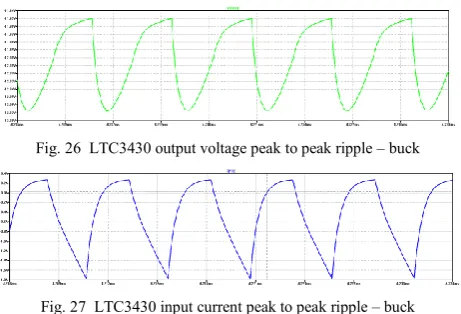
Fig. 26 LTC3430 output voltage peak to peak ripple – buck
Fig. 27 LTC3430 input current peak to peak ripple – buck
Judging from the previous graphs, it seems that the LTC3780 has a few spikes in its current that could potentially damage the components. However, upon measuring the peak-peak inductor current, it was found that the LTC3780 had the same ripple as the LT3430. Both chips have roughly the same amount of input current and input current peak to peak ripple, but the LTC3780 seems to have a smaller output voltage ripple current than the LT3430. Moreover, although the measurements are not included here, the LT3430 was observed to have a better line regulation; however, its output voltage ripple is much larger than the LTC3780. The overall efficiency of the LTC3780 is above 95%, whereas the LT3430 has a maximum efficiency of 92%.
TABLE I
SIMULATION RESULTS OF LTC3780
LTC3780 VIN (V) IIN (A) ΔIIN (A) VOUT (V) ΔVOUT (mV)
10 0.666 2.053 12.24 3
12 0.547 3.65 12.29 8
15 0.44 1.065 12.32 3.7
IOUT
(A) ΔI(mA) OUT IL (A)
ΔIL
(A) Efficiency (%)
0.53 0.1 0.652 1.36 97.59
0.51 0.41 0.538 1.77 95.86
0.51 0.17 0.536 1.033 95.76
TABLE II
SIMULATION RESULTS OF LTC3430
LT3430
VIN
(V) (A) IIN ΔI(A) IN V(V) OUT ΔV(mV) OUT
10 0.666 2.053 -12 127.5
12 0.629 2.06 -12 112
15 0.489 2.04 -12 117
IOUT
(A) ΔI(mA) IOUT L (A)
ΔIL
(A) Efficiency (%)
0.51 5.351 0.538 1.25 92.07
0.5 5.055 1.127 1.41 79.49
0.5 4.877 0.538 1.64 81.80
Tables I and II summarize some measurements performed by the simulations on both the 4-switch and regular buck-boost converters. Results from the tables suggest that the 4-switch buck-boost converter has consistent efficiency above 95% measured at full load. The regular buck-boost converter, on the other hand, is highly efficiency only when it operates in boost region at full load. The other two regions yielded efficiency less than 90%; even less than 80% when it is in buck-boost mode.
The most compelling advantage of using the 4-switch buck-boost as shown in Table I is its peak to peak output voltage ripple at full load. The measurements show that its peak to peak output voltage ripple is significantly much less than those obtained from the regular buck-boost. This is a very important benefit since it will affect the complexity and cost of the output filter. To summarize the key advantages of using the 4-switch buck-boost converter are:
Increased Efficiency – The efficiency of the LTC3780,
utilizing a 4-switch buck-boost topology, was greater than 95.7%, reaching a maximum of 97.59% in boost mode. Then LT3430, utilizing a single-switch buck-boost topology, could only reach a maximum efficiency of 92.07%.
Smaller output voltage ripple – The output voltage
ripple in the LTC3780 was seen to have less than milliamps peak-peak ripple. This implies that smaller output filters can be used.
Smaller inductor size – The LTC3780 only requires a
single inductor, and a small value is only needed. This can save board space, as well as provide increased efficiency with less losses coming from the inductor.
VI.CONCLUSION
This paper discusses the steady state performance of using the 4-switch buck-boost when compared to that of the regular buck-boost. Results from measurements using computer simulations demonstrate the benefit of using four switches instead of the single switch used in the regular buck-boost. The main benefit comes readily in terms of very low output voltage peak to peak ripple, efficiency, and line regulation. Although the 4-switch is shown to outperform the regular single-switch topology, the trade off in terms of the number of switches and their associated cost must be considered in the overall system design. However, the past decade has shown the trend of decreasing cost of semiconductor switch, and hence in the long term the benefits of using the 4-switch topology would really outweigh its shortcomings.
REFERENCES
[1] Taufik, ―Switching Mode Power Supply: Components and Design‖, EE 527 Lecutre Notes, Cal Poly State University, San Luis Obispo, 2010.
[2] Xiaoyong Ren, Zhao Tang; Xinbo Ruan, Jian Wei, Guichao Hua, ―Four switch Buck-Boost Converter for Telecom DC-DC power supply applications‖, Proc. Applied Power Electronics Conference and Exposition, pp. 1527—1530, 2008.
[4] Wilson Zou, Theo Theo Phillips, ―Industry’s First 4-switch Buck-Boost Controller Acheives Highest Efficiency Using a Single Inductor‖, Design Note 369, Linear Technology Corporation, 2005. [5] Mark Gaboriault, Andrew Notman, "A High Efficiency,
Non-Inverting, Buck-Boost DC-DC Converter", Proc. Applied Power Electronics Conference and Exposition, pp. 1411-1415, 2004. [6] Arindam Chakraborty, Alireza Khaligh, Ali Emadi, "Combination of
Buck and Boost Modes to Minimize Transients in the Output of a Positive Buck-Boost Converter", Proc. IEEE Industrial Electronics, pp. 2372-2377, 2009.
[7] Biranchinath Sahu, Gabriel A. Rincón-Mora, "A Low Voltage, Dynamic, Noninverting, Synchronous Buck-Boost Converter for Portable Applications", IEEE Transactions on Power Electronics, Vol. 19, No. 2, March, pp. 443-452, 2004.
[8] Xiaoyong Ren, Xinbo Ruan; Hai Qian, Mingqiu Li, Qianhong Chen, ―Dual-edged modulated four-switch Buck Boost Converter‖, Proc. Power Electronics Specialists Conference, pp. 3635–3641, 2008. [9] Jingquan Chen, Dragan MaksimoviC, Robert Erickson, "Buck-Boost
PWM Converters Having Two Independently Controlled Switches", Proc. Power Electronics Specialists Conference, pp. 736-741, 2001. [10] Islam, T.Z., Rashid, A.B.M., ―Eight Switch Buck Boost Regulator
topology for high efficiency in DC voltage regulation‖, Proc. Electrical and Computer Engineering, pp. 184 – 188, 2008 .
[11] Mark Jordan. ―It Just Got Easier to convert Lithium-ion battery voltage to 3.3v with this efficient single inductor synchronous buck-boost regulator‖, LT Magazine, March Issue, pp. 21-23, 2002.
![Fig. 7 Four-switch buck-boost converter using LTC3780 [4]](https://thumb-us.123doks.com/thumbv2/123dok_us/109228.2012450/3.595.310.555.209.441/fig-switch-buck-boost-converter-using-ltc.webp)