
S T U D Y P R O T O C O L
Open Access
Natural Killer (NK) Cell Functionality after
human Spinal Cord Injury (SCI): protocol of
a prospective, longitudinal study
Inês Laginha
1,2, Marcel A. Kopp
1,2, Claudia Druschel
2,3, Klaus-Dieter Schaser
3, Benedikt Brommer
1,2,4,
Rick C. Hellmann
1,2, Ralf Watzlawick
1,2, Ramin-Raul Ossami-Saidi
1,2, Harald Prüss
1, Vieri Failli
1,2, Christian Meisel
5,
Thomas Liebscher
6, Erik Prilipp
6, Andreas Niedeggen
6, Axel Ekkernkamp
6, Ulrike Grittner
8,10, Sophie K. Piper
9,
Ulrich Dirnagl
1,9, Monica Killig
7, Chiara Romagnani
7and Jan M. Schwab
1,2,6,10,11,12*Abstract
Background:Natural killer (NK) cells comprise the main components of lymphocyte-mediated nonspecific immunity. Through their effector function they play a crucial role combating bacterial and viral challenges. They are also thought to be key contributors to the systemic spinal cord injury-induced immune-deficiency syndrome (SCI-IDS). SCI-IDS increases susceptibility to infection and extends to the post-acute and
chronic phases after SCI.
Methods and design: The prospective study of NK cell function after traumatic SCI was carried out in two centers in Berlin, Germany. SCI patients and control patients with neurologically silent vertebral fracture also undergoing surgical stabilization were enrolled. Furthermore healthy controls were included to provide reference data. The NK cell function was assessed at 7 (5–9) days, 14 days (11–28) days, and 10 (8–12) weeks post-trauma. Clinical documentation included the American Spinal Injury Association (ASIA) impairment scale (AIS), neurological level of injury, infection status, concomitant injury, and medications. The primary endpoint of the study is CD107a expression by NK cells (cytotoxicity marker) 8–12 weeks following SCI. Secondary endpoints are the NK cell’s TNF-α and IFN-γ production by the NK cells 8–12 weeks following SCI.
Discussion: The protocol of this study was developed to investigate the hypotheses whether i) SCI impairs NK cell function throughout the post-acute and sub-acute phases after SCI and ii) the degree of impairment relates to lesion height and severity. A deeper understanding of the SCI-IDS is crucial to enable strategies for prevention of infections, which are associated with poor neurological outcome and elevated mortality.
Trial registration: DRKS00009855.
Keywords: Spinal cord injury, NK cells function, Immune paralysis, Lesion height dependency
(Continued on next page)
* Correspondence:[email protected] 1
Department of Neurology and Experimental Neurology, Charité -Universitätsmedizin Berlin, Charitéplatz 1, 10117 Berlin, Germany
2Clinical and Experimental Spinal Cord Injury Research (Neuroparaplegiology),
Charité - Universitätsmedizin Berlin, Charitéplatz 1, 10117 Berlin, Germany Full list of author information is available at the end of the article
(Continued from previous page)
Abbreviations: AIS, American Spinal Injury Association Impaierment Scale; ANS, autonomic nervous system; ASIA, American Spinal Injury Association; BCT, blood collection tube; CRF, case report form; DRFZ, Deutsches Rheuma-Forschungszentrum; EDTA, ethylenediaminetetraacetic acid; GCP, good clinical practice; HPA, hypothalamic-pituitary-adrenal axis; IFN-γ, interferon-gamma; LAMP-1, lysosome-associated membrane protein-1; NK, natural killer; PMA, phorbol-12-myristate-13-acetate; RPMI, Roswell Park Memorial Institute; SCI, spinal cord injury; SCI-AP, spinal cord injury- associated pneumonia; SCI-IDS, spinal cord injury – induced immune depression syndrome; SNS, sympathetic nervous system; TBI, traumatic brain injury; TNF-α, tumor necrosis factor-alpha; UTI, urinary tract infection
Background
Infectious complications such as spinal cord injury (SCI) - associated pneumonia (SCI-AP) are risk factors for poor functional neurological recovery [1] and the leading cause of morbidity and mortality among SCI patients [2–4] during the post-acute and chronic phases after injury. After SCI the normally well-balanced interplay between the nervous system and immune system is disrupted resulting in a systemic Spinal Cord Injury – Induced Immunodefiency Syndrome (SCI-IDS) [5–7]. Downregulation of the immune system also occurs after other central nervous system (CNS) injuries, such as stroke and traumatic brain injury (TBI) [8, 9]. Immune depression resulting from any of the previously men-tioned conditions has previously been summarised using the term CNS injury-induced immune depression syn-drome (CIDS) [8–10].
Neural regulation of the immune system after SCI occurs by at least three different pathways: 1) through a neuroendocrine pathway – mainly the hypothalamic-pituitary-adrenal (HPA) axis – that coordinates the production and circulation of immunoregulatory hor-mones and neurotransmitters such as glucocorticoids [10–14]; 2) direct autonomic innervation through sym-pathetic and parasymsym-pathetic nerves of endocrine, hematopoietic and immune relevant organs such as spleen, bone marrow, and lymph nodes [12, 14–16]. 3) via cytokine synthesis at the sterile inflammatory CNS injury site and/or systemically which may elicit a sys-temic immune modulatory response through CNS-specific mechanisms [17, 18].
SCI-IDS was first characterized in quantitative terms [5, 6] as a reduction of leukocyte subpopulations such as T-, and B-lymphocytes and MHC class II+ cells, oc-curring during the first week after trauma as observed in both experimental models and clinical pilot SCI studies [5, 6]. However, this transient lymphopenia alone cannot be held accountable for the persistent increased susceptibility to infectious diseases in SCI patients giving rise to the possibility that a qualitative deficit might persist beyond the first week after injury.
Due to NK cells’highly heterogenic receptor repertoire and long-lasting, specific memory [19], they belong to the first line of defence directed against a varied spectrum of intrudors including viral and bacterial anti-gens [19–22]. NK cells are characterized by their high cytotoxic potential, rapid activation and cytokine secre-tion as well as their important modulatory role over other immune competent cells, namely those related to adaptive immunity, including macrocytic “priming”and regulation of Th1/Th2 balance [22–25].
NK cells are equipped with beta-adrenergic [26] and glucocorticoid-receptors [27] that orchestrate their activ-ity. In physiological conditions, NK cell activity is fostered after sport [28] and diminished after psycho-logical stress in a beta-receptor-dependent manner. Corticosteroids also attenuate NK cells activity after iatrogenic surgical stress via activation of a stress/HPA axis-mediated response [29].
Subsequent to SCI deficits in NK cell function at 2 weeks, a nadir at 2 months post-injury occurs, followed by a sustained deficiency detectable up to more than a year after SCI [30, 31]. Efferent sympathetic noradrener-gic/peptidergic fibers are present in the parenchyma of primary and secondary lymphoid organs including the bone marrow where they travel along vasculature ending in close proximity to precursor and hematopoietic cells [12, 13, 15]. Based on this embedded and juxtaposed neuroanatomical position it has been suggested that the autonomic nervous system (ANS) exerts an immune regulatory role. Bone marrow decentralization was shown to have an adverse effect on lymphocyte prolifer-ation, namely on long-term colony formation [31] pur-portedly affecting NK cell formation and maturation in the bone marrow [21]. As only mature NK cells are able to elicit cell lysis, alterations with the matur-ation process of NK cells might adversely interfere with the development of their “killing machinery” and functionality.
analyse fluctuations of NK cells in peripheral blood (quantitative aspect) together with remaining NK cell functionality (qualitative aspect). Given that NK cell function is crucial to combat viral and bacterial infec-tions, and the ability to control infections after SCI [32] is significantly impaired, we aim to investigate whether lymphocyte mediated non-specific immunity driven by NK cells is impaired after SCI and to characterize the functional role of NK cells as a contributing factor to the SCI-IDS. We propose to measure NK cell functional parameters such as direct cytotoxicity and surrogate pa-rameters thereof, including NK-cell activation and the capacity to mount a characteristic cytokine expression response, first, to scrutinize the degree of NK cell dys-function induced by SCI and the one caused the post-aggression syndrome (stress and surgery) [33] and sec-ond to monitor the functional status of NK cells in the search for prognostic markers in individuals at the high-est risk of developing infections. Infections have been shown to be an independent factor hindering wound healing, including the spinal cord lesion itself thereby re-ducing neurological recovery [1].
Driven by the lack of studies controlling for the effect of stress-/trauma- and surgery-associated mechanisms upon the NK cell function, our study aims to delineate the degree of NK cell dysfunction not directly associated with injury to the CNS by incorporating a group of patients with acute vertebral facture without SCI. Add-itionally, we analysed whether NK cell dysfunction is in-fluenced by the disruption of the sympathetic outflow to the immune-relevant organs (lesion level-dependency). Furthermore, using FACS as a method, we are also able not only to measure NK cells’cytotoxicity but additional crucial functional parameters such as cytokine produc-tion, which have not been previously assayed.
Methods and design
Study design, study coordination, and participating centers
This study was designed as a prospective two-center study for the detailed evaluation of NK cell activity up to 10 weeks after SCI. The coordination of this study is con-ducted by the Department of Experimental Neurology, Clinical and Experimental Spinal Cord Injury Research (Neuroparaplegiology) at the Campus Mitte of the Charité University Hospital, Berlin, Germany. Patients were re-cruited from two SCI specialized centres: the Treatment Center for Spinal Cord Injuries, Trauma Hospital Berlin, Germany and the Center for Musculoskeletal Surgery (Charité - Campus Virchow Clinic).
Enrolment period
The recruitment and follow-up of patients started in October 2012 and was closed in December 2014. Query
management, source-data verification and database clear-ing was performed until March 2016. Statistical evaluation and elaboration of a report are currently ongoing.
Ethics and informed consent
The study is associated with the SCIentinel study [34] and its protocol was approved by the local Ethics Committees: Ethical Committee of the Charité – Uni-versitätsmedizin Berlin (EA1/001/09). Participants were informed both in oral and written form about the trial and its anticipated risks and benefits, using patient information sheets. Written informed consent was obtained prior to inclusion in the study. This study complies with the Helsinki Declaration in its recent German version, the Medical Association code of conduct, the principles of Good Clinical Practice (GCP) and the Federal Data Protection Act. The study is carried out according to local legal and regulatory requirements. The trial protocol was registered in the German clinical trials registry (DRKS00009855).
Participants
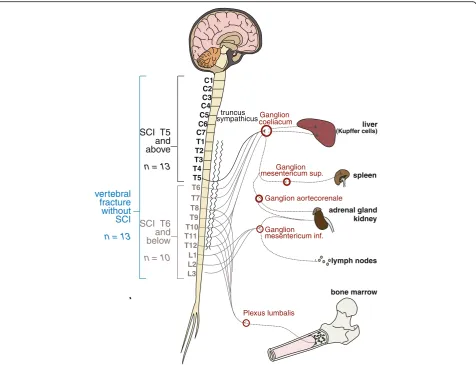
A total of four groups were enrolled in the study. In order to investigate whether the extent of NK cell dysfunction is lesion level dependent, SCI patients were separated in 2 groups i) patients with rostral lesions (Th5 or above) and ii) patients with caudal lesions (Th6 or below), with a different degree of immune relevant organ denervation and sympathetic outflow impairment. Alterations in NK cell activity have been described not only in cases of CNS disturbances [9, 13, 35] but also after surgical procedures [29]. Therefore a control group iii) including patients with an acute vertebral fracture, undergoing stabilization surgery without SCI was enrolled in order to distinguish neurogenic immune suppression from stress (post-aggression-syndrome) associated altered NK cell activity (Fig. 1). Reference values for the NK cell function were given by an additional group (iv) of healthy controls.
The estimated frequency of patients initially treated with methylprednisolone in the recruiting centres is expected to be between 5 and 10 %. These patients will be excluded from the analysis of the primary endpoint given the well-known suppressive effect of glucocorti-coids on NK cells function [29].
Sample size calculation
and 4.5 ± 0.7 g/L in the paraplegics and tetraplegics patients with n= 6, respectively, versus 8.2 ± 0.8 g/L in the control subjects,n= 6).
The primary endpoint in this study is the difference of NK cell cytotoxicity (NK cell expression of CD107a) during the sub-acute phase (assessed between 8 and 12 weeks after SCI) between all SCI patients and controls. The sample size calculation (software R package‘pwr’, https:// cran.r-project.org/web/packages/pwr/pwr.pdf ) was per-formed assuming an effect size of 1.0 for the difference between all SCI patients (either with rostral lesions Th5 or above, (group i) or with caudal lesions Th6 or below (group ii) versus control patients with acute vertebral frac-ture, but without SCI (group iii). Type I error was set to 0.05 (two-sided); type II error to 0.2 (80 % Study Power). To test the main hypothesis with a two sided t -test, a total sample size of 36 SCI patients (pooled group i
and ii,n= 23) and controls (group iii, n= 13) would be required. Aiming for adequate power for the testing of secondary hypotheses between the two SCI patient groups with different lesion levels and to account for possible drop out we aimed to include at least 15–20 patients in each of the three groups. Furthermore, we included a small group of healthy controls (n= 10) as a reference group (group iv).
Enrolment and eligibility criteria
After admission to the hospital, the patients were subject to a clinical examination and an interview to establish eligibility for the study. As this is a study associated with the SCIentinel study [34] the selection criteria were predefined accordingly and are in line with those of pre-viously published studies [6, 36]. Study enrolment is in accordance with the following eligibility criteria: Patients
C7 T1 T2 T3 T4 T5
T12 T11 T10 T9 T6 T7 T8
L1 L2 L3
Ganglion coeliacum
Ganglion mesentericum sup.
bone marrow lymph nodes adrenal gland spleen liver
(Kupffer cells)
kidney
Ganglion mesentericum inf.
Plexus lumbalis
Ganglion aortecorenale truncus
sympathicus C4
C5 C6 C3 C2 C1
SCI T5 and above
n = 13
SCI T6 and below
n = 10 vertebral
fracture without SCI
n = 13
admitted to this study must be 18 years or older with acute isolated SCI after decompression or stabilization surgery, or with a neurologically silent vertebral fracture after stabilization surgery. Eligibility criteria were estab-lished in order to minimize bias and to obtain represen-tative data. Patients with extensive polytrauma or TBI are to be excluded as these lesions may also have a detri-mental effect on the immune system. Exclusion of pa-tients with conditions that chronically induce changes on the immune system such as clinical history of neopla-sia, pre-existing infections, autoimmune disease or chronic intake of corticosteroids limits the number of possible confounding factors.
Documentation schedule
Study enrolment is documented in Case Report Forms (CRFs). These include information about neurological classification, injury date and time, medical history, con-comitant injury, medication history, acute SCI therapy concerning high-dose methylprednisolone treatment as well as details of surgical intervention. Blood sampling took place at 3 different time slots after the lesion as de-scribed in the section “observational period” and was scheduled between 7:00 and 11:00 a.m. to minimize the influence of circadian rhythm on the tested parameters.
Neurological classification
Neurological evaluation was performed according to the International Standards for Neurological Classification of Spinal Cord Injury Patients (ISNCSCI) [37], a revision of the American Spinal Injury Association (ASIA) classi-fication in order to standardize the characterization of the lesion by the collaborating centres. ISNCSCI com-prises the assessment of completeness of lesion –ASIA Impairment scale (AIS) – and the single neurological level of the lesion.
Definition of infections
Another important clinical measure with crucial import-ance for this study is the diagnosis of infectious diseases. SCI-associated pneumonia and urinary tract infections (UTIs) are the most prevalent infections within the SCI population and are diagnosed and documented accord-ing to published definition of disease to ensure compar-ability [38, 39]. UTI is defined as bacteriuria greater than 105 cells/ml or WBC count of more than 100/ mm3- according to the National group on urologic re-habilitation of paraplegics [38]. Pneumonia was diag-nosed on the basis of the finding of opacities and infiltrates in chest X-ray.
Target cell population
K562 is a human leukemic cell line devoid of MHC class I and are therefore specific targets of NK cells [40]. They are
obtained from Deutsches Rheuma-Forschungszentrum (DRFZ; courtesy of the Romagnani group) and kept under sterile conditions in the Dept. of Experimental Neurology. K562 are cultured in RPMI-1640 (Gibco) supplemented with 10 % fetal calf serum (FCS) (lonza) and Penicillin (100U/ml, Biochrom) Streptavidin (100μg/ml, Biochrom). The cell cultures are maintained at 37 °C, 5 % CO2.
Blood sample handling
Peripheral blood was drawn under sterile conditions from each participant at the specified time points. All samples are anonymized with a six-figure pseudonym and any personal information of the participants is re-moved. One 8 ml BD Vacutainer® CPT™/Ficoll™tube was collected from each admitted patient who fulfils the in-clusion criteria for immediate preparation of peripheral blood mononuclear cells (PBMCs).
NK cell stimulation assays [23–25, 40]
using FlowJo software version 8.7 for Mac. The gating was performed as follows: gating on lymphocyte population, exclusion of dead cells, and selection of CD3− CD56+ cells. After adequately compensated, the expression of CD107a+, IFN-γ+, TNF-α+ was individu-ally measured [40].
Observation period
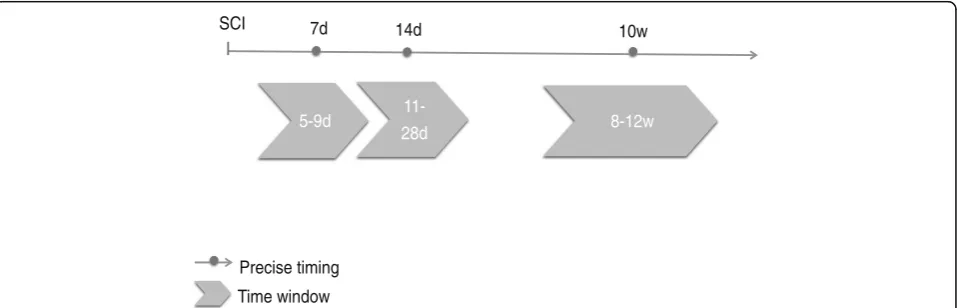
The first observational time point was chosen with respect to the expected time when the quantitative immune depression recedes according to the SCI-IDS pilot study [6]. Three time windows were elected for blood sampling and subsequent analysis to provide insight about late acute, postacute and sub-acute phases post-trauma: day 5 to 9 (mentioned as week 1) day 11 to 28 (mentioned as week 2) and 8th to 12th week (mentioned as week 10) after the injury (Fig. 2). These were selected because they corre-sponded to the hallmarks of parenchymal inflamma-tion following SCI and were in line with previous trials where immunological changes had also been ob-served [36].
Primary and secondary endpoints
The primary endpoint is to analyse NK cytotoxicity during the sub-acute phase (8–12 weeks) after SCI. NK cells cytotoxic capacity was measured by quantifying the expression of CD107a, a molecule expressed by exocyt-osis of the cytotoxic granules.
NK cell 107a expression can be elicited by two ways: 1) Exposure of NK cells to specific target cells
– K562, an erythroleukemic cell line devoid of MHC I [24, 25, 40, 41]; 2) PMA and ionomycin stimulation [40]. PMA is a robust lymphocyte activation stimulus bypassing membrane receptors acting through protein kinase C activation pathway and ionomycin is a calcium ionophore [24, 40].
Secondary endpoints of the study are the quantifica-tion of the NK cell’s IFN-γ and TNF-α production dur-ing the subacute phase. IFN-γ and TNF-α production can be triggered through a well-established immuno-logical challenge: PMA and ionomycin stimulation [22]. The released IFN-γand TNF-αsynthesis denotes the in-trinsic potential of each NK cell to produce cytokines. The frequency of degranulating and cytokine-producing NK cells was measured by multicolour flow cytometry.
Data and statistical analysis
Administrative intermediate feasibility evaluations were performed during the enrolment period to assure appro-priateness of the recruitment schedule.
Data analysis of the primary endpoint consists of a two group comparison between all SCI-patients (groups i and ii) and the control group of patients with acute vertebral fracture (group iii). Furthermore, in secondary analyses we plan the comparison between the 3 separate patient groups (i-iii) and the reference group of healthy controls (group iv) over the 3 consecutive time intervals using ad-justed linear mixed models as implemented in the soft-ware package SPSS (IBM Corp. Released 2013. IBM SPSS Statistics for Windows, Version 22.0. Armonk, NY: IBM Corp.). The analysis was performed using the full dataset comprising all patients included according to the criteria as defined in the study protocol.
Outcomes
The aim is to identify functional NK cells impairment as a component of lymphocyte-mediated non-specific immun-ity at different stages after injury with a more in depth consideration from different stages after SCI. The purpose is to better characterize SCI-IDS, establish potential prog-nostic criteria in patients at highest risk for SCI-associated infections, and possibly suggest novel preventive thera-peutic approaches for SCI patients, including vaccination.
5-9d 11-
28d 8-12w
7d 14d 10w
SCI
Time window Precise timing
Furthermore, in order to challenge the hypothesis of a neurogenic origin of NK dysfunction we also aim to establish a correlation between the lesion level and severity with the extent of NK dysfunction. Ultimately the results from this study might influence guidelines regarding early recognition of the SCI-IDS and diagnosis of subsequent infections leading to targeted immune and antibiotic therapies in order to enhance functional neurological recovery in SCI patients.
Discussion
This prospective study investigates the influence of SCI on NK cell activity taking into account its progression through established disease phases as well as a depend-ency on lesion level and the sympathetic innervation of immune relevant organs. The aim is to characterize SCI-IDS in qualitative terms beyond the first week following injury, investigating not only cell counts but also cellular function [5–7]. We hypothesize that disruption of spinal cord sympathetic outflow causes a pronounced pro-tracted immune deficiency by targeting NK cell function and extending throughout the acute, post-acute and sub-acute phases following SCI. Furthermore, we hypothesize that patients with a Th5 lesion or higher, lo-cated above the sympathetic outlet of the immune rele-vant organs conveyed by the celiac and subsequent paravertebral ganglia, have a lower residual NK cells function than patients with a lesion at Th6 or lower, where the sympathetic preganglionic neurons are par-tially or completely intact. Moreover, we hypothesize that NK cells of patients with a vertebral fracture (con-trols) without any neurological deficit perform better than those in the other two groups. In contrast to previ-ous studies and by using FACS, we address the question whether additional NK cell functions beyond cytotox-icity, such as cytokine production were compromised by SCI during the study period.
Acknowledgements
We are thankful to all patients who gave their consent to participate in the trial during a critical period of their life as well as the healthy control group.
Funding
The project has received funding from the German Research Council (DFG; Cluster of Excellence NeuroCure), the Berlin-Brandenburg Center for Regenerative Therapies (BCRT grant number 81717034) and the Wings for Life Spinal Cord Research Foundation (grant number WfL-DE-006/12). RCH receives funding from the Elsa-Neumann-Scholarship program (grant number H57021). RW is an awarded scholar of the‘Studienstiftung des deutschen Volkes’(grant number 186392). JMS is a Discovery Themes at Ohio State University (Brain Injury) scholar. IL is an awarded scholar of the Fundação para a Ciênca a e Tecnologia (FCT) (grant number SFRH/BD/70001/2010).
Availability of data and materials Not applicable.
Authors’contributions
IL helped conceive the study, participated in its design, takes part in its coordination established the methods, carries out acquisition and analysis of
the data and drafted the manuscript. MAK carries out the study coordination, application for ethics commission, participated in data bank development, the study design and helped drafting the manuscript. CD participates in patient recruitment and study design, KDS participates in patient recruitment, BB helped drafting the manuscript, RCH helped drafting the manuscript, RW programmed the data bank and helped drafting the manuscript, RROS helped drafting the manuscript, HP participated in study coordination, VF participated in study coordination CM participated in the study design, and establishment of methods, TL participates in patient recruitment, EP participates in patient recruitment, AN participates in patient recruitment, AE participates in patient recruitment, UG and SP contributed in the statistical analysis of data and helped drafting and revised the manuscript, UD contributed intellectually to the drafting of the manuscript, MK helped with the establishment of methods an provided technical support in flow cytometry, CR helped with the study design and establishment of methods, and JMS conceived the study, participated in its design, participated in patient recruitment and contributed intellectually to the drafting of manuscript. All authors have critically revised the manuscript for important intellectual content. All authors read and approved the final manuscript.
Competing interests
The authors declare that they have no competing interest.
Consent for publication Not applicable.
Ethics approval and consent to participate
The study was approved by the Ethics Committee of Charité University Hospital–Berlin (EA1/001/09) and performed according to the Statement of Helsinki and its later revisions. All participants gave their written informed consent upon inclusion into the study.
Author details 1
Department of Neurology and Experimental Neurology, Charité
-Universitätsmedizin Berlin, Charitéplatz 1, 10117 Berlin, Germany.2Clinical and Experimental Spinal Cord Injury Research (Neuroparaplegiology), Charité -Universitätsmedizin Berlin, Charitéplatz 1, 10117 Berlin, Germany. 3
Department of Musculoskeletal Surgery, Charité - Universitätsmedizin Berlin, Augustenburger Platz 1, 13353 Berlin, Germany.4F.M.Kirby Neurobiology Center, Childrens’s Hospital and Department of Neurology, Harvard Medical School, 300 Longwood Avenue, Boston, MA 02115, USA.5Institute of Medical Immunology, Charité - Universitätsmedizin Berlin, Augustenburger Platz 1, 13353 Berlin, Germany.6Treatment Centre for Spinal Cord Injuries, Trauma Hospital Berlin, Warener Straße 7, 12683 Berlin, Germany.7Deutsches Rheuma-Forschungszentrum (DRFZ), Charitéplatz 1, 10117 Berlin, Germany. 8
Department for Biostatistics and Clinical Epidemiology, Charitéplatz 1, 10117 Berlin, Germany.9Center for Stroke Research Berlin, Charité
-Universitätsmedizin Berlin, Charitéplatz 1, 10117 Berlin, Germany. 10Department of Neurology, Spinal Cord Injury Division, The Neuroscience
Institute, The Ohio State University, Wexner Medical Center, Columbus, OH 43210, USA.11Department of Neuroscience and Center for Brain and Spinal Cord Repair, Department of Physical Medicine and Rehabilitation, The Neurological Institute, The Ohio State University, Wexner Medical Center, Columbus, OH 43210, USA.12Head Spinal Cord Injury Division, Department Neurology, The William E. Hunt and Charlotte M. Curtis Chair in
Neuroscience, The Neurological Institute, The Ohio State University - Wexner Medical Center, 395 W. 12th Ave, 7th Floor, Columbus, OH 43210, USA.
Received: 14 June 2016 Accepted: 26 August 2016
References
1. Failli V, Kopp MA, Gericke C, Martus P, Klingbeil S, Brommer B, Laginha I, Chen Y, DeVivo MJ, Dirnagl U, Schwab JM. Functional neurological recovery after spinal cord injury is impaired in patients with infections. Brain. 2012; 135:3238–50.
2. Soden RJ, Walsh J, Middleton JW, Craven ML, Rutkowski SB, Yeo JD. Causes of death after spinal cord injury. Spinal Cord. 2000;38:604–10.
4. DeVivo MJ, Krause JS, Lammertse DP. Recent trends in mortality and causes of death among persons with spinal cord injury. Arch Phys Med Rehabil. 1999;80:1411–9.
5. Riegger T, Conrad S, Liu K, Schluesener HJ, Adibzahdeh M, Schwab JM. Spinal cord injury-induced immune depression syndrome (SCI-IDS). Eur J Neurosci. 2007;25:1743–7.
6. Riegger T, Conrad S, Schluesener HJ, Kaps HP, Badke A, Baron C, Gerstein J, Dietz K, Abdizahdeh M, Schwab JM. Immune depression syndrome following human spinal cord injury (SCI): a pilot study. Neuroscience. 2009; 158:1194–9.
7. Campagnolo DI, Keller SE, DeLisa JA, Glick TJ, Sipski ML, Schleifer SJ. Alteration of immune system function in tetraplegics. A pilot study. Am J Phys Med Rehabil. 1994;73:387–93.
8. Prass K, Meisel C, Hoflich C, Braun J, Halle E, Wolf T, Ruscher K, Victorov IV, Priller J, Dirnagl U, Volk HD, Meisel A. Stroke-induced immunodeficiency promotes spontaneous bacterial infections and is mediated by sympathetic activation reversal by poststroke T helper cell type 1-like
immunostimulation. J Exp Med. 2003;198:725–36.
9. Mrakovcic-Sutic I, Tokmadzic VS, Laskarin G, Mahmutefendic H, Lucin P, Zupan Z, Sustic A. Early changes in frequency of peripheral blood lymphocyte subpopulations in severe traumatic brain-injured patients. Scand J Immunol. 2010;72:57–65.
10. Meisel C, Schwab JM, Prass K, Meisel A, Dirnagl U. Central nervous system injury-induced immune deficiency syndrome. Nature reviews. Neuroscience. 2005;6:775–86.
11. Cruse JM, Keith JC, Bryant Jr ML, Lewis Jr RE. Immune system-neuroendocrine dysregulation in spinal cord injury. Immunol Res. 1996;15:306–14.
12. Felten DL, Felten SY, Carlson SL, Olschowka JA, Livnat S. Noradrenergic and peptidergic innervation of lymphoid tissue. J Immunol. 1985;135:755s–65s. 13. Irwin M. Stress-induced immune suppression. Role of the autonomic
nervous system. Ann N Y Acad Sci. 1993;697:203–18.
14. Zhang Y, Guan Z, Reader B, Shawler T, Mandrekar-Colucci S, Huang K, Weil Z, Bratasz A, Wells J, Powell ND, Sheridan JF, Whitacre CC, Rabchevsky AG, Nash MS, Popovich PG. Autonomic dysreflexia causes chronic immune suppression after spinal cord injury. J Neurosci. 2013;33:12970–81. 15. Denes A, Boldogkoi Z, Uhereczky G, Hornyak A, Rusvai M, Palkovits M, Kovacs
KJ. Central autonomic control of the bone marrow: multisynaptic tract tracing by recombinant pseudorabies virus. Neuroscience. 2005;134:947–63. 16. Steinman L. Elaborate interactions between the immune and nervous
systems. Nat Immunol. 2004;5:575–81.
17. Elenkov IJ, Wilder RL, Chrousos GP, Vizi ES. The sympathetic nerve–an integrative interface between two supersystems: the brain and the immune system. Pharmacol Rev. 2000;52:595–638.
18. Tracey KJ. Physiology and immunology of the cholinergic antiinflammatory pathway. J Clin Invest. 2007;117:289–96.
19. Paust S, von Andrian UH. Natural killer cell memory. Nat Immunol. 2011;12: 500–8.
20. Orange JS, Ballas ZK. Natural killer cells in human health and disease. Clin Immunol. 2006;118:1–10.
21. Colucci F, Caligiuri MA, Di Santo JP. What does it take to make a natural killer? Nature reviews. Immunology. 2003;3:413–25.
22. Cooper MA, Fehniger TA, Caligiuri MA. The biology of human natural killer-cell subsets. Trends Immunol. 2001;22:633–40.
23. Cooper MA, Fehniger TA, Turner SC, Chen KS, Ghaheri BA, Ghayur T, Carson WE, Caligiuri MA. Human natural killer cells: a unique innate
immunoregulatory role for the CD56(bright) subset. Blood. 2001;97:3146–51. 24. Aktas E, Kucuksezer UC, Bilgic S, Erten G, Deniz G. Relationship between
CD107a expression and cytotoxic activity. Cell Immunol. 2009;254:149–54. 25. Juelke K, Killig M, Luetke-Eversloh M, Parente E, Gruen J, Morandi B, Ferlazzo G,
Thiel A, Schmitt-Knosalla I, Romagnani C. CD62L expression identifies a unique subset of polyfunctional CD56dim NK cells. Blood. 2010;116:1299–307. 26. Shakhar G, Ben-Eliyahu S. In vivo beta-adrenergic stimulation suppresses
natural killer activity and compromises resistance to tumor metastasis in rats. J Immunol. 1998;160:3251–8.
27. Takamoto T, Hori Y, Koga Y, Toshima H, Hara A, Yokoyama MM. Norepinephrine inhibits human natural killer cell activity in vitro. Int J Neurosci. 1991;58:127–31.
28. Kappel M, Tvede N, Galbo H, Haahr PM, Kjaer M, Linstow M, Klarlund K, Pedersen BK. Evidence that the effect of physical exercise on NK cell activity is mediated by epinephrine. J Appl Physiol (1985). 1991;70:2530–4.
29. Shakhar G, Blumenfeld B. Glucocorticoid involvement in suppression of NK activity following surgery in rats. J Neuroimmunol. 2003;138:83–91. 30. Kliesch WF, Cruse JM, Lewis RE, Bishop GR, Brackin B, Lampton JA.
Restoration of depressed immune function in spinal cord injury patients receiving rehabilitation therapy. Paraplegia. 1996;34:82–90.
31. Iversen PO, Hjeltnes N, Holm B, Flatebo T, Strom-Gundersen I, Ronning W, Stanghelle J, Benestad HB. Depressed immunity and impaired proliferation of hematopoietic progenitor cells in patients with complete spinal cord injury. Blood. 2000;96:2081–3.
32. Held KS, Steward O, Blanc C, Lane TE. Impaired immune responses following spinal cord injury lead to reduced ability to control viral infection. Exp Neurol. 2010;226:242–53.
33. Ben-Eliyahu S, Page GG, Yirmiya R, Shakhar G. Evidence that stress and surgical interventions promote tumor development by suppressing natural killer cell activity. Int J Cancer. 1999;80:880–8.
34. Kopp MA, Druschel C, Meisel C, Liebscher T, Prilipp E, Watzlawick R, Cinelli P, Niedeggen A, Schaser KD, Wanner GA, Curt A, Lindemann G, Nugaeva N, Fehlings MG, Vajkoczy P, Cabraja M, Dengler J, Ertel W, Ekkernkamp A, Martus P, Volk HD, Unterwalder N, Kolsch U, Brommer B, Hellmann RC, Saidy RR, Laginha I, Pruss H, Failli V, Dirnagl U, Schwab JM. The SCIentinel study–prospective multicenter study to define the spinal cord injury-induced immune depression syndrome (SCI-IDS)–study protocol and interim feasibility data. BMC Neurol. 2013;13:168.
35. Schedlowski M, Jacobs R, Stratmann G, Richter S, Hadicke A, Tewes U, Wagner TO, Schmidt RE. Changes of natural killer cells during acute psychological stress. J Clin Immunol. 1993;13:119–26.
36. Cruse JM, Lewis Jr RE, Bishop GR, Kliesch WF, Gaitan E, Britt R. Decreased immune reactivity and neuroendocrine alterations related to chronic stress in spinal cord injury and stroke patients. Pathobiology. 1993;61:183–92. 37. Walden K, Belanger LM, Biering-Sorensen F, Burns SP, Echeverria E,
Kirshblum S, Marino RJ, Noonan VK, Park SE, Reeves RK, Waring W, Dvorak MF. Development and validation of a computerized algorithm for International Standards for Neurological Classification of Spinal Cord Injury (ISNCSCI). Spinal Cord. 2016;54(3):197–203.
38. Burgdörfer H, Heidler H, Madersbacher H, Kutzenberger J, Palmtag H, Pannek J, Sauerwein, D, Stöhrer M. Manual Neuro-Urologie und Querschnittlähmung. Leitlinien zur urologischen Betreuung Querschnittgelähmter. Querschnittgelähmter, A.U.R. (ed). 2007 39. Mann G, Hankey GJ, Cameron D. Swallowing function after stroke:
prognosis and prognostic factors at 6 months. Stroke. 1999;30:744–8. 40. Alter G, Malenfant JM, Altfeld M. CD107a as a functional marker for the
identification of natural killer cell activity. J Immunol Methods. 2004;294:15–22. 41. Betts MR, Brenchley JM, Price DA, De Rosa SC, Douek DC, Roederer M, Koup
RA. Sensitive and viable identification of antigen-specific CD8+ T cells by a flow cytometric assay for degranulation. J Immunol Methods. 2003;281:65–78.
• We accept pre-submission inquiries
• Our selector tool helps you to find the most relevant journal
• We provide round the clock customer support
• Convenient online submission
• Thorough peer review
• Inclusion in PubMed and all major indexing services • Maximum visibility for your research
Submit your manuscript at www.biomedcentral.com/submit
![3 [(4 Bromo 2 thienyl)methylenehydrazinocarbonyl] 1H 1,2,4 triazole](data:image/gif;base64,R0lGODlhAQABAIAAAP///wAAACH5BAEAAAAALAAAAAABAAEAAAICRAEAOw==)