Open Access
Research article
Cooling via one hand improves physical performance in
heat-sensitive individuals with Multiple Sclerosis: A preliminary
study
Dennis A Grahn*
†, Julie vLS Murray
†and H Craig Heller
†Address: Department of Biological Sciences, Stanford University, Stanford, CA 94305, U.S.A.
Email: Dennis A Grahn* - [email protected]; Julie vLS Murray - [email protected]; H Craig Heller - [email protected] * Corresponding author †Equal contributors
Abstract
Background: Many individuals afflicted with multiple sclerosis (MS) experience a transient worsening of symptoms when body temperature increases due to ambient conditions or physical activity. Resulting symptom exacerbations can limit performance. We hypothesized that extraction of heat from the body through the subcutaneous retia venosa that underlie the palmar surfaces of the hands would reduce exercise-related heat stress and thereby increase the physical performance capacity of heat-sensitive individuals with MS.
Methods: Ten ambulatory MS patients completed one or more randomized paired trials of walking on a treadmill in a temperate environment with and without cooling. Stop criteria were symptom exacerbation and subjective fatigue. The cooling treatment entailed inserting one hand into a rigid chamber through an elastic sleeve that formed an airtight seal around the wrist. A small vacuum pump created a -40 mm Hg subatmospheric pressure enviinside the chamber where the palmar surface of the hand rested on a metal surface maintained at 18–22°C. During the treatment trials, the device was suspended from above the treadmill on a bungee cord so the subjects could comfortably keep a hand in the device without having to bear its weight while walking on the treadmill.
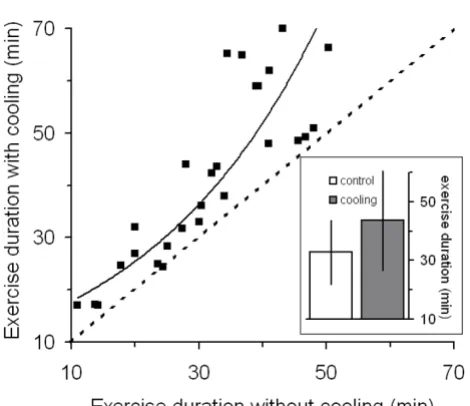
Results: When the trials were grouped by treatment only, cooling treatment increased exercise durations by 33% (43.6 ± 17.1 min with treatment vs. 32.8 ± 10.9 min. without treatment, mean ± SD, p < 5.0·10-6, paired t-test, n = 26). When the average values were calculated for the subjects who performed multiple trials before the treatment group results were compared, cooling treatment increased exercise duration by 35% (42.8 ± 16.4 min with treatment vs. 31.7 ± 9.8 min. without treatment, mean ± SD, p < 0.003, paired t-test, n = 10).
Conclusion: These preliminary results suggest that utilization of the heat transfer capacity of the non-hairy skin surfaces can enable temperature-sensitive individuals with MS to extend participation in day-to-day physical activities despite thermally stressful conditions. However, systematic longitudinal studies in larger cohorts of MS patients with specific deficits and levels of disability conducted under a variety of test conditions are needed to confirm these preliminary findings.
Published: 12 May 2008
BMC Neurology 2008, 8:14 doi:10.1186/1471-2377-8-14
Received: 21 December 2007 Accepted: 12 May 2008
This article is available from: http://www.biomedcentral.com/1471-2377/8/14
© 2008 Grahn et al; licensee BioMed Central Ltd.
Background
For individuals with multiple sclerosis (MS), heat-induced symptom exacerbation can be a limiting factor for physical activity. Up to 80% of individuals with MS report symptom exacerbation associated with heat stress resulting from exercise, exposure to elevated environmen-tal temperatures, or both [1-5]. MS symptoms vary between individuals and often include deficits associated with coordinated movement such as: muscle weakness, muscle spasms, ataxia, and visual problems. Heat- or exer-cise-induced symptom exacerbations are a transient expression of new symptoms, or a worsening of existing symptoms. Exercise-induced MS symptom exacerbations are the result of an accumulation of metabolic heat gener-ated by the working skeletal muscles [6-8]. To mitigate the worsening of symptoms during exercise, heat production must be reduced or heat loss increased. Heat production is proportional to work output and, thus, can only be reduced by decreasing the level of physical activity. Cur-rently available means for increasing heat loss are either: 1) selecting an optimal (i.e., cool) environment or 2) cre-ating a cool microclimate by wearing cooling garments. A means to directly facilitate heat removal from the body core could forestall the onset of symptom exacerbation and enable heat-sensitive individuals to increase their endurance capacity during physical activity or exposure to elevated environmental temperatures.
Specialized subcutaneous vascular structures [arteriov-enous anastomoses (AVAs) and associated retia venosa] underlie the non-hairy skin surfaces of the human body (the palms of the hands, the soles of the feet, the ears, and face) [9]. These unique vascular structures distribute a large volume of blood over a two dimensional plane just beneath the skin surface. During extreme heat stress, blood flow through the subcutaneous AVAs can be as high as 8 l/min (60% of the cardiac output) [10]. Blood flow through these specialized vascular structures provides a means for heat accumulated within the body to be trans-ferred efficiently to the external environment [11]. The venous blood returning from these vascular beds can have a significant effect on the temperature of the body core, and especially on organs and active muscles that are receiving high percentages of the cardiac output [12-18].
We have developed a portable means for optimizing heat exchange through the retia venosa underlying the non-hairy skin surfaces of the hands and feet [19-21]. A hand or foot is enclosed in an air tight chamber and a pressure differential is used to expand the rete venosum of the enclosed appendage and thereby draw an increased blood volume into it. Through the combined local application of low level subatmospheric pressure and an appropriate thermal load, it is possible to transfer a substantial amount of heat into or out of the circulating blood and,
thereby, directly manipulate core temperature using only a single hand [19-22]. This heat extraction method decreased the rates of core temperature rise and improved the physical performances of fit and active individuals during aerobic exercise in a hot environment [20,22]. We questioned whether use of this technique would provide a similar benefit to heat-sensitive individuals with MS.
Methods
SubjectsInclusion/exclusion criteria for this study were a diagnosis of MS, a history of heat sensitivity, engagement in a regu-lar exercise/physical fitness program, and the ability to ambulate independently. Six males and six females volun-teered to participate in the study. The subjects had mid-range Kurtzke Expanded Disability Status Scale (EDSS) scores ranging from 3.5 (fully ambulatory but with mod-erate disability in 1 functional system and mild disability in 1 or 2 functional systems) to 6.0 [intermittent or uni-lateral constant assistance (cane, crutch or brace) required to walk 100 meters with or without resting]. The sex, age, MS classification, and primary symptoms of each subject are tabulated in Table 1. Informed consent was obtained from each subject using an instrument approved by the Stanford University Institutional Review Board. Each sub-ject was assigned an alphanumeric identifier which was used thereafter in accordance with Health Insurance Port-ability and AccountPort-ability Act guidelines.
Facilities and Monitoring equipment
Trials were conducted on a stationary treadmill (Nordic Track model 9800). The ambient conditions were 23.0 ± 1.0°C, 10–25% relative humidity. Heart rate monitors/ data loggers (model S810, Polar Electro Oy, Kempele, Fin-land) collected heart rate data at 5 second intervals. Hand-written data logs noted subject identifier, date, treatment, exercise duration, and miscellaneous comments. Exercise durations were timed using a commercially available stop watch (four-channel alarm timer, VWR).
Heat Extraction Device
Protocol
Each subject was equipped with a heart rate monitor prior to all trials. The stop criterion for all exercise trials was symptom exacerbation which included subjective fatigue and gait or posture deterioration. Baseline assessments of individual physical performance capacities were con-ducted on day 1. For this assessment the subject began walking on a level treadmill at 0.8 Km/hr (0.5 mi/hr). At three minute intervals the speed or slope of the treadmill was alternately increased. The speed was increased by 0.8 Km/hr increments up to a maximum speed of 5.6 Km/hr (3.5 mi/hr). The slope of the treadmill was increased by 1% increments. Once the treadmill speed reached 5.6 Km/ hr, only the slope was incrementally increased. For the subsequent experimental trials the speeds and slopes of the treadmill were adjusted to approximate 65% of the maximum work load achieved by the individual subject during his or her baseline trial. The workload for each sub-ject was kept constant for the pair of experimental trials.
An experimental trial consisted of the subject walking on the treadmill at a predetermined speed and slope until a stop criterion was reached. Experimental trials were initi-ated not less than two days after the baseline assessment trial and separated by a minimum of two days and a max-imum of seven days. The subjects returned to the labora-tory at the same time of day for all of their trials. All subjects performed a minimum of two experimental tri-als, one without using the heat extraction device and one using the device. The daily experimental routine consisted of a fifteen min rest in a sitting position, a 3 min warm-up walk at 1.6 Km/min and 0% slope, the experimental trial, and 30 min of seated recovery. On days when cooling treatments were administered, the heat extraction device was donned prior to the onset of treadmill activity. The order of the treatments was randomized. A flip of a coin before the first of two paired trials determined treatment
order. Water was available to the subjects ad libitum
throughout the trials.
Statistical Analysis
Heart rates were plotted for each trial and exercise dura-tions tabulated on a spreadsheet (Microsoft Office Excel). The exercise duration data were analyzed in two ways: 1) If subjects completed more than one set of paired trials, mean exercise durations were calculated for each individ-ual's control and treatment trials. The individual subjects' mean exercise duration data were then grouped according to treatment. Group mean and standard deviation were calculated for each treatment and the data were compared with a paired t-test. The proportional effects of treatment were determined by dividing exercise duration with heat extraction by exercise duration without heat extraction. 2) All sets of paired trial data were grouped according to treatment and the data plotted as exercise duration with treatment vs. exercise duration without treatment. The plotted data were subjected to a curve fitting analysis using the data analysis tools provided with Microsoft Office Excel. Trendlines (based on linear, log, polynomial, power and exponential equations) were calculated for the graphed data and the variance in the data accounted for by each function calculated. The variances were then com-pared to determine best fit curves. Mean and standard deviations were calculated for treatment grouped data and the data were compared with a paired t-test.
Results
A total of 88 experimental trials were conducted on the twelve subjects. Two subjects experienced relapses and dropped out of the study without completing a set of paired trials. Twenty six data sets that met the criteria for paired trials (identical work loads and a maximum of seven days separating the trials) were collected from the remaining ten subjects. Cooling treatment increased per-formance (Table 2). When the individual subject's mean Table 1: Gender, age, and diagnosis of individual subjects.
Subject Gender Age Type Primary symptoms
1 M 45 RR Leg muscle weakness, cognitive difficulties
2 M 63 RR Spasticity, cognitive difficulties
3 M 42 RR Fatigue, balance, cognitive difficulties
4 F 53 RR Fatigue, balance, spasticity
5 M 46 RR Leg motor control, balance
6 M 55 SP Limb weakness
7 F 55 RR Fatigue, postural muscle weakness
8 F 55 SP Leg motor control
9 M 53 RR Ataxic gait, cognitive difficulties
10 F 56 RR Leg muscle weakness, spasticity, fatigue
11 F 42 RR Vertigoa
12 F 45 RR Limb weaknessa
RR-Relapsing Remitting, SP- Secondary Progressive.
data were analyzed according to subject and treatment, treatment extended exercise duration by an average of 35% (42.8 ± 16.4 with cooling compared to 31.7 ± 9.8 minutes without cooling, mean ± standard deviation, n = 10, p < 0.003, paired t-test) and ranged from 8% to 65%.
When the exercise duration data were analyzed according treatment only (n = 26), mean exercise duration with treatment was 43.6 ± 17.09 min (mean ± SD) compared to 32.8 ± 10.9 without treatment: a mean increase of 33% (p < 5.0·10-6, two tailed paired t-test). The magnitude of
the treatment effect was correlated with exercise duration during the control trials (Figure 1). Ninety percent of the variance in the improvements with the treatment could be accounted for by an exponential function fitted to the data (y = 12.505e0.0356x with y and x being exercise duration
with treatment and without treatment, respectively).
There were no discernable patterns in heart rates (Figure 2). Cardiac drift – a rise in heart rate during sustained fixed load exercise – was observed in all trials. Initial heart rate, final heart rate, and rate of cardiac drift (change in heart rate/time) varied among the subjects and trials. There was no significant difference between treatment groups in initial heart rates [87 ± 7 beats per minute (bpm) with cooling compared to vs. 88 ± 10 bpm without cooling, mean ± standard deviation, n = 10, p ≤ 0.56, paired t-test]. Treatment significantly affected maximum heart rates (123 ± 18 bpm with cooling compared to 118 ± 20 bpm without cooling, mean ± standard deviation, n = 10, p ≤ 0.03, paired t-test). The higher maximum heart rates observed during the cooling treatment trials were
likely related to increased exercise durations with the cool-ing treatment. However, the rates of cardiac drift were pro-portional to neither work loads nor exercise duration times. Treatment did not affect the cardiac drift in a con-sistent manner: in some cases treatment increased cardiac drift; in others, treatment decreased cardiac drift; while, in others, treatment had no effect heart rate patterns.
Anecdotally, most subjects reported feeling better during the cooling trials. Several subjects reported that instead of experiencing the usual progressive fatigue when exercis-ing, their symptoms occurred in waves when they used the heat extraction device. Another subject reported experi-encing an unusual set of symptoms when treated. Instead of feeling "cloudy" during exercise, he felt a tingling in his legs.
Discussion
Under the experimental conditions described in this report, the use of a device that facilitates removal of heat from the circulating blood provided a performance bene-fit to individuals with MS who had a history of transient worsening of symptoms associated with conditions that would impose a heat load on their bodies. In this study, the dependent variable was physical performance while the independent variable was the application of a cooling technique. Methodological limitations in the study design may have weakened the association between the inde-pendent and deinde-pendent variables and should be consid-ered when evaluating the merit of the data presented in this report. We are aware of three methodological limita-tions in the study design: 1) the lack of a placebo control, Table 2: Treadmill speed and slope, number of paired trials, mean trial times and effect ratio (exercise duration with cooling/exercise duration without cooling): individual subjects and grouped data
Subject Speeda (Km/h) Slopea (%) Number of paired trials Exercise duration (min) Cooling effect (ratio)
Control Cooling
1 4.8 5 – 6 3 17.2 22.9 1.34
2 0.8 0 1 20.0 32.0 1.60
3 4.0 5 – 6 3 20.7 22.1 1.07
4 1.3 0 1 25.0 28.3 1.13
5 3.2 – 4.8 6 4 36.4 44.8 1.23
6 4.8 7 – 8.5 3 37.4 49.8 1.33
7 4.0 6 – 7 5 38.4 51.6 1.34
8 2.4 0 2 39.8 43.2 1.09
9 3.2 0 2 39.9 67.5 1.69
10 3.2 5.5 – 6 2 42.3 65.8 1.55
Group data b
Mean ± Standard Deviation 31.7 ± 9.8 42.8 ± 16.4 1.35 ± 0.22
2) the researchers were not blinded to the treatments, and 3) the absence of a temperature measure or a subjective assessment of thermal comfort.
To facilitate heat transfer into or out of a body, it is neces-sary to apply a heat source or sink to a surface of the body. The sensations of temperature result from the differential activation of warm and cold cutaneous temperature sen-sors that respond to changes in local skin temperature and, thus, individuals can perceive the presence of a ther-mal source or sink when it is applied to the body surface [23]. Blocking the afferent input from the cutaneous ther-mosensors in local skin regions would be a way to elimi-nate the sensory input, but use of a nerve block to control for a placebo effect seemed excessive for this preliminary study. We are unaware of a practical means to blind sub-jects to treatment when a treatment entails applying a thermal stimulus to the skin surface.
In these studies the researchers as well as the subjects were aware of the treatments being applied during a given trial. A common confound in exercise performance trials is
researcher bias. In trials on healthy subjects with subjec-tive stop criteria, peak performance can be influenced by external motivational factors such as differences in the researcher's confidence to push the subject. Researcher bias, while always a potential confound, likely had little influence on exercise duration in these trials on individu-als with MS because the primary stop criterion for exercise was an exacerbation of physical symptoms rather than being related to motivational factors. Researcher bias could have been eliminated from these trials by physically isolating the subjects from the researcher. However, since these subjects were physically compromised and exercis-ing on a treadmill often to near the point of physical
col-The effect of cooling on heart rate during exercise
Figure 2
The effect of cooling on heart rate during exercise.
Examples of heart rates during paired control and experi-mental trials from 4 subjects. Open symbols control, closed symbols cooling. While treatment (cooling) had little effect on heart rate, there were substantial differences between individual subject heart rates. This inter subject variability in heart rate was due in part to differences in work loads among subjects.
The effect of hand cooling on exercise duration: a compari-son of twenty-six paired treatment trials
Figure 1
lapse, it was deemed more prudent to have the researchers directly observe the subjects during the trials and be immediately available to assist the subjects at the termina-tion of exercise.
Neither a real measure of body temperature nor a subjec-tive assessment of perceived temperature was monitored during these trials. The effects of temperature on individ-uals with MS are well known: increases in temperatures often exacerbate symptoms while decreases in tempera-tures can improve them [4,24-26]. However, the magni-tude of thermal stimulus necessary to elicit a symptom exacerbation in MS patients can be minor and may be insufficient to be noted as a change in a measured deep body temperature [27]. In previous studies substantial improvements in fatigue, muscle strength and standing balance were observed when individuals with MS were actively cooled using cooling garments, but there was not an associated effect of lowering tympanic temperatures [28]. Since the effects of cooling have been demonstrated without an associated effect on core temperatures and placement of a core temperature probe can be stressful and unpleasant for the subjects, core temperatures were not measured in this study. The cause of the physical per-formance improvements could be multi-factorial and thus, without a direct measure of core temperature, we can only speculate that the treatment used in these studies provided a cooling benefit which resulted in the perform-ance improvement. Given the multitude of published reports on the effects of thermal manipulation of the hands or feet on core temperatures and performance [12-22] and on the effects of thermal manipulations on per-formance [8,27-29] and symptom exacerbation [24-26] in individuals with MS, this is a reasonable inference.
The effects of manipulating the internal thermal condi-tion of MS patients by delivering a thermal load to a single appendage have been noted previously [24,25]. In 1950 Guthrie observed that MS patients became extremely weak while sitting in a hot water bath. A similar response could be elicited in those subjects by simply immersing a single arm or leg in hot water. An arterial tourniquet dur-ing arm immersion suppressed the symptom exacerba-tions. At the time it was theorized that the underlying mechanism for the heat response of the MS patients to limb immersion was due to a humoral factor, a reflex vas-omotor response, or to a change in cerebral blood flow. An alternative explanation put forth at that time and dis-counted was that adequate amounts of heat were being delivered through one appendage to increase core temper-ature thereby inducing symptom exacerbation.
MS is a disease of the central nervous system (CNS). Pre-sumably, it is increases in CNS temperature, rather than body temperature per se, that cause heat related symptom
exacerbations [27]. The brain and spinal cord are meta-bolically stable tissues that generate metabolic heat at a relatively constant rate [30]. Heat is removed from CNS tissues through the vascular system. Thus, the temperature of the CNS is determined primarily by the temperature of the arterial blood [30,31]. If the temperature of the arterial blood is elevated, CNS temperatures will rise. Heat is pro-duced by working skeletal muscles during physical activ-ity. Heat generated by skeletal muscles is removed from the muscle by the circulation and the warmed venous blood returning from active skeletal muscles is mixed with other venous return blood as it passes through the heart and pulmonary circulation. Any thermal manipulation that delivers a cool thermal load to the venous return blood will counteract the effects of the heat produced by active skeletal muscles. By accessing the circulating blood flowing through the retia venosa underlying the non-hairy skin surfaces it is possible to directly cool substantial vol-umes of venous blood.
The results reported here agree with those of previous studies that examined the effects of cooling on ambula-tory performance in heat-sensitive individuals with MS; cooling can improve performance [8,29]. In the previ-ously reported studies the subjects were cooled for 30 min prior to fixed-duration exercise bouts followed by evalua-tion[8] or for 60 min between evaluations [29]. Evalua-tion of physical performance was time and number of steps required to complete a 25 foot walk. In those studies the thermal loads were delivered to the general skin sur-face via a circulating water garment[29] or by cold water immersion [8]. Applying a cool load to the general skin surface directly affects the thermal inertia of the skin and underlying tissues. However, application of a thermal load to the general skin surface has little direct effect on the metabolically active core organs because the hairy skin surfaces are poorly perfused and therefore insulate the body core from the external thermal environment [32,33]. Applying cooling to the general body surface takes advantage of the thermal inertia of poorly perfused superficial and peripheral tissues, however, to store a cold load [8]. This cold load in the periphery then passively absorbs heat conducted into it by the blood flow and is the reason that precooling can improve endurance [34]. Conversely, with heat exchange involving the retia ven-osa, the thermal load is applied directly to the blood flow-ing through the palm durflow-ing exercise. Coolflow-ing a volume of circulating blood directly affects the highly perfused core organs.
likely induced a vasoconstriction response that reduced blood flow to the skin and peripheral tissues. Peripheral vasoconstriction increases peripheral resistance resulting in a rise of arterial pressure and a subsequent baroreceptor response decreasing heart rate [35]. In the present study the temperature of the water perfusing the cooling device was maintained at 18–22°C to avoid triggering local vaso-constriction which would, in addition to increasing vascu-lar resistance, reduce blood flow through the heat exchange vascular structures and, thereby, decrease heat transfer.
The ability to effectively remove heat from the body could substantially improve the daily lives of heat-sensitive indi-viduals with MS. Critical body surface regions for direct heat exchange are the non-hairy regions that contain the subcutaneous arteriovenous anastomoses and retia ven-osa. Heat transfer devices incorporated into gloves or shoes could augment the use, or be used in lieu, of cur-rently available cooling garments. The heat transfer devices used in this study used a pressure differential to maximize heat exchange. It has been demonstrated that, under certain conditions, substantial heat can be extracted from the body through the non-hairy skin surfaces with-out the application of a pressure differential [12-17]. The application of a cool load alone to the non-hairy skin sur-faces may provide a benefit to heat sensitive individuals with MS under some heat-stress conditions.
Conclusion
The results from this preliminary study demonstrate that, under a set of specific test conditions and in a small group of subjects who were selected in part because they engaged in regular exercise, utilization of the heat transfer capacity of the non-hairy skin surfaces can enable temperature-sensitive individuals with MS to extend participation in physical activities. Systematic longitudinal studies in larger cohorts of MS patients with specific deficits and lev-els of disability conducted under a variety of test condi-tions in independent research facilities are needed to confirm these preliminary findings. If these initial find-ings are replicated in future studies, the development of small wearable heat transfer equipment in the form of gloves or footwear could provide a benefit to individuals with MS.
Competing interests
Patents have been issued for the technology disclosed in this manuscript [D. Grahn and H.C. Heller (Inventors); Stanford University (Assignee)], and Stanford University has entered into a licensing agreement with AVAcore Technologies, Inc., for the commercialization of the tech-nology. Included in the license is a royalty agreement that grants Stanford University a percentage of the net sales of the technology, which will be shared by the University
and the inventors. D. Grahn and H.C. Heller are founders of AVAcore Technologies but receive no ongoing compen-sation from the company. AVAcore Technologies pro-vided no financial support for this research. To eliminate the possibility of this potential conflict of interest influ-encing the outcome of the research Stanford University requires that Grahn and Heller have no participation in the recruitment of subjects, the conduct of the experimen-tal trials, and/or the analysis of the data.
Authors' contributions
DAG, JvLSM, and HCH made substantial intellectual con-tributions to this study. DAG, JvLSM, and HCH were involved in the conception and design of the study, the interpretation of the data, and the drafting and revising of the manuscript. JvLSM was responsible for recruitment of the subjects, data acquisition, and data analysis. All authors have read and approved the final manuscript.
Acknowledgements
The authors express gratitude to Vinh Cao for his assistance in the data col-lection process and Grace Hagiwara for critical input during the prepara-tion of this manuscript. This project was supported in part by a grant from the United States Defense Advanced Research Projects Agency (DARPA). This document was cleared by DARPA and approved for public release, dis-tribution unlimited.
References
1. Brown TR, Kraft GH: Exercise and rehabilitation for individuals with multiple sclerosis. Phys Med Rehabil Clin N Am 2005,
16(2):513-555.
2. Romberg A, Virtanen A, Ruutiainen J: Long-term exercise improves functional impairment but not quality of life in multiple sclerosis. J Neurol 2005, 252(7):839-845.
3. Romberg A, Virtanen A, Ruutiainen J, Aunola S, Karppi SL, Vaara M, Surakka J, Pohjolainen T, Seppanen A: Effects of a 6-month exer-cise program on patients with multiple sclerosis: a rand-omized study. Neurology 2004, 63(11):2034-2038.
4. Syndulko KJM, Woldanski A, Baumhefner RW, Tourtellotte WW:
Effects of temperature in multiple sclerosis: A review of the literature. Neurorehabil Neural Repair 1996, 10:23-34.
5. White LJ, Dressendorfer RH: Exercise and multiple sclerosis.
Sports Med 2004, 34(15):1077-1100.
6. MacAllister WS, Krupp LB: Multiple sclerosis-related fatigue.
Phys Med Rehabil Clin N Am 2005, 16(2):483-502.
7. van der Berg M, Dawes H, Wade DT, Newman M, Burridge J, Izadi H, Sackley CM: Treadmill training for individuals with multiple sclerosis: a pilot randomised trial. J Neurol Neurosurg Psychiatry
2006, 77(4):531-533.
8. White AT, Wilson TE, Davis SL, Petajan JH: Effect of precooling on physical performance in multiple sclerosis. Mult Scler 2000,
6(3):176-180.
9. Bergersen TK: A search for arteriovenous anastomoses in human skin using ultrasound Doppler. Acta Physiol Scand 1993,
147(2):195-201.
10. Rowell LB: Human cardiovascular adjustments to exercise and thermal stress. Physiol Rev 1974, 54(1):75-159.
11. Greenfield A: The circulation through the skin. In Handbook of physiology Section 2: CirculationVolume 2. Edited by: Hamilton W, Dow P. Washington, DC: American Physiological Society; 1963:1325-1351. 12. Allsopp AJ, Poole KA: The effect of hand immersion on body temperature when wearing impermeable clothing. J R Nav Med Serv 1991, 77(1):41-47.
13. House JR, Holmes C, Allsopp AJ: Prevention of heat strain by immersing the hands and forearms in water. J R Nav Med Serv
Publish with BioMed Central and every scientist can read your work free of charge "BioMed Central will be the most significant development for disseminating the results of biomedical researc h in our lifetime."
Sir Paul Nurse, Cancer Research UK
Your research papers will be:
available free of charge to the entire biomedical community
peer reviewed and published immediately upon acceptance
cited in PubMed and archived on PubMed Central
yours — you keep the copyright
Submit your manuscript here:
http://www.biomedcentral.com/info/publishing_adv.asp
BioMedcentral 14. Livingstone SD, Nolan RW, Cattroll SW: Heat loss caused by
immersing the hands in water. Aviat Space Environ Med 1989,
60(12):1166-1171.
15. Livingstone SD, Nolan RW, Keefe AA: Heat loss caused by cool-ing the feet. Aviat Space Environ Med 1995, 66(3):232-237. 16. Selkirk GA, McLellan TM, Wong J: Active versus passive cooling
during work in warm environments while wearing firefight-ing protective clothfirefight-ing. J Occup Environ Hyg 2004, 1(8):521-531. 17. Tipton MJ, Allsopp A, Balmi PJ, House JR: Hand immersion as a
method of cooling and rewarming: a short review. J R Nav Med Serv 1993, 79(3):125-131.
18. Vanggaard L, Eyolfson D, Xu X, Weseen G, Giesbrecht GG: Immer-sion of distal arms and legs in warm water (AVA rewarming) effectively rewarms mildly hypothermic humans. Aviat Space Environ Med 1999, 70(11):1081-1088.
19. Grahn D, Brock-Utne JG, Watenpaugh DE, Heller HC: Recovery from mild hypothermia can be accelerated by mechanically distending blood vessels in the hand. J Appl Physiol 1998,
85(5):1643-1648.
20. Grahn DA, Cao VH, Heller HC: Heat extraction through the palm of one hand improves aerobic exercise endurance in a hot environment. J Appl Physiol 2005, 99(3):972-978.
21. Hagobian TA, Jacobs KA, Kiratli BJ, Friedlander AL: Foot cooling reduces exercise-induced hyperthermia in men with spinal cord injury. Med Sci Sports Exerc 2004, 36(3):411-417.
22. Hsu AR, Hagobian TA, Jacobs KA, Attallah H, Friedlander AL: Effects of heat removal through the hand on metabolism and per-formance during cycling exercise in the heat. Can J Appl Physiol
2005, 30(1):87-104.
23. Craig AD, Bushnell MC: The thermal grill illusion: unmasking the burn of cold pain. Science 1994, 265(5169):252-255. 24. Guthrie TC: Visual and motor changes in multiple sclerosis as
a result of induced temperature changes. Trans Am Neurol Assoc
1950, 51:189-194.
25. Guthrie TC: Visual and motor changes in patients with multi-ple sclerosis; a result of induced changes in environmental temperature. AMA Arch Neurol Psychiatry 1951, 65(4):437-451. 26. Guthrie TC, Nelson DA: Influence of temperature changes on
multiple sclerosis: critical review of mechanisms and research potential. J Neurol Sci 1995, 129(1):1-8.
27. Baker DG: Multiple sclerosis and thermoregulatory dysfunc-tion. J Appl Physiol 2002, 92(5):1779-1780.
28. Beenakker EA, Oparina TI, Hartgring A, Teelken A, Arutjunyan AV, De Keyser J: Cooling garment treatment in MS: clinical improvement and decrease in leukocyte NO production.
Neurology 2001, 57(5):892-894.
29. Schwid SR, Petrie MD, Murray R, Leitch J, Bowen J, Alquist A, Pelli-grino R, Roberts A, Harper-Bennie J, Milan MD, et al.: A rand-omized controlled study of the acute and chronic effects of cooling therapy for MS. Neurology 2003, 60(12):1955-1960. 30. Zhu M, Ackerman JJ, Sukstanskii AL, Yablonskiy DA: How the body
controls brain temperature: the temperature shielding effect of cerebral blood flow. J Appl Physiol 2006,
101(5):1481-1488.
31. Hayward JN, Baker MA: Role of cerebral arterial blood in the regulation of brain temperature in the monkey. Am J Physiol
1968, 215(2):389-403.
32. Ereth MH, Lennon RL, Sessler DI: Limited heat transfer between thermal compartments during rewarming in vasocon-stricted patients. Aviat Space Environ Med 1992, 63(12):1065-1069. 33. Kurz A, Sessler DI, Birnbauer F, Illievich UM, Spiss CK: Thermoreg-ulatory vasoconstriction impairs active core cooling. Anesthe-siology 1995, 82(4):870-876.
34. Ku YT, Montgomery LD, Lee HC, Luna B, Webbon BW: Physiologic and functional responses of MS patients to body cooling. Am J Phys Med Rehabil 2000, 79(5):427-434.
35. Mourot L, Bouhaddi M, Gandelin E, Cappelle S, Dumoulin G, Wolf JP, Rouillon JD, Regnard J: Cardiovascular autonomic control dur-ing short-term thermoneutral and cool head-out immersion.
Aviat Space Environ Med 2008, 79(1):14-20.
Pre-publication history
The pre-publication history for this paper can be accessed here: