Public Good Overprovision
by a Manipulative Provider
1Gorkem Celik2 Dongsoo Shin3 Roland Strausz4
2020
1We thank the editor and three anonymous referees for valuable comments and suggestions. We also thank Felix Bierbrauer, Wilfried Sand-Zantman, Huseyin Yildirim, and seminar participants at ESSEC, THEMA, ASSET conference in Florence, Midwest Economic Theory Meeting at Indi-ana University-Bloomington, EARIE conference at Universitat Pompeu Fabra, CESifo Norwegian-German Seminar on Public Economics, and Canadian Economic Theory Conference at UBC. Finan-cial support from the Leavey Research Grant is acknowledged.
2Department of Economics, ESSEC Business School and THEMA Research Center, 95021 Cergy-Pontoise, France,Email: [email protected]
3Department of Economics, Leavey School of Business, Santa Clara University, Santa Clara, CA 95053, USA,Email: [email protected]
Public Good Overprovision
by a Manipulative Provider
ABSTRACT
We study contracting between a public good provider and users with private valuations
of the good. We show that, once the provider extracts the users’private information, she bene…ts from manipulating the collective information received from all users when
com-municating with them. We derive conditions under which such manipulation determines the direction of distortions in public good provision. If the provider is non-manipulative,
the public good is always underprovided, whereas overprovision occurs with a manipulative provider. With overprovision, not only high-valuation users, but also low-valuation users may obtain positive rents— users may prefer facing a manipulative provider.
JEL Classi…cation: D82, D86, H41
1
Introduction
Since Samuelson’s pioneering work (1954), analyzing distortions in the provision of public
goods has become a classical topic in economics (e.g. La¤ont 1988). The conventional understanding is that the users’incentives result in an “underprovision”— the direction of distortion in the public good provision is downward. For instance, Comes and Sandler
(1996) note that “the tendency for public goods to be provided at suboptimal levels is a celebrated result in public economics.” Casual observations, however, indicate that, in real
life, there are cases where some public goods and services are often “overprovided”— the direction of distortion in the public good provision is upward, instead of downward.
As an example, consider the class-action lawsuits in which a group of victims consolidate their claims into a single lawsuit. A criticism against such collective litigation procedures is that they often lead to an excessive amount of litigation. As pointed out by legal studies,
such as Mullenix (2014), in many cases relentlessly pursued by class-action attorneys, some class members do not care much about the outcome of their cases. The studies also report
that excessive amount of litigation is often linked to small compensations for class members and large fees for class attorneys.1 This, in fact, is one of the central reasons that eventually led the United States Congress to pass the Class Action Fairness Act of 2005, removing the class-action lawsuits from the jurisdiction of state courts which are deemed to be over-friendly to attorneys representing plainti¤s.
Industrial lobbying is another instance for over-provision. As pointed out by studies in political science, the amount of lobbying can signi…cantly exceed what would be e¢ cient
for the industry.2 Industrial lobbying expenditure in the United States has reached nearly $3 billion,3 and lobbyists are known for in‡ating the size of their services. For example, Collander (2013) reports that almost all lobbyists representing the companies in the defence
industry are devoted to in‡ate scales of military procurement and acquisition. As pointed out by Hansen (2012), oversized lobbying activities often lead to ine¢ cient use of public
resources, such as constructing of a “bridge to nowhere.”
The services in the examples above are non-rivalrous. That is, a single service by the
provider (a lawyer or a lobbyist) bene…ts multiple users (clients) who are in the same group— each user may value the service di¤erently, but they do not compete for it. These
1
See Ulen (2011) and Redish (2014) for example.
2
See Ainsworth (1993) for examples of trade association lobbying e¤orts which do not necessarily re‡ect
the demand from their general membership.
3
services are, therefore, public goods. Then, from an economic perspective, these excessive public good provisions are rather puzzling, because according to the standard theory in the literature, public goods are expected to be underprovided.
The objective of this paper is to identify a new economic mechanism that results in overprovision of a public good rather than underprovision. We study this mechanism in
an agency framework of public good provision with private information. In our model, a provider (the principal) produces a public good for the consumption of multiple users
(agents) in exchange for monetary payments from them. Each user’s valuation for the public good is his private information, and after all users report their valuations to the provider, she produces the good according to the collective valuation reported by the users.
As in the standard model of screening, a user with a high valuation for the good receives an information rent not to misrepresent his true valuation. In order to reduce this
informa-tion rent, the provider’s second-best contract distorts the size of the public good downward. Except for the case where every user claims that his valuation of the public good is high, the provider lowers provision of the public good from the e¢ cient level in the optimal contract.
This is in line with the literature’s traditional result in public good provision— the public good is underprovided in equilibrium.
This result, however, is under the assumption that, while the users of the public good are opportunistic, the provider is not. Such an assumption seems to be naive. While each user
has private information about his valuation of the public good, at the point of producing the public good, the provider is the only party that has information about all users’collective valuation of the good. If possible (and pro…table), the public good provider may seize the
opportunity to misrepresent the collective information sent by the users, by falsifying the information received from one user when communicating with another user.
In practice, providers of public goods do not all have access to equally e¤ective manip-ulation opportunities. For some public goods or services provided directly by government
organizations, for example, information manipulation may not be easy. With all bureau-cratic procedures and “red tapes,” such organizations operate in rigid environments, and may not be able to easily manipulate information they collect. On the other hand,
op-erating environments for the public good providers we mentioned earlier may not be as rigid, and thus it may not be as hard for them to engage in manipulation. In the case of
relationship,4 and manipulating activities by lobbyists are not entirely unknown. Hansen (2012) reports that lobbyists act mainly based on their “rent-seeking” incentives, noting that they have a large stake in manipulating “lobbying-related information.”
We take the public good provider’s incentive to manipulate the collective information into account in our model. We identify that, when the provider announces the collective
valuations to the users, she has an incentive to exaggerate it— in particular, the provider has an incentive to make a user with a low value for the public good think that the other
users’valuations are high. The public good provider’s incentive to manipulate information is anticipated by the users when contracting with her. Such an anticipation provides a high-valuation user with a stronger incentive to misrepresent his own high-valuation. In other words,
there is a tension between a user’s incentive to misrepresent his private information and the provider’s incentive to misrepresent her collective information. To ease this tension, the
public good provider must convince the users that she would not manipulate the collective information reported by them.
One way to convince the users that the public good provider will not falsify their reports
is designing abunching contract that pools di¤erent collective information at the same level of the public good. The provider will not have a reason to manipulate if the public good and
the payment levels do not change with her manipulation. More interestingly, the provider can also eliminate her incentive to manipulate by in‡ating the provision of the public good
and leaving a positive rent to users with low valuations. Our result shows that, depending on the likelihood of di¤erent user valuations, it is optimal for the provider to implement bunching or overprovision to convince the users that she will not manipulate.
Manipulability of information may have unexpected winners and losers. The provider must convince the users that she will not falsify the reported collective information, and
this consideration imposes an additional constraint on the provider’s design problem on top of the standard incentive conditions. Modifying the second-best contract to satisfy this
new constraint entails a lower payo¤ for the provider. An examination of how the provider modi…es the second-best contract also reveals the e¤ects of the manipulation opportunities on the users’ payo¤s. Larger public good sizes lead to larger information rents for
high-valuation users. In addition, even low-high-valuation users may end up with positive rent under the optimal manipulation-proof contract. In other words, while the public good provider is
worse o¤ for having the opportunity to manipulate the information reported by the users, the users themselves may bene…t from the provider’s ability to manipulate.
4
The rest of the paper is organized as follows. The next section discusses the related studies. Section 3 presents the model. Section 4 outlines the optimal contract without the provider’s manipulation opportunities (the second-best contract), and shows that the public
good is underprovided in this case. Section 5 demonstrates that the second-best contract may be prone to the provider’s manipulation and characterizes the optimal
manipulation-proof contract. Section 6 discusses the welfare e¤ects of the provider’s manipulation oppor-tunities. Section 7 concludes with some remarks. Proofs are in Appendix.
2
Related Literature
It is a classical result that public goods are underprovided. Under symmetric information
and voluntary contributions, this underprovision result obtains when comparing the non-cooperative equilibrium outcome to the non-cooperative one (e.g. Bergstrom et al. 1986).5 Under asymmetric information and voluntary participation, the underprovision arises from a trade-o¤ between e¢ ciency and information rents (e.g. Mailath and Postlewaite 1990)6
Consequently, the literature views overprovision as an ‘anomaly’. The theoretical
lit-erature has studied this anomaly mainly under symmetric information. This paper’s con-tribution is to provide a rationale for overprovision that is due to ‘endogenous private
information’— information manipulation by a public good provider.7
Focusing on the preferences of economic agents, Buchanan and Kafoglis (1963), Diamond
and Mirrlees (1973) and Sadka (1977) discuss necessary conditions on those preferences for an overprovision to arise. There are studies considering strategic tax policies, demonstrating that overprovision may arise when there is tax exporting (e.g. Gerking and Mutti 1981),
when public goods are inputs in production (e.g. Dhillon et al. 2007), or when policy makers have Leviathan tendencies (e.g., Mintz and Tulkens, 1996). All explanations in
these studies abstract from private information.
5Cheikbossian and Sand-Zantman (2011) show that the underprovision result even persists with repeated
interactions that involve imperfect monitoring, while Teoh (1997) shows that information disclosure worsens
the free-riding problem that underlies the underprovision.
6
With forced, involuntary participation, Clarke (1971), and Groves (1973) demonstrate that the e¢ cient
level of the public good can be implemented in dominant strategies. Green and La¤ont (1977) also study
e¢ ciency in public good provisions by characterizing incentive compatible mechanisms in dominant
strate-gies. Under Bayesian incentive compatibility conditions, d’Aspremont and Gerard-Varet (1979) show that,
with forced participation, such an outcome can even be achieved with budget-balanced transfers.
7Bierbrauer and Winkelmann (2019) study public good overprovision from a mechanism design
Our modeling of manipulation is similar to Dequiedt and Martimort (2015) and Ak-barpour and Li (2020). These papers focus on manipulation in environments with private goods.8 Considering a principal who can falsify received information in a multi-agent
frame-work with correlated private information, Dequiedt and Martimort (2016) point out that full rent extraction through yardstick competition is no longer possible.9 As a result, simple sell-out contracts are optimal in a vertical framework of an upstream manufacturer dealing with a retailing network under a wide range of settings.
Akbarpour and Li (2020) study manipulation-proof auction design. They demonstrate that the sealed-bid second-price auction is susceptible to undetectable manipulation, be-cause the auctioneer can overstate the second-highest bid to increase the payment from the
winner. In contrast, no such manipulating incentive arises for the …rst-price auction. They, moreover, develop a general formalization of undetectable manipulation by a mechanism
designer, which also provides a micro foundation of the manipulation-proofness constraints that we apply in our framework of public goods. The manipulation opportunities in a pub-lic good setting are, however, more limited than under private consumption, because the
provided level of a public good is naturally observed and consumed by all users in the group. As we show, this limited form of manipulability has nevertheless an adverse e¤ect on the
principal’s abilities to extract rents. They are economically signi…cant in that, depending on parameter constellations, they lead to an overprovision of public goods.
Our paper is also related to the studies on informed principal problem following the agent’s hidden action. In Demski and Sappington (1993), the agent exerts a costly e¤ort, but the result of the e¤ort is observed only by the principal, who may have an incentive
to misrepresent the result. They show that the principal may have to reward the agent for unfavorable result. In a multi-agent setting, Sridhar and Balachandran (1997) show that if
result of the internal agent’s e¤ort is not observed by the external agent, it can be a source of distortion when the principal contracts with the external agent. In these papers, the
principal’s manipulation incentive is associated with the agent’s hidden action, whereas in ours, the principal’s incentive stems from the agents’private information.10
8
See also a paper by Dequiedt and Martimort (2006) which constructs a non-manipulable mechanism for
a benevolent public good provider.
9
Crémer and McLean (1985, 1988) show that, when the agents’types are correlated, a non-manipulative
principal could fully extract the agents’information rents by conditioning her transaction with one agent to
the information transmitted by another agent.
1 0
Lacker and Weinberg (1989) study a case where a costly hidden action can privatize public information.
3
Public Good Provision Model
We present a model of public good provision with a provider (the principal) and two users
(the agents). The provider’s cost of producing size q 0 of the public good is given by c(q), where c( ) is a continuously di¤erentiable, strictly increasing, and strictly convex function.11 We assume that c( ) satis…es the Inada conditions: c(0) = 0, lim
q!0c0(q) = 0,
andlimq!1c0(q) =1. Userk2 f1;2gvaluesqunits of the public good by kq. The size of
the public goodqis veri…able and contractible, whereas each user’s valuation parameter kis
his private information (his type). The types are independently and identically distributed. Speci…cally, a user has the high valuation h for the public good with probability'2(0;1),
and the low valuation l>0with probability 1 ', where h l>0.
In line with the examples in the introduction, we consider the public good provider as a pro…t maximizer.12 Accordingly, the provider’s and userk’s payo¤s are respectively
2
X
k=1
pk c(q) and kq pk,
wherepk is the payment from userk to the public good provider.
The collective value of the public good depends on the realized types of the two users. We are either in the high-value state (H) where both users have a high valuation for the public good, or in the low-value state (L) where both users have a low valuation, or in the intermediate-value state(M) where the two users have di¤erent valuations. For each of these collective-valuation states, we can …nd the …rst-best sizes of the public good that
maximizes the sum of the provider’s and the users’payo¤s. The …rst-best public good sizes satisfy theSamuelson condition— the marginal cost of producing this …rst-best level is equal
to the sum of the marginal values:
c0(qH) = 2 h; c0(qM) = h+ l; c0(qL) = 2 l:
If the public good provider could directly observe the users’valuations, she would choose
to produce these …rst-best quantities to maximize the bene…ts of the public good net of its production costs. However, because these valuations are private information for the users,
the provider has to give them the incentive to reveal their valuations truthfully. For this purpose, the provider o¤ers a contractC that conditions the size of the public good and the
1 1
Our public good provision model is similar to the one in La¤ont and Martimort (2000).
1 2
Our qualitative results remain unchanged if the provider is modeled as a welfare-maximizing government
payments from the users on their reports about valuations. In what follows, we denote by
pi the payment charged to a user of type i2 fh; lg, when all users’ reports indicate the
collective value as 2 fH; M; Lg:Similarly, q is the public good size when the collective value is indicated as 2 fH; M; Lgby the users’reports. Hence, a contractCis a collection of payments and public good sizes as below:
C f(phH; qH); (plM; qM); (phM; qM); (plL; qL)g:
Notice that the users are treated symmetrically: pki =pikandq ( ki; jk) =q ( kj; ik);
where k; k 2 f1;2g, i; j 2 fh; lg and 2 fH; M; Lg: We postulate that the public good provider’s o¤er is constrained by “fairness”restrictions. In practice, there are agencies, such
as the Federal Trade Commission (FTC), that monitor …rms to prevent them from engaging in unfair business practices toward consumers. It is also well-documented in experimental
studies that players in the same positions care about being treated symmetrically.13 Finally, we assume that each user has an option toopt out, after learning the level of the public good and the required payment to the provider. If a user chooses to opt out, then
the game ends without any public good provision and payments, so that all parties receive their reservation payo¤s of zero. We discuss the importance of the symmetric treatment
and opportunity to opt out assumptions in our conclusion. The timing of the interaction is summarized as follows:
1. The public good provider o¤ers contract C to the users. 2. Each user reports his valuationi2 fh; lg to the provider.
3. The provider reports the collective valuation 2 fH; M; Lgto the users.
4. Payments are made and the public good is provided, if the users do not opt out.
In the next section, we analyze a non-manipulative public good provider, who would choose the public good and payment levels that would truthfully re‡ect the reported types
of the users in stage 3. This benchmark case leads to the standard result that the public good is underprovided and the high-valuation users get information rents. In the subsequent section, we show that such an underprovision invites the provider’s manipulation incentive
in stage 3.14 We then will show that the optimal manipulation-proof contract may exhibit overprovision of the public good and leave a positive rent even for a low-valuation user.
1 3See, for example, Nalbantian and Schotter (1997). La¤ont and Martimort (1998) adopt a similar
restric-tion justi…ed by limited communicarestric-tion.
4
Non-Manipulative Public Good Provider
We discuss the benchmark— the public good sizes in the optimal contract when the provider
cannot manipulate information reported from the users. Here, the provider’s constraints in contracting for the public good provision are the users’ participation and truthful reports on their valuation of the public good.
The public good provider’s expected payo¤ can be written as the expected payments that she will receive from the users net of the cost of producing the public good:
'2[2phH c(qH)] +'(1 ') [phM+plM c(qM)] (P)
+ (1 ')'[plM +phM c(qM)] + (1 ')2[2plL c(qL)]
=
n
'22phH+ 2'(1 ')phM + 2'(1 ')plM + (1 ')22plL
o
| {z }
expected payment from the users
n
'2c(qH) + 2'(1 ')c(qM) + (1 ')2c(qL)
o
| {z }
expected cost of production
As mentioned above, the non-manipulative provider chooses the contract that maximizes
her expected payo¤ subject to two sets of constraints for the users. The source of the …rst set of constraints is the voluntary participation of the users. The following pairs ofparticipation constraints ensure that high and low-valuation users would not opt out of the contract after
learning the intended public good and the payment levels:
hqH phH 0; (P ChH)
hqM phM 0; (P ChM)
for a high-valuation user and
lqM plM 0; (P ClM)
lqL plL 0; (P ClL)
for a low-valuation user. In addition, to induce the users to reveal their true valuations, the following Bayesian incentive compatibility conditions must be satis…ed:
'( hqH phH) + (1 ') ( hqM phM) (ICh)
for a high-valuation user and
'( lqM plM) + (1 ') ( lqL plL) (ICl)
'maxf lqH phH;0g+ (1 ') maxf lqM phM;0g;
for a low-valuation user. The ‘max’operators on the right hand side (RHS) ofIClre‡ect the
possibility that a low-valuation user may misrepresent his type as type h, and opt out after
being informed of the other user’s type (thus after learning the realized size of the public good and the payment level in the contract).15 As shown by Matthews and Postlewaite
(1989) and Forges (1999), quitting rights of the users require such strengthening of the incentive compatibility constraints. Notice that we do not need these ‘max’ operators on the RHS of ICh, because P ClM and P ClL imply that opting out would be suboptimal for
a high-valuation user after misrepresenting his type as l:
When the public good provider cannot manipulate information from the users, she o¤ers the second-best contract that maximizes her expected payo¤(P) subject to the participa-tion and incentive compatibility constraints presented above. We characterize the optimal
outcome in the following proposition.
Proposition 1 The optimal contract Cn o¤ ered by the non-manipulative provider entails the public good levels identi…ed by the following …rst-order conditions:
c0(qHn) = 2 h,
c0(qnM) = max h+ l
'
1 ' ; 0 , c0(qnL) = max 2 l 2
'
1 ' ; 0 .
A high-valuation user’s expected rent is strictly positive unless qMn = qnL = 0, and a low-valuation user gets zero rent.
Proof. See Appendix A.
If both users have high valuations, the optimal size of the public good coincides with the
e¢ cient one— conforming to the well-known “no distortion at the top” result of standard screening models. Incentive compatibility is the source of the information rent for the
1 5
Alternatively, we can impose a limited liability constraint that a contract-abiding user is assured a
high-valuation user. As in the standard screening model, a user with high-valuation can command information rent by misrepresenting his type as the low-valuation. To prevent this user from misrepresenting his type, the provider must leave an information rent to
him. The provider’s optimal contract reduces the magnitude of this information rent by distorting the size of the public good downward whenever at least one of the users report a
low type, i.e. whenever the collective valuation is low or intermediate. This underprovision of public good can take an extreme form of ashut down(qLn=qnM = 0);and a high-valuation user obtains no information rent. This indeed is the case when the likelihood that users are high-valuation type is su¢ ciently large. When that likelihood is not large enough, the public good levels are strictly positive, although they are distorted downwards.
The binding constraints in the non-manipulative provider’s problem are the participation constraints of the low-valuation user, (P ClM) and (P ClL), and the incentive compatibility
constraint of the high-valuation user,(ICh)— see the proof of Proposition 1. The payments
from the users are obtained from these binding constraints:
plM = lqM; plL= lqL and
'phH+ (1 ')phM ='[ hqH qM] + (1 ')[ hqM qL]:
Notice that, in the second-best contract Cn; a high-valuation user’s ex post payments to the provider, phH and phM; have some degree of freedom. We point out this ‡exibility
in allocation of the payment here, because it will be exploited in the next section, where manipulation by the public good provider is an issue.
Our discussion here on the public good size is summarized in the following corollary.
Corollary 1 If the public good provider is non-manipulative, then the optimal contract
entails only under-provision of the public good.
5
Manipulative Public Good Provider
In the previous section, we derived the public good provider’s optimal contract to the users
under the assumption that she cannot manipulate the information revealed by the users. We now argue that this assumption is not innocuous— after learning that both users have
low valuation, the provider may have an incentive to misrepresent this information in a way that is undetectable by the users.16
1 6
Using the words in Akbarpour and Li (2020), the second-best contract is “not credible” in our model
Although the users cannot communicate with each other, they can detect certain forms of manipulation by the provider. It is clear that when =H;misrepresenting it as =L
will be detected by all users. Likewise, misrepresenting = L as =H will be detected. Also, when = M; the provider cannot misrepresent it as = H or L: If = M is misrepresented as =H;then the low-valuation user will detect the provider’s false claim. Likewise, the provider cannot misrepresent =M as =L;because her manipulation then will be detected by the high-valuation user.
In our model, the provider is able to misrepresent the collective valuation as =M when
=H orL:Neither user will be able to detect the provider’s manipulation in such a case. As will be shown below, when =H; the provider has no incentive to misrepresent it as
=M: When =L;however, the provider’s incentive to misrepresent it as =M arises. That is, while there are two cases in which the provider is able to manipulate information,
it is when the collective valuation is low that her incentive is an issue. The public good provider has an incentive to ‘exaggerate’ the collective valuation in order to increase the size of the good, while having no incentive to decrease it.17
To see the provider’s incentive to manipulate, suppose that each user sends a message to the contract indicating that he has a low valuation for the public good. If the provider
behaves truthfully and reports the collective valuation as low, the contract would commit her to producing public good level qL in exchange for receiving paymentplL from each of
the users. The provider, however, would have another option if she is able to manipulate the information that she collects from one user when communicating with the other one. If she pretends to each user that the other user had reported to have a high valuation, she
would instead commit to producing qM and would receiveplM from each of the users. For
this manipulation not to be pro…table, the provider’s contract should satisfy the following
incentive compatibility constraint for the provider:
2plL c(qL) 2plM c(qM): (P ICL)
As shown above, in the second-best contractCn, the paymentsplL andplM are determined
by binding (P ClL) and (P ClM), and pnlL = lqnL and pnlM = lqMn: Accordingly, when both
users’valuations are low( =L);the public good provider’s payo¤ in Cn is 2 lqn c(qn);
whereqn2 fqLn; qnMgdepending on whether or not she misrepresents the collective valuation of the public good. If the provider chooses to truthfully announce the collective valuation of the users, then her payo¤ is:
2 lqLn c(qLn):
If, however, the provider misrepresents the collective valuation as =M, then her payo¤ is:
2 lqMn c(qMn):
Notice that 2 lq c(q) is concave in q and it is maximized at the …rst-best level of the
pubic good qL. In the second best contract Cn,qnL is set smaller thanqL. Notice, however, from Proposition 1 that, when the high and low valuations are equally likely('= 1=2), the second best level of qM coincides withqL, and thus:
2 lqnM c(qMn ) = 2 lqL c(qL)>2 lqnL c(qnL):
It follows from the continuity of the second-best contract that, as long as ' is su¢ ciently close to 1/2, the provider would prefer misrepresenting =Las =M under the second-best mechanism. We formalize this discussion with the following lemma.
Lemma 1 The second-best contract Cn violates (P ICL) if and only if ' 2 ('; '), where
' ( l+ h)=(2 h)>1=2 and '2(0;1=2).
Proof. See Appendix B.
Again, the second best contract Cn is prone to the public good provider’s misrepresen-tation of the users’ collective valuation— when both users report that their valuations are
low to the provider, the provider has an incentive to claim to each user that the other user’s valuation is high. According to Lemma 1, such an incentive of the provider is an issue for
intermediate values of the likelihood that a user’s valuation is high: ' 2 ('; '): Within this interval, the public good level qM is close enough to qL and thus the provider has an
incentive to misrepresent =L as =M after she receives each user’s information. More intuitively, for extreme values of ' the provider has no incentive to manipulate the collective valuation in Cn: When ' '; it is unlikely that the collective value is high
( =H), and thus distortion inqLto reduce a high-valuation users’information rent inCn
is small— as a result, the provider’s manipulation incentive to misrepresent =Las =M
does not arise in Cn: Likewise, when ' '; it is likely that the collective value is high.
Therefore, to reduce the high-valuation users’ rents, not only qL;but also qM is distorted
signi…cantly downward in Cn— as a result, the provider has no incentive to misrepresent
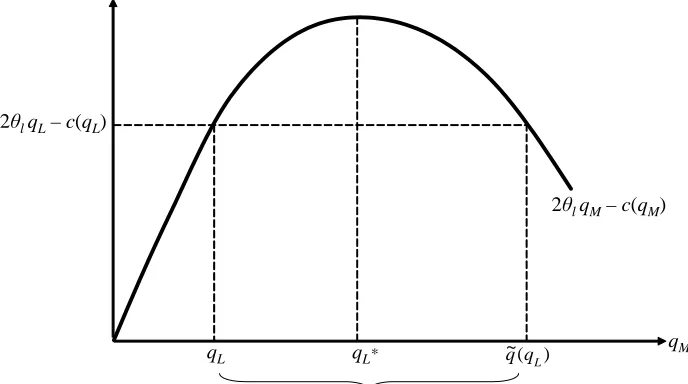
Figure 1 below illustrates the range of qM within which the manipulation incentive of
the public good provider arises.
qM 2θlqL–c(qL)
qL*
2θlqM–c(qM)
qL
The range ofqMwithin which the public good provider has an incentive to misrepresentγ=Lasγ=M.
) ( ~
L
q q
Fig 1. The public good sizes and the provider’s incentive.
It is noteworthy what would go wrong for the second-best contract Cn when (P ICL)
constraint is violated and the public good provider indeed manipulates the information that she receives from the low-valuation users. In that case, a user would end up with a higher
level of the public good (qnM instead ofqLn) and make a higher payment (plM = lqMn instead
ofplL= lqnL) to the provider. Notice that a low-valuation user would be indi¤erent to this
manipulation, because the binding participation constraints guarantee that he receives no rent whether the provider manipulates or not. Thus, the provider’s misrepresentation is Pareto-improving ex post. The provider’s manipulation incentive, however, is anticipated
by the users, and as a result,Cnbecomes no longer incentive compatible for a high-valuation user. To see this, consider the following binding(ICh) inCn:
'( hqnH pnhH) + (1 ') ( hqMn pnhM) ='( hqnM pnlM) + (1 ') ( hqnL pnlL):
With the provider’s misrepresentation, however, the RHS of the above equation becomes
hqnM pnlM;and after substituting for the payments we have:
'( hqnH pnhH) + (1 ') ( hqnM pnhM)
| {z }
=' qn
M+(1 ') qnL
< hqnM pnlM
| {z }
= qn M
The strict inequality above implies that(ICh)will be violated— the real cost of the provider’s
manipulation is due to the violation of the incentive compatibility for a high-valuation user. Hence a high-valuation user, anticipating the provider’s misrepresentation of the collective
value, will require a larger information rent to reveal his private information truthfully. In addition to the manipulation opportunity that we identi…ed above for the low-value
state, there is one more undetectable way for the provider to manipulate information. When both users report that they have high valuations, the provider can claim to each user that
the other user reported his valuation as low. To ensure that the provider will not pursue this manipulation, the following incentive compatibility constraint should be satis…ed in addition to (P ICL):
2phH c(qH) 2phM c(qM): (P ICH)
It is easier to curtail the provider’s manipulation incentive in the high-value state in com-parison to her manipulation incentives in the low-value state. In other words,(P ICH)is a
less demanding constraint than(P ICL). As mentioned in the previous section, when the
in-centive compatibility constraint(ICh)pins down the expected payment'phH+ (1 ')phM
from a high-valuation user, it still leaves some degree of freedom in determining individ-ual payment levels of phH and phM. In Lemma 2 below, we show that the manipulative
provider’s contract can make use of this freedom to satisfy (P ICH) without violating the
users’ incentive compatibility or participation constraints, for the relevant levels of the public good.
Lemma 2 Consider public good levels such that qL qM qH qH, payments plL and
plM satisfying(P ClL) and(P ClM), and 'phH+ (1 ')phM given by binding(ICh). There exist phH andphM that satisfy(P ChH), (P ChM), (ICl) and (P ICH).
Proof. See Appendix C.
According to Lemma 2, the public good provider’s manipulation incentive is toward
one direction— while having an incentive to exaggerate the collective valuation, she has no incentive to understate it. Again, inducing high-valuation users’ truthful reports requires downward distortions in the public good sizes for low-valuation users, which in turn give
the provider the incentive to exaggerate the collective valuation of the users. Although the provider is able to misrepresent =H as =M;she has no incentive to do so in Cn:
' '). The remaining task is identifying the optimal contract for an intermediate range of
', where the public good provider’s manipulation incentive is an issue. This contract should maximize the provider’s expected payo¤ in(P) subject to the provider’s incentive compat-ibility constraints, as well as the users’ participation constraints and the users’ incentive compatibility constraints.
Since the second-best contract Cn violates (P ICL) for ' 2 ('; '); within this range
of '; perhaps the most natural contract that would eliminate the provider’s incentive to
manipulate is a bunching contract that does not distinguish between the case where both users report low valuation for the public good and the case where only one of them reports low valuation, i.e., qL = qM: In this way, a low-valuation user and the provider end up
with the same public good and payment levels for both = L and = M— with this bunching, there is no reason for the provider to misrepresent = L as = M: With our next proposition, we show that this is indeed the optimal contract for the provider when a user is more likely to be the high-valuation type.
Proposition 2 For ' 2 (1=2; '), the optimal contract Cm o¤ ered by the manipulative provider entails a bunching outcome with under-provision of the public good:
c0(qHm) = 2 h,
c0(qMm) = c0(qLm) = max 2 l 2
'2
1 '2 ; 0 .
A high-valuation user’s expected rent is strictly positive unless qmM = qLm = 0, and a low-valuation user gets zero rent.
Proof. See Appendix D.
When all users have low-valuation, the provider produces qm
L =qmM and receivespmlL=
pmlM (= lqLm = lqMm) from each user regardless of whether she manipulates the reported
information or not. It is straightforward to see that this arrangement sets the LHS and the
RHS of P ICL constraint equal to each other, thus eliminating the provider’s incentive to
manipulate information. Notice that the public good is under-provided in Cm (qMm < qM
andqm
L < qL)for'2(1=2; '):When it is more likely that a user is the high-valuation type
(the type receiving information rent), it is optimal for the provider to reduce the source of the users’information rents when removing her own manipulation incentive.
binding(P ICL) presented below:
2plL c(qL) = 2plM c(qM):
From this equation, instead of bunching the two outcomes for = L and = M; the provider can reduce the payment plM in the RHS to discourage herself from information
manipulation. Notice that, although lowering this payment relaxes the constraint, it comes
at the cost of providing a low-valuation user with a strictly positive rent when he is paired with a high-valuation user. Another way to discourage the provider from manipulating information would be to in‡ate the level of public good qM in the RHS, so that the value
generated by it for low-valuation users would not justify the cost of producing it. As will be shown below, when a user is more likely to be the low-valuation type, the provider …nds
it optimal to use a combination of these two approaches to deal with her own incentive to manipulate information.
In order to present our results for'2(';1=2), we …rst introduce the following condition.
Condition 1 2 lq^L c(^qL) 2 lqH c(qH), where q^L is de…ned by:
c0(^qL) = max 2 l 2
'(1 ')
1 '(1 ') ;0 .
When Condition 1 holds, the principal’s gain from misrepresenting the users’collective valuation is signi…cantly large when the reports from the users indicate =L:That is, it becomes tremendously costly for the provider to keep herself from manipulating information. As a result, she will make a drastic choice in the optimal contract as we show below.18 The next proposition presents the optimal outcome when the condition holds.
Proposition 3 Suppose Condition 1 holds. For ' 2 (';1=2), the optimal contract Cm o¤ ered by the manipulative provider entails a bunching outcome with overprovision of the
public good:
qHm=qH =qMm > qM and qLm = ^qL< qL.
A high-valuation user receives a rent, and a low-valuation user receives a rent when paired
with a high-valuation user.
Proof. See Appendix E.
1 8
Whether or not Condition 1 holds depends on the parameter values and the cost function’s curvature.
As mentioned above, the manipulative public good provider can prevent herself from misrepresenting the users’collective valuation by distorting the size of public good and/or decreasing the payment from the low-valuation user when he is paired with a high-valuation
user. Recall from Proposition 2 that, when it is more likely that a user is the high-valuation
type (' > 1=2), the optimal way to prevent the provider’s manipulation is pooling the
outcome for = M with the outcome for = L: The bunching with public good under-provision e¤ectively prevents the provider’s manipulation, and at the same time, limiting
her rent provision to a high-valuation user.
When it is more likely that a user is the low-valuation type (' < 1=2), the optimal way to prevent the provider’s manipulation entails increasing qM, thus increasing the cost
of production for =M; which in turn prevents the provider from misrepresenting =L
as = M (a larger qM implies a larger rent provision to a high-valuation user, but it is
more likely that a user is the low-valuation type). Proposition 3 exhibits an extreme case. When it becomes signi…cantly hard for the provider to incentivize herself for a truthful behavior, the provider must distort qm
M upward all the way to qHm (= qH); and also give a
strictly positive rent to a low-valuation user paired with a high-valuation user in the optimal contract. This implies an overproduction of the public good when the users have di¤erent
valuations(qMm > qM)— when a user is more likely to be the high-valuation type, as long as at least one of the users has a high valuation for the public good, the provider may prefer to
set the production at the …rst-best level corresponding to all users having high valuation. Comparison ofqmL(= ^qL)with the conditions de…ning the …rst-best and the second-best
outcomes reveals that q^L is in between qLn and qL for'2(';1=2)and exactly equal toqnL
for'='. This implies that Condition 1 is violated at'='.19 When Condition 1 does not hold, the participation constraint(P ClM)of the low-valuation user becomes binding in the
optimal contract. As we have seen in Proposition 2, one way to satisfy constraints (P ClM)
and (P ICL) simultaneously is setting the public good level qM of the intermediate-value
state equal to the public good level qL of the low-value state. As illustrated in Figure 1,
concavity of function2 lq c(q)(together with the Inada condition thatlimq!1c0(q) =1)
implies the existence of another level for qM which achieves this objective but higher than
the …rst-best public good levelqL. We de…ne q~(qL) as this higher level of qM (> qL) that
would satisfy the(P ICL)constraint as an equality:
~
q(qL) = maxfqM : 2 lqM c(qM) = 2 lqL c(qL)g:
1 9
When ' = ', the second-best outcome satis…es the (P ICL) constraint as an equality. Accordingly,
2 lqL^ c(^qL)>2 lqnL c(q n L) = 2 lq
n M c(q
n
The following proposition presents the outcome in the optimal contract o¤ered by the manipulative provider when Condition 1 is violated.
Proposition 4 Suppose Condition 1 does not hold. For '2(';1=2), the optimal contract
Cm o¤ ered by the manipulative provider entails the following public good sizes:
qHm=qH; qMm = ~q(qmL)> qL; where qmM ?qM andqLm < qL:
A high-valuation user receives a rent, and a low-valuation users receives no rent.
Proof. See Appendix F.
Again, when a user is more likely to have low valuation(' <1=2), it may be optimal for the provider to prevent her own manipulation incentive by increasingqM beyond the
…rst-best levelqM:Proposition 4 exhibits cases where inducing the provider’s truthful behavior is not as costly as in Proposition 3. Here, the provider leaves no rent to a low-valuation user
by setting the payment from him as large as the value that this user gets from the public good. At the same time, to prevent the provider from manipulating collective information
from the users, the optimal contract in‡ates the size of the public good large enough in the intermediate-value state. As a result, the optimal contract can still lead to an overprovision
of the public good for =M:
The propositions in this section characterized the optimal contract o¤ered by the ma-nipulative provider for the entire range of':20 For the extreme values of', the provider’s
manipulation is not an issue and the optimal contract is the same as the second-best con-tract given in Proposition 1. If ' is larger than but close enough to 1/2, Proposition 2
yields the optimal contract, which bunches the low and intermediate collective valuations at the same public good level. If ' is smaller than but close enough to 1/2, the optimal
contract is given either by Proposition 3 or by Proposition 4, depending on whether or not Condition 1 holds. For these latter values of ', the public good can be overprovided and even the low-valuation users may receive a positive rent.21
In short, the provider’s manipulation incentive and hence the direction of distortion in the public good size is determined by the likelihood of high valuation by the users. For
2 0
For completeness, we note that when ' = 1=2, there is a continuum of contracts maximizing the provider’s expected payo¤. The optimal public good and payment levels are given as in Proposition 3 for
these contracts, except for the level ofqM which can take any value within the set[^qL;minfq~(^qL); qHg].
2 1
In a single-agent setting, Beaudry (1994) shows that the privately informed principal may leave a rent
extreme ranges of the likelihood, the provider has no incentive to manipulate. For an in-termediate range, her manipulation incentive becomes an issue. Within that range, when it is more likely that the users have high valuation, the public good is still underprovided.
When it is less likely that the users have high valuation, however, the provider’s manipula-tion incentive may lead to overprovision of the public good.
The central message in this section is summarized in the following corollary.
Corollary 2 If the public good provider is manipulative, then the optimal contract may
entail over-provision of the public good.
6
Welfare E¤ects
Having characterized the optimal manipulation-proof contract for all the parameter constel-lations, we now provide a discussion of the welfare e¤ects of the manipulability of collective
information. Our analysis indicates that the provider’s opportunity to manipulate comes at a cost. When designing the contract, the provider has to persuade the users that she will not falsify the information that they will report to her. This consideration imposes a new
incentive constraint for the public good provision contract, on top of the standard condi-tions securing the users’participation and their truthful reporting. It follows from Lemma
1 that, as long as there is a su¢ cient level of uncertainty about the users’ valuations for the public good (as long as '2('; ')), this new constraint is violated by the second-best contract. In this case, the optimal manipulation-proof contract brings in a lower payo¤ for
the provider relative to the second best.
The source of the users’payo¤s in the second-best contract is their private information.
A high-valuation user should be given an information rent, so that he would not choose to misreport his valuation. This information rent is increasing inqL andqM, the public good
levels supplied for the low-valuation user. When high valuations are more likely than low valuations ('2(1=2; ')), Proposition 2 tells us that the manipulation-proofness constraint would have di¤erent e¤ects on these two public good levels: The optimal qL is weakly
higher and the optimal qM is lower than their second-best values. Hence the e¤ect of
manipulability on the users’ payo¤s is ambiguous. By contrast, when low valuations are
more likely (' 2 (';1=2)), we know from Propositions 3 and 4 that the optimal levels of both qL and qM are higher than in the second best. Therefore the high-valuation user is
strictly positive payo¤ in the intermediate-value state. The provider tolerates leaving a rent to this user in order to strengthen her commitment not to misrepresent the low-value state as the intermediate-value one.
In sum, the provider’s ability to manipulate lowers her own expected payo¤, but the users may strictly prefer to interact with a provider who is known to be capable of manipulation.
Examination of the change in the optimal levels of qL and qM would also give an idea
on whether the increase in the users’ payo¤s compensate for the loss in the provider’s. If
'2(';1=2)and there is no overprovision of the public good (if the optimal manipulation-proof level of qM is lower than its …rst-best value qM), then the provider’s manipulability
improves the sum of the provider’s and the users’ expected payo¤s, because both qL and
qM get closer to their …rst-best values under the optimal manipulation-proof contract.
The next corollary follows directly from the discussion here.
Corollary 3 Suppose '2(';1=2):
If Condition 1 holds, then the users, regardless of their valuation of the public good,
strictly prefer to deal with a manipulative provider.
If Condition 1 does not hold andqmM < qM, then the sum of all parties’expected payo¤
is higher with a manipulative provider.
The corollary above identi…es conditions under which we can interpret the provider’s ability to manipulate as a countervailing force that reduces her power to extract the users’
rents. It suggests, at …rst sight, the counter intuitive result that the users would prefer a setting in which the provider could manipulate. Yet, this statement requires a careful
interpretation— if the users can a¤ect the institutional environment, they would be better served with more direct ways to limit the provider’s rent extraction than doing so indirectly
by taking the environment to where the provider’s manipulation is easier. It is, however, worthwhile to point out that the result is supportive of privacy concerns that reduce trans-parency and thereby increase the provider’s ability to manipulate.
7
Conclusion
users’private information causes a distortion in the size of the public good o¤ered to them and such distortions may lead to the provider’s incentive to manipulate. We have shown that, once the public good provider extracts the users’private information, she may have an
incentive to misrepresent the collective information from the users.22 Our results suggest that the provider’s manipulation ability determines the direction of distortion in public
good provision. If the provider is non-manipulative, her optimal contract underprovides the public good. If she is manipulative, however, public goods can be overprovided. In
such cases, not only the high-valuation users of the public good, but also the low-valuation ones may obtain positive rents. Lastly, we have shown that all users, regardless of their valuations, can receive higher rents when the provider is manipulative, thus suggesting
that, for strategic reasons, the users may want to contract with a provider who is capable of manipulating information.
For simplicity, we assumed two users in our model, but our qualitative results hold for more than two users. In fact, with more users, the provider’s manipulation opportunities increase. To see this, suppose there are three users. Then the collective value of the users
can be one of the four values: 2 fH; M ; M ; Lg;whereM andM represent the case with two high-valuation users and the case with one such user respectively. The output schedule
when the provider is non-manipulative will be qnH > qnM > qMn > qLn; where qHn = qH; qn
M < qM; q
n
M < qM and qLn < qL:Thus, when the provider is manipulative, her incentive
to manipulate the collective valuation arises. Depending on '; the provider may have an incentive to misrepresent = L as = M or M (if qMn is closer to qL; then she will misrepresent =L as =M and vice versa), and also =M as =M.23
Again, to make our point in a simple setup, we allowed each user to have two possible valuations for the public good. Our qualitative results continue to hold with an enlarged
set of types. Suppose that a user’s type can bei2 fh; m; lg:With these three types, in our two-user model, the collective valuation can have six potential values, giving the provider
more opportunities to manipulate.
One of the key assumptions in our model is that a user can opt out, if he anticipates a strictly negative payo¤ after receiving the provider’s report about collective valuation of
2 2See Celik et al. (2019) for a study on the linkage between the principal’s incentive to manipulate the
information from the agents and the optimal structures of the organization. In that paper, the transfers
are restricted to be equal even when the agents’ types are di¤erent, resulting in no over-production in the
optimal contract.
2 3Also, in our two-user model, the optimal contract allows the users to indirectly learn each other’s
the public good. Without such a limited liability of the users, the manipulative provider can still achieve the second-best outcome by trading o¤ payments from low-valuation users. The binding participation constraint for a low-valuation user, with no limited liability, is:
'( lqM plM) + (1 ') ( lqL plL) = 0:
As can be seen from the equation, the provider has an extra degree of freedom— she can make
a low-valuation user’s ex post payo¤ positive for = M by decreasing plM; and negative
for = L by increasing plL without altering the public good sizes from the second-best
level in each state. This allows the manipulative provider to achieve the second best, but
with the drawback that it violates the user’s ex post participation constraint. In practice, such a violation may be feasible in some situations, but not in others. For example, for a
public good provision such as a local government’s highway construction, …nanced by tax revenue, a user is not able to opt out. For a public good such as a class-action lawsuit, on
the other hand, one can choose to opt out of a class action, and not be able to claim part of any settlement funds or court award that results from the case.24
Another important assumption in our model is that the public good provider’s
mecha-nism treats the users symmetrically when determining the size of the public good and the payments from the users. If the provider could condition the public good level for
interme-diate collective value, qM;on which user has the high valuation and which user has the low
valuation, then any manipulation attempt by the provider would have been detectable by observing the size of the provision. In many applications, the symmetric treatment
assump-tion is justi…ed by a fairness consideraassump-tion imposed on the provider. In addiassump-tion, when the number of the users is large, it may be too costly for the provider to arrange an asymmetric
treatment of the users in practice.
Appendix
A. Proof of Proposition 1
The non-manipulative provider’s optimal contract Cn maximizes (P) subject to (P ClM),
(P ClL),(P ChH), (P ChM), (ICh) and (ICl). We follow the usual procedure of considering
a relaxed problem with only the constraints (P ClM),(P ClL) and (ICh), and ignoring the
remaining three. Since the provider’s payo¤ is increasing inplM andplL from low-valuation
users and the expected payment 'phH + (1 ')phM from high-valuation users, (P ClM),
2 4
(P ClL) and (ICh) are binding. These binding constraints give the following expressions:
plL = lqL;
plM = lqM;
'phH+ (1 ')phM = '[ hqH qM] + (1 ')[ hqM qL]:
Maximizing the objective function inP after substituting out these payments yieldsqnL; qnM
andqn
H:From the expressions of the payments from the users, it follows that a high-valuation
user’s expected rent is strictly positive unlessqM =qL= 0;and a low-valuation user’s rent
is always zero. What remains is showing that we can …nd individual levels of paymentsphH
and phM that would satisfy the ignored constraints of (P ChH),(P ChM) and (ICl). First,
from the …rst order conditions for the optimal public good levels in the proposition, notice
that qMn = 0 for' ( h+ l)=2 h and qLn= 0 for ' l= h: Since ( h+ l)=2 h > l= h;
ifqnM = 0 then qLn = 0:Also, for strictly positive public good levels, qnH > qMn > qnL:Thus,
qn
H > qnM qnLin any case. Consider now the levels of these payments which would satisfy
(ICh)in the ex-post sense:
phH = plM + h(qH qM),
phM = plL+ h(qM qL).
It follows from the monotonicity of the public good levels (qn
H > qnM qnL) that (P ChH)
and (P ChM) are satis…ed with these payments. Also, (ICl) holds with zero on either side
of the weak inequality.
B. Proof of Lemma 1
With the outcome inCn, we can re-write(P ICL)by using the binding(P ClM)and(P ClL):
2 lqLn c(qnL) 2 lqnM c(qMn ):
Function 2 lq c(q) is concave in q and maximized at qL. It follows from the …rst-order
conditions in Proposition 1 that ' ( h+ l)=2 h is the lowest level of ' under which
the provider chooses to shut down unless both users report high values. If ' ', then
qLn=qMn = 0and (P ICL) holds as an equality. For '2[1=2; '), the …rst order conditions
of the optimal outcome in Cn implies qnL < qMn qL and therefore (P ICL) is violated.
Similarly, when ' approaches to 0, qn
L approaches to qL(< qMn) and (P ICL) is satis…ed.
Existence of the threshold value 'follows from the fact that the left hand side of (P ICL)
C. Proof of Lemma 2
We …rst try setting payments phM and phH equal to the values that would satisfy a
high-valuation user’s incentive compatibility conditions in the ex-post sense: phH = plM + h(qH qM) and phM = plL+ h(qM qL). The participation constraints for a
low-valuation user, (P ClM) and (P ClL); imply that these payments also satisfy (P ChH) and
(P ChM). Constraint(ICl) holds provided that(ICh) is binding and the public good levels
are monotonic (qL qM qH): Pretending to have high valuation would bring a lower
payo¤ than the equilibrium payo¤ to a low-valuation user, regardless of the other user’s
type. So, if(P ICH) is satis…ed as well, then the proof is complete.
Suppose (P ICH) is violated with the above values of phM and phH. In such a case, we
increase phH and reduce phM such that both(ICh)and (P ICH)hold as equalities:
phH = 'plM +' h(qH qM) + (1 ')plL+ (1 ') h(qM qL) + (1 ')
c(qH) c(qM)
2 ,
phM = 'plM +' h(qH qM) + (1 ')plL+ (1 ') h(qM qL) '
c(qH) c(qM)
2 .
Constraint (P ChM) still holds, because we are reducing the payment phM that the user
makes in this state of nature. Constraint (P ChH) is satis…ed as well, because c(qH)
c(qM) 2 h(qH qM) under convexity of c( );and therefore:
phH ' lqM + h(qH qM) + (1 ') lqL+ (1 ') h(qM qL)
= hqH '( h l)qM (1 ') ( h l)qL hqH:
Showing (ICl) holds is more involved for this case because of the ‘max’ operators
repre-senting the user’s opportunity to opt out of the contract. First notice that the expected
equilibrium payo¤ of the low-valuation user is higher than the expected payo¤ of pretending to be high-valuation and opting in the contract regardless of the other user’s type. This is
due the fact that(ICh)is binding and the public good levels are monotonic (qL qM qH).
What remains to show is the suboptimality of imitating a high-valuation user and then opt-ing out dependopt-ing on the type of the other user. This imitation is not pro…table when the
other user has high valuation, becausephH is now higher thanplM+ h(qH qM). On the
other hand, in the case that the other user has low valuation, the imitation payo¤ is:
lqM phM
= lqM 'plM ' h(qH qM) (1 ')plL (1 ') h(qM qL) +'
c(qH) c(qM)
2
lqM 'plM (1 ')plL (1 ') h(qM qL)
where the inequality follows from the convexity ofc( )again. Because this payo¤ is smaller than the expected equilibrium payo¤ of '( lqM plM) + (1 ') ( lqL plL) for a
low-valuation user, constraint(ICl) is satis…ed.
D. Proof of Proposition 2
For proof of the proposition, we …rst consider a relaxed problem in Lemma 3 below where
we look for the outcome that maximizes the provider’s objective function in (P) subject to (ICh);(P ClM);(P ClL) and (P ICL) constraints, ignoring (ICl); (P ChH); (P ChM) and
(P ICH)constraints— we will also refer to this lemma for proofs of all remaining propositions.
Lemma 3 Suppose '2('; '). At the solution to the relaxed problem, payment levels are given by the binding (ICh),(P ClL) and (P ICL) constraints. The public good levelsqH; qM and qL are chosen to maximize:
'2[2 hqH c(qH)] +'(1 2') [2 lqM c(qM)] + (1 '(1 ')) [2 lqL c(qL)] (Pe)
+2'(1 2') ( h l)qM 2'(1 ') ( h l)qL;
subject to
2 lqM c(qM) 2 lqL c(qL): (P CglM)
Proof. Because the objective function is decreasing in phH, phM, plL and constraint
(P ICL) is relaxed with a lower value of plL, constraints (ICh) and (P ClL) are binding for
the outcome solving the relaxed problem. It follows from Lemma 1 that(P ICL)is binding
for ' 2 ('; '). We can rewrite the expected payment to the provider by substituting in these constraints:
'22phH+ 2'(1 ')phM+ 2'(1 ')plM + (1 ')22plL
= 2 lqL+'22 hqH+'(1 2') 2 hqM '(1 ') 2 hqL+'c(qM) 'c(qL):
Once the expected cost of public good provision is taken into account, the provider’s objec-tive function reduces to the objecobjec-tive in (Pe). Similarly, constraint(P ClM)can be rewritten
as (P CglM) after substituting in the binding constraints of (P ICL) and(P ClL).
We now move on to the proof of Proposition 2. We will start with ignoring (ICl);
(P ChH);(P ChM)and(P ICH)constraints and maximizing the provider’s objective function
subject to(ICh);(P ClM);(P ClL)and(P ICL)constraints only, as in Lemma 3. The solution
the proposition satis…es the hypothesis of Lemma 2, there exists an outcome that solves the relaxed problem and that satis…es the ignored constraints.
For ' >1=2, the objective function (Pe) is convex in qM. Therefore (P CglM) constraint
is satis…ed as an equality at the solution to this maximization. This equality holds when
qM =qL. Given concavity of function2 lq c(q), the equality may also be satis…ed when
one variable is strictly higher than the other. This will not be the case for the outcome solving the maximization problem: Holding2 lqM c(qM)and2 lqL c(qL)constant, the
objective function is decreasing in both qL and qM (when ' >1=2). This proves that the
optimal outcome is a bunching outcome(qM =qL). The …rst order condition yields:
c0(qM) =c0(qL) 2 l 2
'2
1 '2 ,
where the weak inequality holds as equality ifqM =qL>0.
Finally, Lemma 2 implies that we can …nd individual levels ofphM andphH(for instance,
phM = lqLandphH = lqL+ h(qH qL)) that satisfy the ignored(ICl);(P ChH),(P ChM)
and (P ICH) constraints.
E. Proof of Proposition 3
Ignoring (ICl); (P ChH); (P ChM) and (P ICH) constraints, it follows from Lemma 3 that
the provider’s problem turns into maximization of (Pe) by choosing qH; qM and qL subject
to (P CglM). When we ignore (P CglM) constraint as well, the problem is an unconstrained
optimization problem and the …rst order conditions yield the values of outputsqH; qM;and
qL as stated in the proposition. The paymentsplL,plM, and'phH+ (1 ')phM are given
by the binding(P ClL);(P ICL) and (ICh) constraints:
pmlL = lqLm,
pmlM = lqLm+
c(qHm) c(qmL)
2 ,
'pmhH+ (1 ')pmhM = lqLm+'
c(qmH) c(qLm)
2 + (1 ') h(q
m
H qmL).
The solution satis…es the ignored (P CglM) constraint because:
2 lqM c(qM) = 2 lqH c(qH) 2 lq^L c(^qL):
The existence of the individual values of phH and phM satisfying the ignored (ICl);
payments equal to each other would work:
phH =phM = lqL+'
c(qH) c(qL)
2 + (1 ') h(qH qL).
F. Proof of Proposition 4
Following the proof of the previous propositions, we maximize the provider’s objective
function, ignoring (ICl); (P ChH); (P ChM) and (P ICH) constraints. The payments plL,
plM, and'phH+ (1 ')phM are given by the binding(P ClL);(P ClM);(P ICL) and(ICh)
constraints:
pmlL = lqL,
pmlM = lqmM,
'pmhH+ (1 ')pmhM = lqmL +' l(qMm qLm) + (1 ') h(qMm qLm) +' h(qHm qMm)
From Lemma 3, this problem turns into maximization of (Pe) by choosing qH; qM and qL
subject to (P CglM). The constraint is binding— otherwise, the …rst order conditions yield
thatqM =qH andqL= ^qL, violating (P CglM) since:
2 lqM c(qM) = 2 lqH c(qH)<2 lq^L c(^qL):
Holding 2 lqL c(qL) and 2 lqM c(qM) constant, the objective function is decreasing
in qL but increasing in qM (for ' < 1=2). This proves that qL < qL and qM = ~q(qL);
whereq~(qL) = maxfqM : 2 lqM c(qM) = 2 lqL c(qL)g:SinceqM is the the maximizer
of( h+ l)qM c(qM);if the gap between h and l is small enough,qM will be in between
qL and q~(qL); implying thatqM = ~q(qL)> qM. If the gap between h and l is not small
enough, thenqM = ~q(qL)< qM:
Lemma 2 implies that we can …nd individual levels of phM and phH that satisfy the
ignored(ICl);(P ChH);(P ChM) and(P ICH) constraints.
References
[1] Ainsworth, S. (1993), “Regulating Lobbyists and Interest Group In‡uence,”Journal of Politics, 55, 41–56.
[3] Armstrong, M. and Mathews, A. Jr. (2008), “Lawyer/Lobbyist-Client Relationship: Does Con…dentiality Cover the Engagement?,” Lexology, December 4.
[4] d’Aspremont, C. and Gerard-Varet, L.A. (1979), “Incentives and Incomplete Informa-tion,” Journal of Public Economics, 11, 25–45.
[5] Beaudry, P. (1994), “Why an Informed Principal May Leave Rents to an Agent,”
International Economic Review, 35, 821–832.
[6] Bergstrom, T. C., Blume, L., and Varian, H. (1986), “On the Private Provision of
Public Goods,” Journal of Public Economics, 29, 25–49.
[7] Bierbrauer, F. and Winkelmann, J. (2019), “All or Nothing: State Capacity and Op-timal Public Goods Provision,” Working Paper.
[8] Buchanan, J. M., and Kafoglis, M. (1963), “A Note on Public Good Supply,”American Eeonomic Review, 53, 403–414.
[9] Celik, G., Shin, D. and Strausz, R. (2019), “Aggregate Information and Organizational
Structures,” Working Paper.
[10] Cheikbossian, G. and Sand-Zantman, W. (2011), “Dynamic Cooperation in Local Pub-lic Goods Supply with Imperfect Monitoring,” Annals of Economics and Statistics, 101/102, 327–345.
[11] Clarke, E. H. (1971), “Multipart Pricing of Public Goods,” Public Choice, 8, 19–33.
[12] Collender, S. (2013), “How Big Money Corrupts the Budget,”Democracy, Winter, 27.
[13] Comes, R., and Sandler, T. (1996), The Theory of Externalities, Public Goods and Club Goods, 2nd ed., Cambridge University Press.
[14] Crémer, J. and McLean, R. (1985), “Optimal Selling Strategies under Uncertainty for
a Discriminating monopolist when Demands are Interdependent,” Econometrica, 53, 345–361.
[15] Crémer, J. and McLean, R. (1988), “Full Extraction of the Surplus in Bayesian and Dominant Strategy Auctions,” Econometrica, 56, 1247–1257.
[16] Demski, J. and Sappington, D. (1993), “Sourcing with Unveri…able performance
[17] Dequiedt, V. and Martimort, D. (2006), “Non-Manipulable Mechanisms: A Brief Overview,” Économie Publique, 18/19, 3–16.
[18] Dequiedt, V. and Martimort, D. (2015), “Vertical Contracting and Informational Op-portunism,” American Economic Review, 105, 2141–2182.
[19] Diamond, P. A., and Mirrlees, J. A. (1973), “Aggregate Production with Consumption
Externalities,” Quarterly Journal of Economics, 87, 1–24.
[20] Drutman, L. (2015), “How Corporate Lobbyists Conquered American Democracy,”
The Atlantic, April 20.
[21] Forges, F. (1999), “Ex post Individually Rational Trading Mechanisms,” In: Alkan, A., Aliprantis, C., Yannelis, N. (eds.) Current Trends in Economics: Theory and
Ap-plications, Springer, Berlin.
[22] Green, J. and La¤ont, J.-J. (1977), “Characterization of Satisfactory Mechanisms for
the Revelation of Preferences for Public Goods,” Econometrica, 45, 427–438.
[23] Groll, T. and McKinley, M. (2015), “Modern Lobbying: A Relationship Market,” Working Paper.
[24] Groves, T. (1973), “Incentives in Teams,” Econometrica, 41, 587–601.
[25] Hansen, R. (2012), “Lobbying, Rent-Seeking, and the Constitution,” Stanford Law Review, 64, 191–253.
[26] Klono¤, R. (2017), Class Actions and Other Multi-Party Litigation in a Nutshell, West
Academic Publishing.
[27] Lacker, J. and Weinberg, J. (1989), “Optimal Contracts under Costly State
Falsi…ca-tion,” Journal of Political Economy, 97, 1345–1363.
[28] La¤ont, J.-J. (1988), Fundamentals of Public Economics, MIT press.
[29] La¤ont, J.-J. and Martimort, D. (1998), “Collusion and Delegation,” RAND Journal of Economics, 29, 280–305.