IRISH TRADITIONAL ETHNOMUSICOLOGY ANALYSIS
USING DECISION TREES AND HIGH LEVEL SYMBOLIC FEATURES
Mario L. G. Martins
Computer Music Technology Laboratory Federal University of Technology of Parana
Av. Alberto Carazzai, 1.640 - 86300-000 Corn´elio Proc´opio, PR, Brazil
Carlos N. Silla Jr.
Computer Music Technology Laboratory Federal University of Technology of Parana
Av. Alberto Carazzai, 1.640 - 86300-000 Corn´elio Proc´opio, PR, Brazil
ABSTRACT
In this paper we investigate the suitability of decision tree classifiers to assist the task of massive computational eth-nomusicology analysis. In our experiments we have em-ployed a dataset of 10,200 traditional Irish tunes. In order to extract features from the Irish tunes, we have converted them into MIDI files and then extracted high level features from them. In our experiments with the traditional Irish tunes, we have verified that decision tree classifiers might be used for this task.
1. INTRODUCTION
Within the Music Information Retrieval (MIR) community there is a consensus that MIR-based methods and tools might be used to assist musicologists with the task of an-alyzing large music collections [1–6]. This general prob-lem is known as Computational Ethnomusicology, but it was only in the last few years that this problem started re-ceiving more attention by the MIR researchers. In [5] the authors clarify that the term musicology is normally used by music scholars to refer to the study of European and European-derived art music traditions and for this reason the term ethnomusicology is normally used to refer to the study of art music traditions in other cultures. However, when dealing with Computational Ethnomusicology, the term ethnomusicology should be considered as the study of all the world’s music [5].
There are several approaches that can be used to aid Com-putational Ethnomusicology [7–9]. However one impor-tant issue that should not be overlooked, when developing or using existing MIR technology to assist with Compu-tational Ethnomusicology, is the comprehensibility of the results provided by the approach. In other data mining ap-plication domains, such as Medicine and Finance the issue of comprehensibility is high valued [10]. That is because the users of the system need to understand the reasoning of the algorithm for making that decision / suggestion. Al-though there are several ways that knowledge can be repre-sented and used with different algorithms, the use of Rules
Copyright: c2015 First author et al. This is an open-access article distributed under the terms of theCreative Commons Attribution 3.0 Unported License, which permits unrestricted use, distribution, and reproduction in any medium, provided the original author and source are credited.
is the most common one as it is easily interpretable even by non-expert users. This is one of the reasons why some of the recent research in Computational Ethnomusicology has used association rule mining algorithms [11–13]. The association rule mining algorithms generate a list of rules about facts that often happen together in a dataset. This type of algorithm allows the user to have a series of spe-cific rules that might contain novel knowledge for the mu-sicologist, but they do not allow the user to have a global feeling for the data.
The main contribution of this work is to explore the suit-ability of a decision tree classifier [14] to assist the task of Computational Ethnomusicology. Note that contrary to the association rule mining algorithms used in prior Compu-tational Ethnomusicology research, the decision tree clas-sifier provides additional benefits beyond just creating a rule-based representation. The first advantage is that the user can explore the tree visually. The second advantage is that the tree representation provides information about the interaction between the attributes and their values used to make the decisions. If a musicologist can understand the reasoning behind the attributes, then they can further ask for other types of information to also be made avail-able in the data or suggest novel attributes because of the confusion being made by the classifier. However, for this to be possible, it is necessary to use high level symbolic features. For this reason in this work we employ the jSym-bolic framework [15] that provides us with several high level symbolic features that can be extracted from a MIDI file.
The remainder of this paper is organized as follows: Sec-tion 2 presents a brief introducSec-tion to some of the ethno-musicology aspects of the Irish Traditional Music. Section 3 presents the experimental settings used in this work. Sec-tion 4 presents the computaSec-tional experiments. SecSec-tion 5 presents the conclusions and future research directions.
2. IRISH TRADITIONAL MUSIC
reper-toire also assumes that other folk songs and tunes, such as Polish and English songs, can also be considered as be-ing part of Irish tradition. Furthermore, is remarkable how much these tunes change according to the region where the tunes are played and this can make them look like totally different tunes [16].
2.1 ABC Notation
The ABC notation is a music notation format that is ex-pressed in plain text format. It was designed primarily for folk and traditional music of Western Europe origin (such as Traditional Irish music). It’s history walks beside the growth of the Internet, where the ABC notation has be-come very popular. There are now lots of tunes in ABC format, from a variety of online collections. There are also several music notation software tools that are able to read the ABC notation, convert it to the standard music notation format or play it directly to the the speakers of a computer. One of the most important aims of the ABC notation is that it can also be easily read by humans, as opposed to other computer-based music notations. Therefore, with a little practice, it is possible to play a tune directly from the ABC notation. Figure 1 presents a tune in ABC notation. Figure 2 presents a short excerpt of the same tune in stan-dard music notation.
Figure 1. Example of ABC Notation
Figure 2. Cooley’s (Reel)
2.2 The Session Website
The Session website (http://thesession.org/) is a non-profit endeavor as an online community dedicated to Irish tradi-tional music. It was created in 1999, and up to this day it is maintained by its collaborators. The website contains over 13,000 Irish tunes in the ABC notation with embed-ded plug-ins which allow users to download the MIDI File or the Music Sheet of a given tune.
2.3 Irish Music Genres
2.3.1 Reel
One of the oldest Irish dances, reels are performed in 4/4 time. They are believed to have been played in Ireland for the first time in the late 1700s. The reel is performed either solo or in a group, in several contexts, like competitions, exhibitions or socially [17]. One of the characteristics of the reel are two groups of four notes each, adding up to an eighth-note bar. Within each group there are two heavy-light pairs [16]. Figure 2 presents a short excerpt from one of the most popular reel tunes according the thessesion.org website.
2.3.2 Barndance
A traditional genre generally performed to 4/4 rhythm, but, related to marching practice, danced to 6/8 time in North County Antrim. The barndances were most popular as so-cial dance up to the 1950s. Its name comes from the prac-tice of dancing in ’barns’ (large sheds) which was com-mon prior to the provision of social and meeting halls, and this assigns to this genre a rural association [17]. Figure 3 presents a short excerpt from the most popular barndance tune according the thessesion.org website.
Figure 3. The Star of the Country Down (Barndance)
2.3.3 Hornpipe
Performed in 4/4 time with a characteristic dotted rhythm and with accents occurring on beats one and three. His-torically, the hornpipe comes to Ireland via England, at the end of the eighteenth century, performed by professional dancers between acts in plays, and has maritime associ-ations. This heritage gave a exhibitionistic face to Irish hornpipes [17]. It should be noted that not all hornpipes are notated with dotted rhythms and are usually played with swing even though the sheet music is not dotted. Figure 4 presents a short excerpt from the most popular hornpipe tune according the thessesion.org website.
Figure 4. The Rights Of Man (Hornpipe)
2.3.4 Jig
the most popular jig tune according the thessesion.org web-site.
Figure 5. The Kesh (Jig)
2.3.5 Mazurka
A dance-form in 3/4 time which within the context of Irish musicians, was popularized to the greatest extent in Done-gal, where it arrived in the first half of the nineteenth cen-tury. However, mazurka emerged in the Polish province of Mazovia, in the 1500s [17]. It is distinguished from its cousin waltz [16] by its unique emphasis on the sec-ond, rather than the more expected first, of the three beats. While the rhythm of the Donegal mazurkas conforms com-pletely to the definitive Polish pattern, the phrasing struc-ture of these correspond to that used in other Irish rhythms, and shows no connection with the mazurkas of eastern Eu-rope [17]. Figure 6 presents a short excerpt from the most popular mazurka tune according the thessesion.org web-site.
Figure 6. Sonny’s (Mazurka)
2.3.6 Polka
A popular dance form notated in 2/4 time, popularly per-formed with march-like rhythms. It was developed in Bo-hemia in the early eighteenth century and arrived in Ireland in the late 1800s. It is most commonly associated with the counties of Cork, Kerry and Limerick, but polkas have spread them throughout Ireland [17]. Figure 7 presents a short excerpt from the most popular polka tune according the thessesion.org website.
Figure 7. Ryan’s (Polka)
2.3.7 Slide
A tune type associated with the jig, slides are performed faster and in 12/8 time. The predominant rhythm involves the alternation of crotchets and quavers creating the feeling of long and short. Slides are essentially dance music and the long-short rhythm of the tune is echoed by the move-ments of the dancers [17]. Figure 8 presents a short ex-cerpt from the most popular slide tune according the thess-esion.org website.
Figure 8. The Road To Lisdoonvarna (Slide)
2.3.8 Slip Jig
This different type of jig is performed in 9/8 time, gener-ally used for group dances. Unlike the other jig types, mu-sically the slip jig is in single form; its two-part, eight-bar music structure is not repeated. Its characteristic rhythmic pattern is three groups of three quavers. It is often referred to as “the queen of step dances” to indicate the required gracefulness of the dance [17]. Figure 9 presents a short excerpt from the most popular slip jig tune according the thessesion.org website.
Figure 9. The Butterfly (Slip Jig)
2.3.9 Strathspey
These tunes, notated in 4/4 time, originated in Scotland in the middle of the eighteenth century. They arrived in Ire-land in the late nineteenth century, in Donegal, although it never functioned for the dance there. The strathspey is in common time with each beat of a bar being accented. The tune type is particularly noted for its dotted rhythms, espe-cially the “Scots snap”, where the short note precedes the long note [17]. Figure 10 presents a short excerpt from a popular strathspey tune according the thessesion.org web-site.
Figure 10. Calum’s Road (Strathspey)
2.3.10 Three-two
Three-twos are a different march-like form performed in 3/2 time and may have origins in the the application of triple meter to the hornpipe form [18]. Figure 11 presents a short excerpt from the most popular three-two tune ac-cording the thessesion.org website.
2.3.11 Waltz
The waltz is a dance-form in 3/4 time, particularly distinc-tive for the strong accent given to the first beat in each bar. Its origins are uncertain, but it may dated from the fourteenth century, unrelated to the European minuet. The tunes are generally sung or played on fiddle, and have agri-cultural associations [17]. Figure 12 presents a short ex-cerpt from the most popular waltz tune according the thess-esion.org website.
Figure 12. Si Bheag Si Mhor (Waltz)
3. EXPERIMENTAL SETTINGS
3.1 Database Construction
In order to perform our experiments we have created a novel Irish Traditional Music dataset. In order to create the dataset we have automatically retrieved all the tunes available from thesession.org website. However, the web-site only had the tunes in the ABC format, and in order to extract symbolic features from the tunes we needed to con-vert this data to the MIDI format. Therefore, the creation of the dataset was composed of three main stages: (1) ABC download; (2) ABC to MIDI conversion; (3) MIDI (Sym-bolic) Feature Extraction. Table 1 shows the final result of this process.
3.1.1 ABC Download
In order to automatically retrieve all the tunes from thes-seion.org website we developed an algorithm that uses the PHP function cURL in a loop. The cURL function returns a string with the retrieve HTML webpage for a given URL. For each tune webpage we have used a set of regular ex-pressions to find and extract the ABC notation within a given webpage. After the extraction of the tune in ABC format we place it in a specific folder according to the Tra-ditional Irish genre. With this procedure we managed to retrieve 11,980 tunes in the ABC format.
3.1.2 ABC to MIDI Conversion
As mentioned earlier in order to extract symbolic features to create the dataset, we need the tunes to be in the MIDI format. Therefore, in order to convert the downloaded ABC tunes to the MIDI format we have employed an on-line converter. Note that the number of successfully con-verted ABC to MIDI tunes was 10,200 MIDI files.
3.1.3 MIDI (Symbolic) Feature Extraction
After the tunes have been converted into the MIDI format, we have used the jSymbolic1 software [15] to extract high level symbolic features from the MIDI files. This is par-ticularly important, as high level symbolic features can be
1Available at: http://jmir.sourceforge.net/jSymbolic.html
interpreted by musicologists. With the jSymbolic software we extracted a total of 1,022 high-level symbolic features that fall into the broad categories of texture, rhythm, dy-namics, pitch statistics, melody and instrumentation.
Tune type Number of tunes Relative Number
barndances 298 2,92%
hornpipes 843 8,26%
jigs 2,666 26,14%
mazurkas 116 1,14%
polkas 695 6,81%
reels 3,864 37,88%
slides 228 2,24%
slip jigs 380 3,73%
strathspey 329 3,32%
three-twos 78 0,76%
waltz 703 6,89%
Table 1. Number of Irish Traditional Tunes
Tune type Precision Number of leaves
barndance 26,1% 55
hornpipe 84,7% 38
jig 100% 1
mazurka 49,5% 9
polka 100% 1
reel 94,2% 35
slide 100% 1
slip jig 100% 1
strathspey 60% 39
three-two 100% 1
waltz 91,3% 15
Table 2. Precision by genre
4. RESULTS
In this section we are interested in answering the following questions by using controlled experiments: How well can a Decision Tree Classifier predict the genre labels of the 11 Irish music genres? Can the generated decision tree be used as a tool to assist Computational Ethnomusicology?
4.1 Irish Music Genre Classification
In order to perform the experiments reported in this sec-tion we have used the J48 Decision tree classifier imple-mentation of the WEKA data mining toolkit [19]. The ex-periments were performed using stratified ten-fold cross-validation.
a b c d e f g h i j k classified as
64 51 0 0 0 160 0 0 23 0 0 a = barndance
38 739 0 0 0 9 0 0 57 0 0 b = hornpipe
0 0 2666 0 0 0 0 0 0 0 0 c = jig
0 0 0 54 0 0 0 0 0 0 62 d = mazurka
0 0 0 0 695 0 0 0 0 0 0 e = polka
118 20 0 0 0 3684 0 0 42 0 0 f = reel
0 0 0 0 0 0 228 0 0 0 0 g = slide
0 0 0 0 0 0 0 380 0 0 0 h = slip jig
25 63 0 0 0 58 0 0 183 0 0 i = strathspey
0 0 0 0 0 0 0 0 0 78 0 j = three two
0 0 0 55 0 0 0 0 0 0 647 k = waltz
Table 3. Confusion Matrix
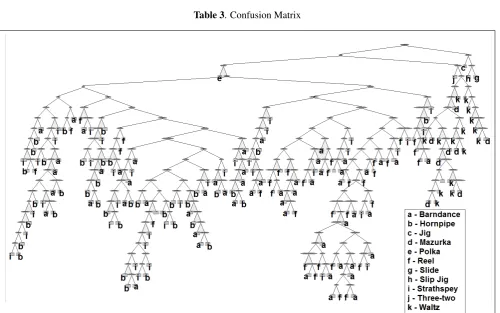
Figure 13. General vision of the decision tree.
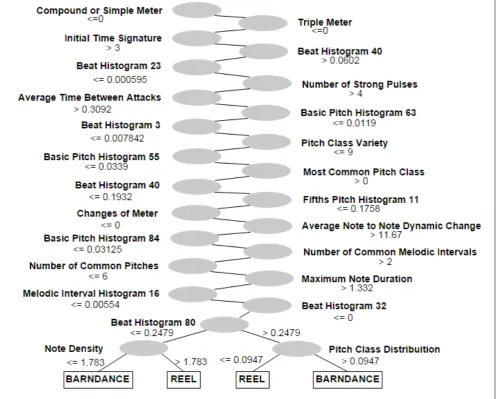
Figure 15. Deepest path of the generated decision tree
than this overall result. In order to understand the confu-sions being made by the decision tree classifier, let us anal-yse the confusion matrix presented in Table 3.
The analysis of the confusion matrix presented in Table 3 shows that the low precision for the tunes of the barndances Irish Traditional genre corresponds to the same misconcep-tion made by naive listeners due the musical similarity of the genres. In the case of the barndances, the genre that had the lowest precision, the tunes were mostly classified as reels. This misclassification might be due to the fact that both genres has the same Initial Time Signature, i.e. 4/4. The same type of error happens with mazurkas, that are usually confused with its cousin, the waltz [16].
4.2 Analysis of the Generated Tree
One of the advantages of using a decision tree classifier is that it allows us to visually inspect the generated tree and that it also outputs the classification rules. The decision tree algorithm used in this work had as the input a feature vector of 1,022 features (described in [20]) for each tune. The final generated decision tree employed 105 attributes (out of the 1,022) to create a decision tree with 393 rules
and 197 leaves. Figure 13 presents a general vision of the tree, where the letters represents the genres at the leaves.
The first levels of the generated tree are presented in de-tail in Figure 14. The analysis of just these first three levels of the tree shows some interesting insights. First, it shows what an individual who is not trained in Irish Traditional music perceives while listening to the different Irish Tra-ditional Tunes. A naive listener may perceive that a given tune is is in a 3/2 time signature (although not necessarily naming it is a 3/2 time signature). However this naive lis-tener will have trouble pin-pointing whether this song is a waltz or a mazurka. That is of course, only if this listener knows Mazurkas exist, otherwise the listener will classify it as a Waltz.
request the creation of new high level symbolic features from the Music Information Retrieval research community based on their knowledge if they verify that there is impor-tant information missing. Due to space limitations it is not possible to plot in detail the complete generated decision tree, however in Figure 15 we present the deepest path of the generated decision tree in detail. The analysis of Figure 15 shows that the distinction between two of Irish music genres involves several different aspects of the tunes.
Third, in this experiments we have only looked at one as-pect of interest by musicologists, i.e. the classification of genres (and more importantly what are the different prop-erties that distinguishes them). We argue that this same approach (using high level symbolic features with a deci-sion tree classifier) might be used to assist with other mu-sicological tasks such as auto tagging and music discovery, among others.
5. CONCLUSIONS
In this work we have showed that a decision tree classifier might be used as a Computation Ethnomusicology tool to assist musicologists. In order to perform our experiments, we have created a novel dataset with 10,200 Irish Tradi-tional Tunes obtained from the www.thessesion.org web-site. The tunes are available on the website using the ABC notation and therefore we converted all the tunes into MIDI files. We then used the jSymbolic feature extractor to ob-tain high level symbolic features from the MIDI files. With the high level symbolic features extracted from the MIDI files, we have trained a decision tree classifier, which cor-rectly classified 9,418 tunes.
After the classification, the decision tree classifier has the advantage of producing a graphical model (a decision tree) and also a set of rules. By analyzing the decision tree, it became clear that on the first three levels of the tree, the high level symbolic features of Compound or Simple Me-ter, Triple Meter and Initial Time Signature were shown to correspond to the perception made by a naive listeners, i.e. the distinction between the different Irish Traditional genres, starts by using the rhythm information. This par-ticular result shows that decision trees might be used to aid musicologists.
As future research we plan to perform experiments with other rule-generating methods on different datasets and to use the methodology proposed in this paper to other com-putational ethnomusicology tasks.
Acknowledgments
We thank the anonymous reviewers for their very valuable feedback.
6. REFERENCES
[1] K. Hartmann, D. Buchhner, A. Berndt, and A. Nun-berger, “Interactive data mining & machine learning techniques for musicology,” inProc. of the 3rd Conf. on Interdisciplinary Musicology, 2007.
[2] O. Cornelis, M. Lesaffre, D. Moelants, and M. Leman, “Access to ethnic music: Advances and perspectives in content-based music information retrieval,” Signal Processing, vol. 90, pp. 1008–1031, 2010.
[3] P. v. Kranenburg, J. Garbers, A. Volk, F. Wiering, L. P. Grijp, and R. C. Veltkamp, “Collaboration perspectives for folk song research and music information retrieval: The indispensable role of computational musicology,”
Journal of Interdisciplinary Music Studies, pp. 17–43, 2010.
[4] K. Neubarth, M. Bergeron, and D. Conklin, “Associ-ations between musicology and music information re-trieval,” inProc. of the 12th Int. Conf. on Music Infor-mation Retrieval, 2011, pp. 429–434.
[5] G. Tzanetakis, A. Kapur, W. A. Schloss, and M. Wright, “Computational ethnomusicology,” Jour-nal of Interdisciplinary Music Studies, pp. 1–24, 2007.
[6] S. Oramas and O. Cornelis, “Past, present and future in ethnomusicology: the computational challenge,” in
Proc. of the 13th Int. Conf. on Music Information Re-trieval, 2012.
[7] W. Chai and B. Vercoe, “Folk music classification us-ing hidden markov models,” inProc. of International Conference on Artificial Intelligence, 2001.
[8] C. Guastavino, F. Gomez, G. Toussaint, F. Maran-dola, and E. Gomez, “Measuring similarity between flamenco rhythmic patterns,” inJournal of New Music Research, 2009, pp. 129–138.
[9] R. Hillewaere, B. Manderick, and D. Conklin, “String methods for folk tune genre classification,” in Proc. of the 13th Int. Conf. on Music Information Retrieval, 2012, pp. 217–222.
[10] A. A. Freitas, “Comprehensible classification models: a position paper,”ACM SIGKDD Explorations, vol. 15, no. 1, pp. 1–10, 2013.
[11] J. Taminau, R. Hillewaere, S. Meganck, D. Conklin, A. Nowe, and B. Manderick, “Descriptive subgroup mining of folk music,” inInternational Workshop on Machine Learning and Music, 2009, pp. 1–6.
[12] K. Neubarth, I. Goienetxea, C. G. Johnson, and D. Conklin, “Association mining of folk music genres and toponyms,” inProc. of the 13th Int. Conf. on Music Information Retrieval, 2012, pp. 7–12.
[13] K. Neubarth, C. G. Johnson, and D. Conklin, “Discov-ery of mediating association rules for folk music anal-ysis,” inInternational Workshop on Machine Learning and Music, 2013.
[15] C. McKay and I. Fujinaga, “jsymbolic: A feature ex-tractor for midi files,” inProceedings of the Interna-tional Computer Music Conference, 2006, pp. 302– 305.
[16] A. Ng, “irishtune.info,” http://www.irishtune.info.
[17] F. Vallely, Ed.,Companion to Irish Traditional Music. NYU Press, 1999.
[18] J. Keith, “thesession.org,” http://www.thessesion.org.
[19] I. H. Witten and E. Frank,Data Mining: Practical ma-chine learning tools and techniques, 2nd ed. San Fran-cisco: Morgan Kaufmann, 2005.