Reviewable v1 Workshop Report
Report of the workshop Evaluating the nature of
midwater mining plumes and their potential effects
on midwater ecosystems
Jeffrey C Drazen, Craig R Smith, Kristina Gjerde, Whitlow Au, Jesse Black , Glenn Carter ,
Malcolm Clark, Jennifer M Durden , Pierre Dutrieux, Erica Goetze , Steven Haddock, Mariko Hatta
, Chris Hauton, Paul Hill, Julian Koslow, Astrid B Leitner, Chris Measures, Aude Pacini, Frank Parrish, Thomas Peacock, Jessica Perelman, Tracey Sutton, Celine Taymans, Verena Tunnicliffe ,
Les Watling , Hiroyuki Yamamoto , Emily Young , Amanda F Ziegler ‡ University of Hawaii at Manoa, Honolulu, United States of America
§ IUCN and DOSI, Washington D.C., United States of America
| National Institute of Water and Atmospheric Research, Wellington, New Zealand ¶ National Oceanography Centre, Southampton, United Kingdom
# Lamont-Doherty Earth Observatory, Columbia University, New York, United States of America ¤ Monterey Bay Aquarium Research Institute, Moss Landing, CA, United States of America « University of Southampton, Southampton, United Kingdom
» Dalhousie University, Halifax, Canada
˄Scripps Institution of Oceanography, University of California San Diego, La Jolla, United States of America
˅NOAA Pacific Islands Fisheries Science Center, Honolulu, United States of America ¦ Massachusettes Institute of Technology, Cambridge, United States of America
ˀNova Southeastern University, Fort Lauderdale, United States of America
ˁDEME Group, Global Sea Mineral Resources, Zwijndrecht, Belgium
₵University of Victoria, Victoria, Canada
ℓ University of Maine, Walpole, United States of America
₰Japan Agency for Marine-Earth Science and Technology, Tokyo, Japan
Corresponding author: Jeffrey C Drazen ([email protected])
Received: 30 Jan 2019 | Published: 06 Feb 2019
Citation: Drazen J, Smith C, Gjerde K, Au W, Black J, Carter G, Clark M, Durden J, Dutrieux P, Goetze E, Haddock S, Hatta M, Hauton C, Hill P, Koslow J, Leitner A, Measures C, Pacini A, Parrish F, Peacock T, Perelman J, Sutton T, Taymans C, Tunnicliffe V, Watling L, Yamamoto H, Young E, Ziegler A (2019) Report of the workshop Evaluating the nature of midwater mining plumes and their potential effects on midwater ecosystems. Research Ideas and Outcomes 5: e33527. https://doi.org/10.3897/rio.5.e33527
‡ ‡ § ‡ ‡ ‡
| ‡,¶ # ‡ ¤
‡ « » ˄ ‡ ‡ ‡
˅ ¦ ‡ ˀ ˁ ₵
‡,ℓ ₰ ‡ ‡
Abstract
The International Seabed Authority (ISA) is developing regulations to control the future exploitation of deep-sea mineral resources including sulphide deposits near hydrothermal vents, polymetallic nodules on the abyssal seafloor, and cobalt crusts on seamounts. Under the UN Convention on the Law of the Sea the ISA is required to adopt are taking measures to ensure the effective protection of the marine environment from harmful effects arising from mining-related activities. Contractors are required to generate environmental baselines and assess the potential environmental consequences of deep seafloor mining. Understandably, nearly all environmental research has focused on the seafloor where the most direct mining effects will occur. However, sediment plumes and other impacts (e.g., noise) from seafloor mining are likely to be extensive in the water column. Sediment plumes created on the seafloor will affect the benthic boundary layer which extends 10s to 100s of meters above the seafloor. Separation or dewatering of ore from sediment and seawater aboard ships will require discharge of a dewatering plume at some depth in the water column.
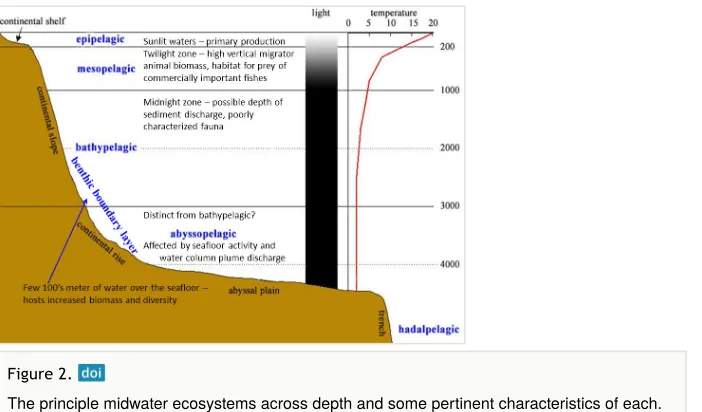
It is important to consider the potential impacts of mining on the ocean’s midwaters (depths from ~200 m to the seafloor) because they provide vital ecosystem services and harbor substantial biodiversity. The better known epipelagic or sunlit surface ocean provisions the rest of the water column through primary production and export flux (This was not the focus at this workshop as the subject was considered too large and surface discharges are unlikely). It is also home to a diverse community of organisms including commercially important fishes such as tunas, billfish, and cephalopods that contribute to the economies of many countries. The mesopelagic or twilight zone (200-1000 m) is dimly lit and home to very diverse and abundant communities of organisms. Mesopelagic plankton and small nekton form the forage base for many deep-diving marine mammals and commercially harvested epipelagic species. Furthermore, detritus from the epipelagic zone falls through the mesopelagic where it is either recycled, providing the vital process of nutrient regeneration, or sinks to greater depths sequestering carbon from short-term atmospheric cycles. The waters below the mesopelagic down to the seafloor (both the bathypelagic and abyssopelagic) are very poorly characterized but are likely large reservoirs of novel biodiversity and link the surface and benthic ecosystems.
general knowledge, ecological baselines for midwater communities and ecosystems that likely will be impacted by mining have not been documented. There is an urgent need to conduct more research and evaluate the midwater biota (microbes to fishes) in regions where mining is likely to occur.
Deep-sea mining activities may affect midwater organisms in a number of ways, but it is still unclear at what scale perturbations may occur. The sediment plumes both from collectors on the seafloor and from midwater discharge will have a host of negative consequences. They may cause respiratory distress from clogged gills or respiratory surfaces. Suspension feeders, such as copepods, polychaetes, salps, and appendicularians, that filter small particles from the water and form an important basal group of the food web, may suffer from dilution of their food by inorganic sediments and/or clogging of their fragile mucous
filter nets. Small particles may settle on gelatinous plankton causing buoyancy issues. Metals, including toxic elements that will enter the food web, will be released from pore waters and crushed ore materials. Sediment plumes will also absorb light and change backscatter properties, reducing visual communication and bioluminescent signaling that are very important for prey capture and reproduction in midwater animals. Noise from mining activities may alter the behaviors of marine mammals and other animals. Small particles have high surface area to volume ratios, high pelagic persistence and dispersal and as a result greater potential to result in pelagic impacts. All of these potential effects will result in mortality, migration (both horizontal and vertical), decreased fitness, and shifts in community composition. Depending on the scale and duration of these effects, there could be reduction in provisioning to commercial fish species, delivery of toxic metals to pelagic food webs and hence human seafood supply, and alterations to carbon transport and nutrient regeneration services.
After four days of presentations and discussions, the workshop participants came to several conclusions and synthesized recommendations.
1. Assuming no discharge in the epipelagic zone, it is essential to minimize mining effects in the mesopelagic zone because of links to our human seafood supply as well as other ecosystem services provided by the mesopelagic fauna. This minimization could be accomplished by delivering dewatering discharge well below the mesopelagic/bathypelagic transition (below ~1000 m depth).
2. Research should be promoted by the ISA and other bodies to study the bathypelagic and abyssopelagic zones (from ~1000 m depths to just above the seafloor). It is likely that both collector plumes and dewatering plumes will be created in the bathypelagic, yet this zone is extremely understudied and contains major unknowns for evaluating mining impacts.
4. Effort is needed to craft suitable standards, thresholds, and indicators of harmful environmental effects that are appropriate to pelagic ecosystems. In particular, suspension feeders are very important ecologically and are likely to be very sensitive to sediment plumes. They are a high priority for study.
5. Particularly noisy mining activities such as ore grinding at seamounts and hydrothermal vents is of concern to deep diving marine mammals and other species. One way to minimize sound impacts would be to minimize activities in the sound-fixing-and-ranging (SOFAR) channel (typically at depths of ~1000 m) which transmits sounds over very long distances.
6. A Lagrangian (drifting) perspective is needed in monitoring and management because the pelagic ecosystem is not a fixed habitat and mining effects are likely to cross spatial management boundaries. For example, potential broad-scale impacts to pelagic ecosystems should be considered in the deliberations over preservation reference zones, the choice of stations for environmental baseline and monitoring studies and other area-based management and conservation measures.
7. Much more modeling and empirical study of realistic mining sediment plumes is needed. Plume models will help evaluate the spatial and temporal extent of pelagic (as well as benthic) ecosystem effects and help to assess risks from different technologies and mining scenarios. Plume modeling should include realistic mining scenarios (including duration) and assess the spatial-temporal scales over which particle concentrations exceed baseline levels and interfere with light transmission to elucidate potential stresses on communities and ecosystem services. Models should include both near and far field-phases, incorporating realistic near field parameters of plume generation, flocculation, particle sinking, and other processes. It is important to note that some inputs to these models such as physical oceanographic parameters are lacking and should be acquired in the near-term. Plume models need to be complemented by studies to understand effects on biological components by certain particle sizes and concentrations.
Keywords
deep-sea mining, manganese nodule, massive sulphide deposit, cobalt crust, epipelagic, mesopelagic, bathypelagic, benthic boundary layer
Date and place
List of participants
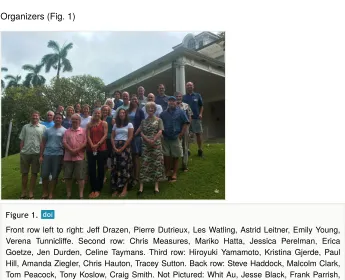
Organizers (Fig. 1)
• Jeffrey Drazen (U. of Hawaii, [email protected]), Deep-sea physiological ecologist specializing in energetics and trophic ecology. Working to characterize scavenger communities in the CCZ.
• Craig Smith (University of Hawaii, [email protected]), Deep-sea ecologist specializing in biodiversity and conservation
• Kristina Gjerde (IUCN & DOSI, [email protected]), International lawyer specializing in laws of the sea, biodiversity conservation and sustainable management, with a focus on marine areas beyond national jurisdiction
Experts
• Whitlow Au (U. of Hawaii, [email protected]), Acoustician focusing on passive monitoring of marine mammals and active acoustics to monitor their preyJesse Black (U. of Hawaii, [email protected]), Deep-sea ecologist studying life histories and food webs of deep-sea fishes
• Glenn Carter (U. of Hawaii, [email protected]), Physical oceanographer specializing in deep water circulation and turbulence from seamounts to hadal trenches
Figure 1.
• Malcolm Clark (NIWA, [email protected]), Deep-sea ecologist specializing in fisheries and anthropogenic impacts, ISA LTC member
• Jennifer Durden (U. of Hawaii, [email protected]), Abyssal benthic community ecologist with experience in environmental policy for deep-sea mining, currently working on characterizing the benthic communities of the western CCZ.
• Pierre Dutrieux (Columbia LDEO, [email protected]), Ocean physicist with broad interests in ocean dynamics and its interactions with the atmosphere from the tropics to the poles.
• Erica Goetze (U. of Hawaii, [email protected]), Pelagic ecologist specializing in the biodiversity and biogeography of the zooplankton
• Steven Haddock (MBARI, [email protected]), Pelagic ecologist specializing in studies of bioluminescence and plankton diversity
• Mariko Hatta (U. of Hawaii, [email protected]), Chemical oceanographer focusing on trace metal chemistry and dynamics
• Chris Hauton (U. of Southampton, [email protected]), Marine ecotoxicologist, leader of MIDAS ecotoxicology group
• Paul Hill (Dalhousie U., [email protected]), Marine geologist specializing in particle behavior and dynamics
• Tony Koslow (UCSD-SIO, [email protected]), Midwater ecologist focusing on oxygen minimum zones and ichthyoplankton
• Astrid Leitner (U. of Hawaii, [email protected]), Deep-sea ecologist focusing on seamount and abyssal hill ecology
• Chris Measures (U. of Hawaii, [email protected]), Chemical oceanographer specializing in trace metals
• Aude Pacini (U. of Hawaii, [email protected]), Marine biologist with an emphasis on marine mammals acoustics and hearing as well as the impact of anthropogenic activities on marine life
• Frank Parrish (NOAA, Pacific Islands Fisheries Science Center, frank.parrish@noa a.gov), Fisheries scientist, ecosystems and protected species management from corals to marine mammals
• Thomas Peacock (MIT, [email protected]), Physical oceanographer who specializes in internal waves, stratified flows, and sediment plume tracking
• Jessica Perelman (U. of Hawaii, [email protected]), Midwater ecologist characterizing vertical migration and deep scattering layer dynamics across the CCZ.
• Tracey Sutton (Nova Southeastern U., [email protected]), Pelagic ecologist including biogeography, trophic ecology and the ecology of mid-ocean ridges • Celine Taymans (DEME group, GSR, [email protected]),
Environmental engineer: mining technology and environmental management • Verena Tunnicliffe (U. of Victoria, [email protected]), Deep-sea ecologist
specializing in hydrothermal vent systems, DOSI deep-sea mining working group co-lead
• Hiroyuki Yamamoto (JAMSTEC, [email protected]), Benthic ecologist and microbiologist, DOSI deep-sea mining working group co-lead
• Emily Young (U. of Hawaii, [email protected]), Deep-sea benthic ecologist • Amanda Ziegler (U. of Hawaii, [email protected]), Polar and deep-sea benthic
ecologist
Aims of the workshop
The International Seabed Authority (ISA) is developing regulations to control the future exploitation of deep-sea mineral resources of the international seabed beyond the limits of national jurisdiction (termed “the Area”) and to ensure the effective protection of the marine environment from harmful effects arising from seabed mining related activities. As part of these regulations, contractors are required to generate environmental baselines and assess the potential environmental consequences of deep seafloor mining (Lodge et al. 2014). Mineral resources occur as precipitated deposits near hydrothermal vents, on the abyssal seafloor as manganese nodules, and on seamounts as manganese and cobalt crusts. Nearly all environmental research has focused on the seafloor where the most direct effects will occur. However, sediment plumes and other impacts (e.g., noise) from seafloor mining are likely to be extensive in the water column. Therefore, environmental research and impact assessments should extend into the midwater realm. During this workshop a small group of scientists, contractors and policy experts convened to:
1. consider mining scenarios, the creation of sediment plumes and other impacts, and their likely effects on the physical and chemical midwater environment;
2. compile what we know about midwater communities in the most likely regions for mining;
3. outline likely and possible impacts to these communities; and
4. suggest future directions for environmental research, management and policy.
Introduction
Workshop Rationale
sediments may be slow to settle, thus spreading over hundreds of kilometers from the discharge point (Rolinski et al. 2001, Segschneider and Sündermann 1998). In contrast to the abyssal plain, sediments at seamounts and mid-ocean ridges may be coarser or at least more varied, and current regimes could be more dynamic depending on depth and location.
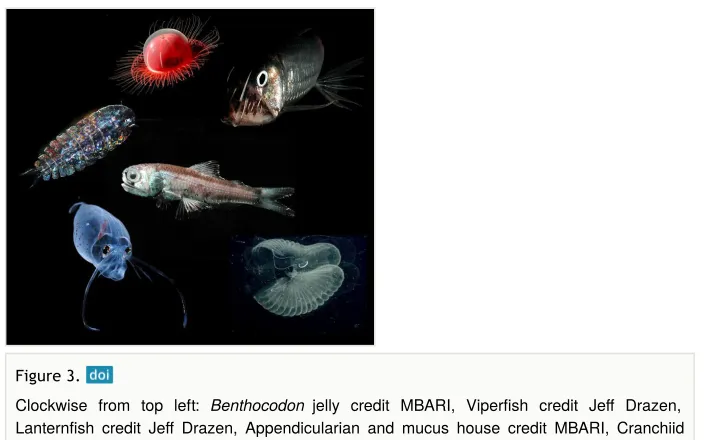
It is important to consider the ocean’s midwaters because they provide vital ecosystem services. The better known epipelagic, or sunlit surface ocean, provisions the rest of the water column through its primary production. The epipelagic is also home to a diverse array of commercially important fishes such as tunas, billfish, and cephalopods supporting the economies of many countries (FAO 2016). The mesopelagic or twilight zone is dimly lit and home to a very diverse community of organisms (Fig. 3). Mesopelagic plankton and small nekton form the forage base for several marine mammals and many of the commercially harvested epipelagic species during their deep diving activities (Abecassis et al. 2015, Choy et al. 2013, Olson et al. 2014, Choy et al. 2016). Furthermore, detritus from the epipelagic zone falls through the mesopelagic where it is either recycled, providing the vital process of nutrient regeneration, or it sinks to greater depths sequestering carbon from short-term atmospheric cycles (Buesseler et al. 2007, Robinson et al. 2010). The waters below the mesopelagic down to the seafloor (both the bathypelagic and abyssopelagic) are very poorly characterized but are likely large reservoirs of novel biodiversity (Robison et al. 2010).
Figure 2.
Great strides have been made in understanding the biodiversity and ecosystem function of the ocean’s midwaters (e.g. Gloeckler et al. 2018, Irigoien et al. 2014, Priede et al. 2013, Sutton et al. 2017), but large regions, including greater depths where mining plumes will occur, remain poorly studied (Webb et al. 2010). Research projects in mining regions have investigated the biodiversity and ecosystem function of benthic communities (Amon et al. 2016, Gollner et al. 2017, Schlacher et al. 2013, Vanreusel et al. 2016, Leitner et al. 2017), but almost no effort has focused on the water column above. Programs such as MARECO provided new insights into deep pelagic community structure over the mid-Atlantic Ridge (e.g. Priede et al. 2013, Sutton et al. 2008) and some research has been done on seamount pelagic communities (Morato et al. 2010) with a focus on top predators and
fisheries. There have been a few studies of pelagic fauna in the benthic boundary layer of the CCZ (e.g. Dahlgren et al. 2016), and water sampling from the surface to the seafloor (on seafloor focused cruises) has provided some information on surface phytoplankton and microbial communities (Lindh et al. 2017, Shulse et al. 2016, Zinssmeister et al. 2017). Also, there are studies of abyssal larvae and holoplankton on mid-ocean ridges (e.g. Mullineaux et al. 2010) and one from the abyssal CCZ (Kersten et al. 2017). Though these studies provide useful information, they are location, taxa and/or size class specific and provide only a patchy view. They are inadequate for establishing ecological baselines for the midwater ecosystems likely to be impacted by mining. Furthermore, pelagic communities are distinct from those on the seafloor and in the benthic boundary layer, are often sampled with different instrumentation, and are more apt to mix freely across stakeholder boundaries. Hence, there is an urgent need to further evaluate the midwater biota in regions where mining is likely to occur, and this led to the organization of the workshop.
Figure 3.
Workshop Organization and Outline
During this workshop we evaluated the potential water column effects of deep seabed mining. The focus was on depths below the epipelagic, given that mining discharges at the surface are considered unlikely, and to keep the subject manageable in scope. Seabed mining targets and associated ecological communities are diverse. Based on likely near-term mining targets this workshop focused on three main habitats: mid-ocean ridges and back arc basins where hydrothermal venting creates massive sulphide deposits and mining has or will start in the immediate future, the CCZ where manganese nodule mining is anticipated to begin in the next 5-10 years, and seamounts where cobalt crusts are the targets of mining exploration activities. Exploration claims exist with the ISA in all three habitat types.
To frame our discussions and share knowledge about the subject of deep seabed mining, each participant presented a short summary of their research area as it pertains to deep seabed mining on the first day (with 4 presentations on the second day). We then discussed a series of questions (given in the report below) as an outline to frame the overall discussion on the topic. To further facilitate participation we broke into groups to answer these. It was decided that we would divide many of the questions by mineral/habitat type – massive sulphides at vents, cobalt crusts at seamounts, and polymetallic nodules on the abyssal plain. At the end of each breakout session, the groups reconvened and rapporteurs and discussion leaders presented the findings to the larger group. We strove to generate consensus answers to each question that reflect the state of scientific knowledge. In addition, we had several large group discussions on the topic of dissolved plumes and on the ISA draft exploitation regulations and policy advice.
General Mining Scenarios
discharged back to the deep water column or seafloor. Cobalt crust mining is the least conceptually developed and it was thought that this mining might occur in a similar fashion to that on seamounts except that the activity would occur over larger spatial scales due to the distributed nature of the crust.
Key outcomes and discussions
Breakout sessions and discussions were centered on each question in the workshop outline. Sub-questions were provided to guide the conversations if needed but were not always addressed explicitly. To facilitate full participation, it was decided that we would divide many of the questions, but not all, by mineral/habitat type – massive sulphides at vents, cobalt crusts at seamounts and polymetallic nodules on the abyssal plain. We broke into subgroups for each. Summaries of these discussions follow.
What do we know about the ecosystem characteristics (physical and chemical) of the midwater environment in potential mining regions?
• Which ecosystem characteristics are pertinent to understand in the context of mining? (e.g. current regime and dynamics, metal concentrations, natural suspended sediment loads, particle characteristics at the mining sites, etc.)
• What can we extrapolate based on studies from elsewhere?
• How similar are these characteristics between the 3 main mining ecosystems – abyssal plains, seamounts/ridges, and vent regions?
Abyssal Plains
spatial and temporal complexities (e.g. Firing and Lukas 1985), and those observations covering broader spatial and temporal scales, like satellites (e.g. Chelton et al. 2007) or ARGO float programs, clearly indicate large variations in both those dimensions. In turn, the lack of bathypelagic and abyssopelagic observations make it difficult to evaluate state-of-the-art ocean numerical models. For instance, the fact that only a few models represent mean jets or eddy energy levels recorded in anecdotal surveys indicates that caution is warranted in their use to infer tracer diffusion.
Near the seafloor, bottom topography is a strong determinant of flow regimes. Importantly, there are many seamounts (rising >1000 m about the surrounding plain) and smaller hills across the abyssal plain of the CCZ, some reaching 3000 m above the abyssal plain. From studies of seamounts in shallower waters (see seamount section below), we know that
flows will be affected and we can expect that local hydrodynamic conditions will vary substantially around hills and seamounts.
There was some discussion about how best to characterize the hydrodynamics of a mining region given that there are gaps in our knowledge at the scales required in almost all cases. For the CCZ region, it was concluded that the most revealing and constraining method for physical characterization would be two repeated synoptic latitudinal sections of vertical profiles across the region. Such an approach would characterize a large amount of the physics. Fixed instrument moorings would provide information on temporal dynamics (seasonal to interannual time scales), if embedded in a larger program, including modeling, to characterize the regional hydrodynamics. Given the immense size of the CCZ and its variation from gyre circulation features to the north and equatorial influence to the south, a number of moorings across the region were deemed necessary. However, the location and number of such moorings needed to provide high resolution data should be determined by
first creating a regional circulation model and identifying the zones of greatest dynamic importance. Gliders were also discussed as an effective way to survey large areas, measuring basic properties such as turbidity, turbulence, and currents.
To characterize the chemical environment, knowledge of the distributions of dissolved nutrients, oxygen, and metals, as well as redox chemistry (including pH), will be needed to evaluate baseline conditions and mining effects. Mining will lead to fragmentation of nodules during the processes of separation from sediments and hydraulic lifting to the surface. Nodule surfaces that have long been in contact with water are in steady state, but newly exposed fractures have the potential to mobilize chemical constituents and allow for reactions. The GEOTRACES program has provided substantial general information about the distribution of many trace elements and metals in the various ocean basins (i.e. Atlantic, Indian, Arctic, and Pacific Oceans; www.eGEOTRACES.org; (Schlitzer et al. 2018). Soon, information that is more detailed will be provided in the CCZ region by an on-going GEOTRACES Pacific Meridional Transect cruise. Further measurements are needed from the seafloor upwards to the potential vertical extent of both benthic disturbance and midwater dewatering sediment plumes, including assessment of the concentrations of bioactive metals and nutrients, and redox regimes (which influence metal mobility).
In addition to dissolved parameters, natural levels of particle flux and suspended particle concentrations are important environmental characteristics. Some data already exist for particular locations, depths and times in the CCZ that may provide good background information. For instance a recent review of global suspended particle concentrations determined that the CCZ bathypelagic and benthic boundary layer have among the lowest measured particle concentrations in the world ocean (Gardner et al. 2018). Particulate organic carbon (POC) flux in the CCZ region varies greatly, being lower in northern central-gyre-influenced waters and higher in the south near equatorial upwelling (Lutz et al. 2007, Wedding et al. 2013). POC flux also increases from the west to east in the CCZ. To gain more data, sediment traps should be deployed at several depths, particularly at the base of the euphotic zone (which is typically measured in many past studies) and also below the level where sediment plumes are expected so that alterations to natural flux can be ascertained. Unlike physical parameters, chemical parameters such as suspended and sinking particle concentrations and oxygen are likely to be variable across the CCZ and not generalizable over large (several hundred km) spatial scales, as suggested by satellite oceanographic data products and sporadic measurements of some of these variables (see data sources in Watling et al. 2013, Wedding et al. 2013).
The baseline acoustic regime is another important ecological characteristic. Mining activities will create noise from the ship to the seafloor, including from pumps, hydraulic lifting and rattling of nodules in riser pipes and from mining vehicles at the seafloor. Little is known about background noise volumes, sources and frequencies in remote abyssal areas such as the CCZ. However, we do know that a number of pelagic animals such as marine mammals, which are sensitive to noise, migrate through this region at least seasonally. It was noted that no acoustic measurements are required in the ISA EIS template.
Furthermore, bioluminescent light is present throughout the water column and could be measured with systems such as the “splat cam.” Bioluminescence is correlated with organismal biomass (Martini and Haddock 2017) and is thus a physical measurement that elucidates an important biological characteristic.
After considering pelagic environmental characteristics within the abyssal CCZ, the group considered how similar these pelagic characteristics would be to those near seamounts and vents, the other two main habitats that have mineral resources. The conclusion was that there is minimal similarity. The abyssal plains are much deeper (to 5500 m vs depths of 1000-3000 m for vents and seamounts), with slower and less variable currents. Furthermore, the seafloor on the plains is largely covered by fine clay sediments whereas many areas on seamounts and in vent regions have hard substrates (though not exclusively) which is likely to influence the nature of the sediment plumes in habitat type. Thus, it will be important to assess environmental characteristics in a habitat-type framework.
Vents & Seamounts
For environmental characteristics, the workshop participants decided to combine the vent and seamount habitats into a single discussion group due to some similarities in habitat depths, elevated bathymetries (vent deposits often occur on ridge systems or on raised topography and seamounts in arc/back arc systems), and complex and sometimes enhanced flow environments.
This group began its discussion by first evaluating “What is the mining technology like and how does this affect the seamounts and vents of interest?” The goal was to provide context to the discussion and help narrow our understanding of what information is needed. Mining on seamounts was considered challenging due to the extremely rough terrain but still possible. Contractors are mostly considering mining seamount flanks where the topography is a bit more regular or on seamounts that are flat-topped (guyots). There will clearly be limits to the conditions under which mining machines can operate. It was not clear what those conditions may be, how many seamounts will be mineable, or how many of these are in the prime crust zone. General depths considered for seamount crust extraction are 800-2000 m. Currently there are 3 exploration claims in the NW Pacific and another in the SW Atlantic.
Next, the group evaluated the potential physical impacts of mining. Mining will convert hard substratum into a soft substratum of ground up material – rubble rather than clean rock surfaces. Contractors have different machines for different types of bathymetry or bottom type. Machines operating on seamounts are likely going to grind off the top ~5-50 cm of the cobalt crusts. In contrast, for massive sulphide deposits at vents, mining will create pits many meters deep targeting layered deposits that are often subsurface. Also, in some cases the substrates are a mosaic of hard seafloor, crushed rubble or even a top layer (overburden) of sediment that may generate a significant plume during removal. In both cases however, there is some assumption that the mining technology used will be similar, as grinding of hard substrates is required.
Depth is an important environmental characteristic of these habitats as it covaries with many other environmental variables (pressure, light levels, temperature etc). Pelagic communities are very depth-stratified. Thus seamounts or mid ocean ridges with depths near or above the daytime depth of sound scattering layers will affect these biotic vertical migrations and may enhance delivery of food to pelagic and demersal predators. Further, shallow features may alter flow such that nutrients are injected into the euphotic zone enhancing local primary production. This is unlikely to be the case for seamounts currently targeted for mining because they are deeper, but injection could occur if mining targets the deep flanks of shallower features. Similarly, ISA contracts for SMS deposits are mostly below 2000 m depth.
determines whether seamounts have an effect on local primary production, the flux of particulate organics to bottom feeders, the impingement of pelagic fauna on the seafloor and hence top predator aggregations, and the flow environments, which will be important for larval connectivity and plume dispersal. Due to complex interactions, it is difficult to predict the flow field from bathymetry alone, however.
Clearly related to complex and elevated bathymetry (and also the background flow field) is enhanced current flow, mixing and turbulence. These enhanced physical processes will occur on deep to shallow features to varying degrees. Flow and turbulence enhancements around seamounts, ridges and axial valley bathymetry will increase the dispersal and mixing of mining induced sediment plumes in the benthic boundary layer and in the water column above. Vent and seamount habitats are extremely complex bathymetrically so site-specific characterization of the flow field will be very important. In general, nearly symmetrical seamounts will have more flow enhancement around flanks and trapped circulation features at their summits. It was noted that seamounts rarely have Taylor columns, rotating columnar circulation features above the seamount peak, but there are some Taylor caps (conical circulation features (Goldner and Chapman 1997, Kunze and Toole 1997) that persist for long enough periods of time to enhance primary production, if they are shallow enough, or temporarily retain some pelagic animals in deeper waters (Rowden et al. 2010). However, the levels of endemism in seamount communities do not suggest very long durations of physical retention on seamounts/ridges, as was hypothesized many decades ago (Rowden et al. 2010). Elongate ridges or seamounts will have flow enhanced over their summits and these features will generate internal waves. On large mid ocean ridge features, abyssal currents are trapped on the flanks, resulting in complex dynamics both along and over the crest as topographic flow rectification (Lavelle 2012). Within axial valleys flow can proceed along the axis near bottom (Garcia Berdeal et al. 2006) which may act to retain plumes. In addition, habitats with elevated bathymetry will alter flow downstream of the mean background flow analogous to island wakes, which will act to modify dispersal of plumes from seamount mining. Despite our general knowledge of
flow in these habitats, due to their great diversity and site-specific heterogeneity, everyone agreed that site-specific characterization of the flow field would be required for each mining claim. There are existing HYCOM or ROMS models with resolution to 2000 m depth available, which would be good as an initial starting point but would not obviate the need for empirical measurements.
Regional flow and stratification are also environmental characteristics that affect the site-specific flow fields. Water column stratification is important because it influences flow effects and mixing and it varies latitudinally and seasonally. The background flow field in these habitats is variable from gyre circulation to equatorial jets and from the east to west of basins, which influences the velocity of general circulation. Background flow provides the initial conditions from which to understand local flow around the seamount or ridge. Further, background flows can be seasonal as has been shown at vent sites on the Mid-Atlantic Ridge.
~200 m vertically and have high concentrations of metals, organics, reduced compounds and microbes (e.g. Cowen et al. 2001). Some natural plumes have been characterized and the influence of natural plumes on water chemistry is a regional phenomenon (e.g. regionally higher metal concentrations; e.g. Geotraces). However, more localized, feature-specific data are often lacking. It was noted that these plumes occur at active venting sites but we expect that sites with vigorous venting will not be targeted for mining. No such natural plumes exist at inactive vent sites, which can be between zero and 100’s km away from active sites and their associated plumes. However, even if natural plumes are some distance away from mining activities this background natural activity will make it difficult to separate the water column effects of natural and mining activities. Nonetheless, the behavior of natural plumes intersecting with the regional flowfield can provide insight into dynamics of mining-generated plumes. It was noted that some seamounts can have sediment plumes naturally from “storms” or enhanced turbulence events over their flanks and summits, but the extent of such plumes was thought to be small and transient.
Overlying primary production is important as it affects food supply to deep-sea ecosystems – both benthic and pelagic. Seamount-specific local alterations can occur and they are currently being documented. Enhancements of primary production can stimulate increased
fisheries production. Local primary production will also be affected by general latitudinal and basin scale variation that can be characterized with satellites. Furthermore, productivity in vent or seamount habitats may have clear seasonality or a lack of it based on regional scale dynamics (e.g. above 36º N the Mid-Atlantic Ridge exhibits clear seasonality in production).
Suspended sediment concentrations and organic particle fluxes are key variables in the context of mining because mining induced plumes could greatly alter these environmental characteristics. Natural levels are related to productivity providing some ability to predict values though there are few direct measurements on seamounts. Particle concentrations and vertical flux are higher in axial valleys than over seamounts due to venting at the former. Organic particle concentrations in vent plumes derive both from the benthos and from carbon fixation in the plume itself (Bennett et al. 2011), thus vent plumes have marked input of carbon into the deep-sea ecosystem (Levin et al. 2016). A recent review of global particle concentrations does not include much data on mid-ocean ridges or seamounts (Gardner et al. 2018). More study into these environmental characteristics is needed.
seamounts and potential alterations is not known but the expectation was that there would be little contrast to the background water chemistry of the region.
The group discussed how climate change will affect many of the above environmental characteristics, including ocean acidification, deoxygenation, changes to large scale primary productivity patterns, circulation and water column stratification. Thus, these long-term changes must be taken into account as multiple stressors given the long duration of many proposed deep-sea mining activities.
The group evaluated the scales at which environmental characteristics in the pelagic should be known. In the context of mining, it is the mesoscale (10’s of meters in the vertical, 100’s of meters to kilometers in the horizontal) that is the smallest scale that matters because sediment plume effects will be larger than this. For the temporal, the scale that matters is years as mining will be ongoing at a site for ~10-30 years. For the purposes of monitoring and observing the scale of anthropogenic changes to the environment sampling would have to occur at these spatial and temporal scales, possibly finer scales and frequencies (and ongoing), to capture changes to environmental features.
Correlated to many of the environmental characteristics above is the geographic location of any vent or seamount feature. Thus, the location of a feature could be used to predict general features of a mining area. For instance, latitude affects food web interactions via seasonality of primary production, which results in variation of the vertical detrital flux (as seen on the mid Atlantic ridge). Latitude also affects the physical environment such as proximity to equatorial jets. Furthermore, the Atlantic, Indian and Pacific Oceans are very different from one another in terms of vertical profiles of temperature, oxygen, surface primary productivity, and surface or deep storm activity: all characteristics that could affect sediment plume dispersal or settling. These differences stem in part from global deep-water mass circulation and age as well as meteorological patterns. Biogeography of organisms was also discussed briefly in this context because different regions have different faunas. Each regions fauna could respond differently to impacts due to their evolutionary history and environmental differences (see answers to question 2 below) which lead to differences in community composition and the relative importance of taxa that might be more susceptible to mining effects. In the context of geographical locations of seamounts, it was pointed out that what we know about them largely comes from studies in the Atlantic and NE Pacific. We know very little about seamounts in the prime crust zone in central West Pacific.
Seamounts and ridges/vents have many similarities in terms of environmental characteristics but do differ mostly due to the presence of natural sediment and chemical plumes at vents. This means that vents in axial valleys have higher suspended particle concentrations compared to seamounts. This affects biological communities with axial valley organisms likely more adapted to suspended sediment loads. It should be noted however, that much of the suspended particles in natural plumes include organic materials, whereas mining plumes will be dominated by the inorganic fraction. Also, as a consequence of their natural plumes, vent and ridge systems have higher background metal concentrations compared to seamounts, which again may translate to sensitivities to some extent. However, it was noted that the MIDAS program performed toxicity studies on vent organisms and found that while they may have had lower sensitivities they were just as sensitive to changes in concentrations as other organisms (Hauton et al. 2017).
In the context of this discussion, the group strongly felt that not all seamounts, ridges and associated vents were the same. For these features generalizations of environmental parameters was very difficult.
However, these features had much more in common with one another than they did with abyssal plain habitats. The largest differences were the high variability of setting, including depth (800-4000 m vs 4000-5500 m on the plains), and the flow environment (very slow with low turbulence on the plains). Further, the mining induced sediment plumes generated at vents and seamounts will be different compared to those from nodule mining because the ore will be crushed, creating more angular and sharp fines compared to material harvested from nodule fields.
What do we know about midwater ecology and biology in potential mining regions?
• Which ecological/biological characteristics are pertinent to understand in the context of mining? (e.g. biodiversity, community composition, food web structure, connectivity, physiological adaptations etc)
• What can we extrapolate based on studies from elsewhere?
• How similar are these characteristics between the 3 main mining ecosystems – abyssal plains, seamounts/ridges, and vent regions.
Abyssal Plains
Wishner et al. 2013). They have also documented a fauna that is specific to the OMZ-dominated eastern central Pacific region. These results are useful and partially generalizable for the eastern CCZ and possibly to other low-oxygen regions of the CCZ. There is also some research on the benthic boundary layer off California at Station M, a multi-decadal time series study site which largely has focused on benthic communities. In addition, long time-series data are available from the HOT program at Station ALOHA north of Hawaii; the HOT program has focused on the epipelagic (Valencia et al. 2016), but some mesopelagic studies likely relevant to the northwestern CCZ have been conducted in the same location (Gloeckler et al. 2018, Hannides et al. 2013, Sommer et al. 2017, Steinberg et al. 2008). Pelagic research has also been conducted along the equator to characterize epipelagic, and to a lesser extent, mesopelagic zooplankton and micronekton biogeographies, fisheries resources, and ecology (Barnett 1984, Clarke 1987, McGowan 1974). In addition to region specific information, it is also well known that on a global scale, food availability (satellite-derived surface water productivity as a broad proxy) controls pelagic community biodiversity, biomass and abundance. Though we thus have some knowledge of epi and mesopelagic community structure and biogeography within the eastern North Pacific, it was agreed that that the CCZ mesopelagic to bathypelagic remain virtually unstudied and we can extrapolate only very general relationships from other regions. Detailed mesopelagic and bathypelagic studies are needed.
The group then evaluated which ecological/biological characteristics are pertinent to understanding the impacts of deep-sea mining. For each depth zone of the pelagic (epipelagic, mesopelagic, OMZ, bathypelagic, abyssopelagic to BBL, especially bathypelagic to BBL) the following were characteristics considered important.
Basic characteristics to be assessed included depth-stratified biomass, abundance, community structure, diversity (species or operational taxonomic units and functional diversity) and the diel cycle of these parameters as a consequence of animal vertical migration. These data could be acquired with depth-stratified net samples for hard-bodied animals such as fishes and crustaceans, and ROV/AUV visual transects targeting gelatinous zooplankton and fragile taxa. Such approaches require standardized imaging techniques. Net tows in the BBL are logistically challenging so study could also include plankton pumps and baited free-vehicle camera deployments for some taxa. Acoustic surveys could also contribute substantially to biomass/abundance estimates and vertical migration dynamics over large regions, but this approach lacks taxonomic resolution. The physical taxa collected by nets and other approaches would need to be identified morphologically and genetically for all size classes (e.g. barcoding). It was also emphasized that samples and data should be archived in a centralized collection, including physical specimens, images/video, and genetic data.
and bathypelagic has shown that food webs there may be adapted to take up very small particles (Choy et al. 2015, Gloeckler et al. 2018, Hannides et al. 2013).
The group also identified the depths where ecological/biological characteristics should be characterized in relation to deep-sea mining. It was agreed that for baseline studies, full depth, high-resolution studies of microbes, primary producers, zooplankton, gelatinous zooplankton, and nekton communities from the sea surface to the seafloor are needed. This baseline information could then be used to identify the preferred depth of plume deposition based on the vertical profiles of ecological characteristics.
At the regional scale, it was recognized that pelagic communities are relatively broadly distributed and more homogenous than at the seafloor, with similar assemblages across 100’s of kilometers in the horizontal. Thus, the group suggested that baseline characterization of pelagic communities at 3-4 target reference regions (with multiple replicate sites within each) across the CCZ region, capturing the mesopelagic biogeographic provinces of Sutton et al. (2017), might be sufficient. These sites could include the eastern Pacific, equatorial upwelling, central gyre and western gyre. Sampling might be best placed in the APEIs to allow monitoring of a regional baseline after mining begins. Such an approach would need to be ISA-mandated, perhaps through a fund paid by contractors and administered by the ISA. This approach would save each contractor time and money by pooling their resources, and would provide several regional baselines. For monitoring of mining activities, additional sampling (as suggested above) would be needed in each claim area for comparison to the baseline sites.
Vents & Seamounts
As for question 1, discussion of vents and seamount habitats was combined into one group.
The group outlined which ecological/biological characteristics are pertinent to understand in the context of mining effects on pelagic processes. Biodiversity was considered important, but due to concerns about the absence of species-level data in many cases (due to varying taxonomic expertise, cryptic species and undescribed species) functional diversity was suggested as a very important alternative. Microbial diversity was also discussed but again more from the perspective of functional diversity to evaluate variations in microbial loop and food web interactions.
In terms of functional characteristics, food webs were identified as very important to understand. In particular, filter feeders (e.g. appendicularians, salps, pteropods) are important components of pelagic food webs. They may increase sediment packaging and downward transport, and may be particularly sensitive to sediment plumes. There was some discussion about how microbes might be important to the mesopelagic in terms of mining especially in response to release of reduced compounds. It was not clear how (or for how long) microbial assemblages might change in response to mining plumes. The microbial community can be quite resilient and due to its phylogenetic diversity and physiological versatility will likely respond quickly to environmental change and also recover quickly. However, it was considered important to understand what microbially mediated processes are occurring that may be important indicators of mining impacts.
Connectivity was also considered very pertinent to understand as both seamounts and vents are “island” habitats that rely on successful dispersal and recruitment. Larval transport will be different for seamounts compared to ridges due to more constrained flow on the latter. For seamounts, proximity to continental margins is important for larval supply while vent systems are more like island archipelagos in which distance between sites and size of sites is likely very important (Baker et al. 2016). Vertical connectivity is very important for many species whose eggs are buoyant and whose larvae travel vertically, often from the surface to the adult depth. This is a common strategy for many midwater
fishes and crustaceans. Many benthic species also utilize the water column for larval dispersal and population connectivity. For instance, some vent shrimp and mussel larvae rise to the surface whereas others remain in the axial valley, and others have crawl away benthic larva.
The group then discussed the pelagic communities of seamounts in more detail. Some seamounts are known to have endemic pelagic species not found in the neighboring open ocean (Boehlert and Mundy 1993, Wilson and Boehlert 2004). Additionally, there is a clear “seamount effect” for upper food web predators such as tunas that have enhanced abundances and biomass over some seamounts. These mobile species are visitors to the seamount. For instance bigeye tunas have high residence times over shallow seamounts and fuller stomachs there (Holland and Grubbs 2007). The mechanisms facilitating this enhanced feeding is unclear but shallow low latitude seamounts can have planktonic production peaks stimulating bottom up effects. Additionally, shallow topography may trap plankton and micronekton advected over it during the night when the animals try to migrate back to depth in the morning. Finally, flow or upwelling over and around seamounts may concentrate the background prey field. Studies have also demonstrated that due to local faunas and visitors seamount mesopelagic and epipelagic communities have enhanced biodiversity. Also some commercially important mesopelagic species such as black scabbardfish and pelagic armorheads use seamounts as sites for reproductive aggregation. Though much of what is known about seamounts is from the mesopelagic, studies have found concentrations of biomass at 2000 m off Tasmania and near the Azores at 2500 m using acoustics (Sutton et al. 2008). Therefore, the midwater influences of seamounts and future studies need to extend to these bathypelagic depths.
Ridges associated with vent systems were discussed as well. These have been fairly well studied in the north Atlantic as part of the MARECO and EcoMar projects focused on the Mid-Atlantic Ridge (MAR). Ridge habitats have an enhanced pelagic fauna in terms of biomass and diversity, which may be due to a resident community. It was also noted that
Figure 4.
diel vertical migration was occurring to at least 2500 m along the MAR. Ridges may also harbor a large fraction of the large reproductive individuals in some populations, at least for
fishes (Sutton et al. 2008). Further ridge structures are very large and the MAR has a channeling effect associated with topographic fracture zones. Seamounts differ in this regard due to their smaller size.
Within axial valleys and in the benthic boundary layer highly elevated zooplankton levels have been recorded up to 50 m above bottom (Skebo et al. 2006). Studies have shown that the vent plumes attract or enhance the abundance of some animals such as shrimp and copepods. For instance, along the East Pacific Rise plumes enhanced zooplankton biomass including copepods that feed in the vent plume. In contrast, fishes avoided it. Plume-influenced pelagic communities have high diversity and high endemism suggesting that at least some species are adapted to these conditions. The sphere of influence of vent plumes needs to be considered in more detail but may be relatively small (100’s m) in terms of immediate chemical alterations but large in terms of organic inputs and longer term elemental cycling in the oceans (Levin et al. 2016). It appears that natural plume effects on the pelagic are a mixture of vent plume induced changes from the seafloor-up and normal migrations of fauna from above it.
The mesopelagic provinces where existing seamount exploration claims occur were evaluated specifically. Seamount exploration contracts are now concentrated in the northwestern Pacific lying within the North Pacific Gyre biogeographic province (#4 in Fig. 4). This province is bounded by the North Equatorial and Kuroshio Currents. It is oligotrophic and has a fauna distinct from that of central Equatorial Pacific. The exploration area in the south Atlantic Rio Grande seamount area is located in province #27. This is the tropical and west Equatorial Atlantic province dominated by easterly winds that cause divergence and upwelling. The region is generally oligotrophic except for regions of upwelling and it is noted for a distinct cephalopod fauna.
The state of biological/ecological knowledge of pelagic communities below the mesopelagic was discussed as a major knowledge gap. Both faunal inventories and biomass levels are very poorly known. Based on general depth-related declines in biomass and diversity, we assume lower levels of these variables compared to the mesopelagic. Despite the poor characterization of this zone, it is likely to be influenced by the discharge of dewatering plumes and much more data is needed.
parameters would be needed starting before mining and continued afterwards to monitor impacts.
The biological/ecological characteristics were then compared between the three main mining ecosystems – abyssal plains, seamounts, and vent regions. All three were considered to be quite different biologically. There is often high biomass and abundance in the pelagic over ridges and vents (e.g. the east Pacific Rise, MAR). This may be true to some extent over seamounts but likely due to different mechanisms such as physical compaction/compression/concentration of pelagic community and or spawning aggregations. There is higher diversity at seamounts and ridge/vent systems compared to neighboring waters but the mechanisms causing this vary. At seamounts, diversity is typically high due to visitors such as pelagic fishes, mammals, and turtles, rather than endemism at vent/ridge systems. Connectivity patterns are also likely different between habitats which should be considered. For instance, axial valley transport plays a role in ridge/vent systems but not elsewhere. These connectivity patterns are most likely different between benthic species using the pelagic for larval dispersal and for habitat specific pelagic endemics. In contrast to both, the mesopelagic fauna is generally widespread. It was also pointed out that seamount systems are very different from one another, requiring more investigation into the drivers of variation in seamount pelagic communities.
How do current mining technology scenarios vary in terms of potential plume characteristics (e.g. potential discharge depths, source materials and particle characteristics)?
• What are the key differences and similarities between benthic plumes generated from seafloor activities and dispersal of the dewatering fluids at varying depths? • How are plume characteristics (e.g. particle sizes, eddy diffusivity, advection
distances) likely to vary between the mining regions?
• How do varying plume characteristics affect plume dispersal and persistence in the pelagic zone over the different mining regions?
• What intensity and extent of plumes might be created unintentionally from leakage from pipes/ships, from failures (e.g. pipe ruptures) or natural disasters (hurricanes)?
To tackle this question a single breakout group was created, in parallel to the groups for questions 1 and 2. This was led by Tom Peacock and Paul Hill. The question/topic was central to the workshop but difficult to address because much of the mining technology is under development and/or proprietary. Therefore, a more general approach was taken.
within a specified distance from the operations. However, how do we set the thresholds (specified fraction of background)? Variables to evaluate for thresholds would include light, chemical toxicity, smothering, and diet quality (dilution from suspended particulates). These depend on SPM, but dissolved plumes are of concern as well, particularly with regards to metal toxicity. Determining the appropriate thresholds is incredibly challenging, as no data exist for pelagic species due to the difficulty in keeping them alive under controlled conditions. Threshold values are not likely be extrapolated from work on benthic species, which indicate high sensitivity in those animals, because studies of metal toxicity show incredibly complicated species specific effects that are both temperature and pressure dependent (Brown et al. 2017, Hauton et al. 2017). These findings further indicate that the use of shallow water analogs will not yield meaningful results. Instead, there was some discussion about using an objective standard based on observed natural variability of these conditions (specified fraction of background variability).
Several factors will be determinants of SPM in a passive plume. A mining vehicle or discharge pipe will create a dynamic near-field plume that sets the initial concentration, size distribution (which includes aggregation) and settling velocity. This will then be affected by advection and diffusion, which may be site-specific. The technology employed will also be an important determinant. Characterization of the plume will require detailed engineering/ design/modelling for each type of operation.
The near seabed plumes will differ between the three main resource types. To begin with, the sources of the plumes will differ based on technology. For massive sulphides or seamount crusts, there will be multiple sources due to separate vehicles for first grinding material and then others actually collecting it for return to the surface. In the case of nodules, a single moving collector will also be the point of material lift to the surface ship. The material creating the plumes in the case of sulphides or crusts will be engineered – effectively crushed minerals – whereas in nodule provinces most of the plume will be natural fine sediments, but in extremely large volumes as the collector moves over hundreds of km each year for a single mining area. The region affected by the seabed plumes may also differ geographically in that sulphide and crust mining activities are relatively localized (though in high energy environments that may aid in plume dispersal) whereas nodule activities will be very widespread (300-600 km per year per claim (Oebius et al. 2001).
Water column plumes will also differ between the resource types. Massive sulphide deposits often include a sediment overburden so there will be a medium load of fines present in the plumes. Crusts are typically mined from hard substrate and thus will have larger grain sizes. Nodules mined from the abyssal plains will generate water column plumes with a very high load of fines. Primary productivity in the overlying water column affects natural loads of particles and organic material content, which in turn has a bearing on flocculation processes of sediments. As discussed above, productivity over ridges and vents is dependent upon regional conditions, can be elevated locally at shallower and low latitude seamounts and is certainly lowest in the CCZ where nodule mining is concentrated. Finally, water column plumes will be effected by interaction of the flow environment with
2
local bathymetry, which will occur for both massive sulphides and seamount crusts but is unlikely in abyssal nodule settings (see flow discussion in Q1 above).
The dispersal and persistence of both plume types was also discussed and differed by resource type. Due to the flow characteristics of ridges and seamounts plumes generated from sulphide and crust mining would have rapid and variable dispersal and thus lower but variable persistence. Dispersal of plumes from nodule mining, particularly plumes near the seabed would be slower to disperse and have a much higher persistence due to the high load of fines and slow bathypelagic current speeds.
Finally, there was some discussion of unintentional events such as catastrophic equipment failure or large natural hazards (e.g. hurricanes). However, it was concluded that the potential for major environmental damage from an event is low because the sediment source would shut down quickly. In contrast to the oil and gas industry, the failure mode in mining is most likely cessation of sediment discharge rather than runaway spillage. That said, the short ‐ term threat in these type of situations is probably greatest in the surface ocean where there is probably no prior sediment discharge.
What are the potential effects of sediment plumes on the midwater fauna and what are their likely spatial and temporal scales?
• How will effects vary by taxonomic group? (e.g. microbes, gelatinous taxa, fishes) • How will effects vary between different trophic groups? (e.g. filter feeders,
predators)
• How will these effects vary with plume particle size, concentration and/or extent, which then can be used to evaluate the temporal and spatial extents of perturbations?
• How will effects on organisms alter ecosystem function? E.g. vertical transport of carbon, food webs, oxygen demand?
To help frame this question there was some discussion prior to breakout of the three habitat groups. It was remarked that the FAO criteria for determining serious harm with regard to deep-sea fisheries was relevant to consider here. In addition, with regard to plumes there is a literature from lakes, estuaries, tailings disposal, storm runoff on corals, and river effluents into the ocean, that needs to be reviewed from a mining impact point of view. Further it was articulated that the ideal goal was to use the precautionary principle rather than adaptive management approaches that could result in initial (and substantial) harm prior to the implementation of appropriate measures. However, see the point below in the next paragraph.
2-3 times the natural range. This was proposed because the sensitivities of most deep-sea animals, including pelagic species, is unknown and very difficult to determine. Alternatively, it was also articulated that an incremental approach to understanding how mining will affect the midwater fauna may be required because of our lack of information. Some were concerned that test mining (single equipment tests, small scale vehicle tests) would not be at large enough in scale to predict the effects of full scale mining activities. Therefore, it was suggested by some that mining could start with a single pilot operation limited in scale and time that was monitored very closely in conjunction with a team of scientists to comprehensively monitor all variables of interest in and around the operation. This would enable a view of the sensitivities of the pelagic fauna to plumes and other mining effects and the ecological consequences of a mining operation on the pelagic from which management could then be modified to ensure the protection of the marine environment. However, there was debate on whether adaptive management was possible or suitable because it still required some understanding of targets and methods to determine thresholds, the ability to pause, reassess, and possibly stop activities, if necessary.
Abyssal Plains
The group considered impacts of mining on different taxonomic and functional groups. Microbes were thought likely to exhibit changes in community composition due to the additional surfaces in the water column (from particles) and due to alteration of water chemistry from plume solutes. Suspension feeders are likely to have degraded diets (gelatinous and crustacean suspension feeders) from an abundance of inorganic particles. This will incur increased metabolic costs for processing which could lead to a variety of sublethal effects. Gelatinous taxa would also experience suffocation due to clogging of respiratory surfaces by particles. Fishes and marine mammals would experience altered prey distribution fields, and fish could experience respiratory distress due to particles interfering with their gills and reduced oxygen content in plumes. All of these taxa, with the exception of microbes and non-visual invertebrates, would also suffer from the degraded light field in plumes. The relative probabilities, severities and scales of impacts along with mechanisms behind impacts were tabulated in the table below (Table 1).
Microbes Gelatinous suspension feeders
Crustacean suspension feeders
Predatory jellies
Fishes Mammals
Table 1.
Mechanisms of impact Unknown. Extra surfaces for attachment and new solutes from plume. New microbial community introduced from sediments. Microbes may be scavenged. Community structure and function will be impacted but difficult to predict specifics.
Interference with feeding; salps and appendicularians are mucous feeders, so this would foul their feeding structures; suffocation/ smothering likely. Altered ingestion behavior because of selective feeding and loss of energy through parsing more useless particles (related to particle size); smothering unlikely; will olfactory sensors be clogged? Food web perturbation; stickiness of tentacles may be impacted by sediment sticking to it – capture efficiency would be reduced.
Food web perturbation -their prey will be redistributed; suffocation possible at high sediment concentration and in OMZs.
Food web dynamics are unlikely to affect them substantially as their prey is higher in the water column. However recent evidence points to deeper feeding than previously believed (Marsh et al. 2018). Scale of perturbation Range of microbes is greater than the plume and connectivity is high. Mortality may extend beyond the plume because of avoidance and migratory behavior.
Escape depends on scale of plume in relation to range of organism – vertically and horizontally. May extend beyond the plume. Beyond the scale of the plume.
Travel scales are large in comparison to plume. They are likely to avoid it. Probability/ sensitivity Very high; sensitivity is high. Certain; sensitivity is higher than microbes (lethal impacts).
High, but less sensitive than for gelatinous suspension feeders.
Not as high as suspension feeders.
Less sensitive if they can migrate away from the plumes.
Low.
Recovery Recovery will be relatively quick once plume is gone. Dependent on advection from outside plume; distributions are broad, so probability is high at time scale of flow. Generation times and reproductive rates are unknown (months-years), advection will be more important to repopulation.
Unknown. Very long timescale; slow growth and reproduction times. High potential recovery from migration back into region after plumes have settled.
uses of bioluminescence are potentially affected dramatically because of a) the very low baseline particle concentrations in these ecosystems, b) small clay sized particles which will dominate the abyssal sediments result in high light attenuation and c) suspended sediments absorb blue light, the most common wavelength for bioluminescence (Warrant and Locket 2004). Thus, sediment plumes from midwater discharges and seafloor collections will reduce encounter distances between organisms that using bioluminescence, resulting in reductions in mating and/or feeding success.
The varying effects of particle size and concentration were also discussed. The group assumed that there are threshold effects, but the thresholds are unknown. Further they would be difficult or perhaps impossible to determine with laboratory studies because of the challenges of keeping midwater animals alive in captivity. In situ studies along concentration gradients created by test mining are a possibility to develop thresholds for acute effects in lieu of controlled laboratory study. It was also concluded that the very small particles (< 10 µm) are particularly important because suspension feeders feed in this size range and there is an increase in reliance on small particles with depth in midwater food webs (Gloeckler et al. 2018, Hannides et al. 2013). Further, it is presumed that there will be particle size dependence for clogging and suffocation. Sediment concentrations resulting in lethal effects are likely to vary widely across taxa, and stress thresholds for chronic exposure (over days to months) will be much lower than for acute (short-term) exposure.
Ecosystem effects were also evaluated and considered very likely but highly dependent upon the scales of environmental perturbation. Effects would likely include alterations to ecosystem function, oxygen consumption, and carbon dynamics. However, it was unclear what the scale of these impacts would be in space and time. This is dependent upon how rapidly and widespread operations are and their resulting plumes. An increase from the 100’s of meters scale to the 1000 km diameter scale elevates impacts from the mesoscale to the regional scale. To address these issues, it was concluded that simple models will be useful for first order approximations. The group also concluded that management should ensure that a persistent regional-scale haze in pelagic mid-waters is not created.