Guidance Support System: Software Development and Application
Ramil G. Lumauag and Susie Hope Romuros-Tomol
Iloilo Science and Technology University, Miagao Campus
Date Submitted: October 5, 2017 Originality: 92% Date Revised: December 26, 2017 Plagiarism Detection: Passed
ABSTRACT
This study aimed to develop a guidance support system software application that can secure and automatically store files and students’ record in the guidance center and to improve the manual process of gathering, segregating, and organizing forms administered by the Guidance Counselor. It also aimed to evaluate the system using the ISO 9126 Criteria for Software Quality to test its performance and efficiency. The software development process using the evolutionary prototyping method was used in the development of the system following several stages of system development. The descriptive method was used to interpret the result of the evaluation. The system was evaluated by IT Experts who are in line with database development and programming. Mean and standard deviation was used to interpret the result of the evaluation. The overall result of the evaluation was 4.06 which implies that the system has a very good performance and it met the criteria for software quality. Recommendation for the full implementation of the system and active involvement in the effectiveness of delivery and further mainstreaming of these services were also given.
Keywords: Guidance and Counseling, Guidance Support System,
Information System
INTRODUCTION
The quality of the student
population in an educational institution may be as good as the student support services extended to them. It is not only because of their sheer number, but most of all, because the total “life the students may as well be a barometer for the “life” of the school itself, notwithstanding the other factors that may affect such a complex phenomenon (Almeria and Bataga, 2008).
A bulk of the student support mechanisms of the schools is based on its guidance services (Aquino and Alviar, 1980). Preventive and developmental in
nature, are integral to the entire
educational process. It is but vital that the guidance program of any educational
institution, even that of a university for that matter, must create a feeling that despite the multitude of students, the guidance services and the process that its clientele
experiences has that customized,
individualized atmosphere (Hisole and Adelantar,1993).
The effectiveness of the different guidance services helps make the vision of the university a reality. To maintain a workable and effective set of guidance services, the guidance center of Iloilo Science and Technology University (ISAT U) Miagao Campus integrates within the Guidance Support System to fully implement an easy access of information and records of each student in order to be abreast with the demands of today’s
accountability of a Guidance counselor and to perform the task better and continue in the helping profession as service providers in the Guidance Center. This study aimed to develop a Guidance Support System software application for ISAT U Miagao Campus.
Specifically, it aimed to: create a database to store Students Information Profile; automate the manual process of filing and recording in the guidance office; and evaluate the system using the ISO 9126 Criteria.
CONCEPTUAL FRAMEWORK
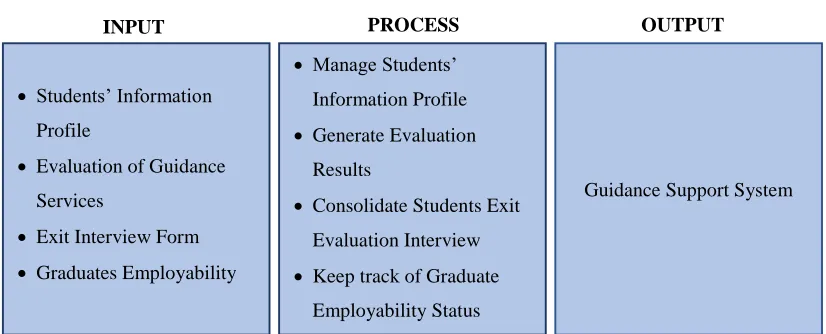
Figure 1. Conceptual Framework of the Study
The framework of the study shows the workflow of the input data, the process and the output data in the system. The system will accept inputs from the user such as the user information profile, evaluation of guidance services, exit
interview form and graduates
employability. The student profile includes the personal information. The evaluation of guidance services includes the student’s feedback on the services given. The exit interview and the graduate’s employability include the survey on the services received and tracking of work affiliation of alumni students.
The proposed Guidance Support System is where the students’ files and documents are stored, secured and organized on a database for easy access and manipulation.
The output data that would be generated by the system are the students’ information and the lists of sections per courses, the survey result and the assessment of problems and needs of every student.
Through the proposed system, the Guidance Center can have an easier and faster way of retrieving and determining the problems, needs and survey result in order to fully implement the interventions and cater the services that prevails in the system compared to the manual paper works which is done by the counselors.
METHODOLOGY Research Method
This study used the software development process which follows several stages to develop the project. The
Students’ Information
Profile
Evaluation of Guidance
Services
Exit Interview Form
Graduates Employability
Manage Students’
Information Profile
Generate Evaluation
Results
Consolidate Students Exit
Evaluation Interview
Keep track of Graduate
Employability Status
Guidance Support System
INPUT PROCESS OUTPUT
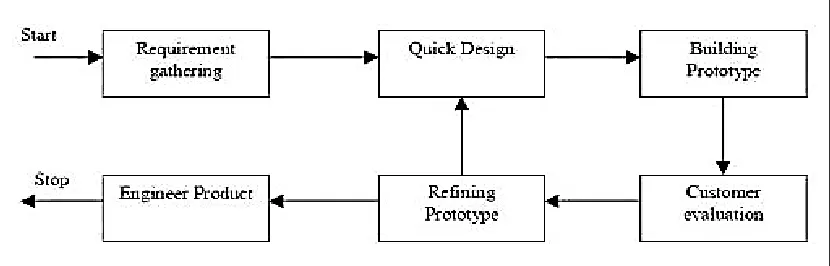
Figure 2. Evolutionary Prototyping Model
descriptive method was also used to interpret the result of the evaluation.
Project Development
Prototyping is most useful in development of systems having high level of user interactions such as online systems. Systems which need users to fill out forms or go through various screens before data is processed can use prototyping very effectively to give the exact look and feel even before the actual software is
developed. Figure 2 shows the
Evolutionary Prototyping Model
(Pressman, 2005) which was used in the development of the system.
Requirement Gathering
This step involves understanding the very basics product requirements especially in terms of user interface. In this phase, data from the guidance office were gathered. Students’ forms to be used for profiling were identified. An interview with the Guidance Counselor was also conducted to identify the process of filing students record.
Quick Design
This step involves designing the user interface, graphical design, as well as building the initial requirements of the system. This phase over the design of knowledge base rules, procedures, and
algorithms to be used. In this phase, the database design was formulated, screen layouts and user interface were developed.
Building Prototype
This step involves building the model, in this phase the actual process is defined, its functionality and interfaces. In this phase, the test data was supplied to test functionality of the system. The program was tested to ensure its accuracy.
Customer Evaluation
In this step, the prototype developed was then presented to the IT Experts for evaluation. A test case was developed to gather feedbacks and the suggestions and comments were recorded. The result of the
evaluation was used for further
enhancements in the development of the system.
Refine Prototype
In this stage, the feedback and the comments were reviewed and the changes accepted are again incorporated in the new prototype developed. The cycle repeats until customer expectations are met.
Engineer Product
In this step, the finished product was deployed for implementation.
Project Evaluation
The system was tested using the ISO 9126 criteria for software quality. The system was evaluated based on its
functionality, reliability, usability,
efficiency, maintainability and portability. It was evaluated by five (5) IT Experts who are in line with database development and
programming. Mean and standard
deviation was als used to determine the result of the evaluation. To interpret the scores, the five point Likert scale was used.
RESULTS AND DISCUSSION
The results of the evaluation of the system using the ISO 9126 criteria are hereby presented:
The system was presented to five (5) IT Experts for evaluation using the ISO 9126 Software Quality Criteria in terms of six main quality characteristics, namely,
functionality, reliability, usability,
efficiency, maintainability, and portability.
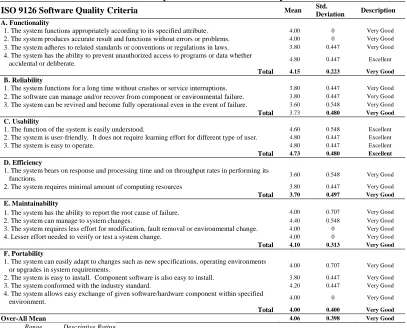
Table 1. Shows the result of the expert's evaluation of the system.
ISO 9126 Software Quality Criteria Mean Std.
Deviation Description
A. Functionality
1. The system functions appropriately according to its specified attribute. 4.00 0 Very Good 2. The system produces accurate result and functions without errors or problems. 4.00 0 Very Good 3. The system adheres to related standards or conventions or regulations in laws. 3.80 0.447 Very Good 4. The system has the ability to prevent unauthorized access to programs or data whether
accidental or deliberate. 4.80 0.447 Excellent
Total 4.15 0.223 Very Good
B. Reliability
1. The system functions for a long time without crashes or service interruptions. 3.80 0.447 Very Good 2. The software can manage and/or recover from component or environmental failure. 3.80 0.447 Very Good 3. The system can be revived and become fully operational even in the event of failure. 3.60 0.548 Very Good Total 3.73 0.480 Very Good
C. Usability
1. The function of the system is easily understood. 4.60 0.548 Excellent
2. The system is user-friendly. It does not require learning effort for different type of user. 4.80 0.447 Excellent
3. The system is easy to operate. 4.80 0.447 Excellent
Total 4.73 0.480 Excellent
D. Efficiency
1. The system bears on response and processing time and on throughput rates in performing its
functions. 3.60 0.548 Very Good
2. The system requires minimal amount of computing resources 3.80 0.447 Very Good
Total 3.70 0.497 Very Good E. Maintainability
1. The system has the ability to report the root cause of failure. 4.00 0.707 Very Good
2. The system can manage to system changes. 4.40 0.548 Very Good
3. The system requires less effort for modification, fault removal or environmental change. 4.00 0 Very Good
4. Lesser effort needed to verify or test a system change. 4.00 0 Very Good
Total 4.10 0.313 Very Good
F. Portability
1. The system can easily adapt to changes such as new specifications, operating environments
or upgrades in system requirements. 4.00 0.707 Very Good
2. The system is easy to install. Component software is also easy to install. 3.80 0.447 Very Good
3. The system conformed with the industry standard. 4.20 0.447 Very Good
4. The system allows easy exchange of given software/hardware component within specified
environment. 4.00 0 Very Good
Total 4.00 0.400 Very Good
Over-All Mean 4.06 0.398 Very Good
Range Descriptive Rating 4.21 – 5.00 Excellent 3.41 – 4.20 Very Good 2.61 – 3.40 Good 1.81 – 2.60 Fair 1.0 – 1.80 Poor
As shown in the Table 1, the expert's evaluation on the functionality was very good with mean score of 4.15. This implies that the totality of the system's function was very good.
As to system's reliability, the result was very good with the mean of 3.73. This implies that the system has the ability maintain its service and withstand to factors that may affect its service.
As to system usability, the result showed an excellent rating with the mean score of 4.73. This implies that the system was easy to use. It had the capability to be understood, learned, used and attractive to the user, when used under specified conditions.
As to system's efficiency, the result showed a very good evaluation rating with the mean of 3.70. This implies that the system's performance were not affected by the amount of resource utilization and could continue to deliver its function under certain conditions.
As to system's maintainability, the result showed a very good evaluation rating with a mean score of 4.10. This implies that the system required less effort to maintain and the services would not be affected during the maintenance period.
As to system's portability, the result revealed very good evaluation rating with a mean score of 4.00.
This implies that the system could easily adapt to changes such as new specifications, operating environments or upgrades in system requirements without affecting its operation.
The overall result of the expert's evaluation on the system using the ISO 9126 criteria was very good with the mean score of 4.06. This implies that the system could meet the software quality characteristics set by ISO 9126 standards. This may imply that the software is of good quality and it provides quality service to its clientele.
CONCLUSIONS
Based on the findings of the study, the following conclusions are drawn:
The creation of the database application provides easy access and retrieval to students records and results to the improvement of the guidance services. It also secures students record which is stored in the database.
The overall result of the IT experts’ evaluation using the ISO 9126 criteria in terms of functionality, reliability, efficiency, maintainability, and portability is very good. It implies that the proposed system meets the criteria for the software quality and it has a very good performance in terms of managing data.
RECOMMENDATIONS
Based on the foregoing findings and conclusions, the following courses of action are hereby recommended:
An orientation must be conducted to the students and guidance personnel on how to use the system once it is implemented.
Since the system was subjected to IT Expert’s evaluation as to its
performance, is recommended also to have a student evaluation on the actual settings to assess the student’s level of satisfaction on the use of the system.
To maintain the performance of the system and ensure its proper function, proper monitoring and maintenance must be ensured.
Lastly, it is recommended that the software may be submitted for copyright.
REFERENCES
Almeria, B. & Bataga, M.T. (2008).
Causes of worries encountered by the WVSU student teachers.
Undergraduate thesis. West
Visayas State University.
Iloilo City, Philippines
Aquino, G.V. & Alviar, C.C. (1980).
Principles of guidance and counseling: A modern approach. City: National Bookstore
Hisole, L.M. & Adelantar, M.V. (1993).
Guidance: A comprehensive approach. 1st ed. Iloilo City: West Visayas State University
ISO 9126 Software Quality
Characteristics. Retrieved from: http://www.sqa.net/iso9126.html
Pressman, R. (2005). Software
Engineering: A Practitioner’s
Approach (6th ed.).
New York: McGraw-Hill
Companies, Inc.