Mehrabov, I. 2015. Exploring Terra Incognita: Mapping Surveillance Studies from the Perspective of Media and Communication Research. Surveillance & Society 13(1): 117-126.
Ilkin Mehrabov
Karlstad University, Sweden.
Abstract
This article attempts to map Surveillance Studies from the perspective of the academic field of media and communication studies, and to seek out boundaries, limitations, strengths and weaknesses of current research. To map out the territory and mark important points within the landscape, Surveillance & Society, a premier interdisciplinary and peer-reviewed journal in the field of surveillance, is used as a point of departure. Analysis of topics within the Surveillance Studies field is conducted based on 296 articles from 40 issues published between 2002 and 2013.
Introduction
Mapping the vast field of Surveillance Studies is not easy, since Surveillance Studies is one of those fields that represents a colorful pastiche of intersections of rather unrelated areas of computer science, electrical and electronics engineering, information technology, law, psychology, criminology, medical research, sociology, history, philosophy, anthropology, political science and, last but not least, media and communication studies. As an academic discipline, media and communication studies itself is a— relatively speaking—“young” field of inquiry, sometimes described to look “something like a gestating fetus, whose hovering relatives worry over health, body parts, gender, size, facial features, hair color, and other attributes yet to be displayed at the end of a full-term pregnancy” (Zelizer 2009: 173); and frequently criticized for myopia which prevents it from “grasping the broader landscape of how media do, and do not, figure in people’s lives” (Couldry 2004: 177). So, rather than thinking of it only as a subfield of media research, it is more appropriate to consider Surveillance Studies as one of the frontiers of media and communication—with vague rather than clearly defined terrain, simultaneously connecting and dividing the field—since what are of most interest for media scholars are the contributions that these wild grounds, this terra incognita, make to our research, and the contributions we make back to them. At first glance it may seem that the scholarly interest of someone conducting research within the intersections of media and communication field with Surveillance Studies is limited to only the small proportion of this terrain, since, as an academic field, Surveillance Studies itself looks to be fragmented into several subfields—such as the ones fully evident in medical research (as in the surveillance of patients, diseases and epidemics), or the those more oriented towards economics and business administration (as in the surveillance of clients, bank accounts, financial transactions and market price fluctuations). But the illusion of media scholars being forced into enjoying someone else’s leftovers could not be more deceptive.
Somehow, most probably through studies on historical evolution of sensory perceptions, we arrived at a point where “human experience is now more visual and visualized than ever before” (Mirzoeff 1999: 1). Following this logic, most of the time we simply assume that surveillance is related only with the sense of vision, since even the meaning of French verb surveiller, the word used in the original title of Michel Foucault’s famous Discipline and Punish: The Birth of the Prison, means to keep an eye on, to watch, to supervise. This impact is more clearly evident in the nouns la surveillance meaning watching, or supervision, and un surveillant, meaning guard, or supervisor—and even Jeremy Bentham’s famous Panopticon itself was described as a “machine for dissociating the see/being seen dyad” (Foucault 1991: 202). The association of surveillance only with sight is also related to increasing value put on vision by Western culture, as can be clearly seen in the formulations such as,
“Idea” derives from the Greek verb meaning “to see”. This lexical etymology reminds us that the way that we think about the way that we think in Western culture is guided by a visual paradigm. Looking, seeing and knowing have become perilously intertwined. Thus the manner in which we have come to understand the concept of an “idea” is deeply bound up with the issues of “appearance”, of picture, and of image.
(Jenks 1995: 1)
However, even the simplest examples of voice recognition and fingerprint analysis—as forms of biometric identification that immediately come to mind when asked about surveillance—clearly show that the senses of sound and touch are also closely associated with the notion. The increased surveillance of internet activities, in the sense of tracking visited websites and clicked links, calculating the time spent on and purchases made through the internet sites, and logs of all of these activities reminds us once more that vision and visualization are not always a prerequisite for surveillance, and since the internet is itself both the media and medium—and since all forms, structures and contents of all kinds of media and mediums are important and essential for a media scholar to study—researching surveillance conducted in relation to the internet is an obligatory task for all media academics interested in the subject.
But to study surveillance in relation to the field of media and communication, and to give Surveillance Studies a place within media research, we need first to “tame” the territory, to turn this terra incognita
into a known, explored, and mapped chart, something that can help us to find our way in it and not be lost—like the example of Bruno Latour’s cartographer who is trying to “record the shape of a foreign coast on a piece of paper” (Latour 2005: 23-24). Such a quest is directly in line with Pierre Bourdieu’s indication that, “by constructing the objective structure of the distribution of the properties attached to individuals or institutions, one acquires an instrument for forecasting the probable behaviors of agents occupying different positions within that distribution” (Bourdieu 2004: 58), thus immediately contributing to the general structure and the future of the particular field.
Trying to map a field, a dream within a dream,1 without any starting point can be a maddening, difficult
task. However our quest in this sense is much easier, since—like the Lighthouse of Alexandria of ancient times, providing light, guidance and hope to sailors exhausted after months of sea experience for their safe return to the port—to be able to map the field of Surveillance Studies we can always turn to a known point, a port which will illuminate our way and provide safe passage during the effort. This point will be
1 The dreamlike effect that older analog CCTV CRT monitors produce—with their grainy black and white images,
Surveillance & Society, a premier interdisciplinary and peer-reviewed journal in the field of surveillance, which will serve several intertwined functions simultaneously: a departure point, a terrain of panoramic observations and as an Ariadne’s thread for this particular quest. The special issues of the journal will help formulate general cornerstones of the subfield and detect reiterating topics which can be classified into categories, thus forming the actual map of Surveillance Studies, especially from the perspective of media and communication research.
Mapping the Field
Surveillance & Society (http://www.surveillance-and-society.org/) is published by the Surveillance Studies Network (http://www.surveillance-studies.net/), a UK-registered charitable company and an international research and information network on surveillance. Both the network and journal are closely associated with the Surveillance Studies Centre (http://www.sscqueens.org/) at Queen’s University, Canada, headed by David Lyon, a leading expert in academic surveillance research. In this sense, the launch of the journal in 2002, and the re-launch in 2006 as part of the Open Journal System, represents an institutionalization process, an important paradigmatic shift in the field of studying surveillance. Before the journal’s initiation articles and books on surveillance were appearing in various spheres, ranging from popular newspapers to the most avant-garde publishing houses; from the journals of media and communication research to the journals of criminology. However, the establishment of Surveillance Studies Centre at Queen’s University, the formation of the Surveillance Studies Network, and the culmination achieved by launching Surveillance & Society represent an enthusiasm and drive to study surveillance much more systematically, in a broader, wider and deeper way and context. From the early beginning of efforts toward better systematization and analysis of the surveillance field, Surveillance Studies was an important part of media and communication research, particularly from the sociological perspective—as can be clearly seen from the organizational charts of all three above-mentioned entities involved within this sphere. In this sense surveillance and studies of surveillance occupy important space within media and communication: as a “subfield” and a point of intersection with different traditions and fields of social and technical sciences, thus marking an essential interdisciplinary crossroad. However, some aspects of this subfield’s research need further intensification and some notions need fortification. A humble contribution to this effort will be to take a general look at some repeating themes in the journal and the field itself, at important cornerstones of surveillance research—themes that are forming the map of the subfield itself.
Between 2002 and 2013, the journal published 40 issues, some as double issues. 28 of these issues are special issues, focusing on specific themes, with 23 different titles and 296 pieces in total appearing within those issues of the journal—excluding book reviews—in the form of original articles, essays, editorials, commentaries, opinion and debate pieces, research notes, artistic presentations, technical reviews, and even poems and a screenplay. Even the initial analysis of the special issues allowed for the crude mapping of the field from the perspective of media and communication research, yet the fully meaningful “taming” was possible through a content analysis of every piece appearing in the journal so far. This analysis helped detect four general umbrella themes and reiterating topics in the journal, which in their totality form the actual backbone and infrastructure of possible intersections between Surveillance Studies and media and communication research.
1. Classic Surveillance: “Discipline” and “Control”
theoretical ones (Elden 2003; Hier 2004; Haggerty and Ericson 2006; Yar 2003) to more country-based case studies—like Canada (Hier et al. 2007), Australia (Sutton and Wilson 2004), or Switzerland (Klauser 2004; Müller and Boos 2004), to mention a few. However all of the research conducted in this sphere is mainly Western oriented—the main exception is the issue 10(1), “Surveillance in Latin America”— despite the fact that developing countries are now extensively installing CCTV as well as more sophisticated surveillance systems. Surveillance is now a global issue, and more research needs to be conducted about the politics of it in the developing world, since there it is not used merely to watch over and control population; there, it easily turns into the tool of oppression and destruction, and more elaborate thinking should be put into discerning the logic behind it.2 Explanations of surveillance
technologies as merely means of fighting with crime, watching over potentially criminal populations based on social sorting, or keeping order appear to be inadequate for explaining many other phenomenal changes in surveillance by states or private companies, as now everyone is being watched. What is the cause of this surveillance? This needs to be explored deeper.
2. Identity-Based Surveillance
Issues 4(3), “Surveillance and Criminal Justice: Part 1”, 4(4), “Surveillance and Criminal Justice: Part 2”, 5(3), “Surveillance and Inequality”, 6(2), “Health, Medicine and Surveillance”, 6(4), “Gender, Sexuality and Surveillance”, 7(3/4), “Surveillance, Children and Childhood”, and 9(4), “ Cyber-Surveillance in Everyday Life”, can be gathered together under the broad theme of identity-based surveillance, taking into consideration the web of relationships developed by treating surveillance in relation to issues such as age, race, gender, and ethnicity, and inevitably the social inequalities related with them. Under this topic we can look upon how surveillance is tracking and affecting lives of elder, children, women, unhealthy, homosexual, homeless people, racially different and immigrant populations—in brief, all the “others” of different social, cultural and economic contexts. Basing our assumption on this broad perspective, it is interesting to note how surveillance over an individual starts from the moment of her birth—or even from the moment she is detected as a fetus—and as the child respectively develops into teenager, adult and elder, control over the human body and the sense of safety and security related with it continues to increase with passing years, intensifying and reaching its peak if an individual somehow starts to show any different behavior or to deviate from the norms, thus immediately falling into the category of the “other”. In this sense, even if human bodies most often are connected to more individual realms, “through being observed, monitored and controlled, they also serve to demonstrate collective identities” (Jones 2005: 592). Even if automatic computerized systems are gaining wide momentum, it is important to notice that the tracking and watching—the actual tasks of surveillance—are still to a great extent conducted by humans, who may very well reflect their own prejudices and beliefs, like when it was revealed in US court that a “white woman who lived in a predominantly black neighbourhood was refused a credit card not because of her personal credit history, but because the postcode in which she lived was considered too risky in the credit checking system” (Ball et al. 2009: 354). So it is obvious that the level of surveillance and social control we are exposed to is closely associated with the social sorting of populations; databases constructed based on demographic information; cities and neighborhoods we live in; and spaces we are located within.
3. Mobility and Stasis
Issues 1(4), “Surveillance and Mobilities”, 5(2), “Smart Borders and Mobilities: Spaces, Zones, Enclosures” and 9(3), “Urban Surveillance” look at probably one of the most important features of surveillance: its relationship with mobility and travel. As we contemplate the new mobilities paradigms and a politics of mobility (Sheller and Urry 2006; Cresswell 2010; Wiley and Packer 2010) more and more, we simply miss the fact that surveillance from its earliest days was a means of keeping tabs on mobility (Lyon 2001) and control of a fixed non-movable space in the state of stasis which bears the
2 Minas Samatas beautifully describes how the whole theory and methodology of Surveillance Studies needs to be
potential of movement, as the mobile cannot be truly understood without taking into consideration the immobile as well. Articles written within this scope usually focus on local, national and global mobility, the fluid flow of humans and non-humans through spaces and across distances, often looking upon the crossings of various boundaries: of countries (Wilson and Weber 2008; Côté-Boucher 2008); of borders separating land and air, like airports (Curry 2003; Adey 2003); or of the “invisible” safety margins of cities (Liempt and Aalst 2012). However, it is important to notice how the means of transport for this mobility—see Hay and Packer (2004) for increased surveillance of automobiles and roads, and Govil (2004) for surveillative inner spaces of modern airplanes—and the usual static places like our own houses—see Allon (2004)—are also rapidly turning into the agents of surveillance, tracking and keeping eye on their passengers and settlers, always in the name of elevated sense of safety. Intertwining of “usual” spaces with media technologies for the sake of the heightened experiences of privacy, security and entertainment transforms these spaces into media/spaces, which are potentially more prone to surveillance. In this sense, as David Lyon elegantly notes, “it is ironic that the quest for privacy produces surveillance, because privacy is also looked to as protection against surveillance” (Lyon 2002: 2; italics in the original). Without doubt, the transformation of spaces of mobility and stasis into the terrains of intensive surveillance—the notion going hand in hand with the “heightened sense of privacy and security” (Allon 2004: 266) of modern society—is a frightening development, since this path certainly is leading to the metamorphosis of people becoming alienated, lonely individuals and increased anomie of society. Jonathan Mostow’s 2009 movie Surrogates depicts such a society, where people live in total isolation from each other in the safety of their houses and interact remotely with the outside world through surrogates, robotic mechanical representations of themselves. This is a dystopian society, with absence of not only actual crime, fear and pain, but also real passions and feelings, where people live in self-prisons, attached all the time to machines needed to control their surrogates. Within this scope it is interesting to note that even modern housing projects like gated communities, usually favored by upper and middle classes, rapidly transform domestic spaces into such self-prisons, since on one hand such houses are closely connected with the outside world with the help of numerous information-communication technologies embedded into the very core of the houses; but at the same time they are strictly separated from the public world by various safety and surveillance technologies, thus alienating and disconnecting a person from “real” life in general. But it looks like this trend is inevitable, considering that even the devices we use to connect with the outside world are increasingly becoming devices to track our movements, to locate and pin-pointedly find us in a crowd—even when our mobility is limited only to walking.
An article published in The Guardian on April 20, 2011 revealed that all iPhones have a secret file inside, where the location coordinates and timestamps of the owner’s movements are recorded (Arthur 2011). This sort of hidden surveillance is actually legitimized by Apple in its terms and contracts agreement, where it is stated:
Apple and our partners and licensees may collect, use, and share precise location data, including the real-time geographic location of your Apple computer or device. This location data is collected anonymously in a form that does not personally identify you and is used by Apple and our partners and licensees to provide and improve location-based products and services. For example, we may share geographic location with application providers when you opt in to their location services.
The Guardian article also gave the short list of previous discussions about privacy invasions, and very interesting was the excerpt of speech delivered by Eric Schmidt, chief executive of Google in December 2009, where he is quoted saying that
engines—including Google—do retain this information for some time and it’s important, for example, that we are all subject in the United States to the Patriot Act and it is possible that all that information could be made available to the authorities.
Information provided by this article goes hand in hand with the “normative statement of ‘nothing to hide: nothing to fear,’ a response which is often cited in ‘vox pop’ media coverage of the surveillance society” (Ball et al. 2009: 353), once more proving Mark Andrejevic’s notion: “it is no longer surveillance that is stigmatized, but the fear of it” (Andrejevic 2004: 200-201). This stigmatization of fear of surveillance is taking place against a background where one can witness an alarming number of cases involving voluntary and even desired surveillance, so in this sense it is very important to investigate the drives and formulations lying behind such incidents as well.
4. Work, Power and Resistance
Issues 1(2), “Work”, 2(4), “People Watching People”, 6(3), “Surveillance and Resistance”, 8(2), “Surveillance and Empowerment”, and 8(3), “Marketing, Consumption and Surveillance” reflect on the troubled relationship of surveillance with the changing and fixed notions of work and labor, especially in the era of increased interactivity and convergence, and whether these notions can be used to resist surveillance and provide empowerment. Most of the studies conducted from such a perspective are problematic (Koskela 2004; Albrechtslund and Nørgaard Glud 2010; Regan and Steeves 2010; Shilton 2010), since they seem to neglect the fact that the internet is—and was from its very beginning—a space of close surveillance and data gathering, and that this user-generated data is more and more transformed into sellable commodities and the work of internet users is turned into “free labor” (Terranova 2000), exponentially rising to such a level that it is now referred to as “exploitation 2.0” (Andrejevic 2009).
The model proposed by Mark Andrejevic which theorizes the digital enclosure as a form of “productivity and monitoring facilitated by ubiquitous interactivity” (Andrejevic 2007: 297) seems to be more appropriate within this vein, since in reality there are few individuals actually benefitting from this digital process, few “entrepreneurs of the digital enclosure” (Andrejevic 2004: 199). The ones who really gain advantage within this sphere are companies. Brabham (2008) unwittingly shows that the introduction of more and more “free” interactive online applications, websites, gadgets, programs and platforms does “primarily serve economic ends that are realized by large-scale user surveillance” (Fuchs 2011: 291). Surveillance helps companies to access selected markets based on scrutinized demographics; to implement free time of people for companies’ own benefit; to actually make people do companies’ jobs for free— thus creating a huge exploitation of human labor. The word “exploitation” may seem harsh, taking into consideration that nearly all of the time this labor is voluntarily provided for free. Yet it helps to “invoke questions of power and control—and while it is frequently invoked in discussions of the digital economy, more work needs to be done to update it for the interactive era” (Andrejevic 2011: 279). Highlighting “success” stories related only with some lucky individuals benefitting from surveillance will only serve as justification and intensification of the ideology already being widely popularized by the media: the idea of succeeding, achieving, but solely for yourself—not for your community or people. The endless talks about how media literacy will empower people is also within a similar vein—see Livingstone (2008) for more a realistic evaluation of this debate—thus forming both the ideology and strategies that “rely upon the responsibilization of citizen-subjects to take on the challenges of self-management and risk avoidance through forms of monitoring and rationalization associated with capitalist enterprise culture” (Andrejevic 2005: 485). True resistance can only be conducted and true empowerment can only be fully achieved with the realization that surveillance is not singular and does not involve one actor; that it is an intervention of different power dynamics and struggles coming from the broad range of multiple actors. These can include,
neighbours, and so on). Key to this crude typology is the implicit understanding that power dynamics will likely vary depending on the location of origination, thus producing different dialectics. In some instances, we may document conflicts between corporations and their clients, resulting in a power dynamic different from the surveillance by a state actor of political protestors. In other words, our analysis of surveillance should be predicated on the origins and actors involved. If the above logic is correct, then it follows that studying surveillance (and resistance) is going to be situational, contextual, and historically specific.
(Fernandez and Huey 2009: 199-200)
A strange incident described in a news report in the Turkish newspaper Vatan in 2011 (Şanlı 2011) is an exemplary case of Fernandez and Huey’s insistence on the situational, contextual, and historically specific analysis of power dynamics embedded within the surveillance practices. According to the article, an ordinary money transfer between the local Turkish bank branches turned into a major embarrassment and a diplomatic scandal, as the transfer between the Istanbul and Ankara branch located at Tahran Avenue was rapidly blocked by US officials through the international SWIFT system, thinking that the bank account on the receiving end was of an Iranian citizen based in Tehran. Even though both branches were located in Turkey, and SWIFT is actually a Belgium-based company providing worldwide financial services, US officials were able to monitor, detect, interfere with and block the transfer. This incident clearly shows that surveillance has non-singular power dynamics, and hegemony struggles appearing within them from time to time are also on a much higher level than we can—possibly ever—explore. Yet, to obtain a more realistic overview of surveillance practices it is important to map and detect these power struggles, and the ways they are conducted—thus finding cracks for more empowering resistances. We shall never miss the fact that:
Media norms are internalized and embodied; media resources become part of the infrastructure of many types of activity; powerful media actors (not just media organizations, but most states, many corporations, some political parties, and nongovernmental organizations) use that power to alter the action space around them.
(Couldry 2009: 41)
Conclusion
If we try to trace the historical evolution of Surveillance Studies and its interactions with media and communication research we can easily detect two main paradigmatic shifts. The first is the establishment and launch of the Surveillance & Society journal by scholars of the field—a move which defines the institutionalization and systematization of efforts to understand surveillance and approach it with better methodological tools and from a more interdisciplinary perspective (to be evaluated together with the foundation of the Surveillance Studies Network and the Surveillance Studies Centre). The second paradigmatic shift is the diversification and widening of subjects to be studied in correlation with the surveillance. As we can clearly see, problems of class, gender, age, mobility and stability, resistance, labor, power and empowerment are now intensively integrated into Surveillance Studies—thus focus is being shifted from traditional explanations of surveillance based on abstract panoptic discipline (Foucault 1991) or the “societies of control” (Deleuze 1992) to more everyday and more practical issues, as well as their relationships with the work of being watched. These shifts invite surveillance, and of course media and communication, scholars to pay closer attention to power dynamics and struggles happening between different actors of surveillance, so that a more thorough analysis can be conducted and a more realistic and vivid picture painted.
understood within the broader context of social control, processes of social exclusion and closure, and the complex forms of surveillance that they lead into” (Christensen and Jansson 2011: 232, italics in the original). These complex forms of surveillance practices and activities most easily show themselves in cases of voluntary surveillance and self-surveillance, in cases where people write down, talk about or reveal the most intimate details of their personal and public life; where the gaze of cameras is turned by an individual upon herself and this image and video feed is shared with the rest of the world; where, along with voyeurism, we also see an exponential increase in exhibitionism. As newly introduced concepts such as “lateral surveillance” (Andrejevic 2005) or “complicit surveillance” (Christensen 2011) also clearly show, we witness ourselves becoming part of a culture where surveillance not only becomes highly legitimized, but also integrated and internalized—even a desired part of social life. Commercial cases like the famous JenniCam example can be understood, but what about the free ones? How can we explain this free labor of participating within surveillance culture and the drives behind it? It is thus obvious that even closer collaboration between media and communication research and Surveillance Studies is acutely needed to explain such phenomena; that more in-depth and much deeper interdisciplinary analysis of human psychology, societal forces, media structures and social logic behind such instances needs to be conducted.
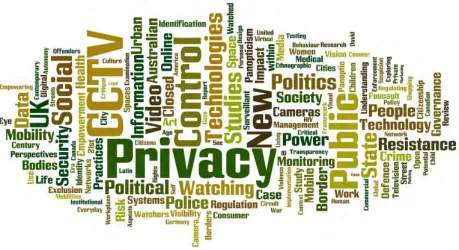
Figure 1. The word cloud of analyzed 296 journal article titles published between
2002 and 2013—created with Wordle, with the word “surveillance” excluded.
References
Adey, Peter. 2003. Secured and Sorted Mobilities: Examples from the Airport. Surveillance & Society 1(4): 500-519.
Albrechtslund, Anders and Lynsey Dubbeld. 2005. The Plays and Arts of Surveillance: Studying Surveillance as Entertainment.
Surveillance & Society 3(2/3): 216-221.
Albrechtslund, Anders and Louise Nørgaard Glud. 2010. Empowering Residents: A Theoretical Framework for Negotiating Surveillance Technologies. Surveillance & Society 8(2): 235-250.
Allon, Fiona. 2004. An Ontology of Everyday Control: Space, Media Flows and ‘Smart’ Living in the Absolute Present. In
Media/Space: Place, Scale and Culture in a Media Age, edited by Nick Couldry and Anna McCarthy, 253-274. London: Routledge.
Andrejevic, Mark. 2004. The Webcam Culture and the Digital Enclosure. In Media/Space: Place, Scale and Culture in a Media Age, edited by Nick Couldry and Anna McCarthy, 193-208. London: Routledge.
Andrejevic, Mark. 2005. The Work of Watching One Another: Lateral Surveillance, Risk, and Governance. Surveillance & Society 2(4): 479-497.
Andrejevic, Mark. 2007. Surveillance in the Digital Enclosure. Communication Review 10(4): 295-317.
Andrejevic, Mark. 2009. Critical Media Studies 2.0: An Interactive Upgrade. Interactions: Studies in Communication and Culture
1(1): 35-51.
Andrejevic, Mark. 2011. Surveillance and Alienation in the Online Economy. Surveillance & Society 8(3): 278-287.
Arthur, Charles. 2011. iPhone Keeps Record of Everywhere You Go. The Guardian, April 20. Accessed October 28, 2012. http://www.guardian.co.uk/technology/2011/apr/20/iphone-tracking-prompts-privacy-fears
Ball, Kirstie, Nicola Green, Hille Koskela, and David J. Phillips. 2009. Surveillance Studies Needs Gender and Sexuality.
Surveillance & Society 6(4): 352-355.
Bourdieu, Pierre. 2004. Science of Science and Reflexivity. Translated by Richard Nice. Chicago: Chicago University Press. Brabham, Daren. C. 2008. Crowdsourcing as a Model for Problem Solving: An Introduction and Cases. Convergence 14(1):
75-90.
Brighenti, Andrea Mubi. 2010. Artveillance: At the Crossroads of Art and Surveillance. Surveillance & Society 7(2): 175-186. Christensen, Miyase. 2011. Online Social Media, Communicative Practice and Complicit Surveillance in Transnational Contexts.
In Online Territories: Globalization, Mediated Practice and Social Space, edited by Miyase Christensen, André Jansson, and Christian Christensen, 222-238. New York: Peter Lang.
Christensen, Miyase, and André Jansson. 2011. Fields, Territories and Bridges: Networked Communities and Mediated Surveillance in Transnational Social Space. In Internet and Surveillance: The Challenges of Web 2.0 and Social Media, edited by Christian Fuchs, Kees Boersma, Anders Albrechtslund, and Marisol Sandoval, 220-238. London: Routledge. Couldry, Nick. 2004. Transvaluing Media Studies, or Beyond the Myth of the Mediated Centre. In Media and Cultural Theory,
edited by James Curran and David Morley, 177-194. London: Routledge.
Couldry, Nick. 2009. My Media Studies: Thoughts from Nick Couldry. Television & New Media 10(1): 40-42.
Côté-Boucher, Karine. 2008. The Diffuse Border: Intelligence-Sharing, Control and Confinement along Canada’s Smart Border.
Surveillance & Society 5(2): 142-165.
Cresswell, Tim. 2010. Towards a Politics of Mobility. Environment and Planning D: Society and Space 28(1): 17-31.
Curry, Michael. R. 2003. The Profiler’s Question and the Treacherous Traveler: Narratives of Belonging in Commercial Aviation.
Surveillance & Society 1(4): 475-499.
Deleuze, Gilles. 1992. Postscript on the Societies of Control. October 59: 3-7. Elden, Stuart. 2003. Plague, Panopticon, Police. Surveillance & Society 1(3): 240-253.
Fernandez, Luis A. and Laura Huey. 2009. Is Resistance Futile? Some Thoughts on Resisting Surveillance. Surveillance & Society 6(3): 198-202.
Foucault, Michel. 1991. Discipline and Punish: The Birth of the Prison. Translated by Alan Sheridan. London: Penguin Books. Fuchs, Christian. 2011. Web 2.0, Prosumption, and Surveillance. Surveillance & Society 8(3): 288-309.
Fyfe, Nicholas R. and Jon Bannister. 1998. ‘The Eyes upon the Street’: Closed-Circuit Television Surveillance and the City. In
Images of the Street: Planning, Identity and Control in Public Space, edited by Nicholas R. Fyfe, 254-267. London: Routledge.
Govil, Nitin. 2004. Something Spatial in the Air: In-Flight Entertainment and the Topographies of Modern Air Travel. In
Media/Space: Place, Scale and Culture in a Media Age, edited by Nick Couldry and Anna McCarthy, 233-252. London: Routledge.
Haggerty, Kevin D. and Richard V. Ericson, eds. 2006. The New Politics of Surveillance and Visibility. Toronto: University of Toronto Press.
Hay, James, and Jeremy Packer. 2004. Crossing the Media(-n): Auto-Mobility, the Transported Self and Technologies of Freedom. In Media/Space: Place, Scale and Culture in a Media Age, edited by Nick Couldry and Anna McCarthy, 209-232. London: Routledge.
Hier, Sean P. 2004. Risky Spaces and Dangerous Faces: Urban Surveillance, Social Disorder and CCTV. Social & Legal Studies
13(4): 541-554.
Jenks, Chris. 1995. The Centrality of the Eye in Western Culture: An Introduction. In Visual Culture, edited by Chris Jenks, 1-25. London: Routledge.
Jones, Helen. 2005. Visible Rights: Watching Out for Women. Surveillance & Society 2(4): 589-593.
Klauser, Francisco. 2004. A Comparison of the Impact of Protective and Preservative Video Surveillance on Urban Territoriality: The Case of Switzerland. Surveillance & Society 2(2/3): 145-160.
Koskela, Hille. 2004. Webcams, TV Shows and Mobile Phones: Empowering Exhibitionism. Surveillance & Society 2(2/3): 199-215.
Latour, Bruno. 2005. Reassembling the Social: An Introduction to Actor-Network Theory. Oxford: Oxford University Press. Liempt, Ilse van and Irina van Aalst. 2012. Urban Surveillance and the Struggle between Safe and Exciting Nightlife Districts.
Surveillance & Society 9(3): 280-292.
Livingstone, Sonia. 2008. Engaging with Media—A Matter of Literacy. Communication, Culture & Critique 1(1): 51-62. Lyon, David. 2001. Surveillance Society: Monitoring Everyday Life. Buckingham: Open University Press.
Lyon, David. 2002. Editorial. Surveillance Studies: Understanding Visibility, Mobility and the Phenetic Fix. Surveillance & Society 1(1): 1-7.
Lyon, David, Aaron Doyle, and Randy Lippert. 2012. Introduction. In Eyes Everywhere: The Global Growth of Camera Surveillance, edited by Aaron Doyle, Randy Lippert, and David Lyon, 1-19. London: Routledge.
Mirzoeff, Nicholas. 1999. An Introduction to Visual Culture. London: Routledge.
Müller, Christoph and Daniel Boos. 2004. Zurich Main Railway Station: A Typology of Public CCTV Systems. Surveillance & Society 2(2/3): 161-176.
Regan, Priscilla and Valerie Steeves. 2010. Kids R Us: Online Social Networking and the Potential for Empowerment.
Surveillance & Society 8(2): 151-165.
Rush, Michael. 2003. Video Art. London: Thames & Hudson.
Samatas, Minas. 2005. Studying Surveillance in Greece: Methodological and Other Problems Related to an Authoritarian Surveillance Culture. Surveillance & Society 3(2/3): 181-197.
Sheller, Mimi, and John Urry. 2006. The New Mobilities Paradigm. Environment and Planning A 38(2): 207-226. Shilton, Kate. 2010. Participatory Sensing: Building Empowering Surveillance. Surveillance & Society 8(2): 131-150.
Sutton, Adam and Dean Wilson. 2004. Open-Street CCTV in Australia: The Politics of Resistance and Expansion. Surveillance & Society 2(2/3): 310-322.
Şanlı, Ufuk. 2011. Ankara’daki Bankaya Tahran Baskını! Vatan, February 2. Accessed October 28, 2012. http://haber.gazetevatan.com/ankarada-ilginc-olay/356817/2/Ekonomi
Terranova, Tiziana. 2000. Free Labor: Producing Culture for the Digital Economy. Social Text 18(2): 33-58.
Yar, Majid. 2003. Panoptic Power and the Pathologisation of Vision: Critical Reflections on the Foucauldian Thesis. Surveillance & Society 1(3): 254-271.
Zelizer, Barbie. 2009. My Media Studies: The Hubris of It All. Television & New Media 10(1): 173-174.
Wiley, Stephen B. Crofts and Jeremy Packer. 2010. Rethinking Communication after the Mobilities Turn. Communication Review
13(4): 263-268.
Wilson, Dean and Leanne Weber. 2008. Surveillance, Risk and Preemption on the Australian Border. Surveillance & Society 5(2): 124-141.