Vol.7 (2017) No. 2
ISSN: 2088-5334
Panoramic Image Communication for Mobile Application Using
Content-Aware Image Resizing Method
Jaejoon Kim
School of Computer and Communication, Daegu University 201 Daegudaero, Gyeongsan, Gyeongbuk, 38453, South Korea
E-mail: [email protected]
Abstract— This paper presents an image resizing application for mobile communication intended to evaluate content-aware image resizing method for panoramic image. In many applications, we can take into account aspect ratio changing, removal or pan and zoom in the image. However, the implemented application in this work is more focused on image downsizing due to mobile applications that where image capacity is mostly limited. The generated panoramic image will be distorted simply by scaling factors, and the image will lose information or generate artifacts if the area is cropped directly. It is meaningful to discuss how to keep the main object in the image and resize the image by cutting off the unnecessary parts. The implemented approach has been successfully developed and will be valuable to compare image resizing on mobile terminal.
Keywords— seam; seam carving; image resizing; energy map; RANSAC; mobile application
I. INTRODUCTION
As for today’s high technology world, digital images are often delivered to a user and viewed in many different display devices with a variety of resolutions. However, among different type of devices such as smartphones, monitors, notebook or TV, variation of resolution makes viewing images difficult because they usually are resized to accommodate limited space. Conventional and simple attempts at resizing or rescaling can be seen in scaling and cropping without considering the content of the image. Scaling reduces perceivable detail and cropping cannot be done automatically. In addition, cropping alters the image composition and is not always desirable. These methods can lead to loss of important image features or distortion.
In particular, for image rescaling process including downsampling and upsampling, image interpolation is a necessary tool depending on the communication channel or end user’s terminal display capacity. Sometimes, it might not be considered if the end user can figure out or analyse the final image with transmitted low-resolution while keeping perceivable visual data. Therefore, in many ICT (Information Contents Technology) applications, the accurate resizing of image data is a fundamental and essential step for a wide range of products such as games, photo or augmented reality to special areas such as security, medical component, or defence parts.
Among many approaches for image resizing, the ideal method is to remove uninteresting parts of the image while maintaining the important content. Recently, Seam Carving has become known as an efficient method [1]-[2]. This method determines the importance of each pixel of the image using an energy map. By using this importance map, the algorithm finds the optimum seam, which is defined as the path of pixels with the lowest cumulative energy and removes it from the image. This way, because the interesting features in the image usually have more energy, the method automatically preserves the important contents and removes pixels from the uninteresting parts [3].
In this paper, image resizing can be implemented and showed possible applications. Section II contains the summary of our research and interest into the background of our experimental approach related to content-aware image resizing. Section III will discuss panoramic image composition and horizontal and vertical image resizing. Section IV will show our results, and Section V will conclude our experiment and discuss future works.
II. MATERIAL AND METHOD
approach, we can find a wide seam path along vertical or horizontal direction and remove those paths. If the pixels in those seam paths are similar to neighbouring or surrounding pixels, then removal process may not be noticed.
A. Image Resizing
There are many different methods to take a variation on width and height of an image. Common methods are image resizing and cropping which have several deficiencies. Image resizing is an enlarging or reducing method that includes entire image. However, when we would consider different width and height on comparing to original, the ratio of the original image could be broken, and an image can be distorted [4].
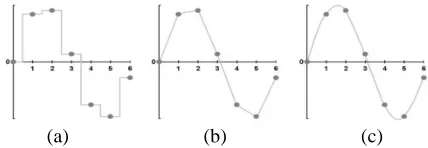
In computer vision applications, one of the classical and popular resampling approaches is a bilinear interpolation. The main idea is to perform linear interpolation first in one direction, and then again in another direction. Although each step is linear in the sampled values and in the position, the interpolation as a whole is not linear but rather quadratic in the sample location. Fig. 1 illustrates a 1-dimensional interpolation example with the nearest-neighbor method, a commonly used basic technique.
(a) (b) (c)
Fig. 1 An explanation of several interpolation methods for (a) nearest-neighbour, (b) linear interpolation, (c) cubic interpolation
Unlike other interpolation techniques such as nearest-neighbor interpolation and cubic interpolation, bilinear interpolation uses only the 4 nearest pixel values which are located in diagonal directions from a given pixel in order to find the appropriate intensity values of that pixel. If complexity and computation speed is not the main consideration, cubic interpolation can be chosen over bilinear interpolation or nearest-neighbor in image resampling process. For bilinear interpolation, the entire processed pixel should be 4 pixels to find the last position and 16 pixels for cubic interpolation. Since more consideration pixels are increased, the final version of resampled images is smoother and has fewer interpolation artifacts. The application of cubic algorithm is scaling images and videos for various display devices. It preserves fine detail better than the common bilinear algorithm [5].
In image processing, cropping is generally described as the removal of unwanted regions from a photographic image. This process is necessary when we improve image composition by changing image aspect ratio or removing irrelevant parts. However, an important part of an image can be removed when cropping is performed improperly. In order to compensate for these deficiencies, generally two steps for cropping are combined in the process: resizing enlarging or reducing component with maintaining width and height ratio and removing an unwanted part [6]. In this
case, it is necessary to be aligned to avoid skewness in the processed image. This process assumes that major part of an image should be located in the centre area.
B. Review of Energy Function and Seam Finding
There are a number of other interesting things that can be done using this method described before. For example, the seam carving method can be run reversely to insert interpolated seams along the optimum seams to enlarge the image. Alternatively, by manually assigning large negative or positive energy values to certain pixels in a region of interest, the algorithm can be manipulated to remove or preserve the region. Reducing the size of an image is accomplished by removing pixels that will go unnoticed. The pixels to be removed are determined by finding the path across the image with the lowest sum of energy value along a seam path. Seam carving [1] is called content-aware resizing liquid rescaling with a considerably valid assumption which is continuously similar region has important information than region with not continuously connected region. Seam carving can remove less important region in the similarly connected region. In other words, seam carving can enlarge an image by inserting a similarly connected region. The essential part of this research is how to find a seam to resize generated a panoramic image. The seam carving approach can be seen in following steps:
[Step 1] Calculate an energy value for each pixel in an image. In order to compute energy level, it is first necessary for smoothing filter on an image such as 3x3 Sobel filter. Then we need to employ partial derivative operation on x, y direction with a smoothing filter. As can be described in the [7], the governing function is defined as the sum of the gradient in horizontal and vertical both directions:
(1)
where I means an image and ∂/∂x and ∂/∂y are partial derivative operations on x and y direction. In other words, Eq (1) is a measuring form for variation of the image in horizontal and vertical directions and then assigning a transformed value to each pixel.
[Step 2] Find a seam along horizontal and vertical directions with the least total energy using dynamic programming. Once we find the energy, map image needs to be calculated separately for either vertical or horizontal seams and needs to be recalculated after every seam removal. It is calculated by the following process for the vertical seam case for each pixel I(i,j) in the gradient image in Table 1, the value at I(i,j) in the energy map is the sum of the current value at I(i,j) from the gradient image and the minimum of the three neighboring pixels in the previous row, i.e.
min{I(i-1, j-1), I(i-1, j), I(i-1, j+1)} (2)
[Step 4] Repeat steps 1-3 until the image shrinks or grows to the desired size. Steps 1 through 4 also explains how to reduce the original image width. The same code can easily be used for reducing the image's height by simply taking the transpose of the input image.
TABLEI IMAGE PIXEL INDICES
(i-1, j-1) (i-1, j) (i-1,j+1) (i, j-1) (i, j) (i, j+1) (i+1, j-1) (i+1, j) (i+1, j+1)
C. Design of Application System
This section discusses the proposed implementation technique. The applied techniques are consisting of two parts: building panoramic image and resizing an image. In many applications, we can take into account aspect ratio changing, removal or pan and zoom in the image. However, the implemented application in this work is more focused on image shrinkage due to mobile application that is limited for image capacity. Fig. 2 shows the overall application procedure.
Fig. 2 The block diagram for overall application
D. Panoramic Image
In order to make a panoramic image, there are many possible approaches. 2D or 3D visual system, in general, is based on geography environment and presents the space information through visual effect. Natural scene or geographic information visualization is one of the most important technologies of information visualization with various display terminals. When we look at one large panorama image, it sometimes gives us tension and excitation. For game application, in particular, it puts all the elements into a real 3D world such as VR (virtual reality) and AR (augmented reality) world. In addition, visualization technology can be applied to human-computer interaction, geographic information, project management, environmental simulation, medical diagnosis, agroforestry management and so on.
Panoramic image is a technique of photography using image stitching algorithm or hardware equipment. After applying several methods, the final image can be seen in
horizontally elongated fields of view or wide angle. In order to construct panoramic image, there are various computer vision and image processing techniques. We can refer stitching algorithm for panoramic image that contains keypoint detection and local invariant descriptors, keypoint matching, RANSAC (Random Sample Consensus) and perspective warping [8]-[11]. Xiong and Pulli describe basic stitching pipeline for making a panoramic image. In paper [12], the overall goal is to create panorama stitching app on a mobile device with single view panorama. Fig. 3 describes the basic stitching pipeline.
Fig. 3 The basic stitching pipeline [12]
The mobile application, in particular, can focus the camera capsule to capture multiple images from the targeted area and sends it to the PandaBoard for panoramic image generation [13]. The generated panoramic image is further processed inside the mobile computer to facilitate faster image transmission. The processed panoramic image is placed in a buffer and transmitted to the destination device
We can apply the panoramic image to many applications such as natural scene composition. In addition, we can use lens and mirror based cameras consisting of lenses and curved mirrors that reflect a 360-degree field of view into the lens' optics. A considerable number of algorithms have been developed to enhance image stitching in order to make a panoramic image. All these algorithms share some common properties while having some new innovative methods [14]-[16]. However, available algorithms can be classified as response time optimization oriented and image quality optimization oriented according to their research direction and content.
(a)
(b)
(c)
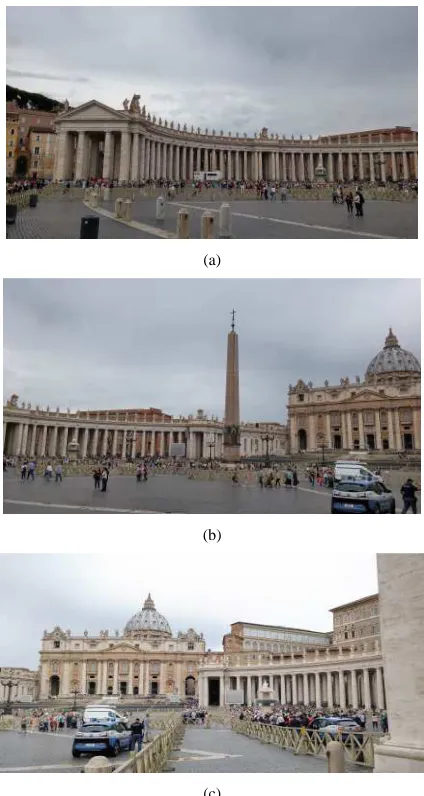
Fig. 4 The scene images with different field of view (data set 1): image dimension is 450x800 and each image size is 2.89MB
(a)
(b)
(c)
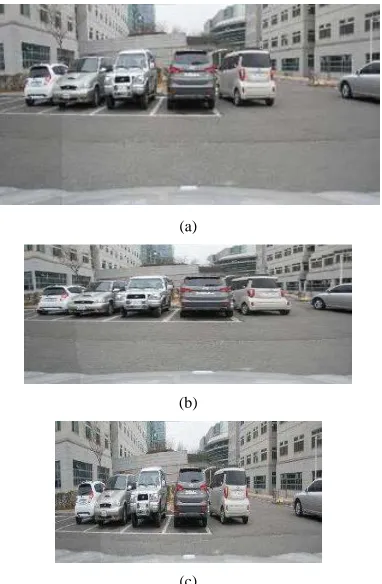
Fig. 5 The vehicle and parking lot images with different field of view (data set 2): image dimension is 2448x3264 and each image size is 1.93, 1.81, and 1.82MB, respectively [17]
A. Seam Carving Process
In many image resizing algorithms, seam carving method is a comparatively simple process to re-size an image arbitrarily. At this point, we should take into account preserving as much of the detail as possible for an interesting image. Even though the overall implementing process can be fairly elementary, the applicable possibilities can vary in wide ranges of industries. This fundamental and advanced technique was initially developed by Shai Avidan and Ariel Shamir from the Mitsubishi Electric Research Laboratories in 2007 [1]. As we figure out, a seam can be either arbitrary vertical and horizontal line. If we need to find a horizontal seam, it should find a path of pixels connected from left to right in each column. For a vertical seam, seam finding process is similar with the exception of the connection being from top to bottom.A seam in seam carving process is an 8-connected line of pixels while keeping minimal importance to be resized. Once seam carving process is adopted, the resulting image can be done into downsizing than an original image. We then repeat the process until our desired size is attained. In order to determine pixels with minimal importance, we analyzed the energy or density of each pixel. In finding energy function stage, gradient magnitude approach gives comparable results. Once finding the energy of the panoramic image, we could develop a set of seams with sorted by energy values. In energy values, the high energy value has most importance to the content of the image, and vice versa. At the final step, we can remove seams with least energy values.
(a)
(b)
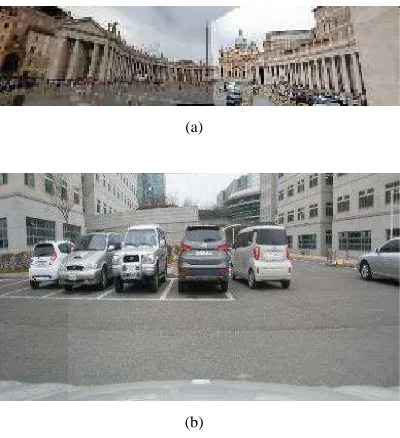
Fig. 6 Results after stitching process and cropping from scene and vehicle images: (a) 63x250 of image dimension and 32KB and (b) 390x223 of image dimension and 41KB of image size
(a)
(b)
(c)
(d)
Fig. 7 Examples of seam carving process for data set 1. (a) gradient image of an original image, (b) vertical seam energy map, (c) gradient image with vertical seam and (d) gradient image with horizontal image as shown in Fig. 6-(a).
(a)
(b)
(c)
(d)
Fig. 8 Examples of seam carving process for data set 2. (a) gradient image of an original image, (b) vertical seam energy map, (c) gradient image with vertical seam and (d) gradient image with horizontal image as shown in Fig. 6-(b)
III.RESULTS AND DISCUSSION
IV.CONCLUSIONS
In this paper, we have explored applying the seam carving approach for resizing the image to be applied to the mobile terminal display. Even though current mobile terminal has high technique DSP architecture for communicating various contents, it still needs a low volume of data size for fast communication with high quality. Once the panoramic image is generated from equipped three different cameras, seam carving method is applied to resize images. Even though the overall implementing process can be fairly elementary, there is a wide range of applicable possibilities in a variety of industries. The resulting images show the applicable possibility for size reduction using content-aware resizing instead of evenly downsampling or cropping method. On content-aware resizing, the final panoramic image could be affected by low resolution. For future work, proposed design needs to take into account low-loss feature technique for various display systems and improvement of image resolution. In addition, more variety of energy map functions with a large volume of different image sets is currently underway.
ACKNOWLEDGMENT
This research was supported by Daegu University Research Grant, 2016.
Fig. 9 Results with cropping method of original panorama image in Fig. 5. (a) original image (223x390), (b) horizontal 30% downsized image (156x390) and vertical 30% downsized image (with 223x273)
(a)
(b)
Fig. 10 Result images after seam carving process. (a) and (b) described display order like original image, resulting image after removing 50 seams and 100 seams in column order, respectively
REFERENCES
[1] Shai Avidan and Ariel Shamir, “Seam carving for content-aware image resizing,” ACM Transactions on Graphics, Vol. 23, Issue 3, 2007.
[2] Mrityunjay Kumar, David D. Conger, Rodney L. Miller, Jiebo Luo, Hayder Radha, “A Distortion-Sensitive Seam Carving Algorithm for Content-Aware Image Resizing,” Journal of Signal Process system, Vol. 6, pp. 159-169, 2011.
[3] M. Brown and D. Lowe, “Recognising panoramas,” In Proceedings of the 9th International Conference on Computer Vision (ICCV03), Vol. 2, pp. 1218-1225, Nice, October, 2003.
[4] K.Sreedhar Reddy and K. Rama Linga Reddy, “Enlargement of Image Based Upon Interpolation Techniques,” International Journal
of Advanced Research in Computer and Communication Engineering,
Vol. 2, Issue 12, pp. 4631-4640, 2013.
[5] R. Gonzalez and R. Woods, Digital Image Processing, Addison Wesley, 1992.
(a)
(b)
[6] Jianzhou Yan, Stephen Lin, Sing Bing Kang, Xiaoou Tang, “Learning the Change for Automatic Image Cropping,” In proceedings of CVPR2013, Portland, Oregon, USA, 2013.
[7] J. Kiess, S. Kopf, B, Guthier and W. Effelsberg, “Seam Carving with Improved Edge Preservation,” Proc. of IS&T/SPIE Electronic
Imaging (EI), 2010.
[8] Anders Hast, Johan Nysjö, Andrea Marchetti, “Optimal RANSAC – Towards a Repeatable Algorithm for Finding the Optimal Set,”
Journal of WSCG, Vol. 21, No. 1, pp. 21-30, 2013.
[9] P. Torr and A. Zisserman, “MLESAC: A new robust estimator with application to estimating image geometry,” Computer Vision and
Image Understanding, Vo. 78, No. 1, pp. 138–156, 2000.
[10] S. Suen, E. Lam, and K. Wong, “Photographic stitching with optimized object and color matching based on image derivatives,”
Optics Express. Vol. 15, No. 12, pp. 7689–7696, 2007.
[11] Szeliski, Richard, “Image Alignment and Stitching: a tutorial,”
Foundations and Trends in Computer Graphics and Vision, Vol.2,
Issue 1, pp. 1-104, 2006.
[12] Y. Xiong and K. Pulli, “Fast panorama stitching for high-quality panoramic images on mobile phones”, IEEE Transactions on
Consumer Electronics, Vol. 56, No. 2, pp. 298-306, 2010.
[13] http://www.pandaboard.org.
[14] Yao Li, Lizhuang Ma, “A Fast and Robust Image Stitching Algorithm”, In proceedings of the 6th World Congress on Intelligent Control and Automation, June 21-23, Dalian, China, 2006.
[15] Fang Cao, Zhijiang Zhang, QiZhang, “Seamless Image Stitching Using Optimized Boundary Matching for Gradient and Curvature”, In proceedings of International Symposium on Intelligence Information Processing and Trusted Computing, October 28-29, Huanggang, China, 2010.
[16] Seong Jong Ha, Sang Hwa Lee, Nam IK Cho, Soo Kyun Kim, Byungjun Son, “Embedded Panoramic Mosaic System Using Auto-Shot Interface”, IEEE Transactions on Consumer Electronics, Vol. 54, No. 1, pp. 16-24, 2008.
[17] Jaejoon Kim, “Design and Application for Stitching Images from Blackbox with Multiple Lenses,” International Journal of Applied
![Fig. 3 The basic stitching pipeline [12]](https://thumb-us.123doks.com/thumbv2/123dok_us/10039354.1990588/3.595.313.556.198.325/fig-basic-stitching-pipeline.webp)