For examplet a call causes conditions in the calling procedure before the call to be stored in the marks tack i.n the following manner:
MarkStack DyNamic link (MSDYNL) <-- MP " " IPC(MSIPC) <-- IPC
" " SEGment Pointer(MSSEG) <-- SEGB The Pascal declaration for a "marks tack" is!
TYPE MSCW - PACKED RECORD {MARK STACK CONTROL }
MSSTAT: MSCWP; { LEXICAL PARENT POINTER MSDYNL: MSCWP { PTR TO CALLER'S MSCW } MS IPC: INTEGER; { BYTE INX IN RETRN CODE SEG } MSSEG: BYTE; { SEG # OF CALLER CODE } MSFLAG: BYTE { CURRENTLY UNUSED } END {MSCW};
In addition a Static Link field becomes a pointer to the data segment of the lexical parent of the called procedure. In particular, it points to the Static Link field of parent's markstack. After the building of the data segment new values for IPC, SEGB, SP, and MP are established.
program pascalsystem; var syscom : syscomrec;
ch : char;
segment procedure userprog; begin
end;
segment procedure syscode;
segment procedure printerror; begin
end;
Page 90
:
-t
-i
I
~ .
,
.
l
I·· I t
I
I..
'·f
! ..
r
~ fr
=
.
t
I
"
r
I·
t·
I
r
-I
f
I
.
~
t
I
l
.
I
l .
!
j
-r
~
-
-
-~
i
. "
,""~ .. .,. :;;'2i
f;~';:".
-:'{~~.~:~; .
:.: .. .'~~{
.
:-::~?-
.. -: ~~;~:~,..
~~~\:
.~~~~
"or~:1I~::
.}i
·\~t:·
.~ .', : .~,,:,
::}:'f:'
:, ... ;:'., ....
.. .
>
segment procedure initialize; begin
end;
segment procedure getcmd; begin
repeat case ch of
, e' : editor;
, f' : filer; , l' : linker;
, x' : execute;
, e' : compiler;
end { case } until false; end;
begin { syscode } initialize; getcmd;
end {syscode};
segment procedure cspcode; begin
ioinit; syscode; end;
begin (* pascal system *)
cspcode; end.
... :
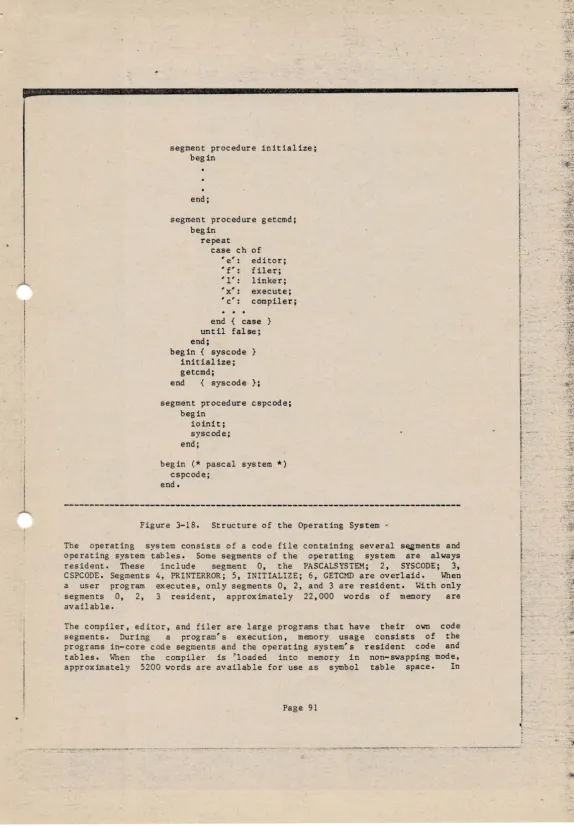
Figure 3-18. Structure of the Operating System
-The operating system consists of a code file containing several s~ments and operating system tables. Some segments of the operating system are always resident. These include segment Ot the PASCALSYSTEM; 2t SYSCODE; 3, CSPCODE. Segments 4, PRINTERROR; 5, INITIALIZE; 6, GETCMD are overlaid. When a user program executest only segments 0, 2t and 3 are resident. With only segments 0, 2t 3 resident, approximately 22,000 words of memory are available.
The compiler, editor, and filer are large programs that have their own code segments. During a program's execution, memory usage consists of the programs in-core code segments and the operating system's resident code and tables. When the compiler is ~loaded into memory in non-swapping mode, approximately 5200 words are available for use as symbol table space. In
Page 91
!
i
f
'
!
I
t.
1I
I
I
.
~'"
r
I.
'
. o 'j
.' :
I
'~·
r
"
·
; -.
l
.
1
---
-I
..
L
.
>.
--
.. ~-~:'.' .. -:.~."'.:~;, ...
,.\
"_~-!.'"'''' ,~
t" .:. ...
OJ' " '~ .. ~.
.' ~.~.:.: .
.t(,' ·
... _ ... . .. ,J ... . ,J";"'"
,~.' ,~~.
: .... i-~ .
swapping mode, this figure increases to 7300 words. When the editor is
loaded in memory, approximately 11,000 words are available for text file
editing. When the filer is loaded in memory, about 9000 words are available
as buffer space.
3.7.2 The Bootstrap Sequence
The bootstrap sequence is initiated whenever the RESET button is pushed. The
following is a flowchart describing the microcode/software instructions that
are executed in order to load in and start the execution of the operating
sys tern.
Page 92
t
t
I
.
-r
!
i
.
':-~~--.~:::::~
-.:~-.
.''t'.;"j;.:' - •
. :'~ '~:'. ",
-_.
I .~.-'
".
.
~'~-'-'".:_:;.",
-."
.
. -';/::o
YES
'01' • UNIT FOUR
'SF' • STEP.IN COMMAND
Page 93
'I
!
-I ·
I
I
I.
"
L
";'7,
':::.',
:Z*:'.\ ; .•.•.
.... .:FI.-·
.;c .
. . ~~~;~:.
J •
. ~'.
;
~
:~~:
~
~
.. {~ ..
, ~ '. \ .. _
.
.
'.'~
:/.
~
" ~1·.~~!.~ '.£~ .
."-:.!.
-':~
",d''''
!c,
.
:::~.~ l;"-.
AT THIS POINT THE MICROCODE BOOTSTRAP HAS LOADED IN
TRACK 1 OF THE FLOPPY DISK INTO LOW MEMORY. TRACK
1 CONTAINS EXECUTABLE CODE AND TABLES. SOME TABLE
VALUES ARE NOW LOADEO INTO MICROPROCESSOR REGISTERS.
A ~---4~
THE CTP POINTS AT THE TIB. AMONG THE VALUES IN THE TIB ARE STACK POINTER ISPI. THE MARKSTACK POINTER IMP). THE BASE POINTER (BP). THE PROGRAM COUNTER IIPC), AND THE SEGMENT POINTER (SEGBI. SP IS AT THE CTP BASE' 4, SP. (CTP· 4)
NIP· (CTP • 51, BP • (eTP • 6), IPC • (CTP .71 AND .
SEes· (CTP' 81. THESE FIELDS IN THE TlB ARE LOADED INTO TH£ CORRESPONDING MICROPROCESSOR REGISTERS. SP, MP. BP, IPC AND SGP.
"THE CURREII<T TASK POINTER POINTS AT THE TASt( INFORMATION BLOCK ITIBI
THE LAYOUT OF THE TIB IS AS FOLLOWS
TIB· RECORD ITASK INFORMATION BLOCKI
REGS PACKED RECORD
WAITO TIBP. (OUEU[ '.INK FOR SEMAPHORESI
PRIOR BYTE (TASK'S CPU PRIORITYI
FLAGS BYTE. (STATE FLAGS NOT DEFINED vETI
SPLOW INTEGERP. (LOWER STACt( POINTER LlMITI
SPUPR INTEGERP; (UPPER LIMIT ON STACt(1
SP INTEGERP. (ACTUAL TOP·OF ·STACK POINTERI
MP MSCWP. (ACTIVE PROCEDURE MSCW PTRI
BP MSCWP; (BASE ADDRESSING ENVIRONMENT PTR) (PC INTEGER, (BYTE PTR IN CURRENT CODE SECI
S~GB . COOESEG; (PTR TO SEG CURRENTL Y RUNNING'
HANGP SEMP. (WHICH TASt( IS WAITING ONI
XXX INTEGER. (NOT USED.
SIBS SIBVEC (ARRA v OF SIBS FOR 126 255.
END IREGSI.
MAINTASt(· BOOLEAN ST ARTMSCW MSCWP END CTIBI.
Page 94
a
~ .
f
I --I
\
t
I·
I
!
t-... !"". "
"
._
...::~.
:-;... -'
.. ,~~:
;-"4 .~~:; (.: ~, .:.'~'
. ':'.:.\
'/{~i~.
--; .... ~.:.~. ", .... ~~~r:
... '\0 •
.... J~~,~:
."c:-"'~p" ,.
~. ~ : ; 4
>~~r~
-:~.-
~
~
:
~ '"'t,
~
i:~~
"
t-
... ·:·
'1~
~:4.;
.~:'
.... ::: .. --~
--
...... ~~.,;..,.;,. ':~~.
'~ . .;
•
3.7.3
THE primitive software bootstrap loaded from track 1 now begins
execution. It loads in track 0 of the floppy_ The execution of
track 0 which was just loaded starts the loading of the operating
system.' Segments 0 and 3 of the operating system are loaded into
upper memory. These segments contain the I/O drivers for the
operating system. At this point the operating .system starts
execution. It loads in segment 2 and segment 5 also into upper
memory. Segment 5 performs I/O initialization. Then segment 6 is
loaded into upper memory and the operating system command prompt
appears. The operating system is now ready to accept user commands.
Registers and Operating System Tables
All registers in the Microengine are referenced by register number. The
available registers and their numbers are:
-3
-2
-12
3
4
5
6
7
8
Ready Queue Pointer [RQP]
Segment Vector Pointer [SDP]
Current Task Pointer [CTP]
Lower Stack Pointer Limit [SPLOW]
Upper Limit of Stack [SPUPR]
Top of Stack Pointer [SP]
Active Mark Stack Control Word Pointer [MP)
Base Addressing Mark Stack Control Word Pointer [BP]
Program Counter [IPC)
Pointer to currently executing code segment [SEGB)
Registers are initialized in two ways. The first happens during the boot
sequence. Refer to section 3.7.2, the Microengine Bootstrap Sequence for
details. The second method is by the PMACHlNE statement, a 111.0 UCSD Pascal
language extension which allows generation of Pascal operators. For
example, the program segment below reads the value of the mark stack pointer into a Pascal variable.
CONST MP-S
LPRc1S7; 5TO=196;
VAR LMP: I~~EGER;
BEGIN
PMACHINE (LHP, (MP) ,LPR, STO) ;
END.
A complete description of all the 111.0 UCSD Pascal operators is found in
section B.5 of this manual. The ,-, in the PMACHlNE statement places the
address of the following identifier on top of the stack. An identifier (or
expression) enclosed in parens is evaluated and the result is placed on top
of the stack. An expression w1th~t or parens is placed directly into
the code.
It should be noted that the positive register numbers refer to values in the
active TIB (Task Information Block). The Pascal declaration for the TIB is:
Page 95
J
C
"
f
I
f
!
t
i
-t
,~,:' :
.. ;.: .... t,.,
.~}:
.. :~.~~~ ,
., : ·'... t -'
···
~
t:':··
..
,.:,.;.. ~{< ..
.. {..:: ..•. : .. :~:~':, ...
:~:~~~ .. ~.
"
'i~r"~ .~
.:'"
"
"
TIB RECORD { TASK INFORMATION BLOCK } REGS: PACKED RECORD
WAITQ: TIBP; { QUEUE LINK FOR SEMAPHORES } PRIOR: BYTE; { TASK'S CPU PRIORITY }
FLAGS: BYTE; { STATE FLAGS ••• NOT DEFINED YET} SPLOW: ... INTEGER; { LOV1ER STACK POINTER LIMIT } SPUPR: ... INTEGER; { UPPER LIMIT ON STACK} SP: ... INTEGER; { ACTUAL TOP-OF-STACK POINTER } MP: MSCWPj { ACTIVE PROCEDURE MSCW PTR }
BP: MSCWP; { BASE ADDRESSING ENVIRONMENT PTR }
IPC: INTEGER; { BYTE PTR IN CURRE~~ CODE SEG }
SEGB: ... CODESEG; { PTR TO SEG CURRENTLY RUNNING } HANGP: SEMP; { WHICH TASK IS WAITING ON }
XXX:
INTEGER; { NOT USED }SIBS: ... SIBVEC { ARRAY OF SIBS FOR 128 •• 255 } END { REGS }
MAINTASK: BOOLEAN; STARTMSCW: MSCWP END { TIB } ;
For example, the
MP,
the mark stack control word pointer, is register number5 and it is word 5 in the TIB. When the ~icrocoded operators LPR and SPR
refer to positive valued registers, these values are taken from the TIB.
The Segment Vector Pointer register points at the segment vector which is
an operating system table that contains information concerning all active
segments in the Pascal Syst.em. The Pascal declaration for the segment vector
is:
SEGVEC = ARRAY[O •• 15) OF SIBP
SIBP, meaning Segment Information Block pointer
containing information about each active segment. for SIB and SIBP are:
is a pointer to a record
The Pascal declarations
3.7.4
SIBP -= .... SIB;
SIB
=
RECORD { SEGMENT INFOSEGBASE: ... CODESEG; SEGLENG: INTEGER; SEGREFS: INTEGER; SEGADDR: INTEGER; SEGUNIT: UNITNUM END { SIB } ;
BLOCK }
{ MEMORY ADDRESS OF SEG }
{ If WORDS IN SEGMENT }
{ NUMBER OF ACTI\~ CALLS }
{ ABSOLUTE DISK ADDRESS } { PHYSICAL DISK UNIT }
Concurrency Primitives and Interrupts
UCSD Pascal provides several language constructs that are useful for
operating system and 1/0 handler development. Those pertinent to inter-task
communication and rio coordination are described below.
Page 96
Q
\ .
r
~ ..
t
.
;
\
\
r
t
I:
. ", ':'r:'~ ....
..
..
.::
~-"~.,:.,... "'" ..
-/}~~ .
... -' ...
-.~,.>
. ,-;"\.:
".~'., .:
... . ~ ... :~
~- -.:.~,- - --.:.--...
-...-....-.-~~-Tasks:
Tasks provide the basis for concurrent processing. A task is created by the
PROCESS declaration, a UCSD Pascal extension. The PROCESS declaration is
syntactially similar to a PROCEDURE declaration, except that it creates a
task that may run concurrently with other tasks in the system. Each task
in the Microengine has an associated Task Information Block (TIB) that
reflects the status of the task. The TIB contains such information as the
stack limits of the task, the top of stack pointer, the task's priority,
the task's program counter, and a queue link for the task scheduling
mechanism to be described below.
Task switching is done by the semaphore mechanism as proposed by Dijkstra.
This is implemented by means of LIFO queues. Queues are associated with the
currently executing task, all tasks that are ready to execute, and tasks that
are waiting on a semaphore.
Semaphores:
A TIB that is to execute is placed on the current task queue. The queue has
only a single task, the currently executing one, on it. TIB's that are ready
to execute, but are waiting for processor allocation, are on the ready queue
in priority order. ~fuen a task is to execute, it is moved from the ready
queue to the current task queue. Otherwise, TIB's are chained on queues of
sema- phores until the semaphore they are associated with 1s signalled. A
semaphore variable is declared as is any other built-in data type. In order
to give a semaphore an initial value, the SEMINIT statement is used. It
takes as parameters a semaphore and an integer value. The integer value
specifies the number of times the semaphore has been signalled. For example
SEHINIT(SEM,O);
will initialize semaphore SEM to not signalled.
Tasking primitives':
The task queues in the UCSD 111.0 system are manipulated by four primitives:
SIGNAL, WAIT, START, STOP. Both SIGNAL and WAIT take a single parameter,
which is the semaphore variable. SIGNAL and WAIT synchronize inter-task
communication. WAIT will cause a task on the current task queue to wait on
the WAIT semaphore parameter, if the semaphore has never been signalled.
For example: WAIT(SEM) where S~1 is of type SEMAPHORE will perform a WAIT
operation.
SIGNAL will cause a task waiting on the SIGNAL semaphore parameter to start
executing, if the task is at a higher priority. Otherwise, the highest
priority task will begin execution.. SIGNAL(SEM) will perform the signal
operation on a semaphore. In order to initialize or terminate tasks, the
statements START and STOP are utilized. START links a TIB created by the
PROCESS statement into the ready queue. It takes as parameters a PROCESS, a
variable of type PROCESSID which is~a pointer to a TIB, the amount of stack
space the PROCESS will require -and the PROCESS priority. Thus in order to
activate a process, the system call would be:
Page 97
T r,,-~ .. - _
--~ ... ' - . "
...
.
-
.. .._ ...-
- -_
... --
--.
--..-...
; .
r
f·
j-,
i ..
I · .
;.. ..:;
_"J.'."':
.;~~.~
-"!.2". "_
:f:~"~~
-... :.
_
.
/""-.
f~
··
.;.;,'
:f;':::" ..
...
~{;--
.. -~.. .. ~J..-..
.. ' 2.. '.'~
.t·
o : '.,.' ..
..
~---
-
-
--
~--~---~---_ESTART(PROCESS(PAR}~S). PID, STACK, PRIOR);
STOP, when executed by a running task, causes the task to be terminated. STOP
is called when a process is terminated and may not be called as a Pascal
statement. Note that both SEMAPHORE and PROCESSID are predeclared types
recognized by the Pascal compiler.
Interrupt Attachment:
The tasking primitives have been described. Now the final command, ATTACH,
must be introduced. Its purpose is to attach 1/0 device signals from the
1/0 hardware to the software and firmware supported semaphores. Each 1/0
port on the Microengine has a unique interrupt address where a signal ,is sent
indicating that an 1/0 operation is complete. For example, a disk transfer
could have completed, or a character has been read in from a terminal and
placed in the serial port data register, or a character has been sent from the
printer buffer in the parallel port controller to the printer. ATTACH has
two parameters, a semaphore, and an interrupt address where the semaphore is
attached, thereby allowing a hardware signal to signal a semaphore. For
example:
ATTACH (SEM, 32);
will attach a semaphore, SEM, to the interrupt vector address to the
floppy-D~~ interrupt vector.
Page 98
\
I
I, '::~.::::.l,.·f
-.-; ...
.. .
",..'.
:~~;:~ ..
.";';';'::·: .• t·,
_·.;;~·L
. ~::\\~
-:'~i;~'
~'~;,~';~:.~
.~:~~
.. ";'~",
.'
:
:~i~;.
:i
~
i.
. ~~:-:~
i~~~'\ .