
ABSTRACT
WRIGHT, DAVID RICHARD. Principles, Patterns, and Process: A Framework for Learning to Make Software Design Decisions. (Under the direction of Dr. Thomas L. Honeycutt.)
Software system design is commonly acknowledged to be difficult: the problems are ill-formed,
complex, and lack complete information. Expert designers employ strategies developed and refined over years of experience, while novices attempt to apply methods they have learned in the
classroom. Existing research on software design education is scarce and focused on identifying
the characteristics of student designers versus the attributes of expert designers. I am interested in studying how to bridge this gap through the novel adaptation of a model of complex systems
development and evolution. This adaptation is realized in the Principles, Patterns, and Process
Framework (P3F), a suite of learning tools designed to help software design students learn and
apply key aspects of expert designers’ strategies and behaviors.
This dissertation presents an experimental validation of the P3F through a triangulated
research approach. Collected data measured the research subjects’ perceptions of their design skills and strategies, identified and categorized actual design behavior observed while the subjects
worked on complex software system design problems, and evaluated the quality of the solutions
they produced for these problems. The results of this study suggest that theP3Fcan help a
novice software designer adopt and apply expert-like design strategies, recognize the development
of these strategies as part of their own design process, and contribute to an improvement in the
quality of their designed solutions.
Three significant contributions are made by this dissertation. It provides a comparative
analysis of expert and novice design strategies and behaviors in a form not found in the literature. It also demonstrates a triangulated experimental model that features three research
methodologies and analysis techniques. Most importantly, it presents and validates the Principles,
c
Copyright 2012 by David Richard Wright
Principles, Patterns, and Process: A Framework for Learning to Make Software Design Decisions
by
David Richard Wright
A dissertation submitted to the Graduate Faculty of North Carolina State University
in partial fulfillment of the requirements for the Degree of
Doctor of Philosophy
Computer Science
Raleigh, North Carolina
2012
APPROVED BY:
Dr. Mladen A. Vouk Dr. Edward F. Gehringer
Dr. John O. Tector Dr. Thomas L. Honeycutt
DEDICATION
BIOGRAPHY
David was born on Sunday, October 16, 1960, in Sewickley, Pennsylvania, a suburb of Pittsburgh,
just three days after Bill Mazeroski smashed a home run in the bottom of the ninth inning to give the Pittsburgh Pirates a victory over the New York Yankees in game seven of the 1960
World Series. This was the first, and to this day the only, World Series won with a game winning
home run in Game 7. An auspicious beginning, to be sure! David lived in suburban Pittsburgh until June of 1971, when his father’s job as an electronics engineer with Trion Corporation
caused his immigration to Sanford, North Carolina.
David got married in 1981 and became the proud father of two children over the next five years. His daughter, Leia (named after the princess of the Star Wars fame), graduated from
UNC-Greensboro with a double major in Elementary Education and Sociology. After teaching
for four years, she is pursuing a master’s in Counseling at DePaul University in Chicago. David’s son, Jonathan, attended Western Carolina University before enlisting in the Air Force. Recently
promoted to the rank of Staff Sergeant, he has been helping to maintain the fleet of B-52
strategic bombers and is cross-training to become a flight engineer.
In 1997, David married Sharon McCarthy, a New Jerseyite by way of Florida. They met in
a bowling alley, of all places. Their wedding was a intimate affair in Lake Tahoe, Nevada, less
than two weeks before David became a freshman student at State, and just three months after she graduated from Meredith College with a degree in Sociology. The adjustment to full-time
college student from full-time employment was difficult at times. David’s intent at that time was to earn a bachelor’s degree and return to the work force. Not long into that journey, however,
David realized that the field of Computer Science held a wealth of new and exciting challenges,
and that to be in a position to meet these challenges a graduate degree was necessary.
David completed his Bachelor of Science degree in 2001, followed in 2003 by a Master of
Science in Computer Science. The continued journey towards this doctoral brought many new
challenges and opportunities that helped to shape David’s vision of his future career. In addition to a variety of Teaching Assistant appointments and other teaching opportunities, David served
for two years as the president of the Computer Science Graduate Student Association. In this
role, he helped to revitalize the organization and address several issues important to the graduate students in the department.
Working as a Junior Fellow with the Land Grant University Research Ethics initiative and
as a Walter Wilkinson Research Ethics Fellow, David contributed to expanding the awareness of ethical and responsible research conduct in Computer Science and Software Engineering. David
was also participated in the NCSU Preparing the Professoriate program and earned a Certificate
ACKNOWLEDGEMENTS
There are many people who deserve thanks for helping me achieve this milestone. I certainly
would not have reached this point without the love, patience, and support of my wife, Sharon. I also have to thank my children Leia and Jonathan and Jonathan’s wife Cassy, as well as my
parents Richard and Margery Wright for understanding and encouragement. I could not have
made it without their support.
I also have to thank Tom Honeycutt, my advisor and committee chair, for over eight years of
guidance, confidence, and intellectual stimulation that went far beyond the subject of this work.
Tom always seemed to find the right ways to energize my creativity and sharpen my thoughts when I needed it most. Paraphrasing Robert Frost, he encouraged me to take the road less
traveled, that that made all the difference!
I would be remiss not to thank the members of my dissertation committee whose unique contributions made sure I got here. Mladen Vouk always seemed to cross my path when I needed
a fresh perspective on a difficult situation, providing just the impulse necessary to keep my work
on the right track. John Tector challenged and expanded my thinking about the importance of the human aspects of design and was invaluable in helping me articulate where this research
fits into the larger picture of design research. Ed Gehringer joined my committee late, filling
an unexpected vacancy and offering a practical, down-to-earth view that I had come to expect through the other opportunities I have had to work with him over the years. Thank you all!
I am also grateful for the financial support for this research that was provided by Ronald Holanek and the Financial Risk Group, Inc. and the NCSU Computer Science Department.
There are many, many others that have contributed to the achievement of this goal: teachers,
professors, fellow students, university staff, and friends. To each of you I say, “Thank You!”
Trademark Acknowledgements:
• Atlas.ti is a trademark of ATLAS.ti Scientific Software Development GmbH.
• Eclipse Helios is a trademark of the Eclipse Foundation, Inc.
• Java, JavaScript, JEE, MySQL, MySQL Workbench, and OpenOffice are trademarks of Oracle and/or its affiliates.
• Access, Excel, PowerPoint, Visio, Visual Studio, and Word are trademarks of Microsoft Corp.
• PHP is a trademark of The PHP Group.
• Python is a trademark of the Python Software Foundation.
TABLE OF CONTENTS
List of Tables . . . vii
List of Figures . . . .viii
Chapter 1 Introduction . . . 1
1.1 Research Questions and Goals . . . 2
1.2 Overview of Research Study and Results . . . 4
1.3 Organization of Dissertation . . . 4
Chapter 2 How Do Designers Design? . . . 6
2.1 What is Design? . . . 8
2.2 Strategies of Expert Designers . . . 13
2.2.1 How Experts View the Design Problem . . . 13
2.2.2 How Experts Manage and Navigate the Design Space . . . 16
2.2.3 How Experts Make Design Decisions . . . 18
2.3 Strategies of Novice Designers . . . 20
2.3.1 How Novices View the Design Problem . . . 21
2.3.2 How Novices Navigate the Design Space . . . 22
2.3.3 How Novices Make Design Decisions . . . 23
2.4 Pilot Study Results . . . 24
2.4.1 Pilot Study Results and Conclusions . . . 28
2.5 Adapting Expert Strategies to Help Novice Designers . . . 32
2.5.1 Summary & Comparison of Expert and Novice Design Behaviors . . . 33
2.5.2 Insights from the Pilot Study . . . 34
2.5.3 Suggestions for Improving Design Skills . . . 36
Chapter 3 The Principles, Patterns, and Process Framework . . . 39
3.1 Characteristics of a Framework to Support Novice Software Designers . . . 41
3.2 Foundational Software Design Principles . . . 42
3.3 The Principles, Patterns, & Process Framework . . . 45
3.3.1 Principles for Relationships and Values . . . 48
3.3.2 Patterns of Connections and Meanings . . . 76
3.3.3 A Process for Decision-making and Movement . . . 77
3.3.4 The Decision Pattern . . . 88
3.3.5 Using theP3F . . . 93
3.4 Summary . . . 103
Chapter 4 Research Methodology . . . 107
4.1 Research Methodology . . . 108
4.1.1 Methods for Observing Behavior . . . 110
4.1.2 Methods for Self-Assessment of Design Skills . . . 112
4.2.1 Research Tools and Instruments . . . 114
4.2.2 Study Implementation . . . 122
4.3 Pre-Analysis Data Processing . . . 129
4.3.1 Audio/Video Recordings . . . 130
4.3.2 Design Artifacts . . . 135
Chapter 5 Analysis and Results . . . .144
5.1 Analysis Techniques . . . 144
5.1.1 Self-Assessment Questionnaire Analysis . . . 145
5.1.2 Verbal Protocol Analysis . . . 145
5.1.3 Design Artifact Quality Analysis . . . 147
5.2 Subject Analysis . . . 148
5.2.1 Subject A . . . 149
5.2.2 Subject B . . . 159
5.2.3 Subject C . . . 169
5.2.4 Subject D . . . 181
5.2.5 Subject E . . . 193
5.3 Summary of Results . . . 203
Chapter 6 Conclusion . . . .206
6.1 Conclusions . . . 207
6.2 Contributions . . . 209
6.3 Limitations . . . 210
6.4 Future Work . . . 213
References. . . .216
Appendices . . . .233
Appendix A Design Problems . . . 234
Appendix B Problem Set Instructions . . . 243
Appendix C Self-assessment Questionnaire . . . 245
Appendix D Exit/Feedback Questionnaire . . . 249
Appendix E Protocol Coding Instructions . . . 251
E.1 Overview . . . 251
E.2 Decision Segmentation . . . 251
LIST OF TABLES
Table 2.1 Design Decision Coding Matrix . . . 26
Table 2.2 Common Decision Sequence Labels . . . 27
Table 2.3 Identified Novice Design Behaviors . . . 28
Table 2.4 Identified Expert Design Behaviors . . . 29
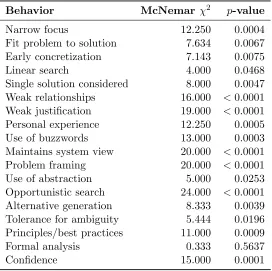
Table 2.5 McNemar Test Statistics for All Subjects . . . 31
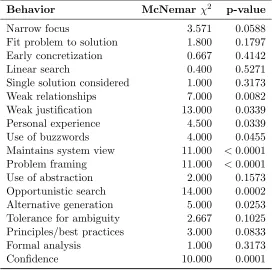
Table 2.6 McNemar Test Statistics for Graduate Students . . . 32
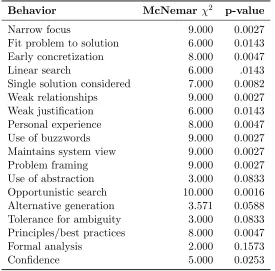
Table 2.7 McNemar Test Statistics for Undergraduate Students . . . 33
Table 3.1 Fundamental Software Design Principles . . . 43
Table 3.2 Fundamental Axioms of Software Architecture Design . . . 44
Table 3.3 Fundamental Principles of Software Architecture Design . . . 45
Table 3.4 Principles of Object-Oriented Design . . . 46
Table 3.5 Design Principle Pattern elements . . . 78
Table 4.1 Research questions and possible success criteria . . . 108
Table 4.2 Design problem set assignments . . . 119
Table 4.3 Decision Level Code Values . . . 132
Table 4.4 Decision Type Code Values . . . 133
Table 4.5 Decision Rationale Code Values . . . 134
Table 4.6 Non-design Codes . . . 135
Table 4.7 Inter-rater reliability of verbal protocol coding . . . 136
Table 4.8 Inter-rater reliability for design artifact evaluations . . . 142
Table 5.1 Second-level code scheme for protocol analysis . . . 147
Table 5.2 Mean evaluations for design problems . . . 148
Table 6.1 Exit survey responses related to understanding theP3F . . . 208
Table 6.2 Exit survey responses related to P3Fweb site . . . 215
Table E.1 Non-design Coding . . . 252
Table E.2 Decision Level Coding . . . 253
Table E.3 Decision Type Coding . . . 255
LIST OF FIGURES
Figure 2.1 Routine, innovative, and creative design spaces . . . 10
Figure 3.1 Graphical view ofP3Frelationships . . . 47
Figure 3.2 Interactions of the Fifteen Properties . . . 52
Figure 3.3 Levels of Scale – Mosque portico . . . 55
Figure 3.4 Strong Centers – Angkor Wat . . . 57
Figure 3.5 Boundaries – Tile art . . . 58
Figure 3.6 Alternating Repetition – Fern Leaf . . . 59
Figure 3.7 Positive Space – Blue Nude . . . 61
Figure 3.8 Good Shape – Chladni plate . . . 62
Figure 3.9 Local Symmetries – Canal houses . . . 64
Figure 3.10 Deep Interlock & Ambiguity – Dovetail joint . . . 66
Figure 3.11 Contrast – Stone garden . . . 67
Figure 3.12 Gradients – Nautilus shell . . . 68
Figure 3.13 Roughness – Inca Wall . . . 70
Figure 3.14 Echoes – Native basket . . . 71
Figure 3.15 The Void – Saint Peter’s Square . . . 73
Figure 3.16 Simplicity & Inner Calm – Shaker Cabinets . . . 74
Figure 3.17 Not-Separateness – Stone path . . . 76
Figure 3.18 Reasoning in the Design Cycle . . . 80
Figure 3.19 Triggers of Formal Generation . . . 81
Figure 3.20 External factors affecting the software design process . . . 82
Figure 3.21 Simple argument map . . . 89
Figure 3.22 Design Rationale in the design process . . . 90
Figure 3.23 A 2×2 matrix for solving Pascal’s Wager . . . 91
Figure 3.24 The Decision Pattern . . . 92
Figure 3.25 Using theP3F: Iteration 1 artifacts . . . 95
Figure 3.26 Using theP3F: Decision 1 documentation . . . 96
Figure 3.27 Using theP3F: Iteration 2 artifacts . . . 97
Figure 3.28 Using theP3F: Decision 2 documentation . . . 98
Figure 3.29 Using theP3F: Iteration 3 artifacts . . . 99
Figure 3.30 Using theP3F: Decision 3 documentation . . . 100
Figure 3.31 Using theP3F: Iteration 4 artifacts . . . 101
Figure 3.32 Using theP3F: Decision 4 documentation . . . 102
Figure 3.33 Using theP3F: Iteration 5 artifacts . . . 103
Figure 3.34 Using theP3F: Decision 5 documentation . . . 104
Figure 3.35 Typical novice approach to the pothole tracking system problem . . . 105
Figure 3.36 Design Methods: What theP3Fisnot . . . 105
Figure 3.37 Design Thinking: What theP3Fis . . . 106
Figure 4.2 Web-based principle pattern layout . . . 117
Figure 4.3 Think aloud training exercise . . . 118
Figure 4.4 Observation session workspace . . . 124
Figure 4.5 Video camera view of workspace . . . 125
Figure 4.6 Design artifact evaluation login page . . . 140
Figure 4.7 Design artifact evaluation home page . . . 141
Figure 4.8 Design artifact evaluation form . . . 142
Figure 4.9 Design artifact evaluation home page after completing an evaluation . . . 143
Figure 5.1 Subject A novice-oriented self-assessment scores . . . 150
Figure 5.2 Subject A expert-oriented self-assessment scores . . . 151
Figure 5.3 Subject A Design quality evaluations . . . 157
Figure 5.4 Subject B novice-oriented self-assessment scores . . . 160
Figure 5.5 Subject B expert-oriented self-assessment scores . . . 162
Figure 5.6 Subject B Design quality evaluations . . . 168
Figure 5.7 Subject C novice-oriented self-assessment scores . . . 171
Figure 5.8 Subject C expert-oriented self-assessment scores . . . 173
Figure 5.9 Subject C Design quality evaluations . . . 180
Figure 5.10 Subject D novice-oriented self-assessment scores . . . 182
Figure 5.11 Subject D expert-oriented self-assessment scores . . . 184
Figure 5.12 Subject D Design quality evaluations . . . 192
Figure 5.13 Subject E novice-oriented self-assessment scores . . . 195
Figure 5.14 Subject E expert-oriented self-assessment scores . . . 197
Chapter 1
Introduction
Well-developed design decision-making skills are important for competent software analysts and designers, yet it has been noted that formal education is generally inadequate for developing
these abilities in novices[210]. Part of this problem is due to the time available within a student’s
course of study, where strong competition exists with other subjects like algorithms, data structures, programming, databases, etc. Another cause is related to the difficulty of the subject
of design itself: to learn to design, the student must be presented with complex, open-ended
problems for which there may be more than one “correct” solution. Constructing these problems and evaluating students’ performance, in terms of how solutions are obtained and in terms of the
correctness of those solutions, is difficult and time-consuming. Boulangera and Smith note that
industry needs engineers and designers that can be immediately and productively effective[33]. As more and more of our world becomes dependent upon computer-based systems, future
software developers and designers must develop effective decision-making skills and strategies in
addition to the technical knowledge they acquire through their education.
The decision-making strategies commonly taught in Computer Science/Software Engineering
curricula and employed by novice software developers/designers are not effective when applied
to large, complex real-world problems. Student (novice) designers tend to think linearly and concentrate only on the problem at hand[52]. Novices also tend to use trial and error strategies
and lack confidence in their design decisions[9]. The production of artifacts (e.g., programs,
UML diagrams, etc.) often takes precedence over the design decision-making processes used to create these artifacts. The problems they are asked to solve are usually compact, well-formed,
and have a small set of “correct” solutions[109]. Performance is measured by how closely the
student’s work match the desired outcomes and specifications. How the student developed the artifacts is generally not a concern: if the “correct” solution was delivered, the student must
have used the “correct” design approach.
working code, they are inadequate for reasoning about the large and complex software systems
that the modern world depends upon[85]. When faced with large and ill-defined problems, the linear and deductive software design approaches commonly presented in software design and
engineering textbooks break down[52, 131]. Students of software design and engineering need
tools to help them learn, develop, and apply expert design strategies to help them mature into productive software design professionals.
The Principles, Patterns, and Process Framework (P3F) has been developed in response to
this need. TheP3Fis a unique synthesis of results and ideas from a wide range of disciplines
that provides novice software designers with a simple yet rich and flexible guide to help them
quickly cultivate the key processes and behaviors of expert designers. This review will present
the multi-disciplinary and foundational work that is brought together in the structure and content of theP3Fin support of the overarching research question answered by this dissertation:
How can software design students develop effective design decision-making strategies like those
used by expert designers?
1.1
Research Questions and Goals
The purpose of this research is to create a learning framework to help software design students
adopt and apply expert design decision-making strategies. Thus, the general research question can be stated:
How can software design students develop effective design decision-making strategies
like those used by expert designers?
To answer this question, additional research questions also must be answered, including:
• What are the key strategies employed by expert designers to solve complex design problems?
• What are the critical weaknesses in the approaches that novices typically use when attempting to solve difficult design-oriented problems?
• Which of the identified expert strategies would directly address the critical weaknesses of novice design approaches?
• How can these expert strategies be incorporated into a novice-oriented knowledge-based learning and application framework?
• Using the created framework:
– Are software design students able to demonstrate the expert strategies incorporated into the framework when presented with a complex, ill-structured design problem?
– Does the framework improve the quality of design artifacts produced by the student? – Does the framework improve the student’s perception of his or her design abilities
and enable them to be more confident in their design decision-making?
In order to judge the success or failure of the proposed research, these research questions
must be restated as research goals and identifying measurable success criteria for each goal. The P3Fis proposed as a solution to the overarching research question and the subsidiary questions
are stated to lead to this conclusion. We begin by restating the principle research question as a
research goal:
The overall goal of this research is to validate the Principles, Patterns, and Process
Framework as a tool for helping software design students learn and use expert design
strategies.
To achieve this goal, eight objectives must be met:
1. Through a review of prior research, identify common strategies and behaviors of expert
designers, including software designers as well as design experts from other design-intensive
fields such as architecture, industrial design, mechanical engineering, etc.
2. Through a review of prior research, identify common strategies and behaviors of novice
designers. As with studies of expert designers, this review will incorporate studies in the fields of computer science, software engineering, and information systems development and
other design-intensive disciplines.
3. Through a synthesis of the reviews of prior research, identify weaknesses in novice design
approaches and the corresponding expert strategies and behaviors that could resolve them.
4. Incorporate these expert strategies and behaviors into a knowledge-based learning and application framework that is accessible to novices.
5. Demonstrate that software design students are able to understand the basic structure and application of the framework and the decision-making process it incorporates.
6. Demonstrate that software design students apply the expert strategies incorporated into the framework when attempting to solve complex, ill-structured design problems.
7. Demonstrate an improvement in the quality of designed artifacts produced by students
8. Demonstrate that a student’s perception of his/her design abilities and confidence in their
design decision-making improves as a result of using theP3F.
Meeting these objectives will make several important contributions to the software design
body of knowledge. This work will provide a comparative analysis of expert and novice design
strategies and behaviors in a form not found in the literature. It will also provide an experimental model that features three research methodologies and analysis techniques. Most importantly, it
presents and validates the Principles, Patterns, and Process Framework.
1.2
Overview of Research Study and Results
The overarching experimental design employed in this research study is a interrupted time series
quasi-experiment with two observations before and after the experimental treatment. One-group pretest-posttest studies are commonly used to identify changes that occur in a population
as a result of some treatment or intervention, particularly in research involving learning and
other cognitive processes[42, 225]. Within this experimental framework, three different research methods are used to collect distinctly different types of data.
Primary data collected during the study were self-assessment questionnaires completed by
the subjects at each observation session, audio-video recordings of the problem-solving episodes, and the paper and/or electronic artifacts representing the subjects’ solutions to the given design
problems. Self-assessment questionnaire responses were analyzed directly for each subject in
order to determine what, if any, changes in the subjects’ perceptions of their own design strategies and behaviors occurred after they were exposed to theP3F. The audio/video recordings were
analyzed using verbal protocol analysis, again examining the data for each subject independently
to identify any behavioral changes that might have been triggered by the experimental treatment. The solution artifacts were evaluated for their quality based on a standardized rubric, and the
results of these evaluations were then analyzed to discover any changes that could be explained
by the introduction of theP3F.
The results of the analysis provide evidence that one subject did perform at a level more like
an expert than a novice after being introduced to theP3F. Two other subjects demonstrated
more modest improvement, and the remaining two subjects showed no change at all.
1.3
Organization of Dissertation
This dissertation reports on the research study that was conducted to investigate and validate the Principles, Patterns, and Process Framework. Chapter 2 presents a comparative review of
P3Fis introduced in Chapter 3, followed by a detailed discussion of the research methodology
in Chapter 4. The specifics of the data analysis techniques and the results obtained from the analysis are presented next in Chapter 5. This report concludes with Chapter 6, which
summarizes the conclusions and contributions of this work, identifies the limitations of this
Chapter 2
How Do Designers Design?
The body of research pertaining to learning to design software systems is scarce, with most research efforts studying expert designers and/or comparing novices and experts. Intending
to develop cognitive models of design behaviors, these studies consider novices and experts
to be oppositional entities and do not attempt to explain how a novice develops the skills and knowledge to become an expert. This situation is not unique to software design research:
studies of experts and novices in engineering design and architecture also fail to address the
learning processes associated with developing design expertise. Other than identifying and describing behaviors of expert and/or novice designers, such studies offer little advice to aid in
the transition from novice to expert.
However, the prior research into expert and novice design behaviors provides a rich and varied set of data necessary to answer the first three research questions and objectives identified
in the previous chapter. Answering these questions will also provide the foundation for the
development of the Principles, Patterns, and Process Framework which will be covered in the following chapter.
1. Through a review of prior research, identify common strategies and behaviors of expert
designers, including software designers as well as design experts from other design-intensive fields such as architecture, industrial design, mechanical engineering, etc.
What are the key strategies employed by expert designers to solve complex
design problems?
2. Through a review of prior research, identify common strategies and behaviors of novice
designers. As with studies of expert designers, this review will incorporate studies in the fields of computer science, software engineering, and information systems development and
What are the critical weaknesses in the approaches that novices typically use
when attempting to solve difficult design-oriented problems?
3. Through a synthesis of the prior research, identify weaknesses in novice design approaches and the corresponding expert strategies and behaviors that could resolve them.
Which of the identified expert strategies would directly address the critical weaknesses of novice design approaches?
This review of the literature identified three broad strategic areas that have been common subjects of study or highlighted in the results of studies of both expert and novice designers.
How a designer views the design problem at hand is intimately connected to how the designer
attempts to find a solution to the problem. Equally important is how designers manage their own knowledge of the design problem and use it to manipulate and navigate through the solution
they are developing. The third strategic area identified deals with the way the designer makes
design decisions, including what information is used and how the decisions are grounded or justified. This review will show the clear differences between novice and expert strategies in
these areas and use those differences to establish a foundation for the Principles, Patterns, and
Process Framework.
A key difference between software system design and other design-intensive fields is that
the products of software design generally do not lend themselves to the same kind of close
examination that designed artifacts like buildings, bridges, automobiles, and other physical entities allow. As a result, studies of expert and novice software designers are relatively scarce
compared to other disciplines such as architecture, mechanical engineering and other design
fields that produce physical artifacts. Furthermore, many of these disciplines are considerably older than computers and software, and offer rich and varied views on design and designers.
It has been noted that there are significant similarities in design across domains as diverse as
software design, architectural design, naming, and letter writing[242]. For this reason, I have extended the literature examined in this review to include a variety of studies across a broad
spectrum design-intensive disciplines.
This review begins in Section 2.1 with a discussion of the terms design and designer to establish clear definitions of these and related terms along with a comparison of software system
design with other design-intensive disciplines represented in this review. Section 2.2 reviews studies of expert designers to identify specific strategies, behaviors, and approaches used by
experts and to categorize them in the three strategic areas noted above. Similarly, studies of
novice designers are reviewed in Section 2.3. A pilot study was undertaken to investigate the key elements of theP3Fand to ground the current research project. The results of this pilot
and novice behaviors, insights gained from the pilot study, and pedagogical advice from the
literature regarding how to improve novices’ design skills in Section 2.5. This synthesis will be used in the next chapter as a basis for the design of the Principles, Patterns, and Process
Framework.
2.1
What is
Design
?
Before considering the design-related behaviors of experts and novices, an important question
must be considered: “What is design?” There are many different definitions of design based on the different perspectives and motivations of the definers. A clear definition is necessary to
guide the investigation of prior design research leading to an understanding of the characteristics
of novice and expert designers. The objective of this section is to examine these different perspectives and definitions and to develop a guiding view of design.
In the software engineering vocabulary, design is the iterative analytic transformation
of the requirements and specifications for a product into a working system[201, 204, 220]. Software design is that part of a software development project that occurs after the development
and refinement of requirements, and specifications and before program code is written and
tested[30, 157, 214]. This analytical transformation is a rational approach to resolving the problem described by the specifications and requirements. However, this definition (and
the approach it implies) does not capture the underlying human processes that make the
transformation from requirements to code possible. In particular, this view does not take into account ill-formed and/or poorly understood problems, situations where analytical methods are
rarely sufficient to produce a viable solution. Furthermore, when design is viewed only as a
component in the software life-cycle rather than a pervasive activity throughout the development process, aesthetics and usability become far less important than the correctness of the design
relative to a given set of specifications[142].
There are many other views and definitions of design and designing. Sch¨on asserts that good designing involves a reflective conversation between the designer and the situation[221]. Reflective
practice is a means of learning and internalizing tacit knowledge, well-suited for uncertain,
unstable situations - i.e., solving “wicked problems”. Reflective practice also provides a bridge between the artistic aspects of design and the scientific and methodological foundations[56].
Simon proposed that most applied scientific disciplines are concerned with artificial rather than
naturally-occurring phenomena and that these artificial phenomena are the result of human design[229](emphasis added). In the introduction Design Methods: Seeds of Human Futures,
Jones lists a variety of one-line definitions of design from a number of design philosophers[145].
“Simulating what we want to make (or do) before we make (or do) it as many times
as may be necessary to feel confident in the final result.”
“The conditioning factor for those parts of the product which come in contact with
people.”
“Engineering design is the use of scientific principles, technical information and
imagination in the definition of a mechanical structure, machine or system to perform pre-specified functions with the maximum economy and efficiency.”
“Relating product with situation to give satisfaction.”
“The performing of a very complicated act of faith.”
“The optimum solution to the sum of the true needs of a particular set of circum-stances.”
“The imaginative jump from present facts to future possibilities.”
“A creative activity — it involves bringing into being something new and useful that
has not existed previously.”
These definitions reflect a variety of perspectives on design, but the common theme they
all address is the process of design rather than the product. Several of these definitions also
reflect the creative nature of design: the act of bringing something into existence that has not existed in that particular configuration. Jones offers a more complete definition of design and
the design process, casting design as not just a problem-solving activity, but a goal-oriented process of exploring, learning, and creating:
The fundamental problem is that designers are obliged to use current information to
predict a future state that will not come about unless their predictions are correct. The final outcome of designing has to be assumed before the means of achieving it
can be explored: the designers have to work backwards in time from an assumed
effect upon the world to the beginning of a chain of events that will bring the effect about.[145]
Another perspective on design identifies three characteristic design situations and the types
of design tasks that each motivates. Design activities are commonly classified into routine, innovative, and creative[35, 70]. Routine designs occur when the design problem and solution
spaces are well-defined and well-understood, leaving the design task to be one of instantiation:
how to combine and configure elements or entities existing in problem domain into a solution. Innovative designs also occur within a well-defined space, but result in familiar yet novel and
a result of poorly defined or understood situations that require new insights and perspectives.
Creative design decisions generate new types, configurations of new (and possibly some already existing) elements that extend or move the design space and may result in a paradigm shift
within the domain of the design problem. Figure 2.1 illustrates the relationships between these
types of designs[113].
Space of routine designs
Space of innovative designs Space of possible designs
Space of creative designs
Figure 2.1: Routine, innovative, and creative design spaces
A simple example of a routine design would be the decision to use a fixed-length array to
store a finite data set in a software application. Extending a “built-in” class or type to provide
behaviors and/or attributes optimized for a particular application would be an example of an innovative design decision. One example of this kind of design might be the development of
aspect-oriented programming language constructs to help manage attributes and behaviors of
program elements that cut across traditional architectural boundaries within a software system. Basically, there are two approaches to creative design: 1) start with existing elements and
modify them to produce elements that did not exist before; 2) configure new elements from basic
building blocks (first principles)[113]. It should be noted that while these three characterizations of design tasks are commonly agreed upon, there is some debate over the demarcation between
innovative and creative design tasks.
Routine design tasks are often accomplished with analytical methods such as decomposition, transformation, and constraint satisfaction since they deal with well-defined design spaces
and existing knowledge[18, 172, 119]. These are the types of situations computer science and
of untried combinations. Innovative design tasks also occur when the well-defined design space
is manipulated in nonroutine ways, often driven by new objectives[78], the early generation of possible solutions [130, 38] and development of the problem space[74]. Problems that are
ill-structured, poorly defined, and have a high degree of uncertainty, and as such are not amenable
to solving using analytical methods[229, 69] and require creative approaches to generate possible solutions. It is in these situations that the experientially-developed strategies of expert designers
stimulate alternative solutions outside the known design space. The analytic methods taught to
and employed by novices are insufficient for these “wicked” problems.
These definitions of design and insights into the design process demonstrate the complexity
of the design process, whether it is viewed as a methodological process or as a cognitive action.
Above all, design is a human-centric activity, particularly when we consider the creative aspects of design. For this work, the following concepts are used to characterize design:
• Design is intentional and purposeful.
• Design begins in the mind of the designer as a product of his or her understanding of the problem, goals, constraints, requirements, etc.
• Design produces artifacts that exist in and interact with the real world.
• Design is a generative process that creates entities that did not exist before.
• Design is an iterative process that refines and integrates.
• Design is a social, reflective, and communicative process between the designer, the co-evolving problem and solution, and the stakeholders in the system being created.
• Design involves exploration of goals and alternatives and their possible combinations.
• Design involves learning as new aspects of the problem, solution, and context are unfolded during the design process.
• Design activity occurs in two general contexts: the designer’s operational environment and the environment produced by the developing solution. The designer’s perception of
the design tasks drives shifts between these contexts.
Developing the analytic and creative skills in software designers is difficult. As Brooks explains:
We can get good designs by following good practices instead of poor ones. Good
design practices can be taught... Nevertheless, I do not believe we can make the next
and good ones may lie in the soundness of design method, the difference between good
designs and great ones surely does not. Great designs come from great designers. Software construction is a creative process. Sound methodology can empower and
liberate the creative mind; it cannot inflame or inspire the drudge... Study after
study shows that the very best designers produce structures that are faster, smaller, simpler, cleaner, and produced with less effort. The differences between the great and
the average approach an order of magnitude.[34]
Kazmierczak shifts the emphasis away from the objects and artifacts of the design process and onto the meaning that is created and communicated by those artifacts[150]. Rust compliments
this definition of design by noting that the artifacts of design must embody the tacit knowledge
of the designer in a manner that makes that knowledge accessible to the receiver[217]. Jones states that the process of designing is “the designer’s way of discovering what he knows, and
what he does not know, about this new thing he has promised to invent, and to integrate it into
the world as it is.”[144] Knowledge acquisition, sharing, and integration are critical activities in the design of large software systems[250].
However, the process of designing is not only logical and rational, it is also creative and intuitive[221, 78, 144]. It is here that the connection with critical thinking begins to emerge.
Quellmalz identified six key strategies of critical thinking, employed in a dynamic and
metacog-nitive process that includes planning, monitoring, reviewing, and revising[25]:
• Identifying and defining issues and problems
• Determining the kind of information that is relevant to solving the problem or resolving the issue
• Gathering, judging, and connecting the information
• Generating hypotheses, constructing arguments, making inferences • Testing hypotheses, making counter-arguments
• Evaluating the results, possibly revisiting earlier stages of the process
Design problems are usually “ill-structured”[228] and even “wicked”[58, 209] because they
rarely have precisely prescribed goals or objectives, and the means of solving the (apparent) problem is not obvious[213, p.40-41]. Compound this with constantly changing technology
and user requirements, and software system design becomes a very difficult problem. Software designers must continually refine and reformulate the problem(s) at hand, searching out new
knowledge that may be applicable to the situation at hand, proposing alternative solutions
perspectives and to formulate and evaluate potential solutions that integrate those different
perspectives is a necessary quality of the best software designers[189].
Against this background of design and designing, prior research into the design process can
be examined. In particular, this review will compare and contrast the strategies, approaches,
and behaviors of experts and novices in order to identify specific aspects of experts that can be made accessible to novices in order to help them jumpstart their creative design skills and
accelerate their growth and development as software professionals.
2.2
Strategies of Expert Designers
The strategies, behaviors, and processes used by experienced designers have been frequent
subjects of study. The principal goal of these studies has been to thoroughly understand expert strategies in order to build models that can be used to implement “expert systems” to support
the work of designers in specific fields. Common questions that are asked in this research include:
• How does the expert designer view a design problem?
• How does the expert designer manage and manipulate knowledge, information, tasks, and artifacts within the design problem space?
• How does the expert designer make decisions about the design problem?
Software design differs from other design fields in its relationship with the physical world.
Most designers create artifacts that will have some type of physical form: a building, automobile, assembly line, etc. The result of designing a software system is a complex set of instructions
specifying sequences of operations executed by some computational device to achieve some
(usually non-computational) goal. Despite the difference in the medium of design, effective software designers apply much the same thought processes as their counterparts in other design
fields[73]. Understanding the complete design problem, efficiently managing that understanding,
and making reliable decisions about the design problem and process for solving it are all critical aspects of the expert designer’s cognitive toolkit. The remainder of this section examines the
literature of design research to identify key features of these aspects, answering the questions
above and defining the common strategies of expert designers.
2.2.1 How Experts View the Design Problem
How a design problem is envisioned by the designer is a critical aspect of how the solution to
critical skill exhibited by expert designers. This is often accomplished through the construction
of abstract mental models, the use of different design languages to represent and communicate design information, and the use of visual analogies to help bridge known and unknown situations
within a design task or problem[6, 51, 90].
Seeking to identify the “seeds of best practice” through the study of expert designers, Cross and Cross[75] examined the strategies of two outstanding designers. They deliberately chose
complex, ill-defined problems rather than well-formed and routine problems in order to study how
the designers approached more realistic problems. One of the strategies they discovered is the practice of maintaining a systemic view of the design problem and solution. This view considers
not only the entirety of the developing solution itself, but also incorporates the application space
of the problem/solution: where the solution will exist when it is implemented. The authors also compared their results to studies of “creative experts” and found similar parallels between
their subjects and other creative designers, reinforcing the proposition that systemic viewing
of the design problem is a widespread attribute of experts working on ill-formed and complex problems.
Dym, Agogino, Eris, Frey, and Leifer examine this strategy in greater detail, identifying
four key aspects of systemic thinking[90]. The first of these, thinking about system dynamics, involves the ability to understand the interactions among the different parts of a system and to
anticipate the unintended consequences that can emerge from these interactions. The ability of experts to reason about uncertainty and work with incomplete information and ambiguous
objectives is the second critical aspect of systemic thinking in expert designers. As systems
become larger and more complex, it becomes difficult for designers to manage all of the details of the design simultaneously. The aspect of systemic thinking commonly employed by experts is
the ability to estimate the essential factors and selectively focus on them, filtering their view to
what is necessary for the particular purpose at hand. The fourth aspect of systemic thinking identified is the ability to efficiently plan experiments as part of the design process and to
understand the results of these experiments.
The ‘Limited Commitment Mode’ (LCM) control strategy is another model of the cognitive processes experienced designers use to maintain their view of a complex system. The LCM
strategy allows a designer to put a module or piece of the design “on hold” while working on
other parts of the system, even if they are not related — the designer is not required to complete each module before starting to work on another[115, 116]. Goel and Pirolli note that there are
three possible contexts the designer must maintain: 1) the particular part of the system under
consideration; 2) the whole of the system in its current, partially developed state; and 3) the projected complete state of the system as it will be used[116]. The third context is especially
important as it represents the situatedness of the final design which the designer must keep in
Carroll further expands this notion of situated design by detailing five holistic contextual
dimensions of the design process: domains of human activity, roles of stakeholders in the system, shared representations of the design, the interactions among the participants in the design and
use of a system, and the relationships of users to the design process[46]. Business or domain
experts understand their business and its problems (and inherent constraints), and the software system designer must capture this understanding in the solution requirements. The designer
must also recognize the nonfunctional requirements representing capabilities that are orthogonal
to domain requirements and that often surface as unstated customer expectations[178].
Another strategy used by expert designers to maintain the big picture view of the system is
the use of abstractions and mental simulations. Abstraction may take the form of removing
non-essential elements, attributes, etc., acting as a filtering mechanism[90]. Studying expert designers in familiar and unfamiliar domains, Adelson and Soloway found that experienced
designers use “labels” to identify previously solved problems that are elements within the current
design problem[6]. They also found that expert designers construct various mental models to represent and simulate relationships and interactions between known and unknown parts of a
system.
Descriptive abstractions or metaphors are also used as placeholders for elements of a system that are not yet fully defined, but whose general properties or behaviors are known[24]. Metaphors
are not intended to be literal statements of actual system elements or attributes, but easily understood substitutes that convey rich meaning in a concise package[231]. Abstractions serve to
reduce the complexity of a complex system, but the level of detail and complexity of an abstraction
must be selected with care: too much detail and the problem remains unmanageably complex; too little detail and the abstraction loses value as a model of the problem/solution[134, 161].
Experienced designers also understand that design problems are almost always poorly defined
and that part of the design process must be dedicated to exploring and learning about the problem. As they explore and learn, designers must integrate this new knowledge into their
understanding of the problem and the implications for the solution. The most common technique
for learning about and exploring the design problem involves developing possible solutions based on what is currently known and evaluating those solutions to identify new unknowns.
As they propose and evaluate possible solutions, they are often reminded of other issues that
require consideration[155]. Noting challenges to the tradition model of design as two discrete phases (problem formulation and solution synthesis), Maher, Poon, and Boulanger developed a
computational model of this co-evolution of problem and solution using genetic algorithms[173].
This model produced acceptable solutions to a well-defined designed architectural design problem, but also demonstrated instability similar to the unpredictability of human designers. Dorst
and Cross confirmed this model in the processes of experienced industrial designers, noting
the creativity associated with human experts[88]. Harfield[125] extends the problem-solution
concept by differentiating two categories of problem: the ‘problem as given’ and the ‘problem as design goal.’ The designer’s personal preferences, expectations, and prejudices not only affect
how the designer views the “actual” problem, but also constrain how it can be solved.
As noted earlier, software systems designers work in an environment that is fundamentally different than that of most other design-related disciplines as they are computational systems
intended to solve problems that are often not described as computational problems. System
designers and developers often are not experts in the application domains of the software they create. Exceptional software designers are able to build and maintain relationships between the
application domain where the problem exists and the computational domain where the solution
will be implemented[76]. Additionally, software designers must be able to manage many different views of the problem/solution, including the business context and related processes, evolving
technology and hardware resources, changing information used by the system, and the tools
used to implement, deliver, and maintain the system[100, 137, 156].
2.2.2 How Experts Manage and Navigate the Design Space
The ability to effectively navigate in the software design space is also critical and is closely
related to how the designer envisions that space. Several key skills that expert designers use to navigate and manage large, complex system designs include a high tolerance for ambiguity and
uncertainty, the ability to “chunk” particular elements or aspects of a system for closer attention,
creating and maintaining flexible heuristic plans for navigating systems, and the ability to think and communicate about the system in different representations and languages.
Peterson found that outstanding engineers and planners are characterized by open-mindedness
and a high tolerance for ambiguity, traits that allow them to opportunistically move about in a design space in response to what is known and unknown at a given point in time[121, 200].
Opportunistic should not be taken as random or uncontrolled. Cognitive studies of expert
designers suggest that they employ schema-based, heuristically-driven, and well-connected mental planning structures to guide the exploration of the problem/solution space[210]. These
planning structures provide high-level control of the design process, enabling emergence of new
details and activities not derivable from the activity being processed[163].
Carroll, Thomas, and Malhotra suggest a relationship between the cyclic planning structures
of expert designers and the structure of the solutions, in particular that a cycle or move in the
design space depends upon the results of the cycles or moves that preceded it. They also found that a move may also render earlier cycles unnecessary[48]. Furthermore, as the structure of
process and vice versa. As a result, the content and structure concurrently describe the state of
a system at a given point in time[118].
Foundational to all of these skills is the ability to reflect on both the design problem and the
process one is using to find a solution to the problem. Sch¨on calls this processreflection-in-action,
describing it as a conversation between the designer and the design situation involving the construction of the problem, the strategies the designer applies to find some part of the solution,
and the history of the decisions the designer has made up to that point[221]. Each decision the
designer makes has consequences affecting the final solution, and the designer must “listen” to these as if the situation were “talking back.” By reflecting on this conversation, the designer can
discover new ideas and information that generate new ways to frame and navigate the design
space. The design problem itself may also be illuminated from a different point of view, allowing the problem and evolving solution to be reinterpreted[213].
Dym, et. al., note that expert designers anticipate consequences even when dealing with
uncertainty and ambiguity, often using estimates and generalities as intermediates in their understanding of the design problem. Experts employ both divergent and convergent thinking
to explore the design problem and generate possible solutions[90]. Eris also found that the
dialog between the designer and the design situation, including the stakeholders in the intended product, frequently involve questions that are divergent and lead to many possible unknown
answers[99]. The purpose of this kind of dialog is to learn about the design situation from a conceptual perspective. This point of view provides a foundation for navigating the design space
as well as for asking the convergent questions necessary to define and specify the problem and
solution in a testable form. The implication of these findings is that expert designers generate uncertainty intentionally in order to provide paths of inquiry that guide the navigation of the
design space.
The ability to flexibly pull out or “chunk” arbitrary elements of a design situation is also necessary for efficient design situation navigation. Large, complex systems defy complete
understanding, although smaller pieces of such systems can be bounded and situated in a context
within the larger system in order to identify possible solutions. Sch¨on found this process of problem setting to be another basic reasoning technique expert designers use to navigate design
situations[221]. Problem setting is a dynamic cognitive strategy that allows the designer to
expand, contract, and reorient his or her focus within the design space. Jackson[138] proposes a formalization of this problem framing technique, gaining valuable graphical documentation of
the design situation at the expense of the ability to quickly reorient the focus of the designer’s
attention within the problem space. In particular, many expert designers tend to choose challenging and novel ways of framing design problems in order to find new and better solutions[75,
187].
provides a powerful tool for developing and maintaining plans and strategies for navigating
design situations. Rather than rigidly applying a single methodology or approach, the expert designer remains flexible and adaptive, opportunistically using the information at hand to refine
the solution and development path[120]. Intermediate forms and hypotheses represent the
designer’s knowledge at a particular point in time and also expose new aspects of the problem and solution[163]. Expert designers also tend to be pragmatists, ready and willing to change
their approaches to suit different problems and situations[55]. Rigid design methodologies
severely constrain the designer’s ability to adapt or change their approach when faced with new information and understanding of the design problem.
Expert designers also use different languages and representations to aid in navigating the
design space. Part of this is a result of the variety of stakeholders the designer has to communicate with: customers, end users, regulatory agencies, and the people who actually construct the design
object. Social concerns compete with technical issues throughout the development and life of
software systems[193]. Recent studies suggest that working with different forms of representation is also essential for effectively moving through a developing system design. Bilda and Gero
found that sketching and other visual representations helped to mitigate limitations in designers’
working memory while also providing valuable cues about what part of the system should be attended to next[29]. These cues frequently contribute to the invention of important issues
and/or requirements that drive the co-evolution of the problem space and the solution space in the design situation[239].
2.2.3 How Experts Make Design Decisions
The goal of design, in general, is to intentionally change the built environment in order to bring
it closer to some desired state. This change is brought about by a sequence of design decisions that are made in the context of the dynamic and co-evolving design problem and solution spaces.
Design decision-making is closely related to the content of the decision and the process used for
making a particular decision cannot be clearly separated from the context in which that decision is made[227]. Expert designers decision-making styles are characterized by open-mindedness, a
high tolerance for ambiguity, orientation to purpose, and a preference for ‘soft’ or subjective
information[200].
Design decisions that generate and choose between possible design alternatives are ubiquitous
in software development, and the impacts of these decisions are significant to the quality of
the delivered systems[129]. Akin and Lin define design decisions as any and all intentional declarations of information as valid for the design problem at hand, a definition which allows for
critical to the progress of the design process. Novel decisions rarely follow directly from previous
decisions and assumptions, but mark and resolve critical cognitive bottlenecks in the development of the design[195].
A related way of describing design decisions follows from the inherent goals and objectives
of the decision. A rational or normative decision is “one that conforms either to a set of general principles that govern preferences or to a set of rules that govern behaviour. These
principles or rules are then applied in a logical way to the situation of concern resulting
in actions which generate consequences that are deemed to be acceptable to the decision maker”[237]. Rational decisions strive to obtain an optimal selection from the set of possible
alternatives[257]. The second type of decision is the naturalistic decision, one that “connotes
situational behaviour without the conscious analytical division of situations into parts and evaluation according to context-independent rules.”[103, 153] Naturalistic decision making is
manifested in dynamic conditions, embracing ill-defined tasks and goals and employing expert
judgement over mathematical computation of alternatives. Most importantly to the discussion at hand is that naturalistic decision making has a goal of satisficing rather than optimizing, the
acceptance of a “good enough” solution instead of the best solution[258].
Attempting to develop a logic-based model of the design process that incorporates naturalistic decisions, Galle introduces the concept of “degrees of preferability” as a basis for choosing
between alternatives based upon the relevant points of view, i.e., those perspectives that are relevant in the current design state[110]. In situations described by a statement S and its
negation¬ S, these degrees of preferability are described as:
Required S -S is preferable to¬ S forall relevant points of view.
Good S - S is preferable from most relevant points of view, although there may be some where¬ S is preferred.
Desirable S - S is preferable fromsome, but not most, relevant points of view.
Galle defines a rational design decision as one where the decision-maker knows or believes
that a situation described by S is either 1) required; 2) good; or 3) desirable and ¬ S is not good[110]. This model of design decision-making provides a basis for explaining value judgements
of different degrees, as well as incorporating the context or design state into the decision-making
process. The relationship between the design context and the designer’s knowledge is critical to effective decision-making. Context is task- or activity-oriented and provides the framework in
which design decisions are made[188]. The designer’s knowledge must be intersected with the
current context, as viewed by the designer, in order to contextualize that knowledge and make it available to be applied to the decision-making process[203].
The importance of context and the expert designer’s understanding and use of the state of
eight styles of design decision-making that implicitly incorporate contextual information and
understanding, grouping them in opposing pairs:
• Retriever/Deriver- Theretriever is heavily influenced by previous designs and readily seeks out and reuses elements of previous design solutions, while the deriver is lightly influenced by precedent and derives preliminary design elements from rules of thumb, design basics, and first principles.
• Generalizer/Detailer- Thegeneralizer remains at a general level of design longer while a detailer commits to a particular detailed solution earlier in the design process.
• Visualizer/Verbalizer- Thevisualizer is opportunistic and uses sketches, visual aids, and prototypes to develop and refine the understanding of the design problem. The
verbalizer builds linear task lists and follows them hierarchically with little or no deviation from the planned course of action.
• Lateral thinker/Extrapolator Lateral thinkers are inspired by fields lateral to their own and seek to find new solutions through examining fundamentally related problems in divergent fields. Extrapolators extend the known limits of their own fields through the creative extension of existing artifacts into new application domains.
In Boulangera and Smith’s work, designers employing lateral thinking and extrapolation
were associated exclusively with non-routine or naturalistic decisions. The retriever, generalizer, and visualizer were also strongly associated with non-routine decision-making. Expert designers
rarely use only one of these strategies during a design session, and commonly employ up to four
of them (one from each set) as they work on a particular design problem[33]. The application of different styles and approaches within an iterative design refinement process is a hallmark
of expert design behavior as a designer exposes new aspects of the design problem[90]. Sch¨on
and Wiggins note that the visual aspect of designing is particularly important to making value comparisons and judgements as well as in identifying relationships between design elements,
perspectives, and requirements[223].
Expert designers rely on a variety of knowledge sources when making design decisions. Cross and Cross studied two expert designers and found that they both relied heavily on “first
principles” as a basis for making critical decisions[75]. While background and domain knowledge
are important aspects of design decision-making[76], their use tends to be imprecise and directed towards framing and structuring the problem rather than directly making decisions about a
particular solution[110].
2.3
Strategies of Novice Designers
Students are generally good problem-solvers but poor decision-makers. Exposure to expert
of design education[33]. However, the emphasis of engineering design education is on algorithmic
problem-solving skills while practitioners deal with complex, ill-defined, and open-ended problems that require decision-making skills and strategies that can contend with ambiguous, uncertain,
and poorly-defined information[37].
The problems students are asked to solve are usually compact, well-formed, and have a small set of “correct” solutions[109]. Such problems lend themselves to logical, analytical solution
development, and are much more easily graded for correctness and performance than open-ended
problems with a large set of satisfactory solutions. As a result, students learn what they need to to achieve their desired grades[79]. While developing these analytical problem-solving skills
may be sufficient for completing typical academic work, they are inadequate for preparing the
future software developer for professional practice[85]. When faced with large and ill-defined problems, the linear and deductive software design approaches commonly presented in software
design and engineering textbooks break down[52, 131].
Studies of novice software engineers and designers is extremely scarce, with most studies of novices focused on programmers in introductory computer science courses. These studies
commonly examine the application of various methods and techniques to teaching and learning
basic programming concepts, structures, and languages. Expanding the search for studies of novice designers to fields other than computer science and software engineering yielded more
results, but the literature is still sparse compared to studies of expert designers. This section examines this multi-disciplinary literature in order to identify the common traits of novice
designers and to gain a clearer understanding of the common characteristics of novice designers.
2.3.1 How Novices View the Design Problem
Novice designers view design problems much differently than their expert counterparts. In particular, novice designers have a strong tendency to think linearly and concentrate only on
the problem at hand[52]. This problem-centric view coupled with a deductive problem-solving
approach effectively places blinders on the novice designer[117]. Eckerdal and her colleagues suggest that this kind of behavior should be taken in context, since students are generally
“trained” to solve problems rather than to design solutions[92]. Their academic assignments
usually specify, with significant detail, the form, function, and presentation of the responses they are to generate. These results further suggest that novice software designers may not
fully understand and appreciate the difference between a “program” and a “software system,”
particularly where issues of communication and complexity are concerned.
Novices also tend to focus on the literal or surface features of a problem in order to fit what

![Figure 3.5:Tile art in the Wazir Khan Mosque[122]](https://thumb-us.123doks.com/thumbv2/123dok_us/1653026.1207099/69.612.87.544.70.324/figure-tile-art-in-the-wazir-khan-mosque.webp)
![Figure 3.7:Blue Nude II by Matisse[177]](https://thumb-us.123doks.com/thumbv2/123dok_us/1653026.1207099/72.612.87.545.70.311/figure-blue-nude-ii-by-matisse.webp)
![Figure 3.9:Canal houses in Amsterdam[147]](https://thumb-us.123doks.com/thumbv2/123dok_us/1653026.1207099/75.612.85.546.69.316/figure-canal-houses-in-amsterdam.webp)
![Figure 3.10:Dovetail corner joint of a log cabin in the Bregenzerwald[105]](https://thumb-us.123doks.com/thumbv2/123dok_us/1653026.1207099/77.612.87.545.68.312/figure-dovetail-corner-joint-log-cabin-bregenzerwald.webp)
![Figure 3.11:Stone garden of Komyozenji Temple in Dazaifu[124]](https://thumb-us.123doks.com/thumbv2/123dok_us/1653026.1207099/78.612.85.544.226.439/figure-stone-garden-of-komyozenji-temple-in-dazaifu.webp)
![Figure 3.12:Nautilus shell cut in half[1]](https://thumb-us.123doks.com/thumbv2/123dok_us/1653026.1207099/79.612.86.544.416.646/figure-nautilus-shell-cut-in-half.webp)
