OncoTargets and Therapy
Dove
press
O R I G I N A L R E S E A R C H
open access to scientific and medical research
Open Access Full Text Article
Long noncoding RNA HOXD-AS1 in various
cancers: a meta-analysis and TCGA data review
Fuhong Zhang Xiaowan Chen Kehu Xi Zhiqiang Qiu Youhu Wang Yan Gui Yun Hou Kangbing Chen Xiaobing Zhang
Department of Otolaryngology Head and Neck Surgery, First Hospital of Lanzhou University, Lanzhou, Gansu, People’s Republic of China
Background and aims: HOXD antisense growth-associated long noncoding RNA (HOXD-AS1) was reported to be upregulated in various cancers, such as gastric cancer, hepatocellular carcinoma, colorectal cancer, and glioma. Here, we conducted a meta-analysis and The Cancer Genome Atlas data review to investigate the clinicopathologic and prognostic value of HOXD-AS1 in patients with malignant tumors.
Materials and methods: Systematic literatures were searched from PubMed, Medline, Cochrane Library, Web of Science, EMBASE database, Ovid, Chinese CNKI, and the Chinese WanFang database. The role of HOXD-AS1 in cancers was evaluated by pooled ORs and HRs with 95% CIs. The Cancer Genome Atlas dataset was used to explore the prognostic value of HOXD-AS1 in various cancers.
Results: Fifteen studies with 1,678 patients were included in this meta-analysis. The results indicated that HOXD-AS1 was associated with tumor size, differentiation, lymph node metas-tasis, and TNM stage. Moreover, the high HOXD-AS1 expression indicated a poor overall survival (OS) rate and can be an independent predictive factor for OS. The TCGA dataset, which included 9,502 cancer patients, showed that the expression of HOXD-AS1 was related to poor OS and disease-free survival. We also analyzed the prognostic role in different kinds of cancers such as digestive cancers, female reproductive system cancers, respiratory system cancers, and urinary system cancers.
Conclusion: This study demonstrated that HOXD-AS1 was closely correlated with tumor size, lymph node metastasis, distant metastasis, and TNM stage, and an increased HOXD-AS1 expression could be a reliable prognostic biomarker in human cancers. However, more studies are needed to confirm this conclusion.
Keywords: lncRNA HOXD-AS1, neoplasm, prognosis, meta-analysis, TCGA cohort
Introduction
Cancer has become one of the deadliest and most prevalent diseases throughout the world – there were 4,292,000 new cancer patients and 2,814,000 cancer-related deaths
in People’s Republic of China in 2015.1,2 According to the American Cancer Society,
there were about 1,700,000 new cancer patients and 3,000,000 cancer-related deaths
in America in 2017.3 Although there is currently a rapid development of science and
technology, in addition to there being an increasing number of treatments for tumors, the prognosis of cancer is still poor, mainly due to the lack of specific biomarkers for the
diagnosis of tumors.4,5 Once the tumor is diagnosed, it has already progressed to the
middle and late stages, causing the best treatment opportunity to be lost. Accordingly, it is of utmost importance to find the specific cancer biomarker.
Long noncoding RNA (lncRNA), which does not have the ability to encode pro-teins, is RNA with a transcription length of .200 bp. It was once thought to only be a
Correspondence: Fuhong Zhang Department of Otolaryngology Head and Neck Surgery, First Hospital of Lanzhou University, Lanzhou, Gansu, People’s Republic of China
Tel +86 136 6933 6413 Email [email protected]
Journal name: OncoTargets and Therapy Article Designation: ORIGINAL RESEARCH Year: 2018
Volume: 11
Running head verso: Zhang et al
Running head recto: The role of lncRNA HOXD-AS1 in human cancers DOI: 184303
OncoTargets and Therapy downloaded from https://www.dovepress.com/ by 118.70.13.36 on 25-Aug-2020
For personal use only.
Dovepress
Zhang et al
by-product of RNA polymerase II transcription – a noise and garbage of gene transcription – and does not have specific
biological functions.6,7 In recent years, an increasing
num-ber of studies have shown that lncRNA plays an important role in the proliferation, apoptosis, invasion, metastasis,
and drug resistance of various types of tumors.8 Moreover,
lncRNA has been reported to be a tumor-specific prognostic biomarker for cancers. Previous meta-analyses indicated that
PCAT-1,9 CRNDE,10 ZEB1-AS1,11 and PVT1 are related
to the clinicopathologic features and prognosis of tumors,12
and lncRNA may be a reliable predictive biomarker for tumors. HOXD cluster antisense RNA 1 (HOXD-AS1), also known as HAGLR, is a noncoding RNA that is transcribed in an antisense manner from the HOXD cluster on human
chromosome 2q31.2 and is evolutionarily conserved.13
More and more studies have reported that HOXD-AS1 was overexpressed in various tumors, such as hepatocel-lular carcinoma,14 gastric cancer,15 colorectal cancer,16 and
glioma,17 and is associated with tumor proliferation, invasion,
and metastasis. Further, there is increasing evidence that high expression of HOXD-AS1 is related to clinicopatho-logic features such as tumor size, lymph node metastasis,
differentiation and TNM stage, and prognosis.18,19 However,
seeing as how the current studies included a limited sample size and the results of clinicopathologic features were incon-sistent, a meta-analysis of existing literatures was conducted to investigate the relationship between HOXD-AS1 and clinicopathologic characteristics and prognosis. The TCGA dataset was also used to analyze the prognostic value of HOXD-AS1 in different tumors.
Materials and methods
Search strategy and study selection
PubMed, Medline, Cochrane Library, Web of Science, EMBASE database, Ovid, Chinese CNKI, and Chinese WanFang databases were searched in this study, the research ended on August 10, 2018, with data from any time prior to that being eligible for inclusion. The key words for searches were “HOXD-AS1” OR “HAGLR” OR “HOXD cluster antisense RNA 1” OR “Long noncoding RNA HOXD cluster antisense RNA 1” OR “lncRNA HOXD-AS1” AND “cancers” OR “neoplasm.”
In this meta-analysis, the inclusion criteria were as fol-lows: 1) the expression of HOXD-AS1 in cancer patients was examined in tumor tissues by qRT-PCR or RNA-seq dataset; 2) the patients in the literature had a definitive diagnosis of cancer and the relationship between HOXD-AS1 and clinico-pathologic or survival information was described; 3) HRs for
overall survival (OS) were provided or could be calculated by survival curves; and 4) if it was a repeated study, the most recent paper was included.
The exclusion criteria were as follows: 1) non-human subject studies; 2) the HRs cannot be calculated based on the data in articles; 3) reviews, case reports, letters, editorials, conference reports, and laboratory articles.
Data extraction and quality assessment
Two investigators (FZ and XC) independently searched and assessed the literatures according to the aforementioned criteria. The first author, year of publication, country, cutoff value, number of cases, clinicopathologic features, and OS data were included in the extracted data. We used Newcastle– Ottawa Scale criteria to assess the quality of studies; when the Newcastle–Ottawa Scale (NOS) score was six or higher, these articles were considered as high quality, otherwise it was seen as a low-quality study.
Public data and tools
This study meets the publication guidelines provided by
TCGA (
http://cancergenome.nih.gov/publications/publica-tionguidelines). TCGA Data portal (https://portal.gdc.cancer.
gov) and UCSC Xena project (https://xena.ucsc.edu) were
used to extract the RNAseqV2 and clinical data. GEPIA
was used to analyze the data as described by Liang et al.20
Differential expression analysis was performed through one-way ANOVA, and survival analysis was calculated by Kaplan–Meier method and logrank test; the HR and 95% CI are shown in the figure of Kaplan–Meier curves.
Statistical analysis
STATA 14.2 software (StataCorp LLC, College Station, TX, USA) was used to calculate the pooled ORs and HRs with 95% CIs. Engauge Digitizer 10.0 software was used to extract the survival data from Kaplan–Meier curves. The relationship between HOXD-AS1 and clinicopathologic characteristics (gender [male vs female], age [older vs younger], tumor size
[larger vs smaller], differentiation [low vs high + moderate],
lymph node metastasis [yes vs no], TNM stage [I+II vs
III+IV]), and OS was calculated, where the fixed or random
effects models were used when I2 was .50% or ,50%.
If the 95% CI did not overlap 1, the pooled HR or OR was considered to be statistically significant. Funnel plots and Begg’s test were used to evaluate the potential publication bias, and the sensitivity analysis and subgroup analysis were performed to examine the source of heterogeneity and stability of results.
OncoTargets and Therapy downloaded from https://www.dovepress.com/ by 118.70.13.36 on 25-Aug-2020
Dovepress The role of lncRNA HOXD-AS1 in human cancers
Results
Study identification and characteristics
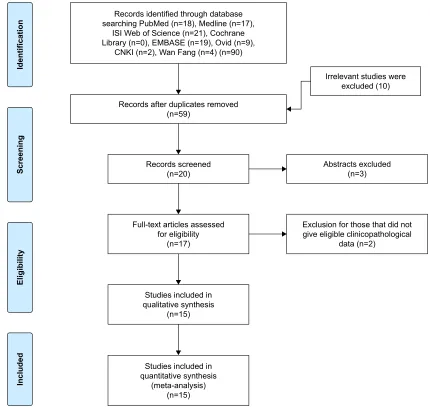
As shown in Figure 1, a total of 89 potential studies were collected from the database, and 69 studies were removed as these studies were non-HOXD-AS1-related, duplicated, or did not involve tests in tumor tissues after their titles and abstracts were reviewed; a total of 20 studies were evalu-ated by reading the full text and five studies were excluded because of having insufficient information. Fifteen eli-gible studies14–16,18,19,21–30 with 1,678 patients were ultimately
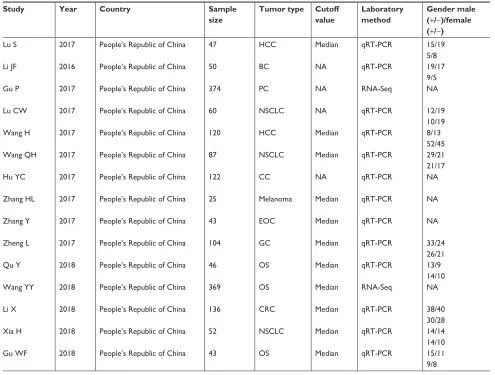
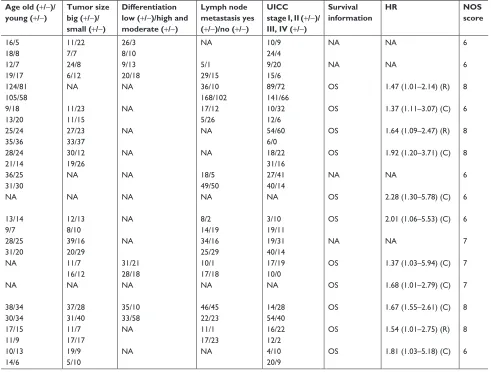
included in this meta-analysis. As shown in Table 1, these studies were published from 2015 to 2018 and had sample sizes ranging from 25 to 369; all the studies were from People’s Republic of China, and 14 studies were published in English, while one was written in Chinese. All the studies had high qualities according to the NOS score.
Association between HOXD-AS1 and
clinicopathologic characteristics
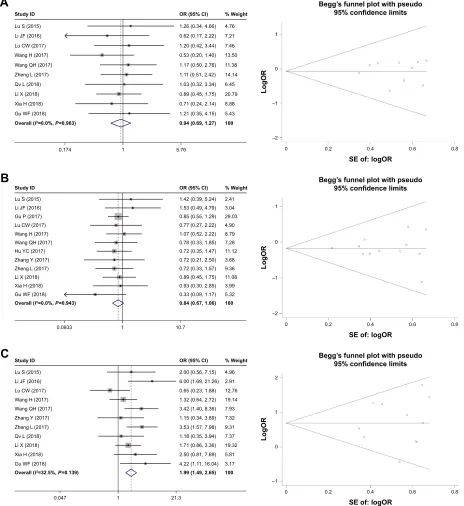
In this meta-analysis, the pooled ORs with 95% CI are shown in Table 2. Eleven studies reporting 788 patients assessed the relationship between HOXD-AS1 expression and tumor size; the results showed that the high expression of
HOXD-AS1 was associated with tumor size (large:small, OR = 1.99,
95% CI = [1.49, 2.65], P,0.001, fixed effect). Similarly,
four studies containing 331 patients with differentiation were included. The analysis showed that a higher expression of
HOXD-AS1 was related to low differentiation (low:high +
moderate, OR = 3.02, 95% CI = [1.90, 4.81], P,0.001,
random effect). Further, the pooled ORs also demonstrated that HOXD-AS1 was correlated with lymph node metastasis
(yes:no, OR = 2.69, 95% CI = [1.91, 3.79], P,0.001, fixed
effect) and advanced TNM stage (I+II:III+IV, OR = 0.31,
,UUHOHYDQWVWXGLHVZHUH H[FOXGHG
$EVWUDFWVH[FOXGHG Q
([FOXVLRQIRUWKRVHWKDWGLGQRW JLYHHOLJLEOHFOLQLFRSDWKRORJLFDO
GDWDQ
6WXGLHVLQFOXGHGLQ TXDQWLWDWLYHV\QWKHVLV
PHWDDQDO\VLV Q 6WXGLHVLQFOXGHGLQ TXDOLWDWLYHV\QWKHVLV
Q
)XOOWH[WDUWLFOHVDVVHVVHG IRUHOLJLELOLW\
Q 5HFRUGVVFUHHQHG
Q
5HFRUGVDIWHUGXSOLFDWHVUHPRYHG Q
,GHQWLILFDWLRQ
6FUHHQLQJ
(OLJLELOLW\
,QFOXGHG
5HFRUGVLGHQWLILHGWKURXJKGDWDEDVH VHDUFKLQJ3XE0HGQ 0HGOLQHQ
,6,:HERI6FLHQFHQ &RFKUDQH /LEUDU\Q (0%$6(Q 2YLGQ
&1.,Q :DQ)DQJQ Q
Figure 1 Flow diagram of study selection.
OncoTargets and Therapy downloaded from https://www.dovepress.com/ by 118.70.13.36 on 25-Aug-2020
Dovepress
Zhang et al
Table 1 Characteristics of studies included in the meta-analysis
Study Year Country Sample
size
Tumor type Cutoff value
Laboratory method
Gender male (+/-)/female (+/-)
Age old (+/-)/ young (+/-)
Tumor size big (+/-)/ small (+/-)
Differentiation low (+/-)/high and moderate (+/-)
Lymph node metastasis yes (+/-)/no (+/-)
UICC stage I, II (+/-)/ III, IV (+/-)
Survival information
HR NOS
score
Lu S 2017 People’s Republic of China 47 HCC Median qRT-PCR 15/19 16/5 11/22 26/3 NA 10/9 NA NA 6
5/8 18/8 7/7 8/10 24/4
Li JF 2016 People’s Republic of China 50 BC NA qRT-PCR 19/17 12/7 24/8 9/13 5/1 9/20 NA NA 6
9/5 19/17 6/12 20/18 29/15 15/6
Gu P 2017 People’s Republic of China 374 PC NA RNA-Seq NA 124/81 NA NA 36/10 89/72 OS 1.47 (1.01–2.14) (R) 8
105/58 168/102 141/66
Lu CW 2017 People’s Republic of China 60 NSCLC NA qRT-PCR 12/19 9/18 11/23 NA 17/12 10/32 OS 1.37 (1.11–3.07) (C) 6
10/19 13/20 11/15 5/26 12/6
Wang H 2017 People’s Republic of China 120 HCC Median qRT-PCR 8/13 25/24 27/23 NA NA 54/60 OS 1.64 (1.09–2.47) (R) 8
52/45 35/36 33/37 6/0
Wang QH 2017 People’s Republic of China 87 NSCLC Median qRT-PCR 29/21 28/24 30/12 NA NA 18/22 OS 1.92 (1.20–3.71) (C) 8
21/17 21/14 19/26 31/16
Hu YC 2017 People’s Republic of China 122 CC NA qRT-PCR NA 36/25 NA NA 18/5 27/41 NA NA 6
31/30 49/50 40/14
Zhang HL 2017 People’s Republic of China 25 Melanoma Median qRT-PCR NA NA NA NA NA NA OS 2.28 (1.30–5.78) (C) 6
Zhang Y 2017 People’s Republic of China 43 EOC Median qRT-PCR NA 13/14 12/13 NA 8/2 3/10 OS 2.01 (1.06–5.53) (C) 6
9/7 8/10 14/19 19/11
Zheng L 2017 People’s Republic of China 104 GC Median qRT-PCR 33/24 28/25 39/16 NA 34/16 19/31 NA NA 7
26/21 31/20 20/29 25/29 40/14
Qu Y 2018 People’s Republic of China 46 OS Median qRT-PCR 13/9 NA 11/7 31/21 10/1 17/19 OS 1.37 (1.03–5.94) (C) 7
14/10 16/12 28/18 17/18 10/0
Wang YY 2018 People’s Republic of China 369 OS Median RNA-Seq NA NA NA NA NA NA OS 1.68 (1.01–2.79) (C) 7
Li X 2018 People’s Republic of China 136 CRC Median qRT-PCR 38/40 38/34 37/28 35/10 46/45 14/28 OS 1.67 (1.55–2.61) (C) 8
30/28 30/34 31/40 33/58 22/23 54/40
Xia H 2018 People’s Republic of China 52 NSCLC Median qRT-PCR 14/14 17/15 11/7 NA 11/1 16/22 OS 1.54 (1.01–2.75) (R) 8
14/10 11/9 17/17 17/23 12/2
Gu WF 2018 People’s Republic of China 43 OS Median qRT-PCR 15/11 10/13 19/9 NA NA 4/10 OS 1.81 (1.03–5.18) (C) 6
9/8 14/6 5/10 20/9
Abbreviations: BC, bladder cancer; C, HR was estimated by curve; CC, cervical cancer; CRC, colorectal cancer; EOC, epithelial ovarian cancer; GC, gastric cancer; HCC, hepatocellular carcinoma; NSCLC, non-small-cell lung cancer; OS, osteosarcoma; PC, prostate cancer; R, HR was reported.
Table 2 LncRNA HOXD-AS1 clinicopathologic features for cancers Heterogeneity
Clinicopathologic features No of studies
No of patients
Pooled OR (95% CI)
PHet I2 (%) P-value Model
used
Gender 10 743 0.94 (0.69, 1.27) 0.963 0.0 0.677 Fixed
Age 12 1,237 0.84 (0.67, 1.06) 0.943 0.0 0.141 Fixed
Tumor size 11 788 1.99 (1.49, 2.65) 0.139 32.5 ,0.001 Fixed
Differentiation 4 331 3.02 (1.90, 4.81) 0.005 77.8 ,0.001 Random
Lymph node metastasis 9 919 2.69 (1.91, 3.79) 0.072 44.5 ,0.001 Fixed
TNM stage 13 1,268 0.31 (0.24, 0.40) 0.118 33.1 ,0.001 Fixed
Abbreviations: Fixed, fixed-effects model; NOS, Newcastle–Ottawa Scale; PHet, probability of heterogeneity; Random, random-effects model.
95% CI = [0.24, 0.40], P,0.001, fixed effect). However, the
pooled results demonstrated that the expression of
HOXD-AS1 was not related to gender (male:female, OR = 0.94,
95% CI = [0.69, 1.27], P=0.677, fixed effect) or age
(older:younger, OR = 0.84, 95% CI = [0.67, 2.65], P,0.001,
fixed effect). Therefore, our results indicated that the high
HOXD-AS1 expression significantly increased the risk of worse clinicopathologic features. Begg’s funnel plot was per-formed to evaluate publication bias (Figures 2 and 3). There was no publication bias for gender (P=0.858), age (P=0.732), tumor size (P=0.648), differentiation (P=0.734), lymph node
metastasis (P=0.076), or TNM stage (P=0.057).
OncoTargets and Therapy downloaded from https://www.dovepress.com/ by 118.70.13.36 on 25-Aug-2020
Dovepress The role of lncRNA HOXD-AS1 in human cancers
Table 1 Characteristics of studies included in the meta-analysis
Study Year Country Sample
size
Tumor type Cutoff value
Laboratory method
Gender male (+/-)/female (+/-)
Age old (+/-)/ young (+/-)
Tumor size big (+/-)/ small (+/-)
Differentiation low (+/-)/high and moderate (+/-)
Lymph node metastasis yes (+/-)/no (+/-)
UICC stage I, II (+/-)/ III, IV (+/-)
Survival information
HR NOS
score
Lu S 2017 People’s Republic of China 47 HCC Median qRT-PCR 15/19 16/5 11/22 26/3 NA 10/9 NA NA 6
5/8 18/8 7/7 8/10 24/4
Li JF 2016 People’s Republic of China 50 BC NA qRT-PCR 19/17 12/7 24/8 9/13 5/1 9/20 NA NA 6
9/5 19/17 6/12 20/18 29/15 15/6
Gu P 2017 People’s Republic of China 374 PC NA RNA-Seq NA 124/81 NA NA 36/10 89/72 OS 1.47 (1.01–2.14) (R) 8
105/58 168/102 141/66
Lu CW 2017 People’s Republic of China 60 NSCLC NA qRT-PCR 12/19 9/18 11/23 NA 17/12 10/32 OS 1.37 (1.11–3.07) (C) 6
10/19 13/20 11/15 5/26 12/6
Wang H 2017 People’s Republic of China 120 HCC Median qRT-PCR 8/13 25/24 27/23 NA NA 54/60 OS 1.64 (1.09–2.47) (R) 8
52/45 35/36 33/37 6/0
Wang QH 2017 People’s Republic of China 87 NSCLC Median qRT-PCR 29/21 28/24 30/12 NA NA 18/22 OS 1.92 (1.20–3.71) (C) 8
21/17 21/14 19/26 31/16
Hu YC 2017 People’s Republic of China 122 CC NA qRT-PCR NA 36/25 NA NA 18/5 27/41 NA NA 6
31/30 49/50 40/14
Zhang HL 2017 People’s Republic of China 25 Melanoma Median qRT-PCR NA NA NA NA NA NA OS 2.28 (1.30–5.78) (C) 6
Zhang Y 2017 People’s Republic of China 43 EOC Median qRT-PCR NA 13/14 12/13 NA 8/2 3/10 OS 2.01 (1.06–5.53) (C) 6
9/7 8/10 14/19 19/11
Zheng L 2017 People’s Republic of China 104 GC Median qRT-PCR 33/24 28/25 39/16 NA 34/16 19/31 NA NA 7
26/21 31/20 20/29 25/29 40/14
Qu Y 2018 People’s Republic of China 46 OS Median qRT-PCR 13/9 NA 11/7 31/21 10/1 17/19 OS 1.37 (1.03–5.94) (C) 7
14/10 16/12 28/18 17/18 10/0
Wang YY 2018 People’s Republic of China 369 OS Median RNA-Seq NA NA NA NA NA NA OS 1.68 (1.01–2.79) (C) 7
Li X 2018 People’s Republic of China 136 CRC Median qRT-PCR 38/40 38/34 37/28 35/10 46/45 14/28 OS 1.67 (1.55–2.61) (C) 8
30/28 30/34 31/40 33/58 22/23 54/40
Xia H 2018 People’s Republic of China 52 NSCLC Median qRT-PCR 14/14 17/15 11/7 NA 11/1 16/22 OS 1.54 (1.01–2.75) (R) 8
14/10 11/9 17/17 17/23 12/2
Gu WF 2018 People’s Republic of China 43 OS Median qRT-PCR 15/11 10/13 19/9 NA NA 4/10 OS 1.81 (1.03–5.18) (C) 6
9/8 14/6 5/10 20/9
Abbreviations: BC, bladder cancer; C, HR was estimated by curve; CC, cervical cancer; CRC, colorectal cancer; EOC, epithelial ovarian cancer; GC, gastric cancer; HCC, hepatocellular carcinoma; NSCLC, non-small-cell lung cancer; OS, osteosarcoma; PC, prostate cancer; R, HR was reported.
Association between HOXD-AS1 and
OS rate
Eleven studies reporting 1,349 patients with OS were included according to different expressions of HOXD1-AS1. The fixed-effects model was used since no significant heterogeneity was observed; the pooled HRs indicated that the high HOXD-AS1 expression was related with a worse
survival (HR = 1.61, 95% CI = [1.34, 1.88], P,0.001, fixed
effect, Figure 4A).
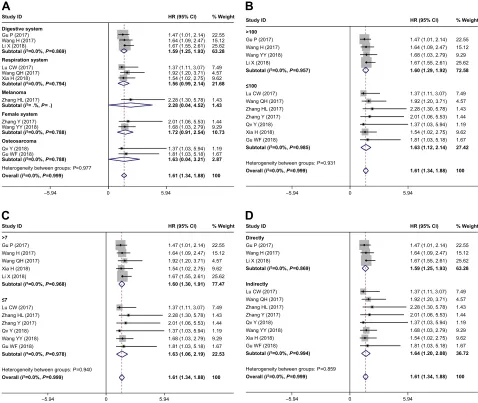
To further explore the relationship between HOXD-AS1 and OS, subgroup analyses were performed based on the tumor type, sample size, NOS score, and HR estimation method. As shown in Table 3, all of the subgroup analyses demonstrated that the expression of HOXD-AS1 was related to worse OS according to sample size (Figure 5B), NOS score (Figure 5C), and HR estimation method (Figure 5D). However, the subgroup analysis for tumor type indicated that
the expression of HOXD-AS1 was only related to a worse OS
in the digestive system (HR = 1.59, 95% CI = [1.25, 1.93],
P,0.001, fixed effect, Figure 5A). It should be noted that HOXD-AS1 was not correlated with OS in the respiration system, melanoma, female system, or osteosarcoma, indicat-ing that more studies should be included to verify this conclu-sion. The robustness of the pooled results was evaluated by sensitivity analysis – the results (Figure 4C) indicated that the results were reliable. Begg’s funnel plot was performed to evaluate publication bias; there was no publication bias
for OS (P=0.436, Figure 4D).
As shown in Figure 4B, three studies with 624 patients were included in this meta-analysis to explore the indepen-dent prognostic role of HOXD-AS1 for cancer patients. The pooled results reported that the expression of HOXD-AS1 was an independent prognostic factor for the OS of patients
(HR = 1.66, 95% CI = [1.12, 2.20], P,0.001, fixed effect,
OncoTargets and Therapy downloaded from https://www.dovepress.com/ by 118.70.13.36 on 25-Aug-2020
Dovepress
Zhang et al
%HJJ¶VIXQQHOSORWZLWKSVHXGR FRQILGHQFHOLPLWV 6(RIORJ25 /RJ25 ± 6WXG\,'
2YHUDOO, 3
/L-) =KHQJ/ *X:) ;LD+ /L; 4Y/ =KDQJ< :DQJ4+ :DQJ+ /X&: /X6 :HLJKW 25&O %HJJ¶VIXQQHOSORWZLWKSVHXGR FRQILGHQFHOLPLWV 6(RIORJ25 /RJ25 ± ± 6WXG\,' /X6 /L-) *X3 :DQJ+ /L; *X:)
2YHUDOO, 3
;LD+ =KHQJ/ =KDQJ< +X<& :DQJ4+ /X&: :HLJKW 25&O 6(RIORJ25 %HJJ¶VIXQQHOSORWZLWKSVHXGR FRQILGHQFHOLPLWV /RJ25 ± ± 6WXG\,' /X6 /L-) :DQJ4+ =KHQJ/ 4Y/
2YHUDOO, 3
*X:) ;LD+ /L; :DQJ+ /X&: :HLJKW 25&O
&
%
$
Figure 2 Forest plot and Begg’s publication bias plots of studies evaluating the relationship between HOXD-AS1 expression and clinicopathologic features.
Note: (A) Gender, (B) age, and (C) tumor size.
Figure 5B). There was no publication bias according to
Begg’s funnel plot (P=0.296).
Validation of the results in TCGA dataset
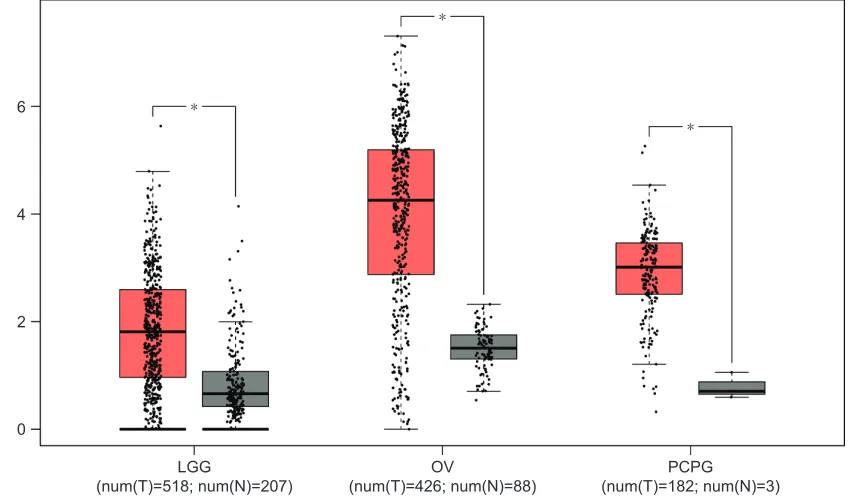
We first explored the expression of HOXD-AS1 in all kinds of related cancers using data from TCGA. As shown in Figure 6, HOXD-AS1 was also found to be overexpressed in brain lower grade glioma, ovarian serous
cystadenocarcinoma, and pheochromocytoma and
paragan-glioma (|Log2FC|cutoff .1, q-value ,0.01). We then merged
the expression data and OS data (disease-free survival [DFS] data) of cancers from all of the TCGA dataset from GEPIA, which includes the respiratory system, urinary system, female reproductive system, blood system, and digestive system. Those included contain adrenocortical carcinoma, bladder urothelial carcinoma, breast invasive carcinoma, cervical
OncoTargets and Therapy downloaded from https://www.dovepress.com/ by 118.70.13.36 on 25-Aug-2020
Dovepress The role of lncRNA HOXD-AS1 in human cancers
±
%HJJ¶VIXQQHOSORWZLWK SVHXGRFRQILGHQFHOLPLWV
/RJ25
6(RIORJ25
25&,
/L; ;LD+
2YHUDOO, 3
4Y/ =KHQJ/ =KDQJ< +X<& /X&: *X3 /L-)
6WXG\,'
:HLJKW
±
%HJJ¶VIXQQHOSORWZLWK SVHXGRFRQILGHQFHOLPLWV
/RJ25
6(RIORJ25
25&,
/X6 /L-) =KHQJ/ /L;
2YHUDOO, 3 6WXG\,'
:HLJKW
±
±
%HJJ¶VIXQQHOSORWZLWK SVHXGRFRQILGHQFHOLPLWV
6(RIORJ25
/RJ25
25&,
/L; ;LD+ *X:)
2YHUDOO, 3
4Y/ =KHQJ/ =KDQJ< +X<& :DQJ+ :DQJ4+ /X&: *X3 /L-) /X6
6WXG\,'
:HLJKW
$
%
&
Figure 3 Begg’s publication bias plots and the forest plot of published articles evaluating the relationship between HOXD-AS1 expression and (A) differentiation, (B) lymph node metastasis, and (C) TNM stage.
Note: Weights are from random effects analysis.
squamous cell carcinoma and endocervical adenocarcinoma, cholangiocarcinoma, colon adenocarcinoma, lymphoid neoplasm diffuse large B-cell lymphoma, esophageal carci-noma, glioblastoma multiforme, head and neck squamous cell carcinoma, kidney chromophobe, kidney renal clear cell carcinoma, kidney renal papillary cell carcinoma, acute myeloid leukemia, brain lower grade glioma, liver hepatocel-lular carcinoma, lung adenocarcinoma, lung squamous cell carcinoma, mesothelioma, ovarian serous cystadenocarci-noma, pancreatic adenocarcicystadenocarci-noma, pheochromocytoma and
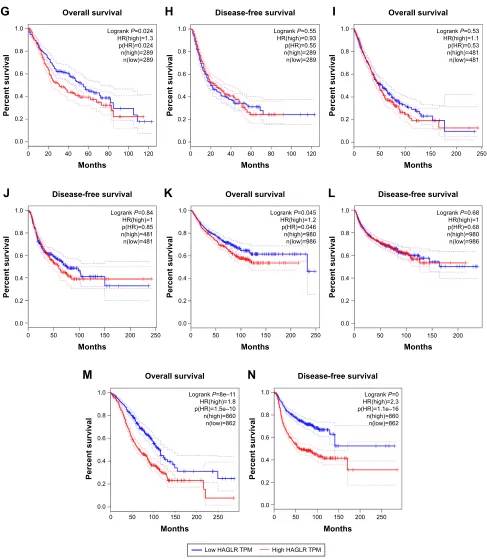
paraganglioma, prostate adenocarcinoma, rectum adenocar-cinoma, sarcoma, skin cutaneous melanoma, stomach adeno-carcinoma, testicular germ cell tumors, thyroid adeno-carcinoma, thymoma, uterine corpus endometrial carcinoma, uterine carcinosarcoma, and uveal melanoma. These included 9,502 cancer patients, which were then divided into high or low expression groups based on the median HOXD-AS1 expres-sion. The results indicated that the high expression of HOXD-AS1 denoted a worse OS (Figure 7A) and DFS (Figure 7B), confirming that an upregulated expression of HOXD-AS1
OncoTargets and Therapy downloaded from https://www.dovepress.com/ by 118.70.13.36 on 25-Aug-2020
Dovepress
Zhang et al
±
*X3
6WXG\,'
+5&,
:HLJKW
/X&: :DQJ+ :DQJ4+ =KDQJ+/ =KDQJ< 4Y< :DQJ<< ;LD+ /L; *X:)
2YHUDOO, 3
±
6WXG\,'
+5&,
:HLJKW
*X3
:DQJ+
/L;
2YHUDOO, 3
6(RI,Q+5 %HJJ¶VIXQQHOSORWZLWKSVHXGR
FRQILGHQFHOLPLWV
,Q+5
±
0HWDDQDO\VLVHVWLPDWHV JLYHQDPHGVWXG\LVRPLWWHG
*X3 /X&: :DQJ+ :DQJ4+ =KDQJ+/ =KDQJ< 4Y< :DQJ<< ;LD+ /L; *X:)
/RZHU&,OLPLW (VWLPDWH 8SSHU&,OLPLW
$
&
'
%
Figure 4 Forest plot of studies evaluating (A) the relationship between HOXD-AS1 expression and overall survival (OS) rate, (B) independent prognostic value, (C) Begg’s publication bias plots of OS, and (D) sensitivity analysis for OS.
Table 3 Subgroup analysis of overall survival by tumor type, NOS score, sample size
Subgroups No of
studies
No of patients
Pooled HR (95% CI)
PHet I2 (%) P-value
Tumor type
Respiratory system 2 137 1.56 (0.99, 2.14) 0.794 0.0 .0.05
Digestive system 3 624 1.59 (1.25, 1.93) 0.869 0.0 ,0.05
Female reproductive system 2 412 1.73 (0.90, 2.55) 0.788 0.0 .0.05
Osteosarcoma 2 89 1.63 (0.04, 3.21) 0.788 0.0 .0.05
Melanoma 1 25 1.72 (0.04, 3.21) – – .0.05
Sample size
#100 7 356 1.63 (1.34, 1.88) 0.985 0.0 ,0.05
.100 4 993 1.60 (1.29, 1.92) 0.957 0.0 ,0.05
NOS score
#7 6 586 1.63 (1.06, 2.19) 0.978 0.0 ,0.05
.7 5 763 1.60 (1.30, 1.91) 0.968 0.0 ,0.05
HR estimation method
Directly 3 624 1.59 (1.25, 1.93) 0.869 0.0 ,0.05
Indirectly 8 725 1.64 (1.20, 1.88) 0.994 0.0 ,0.05
Abbreviation: NOS, Newcastle–Ottawa Scale.
OncoTargets and Therapy downloaded from https://www.dovepress.com/ by 118.70.13.36 on 25-Aug-2020
Dovepress The role of lncRNA HOXD-AS1 in human cancers
Figure 5 (A) Forest plots of subgroup analyses for OS by tumor type, (B) subgroup analysis by sample size, (C) subgroup analysis by Newcastle–Ottawa Scale score and (D) HR estimation method.
± +5&O :HLJKW
%
6XEWRWDO, 3
*X3 ! ;LD+ :DQJ+ /L; /X&: :DQJ4+ =KDQJ+/ =KDQJ< :DQJ<< 4Y< *X:) 6WXG\,'
6XEWRWDO, 3
2YHUDOO, 3
+HWHURJHQHLW\EHWZHHQJURXSV3 ± +5&O :HLJKW *X3 :DQJ+ :DQJ4+ ;LD+ /L; /X&: ,QGLUHFWO\ 'LUHFWO\ =KDQJ+/ =KDQJ< 4Y< :DQJ<< *X:)
'
6WXG\,'6XEWRWDO, 3
6XEWRWDO, 3
2YHUDOO, 3
+HWHURJHQHLW\EHWZHHQJURXSV3 ± +5&O :HLJKW ! :DQJ+ *X3 :DQJ4+ ;LD+ /L; /X&: =KDQJ+/ =KDQJ< 4Y< :DQJ<< *X:)
&
6WXG\,'6XEWRWDO, 3
6XEWRWDO, 3
2YHUDOO, 3 +HWHURJHQHLW\EHWZHHQJURXSV3
± +5&O :HLJKW 'LJHVWLYHV\VWHP *X3 :DQJ+ /L; :DQJ4+ ;LD+ 0HODQRPD =KDQJ+/ )HPDOHV\VWHP =KDQJ< :DQJ<< 2VWHRVDUFRPD 4Y< *X:) /X&: 5HVSLUDWLRQV\VWHP 6WXG\,'
$
6XEWRWDO, 3
6XEWRWDO, 3
6XEWRWDO, 3
6XEWRWDO, 3
2YHUDOO, 3 +HWHURJHQHLW\EHWZHHQJURXSV3
6XEWRWDO, 3
was associated with OS and DFS in cancer patients. The role of HOXD-AS1 in different kinds of cancers was then analyzed. As shown in Figure 7, the expression of HOXD-AS1 was related to OS in the head and neck cancer system (Figure 7C), hepatobiliary and pancreatic system (Figure 7I), urinary system (Figure 7K), and female reproductive system (Figure 7M). However, the HOXD-AS1 expression was not associated with OS in gastrointestinal tumors (Figure 7E) or the respiratory system (Figure 7I). The high expression of HOXD-AS1 was not significantly associated with poor DFS in head and neck cancer system (Figure 7D), hepatobiliary and pancreatic system (Figure 7F), gastrointestinal tumors (Figure 7H), respiratory system (Figure 7J), or urinary system (Figure 7L). On the contrary, the expression of HOXD-AS1
was associated with DFS in the female reproductive system (Figure 7N).
Discussion
Accumulating evidence has shown that HOXD-AS1 was upregulated in various cancers. A meta-analysis was per-formed to clarify the association between HOXD-AS1 and clinicopathologic and prognostic values in cancers. The results indicated that the risk of lymph node metastasis in high expression was 2.69 times higher than those in low HOXD-AS1 expression. Similarly, the risk of developing into lower differentiation, larger tumor size, and advanced TNM stage were higher than those in the low expression. The pooled results showed that the high expression of
OncoTargets and Therapy downloaded from https://www.dovepress.com/ by 118.70.13.36 on 25-Aug-2020
Dovepress
Zhang et al
/**
QXP7 QXP1 QXP7 QXP1 29 QXP7 QXP1 3&3*
Figure 6 The expression levels of HOXD-AS1 in LGG (brain lower grade glioma), OV (ovarian serous cystadenocarcinoma), and PCPG (pheochromocytoma and paraganglimoma).
Notes: “*” indicates a log2FC value .1 and P-value ,0.01 in The Cancer Genome Atlas cohort.
Figure 7 (Continued)
0RQWKV 2YHUDOOVXUYLYDO
$
3HUFHQWVXUYLYDO
/RJUDQN3
+5KLJK S+5 QKLJK QORZ
0RQWKV 'LVHDVHIUHHVXUYLYDO
%
3HUFHQWVXUYLYDO
/RJUDQN3
+5KLJK S+5 QKLJK QORZ
0RQWKV 2YHUDOOVXUYLYDO
&
3HUFHQWVXUYLYDO
/RJUDQN3
+5KLJK S+5 QKLJK QORZ
0RQWKV 'LVHDVHIUHHVXUYLYDO
'
3HUFHQWVXUYLYDO
/RJUDQN3
+5KLJK S+5 QKLJK QORZ
0RQWKV
2YHUDOOVXUYLYDO
(
3HUFHQWVXUYLYDO
/RJUDQN3
+5KLJK S+5 QKLJK QORZ
0RQWKV 'LVHDVHIUHHVXUYLYDO
)
3HUFHQWVXUYLYDO
/RJUDQN3
+5KLJK S+5 QKLJK QORZ
/RZ+$*/5730 +LJK+$*/5730
OncoTargets and Therapy downloaded from https://www.dovepress.com/ by 118.70.13.36 on 25-Aug-2020
Dovepress The role of lncRNA HOXD-AS1 in human cancers
Figure 7 Validation of HOXD-AS1 in TCGA cohort.
Notes: (A) Overall survival plots of HOXD-AS1 in TCGA cohort (n=9,502, logrank P,0.01). (B) Disease-free survival plots of HOXD-AS1 in TCGA cohort (n=9,502, logrank P,0.01). (C) Overall survival plots of HOXD-AS1 in TCGA cohort in head and neck tumor (n=1,030, logrank ,0.01). (D) Disease-free survival plots of TCGA cohort in head and neck tumor (n=1,030, logrank P=0.13). (E) Overall survival plots of HOXD-AS1 in TCGA cohort in the gastrointestinal tumor system (n=928, logrank
=0.93). (F) Disease-free survival plots of TCGA cohort in gastrointestinal tumors (n=928, logrank P=0.47). (G) Overall survival plots of HOXD-AS1 in the TCGA cohort in hepatobiliary and pancreatic system (n=578, logrank =0.024). (H) Disease-free survival plots of TCGA cohort in the hepatobiliary and pancreatic system (n=578, logrank P=0.55). (I) Overall survival plots of HOXD-AS1 in TCGA cohort in the respiratory system (n=962, logrank =0.53). (J) Disease-free survival plots of TCGA cohort in the respiratory system (n=962, logrank P=0.84). (K) Overall survival plots of HOXD-AS1 in TCGA cohort in the urinary system (n=1,966, logrank =0.045). (L) Disease-free survival plots of TCGA cohort in the urinary system (n=1,966, logrank =0.68). (M) Overall survival plots of HOXD-AS1 in TCGA cohort in the female reproductive system (n=1,762, logrank ,0.01). (N) Disease-free survival plots of TCGA cohort in the female reproductive system (n=1,762, logrank ,0.01).
Abbreviation: TCGA, The Cancer Genome Atlas.
0RQWKV 2YHUDOOVXUYLYDO
*
3HUFHQWVXUYLYDO
/RJUDQN3
+5KLJK S+5 QKLJK QORZ
0RQWKV 'LVHDVHIUHHVXUYLYDO
+
3HUFHQWVXUYLYDO
/RJUDQN3 +5KLJK
S+5 QKLJK QORZ
0RQWKV 2YHUDOOVXUYLYDO
,
3HUFHQWVXUYLYDO
/RJUDQN3
+5KLJK S+5 QKLJK QORZ
0RQWKV 'LVHDVHIUHHVXUYLYDO
-3HUFHQWVXUYLYDO
/RJUDQN3 +5KLJK S+5 QKLJK QORZ
0RQWKV 2YHUDOOVXUYLYDO
.
3HUFHQWVXUYLYDO
/RJUDQN3 +5KLJK
S+5 QKLJK QORZ
0RQWKV 'LVHDVHIUHHVXUYLYDO
/
3HUFHQWVXUYLYDO
/RJUDQN3
+5KLJK S+5 QKLJK QORZ
0RQWKV 2YHUDOOVXUYLYDO
0
3HUFHQWVXUYLYDO
/RJUDQN3 H± +5KLJK S+5 H± QKLJK QORZ
0RQWKV 'LVHDVHIUHHVXUYLYDO
1
3HUFHQWVXUYLYDO
/RJUDQN3 +5KLJK S+5 H± QKLJK QORZ
/RZ+$*/5730 +LJK+$*/5730
OncoTargets and Therapy downloaded from https://www.dovepress.com/ by 118.70.13.36 on 25-Aug-2020
Dovepress
Zhang et al
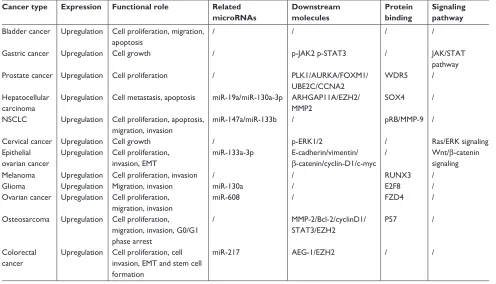
Table 4 Summary of HOXD-AS1 with their potential targets, pathways, and related microRNAs Cancer type Expression Functional role Related
microRNAs
Downstream molecules
Protein binding
Signaling pathway Bladder cancer Upregulation Cell proliferation, migration,
apoptosis
/ / / /
Gastric cancer Upregulation Cell growth / p-JAK2 p-STAT3 / JAK/STAT
pathway Prostate cancer Upregulation Cell proliferation / PLK1/AURKA/FOXM1/
UBE2C/CCNA2
WDR5 /
Hepatocellular carcinoma
Upregulation Cell metastasis, apoptosis miR-19a/miR-130a-3p ARHGAP11A/EZH2/ MMP2
SOX4 /
NSCLC Upregulation Cell proliferation, apoptosis, migration, invasion
miR-147a/miR-133b / pRB/MMP-9 /
Cervical cancer Upregulation Cell growth / p-ERK1/2 / Ras/ERK signaling
Epithelial ovarian cancer
Upregulation Cell proliferation, invasion, EMT
miR-133a-3p E-cadherin/vimentin/ β-catenin/cyclin-D1/c-myc
/ Wnt/β-catenin signaling
Melanoma Upregulation Cell proliferation, invasion / / RUNX3 /
Glioma Upregulation Migration, invasion miR-130a / E2F8 /
Ovarian cancer Upregulation Cell proliferation, migration, invasion
miR-608 / FZD4 /
Osteosarcoma Upregulation Cell proliferation, migration, invasion, G0/G1 phase arrest
/ MMP-2/Bcl-2/cyclinD1/
STAT3/EZH2
P57 /
Colorectal cancer
Upregulation Cell proliferation, cell invasion, EMT and stem cell formation
miR-217 AEG-1/EZH2 / /
Notes: “/” indicates data not available.
Abbreviation: EMT, epithelial-mesenchymal transition.
HOXD-AS1 was related to a worse OS, and HOXD-AS1 could be an independent role for the prognosis of cancers. This meta-analysis is the first review to assess the relation-ship between HOXD-AS1 and the prognosis of patients in different kinds of cancers. We used the TCGA dataset to explore the prognostic value of HOXD-AS1 in cancers, with the results suggesting that the expression of HOXD-AS1 may serve as a reliable biomarker for the prognosis of cancers.
Previous studies also explore the mechanism of HOXD-AS1 in different kinds of cancers,31 such as cell proliferation,
invasion, metastasis, and apoptosis. In the digestive system,
Zheng et al15 reported that the downregulation of HOXD-AS1
inhibited the cell growth by inactivating the janus kinase 2/ signal transducer and activator of transcription 3 pathway in vitro and in vivo in gastric cancer. In hepatocellular
car-cinoma, Lu et al31 found that HOXD-AS1 promoted HCC
metastasis through a HOXD-AS1/miR-19a/ARHGAP11A
signal axis. Further, Wang et al14 indicated that the
knock-down of HOXD-AS1 inhibited migration and invasion, and HOXD-AS1 could competitively bind to miR-130a-3p to
prevent SOX4. In colorectal cancer, Li et al16 demonstrated
that HOXD-AS1 could function as a competing endogenous RNA for miR-217 and promote CRC progression and
metas-tasis. In the female reproductive system, Hu et al25 reported
that the downregulation of HOXD-AS1 could suppress the
cell growth of cervical cancer via the Ras/ERK signaling
pathway. Chi et al32 found that HOXD-AS1 could act as
a ceRNA of miR-130a-3p to upregulate the expression of ZEB1, enhancing the chemoresistance of cisplatin-resistant cervical cancer cells. To continue, Wang et al28 indicated
that HOXD-AS1 could competitively bind to miR-608 and regulate the expression of frizzled family receptor 4 (FZD4) to promote cell proliferation, invasion, and migration of
ovar-ian cancer. In the respiratory system, Wang et al24 found that
HOXD-AS1 could negatively regulate the expression of miR-147a and positively regulate the expression of pRB, which can promote the proliferation of non-small-cell lung cancer.
Xia et al29 reported that miR-133b was a downstream target
of HOXD-AS1, and a knockdown of HOXD-AS1 could inhibit the proliferation, migration, and invasion of non-small-cell lung cancer cells. The researchers also explored
the mechanism of HOXD-AS1 in prostate cancer,22 bladder
cancer,18 glioma,17 and osteosarcoma,27 and similar results
were reported. All the studies indicated that HOXD-AS1 could play an oncogenic role in the progression of cancer. The mechanism of HOXD-AS1 in different kinds of cancers was summarized in Table 4.
There are some limitations in this meta-analysis. First, all the studies included were from People’s Republic of China, so the results may only be suitable for Chinese or Asian
OncoTargets and Therapy downloaded from https://www.dovepress.com/ by 118.70.13.36 on 25-Aug-2020
Dovepress The role of lncRNA HOXD-AS1 in human cancers
populations. The TCGA dataset makes up this disadvantage, though it should be noted that some of the results of the pub-lished articles and TCGA dataset were inconsistent, such as with the role of HOXD-AS1 in digestive tumors, which needs additional published articles to explore this conclusion. Sec-ond, the number of patients and tumor types included in this meta-analysis are limited, so more studies with larger sample sizes and various cancers should be included to support the results. Third, the HRs in many articles are not specifically provided, so we extracted the survival information from K-M curves, potentially creating some errors. Fourth, the TCGA dataset and subgroup analysis of OS revealed that the expression of HOXD-AS1 was not significantly associated with OS and DFS in every kind of tumor, so more studies should be included to verify these results.
Conclusion
Despite the above limitations, this meta-analysis concluded that the high expression of HOXD-AS1 was associated with large tumor size, lower differentiation, increased lymph node metastasis, and advanced TNM stage. Further, HOXD-AS1 was associated with a poor OS and DFS, indicating that HOXD-AS1 may be a potential prognostic biomarker for cancer patients, though more studies with larger sample sizes and various tumor types are needed.
Disclosure
The authors report no conflicts of interest in this work.
References
1. Ferlay J, Soerjomataram I, Dikshit R, et al. Cancer incidence and mor-tality worldwide: sources, methods and major patterns in GLOBOCAN
2012. Int J Cancer. 2015;136(5):E359–E386.
2. Chen W, Zheng R, Baade PD, et al. Cancer statistics in China, 2015.
CA Cancer J Clin. 2016;66(2):115–132.
3. Siegel RL, Miller KD, Jemal A. Cancer statistics, 2017. CA Cancer J
Clin. 2017;67(1):7–30.
4. Avila MA, Berasain C, Sangro B, Prieto J. New therapies for
hepatocel-lular carcinoma. Oncogene. 2006;25(27):3866–3884.
5. Siegel R, Naishadham D, Jemal A. Cancer statistics, 2012. CA Cancer
J Clin. 2012;62(1):10–29.
6. Mercer TR, Dinger ME, Mattick JS. Long non-coding RNAs: insights
into functions. Nat Rev Genet. 2009;10(3):155–159.
7. Sotillo E, Thomas-Tikhonenko A. The long reach of noncoding RNAs.
Nat Genet. 2011;43(7):616–617.
8. Wilusz JE, Sunwoo H, Spector DL. Long noncoding RNAs: functional
surprises from the RNA world. Genes Dev. 2009;23(13):1494–1504.
9. Liang C, Qi Z, Ge H, et al. Long non-coding RNA PCAT-1 in human
cancers: a meta-analysis. Clin Chim Acta. 2018;480:47–55.
10. Liang C, Zhang B, Ge H, Xu Y, Li G, Wu J. Long non-coding RNA CRNDE as a potential prognostic biomarker in solid tumors: a
meta-analysis. Clin Chim Acta. 2018;481:99–107.
11. Liang C, Liu J, Ge H, Xu Y, Li G, Wu J. The clinicopathological and prognostic value of long non-coding RNA ZEB1-AS1 in solid tumors:
a meta-analysis. Clin Chim Acta. 2018;484:91–98.
12. Liu C, Jin J, Liang D, et al. Long noncoding RNA PVT1 as a novel predictor of metastasis, clinicopathological characteristics and
progno-sis in human cancers: a meta-analyprogno-sis. Pathol Oncol Res. Epub 2018
Aug 6.
13. Yarmishyn AA, Batagov AO, Tan JZ, et al. HOXD-AS1 is a novel lncRNA encoded in HOXD cluster and a marker of neuroblastoma pro-gression revealed via integrative analysis of noncoding transcriptome.
BMC Genomics. 2014;15(Suppl 9):S7.
14. Wang H, Huo X, Yang XR, et al. STAT3-mediated upregulation of lncRNA HOXD-AS1 as a ceRNA facilitates liver cancer metastasis
by regulating SOX4. Mol Cancer. 2017;16(1):136.
15. Zheng L, Chen J, Zhou Z, He Z. Knockdown of long non-coding RNA HOXD-AS1 inhibits gastric cancer cell growth via inactivating the
JAK2/STAT3 pathway. Tumour Biol. 2017;39(5):1010428317705335.
16. Li X, Zhao X, Yang B, et al. Long non-coding RNA HOXD-AS1 promotes tumor progression and predicts poor prognosis in colorectal
cancer. Int J Oncol. 2018;53(1):21–32.
17. Chen Y, Zhao F, Cui D, et al. HOXD-AS1/miR-130a sponge
regu-lates glioma development by targeting E2F8. Int J Cancer. 2018;
142(11):2313–2322.
18. Li J, Zhuang C, Liu Y, et al. Synthetic tetracycline-controllable shRNA targeting long non-coding RNA HOXD-AS1 inhibits the progression
of bladder cancer. J Exp Clin Cancer Res. 2016;35(1):99.
19. Zhang H, Bai M, Zeng A, Si L, Yu N, Wang X. LncRNA HOXD-AS1 promotes melanoma cell proliferation and invasion by suppressing
RUNX3 expression. Am J Cancer Res. 2017;7(12):2526–2535.
20. Liang J, Wei X, Liu Z, et al. Long noncoding RNA CYTOR in cancer:
a TCGA data review. Clin Chim Acta. 2018;483:227–233.
21. Shan L. Research on the Mechanism of Long Noncoding RNA
HOXD-AS1 in Hepatocellular Carcinoma [Thesis]. China: The Second Military Medical University; 2015. Chinese.
22. Gu P, Chen X, Xie R, et al. LncRNA HOXD-AS1 regulates prolifera-tion and chemo-resistance of castraprolifera-tion-resistant prostate cancer via
recruiting WDR5. Mol Ther. 2017;25(8):1959–1973.
23. Lu C, Ma J, Cai D. Increased HAGLR expression promotes non-small cell lung cancer proliferation and invasion via enhanced de novo
lipo-genesis. Tumour Biol. 2017;39(4):1010428317697574.
24. Wang Q, Jiang S, Song A, et al. HOXD-AS1 functions as an oncogenic ceRNA to promote NSCLC cell progression by sequestering miR-147a.
Onco Targets Ther. 2017;10:4753–4763.
25. Hu YC, Wang AM, Lu JK, Cen R, Liu LL. Long noncoding RNA HOXD-AS1 regulates proliferation of cervical cancer cells by
acti-vating Ras/ERK signaling pathway. Eur Rev Med Pharmacol Sci.
2017;21(22):5049–5055.
26. Zhang Y, Dun Y, Zhou S, Huang XH. LncRNA HOXD-AS1 promotes epithelial ovarian cancer cells proliferation and invasion by targeting
miR-133a-3p and activating Wnt/β-catenin signaling pathway. Biomed
Pharmacother. 2017;96:1216–1221.
27. Qu Y, Zheng S, Kang M, et al. Knockdown of long non-coding RNA
HOXD-AS1 inhibits the progression of osteosarcoma. Biomed
Phar-macother. 2018;98:899–906.
28. Wang Y, Zhang W, Wang Y, Wang S. HOXD-AS1 promotes cell proliferation, migration and invasion through miR-608/FZD4 axis in
ovarian cancer. Am J Cancer Res. 2018;8(1):170–182.
29. Xia H, Jing H, Li Y, Lv X. Long noncoding RNA HOXD-AS1 promotes non-small cell lung cancer migration and invasion through regulating
miR-133b/MMP9 axis. Biomed Pharmacother. 2018;106:156–162.
30. Gu W, Zhang E, Song L, et al. Long noncoding RNA HOXD-AS1 aggravates osteosarcoma carcinogenesis through epigenetically
inhibit-ing p57 via EZH2. Biomed Pharmacother. 2018;106:890–895.
31. Lu S, Zhou J, Sun Y, et al. The noncoding RNA HOXD-AS1 is a critical regulator of the metastasis and apoptosis phenotype in human
hepatocellular carcinoma. Mol Cancer. 2017;16(1):125.
32. Chi C, Mao M, Shen Z, Chen Y, Chen J, Hou W. HOXD-AS1 exerts oncogenic functions and promotes chemoresistance in cisplatin-resistant
cervical cancer cells. Hum Gene Ther. Epub 2018 Sep 05.
OncoTargets and Therapy downloaded from https://www.dovepress.com/ by 118.70.13.36 on 25-Aug-2020
OncoTargets and Therapy
Publish your work in this journal
Submit your manuscript here: http://www.dovepress.com/oncotargets-and-therapy-journal
OncoTargets and Therapy is an international, peer-reviewed, open access journal focusing on the pathological basis of all cancers, potential targets for therapy and treatment protocols employed to improve the management of cancer patients. The journal also focuses on the impact of management programs and new therapeutic agents and protocols on
patient perspectives such as quality of life, adherence and satisfaction. The manuscript management system is completely online and includes a very quick and fair peer-review system, which is all easy to use. Visit http://www.dovepress.com/testimonials.php to read real quotes from published authors.
Dovepress
Dove
press
Zhang et al
OncoTargets and Therapy downloaded from https://www.dovepress.com/ by 118.70.13.36 on 25-Aug-2020