Thesis
Information Systems in General Practice:
A Framework to Implement the Management and Prevention of
Chronic Diseases
Daniel R. Carbone
Doctor of Philosophy
2009
SCHOOL OF MANAGEMENT AND INFORMATION SYSTEMS
FACULTY OF BUSINESS AND LAW
Declaration
“I, Daniel R. Carbone, declare that the PhD thesis entitled Information Systems in General Practice: A Framework to Implement the Management and Prevention of Chronic Diseases is no more than 100,000 words in length including quotes and exclusive of tables, figures, appendices, bibliography, references and footnotes. This thesis contains no material that has been submitted previously, in whole or in part, for the award of any other academic degree or diploma. Except where otherwise indicated, this thesis is my own work”.
Table of Contents
Table of Contents ... 3
Glossary of Abbreviations and Key Terms ... 5
Dedication ... 6
Abstract ... 7
Acknowledgement ... 9
INTRODUCTION ... 10
CHAPTER ONE - Introduction to the Study ... 10
Introduction ... 10
The Research Context ... 13
The aim ... 13
Contribution to knowledge ... 14
The Theoretical framework ... 14
Research approach ... 15
Methodology ... 16
The Research Framework Summary ... 17
The Organisation of this Study ... 17
Conclusion ... 20
STAGE ONE: The Research Strategy ... 21
CHAPTER TWO – Methodology ... 21
Introduction ... 21
The Theoretical Foundation of the Study ... 22
Research Methods ... 27
Data Collection Techniques ... 34
Ethical considerations ... 43
The Research Design: The Exploration Framework ... 45
Conclusion ... 47
CHAPTER THREE - Literature Review ... 48
Introduction ... 48
SECTION ONE - Chronic Diseases ... 49
SECTION TWO - Systematic Solutions to Chronic Diseases ... 59
SECTION THREE – Information Systems in Health ... 65
SECTION FOUR - Information Systems in General Practices ... 74
SECTION FIVE – The Building Blocks (constructs) of a Chronic Diseases Information System for General Practice ... 99
Conclusion ... 116
CHAPTER FOUR – Context and Practical Experience ... 118
Introduction ... 118
Part One: Context of the study ... 119
Part two: A Background to Practical Implementations ... 131
Part Three: The Chronic Diseases IM/IT Implementation Framework ... 133
Conclusion ... 149
STAGE TWO: The Exploration ... 150
CHAPTER FIVE – The Emerging Conceptual Framework ... 150
Introduction ... 150
Developing the Emerging Conceptual Framework ... 151
The Framework Process Flow ... 152
The Flowchart ... 154
The Emerging Framework Details ... 156
CHAPTER SIX –– First Data Collection ... 166
Introduction ... 166
Testing the Emerging Conceptual Framework ... 169
Data Collection and Results ... 171
Alteration to the framework ... 191
Conclusion ... 196
CHAPTER SEVEN –– Main Data Collection ... 198
Introduction ... 198
Background and aims ... 199
Practice type selection ... 199
Participant selection ... 201
Other characteristics ... 202
Conducting the study ... 203
Main Data Collection Findings ... 208
Data Collection summary ... 269
CDIS Outcomes data from primary and secondary records ... 270
STAGE THREE: The Outcome ... 277
CHAPTER EIGHT – Discussion ... 277
Introduction ... 277
Overall discussions and conclusions leading to the final framework ... 278
The final framework ... 287
Summary Discussion of Major Findings ... 289
Summary ... 302
CHAPTER NINE - Conclusions ... 303
Conclusion ... 303
Recapping the Study ... 303
The contribution of Chronic Diseases Information Systems ... 310
Future research: where to from here? ... 313
The contribution of the present work ... 314
The Applicability of the Framework ... 314
Limitations of the Study ... 315
What was not included in the Study ... 318
Implications for theory ... 319
Implications for policy and practice ... 319
REFERENCES ... 321
APPENDICES ... 335
Appendix A: Interview protocol samples ... 335
Interview protocol – Pilot interviews (2 key informants)... 335
Interview protocol – First data collection (Ten practice champions) ... 338
Interview protocol – Type A - GP Principals (main data collection phase) ... 343
Interview Protocol – Type B (Main data collection phase) ... 347
Interview Protocol – Type C (Main Data Collection) ... 351
Glossary of Abbreviations and Key Terms
AGPAL Australian General Practice Accreditation Ltd
Case Study The collection and presentation of detailed information about a particular participant or small group, frequently including the accounts of subjects themselves.
CD Chronic Disease or Condition
CDIS Chronic Disease Information System Construct
Validity
Seeks an agreement between a theoretical concept and a specific measuring device, such as observation.
Credibility A researcher's ability to demonstrate that the object of a study is accurately identified and described, based on the way in which the study was conducted
CVx Cervical Screening
Data Recorded observations, usually in numeric or textual form External
Validity
The extent to which the results of a study are generalisable or transferable. See also validity
FTE GP Full Time Equivalent General Practitioner
Generalisability The extent to which research findings and conclusions from a study conducted on a sample population can be applied to the population at large.
IM Information Management
Inductive analysis
A form of analysis based on inductive reasoning; a researcher using inductive analysis starts with answers, but forms questions
throughout the research process. Internal
Validity
The rigor with which the study was conducted (e.g., the study's design, the care taken to conduct measurements, and decisions concerning what was and wasn't measured)
IS Information Systems
IT Information Technology
IT/IM Information Management / Information Technology MBS Medicare Benefit Schedule
Medicare Australia
Medicare Australia is the new name for the old Health Insurance Commission (HIC) in charge of running among other things the MBS and PIP item payments to General Practice
Reliability The extent to which a measure, procedure or instrument yields the same result on repeated trials.
Sample The population researched in a particular study. Usually, attempts are made to select a "sample population" that is considered
representative of groups of people to whom results will be generalized or transferred.
Triangulation The use of a combination of research methods in a study. An
example of triangulation would be a study that incorporated surveys, interviews, and observations.
Dedication
Abstract
The aim of this research project was to develop an implementation framework for the prevention and management of chronic diseases in general practice (Doctor’s surgery). Chronic diseases (CDs) —or conditions as it is also commonly known, like Diabetes, Asthma, Cardiovascular Disease, etc., are persistent or recurring illnesses or impairments lasting for years that cannot be cured, however some can be prevented from becoming a chronic disease. Unfortunately, millions of chronic diseases sufferers worldwide end up dying prematurely and in many cases unnecessarily due to lack of appropriate care.
Information technology developments for healthcare providers have been seen for years as the perfect supporting tools to assist in the prevention and management of these conditions. However, and despite Government efforts both worldwide and in Australia, to incentivise the use of these technologies to reduce their economic and health impact have had very little success in affecting the uptake of computerised chronic disease care.
The study was designed to take the learnings from health and information systems literature and existing experience in successful implementations at Central Highlands General Practice Network (CHGPN) to develop an emerging framework and test it using the views and perceptions of hands-on implementers and users themselves in their own setting.
Cases Study design was the methodology chosen for this socio-technical study. Structured and unstructured interviews, direct observations and primary and secondary data collection methods were used. The final framework was developed from the testing of the
framework, over three iterations at twenty-eight practices, representative of CHGPN population cross-section. More specifically, by hardware and software used, size (number of GPs), geographical position (suburban, semi-rural and rural) and diverse levels of CDIS implementation success involving an aggregated total of thirty-six interviews with GPs, practice managers, nurses and key staff.
practice; 2 - Evidence based analysis, a central concept whereby a practice’s own evidence gaps is used to support chronic condition care change; 3 - Capacity, where an initial
capacity review assesses and secures the capacity needed to support change; 4- Adoption; a construct that suggests that at this point and with previous constructs resolved, practice decision makers would adopt the implementation of new computerised care models; 5 – Systems Implementation, this construct reflects the practical implementation process; 6 – Outcomes, the essential component of this framework’s to measure multiple intended goals over CDIS implementation process; 7 – Practice champions, the vital human component that drives the internal engine of the framework; 8 – The external Change agent, critical human element that in tandem with the practice champion acts as the external driver of the framework.
The strength of the final framework is based on the learnings from the literature and confirmed through the voices of implementers and heavily involved users themselves. Supporting evidence for the framework comes from the breadth of more than seventy documented CDIS implementations, across more than eighty percent of the CHGPN’s general practice population. More importantly, the twenty-eight participating general practices, all had at least one CDIS implemented, with the majority having multiple and sustainable implementations, even after three years (n=20, or 71%). More evidence in support of the effectiveness of the framework comes from the impact of the CDIS
implementations on chronic conditions care. Among these, an almost doubling in both the cervical screening rates and the monitoring of Diabetics across participating practices.
In conclusion, the application of this socio-technical information systems framework for the prevention and management of chronic conditions in general practice developed through this thesis has the potential to affect the uptake of information technology in general practice. Moreover, it clearly supports the improvement of chronic conditions’ clinical care. For policy makers, the framework has the potential to affect the negative budgetary and health outcomes due to current gaps in chronic conditions prevention and management.
Acknowledgement
First and foremost, this thesis could not have been completed without the encouragement and enthusiasm of my supervisor, Dr Stephen Burgess. In times of doubt and serious illness he never allowed me to loose sight of the big picture. He gave me the freedom to experiment and develop my own research path and gave me the respect given to a peer rather than a student. To you, thank you for getting me here.
The same gratitude is extended to Dr Carmine Sellitto, my second supervisor, for his continued support and providing me further opportunities to carry out research in areas of my interest. Perhaps the person that influenced my PhD journey from Victoria University the most —outside my direct supervision, was Professor Arthur Tatnall, he challenged and encouraged me to publish in a number of related fields that now make me a better
professional. Thank you for your always honest and timely advice.
A special mention must go to the management of Central Highland General Practice
Network. I must thank them for allowing me to carry out my research and work unhindered throughout this project. Their support and goodwill will always be remembered. Special appreciation goes to one particular member of the management team, who not only was a voice of reason and support in bad times but also an outstanding peer and friend, Mrs Pamela Trethowan.
There is a particular group of people that deserve my greatest appreciation and admiration: Practice Managers, Nurses, Staff and GPs. They’ve opened doors, trusted me and given their time selflessly to me.
INTRODUCTION
CHAPTER ONE - Introduction to the Study
‘Research is what I'm doing when I don't know what I'm doing’ (Werner von Braun, 2008)
Introduction
The purpose of this thesis is to develop an information systems framework to support the prevention and management of chronic conditions (also known as diseases) in general practices (Doctor’s surgeries).
Chronic conditions are persistent or recurring illnesses or impairments lasting for years that cannot be cured, however some can be prevented from becoming one (National Academy on an Ageing Society, 1999); and despite the clinical differences across these chronic conditions, each illness confronts patients and their families withthe same spectrum of needs: to alter their behaviour; to dealwith the social and emotional impacts of symptoms, disabilities,and approaching death; to take medication; and to interact withmedical care over time. In return, according to the best available clinical evidence, healthcare must ensure thatpatients receive the best treatment regimens to control diseaseand mitigate symptoms, as well as the information and supportneeded to effectively self manage their health and, in many instances,their death (E. H. Wagner & Groves, 2002). Failure to prevent and manage such conditions could escalate to more complex and costly health care problems culminating premature death (AIHW, 2008c; Wickramasinghe & Goldberg, 2008).
These clinical failures are further exacerbated by the disinclination of general practitioners (doctors) to take up current clinical best practice (systematic preventative and management models of care) for a number of reasons that will be identified later on in the chapter, and by the slow adoption of information technology to support systematic (prevention and management) approaches to chronic condition care (AIHW, 2006; Department of Health and Aged Care, 2003; Grol et al, 1998; Gross, Leeder, & Lewis, 2003; HealthConnectSA, 2007; Nader, 2007; Schuster et al., 2003). According to the World health Organisation (2008c) Systematic approaches to chronic condition care supported by the introduction of technology include: the organization of patient information, tracking and planning of patient care, provision of support for patient self-management, scheduling of patient follow-up (recall and reminders), access to the latest clinical guidelines and
communication between clinical team members and patients. They can take a variety of forms, and effective systems can be created even in very resource-poor settings. They may be paper-based, such as a chronic disease register kept in a notebook, and be linked to patient records, fully computerized, or a combination of the two (WHO, 2008c).
The current failure of the Australian —and most western world health systems to prevent and manage the alarming growth in chronic diseases as well as its escalating health costs is rapidly becoming the future major health area of concern for governments and health authorities (Berwick, 2002; HealthConnectSA, 2007; WHO, 2008a).
The last few years have seen strong calls and financial incentives from the Australian Federal Government for the application of technological advances to contain escalating health costs (Australian Institute of Health and Welfare, 2004; Health Insurance
Commission, 2003). These incentives have resulted in considerable uptake of computers (technology) in general practices; Unfortunately, this uptake of technology has failed to translate into the actual use of those technologies to support systematic approaches to care (Enrico Coiera, 2004; Littlejohns, Wyatt, & Garvican, 2003; Nancy Lorenzi, 2004;
Richards, Bolton, Veale, & Quinlan, 1999; Sturnberg, Martin, & Pittman, 2003; Van Der Weyden, 2003).
organisational and environmental dimensions (S. Bell & Wood-Harper, 2003; Noyes & Baber, c1999; Skidmore & Eva, 2004; Tatnall, Burgess, & Davey, 2003). Furthermore, and although there are almost fifty theories currently in use in the information systems field alone (Schneberger & Wade, 2006) and a lot is known about information systems barriers and enablers in a variety of health settings in general, there is actually very little specific knowledge about the factors, events and processes that are conducive to the successful implementation and adoption of information systems for the prevention and management of chronic conditions in general practices.
What is apparent is that at the very least, the adoption of these technology-supported systematic approaches in general practice require a major shift in current medical care models (Chew & Armstrong, 2002; Chew & Van Der Weyden, 2003; Rust & Cooper, 2007). This shift involves changing the existing clinical practice of treating a patient when they arrive at the surgery already disease stricken or inappropriately managed, to
developing systems to assist the prevention of care so that patients are systematically and periodically seen by their doctor to avoid getting to that stage (WHO, 2008b). This requires significant change in the way clinicians (general name given to Doctors, Nurses, Allied Health Specialists, and so on) currently deliver their care. However, affecting change in any organisation is at best extremely difficult. Logical reasons for change do not
automatically translate into changes in clinical behaviour or practice for a variety of reasons, this is just as true in general practice (Grol & Grimshaw, 2003 ;
HealthConnectSA, 2007; Liaw & Humphreys, 2006).
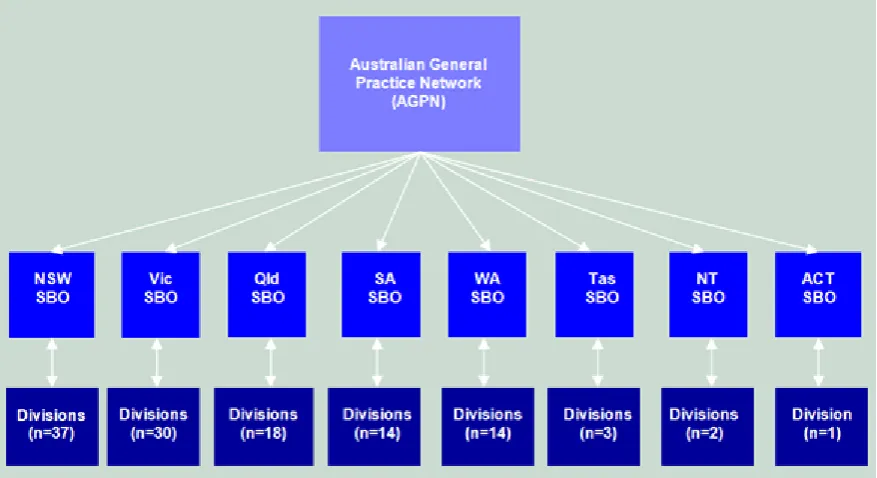
In Australia, clinical change management methods in general practice settings have followed two approaches: the traditional dissemination pathway (journal article reading, conferences, and re-education) and the government led incentives for service pathway. These methods are supported through regionally based networks of organisations, called Divisions of General Practices funded by the Australian Federal Government to affect and support change in general practice through a number of incentives and educational
programs. For example, and of relevance to this study, are the Information
have been action based (hands-on, practical in nature) and have not been properly documented or researched from an academic point of view.
The Research Context
Central Highlands Division of General Practice (CHDGP) —also referred to in this thesis as just ‘the Division’, and its chronic disease IT/IM implementation program was chosen as the research site. This regional body comprises more than one hundred and seventy thousand inhabitants, thirty eight general practices and more than two hundred general practitioners (GPs). While a significant number of chronic disease information systems (CDIS) adoptions were being achieved, the implementations were carried out in an ad-hoc way, with very little documentation. Nevertheless, it would provide the practical grounding in conjunction with existing literature to develop an appropriate initial conceptual
(emerging) framework.
The CHDGP became an Industry Partner to the School of Information Systems - Victoria University, jointly funding an Industry Partnership Award (IPA) scholarship to their in-house Information Technology/Information Management (IT/IM) practitioner (in this instance: ‘the researcher’). This arrangement secured the local information system practitioner experience in their IM/IT Chronic Disease Management implementation program and, importantly, it became a valuable ‘foot-in-the-door’ into these general practices.
The aim
The aim of this study was to develop an information systems framework to support the prevention and management of chronic conditions in general practice. This would be achieved by first developing an initial conceptual framework drawn from the literature and experience from field implementations in general practice, then testing it with key general practice informants to refine its propositions and then to finalise its development by a comprehensive testing and refinement phase.
The study also aimed at demonstrating that information systems implementation
Contribution to knowledge
This thesis stands to contribute substantially to the body of knowledge in a number of the interrelated areas of theory and practice.
First and foremost, it will help to address the deficit in the theoretical understanding of genuine implementation of chronic diseases information systems in general practice; as well as providing a practical implementation framework for other information systems practitioners to use and adapt to their own contexts.
The methodologies and methods used to develop this knowledge will further add strength to the use of such paradigms in information systems research in the healthcare area. The findings of this study have the potential to inform and guide appropriate health and budgetary policy makers in current and future information systems deployment programs. The study is not directly concerned with direct patient health outcomes, however, an indirect and practical contribution of this research is the mounting evidence suggesting that general practices that have adopted these systematic approaches to chronic disease care have saved and/or improved the quality of lives of those suffering from chronic conditions.
The Theoretical framework
A theoretical framework is defined in this study as the structure of concepts which exists in the literature, a ready-made map for the study (Liehr & Smith, 2001); it provides the structure for examining a problem and serves as a guide to examine relationships between variables (Ingelse, 1997).
Theoretical frameworks are important in exploratory studies, where the researcher does not know much about what is going on, and is trying to learn more. As Borgatti (1998)
suggested:
‘There are two reasons why theoretical frameworks are important here. First, no matter how little you think you know about a topic, and how unbiased you think you are, it is impossible for a human being not to have preconceived notions, even if they are of a very general nature’
(Borgatti, 1998)
organisational design by enabling the social subsystem, technological subsystem and the environment to work well together (Pasmore, 1988) which matches the researcher’s ‘world view’, human values, theories, and data gathering techniques (Flood, 1990; Franz, 1994; Reich, 1994). More importantly, socio-technical researchers seem to be the most adept at trying to test and develop theory (Mumford, 2006). In other words, the socio-technical approach is not algorithmic but affords its practitioner the freedom to reinvent central concepts as needed (Stahl, 2007).
Although socio-technical theory provides guiding questions that practitioners can use to orient themselves, it cannot provide a blueprint for action (Cherns, 1976). Therefore, the necessity in this investigation is to develop a framework so as to achieve a better
understanding of the conditions under which a general practice’s social-technical system can be integrated and adopted to develop a blueprint for further potential action
(implementations).
Research approach
In general practice specifically, the understanding of socio-technical information systems to support the prevention and management of chronic conditions is not well known. The socio-technical information systems concepts and constructs (phenomena) require an approach that will deliver new knowledge based on a sound research approach.
From an information systems point of view, the wider context (i.e. social, technical, and environmental) in which general practice operates is not well known. The existing literature provides some isolated clues and the experience of the IT/IM Officer can potentially provide further procedural knowledge to develop an emerging conceptual framework from where to begin the study. For the purpose of this thesis, a conceptual framework is defined as a structure of concepts and/or theories which are pulled together as a map for the study (Ingelse, 1997).
number of general practices where multiple implementation have occurred but from the point of view of key participants (Yin, 2003), also called practice champions in this study with full knowledge of their bounded practice systems (Burns, 1990).
This serves two intertwined purposes; one is to refine the constructs identified in the emerging framework, aided by observations and reflections of the field implementer (IT/IM Officer), the second is that it prevents the misuse of busy research study participants’ time in conducting very open and aimless exploratory endeavours. A second larger data collection phase then re-tests the revised framework on four
participant types: General Practitioners (GPs), Nurses, Practice Managers (PMs) and staff. Their points of view are analysed in conjunction with observations and reflections to finalise a workable information system framework for the prevention and management of chronic conditions.
The very apparent need in this thesis to study socio-technical phenomena requires a research approach that has elements of both Post-Positivist and Interpretivist approaches.
Methodology
The research approach selected requires a methodology that will be able to study
phenomena (the implementation of an information system) in their own bounded contexts (general practices).
The best match to this approach is Case Study; whereby cases are analysed either to build up or validate models or theories, typically through collection of textual data through interviews and documentation (Burns, 1990; Nereu, Kock, McQueen, & Scott, 2000; Yin, 2003). Furthermore, taking into account that the researcher was and continued to be during the life of the study, the IT/IM Officer/implementer for CHDGP, the methodology also includes some aspects of Action Research; where information systems can be investigated within the full rigours of organisational reality (Marshall, De Salas, & McKay, 2006). The advantage of this method is that it satisfies the ‘research-led’ need of the researcher, but also satisfies the ‘problem-led’ need of the information system practitioner (employed to affect change) (D. Avison, Baskerville, & Myers, 2001; Marshall et al., 2006; McKay & Marshall, 2000). However, the dominant method employed is Case Study.
The data collection techniques in this study are semi-structured interviews, field
is both inductive and abductive. The final outcome is a theoretical framework as set out in the aims. Further justification is provided in the methodology chapter.
The Research Framework Summary
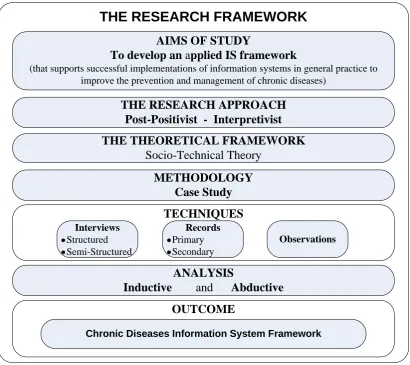
Table 1 provides an overview of the research framework of this study; further justification for the use of this framework will be presented in the Methodology chapter (Chapter 2)
AIMS OF STUDY
To develop an applied IS framework
(that supports successful implementations of information systems in general practice to improve the prevention and management of chronic diseases)
THE RESEARCH APPROACH Post-Positivist - Interpretivist THE THEORETICAL FRAMEWORK
Socio-Technical Theory METHODOLOGY
Case Study
ANALYSIS
Inductive and Abductive OUTCOME
THE RESEARCH FRAMEWORK
TECHNIQUES
Interviews
Structured Semi-Structured
Observations Records
Primary Secondary
Chronic Diseases Information System Framework
Figure 1 - The Research Framework Summary
The Organisation of this Study
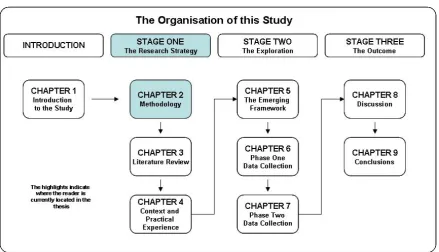
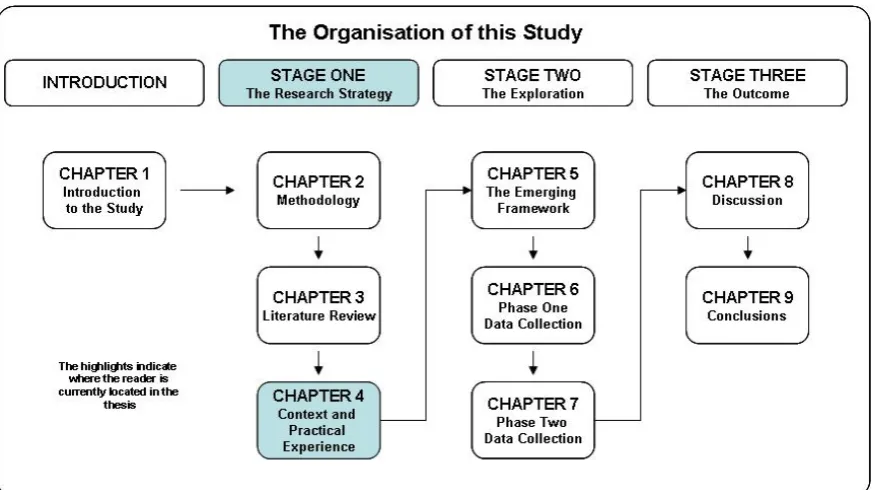
The thesis is organised in four distinct sections; an introduction and three stages as follows:
INTRODUCTION
Chapter 1: Introduction to the Study (this Chapter): The chapter provides an introduction to the study; allowing the reader an overarching view of the whole thesis.
This stage is concerned with the research strategy and context for the study. It is made up of three chapters:
Chapter 2: Methodology: The purpose of this chapter is to examine the theoretical foundation of the study, review and select appropriate research methods, data collection techniques and ethical considerations to develop an appropriate research design for the research aim.
Chapter 3: Literature Review: This chapter reviews the underpinning literature for the study. First, it defines what chronic diseases are and their place in the wider world and Australian contexts and their connection to the use of information systems. Then, it examines the existing wider body of knowledge in the field of information systems and health informatics to then focus on information systems in general practice specifically. It highlights barriers and enablers in past implementations and finally outlines potential constructs beginning to emerge from the preceding literature.
Chapter 4: The Research Context: This chapter first introduces the research setting from the wider Australian health system to the specific CHGPN profile and chronic diseases baseline data in which the study takes place and past CDIS implementations occurred. Then, it outlines the background to practical implementations and introduces the IT/IM Officer position and role in past CDIS implementations. Finally, this chapter compares the findings in the literature with the IT/IM Officer’s experience and observations and begins to delineate the composition of emerging systems and subsystem constructs.
STAGE TWO: THE EXPLORATION
The exploration stage is concerned with the actual research. It comprises three chapters: Chapter 5: the Emerging Framework: This chapter aims at developing the emerging (conceptual) framework drawn from the structure of concepts which exists in the literature (Chapter Three) and the field experiences in context (Chapter Four). This is the emerging framework to be tested over the two next data collection stages.
Chapter 6: First Data Collection: This chapter aims at testing this emerging framework by interviewing ten key informants/players heavily involved in past implementation processes as explained in the methodology chapter. A new revised framework is the outcome of this chapter.
Chapter 7: Main Data Collection: The purpose of this chapter is to finalise the testing of the revised framework by interviewing a much wider and diverse number of
framework on other chronic conditions and with differing levels of success. Data is collected, analysed and results presented to highlight the revised constructs. Results are then supported by contrasting pre- and post- government documentation on chronic diseases indicators for the Division.
STAGE THREE: THE OUTCOME
This stage is concerned with the final outcomes of the study and has two chapters: Chapter 8: Discussion: This chapter is concerned with the overall discussion and conclusions of tested constructs and process leading to the final framework. It concludes by providing a summary discussion of major findings.
Chapter 9: Conclusions: The purpose of this chapter is to provide concluding remarks for the study. The study is briefly re-visited; the contributions of the practical
implementations; it suggested future research opportunities; the contribution of the study, its applicability, limitations and implications for theory, theory and practice.
To facilitate the navigation through this thesis, diagrams like the one below (Table 2) at the beginning of every phase of the study and/or chapter will highlight the current location of the reader in respect to the whole document.
Figure 2- The Organisation of this Study- INTRODUCTION - Chapter1
Conclusion
The introduction provided the overarching perspective of the thesis. It provided an
STAGE ONE: The Research Strategy
CHAPTER TWO – Methodology
‘…the most common reasons for identifying a research problem arises from students having to find a topic for a research project. Some achieve this by reading the literature: by finding out what has already been done and where the gaps might lie. Others, who are already working in a professional field, have the opportunity to observe their work setting and identify problems and issues, which seem to require investigation’
(Williamson, 2002, p 49)
Figure 3 - STAGE ONE: Chapter2: Methodology
Introduction
The purpose of this chapter is to describe the research methods, data collection techniques and ethical considerations appropriate for the aim of this thesis.
The Theoretical Foundation of the Study
Introduction
The aim of this section of the chapter is to provide the reader with a clear understanding of the research approach and nature of the theoretical framework being developed that
underpins the researcher’s world views and ways of knowing, to be able to construct an appropriate research design.
The Research Approach The main traditions
Since the middle of the nineteenth century, researchers attempting to apply research
methods used in the natural sciences to the social sciences, known as Positivists, have been seen to be at odds with those that emphasise the meaning made by people as they interpret their world, called Interpretivists (Williamson, 2002). Williamson (2002) tells us:
‘These philosophies are sometimes referred to as ontologies, meaning they are approaches to social inquiry, which are based on particular assumptions…it is fundamentally epistemological, which means that it is concerned with questions such as: `what constitutes knowledge?’ and ‘how is this knowledge formed?’….’
Williamson (2002, pp 25-26)
In other words, ontologies consist of the assumptions, beliefs and collection of human values that together form the candidate's view of what existence and reality are; this is the researcher's 'world view' (Reich, 1994). Epistemology defines how the researcher's
ontological perspective on existence/reality relates to theory for each analysis and theoretical proposal (Love, 2001b)
At a very basic level, the positivist approach seeks to model research on what has been termed the ‘scientific method’. Here the researcher is held to be involved in a linear process of: hypothesis-data gathering-analysis-results. In addition, this approach claims that the method leads to generalisability, that the researcher can be neutral and separate from the context, and control must be exerted by the researcher (Cocklin, 1997); in essence they see the world as knowable and predictable, they conduct research on participants, they are always objective and findings are always true and generalisable (Yin, 2003).
The nature of research for a post-positivist is much more holistic, the world is ambiguous, chaotic and very complex (Yin, 2003). The post-positivist researcher believes in
participatory and collaborative paradigms; both for and with participants and is also subjective, that is, acknowledges being value bound (Yin, 2003).
Interpretivism is known to be an umbrella term, predominantly associated with qualitative methods of research, but where quantitative techniques can also be used. Research based on Interpretivism favours the naturalistic enquiry, where the field work usually takes place in the ‘natural setting’ (axiology) and is concerned with ‘meaning’. The belief is that the social world is interpreted or constructed by people and therefore different from the world of nature (Williamson, 2002). Typically, the researcher undertakes a literature review to gain an understanding of their topic, developing theory and research questions and planning data collection. Data is then collected, analysed and then concepts, insights and understanding are developed from patterns in the data (Reneker, 1993).
The introductory chapter has already hinted at the lack of existing understanding of socio-technical constructs of information systems implementations in general practice generally —and chronic diseases specifically, to be found in the literature. The existing literature,
however, does provide a number of constructs, concepts, variables and measurables to inform the chosen theoretical framework (socio-technical) and support some of the existing field experiences of the IT/IM Officer/researcher to begin developing an emerging
(conceptual) framework from these sources. This is consistent with Williamson’s (2002) observation that information systems research and professional practice are inextricably linked (Williamson, 2002). This is true in this study, where the researcher is also the practicing IT/IM Officer in charge of systems implementation with the industry partner (CHDGP). This emerging framework is then examined in a number of general practices until the constructs and concepts identified are ‘working well’ and are clearly understood.
The Theoretical Framework
Theoretical frameworks or perspectives, are what consciously or unconsciously guides each researcher in the development of their research and thesis (Love, 2001a). Research projects and their theoretical conclusions are founded on researchers' 'world views' (ontology) , human values, the meaning ascribed to knowledge and its creation
(epistemology), theories, and data gathering methods (Darlaston-Jones, 2007; Flood, 1990; Franz, 1994; K. Popper, 1976; Reich, 1994). A theoretical framework consists of the abstract and theoretical factors that shape the many decisions that a researcher makes and which determines their choice of analysis, background material, theories and research techniques (Lindsay, 1995; Sharrock & Anderson, 1986; Shipman, 1981). When a thesis is written, it is the researcher's exposition of their theoretical framework(s) that enable readers and examiners to follow the researcher’s arguments, and reach the same
conclusions (Phillips & Pugh, 1992) . On a larger scale, the explication of the theoretical perspective that has been used by a researcher is what enables peer researchers to replicate the research so as to strengthen confidence in the conclusions that have been drawn
(Stegmüller, 1976). Theoretical frameworks are even more important in exploratory studies, where the researcher does not know what is going on, and is trying to learn more. As mentioned in the introduction, Borgatti (1998, p. 1) suggests that there are two reasons why this is important: Firstly, no matter how little you think you know about a topic, and secondly, how unbiased you think you are, it is impossible for a human being not to have preconceived notions, even if they are of a very general nature. He further explains that … ‘not knowing what your real framework is can be a problem’. The framework tends to guide what you notice in an organization, and what you don't notice. In other words, you don't even notice things that don't fit your framework! We can never completely get around this problem, but we can reduce the problem considerably by simply making our implicit framework explicit. Once it is explicit, we can deliberately consider other frameworks, and try to see the organizational situation through different lenses’ (Borgatti, 1998, p. 1).
Information System Theories
The obvious reasons for information system research are for problem solving; evaluation; and improvement of services and systems and to provide information before introducing new systems or services (Williamson, 2002).
More importantly, in this study, the aim was to conduct information system research that was committed to both applying the methodology that best suited the research goals but also to better implement the practical components of the research (Benbasat & Zmud, 1999). More importantly, this ensured that research leads practice, as opposed to research ‘chasing after practice’; and to have as much exposure to relevant and real-world context as much possible (Benbasat & Zmud, 1999).
The literature reveals that there are at least fifty theories in use in the information systems field alone (Schneberger & Wade, 2006). These vary in approach from strictly
technological propositions, for example the Technology Acceptance Model (Wixom & Todd, 2005), to more organisational perspectives like: Organizational Knowledge Creation theory (Cook & Brown, 1999), to more human centred approaches like Critical Social Theory (Benoit, 2001). A comprehensive treatise of these theories can be found in the Theories Used in IS Research website (Schneberger & Wade, 2006).
Nevertheless, and in relevance to the aim of this study, the Socio-Technical Theory (or Socio-Technical Systems as it is also known) appears to be the most appropriate ‘ready made map’ from where to develop a conceptual framework (emerging framework) to base the study on.
Socio-Technical theory A brief introduction
In a comprehensive review of more than fifty Information Systems theories, Schneberger & Wade (2006) concluded that in the middle of the 20th century some of the optimistic predictions on the impact of technology on business efficiency and productivity were being confounded. Many examples of the introduction of technology were associated with
Researchers, notably at the Tavistock Institute in London, with a background in the behavioural sciences (Sociology, Psychology, Anthropology) suggested that what was needed was a fit between the technical subsystems and the social subsystems which together made up an organization (Schneberger & Wade, 2006).
The technical subsystem comprises the devices, tools and techniques needed to transform inputs into outputs in a way which enhances the economic performance of the
organization. The social system comprises the employees (at all levels) and the knowledge, skills, attitudes, values and needs they bring to the work environment as well as the reward system and authority structures that exist in the organization (Clegg, 2000). Later some authorities broadened the definitions to encompass the wider reach of the organization by including customers, suppliers, and the rules and regulations, formal and informal, which govern the relations of the organization to society at large. This became known as the environmental subsystem (Heller, 1997).
The cornerstone of the socio-technical approach, as the work of these researchers became named, was that the fit was achieved by a design process aiming at the joint optimization of the subsystems: any organizational systems will maximise performance only if the interdependency of these subsystems is explicitly recognised. Hence any design or redesign must seek out the impact each subsystem has on the other and must aim to achieve superior results by ensuring that all the subsystems are working in harmony (Mayers, 1999; Mumford, 2003, 2006; Pasmore, 1988; Schneberger & Wade, 2006; Williamson, 2002).
Summary
In summary, socio-technical theories appear to sit very well with the
post-positivist/interpretivist research approaches to be utilised in this study. This is the theoretical foundation of the study that will inform the research design of the study. The next section deals with finding the appropriate methodology to match the intended theoretical foundation.
Research Methods Introduction
The aim of this section of the chapter is to outline the research method used by taking account of the theoretical foundations reviewed in the previous section to justify and select the appropriate research methods to develop an appropriate research design.
Background
Information Systems (IS) is a discipline that overlaps other disciplines. IS studies are conducted applying the methods borrowed from related disciplines, such as organisational theory, behavioural psychology, and management science (Williamson, 2002). As such the use of these methodological approaches is sometimes criticised in the research literature and questions are asked about the purity of information systems as an independent
academic discipline (Weber, 1997). As a field of study, information systems is very closely related to practice, and researchers and practitioners are constantly engaged in the
reflective loop, where the researcher looks at the emerging data to reflect and re-direct the investigation. Information systems researchers draw problems for investigations from practice and the results of their studies usually generate theories (Williamson, 2002).
The methods of natural science however are viewed as both problematic and often,
Ethnography
Ethnography is an approach to research which was developed initially by anthropologists but is also increasingly used by other social researchers as well. It relies heavily on
participant observation by researchers who are seeking to be partially or wholly integrated into the group, community or social situation which they are observing. The emphasis here is on trying to understand why people do what they do or perceive things and situations in the ways that they do through sharing their experiences to some extent (Denscombe, 2003; DeVaus, 2001). This approach was not quite suited for this study as the time and resource limitations and ethical considerations would have made it difficult to carry out.
Phenomenology
Phenomenology focuses on how people experience facets of their everyday lives and tries to make sense of them. It requires detailed description of these experiences from the point of view of those who are living through them; it is less concerned with collecting data to enable the researcher to interpret what is happening and more concerned with describing how the events get interpreted by those who are directly involved. To do this the researcher needs to approach the situation they are researching without predispositions based on their own experience and on existing theories about the phenomenon being studied. As an approach it can be particularly useful in trying to understand how people cope with particular kinds of life experience: being a patient, being a student teacher, being a parent caring for a child on the autistic spectrum, being a trainee, being a student, etc
(Denscombe, 2003). As with the previous method this methodology was not suitable in this study. Mainly due to the limitations of participant availability, time and resources that can be devoted to the task.
Grounded theory
Rather than do research to 'test' existing theories the researcher here starts out with an open (but informed) mind. This is akin to what is sometimes called exploratory research. The main aim of grounded theory is to analyse the data in order to generate theories where the hypotheses, research questions and key concepts emerge from the analysis of the data not the other way around. It shares some common ground with ethnography and
Denscombe, 2003; DeVaus, 2001). This approach assumes no pre-existing knowledge or theories underpinning a study, therefore it was not suited to this thesis.
Action research
Action research is where practitioners in their workplace, whether they be teachers, lecturers, social workers, nurses, doctors, public health staff, managers, etc., engage in research in order (a) to improve their understanding of their practice and (b) to change or improve their practice in a systematic way. The key elements here are practitioners as researchers, researching their own practice and introducing and evaluating changes in that practice in a cyclical process of intervention (or action), evaluation of its impact, revisions to the intervention, further evaluation, further revisions, and so on until the practitioner is satisfied with the improvements that have been introduced (J. Bell, 2001; Denscombe, 2003). While there were some aspects of action research in this study due to the researcher’s ongoing ‘practitioner’ role, this hands-on role is not so relevant for the
purpose of this study, as the data collection occurred mostly after the direct involvement of the researcher in the implementation process.
Case Study
Case Studies focus on one or a very limited number of instances or examples of a particular phenomenon in order to construct an in-depth account of what happens or happened during that instance. The emphasis here is on depth rather than breadth of study. There is also an emphasis on studying things as they naturally occur rather than
manipulating the situation by introducing specific changes and controlling certain variables, as in an experiment (J. Bell, 2001; Denscombe, 2003; DeVaus, 2001). Case Study is a flexible methodology allowing for a variety of research strategies; be they explanatory, exploratory or descriptive (Yin, 2003); Stake (1995) included three other types of research strategies: Intrinsic - when the researcher has an interest in the case; Instrumental - when the case is used to understand more than what is obvious to the observer; Collective - when a group of cases is studied (Stake, 1995). Moreover, the case study is flexible to the use of multiple data collection techniques to support these
An argument for Case Study design
Although all general practices share some commonalities, they are intrinsically unique. This context makes ‘practices’ the most appropriate framework to utilise (Cruickshank et al., 2002; Williamson, 2002). Why? Because to qualify as a case study the subject/problem for study must be a bounded system, an entity in itself. A case study should focus on a bounded subject/unit that is either very representative or very atypical (Burns, 1990). The case research approach has its root in business studies. Cases are analysed either to build up or validate models or theories, typically through collection of textual data through interviews. Case Studies are multi-perspective analyses. This means that the researcher considers not just the voice and perspective of the actors, but also of the relevant groups of actors and the interaction between them. This one aspect is a salient point in the
characteristic that case studies possess (Tellis, 1997).
A case study allows an investigation to retain the holistic and meaningful characteristics of real life contemporary events (Burns, 1990; Cruickshank et al., 2002) where the main techniques are observation, interviewing and document analysis (Burns, 1990). A hint of historical technique might be discerned in the initial development of the emerging
framework where the researcher goes back in time when preparing the literature review to find out some what and who answers; however, the fact that the researcher was also a direct observer of the events and able to interview the key persons involved in the event makes a stronger case for a case study design than a historical one (Cruickshank et al., 2002).
While the observer/participant has the opportunity to perceive reality from the point of view of an insider; the researcher must be aware of the potential for bias. The investigator may become too closely involved and lose detachment, or assume advocacy roles
detrimental to unprejudiced reporting (Burns, 1990). It was hoped to dilute this issue by minimising the self reported observations and the use of several practices within Central Highlands General Practice Network, recognising that use of a collection of practices can be used to represent a whole case study (Yin, 1994) and that the case study researcher can combine data collection sources such as archives, interviews, questionnaires and
To summarise, general practices in this thesis are unique systems in themselves but also bounded by their geographical position, as they all belong to a single Division of General Practice boundary (Case Study), and by the common participation of the participant-researcher in pre-ceding implementations.
Case Study design quality
Within any empirical social research design, the quality of the research design is
paramount. Case study is one form of such designs and there are four main tests that have been developed to gauge the strength of the study. According to Yin (2003) these are:
1- Construct validity: establishing correct operational measures for the concepts being studied.
To meet the test of construct validity, the researcher must select the specific types of changes that are to be studied and demonstrate that the selected measures of these changes do indeed reflect the specific types of changes that have been selected (Yin, 2003). Yin (2003) also suggests three tactics that are available to increase construct validity in practices; Tactic one is to use multiple sources of evidence like interviews, observations, case notes, documentation, etc. (data triangulation), as well as other sources of
2- Internal Validity: establishing a relationship where certain conditions are shown to lead to other conditions.
This is suited to explanatory or causal studies only, therefore not relevant to this particular study, which looks for descriptive and exploratory explanation to phenomenona.
3- External validity: establishing the domain to which a study’s finding can be generalised.
One of the common concerns about case studies is their apparent lack of scientific generalisation strength. Yin (2003) poses the question: How can you generalise from one case study?, and goes on to point out that even scientific experiments cannot answer this question (Yin, 2003).
In this particular study, and bearing in mind that every General Practice under study is defined as unique, the researcher is not trying to achieve statistical generalisation but analytical generalisation. That is, the researcher is not attempting to select representative samples to generalise to other practices but generalising to a framework instead. That is, rather than developing strict guidelines, the aim is to develop flexible frameworks that can be applied more generally.
To improve external validity and to further reduce the risk of bias, however, Yin suggests that the solution, as is the case with scientific experiments, lies in the use of multiple experiments that have replicated the same phenomena under different conditions. Multiple-case design can provide evidence that is often considered more compelling, and the overall study is therefore regarded as being more robust (Herriott & Firestone, 1983).
Nevertheless, be it single or multiple-case, the research design must be appropriate. Upon selecting an appropriate research design, Yin (2003) reinforces the view that, just like with experiments, practices can be generalisable to theoretical propositions and not to
populations and universes (Yin 2003, p10).
4- Reliability: demonstration that the operation of a study —such as the data collection procedures, can be repeated with the same results.
rather it is an issue of documenting appropriately the study protocol so that another investigator can follow the documented procedures (Yin, 2003).
To improve reliability, extensive documentation was included from Chapter Five to Seven so that the reader can discern how the study was conducted. For example data collection procedures in Chapter Six and Seven are fully explained and sample interview protocols are attached at the end of this thesis (Appendix A)
Discussion
It must be made clear from the outset that case study research is not sampling research; however, selecting many sites to study (general practices) must be done so as to maximize what can be learned in the period of time available for the study (Stake, 1995; Tellis, 1997; Yin, 2003). Furthermore, the selection of a number of practices and individuals (Practice Managers, Nurses, Staff and GPs) to be interviewed should closely reflect the diverse nature of general practices within the case study (Central Highlands General Practice Network).
In this study and by definition, it was impossible to select a representative sample (all practices were considered to be unique) but also it was of interest in this research to select practices with certain characteristics (level of success –number of implementations, type of participant, workforce size, geographical location & technology used) to better provide external validity as Yin (2003) suggested earlier. It must be kept in mind that the study did not seek to generalise its finding to populations (other Divisions or practices) but to its theoretical propositions; that is, it did not need a sample to statistically generalise, but select multiple cases with varying characteristics to strengthen the analytical
generalisations. Nonetheless, it is hoped that the final framework developed in this study has the potential to be generally applicable to other similar settings.
Summary
Case study was identified as the most appropriate research methodology, as it is
Data Collection Techniques
Introduction
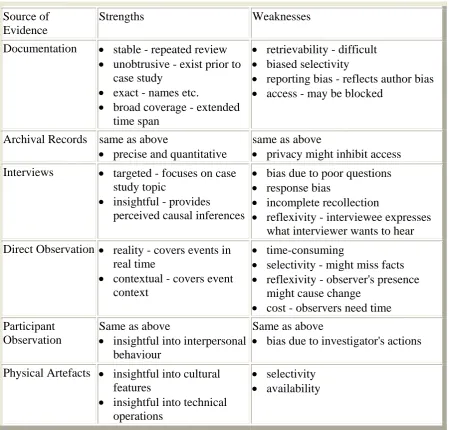
The purpose of this section of the study was to select appropriate data collection techniques to match the methodology, and theoretical foundations of the study as identified earlier. According to Yin (1994) there are six primary sources of evidence in case study
methodology, all with their strength and weaknesses as represented in the following table (Table 4):
Figure 4- Sources of Evidence
Source of Evidence
Strengths Weaknesses Documentation • stable - repeated review
• unobtrusive - exist prior to case study
• exact - names etc.
• broad coverage - extended time span
• retrievability - difficult • biased selectivity
• reporting bias - reflects author bias • access - may be blocked
Archival Records same as above
• precise and quantitative
same as above
• privacy might inhibit access Interviews • targeted - focuses on case
study topic
• insightful - provides
perceived causal inferences
• bias due to poor questions • response bias
• incomplete recollection
• reflexivity - interviewee expresses what interviewer wants to hear Direct Observation • reality - covers events in
real time
• contextual - covers event context
• time-consuming
• selectivity - might miss facts • reflexivity - observer's presence
might cause change • cost - observers need time Participant
Observation
Same as above
• insightful into interpersonal behaviour
Same as above
• bias due to investigator's actions
Physical Artefacts • insightful into cultural features
• insightful into technical operations
• selectivity • availability
Primary and secondary records (Documentation and Archives)
Existing records often provide insights into a setting and/or group of people that cannot be observed or noted in any other way. This information can usually be found in document form. Lincoln and Guba (1985) defined a document as ‘any written or recorded material’ not prepared for the purposes of the evaluation or at the request of the inquirer. Documents can be divided into two major categories: public records, and personal documents (Guba & Lincoln, 1981). Public records are materials created and kept for the purpose of ‘attesting to an event or providing an account’ (Lincoln & Guba, 1985). Public records can be collected from outside (external) or within (internal) the setting in which the evaluation is taking place. Examples of external records are census and vital statistics reports, county office records, newspaper archives, and local business records that can assist an evaluator in gathering information about the larger community and relevant trends. Such materials can be helpful in better understanding the project participants and making comparisons between groups or communities.
The usefulness of existing sources varies depending on how accessible and accurate they are. In the hypothetical project, documents can provide the evaluator with useful
information about the culture of the institution and participants involved in the project, which in turn can assist in the development of evaluation questions. Information from documents also can be used to generate interview questions or to identify events to be observed. Furthermore, existing records can be useful for making comparisons (e.g., comparing project participants to project applicants, project proposal to implementation records, or documentation of institutional policies and program descriptions prior to and following implementation of project interventions and activities)(The National Science Foundation, 2008).
Interviews
Interviewing in interpretivist or naturalistic research aims at understanding people from their own point of view. Exploratory and other in-depth interviews are very appropriate in interpretivist methods. Furthermore, exploratory interviews can be very useful in the early stages of most research projects (Burns, 1990) and are frequently used in case studies (Williamson, 2002).
The advantages of interviews have been well documented in the literature: better response rate (compared to surveys), more likely to attain complex and complete responses, the opportunity to observe the respondent and their environment, face-to-face contact increases rapport and motivation amongst respondents, a degree of control of the context to focus the respondent on the issues at hand, richer data and flexibility to follow up on interesting leads (Burns, 1990; Cocklin, 1997; Wiersma, 1995; Williamson, 2002). The disadvantages are that they are expensive in time and money, interviewer and inter-interviewer variability (in studies when more than one interviewer is used); interviewer effect may compromise validity and reliability (by for example, leading the interviewee or not following strict question protocols). Interviews can be divided into three types: Unstructured; Semi-Structured; and Structured:
Unstructured interviews: These interviews take the form of a conversation between interviewees and researcher. They focus in an unstructured way on the informant’s perception of themselves, of their environment and of their experiences (Wiersma, 1995). Unstructured interviews are sometimes called exploratory or in-depth interviews and are useful for exploring a subject or gaining insights into people, and are often used in case studies to collect extensive data from key people, allowing the respondents to talk
expansively on the main subject and/or raising topics within it in any order he/she wishes (Williamson, 2002). However, the disadvantages mentioned earlier are further enhanced by the fact that unstructured interviews are difficult to record and analyse, needing to be transcribed; an exercise that is expensive and time consuming (Williamson, 2002).
The use of unstructured interview to explore this issue was not required in our study design due to the fact the emerging framework had already been drawn from the literature review and field experience.
involved. Furthermore, they are closer in nature to in-depth or open-ended (unstructured) interviews due to the opportunity for the interviewee to further expand on the topics investigated (Williamson, 2002). However, as it turned out, mainly due to the lack of further open comments by the participants, some of these semi-structured interviews ended up looking like more structured interviews when reported in the thesis. The line between the two was at times somewhat blurred.
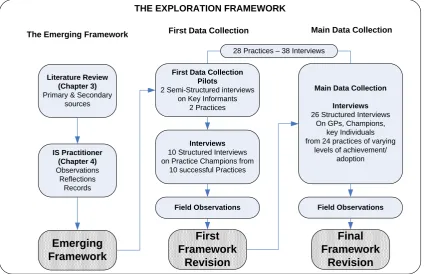
This technique was perfectly suited and used throughout both data collection sections of the study. During the first data collection (Chapter Six) stage, semi-structured interviews were suited because the interview protocols were already narrowed down and focussed by the emerging framework drawn from the literature and field experience; a graphical representation of the framework was also shown to draw participant’s comments. The need at this stage was to pre-test these propositions during the two pilot interviews and, upon confirming that the protocols were appropriately sound, the same technique was used to elicit responses from the ten key respondents in this section of the study.
This technique was particularly suited in the second and main data collection section of this study (Chapter Seven). The first data collection (Chapter Six) had refined the
framework to such an extent that the questions needed for the main data collection could well have been defined and conducted in a much more ‘structured’ way; however, because a complete set of new interview questions were devised to suit a variety of participants and contexts, narrowing down the protocols in a structured way was not appropriate to gauge their unique views. More importantly this technique minimised respondents’ time spent in the interview process, seen as a key aspect of the research design.
The use of the graphical representation of the protocol could have potentially introduces some bias in the study, so to lessen any potential effect it was only shown to participants after the appropriate questions about the framework were asked. The graphical framework in this case was only used to confirm their previous answers and to perhaps be a medium for them to make further comments to confirm or refute their previous answers. One technique used to do this was to ask them upon viewing the framework to name any other potential factors that could be added to the existing ones.
Structured interviews: in this interview type, respondents are asked exactly the same questions (closed-ended) in a fixed sequence to allow direct comparisons across
collected (Wiersma, 1995). Furthermore, if respondents are not allowed to express their own opinions within the interview, it is seen as a survey questionnaire (Williamson, 2002). The need to allow participants to express their own views made this method inappropriate (Yin, 1994).
Recording Interview Data
Detailed recording is a helpful component of interviews since it forms the basis for analyzing the data. The major advantages are its completeness and the opportunity it affords for the interviewer to remain attentive and focused during the interview. The major disadvantages are the amount of time and resources needed to produce complete
transcriptions and the inhibitory impact that voice recording has on some respondents (The National Science Foundation, 2008).
There are a number of approaches to recording data. In the approach used in this study, interview data was recorded on a digital voice recorder, with permission from the participants. The interviewer listened to the tapes and wrote a verbatim account of
everything that was said. Transcription of the raw data included word-for-word quotations of the participant’s responses. Sometimes notes from the interview were written on the question protocols to collect documentation data that were pre- or post- interview when the digital recording was stopped.
Participant Observations
Observational techniques are methods by which an individual or individuals gather firsthand data on programs, processes, or behaviours being studied. Participant
The Role of the Observer
There are various methods for gathering observational data, depending on the nature of a given project. The most fundamental distinction between various observational strategies concerns the extent to which the observer will be a participant in the setting being studied. The extent of participation is a continuum that varies from complete involvement in the setting as a full participant, to complete separation from the setting as an outside observer or spectator (Glesne & Peshkin, 1992). The participant observer is fully engaged in experiencing the project setting while at the same time trying to understand that setting through personal experience, observations, and interactions and discussions with other participants.
This technique is better described by Glesne and Peshkin (1992) in the following continuum:
(Glesne & Peshkin, 1992) Figure 5 - Role of the observer continuum
The outsider or complete observer stands apart from the setting, attempts to be
non-intrusive, and assumes the role of a ‘fly-on-the-wall’. The extent to which full participation is possible and desirable will depend on the nature of the project and its participants, the political and social context, the nature of the evaluation questions being asked, and the resources available. Patton (1990) suggested that, the ideal is to negotiate and adopt that degree of participation that will yield the most meaningful data about the program given the characteristics of the participants, the nature of staff-participant interactions, and the socio-political context of the program (Patton, 1990).
Due to the pre-existing and continuing relationship of the IT/IM Officer, individual settings were observed for a number of years before, during and even after the study. The amount and type of observation from practice to practice varied considerably during this time. Observation could be counted in days per year on some practices or just a few hours in others, the role of the observer varied from a ‘complete observer’ to ‘full participant’.
Complete Observer
Observer as a participant
Participant as an
Observer