Parametric Investigation on the Seismic Response of
Voided and Solid Flat Slab Systems
Jerry Paul Varghese2 and Manju George2
1
Civil Engineering Department, APJ Abdul Kalam Technological University, Mar Baselios Institute of Technology and Science Nellimatam, Ernakulam, India
2Civil Engineering Department, APJ Abdul Kalam Technological University, Mar Baselios Institute of Technology and Science
Nellimatam, Ernakulam, India
Abstract
Demand for safer and lighter concrete floor system and to improve the span limit has always troubled with the high weight-to-stiffness/strength ratios of solid reinforced concrete slab. It led to the emergence of spherically voided biaxial slab (SVBS). A square and a rectangular slab models with a thickness of 28 cm were developed as solid and voided, simulated under uniform load including seismic force to compare the deflection responses and structural capacities of these slabs by conducting a pushover analysis in ANSYS 16.0. Directional and the Equivalent stress results are found to be slightly higher for voided slab that of solid slab. Static Structural and Response spectrum results exhibit a similar pattern in the percentage variance of deformation and stress of voided over solid slab. The Load carrying capacity of SVBS is very close to that of solid slab, it even gets closer as the span gets longer up to certain limit. Spherical voids around the middle region of the slabs do not significantly compromise the load capacity and deflection behavior of slabs and it provides considerable material savings.
Keywords: Voided slab, Seismic Response, Equivalent Stress, Deformation, Static Structural, Response Spectrum
1. Introduction
Flat slab systems give immense freedom to architects and engineers in the luxury of designing. In a traditional reinforced concrete slab span, the bottom portion will be in tension the top portion will be in compression, and the middle portion will effectively work only as a bridge holding the top and bottom portions together. Since the lateral load resistance of the slab column connection system is small, flat slabs are often designed only for gravity loads, while the seismic force is resisted by shear walls. Even though slabs and columns are not required to share the lateral forces, these deforms with rest of the structure under seismic excitation. The concern is that under such deformations, the slab column system should not lose its vertical load capacity. In order to ensure this, the idea of voided concrete has been investigated since the
early 1900s so that we can reduce the weight-to-stiffness/strength ratios.
The inclusion of the voids is intuitively expected to compromise the stiffness and structural capacity of the slab. However, the extent of the compromise is not explicitly known. Therefore, in this paper, the seismic responses exhibited by different configurations of voided slabs are investigated in comparison to same configurations of solid slabs with equal dimensions. 3D non-linear finite element analyses software, namely ANSYS 16.0 has been chosen to conduct the investigation.
2. Methodology
The Following procedure was adopted to compare the Seismic response of Voided and Solid Flat slab systems. 1. A square and a rectangular slab models with a thickness of 28 cm were developed as solid and voided in ANSYS. a) Simulated under uniform load including seismic force to compare the deflection responses and structural capacities of these slabs.
b) Static Structural analysis is done. c) Response Spectrum Analysis is done.
2. The results were compared in terms of Equivalent stress and Directional deformation.
3. Loading:-The live load and floor finish on slab panel are 2kN/m2 and 1kN/m2 respectively. The design Seismic load is calculated based on the zone factor of 0.16, medium soil, importance factor of 1 and response reduction factor 5 as per IS: 1893-2002.
Fig. 1 Acceleration time history of El Centro Imperial valley 1940 Ground motion records.
2. Voided Slab Systems
Various types of hollow slab systems now existing in the world are the Airdeck concept, U-boot®, Cobiax system and BubbleDeck. If the void formers are assembled in such a way that the requirements are met, such hollow core slabs can be designed according to the common design codes. The main effect of the voided slab system is to decrease the overall weight by as much as 30% to 35% when compared to a solid slab of the same capacity[3]. Due to reduction in self-weight of the voided flat plate slab, the moment is reduced from 7 to 10 % to that of solid flat slab considering the same loading configuration. Bubble deck slab is conceived to omit a significant volume of concrete (compared to a solid slab) in the central core where the slab is principally un-stressed in flexure. In slabs, the depth of compressed concrete is usually a small proportion of the slab depth and this means that it almost always involves only the concrete between the ball and the surface so there is no sensible difference between the behavior of a solid slab and Bubble Deck. The only elements working are the outer 'shell' of concrete on the compression side and the steel on the tension side. In terms of flexural strength, the moments of resistance are the same as for solid slabs provided on this compression [7] while the depth is checked during design so that it does not encroach significantly into the ball.
Fig. 2 C/S of Voided slab system.
3. Structural Model and Material property
A Solid65 element is used to model the concrete. This element has eight nodes with three degrees of freedom at
each node translations in the nodal x, y, and z directions. The element is capable of plastic deformation, cracking in three orthogonal directions, and crushing.
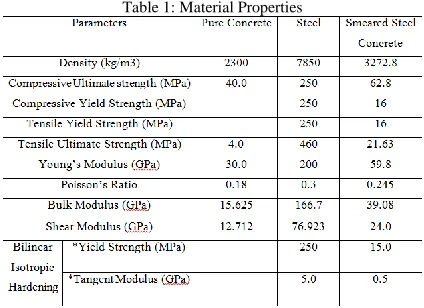
The crushing feature is based on the compressive strength of the concrete (f’c) and the cracking feature is based on an ultimate tensile stress (fr). Generally, reinforcing steel can be modeled either as discrete element, embedded reinforcement that assumes perfect bond between the reinforcement and the concrete or as smeared concrete element, in which a weighted average property of steel and concrete (Table 1) is used (Barbosa and Ribeiro 1998)[15]. For slab sizes to be considered in this study, large amounts of memory and CPU time will be required for the discrete element approach; hence, only the smeared approached is used [5]. Equal reinforcing steel is assumed to be provided in the longitudinal and transverse directions at both top and bottom of the slabs. The ratio of steel to concrete in the smeared steel concrete layers is 6.47% by volume. For a mechanical model system, such as the one used in this analysis, the mechanical physics preference is to be selected. The preferred meshers for mechanical analysis are the patch conforming meshers (Patch Conforming Tetrahedrons and Sweeping) for solid bodies. Relevance of 20 with medium sizing is to be chosen. In general, When the imported geometry represents a structural region (or solid part), or when the imported geometry represents a fluid region (or fluid flow volume), use part-based meshing to create a mesh. We can also use part-based meshing to create separate meshes for fluid regions and structural regions when importing multiple geometry files. In general, boundary conditions for structural physics include Externally applied forces, pressures, and moments, Supports, Steady-state inertial forces, Zero and nonzero displacements, Temperature Conditions (for thermal strain). The phenomenological approach is based on conducting experiments on test specimens whose dimensions are large compared to the representative volume element (RVE) to determine the major responses (Fig. 3)
Varying the span length enables the investigation of the presumed advantage of SVBS over solid slab. The thickness and the span length used for the long span slab represent one of the practically used SVBS configurations.
Table 2. Geometric parameters of Solid and Voided Slab
Fig. 3 Representative volume element extraction from
plain concrete slab
4. Finite Element Analysis
Depending on the type of physics involved (static structural, modal structural, harmonic, random vibration, response spectrum) provides several means to control the solution of the physics simulation. Deformation and stress is measured at mid-span of the slab from load-deformation diagrams of the solid and voided slabs by analytical results. There may be several effects that can cause higher stiffness in the finite element models. On the other hand, the finite element models do not include the micro-cracks. Static Structural analysis determines the displacements, stresses, strains, and forces in structures or components caused by loads that do not induce significant inertia and damping effects. Steady loading and response conditions are assumed; that is, the loads and the structure's response are assumed to vary slowly with respect to time.
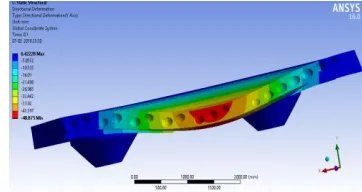
Fig 4. Directional deformation in square Solid and SVBS
concrete slab panel (SSV, SSD)
Fig 5. Equivalent stress (von-mises) in square Solid and
SVBS concrete slab panel (SSV, SSD)
Fig 6. Directional deformation in rectangular solid and
SVBS concrete slab panel (RSD1, RSV1)
Fig 7. C/S view of directional deformation in rectangular
SVBS concrete slab panel (RSV1)
Fig 8. Equivalent stress (von-mises) in rectangular solid
and SVBS concrete slab panel (RSD1, RSV1)
Fig 9. Directional deformation in rectangular solid and
Fig 10. Equivalent stress (von-mises) in rectangular solid
and SVBS concrete slab panel (RSD2, RSV2)
The von Mises yield criterion (also known as the maximum distortion energy criterion) suggests that yielding of a ductile material begins when the second deviatory stress invariant reaches a critical value. It is part of plasticity theory that applies best to ductile materials (Table 3).
Table 3. Tabular Data of Static Structural analysis results
Response spectrum analyses are widely used in civil structure designs, for example, high-rise buildings under wind loads. Another prime application is for nuclear power plant designs under seismic loads. A Response Spectrum analysis has similarities to a Random Vibration Analysis. However, unlike a Random Vibration analysis, responses from a Response Spectrum analysis are deterministic maxima. For a given excitation, the maximum response is calculated based upon the input Response Spectrum and the method used to combine the modal responses. An earthquake data most commonly taken is El Centro ground motion (Fig. 1) for conducting a Seismic analysis.
Table 4. Tabular Data of Response Spectrum analysis results
Fig 11. Percentage variance of Directional deformation
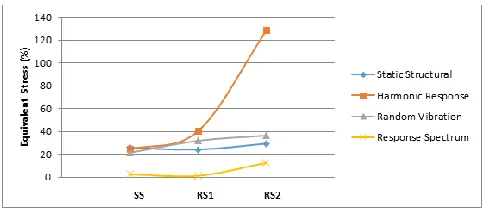
Fig 12. Percentage variance of Equivalent Stress
4. Conclusions
The Static Structural and Response spectrum results exhibit a similar pattern in the percentage variance of deformation and stress of voided over solid slab. The load carrying capacity of SVBS under uniform load is very close to that of solid slabs, it gets even closer as the span gets longer. Providing spherical voids around the middle region of the slabs do not significantly alter deflection behavior of slabs under seismic effect also, it provides considerable material savings.
Acknowledgments
References
[1] A. Churakov “ Biaxial hollow slab with innovative types of voids” construction of unique structures and buildings, ISSN 2304-62956 (21). 2014. 70-88
[2] BubbleDeck Voided Flat Slab Solutions, Technical Manual & Documents, June 2008
[3] Mike Mota, Ph.D., P.E., F.ASCE, Voided “Two-Way” Flat Slabs, Structures Congress 2013 © Asce 2013: Pp.1640-1649.
[4] Luong Van Hai et al. “The experimental analysis of Bubble-Deck slab Using modified elliptical balls”Conference Paper September 2013. [5] Wondwosen B. Ali et al. Structural Capacities of Spherically Voided Biaxial Slab (SVBS) Structures Congress 2014 © ASCE 2014 [6] Gehad S. Younis et al. Punching shear analysis of reinforced concrete flat plates, The 2015 World Congress on Advances in Structural Engineering and Mechanics - ASEM15.
[7] Abramski, A., Albert, A., Nitsch, A., and Schnell, J., (2010) “Experimental and numerical investigations of the load-bearing behaviour of reinforced concrete slabs using spherical void formers.”
Beton- und Stahlbetonbau 105( 6), 1-13.
[8] K. B. Parikh et al. Parametric Study of R.C.C Voided and Solid Flat Plate Slab using SAP 2000 IOSR Journal of Mechanical and Civil Engineering (IOSR-JMCE) e-ISSN: 2278-1684,p-ISSN: 2320-334X, Volume 11, Issue 2 Ver. VI (Mar- Apr. 2014), PP 12-16 www.iosrjournals.org
[9] Shujin Li et al. Seismic Response Reduction of Structures Equipped with a Voided Biaxial Slab-Based Tuned Rolling Mass Damper Volume 2015 (2015), Article ID 760394, 15 pages, http://dx.doi.org/10.1155/2015/760394
[10] M. M. Orvin et.al “ANALYSIS OF SLAB THICKNESS REQUIREMENT OF RCC SLAB IN ORDER TO PREVENT UNDESIRABLE FLOOR VIBRATION” Proceedings of 3rd International Conference on Advances in Civil Engineering, 21-23 December 2016, CUET, Chittagong, Bangladesh Islam, Imam, Ali, Hoque, Rahman and Haque (eds.)
[11] Lukas Wolski et al. Natural frequency of Cobiax ® flat slabs Conference Paper · December 2015 with 318 Reads, DOI: 10.14264/uql.2016.843
Conference: PLSE 2015, At Brisbane, Australia
[12] Ahmed Abdel-Fttah et al. “NONLINEAR FINITE ELEMENT ANALYSIS FOR REINFORCED CONCRETE SLABS UNDER PUNCHING LOADS”
International Journal of Civil Engineering and Technology, July 2016 https://www.researchgate.net/publication/308204528
[13] M. Altug ERBERIK et al. “VULNERABILITY ANALYSIS OF FLAT SLAB STRUCTURES” 13th World Conference on Earthquake Engineering Vancouver, B.C., Canada August 1-6, 2004 Paper No. 3102 [14]Lim et al. “Enhancing the durability properties of concrete containing recycled aggregate by the use of pozzolanic materials” KSCE Journal of Civil Engineering, January 2013, Volume 17, Issue 1, pp 155–163