ABSTRACT
MACHLES, DAVID LEE. A Qualitative Study of Situated Learning in Occupational Safety (Under the direction of John M. Pettitt).
The purpose of this study was to understand how learning occupational safety
practices occurred for employees outside of, and in addition to, what was taught through
planned, intentional safety training. The participants reflected upon their personal
experiences regarding the work safety practices that they chose to incorporate into their lives
during a semi-structured audio taped interview. Data were analyzed using qualitative
phenomenological methods to distill the multi-page interview transcriptions into manageable
and comparable elements. Theoretical constructs underlying the analysis drew from
occupational safety literature and situated learning theories. The analysis found that learning
occupational safety practices occurred through experience with equipment and within various
environments. These safe work practices are easily transferred to other settings where they
are negotiated and become part of the workplace repertoire of safety. The participants did
not discern non-workplace and workplace safe practices, but saw safe work practices as a
conceptual tool that was applied to all settings. The participants used stories as a vehicle for
both learning and sharing safe work practices with co-workers. These stories provided a rich,
meaningful way to share safety concepts. The participants learned safe practices through the
interaction with co-workers, self-selecting mentors who would provide learning
opportunities, and they in turn would become mentors for other co-workers. This learning
occurred during and within the daily activities of performing their work within communities
A QUALITATIVE STUDY OF SITUATED LEARNING
IN OCCUPATIONAL SAFETY
by
DAVID MACHLES
A dissertation submitted to the Graduate Faculty of North Carolina State University
in partial fulfillment of the requirements for the Degree of
Doctorate of Education
ADULT AND COMMUNITY COLLEGE EDUCATION
Raleigh
2004
APPROVED BY:
Chair of Advisory Committee James Burrow
John Pettitt
Acknowledgements
Better than a thousand days of diligent study is one day with a great teacher. -Japanese proverb
To the Chair of my committee Dr. John Pettitt, for your guidance every step along the way through this academic journey, for modeling the very best of adult education, and for your encouragement towards a level of critical thinking and scholarship that enriched my graduate experience.
To Dr. Jim Burrow, for the learning opportunities you provided both in and out of the classroom and for your assistance in keeping me grounded during this project.
To Dr. Paula Berardinelli, for your continued support and enthusiasm in my research and your encouragement to keep me moving down the path.
To Dr. Bonnie Rogers, for your serving as mentor on both my master paper as well as this doctoral dissertation. Your input and support are greatly appreciated.
To my parents Emalene and Leonard, who taught me the importance of learning through living.
To Douglas, who throughout my life, has always been there to ask how I was doing.
To Alison and Matthew whose sacrifices were very understanding and mature.
To Jennifer, Gary, Jules, Mary and all the family, friends, and colleagues who encouraged, supported, or just tolerated my pursuit during these years.
To Ms. Buchanan, Anne Cripps and Marion Miles who believed in me even when I didn't.
Biography - David Machles
David Machles graduated from the University of Akron with a Bachelor of Science
Degree in Nursing. He received his Master of Public Health Degree from the University of
North Carolina at Chapel Hill in 1994. He is presently principal and Health and Safety
Consultant with Dimensions in Occupational Health and Safety, Inc. His responsibilities in
this position include assisting companies in achieving optimal organizational performance
and employee well being through the integration of safety and health programs. He
specializes in organizational, cultural and employee relation issues, but provides assistance
with OSHA compliance, recordkeeping and safety training and provides mentoring for
companies seeking NC-STAR status.
His professional experience includes being a Senior Associate Occupational Health
Nurse, with a major corporation in the Research Triangle Park area. Prior to this he was an
emergency room/trauma nurse and before that an Emergency Medical Technician.
David is a member of Phi Kappa Phi Honor Society and Sigma Theta Tau
International Honor Society of Nursing, North Carolina Great 100 Nurses, American Society
of Safety Engineers, Academy of Human Resource Development, and American Society of
Training and Development. He has been adjunct faculty at the University of North Carolina,
Chapel Hill, North Carolina since 1997.
He lives in Raleigh with his wife and business partner Karen Mastroianni and their
TABLE OF CONTENTS
LIST OF TABLES ... vii
LIST OF FIGURES ... viii
CHAPTER ONE ... 1
Introduction... 1
Problem Statement ... 4
Purpose of the Study ... 5
Rationale for the Study ... 7
Significance of the Study... 9
Research Questions... 9
Limitations of the Study... 10
Definitions of Terms ... 11
CHAPTER TWO ... 12
Literature Review ... 12
Introduction... 12
Historical Perspective ... 13
The Organization ... 13
Transmission Training Perspective in the Organization... 14
The Emergence of Occupational Safety in the Organization ... 15
Safety History ... 15
The Need for Safety Training and Education ... 17
Change in Organizational Perspective... 20
Shifting Perspectives... 20
New Organizational Perspective... 21
The Role of Learning and Teaching in the New Organization... 23
The Expanded Role of Training in the New Organization ... 25
Expanding the Perspective in Occupational Safety Training... 30
Transmission Perspective... 30
Recognizing the Need for an Expanded Perspective ... 34
The Apprenticeship Perspective ... 36
A Focus on Learning... 37
Situated Learning... 39
Community of Practice ... 41
Construction of Knowledge ... 44
Selection of Research Design ... 56
CHAPTER THREE ... 61
Methodology ... 61
Introduction... 61
Conceptual Framework... 61
Pilot Study... 65
Research Design... 65
Population ... 66
Sampling Strategy... 68
Subject Ascertainment ... 71
Informed Consent... 71
Data Collection and Instrumentation ... 72
Data Analysis ... 74
Coding... 75
Limitations ... 76
Summary ... 77
CHAPTER FOUR... 78
Findings... 78
Introduction... 78
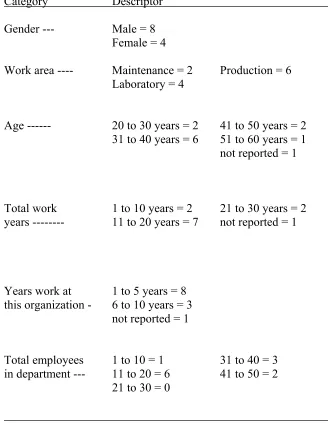
Participant Demographics... 80
Theme Development... 82
Findings... 84
Non-Work Experiences... 86
Learning from family... 87
Learning experiences with friends and acquaintances... 91
Learning in the Safety Classroom – “Great For The Basics …Then Get the Real Safety Information From the People on the Floor” ... 100
Learning The Value Of Workplace Safety Through Experiences ... 107
Learning From Other’s Experience – “Seeing is Believing”... 109
Learning from first hand experience – living the experience ... 117
Mentors and Leaders... 126
Quality and Safety... 127
Selecting a Mentor – “you can really learn a lot from watching other people’s form” ... 129
Learning from a Mentor – “I’d work with him today, any day. He was the best I ever worked with”... 135
Being a Mentor - how I’m really supposed to act... 140
Learning From Others Within The Community Of Practice – Sharing Best Practices ... 143
A Learning Community – “We are all very much tied to each other” ... 147
Conclusions... 152
Implications ... 166
Recommendations... 171
REFERENCES... 177
APPENDICES ... 182
Information... 185
Risks... 185
Benefits... 185
LIST OF TABLES
Table 1 - Sample Population Demographics by Category and Descriptor... 82
LIST OF FIGURES
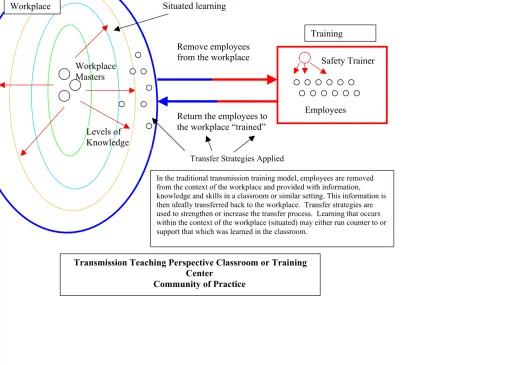
Figure 1 - Transmission Teaching Perspective Classroom or Training Center
CHAPTER ONE
Introduction
Training and education have played a major role in industry since the beginning of
the industrial revolution. By providing employees with information and knowledge
organizations have succeeded in improving and enhancing workplace performance. With a
variety of means available different instructional and teaching strategies are utilized. If the
content of the training is well structured and explicit, such as math, science and engineering,
a transmission is one alternative. The transmission perspective implies that information and
knowledge is provided by a content expert and transmitted to trainees or participants with the
expectation that they will learn it. This learned knowledge is then ideally transferred to the
workplace and incorporated to become part of the desired performance of daily activities and
routines (Pratt, 1998). Unlike other teaching perspectives such as a developmental, nurturing,
social reform or apprenticeship approach, the transmission method is often delivered in the
form of lecture, discussion, video, slides, and more recently, computer based training (Pratt).
Training that utilizes the transmission perspective often uses instructors who are content
experts in a specific area of training (Pratt). While there is little doubt that information and
knowledge can be successfully transmitted to employees and then transferred to the
workplace, there are circumstances where transmission alone has limitations on producing
the desired performance outcomes (Broad and Newstrom, 1992; O’Driscoll, 1999; Pratt,
1998).
Under certain circumstances in the workplace, learning that occurs as a result of
The first assumption is that workplace teaching leads to learning and the second is that this
learning in turn, leads to behavior or performance change (O’Driscoll, 1999). Barriers to
transfer within the workplace (from teacher to learner, and from learner to work setting) can,
and often do, exist. Developing transfer strategies to overcome these barriers has recently
been the focus of considerable analysis and research. Transfer strategies, when used, have
done a great deal to increase the transfer of knowledge, skills and attitude objectives of
training from the classroom to the work environment (Broad & Newstrom, 1992).
Occupational safety is an example of a discipline that, to a large extent, has relied on
the transmission method of teaching (Institute of Medicine, 2000). Safety professionals, as
content experts, often design and deliver safety training to employees. This profession has
accumulated a great quantity of knowledge regarding the understanding and control of
workplace safety hazards. Yet, despite all the available knowledge, training and education
that is provided in this field, there continues to be work related injuries, illnesses and deaths.
Clearly, providing information and increasing knowledge alone does not result in the desired
performance or behavior outcomes; for if we accept the idea that people seek personal safety
(Maslow, 1968), why then have they not taken this important safety information that has
been so abundantly offered and apply it to their day-to-day activities?
Situated learning theory maintains that learning occurs through everyday social
activities within everyday settings. Perhaps situated learning is a more reliable source of
safety information for the working employee. While safety professionals and trainers grapple
with overcoming barriers that impede training transfer, perhaps within the actual workplace
opportunities from everyday experiences and opportunities. These everyday learning
opportunities, while perhaps unintentional, may be more credible and perhaps
comprehensible to the employees than what is being provided through structured, intentional
safety training (Marsick & Watkins, 2001).
In recent years situated learning theory has attracted the attention of a number of
educational researchers (Billett, 2001; Lave, 1988; Lave & Wenger, 1991; Wilson, 1993).
This theory implies that people learn through the actions they encounter in everyday
situations. The theory clearly focuses on the process of learning and is not, as Lave asserts, a
general teaching approach (Lave & Wenger, 1991). Situated learning contends that people
learn through contextual social interaction with others, within learning communities or
communities of practice such as the workplace or professional organization. Meaning or
learning is mutually negotiated with other members or participants in the community of
practice (Billett, 2001; Lave, 1988; Lave & Wenger, 1991; Wenger, 1998). New participants
in the workplace community of practice learn initially by observation and minimal, yet active
participation. As their comfort levels increase and the new environment begins to make
sense, they learn. Their level of participation and learning increases as they move from
peripheral to a more central role of participation. Since again, this is a learning theory and
not a teaching theory, it is believed that situated learning occurs through an ongoing basis in
everyday activities such as work. As a result this learning is occurring whether teachers want
it to or not.
Few teaching perspectives are based on situated learning theory because it is more
much control in the educational process as the teacher. The most common teaching
perspective founded on a centered theory is apprenticeship (Pratt, 1998). A
learner-centered or apprenticeship perspective is uncommon in today’s workplace with the exception
of some crafts and professions such as medicine and police work. However, current work by
such researchers as Senge (1994) and Marsick & Watkins, 2001), to name a few, espouse a
learner-centered framework in the development of learning organizations.
Problem Statement
While occupational safety professionals continue to provide transmission based
teaching, situated learning theory maintains that other meaningful and concurrent learning is
taking place. This learning occurs as people interact with others within the workplace. It
occurs as they make meaning of the historical, political, cultural, and social aspects of the
workplace they encounter moving from peripheral to central participation (Billett, 2001;
Lave & Wenger, 1991; Wenger, 1998).
Given that situated learning through legitimate peripheral participation takes place in
the workplace, how does it contribute to employee’s learning regarding safe work practices
in contrast to traditional workplace training? If learning does occur regularly through
everyday activities within the workplace is it possible that this unintentional, yet meaningful
learning, enhances or detracts from the curriculum that is being taught in the classroom?
Limited research has been conducted to show the impact of unintentional, situated
attempted application of situated learning to more traditional teaching methods in primary
education. As discussed in chapter two, many of these studies use teacher controlled
simulation rather than situated learning as comparison (Griffin & Griffin, 1996; Hendricks,
2001).
If situated learning is a major source of knowledge for employees, then perhaps it is
not that the employee is unable to transfer the learning that is being taught in the classroom,
but rather that the other learning affordances in the workplace are more influential and have
greater opportunity to provide an education within the workplace community of practice. A
common belief of many safety professionals and trainers is that performing the learned safe
practices is failing due to barriers to training transfer (Broad & Newstrom, 1992), when
perhaps the unintended situated learning is providing a more robust, meaningful, and realistic
education for employees. In other words, situated learning may be how employees come to
understand, accept, and choose the safe practices and behaviors that they believe are
important in maintaining their safety in the jobs they perform.
Purpose of the Study
The purpose of this study was to understand how learning occupational safety
practices occurred for employees outside of, and in addition to, what was taught through
planned, intentional safety training. To accomplish this it was important to understand how
employees selected the safe work concepts they believe were important and then to
important and decided to incorporate into their work lives. This will provide insight into how
they have come to see these work practices as important within the context of their
employment and why they have chosen to make them a part of their personal ontogeny.
By conducting in depth interviews with employees at the selected company, the
research attempted to provide insight into how employees learned and assimilated what is
needed to perform their job well and to perform it safely, aside from what they were
instructed through formal training programs. By exploring holistically how employees learn
through the daily activities of the workplace environment, safety professionals, managers and
trainers will have a better understanding of how to possibly improve performance by
fostering and amplifying this type of real life learning rather than just focusing on ways to
overcome the barriers the environment creates through transfer strategies. This will help in
possibly establishing more robust learning opportunities for employees, and also assist,
redefine, and clarify the role of the safety professional and trainer within certain settings and
organizations. This information would be particularly useful since The National Institute for
Occupational Safety and Health (NIOSH) is presently seeking ways to increase the
effectiveness of safety training. Examples of methods currently being explored by NIOSH
include toolbox training for construction workers and farm workers. By understanding how
employees choose the safe practices they actually incorporate into their daily lives,
curriculums for safety training could be developed that embed these situated learning
opportunities into the workplace. There is potential that these learning opportunities could
play a significant role in employee learning and establishing safe work practices, resulting in
occupational safety profession that improvements and new concepts in training need to be
explored (Institute of Medicine [IOM] 2000), and by exploring how actual day-to-day
learning occurs new avenues would be explored that could foster this type of learning.
Rationale for the Study
Since very little research has been conducted to show the impact of situated or
unintentional learning on workplace safety, a qualitative approach to the study was selected.
First it is important to establish if this type of learning is occurring. Secondly, if situated
learning does occur and does play a role in workplace safety, a qualitative approach may help
in understanding what role it plays, and how it impacts workplace safety. To answer these
questions, the researcher sought to understand the participants’ perception of learning.
McCracken (1988) states, “Qualitative methods are most useful and powerful when they are
used to discover how the respondent sees the world” (p. 21).
Occupational safety was selected as the topic to be explored for a number of reasons,
although these reasons may denote significant assumptions and biases. First, despite his or
her culture or personal background, personal safety, unlike perhaps other characteristics of
work such as quality or performance, is universally accepted as being important to most
people (Maslow, 1968). While someone may knowingly choose not to perform at his or her
personal best, with the exception of those suffering a psychological pathology, few people
will choose to work in a way that will knowingly cause them personal harm. That is not to
may choose to operate a saw without proper guarding (at risk behavior), they would never
actually choose to put their hand onto the moving saw blade.
Secondly, safety may be considered tacit knowledge. It is the manner in which a job
is done not the job task itself. Nearly everyone from the computer operator to the 2-ton press
operator will want to perform his or her job tasks in what they believe to be a safe manner.
Consequently most people will have developed an established personal concept of what it
means to be safe, regardless of the actual task they perform.
Finally, as mentioned, safety training is frequently delivered using a transmission
approach. Safety training is available from a multitude of sources. Videos, CDs, DVDs,
overhead and slide shows are readily available. Employees at the selected facility will have
had some sort of safety “training” at some time during his or her work career, and they will
have documentation as to when that training occurred. Also the selected facility is in the
business of manufacturing pharmaceuticals. As with all pharmaceutical companies regulated
by the Food and Drug Administration (FDA), the “training” must meet certain criteria that
include written objectives and delivery by a content expert with explicit credentials. Since
the training provided at this facility is consistent in design and delivery, the differences
exhibited by employees may be likely attributed to learning in the workplace rather than
Significance of the Study
This study will be significant in that it explored ways in which situated learning
occurs in the workplace, rather than learning resulting from various safety teaching methods.
More specifically it studied situated learning that results in occupational safety behavior
adaptation or change from the learner’s perspective. While this may seem fundamental, there
has been very little research in this area, particularly in the field of occupational safety.
Cohen and Colligen (1998) conducted an extensive literature review on safety training
resulting in categorization of over 80 articles. A number of the publications in this literature
review discussed the importance of training and the inclusion of adult learning principles.
These principles include making the material relevant, interesting, applicable to the
workplace, etc., yet nothing was found that take these principles a step further to arrange
them into a general theory on learning as it applies to occupational safety practices. In other
words, adult learning principles were viewed as secondary to the training provided, rather
than the central theme. This study focused on learning as the central theme rather than
teaching, and taken a step further, focused specifically on learning that occurs outside of the
classroom setting.
Research Questions
While the purpose of this study was to explore how learning safety actually takes
situated learning or learning that occurs through everyday activities outside of, and in
addition to, that which occurs in the safety training room. The research questions this
researcher explored are:
1) What are the safe practices that people have chosen to incorporate into their lives?
2) Apart from, or in addition to, structured or planned training, how do employees
learn the safety practices that they believe are important and have incorporated into their
work lives?
Limitations of the Study
This study examined ways in which employees learned about occupational
safety through everyday activities outside of the classroom. As such, it was by no means to
be an exhaustive analysis of every possible way in which learning occurred outside the
classroom. Given the lack of research in this particular area, this study attempted to lay a
portion of the foundation for an ongoing analysis regarding situated learning within the
workplace. As additional research is completed in this area, a structure will hopefully begin
to emerge from a foundation that may have been created through this study.
In addition, the goal of this study was to report ways in which employees learn safety
through daily activities, and simply report the learning methods that were utilized, as well as
the subjects’ perceptions about the success of these methods. As such, judgments about
Finally, this study may or may not be generalizable to different populations. As
Bogden and Biklen (1998) have stated, from a qualitative research perspective there is
greater “interest in deriving universal statements of general social processes than statements
of commonality between similar settings.” Therefore the concern is not with the “question of
whether the findings are generalizable, but rather with the question of to which other settings
and subjects they are generalizable” (pp. 32-33).
Definitions of Terms
Community of practice – A social group whose members share a mutual engagement, negotiate a
joint enterprise and have developed a shared repertoire (Wenger, 1998).
Ontogeny - the development or course of development especially of an individual organism
(Merriam-Webster, 2003).
Safety - the condition of being safe from undergoing or causing hurt, injury, or loss
(Merriam-Webster, 2003).
Schema - a mental codification of experience that includes a particular organized way of perceiving
cognitively and responding to a complex situation or set of stimuli (Merriam-Webster, 2003)
Situated learning – A theory that suggest that learning is naturally tied to authentic activity,
context and culture (Brown, Collins & Duguid, 1989).
CHAPTER TWO
Literature Review
Introduction
The purpose of this literature review was to provide a framework for the application
of employee education and training in the field of occupational safety. Alas, there has been
very little research in the area of situated learning and its application to employee workplace
learning, and virtually no research in its application to occupational safety. This created
difficulty in using previous studies on which to build this research. On the other hand, lack
of previous research in this area provided justification for research to begin and it provided
an opportunity to open the door and begin building a foundation for future research.
The studies that are available are generally in the area of primary education or in
general workplace training. The details of these studies are reviewed later in this chapter.
Since little research has been conducted, the core of the literature review is in developing the
concept of situated learning. A historical review of safety training reveals a plethora of
literature exploring and emphasizing the importance of training and education, yet also is
void of applications using a situated learning approach. It is important to explore the
historical perspective of safety training to understand how this field’s approach to safety
training and education has evolved and examine how this evolution compares to the broader
Historical Perspective
The Organization
In the Newtonian model of linear thinking the world operated with cause and effect
efficiency, and this thinking spread into our adult model of human learning as well. "We
became preoccupied with managing our industries, organizations and schools by reducing
them to discrete, observable and measurable parts. We believed that by understanding the
parts we could determine the behavior of the whole and that analysis would lead to
synthesis” (Marshal, 1997, pp. 179-181).
As Capra (1996) explains, “Galileo changed the world’s thinking about science by
removing the qualitative and mystical aspects, and restricting it to phenomena that could be
measured and quantified. Descartes then created a method of analytical thinking based on
taking complex phenomena and breaking it into parts. His belief was that by understanding
the behavior of the parts, the behavior of the whole could be understood. Finally, Newton's
Grand Synthesis and Newtonian Mechanics allowed for the entire world to function like a
perfect machine with mathematical precision. Ultimately, even complex biological concepts
like the human circulation could be explained in mechanical terms once chemistry was
refined” (pp. 17-34). People’s perceptions about the world transformed from the mystical to
the scientific.
Since the entire world thought in Newtonian concepts it would stand to reason that
the workplace organization from the beginning of the Industrial Revolution through recent
1992). It was designed, engineered, built and managed like a machine. Factories were filled
with assembly lines and equipment designed to manufacture goods or products efficiently.
The humans who interfaced with these machines were viewed as extensions of the machines
they operated (Aldridge, 1997). The machines were designed and engineered based on
Newtonian concepts that demanded they operate with clockwork precision. These machines
could be set into motion and as long as they were kept in good repair and maintained, they
were expected to operate indefinitely (Wheatley, 1992). If a part broke, it was replaced and
the machine continued to run. People, if killed or injured, could be replaced by more people
or better yet, new machines (Aldridge, 1997).
Transmission Training Perspective in the Organization
These Newtonian principles historically, “have allowed us to view education as a
passive and incremental discipline, rather than dynamic or developmental. The focus was on
covering content and the reproduction of that content, which we often viewed as more
important than genuine understanding. Content segmentation was more highly valued than
concept integration, and learning was the acquisition of information, rather than construction
of meaning" (Marshal, 1997, pp. 179-181).
Workplace training embraced the Newtonian view of adult learning that was a part of
this era. A transmission perspective of training – information transmitted to employees –
was the norm. Training during the early Industrial Revolution set the stage for most training
the three most important aspects of industrial work - punctuality, memorization, and taking
orders from management without question. This mind set, until recently, has been carried
into today's organization where the transmission method of teaching continued to play a
major role (O'Driscoll, 1999, p. 60).
The Emergence of Occupational Safety in the Organization
Safety History
Historically, safety training evolved from the same mechanized concepts. Before the
19th century most people employed in the United States worked either as farmers or
craftsman. The knowledge and skills regarding these trades were passed from person to
person through the process of apprenticeship, or in agriculture from parent to child. The
safety of the craft was taught and learned in the same manner and its importance could not be
underestimated. The success of one's employment was very dependent upon performing a
job safely. By the second half of the 19th century the Industrial Revolution had begun and
major changes occurred in the way people worked. Jobs shifted from crafts, trades and
farming, to mining, manufacturing and transportation (Aldridge, 1997). With this shift came
an entirely new form of work along with unfamiliar hazards and dangers that took employees
and employers decades to understand and begin to control. The use of traditional
understand all of the skills that were needed to be successful. In the new industrial setting a
specific skill set was needed to operate only a small part of the total craft that required
industrial work to be taught in the factory. (Miller, 1996, p. 6)
This new work setting created a variety of hazards that were entirely different from
the hazards of the past. First, unlike the small businesses of the past, the new workplaces
brought a large number of employees together in factories or mines (Aldridge, 1997). This
created a new organization unlike the typical farm or craft shop of the past. These industries
were highly automated and this automation, with its complex equipment, was expensive.
Consequently, the new mechanized organization created an environment where production
and speed was of primary concern. Until this time, the craftsman or farmer set their own
pace, quality, and safety standards. The demand for high-speed production ran counter to the
ways work had been performed up until this time (Aldridge, 1997).
Secondly, there were now large numbers of workers brought together in these
factories. Unlike the slogans of today to the contrary, during this time the automation and
production was the most important asset and the laborer was just another cog in the machine.
Labor was cheap, expendable and required little skill. While upper management focused on
production, the role of "human resource manager" was given to the foreman. He hired and
fired at will, and turnover was high (Aldridge, 1997). Immigrants were put to work in
factories where a language barrier created additional difficulties. Safety training on the use
of equipment was minimal at best, and any safety learning was usually obtained through
showed that there were over 1.75 million working children between the ages of 10 and 15
(Aldridge, 1997).
Finally, death and injuries were generally accepted as being part of “industrial
progress” (O'Reilly, 2001, pp. 3-27). Industrial engineering was in its infancy resulting in
employees operating machinery that was designed for production, not safety. Employees
were often required to operate multiple machines, since a high machine to operator ratio
meant higher profits. It was not uncommon to find cotton mills equipped with 400 machines
per 100 employees. These machines were usually belt driven and contained multiple
unguarded gears. As demands increased, production was “turned-up”, and as the equipment
grew in magnitude and speed, the dangers increased. Instead of purchasing larger boilers to
meet greater demands, smaller ones were often overheated, causing them to explode
(Gersuny, 1981).
The Need for Safety Training and Education
Public out-cry regarding poor working conditions, child labor issues, and state
regulations, prompted court rulings that gradually held more employers responsible for
injuries and accidents. As a result, the first workers’ compensation (known as workmen’s
compensation at the time) program began in 1911 as the Employers’ Liability Law. This
established a no fault insurance system where a set amount was paid for injuries in exchange
for the employee surrendering their right to sue. With the introduction of these workers’
way of insurance premiums. With this new financial burden and labor unions earning
high-risk pay, employers soon had an economic need to develop safety programs, training, and
education (O'Reilly, 2001). It was unfortunate, but not surprising, that the concept of safety
was originally driven as a means to decrease the cost of doing business. Prevention of death,
injury and illness was merely a secondary gain. Also interestingly, these early workers’
compensation laws that forced management to take more responsibility for safety, also forced
management to take more control of the employees in general. Management would have
been perfectly content to allow employees to maintain responsibility for their own workplace
safety as well as working as long as the great machine kept running and production was up.
Mandated workplace safety changed all that (Aldridge, 1997).
At the same time occupational health and industrial hygiene issues were also quickly
becoming a concern. Through training and adult education, the factory nurses and physicians
taught employees good industrial hygiene and how to properly handle these hazards while
minimizing their health risk (Gersuny, 1981).
As the correlation between workers’ compensation premiums and safety become
more apparent, other organizations were formed that relied heavily on adult education to
provide knowledge to engineers regarding safety design. The Association of Iron and Steel
Electrical Engineers was organized with much of their attention directed towards safety
education and training. National conferences on safety were held where engineering ideas
were shared. Issues of safety education emerged as the primary focus with organizations
such as the National Safety Council. Much of the early safety education was directed
engineering changes could be made to equipment and processes to make them safer. As
hazards were understood, safety education and training programs increased. Education was
also used within the industry to reach the employees, and safety rules were established and
enforced. Early efforts to educate employees consisted of posters and signs that warned of
the dangers of not wearing safety equipment or following safety rules. Safety committees
were formed at companies to identify hazards and educate employees on working safely.
The “three E’s of safety”, engineering, education and enforcement, brought about a
tremendous decrease in the number of injuries, illnesses and deaths in the occupational
setting (O'Reilly, 2001).
Safety training and education continue to be utilized in workplace safety and with the
passing of the Occupational Safety and Health (OSH) Act in 1970, training and education
became a part of most OSHA standards. The OSH Act also created the National Institute for
Occupational Safety and Health (NIOSH) that had education and training as one of its
primary roles for both employees and occupational safety professionals.
While employee safety training has made some changes since the OSH Act, the role
of the safety professional has changed substantially during this time. Early safety
professionals were engineers, chemists, or employees who had a solid understanding or
interest in occupational safety. When the importance of workplace safety was realized from
a financial standpoint, companies began educating safety specialists in house. This education
continued to grow after World War II as technical and community colleges offered associate
and technical certificates for the safety professional. These programs were offered to
and industrial hygienists began receiving degrees in college and graduate school (O'Reilly,
2001).
Change in Organizational Perspective
Shifting Perspectives
There is a shifting perspective in organizational paradigm that has occurred since the
latter part of the last century, though today many organizations continue to operate using
many aspects of the same structured Newtonian and mechanistic paradigm that was ushered
in with the industrial era. These organizations can be broken down into functions and
employee's jobs described by their roles. Organizational charts show where the parts are and
where they fit into the organizational machine. To analyze this type of organizational design,
analysts gather extensive data and apply complex mathematical models. By studying the
parts we believe we can better understand the whole (Wheatley, 1992).
Wheatley (1992) asserts that even our knowledge has been broken into subjects. She
contends that a reductionist perspective has been carried into everything in the last three
hundred years (Wheatley, 1992, p.27). All of our current educational system was derived
from the needs of the Industrial Revolution and based on the same Newtonian concepts
New Organizational Perspective
According to O’Driscoll (1999), by the 1930s the workers' life had begun to change
substantially. With a greater emphasis on workers' rights, workplace training was beginning
to focus on human performance. During World War II training was used extensively to teach
new employees who had never been in the workplace how to make products, like weapons,
for the war effort. After the war employees enjoyed good living outside of work and began to
look closer at the jobs they had. The command and control workplace became less attractive
as employees saw a gap between their work life and home life. In an attempt to try to keep
employees motivated the concepts of McGregor, Maslow and Herzberg were brought to the
forefront. Human performance and motivation quickly became the focus. Despite this shift
in the perception of work from the early Industrial Revolution to recent times, training in
many organizations continued to follow the same formats of the turn of the century.
Something happened, however, that forced organizations to change. Part of that
change originated with the human relations movement that began quietly in the 1920s and
continued into the 1950s by McGregor, Herzberg and Maslow. These individuals recognized
that humans were not machines and could not be treated as such (O'Driscoll, 1999; Rogers,
1994). After World War II Americans were enjoying freedom and financial security outside
of the workplace, while the command and control workplace continued. This dissonance
created increased dissatisfaction with work (O'Driscoll,1999, p. 63). “Finally, the economic
issues of the 1970s oil crisis and globalization of the marketplace allowed foreign markets to
enter the US and deliver a blow to the American auto industry as well as other industries.
increase production and capacity while ignoring innovation and quality” (O'Driscoll, 1999, p.
21). Consequently the quality movement of the late 1970s and early 1980s resulted in a
needed responsiveness of companies forcing them to develop an open system approach. The
great industrial machine was no longer going to work in the US and management recognized
that a change was needed.
The open system model of the organization was beginning to be realized. “Experts
like Demming, who were rejected by corporate America in the 1950s and 1960s, were now
being sought in the 1980s” (O'Driscoll, 1999, p. 22). With the quality movement came the
recognition that employees and the environment share an integrated partnership in the
organization. The old Newtonian machine based model had begun to give way to a complex
adaptive systems perspective (Marshal, 1997, p. 179).
This new organization that emerged looked quite different than that of its predecessor
of the last century. This change created a new organizational structure where roles and
boundaries are not quite as clear. "The old make and sell or command and control
organization has been replaced with one where no one commands and no one controls. The
new organizations are built on relationships that focus on strategies and teamwork, or they do
not survive at all” (Conger, 1997, p 2). The organizations of today are faced with new global
issues and a different type of employee as well.
The employees who comprise the team relationships in this new organization have a
different perspective on work than those of the generations that preceded it. According to
Conger (1997), “today's employee, having experienced a large number of dual career families
the main or only focus of their lives. Many have also experienced either directly or indirectly
massive layoffs and downsizing, so consequently their loyalty to one organization is not as
strong as previous generations. These employees do not tolerate having people as their
bosses, instead they will look for mentors and coaches or teammates” (p.4). These are the
players in the new organization.
The Role of Learning and Teaching in the New Organization
According to O’Driscoll (1999) “the work groups and employees of the modern
organization will not and cannot be expected to learn in the same fashion that the employees
from the past did. The employees of the new organization will have to gather information in
a different manner and make decisions based on that information very quickly if they are
going to remain competitive. The new learning organization will be an open adaptive system
that will link the employee with the outside world. It will create a system between human,
machine and the environment” (p. 21).
Garvin (1993) believes these learning organizations are skilled at five main activities;
systematic problem solving, experimentation with new approaches, learning from their own
experience and past history, learning from the experiences and best practices of others and
transferring knowledge quickly and efficiently throughout the organization. While many
organizations claim to practice these activities to some degree, few are consistently
successful because they rely largely on isolated examples and not expanding the concepts to
integrate them into the day-to-day operations companies can manage their learning more
effectively (p. 81).
In this open adaptive organization the learning occurs within the environment where
the decisions will be made and from within the work experience. This is the heart of
organizational learning where the collective process of learning occurs through experience
(Marsick, Bitterman, van der Veen, 2000, p.12). In this setting people will have to find a
way to make meaning out of the world in which they live and work, a meaning which "exists
neither in us, nor in the world, but in the dynamic relation of living in the world (Wenger,
1998, p. 54). This dynamic relation in the real world will create a learning environment that
will be less formal than what we are accustomed. Yet the environment will be more complex.
The more complex and dynamic the context, the less a social unit can rely on standardized,
stable, habitual practices from the past. People experiment with new approaches based on
frequent ad hoc assessments of the changing environment. They rely on coherence for
flexible informal cultures more than on formal structures (Marsick, et al., 2000, p. 3). In this
type of environment meaning will be acquired through observation, modeling and
socialization and according to Marsick et al., “this type of learning from experience will be
The Expanded Role of Training in the New Organization
Not only will this impact how people learn, but according to Koffman and Senge
(1995), it is also going to have dramatic effects on those who teach or train and will change
our description of teaching. In the organization of the past, the transmission of information
was important, or so we thought. But as they point out "the analytical way to address
complex problems is to break it into components, study each component in isolation and then
synthesize the components back into a whole, but there is something lost in assuming a
mechanical structure and ignoring the systematic interactions" (p. 7).
These writers contend (Koffman and Senge, 1995; O’Driscoll, 1999; Wheatley, 1992)
that in the past the training model followed this analytical approach where knowledge was a
commodity that could be passed along. As Wenger (1998) states, “if we believe for instance
that knowledge consists of pieces of information explicitly stored in the brain then it makes
sense to package this information in a class where the learners sit isolated from any
distraction, and teachers deliver this information to them as succinctly and articulately as
possible. From that perspective what had come to stand for the epitome of a learning event
makes sense: a teacher lecturing a class in a school or in a corporate training center” (p. 9).
Though in recent years this has model has changed significantly for many organizations.
Marshall (1997) argues that this traditional approach to teaching no longer works in
the learning organization for a number of reasons. First it goes against the grain of the way
employees perceive teaching in a learning organization. "The unexamined application of the
growth and change because it diminished our capacity to "grow" the individual and collective
intelligence, energy, spirit, and hope of the whole system" (Marshal, 1997, p. 180).
Secondly, it assumes that teaching results in learning. This paradigm does not address
the issues that gets to the heart of the learning organization. Senge (1994) states, "learning is
a much more complex phenomenon than can ever be limited to a classroom. It is inextricably
connected to how we live our lives, and to the excitement, challenge, motivation and support
woven through our daily experience" (p. 45).
Learning in this type of organization does not flow exclusively from teacher to
learner. “Learning communities are shaped by their members, but these communities
reciprocally influence the identity, growth and learning of members “ (Marsick, et al., 2000,
p. 21). The learning organization is considered a self-organizing system or learning
community, so the teachers and learners will be one and the same. This will be a "Human
systems involved in interactive patterns of relationships. In the open systems model, the
learning of one person or group affects that of others; they are mutually interdependent”
(Marsick, et al. p.11).
Finally, this open learning community is more involved in setting goals and
objectives. Wheatley (1992) states that social units have a common purpose and set of rules
for how they will act to achieve their goals. With this open system concept the
organizational goals are accepted and embraced by the individuals within the organization.
Management forced goals are not effective. As a result, the role of the trainer is more of a
facilitator who nurtures learning experiences and coaches learners. They "help individuals
past experience and present of future direction" (Marsick et al., 2000, p.16). Senge (1994)
believes that the trainers have a limited role to play in this process of learning since the
learning that matters is inseparable from the work that the employee performs. He states,
“Consequently the training and development professional is not nearly as knowledgeable as
the supervisors or managers or perhaps other employees in understanding the nature and
complexity of the work. They also lack the accountability and resulting drive to make the
change. They do have an understanding and as such can help in that regards” (p.45). Senge
argues “that generally managers are not overly concerned about employee understanding if it
is not directly related to the work and cannot lead to action” (p.45). In other words the
managers are primarily concerned with just in time and just enough training. He states “that
in the learning organization it is much better to replace the schoolroom metaphor with a
practice field or rehearsal hall” (p. 45).
Adult educators have to create safe environments where people individually and
collectively can critically examine personal habits and choices. One on one coaching
provides this kind of safe environment (Marsick et al., 2000, p. 16). Marsick et al. believe
that the adult educator's role is changing to a new role of the learning coach, providing
action-learning interventions based on observation. Learning coaches are skilled at group
dynamics, understanding organizational dynamics, and they frame their work using systems
thinking. They have keen powers of observation and are skilled at giving feedback and
asking questions that stimulate further thinking. They help individuals and the group learn
from the task at hand though discovery, experimentation and reflection on their experiences
This transformation will not be easy for many organizations. The biggest barrier to
using this new learning in the system is a resistant organizational culture. For a learning
organization to exist people will need to feel they can openly discuss different views,
challenge others, communicate across perceived boundaries, take risks and share knowledge
without being penalized in some way (Marsick et al., 2000, p. 17). Additionally, some
people who develop and deliver training have a difficult time with this new system as well.
"The system may not be structured in such a way that people who make decisions on its
behalf notice and draw upon the learning of its members. People in power may not agree
with these members or may not encourage communication that enables full, free and
informed consideration of new ideas" (Marsick et al., p. 2).
In the American Society of Training and Development (ASTD) Handbook the history
of training in organizations is summarized and from its beginnings through today it has
evolved dramatically. According to Miller (1996) the training and development component
within organizations, often viewed as a part of Human Resource Development (HRD), is
taking on a new role. Miller states, “ Many HRD professionals will be engaged in helping the
organizations change and transform. Many of them will act as brokers for the constant
learning that will make such changes. Learning professionals will work with many models of
individual and organizational learning, especially those that describe how people learn in the
context of work.”
However in the same ASTD Handbook is a chapter on Occupational Safety and
Health Training. In it Gerard Scannell (1996) discusses the function of occupational safety
percentage of injured employees receiving little or no training in the tasks being performed at
the time of the injury. While Scannell goes on to state that this information should not
necessarily be representative of American business, it would be a serious error to ignore the
message it provides. In addition according to Scannell, of these injured employees a
significant number reported the following: their employers provided training only following
an injury-producing event, the instruction they did receive was perceived as being of little
value in helping them to prevent the type of injury sustained, and the instruction provided by
their employers was generally in lecture format with no written learning materials, lesson
plans, instructional manuals, instructional aids, or provision for worker feedback. Most of
the information the workers did receive came not from their employer, but from fellow
workers, employee representatives, salespersons for personal protective equipment, and from
literature that accompanied tools, machines and chemicals used in their work. While again,
though not representative of American business, this information does indicate that there may
be a flaw in a system that struggles to provide occupational safety training to workers in the
workplace. To understand how this occupational safety training system evolved, it is
important to understand where it resides within the greater role of occupational safety as a
Expanding the Perspective in Occupational Safety Training
Transmission Perspective
In a command and control, top down managed organization, senior management
made the majority of the business decisions, which were then passed down to managers and
supervisors (Conger, 1997, p.2). The concept of safety as an engineering function worked
well in this type of organization. Occupational safety was something that could be designed,
engineered and built into the system, and managed using the same principles.
Machines and parts were guarded, fire systems installed, and ventilation systems
designed to move dangerous chemical vapors away from employees. As safety systems were
engineered into the organization, workers could be trained on how to properly use these
safeguards. This was "know how" information that could be taught to employees and
transferred to the workplace, and with a method of enforcement the workplace could remain
relatively safe. The “three E’s of safety”, engineering, education and enforcement, became
the foundation of the safety profession (O'Reilly, 2001).
Many safety professionals are still required to fulfill multiple roles in the workplace
including engineer, advisor, and compliance officer as well as safety trainer. Most safety
professionals are educated through programs based in engineering or chemistry (Lischeid,
Sulzer-Azaroff, & Alavosius, 1997) and often lack any formal background in adult
education. The occupational safety content expert developing and delivering safety training
conforms with Pratt's (1998) definition of the transmission perspective where the trainer, as
met the needs for many of the workplace issues regarding safety. In fact, based on the
history of safety this method of delivering information to employees has been quite effective
(U.S. Department of Labor, 1998). Safety professionals are like other content experts who
also provide training in similar roles. According to Pratt (1998) they are often hired for their
expertise, generally not for their counseling skills (p. 63). A report by Cohen and Colligan
(1998) based on an extensive literature review of occupational safety training states that,
“Training and education of workers has not traditionally been considered a prime
responsibility of most OSH professionals. In fact, most graduates of OSH programs are ill
prepared for this assignment. While they have the technical knowledge, many graduates lack
skills in adult education, training, and program evaluation.” An outcome of their research
found “the net result is very uneven training quality” (p. 193).
For the occupational safety professional, however, the transmission method has
remained a valid choice. Employees need to know specific aspects of safety related to their
jobs such as, how to use a machine guard properly, or know the hazards of the chemicals
with which they work, or know the hazards of loud noise and how to properly insert earplugs.
According to Pratt (1998) this was the purpose of transmission training, “providing content -
explicit subject matter for hierarchal learning, built on prior knowledge and presented in a
step-by-step manner. Math, grammar, plumbing and electronics are examples of
well-structured content areas” (p. 66) and safety engineering is no different. With the safety
professional’s engineering or science background and as content experts, the transmission
perspective is not only an appropriate method, but also well within the comfort zone of many
manageable pieces, then design a course in a way that delivers this information to the
student. The instructor can address the students’ individual learning styles by transmitting
the information through a variety of means. Pratt (1998) contends that typically transmission
methods of delivery include lectures, videos, guided instruction, reading material and group
discussions. These programs are usually objective based, and the objectives and goals are
clearly defined by the instructor or teacher (p. 66).
According to Pratt (1998) the ultimate goal of transmission training is for the
instructor to transmit the information to the learner and the learner in turn to incorporate or
transfer this knowledge into their workplace, although most trainers and educators will agree
that transfer doesn't always occur (Broad and Newstrom, 1992; Holton, Baldwin and Naquin,
2000). There are problems with basic transmission training that allows information to be
lost, and this may be intensified with safety training, which in many organizations is often
driven by compliance rather than the learner’s pursuit of knowledge. According to Pratt
(p.74) transfer may be difficult because the content may not move from the teacher to the
learner and then to the work setting. Pratt identifies a few reasons why transfer may not
occur; it is often delivered in too big chunks or too much information; it often lacks proper
support due to insufficient practice; if it is taught only once there may still be comprehension
problems, and; learners may not really be participating as much as the teacher expected
(Pratt, 1998, p.75).
Although performance outcomes are the intent of the OSHA standards requiring the
training, like other disciplines that rely predominantly on transmission training, evaluating
through quizzes rather than actual performance outcomes. According to O’Driscoll (1999)
simple evaluation of transmission methods can be relatively straightforward and as a result
attractive from the safety trainer's viewpoint (p.84). This may again be exacerbated if the
training is driven by compliance. Pratt (1998) contends that if the teacher or trainer has
matched course structure and content with course objectives, which are often done, then
learning and knowledge can be easily measured and validated with regard to the objectives
(p. 75). On the other hand, if the evaluation shows that the students did not learn the content
then the teaching can be readjusted and more training can be provided (Pratt, p.78).
Accordingly from the transmission perspective, learning is something that the teacher
controls and can adjust by changing a few variables (Pratt, p. 75).
The simple transmission training perspective is still the typical training format for
many safety professionals. According to Pratt (1998) those who utilize the transmission
perspective may recognize that personal issues and differences affect learning, but they tend
not to focus on this aspect. Unlike counselors or therapists who rely on a Developmental
Perspective or Nurturing Perspective, "Transmission teachers do not have to become
involved in areas beyond their competence" (p. 63). The only purpose of transmission
teaching is to move the content or skills from the teacher or expert, to the learner (Pratt, p.
65). Yet in recent years OSHA has placed an increased emphasis on performance based
standards and as a result there has been a shift in the role of the safety professional to focus
on actual workplace performance. This shift has forced the safety professional to look
beyond the boundaries of engineering and chemistry and to begin to explore and incorporate
Recognizing the Need for an Expanded Perspective
Increasing involvement in areas beyond safety engineering has become important for
the safety professional for a number of reasons. First, according to a report by the Institute of
Medicine (2000), with the changing nature of the workforce and the workplace, an increasing
number of work related psychosocial demands and stressors have become occupational
safety issues. This trend has compelled the safety professional to be more attentive to these
areas. In response to this one of the outcomes of the Institute of Medicine report was a
recommendation that “NIOSH should broaden its graduate training support to include the
behavioral health sciences (e.g. psychology, psychiatry, and social work) by developing and
maintaining training programs in work organization and the prevention and treatment of
physical and mental effects of work-related stress” (p. 14).
Secondly, areas beyond engineering must be explored because, according to Lischeid
et al., (1997) it is generally believed that understanding why people act the way they do is
necessary to get to a higher level of workplace safety. This has allowed the recognition of a
gap between the safety professionals’ area of practice and their educational background. In a
survey conducted by Lischeid, et al., one respondent stated, “Our safety engineering program
is based in the Dept. of Industrial and Operations Engineering. Because we are
engineering-based, our entire program emphasizes design of facilities, equipment, tooling and processes
to promote safety. Our program places strong emphasis on ergonomics, and our underlying
philosophy is based on designing the job to match the worker, not vice versa. Therefore, we
Another opportunity for the safety professional to move beyond the realm of
engineering occurred when behavior based safety emerged as the springboard for what was a
new perspective in dealing with safety issues. In recent years the popularity of behavior
based safety programs has been demonstrated by the overwhelming number of seminars,
programs and training courses based on this topic (Geller, 1996). Professional journals
abound with articles and research papers exploring this topic. This organizational behavior
management view surfaced in the late 1970s when academic psychologists began research on
behavioral techniques for accident prevention (Hans, 1996). The attention this approach has
gotten attests to the implication that the psychological aspects related to workplace safety
have been clearly recognized. More recently, however, it is argued that behavioral
psychology in itself falls short of addressing issues that are cognitive or sociological in nature
(Kamp, 2001).
Finally, as safety professionals explore the science of workplace safety it is
increasingly viewed as a human performance issue rather than merely an engineering issue.
This is evident in an increased emphasis in performance based OSHA standards or OSHA’s
1989 Safety and Health Management Guidelines that emphasized both management
commitment and employee involvement as key elements in addressing work related injuries
and illnesses (U.S. Department of Labor, 1989). A performance perspective encourages
other ways to address safety rather than strictly through engineering, safety training and
enforcement alone. According to Combs and Salvatore (2000) the use of a human
performance improvement model gives the discipline a greater perspective and broader
performance improvement is defined as "the science of improving human performance in the
workplace through analysis and the design, selection, and implementation of appropriate
interventions." (Combs & Salvatore, p.3) By focusing on performance, interventions may be
instructional or non-instructional and might include engineering as well as other controls that
are commonly recognized by OSHA. This perspective provides the safety professional with
an opportunity to focus on training transfer issues that might otherwise be ignored or
assumed to be exclusively a management or human resources issue. In general, the
exploration of psychosocial aspects of safety has required the safety professional to explore
training perspectives that move outside the realm of the fundamental transmission
perspective and into such areas that include a developmental or nurturing approach (Pratt,
1998).
The Apprenticeship Perspective
There is yet another perspective that may offer new insight into the human
performance issues of safety practice. This view comes to light when the Apprenticeship
Perspective of adult education is examined. Taken from this point of view, what for the
safety professional might appear to be barriers to safety training may just be competitive,
alternative, learning opportunities that are being provided simultaneously in the work
environment which overshadow the classroom training. For surely people do learn in the
safety training session, but as Pratt (1998) points out, "learning is incomplete if it is not