Not All Antigens Are Created Equally:
Progress, Challenges, and Lessons
Associated with Developing a Vaccine
for Leishmaniasis
Malcolm S. Duthie, Steven G. Reed
Infectious Disease Research Institute, Seattle, Washington, USA
ABSTRACT
From experimental models and the analyses of patients, it is well
docu-mented that antigen-specific T cells are critical for protection against
Leishmania
in-fection. Effective vaccines require both targeting to the pathogen and an immune
stimulant to induce maturation of appropriate immune responses. While a great
number of antigens have been examined as vaccine candidates against various
Leishmania
species, few have advanced to human or canine clinical trials. With
em-phasis on antigen expression, in this minireview we discuss some of the vaccine
platforms that are currently being explored for the development of
Leishmania
vac-cines. It is clear that the vaccine platform of choice can have a significant impact
upon the level of protection induced by particular antigens, and we provide and
highlight some examples for which the vaccine system used has impacted the
pro-tective efficacy imparted.
KEYWORDS
Leishmania
, adjuvants, protein, vaccine, vector
H
emoflagellate protozoa of the genus
Leishmania
constitute more than 20 species
and subspecies of parasites that infect an estimated 12 million people from among
a pool of more than 350 million people considered at risk of infection (1, 2, 3). The
required interaction with infected sand flies to permit transmission renders
leishman-iasis predominantly a disease of the poor, occurring mostly in remote rural villages with
poor housing and little or no access to modern health care facilities. Any form of
leishmaniasis therefore puts stress on the already limited financial resources of both the
affected individual and the community at large (1). Vector-control programs are,
however, having an impact, and on the Indian subcontinent a visceral leishmaniasis (VL)
elimination target is being met in most areas of endemicity (2). With disruption in
control efforts allowing new epidemics in areas of endemicity and the spread of the
disease to previously free areas because of migration, tourism, and military activities,
however, an effective vaccine remains highly desirable in order to retain/sustain the
success of recent efforts (3).
POTENTIAL FOR VACCINES
The quality of the immune response is critical in determining if
Leishmania
infection
manifests disease. The clinical symptoms are also dependent upon the particular
Leishmania
species, which vary in their geographic distributions. Manifestations range
from localized, disseminated, diffuse, or recidivate cutaneous leishmaniasis (CL) or
mucosal leishmaniasis (ML) to involvement of organs such as liver and spleen in cases
of VL (3). CL can arise from infection with any of several
Leishmania
species (i.e.,
L. major
or
L. tropica
) and can progress to the gross mucosal tissue destruction observed in ML
patients. VL is the most severe form and in South Asia and Africa is caused by infection
Accepted manuscript posted online17 May
2017
CitationDuthie MS, Reed SG. 2017. Not all
antigens are created equally: progress, challenges, and lessons associated with developing a vaccine for leishmaniasis. Clin Vaccine Immunol 24:e00108-17.https://doi
.org/10.1128/CVI.00108-17.
EditorChristopher J. Papasian, UMKC School of
Medicine
Copyright© 2017 American Society for
Microbiology.All Rights Reserved.
Address correspondence to Malcolm S. Duthie, [email protected].
crossm
on August 17, 2020 by guest
http://cvi.asm.org/
with
L. donovani
, while in the Mediterranean, the Middle East, Latin America, and other
parts of Asia, it results from infection with
L. infantum
.
Protection from, and clearance of,
Leishmania
infection is strongly associated with
the generation of antigen-specific Th1 responses, knowledge that provides a clear goal
for immunization. To target and appropriately skew the anti-
Leishmania
response,
vaccines require both pathogen-specific antigens and immune-stimulating molecules
to be rendered effective. Whole and genetically attenuated parasites, such as
L.
donovani
centrin-deleted parasites (
LdCen1
⫺/⫺), have undergone trials in both dogs
and humans (4–8). Dendritic cell (DC)-based vaccines represent a more refined strategy
and have been used in preclinical models. Although financial constraints and the likely
difficulties in delivering such vaccines in regions of
Leishmania
endemicity seem to
preclude their use in all but a very limited subset of individuals, DC-based vaccines
provide further proof of concept supporting the use of more defined vaccines (9).
Our understanding of pattern recognition receptors and adjuvants that can be used
in conjunction with recombinant proteins within defined subunit vaccines continues to
expand (10–12). A wide variety of adjuvants have been used in
Leishmania
research
programs, and the importance of adjuvants within vaccines has been the subject of
numerous review articles (13–16). Simultaneous with the progress in adjuvant
technol-ogies, advances in bioinformatics and molecular techniques have expanded the
num-ber of potential
Leishmania
-specific targets for use within a vaccine (17–19). A
consid-erable number of
Leishmania
antigens have been tested as subunit protein or DNA
vaccine candidates against various
Leishmania
species, but variable results have meant
that very few antigens have advanced to human or canine clinical trials (20). Factors
such as the
Leishmania
source of the target gene, the
Leishmania
species involved in
the challenge, the quantity of antigen/vector used, and the frequency and numbers of
immunizations all impact our ability to interpret the data beyond their immediate
application. In addition, once targets are selected, there are also now a plethora of
strategies available with which to ready them for use within a vaccine (21). In this
minireview, we discuss the current status of vaccine development for leishmaniasis with
emphasis on the impact of the expression/vaccine platforms.
PURIFIED RECOMBINANT PROTEINS
Native
Leishmania
proteins have been used in either a crude or a purified manner
to elicit protective immune responses.
Escherichia coli
and yeast are among the most
widely used systems for the production of recombinant proteins (22–24), and
bioin-formatics has facilitated the production of a variety of recombinant proteins that have
been investigated as
Leishmania
vaccine antigen candidates in animal models (15, 20).
Key to the use of recombinant proteins is the cost-effectiveness of production, an
important consideration when modeling has shown that a cost of $2 or less per dose
for a preventive vaccine would be economically advantageous over the currently
available leishmaniasis treatments (25). In addition, recombinant methods also provide
the opportunity to manipulate and combine complementary proteins/epitopes in a
single gene product.
Our first defined vaccine against leishmaniasis came with the use of
E. coli
-expressed
Leish-111f (L111f; LEISH-F1) that joined the
L. major
homologue of eukaryotic
thiol-specific antioxidant (TSA), the
L. major
stress-inducible protein-1 (LmSTI1) and the
L.
braziliensis
elongation and initiation factor (LeIF) into a chimeric fusion protein.
Leish-111f protects mice, hamsters, and rhesus macaques when appropriately formulated
with adjuvant, and LEISH-F1
⫹
monophosphoryl lipid A (MPL)-SE was the first defined
Leishmania
vaccine to enter clinical trials, where it demonstrated an excellent safety
profile and induced antigen-specific responses (26–29). A second, distinct
E. coli
-derived
fusion, LEISH-F3, that combines two components that can protect in animal models of
VL, nucleoside hydrolase (NH) and a sterol 24-c-methyltransferase (SMT), has also
progressed through phase I clinical trial (30).
The cost-effectiveness of recombinant proteins can also be enhanced by the
selec-tion of particular expression platforms. In some instances, yeast (
Saccharomyces
on August 17, 2020 by guest
http://cvi.asm.org/
siae
or
Pichia pastoris
) expression systems provide benefits over
E. coli
expression
systems, such as variable folding, glycosylation, or direct secretion into the
fermenta-tion media of the target protein as a soluble and stable protein (31, 32). An
E.
coli
-expressed
L. donovani
nucleoside hydrolase (LdNH36) surface protein has provided
partial protection against
L. donovani
infection in mice (33). Expression of LdNH36 in
P.
pastoris
produced LdNH36-Y-WT that was of significantly higher molecular weight than
the
E. coli
expressed protein (34). Gel analyses suggested that expression in yeast
resulted in several high-mannose glycoforms, whose presence was first reduced by
mutating N-linked glycosylation sites located outside the major immunogenic domain
from asparagines to serines (LdNH36-dg) and then removed by mutating asparagines
to glutamines. The LdNH36-dg2 product was similar in size to the nonglycosylated
E.
coli
expressed protein, but the glutamine mutations resulted in increased expression
levels. Mice immunized with LdNH36-dg2 did have high levels of antibodies that
inhibited the hydrolase activity of the wild-type LdNH36 (34), although challenge
experiments have not been reported.
DNA VACCINE CONSTRUCTS
Besides traditional recombinant expression approaches, many antigens have also
been investigated in DNA vaccines (20). VL patients possess antibodies against the
hemoglobin receptor (HbR) of
Leishmania
, and this protein is conserved across various
Leishmania
strains. Immunization with HbR-DNA generated multifunctional CD4 and
CD8 T cells and was reported to provide complete (sterile) protection against
L.
donovani
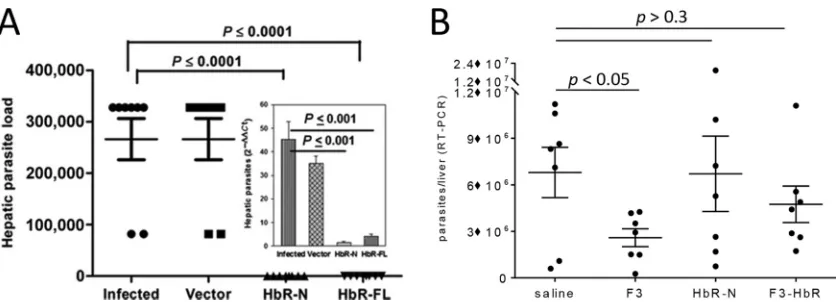
infection in both mice and hamsters (35). Given these findings, we produced
recombinant HbR in
E. coli
to examine compatibility with our own vaccine candidates.
Surprisingly, unlike our previous data indicating various candidates that retained their
protective properties when expressed in
E. coli
(36), we did not observe protection in
mice that were immunized with HbR in conjunction with the glucopyranosyl lipid
adjuvant-stable emulsion (GLA-SE) (Fig. 1). Furthermore, adding HbR as a component
within fusion proteins disrupted their ability to confer protection. We still do not
understand why these differences arose, but it is possible that differential processing of
epitopes may occur, or some DNA vaccines may target different antigen-presenting
cells than protein/adjuvant. While subtle, such changes may be enough to lead to
critical variations in the protective efficacy of the respective vaccines.
Fused targets can also be created within DNA vaccines, and seven
Leishmania
genes
FIG 1Influence of expression system on the protective efficacy of immunization with HbR. (A)LeishmaniaHbR was delivered as a DNA vaccine, either as full-length HbR (HbR-FL) or HbR-N coding sequence, intramuscularly into BALB/c mice. TheL. donovaniload per milligram of liver homogenate was determined 60 days after infection (inset shows real-time PCR [RT-PCR] results). Data are shown as mean and standard error of the mean (SEM), with 8 mice per group. (Republished from reference 35 with permission of the publisher.) (B) Mice were injected a total of 3 times with 5gE. coli-expressed recombinant protein formulated with GLA-SE and then 1 month after the final immunization were infected by intravenous injection ofL. donovanipromastigotes. Mice received either LEISH-F3 (30), protein derived from HbR-N, or a chimeric fusion of F3-HbR. These procedures were conducted in accordance with animal handling protocols approved by the IDRI institutional animal care and use committee. Livers were removed 1 month after parasite inoculation, and burdens were determined by quantitative PCR (qPCR). Data are shown as mean and SEM, with 7 mice per group.
on August 17, 2020 by guest
http://cvi.asm.org/
(H2A, H2B, H3, H4, A2, KMP11, and HSP70) are encoded within the HisAK70
DNA-vaccine (37). In the VL model, HisAK70-immunized mice exhibited many sterile hepatic
granulomas associated with the resolution of hepatic parasite burdens, and in the CL
model, spread of parasites to the viscera was completely inhibited in
HisAK70-immunized mice. The results suggest that immunization with the HisAK70 DNA may
provide a rapid, suitable, and efficient vaccination strategy to confer cross-protective
immunity against VL and CL.
BACTERIAL AND VIRAL VECTORS
In terms of bacterial vectors,
Listeria monocytogenes
,
Mycobacterium bovis
BCG, and
Salmonella enterica
serovar Typhimurium have all been used as vehicles to deliver
Leishmania
targets (20). As an example of this approach, novel
Leishmania
parasite
antigens were selected by an
in silico
proteomic approach and expressed in the vector
Salmonella
Typhimurium SL3261. Immunization of mice with individual
Salmonella
vaccine strains expressing the antigens LinJ08.1190 and LinJ23.0410, or a mixture of
these bacilli, significantly delayed the progression of
L. major
and enhanced systemic
resistance against
L. donovani
(38). These data identify
Salmonella
as another valid
vaccine carrier for inducing protection against VL. Given that 2 antigens that were also
selected and expressed did not protect, however, this
Salmonella
system may not be
appropriate for all antigens.
With regard to viral vectors, the most advanced is a nonreplicative adenovirus vector
encoding the A2 antigen (Ad5-A2) that has progressed to
L. infantum
challenge in
macaques (39). Using a variety of prime boost schemes involving Ad5-A2 as well as
recombinant protein and a plasmid DNA-encoding A2 gene (DNA-A2), parasite burdens
in the liver were lower in immunized macaques and correlated with hepatic granuloma
resolution and the reduction of clinical symptoms. Considering the importance of both
CD4 and CD8 T cells in the control of
Leishmania
infection, we recently generated an
adenoviral vector expressing the F3 protein (Ad5-F3) to complement the use of
recombinant F3 and investigated immunization strategies with the promise of
gener-ating combined protective T-cell responses (40). Overall, a F3
⫹
GLA-SE prime/Ad5-F3
boost strategy induced the best combined CD4 and CD8 T cell memory response,
although we also found that simultaneous immunization with Ad5-F3 and F3
⫹
GLA-SE
in a single injection was potent enough to provide protection. As an alternative,
although only limited experimental information regarding the effectiveness for use
against human pathogens is available, the NYVAC poxvirus vector has also recently
been explored (41). Using DNA prime/virus boost protocols, a replication-competent
NYVAC expressing LACK (
Leishmania
homologue of mammalian RACKs, the receptors
for activated C kinase) (NYVAC-LACK-C7L) induced more polyfunctional CD4 and CD8 T
cell responses and greater protection against
L. major
than nonreplicating
NYVAC-LACK.
CLOSING REMARKS
A great number of defined antigens, delivered as recombinant protein in adjuvant,
as plasmid DNA, or within vector systems, have provided protection in animal models
of leishmaniasis. In an attempt to consolidate information generated across many
platforms, we recently selected and expressed 7 candidates as recombinant proteins in
E. coli
. Each recombinant protein was recognized by VL patients and, when formulated
with the Th1-potentiating adjuvant GLA-SE, retained its protective efficacy against the
challenge of mice with
L. donovani
(36). This indicates the possibility of combining
candidates that have advanced in diverse vaccine platforms. It is clear, however, that
the vaccine platform of choice can have a significant impact upon the level of
protection induced and in some instances can negate protection altogether. Thus,
without actually generating independent results, vaccine developers must be cautious
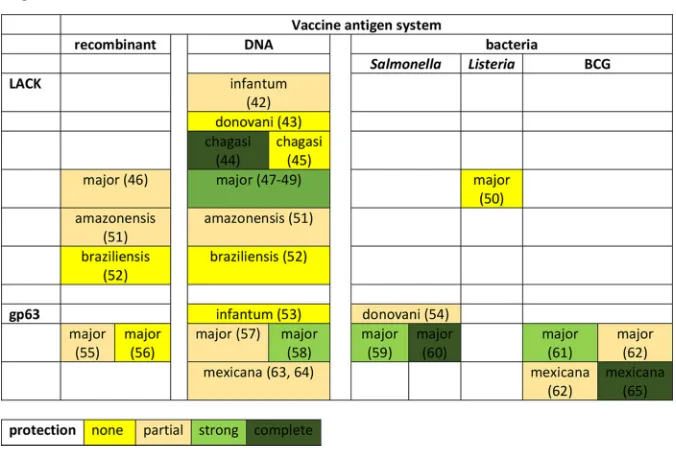
when navigating through the existing data and between the platforms (Table 1). On the
positive side, as is seen most clearly with viral vectors, exploring interactions between
on August 17, 2020 by guest
http://cvi.asm.org/
these technologies has the potential to yield regimens that augment, complement, or
synergize each other to yield a robust protective regimen.
ACKNOWLEDGMENTS
This work was funded by the National Institute of Allergy and Infectious Diseases of
the National Institutes of Health under award R01AI025038. Additional program
sup-port came from the Bill and Melinda Gates Foundation under grant 631.
The content of this article is solely the responsibility of the authors and does not
necessarily represent the official views of the National Institutes of Health.
Malcolm S. Duthie and Steven G. Reed are coinventors of a patent for leishmaniasis
vaccine development.
REFERENCES
1. Okwor I, Uzonna J. 2016. Social and economic burden of human leish-maniasis. Am J Trop Med Hyg 94:489 – 493. https://doi.org/10.4269/ ajtmh.15-0408.
2. WHO. 2005. Regional strategic framework for elimination of kala-azar from the South-East Asian Region (2005-2015). World Health Organiza-tion, New Delhi, India.
3. Engwerda CR, Matlashewski G. 2015. Development ofLeishmania vac-cines in the era of visceral leishmaniasis elimination. Trans R Soc Trop Med Hyg 109:423– 424.https://doi.org/10.1093/trstmh/trv039. 4. Noazin S, Khamesipour A, Moulton LH, Tanner M, Nasseri K, Modabber F,
Sharifi I, Khalil EA, Bernal ID, Antunes CM, Smith PG. 2009. Efficacy of killed whole-parasite vaccines in the prevention of leishmaniasis: a meta-analysis. Vaccine 27:4747– 4753.https://doi.org/10.1016/j.vaccine .2009.05.084.
5. Mohebali M, Khamesipour A, Mobedi I, Zarei Z, Hashemi-Fesharki R. 2004. Double-blind randomized efficacy field trial of alum precipitated autoclavedLeishmania majorvaccine mixed with BCG against canine visceral leishmaniasis in Meshkin-Shahr district, I.R. Iran. Vaccine 22: 4097– 4100.https://doi.org/10.1016/j.vaccine.2004.03.058.
6. Selvapandiyan A, Dey R, Nylen S, Duncan R, Sacks D, Nakhasi HL. 2009. Intracellular replication-deficientLeishmania donovaniinduces long
last-ing protective immunity against visceral leishmaniasis. J Immunol 183: 1813–1820.https://doi.org/10.4049/jimmunol.0900276.
7. Fiuza JA, Santiago Hda C, Selvapandiyan A, Gannavaram S, Ricci ND, Bueno LL, Bartholomeu DC, Correa-Oliveira R, Nakhasi HL, Fujiwara RT. 2013. Induction of immunogenicity by live attenuatedLeishmania don-ovanicentrin deleted parasites in dogs. Vaccine 31:1785–1792.https:// doi.org/10.1016/j.vaccine.2013.01.048.
8. Fiuza JA, Gannavaram S, Santiago Hda C, Selvapandiyan A, Souza DM, Passos LS, de Mendonca LZ, Lemos-Giunchetti DDS, Ricci ND, Bar-tholomeu DC, Giunchetti RC, Bueno LL, Correa-Oliveira R, Nakhasi HL, Fujiwara RT. 2015. Vaccination using live attenuatedLeishmania don-ovanicentrin deleted parasites induces protection in dogs against Leish-mania infantum. Vaccine 33:280 –288.https://doi.org/10.1016/j.vaccine .2014.11.039.
9. Bagirova M, Allahverdiyev AM, Abamor ES, Ullah I, Cosar G, Aydogdu M, Senturk H, Ergenoglu B. 2016. Overview of dendritic cell-based vaccine development for leishmaniasis. Parasite Immunol 38:651– 662.https:// doi.org/10.1111/pim.12360.
10. Degn SE, Thiel S. 2013. Humoral pattern recognition and the comple-ment system. Scand J Immunol 78:181–193.https://doi.org/10.1111/sji .12070.
TABLE 1Impact of production system on protective efficacy ofLeishmania-specific vaccine targetsa
aExamples of the various data generated for theLeishmania-specific components, LACK and gp63, across some
of the vaccine systems used are shown. The protection levels are indicated by the color scheme and were obtained from the review by Costa et al. (20); the pertinent citations (42–65) are indicated in parentheses.L. donovani,L. chagasi, andL. infantumcause VL;L. braziliensis,L. major,L. mexicana, andL. amazonensiscause CL or ML.
on August 17, 2020 by guest
http://cvi.asm.org/
11. Ray A, Cot M, Puzo G, Gilleron M, Nigou J. 2013. Bacterial cell wall macroamphiphiles: pathogen-/microbe-associated molecular patterns detected by mammalian innate immune system. Biochimie 95:33– 42. https://doi.org/10.1016/j.biochi.2012.06.007.
12. Carter D, Fox CB, Day TA, Guderian JA, Liang H, Rolf T, Vergara J, Sagawa ZK, Ireton G, Orr MT, Desbien A, Duthie MS, Coler RN, Reed SG. 2016. A structure-function approach to optimizing TLR4 ligands for human vac-cines. Clin Transl Immunology 5:e108.https://doi.org/10.1038/cti.2016.63. 13. Badiee A, Heravi Shargh V, Khamesipour A, Jaafari MR. 2013. Micro/
nanoparticle adjuvants for antileishmanial vaccines: present and future trends. Vaccine 31:735–749. https://doi.org/10.1016/j.vaccine.2012.11 .068.
14. Raman VS, Duthie MS, Fox CB, Matlashewski G, Reed SG. 2012. Adjuvants forLeishmaniavaccines: from models to clinical application. Front Im-munol 3:144.https://doi.org/10.3389/fimmu.2012.00144.
15. Duarte MC, Lage DP, Martins VT, Chavez-Fumagalli MA, Roatt BM, Menezes-Souza D, Goulart LR, Soto M, Tavares CA, Coelho EA. 2016. Recent updates and perspectives on approaches for the development of vaccines against visceral leishmaniasis. Rev Soc Bras Med Trop 49: 398 – 407.https://doi.org/10.1590/0037-8682-0120-2016.
16. Mutiso JM, Macharia JC, Gicheru MM. 2010. A review of adjuvants for
Leishmaniavaccine candidates. J Biomed Res 24:16 –25.https://doi.org/ 10.1016/S1674-8301(10)60004-8.
17. Alcolea PJ, Alonso A, Larraga V. 2016. Rationale for selection of devel-opmentally regulated genes as vaccine candidates againstLeishmania infantum infection. Vaccine 34:5474 –5478. https://doi.org/10.1016/j .vaccine.2016.08.081.
18. de Freitas e Silva R, Ferreira LF, Hernandes MZ, de Brito MEF, de Oliveira BC, da Silva AA, de-Melo-Neto OP, Rezende AM, Pereira VR. 2016. Combination of in silico methods in the search for potential CD4(⫹) and CD8(⫹) T cell epitopes in the proteome ofLeishmania braziliensis. Front Immunol 7:327.https://doi.org/10.3389/fimmu.2016.00327.
19. Seyed N, Taheri T, Rafati S. 2016. Post-genomics and vaccine improve-ment for Leishmania. Front Microbiol 7:467. https://doi.org/10.3389/ fmicb.2016.00467.
20. Costa CH, Peters NC, Maruyama SR, de Brito EC, Jr, Santos IK. 2011. Vaccines for the leishmaniases: proposals for a research agenda. PLoS Negl Trop Dis 5:e943.https://doi.org/10.1371/journal.pntd.0000943. 21. Legastelois I, Buffin S, Peubez I, Mignon C, Sodoyer R, Werle B. 2017.
Non-conventional expression systems for the production of vaccine proteins and immunotherapeutic molecules. Hum Vaccin Immunother 13:947–961.https://doi.org/10.1080/2164551520161260795:1-15. 22. Ferrer-Miralles N, Domingo-Espin J, Corchero JL, Vazquez E, Villaverde A.
2009. Microbial factories for recombinant pharmaceuticals. Microb Cell Fact 8:17.https://doi.org/10.1186/1475-2859-8-17.
23. Graumann K, Premstaller A. 2006. Manufacturing of recombinant ther-apeutic proteins in microbial systems. Biotechnol J 1:164 –186.https:// doi.org/10.1002/biot.200500051.
24. Josefsberg JO, Buckland B. 2012. Vaccine process technology. Biotechnol Bioeng 109:1443–1460.https://doi.org/10.1002/bit.24493.
25. Bacon KM, Hotez PJ, Kruchten SD, Kamhawi S, Bottazzi ME, Valenzuela JG, Lee BY. 2013. The potential economic value of a cutaneous leish-maniasis vaccine in seven endemic countries in the Americas. Vaccine 31:480 – 486.https://doi.org/10.1016/j.vaccine.2012.11.032.
26. Skeiky YA, Coler RN, Brannon M, Stromberg E, Greeson K, Crane RT, Webb JR, Campos-Neto A, Reed SG. 2002. Protective efficacy of a tan-demly linked, multi-subunit recombinant leishmanial vaccine (Leish-111f) formulated in MPL adjuvant. Vaccine 20:3292–3303.https://doi .org/10.1016/S0264-410X(02)00302-X.
27. Coler RN, Goto Y, Bogatzki L, Raman V, Reed SG. 2007. Leish-111f, a recombinant polyprotein vaccine that protects against visceral leish-maniasis by elicitation of CD4⫹T cells. Infect Immun 75:4648 – 4654. https://doi.org/10.1128/IAI.00394-07.
28. Campos-Neto A, Porrozzi R, Greeson K, Coler RN, Webb JR, Seiky YA, Reed SG, Grimaldi G, Jr. 2001. Protection against cutaneous leishmani-asis induced by recombinant antigens in murine and nonhuman primate models of the human disease. Infect Immun 69:4103– 4108.https://doi .org/10.1128/IAI.69.6.4103-4108.2001.
29. Velez ID, Gilchrist K, Martinez S, Ramirez-Pineda JR, Ashman JA, Alves FP, Coler RN, Bogatzki LY, Kahn SJ, Beckmann AM, Cowgill KD, Reed SG, Piazza FM. 2009. Safety and immunogenicity of a defined vaccine for the prevention of cutaneous leishmaniasis. Vaccine 28:329 –337.https://doi .org/10.1016/j.vaccine.2009.10.045.
30. Coler RN, Duthie MS, Hofmeyer KA, Guderian J, Jayashankar L, Vergara J,
Rolf T, Misquith A, Laurance JD, Raman VS, Bailor HR, Cauwelaert ND, Reed SJ, Vallur A, Favila M, Orr MT, Ashman J, Ghosh P, Mondal D, Reed SG. 2015. From mouse to man: safety, immunogenicity and efficacy of a candidate leishmaniasis vaccine LEISH-F3⫹GLA-SE. Clin Transl Immunol 4:e35.https://doi.org/10.1038/cti.2015.6.
31. Porro D, Gasser B, Fossati T, Maurer M, Branduardi P, Sauer M, Mattanov-ich D. 2011. Production of recombinant proteins and metabolites in yeasts: when are these systems better than bacterial production sys-tems? Appl Microbiol Biotechnol 89:939 –948.https://doi.org/10.1007/ s00253-010-3019-z.
32. Salgado D, Fischer R, Schillberg S, Twyman RM, Rasche S. 2014. Com-parative evaluation of heterologous production systems for recombi-nant pulmonary surfactant protein D. Front Immunol 5:623.https://doi .org/10.3389/fimmu.2014.00623.
33. McAtee CP, Seid CA, Hammond M, Hudspeth E, Keegan BP, Liu Z, Wei J, Zhan B, Arjona-Sabido R, Cruz-Chan V, Dumonteil E, Hotez PJ, Bottazzi ME. 2017. Expression, purification, immunogenicity and protective effi-cacy of a recombinant nucleoside hydrolase fromLeishmania donovani, a vaccine candidate for preventing cutaneous leishmaniasis. Protein Expr Purif 130:129 –136.https://doi.org/10.1016/j.pep.2016.10.008. 34. Hudspeth EM, Wang Q, Seid CA, Hammond M, Wei J, Liu Z, Zhan B, Pollet
J, Heffernan MJ, McAtee CP, Engler DA, Matsunami RK, Strych U, Asojo OA, Hotez PJ, Bottazzi ME. 2016. Expression and purification of an engineered, yeast-expressedLeishmania donovaninucleoside hydrolase with immunogenic properties. Hum Vaccin Immunother 12:1707–1720. 35. Guha R, Gupta D, Rastogi R, Vikram R, Krishnamurthy G, Bimal S, Roy S, Mukhopadhyay A. 2013. Vaccination with Leishmania hemoglobin receptor-encoding DNA protects against visceral leishmaniasis. Sci Transl Med 5:202ra121.https://doi.org/10.1126/scitranslmed.3006406. 36. Duthie MS, Favila M, Hofmeyer KA, Tutterrow YL, Reed SJ, Laurance JD,
Picone A, Guderian J, Bailor HR, Vallur AC, Liang H, Mohamath R, Vergara J, Howard RF, Coler RN, Reed SG. 2016. Strategic evaluation of vaccine candidate antigens for the prevention of visceral leishmaniasis. Vaccine https://doi.org/10.1016/j.vaccine.2016.04.067.
37. Dominguez-Bernal G, Horcajo P, Orden JA, Ruiz-Santa-Quiteria JA, De La Fuente R, Ordonez-Gutierrez L, Martinez-Rodrigo A, Mas A, Carrion J. 2015. HisAK70: progress towards a vaccine against different forms of leishmaniosis. Parasit Vectors 8:629.https://doi.org/10.1186/s13071-015 -1246-y.
38. Schroeder J, Brown N, Kaye P, Aebischer T. 2011. Single dose novel
Salmonellavaccine enhances resistance against visceralizingL. major
andL. donovaniinfection in susceptible BALB/c mice. PLoS Negl Trop Dis 5:e1406.https://doi.org/10.1371/journal.pntd.0001406.
39. Grimaldi G, Jr, Teva A, Porrozzi R, Pinto MA, Marchevsky RS, Rocha MG, Dutra MS, Bruna-Romero O, Fernandes AP, Gazzinelli RT. 2014. Clinical and parasitological protection in aLeishmania infantum-macaque model vaccinated with adenovirus and the recombinant A2 antigen. PLoS Negl Trop Dis 8:e2853.https://doi.org/10.1371/journal.pntd.0002853. 40. Hofmeyer KA, Duthie MS, Laurance JD, Favila MA, Van Hoeven N, Coler
RN, Reed SG. 2016. Optimizing immunization strategies for the induction of antigen-specific CD4 and CD8 T cell responses for protection against intracellular parasites. Clin Vaccine Immunol 23:785–794.https://doi.org/ 10.1128/CVI.00251-16.
41. Sanchez-Sampedro L, Mejias-Perez E, Sorzano COS, Najera JL, Esteban M. 2016. NYVAC vector modified by C7L viral gene insertion improves T cell immune responses and effectiveness against leishmaniasis. Virus Res 220:1–11.https://doi.org/10.1016/j.virusres.2016.03.007.
42. Dondji B, Perez-Jimenez E, Goldsmith-Pestana K, Esteban M, McMahon-Pratt D. 2005. Heterologous prime-boost vaccination with the LACK antigen protects against murine visceral leishmaniasis. Infect Immun 73:5286 –5289.https://doi.org/10.1128/IAI.73.8.5286-5289.2005. 43. Melby PC, Yang J, Zhao W, Perez LE, Cheng J. 2001.Leishmania donovani
p36(LACK) DNA vaccine is highly immunogenic but not protective against experimental visceral leishmaniasis. Infect Immun 69: 4719 – 4725.https://doi.org/10.1128/IAI.69.8.4719-4725.2001.
44. Gomes DC, Pinto EF, de Melo LD, Lima WP, Larraga V, Lopes UG, Rossi-Bergmann B. 2007. Intranasal delivery of naked DNA encoding the LACK antigen leads to protective immunity against visceral leishmaniasis in mice. Vaccine 25:2168 –2172. https://doi.org/10.1016/j.vaccine.2006 .11.060.
45. Marques-da-Silva EA, Coelho EA, Gomes DC, Vilela MC, Masioli CZ, Tavares CA, Fernandes AP, Afonso LC, Rezende SA. 2005. Intramuscular immunization with p36(LACK) DNA vaccine induces IFN-gamma produc-tion but does not protect BALB/c mice against Leishmania chagasi
on August 17, 2020 by guest
http://cvi.asm.org/
intravenous challenge. Parasitol Res 98:67–74.https://doi.org/10.1007/ s00436-005-0008-8.
46. Mougneau E, Altare F, Wakil AE, Zheng S, Coppola T, Wang ZE, Wald-mann R, Locksley RM, Glaichenhaus N. 1995. Expression cloning of a protectiveLeishmaniaantigen. Science 268:563–566.https://doi.org/10 .1126/science.7725103.
47. Ahmed SB, Bahloul C, Robbana C, Askri S, Dellagi K. 2004. A comparative evaluation of different DNA vaccine candidates against experimental murine leishmaniasis due toL. major. Vaccine 22:1631–1639.https://doi .org/10.1016/j.vaccine.2003.10.046.
48. Gurunathan S, Sacks DL, Brown DR, Reiner SL, Charest H, Glaichenhaus N, Seder RA. 1997. Vaccination with DNA encoding the immunodomi-nant LACK parasite antigen confers protective immunity to mice in-fected withLeishmania major. J Exp Med 186:1137–1147.https://doi.org/ 10.1084/jem.186.7.1137.
49. Gonzalo RM, del Real G, Rodriguez JR, Rodriguez D, Heljasvaara R, Lucas P, Larraga V, Esteban M. 2002. A heterologous prime-boost regime using DNA and recombinant vaccinia virus expressing theLeishmania infan-tumP36/LACK antigen protects BALB/c mice from cutaneous leishman-iasis. Vaccine 20:1226 –1231. https://doi.org/10.1016/S0264-410X (01)00427-3.
50. Soussi N, Milon G, Colle JH, Mougneau E, Glaichenhaus N, Goossens PL. 2000.Listeria monocytogenesas a short-lived delivery system for the induction of type 1 cell-mediated immunity against the p36/LACK anti-gen ofLeishmania major. Infect Immun 68:1498 –1506.https://doi.org/ 10.1128/IAI.68.3.1498-1506.2000.
51. Pinto EF, Pinheiro RO, Rayol A, Larraga V, Rossi-Bergmann B. 2004. Intranasal vaccination against cutaneous leishmaniasis with a particu-lated leishmanial antigen or DNA encoding LACK. Infect Immun 72: 4521– 4527.https://doi.org/10.1128/IAI.72.8.4521-4527.2004.
52. Salay G, Dorta ML, Santos NM, Mortara RA, Brodskyn C, Oliveira CI, Barbieri CL, Rodrigues MM. 2007. Testing of fourLeishmaniavaccine candidates in a mouse model of infection withLeishmania (Viannia)
braziliensis, the main causative agent of cutaneous leishmaniasis in the New World. Clin Vaccine Immunol 14:1173–1181. https://doi.org/10 .1128/CVI.00060-07.
53. Rodriguez-Cortes A, Ojeda A, Lopez-Fuertes L, Timon M, Altet L, Solano-Gallego L, Sanchez-Robert E, Francino O, Alberola J. 2007. Vaccination with plasmid DNA encoding KMPII, TRYP, LACK and GP63 does not protect dogs againstLeishmania infantumexperimental challenge. Vac-cine 25:7962–7971.https://doi.org/10.1016/j.vaccine.2007.08.023. 54. McSorley SJ, Xu D, Liew FY. 1997. Vaccine efficacy ofSalmonellastrains
expressing glycoprotein 63 with different promoters. Infect Immun 65: 171–178.
55. Rivier D, Bovay P, Shah R, Didisheim S, Mauel J. 1999. Vaccination against
Leishmania majorin a CBA mouse model of infection: role of adjuvants and mechanism of protection. Parasite Immunol 21:461– 473.https://doi .org/10.1046/j.1365-3024.1999.00244.x.
56. Handman E, Button LL, McMaster RW. 1990.Leishmania major: production of recombinant gp63, its antigenicity and immunogenicity in mice. Exp Parasitol 70:427– 435.https://doi.org/10.1016/0014-4894(90)90127-X. 57. Walker PS, Scharton-Kersten T, Rowton ED, Hengge U, Bouloc A, Udey
MC, Vogel JC. 1998. Genetic immunization with glycoprotein 63 cDNA results in a helper T cell type 1 immune response and protection in a murine model of leishmaniasis. Hum Gene Ther 9:1899 –1907.https:// doi.org/10.1089/hum.1998.9.13-1899.
58. Xu D, Liew FY. 1995. Protection against leishmaniasis by injection of DNA encoding a major surface glycoprotein, gp63, ofL. major. Immunology 84:173–176.
59. Yang DM, Fairweather N, Button LL, McMaster WR, Kahl LP, Liew FY. 1990. OralSalmonella typhimurium(AroA-) vaccine expressing a major leishmanial surface protein (gp63) preferentially induces T helper 1 cells and protective immunity against leishmaniasis. J Immunol 145: 2281–2285.
60. Xu D, McSorley SJ, Chatfield SN, Dougan G, Liew FY. 1995. Protection againstLeishmania major infection in genetically susceptible BALB/c mice by gp63 delivered orally in attenuatedSalmonella typhimurium
(AroA- AroD-). Immunology 85:1–7.
61. Abdelhak S, Louzir H, Timm J, Blel L, Benlasfar Z, Lagranderie M, Gheorghiu M, Dellagi K, Gicquel B. 1995. Recombinant BCG express-ing the leishmania surface antigen Gp63 induces protective immu-nity againstLeishmania majorinfection in BALB/c mice. Microbiology 141:1585–1592.
62. Connell ND, Medina-Acosta E, McMaster WR, Bloom BR, Russell DG. 1993. Effective immunization against cutaneous leishmaniasis with recombi-nant bacille Calmette-Guerin expressing theLeishmaniasurface protei-nase gp63. Proc Natl Acad Sci U S A 90:11473–11477.https://doi.org/10 .1073/pnas.90.24.11473.
63. Dumonteil E, Andrade-Narvarez F, Escobedo-Ortegon J, Ramirez-Sierra MJ, Valencia-Pacheco G, Flores-Serrano A, Canto-Lara S, Arjona-Torres A. 2000. Comparative study of DNA vaccines encoding various antigens againstLeishmania mexicana. Dev Biol (Basel) 104:135–141.
64. Dumonteil E, Maria Jesus RS, Javier EO, Maria del Rosario GM. 2003. DNA vaccines induce partial protection againstLeishmania mexicana. Vaccine 21:2161–2168.https://doi.org/10.1016/S0264-410X(02)00769-7. 65. Gonzalez CR, Noriega FR, Huerta S, Santiago A, Vega M, Paniagua J,
Ortiz-Navarrete V, Isibasi A, Levine MM. 1998. Immunogenicity of a
Salmonella typhiCVD 908 candidate vaccine strain expressing the major surface protein gp63 ofLeishmania mexicana mexicana. Vaccine 16: 1043–1052.https://doi.org/10.1016/S0264-410X(97)00267-3.
Malcolm S. Duthiegraduated with a B.Sc. degree in Immunology from the University of Glasgow, Scotland, followed by a Ph.D. in Medical Microbiology from the University of Edinburgh, Scotland. Following postdoctoral work at the University of Washington, Seat-tle, he joined the Infectious Disease Research Institute (IDRI) in 2002. In his role as a Senior Scientist at IDRI, Dr. Duthie’s main research interests lie in determining how host/patho-gen interactions can be beneficially
manip-ulated to generate tools for practical application within disease control programs. Dr. Duthie works with an extensive network of collaborators in several countries to identify vaccine candidates and develop new diagnostic tools to improve the control of neglected tropical diseases, with a current focus on leprosy and leishmaniasis.
Steven G. Reedgraduated with a Ph.D. in Microbiology and Immunology from the Uni-versity of Montana before being appointed Scientist of the National Institute of Amazon Research in Manaus, Brazil, where he di-rected research on tropical diseases. This re-search continued in Dr. Reed’s capacity as manager of the Cornell-Bahia program of international medicine. Among multiple ad-visory positions, he has served as a member of diagnostic and vaccine steering
commit-tees of the World Health Organization. In addition to founding several biotechnology companies, in 1993 Dr. Reed established the Infectious Disease Research Institute (IDRI), where he currently serves as President and Chief Executive Officer. Dr. Reed’s research interests have focused on the immunology of intracellular pathogens, with the intent of developing vaccines and diagnostics that can be made widely available in developing countries.