Security and QOS Guarantee-Based Resource
Allocation within Cloud Computing
Environment
Ms. R.Rajapriya.1,Mr. K.Sivakumar, M.E2
., Mrs. P.Sathyasudha3
Research Scholar, Department of Computer Science, Gnanamani College of Engineering, Tamilnadu, India 1
Professor, Department of Computer Science, Gnanamani College of Engineering, Tamilnadu, India2
Professor, Department of Computer Science, Gnanamani College of Engineering, Tamilnadu, India 3
ABSTRACT: Cloud computing focuses over delivery of reliable, Fault-tolerant then scalable infrastructure for hosting Internet based totally utility services. Cloud computing has turn out to be a instant youth technological know-how as has obtained great potentials in corporations and markets. Clouds be able fulfill that viable in accordance with get entry to services yet associated records from anywhere. SLA then Energy-Efficient Dynamic Virtual Machine (VM) Consolidation meets Quality over Service expectations yet Service Level Agreements (SLA) requirements. In that order Modified best fit decreasing (MBFD) algorithm is proposed as much the Energy Aware Best Fit Decreasing (EABFD) algorithm for pleasurable the Qos parameter. Cloud computing has grow to be a modern age science so has obtained great potentials within companies and markets. Clouds do make such feasible after access services then associated facts out of anywhere. facts safety and privacy are the most challenging obstacles to generalized star adoption. The mated effects show this influence yet to that amount the Broker architecture is the just forehand while ensuring SLA and protection requirements. User personal information used to storing and retrieving from the cloud computing. Protect the use personal information using encryption and decryption the files. This delivery note ambitions according to at aiding lookup between it vicinity through presenting a solution according to obtain the QoS over cloud computing. One over the challenges posed by way of astronaut applications is Service Level Agreements (SLA) management, as is the hassle on allocating sources according to the application in conformity with assurance a work level alongside dimensions certain as performance, emergence or reliability.
KEYWORDS: Cloud computing; Resource allocation; Security; Quality of service.
I. INTRODUCTION
slot-based allocation scheme, where each machine is divided into identical “slots” that can be used to execute tasks. However, MRv1 does not provide resource isolation among co-located tasks, which may cause performance degradation at run-time [16]. On the other hand, YARN uses a containerbased allocation scheme, where each task is scheduled in an isolated container. But, it still allocates containers of identical size to all reduce tasks that belong to the same job. This scheduling scheme can cause variation in task running time due to partitioning skew, since the execution time of a reduce task with a large partition can be prolonged because of the fixed container size. As the job completion time is dominated by the slowest task, the run-time variation of reduce tasks will prolong the job execution time.
requires minimal modification to the existing Hadoop implementation, but at the same time effectively mitigates the negative impact of partitioning skew.
II. RELATED WORK
VM COMPONENTS
There are five main components: Partition Size Monitor, running in the NodeManager; Partition Size Predictor, Task Duration Estimator and Resource Allocator, running in the ApplicationMaster; and Fine-grained Container Scheduler, running in the ResourceManager. Each Partition Size Monitor records the statistics of intermediate data that a map task generates at run-time and sends them to the ApplicationMaster though heartbeat messages. The Partition Size Predictor collects the partition size reports from NodeManagers and predicts the partition sizes of every reduce task for this job. The Task Duration Estimator constructs statistical estimation model of reduce task performance as a function of its partition size and resource allocation. That is, the duration of a reduce task can be estimated if the partition size and resource allocation of this task are given. The Resource Allocator determines the amount of resources to be allocated to each reduce task based on the performance estimation. Lastly, the Fine-grained Container Scheduler is responsible for scheduling resources among all the ApplicationMasters in the cluster, based on scheduling policies such as Fair scheduling [17] and Dominant Resource Fairness (DRF) [18]. Note that the schedulers in original Hadoop assume that all reduce tasks (and similarly, all map tasks ) have homogeneous resource requirements in terms of CPU and memory. However, this is not appropriate for MapReduce jobs with partitioning skew. We have modified the original schedulers to support fine-grained container scheduling that allows each task to request resources of customizable size.
The workflow of resource allocation mechanism used by DREAMS consists of 4 steps as shown in architecture.
(1) After the ApplicationMaster is launched, it schedules all the map tasks first and then ramps up the reduce task requests gradually according to the slowstart setting, which is used to control when to start reduce tasks based on the percentage of map tasks that have finished. During their execution, each Partition Size Monitor records the size of intermediate key-value pairs produced by map tasks. Each Partition Size Monitor sends locally gathered statistics to the ApplicationMaster through the TaskUmbilicalProtocal, which is a RPC protocol used to monitor task status in Hadoop.
(2) Upon receiving the partition size reports from the Partition Size Monitors, the Partition Size Predictor performs size prediction using our proposed prediction model (see Section 4.1). After all the estimated sizes of reduce tasks are known, the Task Duration Estimator uses the reduce task performance model (Section 4.2) to predict the duration of each reduce task with specified amount of resources. Based on that, the Resource Allocator determines the amount of resources for each reduce task according to our proposed resource allocation algorithm (Section 4.3) to equalize the execution time of all reduce tasks and then sends resource requests to the ResourceManager. Note that the Resource- Manager reports to the ApplicationMaster the current total amount of available resources through heartbeat messages every second. Thus, the Resource Allocator can check the availability of resources when requesting containers.
(3) Next, the ResourceManager receives ApplicationMasters’ resource requests through the heartbeat messages, and schedules free containers in the cluster to corresponding ApplicationMasters.
(4) Once the ApplicationMaster obtains new containers from the ResourceManager, it assigns the corresponding containers to the pending tasks, and finally launches the tasks.
DREAMS DESIGN
III. EXISTING SYSTEM
Many organizations, in particular small and medium-sized enterprises (SMEs), are adopting that technology is very low performance and not scalability because their applications while keeping a rapid get right of entry to to astronaut features together with decrease Capital Expenditure. stability In addition, a Cloud Service User (CSU) to that amount may stay an end-user, a Software as a Service (SaaS) provider, yet a Platform as a Service (PaaS) provider, requires because its services an end-to-end Quality of Service (QoS) assurance.
Disadvantages
• This renders the employ determination technique leaning to adopting non-optimum company paths for handing over the decomplex service, which among much cases does now not consent with the required overall performance then pricing specifications.
• This is an important undertaking that wish stay extra then extra obliging along the vast receiving over cloud computing, as not necessitates
• This technique is very difficult and not convenient to the user.
IV. PROPOSED SYSTEM
We make believe our proposed frame in imitation of evaluate the beneficial star assets choice or the influence regarding safety about QoS guarantee. The near consequences exhibit it have an impact on and as the Broker architecture is the nearly forehand while making sure QoS or safety requirements. . SLA is Energy-Efficient Dynamic Virtual Machine (VM) Consolidation meets Quality of Service expectations then Service Level Agreements (SLA) requirements.
Advantages
• In fact, storing and retrieving security information as well as the encryption and decryption of data lead to an decrease in network traffic, additional processing consumption
• SLA is the guarantee of a service level such as performance, availability and reliability.
V. METHODOLOGIES
This particular part gives a review of the specific MapReduce [1] reflection, conveyance, game plan, and disappointment modes. Inside the MapReduce outline, count can be shown while two phases: Map and Reduce. The real Map perform will take a knowledge coordinate and creates a result of middle of the road key/esteem sets.
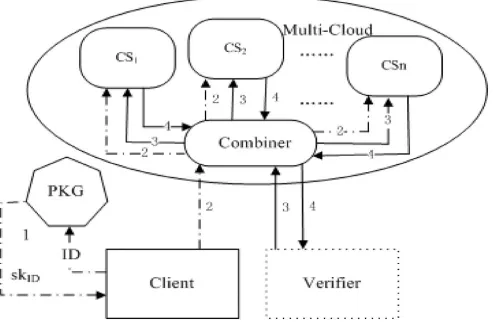
Fig 5.1 System Architecture Cloud Data User Account:
moves its data to a third party cloud storage server which is supposed to - presumably for a fee - faithfully store the data with it and provide it back to the owner whenever required.
Cloud Dataset Retrieval
In Download module contains the following details. There are username and file name. First, the server process can be run which means the server can be connected with its particular client. Now, the client has to download the file to download the file key. In file key downloading process the fields are username, filename, question, answer and the code. Now clicking the download option the client can view the encrypted key. Then using that key the client can view the file and use that file appropriately.
Leak Files And Cloud Data Leaker
Admin can access the leakage file details and data leaker. If unauthorized users are accessing the files they are called data leaker. So data leaker list is access from the database to web form. All the web forms are developed in secured manner only.The secret key and password are maintained for data leaker.
FAKE OBJECT
Fake objects are objects generated by the distributor in order to increase the chances of detecting agents that leak data. The distributor may be able to add fake objects to the distributed data in order to improve his effectiveness in detecting guilty agents. Our use of fake objects is inspired by the use of “trace” records in mailing lists.
VI. CONCLUSION AND FUTURE WORK
CONCLUSION
It presented DREAMS, a framework for run-time partitioning skew mitigation. Unlike previous approaches that try to balance the reducers’ workload by repartitioning the workload assigned to each reduce task, in DREAMS we cope with partitioning skew by adjusting runtime resource allocation to reduce tasks. Specifically, we first developed an on-line partition size prediction model which can estimate the partition size of each reduce task at runtime. We then presented a reduce task performance model that correlates run-time resource allocation and the size of the reduce task with task duration. In our experiments using a 21-node cluster running both real and synthetic workloads, we showed that both our partition size prediction model and task performance model achieve high accuracy in most cases.
FUTURE WORK:
It also demonstrated that DREAMS can effectively mitigate the negative impact of partitioning skew while
incurring negligible overhead, thereby improving the job running time in comparison to the native virtual machines and the state-of-the-art solution, respectively
REFERENCES
[1] J. Heiser, M. Nicolett, Assessing the security risks of cloud computing, Gartner, 2008.
[2] W. Itani, C. Ghali, R. Bassil, A. Kayssi, A. Chehab, ServBGP: BGPinspired autonomic service routing for multi-provider collaborative architectures in the cloud, Future Generation Computer Systems, Vol. 32, pp. 99-117, 2014.
[3] Kaspersky, Global Corporate IT Security Risks: 2013, Technical report, pp. 1-26, 2013.
[4] L. Karadsheh, Applying security policies and service level agreement to IaaS service model to enhance security and transition, computers & security, Vol. 31, Iss. 3, pp. 315-326, 2012.
[5] C. Christmann, J. Falkner, A. Horch, H. Kett, Identification of IT Security and legal requirements regarding Cloud services, Sixth International Conference on Cloud Computing, GRIDs, and Virtualization, CLOUD COMPUTING 2015, pp. 1-7, 2015.
[6] M. Ali, R. Dhamotharan, E. Khan, S.U. Khan, A.V. Vasilakos, K. Li, A.Y. Zomaya, SeDaSC: secure data sharing in clouds, IEEE Systems Journal, Vol. 11, Iss. 2, pp. 395-404, 2017.
[7] W. Fan, H. Perros, A novel trust management framework for multicloud environments based on trust service providers, Knowledge-Based Systems, Vol. 70, pp. 392-406, 2014.
[9] L. Wei, H. Zhu, Z. Cao, X. Dong, W. Jia, Y. Chen, A.V. Vasilakos, Security and privacy for storage and computation in cloud computing, Information Sciences, Vol. 258, pp. 371-386, 2014.
[10] H. Moraes, R. Nunes, D. Guedes, DCPortalsNg: efficient isolation of tenant networks in virtualized datacenters, Thirteenth International Conference on Networks, pp. 230-235, 2014.
[11] X. He, T. Chomsiri, P. Nanda, Z. Tan, Improving cloud network security using the tree-rule firewall, Future Generation Computer Systems, Vol. 30, pp. 116-126, 2014.
[12] S.K. Sah, S. Shakya, H. Dhungana, A security management for cloud based applications and services with diameter-AAA, IEEE International Conference on Issues and Challenges in Intelligent Computing Techniques (ICICT), pp. 6-11, 2014.
[13] Y. Demchenko, C. Ngo, C. de Laat, T. Wlodarczyk, C. Rong, W. Ziegler, Security Infrastructure for On-demand Provisioned Cloud Infrastructure Services, Third IEEE International Conference on Coud Computing Technology and Science, pp. 255-263, 2011.
[14] M. Rak, L. Liccardo, R. Aversa, A SLA-based interface for security management in Cloud and GRID Integrations, 7th International Conference on Information Assurance and Security, pp. 378-383, 2011.