MOHD NIZAM BIN MAZENAN
A thesis submitted in fulfilment of the requirements for the award of the degree of Doctor of Philosophy (Biomedical Engineering)
Faculty of Biosciences and Medical Engineering Universiti Teknologi Malaysia
iii
Dedicated to Papa and Mama, my Sister (Mimi) and Brother (Agung)
ACKNOWLEDGEMENT
First and foremost, I would like to thank my supervisor in this PhD study which is Dr. Tan Tian Swee and my co-supervisor Dr Nasrul. They have given me a lot of advice, chances, knowledge and guidance in completing this research study. They both always help me when I face problem in my research and study. To me, they are more like friends in which I am deeply grateful for their valuable guidance and continuously encourage me throughout my PhD journey.
I also wish to deliver my heartiest gratitude to my sensei Professor Hirofumi Nagashino and Associate Professor Akutagawa Masatake during my attachment in School of Health Sciences, Faculty of Medicine, The University of Tokushima, Japan. Nagashino sensei has guided me throughout the attachment in Tokudai especially in Medical problem and Akutagawa sensei has helped me in solving some technical problem especially in features and signal processing for my research studies. They both also help me regarding the placement and guide me in how to live in Japan.
Besides, I would like to thank to my amazing laboratory mate and they are Leong Kah Meng, Lum Kim Yun, Lau Chee Yong, Lim Yee Chea, Rina Salleh, and Gan Hong Seng. They have given me a plenty mental support and advice during my laboratory time.
v
ABSTRACT
ABSTRAK
vii
TABLE OF CONTENTS
CHAPTER TITLE PAGE
TITLE
DECLARATION DEDICATION
ACKNOWLEDGEMENT ABSTRACT
ABSTRAK
TABLE OF CONTENTS LIST OF TABLES LIST OF FIGURES
LIST OF ABBREVIATIONS LIST OF APPENDICES
i ii iii iv v vi vii
xi xiv xix xx
1 INTRODUCTION 1.1 Introduction
1.2 Background of the Problem 1.3 Problem Statement
1.4 Objectives of the Research 1.5 Scope of the Research 1.6 Significance of the Study 1.7 Research Methodology 1.8 Thesis Layout
2 LITERATURE REVIEW
2.1 Nature of Speech Production
2.1.1 Production of Voice in Articulation Aspect
2.2 Linguistic Aspect of Malay Language in Articulation Sound
2.3 Overview of Speech Disorder 2.3.1 Articulation Disorder
2.4 Early Screening Diagnosis of Speech Disorder 2.5 Computerized Method in Speech Disorder Early
Diagnosis
2.6 Speech-to-Text (STT) Overview 2.7 Corpus-Based Design for ASR
2.8 Speech Features and Front-End Processing 2.8.1 Linguistic Features
2.8.2 Acoustic Features
2.8.3 Feature Extraction Method 2.9 Start-End Point Detection
2.10 HMM-Based Phonetic Segmentation
2.11 Statistical and Probabilistic Approach in ASR 2.11.1 ASR Formulation Procedure 2.11.2 Three Component Modeling in
Database Training
2.11.2.1 Acoustic Modeling 2.11.2.2 Pronunciations Modeling 2.11.2.3 Language Modeling 2.12 Decoding Phase
2.12.1 Viterbi Decoding
2.12.2 Artificial Intelligence Decoding 2.12.3 Genetic Algorithm Decoding 2.13 Related Previous Research in Malay Speech
ix 3 PROPOSED SYSTEM AND IMPLEMENTATION
3.1 Research Methodology
3.2 Malay Speech Corpus (Artic Perspective) 3.2.1 Corpus Design with Articulation
Disorder Target Wordlist 3.2.2 Speech Sample Recording 3.2.3 Lexical Unit Transcription 3.3 Feature Extraction: MFCC
3.3.1 Coding Speech Data to MFCC Vectors
3.4 Subword Unit Uniform Segmentation
3.5 Silence Region Calibration and Phonetic Unit Segmentation Procedure
3.6 Zero-Crossing Rate (ZCR) 3.7 Short-Time Energy (STE)
3.8 Decision Start-End Point Algorithm
3.9 Step Procedure in Silence Region Calibration 3.10 Segmentation of Speech Utterance for Data
Training
3.10.1 HMM-Based Phonetic Segmentation Procedure
3.11 Lexical Unit Modeling For Artic Case 3.12 Dimension Variability Difficulties 3.13 Acoustic Modeling of Complex Artic
Environment
3.13.1 Statistical Model Topology 3.13.2 Subword Unit Modeling 3.13.3 Observation Densities
3.14 Pronunciation Modeling to the Word Network 3.14.1 Composition of FSM using HMM for
Pronunciation Lexicon
3.15 Hybridization of Viterbi Algorithm with GA for Searching
3.16 Viterbi Algorithm in Distinctive Speech Unit Search
3.16.1 Viterbi Pruning
3.17 Genetic Algorithm (GA) Enhancement in Unit Selection Search
3.17.1 Step Procedure of GA Applied
132 134
4 RESULT AND DISCUSSION 4.1 Introduction
4.2 Comparison Test for Silence Region Calibration Algorithm
4.2.1 Refinement Experiment and Result 4.3 Discussion for Silence Region Calibration
Algorithm Experiment
4.4 Lexical Unit Modeling for Artic Case Experiment
4.4.1 Few Evaluation Measurements for Phoneme Recognition Accuracy 4.5 Discussion for Lexical Unit Modeling
Experiment
4.6 Decoding Task Experiment by Viterbi and Hybridization of GA
4.6.1 Experiments and Result Analysis of Hybridazation of GA and Viterbi Search Refinement Experiment and Result
4.7 Graphical User Interface (GUI) for Malay Articulation Early Screening System Prototypes
139 139
139 142
149
149
151
157
158
161
165
5 CONCLUSION AND FUTURE WORK 5.1 Conclusion
5.2 Contribution 5.3 Future Works
169 169 171 172
REFERENCES 173
xi
LIST OF TABLES
TABLE NO. TITLE PAGE
2.1 List of Malay phoneme according to place and manner of
articulation 14
2.2 The main characteristic of the articulation disorders 20
2.3 Linguistic Feature Categories 35
2.4 Three distinct acoustic feature descriptions with human
voices physical quantities correlation 37 2.5 Three signal state representation with the representation
of the condition (Aida-Zade, Ardil et al. 2006) and both computation of Energy and Zero-Cross measurement
(Rabiner and Schafer 1978) 42
2.6 Start-End Point detection method history for over past
decades 43
2.7 GA technique for decoding and classification phase in
ASR 61
2.8 (a) Summary of previous works on Malay speech recognition by various kind of feature extraction and classifier
method 63
2.8 (b) Continue of summary previous works on Malay speech recognition by various kind of feature extraction and
classifier method 64
2.8 (c) Continue of summary previous works on Malay speech recognition by various kind of feature extraction and
3.1 Target Wordlist for Malay Articulation Disorder
Diagnosis 73
3.2 The example object versus abstract confusion in existing
target wordlist 75
3.3 (a) New Target Wordlist for Computerized Malay Articulation Disorder Early Screening with ST
verification under vowel and alveolar category 76 3.3 (b) New Target Wordlist for Computerized Malay
Articulation Disorder Early Screening with ST verification under plosives and both combination
category 77
3.4 The phonetic dictionary of word sample show how the same word would pronounce differently in separate
condition 80
3.5 MFCCs TargetKind with the bit-encoding for the
qualifiers 82
3.6 Configuration parameters of MFCC extraction process (*
expressed on units of 100ns) 84
3.7 Phoneme segmentation by start and end index 99 3.8 The number of comparable parameters produced by
CHMM and SCHMM with 26 and 39 MFCC features for
different set of codebook 118
3.9 (a) List of target word for Malay language dialects including representation based on IPA and SAMPA with
articulation disorder pronunciation error sound 121 3.9 (b) Continue lists of target words for Malay language dialects
including representation based on IPA and SAMPA with
articulation disorder pronunciation error sound 122 3.9 (c) Continue lists of target words for Malay language dialects
including representation based on IPA and SAMPA with
articulation disorder pronunciation error sound 123 3.10 Metric of alignment confusion in a dictionary for Malay
xiii 3.11 State Transition Probabilities path for phoneme /a/, /r/,
/n/, and /b/ which produce the word "arnab" 129 3.12 Mutation operation over the target word “arnab”. (a) The
predefined probability for each chromosome with fitness value. (b) Mutation begins with random mutation allele replacement and weight computation. It will generate the
fitness score of new offspring 137
4.1 Accuracy result comparison with and without the use of
silence region calibration algorithm 140
4.2 MFCC variation targetkind test with three lexical unit
evaluations to obtained ACC. CORR. and SEG. results 143 4.3 The percentage evaluation of phone boundaries
segmentation rate correctly placed within different
tolerance and number of GMM mixture 144
4.4 The agreement alignment between labeling with different set of window length for MFCC computation and
different number of cepstral coefficients in percentage of
boundaries within tolerance 146
4.5 The effect of iterations number for a set of tolerance 148 4.6 Comparison of Word correctness accuracy by using
Triphone and Monophone model 150
4.7 Tested word selected for multiple evaluation comparison
includes phoneme alignment confusion error 152 4.8 Example reference and recognize result alignment with
CER on recognize phoneme sequence. Deletion error is
represented by the underscore character ( _ ) 154 4.9 Evaluation of selected phonetics unit with four
articulation disorder type over the usage frequency 156 4.10 Target word selected for Cost of recognition accuracy
comparison 159
4.11 The hybridization method of GA and Viterbi search with maximum number of generation set to 9 with 20 selected
LIST OF FIGURES
FIGURE NO. TITLE PAGE
1.1 Mapping of procedures in this study 9
2.1 Human Vocal Systems (Flanagan 1972) 12
2.2 Illustration of syllable structure (Laver 1994) 16
2.3 Type of Phoneme Chart (Honey 2012) 17
2.4 The positions of Phoneme “R” in a Malay alveolar target
word 18
2.5 Types of Speech Disorder (asha 1997) 19
2.6 Production of Phoneme Speech Sound in Human Oral
Motor Function 21
2.7 Schematic Diagram of speech sound system
classification (Van Riper and Erickson 1996) 22 2.8 Schematic Diagram of speech sound system
classification (Pedretti and Early 2001) 23
2.9 Speech Therapy therapeutic cards 25
2.10 The similar wave pattern in the initial ‘St-‘sound 31 2.11 Malay word sample of similar wave pattern. (a) The
word “katak” and “kotak” have similar stress tone even though have different phoneme of /ka/ and /ko/ which likely to produce different wave pattern. (b) Same goes to the word “Buku” and “Duku” which contains
xv 2.12 Phoneme arrangement sample for alphabet and word. (a)
Alphabet “T” sample been illustrated to cover in three level position by different word therefore creating different stress tone over the same alphabet family. (b) Word “Sotong” or “squid” in English will be used to test at different level positioning that create another three different pronunciation sound over the same word family that cover three target consonant of “S”, “T” and “G” 33 2.13 Example of Audio signals waveform (Jang 2009) 36
2.14 Signal processing classification methods 39
2.15 Block diagram of MFCCs process flow (Razak, Ibrahim
et al. 2008, Muda, Begam et al. 2010) 40 2.16 The wrong set of segmentation with intervening error
without effective method of Start-End point detection 43 2.17 (a) Human Model of spoken speech. (b) Basic ASR
decoding process of speech to sentence recognition
(Rabiner and Juang 2006) 46
2.18 Three-state HMM for the sound spoken of /n/ with
Gaussian distribution 49
2.19 Concatenation model for the word /one/ (phoneme
mapping as “w-ax-n”) thereby creating nine-state model. 49 2.20 Pronunciation modeling in the ASR system framework
at coarse level (Fosler-Lussier 2003) 53 2.21 The process of P_Q (Q│M) showing the mapping from
words to HMM state in triphone recognizer
(Fosler-Lussier 2003) 53
2.22 Common pronunciation dictionaries as a phone set in speech recognition system. (a) Is the example from English language lexicon (b) Is the example from Malay
2.23 Graphical visualization of Viterbi search contains the space search graph or matrix table along with HMM states and sequence of acoustic vectors observation over
t time. 59
3.1 Overall research methodology flows 68
3.2 Framework of Proposed Malay Articulation Disorder
Early Screening Diagnostic system 70
3.3 TIMIT label file formatting for the training sample data
of (a) “radio” and (b) “tikus” 81
3.4 Parameterization of the speech sample by HCopy; and list of the source waveform files and corresponding
output of MFCC files generated 83
3.5 The source header, the target header and parameter vectors 1 through to 3 listing with three input data
streams. 85
3.6 Uniform segmentation of subword unit for the word "arnab". The initial subword boundaries are marked as
blue dashed vertical lines in the speech signal 86 3.7 Flow diagram of applied ZCR and STE measurement
computation with Decision Start-End Point Algorithm 92 3.8 Speech waveform shows the beginning and end point of
the word “Rambut” 93
3.9 (a), (b) speech waveform with Zero Crossing Rate (ZCR) Computation graph of word “Rambut” per 20ms
level of interval with hamming window frame. 94 3.10 Short-Time Energy (STE) Computation graph of word
“Rambut” per 20ms level of interval with rectangular
window frame 95
3.11 Short-Time Energy (STE) measurement computation
graph with different frame size computation 96 3.12 Short-Time Energy (STE) measurement computation
xvii 3.13 Sample speech waveform demonstrating the various
voiced segment, unvoiced segment and silence segment. 98
3.14 HMM-based phonetic segmentation frameworks 99
3.15 Speech coding scheme utilizing the MFCC features 101
3.16 Training step and process flow in HMM 102
3.17 Model topology with 3-state left-to-right with skip method of phonetic language discovery based on variant
scale in artic disorder term. 108
3.18 Formation of similar state tying with identical Gaussian
output distributions 109
3.19 Markov model chain of 3-state left-to-right with acoustic
vector sequence for the phone “ar” 110
3.20 A word represent by HMM chain model composed by concatenating phoneme in (a) and syllable in (b). Each HMM states in the word model represent the specific
subword unit 113
3.21 Monophone and Triphone model visualization of
example dictionary 115
3.22 Recognition network by hierarchical composition of HMM. (a) A word grammar of target word. (b) A word in a canonical phone graph with expended phone followed the pronunciation rule. (c) Each phone(me) modeling into 3-state left-to-right HMM associated with acoustic model. (d) Each HMM state has probability
density score for acoustic features 119
3.23 Pronunciation network integrated with dialect and accent
along with artic sound to form the word based 125 3.24 Process of lexical unit selection using GA 133 3.25 Single-point crossover operations for the word “arnab” 136 4.1 Comparison result with or without the use of silence
region calibration algorithm on different lexical unit and
4.2 Comparison graph of variation of MFCC targetkind with
three lexical unit testing and evaluations 143 4.3 Comparison graph of four MFCC targetkind within
different time threshold and number of GMM mixture 145 4.4 Feature distance configuration result with different
window length 147
4.5 Graph plot for the effect of re-estimation number with
four set benchmarking 148
4.6 Average deviation graph of the system performance
based on multiple evaluation comparison 153 4.7 (a) Frequency of word coverage for selected phonetic unit
correspond to articulation disorder 154
4.7 (b) Articulation disorder type coverage in the develop
corpus 155
4.8 Recognition accuracy comparison between pruning and
non-pruning method for selected articulation target word 160 4.9 Comparison of percent change (increase & decrease) of
recognition accuracy with maximum 9 generation of GA 162 4.10 Graph plot of difference rate of recognition accuracy
evaluation with selected target words 163 4.11 Malay Articulation Early Screening Diagnostic system
prototypes with the function details 165 4.12 The system prototype GUI example of usage with the
guide 167
4.13 System output with variation context error of articulation
xix
LIST OF ABBREVIATIONS
AAC - Alternatives And Augmentative Communication
AI - Artificial Intelligence
ASR - Automatic Speech Recognition
FE - Feature Extraction
FFT - Fast Fourier Transform
FSM - Finite State Machine
GA - Genetic Algorithm
GMM - Gaussian Mixture Model
HMM - Hidden Markov Model
HSA - Hospital Sultanah Aminah
IPA - International Phonetic Association
SAMPA - Speech Assessment Methods Phonetic Alphabet SKPK - Sekolah Kebangsaan Pendidikan Khas
STE - Short-Time Energy
KKM - Kementerian Kesihatan Malaysia KPM - Kementerian Pengajian Malaysia LPC - Linear Predictive Coding
MFCC - Mel-Frequency Cepstral Coefficients
NIST - National Institute of Standards and Technology
OOV - Out-of-Vocabulary
SLP - Speech Language Pathologists
ST - Speech Therapist
STT - Speech-to-Text
WER - Word Error Rate
WHO - World Health Organization
LIST OF APPENDICES
APPENDIX TITLE PAGE
A Malay Corpus Designed for Artic Disorder Early
Screening Diagnosis Recognizer 199
B ZCR and STE Numerical Oriented Algorithm 201
C Computation Result of ZCR Measurements Using
Different Window Function And Frame Sizes 207 D Table 1 (A) Confusion Matrix of Phoneme
Recognition Result For 1st Attempt in Lexical Unit Recognition with Conventional Viterbi Search. (B) Confusion Matrix of Phoneme Recognition Result For 2nd Attempt in Lexical Unit Recognition with
Improvement by Hybrid GA with Viterbi Search 209 E Articulation Disorder Patient Profile
CHAPTER 1
INTRODUCTION
1.1 Introduction
Individuals who are diagnosed with speech disorder have problems creating or forming speech sounds to communicate with others. This may lead to several speech impairments such as articulation disorders, fluency disorders and voice disorders. Statistic by World Health Organization (WHO) shows that, speech and language disorder affects at least 3.5% of human population communication skills. In Malaysia, its affect 5-10% of children with manifest speech and language problems totaling about 10,223 children were reported to have learning disabilities (KPM 2002, Woo and Teoh 2007, Raflesia 2008). This research is written to highlight and focus more on the main issue in medical speech that is related to early screening of articulation disorder case. Previous research shows that, early speech therapy intervention is critically important as well as other developmental concerns as a part of knowing what's "normal" and what's “not” in speech and language development. This can help parents or guidance especially Speech Therapist (ST) to figure out the next concern on right schedule and to prevent possible future problems (Fey 1986, Nelson 1989, Warren and Yoder 1996, Trevino-Zimmerman 2008, Navarro-Newball, Loaiza et al. 2014, Rubin, Kurniawan et al. 2014, Sparreboom, Langereis et al. 2015).
distortions (shlip for sip) (Bauman-Waengler 2012). The degrees of disorders vary from mild impairments like pronunciation errors to more severe ones including hearing-loss, aphasia, and craniofacial anomalies. Some children or even adults, have trouble saying certain words, sounds or sentences where others have trouble understanding what they are trying to say. However, there are special therapies such as Speech Therapist (ST) and Speech Language Pathology (SLP) that can help these patients to go through the early screening diagnosis, assessment, and therapeutic assistance to help this patient to improve their speech.
The advanced research in speech and signal processing technology has open massive development of computer-assisted methods for speech therapy or called assistive device (AD). Speech-to-Text recognition system can be applied to help people who have speech impairment. It is to assist the speech therapist in diagnosing the patient. This idea has been well mentioned where the Automatic Speech Recognition (ASR) systems may be used for therapeutic applications, assessment applications, report writing and as a mode of alternatives and augmentative communication (AAC) (Griffin, Wilson et al. 2000). AD has widely been used for much therapeutic assistance for ST and few research in this area in Malaysia include Malay speech therapy assistance tools (MSTAT) (Tan, Ariff et al. 2007) and Computer-based Malay speech analysis system (Liboh 2011). Communication disorder by nature is very complex and those existing diagnostic tool is still incomplete and imprecise which need a lot more improvement. The research will focus more on the design and the development of Malay articulation disorder early screening system to assist in speech communication by using speech recognition engine that meet specific criteria. Speech therapy early screening diagnostic has been believed to help ST by doing the quick assessment to verify the correct level of disorder of the speech disorder patient (Misman 2014).
1.2 Background of the Problem
5 1.3 Problem Statement
i) ST is deals with speech disorder patient where the process of early screening diagnosis can be conducted by using computerized speech recognition system to provide a way to assess the speech problem of the patient (Glykas and Chytas 2004). Therefore, it is an issue here on how to create the right speech modeling that can recognizer speech disorder unknown utterance by achieving high accuracy of recognition speech.
ii) The way of representing the speech output and transcriptions result must be effective to show the right disorder categories with met additional criteria such as quicken the process of therapy screening session but maintain the accuracy result. This is the most important element in a speech therapy program but the most difficult for a therapist to carry out, due to time limits (Bälter, Engwall et al. 2005). Therefore computational time of the system, accuracy, and intelligibility is an issue here.
iii) The wordlist of the Malay speech corpus design must contain sufficient prosodic and acoustic variations with significant unit following the right design and rule for articulation disorder early diagnosis. But, the current Malay speech database design is lack of the verification from medical expert and some of the target selection word not following “stimulable” therapy word. Therefore, it is an issue to develop the robust corpus that is based on the interwoven ideas of developmental readiness, ease of learning and understanding and easier for the clinician to teach (Van Riper and Irwin 1958, Van Riper 1978, Hodson 2007). iv) Research been done in Malaysia shows that, this traditional method (hearing
and experience judgment) is still in use widely in Malaysia hospital or speech center. There are no wrong doing by manual technique but based on observation to the hospital or clinic that still using this technique, the method sometimes lack of accuracy, time consuming (Ai and Yunus 2007) and require high number of ST for each session (Saz, Yin et al. 2009). The common practice of this process going through, the "tool" that only been rely by the ST is their hearing and experience judgment. That would go on for an hour and sometimes it would lead to error elimination during the process (Secord, Boyce et al. 2007).
1.4 Objectives of the Research
This research study is aiming to solve related problems in building Malay early screening computerized system for articulation disorder diagnosis. Therefore the objectives are:
i) To develop high quality Malay articulation early screening computerized system (in term of providing higher speech recognition accuracy and robust corpus design) for articulation disorder diagnosis use as therapeutic assistance for ST. ii) To design a new set of Malay SAMPA database that specifically for
computer-readable script that accommodate Malay articulation pronunciation phoneme applied in speech-to-text system.
iii) To implement and improve acoustic phonetic segmentation in speech recognition boundaries identification between smallest lexical units in spoken natural language with silence region calibration algorithm.
iv) To improve Viterbi searching algorithm by hybridization with Genetic Algorithm (GA) which work in back-end phase that provide optimal solution when solving artic lexical unit selection task.
1.5 Scope of the Research
7 The statistical engine used in this research is based on HMM as the auto-segment of the recorded speech sample to cover three lexical units of phoneme, syllable and word based, and also work as probabilistic rule for the speech modeling phase. The speech recognition processing module includes the segmentation, silence region calibration, feature extractor (based on MFCC) and pattern matching engine. These methods are also includes Genetic Algorithm (GA), HMM probabilistic method and the hybridization of Viterbi search and GA. The evaluation of the recognition system was tested based on Word Error Rate (WER), Out-of-Vocabulary (OOV), %Correct and Recognition Rate accuracy which been used as objective evaluation of the recognition system based on NIST benchmarking. This can measure the recognition performance, vocabulary identification and intelligibility of the output speech utterances.
1.6 Significance of the Study
definitely makes contribution in the area of speech recognition specifically for articulation disorder early screening diagnosis.
1.7 Research Methodology
9
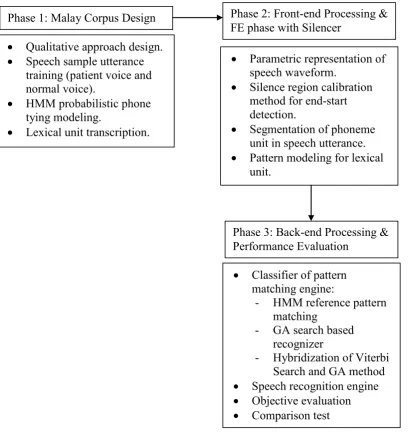
Figure 1.1. Mapping of procedures in this study
1.8 Thesis Layout
This thesis is divided into five chapters. Chapter 1 includes introduction, background of the problem, objectives of the research and scope of the thesis. The purpose is to show the initiative in using the proposed recognition method rather than current conventional or traditional method.
Chapter 2 will provide a literature review of this study. It includes reviews from previous study of the Text-to-Speech system, speech recognition and few methods in developing the recognizer machine. The focus is to develop the robust Phase 1: Malay Corpus Design
Qualitative approach design.
Speech sample utterance training (patient voice and normal voice).
HMM probabilistic phone tying modeling.
Lexical unit transcription.
Phase 2: Front-end Processing & FE phase with Silencer
Parametric representation of speech waveform.
Silence region calibration method for end-start detection.
Segmentation of phoneme unit in speech utterance.
Pattern modeling for lexical unit.
Phase 3: Back-end Processing & Performance Evaluation
Classifier of pattern matching engine:
- HMM reference pattern matching
- GA search based recognizer
- Hybridization of Viterbi Search and GA method
Speech recognition engine
Objective evaluation
corpus for early screening diagnosis system of articulation speech disorder, the segmentation of smallest lexical unit method and the pattern matching in classifier phase. This chapter also included review of standard method in feature extraction, segmentation technique, silence region calibration, HMM recognizer engine, Viterbi search and GA for pattern matching.
Chapter 3 is the methodology used in this study. It describes the Malay early screening diagnostic system and the implementation specifically for articulation speech disorder. This chapter discussed the overall implementation, design, and the development of Malay speech corpus, cost function used and objective evaluation of the target cost. It also describes the procedure to implement the silence region calibration algorithm before segmentation phase for the front-end. The performance will be compared with previous method (without silencer and with silencer). Then the segmentation will be done by using the correct MFCC adjustment for the training sample. The performance evaluation methods are based on the accuracy percentage of word spotting. Another method discussed is regarding the procedure to implement HMM recognizer emphasizing the Viterbi search as a classifier for reference pattern matching. Then the procedure of hybridization with GA as a search based recognizer for the pattern matching and word spotting in decoder. The performance will be compared with conventional method.
Chapter 4 is the result and discussion section. It shows the result accuracy achieved by the recognizer and also describes the performance evaluation of all method including corpus design testing, smallest lexical unit segmentation, silence region calibration, FE adjustment, and the pattern matching in recognition phase. Their performance will be based on the evaluation of the recognition system was tested based on Word Error Rate (WER), Out-of-Vocabulary (OOV), %Correct and Recognition Rate accuracy which been used as objective evaluation of the recognition system. The entire test is based on NIST standard for ASR system.
REFERENCES
Aarnio, T. (1999). Speech recognition with hidden markov models in visual communication. Master of Science Thesis, University of Turki.
Acero, A. (1995). The role of phoneticians in speech technology. BLOOTHOOFT, G.-HAZAN, V.-HUBER, D.
Ahadi, S., et al. (2003). An efficient front-end for automatic speech recognition. Electronics, Circuits and Systems, 2003. ICECS 2003. Proceedings of the 2003 10th IEEE International Conference on, IEEE.
Ai, O. C. and J. Yunus (2007). Computer-based System to Assess Efficacy of Stuttering Therapy Techniques. 3rd Kuala Lumpur International Conference on Biomedical Engineering 2006, Springer.
Aida-Zade, K., et al. (2006). Investigation of combined use of MFCC and LPC features in speech recognition systems. World Academy of Science, Engineering and Technology 19: 74-80.
Al-Haddad, S., et al. (2006). Automatic segmentation and labeling for Malay speech recognition. WSEAS Transactions on Signal Processing(9).
Al-Haddad, S., et al. (2009). Robust speech recognition using fusion techniques and adaptive filtering. American Journal of Applied Sciences 6(2): 290-295.
Al-Haddad, S. A. R., et al. (2007). Decision Fusion for Isolated Malay Digit Recognition Using Dynamic Time Warping (DTW) and Hidden Markov Model (HMM). Research and Development, 2007. SCOReD 2007. 5th Student Conference on, IEEE.
Al-Sulaiti, L. and E. S. Atwell (2006). The design of a corpus of contemporary Arabic. International Journal of Corpus Linguistics 11(2): 135-171.
Ali, M. E. M., et al. (2007). Automatic Segmentation of Arabic Speech. Workshop on Information Technology and Islamic Sciences, Imam Mohammad Ben Saud University, Riyadh, March.
Angelini, B., et al. (1993). Automatic segmentation and labeling of english and italian speech databases. Third European Conference on Speech Communication and Technology.
Ankit Kumar, M. D. a. T. C. (2014). Continuous Hindi Speech Recognition using Monophone based Acoustic Modeling. IJCA Proceedings on International Conference on Advances in Computer Engineering and Applications (ICACEA), Ghaziabad, UP, India IEEE.
Anusuya, M. and S. Katti (2011). Front end analysis of speech recognition: a review. International Journal of Speech Technology 14(2): 99-145.
Ariff, A. K., et al. (2005). Malay speaker recognition system based on discrete HMM. Proceeding of 1st Conference on Computers, Communication, and Signal Processing, IEEE.
Aronowitz, H., et al. (2004). Text independent speaker recognition using speaker dependent word spotting.
Arslan, L. M. (1999). Speaker transformation algorithm using segmental codebooks (STASC). Speech Communication 28(3): 211-226.
Association, A. S.-L.-H. (1993). Definitions of communication disorders and variations.
Association, I. P. (1999). Handbook of the International Phonetic Association: A guide to the use of the International Phonetic Alphabet, Cambridge University Press.
Association, I. P. (2005). IPA Chart, Creative Commons Attribution-Sharealike 3.0 Unported License. .
Atal, B. S. and L. Rabiner (1976). A pattern recognition approach to voiced-unvoiced-silence classification with applications to speech recognition. Acoustics, Speech and Signal Processing, IEEE Transactions on 24(3): 201-212. Axelsson, A. and E. Björhäll (2003). Real time speech driven face animation.
Aymen, M., et al. (2011). Hidden Markov Models for automatic speech recognition. Communications, Computing and Control Applications (CCCA), 2011 International Conference on, IEEE.
Bachu, R., et al. (2008). Separation of Voiced and Unvoiced using Zero crossing rate and Energy of the Speech Signal. American Society for Engineering Education (ASEE) Zone Conference Proceedings.
175 Baker, J. (1975). The DRAGON system--An overview. Acoustics, Speech and Signal
Processing, IEEE Transactions on 23(1): 24-29.
Bälter, O., O. Engwall, A.-M. Öster and H. Kjellström (2005). Wizard-of-Oz test of ARTUR: a computer-based speech training system with articulation correction. Proceedings of the 7th International ACM SIGACCESS Conference on Computers and Accessibility, ACM.
Balyan, A., et al. (2010). Phonetic Segmentation Based On Hmm Of Hindi Speech. The International Committee for the Co-ordination and Standardization of Speech Databases and Assessment Techniques.
Banerjee, P., et al. (2008). Application of triphone clustering in acoustic modeling for continuous speech recognition in Bengali. Pattern Recognition, 2008. ICPR 2008. 19th International Conference on, IEEE.
Basir, S. (1993). An investigation of an object-oriented design implementation of a phoneme recognition system based on dynamic time warping algorithm. Faculty of Electrical Engineering. Skudai, Johor Malaysia, Universiti Teknologi Malaysia. Masters.
Baum, L. E. (1972). An equality and associated maximization technique in statistical estimation for probabilistic functions of Markov processes. Inequalities 3: 1-8. Baum, L. E. and J. A. Eagon (1967). An inequality with applications to statistical
estimation for probabilistic functions of Markov processes and to a model for ecology. Bull. Amer. Math. Soc 73(3): 360-363.
Baum, L. E., et al. (1970). A maximization technique occurring in the statistical analysis of probabilistic functions of Markov chains. The annals of mathematical statistics: 164-171.
Bauman-Waengler, J. (2012). Articulatory and phonological impairments: A clinical focus, Pearson Higher Ed.
Bauman-Waengler, J. (2012). e-Study Guide for: Introduction to Phonetics and Phonology : From Concepts to Transcription by Jacqueline Bauman-Waengler, ISBN 9780205402878, Cram101.
Bayes, M. and M. Price (1763). An Essay towards solving a Problem in the Doctrine of Chances. By the late Rev. Mr. Bayes, FRS communicated by Mr. Price, in a letter to John Canton, AMFRS. Philosophical Transactions (1683-1775): 370-418.
Bellman, R. (1956). Dynamic programming and Lagrange multipliers. Proceedings of the National Academy of Sciences of the United States of America 42(10): 767.
Benouareth, A., et al. (2006). Semi-continuous HMMs with explicit state duration applied to Arabic handwritten word recognition. Tenth International Workshop on Frontiers in Handwriting Recognition, Suvisoft.
Bharathi, C. and V. Shanthi (2012). Disorder Speech Clustering For Clinical Data Using Fuzzy C-Means Clustering and Comparison With SVM classification. Indian Journal of Computer Science and Engineering (IJCSE) 3(5).
Bhattacharjee, R. (2014). Identification of Voice/Unvoiced/Silence regions of Speech.
Retrieved Jun, 2014, from
http://iitg.vlab.co.in/?sub=59&brch=164&sim=613&cnt=1.
Bishop, C. M. (2006). Pattern recognition and machine learning, springer New York. Bitar, N. N. and C. Y. Espy-Wilson (1996). Knowledge-based parameters for HMM
speech recognition. Acoustics, Speech, and Signal Processing, 1996. ICASSP-96. Conference Proceedings., 1996 IEEE International Conference on, IEEE.
Black, A. W. and K. A. Lenzo (2001). Optimal data selection for unit selection synthesis. 4th ISCA Tutorial and Research Workshop (ITRW) on Speech Synthesis.
Bleile, K. (2014). The Manual of Speech Sound Disorders: A Book for Students and Clinicians, Cengage Learning.
Bogdanova, A. M., & Gjorgjevikj, D. (Eds.). (2014). ICT Innovations 2014: World of Data (Vol. 311). Springer.
Bonafonte, A., et al. (1996). Explicit segmentation of speech using Gaussian models. Spoken Language, 1996. ICSLP 96. Proceedings., Fourth International Conference on, IEEE.
Bourlard, H., et al. (1996). Copernicus and the ASR challenge-Waiting for Kepler. Proceedings of the ARPA ASR Workshop Spring, Citeseer.
Butzberger, J., et al. (1992). Spontaneous speech effects in large vocabulary speech recognition applications. Proceedings of the workshop on Speech and Natural Language, Association for Computational Linguistics.
Caballero-Morales, S.-O. (2013). Estimation of phoneme-specific HMM topologies for the automatic recognition of dysarthric speech. Computational and mathematical methods in medicine 2013.
177 Caruntu, A., et al. (2005). Automatic silence/unvoiced/voiced classification of speech using a modified Teager energy feature. Proceedings of the 2005 WSEAS international conference on Dynamical systems and control, World Scientific and Engineering Academy and Society (WSEAS).
Casar, M. and J. A. Fonollosa (2008). Overcoming HMM Time and Parameter Independence Assumptions for ASR. 550.
Celce-Murcia, M. and L. McIntosh (1991). Teaching English as a second or foreign language, Newbury House.
Chelba, C., et al. (2012). Large scale language modeling in automatic speech recognition. arXiv preprint arXiv:1210.8440.
Christina, S. L., et al. (2012). HMM-based speech recognition system for the dysarthric speech evaluation of articulatory subsystem. Recent Trends In Information Technology (ICRTIT), 2012 International Conference on, IEEE. Chou, F.-c., et al. (1998). Automatic segmental and prosodic labeling of Mandarin
speech database. ICSLP.
Ciarcia, S. (1981). Build your own Z80 computer: design guidelines and application notes, Circuit Cellar.
Cleghorn, T. L. and N. M. Rugg (2011). Comprehensive Articulatory Phonetics: A Tool for Mastering the World's Languages, Daniel Ebuehi.
Clifford, H. C. and F. A. Swettenham (1894). A Dictionary of the Malay Language, authors at the Government's printing Office.
Clynes, A. and D. Deterding (2011). Standard Malay (Brunei). Journal of the International Phonetic Association 41(02): 259-268.
Comerford, R., et al. (1997). The voice of the computer is heard in the land (and it listens too!)[speech recognition]. Spectrum, IEEE 34(12): 39-47.
Cosi, P., et al. (1991). A preliminary statistical evaluation of manual and automatic segmentation discrepancies. EuroSpeech.
Cox, S., et al. (1998). Techniques for accurate automatic annotation of speech waveforms. ICSLP.
Crestani, F. (2001). Towards the use of prosodic information for spoken document retrieval. Proceedings of the 24th annual international ACM SIGIR conference on Research and development in information retrieval, ACM.
Davis, K., et al. (1952). Automatic recognition of spoken digits. The Journal of the Acoustical Society of America 24(6): 637-642.
Davis, S. and P. Mermelstein (1980). Comparison of parametric representations for monosyllabic word recognition in continuously spoken sentences. Acoustics, Speech and Signal Processing, IEEE Transactions on 28(4): 357-366.
De Falco, I., et al. (2002). Mutation-based genetic algorithm: performance evaluation. Applied Soft Computing 1(4): 285-299.
DeMiller, A. L. (2000). Linguistics: a guide to the reference literature, Libraries Unlimited.
Denes, P. B. (1993). The speech chain, Macmillan. Denver, I. (2012). Speech disorders-children.
Dermatas, E. S., et al. (1991). Fast endpoint detection algorithm for isolated word recognition in office environment. Acoustics, Speech, and Signal Processing, 1991. ICASSP-91., 1991 International Conference on, IEEE.
Deshmukh, O., et al. (2002). Acoustic-phonetic speech parameters for speaker-independent speech recognition. Acoustics, Speech, and Signal Processing (ICASSP), 2002 IEEE International Conference on, IEEE.
Dewan, K. (2005). Dewan Bahasa dan Pustaka. Kuala Lumpur.
Diaconis, P. (1988). Group representations in probability and statistics. Lecture Notes-Monograph Series: i-192.
Díaz, F. C. and E. R. Banga (2006). A method for combining intonation modelling and speech unit selection in corpus-based speech synthesis systems. Speech Communication 48(8): 941-956.
Dodd, B. (2013). Differential diagnosis and treatment of children with speech disorder, John Wiley & Sons.
Dong, M., et al. (2009). I2R text-to-speech system for Blizzard Challenge 2009. Blizzard Challenge Workshop, Citeseer.
Dronkers, N. F. (1996). A new brain region for coordinating speech articulation. Nature 384(6605): 159-161.
Du, K. L. and N. S. Swamy (2013). Neural Networks and Statistical Learning, Springer London.
179 Edgington, M., et al. (1996). Overview of current text-to-speech techniques. II:
Prosody and speech generation. BT technology journal 14(1): 84-99.
Eiben, A. E. and J. E. Smith (2003). Introduction to evolutionary computing, Springer Science & Business Media.
Eng, G. K. and A. M. bin Ahmad (2005). Applying Hybrid Neural Network For Malay Syllables Speech Recognition. TENCON 2005 2005 IEEE Region 10, IEEE.
Errede, S. (2014) The Human Ear - Hearing, Sound Intensity and Loudness Levels Farago, A. and G. Lugosi (1989). An algorithm to find the global optimum of
left-to-right hidden Markov model parameters. Problems Of Control And Information Theory-Problemy Upravleniya I Teorii Informatsii 18(6): 435-444.
Fey, M. E. (1986). Language intervention with young children, College-Hill Press San Diego, CA.
Fisher, W. M., et al. (1986). The DARPA speech recognition research database: specifications and status. Proc. DARPA Workshop on speech recognition.
Flanagan, J. L. (1972). Speech analysis: Synthesis and perception.
Fook, C., et al. (2012). Malay speech recognition in normal and noise condition. Signal Processing and its Applications (CSPA), 2012 IEEE 8th International Colloquium on, IEEE.
Foresman, B. R. (2008). Acoustical Measurement of the Human Vocal Tract: Quantifying Speech & Throat-Singing.
Forney Jr, G. D. (1973). The viterbi algorithm. Procdngs of the IEEE 61(3): 268-278. Fosler-Lussier, E. (2003). A tutorial on pronunciation modeling for large vocabulary speech recognition. Text-and Speech-Triggered Information Access, Springer: 38-77.
Frankel, J. and S. King (2001). ASR-articulatory speech recognition.
Frederick Jelinek, R. L. M., and S. Roukos. (1992). Principles of lexical language modeling for speech recognition. Adv. in Speech Signal Processing: 651–699. Fukada, T., et al. (1996). Speech recognition based on acoustically derived segment
units. Spoken Language, 1996. ICSLP 96. Proceedings., Fourth International Conference on, IEEE.
Gaikwad, S. K., et al. (2010). A review on speech recognition technique. International Journal of Computer Applications 10(3): 16-24.
Gales, M. and S. Young (2008). The application of hidden Markov models in speech recognition. Foundations and Trends in Signal Processing 1(3): 195-304.
Gambrell, L. B. and P. B. Jawitz (1993). Mental imagery, text illustrations, and children's story comprehension and recall. Reading Research Quarterly: 265-276.
Gargiulo, R. M. (2006). Special education in contemporary society : an introduction to exceptionality. Belmont, CA, Thomson/Wadsworth.
Garofolo, J. S., et al. (1993). DARPA TIMIT acoustic-phonetic continous speech corpus CD-ROM. NIST speech disc 1-1.1. NASA STI/Recon Technical Report N 93: 27403.
Gelfer, M. P. (1996). Survey of Communication Disorders: A Social and Behavioral Perspective, McGraw-Hill.
Gibson, J. W. and M. S. Hanna (1992). Introduction to human communication, McGraw-Hill Humanities, Social Sciences & World Languages.
Gil, D. (2007). A typology of stress, and where Malay/Indonesian fits in. Eleventh International Symposium on Malay/Indonesian Linguistics, Universitas Negeri Papua, Manokwari, Indonesia.
Glass, J. R. (1988). Finding Acoustic Regularities in Speech: Applications to Phonetic Recognition, DTIC Document.
Glykas, M. and P. Chytas (2004). Technology assisted speech and language therapy. International journal of medical informatics 73(6): 529-541.
Griffin, S., L. Wilson, E. Clark and S. McLeod (2000). Speech pathology applications of Automatic Speech Recognition technology, SST.
Gouvêa, E. (2014) Training Acoustic Model For CMUSphinx.
Greenberg, S. (1999). Speaking in shorthand–A syllable-centric perspective for understanding pronunciation variation. Speech Communication 29(2): 159-176. Greenwood, M. and A. Kinghorn (1999). Suving: Automatic silence/unvoiced/voiced
classification of speech. Undergraduate Coursework, Department of Computer Science, The University of Sheffield, UK.
Grigore, O., et al. (2011). Impaired Speech Evaluation using Mel-Cepstrum Analysis. International Journal Of Circuits, Systems And Signal Processing: 70-77.
181 Gu, L. and S. A. Zahorian (2002). A new robust algorithm for isolated word endpoint
detection. Energy 2: 1.
Gubrynowicz, R. and A. Wrzoskowicz (1993). Labeller-A System for Automatic Labelling of Speech Continuous Signal. Third European Conference on Speech Communication and Technology.
Gunawan, T. S., et al. (2011). English digits speech recognition system based on hidden Markov Models.
Gurjar, A. A. and S. A. Ladhake (2008). Time-frequency analysis of chanting sanskrit divine sound OM mantra. Int. J. Comput. Sci. Network Secur 8: 170-175. Hain, T., S. Johnson, A. Tuerk, P. Woodland and S. Young (1998). Segment
generation and clustering in the HTK broadcast news transcription system. Proc. 1998 DARPA Broadcast News Transcription and Understanding Workshop. Hakkani-Tur, D., Riccardi, G., & Gorin, A. (2002). Active learning for automatic
speech recognition. In Acoustics, Speech, and Signal Processing (ICASSP), 2002 IEEE International Conference on (Vol. 4, pp. IV-3904). IEEE.
Halevy, A., et al. (2009). The unreasonable effectiveness of data. Intelligent Systems, IEEE 24(2): 8-12.
Han, W., et al. (2006). An efficient MFCC extraction method in speech recognition. Circuits and Systems, 2006. ISCAS 2006. Proceedings. 2006 IEEE International Symposium on, IEEE.
Hansen, E. G. (2006). Multilingual Phoneme Models for Rapid Speech Processing System Development, DTIC Document.
Harris, D. (2012). Google explains how more data means better speech recognition. Retrieved 15 January, 2015, from https://gigaom.com/2012/10/31/google-explains-how-more-data-means-better-speech-recognition/.
Hassan, A. (1974). The morphology of Malay. Dewan Bahasa Dan Pustaka, Kementerian Pelajaran Malaysia (KPM).
Hayes, B. (2011). Introductory phonology, John Wiley & Sons.
Hirschberg, J. (2012). Automatic Speech Recognition: An Overview. Department of Computer Science, 1214 Amsterdam AvenueM/C 0401, 450 CS Building New York, NY 10027, Columbia University.
Hodson, B. W. (2007). Evaluating and enhancing children’s phonological systems. Greenville, SC: Thinking Publications–University.
Hon, H.-W., et al. (1989). Towards speech recognition without vocabulary-specific training. Proceedings of the workshop on Speech and Natural Language, Association for Computational Linguistics.
Honey, H. (2012, 4 February 2012). Phoneme and Feature Theory. Retrieved 15 February 2014, 2014, from http://www.slideshare.net/honeyravian1/phoneme-and-feature-theory.
Hoos, H. H. and T. Stützle (2004). Stochastic local search: Foundations & applications, Elsevier.
Huang, X. and M. Jack (1989). Unified techniques for vector quantization and hidden Markov modeling using semi-continuous models. Acoustics, Speech, and Signal Processing, 1989. ICASSP-89., 1989 International Conference on, IEEE.
Huang, X., et al. (2001). Spoken language processing: A guide to theory, algorithm, and system development, Prentice Hall PTR.
Huang, X. D. and M. A. Jack (1989). Semi-continuous hidden Markov models for speech signals. Computer Speech & Language 3(3): 239-251.
Huang, X. and L. Deng (2010). An overview of modern speech recognition. Handbook of Natural Language Processing: 339-366.
Hwang, W.-Y., et al. (2012). Effects of Speech-to-Text Recognition Application on Learning Performance in Synchronous Cyber Classrooms. Educational Technology & Society 15(1): 367-380.
Indurkhya, N. and F. J. Damerau (2010). Handbook of Natural Language Processing, Second Edition, Taylor & Francis.
Itakura, F. (1975). Minimum prediction residual principle applied to speech recognition. Acoustics, Speech and Signal Processing, IEEE Transactions on 23(1): 67-72.
Ittycheriah, A., et al. (2001). Apparatus and methods for identifying homophones among words in a speech recognition system, Google Patents.
J. Stephen, H. A. (2014). Speech Recognition Using Genetic Algorithm. International Journal of Computer Engineering & Technology (IJCET) Vol 5.(Issue 5): pp. 76-81.
Jabloun, F., et al. (1999). Teager energy based feature parameters for speech recognition in car noise. Signal Processing Letters, IEEE 6(10): 259-261.
Jadhav, S., et al. Voice Activated Calculator.
183 Jang, J.-S. R. (2009). Audio signal processing and recognition. Information on
http://www. cs. nthu. edu. tw/~ jang.
Jang, P. J. and A. G. Hauptmann (1999). Learning to recognize speech by watching television. Intelligent Systems and their Applications, IEEE 14(5): 51-58.
Jarifi, S., et al. (2008). A fusion approach for automatic speech segmentation of large corpora with application to speech synthesis. Speech Communication 50(1): 67-80.
Jelinek, F. (1997). Statistical methods for speech recognition, MIT press.
Jelinek, F., et al. (1975). Design of a linguistic statistical decoder for the recognition of continuous speech. Information Theory, IEEE Transactions on 21(3): 250-256. John, H. (1992). Holland, Adaptation in natural and artificial systems, MIT Press,
Cambridge, MA.
John-Paul Hosom, R. C., Mark Fanty, Johan Schalkwyk, Yonghong Yan, Wei Wei (1998) Training Neural Networks for Speech Recognition. Second Draft,
Johnson, N. L. and N. Balakrishnan (1998). Advances in the Theory and Practice of Statistics. Technometrics 40(2): 165-165.
Joutsenvirta, A. (2009). Hertz, Cent and Decibel. Retrieved 3 December, 2014, from http://www2.siba.fi/akustiikka/?id=38&la=en.
Jurafsky, D. (2014). Lecture 3: ASR: HMMs, Forward, Viterbi Stanford University, CS 224s/LINGUIST 285: Spoken Language Processing.
Jurafsky, D. and J. H. Martin (2000). Speech & language processing, Pearson Education India.
Kamarudin, N., et al. (2014). Feature extraction using Spectral Centroid and Mel Frequency Cepstral Coefficient for Quranic Accent Automatic Identification. Research and Development (SCOReD), 2014 IEEE Student Conference.
Kao, Y. H. (2002). N-best search for continuous speech recognition using viterbi pruning for non-output differentiation states, Google Patents.
Kemsley, S. (2008). Word List: Homonyms. abctools®. Union Lake, MI
Kesarkar, M. P. (2003). Feature extraction for speech recognition. Tech. Credit Seminar Report, Electronic Systems Group, EE. Dept, IIT Bombay.
Khaled, F. and S. Fawzy (2013). Comparative Evaluation of Different Mel-Frequency Cepstral Coefficient Features on Qura'nic-Arabic Verification. International Journal of Computer Applications 84(16): 44-48.
Klatt, D. H. (1977). Review of the ARPA speech understanding project. The Journal of the Acoustical Society of America 62(6): 1345-1366.
Klatt, D. H. (1980). Overview of the ARPA speech understanding project. Trends in Speech Recognition', Prentice-Hall, Englewood Cliffs, NJ: 249-271.
Kleynhans, N. T., Barnard, E. (2015). Efficient data selection for ASR. Language Resources and Evaluation, 49(2): 327-353.
KM, R. K. and S. Ganesan (2011). Comparison of multidimensional MFCC feature vectors for objective assessment of stuttered disfluencies. age 2(05): 854-860. Koffka, K. (2013). Principles of Gestalt psychology, Routledge.
Kottegoda, N. T. and R. Rosso (2009). Applied Statistics for Civil and Environmental Engineers, Wiley.
Kotz, S. and N. L. Johnson (1985). Multiple range and associated test procedures Encyclopedia of Statistical Sciences 5, Wiley, New York.
KPM (2002). Maklumat Pendidikan Khas Kuala Lumpur, Jabatan Pendidikan Khas Kementerian Pendidikan Malaysia, Kementerian Pendidikan Malaysia.
Kumar, C. S. and P. M. Rao (2011). Design of an automatic speaker recognition system using MFCC, Vector quantization and LBG algorithm. Ch. Srinivasa Kumar et al./International Journal on Computer Science and Engineering (IJCSE) 3(8).
Kuo, J.-W. and H.-M. Wang (2006). A minimum boundary error framework for automatic phonetic segmentation. Chinese Spoken Language Processing, Springer: 399-409.
Kurzweil, R. (2012). How to Create a Mind: The Secret of Human Thought Revealed, Penguin Group US.
Kwong, S., et al. (2001). Optimisation of HMM topology and its model parameters by genetic algorithms. Pattern recognition 34(2): 509-522.
Ladefoged, P. and K. Johnson (2014). A course in phonetics, Cengage learning. Lamberts, K. and R. Goldstone (2004). Handbook of cognition, Sage.
Laver, J. (1994). Principles of phonetics, Cambridge University Press.
185 Lee, C.-y. and J. Glass (2012). A nonparametric Bayesian approach to acoustic model discovery. Proceedings of the 50th Annual Meeting of the Association for Computational Linguistics: Long Papers-Volume 1, Association for Computational Linguistics.
Lee, I. (2011). The application of speech recognition technology for remediating the writing difficulties of students with learning disabilities, University of Washington.
Lee, K.-F. (1989). Automatic Speech Recognition: The Development of the Sphinx Recognition System, Springer.
Lee, K.-F., et al. (1990). An overview of the SPHINX speech recognition system. Acoustics, Speech and Signal Processing, IEEE Transactions on 38(1): 35-45.
Levin, E. (1991). Modeling time varying systems using hidden control neural architecture. Advances in neural information processing systems.
Li, J. X. L. Z. C. (2007). Optimization of hidden Markov model by a genetic algorithm for web information extraction. ISKE-2007 Proceedings.
Liboh, H. (2011). Computer-based malay speech analysis system for speech theraphy system, Universiti Teknologi Malaysia, Faculty of Electrical Engineering. Master. Thesis
Liu, W. and H. Weisheng (2010). Improved Viterbi algorithm in continuous speech recognition. Computer Application and System Modeling (ICCASM), 2010 International Conference on, IEEE.
Livescu, K., et al. (2012). Subword modeling for automatic speech recognition: Past, present, and emerging approaches. Signal Processing Magazine, IEEE 29(6): 44-57.
Ljolje, A., et al. (1997). Automatic speech segmentation for concatenative inventory selection. Progress in speech synthesis, Springer: 305-311.
Ljolje, A. and M. Riley (1991). Automatic segmentation and labeling of speech. Acoustics, Speech, and Signal Processing, 1991. ICASSP-91., 1991 International Conference on, IEEE.
Lo, H.-Y. and H.-M. Wang (2007). Phonetic boundary refinement using support vector machine. Acoustics, Speech and Signal Processing, 2007. ICASSP 2007. IEEE International Conference on, IEEE.
Lowerre, B. (1990). The HARPY speech understanding system. Readings in speech recognition, Morgan Kaufmann Publishers Inc.
Malfrère, F., et al. (1998). Phonetic alignment: speech synthesis based vs. hybrid HMM/ANN. ICSLP.
Malfrere, F. and T. Dutoit (1997). High-quality speech synthesis for phonetic speech segmentation. Fifth European Conference on Speech Communication and Technology.
Maris, Y. (1966). The Malay sound system, University of Malaya.
Martirosian, O. and M. Davel (2007). Error analysis of a public domain pronunciation dictionary, 18th Annual Symposium of the Pattern Recognition Association of South Africa (PRASA 2007).
Marks, J. A. (1988). Real time speech classification and pitch detection. Communications and Signal Processing, 1988. Proceedings., COMSIG 88. Southern African Conference on, IEEE.
Matoušek, J. (2009). Automatic pitch-synchronous phonetic segmentation with context-independent HMMs. Text, Speech and Dialogue, Springer.
Matoušek, J. and J. Romportl (2008). Automatic pitch-synchronous phonetic segmentation.
Matsui, T. and S. Furui (1993). Concatenated phoneme models for text-variable speaker recognition. Acoustics, Speech, and Signal Processing, 1993. ICASSP-93., 1993 IEEE International Conference on, IEEE.
Mazenan, M. N. and T.-S. Tan (2013). Malay Alveolar Vocabulary Design for Malay Speech Therapy System. Recent Advances in Electrical Engineering Series(11). Mazenan, M. N. and T.-S. Tan (2014). Malay Wordlist Modeling for Articulation
Disorder Patient by Using Computerized Speech Diagnosis System.
McKeown, K. (2010). N-Grams and Corpus Linguistics. Retrieved October, 2014, from http://www.cs.columbia.edu/~kathy/NLP/ClassSlides/Class3-ngrams09/ngrams.pdf.
Meir D., Z. Y. (2007). Saya Speech Recognition. Mini Project. Department of Computer Science, Ben-Gurion University, Ben-Gurion University.
Michailovsky, B. (1994). Manner vs place of articulation in the Kiranti initial stops. Current issues in Sino-Tibetan linguistics.
Miesenberger, K., et al. (2014). Computers Helping People with Special Needs: 14th International Conference, ICCHP 2014, Paris, France, July 9-11, 2014 : Proceedings, Springer.
187 Mitchell, C. D., et al. (1995). Using explicit segmentation to improve HMM phone recognition. Acoustics, Speech, and Signal Processing, IEEE International Conference on, IEEE.
Morrison, E. M. (2014). Method and system for teaching and practicing articulation of targeted phonemes, Google Patents.
Mosleh, M., et al. (2009). A synergy between HMM-GA based on stochastic cellular automata to accelerate speech recognition. IEICE Electronics Express 6(18): 1304-1311.
Mporas, I., et al. (2010). Speech segmentation using regression fusion of boundary predictions. Computer Speech & Language 24(2): 273-288.
Muda, L., et al. (2010). Voice recognition algorithms using mel frequency cepstral coefficient (MFCC) and dynamic time warping (DTW) techniques. arXiv preprint arXiv:1003.4083.
Muthusamy, H., et al. (2012). Comparison of LPCC and MFCC for isolated Malay speech recognition.
Nagroski, A., et al. (2003). In search of optimal data selection for training of automatic speech recognition systems. Automatic Speech Recognition and Understanding, 2003. ASRU'03. 2003 IEEE Workshop on, IEEE.
Navarro-Newball, A. A., et al. Talking to Teo: Video game supported speech therapy. Entertainment Computing 5.4 (2014): 401-412.
Neilsen, M. (2009). Supporting struggling writers with the use of voice recognition software in class. Literacy 49(1): 30-39.
Nelson, K. E. (1989). Strategies for first language teaching.
Ney, H. (1984). The use of a one-stage dynamic programming algorithm for connected word recognition. Acoustics, Speech and Signal Processing, IEEE Transactions on 32(2): 263-271.
Ng, V. (2008). Statistical natural language processing.
Nisbet, P., et al. (2002). Introducing Speech Recognition in Schools: Using Dragon NaturallySpeaking, CALL Centre.
(NIST), N. I. o. s. a. t. (2008). NIST Scoring for ASR. USA, U.S. Department of Commerce.
Nizam Mazenan, T. T. (2014). Variation Word Test and Lexical Unit Selection in Malay Corpus Design for Articulation Disorder Screening with Computerized System. 3rd International Conference on Applied and Computational Mathematics (ICACM '14). Geneva, Switzerland, WSEAS - World Scientific and Engineering Academy and Society.
Nong, T. H., et al. (2001). Classification of Malay speech sounds based on place of articulation and voicing using neural networks. TENCON 2001. Proceedings of IEEE Region 10 International Conference on Electrical and Electronic Technology, IEEE.
Ogbureke, K. U. and J. Carson-Berndsen (2009). Improving initial boundary estimation for HMM-based automatic phonetic segmentation. INTERSPEECH, Citeseer.
O'Beirne, R. (2006). Berkshire Encyclopedia of Human-Computer Interaction. Reference Reviews 20(5): 15-16.
O'shaughnessy, D. (1987). Speech communication: human and machine, Universities press.
Okumura, A. (2014). What is Speech Recognition Technology?. Retrieved January 2014, 2014, from http://www.nec.com/en/global/rd/innovative/speech/01.html. Olson, H. F. (1967). Music, physics and engineering, Courier Dover Publications. Omar, A. H. (1983). The Malay peoples of Malaysia and their languages, Dewan
Bahasa dan Pustaka, Kementerian Pelajaran Malaysia.
Omar, A. H. (2008). Ensiklopedia Bahasa Melayu, Dewan Bahasa dan Pustaka. Omura, J. (2006). On the Viterbi decoding algorithm. IEEE Trans. Inf. Theor. 15(1):
177-179.
Openshaw, J., et al. (1993). A comparison of composite features under degraded speech in speaker recognition. Acoustics, Speech, and Signal Processing, 1993. ICASSP-93., 1993 IEEE International Conference on, IEEE.
Oshodi, B. (2013). A cross-language study of the speech sounds in Yorùbá and Malay: Implications for Second Language Acquisition. Issues In Language Studies: 1.
Otto, B. (2014). Language Development in Early Childhood Education, Pearson. Parente, R., et al. (2004). An analysis of the implementation and impact of
189 Paul D. Nisbet, A. W., Dr. Stuart Aitken (2005). Speech Recognition for Students with Disabilities. Inclusive and Supportive Education Congress ISEC 2005. University of Strathclyde, Glasgow, Scotland, Inclusive Technology Ltd.
Paul, D. B. (1992). An efficient A* stack decoder algorithm for continuous speech recognition with a stochastic language model. Acoustics, Speech, and Signal Processing, 1992. ICASSP-92., 1992 IEEE International Conference on, IEEE.
Paul, D. B. (1990). Speech recognition using hidden markov models. The Lincoln Laboratory Journal 3(1): 41-62.
Pedretti, L. W. and M. B. Early (2001). Occupational Therapy: Practice Skills for Physical Dysfunction, Mosby.
Peinado, A., et al. (1994). Use of multiple vector quantisation for semicontinuous-HMM speech recognition. Vision, Image and Signal Processing, IEE Proceedings-, IET.
Pellom, B. and K. Hacioglu (2001). Sonic: The university of colorado continuous speech recognizer. University of Colorado, tech report# TR-CSLR-2001-01, Boulder, Colorado.
Pellom, B. L. and J. H. Hansen (1998). Automatic segmentation of speech recorded in unknown noisy channel characteristics. Speech Communication 25(1): 97-116.
Phoon, H. S., et al. (2014). Consonant acquisition in the Malay language: A cross-sectional study of preschool aged malay children. Clinical linguistics & phonetics 28(5): 329-345.
Pieraccini, R. (2012). From AUDREY to Siri. Is speech recognition a solved problem? The Annual AVIOS Conference. Berkeley The Internatonal Computer Science Institute.
Pieraccini, R. (2012). The voice in the machine: building computers that understand speech, MIT Press.
Pieraccini, R., et al. (1992). A speech understanding system based on statistical representation of semantics. Acoustics, Speech, and Signal Processing, 1992. ICASSP-92., 1992 IEEE International Conference on, IEEE.
Pieraecini, R. and E. Levin (1995). A learning approach to natural language understanding. Speech Recognition and Coding, Springer: 139-156.
Pitsikalis, V. and P. Maragos (2009). Analysis and classification of speech signals by generalized fractal dimension features. Speech Communication 51(12): 1206-1223.