Effect on The Performance of Concrete Containing
Copper Slag and Recycled Aggregate as Fine
Aggregate
Ashwin Raval1, B M Purohit2, A R Darji3
1PG Student, Applied Mechanics Department, GEC Dahod, Gujarat, India 2Assistant Professor, Applied Mechanics Department, GEC Dahod, Gujarat, India 3Assistant Professor, Applied Mechanics Department, GEC Dahod, Gujarat, India
Abstract: Conservation of natural resources and preservation of environment is the essence of any modern development. In last few decades, construction activities increase rapidly. Itsss require more raw materials and it will result in shortage of material in future. Now a days there is trend of recycling and reusing material, which is partial solution of this problem. Also, Industrial wastes are used as raw material. It reduces the consumption of natural resources. Copper slag and recycled aggregate are the industrial waste and recycled material used as a fine aggregate in concrete. Both the material has same physical properties similar to the fine aggregate. By replacing 10% to 50% copper slag as fine aggregate, concrete produced. At the optimum content of copper slag, 10% to 50%of recycled aggregate replaced and the concrete produced.
Key words: copper slag, recycled aggregate.
I. INTRODUCTION
Aggregates which are used in concrete are obtained either from natural sources or by crushing large size rocks. In order to reduce dependence on natural aggregate in construction, artificially manufactured aggregate and some industrial waste material can be used as an alternative. Also, aggregates are considered as inert material therefore it can be easily replaced in comparison of any other constituent of concrete. Use of copper slag and recycled aggregate as a fine aggregate in concrete reduce amount of natural aggregate in concrete and also useful in waste management.
Avikal Somvanshi, Senior Research Associate, Sustainable Buildings and Habitat Programme, CSE, reported that, in 2013, Indian buildings generated over 530 million tonnes of concrete debris, which is a very huge amount. It required considerable space for dumping. In other hand, copper slag is industrial waste produced during process of smelting. It produced in amount of 24.5 million tonnes per annum, Gorai (2013). As both the materials in huge amount, its use in concrete can cover the problem at such extent.
II. MATERIALS AND METHOD
A. Cement
Ordinary Portland cement 43 grade was used throughout the experimental investigations. The cement satisfied the requirements of Indian Standard Specification IS: 269-2015.The test results are listed in the Table 1.
Table 1.0 Properties of OPC
Properties Value
Standard consistency 30%
Initial setting time 135 min
Final setting time 187 min
Le-chetelier soundness 1.1 mm
Table 2.0 Physical Properties of Fine Aggregate
Properties Unit Values
Fineness modulus - 2.73
Specific gravity - 2.6
Water absorption % 1.10
Void ratio - 0.33
Bulk density Kg/m3 1.71
Table 3.0 Physical Properties of Coarse Aggregate
Properties Unit Values
Fineness modulus - 8.01
Specific gravity - 2.78
Water absorption % 0.31
Crushing Value % 26.37
Impact Value % 30.75
C. Copper slag
Copper slag is one of the materials that is considered as a waste material which could have a promising future in construction industry as partial or full substitute of either cement or aggregate. It is a by product obtained during the matte smelting and refining of copper. One of the materials is the copper slag that is produced during mate smelting and converting steps. Therefore, nowadays utilization of secondary materials is being encouraged in construction field. The molten copper slag forms at the bottom of the furnace while molten slag is formed on top. The molten copper slag is then drained off and quenched with water or left in the air to cool. During blasting, copper slag breaks into smaller particles on impact with metal surfaces. After several rounds of reuse, the copper slag gets contaminated with rusts and paints and becomes a waste material but without any change in its chemical composition.
Table 4.0 Physical Properties of Copper Slag
Properties Unit Values
Fineness modulus - 4.75
Specific gravity - 3.91
Water absorption % 0.15
Crushing Value % 26.37
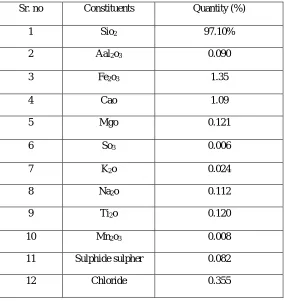
Table 5.0 Chemical Composition of Copper Slag Sr. no Constituents Quantity (%)
1 Sio2 97.10%
2 Aal2o3 0.090
3 Fe2o3 1.35
4 Cao 1.09
5 Mgo 0.121
6 So3 0.006
7 K2o 0.024
8 Na2o 0.112
9 Ti2o 0.120
10 Mn2o3 0.008
11 Sulphide sulpher 0.082
12 Chloride 0.355
D. Recycled aggregate
Large quantities of crushed concrete produced in India and elsewhere in the world. Owing to the increasing cost of landfill, the scarcity of natural resources coupled with the increase in aggregate requirement for construction, the use of recycled aggregate to partially replace the virgin aggregate has, therefore, become more common.
There have been a number of publications on the use of recycled aggregate in concrete. It was concluded that concrete strength decreases when recycled concrete was used and the strength reduction could be as low as 40%. However, no decrease in strength was reported for concrete containing up 20% fine or 30% coarse recycled concrete aggregates, but beyond these levels, there was a systematic decrease in strength as the content of recycled aggregates increased.
Table 6: Physical Properties of Natural Aggregate and Recycled Aggregate
SR.NO. PARTICULARS VALUES
Natural Aggregate Recycled Aggregate
1 Specific Gravity 2.6 2.50
2 Water Absorption 1.10% 0.3%
3 Bulk Density 1678.2 KN/m3 1469.8KN/m3
[image:4.612.102.512.527.706.2]cylinders were casted for tensile strength, for the flexural strength, the beam sized 500×100×100 were casted. The test specimens were remoulded after 24 hours of the casting and cured for the 3,7,28 days until they were tested.
A. S4.0 Mix Design
The concrete is designed for M30 grade and water cement ratio used for the experimental work is 0.44. The experiments were conducted by replacing sand by copper slag by 10 to 50%. The recycled aggregates were replaced in content of 5%,10%,15%,20% and 25% at the optimum content of copper slag at which it gives optimum strength.
IV. RESULTS AND DISCUSSION
[image:5.612.78.528.200.353.2]A. Compressive Strength Test
Figure 1.0 Cube Specimen Failure under Compressive Load
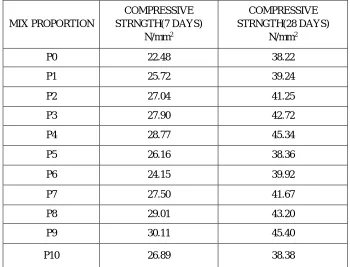
The compressive strength of concrete cubes is determined at ages 7 and 28 days and Table 7.0 shows the strength variation of the mix having conventional concrete and partial replacement of sand by copper slag and recycled aggregate. The test is conducted as per IS: 516-1999.
Table 7.0 Compressive Strength Variation
MIX PROPORTION
COMPRESSIVE STRNGTH(7 DAYS)
N/mm2
COMPRESSIVE STRNGTH(28 DAYS)
N/mm2
P0 22.48 38.22
P1 25.72 39.24
P2 27.04 41.25
P3 27.90 42.72
P4 28.77 45.34
P5 26.16 38.36
P6 24.15 39.92
P7 27.50 41.67
P8 29.01 43.20
P9 30.11 45.40
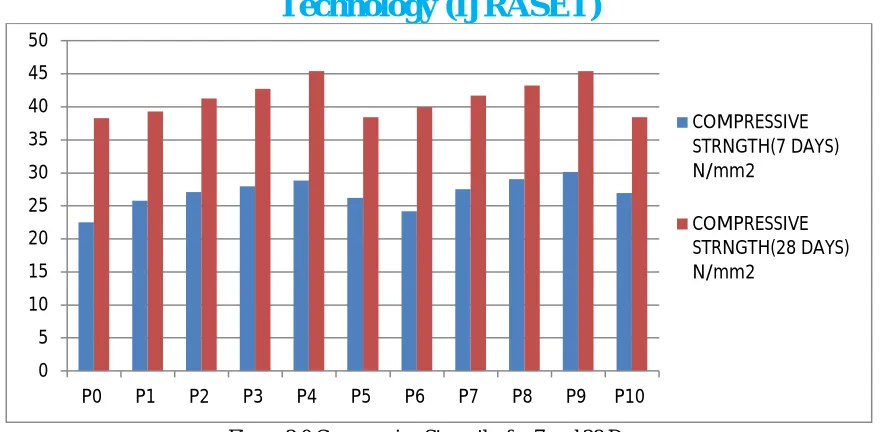
[image:5.612.141.491.445.712.2]Figure 2.0 Compressive Strengths for 7 and 28 Days
From the above graph, we can conclude there is a certain increase in the strength is noted by increasing amount of copper slag and recycled aggregate. By replacing 10% of sand by copper slag, it will result in increase of 2.66% in compressive strength of concrete. In same manner, by increasing 20%, 30%, 40% and 50% there is a increase in strength is 7.92%, 9.15%, 18.62% and 0.36%. By replacing recycled aggregates in proportion of 5%, the increase in strength is noted 2.85%. by increasing amount of recycled aggregate in proportion of 10%, 15%, 20%, and 25%, the strength will increase as 8.06%, 10.41%, 18.78% and 0.40% respectively. From both the graph, we can easily conclude that the proportion of 40% of copper slag gave the optimum strength and beyond it the strength reduced. By keeping copper slag amount constant of 40% and by adding recycled aggregate in proportion of 5%,10%,15%,20% and 25%, the proportion of 25% gave optimum strength. Thus, 40% of copper slag and 20% of recycled aggregates gave optimum strength than the other proportions
B. Tensile Strength Test
The split tensile strength is also measured for 7 days and 28 days for normal concrete and concrete containing copper slag and recycled aggregate. The results are shown as below:
Table 8.0 Tensile Strength Variation 0 5 10 15 20 25 30 35 40 45 50
P0 P1 P2 P3 P4 P5 P6 P7 P8 P9 P10
COMPRESSIVE STRNGTH(7 DAYS) N/mm2 COMPRESSIVE STRNGTH(28 DAYS) N/mm2 MIX PROPORTION SPLIT TENSILE STRNGTH(7 DAYS) N/mm2
SPLIT TENSILE STRENGTH (28 DAYS) N/mm2
P0 2.55 3.417
P1 2.57 4.98
P2 2.65 5.28
P3 2.79 5.53
P4 2.87 5.73
P5 2.61 5.60
P6 2.58 5.00
P7 2.67 5.30
P8 2.85 5.58
P9 2.90 5.75
Figure 3.0 Split Tensile Strength for 7 and 28 Days
C. Flexural Strength Test
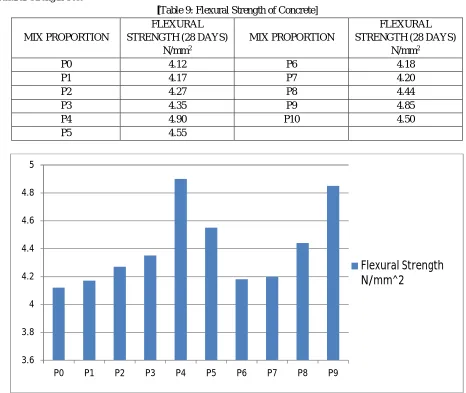
[Table 9: Flexural Strength of Concrete]
MIX PROPORTION
FLEXURAL STRENGTH (28 DAYS)
N/mm2
MIX PROPORTION
FLEXURAL STRENGTH (28 DAYS)
N/mm2
P0 4.12 P6 4.18
P1 4.17 P7 4.20
P2 4.27 P8 4.44
P3 4.35 P9 4.85
P4 4.90 P10 4.50
P5 4.55
Figure 4.0 Flexural Strength for 28 Days 0 1 2 3 4 5 6 7
P0 P1 P2 P3 P4 P5 P6 P7 P8 P9 P10
SPLIT TENSILE STRNGTH(7 DAYS) N/mm2
SPLIT TENSILE STRENGTH (28 DAYS) N/mm2 3.6 3.8 4 4.2 4.4 4.6 4.8 5
P0 P1 P2 P3 P4 P5 P6 P7 P8 P9
[image:7.612.69.535.303.696.2]V. CONCLUSION
Following remarks are concluded from the experimental work carried out for this research:
A. The workability of concrete increases by adding copper slag, as the water absorption rate of copper slag is lesser in comparison of fine aggregate. Thus, workability of concrete can be increased by adding copper slag.
B. By adding copper slag in various proportions, there is increase in strength is tto be noted.
C. Addition of copper slag of 40% of fine aggregate, gave optimum workability and gave more slump.
D. Due to high specific gravity of copper slag, the density of concrete increased as increasing the volume of copper slag by replacing fine aggregates.
E. Recycled aggregate also give strength to the concrete when added in certain proportion.
F. Addition of recycled aggregate of 20% gave optimum strength, and there is no major adverse effect on concrete due to recycled aggregate.
G. Due to high water absorption rate of recycled aggregate, there is a decrease in slump when RCA added in optimum proportion.
H. About 25%of recycled aggregate gave optimum strength to the concrete.
I. About 40% of copper slag also give more strength to the concrete in comparison of other proportional mixes.
J. There is increase in compressive strength, split tensile strength and flexural strength due to sand replacement by copper slag and recycled aggregate.
K. Due to using recycled aggregates and copper slag, it prove good at the point of environmental view.
L. By use of these material, its becomes easy to conserve the natural resources like sand and also its being solution of problem like dumping of such waste materials.
REFERENCES
[1] Alnuaimi, “Effects of Copper Slag as a Replacement for Fine Aggregate on the Behaviour and Ultimate Strength of Reinforced Concrete Slender Columns”, TJER, 2012
[2] Amnon Katz, “Properties of concrete made with recycled aggregate from partially hydrated old concrete”, Cement and Concrete Research, 2002
[3] Antonios Kanellopoulos, Demetrios Nicolaides, Micheal F. Petrou, “Mechanical and durability properties of concrete containing recycled lime powder and recycled aggregates”, Construction and Building material, Science Direct,2013
[4] Ashraf M. Wagih, Hossam Z. EI-Karmoty, Magda Ebid, Samir H. Okba, “Recycled construction and demolition concrete waste as aggregate for structural concrete”, Housing and Building National Research Center, 2012
[5] Belagraa Larbi, Meddah Abdelaziz, Beddar Miloud, “Study of the physico-mechanical properties of a recycled concrete incorporating admixtures by the means of NDT methods”, 7th Scientific-Technical Conference Material Problems in Civil Engineering
[6] Benito Mas, Antoni Cladera, Teodoro del Olmo, Francisco Pitarch “Influence of the amount of mixed recycled aggregates on the properties of concrete for non-structural use”, Construction and building material, Science Direct,2011
[7] Binaya Patnaik, Seshadri Sekhar.T, Srinivasa Rao, “Strength and Durability Properties of Copper Slag Admixed Concrete”, International Journal of Research in Engineering and Technology, 2012
[8] C.K. Madheswaran, P.S. Ambily, J.K. Dattatreya, N.P. Rajamane, “Studies on use of Copper Slag as Replacement Material for River Sand in Building Constructions”, ORIGINAL CONTRIBUTION, 2014
[9] C. Thomas, A. Cimentada, J.A. Polanco, “Influence of recycled aggregates containing sulphur on properties of recycled aggregate mortar and concrete”, Science Direct, 2012
[10] D. Brindha and S. Nagan, “Durability Studies on Copper Slag Admixed Concrete” Asian journal of civil engineering (building and housing), 2011
[11] Dr. A. Leema rose, P. Suganya, “Performance of Copper Slag on Strength and Durability Properties as Partial Replacement of Fine Aggregate in Concrete”, International Journal of Emerging Technology and Advanced Engineering, 2015
[12] Dr. K.Srinivasu, J.Usha Kranti, A.Nagasai, V.Saikumar, “A Study on Compressive Strength Properties and Effects of Copper Slag as Partial Replacement of Fine Aggregate in Concrete”, ELK Asia Pacific Journals-2013
[13] Jayapal Naganur1, Chethan B. A., “Effect of Copper Slag as a Partial Replacement of Fine Aggregate on the Properties of Cement Concrete”, International Journal of Research (IJR),2014
[14] Jianzhuang Xiao, Wengui Li, Yuhui Fan, Xiao Huang, “An overview of study on recycled aggregate concrete in China (1996-2011), Construction and Building material, Science Direct,2011
[15] Kazuhisa Yoda, Akira Shintani, “Building application of recycled aggregate concrete for upper-ground structural elements”, Construction and building material, Science Direct, 2014
[16] Kenn Jhun Kam, Mohd Zailan Sulieman, “Influence of the amount of recycled coarse aggregate concrete design and durability properties”, Construction and Building Material, Science Direct,2011
[17] M. Fadaee, R. Mirhosseini, R. Tabatabaei, M. J. Fadaee, ”Investigation on Using Copper Slag as Part of Cementitious Materials in Self Compacting Concrete”, Asian Journal Of Civil Engineering (Bhrc), 2014
towards sustainability in construction sector: A review”, Construction and building materials, Science Direct, 2014
[20] M. R. Amarnaath, S. Jaya Pradeep, R.A. Kavin, P. Dinesh, “ A Study on Effective Replacement of Fine Aggregate using Copper Slag”, International Journal of Science Technology & Engineering, 2015
[21] M. V. Patil, “A Study on Properties and Effects of Copper slag in Concrete”, International Journal of Engineering Trends and Technology, 2014 [22] Obinna Onuaguluchi, Ozgur Eren, “Cement Mixtures Containing Copper Tailings as an Additive: Durability Properties”, Materials Research. 2012 [23] Parekh D.N. and Dr. Modhera C.D. , “Assessment of recycled aggregate concrete”, Journal of engineering research and studies, 2011
[24] RILEM 121-DRG, Specification for concrete with recycled aggregates, Master Structure 27 (1994) 557– 559
[25] R R Chavan , D B Kulkarni, “Performance of Copper Slag on Strength Properties as Partial Replacement of Fine Aggregate in Concrete Mix Design”, International Journal of Advanced Engineering Research and Studies, 2012
[26] Sandeep Singla , “Study of a recycled concrete aggregates”, International Journal of Engineering Trends and Technology,2014 [27] Sunil, A.U. Ravishankar, Suresha S.N., S.M. Naik, “Recycled Aggregate Concrete”, The International Reviewer, 2014
[28] Tamil Selvi P, Lakshmi Narayani P, Ramya G, “Experimental Study on Concrete Using Copper Slag as Replacement Material of Fine Aggregate”, Civil & Environmental Engineering, 2014
[29] Thiele Geotech, “Recycled Aggregates in Infrastructure Construction”, Science Direct, Cement and Concrete Composites,1996
[30] Wojciech Kubissa, Roman Jaskulski, Artur Koper, Jacek Szpetulski, “Properties of concretes with natural aggregate improved by RCA addition”, 7th Scientific-Technical Conference Material Problems in Civil Engineering, 2015