International Journal of Emerging Technology and Advanced Engineering
Website: www.ijetae.com (ISSN 2250-2459, ISO 9001:2008 Certified Journal, Volume 7, Issue 6, June 2017)
85
A New modified Threshold Sensitive Distributed Energy
Efficient Clustering Routing Protocol Heterogeneous for
Wireless-Sensor Networks
Tankala Srinivasa Rao
1, Gudla Sateesh Kumar
2, Sanapala Umamaheswararao
3 1,2,3Electronics and Communication Engineering Department, AITAM, Tekkali, IndiaAbstract— Wireless Sensor Network (WSN) is a wireless network consisting of small nodes with sensing, computation, and wireless communications capabilities. Each sensor collects data from the monitored area (such as temperature, sound, vibration, pressure, motion or pollutants). Then it routs data back to the base station BS. Data transmission is usually a multi-hop, from node to node toward the base station. As wireless sensor networks consist of hundreds of thousands of low-power multi functioning sensor nodes, operating in an unattended environment, with limited computational and sensing capabilities. Sensor nodes are equipped with small, often irreplaceable batteries with limited power capacity. WSN consist of hundreds or thousands of small, cheap, battery-driven, spread-out nodes bearing a wireless modem to accomplish a monitoring or control task jointly. An important concern is the network lifetime: as nodes run out of power, the connectivity decreases and the network can finally be partitioned and become functional several routing protocols have been proposed to improve the effective lifetime of a network with a limited energy supply. In TDEEC protocol for heterogeneous WSN most prominent technique compared to other state-of-art-techniques.
Keywords— Wireless Sensor Network, Routing Protocol, Network Lifetime, Clustering.
I. INTRODUCTION
Wireless sensor Network (WSN) could be a reasonably self-configuring network composed of a set of wireless sensor nodes additionally referred to as motes. The period of WSN is restricted as a result of the sensor node works on battery life and it's arduous to recharge the battery at regular basis attributable to the preparation of wireless sensor network in remote and hostile places. The energy price is additional in term of transmission information than process data. In order to prolong the network time period, a network routing protocol with high energy efficiency is necessary besides coming up with low-power sensor nodes. A current analysis challenge is to develop low-power communication with affordable on-node process a self-organized connectivity/protocols.
Several protocols were developed to form the communication energy-effective to prolong the lifetime of the networks. These protocols were totally different in however they improve the communication and transmission of the packets in the network however they all based on clustering approach in the network. The homogenous protocol (due to same initial energies of all nodes).
LEACH that considered all nodes of same energy used the probabilistic approach to elect the cluster head and the chance of selecting the cluster head decides once how many rounds a node may be once more cluster head. How -ever this approach doesn't guarantee for a high energy node to be cluster head.
PEGASIS was proposed to do cluster free routing. during this device nodes kind a series, they transmits and receives data from a neighbour, neighbour node is selected on the premise of energy status and only one from that chain transmit data to the bottom station. during this a device node should recognize the energy status of its neighbours in order to route its data, such topology adjustment will introduce significant overhead for extremely utilized networks.
After these homogeneous, a heterogeneous protocol came, stable election routing protocol which divided the network into two types of nodes having completely different energy normal and advanced nodes. The probabilistic method of selecting the cluster heads is completely different for these two types of nodes. These possibilities are based on their energies. This was done to enhance the stability period (the time once first node dies) of the network and to increase the life. Several enhanced versions of stable election routing protocol routing schemes were proposed like ESEP, ZSEP etc.
International Journal of Emerging Technology and Advanced Engineering
Website: www.ijetae.com (ISSN 2250-2459, ISO 9001:2008 Certified Journal, Volume 7, Issue 6, June 2017)
86
Another Protocol, DEEC took the concept of residual energy and average energy of the network in electing the cluster heads with existing heterogeneity of the nodes and with success improved the routing in network. several versions of DEEC were explored which improved it any such as DDEEC and EDEEC.DDEEC uses same technique for estimation of average energy within the network and CH selection algorithm supported residual energy as utilized in DEEC. DDEEC introduces threshold residual energy and once energy level of advanced and normal nodes falls right down to the limit of threshold residual energy then each type (normal and advanced) of nodes use same likelihood to become cluster head. EDEEC that was enhanced version of DEEC proposed to insert another node within the network (super node) with the present normal and advanced nodes that raised the heterogeneity and lifetime also. it's been evaluated therein DDEEC has low stability period, time period and throughput as compared to the EDEEC. so EDEEC act as motivating issue to work on and improve it further.
TEEN that was A New Modified Threshold Sensitive Distributed Energy Efficient Clustering Routing Protocol For Heterogeneous For WSN reactive protocol proposed scheme to minimize the transmission time as transmission consume more energy than processing of information at the nodes. This was done to impart two threshold parameters, hard and soft threshold. A node only transmit when presently sensed value is larger than hard threshold and difference between current perceived and previous sensed value is larger than soft threshold .This protocol may be a kind improvement technique which might optimize the communication during a smart manner.
A new distributed algorithm named scalable energy efficient clustering hierarchy (SEECH), which selects CHs and relays separately and based on nodes eligibilities. In this way, high and low degree nodes are, respectively, employed as CHs and relays. In only a few past researches, CHs and relays are different, but their goal was mainly mitigation of CHs energy burden which is intrinsically satisfied by the SEECH mechanism. To consider uniformity of CHs to balance clusters, SEECH uses a new distance-based algorithm.
In this paper worked on LEACH, SEP, Z-SEP, SEECH and TDEEC, and successfully approached to make use of the best of these protocols and our protocol TDEEC successfully improved the stability period and throughput of the network which ultimately enhanced the life of the network.
II. ROUTING PROTOCOL
A routing protocol specifies how routers communicate with each other, disseminating information that enables them to select routes between any two nodes on a computer network. Routing algorithms determine the specific choice of route. Each router has a priori knowledge only of networks attached to it directly. A routing protocol shares this information first among immediate neighbors, and then throughout the network. This way, routers gain knowledge of the topology of the network. In this section we describe some routing protocols.
A New Modified Threshold Sensitive Distributed Energy Efficient Clustering (TDEEC)
Our approach is minimize transmission time in the network. The basic theory is that clustering is done because the nodes which are clustered have a sensed data which vary in very insignificant amount. So cluster head in a cluster when take the data from their members is similar in nature. Cluster heads have to send similar type of data again and again to base station which is time consuming and wastage of energy by the cluster heads. This concept was explored in detail in TEEN which imposed two thresholds hard and soft threshold which optimized the communication and prolong the life of the network. We tried to use the optimization Protocol TEEN on enhanced version of DEEC i.e. EDEEC. But we according to our scheme we first increased the stability period by introducing a new node ―super advanced‖ in our network. Introducing a node increased the heterogeneity to level four but thing is that it is not using nodes having energy more than super nodes as in EDEEC. So nodes are in our scheme are
Normal nodes: E0
Advanced nodes: E0 (1+a)
Super nodes: E0 (1+b)
Super advanced nodes: E0
(1+c)
International Journal of Emerging Technology and Advanced Engineering
Website: www.ijetae.com (ISSN 2250-2459, ISO 9001:2008 Certified Journal, Volume 7, Issue 6, June 2017)
87
Here is probability of choosing the cluster heads inthe network so a node become eligible for cluster head again after 1/p0 rounds. So average no of cluster heads should be if n is total no of nodes. In our scheme nodes are distributed according to constant m and m0 and nodes are:
Normal nodes = (1 –
m
)
n
Advanced nodes = (1 –
m
0)
m
n
Super nodes = (
m
0
m
n
) /2Super advanced nodes =
(
m
0
m
n
)/2Therefore total energy of the network in a round is
E0
(1 –m
)
n
+ E0(1 + a)
(1 –
m
0)
m
n +E0(1+b)
2
0
m
n
m
+ E0(1 + C) *
2
0
m
n
m
=
n
E0 (1 + a
m
–m
m
0
(a – (2
c
b
)) (1)
So, weighed probabilities of different nodes are
norm
p
=))
2
(
(
0
1
(
a
m
m
m
a
b
c
p
opt
advp
=))
2
(
(
*
0
1
(
)
1
(
c
b
a
m
m
m
a
a
p
opt
erp
sup =))
2
(
(
*
0
1
(
)
1
(
c
b
a
m
m
m
a
b
p
opt
sadvp
=))
2
(
(
*
0
1
(
)
1
(
c
b
a
m
m
m
a
c
p
opt
(2)Ultimately our new threshold for deciding the cluster heads election is as:
T (i) =
0
))
1
mod(
(
1
))
1
mod(
(
1
))
1
mod(
(
1
))
1
mod(
(
1
su p su p su psa d v sa d v
sa d v
er er
er
a d v a d v
a d v
n o rm n o rm
n o rm
p
r
p
P
p
r
p
P
p
r
p
P
p
r
p
P
(3)International Journal of Emerging Technology and Advanced Engineering
Website: www.ijetae.com (ISSN 2250-2459, ISO 9001:2008 Certified Journal, Volume 7, Issue 6, June 2017)
88
In our scenario we have simulated our network as temperature sensing wireless sensor network and hard Threshold is taken as 100 (in degree Celsius). Also, we are using the term data for the temperature sensed by the nodes. The sensed value is stored as a variable in the node, called effective sensed value(SV). The nodes will next transmit data only when the following conditions are met:1. The current value of the sensed data (CV) is greater than the hard threshold.( CV>h) and
2. The current value of the sensed attribute (CV) differs from SV by an amount equal to or greater than the soft threshold (diff=CV-SV).
Whenever a node transmits data, SV become the current value of the sensed attribute. Here, in this scheme we have taken s=2(in degree Celsius). These thresholds are making our scheme to work in reactive way as TEEN as Transmission is not periodically as in LEACH, SEP. The transmission of data is done after receiving the value and applying the thresholds. So data is sent in a non-periodically fashion according to importance of the sensed data. Thus our scheme TDEEC optimized the communication in the networks and makes the communication energy-efficient.
III. SIMULATION PAPRAMETERS
In order to appraise the performance of our proposed protocol, we simulated our protocol using MATLAB. We consider a wireless sensor network with 100 nodes distributed randomly in 100m X 100m field. A gateway node is deployed at the Centre of the sensing field. The BS is located far away from the sensing field. Both gateway node and BS are stationary after deployment. We consider packet size of 5000 bits
Table1: The radio parameters
Param eters
Value
Initial Energy Eo
0.5J
Initial Energy of advanc ed nodes
0,1J
Energy for data aggreg ation
50 pj/bit/sign al
Numbe r of nodes
100
Packet size
5000bit
Transm ission and receive r electro nics
50nj/bit
Transm itter amplifi er
International Journal of Emerging Technology and Advanced Engineering
Website: www.ijetae.com (ISSN 2250-2459, ISO 9001:2008 Certified Journal, Volume 7, Issue 6, June 2017)
89
IV. RESULTS &DISCUSSIONS [image:5.612.325.561.133.352.2]no.of rounds
Fig 1. Alive Nodes
The result of tdeec x-axis for Number of rounds and y-axis for Alive nodes
[image:5.612.49.288.142.325.2]no.of rounds
Fig 2. Dead Nodes
The result of tdeec x-axis for Number of rounds and y-axis for Dead nodes
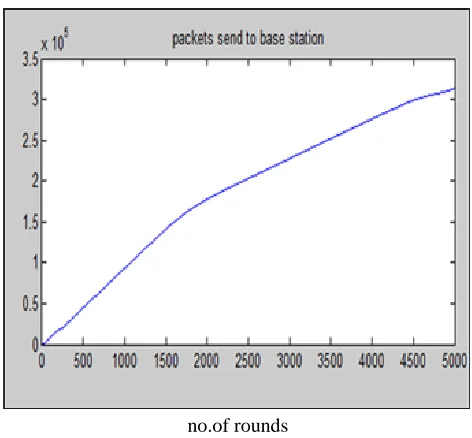
[image:5.612.48.286.368.558.2]no.of rounds
Fig 3. Packets data sending to base station.
The result of tdeec x-axis for number Of rounds y-axis for packets send to base station
Fig 4.network parameter of tdeec
[image:5.612.325.560.404.578.2]International Journal of Emerging Technology and Advanced Engineering
Website: www.ijetae.com (ISSN 2250-2459, ISO 9001:2008 Certified Journal, Volume 7, Issue 6, June 2017)
90
Table 2:
Comparison of energy efficient- routing protocol at 5000 rounds
V. CONCLUSION
In this paper, we presented a more optimized routing scheme for WSNs. Main focus was to enhance cluster-head selection process. In this, our proposed strategy (TDEEC), stability period of network and life time has been optimized. Simulation results show that there is significant improvement in all these parameters when compared with some of the existing routing protocols e.g., SEP, Z-SEP,LEACH, SEECH and DEEC.
REFERENCES
[1] W.Heinzelman, A. Chandrakasan, and H.Balakrishnan, "Energy-efficient communication protocol for wireless sensor networks," in the Proceeding of the Hawaii International Conference System Sciences, Hawaii, January 2000.
[2] W.R. Heinzelman, A.P. Chandrakasan, H. Balakrishnan, ―An applicationspecific protocol architecture for wireless microsensor networks‖, IEEE Transactions on Wireless Communications 1 (4) (2002) 660-670.
[3] Lindsey S,Raghavenda CS.PEGASIS : Power efficient gathering in sensor informationsystems[C].Williamson DA.Proc of the IEEE Aerospace Conf.New York:IEEE Press,2002:1125-1130.
[4] G. Smaragdakis, I. Matta, A. Bestavros, ―SEP: A Stable Election Protocol for clustered heterogeneous wireless sensor networks‖, in: Second International Workshop on Sensor and. Actor Network Protocols and Applications (SANPA 2004), 2004.
[5] Aderohunmu, F.A. and Deng, J.D., ―An Enhanced Stable Election Protocol (ESEP) for Clustered Heterogeneous WSN‖.
[6] S.Faisal,N.aid, A. Javaid, M. A. Khan, S. H. Bouk and Z. A. Khan, ―Z-SEP: Zonal-Stable Election Protocolw‖ Journal of Basic and Applied Scientific Research (JBASR), 2013.
[7] L. Qing, Q. Zhu, M. Wang, "Design of a distributed energy-efficient clustering algorithm for heterogeneous wireless sensor networks". ELSEVIER, Computer Communications 29, 2006, pp 2230- 2237. [8] Elbhiri, B. , Saadane, R. , El Fkihi, S. , Aboutajdine, D. ―Developed
Distributed Energy-Efficient Clustering (DDEEC) for heterogeneous wireless sensor networks‖, in: 5th International Symposium on I/V Communications and Mobile Network (ISVC), 2010.
[9] Mehdi Tarhani, Yousef S. Kavian, and Saman Siavoshi, ―SEECH: Scalable Energy Efficient Clustering Hierarchy Protocol in Wireless Sensor Networks‖IEEE Sensors Journal, Vol. 14, No. 11, November 2014
Protocol No of Alive Nodes
No of Dead Nodes
No of Packets Sent To Base Station
LEACH 3 98 1.987e+04
SEP 0 100 2.567e+04
DEEC 4 97 2.244e+05
SEECH 18 84 3.225e+04