International Journal of Emerging Technology and Advanced Engineering
Website: www.ijetae.com (ISSN 2250-2459, ISO 9001:2008 Certified Journal, Volume 7, Issue 6, June 2017)
294
Analysis of Extended Security Model based on Smart Card
using Anonymous Two Factor Authentication Key Exchange
Protocol
Amit Manjhi
1, Pradeep Kumar Mishra
2, Saurabh Jain
31M.Tech Scholar, 2Assistant Professor, 3Assistant Professor, Department of Computer Science Engineering, OCT, Bhopal, India
Abstract- In this paper we initiate the analysis of twin specific or particular or especially security threats (means of declaration of an intention or a determination to inflict harm on another) on smart card based password authentication (or authorization processing) in distributed systems. Smart-card-based password authentication is one amongst the foremost usually used security mechanisms to see the identity of a distant consumer, who should hold a legitimate smart card and also the corresponding password to hold out a prospering authentication with the server. The authentication is typically integrated with a key establishment protocol and yields smart-card-based password-authenticated key agreement. Victimize two recently planned protocols as case studies, we tend to demonstrate two new forms of adversaries with sensible card: Adversaries with pre-computed information hold on within the smart card, and Adversaries with totally different or completely different information (with relation to different time slots) hold on within the smart card. These threats, although realistic in distributed systems, haven't been studied within the literature. Additionally, to imply the vulnerabilities, we tend to propose the countermeasures to thwart the safety threats and secure the protocols.
Keywords: Smart Card, Random Key Generation, Two-PAKE, Online Dictionary Attack, Offline Dictionary Attack, Session Key, Authentication and Authorization.
I. INTRODUCTION
In any electronic transaction twat document in the two parties or more than two parties don’t want to trust each other or each other transactions that are why a type of signing protocol is needed in the situation which is known as a normal language a contract signing protocol. The contract signing is easy in paper based model due to existence of simultaneous. Two parties hard copy of the same contract are approved or signed by the both the parties at the same time and at the same place. After the contract signing both of them are approved on that document. So, if one of them do not agree on that document or contract then the other one is must provide the signed document in the court. Now a day’s many business oriented application or business uses the electronic transactions, for electronic transactions we are using key transfer protocol.
When we talk about paper based contract then the signing on that document is very necessary and both the person have sign on that document at the same time and same place. If both the parties are unable to meet for signing on the contract, then the scheme electronic signing contract is the next alternative. When both the parties having lack of trust then this scheme which is known as electronic contract signing is totally fail. Many time one party or one user may send their electronic signature to other party but in many ways the other person or party may not return the signature to other party. For solving this problem, we are using group key establishment scheme. With the help of this scheme we can establish a common session key which is known by only the authorized group member but no other for communication. For this we are using key transfer protocol. In this protocol we are using key generation center (KGC) which is generate session keys for communication.
Long time ago, we were providing authentication with the physical appearance of person and by their signature manually, but now a day’s different techniques were implemented. One of them is contracts signing. Contract signing is very important protocol by which we can exchange our data by online. So with the help of this technique we can prevent different attack so the solution is implemented a new scheme or new protocol which is more efficient and more secure and preventing from different attacks which can be used in a variety of applications especially in E-commerce. This technique allows an efficient signing between two parties such that the chances of attacks reduce. The technique is based on trusted third party so that the chances of eavesdropping are less. The technique is based on one time where after signing contract between parties the key destroys.
International Journal of Emerging Technology and Advanced Engineering
Website: www.ijetae.com (ISSN 2250-2459, ISO 9001:2008 Certified Journal, Volume 7, Issue 6, June 2017)
295
The protocol itself is relatively simple find computationally efficient. For secure communication we can maintain Third Trusted Party which always be online which is more expensive. Now TTP which was used as online .it become offline and we can easily maintain offline TTP, which also provide secure exchange of information [1]. This protocol is not practical for large amount of communication involved. In authorized exchange protocol with an online TTP, a TTP must be involved in all exchange and it must be presence in entire communication. This protocol is very simple and computationally efficient. But maintain on line TTP is very costly and expensive.A smart card, chip card, or integrated circuit card (ICC) is any pocket-sized card that has embedded integrated circuits. Smart cards are made of plastic, generally polyvinyl chloride, but sometimes polyethylene terephthalate based polyesters, acrylonitrile butadiene styrene or polycarbonate. Since April 2009, a Japanese company has manufactured reusable financial smart cards made from paper.
Smart cards can be either contact or contactless smart card. Smart cards can provide personal identification, authentication, data storage, and application processing. Smart cards may provide strong security authentication for single sign-on (SSO) within large organizations.
Design of Smart Card
A smart card may have the following generic characteristics:
Dimensions similar to those of a credit card. ID-1 of the ISO/IEC 7810 standard defines cards as nominally 85.60 by 53.98 millimeters (3.37 in × 2.13 in). Another popular size is ID-000 which is nominally 25 by 15 millimeters (0.98 in × 0.59 in) (commonly used in SIM cards). Both are 0.76 millimeters (0.030 in) thick.
Contains a tamper-resistant security system (for example a secure crypto-processor and a secure file system) and provides security services (e.g., protects in-memory information).
Managed by an administration system which securely interchanges information and configuration settings with the card, controlling card blacklisting and application-data updates.
Communicates with external services via card-reading devices, such as ticket readers, ATMs, DIP reader, etc.
There are four types of smart card and these are as follows:
1. Contact Smart Card 2. Contact-less Smart Card 3. Hybrid
4. USB
II. RELATED WORKS
In this section we present the conclusion results of existing Authentication techniques for network security or security providing in data sharing. Password authentication based smart card technique in a very popular and computationally expensive task.
The paper [2] proposed an Anonymous Two-Factor AKE scheme which preserves security against various attacks including de-synchronization attack, lost-smart-card attack and password guessing attack, and supports several desirable properties including perfect forward secrecy, anonymity or un-traceability, adaptively password change, no centralized password storage, and no long-term public key. Furthermore, our protocol maintains high efficiency in terms of storage requirement, communication cost as well as computational complexity. Our protocol requires only a few number of message flows and all the transmitted messages are short in size. Additional, the proposed scheme is provably secure in our extended security model of AKE. Therefore, the proposed scheme is suitable for deployment in various low-power networks, in particular, the pervasive and mobile computing networks.
The paper [3] presented with the increasing trend of web services and apps, users are able to access these applications anytime and anywhere with various devices. In order to protect users’ digital property, authentication is required every time they try to access their personal account and data. However, conducting the authentication process in public might result in potential shoulder surfing attacks. Even a complicated password can be cracked easily through shoulder surfing. Using traditional textual passwords or PIN method, users need to type their passwords to authenticate themselves and thus these passwords can be revealed easily if someone peeks over shoulder or uses video recording devices such as cell phones.
International Journal of Emerging Technology and Advanced Engineering
Website: www.ijetae.com (ISSN 2250-2459, ISO 9001:2008 Certified Journal, Volume 7, Issue 6, June 2017)
296
Furthermore, they implemented a Pass Matrix prototype on Android and carried out user experiments to evaluate the memorability and usability. The experimental result showed that users can log into the system with an average of 1.64 tries (Median=1), and the Total Accuracy of all login trials is 93.33% even two weeks after registration. The total time consumed to log into Pass Matrix with an average of 3.2 pass-images is between 31.31 and 37.11 seconds and is considered acceptable by 83.33% of participants in our user study. Based on the experimental results and survey data, Pass Matrix is a novel and easy-to-use graphical password authentication system, which can effectively alleviate shoulder-surfing attacks. In addition, Pass Matrix can be applied to any authentication scenario and device with simple input and output capabilities. The survey data in the user study also showed that Pass Matrix is practical in the real world.The paper [4] they presented the cryptanalysis of Wen and Lis an improved dynamic ID based remote user authentication scheme with key agreement, and identified its vulnerability. To overcome the security problems, we proposed improved scheme. Through security analysis, we have explained that, our scheme gives protection from all pointed weaknesses. By performance analysis, we compare the computation cost of our scheme with Wen and Li's scheme and illustrated that our scheme reduces 6 hash function, than their scheme. Hence our scheme is more efficient, particularly for user privacy, amplified security and low computation capability.
This paper [5] revisited the security of two password authenticated key agreement protocols using smart cards. While they were assumed to be secure, we showed that these protocols are flawed under their own assumptions respectively. In particular, we took into account some types of adversaries which were not considered in their designs, e.g., adversaries with pre-computed data stored in the smart-card and adversaries with different data (with respect to different time slots) stored in the smartcard. These adversaries represent the potential threats in distributed systems and are different from the commonly known ones, which we believe deserve the attention from both the academia and the industry. We also proposed the solutions to fix the security flaws. Once again, our results highlight the importance of elaborate security models and formal security analysis on the design of password-authenticated key agreement protocols using smart cards.
They propose [6] a general construction for KE protocols using smart card and password. The KE protocols generated from our construction can be used in various public key environments as a basic module.
This new construction also satisfies the AKE security mentioned by Bellare, so that it can resist several attacks including off-line dictionary attack, while many other protocols can’t. Applying our construction to the Diffie-Hellman integrated encryption scheme (DHIES) mentioned by M. Abdalla et al., a KE protocol can be obtained, which has not only better security properties, but also better computational efficiency in storage cost and operation time.
III. PROPOSED METHODOLOGY
In the Proposed methodology improved the security at every Phases like registration Phase, Login Phase, Password changing phase and Session Key Generation phase. NETBEANS IDE 8.1used as simulation tool to develop the all the phase and provide Security. In the existing work there are many attack which can successfully Uncover the password chosen by the user offline-dictionary attack and online dictionary attack.
Security Analysis and Improvement
This section describes two types of attacks on proposed scheme, both of which can successfully uncover the password chosen by the user.
A.Offline-Dictionary attacks with Smart Cards
The smart card contains the public parameter IM and a private parameter V. As discussed in here, an adversary cannot directly use V = h(ID||KS) ⊕ h(PW) to corrupt the user U’s authentication session. This is due to the fact that V does not provide any useful information about the password PW, if the server’s secret key KS is selected from a large domain. In other words, the information V alone does not help the adversary to verify the guess of a user’s password. The question arises: With two (or more) Vs generated at different times, whether or not the adversary can uncover the user’s password?
Attacking Scenario.
In this section, we address the attacking scenario as follows.
1)At time T1, the user invokes the password changing phase to change the password to PW1.
International Journal of Emerging Technology and Advanced Engineering
Website: www.ijetae.com (ISSN 2250-2459, ISO 9001:2008 Certified Journal, Volume 7, Issue 6, June 2017)
297
3)A passive attacker with smart card (defined in Section3.1) can obtain the data in the smart card at time T1 and T2.
We note that such an adversary is stronger than that considered here, where the adversary can obtain the information in the smart card but only once. If the adversary can capture the information in the smart card once, we believe the adversary can also do it for the second time. As an example, one can obtain the information in the smart card via an illegal card reader. This could occur more than once without the awareness of the smart card owner (e.g., the attacker could steal the smart card and send it back after extracting the data stored in the smart card). In the above attacking scenario, the other assumption is that the user will change the password at least twice? We believe this is also a reasonable assumption as changing password on a regular basis has been regarded as one of good password habits.
This completes the description of the attacking scenario we are concerned about, which we believe falls into the category of passive attacker with smart card defined in Section 3.1. It remains to show how to extract the two passwords (PW1, PW2) with (V1, V2).
how does the attack work?
(V1, V2), the adversary can XOR V1 and V2 to obtain the equation
V1⊕ V2 = h(PW1) ⊕ h(PW2).
This enables the adversary to verify the guess of PW1 and PW2, where PW1 is an old password at time T1 and PW2 is the current password at time T2.
Success Probability.
We now consider the success probability that an adversary can find (PW1, PW2) in the above attacking scenario. We will show that the success probability (in general) is at least 1 –
, where SIZEPW is the size of the password dictionary and SIZEh is the size of the output domain of the hash function h. In a concrete case, the adversary can find (PW1, PW2) with probability almost 1. The detail of our analysis is given as below.
1) By testing all password pairs in the password dictionary, the adversary will find at least one pair (pw1, pw2) such that
V1 ⊕ V2 = h(pw1) ⊕ h(pw2). (1)
2) If there is only one pair satisfying Equation. (1), it must be (PW1, PW2) and the adversary thus successfully finds the user’s passwords.
3) The adversary, however, could find two or more password pairs using Equation. (1). We now consider the probability that there is only one pair satisfying Equation. (1) in the password dictionary.
4) For any two different passwords pw1 and pw2 in the password dictionary, we define
Ɛ1: {pw1, pw2} ≠ {PW1, PW2} and Ɛ2: h(pw1) ⊕ h(pw2) ≠ V1⊕ V2.
Then, Pr[Ɛ1|Ɛ2] is the probability that there is only one pair (PW1, PW2) satisfying Equation. (1), i.e., Pr[Ɛ1|Ɛ2] is the adversary’s success probability to find (PW1, PW2). 5) Let SIZEPW be the size of the password dictionary, and let SIZEh be the size of the output domain of the hash function h.
6) In the password dictionary,
a) For any password pw1 {PW1, PW2 }, the probability that there is another password pw2
such that h(pw2) = V1 ⊕ V2 ⊕ h(pw1) is at most SIZEPW/SIZEh (assuming the output of h is uniformly distributed). Therefore, for any password pw1 {PW1, PW2},
Pr[Ɛ2| Ɛ1] ≥1 − SIZEPW/SIZEh.
b) Otherwise, pw1 ∈ {PW1, PW2} but pw2∈ {PW1, PW2} (since pw1 and pw2 are two different passwords, and {pw1, pw2} _= {PW1, PW2}). We first suppose pw1 = PW1. In this case, the probability that there is another password pw2∈ {PW1, PW2}
such that h(pw2) = V1⊕V2⊕h(pw1) = H(PW2) is at most SIZEPW/SIZEh (assuming the output of h is uniformly distributed). Similarly, for the other case when pw1 = PW2, the probability that there is another password pw2∈ {PW1, PW2} such that h(pw2) = V1⊕V2⊕h(pw1) = H(PW1) is at most SIZEPW/SIZEh (assuming the output of h is uniformly distributed). Therefore, for any password pw1 ∈ {PW1, PW2},
Pr[Ɛ2|Ɛ1] ≥ 1 − SIZEPW/SIZEh.
Thus, in either case,
Pr[Ɛ2|Ɛ1] ≥ 1 –
7) We now consider a concrete case. Let the password dictionary consists of 8-character
passwords of digits and mixed-case letters, and the hash
function h is SHA-256. In this
case,SIZEPW=628=218340105584896,SIZEh=2256=1157920 89237316195423570985008687907853269984665640564
039457584007913129639936, and 1 −
International Journal of Emerging Technology and Advanced Engineering
Website: www.ijetae.com (ISSN 2250-2459, ISO 9001:2008 Certified Journal, Volume 7, Issue 6, June 2017)
298
In other words, the adversary can find the passwords (PW1, PW2) with probability almost 1 in this case.This completes the analysis of Sun et al.’s scheme under a passive attacker with smart card. We have shown that such an adversary can successfully uncover the passwords chosen by the user with overwhelming probability.
B.Online-Dictionary attacks with Smart Cards
An adversary with the Smartcard = {IM, V} can also break the protocol in via an online-dictionary attack. We first outline the active attacker with smart card and then provide the detail description.
The adversary first extracts {IM, V} in the smart card. Then, the adversary inserts the card in the card reader and sends a log-in request on behalf of the user (by inputting a randomly chosen password in a password dictionary). After that, the adversary can uncover the user’s password using the response from the server. As in offline-dictionary attacks, we assume again that the user’s password is chosen by him/her via the password change phase, rather than the initial one selected by the server. In other words, the password is chosen from a human-memorable domain. The detail of the attack is given below.
Online-Dictionary Attack
1) The adversary first chooses a random number rC from the interval [1, n − 1], and calculates GC = rc × G.
2) The adversary sends (IM, Gc) to the Server. Here, IM is stored in the
Smartcard = {IM, V}.
3) The decryption of IM will be correct, and the server will respond with {Ms, Gs}, where
GS = rs × G, rs is randomly chosen in [1, n − 1], MS = h2(Ksu ||Gc || Gs), and
KSU = h1(h (ID||KS )||(rs × GC)).
4) Upon receiving {MS, GS}, the adversary chooses a password pw in the password dictionary and calculates V `= V ⊕ h(pw), K`= h1 (V||rc × Gs).
(3. In this case, the adversary (most likely) will not log in successfully, but only one failed log-in attempt will not lead to the lock out of user’s account.)
Recall that V is stored in the smart card as well.
5) If the guess of the password is correct, then Ms = h2(K ||Gc||Gs).
Otherwise, the adversary repeats the calculation at Step. 4 with another password in the dictionary.
6) There is only one correct password in the dictionary, assuming the hash function is collision resistant.
7) The adversary, with the correct password, can either proceed with the remaining steps in the authentication phase or invoke the password-change phase. This completes the analysis of Sun et al.’s scheme under online-dictionary attacks with the smart card. We have shown that an active attacker with smart card can successfully find the user’s password using the response from the server. Note that the attacker described above does not log on the server by trying every possible password for a specific user, and is different from the common online-dictionary attacker. More precisely, the adversary described above mounts online-dictionary attacks in a more active way.
IV. RESULT ANALYSIS
In this section of paper discuss the outcomes of our proposed mechanism for system which are protected from both attacks i.e. online dictionary attack and offline dictionary attack. That security analysis done with the help of Net-Beans graphical user interface. On this platform shows the all the phase which have used in our system propose two factor password authentication based smart card system.
A. Registration Phase:
International Journal of Emerging Technology and Advanced Engineering
Website: www.ijetae.com (ISSN 2250-2459, ISO 9001:2008 Certified Journal, Volume 7, Issue 6, June 2017)
299
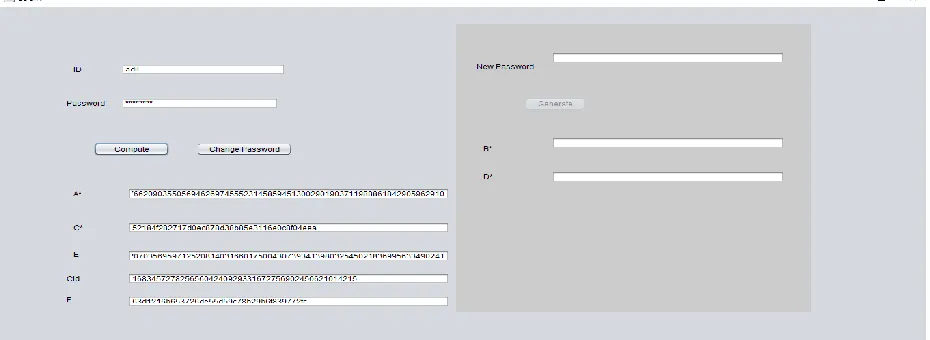
Figure 1. Shows that the message of a smart card has made by Server
B. Login Phase
In login phase only registered user can login which have a valid smart card.
[image:6.612.84.526.136.327.2]If user want to login, then user have to insert valid smart card and then user have to enter valid user id and password.
Figure 2. Shows that Registered User Computational process
C. Password Change Phase
In password change phase only registered user can change password which have a valid smart card.
[image:6.612.73.538.399.569.2]International Journal of Emerging Technology and Advanced Engineering
Website: www.ijetae.com (ISSN 2250-2459, ISO 9001:2008 Certified Journal, Volume 7, Issue 6, June 2017)
[image:7.612.76.537.138.349.2]300
Figure 3. Shows that Generate New Computation key according new password
D. Session key Generation
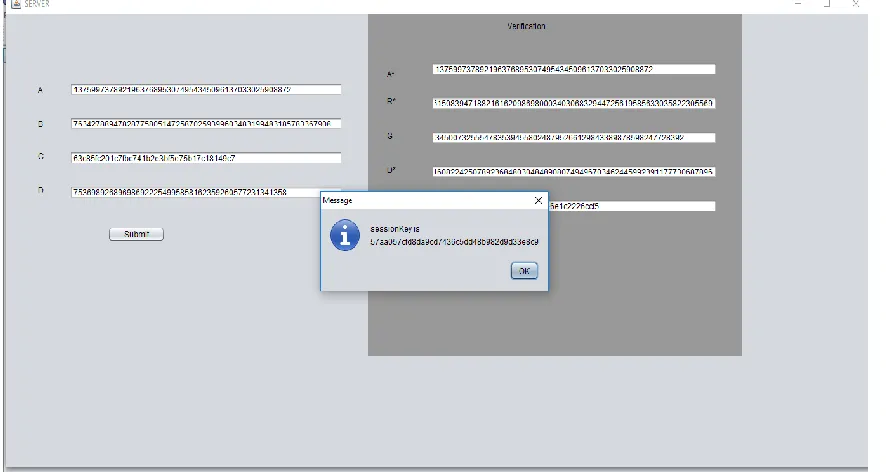
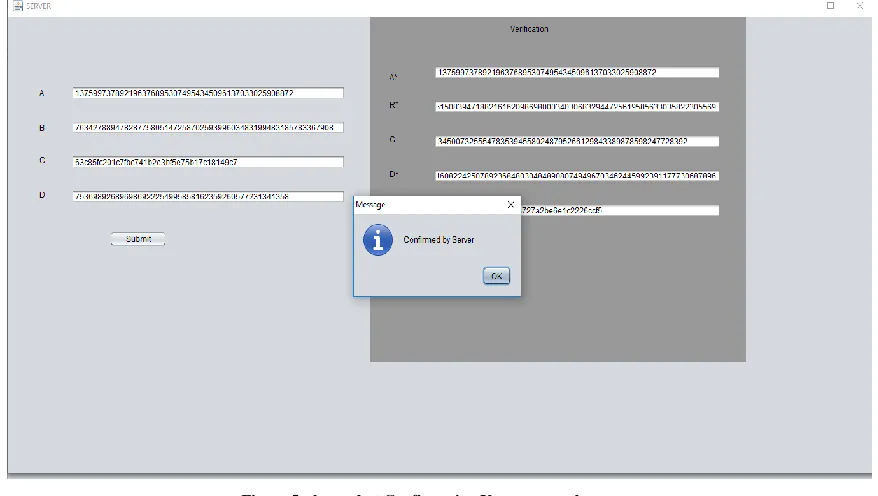
In session key generation phase server verifies the user’s unique id and password and relevant data which have entered by the user in the login phase.
If user id and password are correct and all the relevant data are valid or authenticate then server create a random key which is called a session key and server authorize(confirm) the user to do transaction.
[image:7.612.88.531.437.673.2]International Journal of Emerging Technology and Advanced Engineering
Website: www.ijetae.com (ISSN 2250-2459, ISO 9001:2008 Certified Journal, Volume 7, Issue 6, June 2017)
[image:8.612.85.525.132.675.2]301
Figure 5. shows that Confirmation User process by server
V. COMPARISION WITH EXISTING METHOD
Table 1.
Prevention from Various Attacks
Attack Existing Scheme(attack
prevention)
Our Scheme(attack prevention)
Replay attack No Yes
Identity disclosure attack No Yes
Insider attack Yes Yes
Outsider attack No Yes
Eavesdropping No Yes
Identity Spoofing Yes Yes
Password based attack No Yes
Man-in the middle attack No Yes
[image:8.612.86.525.136.384.2]International Journal of Emerging Technology and Advanced Engineering
Website: www.ijetae.com (ISSN 2250-2459, ISO 9001:2008 Certified Journal, Volume 7, Issue 6, June 2017)
302
Table 2.Time taken and No. of bit used
No. of bits in token No. of bits in conceal value Time taken
32 128 12.540 sec
In above table shows our scheme take token of 32 bits, conceal value of 128 bit and time 12.540 which is better than existing scheme.
Table 3
Storage judgment of the planned scheme
Storage/ scheme Existing Work Our scheme
Smart card 128 bits 256 bits
Server 64 bits 128 bits
[image:9.612.90.523.376.505.2]In above table shows comparisons of storage judgment of planned scheme with existing work.
Table 4
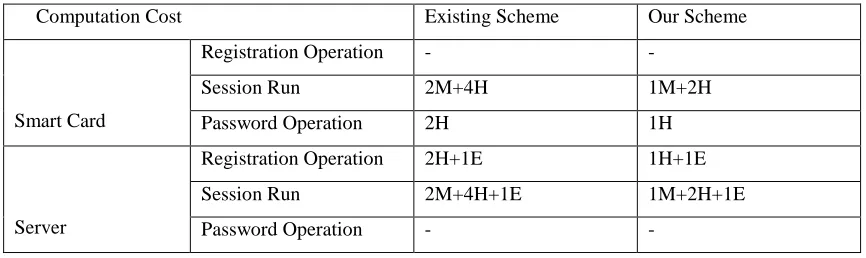
Comparison of Computation with previous work
Computation Cost Existing Scheme Our Scheme
Smart Card
Registration Operation - -
Session Run 2M+4H 1M+2H
Password Operation 2H 1H
Server
Registration Operation 2H+1E 1H+1E
Session Run 2M+4H+1E 1M+2H+1E
Password Operation - -
Where, H denotes the cryptographic hash computation & M denotes the scalar multiplication computation over the elliptic curve & E denotes the symmetric encryption or decryption computation.
In above table shows comparisons of Computation of planned scheme with existing work.it clearly shows that our scheme uses a less computation than existing work. Our scheme takes less time for computation and cost is cheaper than existing work.
VI. CONCLUSION
This dissertation revisited the privacy of 2-factor PAKA (Password Authenticate Key Agreement) protocols through sensible (smart) cards. While they were assumed to be secure, we showed that these protocols are flawed under their own assumptions respectively.
In particular, we took into account some kinds of adversaries which were not considered in their designs or methodology, e.g., challengers with pre-calculated data saved like (registration info, and other related information of account and user identification) in the sensible-card and challengers with different information (with respect to dynamic time slots) saved in the sensible (smart) card.
International Journal of Emerging Technology and Advanced Engineering
Website: www.ijetae.com (ISSN 2250-2459, ISO 9001:2008 Certified Journal, Volume 7, Issue 6, June 2017)
303
Simulation results points that we have using less number of hash function and elliptical function to design this system. We have focused only the how to be combining the operation of registration and login section (i.e. user ID with PW) with fewer hash function and their combining. The main object of this dissertation is overcome the complexity and cost of the machine and this aim achieved by implement this proposed improvement of password authentication based smart card scheme. From the results table we can see that these improvements in term of time complexity and size and cost.REFERENCES
[1] Alfin Abraham, Vinodh Ewards, Harlay Maria Mathew “A Survey on Optimistic Fair Digital Signature Exchange Protocols”, International Journal on Computer Science and Engineering (IJCSE), ISSN: 0975-3397, Vol. 3, No. 2, pp. 821 – 825, Feb 2011.
[2] Qi Xie, Duncan S. Wong, Guilin Wang, Xiao Tan, Kefei Chen, Liming Fang,” Provably Secure Dynamic ID-based Anonymous Two-factor Authenticated Key Exchange Protocol with Extended Security Model”, IEEE Transaction 2016.
[3] Hung-Min Sun, Shiuan-Tung Chen, Jyh-Haw Yeh and Chia-Yun Cheng, “A Shoulder Surfing Resistant Graphical Authentication System”, IEEE Transaction 2016.
[4] R. Madhusudhan and Manjunath Hegde, “Cryptanalysis and Improvement of Remote User Authentication Scheme Using Smart Card”, IEEE 2016.
[5] Xinyi Huang, Xiaofeng Chen, Jin Li, Yang Xiang, and Li Xu, “Further Observations on Smart-Card-Based Password-Authenticated Key Agreement in Distributed Systems”, IEEE Transaction 2014.
[6] ZHANG Gefei, FAN Dan, ZHANG Yuqing and LI Xiaowei, “A Provably Secure General Construction for Key Exchange Protocols Using Smart Card and Password”, Chinese Journal of Electronics 2017.