R E S E A R C H A R T I C L E
Open Access
Subgrouping patients with sciatica in
primary care for matched care pathways:
development of a subgrouping algorithm
Kika Konstantinou
1,2*, Kate M. Dunn
1, Danielle van der Windt
1, Reuben Ogollah
1,3,5, Vinay Jasani
4,
Nadine E. Foster
1,3and the SCOPiC study team
Abstract
Background:Sciatica is a painful condition managed by a stepped care approach for most patients. Currently, there are no decision-making tools to guide matching care pathways for patients with sciatica without evidence of serious pathology, early in their presentation. This study sought to develop an algorithm to subgroup primary care patients with sciatica, for initial decision-making for matched care pathways, including fast-track referral to
investigations and specialist spinal opinion.
Methods:This was an analysis of existing data from a UK NHS cohort study of patients consulting in primary care with sciatica (n= 429). Factors potentially associated with referral to specialist services, were identified from the literature and clinical opinion. Percentage of patients fast-tracked to specialists, sensitivity, specificity, positive and negative predictive values for identifying this subgroup, were calculated.
Results:The algorithm allocates patients to 1 of 3 groups, combining information about four clinical characteristics, and risk of poor prognosis (low, medium or high risk) in terms of pain-related persistent disability. Patients at low risk of poor prognosis, irrespective of clinical characteristics, are allocated to group 1. Patients at medium risk of poor prognosis who have all four clinical characteristics, and patients at high risk of poor prognosis with any three of the clinical characteristics, are allocated to group 3. The remainder are allocated to group 2. Sensitivity, specificity and positive predictive value of the algorithm for patient allocation to fast-track group 3, were 51, 73 and 22% respectively.
Conclusion:We developed an algorithm to support clinical decisions regarding early referral for primary care patients with sciatica. Limitations of this study include the low positive predictive value and use of data from one cohort only. On-going research is investigating whether the use of this algorithm and the linked care pathways, leads to faster resolution of sciatica symptoms.
Keywords:Sciatica, Algorithm, Stratification, Leg pain, Care pathway, Referral
Background
Sciatica (radicular pain) has significant impact on patients, healthcare and societal costs [1]. The annual impact on the United Kingdom (UK) economy is £268 million in dir-ect medical costs, and £1.9 billion in indirdir-ect costs, based on a Dutch study which indicated that the societal cost of
sciatica represents 13% of all back pain related costs (in-flated from 1998 figures) [2]. Many patients with sciatica do well over time and are treated successfully with conser-vative interventions, with injections and/or surgery re-served for patients with persistent, disabling pain [3].
In the absence of suspected serious pathology or pro-found neurological deficits, current usual management of sciatica in the UK National Health Service (NHS) fol-lows a ‘stepped’care approach, with an initial period of ‘low level’treatment for most patients, including advice, reassurance and analgesic medication, and for those not
© The Author(s). 2019Open AccessThis article is distributed under the terms of the Creative Commons Attribution 4.0 International License (http://creativecommons.org/licenses/by/4.0/), which permits unrestricted use, distribution, and reproduction in any medium, provided you give appropriate credit to the original author(s) and the source, provide a link to the Creative Commons license, and indicate if changes were made. The Creative Commons Public Domain Dedication waiver (http://creativecommons.org/publicdomain/zero/1.0/) applies to the data made available in this article, unless otherwise stated.
* Correspondence:[email protected]
1
Primary Care Centre Versus Arthritis, Research Institute for Primary Care & Health Sciences, Keele University, Staffordshire ST5 5BG, UK
2Haywood Hospital, Midlands Partnership NHS Foundation Trust,
Stoke-on-Trent, Staffordshire ST6 7AG, UK
improving, onward referrals are initiated to services such as physiotherapy or specialist spinal services in inter-mediate and secondary care settings [4]. Up to 30% of patients with severe sciatic pain continue having signifi-cant symptoms at 1 year follow-up [5]. However, a direct referral to spinal specialist services for all sciatica patients at the point of first consultation in primary care is not a cost-effective care model [6], and it is unlikely that this is needed for most patients, except when sinis-ter pathology is suspected. In the UK, most primary care patients with sciatica, who may eventually require a specialist opinion, are referred to NHS spinal specialist services at the interface (intermediate) level, between primary and secondary care services. Interface spinal services are predominately staffed by non-medically qualified clinicians (for example physiotherapists) with advanced training and expertise in spinal care and direct referral access to surgical and injection services [4]. The challenge for clinicians (such as general practitioners (GPs)) managing sciatica in primary care is how to iden-tify, early in the presentation, patients who are likely to only need and do well with conservative management in primary care, and patients who may need early, fast-track referral to spinal specialist opinion.
For non-specific low back pain (LBP), research has shown that a model of stratified care that does not over-treat those with a good chance of improvement but identifies those likely to need more intensive treatment, has led to superior clinical and cost effectiveness com-pared to non-stratified care [7,8]. This approach in LBP utilises a brief self-completed screening tool (the Keele STarT Back tool) [9] which captures eight modifiable physical and psychological prognostic indicators. The STarT Back tool has 9 items, 4 are physical constructs, with 2 questions capturing back pain/leg pain related disability, and 5 are psychological constructs. A score of 3 or less indicates the patient is at low risk of future persistent back pain-related disability, a score of 4 or more of the 5 psychological items indicates the patient is at high risk, any other score identifies patients as at medium risk of persistent disability [9]. By estimating future risk of persistent back pain-related disability, the STarT Back tool supports early clinical decision-making about conservative treatments (such as GP care and physiotherapy management) [7,9]. Although neither the STarT Back trial [7] nor the subsequent implementation study (IMPaCT Back) [8] excluded patients with sciatica, the STarT Back tool and matched treatments were not specifically developed for sciatica. Sciatica patients have more severe pain and take longer to recover [1]. Cur-rently there is no screening tool or algorithm available to support clinical decision-making in directing patients with sciatica to matched care pathways, when they first consult with sciatica symptoms which are not suspicious
of sinister pathology. This is explained, at least in part, by the currently limited number of prognostic factors that have been shown to be independently associated with outcome in patients with sciatica [10–12]. This paucity of evidence for prognostic factors, with only pain and disability severity being consistently associated with eventually having spinal surgery (which is taken as proxy of poor outcome for natural course and conservative management) [11, 13], impedes development of prog-nostic models that can guide treatment decision-making [11], yet it is not feasible or necessary to refer all pa-tients with high levels of pain and disability to spinal specialist or surgical services. However, early referral to investigations and more intensive treatments may im-prove outcomes and quicker recovery for some sciatica patients consulting in primary care, instead of waiting the outcome of initial conservative management before referring on when there is no improvement.
The aim of this research was to develop an algorithm with which to support clinical decision-making about subgrouping patients with sciatica consulting in primary care for matched care pathways.
Methods
Study population: ATLAS cohort
the development of the algorithm we included ATLAS participants diagnosed with sciatica with diagnostic confi-dence of 70% and over (as reported by the assessors) [16, 17]. The outcome definition was referral to NHS spinal specialist services (yes/no).
Selection of potential predictors of referral for specialist opinion
Potential predictors of referral to specialist services were selected from self-report and clinical examination. The choice of factors was based on previous literature [10–12, 18–22], clinical opinion and experience, and availability in the ATLAS dataset. The selected factors were categorised into 5 domains: impact of condition, pain levels/symp-toms, psychological perceptions, symptom behaviour and presentation, and clinical examination findings. We were broad in our approach of including potential factors due to the paucity of evidence for strong prognostic factors. The 5 domains and the factors selected, the rationale for each, and details of how they were measured, are sum-marised in Additional file1.
Identification of factors associated with fast-track referral to spinal specialist services in patients with sciatica Step 1: descriptive analysis
Descriptive statistics (means and standard deviations for continuous variables and frequency counts and percent-ages for categorical variables) on key demographic and clinical characteristics, and risk of poor prognosis (STarT Back tool (see Additional file2)), were calculated according to referral/no referral to specialist services.
Step 2a: statistical analysis: factors associated with referral to spinal specialist services
Logistic regression was used to determine the associ-ation between each factor and the outcome of referral to spinal specialist services. Factors were entered in blocks according to each domain. First, univariable analysis was performed to assess the association between each factor in each domain and the outcome. Tests of multicolli-nearity were performed for all the variables within each domain, first by pairwise correlations (Pearson’s correl-ation for numerical scales, Spearman’s correlcorrel-ation for or-dinal categorical measures, and point-biserial correlation for binary covariates), with one variable dropped if cor-relation coefficient > 0.7 and then by variance inflation factor (VIF > 5 considered as evidence of collinearity). Second, multivariable analysis comprising all variables within each domain (excluding correlated variables if identified) was performed separately in each domain to identify independent factors within each domain. Third, all the independent factors from each domain were entered in a final multivariable model to identify factors
independently associated (p< 0.05) with the outcome of referral to specialist services.
Step 2b: clinical relevance of factors associated with referral to spinal specialist services
The factors derived from the multivariable regression models as being most strongly associated with referral to specialist services, within each domain and overall, were further discussed with the study’s multidisciplinary clin-ical and research advisory group (three epidemiologists, four trialists, two statisticians, one spinal surgeon, five spinal physiotherapy specialists, one rheumatologist, one pain specialist, five GPs). The final list of factors were chosen for their clinical relevance and face validity for referral to specialist services. Performance of the final model was measured by its discriminative ability and calibration. The ability of the model to discriminate between referred and non-referred patients was sum-marised using the area under the receiver operating characteristic curve (AUC), with 95% CIs. In the absence of an external validation cohort, internal validation was performed with the bootstrap procedure as described by Steyerberg et al. [23] using 500 replications to estimate optimism in performance. The calibration slope with 95% CI was calculated to examine whether the predicted probabilities agreed with the observed probabilities.
Step 2c: identifying patients for fast-track referral to spinal specialist services: algorithm design
In this step of the iterative process, we investigated a number of possibilities in terms of combinations of factors from the clinical assessment and information on risk of poor prognosis, using the STarT Back Tool score, for identifying which patients with sciatica to refer or ‘fast-tracked’to spinal specialist services. For each com-bination of factors, we considered the implications for sensitivity in terms of identifying observed referrals, and feasibility and practicality in relation to use in clinical practice. For all scenarios, sensitivity/specificity, positive/ negative predictive values, and percentage of sample fast-tracked, were calculated. This information was used in constructing the algorithm to guide clinical decision-making in primary care about referrals for patients with sciatica. The results were discussed with the clinical and research advisory group, and the most optimal and feas-ible option was chosen.
Results
Step 1: descriptive characteristics
follow-up, to NHS spinal specialist services for further assess-ment and treatassess-ment. Table1 shows baseline characteris-tics of participants referred / not referred to specialist services. Referred patients had higher levels of leg pain and disability compared to those not referred, and higher proportions had neurological deficits such as weakness and sensory deficits in the affected leg. In terms of risk of poor prognosis (STarT Back Tool), only one out of the 57 patients referred to spinal specialists was in the low risk subgroup on the STarT Back Tool. Patients in the high risk STarT Back subgroup had higher probability of being in the group referred to spe-cialists (54.5% vs 37.8%), and those in the medium risk STarT Back subgroup were proportionally almost equally divided between those referred and not referred to spinal specialists (43.6% vs 49.2%).
Step 2a: factors associated with referral to spinal specialist services
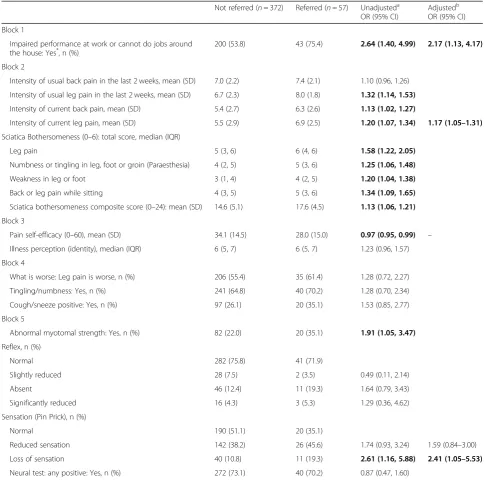
Table2presents the results of the univariable and multi-variable analysis for each domain of factors, and the final
model including all four independent factors. Three fac-tors were independently significantly associated with re-ferral to spinal specialist services: impact of back or leg pain on ability to do job or work around the house, leg pain intensity and sensory deficit in the painful leg, found on clinical assessment. The fourth factor, pain self-efficacy, was not statistically significant in the overall model. The final model’s apparent performance (based on the AUC (95% CI)) for the original sample was 0.695 (0.622, 0.768). The mean of performance in the 500 bootstrapped samples was 0.713 (0.710, 0.716), with an expected optimism of 0.018, thus the internally validated (optimism adjusted) performance was 0.678 (0.674, 0.681). The calibration slope (95% CI) for this model was 1.0 (0.57, 1.43) showing that the model was well-calibrated, albeit with uncertainty reflected by the wide confidence interval.
Step 2b: clinical relevance of factors associated with referral to spinal specialist services
The clinical and research advisory group discussed and agreed the final list of factors thought to be most rele-vant in the decision to refer to spinal specialists. The fol-lowing four factors were chosen: effect of low back and/ or leg pain on ability to do one’s job or ability to do jobs around the house (Numerical Rating Scale (NRS) 0–10, cut-off point > 6, for those not in work‘yes’response on the RMDQ item about ability to do jobs around the house), current leg pain intensity (NRS 0–10, cut-off point > 6), sensory deficits in a dermatomal distribution recorded during the clinical examination (yes/no), and pain below the knee (yes/no). The first three factors were derived from the statistical analyses. The binary cut-off points (NRS > 6) for impact and pain intensity were agreed by the advisory group as reasonable thresh-olds for pain and functional limitations and with face validity when considering an early referral to specialists. Presence of pain below the knee is considered the best proxy indicator of leg pain due to nerve root involve-ment [24], the advisory group considered this to be im-portant to include, in combination with the other factors for making referral decisions, therefore this factor was subsequently added to the list.
Step 2c: identifying patients for fast-track referral to spinal specialist services: algorithm design
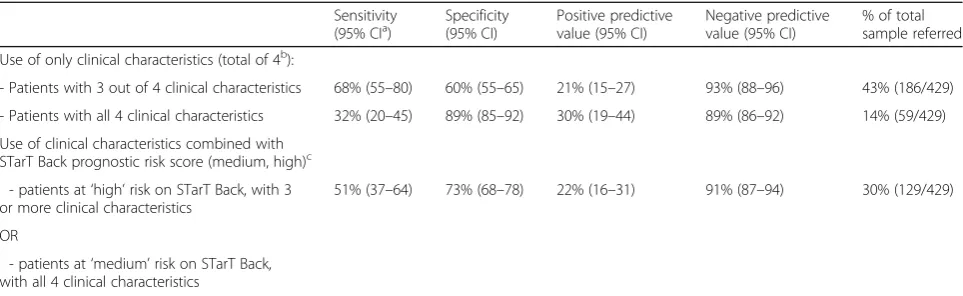
[image:4.595.56.290.391.715.2]In this step, three scenarios were investigated. The first two scenarios investigated only characteristics (factors) from the clinical examination associated with fast-track referral to spinal specialists, using two cut-off points. The third sce-nario combined prognostic information (from the STarT Back Tool) with the clinical characteristics, and investigated combinations of clinical characteristics and prognostic sub-groups (medium, high risk); Table3presents the results of Table 1Baseline characteristics for patients according to referral
to specialist spinal services. Figures are frequencies (percentage) unless otherwise specified
Referred to spinal specialist
N= 57a Notreferred
N= 372
Age (years) (mean, SD) 53.7 (15.0) 49.7 (13.8)
Gender (F) 30 (52.7) 230 (62.0)
Leg pain usual intensity (mean, SD)
8.0 (1.8) 6.7 (2.3)
Leg pain worse than back pain
35 (61.4) 206 (55.4)
Disability (RMDQ) (mean, SD) 15.4 (4.6) 12.6 (5.8)
Duration of leg pain:
less than 6 weeks 11 (20.4) 172 (47.8)
between 6 weeks to 3 months
18 (33.3) 73 (20.3)
over 3 months 25 (46.3) 115 (32.0)
STarT Back prognostic risk subgroup:
Low 1 (1.8) 47 (13.1)
Medium 24 (43.6) 177 (49.2)
High 30 (54.5) 136 (37.8)
Neurological examination findings:
Myotomal weakness 20 (36.0) 82 (22.0)
Reflex deficits 16 (28.0) 90 (24.2)
Sensory deficits 37 (65.0) 182 (49.0)
Neural tension tests:
Positive 40 (70.2) 272 (73.1)
a
this analysis. In the first scenario (only considering clinical characteristics: 3 of the 4 present), sensitivity was 68%, but it would fast-track 43% of the whole sample to spinal spe-cialists. In the second scenario (all 4 clinical characteristics
[image:5.595.55.541.109.589.2]present), only 14% of the sample would be fast-tracked, but sensitivity was lower (32%), so a significant number of pa-tients needing a spinal specialist referral would be missed. The third scenario combined information about the clinical Table 2Baseline characteristics of sciatica patients by referral status (to spinal specialist services) and unadjusted and adjusted odds ratios of association with referral
Not referred (n= 372) Referred (n= 57) Unadjusteda
OR (95% CI)
Adjustedb
OR (95% CI)
Block 1
Impaired performance at work or cannot do jobs around
the house: Yes*, n (%) 200 (53.8) 43 (75.4) 2.64 (1.40, 4.99) 2.17 (1.13, 4.17)
Block 2
Intensity of usual back pain in the last 2 weeks, mean (SD) 7.0 (2.2) 7.4 (2.1) 1.10 (0.96, 1.26)
Intensity of usual leg pain in the last 2 weeks, mean (SD) 6.7 (2.3) 8.0 (1.8) 1.32 (1.14, 1.53)
Intensity of current back pain, mean (SD) 5.4 (2.7) 6.3 (2.6) 1.13 (1.02, 1.27)
Intensity of current leg pain, mean (SD) 5.5 (2.9) 6.9 (2.5) 1.20 (1.07, 1.34) 1.17 (1.05–1.31)
Sciatica Bothersomeness (0–6): total score, median (IQR)
Leg pain 5 (3, 6) 6 (4, 6) 1.58 (1.22, 2.05)
Numbness or tingling in leg, foot or groin (Paraesthesia) 4 (2, 5) 5 (3, 6) 1.25 (1.06, 1.48)
Weakness in leg or foot 3 (1, 4) 4 (2, 5) 1.20 (1.04, 1.38)
Back or leg pain while sitting 4 (3, 5) 5 (3, 6) 1.34 (1.09, 1.65)
Sciatica bothersomeness composite score (0–24): mean (SD) 14.6 (5.1) 17.6 (4.5) 1.13 (1.06, 1.21)
Block 3
Pain self-efficacy (0–60), mean (SD) 34.1 (14.5) 28.0 (15.0) 0.97 (0.95, 0.99) –
Illness perception (identity), median (IQR) 6 (5, 7) 6 (5, 7) 1.23 (0.96, 1.57)
Block 4
What is worse: Leg pain is worse, n (%) 206 (55.4) 35 (61.4) 1.28 (0.72, 2.27)
Tingling/numbness: Yes, n (%) 241 (64.8) 40 (70.2) 1.28 (0.70, 2.34)
Cough/sneeze positive: Yes, n (%) 97 (26.1) 20 (35.1) 1.53 (0.85, 2.77)
Block 5
Abnormal myotomal strength: Yes, n (%) 82 (22.0) 20 (35.1) 1.91 (1.05, 3.47)
Reflex, n (%)
Normal 282 (75.8) 41 (71.9)
Slightly reduced 28 (7.5) 2 (3.5) 0.49 (0.11, 2.14)
Absent 46 (12.4) 11 (19.3) 1.64 (0.79, 3.43)
Significantly reduced 16 (4.3) 3 (5.3) 1.29 (0.36, 4.62)
Sensation (Pin Prick), n (%)
Normal 190 (51.1) 20 (35.1)
Reduced sensation 142 (38.2) 26 (45.6) 1.74 (0.93, 3.24) 1.59 (0.84–3.00)
Loss of sensation 40 (10.8) 11 (19.3) 2.61 (1.16, 5.88) 2.41 (1.05–5.53)
Neural test: any positive: Yes, n (%) 272 (73.1) 40 (70.2) 0.87 (0.47, 1.60)
*Evidence of interference with ability to do work/home activities if > 6 (NRS 0–10) on single question on work interference or‘yes’
response on the RMDQ item a
Univariable association between each variable and referral to secondary care, variables withp< 0.05 are bolded b
characteristics and prognostic subgroup. Patients with a STarT Back score indicating low risk of persistent back pain-related disability, irrespective of clinical characteristics present, were not considered in the analysis for identifying those for fast-tracking to specialist, as only one such patient in the ATLAS cohort was observed as referred to special-ists over a period of 12 months follow-up; thus we consid-ered that very few patients with such good prognosis would need fast-tracking to spinal specialists. The combin-ation considered optimal by the research and clinical advis-ory group for fast-tracking sciatica patients to spinal specialist services was a classification of high risk on the STarT Back Tool and at least 3 of the 4 clinical characteris-tics present, or a classification of medium risk on the STarT Back Tool and all 4 clinical characteristics present. This re-sulted in sensitivity of 51% and specificity of 73% with ap-proximately one third of the whole sample (30%) being identified for ‘fast-track’ referral. The positive predictive value (PPV) value was 22%, indicating that 22% of all the fast-track referral patients in this sample, would be appro-priately referred for specialist opinion. This third scenario was chosen as the most clinically appropriate for identify-ing patients for fast-track referral, based on sensitivity value and feasibility in terms of ‘fast-track’ referral numbers to spinal specialist services.
Full algorithm
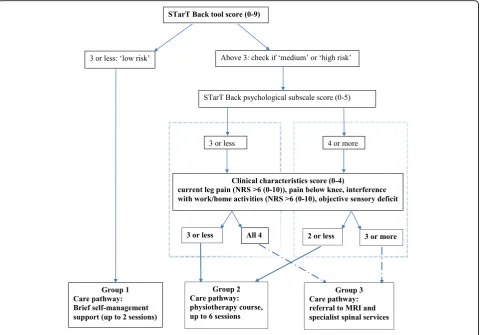
Figure 1 shows the suggested algorithm which allocates sciatica patients to 1 of 3 groups, and summarises the suggested matched care pathways. The allocation of patients to group 1 was based only on prognostic risk information from the STarT Back Tool (as only one par-ticipant classified at low risk was referred) (see Table 1). The allocation of patients to groups 2 and 3 was in-formed by the analysis described in previous sections for identifying patients needing a referral to spinal specialist
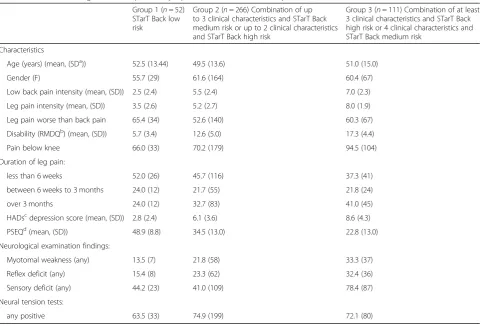
services. Table 4 presents key characteristics for the three groups defined by the subgrouping algorithm when applied in the ATLAS cohort.
Analyses were performed using Stata 14 (StataCorp. 2015. Stata Statistical Software: Release 14. College Sta-tion, TX: StataCorp LP).
Discussion
We have developed an algorithm for supporting clinical decisions regarding onward referral at the point of initial consultation, and allocation to matched care pathways, for patients consulting in primary care with sciatica. The algorithm combines information about patients’ risk of persistent back and leg pain related disability and four items from the clinical assessment. It allocates patients to one of three groups for matched care pathways: for group 1 this comprises of brief self-management support (up to 2 sessions), for group 2 a course of up to 6 ses-sions of physiotherapist-led care, and for group 3 a ‘fast-track’referral to MRI and spinal specialist services.
[image:6.595.57.539.98.246.2]Currently, prognostic research in sciatica patients shows that only one or two factors (pain, disability or impact of the condition/symptoms) are consistently as-sociated with persistent disability or proceeding to sur-gery (when sursur-gery is an appropriate and desirable management option) [11–13, 25], but not all sciatica pa-tients with severe leg pain will have a poor outcome and will not proceed to have surgery. This limits the devel-opment of useful prognostic models to inform stratified care and guide clinical decision-making about early referral to spinal specialists. In the absence of models purely based on probability of poor outcome for this condition, the next reasonable step is to consider investi-gating and combining information on prognosis with factors associated with referral to specialists. It is pos-sible that referral to specialists for investigations and Table 3Identification of patients for‘fast-track’referrals to spinal specialist services. Three scenarios investigated
Sensitivity
(95% CIa) Specificity(95% CI) Positive predictivevalue (95% CI) Negative predictivevalue (95% CI) % of totalsample referred
Use of only clinical characteristics (total of 4b):
- Patients with 3 out of 4 clinical characteristics 68% (55–80) 60% (55–65) 21% (15–27) 93% (88–96) 43% (186/429)
- Patients with all 4 clinical characteristics 32% (20–45) 89% (85–92) 30% (19–44) 89% (86–92) 14% (59/429)
Use of clinical characteristics combined with STarT Back prognostic risk score (medium, high)c
- patients at‘high’risk on STarT Back, with 3 or more clinical characteristics
51% (37–64) 73% (68–78) 22% (16–31) 91% (87–94) 30% (129/429)
OR
- patients at‘medium’risk on STarT Back, with all 4 clinical characteristics
a
CI; Confidence Intervals b
Current leg pain > 6 (NRS 0–10), pain below knee, interference with ability to do work/home activities > 6 (NRS 0–10) or‘yes’response on the RMDQ item, sensory deficit in painful leg with pin/prick testing
c
treatments early in the presentation of symptoms in primary care, may improve outcomes for some sciatica patients however, this will need to be investigated in clinical trials. To our knowledge, this is the first sub-grouping algorithm developed to guide clinical manage-ment at first consultation in primary care for patients with sciatica.
It was important that the factors/characteristics used, would be acceptable to clinicians in terms of directing re-ferrals to NHS spinal specialist services immediately after consultation in primary care, given the possible impact of early‘fast-tracking’of patients on the healthcare system. In choosing the ‘optimal’combination of characteristics and cut-off points, we considered the trade-offs between sensi-tivity (correctly identifying patients who need a referral to spinal specialists) and feasibility, as it would be impractical to refer the majority of patients. And the input of our re-search and clinical advisory group was unanimous and fun-damental in these decisions, indicating high clinical face validity. We acknowledge as a limitation that the clinical advisory group did not include patients. The model’s pre-dictive performance is moderate (C-statistic: 0.70). The positive predictive value (PPV) of the algorithm for special-ist referral is 22%, with sensitivity of 51%. It is clear that
based on the proposed algorithm, a number of patients will be referred early for tests (MRI) and spinal specialist assess-ment, who may not have needed such referral. It is fully ac-knowledged that these values are low, however, in the absence of a reference standard or evidence-based guidance to underpin referral decisions at first consultation (in the absence of suspected sinister pathology), we consider this as a first step towards stratified care for this population. In the UK, these patients are referred to primary/secondary care interface (intermediate) clinics where they are further evaluated, appropriate management options are discussed with the patient, and referrals from that intermediate set-ting are streamlined to surgical, injections or pain manage-ment settings, in secondary care.
[image:7.595.59.540.88.423.2]busy clinical practice. Although the algorithm presented in Fig.1appears cumbersome, if its use for directing pa-tients’care at first consultation was to lead to better out-comes compared to the current model of stepped care, the algorithm can be fashioned in a ‘calculator’ form, embedded in the current electronic systems used by GPs, in the same way such systems are used for calculat-ing cardiovascular risk for example.
Although we tested the final model using recommended internal validation statistics, we acknowledge the limitation of using data from only one cohort. Further testing in other similar populations will need to provide evidence on exter-nal validity, however, we are not aware that a similar pri-mary care cohort is available. At this stage, we do not recommend the algorithm is used in clinical practice, as clinical trials are necessary first to assess the effects of the algorithm on patients’outcomes. To that effect, we are cur-rently testing the clinical and cost-effectiveness of using this subgrouping (stratification) algorithm with matched care pathways, compared to non-stratified care, in a randomised controlled trial (SCOPiC; ISRCTN75449581) [26].
Additional files
Additional file 1:Factors considered for their potential association with referral to spinal specialist services. (DOCX 24 kb)
Additional file 2:STarT Back Tool. (DOC 40 kb)
Abbreviations
AUC:Area Under Curve; CI: Confidence Interval; GP: General Practitioner;
LBP: Low Back Pain; MRI: Magnetic Resonance Imaging; NHS: National Health System; NRS: Numerical Rating Scale; PPV: Positive Predictive Value; UK: United Kingdom; VIF: Variance Inflation Factor
Acknowledgements
The authors would like to thank the members of the SCOPiC study team; M Artus, EM Hay, M Lewis, JC Hill, C Mallen. The ATLAS study research team, all the participating patients, clinicians and managers, and the funders. D van der Windt is a member of PROGRESS; Medical Research Council Prognosis Research Strategy (PROGRESS) Partnership (G0902393/99558). The authors also thank the following for their support: all the members of the clinical advisory group.
“SCOPiC study team”: Majid Artusa, Elaine M Haya, Martyn Lewisa,c, Jonathan
C Hilla, Christian Mallena.
aPrimary Care Centre Versus Arthritis.
Research Institute for Primary Care & Health Sciences. Keele University, Staffordshire, ST5 5BG, UK.
cKeele Clinical Trials Unit.
[image:8.595.58.542.107.433.2]Keele University, Staffordshire, ST5 5BG, UK
Table 4Key baseline characteristics for patients according to the groups formed by applying the stratification algorithm in the ATLAS cohort dataset. Figures are frequencies (proportions) unless otherwise specified
Group 1 (n= 52) STarT Back low risk
Group 2 (n= 266) Combination of up to 3 clinical characteristics and STarT Back medium risk or up to 2 clinical characteristics and STarT Back high risk
Group 3 (n= 111) Combination of at least 3 clinical characteristics and STarT Back high risk or 4 clinical characteristics and STarT Back medium risk
Characteristics
Age (years) (mean, (SDa)) 52.5 (13.44) 49.5 (13.6) 51.0 (15.0)
Gender (F) 55.7 (29) 61.6 (164) 60.4 (67)
Low back pain intensity (mean, (SD)) 2.5 (2.4) 5.5 (2.4) 7.0 (2.3)
Leg pain intensity (mean, (SD)) 3.5 (2.6) 5.2 (2.7) 8.0 (1.9)
Leg pain worse than back pain 65.4 (34) 52.6 (140) 60.3 (67)
Disability (RMDQb) (mean, (SD)) 5.7 (3.4) 12.6 (5.0) 17.3 (4.4)
Pain below knee 66.0 (33) 70.2 (179) 94.5 (104)
Duration of leg pain:
less than 6 weeks 52.0 (26) 45.7 (116) 37.3 (41)
between 6 weeks to 3 months 24.0 (12) 21.7 (55) 21.8 (24)
over 3 months 24.0 (12) 32.7 (83) 41.0 (45)
HADscdepression score (mean, (SD)) 2.8 (2.4) 6.1 (3.6) 8.6 (4.3)
PSEQd(mean, (SD)) 48.9 (8.8) 34.5 (13.0) 22.8 (13.0)
Neurological examination findings:
Myotomal weakness (any) 13.5 (7) 21.8 (58) 33.3 (37)
Reflex deficit (any) 15.4 (8) 23.3 (62) 32.4 (36)
Sensory deficit (any) 44.2 (23) 41.0 (109) 78.4 (87)
Neural tension tests:
any positive 63.5 (33) 74.9 (199) 72.1 (80)
a
SD: standard deviation b
Roland Morris Disability Questionnaire c
Hospital Anxiety and Depression scale d
Authors’contributions
All authors have been involved in drafting the manuscript or revising it critically for important intellectual content and have given final approval of the version to be published. All authors made substantial contributions to design and interpretation of data. KK produced the first draft of the manuscript. KK, KMD, DvdW, NEF made substantial contributions to conception. KMD, RO, DvdW, KK were responsible for data analysis.
Funding
KK was funded by a HEFCE CAT Clinical Senior Lecturer Award. NEF was funded by a National Institute for Health Research (NIHR) Research Professorship (NIHR-RP-011-015). CDM is funded by NIHR Collaborations for Leadership in Applied Health Research and Care West Midlands, the NIHR School for Primary Care Research, and an NIHR Research Professorship (NIHR-RP-2014-04-026). NEF and EMH are NIHR Senior Investigators. The ATLAS study was part of a programme grant funded by the NIHR under its Programme Grants for Applied Research scheme (RP-PG-0707-10131). The SCOPiC trial (SCiatica Outcomes in Primary Care) is funded by the NIHR Health Technology Assessment Programme (NIHR HTA project number 12/ 201/09) and will be published in full in Health Technology Assessment. The views expressed are those of the author(s) and not necessarily those of the NHS, the NIHR or the Department of Health.
Availability of data and materials
The datasets used and analysed during the current study are available from the corresponding author on reasonable request.
Ethics approval and consent to participate
This paper presents secondary analysis of data. Approval for the original study (ATLAS) was obtained from the South Birmingham Research Ethics Committee (REC ref. 10/H1207/82). For patients who were eligible and interested in taking part in the ATLAS study, research nurses explained the study in detail and took written informed consent.
Consent for publication NA
Competing interests
The authors declare that they have no competing interests.
Author details
1Primary Care Centre Versus Arthritis, Research Institute for Primary Care &
Health Sciences, Keele University, Staffordshire ST5 5BG, UK.2Haywood
Hospital, Midlands Partnership NHS Foundation Trust, Stoke-on-Trent, Staffordshire ST6 7AG, UK.3Keele Clinical Trials Unit, Keele University, Staffordshire ST5 5BG, UK.4Department of Spine Surgery, University Hospital
North Midlands, Royal Stoke University Hospital, Newcastle Rd, Stoke-on-Trent ST4 6QG, UK.5Present address: Nottingham Clinical Trials
Unit, School of Medicine, University of Nottingham, Nottingham NG7 2UH, UK.
Received: 9 November 2018 Accepted: 20 June 2019
References
1. Konstantinou K, Hider SL, Jordan JL, Lewis M, Dunn KM, Hay E. The impact
of low Back-related leg pain on outcomes as compared with low Back pain
alone: a systematic review of the literature. Clin J Pain. 2013;29:644–54.
2. van Tulder MW, Koes B, Bouter LM. A cost of illness study of back pain in
the Netherlands. Pain. 1995;62:233–40.
3. NICE. Low Back pain and sciatica in over 16s: assessment and management.
London: Clinical Guidelines; 2016.
4. National Low Back and Radicular Pain Pathway 2017 Including
Implementation of NICE Guidance NG59.https://www.
noebackpainprogramme.nhs.uk/wp-content/uploads/2015/05/National-Low-Back-and-Radicular-Pain-Pathway-2017_final.pdf.
5. Koes BW, van Tulder M, Peul WC. Diagnosis and treatment of sciatica. BMJ.
2007;334:1313–7.
6. Fitzsimmons D, Phillips CJ, Bennett H, Jones M, Williams N, Lewis R, et al.
Cost-effectiveness of different strategies to manage patients with sciatica.
Pain. 2014;155(7):1318–27.
7. Hill JC, Whitehurst D, Lewis M, Bryan S, Dunn KM, Foster N, et al. Comparison
of stratified primary care management for low Back pain with current best
practice (STarT Back): a randomised controlled trial. Lancet. 2011;378:1560–71.
8. Foster NE, Mullis R, Hill JC, Lewis M, Whitehurst DGT, Doyle C, et al. Effect of
stratified care for low Back pain in family practice (IMPaCT Back): a prospective
population-based sequential comparison. Ann Fam Med. 2014;12(2):102–11.
9. Hill JC, Dunn KM, Lewis M, Mullis R, Main CJ, Foster NE, et al. A primary care
back pain screening tool: identifying patient subgroups for initial treatment. Arthritis Rheum. 2008;59:632.
10. Ashworth J, Konstantinou K, Dunn KM. Prognostic factors in non-surgically
treated sciatica: a systematic review. BMC Musculoskelet Disord. 2011;12:208.
11. Verwoerd AJH, Luijsterburg PAJ, Lin CWC, Jacobs WCH, Koes BW, Verhagen
AP. Systematic review of prognostic factors predicting outcome in
non-surgically treated patients with sciatica. Eur J Pain. 2013;17:1126–37.
12. Konstantinou K, Dunn KM, Ogollah R, Lewis M, van der Windt D, Hay EM on
behalf of the ATLAS study team. Prognosis of sciatica and back-related leg
pain in primary care: the ATLAS cohort. Spine J. 2018;18(6):1030–40.
13. Peul WC, Brand R, Thomeer RTWM, Koes BW. Improving prediction of“inevitable”
surgery during non-surgical treatment of sciatica. Pain. 2008;138(3):571–6.
14. Konstantinou K, Dunn KM, Ogollah R, Vogel S, Hay EM. Characteristics of patients
with low back and leg pain seeking treatment in primary care: baseline results from the ATLAS cohort study. BMC Musculoskeletal Disord. 2015;16:332.
15. Konstantinou K, Beardmore R, Dunn K, Lewis M, Hider SL, Vogel S, et al.
Clinical course, characteristics and prognostic indicators in patients presenting with back and leg pain in primary care. The ATLAS study
protocol. BMC Musculoskelet Disord. 2012;13:4–4.
16. Genevay S, Courvoisier DS, Konstantinou K, Kovacs FM, Marty M, Rainville J, et al.
Clinical classification criteria for radicular pain caused by lumbar disc herniation: the RAPIDH criteria (RAdicular PaIn caused by Disc Herniation). Spine J. 2017;17:
30196–1.https://doi.org/10.1016/j.spinee.2017.05.005[Epub ahead of print].
17. Genevay S, Courvoisier DS, Konstantinou K, Kovacs FM, Marty M, Rainville J,
et al. Clinical classification criteria for neurogenic claudication caused by
lumbar spinal stenosis. The N-CLASS criteria. Spine J. 2017;17:31052–5.
https://doi.org/10.1016/j.spinee.2017.10.003[Epub ahead of print].
18. Grøvle L, Haugen AJ, Keller A, Natvig B, Brox JI, Grotle M. The
bothersomeness of sciatica: patients’self-report of paresthesia, weakness
and leg pain. Eur Spine J. 2010;19:263–9.
19. Peul WC, Arts MP, Brand R, Koes BW. Timing of surgery for sciatica:
subgroup analysis alongside a randomised trial. Eur Spine J. 2009;18:538–45.
20. Foster NE, Thomas E, Bishop A, Dunn KM, Main CJ. Distinctiveness of
psychological obstacles to recovery n low back pain patients in primary
care. Pain. 2010;148:398–406.
21. Haugen AJ, Brox JI, Grovle L, Keller A, Natvig B, Soldal D, et al. Prognostic
factors for non-success in patients with sciatica and disc herniation. BMC Musculoskelet Disord. 2012;13:183.
22. Suri P, Carlson MJ, Rainville J. Nonoperative treatment for lumbosacral
radiculopathy: what factors predict treatment failure? Clin Orthop Relat Res.
2015;473:1931–9.
23. Steyerberg EW, Harrell FE Jr, Borsboom GJ, Eijkemans MJ, Vergouwe Y,
Habbema JD. Internal validation of predictive models: efficiency of some
procedures for logistic regression analysis. J Clin Epidemiology. 2001;54:774–81.
24. Konstantinou K, Lewis M, Dunn KM. Agreement of self-reported items and
clinically assessed nerve root involvement (or sciatica) in a primary care
setting. Eur Spine J. 2012;21:2306–15.
25. Fjeld O, Grotle M, Siewers V, Pedersen LM, Nilsen KB, Zwart JA. Prognostic
factors for persistent leg-pain in patients hospitalised with acute sciatica.
Spine. 2017;42(5):E272–9.
26. Foster NE, Konstantinou K, Lewis M, Ogollah R, Dunn KM, van der Windt D, et al.
The clinical and cost-effectiveness of stratified care for patients with sciatica: the SCOPiC randomised controlled trial protocol (ISRCTN75449581). BMC Musculoskelet Disord. 2017;18(1):172.
Publisher’s Note