Verbum
Verbum
Volume 13 Issue 2 Article 21
5-1-2016
Full Issue
Full Issue
No Author
Follow this and additional works at: https://fisherpub.sjfc.edu/verbum
How has open access to Fisher Digital Publications
benefited you?
Recommended Citation Recommended Citation
Author, No (2016) "Full Issue," Verbum: Vol. 13 : Iss. 2 , Article 21. Available at: https://fisherpub.sjfc.edu/verbum/vol13/iss2/21
Full Issue Full Issue
VERBUM
VOLUME 13
St. John Fisher College
Religious Studies Department Club
Verbum 2016
Volume 13, Issue 2
Publisher
Religious Studies Department
Editor
Dr. Rev. Michael Costanzo
Copyright 2016
Department of Religious Studies, St. John Fisher College, 3690 East Avenue, Rochester, NY 14618
Letter from the Editor
Dear Reader,
Volume 13, issue no. 2 of the journal of the Department of Religious Studies, Verbum is right now in your hands: enjoy its contents and then find the various articles, essays, poems, photos, and much more on-line for the full effect of color, digitization, and other surprises. Did you know that you can actually check the few or many times an item published in one of the 26 issues of Verbum has been accessed by individuals from other parts of the world?
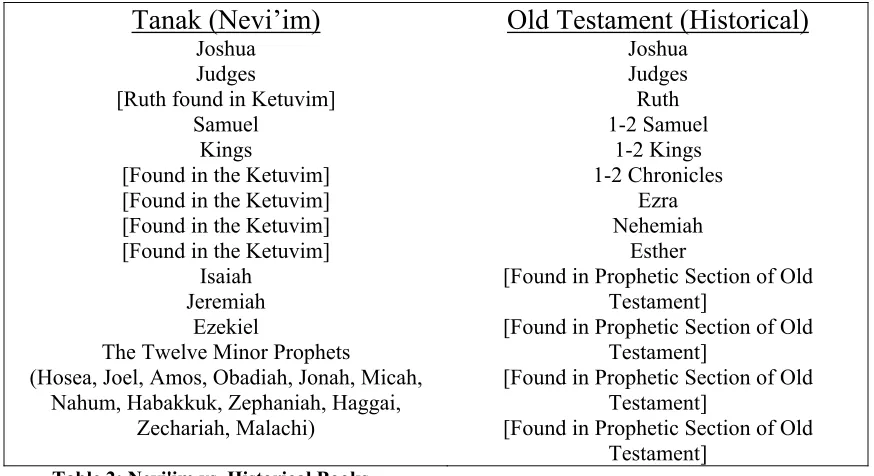
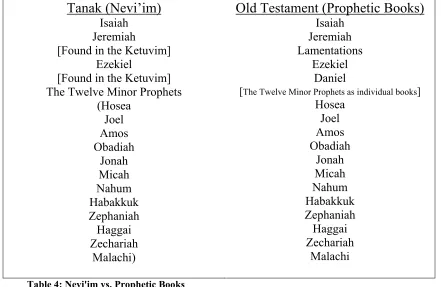
In this issue you will be pleased to learn what the difference between the Jewish Tanak and the Christian Old Testament is, read about former Fisher Faculty, Dr. Crombach’s quest to find and replace in a more visible place the bronze statue of St. John Fisher commissioned by the Fisher class of 1965, and enjoy some lovely poems by students and faculty members.
The Alumni Corner returns bringing us news about 4 former Fisher students, the two couples of Jodi and Jon, and George and Amy. The central focus of the journal remains Essays on Religion,
where you will find students’ papers on a film and on the current ecological crisis that we all need to respond to in a great variety of positive actions.
Before putting this copy down or passing it on to a family member or friend, take a brief mental detour to read how students view the world around them from the vantage point of their faith, or the way they reminisce about the influence their parents had on their human/spiritual growth.
Last but not least, discover who was Irving Singer, and follow the intricate presentation of a former Religious Studies Minor of the criteria followed by the early Christian Church in the formation of the Canon of the New Testament.
On the behalf of the whole Department of Religious Studies, I wish you good and thoughtful
reading, asking everyone – as always – to give some thought to contributing a writing for next
year’s volume 14 of Verbum.
Table of Contents
St. John Fisher at the College
Execution of St. John Fisher Saint of Steel
The Martyrdom of St. John Fisher
The World Seen through the Lens of Faith
The Power of Faith
Rest 496 – Works in Progress
New Testament Biblical Apocrypha and the Exclusion of Apocalypses from the Canon
Poetry Bend
Gifts of Heaven Faith as Roots
The Grad School Hermit Blueberries
Essays on Religion
The Book Thief: Through the Eyes of Death
The Ecological Crisis: Questioning Christianity’s Contribution Global Warming and Religion
Parent and Child
The Building Blocks of My Faith Walking in My Parents’ Steps
Faculty Essay
A Note on the Jewish Tanak and the Christian Old Testament Irving Singer (1925-2015)
Alumni Corner
Amy and George Jodi and Jon
Diversity Vision
How Can Different People All Fight the Same Battle if They Seem to Have Nothing in Common
St. John Fisher at the College
So, good Lord, do now in like manner again with thy Church militant; Change and make soft and slippery earth into hard stones; Set in thy Church strong and mighty pillars that may suffer and endure
Great labours, watching, poverty, thirst, hunger, cold and heat; Which also shall not fear the threatings of princes, Persecution, neither death but always persuade and think
With themself to suffer with a good will, Slanders, shame and all kinds of torments For the glory and laud of Thy Holy Name.
(This prayer was spoken in the last year of Henry VII; it was fulfilled In the author’s person twenty-sever years later on Tower Hill.)
[From the Preface (June 15, 1914] by J.S. Phillimore, M.A. to the 2-volume Commentary on the Seven Penitential Psalms
Execution of St. John Fisher
rebellion & disobedience against the world had him physically rotting
In a tower,
allegiance & obedience to The Lord had him spiritually flourishing
In a tower.
A saintly diamond formed under pressure of impending
Execution.
faithfully steadfast, his unshakable commitment to God’s plan, participatory in its
Execution.
he remained faithful under King Henry’s blade, to the moment of worldly death—
“Well done, good and faithful servant!”
from Cambridge corridors, to a king’s cold castle, to
Canonization.
Ripples of his radiant
soul transcend the Atlantic, landing
south of Lake Ontario. His
vision, from centuries
ago, executed
Here. *** Prize provided by
Dr. G. Thomas Crombach
Class of ‘65
Biology Department: 1967-2011
SAINT OF STEEL!!
At the conclusion of each episode of the 50s TV western “The Lone Ranger,” one of the characters would ask: “Who is that masked man?” The viewers, of course, knew the identity of the hero, as he raced off, with the famous cry to his faithful steed, “HiYo Silver, Away!!!”
And then there was the “Man of Steel,” Superman, “more powerful than a locomotive, faster than a speeding bullet, able to leap tall buildings with a single bound,” and so on and so forth. “Who is he?” the newsroom colleagues of his alter-ego, Clark Kent, at The Daily Planet, would wonder.
And who is represented by that life-size steel statue that stands at the top of the
My first job was to identify the person who had designed and sculpted it. Having seen it for many of its early years, the name “Jack Popham” had stuck in my mind, but I needed to confirm that. I contacted Nancy Greco, one of the College’s librarians who has
I checked the website of Holy Sepulchre Cemetery, and found that Mr. Popham had died in 1979, but there was no information about his date of birth, so early last summer I drove out to the cemetery, and, with his plot information from the website, found his grave. He had been born in 1925, so he was 40 years old at the time he did the statue, and a young 54 when he died. The news articles about the gift reported that he was a field engineer with Rochester Gas and Electric, so apparently his artistic talents were an avocation. They further report that the statue is made from steel plates which he then fused with an acetylene torch before adding a polyethylene coating; the work took 10 weeks, and weighs 150 pounds.
St. John Fisher, as we associated with the College bearing his name (should) know was the bishop of Rochester in County Kent, England, during the early 16th century, and also chancellor of Cambridge University, both offices assumed in 1504. One of his most supportive patrons was Lady Margaret Beaufort, who was mother to King Henry VII and thus grandmother of King Henry VIII. After Henry VIII became the king in 1509, Fisher became his confessor and a respected confidant; he helped Henry compose an
A look at the steel statue presented as a gift to the College by the class of 1965 will reveal several features that represent the different aspects of John Fisher’s legacy: as Bishop of Rochester, England -- the pectoral cross on his chest; as educator,
Chancellor of Cambridge University -- the book in his left hand, and as martyr -- the palm leaves in his right hand, a traditional symbol of martyrdom.
A new base was constructed for the statue by staff in the Physical Plant Department at the College, new identifying plaques were obtained, and the location was approved by President Rooney, all during this past summer, in time for the reunion weekend in September 2015. My classmates were very pleased!
So, now you know the story of the “Saint of Steel.”
_______________________________________________
The Martyrdom of John Fisher, Bishop of Rochester
"He is the one man at this time who is incomparable for uprightness of life, for learning and for greatness of soul.” Erasmus
"I reckon in this realm no one man, in wisdom, learning, and long approved virtue together, meet to be matched and compared with him.” Thomas More
Surrender, the others have done it
join the revolt, relinquish your past
be recognized, exulted, there’s no easier path.
Confuse not the divine with man’s desires
where truth shines perennial, vain is reform
resist the unreason, let His Kingdom come forth.
Man is the measure, time be not wasted
an earthly decree dictate anew
be one with the rest, a ruler of men.
Belong not to this world, but to heavenly abode
God is the refuge, the spring in the rock
He guides in the desert, all weakness redeems.
Follow the strong, preach the new gospel
conform to the day, safety is in numbers
preserve your status, and with it your life.
All souls thirst in this valley of tears
I hope for forgiveness, and won’t lead you astray
On my knees, swiftly united, blood and joy.
Stairway to Heaven At Mount Saint Michel, France
The World Seen Through the
Lens of Faith
*** Prize provided by
*** Prize provided by
Otto Tomotto's
300 Phoenix Mills Plaza - Victor, NY 14564
ottotomottos.com (585) 742-2070
Jessica Bolak
The Power of Faith
This past year has been full of great times and experiences, but as we all know, for every
high there is a low. As great a year it was, there were times of sadness and difficulties that
challenged my community. Every day over 100 people die from drug overdose in the United
States. In my hometown, Auburn, NY, heroin has taken the lives of many members of the
community and continues to threaten lives every day. While this issue has brought great tragedy,
it has also revealed something significant about my community.
Illness and death are problems that everyone deals with at some point in their lives. They
are obstacles that can tear a family apart, or bring it closer together. But the members of this
community that lost daughters or sons, mothers or fathers, sisters or brothers, reacted in such an
amazing way that was truly eye opening. With all of these tragedies and challenges came a
response different from expectation. In place of despair, anguish and blame, I have seen
acceptance, generosity, warmth, and welcoming, open arms. My community found comfort in
their religious beliefs and used them as a source of solace as well as support for one another.
The tragedy that surrounds my community has opened my eyes to the power of faith and
for a cause we all believe in. This made me realize that the tough times are when faith really
guides and strengthens us. The only way to make it through the hard times is to pray for one
another and to have faith in God. And that’s just what we did. Everyone within the community
supported each other, said prayers together in church, and prayed every day for the families that
lost loved ones.
It has become very evident that religion plays a powerful role during these hard times.
I’ve realized that the challenges in life are what make one’s beliefs stronger. It is amazing how
faith allows so much support to be shared between people who don’t even know each other.
Everywhere I go I observe the interactions between people, exchanging hugs, and saying “I’ll
pray for you.” These indications of faith have given the people of Auburn strength and the power
to combat drug abuse, and they give us hope for a better future. The challenges my community
faced have reinforced our relationships with God and with one another. Everyone has come
together for a united response to stand up against drug abuse and fight to save the lives of our
loved ones. None of this would be possible without our faith.
Mosaic on the façade of Santa Maria in Trastevere, Rome (Italy)
Rest 496
Vincent J. Marino
New Testament Biblical Apocrypha and the Exclusion of Apocalypses
from the Canon
The criteria for canonicity which led to the inclusion of the Book of Revelation in the New
Testament call into question the exclusion of other apocryphal apocalypses and revelatory
treatises. Biblical apocrypha is defined as texts that were at one time a part of the biblical canon
but no longer are, or texts that were never a part of the biblical canon at all but are widely known
and valued. Examples of writings that collectively make up the apocrypha are gospels, gnostic
texts, acts, epistles, apocalypses, fragments, lost works, and other miscellaneous texts.
Perhaps the most controversial and discussed texts of the apocrypha are the apocalypses.
The apocalypses discuss the “end times” of the world and portray what will happen when the
world is ending and how people will be judged for their lives on earth and invited to live in
heaven or be sent to hell. Several of these apocalyptic writings derive pseudonymously from
from other distinct sources, including the Apocalypse of Pseudo-Methodius, Apocalypse of
Stephen, and the Shepherd of Hermas. These stories are of much interest to people, as all people
of faith wish to live their lives in such a way that their ultimate destiny may be secured. For me
personally, this topic is of especially high interest as I have always had a sense of wonder and a
thirst for knowledge about what will happen to the human race in end times. If it were possible to
know the “truth” about the end times and what will happen to humanity, one would be hard
pressed to find a person who had little to no interest about it. In addition, the canon is of such
high importance to be a part of, as it is what is considered authority and what is to be believed
and passed down to subsequent generations as truth.
All of the apocalyptic texts were excluded from the current canon with the exception of
the Book of Revelation. For this reason, there is speculation that this text must contain something
that the others lack, or vice versa. Each text was written during a distinct period of time and had
specific origins, influences, and authors. There may be several reasons why the Book of
Revelation rose above the rest of the apocalypse theories and was included in the canon.
Comparison of each of the apocalypses will allow for a better understanding of the criteria that
ultimately led to the exclusion of every apocalyptic book except the Book of Revelation, and its
ultimate inclusion into the biblical canon. This paper seeks to compare apocalypses in order to
arrive at a better understanding of the exclusion of every apocalypse except the Book of
Revelation. The implications this has for the legitimacy of the criteria used to include the Book
of Revelation will also be examined. After all, who or what is deemed legitimate enough to have
Chapter 1: Inclusionary Criteria for the Book of Revelation into the Canon
The Book of Revelation is believed to have been written around the end of the first
century at some point around 96 A.D6. It was not included in previous canons for several
speculated reasons which will be discussed, but is included in the current canon. There is
speculation surrounding the true author of this text, and that may partially be attributed to its
initial speculation to be excluded from the biblical canon. The book’s authorship was initially
credited to John the Apostle, as in Revelation the author refers to himself only as “John4.” The
first early Christian writer to reference John the Apostle as author of Revelation was Justin
Martyr in the second century. In his text Dialogue with Trypho, he states that:
“And further, there was a certain man with us, whose name was John, one of the apostles of Christ, who prophesied, by a revelation that was made to him, that those who believed in our Christ would dwell a thousand years in Jerusalem; and that thereafter the general, and, in short, the eternal resurrection and judgment of all men would likewise take place. Just as our Lord also said, 'They shall neither marry nor be given in marriage, but shall be equal to the angels, the children of the God of the resurrection.”
Thus, that is the earliest cited reference to John the Apostle being the author of Revelation that is
known. However, several other early Christian writers instead reference a few alternative
authors; with some concluding John of Patmos and others believing that John the Elder is the
author. It is also possible that these two Johns are the same person, as was believed by the
earliest Christian scholars.
John of Patmos, also called John the Revelator, John the Divine and John the Theologian,
is believed by some modern scholars to have written Revelation. Whether it is truly known who
this exact “John” is or not, it is known that the Revelation from God came to him while he was in
exile on the island of Patmos, located near Greece. John was purportedly exiled from the Roman
Empire by Emperor Domitian as a result of anti-Christian persecution. This derives from early
on in the first chapter of Revelation, as he states “I John, your brother and partaker with you in
the word of God and the testimony of Jesus (Rev 1.9)1.” Although this “John” was present on the
island of Patmos, there is evidence still that argues it is not John the Apostle. Many scholars
argued that these two “John” characters were indeed the same person, but other early Christian
texts present writings that suggest otherwise. Writings from Dionysius of Alexandria and
Eusebius of Caesarea note differences in language and theological methodology between
Revelation and the Gospel of John. For example, Bart Ehrman states5:
“In any event, it can be stated without reservation that whoever wrote the Gospel (Fourth Gospel) did not also write this book. For one thing, the theological emphases are quite distinct. In the Gospel of John there is virtually no concern for the coming end of the age (contrast the Synoptics, with their proclamation of the imminent arrival of the Son of man); in the book of Revelation the end is nearly the entire concern. Even more importantly, as recognized even by linguists in early Christianity, the writing styles of these two books are completely different. Detailed studies have shown that the author of Revelation was principally literate in a Semitic language, probably Aramaic, and knew Greek as a second language.”
This citation discounts the possibility that John the Apostle could have written Revelation due to
fundamental style differences. In modern critical scholarship, it is now widely rejected that John
the Apostle was actually the author of that book10. It must not be discounted, however, that
authors of that time used pseudonyms to write for fear of being prosecuted7. This does not prove
that John of Patmos was the author due to the fact that Eusebius’ writings have roots in earlier
texts that connect to John the Presbyter.
John the Elder, also known as John the Presbyter and John the Divine, is another possible
author for the Book of Revelation*. After Dionysius of Alexandria declared that John the
Apostle was indeed not the author, the name of John the Presbyter appears in fragments written
by Papias of Hierapolis and Irenaeus of Lyons9. Eusebius, in fact, quotes the works of Papias in
his argument against John the Apostle having authored Revelation. One of Papias’ fragments,
History of the Church, is quoted by Eusebius:
“It is worthwhile observing here that the name John is twice enumerated by him. The first one he mentions
in connection with Peter and James and Matthew and the rest of the apostles, clearly meaning the evangelist; but the
Aristion before him, and he distinctly calls him a presbyter.This shows that the statement of those is true, who say
that there were two persons in Asia that bore the same name, and that there were two tombs in Ephesus, each of
which, even to the present day, is called John's. It is important to notice this. For it is probable that it was the second,
if one is not willing to admit that it was the first that saw the Revelation, which is ascribed by name to John.”
*Gospel authorship is generally attributed to John the Apostle, also referred to as John the beloved disciple of Jesus. He was the son of Zebedee
and Salome, and his brother was James the Apostle. The phrase “the Disciple whom Jesus loved” appears only in the Gospel of John and not in
any other New Testament accounts of Jesus. John 21:24 claims that the Gospel of John is based on the written testimony of this disciple.
These pieces of evidence do provide framework for a possible author, but cannot definitively
place the pen in the hands of someone who is agreed upon by all. There are still too many
speculations that can cause any of these ideas to be untrue.
There is no significant evidence that can disprove that John of Patmos and John the Elder
was not indeed the same person. There is evidence, as previously stated, that distinguishes John
the Elder from John the Apostle. There are several controversies surrounding Eusebius’
identification which remind us that a large part of this work is inevitably left up to interpretation.
For example, it is argued that Eusebius’ interpretation may have derived from his opposition to
the Book of Revelation and by distinguishing between two Johns he could discount the work and
provide fuel for having it excluded from the canon10. Also, Eusebius is quoted as saying, “Papias
was not himself a hearer and eye-witness of the holy apostles” which is contradicted in his
writing of the Chronicle in which he exclusively calls John the Apostle the “teacher of Papias.”
Nonetheless, it was probably included in the canon due to the fact that early scholars “believed
the author was, in fact, Jesus’ earthly disciple.19”
The author of Revelation is very important to this topic, because one of the major
inclusionary criteria for the canon here can be identified as the author.
*Polycarp of Smyrna appears to have been a direct associate of John the Apostle. His orthodoxy is widely accepted in many groups, and is
authored Revelation mentions that a book will be written and sent to seven churches, one of which is in Smyrna. Thus Polycarp’s writings are of
great interest.
It can be assumed that one of the most important criterions, if not the most important overall, has
to be the source of the text. Without legitimate citation and authorship, surely the Christian
church cannot teach such writings or use them as their doctrine. In this case, however, there is
not distinct evidence that can automatically select out one author. It would make the most sense,
in the eyes of the church, if John the Apostle were the author. That would mean the Revelation
received did truly come directly from God, as the apostles had the most direct and intimate
contact with him*. Without proof, authorship cannot be one of the inclusionary or exclusionary
criteria that allowed Revelation into the canon or that kept other apocalyptic texts out. Therefore,
another or a collection of other criteria must be more important than authorship if Revelation is
still to be superior to other apocalyptic texts and be included in the canon.
Although the authorship of Revelation is disputed, and it can seemingly be discounted
that authorship was not an important criteria in establishing the canon, the history of how the
twenty-seven books came to be accepted may perhaps shed some light on what was truly
important. The New Testament was arguably written in light of the Old Testament scripture, as
Paul seems to re-interpret them in the light of God’s new revelation in Jesus4. There is an
argument by David Meade that states, “previous revelation was actualized to meet the needs of a
new generation.b” That idea seemed to have been adopted by the early church, as it allowed
reinterpretation of the prophecies of the Jewish Scripture towards something that applied to Jesus
and the apostolic revelation of those times. This allowed for inspiration amongst not only those
Jesus and the apostles parallel with the Jewish Scriptures eventually took shape as the
authoritative stance similar to the scriptural tradition of the Jews.
By the end of the first century, Christians had a core of scripture that was more or less
firm across all boundaries of the church17. It was evident that each local church or area held that
same core, but with some slight variations on included texts within the fluid edges of the earliest
form of a “canon.” All of these collections contained, without much dispute, all writings of Paul
while the varying texts often included writings such as the Didache, the Shepard of Hermas, and
I Clement.
It was not until the middle of the second century when the first real challenge was
presented addressing the ambiguity of the loosely held “canon” by a man named Marcion.
Marcion was excommunicated by the Roman church for heresy on grounds of his own brand of
Christianity that was becoming a threat to the church. His idea was based on rejection of
Christian Scripture portraying Jesus as a fulfillment of the Jewish covenant. His theological ideas
caused him to become one of the first Christians to vouch for a specific list of books that could
provide guidelines for worship that were more specific. Although his proposed canon of books
was very small and did not hold value to the church, it sparked a movement within the church to
come to the defense of the other books that were excluded from Marcion’s canon15.
What can be drawn from this historical event is that the church did not wish to narrow its
views, and accepted diversity and plurality of the scripture that is ultimately represented in its
theology. In some ways, more of a definition of a true God was presented as a result of this
challenge. The narrow beliefs presented by Marcion allowed the church to reflect upon previous
areas of the scripture that did not allow room for growth. However, the next challenge presented
spiritual revelation. This event even reached so far as to eventually have some books excluded
from the canon because they were believed to be “forged in Paul’s name to further the heresy of
Marcion.”
A group of Christians claiming to follow a man named Montanus claimed to be a new
religion of the Holy Spirit and celebrated “ecstatic outbursts that it regarded as the only true form
of Christianity.” Thus, any “divine inspiration” received would be considered scripture and
would open the canon to a perhaps endless outpouring of inspiration. The church was then
therefore forced to assess what inspiration was legitimate as the self-proclaimed prophets of
Montanism were challenging the notion of inspiration. The response of the church was to argue
that the canon of scripture should be limited only to books that had apostolic and eye-witness
authority15. This decision by the church would prove to be one of monumental magnitude as it
set the boundaries for an important standard of criteria for canonicity. A special type of
inspiration was needed, and the Montanist movement caused the church to mark the end of what
it would allow in terms of plurality and diversity in its ideologies.
The fourth century saw the first official list of twenty seven books to become the canon
for Christian Scripture. The list was published in the middle of the century and was proposed by
Athanasius, the Bishop of Alexandria15. The list of books that he created are the books that are
included in the canon today, but in a slightly different order. It must be noted that it was not
simply published without dispute, as at least three synods were held to debate the ratification of
the list around the turn of the fifth century. There are several reasons to why it is believed that
this canon was able to gain approval, including support of some important theologians of the
The first reason was that there was an acceptance of a similar list of books by the
Western church, as argued by Jerome. Jerome argued for the acceptance of famously disputed
books, such as Hebrews, 2 and 3 John, 2 Peter, and Revelation15. It is also said that Jerome’s
translation of the Bible mirrored that of Athanasius’, drawing even more of a parallel between
the theology of the two scholars. A second reason was that the proposed canon was also
considerably further supported by Augustine, another of the Western church’s leading scholars
on three separate occasions over the course of twenty years in Hippo, Carthage, and Carthage
again at a later date during the third and fourth centuries14. The fact that this proposed canon
warranted significant support from the scholars mentioned means that the ideologies must have
been nearly identical. Thus, this indicates that at the synods within the discussions held about the
canon being formed there must also have been some opposition to including Revelation.
One last challenge to the New Testament canon came in the sixteenth century from
Martin Luther and the reformers. Luther, like Marcion, wished to change the canon to reflect his
own theological beliefs*. His efforts convinced the Lutheran church to maintain a more open
approach to the canon, and this included refraining from having lists of books as parts of
confessional statements15. Other reformers, however, continued to support the twenty seven
books chosen originally as authoritative. Also, the statement of the Council of Trent in 1546
provided an additional authority over the sacred nature of the Bible, including the New
Testament canon.
*It is important to denote between canons of the Jewish scriptures. Palestinian scripture had to be written in Palestine, and Luther embraced only
this canon. Catholic and orthodox churches embraced the Alexandrian canon. This is acute at the time of the reformation as there is a difference
Several important pieces of information can be taken from this trace through history of
the formation of the New Testament canon. First, the challenges that were presented to the
church caused an emphasis to be placed on authority rather than inspiration. This is key to the
argument of criteria of canonicity because it caused a narrowing of the books that would be
considered acceptable to be included in the canon. The movements of reformation appealed to
the limits of what was considered to be acceptable inspiration by the Christian church. It was
also an appeal to the theology and doctrine of the apostolic and eye-witness tradition, as no book
that did not meet that specification was not to be accepted into the canon. Also of importance to
this argument is the fact that when the canon was being proposed, there had to be significant
backing for certain disputed books, which included Revelation. This still reaffirms that this
process of selecting a canon was not so cut and dry, and that there must be certain other special
characteristics or tradition of the book that allowed it to gain entrance into the canon. Especially
with the eye-witness and apostolic tradition and the uncertainty surrounding the inspiration and
authorship of Revelation, a certain “overriding factor” must be present about the writing. The
criteria of eye-witness tradition and apostolic authority can therefore be discounted as
exclusionary criteria as the inspiration of Revelation is unknown. There may be some further
information that can be assessed by looking at canons that almost became accepted and how they
came to be.
Two proposed canons in particular gained much popularity during their time and had
considerable support. The Muratorian Canon, also known as the Muratorian Fragment and the
list of Eusebius of Caesarea are considered by many to have laid the foundation for the New
Testament that came to be accepted3. The Muratorian Fragment is an interesting piece of text that
considered to be authoritative by the church, and it consisted of four separate categories. The
fragment was composed originally in Greek and is believed to have been written at some point
towards the end of the second century because they author, who remains anonymous, refers to
Pius I.
The first category contained books that were universally accepted by the church such as
the Gospels, the Book of Acts, letters to Paul, letters of John, Wisdom of Solomon, and the
Apocalypse of John3. This categorization is somewhat contradictory to the information presented
in the previous paragraph. When the present canon was being disputed, there was speculation
over Revelation and whether it should be included or not. However, the Muratorian Fragment is
perceived to have been written at the turn of the second century. The current canon was not
accepted until the fourth century, insinuating that there may have been a historical event that
challenged the authority of Revelation3. It is entirely possible that the Montanist movement may
have had something to do with this, as it was one of the major limiting factors that caused the
transition of stressing authority over inspiration. For that reason, the early church scholars may
have recognized the lack of clarity in Revelation’s authorship and for the first time caused
speculation as to whether the book should be included in the canon or not. Still, something must
be identified that caused acceptance into the canon without much speculation in the fourth
century.
*Books that were excluded from the Protestant canon exclude things supported in the Catholic canon of Old Testament such as the Book of
Wisdom, Tobit, and the Maccabees. These dealt with things such as prayers for the dead, Purgatory, and intercessions of angels and saints. The
Protestants accept the Catholic New Testament, but have adapted the Jewish Old Testament.
The second category contains one disputed book, the Apocalypse of Peter which was and
the exclusionary criteria for this book will appear later in this paper, but a general trend can be
noted. There always seems to be speculation around apocalyptic writings, and they either barely
make it into the canon or are only just excluded. The content of the apocalyptic writings may lie
on the blurred edge of what is acceptable for canon and what is not. The Apocalypse of Peter is
the second most accepted apocalyptic theory after Revelation, and extensive analyses of this text
as well as apocalypses of the other apostles are warranted due to the purported requirements of
the biblical canon which include eye-witness and apostolic authority4. The third category
contained books that were not acceptable for public reading and worship, but were deemed
acceptable for private reading. The most noteworthy book in that collection is the Shepherd of
Hermas. Lastly, the fourth category lists books that should be rejected altogether by the church.
Bart Ehrman outlines four criteria for canonicity based on the analysis of the Muratorian
Fragment. These proposed criteria are favorably outlined by the works considered in the first
category of the Muratorian Fragment, and define what qualifies a scripture to be included3. The
first criterion is the writing being ancient. Throughout time, proto-orthodox authors have
maintained the importance of a text being composed near the time of Jesus. This does not mean
ancient in terms of how the word is truly received, but ancient in the sense pertaining to the
origin of the religion in Jesus’ time. Therefore, any books to be considered worthy of inclusion
must have been written close to his day to be considered authoritative. Again as mentioned
above, a stress of authority was placed over inspiration, so these criteria mainly focus on areas
that justify authority. It was for this reason that the Shepherd of Hermas was not included, as at
the time of the decision of the final canon the work was considered to be too recent and therefore
The second criteria is defined as being apostolic, meaning it was written by an apostle or
at the very least by one of their companions3. One might question why so much importance is
placed on the apostolic writings and why they are so significant. First off, the words of the
apostles are considered to carry the most authority because the apostles were the closest
companions of Jesus, and much of what he said directly to them is believed to be in the words of
the apostles. Second, the tradition of actual words of the apostles was always the way that
teachings were passed around. However, the apostles could not be present in all churches across
the ever-expanding empire. Therefore, the words of the apostles came to be written down by
their own hand. Much controversy arose over this, as mentioned above with pseudonyms6. Early
writers recognized that apostolic texts contained the most authority and carried the highest
purity, and would sometimes forge writing under one of the apostle’s names. The most classic
example of this is forgery of some of Paul’s writings by Marcionites to try and put a spin on the
theology and Christology proposed by Paul3. This criterion is clearly the main one that troubles
the Apocalypse of John repeatedly. Since it was not and is still not known which “John” wrote
the text, it was widely rejected by Eastern proto-orthodox scholars through the first four
centuries. However, another criterion may have allowed it to surpass this seemingly strict
requirement.
*The Epistle of Barnabas is believed to have been excluded from the canon due to a pseudonymously-written issue. It is now ascribed
to an unknown early Christian teacher, as Eusebius rejected the work as being written by Barnabas.
The third criterion is that the text must be Catholic3. This means that the books had to
have widespread use among the “established” churches and were therefore considered universal.
Any text that did not have widespread popularity was therefore excluded, such as the Apocalypse
of Peter. The author appeared to favor the book, but he also noted that it was not accepted for
shorter epistles, such as 2 and 3 John, 2 Peter, and Jude were not originally included. However,
those works were later determined to be apostolic and were thus included in the canon.
The fourth and most “important” criterion as deemed by Ehrman is the text being
orthodox3. This is deemed the most important criterion because it deals with a book’s theological
character which ultimately mattered the most to proto-orthodox Christians. The other three
criteria can be almost viewed as symbionts to this one in several different aspects. For example,
if a book was not orthodox, then it was not apostolic or ancient, or even Catholic for that matter.
This can be seen in Serapion’s evaluation of the Gospel of Peter. He knew that Peter did not
write it because it contained a seemingly docetic Christology, and to him Peter would obviously
have not written something like that. Although this may not be the way that current scholars
solve issues of authorship today, it was a significant deciding factor among the proto-orthodox. It
was by this criterion that the Marcionite forgeries of Paul were found.
Another proposed canon came from Eusebius of Caesarea in the early fourth century in
the form of his Ecclesiastical History3. It addressed the same issue of the books to be included as
canon for the Christian church. Eusebius counted “the votes of his witnesses” in order to gauge
the support of each book5. His first category was the books that were believed to be universally
accepted. This list included the four Gospels, the Book of Acts, Pauline epistles, 1 Peter, and 1
John. Again, and exclusively this time, he noted question as to whether the Apocalypse of John
should be included in the category13. He eventually chose to include it in that category as well as
those he concluded were to be rejected. This is an interesting ideology, as it seems as though he
was reluctant to include it in his category of books that were universally accepted.
The second category was similar to the second category of the Muratorian Fragment in
category included James, Jude, 2 Peter, and 2 and 3 John. The last category contained books that
were to be rejected due to significant doubt about their apostolic authorship and character, and
included the Shepherd of Hermas, Apocalypse of Peter, Didache, and Acts of Paul. This
exclusion is rightly so based on the established criteria of eye-witness and apostolic character set
by the church in the current canon at the end of the fourth century13. There is much support for
the notion that the current canon may have used much of this list as well as the Muratorian
Canon as templates.
There was considerable disagreement in the work by Eusebius over whether Revelation
was to be included in the canon or not. There were many different types of debates, including if
Revelation’s teaching was to be taken seriously and if it was written by John the Apostle or not14.
The actual substance of the debates related to the doctrine of the scripture, and whether a
“potentially crass millenarian view” could be accepted3. It is noted in his work that these issues
were not quickly dissolved, however, as he presents the work as his attempt to “summarize the
New Testament.”
Much of the presented evidence thus far has shown that the Book of Revelation received
scrutiny under nearly every circumstance when its inclusion in the canon was proposed. The
focus of the paper will now shift to criteria of several documents that granted their exclusion
from the canon. This includes the works listed in the introduction to the paper, and will delve
into the differences they share or may even have in common with the Book of Revelation. Again,
the main question here focuses on the major differences that set Revelation apart from all the rest
of the apocalypses. The inclusionary criteria were already outlined, so now each work will be
Chapter 2: Exclusionary Criteria
Perhaps the best place to establish exclusionary criteria for books that did not make it into
the present canon is with the Apocalypse of Peter, as it is recognized by many leading authorities
as the second most accepted apocalypse behind Revelation. This book can be seen in both the
Muratorian Fragment as well as the list of books proposed by Eusebius of Caesarea as narrowly
missing widespread use in the church as material to be preached. For these reasons, it is possible
that this text may meet one or a few of the inclusionary criteria outlined in the first chapter of
this study. Therefore, only partial qualification as outlined by the inclusionary criteria can be
defined as an exclusionary criterion, since Revelation met all four of criteria outlined by Ehrman.
As we take a closer look at the origins and influences of this text, it may be possible to define
more concrete exclusionary criteria as outlined by the inclusionary criteria.
There are three different apocalypses which all claim to be written by Peter, the disciple
of Jesus. The one discussed here was discovered in the tomb of a Christian monk in 1887 along
with the Gospel of Peter. This is the most recognized and authoritative version of the Apocalypse
of Peter and the Ethiopic translation appears to be the most accurate portrayal of the text4. The
text can be dated back to the second century, and as stated above was believed to have come
directly from the pen of Peter himself. The text was definitely well versed in early Christianity,
and some churches even used the text as a part of the New Testament Scriptures. We once again
traverse the lines of the Muratorian Fragment for reference, as it states “the Apocalypses also of
John and Peter only do we receive, which some among us would not have read in church.” As
the earliest known source of a proposed canon, the Muratorian Fragment carries a significant
outlined in the fragment itself surely set a benchmark of what was to be included. Why, then,
was the Apocalypse of Peter mentioned on the same level as the Book of Revelation or the
“Apocalypse of John” as it is referred to? It should be noted that there is significant difference in
the stories, as Revelation portrays the end of an age and how the world will come to an end, and
the Apocalypse of Peter determines the fates of all those who have died. It offers the first notions
of heaven and hell, many of which we believe them to actually be similar to. The apocalypse also
depicts graphic punishments and grim pictures within its lines. An examination into the influence
of the Muratorian Fragment and the other proposed canons may provide some insight as to why
the Apocalypse of Peter had authority in the days of early Christianity.
The Muratorian Fragment dates back to the second century, as mentioned above, which is
along the lines of when some of the apostolic texts were being accepted as authoritative3. There
is some evidence that suggests the Muratorian Fragment contains influence from Alexandria.
This evidence comes directly from the fragment’s inclusion of the Apocalypse of Peter into the
canon, due to the fact that this apocalypse falls into the genre of Clementine literature. It is
believed that Clementine literature was popular in Alexandria during the early centuries, due to
Clement himself who authored several important teachings and lived in Alexandria15.
Clement of Alexandria was heavily influenced by Hellenistic overtones, more so than any
of the other Christian thinkers of his time12. Names such as Plato and the Stoics were familiar to
the mind of Clement, and his major works showed these influences. A scholar of Clement at the
Catechetical School of Alexandria by the name of Origen was born in 185 and was regarded as a
prodigy early on in his childhood. It was noted by Eusebius that he was appointed to be the head
of the famous school in Alexandria as a teenager, and would go on to become the leading
own canon of New Testament Scriptures. He makes references to the canon, and the references
can show how the canon was beginning to become defined in Alexandria in the early third
century11. There is something truly interesting to note here; and that is the fact that Origen
disputes the inclusion of Revelation into the canon. He says,
“And why do we need to speak of the one who reclined on Jesus’ breast, John, who left behind one Gospel,
while admitting that he could produce so many that the world would not be able to contain them [John 21:25]? He
also wrote the Apocalypse, after being ordered to be silent and not to write what was spoken by the voices of the
seven thunders (Rev10.3-4). He also left behind an epistle of a very few lines, and possibly a second and third. For
not everyone agrees that these are genuine. But taken together, both do not contain a hundred lines.”
There must have been a point of disconnect between the time that the Muratorian Canon was
proposed and when this was proposed. There also must be an underlying difference of influence,
which is again puzzling as the Muratorian Canon appears to have the Clementine influence with
the inclusion of the Apocalypse of Peter, which was taught to Origen. All of this knowledge and
influence circles around Alexandria, which was the authority of proto-orthodoxy during the time
of canon development. This theory is further backed by the canon proposed by Eusebius of
Caesarea.
Eusebius of Caesarea, known as “Father of Church History,” is believed to have been
born around 260 and was a Roman historian of Greek descent. He lived during the time of
Roman Emperor Constantine, and purportedly had support from him. He also identifies Pope
Dionysus of Alexandria as a contemporary14. Thus, the influence of Alexandrian
proto-orthodoxy was present during his time. In fact, the main source of dogmatic inspiration of
Eusebius was indeed none other than Origen of Alexandria. Here, we will take a detour to
summarize Athanasius of Alexandria to lead into the crossing of paths between him and
Athanasius of Alexandria proposed the canon that eventually came to be accepted as the
current canon. His proposed list of twenty-seven books also had influence of Clementine
literature in Alexandria, but did not include the Apocalypse of Peter in his list or as a
recommended text otherwise, unlike the Shepherd of Hermas which he declared may be read3.
Eusebius included the Apocalypse of Peter as a book that is “false” or pseudonymously written.
Therefore, it is agreed upon by two of the most important early Christian scholars that this text
was not to be included in the canon8. The two scholars were both present at a meeting in
Constantinople, of which Athanasius and Eusebius were both bishops of their respective areas.
This conveys heavy influence that these two proposed canons from these scholars carries, and
therefore the Apocalypse of Peter not being included in either one serves as an exclusionary
criterion in itself. This is puzzling based on the influence of the work, but nonetheless an
immensely important discovery was probably the ultimate reason that it was excluded from the
canon.
As previously stated, writing under a pseudonym was not uncommon in the times when
scripture was being written, due to fear of being condemned for heresy and exiled6. This brings
difficulty to deciding which scripture belongs in the canon due to the fact that hundreds of false
works were produced, and scholars had to decipher which ones were truly written by their
claimed authors and which were falsely claimed. This clearly violates one of the major
inclusionary criteria for being accepted into the canon, which is being from apostolic descent3.
This was inherently too much of a deficit for the early councils to overlook, and rightfully so as
the true author is not known and therefore cannot be entrusted with being a part of the New
pseudonymous composition. However, I will later discuss theories of pseudonymity and the
credibility that they may have.
The next work that will be examined and narrowly missed acceptance into the canon is
the Shepherd of Hermas. This text was fairly popular in early Christian churches, and was still
accepted as able to be read in church by the anonymous author of the Muratorian Canon4. The
text is a very unique and interesting one, and is a different type of apocalypse that still fits under
the classical definition. An “apocalypse” is defined as a disclosure or revelation13. Although is
not a revelation about the end of an age like most of the other apocalypses, it is nonetheless a
revelation that brings ethics into the spotlight. It is revelatory in the sense that it contains five
visions, twelve mandates, and ten similitudes (parables). The work was composed by Hermas,
who was a former slave and evidence suggests that he was the brother of Pius I, the bishop of
Rome.
“But Hermas wrote The Shepherd very recently, in our times, in the city of Rome, while bishop Pius, his
brother, was occupying the chair of the church of the city of Rome. And therefore it ought indeed to be read; but it
cannot be read publicly to the people in church either among the Prophets, whose number is complete, [12] or
among the Apostles, for it is after their time.” –Muratorian Fragment
Since the substance of the paper appears to be in line with Christian doctrine, a few deciding
factors probably kept this book out of the canon. The first, and perhaps the most accurate, is that
it was not ancient as denoted by the quote above. Clearly, since the text is dated to approximately
the middle of the second century. This date is considered to be too far after the time of the
apostles, and thus was the main exclusionary point that perhaps kept the Shepherd out of the
canon. This, however, raises the question of what is considered to be too late or too far removed
from the time of the apostles? Since Revelation was written towards the end of the first century,
narrow window. One piece of evidence, however, places the dating at least “one hundred and
fifty years after the Christ child” due to how Jesus is spoken of. He is mentioned as the “Son of
God” and never as “Christ” or “Jesus.” The “Son of God” title is more of an Egyptian and
Persian deist concept18. Although this was never spoken of explicitly, the determination of
valuable substance should be drawn from the shortest amount of time possible after the apostles
to ensure credibility.
The second factor that could have played a role of this text not getting into the canon was
that it was not very well received amongst a few popular early scholars, such as Clement of
Alexandria15. His well-known influence in the era could very well have prevented the text from
becoming widely used by all churches, allowing it to meet at least one of the criteria for
inclusion2. Also, an additional argument may be made that this document contained adoptionism.
Bogdan G. Bucur notes how widely accepted the text was among “orthodox” Christians, but was
never criticized for portraying a style of adoptionistic Christologya. The culmination of these
factors may very well have solidified the exclusion of the Shepherd of Hermas from the New
Testament canon.
The Apocalypse of Paul was another apocalypse that did not gain entrance into the canon.
This is a third century document, and the original version has been lost4. It has been
reconstructed from later translations, but the original is believed to have been written in Greek.
This apocalypse, similarly to the Apocalypse of Peter, presents a detailed vision of heaven and
hell purportedly experienced by Paul the Apostle. The text can be viewed closely as almost a sort
of expansion or rearrangement of the Apocalypse of Peter, but with a few differences2. It is an
extension in the sense that it frames the reasons for the visits to heaven and hell as Paul being a
role in shaping early Christian morals as it portrayed many details about the afterlife and how
people came to believe it.
The origins of this book are quite interesting as it appears to use the Apocalypse of Peter
as a source5. Also, the book itself was not written by Paul, but by a pseudonymous author. Paul
himself is not believed to have written the book as in it, there is a quote that reads that the
content of the book includes things that “could not be uttered.” Thus, the reason here for a
pseudonymous author may be viewed as more credible than other cases as someone was merely
communicating what was observed by Paul. It is also interesting to note the amount of parallel
between this text and the one by Peter. It may be entirely possible that Peter had communicated
his experiences to Paul, and that Paul later had his own experience. However, there is no
evidence that can disprove Peter and Paul having their own unique experiences. This in turn
would provide more truth to the message contained in both of the texts, as nearly the same
experience was had by two Apostles. We then have to ask if this was the case, then how could
the early Christians ignore the content and label the books as apocrypha and not canonical?
This leads to a challenge of pseudonymous work being an exclusionary criterion. The
reasoning of the church is that unless the author is of apostolic origin, then the text cannot be
trusted as it may portray different views, be altered, or even heretical. This is not bad reasoning,
as they only wish to ensure the most authentic content will be included in the canon, but what
about the special circumstances such as the one listed above? Both apocalypses from Peter and
Paul were written pseudonymously, but the possible reasoning behind may just reveal a weak
point in the reasoning for excluding these books from the canon. If both Peter and Paul were
instructed to or could not bring themselves to utter what they saw, and kept some type of record
may never know that the source was true, but for that reason I believe that the texts should not
receive as little credibility as they are granted.
Yet another apocryphal apocalypse to be discussed is that of Thomas. This apocalypse is
of importance to this discussion because it is similar to Revelation, but is written in a more
straightforward manner with less mysticism4. Therefore, since it is similar to the book of
Revelation and the apparent author is known and not pseudonymous, why is this text not
included as canonical? According to Milton Gatch, the text was “most likely accepted as
canonical in certain parts of Western Christendom in the ninth and tenth centuries.c” Although
this is not true across the spectrum of Christianity, there is something to be said for a certain part
accepting this text as canonical.
The only possibility that comes to the forefront when considering the exclusion of this
text from the canon is the recentness of which it was written. Though an exact date cannot be
placed on an original composition, and the earliest hypothesized date only dates back to the
eighth century18. Many different interpretations and translations of the seemingly mysterious and
unnamed “text” at the time may also have clouded the reputation of this book as well. Therefore,
we can assume that it is out of the reach of being “ancient” as designated by the inclusionary
criteria.
*The fifteen signs of doomsday stem from the Apocalypse of Thomas and are found in many post-millennial manuscripts in Latin and in the
vernacular. These signs had influence in medieval Western literature and shaped the minds of people for how the world would come to an end.
All of these texts discussed in this chapter are unique in their own right. Although some
draw some strong parallels to each other or even to other canonical texts, none of them were able
including pseudonymous composition, date written, and influence of early Christian scholars.
These criteria were ultimately outlined by the inclusionary criteria from the first chapter of this
discussion, yet there may be some weak spots in the exclusionary criteria and therefore
ultimately the inclusionary criteria.
What I believe is the strongest argument against the inclusionary criteria is the
pseudonymous authorship of certain texts. Even though certain texts such as the apocalypses of
Peter and Paul were not written by the apostles themselves, they should not be excluded only on
the fact that they were not penned by the Apostles. Something being written down in a matter to
be communicated solely for the fact that the original experience could not be uttered classifies
credibility. However, the church disagrees as there is too much to sort through to prove that these
texts were written pseudonymously for the right reasons. For that reason until solid evidence can
be presented that would otherwise prove the credibility of the authorship, the inclusionary
criteria will not be overridden.
The inclusionary criteria established are entirely thorough and consistent, except for
Revelation in which the real reason for its inclusion remains unknown. The inclusionary criteria
outlined and the exclusionary criteria can explain the inclusion and exclusion of every book
except for Revelation. Perhaps the author of Revelation will never truly be known, but for now
the message and other criterion met by the book outweigh the competitors and have allowed it to
stay in the canon. It is possible that it may be time for a re-evaluation of these inclusionary
criteria by the church, and perhaps even a re-evaluation of the canon to allow new books in and
old books to be removed. In conclusion, the inclusionary and exclusionary criteria as defined by
the Christian church and exemplified by the current list of New Testament books are consistent
Works Cited
1. The Holy Bible, New International Version. Grand Rapids: Zondervan House, 1984.
Print.
2. Carmichael, P H. “Inspiration and Canonicity of the Bible: An Historical and Exegetical Study.” Interpretation 12.3 (1958): 358–359. Print.
3. Ehrman, Bart D. Lost Christianities: The Battles for Scripture and the Faiths We Never Knew. Oxford University Press, 2005. Print.
4. ---. Lost Scriptures: Books That Did Not Make It into the New Testament. Oxford University Press, 2003. Print.
5. ---. The New Testament: A Historical Introduction to the Early Christian Writings. Oxford University Press, 1997. Print.
6. ---. The Orthodox Corruption of Scripture: The Effect of Early Christological
Controversies on the Text of the New Testament. 2nd ed. Oxford University Press, 2011. Print.
7. Elliott, J K. “New Testament and Christian Apocrypha. II: Collected Studies.” Journal of Theological Studies 61 (2010): 750–753. Print.
8. Graves, Michael. “Apocryphal Elements in the New Testament and Qurʼān.” Journal of
Ecumenical Studies 47.2 (2012): 152–166. Print.
9. Jacobs, Andrew S. “The Disorder of Books : Priscillian’s Canonical Defense of
Apocrypha.” Harvard Theological Review 93.2 (2000): 135–159. Print.
10.Klug, Eugene F A. “Revelation and Inspiration in Contemporary Roman Catholic
Theology.” Springfielder 26.3 (1962): 9–22. Print.
11.Leiman, Sid Z. “Inspiration and Canonicity : Reflections on the Formation of the Biblical Canon.” Jewish and Christian Self-Definition, 2. Philadelphia: Fortress, 1981. 56–63.
EBSCOhost. Web.
12.Morton, Russell. “Glory to God and to the Lamb: John’s Use of Jewish and
Hellenistic/Roman Themes in Formating His Theology in Revelation 4-5.” Journal for
the Study of the New Testament 83 (2001): 89–109. Print.
14.Peckham, John C. “The Canon and Biblical Authority: A Critical Comparison of Two Models of Canonicity.” Trinity Journal 28.2 (2007): 229–249. Print.
15.Sheeley, Steven M. “From ‘Scripture’ to ‘Canon’ : The Development of the New
Testament Canon.” Review & Expositor 95.4 (1998): 513–522. Print.
16.Smyth, Kevin. “The Criterion of New Testament Inspiration.” Catholic Biblical Quarterly 2.3 (1940): 229–244. Print.
17.Thomas, Robert L. “Correlation of Revelatory Spiritual Gifts and NT Canonicity.”
Master’s Seminary Journal 8.1 (1997): 5–28. Print.
18.Unger, Merrill F. The New Unger’s Bible Dictionary. Chicago: Moody Press, 1988. Print. 19.Zonta, B. "I codici GLPV dell' Elementarium Papiae: un primo sondaggio nella
tradizione manoscritta ed alcune osservazioni relative," Studi Classici e orientali 9 (1960) 76–99.
Texts that could not be accessed:
a) Bucur, Bogdan Gabriel. Angelomorphic Pneumatology: Clement of Alexandria and Other
Early Christian Witnesses. BRILL, 2009. Print.
b) Kruger, Michael J. The Question of Canon: Challenging the Status Quo in the New
Testament Debate. InterVarsity Press, 2013. Print.
c) Rćd and Frofer: Christian Poetics in the Old English Froferboc Meters. Rodopi, 2012.
POETRY BEND
*** Prize provided by
2133 Five Mile Line Rd
*** Gifts of Heaven
Children complain about Sunday morning church They don’t want to get out of bed
Jesus didn’t complain when sentenced to death And up on the cross he bled.
It isn’t “forced” and it isn’t “unfair” To spend an hour out of their day
God knows, children need a bit of God in their life As they are the future, we pray.
Parents have the most crucial role To raise their children through the daily crises
Strengthen them to mirror you, Lord No matter what situation arises.
Our children will be parents someday So we must train them now To always trust and believe in God
As that is the sacred vow.
We teach them to know the love of God And appreciate his saving grace They truly are the gifts of Heaven
And can save the human race.
Faith as Roots
At the bottom of a hill Sits a small seed It sits small but still When the winds hit the sea
It holds its patch of ground With one hand dug deep Through all the nasty weather
This seed begins to creep
It never stops believing In that deep dug hand Upon the strongest root
A forest can stand
Faith can be our roots This world one day will see It can be our house of bricks When “the wolf” begins to breathe
The Grad School Hermit
Retirement for peace and for instruction did not turn out to be what I’d supposed:
The walls were mostly of my own construction, the boundaries were mainly self-imposed. If Julian grew tired of her tower,
she left no record for posterity.
Myself, I blossomed in my prison-bower: except on rainy nights. I loved to be immured by dissertation in the morning, or on a night when it was calm and clear. Storms and blizzards, a tornado warning, could paralyze me, though, with lonely fear. But You were there as well: I should have known to have some courage: I was not alone.