International Research Journal of Humanities, Language and Literature Vol. 3, Issue 1, Jan 2016 IF- 2.255 ISSN: (2394-1642) © Associated Asia Research Foundation (AARF) Publication
Website: www.aarf.asia Email : [email protected] , [email protected]
STUDY OF EMOTIONAL INTELLIGENCE AMONG ADOLESCENTS IN
RELATION TO THEIR WELL-BEING
Rajdeep Kaur Assistant Professor
GHG Khalsa College of Education, Gurusar Sadhar.Ludhiana.
Education helps in developing all the aspects of individuality namely physical, mental, moral,
emotional, social and spiritual. It enables to meet their basic needs and necessities of life. Life is
not always smooth sailing but a haphazard process. Emotional Intelligence is the prominent
factor. Education is not only the acquisition of bookish knowledge but also includes knowing,
understanding and handling emotions in the right manner, at right time and in right way.
Emotional Intelligence is one of the latest “BUZZ WORD” in education. Researchers such as
Salovey & Mayer (1990) and Goleman (1995) have worked to make the educators realize the
importance of Emotional Intelligence. They described Emotional Intelligence as a set of skills
that involve the ability to monitor one‟s own and others‟ feelings and emotions to discriminate among them and to use this information to guide one‟s thinking and actions. Emotions have
ABSTRACT
The present study has been undertaken to study emotional intelligence of adolescents in relation to
their well-being. For this study 200 students of 10+1 class of government senior secondary schools
of Ludhiana city were taken. Emotional Intelligence Inventory (Mangal and Mangal, 2012) and
General Well-Being Scale (Kalia and Deswal,2012) by were used to collect the data. Descriptive
survey method was used. The results of the study shows that there exists a average positive
correlation between emotional intelligence and well-being among adolescent boys as well as girls
on the basis of their physical, emotional, social and scholastic well-being.
always been seen belonging to the heart while Intelligence belongs to the brain. It is thus the
combination of both. The concept of Emotional Intelligence refers to how intelligently we
control our emotions. It refers to the capacity for recognizing ourselves and for managing our
emotions well and to turn negative feelings into positive ones
Emotional intelligence constitutes three psychological dimensions:
All these motivate individuals to recognize truthfully, interpret honestly and handle tactfully the
dynamics of human behavior.
„Health Is Wealth‟ is a universal truth. The constitution of W.H.O defines health as a state of
complete physical, mental and social Well-Being and not merely an absence of disease or
infirmity. The Well-Being of people is the basis of prosperity and development in the country.
Achieving Well-Being in the general population is the goal of modern civilization. Most of the
countries are now encouraging their population to led healthier life by engaging in health
promotion, physical as well as psychological. With the apparent increase in the pace of life in our
societies, adolescents in particular have been identified as challenging period of life span. For
adolescents dealing with multiple changes in all domains of their lives, well being is important
factor.
Well-Being may be defined as the subjective feeling of contentment, happiness, satisfaction with
life‟s experiences and one‟s role in the world of work, sense of achievement, utility
belongingness and no distress, dissatisfaction or worry etc. well being requires harmony between
mind and body. It implies sense of balance and ease with pressures in a person‟s life. There is no
under stimulation and no excessive negative stress; above all, there is a sense of control over
one‟s destiny.
Emotional intelligence
Emotional competency
Emotional maturity
Well-Being is concerned with how and why people experience their lives in positive ways,
including both cognitive judgment and affective reactions. As such, it covers terms as happiness
morale and positive affect.
OBJECTIVES OF THE STUDY:- The present study intends to fulfill the following objectives.
1. To study the relationship between Emotional Intelligence and Well-Being among
adolescents (Total sample , boys and girls)
2. To study the relationship between Emotional Intelligence and physical Well- Being
among adolescent (Total sample, boys and girls).
3. To study the relationship between Emotional Intelligence and emotional Well-Being
among adolescent boys and girls.
4. To study the relationship between Emotional Intelligence and social Well-Being among
adolescent boys and girls.
5. To study the relationship between Emotional Intelligence and scholastic Well-Being
among adolescent boys and girls.
HYPOTHESES: The present study was intended to fulfill test the following hypothesis:
1. There exists a significant relationship between Emotional Intelligence and Well-Being
among adolescents (Total sample , boys and girls)
2. There exists a significant relationship between Emotional Intelligence and physical Well-
Being among adolescent (Total sample, boys and girls).
3. There exists a significant relationship between Emotional Intelligence and emotional
Well-Being among adolescent boys and girls.
4. There exists a significant relationship between Emotional Intelligence and social
Well-Being among adolescent boys and girls.
5. There exists a significant relationship between Emotional Intelligence and scholastic
Well-Being among adolescent boys and girls.
METHOD:
In the present study descriptive survey method was employed.
SAMPLE:
For the present study a sample of 200 students was selected randomly from different government
MEASURES:
1. Emotional Intelligence Inventory by Mangal and Mangal (2012)
2. General Well-Being Scale by Kalia and Deswal (2012)
RESULTS:
To find out, correlation between emotional intelligence and well-being of adolescent boys and
girls co-efficient of correlation was calculated. The results are presented the tables below:
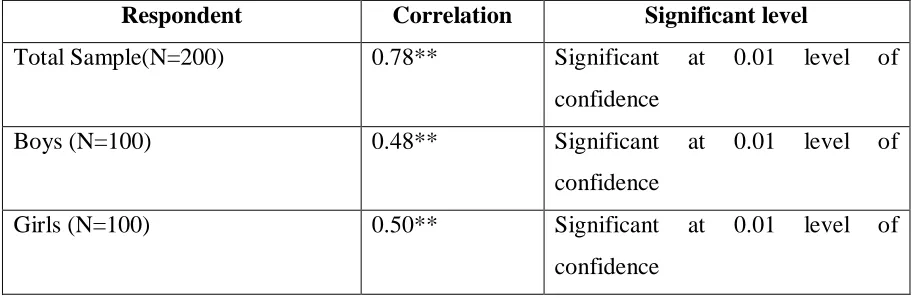
Table 1: Correlation of Emotional Intelligence and Well-Being among adolescents (Total
sample, boys and girls)
Table 1 shows that the values of coefficient of correlation came out to be 0.78 for total sample,
which is significant at 0.01 level of confidence.Thus we can say that there exist a significant
positive correlation between Emotional Intelligence andWell-Being of total sample.Hence, the
hypotheses stating that, „there exists significant relationship between Emotional Intelligence and
Well-Being among adolescents (total sample)‟stands accepted.
The values of coefficient of correlation came out to be 0.48 for boys, which is significant at 0.01
level of confidence.Thus we can say that there exist a significant positive correlation between
Emotional Intelligence and Well-Being of boys. Hence, the hypotheses stating that, „there exists
significant relationship between Emotional Intelligence and Well-Being among boys‟ stands
accepted.
The values of coefficient of correlation came out to be 0.50 for girls, which is significant at 0.01
level of confidence.Thus we can say that there exist a significant positive correlation between
Respondent Correlation Significant level
Total Sample(N=200) 0.78** Significant at 0.01 level of
confidence
Boys (N=100) 0.48** Significant at 0.01 level of
confidence
Girls (N=100) 0.50** Significant at 0.01 level of
[image:4.612.78.534.255.404.2]Emotional Intelligence andWell-Being of girls.Hence, the hypotheses stating that,„there
existssignificant relationship between Emotional Intelligence and Well-Being among girls‟
stands accepted.
Table 2 Showing correlation between Emotional Intelligence and physical Well-Being
among adolescents (total boys and girls)
Respondent Correlation Significant level
Total Sample (200) 0.40** Significant at 0.01 level of
confidence
Boys(100) 0.32** Significant at 0.01 level of
confidence
Girls(100) 0.50** Significant at 0.01 level of
confidence
The values of coefficient of correlation came out to be 0.40 for total sample, which is significant
at 0.01 level of confidence. Thus we can say that there exist a significant positive correlation
between Emotional Intelligence and physical Well-Being of total sample. Hence, the hypotheses
stating that, „there exists significant relationship between Emotional Intelligence and physical
Well-Being among adolescents (total sample)‟stands accepted.
The values of coefficient of correlation came out to be 0.32 for boys, which is significant at 0.01
level of confidence. Thus we can say that there exist a significant positive correlation between
Emotional Intelligence and physical Well-Being of boys. Hence, the hypotheses stating that,
„there exists significant relationship between Emotional Intelligence and physical Well-Being
among boys‟ stands accepted.
The values of coefficient of correlation came out to be 0.50 for girls, which is significant at 0.01
level of confidence. Thus we can say that there exist a significant positive correlation between
Emotional Intelligence and physical Well-Being of girls. Hence, the hypotheses stating that,
„there exists significant relationship between Emotional Intelligence and physical Well-Being
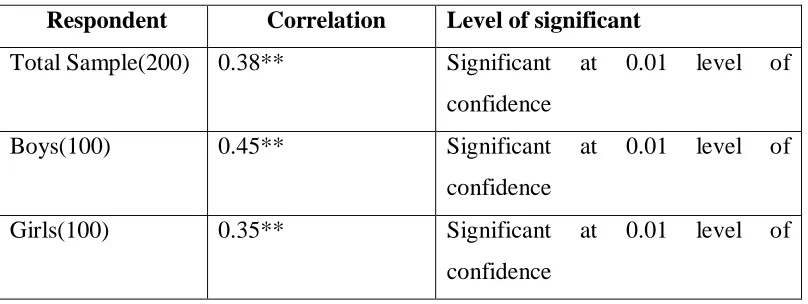
Table 3 Showing correlation between Emotional Intelligence and emotional Well-Being
among adolescents (total ,boys and girls):
Respondent Correlation Level of significant
Total Sample(200) 0.38** Significant at 0.01 level of
confidence
Boys(100) 0.45** Significant at 0.01 level of
confidence
Girls(100) 0.35** Significant at 0.01 level of
confidence
The values of coefficient of correlation came out to be 0.38for total sample, which is significant
at 0.01 level of confidence. Thus we can say that there exist a significant positive correlation
between Emotional Intelligence and emotional Well-Being of total sample. Hence, the
hypotheses stating that, „there exists a significant relationship between Emotional Intelligence
and emotional Well-Being among adolescents (total sample)‟stands accepted.
The values of coefficient of correlation came out to be 0.45 for boys, which is significant at 0.01
level of confidence. Thus we can say that there exist a significant positive correlation between
Emotional Intelligence and emotional Well-Being of boys. Hence, the hypotheses stating that,
„there exists a significant relationship between Emotional Intelligence and emotional Well-Being
among boys‟ stands accepted.
The values of coefficient of correlation came out to be 0.35 for girls, which is significant at 0.01
level of confidence. Thus we can say that there exist a significant positive correlation between
Emotional Intelligence and emotional Well-Being of girls. Hence, the hypotheses stating that,
„there exists a significant relationship between Emotional Intelligence and emotional Well-Being
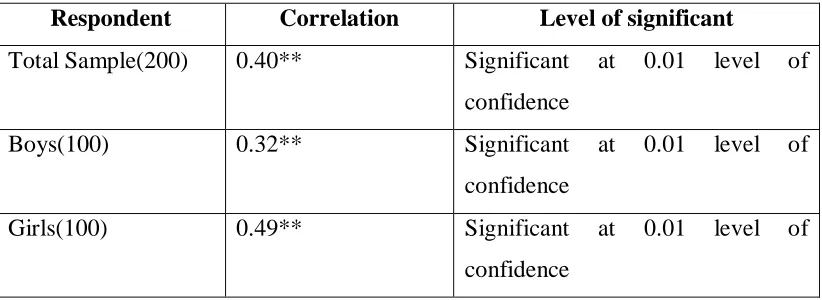
[image:6.612.77.481.85.237.2]Table 4 Showing correlation between Emotional Intelligence and social Well-Being among
adoloscents (total boys and girls):
Respondent Correlation Level of significant
Total Sample(200) 0.40** Significant at 0.01 level of
confidence
Boys(100) 0.32** Significant at 0.01 level of
confidence
Girls(100) 0.49** Significant at 0.01 level of
confidence
The values of coefficient of correlation came out to be 0.40 for total sample, which is significant
at 0.01 level of confidence. Thus we can say that there exist a significant positive correlation
between Emotional Intelligence and social Well-Being of total sample. Hence, the hypotheses
stating that, „there exists a significant relationship between Emotional Intelligence and social
Well-Being among adolescents (total sample)‟stands accepted.
The values of coefficient of correlation came out to be 0.32 for boys, which is significant at 0.01
level of confidence.Thus we can say that there exist positive correlation between Emotional
Intelligence and social Well-Being of boys. Hence, the hypotheses stating that, „there exists
significant relationship between emotional Intelligence and social Well-Being among boys‟
stands accepted.
The values of coefficient of correlation came out to be 0.49 for girls, which is significant at 0.01
level of confidence. Thus we can say that there exist a significant positive correlation between
Emotional Intelligence and social Well-Being of girls. Hence, the hypotheses stating that, „there
exists significant relationship between Emotional Intelligence and social Well-Being among
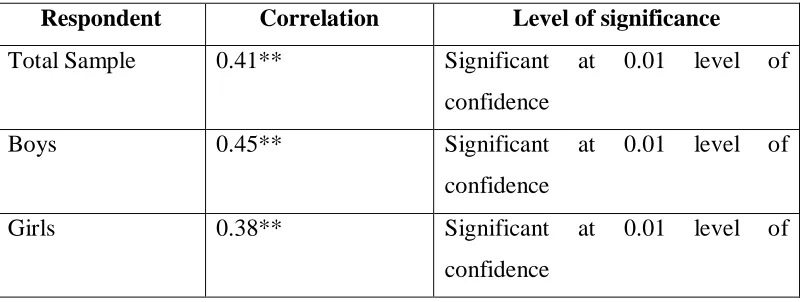
Table 5 Showing correlation between Emotional Intelligence and scholastic Well-Being
among adolescents (total boys and girls):
Respondent Correlation Level of significance
Total Sample 0.41** Significant at 0.01 level of
confidence
Boys 0.45** Significant at 0.01 level of
confidence
Girls 0.38** Significant at 0.01 level of
confidence
The values of coefficient of correlation came out to be 0.41 for total sample, which is significant
at 0.01 level of confidence. Thus we can say that there exist above average positive correlation
between Emotional Intelligence and scholastic Well-Being of total sample. Hence, the
hypotheses stating that, „there exists a significant relationship between Emotional Intelligence
and scholastic Well-Being among adolescents (total sample)‟stands accepted.)
The values of coefficient of correlation came out to be 0.45 for boys, which is significant at 0.01
level of confidence. Thus we can say that there exist a significant positive correlation between
Emotional Intelligence and scholastic Well-Being of boys. Hence, the hypotheses stating that,
„there exists significant relationship between emotional Intelligence and scholastic Well-Being
among boys‟ stands accepted.
The values of coefficient of correlation came out to be 0.38 for girls, which is significant at 0.01
level of confidence. Thus we can say that there exist a significant positive correlation between
Emotional Intelligence and scholastic Well-Being of girls. Hence, the hypotheses stating that,
„there exists significant relationship between Emotional Intelligence and scholastic Well-Being
among girls‟ stands accepted.
EDUCATIONAL IMPLICATIONS :
Present study has shown positive correlation between Emotional Intelligence and Well-Being of
adolescents, therefore a teacher should train the students to understand and manage their
[image:8.612.78.480.86.237.2]In order to achieve this objective by seeking the help of school management and parents, the
teachers should design appropriate intervention strategies to enhance the Emotional Intelligence
to foster their general Well-Being with respect to its various dimensions.
REFERENCES:
Goleman, D. (1995). Emotional intelligence, New York: BantmBooks.
Kalia, K. A., & Deswal, A. (2012). General Well-Being Scale. Agra: National Psychological
Corporation.
Mangal, S. K. & Mangal, S. (2012). Emotional Intelligence Inventory.Agra:National Psychology Corporation.
Salovey, P., & Mayer, J.D. (1990). Emotional Intelligence. Imagination, Cognition and