Anthropology Theses Department of Anthropology
Fall 12-7-2010
Small Finds From Chogha Gavaneh Site in the
Islamabad Plain, Central Zagros Mountains, Iran
Firoozeh Forouzan
Follow this and additional works at:https://scholarworks.gsu.edu/anthro_theses Part of theAnthropology Commons
This Thesis is brought to you for free and open access by the Department of Anthropology at ScholarWorks @ Georgia State University. It has been accepted for inclusion in Anthropology Theses by an authorized administrator of ScholarWorks @ Georgia State University. For more information,
please [email protected].
Recommended Citation
Forouzan, Firoozeh, "Small Finds From Chogha Gavaneh Site in the Islamabad Plain, Central Zagros Mountains, Iran." Thesis, Georgia State University, 2010.
SMALL FINDS FROM CHOGHA GAVANEH SITE IN THE ISLAMABAD PLAIN,
CENTRAL ZAGROS MOUNTAINS, IRAN
by
FIROOZEH FOROUZAN
Under the Direction of Jeffrey B. Glover, PhD
ABSTRACT
This study examines small finds from the site of Chogha Gavaneh, Iran, including
zoomorphic clay figurines, geometric-shaped objects, and sling bullets in order to
deter-mine if they served an economic function during the Early Chalcolithic period (ca.
5000-4000 B.C.E.). A total of 104 animal figurines, sling bullets, and geometric-shaped
ob-jects have been found at Chogha Gavaneh. This research challenges previous
lucky objects for hunting and religious rituals, or for use as game pieces, educational
ob-jects, or toys. Through the use of XRF (x-ray fluorescence spectrometry) analysis and
the chaine opératoire approach, I suggest, contrary to the conventional wisdom, that
some of these clay objects might represent another kind of social practice and may have
had an economic function.
SMALL FINDS FROM CHOGHA GAVANEH SITE IN THE ISLAMABAD PLAIN,
CENTRAL ZAGROS MOUNTAINS, IRAN
by
FIROOZEH FOROUZAN
A Thesis Submitted in Partial Fulfillment of the Requirements for the Degree of
Master of Arts
in the Collage of Arts and Sciences
Georgia State University
Copyright by
Firoozeh Forouzan
SMALL FINDS FROM CHOGHA GAVANEH SITE IN THE ISLAMABAD PLAIN,
CENTRAL ZAGROS MOUNTAINS, IRAN
by
FIROOZEH FOROUZAN
Committee Chair: Jeffrey Glover
Committee: Bethany Turner
Faidra Papavasiliou
College of Arts and Sciences
Electronic Version Approved:
Office of Graduate Studies
Georgia State University
ACKNOWLEDGEMENTS
I most gratefully acknowledge the professors, staff and students of the
Depart-ment of Anthropology at Georgia State University, who produced an encouraging and
enthusiastic environment while I was there. I am sincerely thankful to my thesis
commit-tee members, Dr. Jeffrey Glover, Dr. Despina Margomenou, Dr. Bethany Turner, and Dr.
Faidra Papavasiliou, who encouraged, guided and supported my research from start to
finish.
Many thanks are due to Dr. Kamyar Abdi, who allowed me to conduct my
re-search on the archaeological collection of Chogha Gavaneh. I offer my thanks to Dr.
Za-chary Hruby, whose expertise in experimental archaeology influenced the methodology I
employed in my research. I would like to thank Dr. Daniel Deocampo in the Geosciences
Department at GSU, who assisted me with technological support during the project. I
of-fer many thanks to Dr. Frank Williams for his invaluable support of my education and
research since I started the anthropology program at Georgia State University. I would
like to thank all of the professors who contributed throughout the graduate program in the
Department of Anthropology, especially Dr. Kathryn Kozaitis and Dr. Emanuela Guano.
Lastly, I offer my best regards and blessings to all those who supported me in any
respect during the completion of the study, especially to Tina Rezvani, Heather
Kravag-na, Siavash Samei, Kanan Mehta, Jacqueline Parker, and Carla Sanches. Finally, I wish
to acknowledge Adrienne Gonzalez and Martha Mukasa-Howard for their unwavering
TABLE OF CONTENTS
ACKNOWLEDGEMENTS ...v
LIST OF FIGURES ...x
LIST OF TABLES ... xii
CHAPTER ... 1. INTRODUCTION ...1
Zoomorphic Figurines ...3
Geometric-Shaped Objects ...4
Sling Bullets ...5
Summary of Thesis ...7
2. GEOGRAPHY RANGE AND HISTORY OF RESEARCH IN THE AREA ....9
The Zagros Mountains ...9
Archaeological Research in the Central Zagros Mountains ...13
Summary of the Excavation Result on Islamabad Plain ...17
Conclusions ...18
3. HISTORY OF EXCAVATION AT CHOGHA GAVANEH ...20
Research Goals ...20
Archaeological Context ...21
Excavation at “ Operation W263” ...22
22
Conclusions ...24
4. OVERVIEW OF FIGURINE STUDIES, GEOMETRIC-SHAPED OBJECTS AND SLING BULLETS IN THE NEAR EAST ...27
Theoretical Approaches to the Study of Near Eastern Figurines ...28
A Structuralist Approach to the Study of Zoomorphic Figurines ...30
A Practice-Based Approach to the Study of Zoomorphic Figurines ....33
Summary and Discussion ...37
Conclusions ...40
5. RESEARCH METHODS ...41
Introduction ...41
Classification of Clay Artifacts from Ghogha Gavaneh Assemblage ..41
Quantitative and Qualitative Analysis ...45
Analysis Using the Chaîne Opératoire Concept ...46
My Own Animal Figurines: Chaîne Opératoire ...47
Discussion of My Chaîne Opératoire Experience ...48
A Comparison of the Faunal Remains with the Zoomorphic Figurines … ...49
X-ray Fluorescence (XRF) Analysis ...54
6. DISCUSSION OF FIGURINES, GEOMETRIC-SHAPED OBJECTS, AND SLING BULLETS ...56
1. Stratigraphic Context and Distribution of Zoomorphic Figurines57
2. Discussion of the Modeling Techniques ...62
3. Zoomorphic Figurines Typology ...66
4. Patterns of Wear and Damage...70
5. Color Range of Zoomorphic Figurines ...72
6. Summary and Discussion ...73
The Geometric-Shaped Objects ...74
1. Stratigraphic Context and Distribution of Geometric-Shaped Ob- jects ...74
2. Discussion of the Modeling Techniques ...76
3. Comparative Near Eastern Geometric-Shaped Objects ...77
4. Color Range of Geometric-Shaped Objects ...79
5. Summary and Discussion ...79
The Sling Bullets ...80
1. Stratigraphic Context and Distribution of Sling Bullets ...80
2. Discussion of the Modeling Techniques ...82
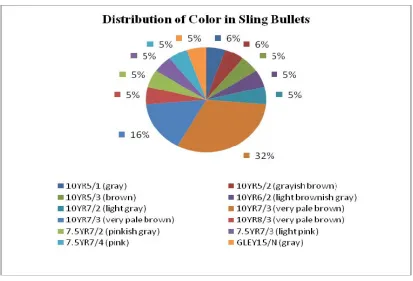
3. Color Range of Sling Bullets ...83
4. Summary and Discussion ...83
The Result of X-ray Fluorescence (XRF) Analysis ...84
1. Analytical Techniques ...84
2. Principal Components Analysis ...85
3. Summary and Discussion ...98
The Future of This Project ...103
REFERERENCES CITED ...105
APPENDIX A: SMALL FINDS MEASUREMENTS ...111
APPENDIX B: QUANTITATIVE AND QUALITATIVE ANALYSIS OF SMALL
LIST OF FIGURES
Figure. 1.1. Map of Chogha Gavaneh site showing the location of “Operation W263” ....8
Figure. 2.1. Map showing the geography location of main sites and regions of the Near
East ...12
Figure. 2.2. Map of the Islamabad Plain showing the site of Chogha Gavaneh ...16
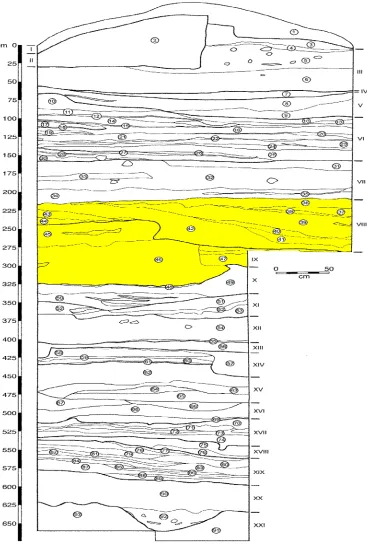
Figure. 3.1. Master stratigraphy of the “Operation W263” ...26
Figure. 6.1. The Stratigraphic Distribution of Chogha Gavaneh Zoomorphic Figurines
by Layers ...62
Figure. 6.2. Distribution of Color in Zoomorphic Figurines Based on the Munsell Color
Chart ...73
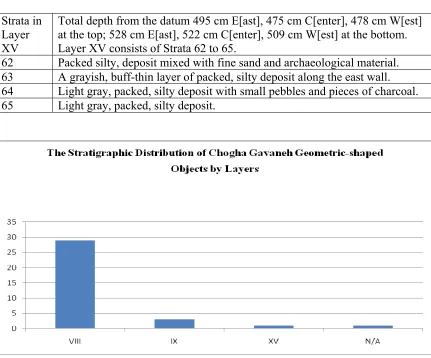
Figure. 6.3. The Stratigraphic Distribution of Chogha Gavaneh Geometric-shaped
Ob-jects by Layers ...75
Figure. 6.4. Distribution of Color in Geometric-Shaped Objects Based on the Munsell
Color Chart ...79
Figure. 6.5. The Stratigraphic Distribution of Chogha Gavaneh Sling Bullets by Layers
...81
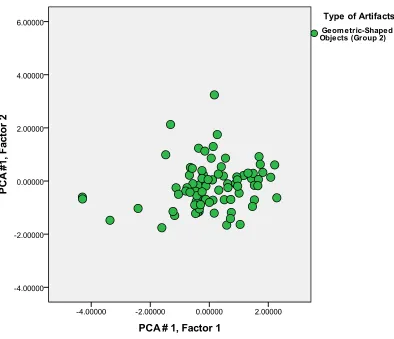
Figure. 6.7. Scatter Plot of the first two Principal Components Showing the Grouping of
Artifacts ...89
Figure. 6.8. Scatter Plot of the first two Principle Components Showing the
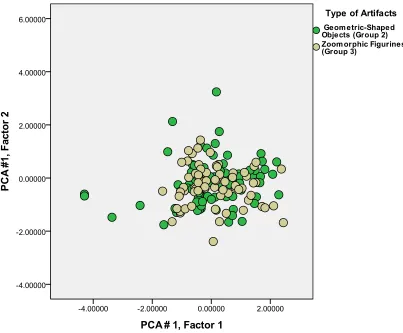
Geometric-Shaped Objects and Zoomorphic Figurines ...90
Figure. 6.9. Scatter Plot of the first two Principle Components Showing the Geometric
Shaped Objects ...91
Figure. 6.10. Scatter Plot of the first two Principle Components Showing the Number of
Artifacts ...92
Figure. 6.11. Scatter Plot of the first two Principle Components Showing the Number of
Outlier Artifacts ...93
Figure. 6.12. Scatter Plot of the fifth and sixth Principle Components Showing the
Grouping of Artifacts ...95
Figure. 6.13. Scatter Plot of the fifth and sixth Principle Components Showing the
Num-ber of Artifacts ...96
Figure. 6.14. Scatter Plot of the fifth and sixth Principle Components Showing the
Num-bers of Outliner ...97
LIST OF TABLES
Table 5.1. Total Number of Zoomorphic Figurines divided into five groups based on
their state of preservation ...43
Table 5.2. Total Number of Anthropomorphic Figurine ...43
Table 5.3. Total Number of Geometric-Shaped Objects divided into five groups based on their Shape ...44
Table 5.4. Total Number of Sling Bullets ...44
Table 5.5. Total Number of Miscellaneous ...44
Table 5.6. Total Number of Other Objects ...45
Table 5.7. The Chaîne Opératoire of Zoomorphic Figurine Production ...47
Table 6.1. Stratigraphic Context and Distribution of Chogha Gavaneh Artifacts in Layer VII ...58
Table 6.2. Stratigraphic Context and Distribution of Chogha Gavaneh Artifacts in Layer VIII ...59
Table 6.3. Stratigraphic Context and Distribution of Chogha Gavaneh Artifacts in Layer IX ...60
Table 6.5. Stratigraphic Context and Distribution of Chogha Gavaneh Artifacts in Layer
XXI ...61
Table 6.6. and 6.7. Distribution of Zoomorphic Figurines by Modeling Techniques at four Near Eastern Sites ... 63&64 Table 6.8. Distribution of Zoomorphic Figurines by Domesticated/Wild Animals at four Near Eastern Sites ...66
Table 6.9. Stratigraphic Context and Distribution of Chogha Gavaneh Artifacts in Layer XV ...75
Table 6.10. Distribution of Geometric-Shaped Objects by Shape at four Near Eastern Sites. ...78
Table 6.11. Stratigraphic Context and Distribution of Chogha Gavaneh Artifacts in Layer V ...81
Table 6.12. Distribution of Sling Bullets by Modeling Techniques in two Near Eastern Sites ...82
Table 6.13. Shows the Principle Component Matrix of Chogha Gavaneh Small Finds ..88
Table 6.14. Shows the Number of Outliers in the First and Second Factors ...94
Table 6.15. Shows the Number of Outliers in the Fifth and Sixth Factors ...97
Table 6.16. Determining Possible Economic Function for Zoomorphic Figurines ...101
Table A.2 Measurements of the Front of Animal Figurines Without Horns (Figure
A.1#1) ...114
Table A.3. Measurements of Height of Animal Figurine with Horns (Figure A.1#2) ...114
Table A.4. Measurements of the Length of Animal Figurine (Figure A.1#3) ...115
Table A.5. Measurements of Leg Width of Intact Animal Figurine (Figure A.1#4) ...115
Table A.6. Measurements of the Torso, Height of Animal Figurine (Figure A.1#5) ....116
Table A.7. Measurements of the Rear, Height of Animal Figurine (Figure A.1#6) ...116
Table A.8. Measurements of the Front, Width of Animal Figurine (Figure A.1#7) ...117
Table A.9. Measurements of Torso, Rear,Width of Animal Figurine (Figure A.1#8) ...117
Table A.10. Measurements of the Horns, Height of Animal Figurine (FigureA.1#9) ...118
Table A.11. Measurements of the Horns, Width of Animal Figurine (Figure A.1#10) .118
Table A.12. Measurements of the Horns, Lenght Animal Figurine (Figure A.1#11) ....119
Table A.13. Measurements of the Animal Figurines, Weight (Figure A.1#11) ...119
CHAPTER 1
INTRODUCTION
This research investigates small finds from the site of Chogha Gavaneh, a site in
Western Iran (Figure.1.1). A total of 104 animal figurines,1 sling bullets, and
geometric-shaped objects have been found at Chogha Gavaneh2. My research seeks to investigate
the possible social and economic function(s) of these small finds in the Early Chalcolithic
period communities in the Near East (ca. 5000-4000 B.C.E.); in particular, the possible
connection between pastoralism and the use of these small finds.
During the Late Neolithic/Early Chalcolithic period (ca. 5000-4000 B.C.E.), the
agricultural system at the Islamabad Plain in the West Central Zagros Mountains, was
working at its most productive (Abdi 2002:334). The production of Halaf-related J-Ware
vessels indicated the influence northern Mesopotamian people had on ceramic technology
in West Central Zagros. According to Abdi (2002:348), the number of villages on the
Islamabad Plain increased dramatically from the Neolithic to the Chalcolithic period.
The increase in the number of settlements explains the population growth may have
re-sulted from the migration of people from the north and west. The social and economic
interactions between these people, is of particular interest to me.
The agricultural economy increased the production of food, and scholars (e.g.
Cole et. al 1997; Schmandt-Besserat 1978) have argued that the use of tokens emerged to
1There is ongoing debate on the original date of the artifacts (personal communication
with Abdi, December 20 2009).
2 The collection is courtesy of Kamyar Abdi, associate professor and chair of the
record (*or document*) as record-keeping devices. It is possible that the clay
geometri-cally and animal shaped tokens represented objects such as different goods, animals, or
produce. Researchers content that each token represents a specific animal in the herd and
move with the herders. It is possible the movement of these animal tokens by herdsman
indicate the economic nature of these artifacts.
The use of figurines does not, however, begin in the Late Neolithic/Early
Chalco-lithic. They are well-known artifacts that represent both anthropomorphic and
zoomor-phic characters as early as the Paleolithic period (ca. 40,000-10,000 B.P.). The literature
on figurines in the Near East discusses such issues as why and when humans first began
to produce and create artifacts, how they were formed, how much skill was required, and
what kinds of tools were used to create them. We are, however, a long way from fully
understanding the use, meaning, and function of figurines in prehistoric contexts,
al-though there are various uses and meanings ofanthropomorphic and zoomorphic
figu-rines that have been proposed (Bailey 2005; Talalay 1993).
Archaeological literature (Garfinkel 1994; Keswani 1994; Marciniak 2005;
Tala-lay 1993) has provided rich evidence on the ritualistic and symbolic role of animals in
prehistoric communities, especially among pastoral groups. These scholars have
inter-preted these objects as magical or lucky objects for hunting, game pieces, educational
objects, or toys (Cauvin 2000b; Rollefson 2000; Voigt 2000; Ucko 1968). consider the
theory of social exchange (e.g., Hart 2005) and how it is applied to mobile resources
Zoomorphic Figurines
The zoomorphic figurines of the assemblage feature the general outline of the
an-imal, with most highlighting some specific aspect of an animal’s anatomy, namely the
head, horns, neck, front and back legs, and/or the tail. However, these parts are not
present on all of the figurines. The anthropomorphic figurines in this collection present a
level of uncertainty for two reasons. First of all, there are only two such figurines, both
are incomplete and poorly preserved. One only portrays the legs with a skirt, and the
other appears to represent a human torso. Second, the sample size is too small to draw
statistically significant conclusions.
The methods I employed to address my research questions about the figurines
from Chogha Gavaneh are as follows: First, I created a typology based on the animals
that they seem to represent. I also conducted both quantitative and qualitative analyses,
such as describing the general typology and the current state of preservation, recording
measurements, colors, and weights. Second, I studied the context of the identified small
finds. Third, I attempted to determine the manufacturing process by using the chaîne opératoire approach to reproduce some of the figurines. Fourth, I compared the faunal
assemblage of the site to the animal figurines in order determine if the common species in
the zooarchaeological assemblage matched those represented by the figurines. Fifth, I
used XRF (x-ray fluorescence spectrometry) analysis to examine the trace element
com-positions of the artifacts in an attempt to determine whether the zoomorphic figurines,
tokens, and sling bullets may have come from various regions in the area. This allows
me to see if these small finds were constructed using different clay sources. While not
clay sources might be present in the sample and that a few of these objects may have
moved between communities and as would be expected of objects used for economic
purposes.
Geometric-Shaped Objects
The geometric objects we find in this assemblage are common in prehistoric Near
Eastern archaeological sites from Turkey, Palestine, Iraq, Syria, and Iran (Peterson
1988:408). Such objects come in a variety of geometric forms: concave-shaped, conical,
discoidal (with and without incised lines markings), ovoid, spherical, and animal-shaped
(Schmandt-Besserat 1992:93). Traditionally geometric-shaped objects have been
inter-preted as gaming pieces, and as counting and recordkeeping objects, or tokens (Garfinkel
1995:23).
The interpretation of figurines and clay geometric-shaped objects/tokens are
dis-cussed in detail by Schmandt-Besserat (1996). These groups of objects have been
recov-ered in Near Eastern sites including the Fertile Crescent as early as the pre-pottery
Neo-lithic (Wengrow 2003:142). These geometric-shaped objects are grouped together
be-cause they have all been created out of clay and have similar size and production
me-thods. In addition, she discusses the function of these geometric items in counting and
record keeping for different types of goods. According to Ivars Peterson (1988:409) once
hunter-gatherer societies began to settle permanently in one area, it is possible that they
used simple geometric shapes to keep track of their goods.
Schmandt-Besserat (1996) explains that geometric items were generally discovered
geome-tric-shaped objects were scattered among ordinary houses close to artifacts such as like
jars, as well as in hearths, on house floors, trash deposits, and storage areas
(Schmandt-Besserat 1996:30). In the case of public settings, geometric-shaped objects were
some-times discovered in vessels and burials at monumental buildings where there were no
signs of domestic activities (Schmandt-Besserat 1996:30).
In this study, I investigate if any of the geometric-shaped objects from the Chogha
Gavaneh assemblage could be identified as tokens. To answer this question, I attempt to
examine the range of sizes and shapes among the geometric-shaped objects. Then, based
on the contextual data, I ask why geometric-shaped objects were deposited along with
animal figurines. Finally, I employ the XRF (x-ray fluorescence spectrometry) analysis
in order to recognize if these objects were made from different clay sources, indicating
possible trade between regions and the possibility of people using the geometric-shaped
objects for economic function.
Sling Bullets
The sling bullets are generally classified into egg-shaped and spherical bullets and
they are larger than the geometric objects. The assemblage includes twenty sling bullets.
While not part of this analysis, the other small finds include: animal bone fragments, a
broken limestone dish, spindle whorls, and two items made from shell. The assemblage
also contains seven miscellaneous clay fragments whose original shape cannot be
deter-mined.
Sling bullets are common across archaeological sites from Turkey, Syria, Iraq,
excava-tion at Hamoukar in northeastern Syria, the Late Chalcolithic period (2500-2200 B.C.E.),
uncovered clay objects mixed with debris and sling bullets from the fire-based
destruc-tion of Hamoukar. There were more than 1,200 egg-shaped sling bullets. They averaged
3.6 cm x 2.4 cm in size, weighing in around 25 grams (0.89 oz) each. It appears all were
carefully crafted by hand (there were finger impressions on many).
Many of the same sling bullets were found among the debris and in piles within
the fortification, suggesting ammunition storage for the defenders. Additionally, over
200 deformed sling bullets were uncovered. What is fascinating is the implication that,
because there were no long-range scanning of an enemy approaching and no large
trans-port vehicles to carry weapons, many bullets needed to be produced quickly when an
enemy was near. Clay of this nature may take up to 24 hours to dry and even a large
cache of bullets could be used up quickly. If battles lasted long enough, then bullets
could be used when wet—almost as fast as they were made. Additionally, larger balls
with diameters ranging between 6-10 cm were, in fact, found showing damage to one
side, an indication that these were ancient “missiles.”
In another interpretation, it is possible that sling bullets were used by shepherds in
order to scare domesticated livestock into staying with the herd or for protecting the
li-vestock from predators (Dohrenwend 2002:32). They may also have been used for
hunt-ing small animals. Vivian Morales believes it is possible that the slhunt-ing bullets were used
for hunting birds, especially at the Neolithic (ca. 6000-5000 B.C.E.) site of Sarab in
western Iran. Evidence for this theory comes from zooarchaeological analysis of birds’
In this study, I investigate whether the sling bullets in the Chogha Gavaneh
assem-blage are indicative of conflict, or if they were used for herding or hunting small animals
such as birds. To answer this question, I analyze the contextual deposition of the sling
bullets for any evidence of animal remains, such as bird bones in the faunal assemblage,
or evidence of herding or conflict in the site. This allows me to conceptualize the use of
sling bullets by people in the Early Chalcolithic period.
Summary of Thesis
I have organized this research into six chapters. Chapter 1 provides a general
in-troduction to research design. Chapter 2 is an overview of the history of archaeological
research in the Islamabad Plain as well as the geography of the region. Chapter 3 details
Abdi’s (2002) excavation at Chogha Gavaneh: his research goals, archaeological
con-texts, excavations at “Operation W263,” and the methodologies of his excavation.
Chap-ter 4 is an overview of theoretical approaches to the study of figurines, geometric-shaped
objects, and sling bullets, as well as my theoretical perspective. Chapter 5 explains my
research methods including: the categorization of small finds, quantitative and qualitative
analysis, the Chaîne Opératoire approach, a comparison of the faunal remains with the
zoomorphic figurines, and X-ray Fluorescence (XRF). In Chapter 6, I discuss and
con-clude my results.
CHAPTER 2
GEOGRAPHY RANGE AND HISTORY OF RESEARCH IN THE AREA
The Zagros Mountains
The Zagros, the magnificent chain of mountains separating the high Iranian
Pla-teau from the low plains of Mesopotamia and Susiana, has long been a major area for
cul-tural, social, and political change in the Near East. Early developments in the alluvial
plains to the west and southwest saw the burgeoning of an agriculturally-based urban
sys-tem. In the east, pastoral-tribal communities were prevalent until three decades ago
(Ab-di 2002:75) (Figure. 2.1). As will be (Ab-discussed below, this area has been a focus of
arc-haeological research for the past century.
The Zagros mountain range is the second largest of its kind in the Middle East,
with an area of about 553,000 sq km (231,500 sq mi). It extends from Turkey,
northeas-tern Syria, and northeasnortheas-tern Iraq through Iran. The Zagros Mountain Range is primarily
located in Iran, running northwest to southeast. In terms of structure and topography, the
Zagros mountain range is divided into two regions. First, the northwestern
sub-region extends from the southeastern shores of the Black Sea to the north-central Iranian
Plateau where it joins the Alborz range. The second sub-region also starts at the Black
sea and continues as far as southern Iran (Abdi 2002:78). For archaeological purposes,
the Zagros Mountains can be divided into three zones: the northwestern Zagros, the
southern Zagros, and the central western Zagros (Abdi 2002:80).
The northwestern Zagros Mountains have been described as an extensive
Cretaceous, Miocene, and Plio-Pleistocence ages (Abdi 2002:81). In prehistoric times,
the northwestern Zagros had close contact with areas to the north, east, and south. This
contact became quite evident by the late 4th and early 3rd millennium B.C.E., when this
region was influenced by the Kura-Araxes culture from the Transcaucasia, whose
influ-ence then expanded into northwestern Iran and eastern Anatolia (Parzinger 2000 and
Sa-gona 1984 as cited in Abdi 2002:81).
Evidence from indigenous socio-political developments in the Upper Paleolithic
indicates that the Southern Zagros was another major cultural area (Rosenberg 1988;
Sumner 1977 as cited in Abdi 2002:81). For example, the southern Zagros became the
center of the Elamite civilization by the late 4th millennium B.C.E. and was then occupied
by the Persian Achaemenids who used the region as a capital in the mid first millennium
B.C.E (Rosenberg 1988; Sumner 1977 as cited in Abdi 2002:81). Today, the Southern
Zagros is divided into the province of Fars and a number of tribal provinces to the
north-west. The large groups of Zagros tribes including the Bakhtiyari, the Qashqaii, and other
lesser well-known nomadic tribes live in the central and southern Zagros mountain region
(Abdi 2002:81).
It is difficult to distinguish the central Zagros from the northwestern and southern
regions due to the lack of clear natural boundaries to separate the regions from one another.
The presence of the High Road has, however, been used to define this cultural area. The
High Road, also known as the Great Khorasan Road, was the major highway from
Meso-potamia across the Iranian Plateau and into Central Asia (Abdi 2002:83). Since the early
19th century, many travelers and early archaeologists passing through the Central Zagros
re-mains of the area. Some monuments such as the trilingual inscription of Darius I, King of
Persia, were prominent and visible to everyone travelling along the Great Khorasan Road
(Abdi 2002:83). One of the most noticeable features of the Central Zagros is the Kuh-i-Sefid (the White Mountain in Persian). The Kuh-i-Sefid has been considered a boundary
that divides the Central Zagros into western and eastern regions (Abdi 2002:83).
Archaeological Research in the Central Zagros Mountains
The Islamabad Plain was first studied in 1936 by Aurel Stein in a general survey,
and later by Erich Schmidt (1940) who used techniques, such as aerial photography, to
survey sites in Western Iran and, in particular, the archaeological site of Chogha Gavaneh
(Abdi 2002:107). The Oriental Institute at the University of Chicago conducted the
Ira-nian Prehistoric Project from 1950 to 1960 under the supervision of Robert J. Braidwood.
Braidwood (1961) and his team investigated the early stages of human life, including the
origins of food production and settled life in the Zagros flanks of the Fertile Crescent.
Major excavations and archaeological surveys have also been carried out in the Central
Zagros Mountains by a number of institutions including a Danish expedition in 1963
un-der the auspices of the Aarhus Museum (Thrane et al. 1964, 1965 as cited in Abdi
2002:105); a Belgian team under supervision of Louis Venden Berghe (1984); and one
led by the British Institute of Persian Studies under the direction of Clare Goff (1966)
(Abdi 2002:104). Additionally, the site of Godin Tappeh was excavated in 1965, and a
general survey of the Kangavar Plain was performed by Cuyler Young, Jr. (1974) and
Louis D. Levine (1974), with sponsorship from the Royal Ontario Museum of Toronto in
Canada (Abdi 2002:104). Archaeological excavations continued in the Central Zagros at
the Neolithic settlement of Ganj Darreh for an additional five seasons between 1965 and
1974, sponsored by the University of Montreal under the supervision of Philip Smith
(Smith 1976 as cited in Abdi 2002:105).
Foreigners have not been the only ones to work on the Islamabad Plain. The
Arc-haeological Service of Iran conducted a preliminary survey of the Islamabad Plain in
archaeologi-cal work at Chogha Gavaneh started under the direction of Mahmoud Kordavani (Abdi
2002:107). In 1980, archaeologists from the Iranian Center for Archaeological Research
(ICAR) returned to Chogha Gavaneh for a short season (see below). Iranian
archaeolog-ists have visited the Islamabad Plain occasionally since then.
Archaeological excavations and surveys of the Central Zagros were discontinued
unexpectedly due to the Iranian Revolution of 1979 and the Iran-Iraq War that lasted
from 1980 to 1988. Since then, archaeological research has shifted to other parts of the
Near East, especially modern-day Iraq, Syria, and Anatolia. Archaeological research in
Iran has suffered significantly because of this isolation. Despite these early efforts, much
of the Central Zagros range remains unexplored following these wars.
After an interruption of archaeological research in the Central Zagros for almost
two decades, Kamyar Abdi as part of his Ph.D. dissertation at the University of Michigan
visited several archaeological sites, including Chogha Gavaneh, and provided a general
evaluation of the Islamabad Plain (Figure 2.2). In the summer of 1997 he discussed the
possibility of initiating an archaeological project in the Central Zagros with the Iranian
Cultural Heritage Organization (ICHO). Following these discussions, he was allowed by
ICAR to begin his archaeological investigation along the Great Khorasan Road on the
Islamabad Plain.
In the first season (1998), Abdi began his survey of the Islamabad Plain and
do-cumented “the regional pottery sequence by means of a stratigraphic cut and a re-study of
the 1970 excavation of Chogha Gavaneh” (Abdi 2002:109). He excavated a 3 m x 0.9 m
x 5.20 m trench at the lower part of the western edge of the site and encountered objects
during the summer of 1998, Abdi also re-excavated room B15 at Chogha Gavaneh, which
had earlier been excavated by an Iranian team in 1970. Abdi re-excavated B15 for two
reasons. First, it was a small and manageable room where the Iranian team had
discov-ered a set of cuneiform tablets and kilns. Second, the process helped the team to further
expose the structure and its interior. This proved beneficial in learning about the
ar-rangement and probable order of the tablets and the kilns (Abdi 2002:110). (see Chapter
3).
The six-week survey of the Islamabad Plain started from the rural modern,
com-munity Khosroabad in the northwest portion of the plain. From Khosroabad he surveyed
the area southeast to the town of Islamabad. From there his archaeological team
contin-ued to the Ravand River, and to the small town of Homeil. He also surveyed the area
from Islamabad toward Mahidasht deep in the Souran Valley. Abdi and his team
con-ducted pedestrian and vehicle reconnaissance surveys and thorough examinations
record-ed 73 sites dating from the late Acheulian/early Mousterian period to recent cemeteries.
To help them in the dating process of these sites, the team collected diagnostic sherds.
Approximately 20% of the Islamabad Plain (ca. 1500 km2)was surveyed during the first
season (Abdi 2002:109). Cartographers with Abdi’s archaeological team systematically
mapped 35 of these sites in the region. Unfortunately, in some areas it was quite difficult
Figure. 2.2. Map of the Islamabad Plain showing the site of Chogha Gavaneh (Abdi 2002:183).
During the second season in the fall of 1999, Abdi’s research focused on
continu-ing field surveys and investigatcontinu-ing the archaeological sites on the Islamabad Plain. In
this second season they also discovered and documented 92 sites. In addition, they
rec-orded Chia Jani, an important mound containing remains from the Aceramic and Early
Neolithic periods (ca. 9000 B.P.), including typical ceramics with the so-called ‘tadpole’
design. There was also a number of lithic artifacts characteristic of the Early Neolithic
period. Archaeologists continued sampling and analyzing archaeological materials from
the Late Neolithic and Chalcolithic periods (Abdi 2002:113).
In the spring of 2000, the third season of research spanned six weeks in order to
Tang-e Mansouri in the southeast. The overall research objective of the third season was
to examine the nomadic component of the Middle Chalcolithic period. The fourth season
of research took place in the summer of 2001. The main focus was investigating the
ex-cavated materials.
Summary of the Excavation and Survey Results on Islamabad Plain
Abdi’s (2000) research from his the first and second survey seasons of the
Isla-mabad Plain indicated that there were a number of small Neolithic period settlements in
the area, all in close proximity to known water sources. The main goal of the third
sur-vey season was to glean more details from the settlement patterns of the area during the
Middle Chalcolithic period (c. 4500-4000 B.C.E.). During this period Chogha Gavaneh
was considered a dominant center on the Plain. Various types of pottery and the
substan-tial diversity of lithic material from Chogha Gavaneh suggested that the population of the
area actually traded further into India than previously believed. In fact, the pottery
un-earthed was far more diverse than expected, supporting the idea that more trade occurred
between groups far earlier than scholars currently acknowledge (Abdi 2000:299).
The focus for the third survey season was to investigate nomadic trading patterns
through the site of Tuwah Khoshkeh. The team recorded a range of sites from Upper
Pa-leolithic cave sites to modern ones dated three decades earlier. With this survey the
number of documented sites in the region increased from 92 to 190. Surface materials
were collected in order to study the materials in their environmental context. Abdi chose
Tuwah Khoshkeh as a site representative of small Middle Chalcolithic occupations for
highest point of the site found two superimposed levels of occupation with at least one
ovoid area suggesting a campsite. Using deep sounding equipment, it became possible to
infer that the site may have been used on a temporary, likely seasonal, basis for relatively
short periods of time (Abdi 2000:299-300).
During the fourth season, the research group investigated the excavated material
remains, and conducted a number of test excavations at Wezmeh Cave, a cave site with
Middle Chalcolithic material. The objective was to collect evidence that would support
the argument for pastoral occupation (Abdi 2002:113). Although unrelated to their
re-search objectives, the rere-searchers also looked at the faunal remains in attempt to gather
information on the ecosystem of the area during the Pleistocene period.
Conclusions
Abdi’s (2002) research on the Islamabad Plain in the West Central Zagros
Moun-tains suggested that the agricultural system was working at its highest level by the Late
Neolithic/Early Chalcolithic period. At this time, the production of Halaf-related J-Ware
vessels indicated the influence northern Mesopotamian people had on ceramic technology
in West Central Zagros. An increase in the number of settlements indicated at that time
explains the population growth at the Islamabad Plain. The increase may have been
caused by the migration of people coming in from the north and west. According to Abdi
(2002), the number of villages increased dramatically largely from the Neolithic to the
Chalcolithic, especially in the Middle Chalcolithic. By the end of the Late Chalcolithic
period, the number of permanent settlements suddenly decreased. This decline may have
to nomadic pastoralism. Also by the Late Chalcolithic, evidence shows that the economy
of the West Central Zagros shifted from an agricultural to a more pastoral economy (Abdi
CHAPTER 3
HISTORY OF EXCAVATION AT CHOGHA GAVANEH
As mentioned above, the Islamabad Plain was first studied in 1936 by Aurel Stein
in a general survey, and later by Erich Schmidt (1940) who used techniques, such as
aeri-al photography, to survey sites in Western Iran and, in particular, the archaeologicaeri-al site
of Chogha Gavaneh (Abdi 2002:107). The Archaeological Service of Iran conducted a
preliminary survey of the Islamabad Plain in 1967 and opened a step trench at Chogha
Gavaneh. Archaeological work at Chogha Gavaneh continued in the summer of 1970
under the direction of Mahmoud Kordavani (Abdi 2002:107). The group carried out a
survey of the plain, recorded some major sites and standing monuments, and opened a
trench at Chogha Gavaneh. In 1980, archaeologists from ICAR returned to Chogha
Ga-vaneh for a short season. Despite these previous archaeological projects, little was
pub-lished, and the area remained largely underexplored prior to Abdi’s fieldwork.
Research Goals
Chogha Gavaneh has been occupied from the Early Neolithic period (Aceramic)
(ca. 9000 B.P.) to the present. In fact, Chogha Gavaneh is known as the largest site on
the Islamabad Plain with Holocene occupation. Abdi hoped to achieve the following
with his excavations in the 1990s: (1) study the stratigraphy of the site, particularly the
Neolithic and Chalcolithic periods; (2) establish a ceramic sequence for the Chalcolithic
period in order to date other sites in the region with more accuracy; (3) recover
recon-struct the social relationships of the people living in a large center based on
archaeologi-cal remains of everyday practice; and (5) study the patterns of regional and interregional
trade through the archaeological record (Abdi 2002:185).
Archaeological Context
This site is located in what is now downtown Islamabad, and is surrounded by
modern houses and shops. The height and the considerable size of the site are the first
visible features of the contemporary town of Islamabad. Evidence suggests that the
old-est occupational deposits are to be found on the “high mound,” while deposits from later
periods could be found at the “lower town” covered by Islamabad. Construction
activi-ties have damaged the site in the past few decades, especially the high mound. These
were probably Iron Age deposits that had been removed as the top of the mound was
flat-tened. Sadly, the flattened top was turned into an entertainment park with a tea-house, an
idea encouraged by the ill-advised town municipality following the first series of
excava-tions at Chogha Gavaneh in 1970. Consequently, only a small stratigraphic trench was
excavated at a corner to the west of the mound. Next to this section was an open area
named “Operation W263,” because the mound’s circular shape was envisioned as a
com-pass, and this area corresponds to the 263rd degree on this imaginary compass (Abdi
Excavations at “Operation W263”
A three-meter wide section of “Operation W263” was selected for excavation.
The surface of this section was covered with a layer of mud plaster from years of
down-wash. The team of archaeologists scraped off a thin layer of the surface dirt and then
re-moved the plaster exposing the original deposits. Subsequently, a one meter wide area
was excavated (Figure. 3.1).
In order to gain a view of the stratigraphy, archaeologists removed the plaster and
exposed the deposits. This process helped them to identify each stratum in length, width,
and depth and to excavate each stratum completely as a single unit. After screening each
stratus, the materials were collected, recorded, and then studied in units corresponding to
the proper layers (Abdi 2002:186). In his Ph.D. dissertation Abdi (2002) presents his
analysis of the pottery, lithic materials, and the archaeobotanical and faunal remains.
Methodology of Excavation at Chogha Gavaneh
The basic excavation at Chogha Gavaneh is the “stratum,” designated by Arabic
numerals. A stratum is defined,
a usually thin layer of deposit representing the same activity carried out at least once (but usually more than once) in a relatively short span of time leaving be-hind the same depositional remains. A series of strata form a layer (indicated by Roman numerals), in other words a series of deposits representing activities of the same kind carried out in a certain period of time. So, for example, a burned de-posit forms a stratum and several overlaying burned dede-posits, as far as we could discern, form a layer. However, once burned deposits gave way to occupational debris, we have a new layer with its new strata [Abdi 2002:185].
In 1998 during the first season, the archaeological team excavated 5.40 meters of
XVI to XXI) were excavated. The width of excavation between Layers I to XVII was
between 50 to 90 centimeters but, below Layer XVII, archaeologists widened the
excava-tions to 1.5 meters in width after they removed the overlaying debris.
At Chogha Gavaneh, pottery analysis has been one of the best resources for dating
the archaeological site. As a result, the ceramic chronology indicates that the site was
used for activities during at least six cultural phases: Late Neolithic (ca. 5300-5000
B.C.E.), Early Chalcolithic (ca. 5000-4000 B.C.E.), Early Middle Chalcolithic
(4000-3700 B.C.E.), Middle Chalcolithic (ca. (4000-3700-3300 B.C.E.), Late Middle Chalcolithic (ca.
3300-3000 B.C.E.), and Late Chalcolithic (ca. 3000-2700 B.C.E.).
The following is a summary of the description of layers by stratum as associated
with the small finds. Based on the field notes, the majority of animal figurines and
geo-metric objects were recovered from Layer VIII and some others were retrieved from
Layer IX (Figure 3.1). Features such as hearths and walls, as well as ashy deposits and
pottery found within these layers indicate domestic activities. Additionally, Abdi
(2002:217) suggests some chronological groupings of layers based on the distribution of
ceramics: Layers II to V are Middle Chalcolithic period, and Layers VI- VII can be
attri-buted to the Early Middle Chalcolithic period. The upper layers from I to V, without
J-Ware and Black-on-Buff ceramic types, require further studies. The J-J-Ware pottery
ex-emplifies well-crafted, fine material art, similar in fabric, form and technique to
Mesopo-tamian equivalent, Halaf. The decorative designs on J-Ware display a simpler pattern
(Abdi 2002:139). The Black-on-Buff ware of the early phase of the Middle Chalcolithic
is black colored, well-fired matte potteries that occur in large quantities in two black and
vessel forms, and decoration, it seems that Layers VIII and IX should be dated to the
Ear-ly Chalcolithic period (ca. 5000-4000 B.C.E.).
Many baked and unbaked clay objects were discovered in Layer VIII, which
con-sists of Strata 36 to 44. This layer is characterized by soft organic deposits mixed with
archaeological remains. In addition, many baked and unbaked artifacts associated with
ashy deposits were found in Strata 39 and 42 in Layer VIII. The rest of the items were
found in Layer IX, which includes Strata 45 to 47. In this layer, a number of sling
bul-lets, as well as packed mud and fragmentary mud bricks were found. Stratum 47 further
yielded a wall about 20 cm in height, with vegetal and ground pottery inclusions sitting
on a burned floor. This possible wall extended from the east to the northern wall of the
excavation.
The excavation report provides unwieldy coordinates regarding the exact spatial
location of the artifacts (such as excavation square and locus number). Although an
ex-cavation map with artifact distributions was not available, measurements provided did
indicated the depth at which the artifacts were found in relation to the highest point of
Operation W263, and the distance from the north and east wall of the trench. According
to the excavation notes, it seems that the majority of the figurines were recovered from
trash deposits (personal communication with Abdi, December 20 2009). Therefore, these
assemblages all belong to a secondary context and did not warrant further detailing.
Conclusions
Abdi’s research determined that Chogha Gavaneh was a major agricultural center
col-lected from Operation W263 support this interpretation. The site’s strategic location
al-lowed it to hold a monopoly on the goods coming into the Islamabad Plain, especially
pottery and lithic materials. However, because a small sample of archaeological
mate-rials were collected, further research, including excavations are needed in order to better
CHAPTER 4
OVERVIEW OF FIGURINE STUDIES AND GEOMETRIC-SHAPED
OBJECTS IN THE NEAR EAST
Figurines are well-known artifacts that represent both anthropomorphic and
zoo-morphic characters. These figurines are widely distributed across time and space and date
as early as the Paleolithic period (ca. 40,000-10,000 B.P.). This study draws from
scho-larly research conducted on Neolithic (ca. 10,300-6000 B.P.) and Early Chalcolithic (ca.
5000-4000 B.C.E.) societies in the Near East. Overall, literature seems to focus on
ques-tions regarding the origin of the practice of making such objects, their significance, as
well as the formation processes, skills, and tools necessary. Although some of these
is-sues can be adequately addressed through experimental archaeology, we are still a long
way from understanding the use, meaning, and function of figurines in prehistoric
con-texts. However, there are various uses and meanings ofanthropomorphic and
zoomor-phic figurines that have been proposed (Bailey 2005; Talalay 1993), which will be
dis-cussed below.
The majority of literature on figurines has been geared toward anthropomorphic
figurines, with less information being available on animal ones. First I will give an
over-view of the major theories concerning the religious and ritual significance of these
figu-rines, and then I will analyze them in terms of value systems and human behavior. In my
analysis, I explore the concept of social exchange (e.g., Hart 2005) and how it can be
used as a modifier of human behavior and value systems to understand mobile resources
economic function or social interactions or as a way of enforcing property rights in
ab-sence of a central authority. In the following section therefore I outline the pertinent
lite-rature and then I outline my expectations and research questions. These questions focus
primarily on zoomorphic figurines and geometric-shaped objects, given that only two
possible anthropomorphic figurines are present in my collection.
Theoretical Approaches to the Study of Near Eastern Figurines
Interpretations of anthropomorphic figurines seem to be varied and not
necessari-ly consistent or theoreticalnecessari-ly rigorous, at least until the 1960s. In 1996, however, the
Cambridge Archaeological Journal devoted an issue to the interpretation of such artifacts
with an editorial entitled “Can We Interpret Figurines?” (Bailey 1996; Haaland 1996;
Hamilton 1996; Marcus 1996; Ucko 1996). This, in a way, set the stage for a more
theo-retical discussion regarding these objects. It is possible to distinguish two approaches to
the study of Neolithic figurines, especially anthropomorphic ones.
Much of the archaeological discussion on clay figurines views them as religious,
symbolic or ritualistic. However, Neolithic figurines could have served a variety of other
purposes. One group argues that figurines were created for religious practices, such as
the worship of deities. For example, female figurines with large stomachs, bosoms, and
buttocks commonly evoke the “Mother Goddess” concept explained by researchers (e.g.,
Cauvin 2000; Gimbutas 1982, 1989, 1991; Hamilton 2006; see Meskell 2009, for critique
of this concept). Other researchers (e.g., Broman 1958; Hourmouziadis 1973; Talalay
1983; Ucko 1962) consider the meaning of prehistoric figurines in a broader sense:
with the adaptive strategies of a given community and that their functions varied”
(Tala-lay 1993:37). Several researchers tend to interpret figurines in a functional manner, such
as their being “good luck” objects (e.g., Bahrani 1996; Chapman 1991; Voigt 2000).
John Chapman (1991:157) interprets female figurines as representing the role of women
in agricultural activities. The different schools of thought indicate that these
anthropo-morphic figurines represent a unique form of human representation consisting of a range
of meanings that vary both within and between communities. It has been argued recently
that it is only through the careful analysis of the archaeological contexts of these pieces
that we can begin to unravel these layers of different meanings (Chesson and Kuijt
2005:173).
In her research, Talalay (1993:37) outlines three main aspects of figurines: use, meaning, and function3. In her view, the terms use and function refer to the basic purpose
of these objects. In contrast, meaning refers to the possible symbolic understanding of
figurines. A figurine may represent the symbolic or mythological beliefs of a certain
group, or it might serve as a votive offering (Talalay 1993). Talalay, however, cautions
that these definitions are all problematic and that it is important to differentiate between
them so that archaeological analyses do not attempt to conflate too many aspects of
rines (personal communication withTalalay, July 12, 2010). In the discussions of use
and meaning regarding both anthropomorphic and zoomorphic figurines, Talalay offers
four ways to study figurines. She suggests studying: “(1) the figurines themselves; (2)
the figurines in their archaeological contexts; (3) the socioeconomic environments of
fi-gurines; and (4) ethnographic analogies” (Talalay 1993:38).
Although, archaeological reports (Bailey 1996; Cauvin 2000; Douglas 1982;
Ucko 1968) have given more attention to the interpretations of anthropomorphic figurines
than zoomorphic ones, archaeological literatures (Garfinkel 1994; Keswani 1994;
Marci-niak 2005; Talalay 1993) have provided rich evidence regarding the ritualistic and
sym-bolic role of animals in prehistoric communities, among pastoral groups in particular. In
some of these studies, animal figurines are interpreted as having various uses and
func-tions ranging from the sacred to the quotidian. In the view of scholars these objects are
often interpreted as magical or lucky objects for hunting, as game pieces, as well as
edu-cational objects, or toys (Cauvin 2000b; Rollefson 2000; Voigt 2000; Ucko 1968). In this
section, I critically discuss the different theoretical approaches to the study of
zoomor-phic figurines from the Near East.
A Structuralist Approach to the Study of Zoomorphic Figurines
Scholars such as Cauvin (2000), Rollefson (1983), and Schmandt-Besserat
(1997), view Neolithic figurines as a structured code, which draws from a structuralist
theoretical perspective. In the structuralist model, figurines are understood as symbols
that “instill in people a sense of where they belong in the universe” (Clifford Geertz
structure of religious beliefs and not on the material aspects of life. There is a limitation
in viewing the objects through a structuralist lens since structuralism avoids considering
the manufacturing process of figurines and does not explain the “meaningful actions of
individuals through objects” (Fogelin 2006:64). Fogelin (2006) also describes how some
theorists (e.g., Bloch 1977, 1986; Connerton 1989) analyze religion from a structuralist
perspective as remaining relatively stable over time, therefore religious rituals also
re-main stable. Despite these limitations, this approach can still provide insight to our
un-derstanding of the ritual and religious uses of figurines in the past.
A significant case in this literature involves the clay figurines of ’Ain Ghazal in
Jordan, which were studied by two different scholars (Rollefson 1983;
Schmandt-Besserat 1997). Research by Gary Rollefson (1983) on early art and symbolism and later
studies by Denise Schmandt-Besserat (1997) provide the most detailed recent information
on zoomorphic figurines and cultural development in the Neolithic Levant. Rollefson
(1983:29-37) claims that the animal figurines could be interpreted in the context of magic
for hunting, since no domestic species are represented in the assemblages. In ’Ain
Ghaz-al, for instance, two clay bulls were found pierced with bladelets, suggestive perhaps of a
hunter wishing for a successful “kill” (Rollefson 2000:167).
In an analysis of the same assemblage from ’Ain Ghazal, Schmandt-Besserat
(1997:56) associates the function of Neolithic figurines with magic or luck, because two
of the figurines were stabbed three times and intentionally deposited in a corner of a
room. She also compares the details and contexts of animal figurines with evidence
pro-vided by Mesopotamian “cuneiform texts,” dated from the first three millennia B.C.E.,
observa-tions to support her argument: (1997): (1) the selection of bull-shaped objects and
long-horned animals might have been tied to ritual practices; (2) it is important to focus also
on unprepared clay used to create figurine objects; (3) there is no inherent value to the
clay objects themselves, rather the importance lies in the manufacturing process; (4) there
might be some kind of meaning, perhaps force and strength, communicated by
systemati-cally exaggerating the foreparts of animals; (5) some figurines were stabbed or “killed”
with sharp objects; (6) most of the figurines are able to stand, and possibly stood on
al-tars; (7) the ways in which these objects were grouped is also meaningful; in her case
study for instance, the figurines were either found alone or in groups of two or twenty
four; (8) there is the possibility that some figurines might have been manufactured by
ex-perienced individuals, maybe a “priest” or “shaman”; (9) there seems to be an association
with other “art” objects, such as carved bone; and (10) the figurines are intentionally
de-posited by being placed under the floor of houses or in hearths (Schmandt-Besserat
1997:56-57).
A study by Jacques Cauvin (2000), an archaeologist specializing in the Neolithic
Near East, focuses on the cognitive and symbolic meanings of figurines. He contends
that the development of food production meant that humans found ways to conceptualize
the environment and the world in which they lived, and this was expressed through the
symbolic and physical use of figurines. He contends that the general appearance of clay
and stone figurines reflects a ritual and religious focus on collective ancestors and
reli-gion as part of the ritual life of a community. Cauvin (2002:232) notes that the Neolithic
“evolution of symbols” was a result of changes in communal social relationships as well
example, one again sees a focus on the underlying social structures referenced by the
fi-gurines.
A Practice-Based Approach to the Study of Zoomorphic Figurines
The practice-based approach focuses on ritual practices, material cultures, and
material remains. Practice theorists study how people shape the materials and how these
materials then enter and affect ritual. Practice theorists focus on the ways in which
people draw upon symbolism to achieve specific goals (Fogelin 2007:57-58). Ritual
practice is viewed as primary in the relationship between ritual and religion, with ritual
being a creative process that creates or transforms religious beliefs (e.g., Bell 1992, 1997;
Humphrey 1994; Laidlaw 1994).
Cultural and historical contexts are critical in practice theory. Since the meaning
of material culture depends on the context of use, it is important to consider the spatial
analysis of figurine deposition across the site (e.g., Hodder 1986; Meskell 2009;
Naka-mura 2009; Voigt 2000). Given that most of the figurines studied in the literature were
found in garbage or fill deposits, it is difficult to provide clues to their possible uses and
meanings based on their contextual deposition. The figurines themselves serve as the
primary evidence of their engagement with the world. Mary Voigt (2000), who studied
the function of the Hajji Firuz Tepe and Gritille clay figurines, used archaeological
con-texts to understand how early Near Eastern figurines were used. In this study, she
consi-dered the human behaviors that might explain the location and condition of figurines at
the site (Voigt 2000). This approach of “contextual analysis” was used by Ian Hodder
relations” rather than “outside knowledge” (as cited in Voigt 2000:254). According to
Hodder (2003), contextual archaeology involves “the study of contextual data, using
con-textual methods of analysis, in order to arrive at two types of concon-textual meaning:” [first],
“the environmental, technological and behavioral context of action,” (Hodder and Hutson
2003:204) and second, studying an object within its particular time and geographic
loca-tion as well as in relaloca-tion to other objects.
Voigt (2000) argues that Neolithic clay figurines were often intentionally
depo-sited in roasting and ash pits as part of household ritual practices. She used ethnographic
analogies to gain a better understanding of the use and the disposal patterns of figurines
from Hajji Firuz Tepe in northwestern Iran and Gritille figurines from Turkey. Voigt
(2000) interpreted the function of these figurines through her application of Ucko’s
ty-pology. Ucko (1968), who studied figurines discovered in Neolithic Egyptian sites and
tombs, grouped his material into four purposeful categories based on ethnographic
re-ports. The groups include:
(1) cult figures, or symbolic representations of supernatural beings used mainly as symbols or objects of worship–formal, usually community rituals; (2) vehicles of magic, or figurines used in rituals intended to produce, prevent, or reverse a spe-cific situation or state (increased fertility, health of children, protection of proper-ty or crops, harm to one’s enemies); (3) teaching figures, including those used in initiation rites to teach adolescent children the proper kinds of behavior; and (4) toys, or figures used in entertainment or children’s play; the adult equivalent would be ornaments for decoration or aesthetic effect [as cited in Voigt 2000:258].
According to Voigt, the key function of the Gritille figurines was twofold. The
objects served as a symbol of spirit or power, in particular cattle figurines with long
curv-ing horns, and they were associated with beliefs about gender (Voigt 2000:267). Based
an-imal figurines implies that the figurines were discarded after their original construction.
In addition, most animal figurines were found around household features such as hearths,
middens, or cooking surfaces.
In Amber Creighton’s study (2004) of Çatalhöyük animal figurines, the objects
are examined in order to study their possible uses through the analysis of wear patterns,
contextual information, disposal elements, and artifact associations. Creighton questions
whether the figurines were modeled for symbolic reasons or if they were produced for
another purpose. Further, she demonstrates that most figurines were discarded
imme-diately after manufacture, whereas others were kept and reused several times. Based on
Ucko’s classification system, she proposes several possible reasons for creating these
clay figurines. In the Çatalhöyük assemblage she observes that most of the clay animals
do not have any evidence of wear, suggesting that perhaps they were thrown away shortly
after they were manufactured. Creighton (2004) uses Voigt’s predicted patterns of wear
and damage associated with function in her analysis as will I. For example, a figurine
used in magic would exhibit “either no wear, or abrasion/polish of a type resulting from
contact with a person wearing figures as an amulet,” or would “frequently exhibit burning
or fresh breaks in a consistent location” (Voigt 2000:263). Most of the animal figurines
in Creighton’s study were found in middens or trash deposits. She explains that a belief
in sympathetic magic or in controlling something (such as wild game) through its
crea-tion as a figurine could have been the reason for the symbolic emphasis on creacrea-tion. It
was possible that a hunter would create a figure that closely resembled the actual animal
On the other hand, it could be that some figurines were possibly made as toys at
Çatalhöyük and associated sites. According to Creighton (2004), this is evident because
some areas on the surface of the figurines have polish on them. This latter argument is
problematic. It can be assumed that these objects were used after the manufacturing
process. However, this does not necessarily mean that they were used as toys. The
figu-rines could have been polished for other reasons as a result of other uses, including a
de-sire for them to last longer so they could be reused, for ritual or aesthetic reasons.
Per-haps they were even prepared and exchanged as gifts, in which case the creator may have
wanted them to have increased aesthetic appeal. Furthermore, some figurines are small
and the very process of manufacturing them can produce a polished surface without that
being the intent or the result of use. However, polishing from the manufacturing process
looks different from intentional polishing for aesthetic or other reasons. For one,
inten-tionality can be inferred when the entire surface of the object is polished (rather than only
parts of it). It should also be noted that polishing is the result of firing a clay object
whose surface was smoothed with a hard tool (a pebble) at the “leather stage” of the
dry-ing process (Rice 2006:138-140). This means that polishdry-ing is not related to use but to
manufacture; polishing is not a form of use-wear.
Creighton asserts (2004) that most of the clay figurines represent human wishes or
desires for a particular animal. She points out that the absence of wear marks on the
ma-jority of the figurines shows that they were discarded after the creation process was
fi-nished. I find Creighton’s argument problematic for reasons which are discussed below.
Many researchers have interpreted animal figurines, as fertility figurines or “good
zoomor-phic vessels might have symbolized fertility within the family unit and the wider tribal
group, as well as success in hunting. Epstein, an expert in the Chalcolithic Near East,
suggests that animals (namely, sheep and goats) are associated with the two main aspects
of the economy: animal husbandry/herding and agriculture (Epstein 1985:53). In other
words, the animal figures were supposedly used in rites to increase prosperity in everyday
domestic contexts. Although both wild and domesticated species are represented by the
figurines, ultimately the emphasis on the representation of domesticated animals is on
sheep and goats. Epstein believes that the Chalcolithic animal figurines not only provide
additional evidence relating to the economy of groups that settled in the country, but they
also emphasize the relationship between ritual practices and daily life (Epstein 1985:59).
Summary and Discussion
In the interpretation of figurines these structuralist and practice-based researchers
place varying weight on archaeological contexts, the surface condition of the actual
ob-jects (wear, polished surface, figurines that appear to have been “stabbed”), as well as
comparisons with faunal remains and the study of figurine construction techniques
(Creighton 2004; Morales 1990; Rollefson 1983; Schmandt-Besserat 1997; Voigt 2000).
One archaeological report (Schmandt-Besserat 1997:50) claims that the evidence
sug-gests that 23 figurines were created at around the same time and then discarded shortly
after, either by burying them under the floor of a house or burning them with the general
household trash. However, other than a lump of remaining unused clay found with the
figurines, there was no evidence to prove that the figurines were discarded immediately
One of the major archaeological concerns in the study of figurines is that these
objects are not found in primary contexts (original context of use), but were often
dis-carded and found in middens and house fill (Chesson and Kuijt 2005:173). In the view of
Meredith Chesson and Ian Kuijt (2005) it is possible that additional weight is given to
figurines with “special” context in burials and dedicatory cache, for example, rather than
those with “less-than special” context in middens or house fill. One of the only
characte-ristics of these figurines that archaeologists can directly reconstruct is the locus of
manu-facture and eventual discard. Therefore, archaeologists trying to determine the figurines’
significance are limited by focusing solely on production and disposal patterns of
figu-rines (Chesson and Kujit 2005:172).
While the functions of most Neolithic figurines remain obscure, a range of uses
and possible meanings for prehistoric figurines has been provided. Some of these
inter-pretations, however, are not clear and what is published does not provide much
support-ing evidence. For example, Creighton (2004) suggests that the areas of polish on
figu-rines would be evidence for use as toys. As stated above, there are other reasons why the
objects may have been polished. It is also possible that the burnishing was a result of the
process of making these figurines; finalizing the form might have required rubbing one’s
figures against the clay. The interpretation of these items as toys for children was also
discussed by Jacques Cauvin (1994). He indicates that these figurines, mostly human,
first appeared in the Near East in the Pre-Pottery Neolithic period (ca 8500-7000 B.C.E.)
when the shaping of portable artifacts in clay was less widespread.
In this study, I address the possible connection between herding and the use of