© 2016, IRJET | Impact Factor value: 4.45 | ISO 9001:2008 Certified Journal | Page 1383
IMPROVING THE PERFORMANCE OF THROUGHPUT BY MULTICAST
ROUTING
IN WIRELESS MESH NETWORKS
Mrs.B.SATHYASRI, Ms.S.SEEMALILLY, Ms.J.KAMATCHI
1
Assistant Professor, Dept. Of Ece, Veltech-Avadi, Tamilnadu, India Chennai-62
23
Student, Dept.Of ECE, Veltech-Avadi, Tamilnadu, India, Chennai-62
ABSTRACT
- In order to differentiate unicast routing,high-throughput trust worthy multicast routing in wireless mesh networks (WMNs) has received little heed. There are two primary contest for maintaining high-throughput, achieve multicast in WMNs. The first is not the same from unicast, wireless links are naturally endowed loss due to varying channel conditions and interference. Second, the “crying baby” problem is isolated to multicast: the multicast source may have varying throughput to unlike about multicast receivers, and hence trying to make content the reliability requirement for poorly connected receivers can latent result in performance reduction for the rest of the receivers. In this work, we introducesd IEEE 802.16e vertion, hybrid channel allocation to increase the beter performance and higher throughput and we mainly identify attacks on high-throughput multicast protocols in wireless mesh networks. The attacks exploit the local valuation and aggregation of the metric to permit attackers to attract a large amount of traffic. We show that these assaults are very effectual on multicast protocols based on high-throughput metrics. We conclude that aggressive path collection is a double-edged sword. At the same time maximizes throughput level, it also increases attack effectiveness in the absence of justified mechanisms. Our approach to protect against the identified attacks combines measurement-based exposure and accusation-based reverse techniques. The solution also accommodates transient network variations and is resilient against endeavour to exploit the shield mechanism itself. A detailed security analysis of our defensive scheme establishes bounds on the impact of attacks.
Keywords – Wireless mesh network, Multicast routing, Hybrid Channel Allocation.
I.
INTRODUCTION
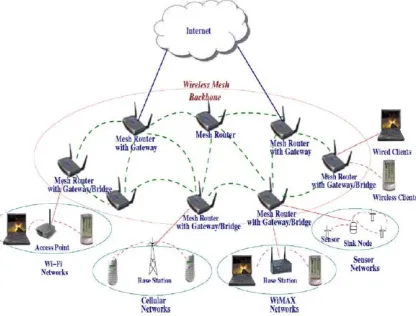
A wireless meshnetwork is a mesh network generated through the wireless connection. For each network user is a provider, sending the data to the next node.It is made up of radio nodes organized in a mesh topology. It is also a form of wireless ad hoc network. The WMN frequently include mesh clients, mesh routers and gateways. The mesh clients are often laptops, cell phones and other wireless devices while the mesh routers forward traffic to and from the gateways whichmay, but need not, be connected to the Internet.
© 2016, IRJET | Impact Factor value: 4.45 | ISO 9001:2008 Certified Journal | Page 1384 applications in WMNs, such as software updates and
video/audio file downloads. These applications have a exact requirement of 100% Packet Delivery Ratio (PDR), since each byte of the downloaded file has been received by all the receivers. This requirement construct many of the reliable multicast protocols expected in the past(e.g.,[8], [9], [25]) suitable, since they cannot assure100%PDR. In addition, reliability for this class of application cannot come at the cost of considerably reduced throughput having no resemblance in military applications[8], from the time when the Internet users always eager fast downloads. The basic challenge in achieving reliable multicast in WMNs is no dissimilar from that of reliable unicast -that wireless links are lossy. To succeed this, researchers have applied classic methods such as Automatic Repeat request (ARQ),
Forward Error Correction (FEC), or two
combinations. The majority of the works on reliable multicast in multi-hop wireless networks either are single based on ARQ (e.g., [10], [11]) which suffer the feedback implosion problem(e.g., [8], [12], [13]). A recent work [14] considered the applicability of FEC and hybrid ARQ-FEC techniques, rented from the wired Internet, to WMNs, and displaced that RMDP [15], a hybrid ARQ-FEC protocol, can be achieve both reliable and high throughput. freshly, researchers have applied Network Coding (NC), method originally developed by the Internet for wired line, to overcome the above challenge. [16] showed that the operation of mixing packets similar the operation of rate less Forward Error Correction codes. Actually, NC can be viewed as a technique equal in value of performing hop-by-hop FEC, without the delay penalty incurred by the decoding operations at every hop, that would be required by hop-by-hop FEC. In [17], the authors went single step and showed that the reliability gain of N Cover end-to-end FEC for a wireless multicast tree of height h with link loss rate p is in the order of Θ((1− 1 p)h).Practical work that a distinguished act of utilizing NC for multicast is still at a preparatory stage. MORE [6] is the only relating to practice NC-based protocol which supports high throughput, reliable multicast. It combines Network Coding with
OR, with the primary goal of takes away the need for coordination essential in opportunistic routing. Although, the design of MORE also guarantees reliability, i.e., MORE is a routing protocol for stable file transfer, pair of unicast and multicast.
[image:2.612.327.535.339.497.2]A second fundamental challenge in reliable multicast, without equal to multicast, is the “crying baby” problem as first pointed out in [18] the context of multicast in the Internet. If single receiver has a particularly poor connection, then trying to fulfill the reliability constraint for that receive may performance result reducing the rest of the receivers. This problem also raises the attractive question of what is a suitable definition of overall performance metric if multiple one who receives can be allowed to achieve uneven throughput.
Fig. 1 Wireless Mesh Network
Regardless, a major challenging design of high throughput, reliable multicast protocols whether it is realizable at well connected at the receivers which will increases the throughput by developing a protocol without worsening the already low throughput of poor-connected receivers.
© 2016, IRJET | Impact Factor value: 4.45 | ISO 9001:2008 Certified Journal | Page 1385 clarify the second problem. At First, Pacifier builds an
efficient multicast tree which is used by multicast protocols and opportunistic overhearing by the natural leverages. Second, Pacifier applies intra-flow, random linear NC to conquer packet loss over lossy, links which can avoids hop-by-hop feedback and coordination of multicast tree forwarders in packet sending. Thirdly, Pacifier applies a rate limiting at the source, the congestion level in the network will be minimized. Fourth, Pacifier solves the “crying baby” problem by having the source send batches of packets in a round-robin fashion. This function allows Pacifier to drastically improve the throughput of well connected nodes with no collision on the throughput of poorly connected nodes. We estimate Pacifier and compare its performance on MORE, by using widely logical simulations. Our simulation results show that Pacifier increases the average throughput of multicast receivers over MORE by 171%, At the same time, it solves the “crying baby” problem, by increasing the throughput gain which is maximum for well-connected receivers by nearly 30x. Right concern and importantly, Pacifier also improves the throughput of the “crying babies”, i.e., the poorly connected receivers, by nearly 4.5x.
II.
HIGH-THROUGHPUT
MESH-BASED MULTICAST
ROUTING
A multi-hop wireless network where nodes which is used for sending data from destination nodes to other nodes. Assume that mesh-based multicast routing protocol, which maintains a mesh connecting sources and receivers .Path selection will performed based on a metric designed and it is used to maximize throughput level. Below, we provide an sketch of high-throughput metrics for multicast, then describe in detail show such metrics are integrated with mesh-based multicast protocols.
High-Throughput Metrics
Habitually, routing protocols have used for hop count as a path selection metric. In static networks however, sub-optimal throughput was
achieved by this metric because paths tend to include lossy wireless links [10], [27]. In recent years,as a result the focus has shifted towards high-throughput metrics which seek to maximize throughput by collecting path based on the quality of wireless links (e.g., ETX [10], PP [15],[27], RTT [14]). In such metrics, the aspects of the links to/from a node’s neighbours is measured by periodic probing. The metric for an whole path is obtained by total amount of the metrics reported by the nodes on the path. Various high-throughput metrics for multicast were established in [11]. All of these metrics are adjustments of unicast metrics to the multicast setting are taking in to account the basic variation between unicast and multicast communication. In multicast transmission of data are less reliable than in unicast for several reasons. In unicast, a packet is sent by using link-layer unicast transmission, which involves link layer acknowledgments and likely for retransmissions of packet; In multicast, a packet is sent uncertainly using link-layer broadcast, which does not include link layer acknowledgments or data retransmissions. Since, unicast transmissions are preceded by a RTS/CTS exchange; in multicast there is no RTS/CTS exchange, which enhances collision probability and reliability of transmission is decreases. Many metrics for unicast routing reducing the medium access time, while metrics for multicast capture in different ways the packet delivery ratio(PDR). All the high-throughput multicast metrics proposed in [11] showed improvement over the original path selection. The SPP metric [11], an adjustment of the well-known ETX [10] unicast metric, was shown in the other multicast metrics of outperform [11], [28]. Thus, in the remainder of the paper and in our experimental valuation, we consider SPP for demonstration purposes. Below, we first give an over view of ETX, then show how it was extended to SPP.
ETX Metric
In this metric was proposed for unicast and
© 2016, IRJET | Impact Factor value: 4.45 | ISO 9001:2008 Certified Journal | Page 1386 over a link, additional retransmissions. Each node
periodically broadcasts probe packets in which the number of probe packets received from each of its neighbours over a time interval. A pair of neighbouring nodes, A and B, estimate the quality of the link A ↔ B by using the formula ETX = d1f×dr, where df and dr are the probabilities involved that a packet is sent effectively from A to B (forward direction) and from B to A (reverse direction). The value of ETX for a path of k links between a source S and a receiver R is ETXS→R = Pki=1 ETXi where ETXi is the ETX value of the i-th link on the path; ETXS→R evaluates the total number of transmissions by all nodes on the path to a packet delivery from a source to a receiver.
SPP Metric
ETX was improved to the multicast setting by Royetal. in the form of the SPP metric. The value of SPP for a path of k links between a source S and a receiver R is SPPS→R = Πki=1SPPi, where the metric for each link I on the path is SPPi = df and df is defined as in ETX. The rational for defining SPP as above is two fold:
Unlike in unicast, where a successful transmission over a link depends upon the quality of both directions of that link, in multicast only the quality of the forward direction because there are no link layer acknowledgments.
High-Throughput
Mesh-Based
Multicast
Routing
Multicast protocols provide interation from sources to destination which are formed in groups by proposing dissemination structures namely, trees or meshes, dynamically updated as nodes join or by leave the group. In the Tree-based multicast protocols (e.g., MAODV [7]) build enhanced data paths, but it required more complex operations to establish and preserve the multicast tree,and less hardy to failures. Mesh-based multicast protocols (e.g., ODMRP [6]) build more volatile data paths, but
have higher overhead due to excessive
retransmissions. We focus on ODMRP as a classic mesh-based multicast protocol for wireless networks. Below we first give an outline of ODMRP, then describe how it can be upgrade with any link-quality metric. The protocol enlargement to use a high-throughput metric was first described by Roy et al. [11],[28]. We refer the ODMRP protocol using a high-throughput metric as ODMRP-HT in which distinguish it from the original ODMRP [6] protocol. ODMRP summary. It is an on-demand multicast routing protocol for multi-hop wireless networks and it uses a mesh of nodes for each multicast group. Nodes are combined to other the mesh through a route selection and activation protocol. The source sporadically recreates the mesh by flooding a JOIN QUERY message in the network in order to refresh information of the membership and updates of the routes. We use the term round to denote the interval between two successive mesh formulating events. JOIN QUERY messages are flooded using a fundamental flood suppression mechanism, in which nodes only process the first received copy of a flooded message. When a receiver node gets a JOIN QUERY message, it authored the path from itself to the source by paradigm and broadcasting a JOIN REPLY message that it mostly contains entries for each of multicast group which it wants to join; each entry has a next hop field filled with the corresponding difficile node. If the JOIN REPLY message is received intermediate node, it knows incase it is on the path to the source or not, by checking if the next hop field of any of the field in the message matches its own identifier. If so, it makes itself a node part of the mesh will estabilishe and broadcasts a new JOIN REPLY built upon the matched entries.
III. CHANNEL ALLOCATION
© 2016, IRJET | Impact Factor value: 4.45 | ISO 9001:2008 Certified Journal | Page 1387 by means of frequency reuse, but still assure a certain
grade of service by eliminating co-channel interference and adjacent channel interference among nearby cells that share the bandwidth. It deals with the allocation of channels to cells in a cellular network. Once the channels are allocated, cells which may allow the users within the cell to communicate via the available channels. Channels in a wireless communication system rarely consist of time slots, frequency bands and/or CDMA pseudo noise sequences, they can represent any other universal transmission resource. There are three major sections for assigning these channels to cells (or base-stations). They are three different types such as Fixed Channel Allocation,Dynamic Channel Allocation andHybrid Channel Allocation which is a combination of the first two methods.
Hybrid Channel Allocation
The enormous growth for the mobile telephone traffic, along with the limited number of channels are mostly available, need effective reuse of channels. Channel allocation schemes .In HCA, channels are divided into two dislocayed sets. one set of channels is assigned to each cell on FCA basis, while the others are kept in a central pool for dynamic assignment. It should presents a hybrid channel allocation notification to the central pool on each channel request that cannot be achived locally at the base station. This notification will request more than one channel to be assigned to the requesting cell.
IV.ATTACKS AGAINST
HIGH-THROUGHPUT MULTICAST
We grant several attacks against high-throughput multicast protocols. The attacks exploit vulnerable were brought in by the use of high-throughput metrics. They need little resource from the attacker, but can cause severe damage to the enactment of the multicast protocol. We first present the adversarial model, followed by the targets and the details of the attacks.
Adversarial Model
Malicious nodes may exhibit Byzantine behaviour, alone with other malicious nodes. We refer to any arbitrary action by confirmation nodes deviating from protocol specification as Byzantine behavior, and to such an adversary as a Byzantine adversary. Examples of Byzantine action include: Dropping, injecting, modifying, replaying packets, and creating wormholes. This work considers attacks that target the network level and assumes that adversaries do not have control on lower layers such as the physical or MAC layers. We assume the physical layer uses jamming-resilient methods such as direct sequence spread spectrum (DSSS) or frequency hopping spread spectrum (FHSS) (as in the case of 802.11). We do not deliberate the Sybil attack, which can be addressed using techniques such as [29], [30], complementary to our routing protocol. Also, preventing traffic analysis is not the goal of this work.
Attack Goals
© 2016, IRJET | Impact Factor value: 4.45 | ISO 9001:2008 Certified Journal | Page 1388 metric handling attacks, which require only little
effort to execute, yet are extremely detrimental to the protocol performance.
[image:6.612.324.541.120.353.2]V .RESULTS
Fig. 1 Node Creation
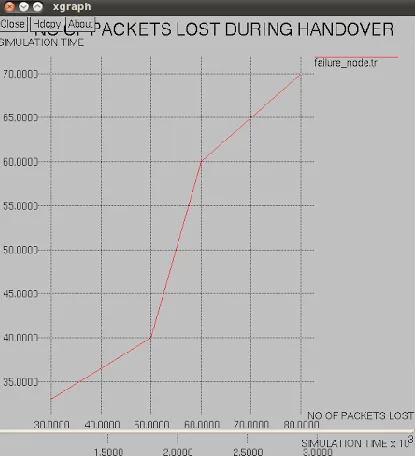
[image:6.612.36.245.201.411.2]Fig. 2Packet Loss during Handover
[image:6.612.322.533.404.636.2]Fig. 3 Throughput vs Packet Size
[image:6.612.37.246.463.691.2]© 2016, IRJET | Impact Factor value: 4.45 | ISO 9001:2008 Certified Journal | Page 1389
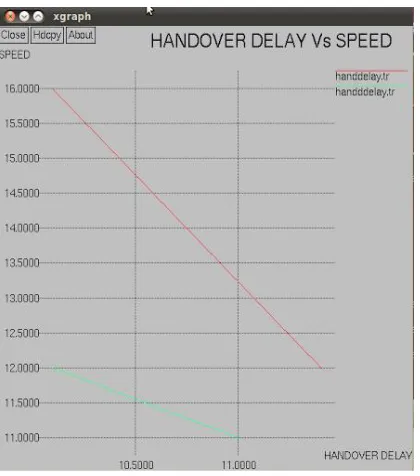
Fig. 5 Delay vs Speed
VI. CONCLUSION AND FUTURE
ENHANCEMENT
The EMTX-based multicast problem with the objective of minimizing the sum of EMTX over all forwarding nodes in the multicast tree .Both centralized and distributed algorithms have been designed for the multicast problem. We have also implemented the distributed algorithm as a multicast routing protocol. Extensive simulation experiments have confirmed that, compared to two base line approaches, EMTX-based multicast routing can effectively reduce transmission overhead and hybrid channel allocation will increase multicast throughput. Open research problems include studying the performance of the proposed protocol in more realistic simulation environments as well as real-life wireless networks.
REFERENCES
[1] I. F. Akyildiz, X. Wang, and W. Wang, “Wireless mesh networks: A survey,” Computer Networks., vol. 47, no. 4, pp. 445–487, Mar. 2005.
[2] P. Gupta and P. R. Kumar, “The capacity of wireless networks, ”IEEE Trans. Inf. Theory, vol. 46, no. 2, pp. 572–584, Mar. 2000.
[3] IEEE 802.11 Working Group, IEEE 802.11-2007: Wireless LAN Medium Access Control (MAC) and Phys. Layer (PHY) Specifications,2007.
[4] J. Kuri and S. K. Kasera, “Reliable multicast in multi-access wireless LANs,” Wireless Netw., vol. 7, no. 4, pp. 359–369, Jul. 2001.
[5] M.-T. Sun, L. Huang, A. Arora, and T.-H. Lai, “Reliable MAC layer multicast in IEEE 802.11 wireless networks,” in Proc. Int. Conf. Parallel Process., Aug. 2002, pp. 527–536.
[6] A. Chen, D. Lee, G. Chandrasekaran, and P. Sinha, “HIMAC: High throughput MAC layer multicasting in wireless networks,” in Proc. IEEE Int. Conf. Mobile Adhoc Sensor Syst.,Oct. 2006, pp. 41–50.
[7] J. Kim, J. Jung, and J. Lim, “A reliable multicast MAC protocol based on spread spectrum technique in wireless ad-hocnetworks,” in Proc. Int. Conf. Grid Distrib. Comp., Dec. 2011,pp. 202–212.
[8] S. W. Kim, B.-S. Kim, and I. Lee, “MAC protocol for reliable multicast over multi-hop wireless ad hoc networks,” J. Commun. Netw.,vol. 14, no. 1, pp. 63–74, Feb. 2012.
[9] S. K. S. Gupta, V. Shankar, and S. Lalwani, “Reliable multicast MAC protocol for wireless LANs,” in Proc. IEEE Int. Conf. Commun., May 2003, vol. 1, pp. 93–97.
[10] W. Si and C. Li, “RMAC: A reliable multicast MAC protocol for wireless ad hoc networks,” in Proc. Int. Conf. Parallel Process., Aug.2004, vol. 1, pp. 494–501.
[11] S. Zhang, S. C. Liew, and P. P. Lam, “Hot topic: Physical-layer network coding,” in Proc. ACM Mobicom Annu. Int. Conf. Mobile Comput. Netw., Sep. 2006, pp. 358–365.
© 2016, IRJET | Impact Factor value: 4.45 | ISO 9001:2008 Certified Journal | Page 1390 [13] C. H. Foh, J. Cai, and J. Qureshi, “Collision codes:
Decoding superimposed BPSK modulated wireless transmissions,” in Proc .IEEE 7th Conf. Consum. Commun. Netw. Conf., Jan. 2010, pp. 1–5.
[14] X. Zhao, C. T. Chou, J. Guo, S. Jha, and A. Misra, “Probabilistically reliable on-demand multicast in wireless mesh networks,” in Proc .IEEE Int. Symp. World Wireless, Mobile Multimedia Networks., Jun. 2008,pp. 1–9.
BIOGRAPHIES
B.Sathyasri is currently
working as Assistant
Professor in VELTECH Avadi, Chennai. I received M.E (Embedded Systems) in 2007 from Anna University, Chennai. I have 10 years of teaching experience in various engineering colleges. Am doing research in Anna University, Chennai. Am very much interested in wireless Communication and networking. I published 4 papers in national conferences and 1 paper in international conference. I published 2 national and one international journal papers.
S.Seemalilly is currently
pursing B.E. (ECE)in VELTECH avadi, Chennai-62.
J.Kamatchi is currently pursing