Nutritional Supplements and Other Complementary
Medicines for Infantile Colic: A Systematic Review
WHAT’S KNOWN ON THIS SUBJECT: Research into
complementary and alternative medicines for infantile colic have suggested several therapies that can be beneficial, ranging from supplements to manipulation, sugar solutions, herbal extracts, massage, and reflexology.
WHAT THIS STUDY ADDS: This is the first systematic review of all
complementary and alternative medicines and nutritional supplements for the treatment of infantile colic. Encouraging evidence for fennel extract, mixed herbal tea, and sugar solutions were found, but all included trials have limitations.
abstract
BACKGROUND:Complementary and alternative medicines often are
advocated for infantile colic, yet there has been no synthesis of the evidence to inform current practice about their use.
OBJECTIVE:To critically evaluate all randomized clinical trials of
nutri-tional supplements and other complementary and alternative medi-cines as a treatment for infantile colic.
METHODS:Five electronic databases were searched from their
incep-tion to February 2010 to identify all relevant randomized clinical trials of complementary and alternative medicines and supplements for in-fantile colic. Reference lists of retrieved articles were hand searched. Data were extracted by two independent reviewers, and methodologi-cal quality was assessed using the Jadad score and key aspects of the Cochrane risk of bias.
RESULTS:Fifteen randomized clinical trials met the inclusion criteria
and were included. Thirteen studies were placebo controlled. Eight were of good methodological quality. Eleven trials indicated a signifi-cant result in favor of complementary and alternative medicines. How-ever, none of these randomized clinical trials were without flaws. Inde-pendent replications were missing for most modalities.
CONCLUSIONS:Some encouraging results exist for fennel extract,
mixed herbal tea, and sugar solutions, although it has to be stressed that all trials have major limitations. Thus, the notion that any form of complementary and alternative medicine is effective for infantile colic currently is not supported from the evidence from the included ran-domized clinical trials. Additional replications are needed before firm conclusions can be drawn.Pediatrics2011;127:720–733
AUTHORS:Rachel Perry, MPhil, MA, BA,aKatherine Hunt,
PhD, MSc, BN, RN,aand Edzard Ernst, PhD, MD, FMedSci,
FSB, FRCPa
aDepartment of Complementary Medicine, Peninsula Medical
School, Universities of Exeter and Plymouth, Plymouth, United Kingdom
KEY WORDS
infantile colic, nutritional supplements, complementary medicine, RCT, systematic review
ABBREVIATIONS
IC—infantile colic
CAM—complementary and alternative medicine RCT—randomized clinical trial
Rachel Perry, Katherine Hunt, and Edzard Ernst made substantial contributions to the conception and design of this study, acquisition of data, and analysis and interpretation of data; were involved in drafting the article or revising it critically for important intellectual content; and gave final approval of the version to be published.
www.pediatrics.org/cgi/doi/10.1542/peds.2010-2098
doi:10.1542/peds.2010-2098
Accepted for publication Jan 5, 2011
Address correspondence to Rachel Perry, MPhil, MA, BA, Peninsula Medical School, Department of Complementary Medicine, 25 Victoria Park Rd, Devon, Exeter EX2 4NT UK. E-mail: [email protected].
PEDIATRICS (ISSN Numbers: Print, 0031-4005; Online, 1098-4275).
Copyright © 2011 by the American Academy of Pediatrics
Infantile colic (IC) is characterized by excessive and inconsolable crying dur-ing the first 4 months of life and often is diagnosed using criteria set out by Wessel et al.1It is prevalent (between
⬃5% and 19% of infants in the United Kingdom)2and usually difficult to treat. A paucity of treatment options and dis-satisfaction with conventional health care may lead parents to seek out complementary and alternative medi-cine (CAM) options for their infants.3 Given that IC can be particularly stressful for new parents and because there are few recommended conven-tional treatments, CAM use may be high in this population and therefore needs additonal investigation to evalu-ate the effectiveness of these ap-proaches and treatments. Advice and information regarding the treatment or management of IC is available to parents from a wide range of generally unregulated sources (eg, Web sites) that make claims that are not empiri-cally supported.
The aim of this systematic review is to examine all relevant trials to provide an overview of currently available evi-dence relating to the effectiveness or efficacy of any form of CAM or nutri-tional supplement in reducing the symptoms of IC.
METHODS
The following databases were searched from their inception to February 2010; Medline and Embase via the Ovid inter-face, Cinahl and Amed via the Ebsco in-terface, and Central via the Cochrane li-brary, using a combination of MeSH and key word terms (see the online Supple-mental Information for electronic search strategy). No restrictions were applied regarding language or dates. Reference lists of all full-text articles were hand searched for additional stud-ies. A protocol was produced and ad-hered to and is available on request from the lead author (Rachel Perry).
Study Selection
All titles and abstracts retrieved from the searches were assessed for eligi-bility. All articles that appeared to meet the inclusion criteria based on reading the abstract were retrieved in full and independently considered for inclusion by 2 reviewers (Rachel Perry and Katherine Hunt). Disagreements were resolved through discussion with the third author (Edzard Ernst). The following inclusion criteria were predefined:
● Randomized clinical trials (RCTs) of children diagnosed with infantile colic,
● RCTs of any form of CAM, including all supplements and probiotics; ● RCTs with placebo, no treatment,
treatment as usual, or waiting lists as control groups; and
● RCTs with the following primary out-comes: improvement from baseline in subjective measures of colic se-verity (eg, crying diaries, duration, intensity, night wakings, and food di-aries); improvement from baseline in parental self-report/observer-completed quality-of-life parame-ters; improvement from baseline in physiologic parameters; and a re-duction from baseline in the need for medication or other treatment of hospitalization or adverse effects or events of treatment.
● Only completed RCTs that met these criteria were included (reports of ongoing trials were excluded). Data from included studies were ex-tracted independently by 2 review-ers (Rachel Perry and Katherine Hunt), using a standardized form with predefined criteria. The pro-portion of participants achieving clinically significant reductions (de-fined by authors or using estab-lished cut offs) or significant dif-ferences in means and medians between groups in any of the above
outcomes were reported. Disagree-ments between reviewers were re-solved through discussions with the third author.
Quality Assessment
The methodological quality of all in-cluded RCTs was evaluated indepen-dently by 2 researchers (Rachel Perry and Katherine Hunt), using the Jadad score.4 Additional methodological quality data were extracted on the ba-sis of recommendations from the Co-chrane Handbook of Systematic Re-views of Interventions5and the Jadad criteria for clinical trials on pain management.6
Analysis
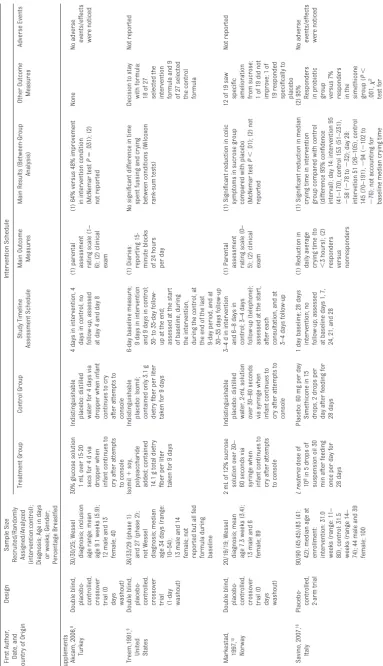
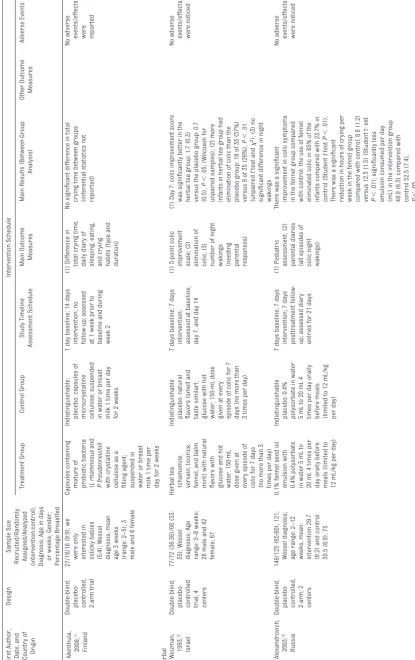
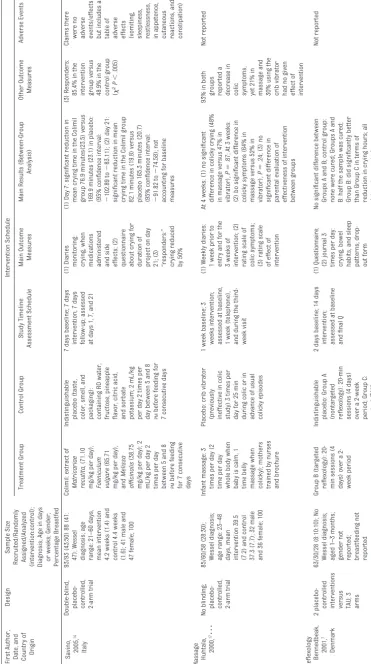
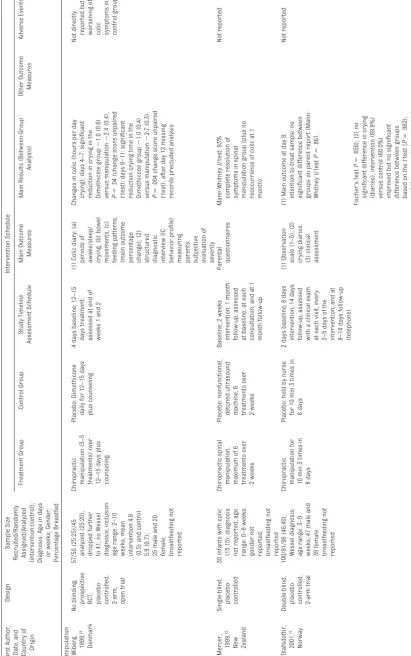
Results of each included study are displayed in Table 1. Between-group analyses of main outcome measures are presented. Secondary analysis was conducted if sufficient data were provided to perform a between-group analysis where the authors had not presented it. A meta-analysis of the primary data was not possible be-cause the RCTs were insufficiently homogeneous.
RESULTS
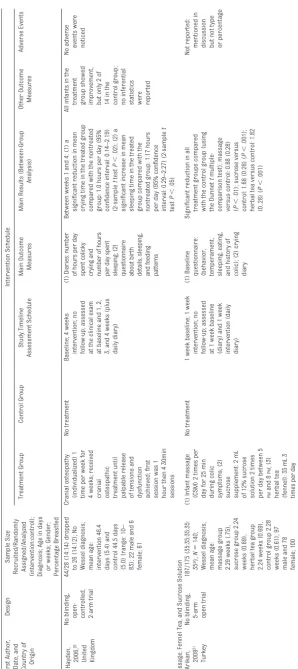
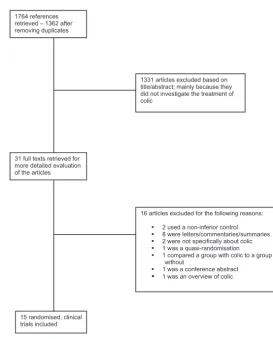
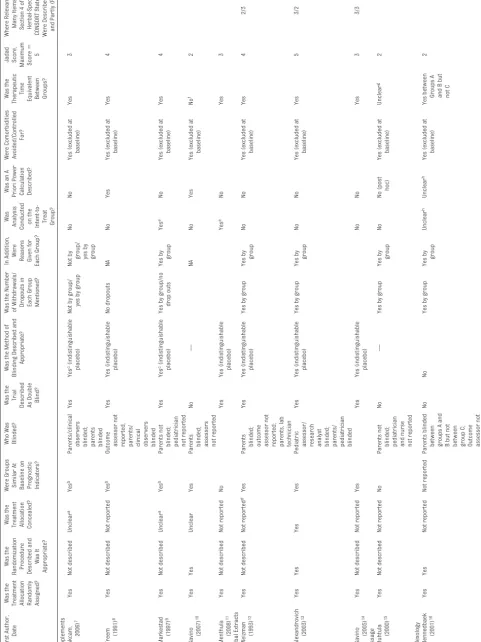
The literature searches identified 1764 potentially relevant titles and ab-stracts. Fifteen RCTs with a total of 944 infants met our inclusion criteria (Fig 1). A summary of the main character-istics and results of these RCTs is pre-sented in Table 1 and methodological quality is presented in Table 2. The studies were published between 1991 and 2008, originating from 10 coun-tries. Fourteen studies were in English and 1 was in Danish.7 Sample sizes ranged from 9 to 175. Trials included infants aged between 0 and 16 weeks.
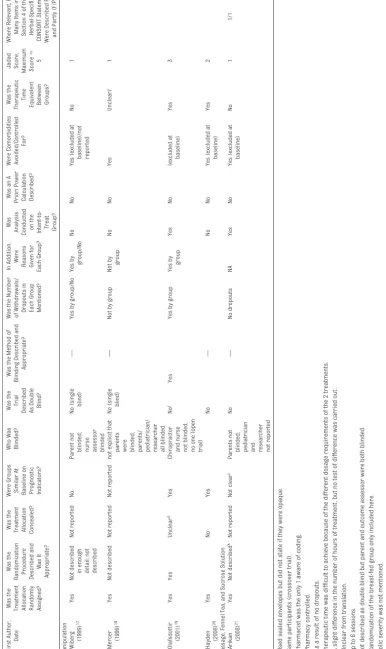
Eight RCTs8–14,15were of good method-ological quality and scored 3 or more points on the Jadad scale (Table 2). Seven RCTs10,15–18,20,21had a score of
TABLE 1 Results Table First Author, Date, and Country of Origin Design Sample Size
Recruited/Randomly Assigned/Analyzed (intervention:control); Diagnosis;
Age in days or weeks; Gender; Percentage Breastfed Intervention Schedule Treatment Group Control Group Study Timeline Assessment Schedule Main Outcome Measures Main Results (Between-Group Analysis) Other Outcome Measures Adverse Events Supplements Akcam, 2006, 8 Turkey Double blind,
placebo- controlled, crossover trial
(0 days washout) 30/30/25; Wessel diagnosis; inclusion age range: mean age 9.1 weeks (5.9); 12 male and 13 female; 40 30% glucose solution 1 mL over 15-20 secs fo r4dv ia dropper when infant continues to cry after attempts to console Indistinguishable placebo: distilled water for 4 days via dropper when infant continues to cry after attempts to console 4 days in intervention, 4 days in control, no follow-up, assessed at day 4 and day 8 (1)
parental assessment rating
scale (1– 6); (2) clinical exam (1) 64% versus 48% improvement in intervention condition (McNemar test P ⫽ .031); (2) not reported None No
adverse events/effects were
noticed Treem,1991, 9 United States Double blind,
placebo- controlled, crossover trial (1-day washout)
36/33/29 (phase 1) and 27 (phase 2); not Wessel diagnosis; median age 34 days (range: 10–54); 13 male and 14 female; not reported but all fed formula during baseline Isomil ⫹ soy, polysaccharide added; contained 14.1 g total dietry fiber per liter taken for 9 days Indistinguishable placebo: Isomil; contained only 3.1 g dietry fiber per liter taken for 9 days 6-day baseline measure; 9 days in intervention and 9 days in control; 30-to 35-day follow-up at the end; assessed at the start of baseline, during the intervention, during the control, at the end of the last 9-day period, and at 30–35 days follow-up (1) Diaries: reporting 15-minute blocks of 24 hours per day No significant difference in time spent fussing and crying between conditions (Wilcoxon rank-sum tests) Decision to stay with formula: 18 of 27 selected the intervention formula and 9 of 27 selected the control formula Not reported Markestad, 1997, 10 Norway Double blind,
placebo- controlled, crossover trial
(0 days washout) 20/19/19; Wessel diagnosis; mean age 7.3 weeks (3.4); 13 male and 6 female; 89 2 mL of 12% sucrose solution over 30– 60 seconds via syringe when infant continues to cry after attempts to console Indistinguishable placebo: distilled water, 2-mL solution over 30–60 seconds via syringe when infant continues to cry after attempts to console 3–4 d in intervention and 6–8 days in control; 3–4 days follow-up (telephone); assessed at the start, after each consultation, and at 3–4 days follow-up (1)
Parental assessment rating
scale (0– 5); (2) clinical exam (1) Significant reduction in colic symptoms in sucrose group compared with placebo (McNemar test P ⬍ .01); (2) not reported 12 of 19 saw
specific amelioration from
sucrose; 1 of 19 did not improve; 1 of 19 responded specifically to placebo Not reported Savino, 2007, 16 Italy Placebo-controlled, 2-arm trial 90/90 (45:45)/83 (41: 42); median age at enrollment: intervention: 31.0 weeks (range: 11– 80), control: 31.5 weeks (range 14– 74); 44 male and 39 female; 100 L reuteria dose of 10 8in 5 drops of suspension oil 30 min after feeding once per day for 28 days Placebo: 60 mg per day Simethicone in 15 drops, 2 drops per day after feeding for 28 days 1 day baseline; 28 days intervention; no follow-up; assessed at baseline days 1, 7, 24, 21, and 28 (1) Reduction in daily average crying time (to ⬍ 3 hours); (2)
responders versus nonresponders
(1) Significant reduction in median crying time in intervention group compared with control (difference 95% confidence interval); day 14: intervention 95 (41–170), control 153 (51–231), ⫺ 58 ( ⫺ 78 to ⫺ 32); day 28: intervetion 51 (26–105), control 145 (70–191), ⫺ 94 ( ⫺ 102 to ⫺ 76); not accounting for baseline median crying time (2)
95% Responders inprobiotic group versus
7% responders in the simethicone group ( P ⬍ .001, 2 test for proportions) No
adverse events/effects were
TABLE 1 Continued First Author, Date, and Country of Origin Design Sample Size
Recruited/Randomly Assigned/Analyzed (intervention:control); Diagnosis;
Age in days or weeks; Gender; Percentage Breastfed Intervention Schedule Treatment Group Control Group Study Timeline Assessment Schedule Main Outcome Measures Main Results (Between-Group Analysis) Other Outcome Measures Adverse Events Menthula, 2008, 11 Finland Double-blind,
placebo- controlled, 2-arm
trial 27/18/18 (9:9); we were only interested in colicky babies (5:4); Wessel diagnosis; mean age 3 weeks (range: 2–5); 3 male and 6 female Capsules containing mixture of probiotic bacteria ( L rhamnosus and P freudenreichii ) with crystalline cellulose as a filling agent; suspended in water or breast milk 1 time per day for 2 weeks Indistinguishable; placebo: capsules of microcrystalline cellulose; suspended in water or breast milk 1 time per day for 2 weeks 1 day baseline; 14 days intervention; no follow-up; assessed at 1 week prior to baseline and during week 2 (1) Difference in total crying time; daily diary of sleeping, eating, and crying habits (type and duration) No significant difference in total crying time between groups (inferential statistics not reported) No
adverse events/effects were reported
Herbal Weizman, 1993, 12 Israel Double-blind,
placebo- controlled trial;
4 centers 77/72 (36:36)/68 (33: 35); Wessel diagnosis; Age range: 2–8 weeks; 26 male and 42 female; 67 Herbal tea (chamomile, vervain, licorice, fennel, and balm mint) with natural flavors with glucose and hot water. 150-mL dose given at every episode of colic for 7 days (no more than 3 times per day) Indistinguishable placebo: natural flavors (smell and taste similar); glucose with hot water; 150-mL dose given at every episode of colic for 7 days (no more than 3 times per day) 7 days baseline; 7 days intervention; assessed at baseline, day 7, and day 14 (1) 5-point colic improvement scale; (2) elimination of colic; (3) number of night
wakings (needing parental responses)
(1) Day 7: colic improvement score was significantly better in the herbal tea group: 1.7 (0.3) versus the placebo group: 0.7 (0.5), P ⬍ .05; (Wilcoxon for unpaired samples); (2) more infants in herbal tea group had elimination of colic than the placebo group: 19 of 33 (57%) versus 9 of 35 (26%), P ⬍ .01 (unpaired t test and 2); (3) no significant difference in night wakings No
adverse events/effects were
noticed Alexandrovich, 2003, 13 Russia Double-blind,
placebo- controlled, 2-arm;
2 centers 149/125 (65:60); 121; Wessel diagnosis; age range: 2–12 weeks, mean: intervention 29.7 (8.2) and control 30.5 (6.9); 75 0.1% fennel seed oil emulsion with 0.4% polysorbate in water 5 mL to 20 mL 4 times per day orally before meals (limited to 12 mL/kg per day) Indistinguishable placebo: 0.4% polysorbate in water 5m Lt o2 0m L4 times per day orally before meals (limited to 12 mL/kg per day) 7 days baseline; 7 days intervention; 7 days posttreatment follow-up; assessed diary entries for 21 days (1) Pediatric assessment; (2) parental diaries (all episodes of colic night wakings) There was a significant improvement in colic symptoms in the fennel group compared with control: the use of fennel eliminated colic in 65% of the infants compared with 23.7% in control (Student t test P ⬍ .01); There was a significant reduction in hours of crying per week in the fennel group compared with control: 8.8 (1.2) versus 12.3 (1.5) (Student t-est P ⬍ .01); significantly less emulsion consumed per day (mL) in the intervention group 48.9 (6.3) compared with control 52.5 (7.4), P ⬍ .05 No
adverse events/effects were
TABLE 1 Continued First Author, Date, and Country of Origin Design Sample Size
Recruited/Randomly Assigned/Analyzed (intervention:control); Diagnosis;
Age in days or weeks; Gender; Percentage Breastfed Intervention Schedule Treatment Group Control Group Study Timeline Assessment Schedule Main Outcome Measures Main Results (Between-Group Analysis) Other Outcome Measures Adverse Events Savino, 2005, 14 Italy Double-blind,
placebo- controlled, 2-arm
trial 93/93 (43:50) 88 (41: 47); Wessel diagnosis; age range: 21–60 days, mean intervention 4.2 weeks (1.4) and control 4.4 weeks (1.6); 41 male and 47 female; 100 Colimil: extract of Matricariae recutita, (71.10 mg/kg per day), Foeniculum vulgare (65.71 mg/kg per day), and Melissa officinalis (38.75 mg/kg per day); 2 mL/kg per day 2 times per day between 5 and 8 PM before feeding for 7 consecutive days Indistinguishable placebo (taste, color, smell, and packaging): containing RO water, fructose, pineapple flavor, citric acid, and sorbate potassium; 2 mL/kg per day 2 times per day between 5 and 8 PM before feeding for 7 consecutive days 7 days baseline; 7 days intervention; 7 days follow-up; assessed at days 1, 7, and 21 (1)
Diaries monitoring: crying,
when
medications administered and
side effects; (2) questionnaire about crying for duration of project on day 21; (3) “responders:” crying reduced by 50% (1) Day 7: significant reduction in mean crying time in the Colimil group 76.9 minutes(23.5) versus 169.9 minutes (23.1) in placebo: (95% confidence interval: ⫺ 102.89 to ⫺ 83.11); (2) day 21: significant reduction in mean crying time in the Colimil group 82.1 minutes (19.8) versus placebo 165.3 minutes (20.7) (95% confidence interval: ⫺ 91.82 to ⫺ 74.58); not accounting for baseline measures (3) Responders: 85.4% in the intervention group versus 48.9% in the control group ( 2P ⬍ .005) Claims there were no
adverse events/effects but
includes
a
table
of
adverse effects (vomiting, sleepiness, restlessness, in
appetence, cutaneous reactions, and constipation) Massage Huhtala, 2000, 17䡠䡠䡠 No
blinding; placebo- controlled, 2-arm
trial 85/60/58 (28:30); Wessel diagnosis; age range: 23–48 days, mean intervention 39.5 (7.2) and control 37.3 (7.7); 32 male and 36 female; 100 Infant massage: 3 times per day (2 time per day whole body when baby is calm, 1 time belly massage when colicky); mothers trained by nurses and brochure Placebo: crib vibrator (previously ineffective in colic study) 3 times per day for 25 min during colic or in advance of usual colicky episodes 1 week baseline; 3 weeks intervention; assessed at baseline, 1 week (telephone), and during the third-week visit (1) Weekly diaries: 1 week prior to entry and for the 3 weeks of intervention; (2) rating scale of colic symptoms; (3) rating scale of effect of intervention At 4 weeks: (1) no significant difference in colicky crying (48% in massage versus 47% in vibrator), P ⫽ .87; At 3 weeks: (2) bo significant difference in colicky symptoms (64% in massage versus 52% in vibrator), P ⫽ .24; (3) no significant difference in parental evaluation of effectiveness of intervention between groups 93% in both groups reported a decrease in
colic symptoms, yet
21% in massage and 30% using the crib vibrator had no given effect of intervention Not reported Reflexology Bennedbeak, 2001, 7 Denmark 2
placebo- controlled interventions versus TAU;
TABLE 1 Continued First Author, Date, and Country of Origin Design Sample Size
Recruited/Randomly Assigned/Analyzed (intervention:control); Diagnosis;
Age in days or weeks; Gender; Percentage Breastfed Intervention Schedule Treatment Group Control Group Study Timeline Assessment Schedule Main Outcome Measures Main Results (Between-Group Analysis) Other Outcome Measures Adverse Events Manipulation Wiberg, 1999, 18 Denmark No
blinding; prospective RCT; placebo controlled, 2-arm, open
trial 57/50 (25:25)/45 analyzed (25:20), dropped further to 41; no Wessel diagnosis; inclusion age range: 2–10 weeks, mean intervention 4.9 (0.5) and control 5.9 (0.7); 25 male and 20 female; breastfeeding not reported Chiropractic manipulation (3–5 treatments) over 12–15 days plus counseling Placebo: Dimethicone daily for 12–15 days plus counseling 4 days baseline; 12–15 days treatment; assessed at end of weeks 1 and 2 (1) Colic diary: (a) periods of awake/sleep/ crying, (b) bowel movements, (c) feeding patterns, (main outcome percentage change); (2)
structured diagnostic interview
(IC
behavior
profile)
measuring parents subjective evaluation
of severity Changes in colic (hours per day crying); days 4–7: significant reduction in crying in the Dimethicine group ⫺ 1.0 (0.6) versus manipulation ⫺ 2.4 (0.4), P ⫽ .04 (change score unpaired t test); days 8–11: significant reduction crying time in the Dimethicone group ⫺ 1.0 (0.4) versus manipulation ⫺ 2.7 (0.3), P ⫽ .004 change score unpaired t test); after day 12 missing records precluded analysis Not directly reported but worsening of colic symptoms in control group Mercer, 1999, 19 New Zealand Single-blind, placebo- controlled 30 infants with colic (15:15); diagnosis not reported; age range: 0–8 weeks; gender not reported; breastfeeding not reported Chiropractic spinal manipulation, maximum of 6 treatments over 2 weeks Placebo: nonfunctional, detuned ultrasound machine, 6 treatments over 2 weeks Baseline; 2 weeks intervention; 1 month follow-up; assessed at baseline, at each consultation, and at 1 month follow-up Parental questionnaires Mann-Whitney U test: 93% complete resolution of symptoms in spinal manipulation group (plus no reoccurrence of colic at 1 month) Not reported Olafsdottir, 2001, 15 Norway Double-blind,
placebo- controlled, 2-arm
methodological flaws that limited the conclusiveness of their findings. Only 4 trials9,11,15,21 used intention-to-treat analyses, and 39,11,21were the result of having no dropouts. The majority of tri-als did not conduct power calcula-tions; thus, the role of chance was not quantified, reducing the reliability of the results. For clarity, the results of the 15 trials are described under spe-cific treatment headings. Variation in the information given for each trial is a result of differences in the availability of the data.
Manipulation Studies
Four studies of manipulation were reviewed. Three studies show a sig-nificant effect from intervention treatment. Wiberg et al18found a sig-nificantly greater reduction in mean hours of crying in manipulation com-pared with dimethicone at days 4 to 7 days (P⬍.04) and days 8 to 11 (P⬍
.004) (after day 12 the number of miss-ing records preclude analysis). Data for analysis only were available for 41 of 50 subjects. Interestingly, all post-baseline dropouts (n⫽4) were in the control group and were attributed to worsening colic symptoms. Because an intention-to-treat analysis was not conducted, there may be a bias in favor of the spinal-manipulation group be-cause results from the worsened cases were not included in the analy-sis, thus somewhat undermining the significant findings. Because of a vari-ation in the treatment type and dura-tion, the therapeutic time was not equivalent between groups, which is an additional source of bias.
Mercer and Nook19 reported a com-plete resolution of symptoms in 93% of infants and no reoccurrence at the 1-month follow-up, which was
signifi-cant compared with the placebo
group. However, the results from the placebo group and statistical test are not reported. No details were given
TABLE 1 Continued First Author, Date, and Country of Origin Design Sample Size
Recruited/Randomly Assigned/Analyzed (intervention:control); Diagnosis;
Age in days or weeks; Gender; Percentage Breastfed Intervention Schedule Treatment Group Control Group Study Timeline Assessment Schedule Main Outcome Measures Main Results (Between-Group Analysis) Other Outcome Measures Adverse Events Hayden, 2006, 20 United Kingdom No
blinding, open- controlled, 2-arm
trial 44/28 (14:14) dropped to 26 (14:12); No Wessel diagnosis; mean age: intervention 46.4 days (5.4) and control 44.5 days (5.0) (range: 10– 83); 22 male and 6 female; 61 Cranial osteopathy (individualized) 1 time per week for 4 weeks; received
cranial osteopathic treatment
until palpable release of tensions and dysfunction achieved; first session was 1 hour then 4 30min sessions No treatment Baseline; 4 weeks intervention; no follow-up; assessed at the clinical exam at baseline and 1, 2, 3, and 4 weeks (plus daily diary) (1) Diaries: number of hours per day spent colicky crying and number of hours per day spent sleeping; (2) questionnaire about birth details, sleeping, and feeding patterns Between weeks 1 and 4: (1) a significant reduction in mean crying time in the treated group compared with the nontreated group: 1.0 hours per day (95% confidence interval: 0.14–2.19) (2-sample t test P ⬍ .02); (2) a significant increase in mean sleeping time in the treated group compared with the nontreated group: 1.17 hours per day (95% confidence interval: 0.29–2.27) (2-sample t test P ⬍ .05) All infants in the treatment group showed improvement, but only 2 of 14 in the control group; no inferential
statistics were reported
No adverse events were noticed Massage, Fennel Tea, and Sucrose Solution Arikan, 2008 21 Turkey No
blinding, 5-arm open
trial 187/175 (35:35:35:35: 35 a); N ⫽ 140; Wessel diagnosis; mean age: massage group 2.29 weeks (.75), sucrose group 2.24 weeks (0.69), herbal tea group 2.24 weeks (0.69), control group 2.28 weeks (0.61); 97 male and 78 female; 100 (1) Infant massage (CSM) 2 times per day for 25 min during colic symptoms; (2) sucrose supplement: 2 mL of 12% sucrose solution 2 times per day between 5 PM and 8 PM ; (3) herbal tea (fennel): 3 5 m L 3 times per day (maximum 150 mL) No treatment 1 week baseline; 1 week intervention; no follow-up; assessed at 1 week baseline (diary) and 1 week intervention (daily diary) (1)
Baseline questionnaire: (behavior, temperament, sleeping,
on the randomization procedure or whether treatment allocation was con-cealed, and it was not clear whether groups were similar at baseline on prognostic indicators. Although the study is described as a single-blind study, it is not explicitly stated that par-ents were actually blinded to treat-ment. Numbers of dropouts and rea-sons for dropping out were not reported, and it was unclear whether there was a difference in the number of actual sessions between the groups because it just states up to 6 ses-sions. In general, this trial was of poor methodological quality (Jadad 1), was very briefly outlined, and had too much missing information to en-able replication.
Hayden and Mullinger20 conducted a pragmatic trial looking at the impact of cranial osteopathy compared with no
treatment for colic. Results indicated a significant reduction in crying (P ⬍
.02) and a significantly greater in-crease in sleeping time (P⬍.05) in the intervention group compared with the control group. The control group re-ceived no treatment, just therapeutic time, thus the parents were not blinded. Given that parents reported on treatment effectiveness, blinding to the results is essential to reduce the effect of demand characteristics or the Hawthorne effect. Failure to blind parents to the results may therefore have increased the risk of bias and re-duced the validity and reliability of the results.
A final study of chiropractic treat-ment15showed no differences in out-come according to parent’s reports or hours of crying recorded in the diaries in both the intention-to-treat and
per-protocol analyses. All parties were blinded to the results except the chiro-practor. The parents/outcome asses-sors were unlikely to be aware of treat-ment conditions because a nurse took the infant to a closed room where they were either manipulated by a chiro-practor or held by a nurse (controlling for any nonspecific effects [eg, touch by a stranger]). However, it does leave the question of whether the nurse would unconsciously transmit the group allocation. Overall, this is the most reli-able study on manipulation.
Herbal Studies
Three studies on herbal supplements were reviewed, and all 3 reported sig-nificant results. One well-conducted study13 (Jaded 5) reported a signifi-cant improvement in colic symptoms in infants given fennel extract com-pared with placebo (P ⬍ .01). In an-other trial,12 herbal tea (containing chamomile, vervain, licorice, fennel, and balm-mint) significantly improved the colic score (P⬍.05) and resulted in a greater elimination of colic symp-toms (P⬍.01) than placebo. However, although both these trials used large samples (n⫽125 andn⫽72, respec-tively), neither reported a power calcu-lation nor conducted intention-to-treat analyses, which somewhat reduces the robustness of the findings.
Savino et al14 compared Colimil (a herbal formula containing fennel, lemon balm, and German chamomile) to an indistinguishable placebo. There was a significant difference in crying times per day at the end of the trial and at the 15-day follow-up, with a greater reduction in crying in the Colimil group compared with the control group. The statistical methodology stated that an analysis of variance was used, yet in-dependent t tests were reported, therefore not accounting for baseline crying time (although this might be be-cause no between-group differences
1764 references retrieved – 1362 after removing duplicates
1331 articles excluded based on title/abstract; mainly because they did not investigate the treatment of colic
31 full texts retrieved for more detailed evaluation of the articles
16 articles excluded for the following reasons:
2 used a non-inferior control
8 were letters/commentaries/summaries
2 were not specifically about colic
1 was a quasi-randomisation
1 compared a group with colic to a group without
1 was a conference abstract
1 was an overview of colic
15 randomised, clinical trials included
FIGURE 1
TABLE
2
Methodological
Quality
of
Trials
First
Author, Date
Was
the
Treatment Allocation Randomly Assigned?
Was
the
Randomization Procedure Described
and
Was
It
Appropriate?
Was
the
Treatment Allocation Concealed?
Were
Groups
Similar
At
Baseline
on
Prognostic Indicators?
Who
Was
Blinded?
Was
the
Trial
Described As Double Blind?
Was
the
Method
of
Blinding
Described
and
Appropriate?
Was
the
Number
of
Withdrawals/ Dropouts
in
Each
Group
Mentioned?
In
Addition, Were Reasons Given
for
Each
Group?
Was
Analysis Conducted on
the
Intent-to- Treat Group?
Was
an
A
Priori
Power
Calculation Described?
Were
Comorbidities
Avoided/Controlled
For?
Was
the
Therapeutic
Time
Equivalent Between Groups? Jadad Score,
Maximum Score
⫽
5
Where
Relevant,
How
Many
Items
in
Section
4
of
the
Herbal-Specific
CONSORT
Statement
Were
Described
Fully
and
Partly
(F/P)?
Supplements
Akcam,
2006)
7
Yes
Not
described
Unclear
a
Yes
b
Parents/clinical
observers blinded; parents blinded
Yes
Yes
c(indistinguishable placebo)
Not
by
group/
yes
by
group
Not
by group/ yes
by
group
No
No
Yes
(excluded
at
baseline)
Yes
3
Treem
(1991)
8
Yes
Not
described
Not
reported
Yes
b
Outcome
assessor
not
reported; parents/ clinical observers blinded
Yes
Yes
(indistinguishable
placebo)
No
dropouts
NA
No
Yes
Yes
(excluded
at
baseline)
Yes
4
Markestad
(1997)
9
Yes
Not
described
Unclear
a
Yes
b
Parents
not
blinded; pediatrician not
reported
Yes
Yes
c(indistinguishable placebo)
Yes
by
group/no
drop
outs
Yes
by
group
Yes
e
No
Yes
(excluded
at
baseline)
Yes
4
Savino
(2007)
10
Yes
Yes
Unclear
Yes
Parents
blinded; assessors not
reported
No
—
NA
No
Yes
Yes
(excluded
at
baseline)
No
f
2
Menthula
(2008)
11
Yes
Not
described
Not
reported
No
Yes
Yes
(indistinguishable
placebo)
Yes
e
No
Yes
3
Herbal
Extracts
Weizman
(1993)
12
Yes
Not
described
Not
reported
d
Yes
Parents
blinded; outcome assessor
not
reported; parents,
lab
technician
Yes
Yes
(indistinguishable
placebo)
Yes
by
group
Yes
by
group
No
No
Yes
(excluded
at
baseline)
Yes
4
2/3
Alexandrovich
(2003)
13
Yes
Yes
Yes
Yes
Pediatric
assessor/ research analyst blinded; parents/ pediatrician blinded
Yes
Yes
(indistinguishable
placebo)
Yes
by
group
Yes
by
group
No
No
Yes
(excluded
at
baseline)
Yes
5
3/2
Savino
(2005)
14
Yes
Not
described
Not
reported
Yes
Yes
Yes
(indistinguishable
placebo)
No
No
Yes
3
3/3
Massage
Huhtula
(2000)
15
Yes
Not
described
Not
reported
No
Parents
not
blinded; pediatrician and
nurse
not
reported
No
—
Yes
by
group
Yes
by
group
No
No
(post hoc)
Yes
(excluded
at
baseline)
Unclear
g
2
Reflexology
Bennedbaek
(2001)
16
Yes
Yes
Not
reported
Not
reported
Parents
blinded
between groups
A
and
B
but
not
between group
C;
Outcome assessor
not
reported
No
No
Yes
by
group
Yes
by
group
Unclear
h
Unclear
h
Yes
(excluded
at
baseline)
Yes
between
Groups
A
and
B
but
not
C
TABLE
2
Continued
First
Author, Date
Was
the
Treatment Allocation Randomly Assigned?
Was
the
Randomization Procedure Described
and
Was
It
Appropriate?
Was
the
Treatment Allocation Concealed?
Were
Groups
Similar
At
Baseline
on
Prognostic Indicators?
Who
Was
Blinded?
Was
the
Trial
Described As Double Blind?
Was
the
Method
of
Blinding
Described
and
Appropriate?
Was
the
Number
of
Withdrawals/ Dropouts
in
Each
Group
Mentioned?
In
Addition, Were Reasons Given
for
Each
Group?
Was
Analysis Conducted on
the
Intent-to- Treat Group?
Was
an
A
Priori
Power
Calculation Described?
Were
Comorbidities
Avoided/Controlled
For?
Was
the
Therapeutic
Time
Equivalent Between Groups? Jadad Score,
Maximum Score
⫽
5
Where
Relevant,
How
Many
Items
in
Section
4
of
the
Herbal-Specific
CONSORT
Statement
Were
Described
Fully
and
Partly
(F/P)?
Manipulation
Wiberg
(1999)
17
Yes
Not
described
in
enough
detail;
not
described
Not
reported
No
Parent
not
blinded; nurse assessor blinded
No
(single blind)
—
Yes
by
group/No
Yes
by
group/No
No
No
Yes
(excluded
at
baseline)/not reported
No
1
Mercer
(1999)
18
Yes
Not
described
Not
reported
Not
reported
not
explicit
that
parents were blinded; parents/ pediatrician/ researcher all
blinded
No
(single blind)
—
Not
by
group
Not
by group
No
No
Yes
Uncleari
i
1
Olafsdottir
(2001)
19
Yes
Yes
Unclear
d
Yes
Chiropractor
and
nurse
not
blinded;
no
one
(open
trial)
No
j
Yes
Yes
by
group
Yes
by
group
Yes
No
(excluded
at
baseline)
Yes
3
Hayden
(2006)
20
Yes
No
Yes
No
—
No
No
Yes
(excluded
at
baseline)
Yes
2
Massage,
Fennel
Tea,
and
Sucrose
Solution
Arikan
(2008)
21
Yes
Not
described
k
Not
reported
Not
clear
l
Parents
not
blinded; pediatrician and researcher not
reported
No
—
No
dropouts
NA
Yes
No
Yes
(excluded
at
baseline)
No
1
1/1
aUsed
sealed
envelopes
but
did
not
state
if
they
were
opaque.
bSame
participants
(crossover
trial).
cPharmacist
was
the
only
1
aware
of
coding.
dPharmacy
controlled.
eAs
a
result
of
no
dropouts.
fTherapeutic
time
was
difficult
to
achieve
because
of
the
different
dosage
requirements
of
the
2
treatments.
gA
slight
difference
in
the
number
of
hours
of
treatment,
but
no
test
of
difference
was
carried
out.
hUnclear
from
translation.
IUp
to
6
sessions.
jNot
described
as
double
blind
but
parent
and
outcome
assessor
were
both
blinded.
kRandomization
of
the
breast-fed
group
only
included
here.
lColic
severity
was
not
were found in crying time at baseline). Savino et al also reported a significant reduction in crying time between “responders” and “nonresponders” (85.4% in the Colimil group vs 48.9% in the control group;P⬍.005). Respond-ers were defined as infants who had a 50% reduction in crying time at the end of treatment; however, this was a sub-group of the original sample, so sam-ple sizes were small and there is no control over bias in these cases. There also is some confusion regarding ad-verse effects; the authors reported no adverse effects yet they present a ta-ble of side effects (eg, vomiting, sleep-iness, constipation, loss of appetite, and cutaneous reactions).
Glucose and Sucrose Studies Five studies on supplements were found. Akçam and Yilmaz8and Marke-stad10tested glucose and sucrose sup-plementation, respectively. Akçam and Yilmaz8 replicated Markestad’s10 de-sign but investigated glucose rather than sucrose, describing it as a safer treatment.8 Both found significant ef-fects of the intervention compared with placebo (McNemar test:P⫽.031 andP⬍.01). However, the McNemar matched-pairs test (which is per-formed on dichotomous data) was used on continuous variables and an explanation of cut offs used to dichot-omize the variables was not provided in either trial. Given that a test de-signed for continuous data would have been more appropriate for both these trials, there is the possibility that se-lective reporting took place. Marke-stad10had higher methodological qual-ity than the other trials (Jadad 4), but a lack of washout between the condi-tions made it impossible to ascertain which treatment induced the effect in 5 infants. Despite using an identical pla-cebo in both trials, and despite the par-ents claiming that they did not taste the difference between the solutions, it still was possible to do so, which could
have then affected the subjective rat-ing of colic severity.
Probiotics Studies
Savino et al16found a significant reduc-tion in median crying time in the pro-biotic condition compared with the control group at day 7 (P⬍.005) and up to day 28 (P⬍.001). Although this analysis did not account for baseline interactions, mean crying time was ex-actly the same in both groups at base-line. Using the same criteria to define “response to treatment” used in the other Savino et al trial,14the authors reported that 95% of infants in the pro-biotic group responded to treatment compared with only 7% in the simethi-cone group. This is pertinent given that simethicone is considered the best available and most commonly pre-scribed treatment for colic, although it previously has been shown to be no more effective than the placebo.22,23 De-spite some poor reporting of results, and the fact that the trial could not be conducted in a blinded manner be-cause of the different dosage and ad-ministration requirements of the 2 so-lutions, this was the only trial to control for the confounding effect of the mother’s diet. Moreover, this was 1 of only 2 trials that reported a power calculation9,11; but given that the au-thors recruited beyond the required sample size (doubling the required numbers in each group), it may be fair to assume that a post hoc calculation was conducted.
Treem et al’s9results indicate that al-though a soy-enriched formula did not significantly improve the effects of colic, the parents were happier (67%) using the intervention formula than the control formula (33%). Unfortu-nately, only a 1-day washout period was used, which may have impacted on the results. Menthula et al’s11study used both colicky and noncolicky in-fants randomly assigned to probiotic
capsules or an indistinguishable pla-cebo, and although we were only inter-ested in the colicky sample, at times it was difficult to separate the analyses. Colicky cry decreased more in the pla-cebo group yet was more marked at baseline (significance level not re-ported). The sample size was very small (n⫽9); therefore, it was difficult to extrapolate from these findings, but the results showed no significant dif-ference in reduction of total crying times between groups. In both these trials,9,12 the statistical test was not reported.
Massage Studies
In 1 study of massage,15massage ther-apy was compared with a mechanical crib vibrator so the therapeutic effects of touch were not controlled for (al-though the parents were led to believe that the crib vibrator was of equal value to massage). However, the crib vibrator group had significantly more colicky crying at baseline (P⫽.021), which may have impacted on the re-sults. Results showed no significant differences between groups in terms of a decrease in crying or colicky symptoms. Interestingly, 93% of par-ents in both groups reported a de-crease in colic symptoms over the duration of the trial, but this is contradicted by the fact that 21% of the massage group and 30% of the crib-vibrator group reported no given ef-fect of treatment, which may suggest that a reduction in colic severity was associated with the natural course of the condition rather than either intervention.
Reflexology Studies
group] and colic-specific reflexology [B group]) versus a treatment-as-usual control (C group). The nonspe-cific reflexology did not target the ar-eas of the feet considered to be therapeutic for colic, whereas the colic-specific reflexology targeted the spine, digestion, colon, spleen, lungs urinary tract, solar plexus, and endo-crine points. The findings show a sig-nificant difference between group B and the control but no significant dif-ference between the 2 treatment groups (A and B). This implies that tar-geted reflexology is no better than non-targeted reflexology in the treatment of IC; any improvement in colic found in the 2 treatment groups compared with the control group may have more to do with the therapeutic effect of touch than the actual therapy itself. However, with a small sample size (n⫽28) and no power calculation, it is difficult to establish the true magnitude of the re-sults, particularly given the absence of inferential statistical analyses.
Massage, Fennel Tea, and Sucrose Solution Studies
Another study21investigated the effec-tiveness of four different interventions versus control. Because we were only interested in the 3 CAM therapies (massage, sucrose solution, and fen-nel tea), the results from the hydro-lyzed formula group are not reported here. Results indicated a significant difference between all groups and the control group (massage:P⬍.01; su-crose solution and [fennel] tea: P ⬍
.001). A large sample was recruited to these 4 groups (n⫽140), although no power calculation was reported. For consistency, the same nurse and pedi-atrician were involved in each inter-vention and replicated methodologies and treatment protocols from previ-ous studies, where possible. Unfortu-nately, the treatment duration and follow-up period were short (reducing the likelihood of identifying side
ef-fects), and there was no matching of therapeutic time for the control group. However, this was the only trial that accounted for the mother’s anxiety lev-els, excluding those with high anxiety before entry.
DISCUSSION
Our review included 15 RCTs of 5 differ-ent CAM modalities. Most studies were flawed, reducing the robustness of their findings. The most promising re-sults emerged for fennel extract, herbal tea (containing chamomile, ver-vain, licorice, fennel, and balm mint), and sucrose and glucose solutions. However, independent replications are missing for all tea extracts except fen-nel, and there has been no replication of the glucose solution. Thus, only fen-nel extraction and sucrose solution are supported by positive evidence from more than 1 RCT.
The majority of the included trials in this review eschewed safety issues by not mentioning adverse effects and not providing reasons for subjects dropping out. This is a frequent phe-nomenon in CAM research, and there is a common misconception that natu-ral means safe.24Researchers investi-gating botanical products should com-ply with the Consolidated Standards of Reporting Trials (CONSORT) guidelines for the reporting of herbal products.25 None of the included trials of herbal products12–14,21 provided information that met more than 6 of 15 CONSORT statement criteria regarding the ex-traction and preparation of herbs.25 Future trials also would benefit from adopting good trial design and strin-gent reporting to enable replication. This would include adopting a random-ized design with allocation conceal-ment, being triple blind (if possible), and having indistinguishable place-bos. All withdrawals, dropouts, and ad-verse events should be fully reported, giving number and reason by group.
Intention-to-treat analyses and a priori power calculations should be con-ducted. Given that funding for CAM research is difficult to obtain and our review did not identify convincing evidence for the use of manual thera-pies (chiropractic, massage) and pro-biotics, additional research should fo-cus on the treatments that offer more robust evidence.
IC is a condition that is far from easy to treat. Current conventional treat-ments fall into 1 of the following 4 cat-egories: dietary, physical, behavioral, and pharmacological. With little evi-dence to favor the first 3 approaches, there is some evidence that the drug dicyclomine hydrochloride can be ef-fective, although its safety came into question after reports of severe side effects occurring in⬃5% of infants,26 and in some extreme cases it has been linked to infant death.27
The difficulty in finding an effective treatment is related to our lack of un-derstanding of IC. Its pathophysiology is unclear; food allergies, formula in-tolerance, immaturity of gastrointesti-nal tract, excessive gas formation, or intestinal cramping have all been sug-gested as possible etiologies.13 Argu-ably, any rational treatment should be directed at the mechanisms of the dis-ease itself.
the gut wall.9Additional research into these mechanisms is required.
The remaining CAM modalities in this trial have questionable biological plau-sibility for IC, and it should be acknowl-edged that there remains a deficit in the evidence base for many CAM ther-apies. However, the nonspecific effects (eg, placebo, therapeutic effects of time, attention, touch) of many CAM therapies generally are poorly under-stood but are likely to play a role.
The self-limiting nature of IC means that assessments of the effectiveness of treatments are best conducted in the form of RCTs. This is not to suggest that symptoms should not be ad-dressed. Without symptom relief, IC can lead to unnecessary medical inter-vention (including hospitalization), can affect the parent– child bonding pro-cess, and, in rare cases, lead to child abuse.31Future research should per-haps be directed at better
understand-ing IC so that effective treatments can be developed.
This review has several limitations. Al-though the search strategy was thor-ough, some clinical trials may not have been identified. However, our system-atic and detailed search strategy should have assisted in identifying all trials and in reducing bias. Neverthe-less, publication bias is a problem in all medical research,32and it is partic-ularly problematic in alternative med-icine.33,34Other limitations are the pau-city and often poor quality of the primary studies. Collectively, these limitations render our review less than conclusive.
CONCLUSIONS
Few RCTs of CAM for IC are available, and many have methodological prob-lems that limit the potential to draw reliable conclusions about the efficacy of CAM and supplements for IC.
Al-though some encouraging results ex-ist for fennel extract, mixed herbal tea, and sugar solutions, design flaws and the absence of independent replica-tions preclude practice recommenda-tions. The evidence for probiotic sup-plements and manual therapies does not indicate an effect. Thus, the notion that any form of CAM is effective for infantile colic is currently not sup-ported from the evidence from the in-cluded RCTs. Additional research into this prevalent, and often difficult to treat, condition seems warranted.
ACKNOWLEDGMENTS
This work was supported by a grant from The Laing Foundation.
We thank Leala Watson for assistance in searching and administrative du-ties, Barbara Fountain for translating the Danish article, and Shao Kang Hung for verifying the CONSORT checklist.
REFERENCES
1. Wessel MA, Cobb JC, Jackson EB, Harris GS, Detwiler AC. Paroxysmal fussing in infancy, sometimes called “colic.”Pediatrics. 1954; 14(5):421– 434
2. Lucassen PL, Assendelft WJ, van Eijk JT, Gubbles JW, Douwes AC van Geldrop WJ. Systematic review of the occurrence of in-fantile colic in the community.Arch Dis Child. 2001;84(5):398 – 403
3. Robinson N, Blair M, Lorenc A, Gully N, Fox P, Mitchell K. Complementary medicine use in multi-ethnic paediatric outpatients. Com-plement Ther Clin Pract. 2008;14(1):17–24
4. Jadad AR, Moore RA, Carroll D, et al. Assess-ing the quality of reports of randomized controlled trials: Is blinding necessary?
Control Clin Trials. 1996;17(1):1–2
5. Cochrane Collaboration. Cochrane Hand-book: Assessing Risk of Bias in Included Studies. Chapter 8 [publication online], 2 0 0 8 . A v a i l a b l e a t : w w w . c o c h r a n e -handbook.org/. Accessed October, 2008
6. Mendelson G. Ezzo et al.: is acupuncture ef-fective for the treatment of chronic pain? A systematic review. Pain. 2000;86(2): 217–225
7. Bennedbaek O, Viktor J, Carlsen K, Roed H, Vindling H Lundbye-Christensen S. Infants with colic: a heterogenous group possible
to cure? Treatment by pediatric consulta-tion followed by a study of the effect of zone therapy on incurable colic [in Danish]. Ug-eskr Laeger. 2001;163(27):3773–3778
8. Akçam M, Yilmaz A. Oral hypertonic glucose solution in the treatment of infantile colic.
Pediatr Int. 2006;48(2):125–127
9. Treem W, Hyams J, Blankschen E, Etienne N, Paule C, Borschel M. Evaluation of the effect of a fiber-enriched formula on infant colic.J Pediatr. 1991;119(5):695–701
10. Markestad T. Use of sucrose as a treatment for infant colic.Arch Dis Child. 1997;76(4): 356 –358; discussion 357–358
11. Menthula S, Tuure T, Koskenala R, Korpela R, Könönen E. Microbial composition and fecal fermentation end products from colicky infants: a probiotic supplementation pilot.
Microb Ecol Health Dis. 2008;20(1):37– 47 12. Weizman Z, Alkrinawi S, Glodfarb D, Bitran C.
Efficacy of herbal tea preparation in infan-tile colic.J Pediatr. 1993;122(4):650 – 652
13. Alexandrovich I, Rakovitskaya O, Kolmo, E Sidorova, T Shushunov S. The effect of Fen-nel (foeniculum vulgare) seed oil emulsion in infantile colic: a randomized, placebo-controlled trial. Altern Ther Health Med. 2003;9(4):58 – 61
14. Savino F, Cresi F, Castagno E, Silvestro L,
Oggero R. A randomized double-blind placebo-controlled trial of a standardized extract ofMatricariae recutita,Foeniculum vulgareandMelissa officinalis(ColiMil®) in the treatment of breastfed colicky infants.
Phytother Res. 2005;19(4):335–340
15. Olafsdottir E, Forshei S, Fluge G, Markestad T. Randomized controlled trial of infantile colic treated with chiropractic spinal ma-nipulation. Arch Dis Child. 2001;84(2): 138 –141
16. Savino F Emanuela P Palumeri E Oggero R Miniero R. Lactobacillus reuteri (American type culture collection strain 55730) versus Simethicone in the treatment of infantile colic: A prospective randomized study. Pedi-atrics. 2007;119(1):e124-–130
17. Huhtala V, Lehtonen L, Heinonen R, Korven-ranta H. Infant massage compared with crib vibrator in the treatment of colicky infants.
Pediatrics. 2000;105(6). Available at: www. pediatrics.org/cgi/content/full/105/6/E84
18. Wiberg J, Nordsteen J, Nilsson N. The short-term effect of spinal manipulation in the treatment of infantile colic: a randomized controlled trial with a blinded observer.J Manipulative Physiol Ther. 22(8):517–522
pro-tocol in the management of infantile colic. Presented at: 5th Biennial Congress of the World Federation of Chiropractic. Auckland, New Zealand; May 17, 1999
20. Hayden C, Mullinger B. A preliminary as-sessment of the impact of cranial osteopa-thy for the relief of colic.Complement Ther Clin Pract. 2006;12(2):83–90
21. Arýkan D, Alp H, Gözüm S, Orbak Z Çifçi E. Effectiveness of massage, sucrose solution, herbal tea or hydrolysed formula in the treatment of infantile colic. J Clin Nurs. 2008;17(13):1754 –1761
22. 2. Lucassen P, Assendelft W, Gubbels J, van Eijk J, Douwes A. Infantile colic: crying time reduction with a whey hydrolysate: a d o u b l e b l i n d , r a n d o m i z e d , p l a c e b o -controlled trial. Pediatrics. 2000;106(6): 1349 –1354
23. Garrison M, Christakis D. A systematic
re-view of treatment for infant colic. Pediat-rics. 2000;106(1 pt 2):184 –190
24. Ernst E. ‘First do no harm’ with complemen-tary and alternative medicine.Trends Phar-macol Sci. 2007;28(2):48 –50
25. Gagnier J, Boon H, Rochon P, Moher D, B a r n e s J , B o m b a d i e r C . R e p o r t i n g randomized-controlled trials of herbal interventions: an elaborated CONSORT statement.Ann Intern Med. 2006;144(5): 364 –367
26. Williamson J, Watkin-Jones R. Dicyclomine: worrying symptoms associated with its use in some small babies.Br Med J (Clin Res Ed). 1984;288(6421):901
27. Carriott J, Rodriguez R, Norton L. Two cases of death involving dicyclomine in infants.
Clin Toxicol. 1984;22(5):455– 462
28. Plant OH, Miller GH. Effects of carminative oils on the muscular activity of the stomach
and the colon.J Pharmacol Exp Ther. 1926; 27(2):149 –164
29. Allen K, White D, Walburn J. Sucrose as an analgesic for infants during immunisation injections. Arch Pediatric Adolesc Med. 1996;150(3):270 –274
30. Ramaenghi L, Evans D, Levene M. “Sucrose analgesia:” absorptive mechanism or taste perception?Arch Dis Child Fetal Neonatal Ed. 1999;80(2):F146 –F147
31. Balon AJ. Management of infantile colic.Am Phar Physician. 1997;55(1):235–242
32. Eastbrook P, Berlin J, Gopalan R, Matthews D. Publication bias in clinical research. Lan-cet. 1991;337(8746):867– 872
33. Ernst E, Pittler M. Alternative therapy bias.
Nature. February 1997;385:480
34. Ernst E. Publication in complementary/ alternative medicine.J Clin Epidemiol. 2007; 60(11):1093–1094
ALARM FATIGUE:A few days ago, I was seeing a hospitalized patient of mine. While I was talking to her and her mother, the oxygen saturation and cardiopul-monary monitoring alarms went off several times. As she was not in distress and acyanotic, I eventually silenced the alarms so I could continue my interview and examination. It would appear that I am not alone in ignoring alarms. For-tunately, however, my patient did not suffer any ill consequences because of my actions. According to an article inThe Boston Globe(February 13, 2011: Life-style), patient alarms often go unheeded. Part of the problem is that the nursing staff may be experiencing alarm fatigue. Patients are attached to many differ-ent monitoring devices which sound all kinds of alarms, from quieter low level alerts to louder and more piercing critical illness alerts. Nurses are constantly addressing one alarm after another. In one 15 bed hospital unit, the staff doc-umented 942 alarms a day. Over time, nurses can become desensitized. More-over, most alarms are false. According to the article, in one hospital emergency room, 99.4 percent of alarms were false and for patients with chest pain, less than 1 percent of alarms necessitated a change in patient care. In another study in an intensive care unit, 43 percent of crisis alarms were false. Device manu-facturers have an interest in making sure the monitors are sensitive rather than specific to avoid missing a potential devastating problem. With alarms sometimes becoming just background noise, bad outcomes are bound to occur. An investigation byThe Boston Globerevealed that between 2005 and 2010, more than 200 deaths were linked to alarms. Most of the time, the problem was not that the alarm did not go off but that the alarm had been disabled, silenced, or ignored. There does not seem to be an easy solution to this problem. So while I was a bit frustrated by intrusiveness of the incorrect alarms while talking with my patient, I repositioned the pulse oximeter probe as best I could, turned the alarm back on, and before leaving, made sure I talked to my patient’s nurse.
DOI: 10.1542/peds.2010-2098 originally published online March 28, 2011;
2011;127;720
Pediatrics
Rachel Perry, Katherine Hunt and Edzard Ernst
Colic: A Systematic Review
Nutritional Supplements and Other Complementary Medicines for Infantile
Services
Updated Information &
http://pediatrics.aappublications.org/content/127/4/720 including high resolution figures, can be found at:
References
http://pediatrics.aappublications.org/content/127/4/720#BIBL This article cites 30 articles, 9 of which you can access for free at:
Subspecialty Collections
http://www.aappublications.org/cgi/collection/nutrition_sub Nutrition
following collection(s):
This article, along with others on similar topics, appears in the
Permissions & Licensing
http://www.aappublications.org/site/misc/Permissions.xhtml in its entirety can be found online at:
Information about reproducing this article in parts (figures, tables) or
Reprints
DOI: 10.1542/peds.2010-2098 originally published online March 28, 2011;
2011;127;720
Pediatrics
http://pediatrics.aappublications.org/content/127/4/720
located on the World Wide Web at:
The online version of this article, along with updated information and services, is
http://pediatrics.aappublications.org/content/suppl/2011/03/16/peds.2010-2098.DC1 Data Supplement at:
by the American Academy of Pediatrics. All rights reserved. Print ISSN: 1073-0397.