ARTICLE
Effects of a Conditional Cash Transfer Program on
Children’s Behavior Problems
Emily J. Ozer, PhDa, Lia C. H. Fernald, PhD, MBAa, James G. Manley, PhDb, Paul J. Gertler, PhDa,c
aSchool of Public Health;cHaas School of Business, University of California, Berkeley, Berkeley, California;bCollege of Business and Economics, Towson University,
Towson, Maryland
The authors have indicated they have no financial relationships relevant to this article to disclose.
What’s Known on This Subject
Research shows that CCT programs for very poor families can improve school enroll-ment, child nutrition, and health conditions such as stunting and anemia. No published research has investigated the impact of CCT on children’s behavior problems.
What This Study Adds
Household participation in Mexico’sOportunidadeswas associated with lower aggres-sive and oppositional problems in children after controlling for a range of child charac-teristics and family-level socioeconomic factors. The strength of the effect represented a 10% decrement in problem behavior.
ABSTRACT
OBJECTIVES.Governments are increasingly using conditional cash transfer programs to
reduce the negative effects of poverty on children’s development. These programs have demonstrated benefits for children’s nutrition and physical development, but the effect of conditional cash transfers on children’s behaviors has not been systematically evalu-ated. The objective of this study was to evaluate the effects of a conditional cash transfer on children’s behavior by using a quasi-experimental design.
METHODS.In 1997, the Mexican government initiated a large-scale conditional cash
transfer (Oportunidades) in 506 very poor rural communities.Oportunidadesprovided cash transfers that were contingent on visits to medical practitioners, consumption of nutritional supplementation, and school enrollment. In 2003, an assessment of 4- to 6-year-old children in these households was conducted, and outcomes were com-pared with children from 152 additional poor rural communities who had been recruited by using rigorous matching procedures. The primary outcome measure for this analysis was maternal report of behavior problems in terms of anxiety/depressive and aggressive/oppositional symptoms. Analyses reported here compared 778 children from beneficiary households who had received 3.5 to 5.0 years of exposure to the program and a comparison group of 263 children who had received no exposure to the program at the time of assessment but whose families later enrolled in the program.
RESULTS.Participation inOportunidadeswas associated with a 10% decrement in aggressive/oppositional symptoms but
was not associated with significant decrements in anxiety/depressive symptoms or total problem behaviors while controlling for covariates. Effects of treatment did not differ by children’s gender or ethnicity.
CONCLUSIONS.Although this large-scale conditional cash transfer program for poor Mexican families did not directly
address children’s behavior problems, it found evidence of indirect effects on children’s behavior. Results suggest that interventions that focus on investing in basic human capital needs may exert longer term ripple effects on children’s development.Pediatrics2009;123:e630–e637
E
XTENSIVE RESEARCH HAS documented the inverse relationship between poverty and healthy child develop-ment,1–6 with pervasive poverty in the earliest years of life demonstrating the most deleterious effects on children’s cognitive and psychosocial development. Several recent US studies that used planned or natural experi-ments have further demonstrated the salutary effects of familial economic improvement on the social and academic development of children.7–9The developing economies of the world are home to extreme levels of chronic poverty, with nearly half of the global population estimated to live with incomes of less than US $2 per day.10Some of the most promising approaches to reducing extreme poverty are conditional cash transfer (CCT) programs. CCT programs provide cash gifts to poor families that are contingent on their adherence to activities that are expected to promotehealthier child development. Dozens of middle- and low-income countries now are using CCT programs.11–13
Evaluation results from Mexico, Brazil, Argentina, and Nicaragua show that CCT programs increase school enroll-ment rates,14,15 raise household consumption,12,16and improve health conditions such as stunting and anemia in children.12,17–20We are not aware of any published investigation of the impact of CCT programs on children’s behavior problems.
www.pediatrics.org/cgi/doi/10.1542/ peds.2008-2882
doi:10.1542/peds.2008-2882
Key Words
conditional cash transfer, children, economic, behavior problems, Mexico
Abbreviations
CCT— conditional cash transfer OLS— ordinary least squares CI— confidence interval
Accepted for publication Dec 17, 2008
Address correspondence to Emily J. Ozer, School of Public Health, University of California, Berkeley, 50 University Hall, MC 7360, Berkeley, CA 94720-7360. E-mail:[email protected]
Originally calledProgresa,Oportunidadesbegan in 1997 as a national CCT program intended to relieve extreme poverty in Mexico. The government initially rolled out the program in rural areas and then extended it to urban areas. By 2004, Oportunidades had enrolled ⬃5 million families in all 31 states of Mexico. Nearly half of rural Mexican workers work in agriculture; the average hourly wage for agricultural workers is 7 pesos (roughly equivalent to $0.09 or€0.07).21The program distributed benefits only when family members complied with re-quired behavior changes, including prenatal care; well-infant care and immunization; nutrition monitoring and supplementation; preventive checkups; and participa-tion in educaparticipa-tional programs regarding health, hygiene, and nutrition.17
By using a planned quasi-experimental design, this study uniquely contributes to the literature by testing the impact ofOportunidadeson the behavior problems of 4- and 5-year-old children in rural areas. This age group is of particular interest developmentally because chil-dren’s abilities to self-regulate behaviorally and develop successful relationships with adults and peers at this age are strongly predictive of later achievement, psychopa-thology, and delinquency.22–24 Quasi-experimental and experimental designs help to address the oft-debated issue of the directionality of the poverty–psychopathol-ogy relationship.25,26
The central hypothesis of this study is that the effect of Oportunidades will extend beyond the proximal out-comes of nutrition, physical growth, and school atten-dance to exert longer term positive effects on child be-havior problems among 4- to 5-year-olds who live in extreme poverty in rural Mexico. We specifically exam-ined the impact of the intervention on “internalizing” symptoms of anxiety and depression and “externalizing” symptoms of aggression and oppositional behavior.27,28 This is the first study to our knowledge to investigate the impact of a CCT program on children’s behavior prob-lems or to investigate the effects of any kind of economic intervention on the psychosocial functioning of poor children in a developing economy.
BecauseOportunidades’s program components did not explicitly address child behavior, our hypothesis is based on previous theory and research that suggests that the program could exert effects on child behavior via other pathways, such as improved child nutrition17or by the amelioration of severe economic stress on the family, which could in turn promote parental mental health and family relationships.18,20There is growing evidence that maternal psychopathology mediates the effects of eco-nomic disadvantage on their offspring’s behavior prob-lems, including poverty, as well as traumatic stressors such as war and domestic violence.29,30
METHODS
Design and Sampling
Treatment Sample
The treatment sample was composed of children from 506 poor rural communities who had been receiving
Oportunidadesbenefits for 3.5 to 5.0 years.31The program selected these communities in 1997 on the basis of the proportion of households in communities that lived in poverty by using data from the 1995 National Census. Within the communities that were assigned to the pro-gram, households were then selected for participation in
Oportunidadesaccording to an index of objective charac-teristics, such as housing materials, water and sanitation facilities, education, and family structure, which were shown to be good proxies for annual income.32 On av-erage, 78% of the households in selected communities were classified as eligible for program benefits, and 97% of these households enrolled in the program.31
Eligible households began receiving program benefits between April 1998 and November 1999, conditional on meeting theOportunidadesprogram requirements. Opor-tunidadesbeneficiary families received cash transfers ev-ery 2 months, equivalent to an increase of ⬃25% of household income. Medical providers verified that households completed the required health care visits. The sample of communities was representative of the
Oportunidades rural (⬍2500 inhabitants) beneficiary communities, and the families were the poorest 20% of the population with daily per capita income of $2 or less in 7 Mexican states.
Comparison Sample of Communities
In 2003, the government added a comparison group of 152 communities as part of the 5-year evaluation of the
Oportunidades.Substantial care was taken in selection of communities to minimize selection bias.33 The criteria used for the selection of communities and households into the original treatment groups were fully docu-mented, and all communities were motivated to partic-ipate inOportunidades. Data from the 2000 census were used to select new comparison communities that were (1) from the same state as the original community in all but 1 case, (2) had not yet been incorporated into Opor-tunidades, and (3) most closely matched the original using propensity score methods applied to sociodemo-graphic and infrastructure characteristics.34,35
Sample Refinement at Household Level
We took several additional steps to minimize the likeli-hood that factors other than treatment status would differentiate the 2 samples (Fig 1). Originally, 2545 chil-dren (1900 treatment and 645 controls) who were aged between 56 and 68 months were in the quasi-experi-ment. We restricted our comparison sample to families
who had been offered the Oportunidades program by
Sta-tistical power analyses indicated that our sample was adequate to detect a small effect ofⱖ0.20.
Data Collection and Measures
All data were gathered via home interviews conducted in Spanish with indigenous translation as needed by teams of trained nurses from Mexico’sInstituto Nacional de Salud Publica. Interviewers were blind to the aims, objectives, and hypotheses of the study; none of the questions in the interview pertained to participation in
Oportunidades, and the interviewers believed that they were conducting a nutrition, health, and development assessment of poor, rural children. Only households with at least 1 child aged 0 to 5 were selected from the program participants. From these households, the child’s mother or primary guardian was interviewed, in addi-tion to any other adult who was older than 30 years and home at the time of the visit. The assessment of children extended beyond behavior outcomes presented here to outcomes that included growth, health, and physical development; these data have already been reported.17 During this same visit, a questionnaire was adminis-tered. Focus groups and cognitive testing ensured that the interpretation of the interview questions matched the original intent in English.
Child Behavior
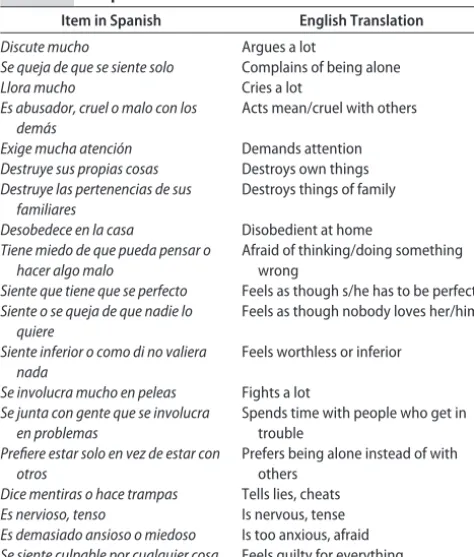
We assessed child behavior by using an adapted version of the Behavior Problems Index administered through personal interview to the participating mothers, who were asked to report on the behaviors of their children in the past 3 months.36 This measure has been widely used in large-scale survey studies37–39rather than clinical settings; it does not have established cutoffs to indicate clinical significance. The Behavior Problems Index had not been previously validated in rural Mexico; the mea-sure was adapted and supplemented to reflect the items considered to be most appropriate for the population and age group. The final version of the scale (Table 1) in-cluded 19 items (Cronbach’s ␣⫽.82 for the full scale; .73 for the 10 aggressive/oppositional items, and .71 for the 9 anxiety/depression items). We were not able to validate systematically our adapted measure as part of our investigation.
Demographic and Other Household-Level Control Variables
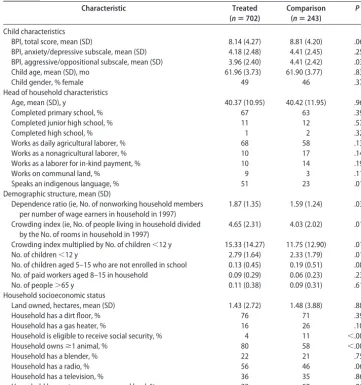
The demographic, educational, and economic variables were obtained via interview with the head of household or spouse and are shown in Table 2. All of these variables pertained to characteristics of the family and household at baseline (1997/1998). Data from baseline were avail-able for children from treatment communities because it
Oportunidades eligibility census August–November 1997
September–December September–December 2003 survey
Children aged 2–5 y assessed from 5310 households
(276 communities)
3048 households in 145 matched communities receive
intervention beginning mid-2003 households receive
intervention beginning 1997–1998 506 communities assigned to
receive Oportunidades
intervention
145 comparison communities selected for quasi-experiment
243 children aged 56–68 mo in comparison group 702 children aged
56–68 mo in treatment group
76 missing information on behavior score, and 116
missing information on covariates
20 missing information on behavior score, and 66 missing information on
covariates 329 children aged 56–68
mo in comparison group households who were offered
and took up Oportunidades
645 children aged 56–68 mo initially in comparison group
894 children aged 56–68 mo in treatment households who were offered
and took up Oportunidades
1900 children aged 56−68 mo initially included in
treatment group
2003 survey
Children aged 2–5 y assessed from 1891 households
(94 communities) 25 653
September–December
FIGURE 1
had been collected in a baseline questionnaire. To obtain this information from comparison households, we used an additional questionnaire, which asked families retro-spectively about easily recallable household demo-graphic structure and ownership of assets in 1997/1998.
Data Analysis
We conducted our statistical analyses by using Stata 9.2 for Windows (Stata Corp, College Station, TX). We an-alyzed the data by using multivariate, linear, ordinary least squares (OLS) regression, regressing each outcome measure (anxiety/depression behavior problems, aggres-sive/oppositional behavior problems, and total behavior problems) on our independent variable of interest ( Opor-tunidades program participation) and the control vari-ables described in Table 2. Six of the 30 control varivari-ables were indicators for the state of residence, and SEs were clustered at the community level. Possible interaction effects for gender and ethnicity each were examined as the last step in the OLS regressions.
As a robustness check, we replicated the analyses by using propensity score matching, consistent with previ-ous research showing that these methods lead to results similar to those generated by the randomized experi-mental design built into the first stage of the Oportu-nidadesprogram.40On the basis of the methods described by Abadie and colleagues,34,41we used the nearest neigh-bor matching method. We identified the 5 most similar control observations for each treatment observation, whereby similarity is defined as the minimum difference between the treatment and control on a set of covariates. We used the variables described in Table 1, with the
additional use of a heavy weighting procedure that pri-oritized that the control observations be from children of the same age (in months), same state, and same gender.
Ethical Review
The Research Committee of Mexico’sInstituto Nacional de Salud Publica and the Committee for the Protection of Human Subjects at the University of California at Berke-ley approved the Oportunidadesevaluation. Participants received a detailed explanation of the procedures and signed an informed consent declaration before data col-lection occurred.
RESULTS
The mean age of the children in the entire study (N ⫽
945) was 62 months (SD: 3.72), or 5 years and 2 months. Fifty-two percent of the children were male. Households had an average of almost 7 members, with between 1 and 2 children younger than 5 years and at least 2 older children and 2 working-aged adults. Consistent with the intentional recruitment of very poor families, levels of education and standard of living were low.
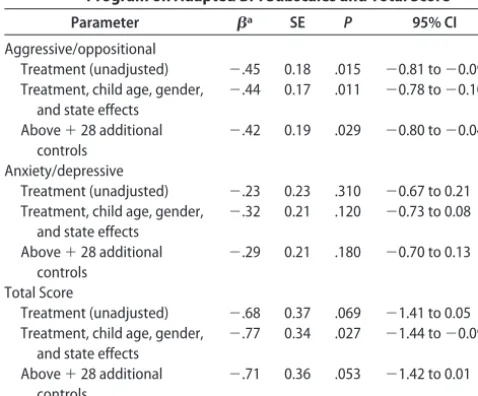
We first analyzed the data by using OLS regression in which SEs were clustered at the community level. Co-efficients with their significance levels are presented in Table 3. After controlling for gender, ethnicity, and all covariates, results indicated a statistically significant pro-gram effect for aggressive/oppositional problems ( ⫽ ⫺.42,P⫽.03,t⫽ ⫺2.20 [95% confidence interval (CI): ⫺0.80 to⫺0.04]) but not anxiety/depressive (⫽ ⫺.29
P ⫽ .18,t ⫽ ⫺1.35 [95% CI: ⫺0.70 to 0.13]) or total
symptoms ( ⫽ ⫺.71, P ⫽ .05, t ⫽ ⫺1.94 [95% CI:
⫺1.42 to 0.01]). Because the control sample mean for aggressive/oppositional symptoms was 4.41, the
coeffi-cient of ⫺0.42 represents a 10% decrement in such
problems. Lower levels of aggressive/oppositional symp-toms were found for girls (⫽ ⫺.51P⫽.001,t⫽ ⫺3.34 [95% CI: ⫺0.81 to ⫺0.21]); child age and ethnicity showed no statistically significant effects. Gender, age, and ethnicity showed no statistically significant relation-ship with total symptoms or for anxiety/depressive symptoms. The effects of participation in the program did not differ by the gender or ethnicity of the child.
Finally, our replication of the OLS analyses by us-ing the “nearest neighbor” propensity score approach yielded results that were almost identical ( ⫽ ⫺.43,
z ⫽ 2.15, P ⫽ .03 for aggressive/oppositional;  ⫽
⫺.36, z ⫽ 1.78, P ⫽ .08 for anxiety/depressive; and ⫽ ⫺.79,z⫽2.23,P⫽.03 for total symptoms). The treatment effect for anxiety/depressive symptoms was slightly stronger than that for the original analysis and approached statistical significance.
DISCUSSION
This study of a large sample of young children who were living in extreme poverty in rural Mexico is to our knowledge the first to investigate empirically the asso-ciation of CCT program participation and children’s psy-chological functioning. We found that household partic-ipation in Oportunidades, 1 of the world’s largest CCT TABLE 1 Adapted Behavior Problem Index
Item in Spanish English Translation
Discute mucho Argues a lot
Se queja de que se siente solo Complains of being alone
Llora mucho Cries a lot
Es abusador, cruel o malo con los dema´s
Acts mean/cruel with others
Exige mucha atencio´n Demands attention
Destruye sus propias cosas Destroys own things
Destruye las pertenencias de sus familiares
Destroys things of family
Desobedece en la casa Disobedient at home
Tiene miedo de que pueda pensar o hacer algo malo
Afraid of thinking/doing something wrong
Siente que tiene que se perfecto Feels as though s/he has to be perfect
Siente o se queja de que nadie lo quiere
Feels as though nobody loves her/him
Siente inferior o como di no valiera nada
Feels worthless or inferior
Se involucra mucho en peleas Fights a lot
Se junta con gente que se involucra en problemas
Spends time with people who get in trouble
Prefiere estar solo en vez de estar con otros
Prefers being alone instead of with others
Dice mentiras o hace trampas Tells lies, cheats
Es nervioso, tenso Is nervous, tense
Es demasiado ansioso o miedoso Is too anxious, afraid
programs, was associated with lower aggressive and op-positional problems in children after controlling for a range of child characteristics and family-level socioeco-nomic factors; the strength of the effect was modest, representing a 10% decrement in problem behavior. The study did not find a statistically significant program ef-fect for symptoms of anxiety and depression. Efef-fects of program participation did not differ for boys versus girls or for children from indigenous versus nonindigenous families. Boys demonstrated higher levels of aggressive/ oppositional symptoms than did girls, which confirms extensive research conducted in other countries42 and with older youth in Mexico City.43,44
This study extends the growing literature on CCT programs that has demonstrated short-term develop-mental benefits in children’s nutrition, physical growth, and school attendance.18,19,45 The findings of this study are consistent with a previous evaluation of a natural experiment in the United States that had found that income supplementation demonstrated an impact on older children’s and young adolescents’
aggressive/op-positional but not anxiety/depressive symptoms.46 Our differential results suggest several possible interpreta-tions. First, the program may enable parents to provide more consistent structure and monitoring for their chil-dren, potentially conferring particular benefits for ag-gressive and oppositional problems.47Second, the impact of the program on nutrition18,19may be more beneficial for the reduction of aggressive/oppositional problems; there is some evidence that early malnutrition is associ-ated with later aggression as mediassoci-ated by cognitive def-icits.48 This interpretation is consistent with previous research among low-income US families suggesting that limited food access was more strongly related to exter-nalizing rather than interexter-nalizing symptoms.49
This study did not examine mediating relationships or the effects of specific components of the program on child behavior; these questions constitute key next steps for future research. Several other limitations should be noted. First, this study does not benefit from the same strength of causal inference that could be drawn from a true experimental design despite the rigorous methods TABLE 2 Description of Treatment and Comparison Groups
Characteristic Treated
(nⴝ702)
Comparison (nⴝ243)
P
Child characteristics
BPI, total score, mean (SD) 8.14 (4.27) 8.81 (4.20) .060
BPI, anxiety/depressive subscale, mean (SD) 4.18 (2.48) 4.41 (2.45) .250
BPI, aggressive/oppositional subscale, mean (SD) 3.96 (2.40) 4.41 (2.42) .030
Child age, mean (SD), mo 61.96 (3.73) 61.90 (3.77) .830
Child gender, % female 49 46 .370
Head of household characteristics
Age, mean (SD), y 40.37 (10.95) 40.42 (11.95) .960
Completed primary school, % 67 63 .390
Completed junior high school, % 11 12 .570
Completed high school, % 1 2 .320
Works as daily agricultural laborer, % 68 58 .130
Works as a nonagricultural laborer, % 10 17 .140
Works as a laborer for in-kind payment, % 10 14 .190
Works on communal land, % 9 3 .110
Speaks an indigenous language, % 51 23 .010
Demographic structure, mean (SD)
Dependence ratio (ie, No. of nonworking household members per number of wage earners in household in 1997)
1.87 (1.35) 1.59 (1.24) .030
Crowding index (ie, No. of people living in household divided by the No. of rooms in household in 1997)
4.65 (2.31) 4.03 (2.02) .010
Crowding index multiplied by No. of children⬍12 y 15.33 (14.27) 11.75 (12.90) .010
No. of children⬍12 y 2.79 (1.64) 2.33 (1.79) .010
No. of children aged 5–15 who are not enrolled in school 0.13 (0.45) 0.19 (0.51) .080
No. of paid workers aged 8–15 in household 0.09 (0.29) 0.06 (0.23) .230
No. of people⬎65 y 0.11 (0.38) 0.09 (0.31) .610
Household socioeconomic status
Land owned, hectares, mean (SD) 1.43 (2.72) 1.48 (3.88) .880
Household has a dirt floor, % 76 71 .390
Household has a gas heater, % 16 26 .100
Household is eligible to receive social security, % 4 11 ⬍.001
Household ownsⱖ1 animal, % 80 58 ⬍.001
Household has a blender, % 22 21 .750
Household has a radio, % 56 46 .060
Household has a television, % 36 35 .860
Household has water access on owned land, % 28 50 .010
Tests of difference conducted by usingttest (for continuous variables) or a2test (for dichotomous variables) clustered at the
used here to minimize selection effects. We do benefit, however, from the observation that a methodologic study on theOportunidades program by using the same analytic methods confirmed that a quasi-experimental approach showed similar results to a true experiment.40 Second, this study should be considered to be a conser-vative test of program effects because we reduced statis-tical power in our efforts to minimize selection bias and because the communities and families in the control group were more affluent than those in the treatment group. Third, systematic validation of the adapted mea-sure used here to assess children’s behavior problems in this rural Mexican population is needed.
CONCLUSIONS
Our findings suggest that interventions that invest in basic human capital needs may exert longer term ripple effects on children’s development; however, additional intervention components focused on promoting effec-tive parenting and children’s psychological development are likely needed to yield major improvements in child behavior. Although the Oportunidades program demon-strated only a modest effect on aggressive/oppositional symptoms, extensive research on conduct problems in high-income countries suggests that even small differ-ences early in development can magnify over time to influence children’s developmental trajectory.50,51 Fur-thermore, only a handful of programs that directly ad-dressed children’s behavioral problems have been shown to demonstrate experimental evidence for even small effects on externalizing problems for young chil-dren52; stronger effects have typically been found among older children identified at higher risk for aggression.53,54 Thus, an important area for future research would be to examine the effects of CCT programs on subgroups of
children who are expected to be at particularly higher risk for behavior problems.
ACKNOWLEDGMENTS
This research was supported primarily by the Oportu-nidades program and also by the Fogarty International Center of the National Institutes of Health (K01 TW06077, principal investigator Dr Fernald), the Na-tional Institutes of Health Roadmap for Medical Re-search Initiative (P20RR20817, principal investigator Dr Gertler), and National Institute of Child Health and Hu-man Development (R01 HD44146-03, principal investi-gator Dr Gertler). Dr Ozer is supported by grants from the William T. Grant Foundation and the Centers for Disease Control and Prevention. None of the funders had any role in the design and conduct of the study; collection, management, analysis, and interpretation of the data; or the preparation, review, or approval of the manuscript.
We appreciate the research participants and the other investigators of the Oportunidades evaluation; Thomas Cook and Peter Steiner for methodologic consultation; Laura Douglas for research assistance in the preparation of the manuscript; Ryo Shiba, Francisco Papaqui, Gustavo Olaiz, Aurora Franco, Mauricio Hernandez, Ste-fano Bertozzi, Lynnette Neufeld, and Juan Pablo Guti-errez at Mexico’s National Institute of Public Health; Rogelio Gomez-Hermosillo, Concepcion Steta, and Iliana Yaschine of theOportunidadesprogram; and Nancy Adler at the University of California, San Francisco.
REFERENCES
1. Duncan GJ, Brooks-Gunn J. Income effects across the life span: integration and interpretation. In: Duncan GJ, Brooks-Gunn J, eds. Consequences of Growing up Poor. New York, NY: Russell Sage; 1997:596 – 610
2. Engle P. Influences of mothers’ and fathers’ income on chil-dren’s nutritional status in Guatemala. Soc Sci Med. 1993; 37(11):1303–1312
3. Evans GW, Kim P. Childhood poverty and health.Psychol Sci. 2007;18(11):953–957
4. Keating DP, Hertzman C, eds. Developmental Health and the Wealth of Nations: Social, Biological, and Educational Dynamics. New York, NY: Guilford; 1999
5. McLeod JD, Shanahan MJ. Trajectories of poverty and chil-dren’s mental health.J Health Soc Behav.1996;37(3):207–220 6. Walker SP, Wachs TD, Gardner JM, et al. Child development:
risk factors for adverse outcomes in developing countries. Lan-cet.2007;369(9556):145–157
7. Blau DM. The effect of income on child development.Review Econ Stat.1999;81(2):261–276
8. Duncan GJ, Brooks-Gunn J, Klebanov PK. Economic depriva-tion and early-childhood development. Child Dev.1994;65(2 Spec No):296 –318
9. Morris P, Huston A, Duncan G, Crosby D, Bos H.How Welfare and Work Policies Affect Children: A Synthesis of Research. New York, NY: Manpower Demonstration Research; 2001 10. World Bank.Human Development Reports 2007/2008.
Washing-ton, DC: World Bank; 2007
11. de Janvry A, Sadoulet E. Making conditional cash transfer programs more efficient: designing for maximum effect of the conditionality.World Bank Econ Rev.2006;20(1):1–29 TABLE 3 Unadjusted and Adjusted Effects ofOportunidades
Program on Adapted BPI Subscales and Total Score
Parameter a SE P 95% CI
Aggressive/oppositional
Treatment (unadjusted) ⫺.45 0.18 .015 ⫺0.81 to⫺0.09
Treatment, child age, gender, and state effects
⫺.44 0.17 .011 ⫺0.78 to⫺0.10
Above⫹28 additional controls
⫺.42 0.19 .029 ⫺0.80 to⫺0.04
Anxiety/depressive
Treatment (unadjusted) ⫺.23 0.23 .310 ⫺0.67 to 0.21
Treatment, child age, gender, and state effects
⫺.32 0.21 .120 ⫺0.73 to 0.08
Above⫹28 additional controls
⫺.29 0.21 .180 ⫺0.70 to 0.13
Total Score
Treatment (unadjusted) ⫺.68 0.37 .069 ⫺1.41 to 0.05
Treatment, child age, gender, and state effects
⫺.77 0.34 .027 ⫺1.44 to⫺0.09
Above⫹28 additional controls
⫺.71 0.36 .053 ⫺1.42 to 0.01
N⫽945. BPI indicates Behavior Problems Index.
aRepresents the mean change in the dependent variable associated with treatment (ie,
12. Rawlings LB, Rubio GM. Evaluating the impact of conditional cash transfer programs.World Bank Res Obs.2005;20(1):29 –55 13. Soares S, Oso´ria RG, Soares FV, Medeiros M, Zepeda E. Con-ditional Cash Transfers In Brazil, Chile And Mexico: Impacts Upon Inequality. International Poverty Centre 2007; Working Paper No. 0035. Available at: www.undp-povertycentre.org/ pub/IPCWorkingPaper35.pdf. Accessed March 25, 2008 14. Heinrich CJ. Demand and supply-side determinants of
condi-tional cash transfer program effectiveness. World Dev. 2007; 35(1):121–143
15. Schultz TP. School subsidies for the poor: evaluating the Mex-ican Progresa poverty program. J Dev Econ. 2004;74(1): 199 –250
16. Hoddinott J, Skoufias E.The Impact of PROGRESA on Consump-tion. Washington, DC: International Food Policy Research Institute; 2000
17. Fernald LC, Gertler PJ, Neufeld LM. The role of cash in condi-tional cash transfer programs: an analysis of Mexico’s Oportu-nidades.Lancet.2008;371(9615):828 – 837
18. Gertler PJ. Do conditional cash transfers improve child health? Evidence from PROGRESA’s controlled randomized experi-ment.Am Econ Rev.2004;94(2):331–336
19. Behrman JR.An Evaluation of the Impact of PROGRESA on Pre-school Child Height. Washington, DC: International Food Policy Research Institute; 2000
20. Rivera JA, Sotres-Alvarez D, Habicht JP, Shamah T, Villal-pando S. Impact of the Mexican program for education, health, and nutrition (Progresa) on rates of growth and anemia in infants and young children: a randomized effectiveness study. JAMA.2004;291(21):2563–2570
21. Verner D.Activities, Employment, and Wages in Rural and Semi-Urban Mexico. Washington, DC: World Bank; 2005. Report No. 3561
22. Lengua L. Associations among emotionality, self-regulation, adjustment problems, and positive adjustment in middle child-hood.J App Dev Psychol.2003;24(5):595– 618
23. Masten AS, Coatsworth JD. The development of competence in favorable and unfavorable environments.Am Psychol.1998; 53(2):205–220
24. Patterson GR, Yoerger K. A developmental model for early-and late-onset antisocial behavior. In: Reid JB, Snyder J, Patterson GR, eds.Antisocial Behavior in Children and Adolescents: A Developmental Analysis and Model for Intervention. Washington, DC: American Psychological Association; 2002:147–172 25. Dohrenwend BP, Levav I, Shrout PE, et al. Socioeconomic
status and psychiatric disorders: the causation-selection issue. Science.1992;255(5047):946 –952
26. Wadsworth ME, Achenbach TM. Explaining the link between low socioeconomic status and psychopathology: testing two mechanisms of the social causation hypothesis.J Consult Clin Psychol.2005;73(6):1146 –1153
27. Brown RT, Antonuccio D, DuPaul GJ, et al., eds. Childhood Mental Health Disorders: Evidence Base and Contextual Factors for Psychosocial, Psychopharmacological, and Combined Interventions. Washington, DC: American Psychological Association; 2008 28. Merrell KW.Behavioral, Social, and Emotional Assessment of
Chil-dren and Adolescents. 2nd ed. Mahwah, NJ: Lawrence Erlbaum Associates Publishers; 2003
29. Fernald LC, Burke HM, Adler NE. Hypocortisolism in very low-income children of depressed mothers.Dev Psychopathol. 2008;20(2):423– 436
30. Lieberman A, Van Horn P, Ozer EJ. The impact of domestic violence on preschoolers: predictive and mediating factors.Dev Psychopathol.2005;17(2):385–396
31. Behrman JR, Todd PE. A report on the sample sizes used for the evaluation of the education, health and nutrition program (PROGRESA) of Mexico. Washington, DC: International Food
Policy Research Institute; 1999. Available at: www.ifpri.org/ themes/progresa/pdf/BehrmanTodd_size.pdf. Accessed March 15, 2008
32. Behrman JR, Todd PE. Randomness in the experimental samples of PROGRESA (education, health and nutrition pro-gram). Washington, DC: International Food Policy Research Institute; 1999. Available at: www.ifpri.org/themes/progresa/ pdf/BehrmanTodd_random.pdf. Accessed March 15, 2008 33. Todd P.Technical Note on Using Matching Estimators to Evaluate the
OPORTUNIDADES Program for Six Year Follow-up Evaluation of OPORTUNIDADES in Rural Areas. Philadelphia, PA: University of Pennsylvania; 2004
34. Abadie A, David D. Leber Herr J, Imbens G. Implementing matching estimators for average treatment effects in Stata. Stata J.2004;4(3):290 –311
35. Abadie A, Imbens G. large sample properties of matching esti-mators for average treatment effects.Econometrica.2006;74(1): 235–267
36. Zill N. Behavior Problems Index based on parent report; 1990. Avail-able at: www.childtrends.org/Files/199103BehaviorProblemsIndex Zill.pdf. Accessed November 5, 2007
37. Pachter LM, Auinger P, Palmer R, Weitzman M. Do parenting and the home environment, maternal depression, neighbor-hood, and chronic poverty affect child behavioral problems differently in different racial-ethnic groups?Pediatrics. 2006; 117(4):1329 –1338
38. Kahn RS, Wilson K, Wise PH. Intergenerational health disparities: socioeconomic status, women’s health conditions, and child behavior problems.Public Health Rep.2005;120(4): 399 – 408
39. Lumeng JC, Gannon K, Cabral HJ, Frank DA, Zuckerman B. Association between clinically meaningful behavior problems and overweight in children.Pediatrics.2003;112(5):1138 –1145 40. Diaz JJ, Handa S. An assessment of propensity score matching as a nonexperimental impact estimator: evidence from Mexi-co’s PROGRESA program.J Hum Resour.2006;XLI(2):319 –345 41. Abadie A, Imbens G.Simple and Bias Corrected Matching Estima-tors for Average Treatment Effects. Cambridge, MA: National Bu-reau of Economic Research; 2002
42. Achenbach TM, Howell CT, Quay HC, Conners CK. National survey of problems and competencies among four- to sixteen-year-olds: parents’ reports for normative and clinical samples. Monogr Soc Res Child Dev.1991;56(3):1–31
43. Caraveo-Anduaga JJ. A brief screening and diagnostic ques-tionnaire of mental health problems among children and adolescents: syndrome algorithms and prevalence in Mexico City [in Spanish].Salud Mental.2007;30(1):48 –55
44. Vera-Noriega JA, Laborin-Alvarez JF, Valenzuela MP. Teach-ers’ evaluation of the behavior associated with attention deficit disorder with and without hyperactivity [in Spanish]. (TDAH). SESAM: Servicios de Salud Mental. 2007;12:20 –29
45. Behrman JR, Sengupta P, Todd PE.The Impact of PROGRESA on Achievement Test Scores in the First Year (Final Report). Washing-ton, DC: International Food Policy Research Institute; 2000 46. Costello EJ, Compton SN, Keeler G, Agnold A. Relationships
between poverty and psychopathology: a natural experiment. JAMA.2003;290(15):2023–2029
47. Campbell SB, Shaw DE, Gilliom M. Early externalizing behav-ior problems: toddlers and preschoolers at risk for later malad-justment.Dev Psychopathol.2000;12(3):467– 488
48. Liu J, Raine A, Venables PH, Mednick SA. Malnutrition at age 3 years and externalizing behavior problems at ages 8, 11, and 17 years.Am J Psychiatry.2004;161(11):2005–2013
49. Slack KS, Yoo J. Food hardship and child behavior problems among low-income children. Soc Serv Rev. 2005;79(3): 511–536
im-pact of the Fast Track Prevention Trial for Conduct Problems: I—the high-risk sample. J Consult Clin Psychol. 1999;67(5):631– 647
51. Reid J, Eddy JM, Fetrow R, Stoolmiller M. Description and immediate impacts of a preventive intervention for conduct problems.Am J Community Psychol.1999;27(4):483–517 52. Domitrovich CE, Cortes R, Greenberg MT. Improving young
chil-dren’s social and emotional competence: a randomized trial of the Preschool PATHS Program.J Prim Prev.2007;28(2):67–91
53. Flannery DJ, Vazsonyi AT, Liau AK, et al. Initial behavior outcomes for the PeaceBuilders universal school-based vio-lence prevention program. Dev Psychol. 2003;39(2):292– 308
DOI: 10.1542/peds.2008-2882
2009;123;e630
Pediatrics
Emily J. Ozer, Lia C. H. Fernald, James G. Manley and Paul J. Gertler
Problems
Effects of a Conditional Cash Transfer Program on Children's Behavior
Services
Updated Information &
http://pediatrics.aappublications.org/content/123/4/e630
including high resolution figures, can be found at:
References
http://pediatrics.aappublications.org/content/123/4/e630#BIBL
This article cites 36 articles, 3 of which you can access for free at:
Subspecialty Collections
_sub
http://www.aappublications.org/cgi/collection/child_health_financing
Child Health Financing
http://www.aappublications.org/cgi/collection/advocacy_sub
Advocacy
vices_sub
http://www.aappublications.org/cgi/collection/community_health_ser
Community Health Services
_sub
http://www.aappublications.org/cgi/collection/community_pediatrics
Community Pediatrics
following collection(s):
This article, along with others on similar topics, appears in the
Permissions & Licensing
http://www.aappublications.org/site/misc/Permissions.xhtml
in its entirety can be found online at:
Information about reproducing this article in parts (figures, tables) or
Reprints
http://www.aappublications.org/site/misc/reprints.xhtml
DOI: 10.1542/peds.2008-2882
2009;123;e630
Pediatrics
Emily J. Ozer, Lia C. H. Fernald, James G. Manley and Paul J. Gertler
Problems
Effects of a Conditional Cash Transfer Program on Children's Behavior
http://pediatrics.aappublications.org/content/123/4/e630
located on the World Wide Web at:
The online version of this article, along with updated information and services, is
by the American Academy of Pediatrics. All rights reserved. Print ISSN: 1073-0397.