Do aspirations really matter?
Dr Cherie-Lynn Hawkins, Adjunct Researcher, University of Tasmania Corresponding author: [email protected]
Abstract
The notion of ‘raising aspirations’ to widen participation in higher education and increase attainment has dominated policy discourse globally for the past decade. Projects and campaigns that aim to increase participation and attainment in education therefore typically focus on student aspirations. This is certainly the case in the Tasmanian context, with the recent establishment of the Peter Underwood Centre and various other
‘aspirations projects’ in the state. Based on findings from a highly qualitative study in the Cradle Coast region that explored the life goals of adolescent females, this paper proposes that ‘aspirations matter’ as they are key motivators behind educational and career
decision-making, which impacts on life chances. But the paper argues it is the capacity to fulfil them that matters equally. Personal stories and a range of artefacts were collected from the adolescent participants during life history interviews. The primary focus of the paper is to demonstrate that innovative methodologies generate more voice, which in this study allowed for a deeper understanding of life goals, influencing factors and why
‘capacity’ matters. Through this data collection technique, the study found that the young females had multiple aspirations, including those for higher education and these were shaped by their experiences. However, uncertainties existed around if they had the cultural or economic capital to fulfil them. The paper extends on current work in this area by demonstrating that ‘capacity’ is important and that there is a place for creative methods in research with rural adolescent females.
Keywords: aspiration, rural, higher education, artefact elicitation, life history interviews
Aspirations, Participation and Attainment
The notion of ‘raising aspirations’ to widen participation in higher education and increase attainment has dominated policy discourse globally for the past decade. This may be due to Australian and International HE policy which associates low participation with low aspiration, particularly for under-represented students (Commonwealth of Australia, 2009; Department for Business, Innovation & Skills, 2009; Department for Education and Skills, 2007; Higher Education Funding Council for England [HEFC], 2009; National Assembly for Wales [NAfW], 2001). As a result, initiatives and campaigns to widen participation tend to focus on student aspirations. This is certainly the case in the Tasmanian context, with the recent establishment of the Peter
Underwood Centre and various programs that are driven by the belief that ‘aspirations matter’. The centre currently manages programs which focus on broadening horizons, exposing students to a range of experiences, building aspiration and developing students’ capacity to transition into higher education (University of Tasmania, 2017).
local government, the University of Tasmania, not-for-profit organisations, schools, industry, and individuals, to address low participation and attainment. It further suggests a shared
understanding that aspirations matter. This is a belief supported by recent research outside the Tasmanian context that demonstrates that aspirations projects typically expose students to a range of possible future careers; show students what opportunities exist beyond the family and local context; provide information about university life and how to navigate the higher education system; connect students with networks within the university; and expose them to mentors or role models (Baxter, Tate & Hatt, 2007; Fleming & Grace, 2014; Lynch, Walker-Gibbs & Herbet, 2015; Wilks & Wilson, 2012). If this is indeed the case, it suggests that these initiatives could serve the individual and the state well in addressing participation.
One of the problems with focusing on aspirations, however, and arguably a key criticism of HE participation policy globally, is that it implies that students are lacking in aspiration, particularly if they are from traditionally under-represented cohorts (Brown, 2011; Gale, 2010; Sellar, Gale, & Parker, 2011; Smith, 2011; St Clair & Benjamin, 2011; Watts & Bridges, 2006). This includes students from regional and remote areas, Indigenous students, and students from low socio-economic backgrounds or disadvantaged communities (Bradley, Noonan, Nugent, & Scales, 2008; HEFC, 2009; NAfW, 2001; Smith, 2011). As recent research demonstrates that traditionally under-represented students do in fact aspire for HE, this suggests a need to be mindful of the complexities surrounding low participation (Alloway, Gilbert, Gilbert & Muspratt, 2004b; Bok, 2010; Hawkins, 2014a; Smith 2011; St Clair & Benjamin, 2011). In other words, there is more to participation and attainment than ‘raising’ aspiration.
For instance, research demonstrates that students from low SES backgrounds aspire for university but don’t necessarily have the class-based economic, social, and cultural resources or learning experiences that better enable them to fulfil HE aspirations (Bok, 2010; Smith, 2011; St Clair & Benjamin, 2011). One example of this is that family experiences of higher education are typically class-based, and the ‘hot knowledge’ including through ‘intragenerational family scripts’ that this generates, enables (or doesn’t enable) successful navigation of HE institutions (see Ball, Davies & Reay, 2002; Ball & Vincent, 1998; Bok, 2010; Gale, 2010; Smith, 2011; Winterton & Irwin, 2012). As a cultural resource, ‘hot knowledge’ includes the kind of information necessary to understand how to navigate the road to higher education which is typically acquired through family experience and social networks (Ball & Vincent, 1998; Bok, 2010). Cultural capacity is another resource which allows students to better understand how to successfully navigate HE institutions if they have a family tradition of higher education (Bok, 2010; Gale, 2010; Smith, 2011; Winterton & Irwin, 2012). Therefore, irrespective of university aspirations, students from low socio-economic families or disadvantaged communities may not necessarily have the hot knowledge and cultural capacity transmitted through the family to fulfil them.
a lack of contacts and personal resources outside, on the post school choices of rural Tasmanian students (Abbott-Chapman & Kilpatrick, 2001; Gabriel, 2004).
Even though these barriers exist, research demonstrates that rural young people aspire for higher education, have desires to leave their hometowns to pursue university goals and do leave home to secure educational qualifications and upward mobility (Alloway & Dalley-Trim, 2010; Corbett, 2007; Easthorpe & Gabriel, 2008). These studies draw attention to the fact that rural students aspire for university, but this is not always reflected in the participation rates. Similar may be said for students from low socio-economic backgrounds (Bok, 2010; Smith, 2011; St Clair & Benjamin, 2011). This suggests that the low participation rates in higher education and low
attainment for low SES and rural students are associated with numerous factors including psychological, emotional, financial/economic, cultural, and social capacity. Hence, the problem is bigger than low aspirations.
Despite what policy terminology implies, research suggests we must not dismiss the importance of aspirations research or ‘aspirations projects’. Aspirations do matter as they are undoubtedly key motivators behind educational and career decision-making, which impact on life chances (Abbott-Chapman, 2011; Cranston et al., 2016). However, what arguably matters equally is the capacity to fulfil them.
Research Context and Background
This paper draws on findings from a qualitative study that explored the life aspirations of rural adolescent girls living in the Cradle Coast region of Tasmania, Australia. The entire region itself is considered rural, as none of the communities within it, are located within a metropolitan city (Hugo, 2000, as cited in Robinson, 2012). In addition, the area is approximately one third of the size of the state of Tasmania; with a widely-dispersed population base that sits at around 112,000 people (Institute for Regional Development, 2009). This means there are less services and infrastructure available in the region in comparison to metropolitan centres and, therefore, more limited access to transport, education, health, housing, leisure and employment. Other defining characteristics of the region are its school-to-work culture; a No Higher Education Family
Tradition (NOHEFT) for university studies; highly gendered occupational aspirations and fields of work; its low socio-economic base in comparison to the rest of the state of Tasmania; and the number of people with a vocational or trade qualification is higher than the state and national average (Department of Transport and Regional Services, 2003; Gabriel & Walters, 2002;
Guenther & Langworthy, 2010; Institute for Regional Development [IRD], 2009). With rurality and SES key factors of influence, this makes the Cradle Coast an ideal site for aspirations research, particularly in connection with the region’s school-to-work culture and NOHEFT.
The paper extends on current work in this area by demonstrating that ‘capacity’ is important and that there is a place for creative methods in research with rural females. It highlights how an innovative technique, when employed within a broader ethnographic and qualitative framework, best captures depth and allows for aspirations to be understood within the cultural context. The article illustrates that it is the capacity to fulfil aspirations that really matters and understanding this, is enabled through ethnography, and collecting artefacts and stories.
The Approach
The aim of the study was to respond to the research question, “How are the aspirations of adolescent girls in the Cradle Coast region shaped by their cultural worlds?” The purpose of this paper, however, is three-fold. One aim is to draw attention to the multiple aspirations of rural girls and how these are shaped by their cultural worlds. Another aim is to show that, despite university aspirations, the girls are likely to face potential challenges in fulfilling these based on their economic and cultural capacity to do so. However, the key purpose of the paper is to illustrate that an innovative methodology, that employed the technique of artefact elicitation, gave voice to the participants and helped them to tell their stories in their own way.
To obtain insights to address the research question, the decision was made to invite adolescent girls, their mothers, and their school principals to participate in the research. Mothers and principals were invited as a means of obtaining a triangulation of perspectives (Basit, 2003) and therefore allow for insights into influencing factors from key informants within the girls’ cultural worlds. Following ethics approval, invitations were forwarded to all secondary schools in the area and all those who responded became participants in the study. This included 11 females aged 14-16 years, as well as nine of their mothers, and all the school principals. As one principal was unavailable, the school business manager consented to participate. Applying the Remoteness Index Australian (2006), indicates that eight of the girls in this study resided in ‘outer regional’ contexts and three in ‘remote’ contexts, which suggests all the participants in this study experience more time and cost difficulties accessing services and resources than their urban counterparts on a national scale (Baxter, Gray & Hayes, 2011, as cited in Fleming & Grace, 2014). In addition, all the girls reside in communities outside a metropolitan city, meaning the cohort for this study may be categorised as being rural.
Four of the girls in this study were from low socio-economic backgrounds, four were from middle income families and there were three from middle-high income families. This study employed a comprehensive approach to determining SES through acknowledgement of the educational attainment levels of both parents, estimated household incomes and estimated value of assets such as property (based on information collected from the girls). This method was applied because recent research demonstrates that SES and social class are not easily determined, particularly through traditional methods of examining income levels or postcodes alone (Bradley et al., 2008; Bowden & Doughney, 2010; Holloway & Pimlott-Wilson, 2011; Savage et al., 2013; Thomson & Holland, 2002). This suggests an even socio-economic spread in the cohort of girls. The approach in this study included the collection of personal stories through individual
Diemer, Jackson, Gonsalves & Howell, 2004; Thompson & Holland, 2002). For example, in aspirations and transitions studies in Australia, the United Kingdom and New Zealand, artefacts such as scrapbooks/diaries, identify collages, goal maps, lifelines of predictions and expectations, songs and stories, creative writing, artwork, social network maps and ‘photographs of significant locations’ have also been collected as a means of drawing out more depth in responses (Bok, 2010; Sanders & Munford, 2008; Siren et al., 2004; Thompson & Holland, 2002).
In this study, the artefacts that were collected included career plans from school, photographic collages of family and friends, life aspirations mind maps and lists, a range of award certificates, school newsletters, photographs of memorable moments, song lyrics, written school work, paintings, artwork, ‘a bit about me’ questions sheets and poetry. Drawing on the artefacts that they brought into the interviews with them, the girls were empowered to expand on their own thoughts and feelings with the author. The first meeting was an informal guided conversation about school subjects, interests, work, family, and day-to-day life. To start off with, the girls completed a four page ‘questions sheet’ and talked ‘out loud’ as they noted responses. This generated stories about school, home, relationships, friendships, interests, and work commitments; and it was a good time to form relationships and build trust (Heyl, 2001).
The girls were then invited to bring artefacts to the second interview that would ‘tell a story’ about how they saw themselves or their futures. They were given a hardcopy scrapbook
containing blank templates and suggestions about artefacts they could create. For example, one page was titled, ‘What are my aspirations?’ Below this were prompts, including, ‘What are my future goals? What do I want to be when I grow up? What do I want to do in the future?’ Other blank templates had titles encouraging photographic collages, lists or mind maps. Most
participants created various maps, collages and lists and then used them as tools to lead the conversation with. This data collection technique enabled the girls to prepare ‘scripts’ in advance, and to bring in artefacts that guided story telling.
In most cases, the girls led the conversations by describing what was in their artefact template books. Although led by the girls, there was depth in questioning in the second interviews, particularly around the artefacts, which produced descriptive accounts of experiences and actions. This enabled an accurate interpretation of the meanings behind thoughts and
behaviours (Geertz, 1993). As relationships had been well established by the third interview, the author was able to ask questions about values and perspectives.
A thematic analysis was applied to the personal stories collected to identify shared findings, i.e., those that applied to at least eight out of the 11 adolescent participants. However, to ensure greater description and insight into the girls’ lives, aspirations and their cultural capacity to act on these, life history portraits were also constructed. The portraits are within the genre of the life history narrative, as they describe the girls’ lives, in part, and within the broader socio-cultural context (see Hatch & Wisnewski, 1995; Watson & Watson-Franke, 1985). They are called portraits rather than narratives becausethey are not “thematically organized by plots” (Polkinghorne, 1995, p. 5). They are largely influenced by Tierney’s portrait style with the inclusion of personal narrative and the voice of the author. The portraits were constructed by piecing together
personal stories from the interviews with the girls, and using written pieces from their goal maps and collages.
two of the key shared themes that run through many of the participants’ stories. These being aspirations for HE and how experiences in the family and school world shape life aspirations and potentially the capacity to fulfil them. Taylor and Ave’s stories were selected for inclusion because they also illustrate that, even in situations where economic capital may potentially be sourced, challenges still exist in terms of the cultural capacity to fulfil university aspirations, which is a theme that runs across most stories. What this suggests is that when SES and NOHEFT are combined with rurality, the challenges to fulfil aspirations may be greater. This may be an area for future research.
In addition to this, these two life history portraits are good examples for highlighting the benefits of utilising an innovative methodology to shift the power balance in the interview, and to
generate deeper conversation. There are nuances in all the girls’ stories, for example, differences in experiences and expectations in the school and family world and in some of the future
possibilities the girls were exposed to. However, a decision had to be made on which stories to include based on the purpose of the paper and shared findings to highlight, so condensed versions of Taylor and Ave’s portraits were selected. To protect the identity of participants as much as possible, in this paper, real names and places have been changed.
Illustrative Life History Portraits
To achieve the three main aims of this paper, two life history portraits have been included. These highlight the key messages across all the girls’ stories in terms of their shared aspirations,
including those for HE; how experiences in the school and family world shape aspirations; how the economic and cultural capacity to fulfil university goals comes into play; and, how an innovative technique captures depth and allows for aspirations to be understood within the cultural context.
Taylor’s Life History ‘Portrait’
Taylor is a 15-year-old female, born and raised on the north-west coast of Tasmania, who describes herself as “confident” and “reasonably smart.” She is a high achiever academically, particularly in mathematics and science, and she loves school. Taylor is on the school
representative council and undoubtedly engaged in community life, and has multiple aspirations, including those for higher education. A Year 10 student at Wolcott High School (ICSEA 950-1000), situated within 5 minutes of a regional centre, Taylor lives with her parents in nearby Forsey River, and has a younger brother and sister. Her mother and father have both completed Year 10 and some vocational courses and work locally, one in administration and the other in
manufacturing. Taylor is from a middle SES family, where there is no family tradition of higher education, but in terms of rurality, she is close to one of the regional centres.
Figure 1. Taylor’s Travel Aspiration and Favourite Places Artefact.
Some of the artefacts Taylor created were mind maps on her aspirations, an identity collage on her Paris dreams and favourite places and things to do, a mind map on her family background, a list of values and “important things in life”, and a photographic collage of her interests and perceptions of herself. She largely used these to tell her story. The following first-person narrative has been included as part of Taylor’s life history portrait. The key purpose being to highlight her aspirations, and some of the factors that have shaped them. Disconnections and shifts in the storyline are apparent in the narrative as Taylor sometimes skips from one idea to another then returns to it. Or, the author asks a question about a particular response later and that is weaved in as best as possible using Taylor’s own words.
My decision for next year is Gilchrist College. So, I can just push forward. And then I can go to
university, which is kind of something that I really want to do. And, get a good job, get some money. Travel. I just want money to travel. It’s good to be able to go to Gilchrist, and I'll get a job then and be able to stand on my own two feet… So, go to Gilchrist, get a job, get money, go to university. I have a lot of school left for me, but I’m excited for it. My family isn’t rich, but they want the education for me. If money was an issue, I would go out and I would get a job and I would do everything in my power to be able to set myself up for a really good education. And once you get a good education, you get a really good job and so there you go. As long as I get the education, I will be alright. That's how I see it.
Mum said to me, “Oh, you still like science, don’t you?” and I was like, “No, I don’t.” I don’t enjoy it anymore. And I know it can give you good money, but I want to do something that I enjoy. And I know my parents will push me to do something that I might get good money in, but not necessarily what I’ll enjoy. And, people kind of talked me out of being a forensic anthropologist because there’s not many jobs for that sort of thing and you’d have to move away…
Grade 7, I loved English and writing. I love writing essays. I love speech writing, like I get really high marks in speech writing and I really love doing it. I read magazines and some of the things that they do would be awesome...and I can write stories and articles…I don’t know, it would be fun
[journalism] and something I would enjoy and also it would probably pay reasonably well. I used to hate make-up, but I love doing that now. And with theatre and drama, well I love that, but I'll never become an actress. It’s fun, but you can’t do acting stuff in Tassie [slang for Tasmania]. And yeah, I love hairdressing and I really love doing people’s hair but it’s not very good money. And fashion design, I never used a sewing machine until this year when making costumes for the production. It is really fun [as well as acting] …I'm sure it opens up a lot of opportunities, but if you don’t get them, then you don’t get paid and, so you should be really good at what you can do…
I don’t really know where I want to go at the moment because I have a feeling that when it comes to university I'll say, “Yes, I want to do that.” but then I'm going to go, “No, I want something else.” I have a feeling that I'm going to change my mind a lot. But I think I want to travel…I’ll be going to France…The French lady at dad's work, she's sort of influenced me a bit. I’m gonna travel. In Grade 6, we travelled around Australia and that was the first time I’d ever gone out of the state and it’s just, I want to travel, that's just the one thing that I want to do…my family when they took me travelling, that influenced me…When we travelled around Australia, like wow, it really opened my eyes to everything else that is out there. I just love travelling and going to new places and looking at new things.
Originally, I was going to get married at about 33, have kids at 35 and then I decided, “No, I don’t want to be an old mum.” So, I want to get married. Oh, I don’t know about 28 or 29 and then have kids early 30s. So, have a family. Um, what else do I want to do in life? I don’t know…I have a lot of ideas and I haven’t really decided yet. I do put a lot of pressure on myself. Because I want to succeed in life. I mean, I do want to settle down and have a family and just be an everyday mum and that sort of thing, but to be able to actually to do something with my life…Well I like being in charge, so like being able to run something of my own. In a way.
Others will expect me to fulfil really well and be a genius I think. A lot of my friends, they will probably expect me to become really smart and get a really good job…My teachers will expect me to go really far. All of them will. Along with my parents. Get a good job, good pay, yeah, get a good job, get a good pay all that sort of stuff. Get a good education. Yep. That's what they want me to do. That's what they expect me to do. Coming from a small town, I think they influence because they want you to go bigger and see everything else.
Ave’s Life History ‘Portrait’
Ave is a Year 10 student at Jeffrey’s Bay High School (ICSEA 900-950), a Christian school in an agricultural community located approximately 90 minutes from a regional centre. She lives with her mother, father, and younger sister in Nichols Estate, a 10-minute bus trip from school;
however, Ave only recently moved to the Cradle Coast region from a small farming community in South Africa. Ave’s father has a diploma-level qualification and has had many years of experience working in forestry and agriculture in South Africa. Ave’s mother completed her high school studies and is currently enrolled in a children’s services course through a local trade college. Based on information provided over the course of the interviews, it became evident that her family are in the middle to upper SES range as her father is in a high paying position, they own a house and farm land, livestock and other property. Ave is a very determined, anxious, ambitious teenager with a great deal of compassion and is beyond her years in how she thinks and sees the world. She is heavily engaged in school life and places a high level of importance on education and contributing to her community.
When living in South Africa Ave witnessed traumatic events and lived at times in fear. She grew up surrounded by uncertainties and having to be constantly aware of danger. This exposure has influenced Ave, particularly in her desires to ‘help others’ or contribute in some way to good causes. One example of how her experiences have shaped her goals is that her career aspiration to become a paediatric nurse is partly because she witnessed child abuse and she developed a passion for children. And her university aspirations are because she thinks people in Australia are so lucky they have access to education. So, when Ave came to tell her story, she came with more artefacts than any other participant, and the greatest passion for education. She came with the view that opportunities presented everywhere and that she could, and would, do anything she wanted to do.
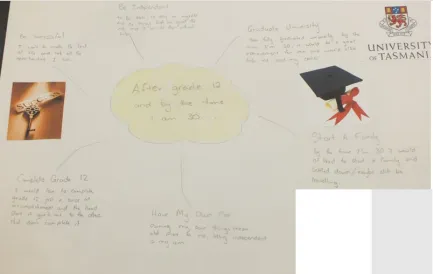
Figure 2. Ave’s After Grade 12 but By the Time I am 30 Artefact (note bottom corner de-identified)
perceived herself, her family, and her entire world. Her first-person narrative is included in this life history portrait; but unfortunately, this is only a small part of a far more detailed story, as the main focus is to highlight the factors in Ave’s cultural world that have shaped her aspirations. Ave talks very fast and is excited when telling her story so there are some repetitions and at times the author adds her answers to later questions about the meaning behind artefacts.
I want to finish Grade 11 and 12. I've sort of been brought up in a good, strong family and Grade 11 and 12 you have to do. It's compulsory. It's not optional. So, yep, I'd love to do that…Coming from where I do, it's always the background, it's like what you have to do, you just do it. And you can't complain you just do it. It has to be done. I also want to go to university. It will be awesome to go there. I want to start a family, I think. That would be awesome. Yeah, but I think I want to travel before I start a family. I want to be successful, which for me is basically doing well at everything that I am doing. I want to be independent.
I want to become a paediatric nurse and overcome health issues because I have a passion for children. My godmother is a nurse…I had hurt myself and she helped me and I look up to her now…My gran was a nurse once too. So, I think that my family has a lot to do with my aspirations and I think that also seeing the amount of poverty and the things that go on in Africa…so where I come from. My family and where I lived probably has a lot to do with it. I know that there is a lot of kids that go through things that they probably shouldn’t go through, so for me to be able to go and help them is something really big, and it's something that I would be happy doing.
I know that growing up with the people I did, the teachers in school they have sort of kept me grounded and keep asking, “What do you want to do when you are older?” and “You have to think about it.” It gets you going. I feel proud to say that I want to be a nurse and I think that they have guided me through that because they say, “Ooh that would be awesome, you know, being a
nurse.”… and they support you in your decisions and I think teachers in that way have probably had a lot to do with keeping my career on the right path. Miss Conroy spent about two hours on the internet finding information on nursing. I was very grateful because I had no idea what was expected of me as a paediatric nurse and the things I would be able to do.
And then I got to the stage where I really liked working with kids…They find the simplest things so interesting and that intrigues me.And they are so innocent. With paediatric nursing, it would be one patient and it would be a child, and I'd be helping them through what they are going through. I sort of looked up on it, and it doesn't sound too hard to get in to, and it looks like a career that not too many people choose. And it's sought after. I thought that would be perfect so that if I do go travelling, I can say, “Well this is what my qualifications are”, and I'd be able to be easily placed in a hospital…
And I've been in contact with the university and I emailed a lady there and she gave me a list of things that I need to study and it's all the things that I've been studying and doing well at, so I was like, ‘Ah, perfect.’ And, you get a good income from it, like a solid based income which is really good. It would just be awesome and Mum, I've been talking to Mum about it too, and she said it would definitely get you places. Like they say, in Africa that they don’t have a lot of nurses or doctors or anything so, to be specialised, yeah, you would be really sought after. So, I thought that will be perfect.
nursing pamphlets and then walks away! It was really funny. And I talk to her about it. If I have any questions on the topic then we'll talk for hours. Like, I would say, “Would it be good if I did this?” and she would be like, “Yeah, it will provide you opportunities to go places.” Yeah, she just supports me, like positive things.
Sometimes I think of becoming a business woman, but it doesn’t really fancy me at all. I'm just the sort of person who just needs to help other people and even though these are my dreams, I do see them coming true. I would like to be able to travel and go all around the world. So I am hoping that when I get my degree or diploma in nursing I will be able to use that like as a base…I just want to experience different cultures and see how people live everywhere else. And it's such a big world and I don’t want to pass away not knowing different cultures and being able to experience different things.
I would love to be able to go back to my country and help orphans. Coming from a first world country, it shows me how much we've got here and how much they don’t have. So, it would be really good if maybe I could help where I can. I have a heart for missions. I want to help orphans. My next-door neighbour, she is adopted, the one that was on my knee on the piano [in a photographic collage]. She came from Ethiopia and she was abused when she was there. And it's a hard life for her and she has been given an opportunity that not many kids would get. So, the possibility of my adopting when I get older would probably be really high. I see myself adopting someone for sure. To share the life that I have with someone else who has nothing is really huge, like that would be something really big for me.
Ave’s life history portrait illustrates her multiple aspirations and how they are shaped by her cultural world experiences. The helping and contribution themes are most evident as underlying motivators behind her aspirations which stem from her upbringing in South Africa and things she has seen.
The Life Aspirations of Rural Teenage Girls
In this study, all the girls had many aspirations, some of which were shared, and these were shaped by exposure to the idea in their cultural worlds. Both Taylor and Ave’s life history portraits highlight many of these shared aspirations and influences. For example, they illustrate what was seen in most of the girls’ stories, including multiple aspirations, such as those for college, university, careers related to interests and ‘helping’, travel, marriage, motherhood and home ownership. They also show how these are shaped by experiences, conversations and ideas in the school or family world. In addition, they highlight how interests and strengths influence career goals as well as perceptions of what will bring enjoyment or fulfilment and ‘enough money’ or independence. The stories further highlight another shared finding that the girls connect education with opportunity – for a good job and good pay, which they see as enabling security, self-sufficiency, and independence.
In addition, the influence of female role models is notable in the portraits, particularly that from the mothers, and other female relatives. This too is a theme across most of the stories in this study. However, other portraits better illustrate the finding that older sisters influence
Most of the girls talked about wanting their aspirations to live up to expectations of others, especially their mothers, which is apparent in both Ave and Taylor’s life history portraits. As is the desire to please others, particularly their mothers, to the point where they might change their mind or act based on this desire. The girls’ stories highlight other themes that run across the majority. In particular, if they do go on to university; they will be the first in their family to do so, they will need to leave home and they will need money. Therefore, barriers do exist to fulfilling HE aspirations, particularly in the form of cultural capacity, hot knowledge, and economic capital (Ball, Davies & Reay, 2002; Ball & Vincent, 1998; Bok, 2010; Smith, 2011; Winterton & Irwin, 2012). For example, the no higher education family tradition impacts on hot knowledge and cultural capacity; but in addition, living in a rural area arguably exacerbates the financial challenges, even for girls from middle or middle to high SES backgrounds. The portraits illustrate, for instance, that Ave, who is in the middle to upper SES, worries about money and securing a part-time job to pay for leaving home to attend university. And Taylor, who is from a middle SES background, is concerned about the affordability of university because her family “isn’t rich.” Both girls believe they can overcome this barrier through securing part-time work and by being determined; but during the interviews, it is evident they have financial concerns. This is a shared finding across all the interviews with the girls.
As with other recent research, this study found that regardless of rurality, or the degree of rurality, and regardless of SES and family experiences of HE – the majority aspired to university (Alloway et al., 2004a; Alloway & Dalley-Trim, 2009; Bok, 2010; Smith, 2011; St Clair & Benjamin, 2011). However, the findings also suggest that many of them may struggle to fulfil their university aspirations, and this is largely related to the cultural and economic capacity to do so, as well as the psychological and emotional challenges they associate with leaving home (Abbott-Chapman & Kilpatrick, 2001; Alloway et al., 2004a).
Conclusion
Both life history portraits included in this paper illustrate that rural girls have various aspirations, many of which are shaped by family and school experiences and that female role models are influential in their lives. They highlight that these include aspirations for higher education, which is typically related to an understanding that a degree is needed for the desired career, ‘enough money’ and independence, at minimum. The portraits included further suggest that despite the aspirations for HE, even in cases where rural girls are from middle income or middle to upper income families, they may still face challenges in terms of having the economic capital as well as the cultural capacity, navigational capacity and ‘hot knowledge’ to fulfil these aspirations. This is because like many girls in this study, Ave and Taylor do not have a family tradition of higher education, and both talk of needing to secure part-time work to be able to move away for university.
The paper demonstrates that aspirations do matter, because qualitatively exploring them
highlights the potential cultural and economic capacity to fulfil them. This aids our understanding of access barriers to higher education. This is arguably an opportune time to further explore the navigational capacity to fulfil aspirations for higher education in the Tasmanian context, where aspirations feature frequently in conversations about retention and attainment and there are several projects well underway. The potential exists to evaluate how aspirations projects build the cultural capacity to fulfil aspirations for university to apply effective widening participation strategies state-wide.
References
Abbott-Chapman, J. (2001). Rural resilience: Youth ‘making a life’ in regions of high unemployment. Youth Studies Australia, 20(3), 26-31.
Abbott-Chapman, J. (2011). Making the most of the mosaic: Facilitating post-school transitions to higher education of disadvantaged students. Australian Educational Researcher, 38, 57-71. Abbott-Chapman, J., & Kilpatrick, S. (2001). Improving post-school outcomes for rural school
leavers. Australian Journal of Education, 45(1), 35-47.
Alloway, N., & Dalley-Trim, L. (2009). It’s all about ‘I’: Gen Ys and neoliberal discourse in ‘new times’. Youth Studies Australia, 28(1), 51-56.
Alloway, N., Dalley, L., Patterson, A., Walker, K., & Lenoy, M. (2004a). School students making education and career decisions: Aspirations, attitudes and influences. Canberra:
Commonwealth of Australia.
Alloway, N., Gilbert, P., Gilbert, R., & Muspratt, S. (2004b). Factors impacting on student aspirations and expectations in regional Australia. Canberra: Commonwealth of Australia. Alston, M., & Kent, J. (2003). Educational access for Australia’s rural young people: A case of
social exclusion. Australian Journal of Education, 47(1), 5-17.
Australian Bureau of Statistics (2008). Social trends. Retrieved on 6th October, 2013, from
http://www.abs.gov.au/AUSSTATS/[email protected]/Lookup/4102.0Chapter6002008
Ball, S. J., & Vincent, C. (1998). ‘I heard it on the grapevine’: ‘Hot’ knowledge and school choice. British Journal of Sociology of Education, 19(3), 377–400.
Ball, S. J., Davies, J., David, M., & Reay, D. (2002). ‘Classification’ and ‘judgement’: Social class and the ‘cognitive structures’ of choice of higher education. British Journal of Sociology of Education, 23(1), 51–72.
Barrett, M.S., & Smigiel, H. (2003). Awakening the ‘Sleeping Giant’?: The arts in the lives of Australian families. International Journal of Education and the Arts, 4(4), 1-19.
Basit, T. (2003). Manual or electronic? The role of coding in qualitative data analysis. Educational Research, 45(2), 143-154.
Baxter, A., Tate, J. & Hatt, S. (2007). From policy to practice: pupils’ responses to widening participation initiatives, Higher Education Quarterly, 61(3), 266–283.
Bettie, J. (2002). Exceptions to the rule: Upwardly mobile white and Mexican American high school girls. Gender and Society, 16(3), 403-422.
Brooks, R. (2004). ‘My mum would be as pleased as punch if I actually went, but my dad seems a bit more particular about it’: Paternal involvement in young people’s education choices. British Educational Research Journal, 30(4), 495-514.
Bok, J. (2010). The capacity to aspire to higher education: ‘It’s like making them do a play without a script’. Critical Studies in Education, 51(2), 163-178.
Bowden, M. P., & Doughney, J. (2010). Socio-economic status, cultural diversity and the
aspirations of secondary students in the western suburbs of Melbourne, Australia. Higher Education, 59, 115-129.
Cavanagh-Russell, M. (2009). Learning from the past and looking to the future 1996-2006. A reflective critique of partnered projects addressing higher education participation in the Cradle Coast and providing policy advice for the future educational context. University of Tasmania.
Commonwealth of Australia. (2009). Transforming Australia’s higher education system. Barton, ACT: Australian Government.
Cranston, N., Watson, J., Allen, J., Wright, S., Hay, I., Beswick, K., Smith, C., Roberts, W., & Kameniar, B. (2016). Overcoming the Challenges of Keeping Young People in Education: A wicked problem with implications for leadership, policy and practice. Leading & Managing, 22(1), 1-18.
Corbett, M. (2007). Learning to leave: The irony of schooling in a coastal community. Halifax, Canada: Fernwood Publishing.
Dalley-Trim, L. & Alloway, N. (2010). Looking ‘outward and onward’ in the outback: Regional Australian students’ aspirations and expectations for their future as framed by dominant discourses of further education and training. The Australian Educational Researcher, 37(2), 107-125.
Department for Business, Innovation and Skills. (2009). Higher ambitions: The future of universities in a knowledge economy. London: HMSO.
Department for Education and Skills. (2007). Raising expectations: Staying in education and training post-16. London: TSO.
Department for Education and Skills. (2003). Widening participation in higher education. London: TSO.
Easthorpe, H. & Gabriel, M. (2008). Turbulent lives: Exploring the cultural meaning of regional youth migration. Geographical research, 46 (2), 172-182.
Fleming., M.J., & Grace D.M. (2014). Increasing Participation of Rural and Regional Students in Higher Education. Journal of Higher Education Policy and Management 36 (5), 483-495. Gabriel, M.B., & Walters, M.M. (2002). Higher education on the north-west coast. Tasmanian
Social Issues, 4(1), 4-10.
Gale, T. (2010). Let them eat cake: Mobilising appetites for higher education. Professorial Address: Knowledge Works Public Lecture Series. Adelaide, South Australia: The University of South Australia.
Geertz, C. (1993). The interpretation of cultures: Selected essays. London: Fontana. Guenther, J., & Langworthy, A. (2010, 5-7 July). Building social capital among students in
preparation programs. Lessons from the UTAS University Preparation Program. Paper
presented at the AUCEA National Conference: Communities, Participation and Partnership, University of Tasmania, Launceston Campus.
Hawkins, C.L. (2014a). The Graduate, The Globetrotter and the Good Samaritan: adolescent girls’ visions of themselves in early adulthood. Australian Educational Researcher, 41(5), 565-583. Hawkins, C.L. (2014b). Young, Female and Looking to the Future: Exploring the Aspirations of
Adolescent Girls in Regional Tasmania, Thesis, University of Tasmania, Australia
Heyl, B. (2001). Ethnographic interviewing. In P. Atkinson, A. Coffey, S. Delamont, J. Loftland & L. Loftland (Eds.), Handbook of ethnography (pp. 369-383). London: Sage Publications. Higher education funding council for England. (2009). Strategic Plan 2006 - 2011. Retrieved 3rd
September 2013 from:
https://www.hefce.ac.uk/media/hefce1/pubs/hefce/2009/0921/09_21.pdf
Holloway, S.L., & Pimlott-Wilson, H. (2011). The politics of aspiration: neo-liberal education policy, ‘low’ parental aspirations, and primary school extended services in disadvantaged communities. Children’s Geographies, 9(1), 79-9.
Institute for Regional Development (2009). Knowing our place: North West Tasmania Regional Profile. University of Tasmania.
James, R., Wyn, J., Baldwin, G., Helpworth, G., McInnis, C., & Stephanou, A. (1999). Rural and isolated school students and their higher education choices (Commissioned report No. 61). Melbourne: The University of Melbourne, Centre for the study of higher education and the youth research centre.
Kenway, J., & Hickey-Moody, A. (2011). Life chances, lifestyle and everyday aspirational strategies and tactics. Critical Studies in Education, 52(2), 151-163.
Kilpatrick, S., & Abbott-Chapman, J. (2002). Rural young people’s work/study priorities and aspirations: The influence of family social capital. The Australian Educational Researcher, 29(1), 43-68.
Lynch, J., Walker-Gibbs, B, & Herbet, S. (2015). Moving beyond a ‘bums-on-seats’ analysis of progress towards widening participation: reflections on the context, design and evaluation of an Australian government-funded mentoring programme. Journal of Higher Education Policy and Management, 35(2), 144-158.
National Assembly for Wales. (2001). The learning country. Cardiff: Welsh Assembly Government. Polkinghorne, D.E. (1995). Narrative configuration in qualitative analysis. International Journal of
Qualitative Studies in Education, 8(1), 5-23.
Prosser, B., McCallum, F., Milroy, P., Comber, B., & Nixon, H. (2008). “I am smart and I am not joking”: Aiming high in the middle years of schooling. Australian Educational Researcher, 35(2), 15-35.
Robinson, S. (2012). Freedom, aspiration and informed choice in rural higher education: Why they are saying ‘no’? Australian and International Journal of Rural Education, 22(2), 79-95.
Saldana, J. (2009). The coding manual for qualitative researchers. London: Sage Publications. Sanders, J., & Munford, R. (2008). ‘Losing self to the future? Young women’s strategic responses
to adulthood transitions’. Journal of Youth Studies, 11(3), 331-346.
Savage, M., Devine, F., Cunningham, N., Taylor, M., Li, Y., Hjellbrekke, J., Le Roux, B., Friedman, S., & Miles, A. (2013). A new model of social class? Findings from the BBCs Great British Class Survey Experiment. Sociology, 47, 219-250.
Sellar, S., Gale, T., & Parker, S. (2011). Appreciating aspirations in Australian higher education. Cambridge Journal of Education, 41(1), 37-52.
Sirin, S.R., Diemer, M.A., Jackson, L.R., Gonsalves, L., & Howell, A. (2004). Future aspirations of urban adolescents: A person-in-context model. International Journal of Qualitative Studies in Education, 17(3), 437-456.
Slack, K. (2003). Whose aspirations are they anyway? International Journal of Inclusive Education, 7(4), 325-335.
Smith, L. (2011). Experiential ‘hot’ knowledge and its influence on low-SES students’ capacities to aspire to higher education. Critical Studies in Education, 52(2), 165-177.
St Clair, R.S., & Benjamin, A. (2011). Performing desires: The dilemma of aspirations and educational attainment. British Educational Research Journal, 37(3), 501-517.
Thomson, R., & Holland, J. (2002). Imagined adulthood: Resources, plans and contradictions. Gender and Education, 14(4), 337-350.
University of Tasmania (2017). Aspiration and attainment. The Underwood Centre website. Retrieved on August 14th, 2017, from:
http://www.utas.edu.au/underwood-centre/aspiration-attainment
Watson, L., & Watson-Frank, M. (1985). Interpreting life histories: An anthropological inquiry. New Brunswick, NJ: Rutgers University Press.
Wilks, J., & Wilson, K. (2012). Going on to uni? Access and participation in university for students
from backgrounds of disadvantage. Journal of Higher Education Policy and Management,
34(1), 79–90.