IJEDR1703046
International Journal of Engineering Development and Research (
www.ijedr.org
)
326
Naive Bayes Classification Based Facial Expression
Recognition With Kernel PCA Features
1Abita Devi , 2Kantesh Kumar Gaurav 3Heena Gupta 1Student, 2Assistant Professor, 3Assistant Professor
1Electronics And Communication Engineering, 1panchkula Engineering College, Panchkula, India
Abstract: This work presents a system which automatically identifies the emotion or expression represented on face. Various channels such as action, speech, poses, facial expression are considered as that conveys human emotion. In order to discover the connection among these channels and emotions, wide spread research has been carried out. Therefore, to classify the universal emotions, a neural network based solution is used which is combined with the image processing. Universal emotion is considered as anger, sadness, happiness, fear and surprise. Face images which are colored are provided as input to the system. When the face is detected then the feature point extraction approach is utilized to remove a group of selected feature points. Finally, a set of values is acquired a n d after pre-processing stage, feature which are extracted those are provided as input to the neural network to identify.
Keywords: ANN, Naïve Bayes, features, KPCA.
I. INTRODUCTION
Face recognition may be considered as one of the biometric method which is automated approach to verify the identification of the human being based on his characteristics like, fingerprint, iris pattern, or face. The Face Recognition system is a multifaceted system, because in most of the cases only a few face images are available for training the system and different problems arise when training and test images are obtained under different conditions. The investigators have been facing issues with the sensibility of the classifier to illumination, pose, facial expression, occlusion, and low resolution face recognition. Initially, face recognition start with the recognition of pattern of different faces in cluttered scenes and is followed by pre-processing, normalizing the face image data, feature extraction and classification. It is more often compared to eye identification, as many people hesitate to use eye identification systems because of the human inbuilt protectiveness of his/her eyes. Face recognition methods are broadly categorized into three categories relied on feature extraction techniques used in recognition process: Global Approach, Component-Based Approach, and Hybrid Approach.
In the global approach, the whole face image which is represented by the single feature vector is used as input to a classifier. The input face image can be warped to a reference face image i.e. by using correspondence which can be determined for a small number of important points in the face such as eye, the center of the nostrils, or the corners of the mouth. Although the global approach is capable of doing his work in well manner by using classifying frontal views of face. In order to avoid this problem, an alignment stage is added before classification stage, which aligns an input face image with a reference face image and will need computing correspondence between the two face images.
In the component-based approach, face recognition approach based on local facial components can be categorized as an alternative to the global approach. The presentation of the component based approach depends mainly on matching of three facial region templates (eyes, nose, and mouth) independently. Since the system will nit involve geometrical model of the face, the configuration of the components during classification process is said to be unconstrained. The chief benefit of component based approach is that, it compensates for changes in pose by permitting flexible geometrical relation among the components in the classification stage.
In last few decades, the global based approach has been leading and provides better performance in comparison to the traditional component based approach. Global approach includes an intimate relation between the features of a face and their geometrical rotation. The argument over the usage of hybrid of global and component based approach also had taken place.To make use of both global and component based face recognition methods advantages, hybrid face recognition methods have been developed. The hybrid approach uses both local regions and the whole face in recognition process. Modular Eigen faces, shape normalized and hybrid local features methods come under this category.
IJEDR1703046
International Journal of Engineering Development and Research (
www.ijedr.org
)
327
the 3 dimensional structure of the face. An observation has been made in many face recognition systems that in some instances differences of same face due to variation in illumination are greater than differences between individuals.In numerous sensible applications of face recognition approaches, the pose of the probe and training images is different. Hence, face recognition approaches addressing pose variation may be categorized into two main categories relied on the type of training images used in recognition. Multi-view faces recognition approach and face recognition across pose. In the first approach i.e. Multi-view face recognition approach; this makes sure that the training face images of every subject at every pose are used. In the second approach i.e., face recognition across pose tackle with the issue of building algorithms to recognize a face from a novel viewpoint, i.e., a viewpoint from which it has not previously been seen. Several face recognition techniques drop in performances, when there exists a time descend among the training and test images due to the age variations. This is not a very feasible solution as it is not practical to implement in all situations. Alternatively the age of the subject could be simulated trying to make the system more robust with regard to this kind of variation.
II. RELATEDWORK
Yuan, Chengsheng, et al [1] presented a parallel architecture for face recognition which is suitable for implementing in multi-core environment. The proposed system includes the modules for video frame acquisition, PCA, binarization, skin detection on the image frame. Consecutive frame lines are processed in pipeline on multi-cores. The proposed system attains a frame rate at 8 frames per second for 480x272 image size and the experimental result is area- effective.
M. Grimm et al. [2] proposed a novel FAP based approach to animate the facial emotions from video sequences. For animating purposes they have created three object models for eyes, mouth and eyebrows, in which each vertex of the triangle were determined by the feature points extracted. Twenty one predefined facial key points are extracted from the initial frame and the other feature points are automatically extracted from the succeeding frames by the use of cross-correlation based optical flow. Kuo and Hannah et al. [3] have also proposed a highly accurate and flexible approach for the extraction of eyes using basic shapes, eye corner detection and deformable templates. The iris is chosen as the first component to extract, because of its circular shape and high intensity contrast with the neighboring areas. In locating the eye center using a PCA based approach, a deformable circle template is used to search across to get the best fit. For a best fit, the area of the circle should be dark and a notable intensity contrast should be present along the circumference.
Lisetti and Rumelharts et al. Neural network [4] classifies emotions based on signaled emotions and the level of expressiveness. The neural network is capable of dealing with the areas in the face which can carry out independent muscle movements: brow/forehead, eyes/lids and base of nose.
Paul Debeve et al. [5] The back propagation algorithm and a training set with 97 images have being used to train the network. Thus the accuracy of the neural network can be calculated by visual comparison of original image and the above mentioned image.
M. Nilsson et al. [6] Determine the highest possible ac-curacy attainable with SVM to classify the Pictures of Facial Affect (POFA) dataset. The POFA dataset is a static human facial image dataset.
Feris et al. [7] Proposed hierarchical wavelet networks for facial feature localization. Moreover they have tested their results with both one-level and two level hierarchical wavelet networks. To achieve this, either one neural network can be trained for all the features or several networks for each feature.
Padgett et al. [8] An ensemble of neural networks has being proposed in this paper, in which each neural network contains a hidden layer with 10 nodes. The hidden layer with non-linear activation function is trained to map between input-output. Each neural network is trained independently with the use of on-line back propagation. The result indicates the efficacy of proposed method
Gargesha and Kuchi et al. [9] has proposed a approach based on Multi Layer Perceptrons and Radial Basis Function Networks (MLP and RBF networks). Since the classification is done from the given image and the neutral face, the approach is based on the assumption that the neutral face image corresponding to each image is available to the system. This approach has shown 73% accuracy with the JAFFE database
Sudha, N., and D. Bharat Chandrahas et al. [10] presented a parallel architecture for face recognition which is suitable for implementing in multicore environment. The proposed system includes the modules for video frame acquisition, PCA, binarization, skin detection on the image frame. Consecutive frame lines are processed in pipeline on multicores. The proposed system attains a frame rate at 8 frames per second for 480x272 image size and the experimental result is area- effective.
IJEDR1703046
International Journal of Engineering Development and Research (
www.ijedr.org
)
328
classifiers and including facial sections to enhance the recognition precision. In this paper, motion model estimation has been adopted. The result indicates that the computational cost of proposed method is lower and provides better performance in factors which affects appearance of faces like change in expression, goggles, spectacles, long hairs, beard etc.III. PROPOSED METHOD
Thee motion recognition system is classified into3steps: face location determination, feature extraction and emotion classification. Face detection algorithm is used to locate the face. After this step, the formation of the face combined with image processing techniques is used to process the face region in order to recognize the feature locations. From the feature points extracted, distances among the features are determined and given as input to the neural network to classify the emotion c o n t a i n e d . In this work, systems that will efficiently identify the six universal emotions from 2D color face images. The effort has being restricted to the universal emotions since classification and identification of other marginal emotions is problematic. The system can be classified in to three steps: face location determination stage, feature extraction stage and emotion classification stage. Two face detection algorithms are implemented for the face location determination stage. Some feature points and critical features such as eyebrows, mouth and eyes are extracted to identified the emotion of the faces. Eyes, mouth and eyebrows are identified as the critical features and their feature points are extracted to recognize the emotion. By using a corner point detection algorithm, feature points are extracted from the selected feature regions. After feature extraction is performed a neural network approach is used to identify the emotions enclosed within the face. The face recognition performance increased by the classification of differentiated vectors learned from a set of generic samples. The differentiated vectors on behalf of intra-subject and inter-subject variations are trained based on similarities of pairs of general samples which then used to classify new intra-subject pairs and inter-subject pairs from training set and corresponding data set. After that, the resultant classification is used to recognize faces by combining it with the communicative ability of eigen face through a voting procedure.
The characteristics of Viola–Jones algorithm which make it a good detection algorithm are: 1. Robust – very high detection rate (true-positive rate) & very low false-positive rate always.2. Real time – For practical applications at least 2 frames per second must be processed. 3. Face detection only (not recognition) - this detection step differentiate human face from the image background of picture. This is the first step in recognition process. Detection of human face is difficult task due the face variations such as its size, its angle and its posture.
Kernel principal component analyses are useful technique in order to reduce dimensionality of features. Dimensionality reduction helps to create uncorrelated features reduces computation cost. Kernel principal component analysis is an extension of PCA using techniques of kernel methods. Using a kernel, the originally linear operations of PCA are done in a reproducing kernel Hilbert space with a non-linear mapping. KPCA can extract non linear features and gives better recognition performance. The non linear principal component can be extracted implicitly using the kernel function without explicit projection of input vectors to high dimensional space. Kernel function is denoted by
𝑘(𝑥𝑖, 𝑥𝑗) = ∅(𝑥𝑖). ∅(𝑥𝑗) (1)
The fractional power polynomial kernel is defined by
𝑘(𝑥𝑖, 𝑥𝑗) = 𝑠𝑔𝑛(𝑥𝑖′, 𝑥𝑗). |𝑥𝑖 ′𝑥𝑗
| (2)
IV. RESULT
IJEDR1703046
International Journal of Engineering Development and Research (
www.ijedr.org
)
329
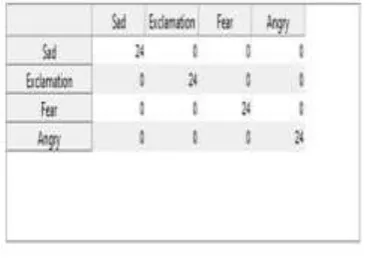
Figure.1: Confusion matrix for classification using Neural Network.Figure: 2 Confusion matrixes for proposed technique using Naïve Bayes classifier
Figure 3 Timing comparisons for proposed technique using Naïve Bayes classifier with ANN Table 1 Recognition rate comparison for both the techniques
Technique Recognition Rate
Using Neural Network 83.3%
Using Naïve Bayes 100%
V. CONCLUSION
Recognition tests were performed on the Cohn-Kanade Dataset. It has been shown that fitting polynomial distribution to the histogram of images combined with Kernel PCA along with Naïve Bayes Classifier yields an improved recognition rate compared with conventional Deep Neural Network. In the experimental results presented in the results section, Naïve bayes classifier has performed better than deep neural network. However, since the recognition tests were performed only on a part of one dataset, future work required is to take on the system implementation on some real time functioning in order to check its efficacy so that it can adapt to a variety of situations. In short, the implementation of the system to real-life engineering complications will be studied.
REFERENCES
[1] Yuan, Chengsheng, Xingming Sun, and Rui Lv. "Fingerprint liveness detection based on multi-scale LPQ and PCA." China Communications 13, no. 7 (2016): 60-65.
[2] M.Grimm, D.G.Dastidar,andK.Kroschel. Recognizingemotions inspontaneousfacial expressions
IJEDR1703046
International Journal of Engineering Development and Research (
www.ijedr.org
)
330
[4] C.L.Lisetti and D.E.Rumelhart.Facial expression recognition usinganeural network. In Proceedings ofthe Eleveth InternationalFLAIRS Conference. Menlo Park, pages 328–332.AAAIPress,[5] P.Debevec. Aneural network forfacialfeature location.
[6] M.Nilsson, J. Nordberg, and I.Claesson. Face detection usinglocalsmqt features and splitupsnowclassifier.InIEEE InternationalConference onAcoustics, Speech,andSignal Processing (ICASSP),
[7] R.S.Feris, J.Gemmell, and K.Toyama. Hierarchical wavelet networks forfacialfeature localization. InInICCV’01WorkshoponRecognition,AnalysisandTrackingofFaces and Gestures inReal-TimeSystems,pages118–123.
[8] C.Padgettand G.W.Cottrell. Representingfaceimagesforemotion classification. Ad- vancesinNeuralInformationProcessing Systems,9:894–900,
[9] M.Gargesha, P.Kuchi,andI.D.K.Torkkola. Facialexpressionrecognitionusingartificial neural networks. http://www.public.asu.edu/pkuchi expressionrecognition.pdf. In I EEE 511: ArtificialNeural ComputationSystems. [10]T.Pham andM.Worring. Facedetection methods: Acritical evaluation.ISISTechnicalReport Series, University ofAmsterdam,11,2000