(UDC: 615.279.015.2)
Study of the mechanisms of antioxidative action of different antioxidants
Z. Marković1,2
1 Department of Chemical-Technological Sciences, State University of Novi Pazar, Vuka
Karadžića bb, 36300 Novi Pazar, Republic of Serbia.
2 Bioengineering Research and Development Centre, 6 Prvoslava Stojanovića Street, 34000 Kragujevac, Republic of Serbia.
e-mail: [email protected]
Abstract
The reaction mechanisms by which antioxidants can exert their activity are: hydrogen atom transfer (HAT), proton coupled electron transfer (PCET), sequential proton loss electron transfer (SPLET), single electron transfer - proton transfer (SET-PT), radical adduct formation, and sequential proton loss hydrogen atom transfer. The antioxidative activity of different compounds (flavones, flavonols, and Schiff basis) was investigated by the trolox equivalent antioxidative capacity and electron paramagnetic resonance methods. The mechanisms of the antioxidative action (HAT, PCET, SPLET, and SET-PT) were investigated by using the thermodynamic parameters: bond dissociation enthalpy, ionization potential, proton dissociation enthalpy, proton affinity, and electron-transfer enthalpy. The influence of different radicals was investigated using appropriate isodesmic reactions. The mechanistic approach to the investigation of the influence of different radicals to the HAT mechanism, and the second step of the SET-PT mechanism) was applied. These investigations contribute to the elucidation and understanding of complex processes involved in the antioxidative action.
Keywords: DFT, antioxidants, HAT, PCET, SPLET
1. Introduction
136
The flavonoids are aromatic secondary plant metabolites, which belong to the class of plant polyphenols. Because of the remarkable array of biological and pharmacological activities these molecules are increasingly used as antioxidant, inhibiting, antiviral and antimicrobial agents which also exhibit vascular, anti-inflammatory and antiallergic activity. Phenolic acids are known antioxidants not only because of their ability to donate a hydrogen atom or an electron but also because of their stable intermediate radicals which prevent the oxidation of the various components of cereals, particularly fatty acids and oils. The antioxidant activity of phenolic acids is closely associated with the structure, the type, number and position of substituents on the aromatic rings as well as the structure of the side chains. Phenolic acids have different functions in plants including the assimilation of nutrients, protein synthesis, enzyme activity and photosynthesis.
Thione-substituted 1,2,4-triazoles represent an important class of heterocycles which are, owing to their numerous features, widely applied in various fields of medicinal and industrial chemistry. A large number of these derivatives exhibit diverse biological properties including anticonvulsant (Plech et al. 2014), antidepressant, (Kane et al. 1988) anti-inflammatory (Palaska et al. 2002), antibacterial, (Ezabadi et al. 2008) antifungal (Parker et al. 2011) and anticancer activity (Mavrova et al. 2009). The antioxidant activity of 1,2,4-triazole-3-thione (thiol) compounds has attracted much attention in relation to their radical-scavenging potential. In the context of the potential industrial applications, several 1,2,4-triazole-3-thiones have shown corrosion inhibition of copper and mild steel in chloride media and acidic solutions (Khiati et al. 2011; Kumara et al. 2012).
Antitumor, antiviral, antifungal and antibacterial activities of Schiff bases (Radecka-Paryzek et al. 2007) have found application in medicine and pharmacy. Due to their biological properties, these compounds are used as basic materials for synthesis of antibiotics, antiallergics, antitumors and antifungal drugs (Lozier et al. 1975; Hodnett and Dunn 1970). It has also been reported that Schiff bases of salicylaldehydes have influence in plant growth (Alt 1981), and show some antimicrobial (Hamada et al. 1981) and antimycotic activity (Ismail 1986). These compounds are active against a wide range of organisms such as: Candida albicans, Escherichia coli, Staphylococcus aureus, Bacillus polymyxa, Trichophyton gypseum, Mycobacterium, Erysiphe graminis, and Plasmopara viticola (1). They also have the ability to rebuild hemoglobin, red blood and white blood cells (Ozaslan et al. 2011). Schiff bases also proved to be useful in treatment of AIDS and diabetes (Taha et al. 2013; Khan et al. 2013). Also, it was shown that some phenolic Schiff bases act as effective antioxidants and potential drugs that can prevent disease caused by free radical damage (Anuoar et al.2013; Taha et al. 2013; Khan et al. 2013; Khan et al. 2012; Chenga et al. 2011).
describing the geometry of the corresponding transitional states, and calculating the reaction rate constants (k).
2. The antioxidant mechanisms
The reactions of governing the antioxidant activity of different chemical compounds take place in highly complex environments. The complexity of the environment stems from a number of different radicals and antioxidants’ reactive species, which are present in biological media. All of these species can be involved in chemical reaction related to the antioxidant activity. The importance of these compounds is related to both their concentrations and reactivity. On the other hand, the polarity of the environment and the pH value play an important role in these reactions. In this regard, different radicals can react via different mechanisms in different media. Therefore it becomes evident that elucidating the main reaction mechanisms involved in the antioxidant activities of chemical compounds may be a challenge. For these reasons some of the most important reaction mechanisms involved in antioxidant protection, from both experimental and theoretical approaches, are investigated in many cases. In this paper, some theoretical results will be presented in the case of different chemical compounds.
The antiradical properties of different natural and synthetic antioxidants (A–OH) are based on their ability to donate hydrogen atom to a free radical. In these reactions a newly formed radical, which is more stable and less reactive than the previous one, is generated. There are several mechanisms of the antioxidant actions of free radicals: hydrogen atom transfer (HAT), proton coupled electron Transfer (PCET), single electron transfer followed by proton transfer (SET-PT), sequential proton loss electron transfer (SPLET), radical adduct formation (RAF), and sequential proton loss hydrogen atom transfer (SPLHAT) (Klein et al. 2007; Litwinienko and Ingold 2007; Galano 2015; Galano et al. 2016; Mazzone et al. 2016).
2.1 HAT and PCET mechanisms
It is well known that identity reactions (RXH + X• → RX• + XH) involving HAT mechanism between two oxygen atoms have much lower activation energies and higher rate constants than HAT mechanism between two carbon atoms (Min et al. 2002). Mayer et al. (Rose et al. 1993) provided simple explanation for these differences. On the basis of DFT calculations they found that the transition states for for the PhO• + PhOH and PhCH
2• + PhCH3 have quite different
structures (Figure 1). In the reaction A, HAT involves transfer of a proton with one of its bonding electrons. However, in the reaction B between phenoxyl radical and phenol, a pre-transition state complex is formed between the OH and a lone pair on O•. It means that proton is
138
Fig. 1. Electrostatic potential maps for HAT (benzyl/toluene) and PCET (phenoxyl/phenol) mechanisms
In the HAT and PCET mechanisms, a hydrogen atom is transferred to a free radical:
A−OH → A−O• + H• (1)
this mechanism is characterized by the homolytic bond dissociation enthalpy (BDE) of OH groups. This thermodynamical value can be calculated using the following equation:
BDE = H(A−O•) + H(H•) − H(A−OH) (2)
H(A−OH), H(A−OH), and H(H•) are enthalpies of the parent molecule, corresponding radical, and hydrogen atom, respectively. A higher BDE value is attributed to a lower ability for donating an H atom.
2.2 Radical Adduct Formation (RAF)
The RAF mechanism can be schematically represented as:
А–ОH + • R → [А–ОH–R]• (3)
2.3 SET-PT mechanism
This mechanism is also known as Sequential Electron Proton Transfer (SEPT). In the first step of the SET-PT mechanism a phenolic compound loses an electron, and yields the corresponding radical cation Ph−OH•+.
A−OH → A−OH•+ + e− (4)
This first step is characterized by the ionization potential (IP) which can be calculated as follows:
IP = H(A−OH•+) + H(e−) − H(A−OH) (5)
H(A−OH•+) and H(e−) are the enthalpies of the radical cation and electron, respectively.
The second step of this mechanism is deprotonation of A−OH•+:
A−OH•+→ A−O• + H+ (6)
This reaction step is characterized by proton dissociation enthalpy (PDE) of O−H bonds.PDE
can be calculated using the following equation:
PDE = H(Ph−O•) + H(H+) − H(Ph−OH•+) (7)
where H(H+) is the enthalpy of proton.
The solvent plays an important role in this mechanism. In the first step of this reaction radical cation is formed. Therefore polar solvent is necessary for this mechanism to stabilize the resulting intermediate. Moreover, polar solvent should be also protic due to the nature of the second step of this mechanism.
This mechanism is much less present in comparison to HAT and PCET mechanisms because the first step which is very slow. On the other hand, once formed the radical cation easily losts proton in the second step of this mechanism, for example in the case of baicalein
(Marković et al. 2012) and quercetin (Marković et al. 2013). On the other hand, SET-PT mechanism plays an important role in the oxidative damage of biomolecules by highly reactive radicals such as hydroxyl radical. For instance, the SET-PT mechanism is the main reaction path for reaction of the guanosine and hydroxyl radical (Galano et al. 2009).
2.4 Sequential Proton Loss Electron Transfer (SPLET)
The SPLET mechanism is two steps mechanism, proposed by Ingold and Litwinienko (Litwinienko and Ingold 2003; Litwinienko and Ingold 2004; Litwinienko and Ingold 2005; Litwinienko and Ingold 2007). The first step in the SPLET mechanism Litwinienko and Ingold (2007), Foti et al. (2004) is deprotonation of the corresponding antioxidant, followed by the antioxidant anion A−O− formation:
A−OH → A−O− + H+ (8)
This step is described by proton affinity (PA) of the antioxidant anion. PA can be calculated by means of the following equation:
PA = H(A−O−) + H(H+) − H(A−OH) (9)
where H(A−O−) is the enthalpy of A−O−. The anion on further on loses an electron:
A−O−→ A−O• + e− (10)
140
ETE = H(A−O•) + H(e−) − H(A−O−) (11)
The values for the solvation enthalpies of the proton and electron were taken from literature (Foti et al. 2004; Marković et al. 2013).
Тhis mechanism is particularly important for the explanation of the antioxidant activity of
phenolic compounds (Foti 2007). Analysing the antioxidant activity two important chemical characteristics of the antioxidant should be mentioned. The first one is its pKa, which is responsible for the determination of the proportion of the deprotonated species in water solution and at each pH value, for instance at pH=7.4 (physiological conditions). The second one is the electron donating ability of the deprotonated antioxidant. In this case the electron accepting ability of the free radical species should also be pointed out. Moreover, the role of the solvents in these reactions should also not be forgotten. The solvent should be polar and protic, and be able to provide good solvation of the anion formed. Therefore, it is expected that the SPLET mechanism is dominant in water but not in the lipid phase characteristic to the biological systems. SPLET has being identified as a crucial mechanism in the scavenging activity exerted by numerous compounds in polar environments. Some examples are curcumin (Litwinienko and
Ingold 2004; Galano 2011) alizarin and alizarin red S (Jeremić et al. 2014), esculetin (Medina
eta al. 2014), hydroxybenzoic and dihydroxybenzoic acids (Marković et al. 2014; Pérez -González et al. 2014), resveratrol (Iuga et al 2012), morin (Marković et al. 2012a; Marković et al. 2012b), flavonoids, (Musialik et al. 2009), vitamin E (Musialik and Liteinenko 2005),
quercetin (Marković et al., 2010
;
Marković et al., 2013) procyanidins (Mendoza-Wilson et al.2014) kaempferol (Dimitrić-Marković et al. 2014), gallic acid (Djorović et al. 2014, Marino et al. 2014), baicalein
(
Marković et al. 2012) and purpurin (Jeremić et al. 2012).2.5 Sequential proton loss hydrogen atom transfer (SPLHAT) mechanism
The first step of this mechanism is identical to that one of the SPLET Eq. 8, while the second one differs from SPLET. In this step the anion further loses a hydrogen atom:
A−(OH)O−→ A−OO−• + H• (12)
This step corresponds to hydrogen atom transfer enthalpy (HATs) which can be calculated according to the following equation:
HATs = H(A−OO−•) + H(H•) − H(A−(OH)O−) (13)
H(A−OO−•) and H(A−(OH)O−) are the enthalpies of the radical anion and anion, respectively.
increases molecular mobility and rates of reaction, reducing radical lifetimes. Also, water as proton donor increases the rates of radical quenching.
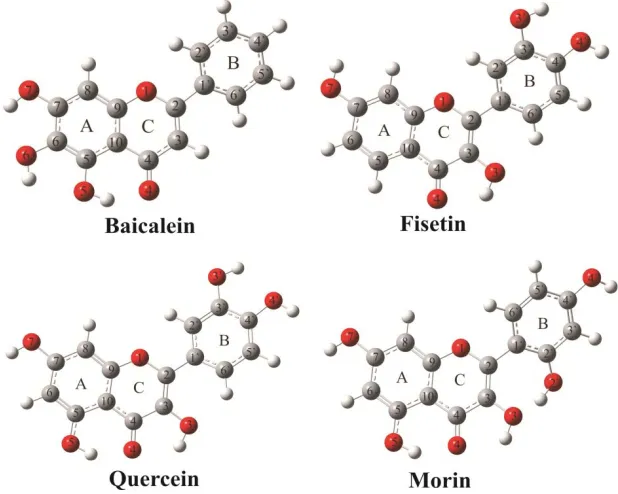
Fig. 2. The most stable structures of the investigated compounds
All investigated anthraquinones are presented in Figure 3. HAT is the most favoured radical scavenging mechanism of all three anthraquinones in the gaseous phase. (Jeremić et al.
2014; Jeremić et al. 2012) On the other hand, the SPLET mechanism is preferable mechanism
in water. Our calculations showed that SET-PT is not probable reaction path for all three molecules in both gaseous and water phases.
Fig. 3. The most stable structures of the investigated anthraquinones
142
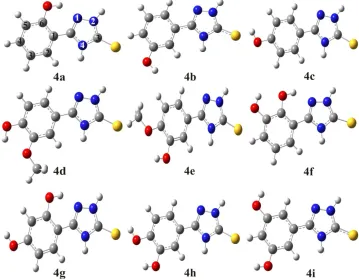
values are in good agreement with the experimental IC50 values (Ivanović et al. 2016). The compounds 4f and 4h have the lowest PA and IC50 values. This result is not surprising, since the previous investigations of the antioxidant activity of Schiff bases showed that polar protic solvents, such as methanol and ethanol, favour the SPLET mechanistic pathway.
Fig. 4. The most stable structures of the 1,2,4-triazole-3-thiones
3. Antioxidative mechanisms employing different free radicals
The scavenging mechanisms of different antioxidants are highly influenced by the properties of the scavenged radical species (Hussein 2011; Fang et al. 2013). The Reaction enthalpy and Gibbs energy are quantity that can successfully contribute to the understanding of these
processes. A direct approach to estimate the ΔH and ΔG of a reaction is to apply the fundamental thermodynamic relationship, i.e., to subtract the enthalpy or free energy of the reactants from the enthalpy or free energy of the products. If the reaction is exothermic or exergonic, it means that the newly formed radical is more stable than the starting one, implying the reaction path as favourable. Otherwise, if the reaction is endothermic or endergonic, the reaction path is not favoured, because the newly formed radical is less stable than the starting one.
In the HAT mechanism, the hydrogen atom is transferred from antioxidant to the free radical RO•:
A−OH + RO•→ A−O• + ROH (11)
ΔHBDE for the HAT mechanism can be calculated using the following equation:
ΔHBDE=H(AO•) + H(ROH) - H(A−OH) - H(RO•) (12)
where the H(AO•), H(ROH), H(A−OH), and H(RO•) are the enthalpies of the radical, molecule obtained after the hydrogen atom abstraction from the molecule of antioxidant, starting
antioxidant, and the free radical species, respectively. Lower ΔHBDE values can be attributed to a greater ability of antioxidant to donate a hydrogen atom to RO• species.
The first step in the SET-PT mechanism is transfer of an electron from the antioxidant to free radical species, yielding the corresponding radical cation A−OH•+ and anion.
A−OH + RO•→ A−OH•+ + RO− (13)
ΔHIP for the first step of the SET-PT mechanism can be calculated as follows:
ΔHIP= H(A−OH•+) + H(RO−) - H(A−OH) - H(RO•) (14)
where the H(A−OH•+) and H(RO−) are the enthalpies of the radical cation of the initial antioxidant and anion generated from the corresponding initial free radical.
The second step of this mechanism is deprotonation of A−OH•+ by RO−:
A−OH•++ RO−→ A−O• + ROH (15)
ΔHPDE can be calculated using the following equation:
ΔHPDE= H(A−O•) + H(ROH) - H(A−OH•+) - H(RO−) (16) The first step in the SPLET mechanism is deprotonation of antioxidant by RO− or other base. The outcome of this reaction is the formation of the anion A−O−:
A−OH + RO−→ A−O− + ROH (17)
ΔHPA can be calculated as follows:
ΔHPA = H(A−O−) + H(ROH) - H(A−OH) - H(RO−) (18)
In the next step electron transfer from A−O− to RO• takes place:
A−O− + RO•→ A−O• + RO− (19)
ΔHETE can be determined by the equation:
144
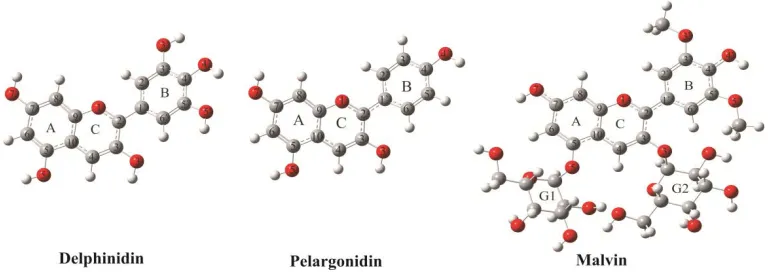
Fig. 5. The most stable structures of the delphinidin, pelargonidin, and malvin
Study of the interaction between baicalein and •OH showed that there is a competition between HAT and SPLET mechanisms in all used polar solvents (water, ethanol, DMSO, and DMF) (Dimitrić-Marković et al. 2014). The same result was obtained for delphinidin, pelargonidin, malvin, and fisetin with the same radicals in the same solvents (Dimitrić
Marković et al. 2017) (Dimitrić Marković et al. 2014). The less reactive the •OOH showed that SPLET mechanism is prevailing reaction path in all used polar solvents for baicalein and fisetin
(Dimitrić-Marković et al. 2014) . On the basis of the thermodynamical values, it was found that The C4’–OH group of delphinidin was the most favoured site for homolytic (HAT) and heterolytic O–H (SPLET) breaking in protic and aprotic solvents. (Dimitrić Marković et al. 2017) The most reactive sites in pelargonidin are C3-OH (HAT) and C7-OH (SPLET), and in malvin C4’-OH (HAT) and C7-OH (SPLET) in all solvents considered (Dimitrić-Marković et al. 2014). The reaction enthalpies for fisetin and baicalein, with hydroxyl radicals, are exothermic in all solvent. The calculated energy values for the reactions of the investigated molecules and hydroxyl radicals point to HAT and SPLET as the operative radical scavenging mechanisms in all solvents under investigation. It should be also noted that the C4’–OH group of fisetin is the most favoured site for both mechanisms in all solvents (Dimitrić-Marković et al. 2017). On the other hand, the most reactive site in baicalein are the C6–OH (HAT) and C7–OH (SPLET) positions (Dimitrić-Marković et al. 2014).
In the reaction of quercetin radical cation with the MeS anion, in both gaseous and aqueous phases, an electron from a lone pair of the MeS anion spontaneously transfers to quercetin radical cation, yielding quercetin and CH3S radical as reaction complex. It means that this reaction undergoes the HAT mechanism. On the other hand, in the case of reaction of quercetin radical cation with methylamine in both gaseous and aqueous phases obey the SET-PT mechanism is operative. Actually, quercetin radical cation spontaneously donates a proton to the methylamine. The reaction with the hydroxide anion lies in the middle of these two extremes. In the gaseous phase quercetin radical cation and the hydroxide anion spontaneously transform into Q and hydroxyl radical, which further conform to the HAT mechanism
(Marković et al. 2013). Oppositely, quercetin radical cation can undergo the SET-PT
bases which HOMO energy is lower than the SOMO energy of quercetin radical cation in a given medium (Marković et al. 2013).
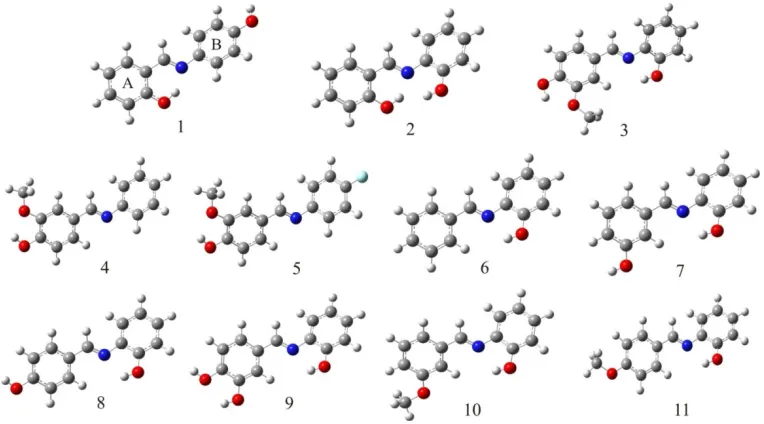
As regards to the antioxidant properties of Schiff bases (Figure 6) in the presence of •OH,
•OOH, (CH2=CH−O−O•), and -•O2, it was found that SET-PT is not an operative antioxidant mechanism. As for radical scavenging of hydroxy radical, it was found that SPLET and PCET are competitive mechanisms in all solvents. On the other hand, •OOH and CH2=CH−O−O•, will react via SPLET mechanism in polar and nonpolar solvents. Finally it should be noted that these Schiff bases will react very slowly with the superoxide anion radical with s superoxide radical in nonpolar solvents very slowly, while these bases will not react with superoxide anion radical in nonpolar solvents.
Fig. 6. The most stable structures of the Schiff bases
Acknowledgements The authors acknowledge support of the Ministry of Education, Science and Technological Development of Serbia, grants OI: 172015, 174028).
Извод
Испитивање механизама антиоксидативног дејства различитих
антиоксиданата
З. Марковић1,2
1 Департман за хемијско-технолошке науке, Државни универзитет у Новом Пазару, Вука
Караџића бб, 36300 Нови Пазар, Србија
2 Истраживачко-развојни центар за биоинжењеринг БиоИРЦ, Првослава Стојановића 6,
146
Резиме
Антиоксиданти остварују своју активност помоћу неколико реакционих механизама: преносом атома водоника (HAT), куплованим преносом протона и електрона (PCET), секвенцијалним губитком протона праћеним преносом електрона (SPLET), преносом
једног електрона праћеним преносом протона (SET-PT), образовањем радикалског адукта
и секвенцијалним губитком протона праћеним преласком атома водоника. Антиоксидативна активност различитих једињења (флавона, флавонола, и Шифових база) испитивана је TEAC (Тrolox equivalent antioxidative capacity) тестом и методом
електронске парамагнетне резонанције. Механизми антиоксидативне активности (HAT,
PCET, SPLET, и SET-PT) испитани су коришћењем следећих термодинамичких
параметара: енталпија дисоцијације везе, јонизациони потенцијал, енталпија дисоцијације протона, афинитет протона и енталпија преноса електрона. Утицај различитих радикала је испитан применом одговарајућих изодезмичких реакција. Испитан је реакциони механизам и утицај радикала код HAT механизма, и у другом
кораку SET-PT механизма. Резултати ових истраживања доприносе расветљавању и
разумевању сложених процеса антиоксидативне активности.
Kључне речи: DFT, антиоксиданти, HAT, PCET, SPLET
References
Álvarez-Diduk R, Galano A (2015). Adrenaline and Noradrenaline: Protectors against Oxidative Stress or Molecular Targets? J. Phys. Chem. B., 119, 3479–3491.
Ames BN, Shigenaga MK, Hagen TM (1993). Oxidants, antioxidants, and the degenerative diseases of aging. Proc. Natl. Acad. Sci. U. S. A., 90, 7915–7922.
Anouar EH, Raweh S, Bayach I, Taha M, Baharudin MS, Di Meo F, Hasan MH, Adam A, Ismail NH, Weber JF, Trouillas P (2013). Antioxidant properties of phenolic Schiff bases: structure–activity relationship and mechanism of action. J. Comput. Aided. Mol. Des., 27, 951–964.
Barber SC, Mead RJ, Shaw PJ (2006). Oxidative stress in ALS: A mechanism of neurodegeneration and a therapeutic target. Biochim. Biophys. Acta - Mol. Basis Dis., 1762, 1051–1067.
Barnham KJ, Masters CL, Bush AI (2004). Neurodegenerative diseases and oxidative stress.
Nat. Rev. Drug Discov., 3, 205–214.
Cheng L-X, Tang J-J, Luo H, Jin X-L, Dai F, et al. 2010. Antioxidant and antiproliferative activities of hydroxyl-substituted Schiff bases. Bioorg. Med. Chem. Lett., 20, 2417-2420. Dhiman SB, Kamat JP, Naik DB (2009). Antioxidant activity and free radical scavenging
reactions of hydroxybenzyl alcohols. Biochemical and pulse radiolysis studies. Chem. Biol. Interact., 182, 119–127.
Di Meo F, Lemaur V, Cornil J, Lazzaroni R, Duroux J-L, Olivier Y, Trouillas P (2013). Free Radical Scavenging by Natural Polyphenols: Atom versus Electron Transfer. J. Phys. Chem. A., 117, 2082–2092.
Dimitrić Marković JM, Milenković D, Amić D, Popović-Bijelić A, Mojović M, Pašti IA,
Marković ZS (2014). Energy requirements of the reactions of kaempferol and selected
Dimitrić Marković JM, Milenković D, Amić D, Mojović M, Pašti I, Marković ZS (2014). The preferred radical scavenging mechanisms of fisetin and baicalein towards oxygen-centred radicals in polar protic and polar aprotic solvents. RSC Adv., 4, 32228-32236.
Dimitrić Marković JM, Pejin B, Milenković D, Amić D, Begović N, Mojović M (2017). Antiradical activity of delphinidin, pelargonidin and malvin towards hydroxyl and nitric oxide radicals: The energy requirements calculations as a prediction of the possible antiradical mechanisms. Food Chem., 218,440–446.
Ezabadi IR, Camoutsis C, Zoumpoulakis P, Geronikaki A, Soković M, Glamocilija J, Cirić A (2008). Sulfonamide-1,2,4-triazole derivatives as antifungal and antibacterial agents: Synthesis, biological evaluation, lipophilicity, and conformational studies. Bioorg. Med. Chem., 16, 1150–1161.
Đorović J, Marković JMD, Stepanić V, Begović N, Amić D, Marković Z (2014). Influence of
different free radicals on scavenging potency of gallic acid. J. Mol. Model., 20, 2345. Fang Y-Z, Yang S, Wu G (2002). Free radicals, antioxidants, and nutrition. Nutrition., 18, 872–
879.
Foti MC (2007). Antioxidant properties of phenols. J. Pharm. Pharmacol., 59, 1673–85. Foti MC, Daquino C, Geraci C (2004). Electron-Transfer Reaction of Cinnamic Acids and
Their Methyl Esters with the DPPH• Radical in Alcoholic Solutions. J Org Chem., 69, 2309-2314.
Galano A (2011). On the direct scavenging activity of melatonin towards hydroxyl and a series of peroxyl radicals. Phys. Chem. Chem. Phys., 13, 7178–7188.
Galano A (2015). Free Radicals Induced Oxidative Stress at a Molecular Level: The Current Status, Challenges and Perspectives of Computational Chemistry Based Protocols. J. Mex. Chem. Soc., 59, 231–262.
Galano A, Alvarez-Idaboy JR. 2013. A computational methodology for accurate predictions of rate constants in solution: Application to the assessment of primary antioxidant activity. J. Comput. Chem., 34, 2430–2445.
Galano A, Alvarez-Idaboy JR (2009). Guanosine + OH Radical Reaction in Aqueous Solution:
A Reinterpretation of the UV−vis Data Based on Thermodynamic and Kinetic
Calculations. Org. Lett., 11, 5114–5117.
Galano A, Mazzone G, Alvarez-Diduk R, Marino T, Alvarez-Idaboy JR, Russo N (2016). Food Antioxidants: Chemical Insights at the Molecular Level. Annu. Rev. Food Sci. Technol., 7, 335–352.
Galano A, Tan DX, Reiter RJ (2013). On the free radical scavenging activities of melatonin’s metabolites, AFMK and AMK. J. Pineal Res., 54, 245–257.
Galano A, Tan DX, Reiter RJ (2014). Cyclic 3-hydroxymelatonin, a key metabolite enhancing the peroxyl radical scavenging activity of melatonin. RSC Adv., 4, 5220-5227.
Hodnett EM, Dunn WJ (1970). Structure-antitumor activity correlation of some Schiff bases. J. Med. Chem., 13, 768–770.
Hussein MA (2011). A Convenient Mechanism for the Free Radical Scavenging Activity of Resveratrol. Int. J. Phytomedicine., 3, 459–469.
Iuga C, Alvarez-Idaboy JR, Russo N (2012). Antioxidant Activity of trans -Resveratrol toward Hydroxyl and Hydroperoxyl Radicals: A Quantum Chemical and Computational Kinetics Study. J. Org. Chem., 77, 3868–3877.
Ivanović N, Jovanović L, Marković Z, Marković V, Joksović MD,Milenković D, Đurđević PT,
Ćirić A,Joksović LJ (2016). Potent 1,2,4-Triazole-3-thione Radical Scavengers Derived
from Phenolic Acids: Synthesis, Electrochemistry, and Theoretical Study.
ChemistrySelect., 1,3870–3878.
148
Jeremić SR, Šehović SF, Manojlović NT, Marković ZS (2012). Antioxidant and free radical
scavenging activity of purpurin. Monatshefte für Chemie - Chem. Mon., 143, 427–435. Joshi R, Gangabhagirathi R, Venu S, Adhikari S, Mukherjee T (2012). Antioxidant activity and
free radical scavenging reactions of gentisic acid: in-vitro and pulse radiolysis studies. Free Radic. Res., 46, 11–20.
Kane JM, Dudley MW, Sorensen SM, Miller FP (1988). 2,4-Dihydro-3H-1,2,4-triazole-3-thiones as potential antidepressant agents. J. Med. Chem., 31, 1253–1258.
Khan KM, Taha M, Naz F, Siddiqui S, Ali S, Rahim F, Perveen S, Choudhary MI (2012). Acylhydrazide Schiff bases: DPPH radical and superoxide anion scavengers. Med. Chem.,
8, 705–710.
Khan KM, Shah Z, Uddin Ahmad V, Khan M, Taha M, Rahim F, Ali S, Ambreen N, Perveen S, Choudhary MI, Voelter W (2012). 2,4,6-Trichlorophenylhydrazine Schiff Bases as DPPH Radical and Super Oxide Anion Scavengers. Med Chem., 8,452-461.
Khiati Z, Othman AA, Sanchez-Moreno M, Bernard M-C, Joiret S,Sutter EMM, Vivier V (2011). Corrosion inhibition of copper in neutral chloride media by a novel derivative of 1,2,4-triazole. Corros. Sci., 53, 3092–3099.
Klein E, Lukeš V, Ilčin M (2007). DFT/B3LYP study of tocopherols and chromans antioxidant
action energetics. Chem. Phys., 336, 51–57.
Khan KM, Taha M, Naz F, Siddiqui S, Ali S, Rahim F, Perveen S, Choudhary MI (2012). Acylhydrazide Schiff bases: DPPH radical and superoxide anion scavengers. Med. Chem.,
8, 705–710.
Khan KM, Shah Z, Uddin Ahmad V, Khan M, Taha M, Rahim F, Ali S, Ambreen N, Perveen S, Choudhary MI, Voelter W (2012). 2,4,6-Trichlorophenylhydrazine Schiff Bases as DPPH Radical and Super Oxide Anion Scavengers. Med Chem., 8,452-461.
Khiati Z, Othman AA, Sanchez-Moreno M, Bernard M-C, Joiret S,Sutter EMM, Vivier V (2011). Corrosion inhibition of copper in neutral chloride media by a novel derivative of 1,2,4-triazole. Corros. Sci., 53, 3092–3099.
León-Carmona JR, Galano A (2011). Is caffeine a good scavenger of oxygenated free radicals?
J. Phys. Chem. B., 115, 4538–4546.
Litwinienko G, Ingold KU (2004). Abnormal Solvent Effects on Hydrogen Atom Abstraction. 2. Resolution of the Curcumin Antioxidant Controversy. The Role of Sequential Proton Loss Electron Transfer. J Org Chem., 69, 5888-5896.
Litwinienko G, Ingold KU (2005). Abnormal Solvent Effects on Hydrogen Atom Abstraction. 3. Novel Kinetics in Sequential Proton Loss Electron Transfer Chemistry. J. Org. Chem., 70, 8982–8990.
Litwinienko G, Ingold KU (2007). Solvent Effects on the Rates and Mechanisms of Reaction of Phenols with Free Radicals. Acc. Chem. Res., 40, 222-230.
Litwinienko G, Ingold KU (2003). Abnormal Solvent Effects on Hydrogen Atom Abstractions. 1. The Reactions of Phenols with 2,2-Diphenyl-1-picrylhydrazyl (dpph•) in Alcohols. J Org Chem., 68, 3433-3438.
Lleó A, Greenberg SM, Growdon JH (2006). Current Pharmacotherapy for Alzheimer’s Disease. Annu. Rev. Med., 57,513–33.
Lozier RH, Bogomolni RA, Stoeckenius W (1975). Bacteriorhodopsin: a light-driven proton pump in Halobacterium Halobium. Biophys. J., 15, 955–962.
Marino T, Galano A, Russo N (2014). Radical Scavenging Ability of Gallic Acid toward OH and OOH Radicals. Reaction Mechanism and Rate Constants from the Density Functional Theory. J. Phys. Chem. B., 118, 10380–10389.
Marković Z, Amić D, Milenković D, Dimitrić-Marković JM, Marković S (2013). Examination
Marković Z, Đorović J, Dimitrić Marković JM, Živić M, Amić D (2014). Investigation of the
radical scavenging potency of hydroxybenzoic acids and their carboxylate anions.
Monatshefte für Chemie - Chem. Mon., 145, 953–962
Marković Z, Milenković D, Đorović J, Dimitrić Marković JM, Stepanić V, Lučić B, Amić D
(2012a). PM6 and DFT study of free radical scavenging activity of morin. Food Chem., 134,1754–1760.
Marković Z, Milenković D, Đorović J, Dimitrić Marković JM, Stepanić V, Lučić B, Amić D (2012b). Free radical scavenging activity of morin 2′-O− phenoxide anion. Food Chem., 135, 2070–2077.
Marković Z, Milenković D, Đorović J, Jeremić S (2013). Solvation enthalpies of the proton and electron in polar and non-polar solvents. J. Serbian Soc. Comput. Mech., 7, 1–9.
Marković ZS, Dimitrić Marković JM, Doličanin ĆB (2010). Mechanistic pathways for the
reaction of quercetin with hydroperoxy radical. Theor. Chem. Acc., 127,69–80
Marković ZS, Dimitrić Marković JM, Milenković D, Filipović N (2011). Mechanistic study of
the structure–activity relationship for the free radical scavenging activity of baicalein. J. Mol. Model., 17, 2575–2584.
Marković ZS, Marković S, Dimitrić Marković JM, Milenković D (2012c). Structure and
reactivity of baicalein radical cation. Int. J. Quantum Chem. 112, 2009–2017.
Marković ZS, Dimitrić Marković JM, Doličanin ĆB (2010). Mechanistic pathways for the
reaction of quercetin with hydroperoxy radical. Theor. Chem. Acc., 127, 69–80.
Mavrova AT, Wesselinova D, Tsenov YA, Denkova P (2009). Synthesis, cytotoxicity and effects of some 1,2,4-triazole and 1,3,4-thiadiazole derivatives on immunocompetent cells.
Eur. J. Med. Chem., 44, 63–69.
Mazzone G, Galano A, Alvarez-Idaboy JR, Russo N (2016). Coumarin–Chalcone Hybrids as Peroxyl Radical Scavengers: Kinetics and Mechanisms. J. Chem. Inf. Model., 56, 662–670. Medina ME, Galano A, Alvarez-Idaboy JR (2014). Theoretical study on the peroxyl radicals
scavenging activity of esculetin and its regeneration in aqueous solution. Phys. Chem. Chem. Phys., 16, 1197–1207.
Mendoza–Wilson AM, Castro-Arredondo SI, Balandrán-Quintana RR (2014). Computational study of the structure–free radical scavenging relationship of procyanidins. Food Chem.,
161,155–161.
Min DB, Boff JM (2002). Chemistry and Reaction of Singlet Oxygen in Foods. Compr. Rev. Food Sci. Food Saf., 1, 58–72.
Moosmann B, Behl C (2002). Antioxidants as treatment for neurodegenerative disorders. Expert Opin. Investig. Drugs., 11,1407–1435.
Musialik M, Kuzmicz R, Pawłowski TS, Litwinienko G (2009). Acidity of Hydroxyl Groups:
An Overlooked Influence on Antiradical Properties of Flavonoids. J. Org. Chem., 74, 2699–2709.
Musialik M, Litwinienko G (2005). Scavenging of dpph• Radicals by Vitamin E Is Accelerated by Its Partial Ionization: the Role of Sequential Proton Loss Electron Transfer. Org. Lett., 2005, 7, 4951–4954.
Ozaslan M, Karagoz ID, Kilic IH, Guldur ME (2011). Ehrlich ascites carcinoma. African J. Biotechnol., 10, 2375–2378.
Palaska E, Şahin G, Kelicen P, Durlu NT, Altinok G (2002). Synthesis and anti-inflammatory
activity of 1-acylthiosemicarbazides, 1,3,4-oxadiazoles, 1,3,4-thiadiazoles and 1,2,4-triazole-3-thiones. Farm., 57, 101–107.
150
Plech T, Kaproń B, Łuszczki JJ, Paneth A, Siwek A, Kołaczkowski M, Żołnierek M, Nowak G
(2014). Studies on the anticonvulsant activity of 4-alkyl-1,2,4-triazole-3-thiones and their effect on GABAergic system. Eur. J. Med. Chem., 86,690–699.
Radecka-Paryzek W, Pospieszna-Markiewicz I, Kubicki M (2007). Self-assembled two-dimensional salicylaldimine lanthanum(III) nitrate coordination polymer. Inorganica Chim. Acta., 360, 488–496.
Rose RC, Bode AM (1993). Biology of free radical scavengers: an evaluation of ascorbate.
FASEB J., 7, 1135–1142.
Sayre LM, Perry G, Smith MA (2008). Oxidative Stress and Neurotoxicity. Chem. Res. Toxicol., 21, 172–188.
Taha M, Ismail N, Jamil W, Yousuf S, Jaafar F, Ali MI, Kashif SM, Hussain E (2013). Synthesis, Evaluation of Antioxidant Activity and Crystal Structure of 2,4-Dimethylbenzoylhydrazones. Molecules., 18,10912–10929.
Tamba M, Torreggiani A (1999). Hydroxyl radical scavenging by carnosine and Cu(II)-carnosine complexes: a pulse-radiolysis and spectroscopic study. Int. J. Radiat. Biol., 75, 1177–1188.