Exchanging Notes: A four year
longitudinal research study
Dr Victoria Kinsella
Professor Martin Fautley
Dr Adam Whittaker
CONTENTS
LIST OF TABLES, MAPS AND FIGURES ... 4
ABBREVIATIONS ... 5
FOREWORD FROM MATT GRIFFITHS, YOUTH MUSIC CEO ... 6
EXECUTIVE SUMMARY ... 8
EXCHANGING NOTES MODEL OF PARTNERSHIP ... 13
INTRODUCTION ... 14
KEY DATA ... 17
17 EVALUATION METHODOLOGY AND METHODS ... 18
CHAPTER 1: THE POLICY AND PRACTICE BACKDROP OF EXCHANGING NOTES ... 22
CHAPTER 2: THE MUSIC EDUCATION CONTEXT ... 30
CHAPTER 3: PROJECT CASE STUDIES ... 39
CHAPTER 4: PROGRAMME OUTCOMES ... 47
4.1 QUALITY AND STANDARDS OF MUSIC DELIVERY... 47
4.2 TO WHAT EXTENT HAVE PRACTICES BECOME EMBEDDED IN THE MUSIC ORGANISATION, THE SCHOOL AND BEYOND THE PROJECT? ... 65
4.3 THE IMPACT OF EXCHANGING NOTES ON EDUCATIONAL AND BROADER DEVELOPMENTAL OUTCOMES FOR YOUNG MUSICIANS ... 77
4.4 THE YOUTH MUSIC QUALITY FRAMEWORK... 114
4.5 IMPACT OF THE ACTION RESEARCH PROCESS ... 132
CHAPTER 5: WHAT DOES THIS MEAN FOR THE FUTURE OF MUSIC EDUCATION? 135 RECOMMENDATIONS ... 139
ACKNOWLEDGEMENTS ... 146
LIST OF TABLES, MAPS AND FIGURES
Table 1: The Youth Music Quality Framework ... 119
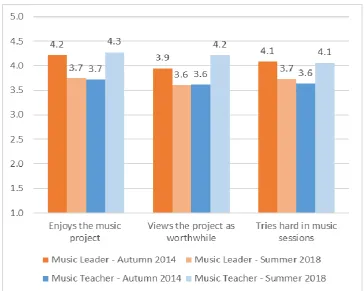
Figure 1 - Comparisons of music leader and music teacher perception scores for educational engagement ... 83
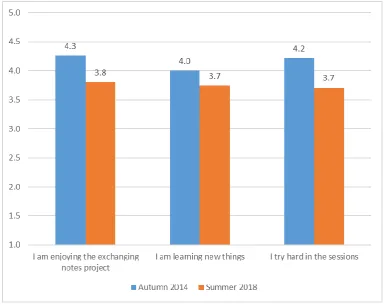
Figure 2 - Average perception survey scores from the young musicians ... 84
Figure 3 - Comparison of Autumn 2014 and Summer 2018 attendance data ... 86
Figure 4 - YMEN attendance data and national comparisons. ... 87
Figure 5 - Longitudinal changes in median average attendance - Autumn 2014 to Summer 2018. .... 87
Figure 6 - Combined literacy and numeracy attainment outcomes at the beginning and end. ... 90
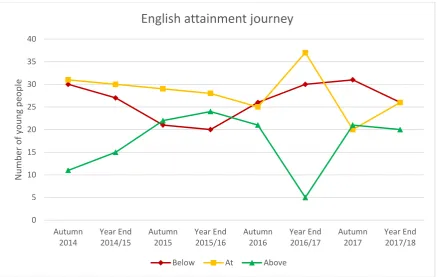
Figure 7 - Attainment journey across Exchanging Notes – English. ... 91
Figure 8 - Attainment journey across Exchanging Notes - Maths. ... 91
Figure 9 - Comparisons of music leader and music teacher perception scores for social outcomes... 94
Figure 10 - Comparisons of young musicians’ perception scores for social outcomes at the start and end data collection points... 95
Figure 11 - Word cloud of young musicians’ perception survey comments. ... 108
Figure 12 - Observation indicator scale used by research team ... 120
Figure 13 - Mean average observation indicators across Exchanging Notes ... 121
Figure 14 - Mean average observation indicators across Exchanging Notes, with maximum and minimum mean values ... 122
Figure 15 – Mean average of young-musician centred aspects of the quality framework. ... 124
Figure 16 – Mean average for indicators of session content aspects of YMQF ... 126
Figure 17 – Mean average for indicators of environment aspects of quality framework. ... 128
ABBREVIATIONS
AR: Action Research
BERA: British Education Research Association
DCMS: Department for Culture Media and Sport
DfE: Department for Education
EBacc: English Baccalaureate
GCSE: General Certificate of Education
KS3: Key Stage Three
KS4: Key Stage Four
MATs: Multi Academy Trust
MLD: Multiple Learning Difficulty
NAME: National Association for Music Educators
NPME: National Plan for Music Education
PMLD: Profound and Multiple Learning Difficulty
SEND: Special Educational Needs and Disability
SLT: Senior Leadership Team
WCET: Whole Class Ensemble Teaching
YMQF: Youth Music Quality Framework
FOREWORD FROM MATT GRIFFITHS, YOUTH MUSIC CEO
Exchanging Notes was always about testing a hypothesis. Throughout Youth Music’s 20 years of operation we’ve seen how the music-making projects we fund – which mostly take place outside of the school environment – engage young people through creative projects which are centred around their existing passion for music and their individual needs. These projects lead to a wide range of positive personal and social outcomes for young musicians, alongside transferable skills.
It seems like stating the obvious to say that young people love music. It’s such an integral part of growing up. For our Sound of the Next Generation research, published earlier this year, we found that nearly all of the young people surveyed had listened to music in the past week and two-thirds had engaged in some form of music-making activity. School is the one place where everyone should be able to access music, but this widespread access is constricting as school music departments disappear by the day. Where they still exist, they are often isolated or under-resourced. The government is currently developing a model music curriculum that promises a ‘sequenced and structured template curriculum’ (DfE, 2019). But there’s little point in having a model curriculum if there are no teachers around to teach it!
Young people on our projects often contrast their Youth Music experience to the music they do in school. Primarily because in school they are given less autonomy over their own learning, and the curriculum doesn’t deliver the type of music they want to make. It’s disconnected from their musical lives. Exchanging Notes was our attempt to address this: bringing community music organisations together with school music departments, so that each could learn from the other.
We wanted to know what wider benefits would occur if young people – particularly those most at risk of exclusion or low attainment – had access to sustained and engaging music in school. It was never designed as an out-and-out intervention study, but we did aim to track a core group of learners across the lifetime of the project. Projects worked to support
educational and wider developmental outcomes for young people, alongside their creative, expressive and musical abilities. Use of Youth Music’s quality framework was very important to ensure that the learning was centred on the young musicians’ needs, and promoted personal and social outcomes as well as musical ones.
Through the research we learned that young musicians developed new patterns of social interaction through establishing trusting relationships with other young people and adults. This social development acted as a springboard for a range of other learning outcomes and instilled in young people a greater sense of resilience to navigate life’s challenges. At the end of the programme they had clear ambitions for the future, with music usually playing a central role. Both the young musicians and the staff teams developed different identities, and re-authored new versions of themselves.
This wasn’t always an easy project. The work was taking place alongside the introduction of the EBacc, placing greater focus on attainment in core subjects and, as a result, devaluing the importance of music in the curriculum. The staff and partnerships all had to be resilient too, in the face of many challenges.
We want to thank everyone who took part in Exchanging Notes, including teachers, music leaders, school staff, project managers, support workers from partner agencies, and of course the young musicians. Our research partners at Birmingham City University brought a positive element of critical thinking to the whole process, encouraging us to reflect deeply on the emerging findings throughout. And special thanks must go to the National Lottery, who supported the programme through public funding via Arts Council England.
Our key takeaways from this work:
The government needs to send a clear, unambiguous message about the
importance of music in the school curriculum and take urgent measures to reverse the decline in school music infrastructure that we're currently witnessing.
But it's time for a new, ethical model of music in schools – one that centres on the social and emotional wellbeing of young people.
External partnerships with music education charities and music industry
organisations are essential to this new model – co-designing and co-delivering an innovative curriculum which is more relevant to young people’s existing lives in music.
This will be a win-win for all partners and particularly young people. Schools can offer an inspirational music curriculum that better supports young people’s wellbeing; the music industry talent pipeline will grow and become more diverse; and young people’s lives in music will be completely connected both in and out of school.
The future is in partnership. We all need to think about what role we can play and, like the Exchanging Notes partners, collaborate in a way that is open, honest and builds trust. Music education, let’s face it, has sometimes operated in factions – but now more than ever, we all need to pull together.
EXECUTIVE SUMMARY
Exchanging Notes set out to explore whether young musicians at risk of low attainment, disengagement or educational exclusion could achieve the best musical, educational and wider outcomes through participation in a longitudinal music education project. Alongside this was an aspiration to investigate new models of effective partnership-working between schools and out-of-school music providers.
This report documents the findings from young musicians, teachers, music leaders, music providers, head teachers and music hub leads. It also analyses statistical data held by schools. The report draws together these findings and offers insights into the successes and challenges of partnership working for 21st century music curriculum.
Researchers from Birmingham City University were appointed to evaluate the effectiveness and impact of the Exchanging Notes programme over the four years of its duration. Key findings are presented against each of the outcome statements investigated by the research team.
Outcome Statement 1: to improve the quality and standards of music delivery for children and young musicians
1. At its simplest, and most extreme, schools were concerned with learning, evidence by assessment of attainment, and music organisations were concerned with participation, evidenced by engagement. Effective partnerships recognised the positions of everyone involved.
2. The most effective projects included activities that encouraged participation, were musically relevant, extended knowledge, developed musical skills, addressed future needs, and engaged young musicians in ways appropriate to their developmental stages.
3. Assessment and evaluation of progress and progression began to be viewed as more than input to output modes of school assessment measures. These included social, emotional and cultural aspects of learning.
4. Teachers, music leaders and young musicians deconstructed their musical and educational identities, breaking out of old habits, being allowed to think differently and consider new possibilities. Part of this was due to the time afforded over the four years for curriculum and programme re-design. This entailed long term
planning that remained flexible but had clear aspirations, and ethical approaches to working with one another.
5. A school inviting a music provider to come in and work with their young people was not automatically a partnership. As one commentator noted, these could be
classified as “lend us your kids” projects, unlikely to make a significant impact on the music organisation or the school. True partnerships involved collaboration and shared discourse. There was a reconciliation and reconsideration of what
partnerships were able to develop collaborative decision making processes which bridged traditional formal and non-formal divides.
6. There were many challenges faced in relation to partnership working, which proved to be a significant factor for the three projects that ended early. In such instances, setting up a joint venture did not necessarily result in a partnership in its truest sense.
7. Multi-agency working was important. Many of the projects worked with young musicians who had a range of complex physical, cognitive, health, behavioural, and social care challenges. They therefore worked with a number of professionals from across many different fields beyond the music organisation and school.
Interdisciplinary working and reflection was needed to ensure a joined up approach. Over time those projects that included the music provider in discussions about the young musician’s educational and social development extended their shared knowledge, built trust and developed personalised approaches to teaching and learning.
8. School senior leadership played a crucial role in advocating for music in school and the wider community. Music leaders played a key role in using their knowledge, understandings and networks to impact beyond their own organisations. In some projects, schools and music organisations worked together and were a driving force for enabling and maintaining community partnerships.
9. Thinking and planning for music making and learning developed over the course of the term. Short, medium and long term planning was the foundation for high quality partnership work. The conditions for a successful methodology for musical activity planning were carefully considered and jointly owned. The involvement of young musicians was crucial in this process and improved over time, ensuring that programme activity accounted for their needs, wants, interests and development. 10. Developing a shared ideology took time, and involved honesty, openness, dialogue,
critique, and reflection. For some of the projects these open conversations were not reached until after the early stages of the projects.
11. The interlocutor’s played a vital role, particularly when this had been planned for and adequately resourced. Interlocutors developed awareness of the language, practices, structures, policies used in the formal and non-formal sectors. They were important in helping to bridge divides and open spaces for shared discourses.
Outcome statement 2: to evidence the impact of the Exchanging Notes projects on educational and broader developmental outcomes for young musicians
1. Most young musicians involved in Exchanging Notes maintained high levels of attendance (>95%), with the median attendance being consistently higher than the national average for the secondary school population and mean average above that of ‘persistent absentees’.
2. Two-thirds of the young musicians maintained or improved their attainment in English across the four years of Exchanging Notes and three-quarters of young musicians maintained or improved their attainment in Maths.
identity, improving behaviour and motivation in the pursuit of high-quality musical outputs.
4. Strong, collaborative relationships were developed between teacher, music leader and young musicians which provided an environment conducive to educational exchange. This included listening to leaners, developing safe spaces for peer-to-peer interaction, agency, and independence. Where projects were too top-down, young people disengaged.
5. The relationship forged between the music leaders and the young people was central to the social outcomes. This was less hierarchical than a traditional teacher – student relationship. The music leader’s focus on engagement, participation and enjoyment enabled them to build strong social connections with the young
musicians and instilled in them a sense of self-belief.
6. Resilience was developed in the young musicians, giving them greater ability to ‘bounce back’ from difficult events and helping to future-proof their wellbeing. 7. The creative process was important in developing a collaborative and ethical
learning environment. Songwriting in particular helped the young musicians to deeply engage with the musical development process at the same time as reflecting on their own life experiences.
8. The longitudinal element of the programme was key, giving time to build trust and overcome barriers to learning. Music leaders and young musicians perceived engagement at the end of the programme to be lower than at the beginning. This could be due to methodological limitations (baseline and follow-up perception surveys were used) or could point to difficulties in project-based work maintaining engagement over a long period of time.
9. Exchanging Notes helped to open the door for learning. Music was used as an engagement hook, and the strong social connections that were developed helped to re-engage young people in education, develop their confidence and self-belief, and create a more positive attitude to learning.
10. At the end of the programme the young musicians had developed new identities, as musicians, and had a strong sense of direction for their future.
11. At the end of the programme, many school staff had a different view of ‘success’ as they had witnessed outcomes unfolding over four years. This was less driven by data and attainment and more concerned with personal and social outcomes. This suggests that standard data collection undertaken by schools is obscuring young people’s broader developmental outcomes (which music is so effective in bringing about).
12. There is evidence that the performativity agenda is exclusionary for the most vulnerable learners, as well as placing school curriculum music at risk. This
Outcome statement 3: to embed learning and effective practice in host and partner organisations and share practice beyond the project
1. High quality partnership working led to the development of ethical and collaborative pedagogies in which teaching, learning, and musical activity were approached with humility. Ethical approaches required an understanding of the role of music in the lives of young people. In some instances the knowledge developed within the partnership extended to the wider school and music communities, and beyond. 2. Division of labour needs to be shared. A relational ontology values knowledge
sharing through co-teaching and learning. In Exchanging Notes, this was shown by teachers, music leaders and young musicians sharing their expertise through meaningful interactions with one another.
3. The Youth Music Quality Framework helped teachers and music leaders reflect on their work, and on young musicians’ progress. It fostered shared dialogues that enabled music leaders and teachers to focus on planning, and consider aspects of the music sessions.
4. Social, educational, and musical development occurred over time, and when all parties were joint stakeholders in the endeavour. Sustaining development, participation, and engagement over the much longer timeframe as found in
Exchanging Notes required careful thinking, structured reflection, and honest long-term collaboration.
5. Successful projects impacted upon young musicians by developing them socially, emotionally and culturally, and extending learning beyond musical knowledge.
Outcome statement 4: to develop the educational practice of schools, non-formal music organisations, teachers and practitioners through an action research model
1. Being involved in action research facilitated an open-minded approach and
reappraisal of the specific dilemmas the teachers and music leaders faced, as well as sharing the successes. Stakeholder involvement in action research developed: a. Reflexive approaches and reflection in and on action.
b. Analysis of pedagogical and activity-based processes.
c. The exploration of new discourses and theoretical underpinnings.
2. Projects were possibly most effective when there was a close linkage between music providers and schools working together, so that each came to understand more clearly the issues and advantages of other ways of working.
Outcome statement 5: to test the validity of the Youth Music Quality Framework as a tool for increasing educational engagement of young musicians
The Exchanging Notes projects used the Youth Music Quality Framework as a way to
explore session content, teaching and learning methods, music making, and the musical and social environment. The Quality Framework was effective in helping teachers and music leaders reflect on their work and on young musicians’ progress. It nurtured shared dialogues that assisted the teachers and music leaders planning, and considered both musical and educational outcomes. It was effective as it:
1. Encouraged engagement between partners and critical conversations about practice, pedagogy and learning.
2. Kept teaching and learning young-people focused. 3. Offered a way to investigate pedagogy.
4. Explored what formal and non-formal approaches looked like in the classroom. 5. Observed wider social and cultural implications of the music making.
Conclusions
Exchanging Notes was a four-year action research programme pioneering new partnerships between schools and music education providers who normally work in out-of-school settings. The aim of the project was to ensure that young musicians at risk of low attainment,
disengagement or educational exclusion achieved the best musical, educational and wider outcomes through participation in a pioneering music education project; and to develop new models of effective partnership working between schools and out-of-school music providers.
Music education is a complex activity that involves educating for knowledge, musical skills, social skills, understanding, attitudes, values, meanings, and many other aspects too. The Exchanging Notes projects have shown that multi-agency working beginning from music education can move into a wide variety of other social, educational, and personal
development areas. In order to truly develop and transform practice in all of the key music education stakeholders – music providers, music education hubs, and music departments in schools – true partnership working needs both developing and nurturing.
One of the significant findings from the Exchanging Notes projects is that true partnership activity has real benefits as a way of working. These benefits accrue to all the stakeholders and participants; schools gain from working with community and industry-based partners, music providers gain from working with different aspects and phases of music provision, music hubs gain from working closely with both schools and music providers, and, most importantly, the children and young musicians involved benefit from joined-up provision that makes a difference not only to their music making and music creating, but, significantly, to the development of them as people, as useful and contributing members of society, and all of this starting from within their own originating communities.
EXCHANGING NOTES MODEL OF PARTNERSHIP
Exchanging Notes has offered the opportunity to identify factors that enhanced the quality of educational and musical outcomes, increased participation and learning and partnerhsip working. The model below allows us to look closely at the processes, structures, discourse and content within Exchanging Notes and depict core successes and challenges affecting musical and educational development. It is hoped that this model can be taken forwards and used to develop partnerships of the future.
A model of
partnership
in music
education
Regular partnership planning and reflection using
the Youth Music Quality
Framework. approach between all A truly collaborative partners, including young
people. Use of an 'interlocutor' as a connecting
mechanism between different parties.
Activity should develop young people as muscians,
alongside wider cultural, social, emotional and educatonal outcomes.
Partnership should include the wider community. This includes teachers, young people, music leaders, the interlocutor, senior leadership teams, other professionals working with
the young poeple, wider school community, the funders and researchers.
Young peoples' voices are integral to partnership working, and the partnership is flexible enough to respond to young peoples interests,
wants, and needs.
Ethical approaches and dialogue at the heart. This includes an understanding of each others' philosophies,
pedagogical approaches and measures of success. A clear understanding of the
policies and practices surrounding each partners' work and the implications for
musical knowledge, skills and understanding. Partnerships need to plan
for personal involvement, personal development,
learning, and doing. Partners who remain open
to exploring new ways of thinking, doing, and being. Action research cycles to encourage deep reflection
and criticality. Partnerships that are designed to empower both music teachers and music
leaders.
Sustained music activity and partnership across multiple
INTRODUCTION
In 2012, Youth Music published the Communities of Music Education research by Saunders and Welch. The aim of the research was to identify how formal and non-formal providers work together to ensure quality of access to music education for children and young musicians. Findings in the report suggested that there are distinct pedagogies employed in formal versus non-formal music education settings, and those children and young musicians’ interpretations of the input, output and outcomes in those contexts differed. It was
suggested that the translation between settings needed more in-depth exploration. How can these pedagogies join up and what is the impact of this for children and young musician’s musical engagement? The published findings recommended that music education providers of all kinds should work together, to join up and co-ordinate their services to ensure that all children and young musicians could access high quality educational experiences and
progress in music according to their talent and potential. Alongside this recommendation, the research report by Saunders and Welch (2012) outlined some implications for future
investigations into partnership work with young musicians. A number of these implications have been addressed in the Exchanging Notes projects:
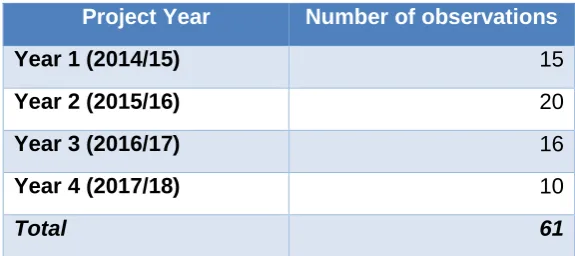
1. ‘Further research would seek to increase the number of sessions observed and the variety of musical genres observed’ (p.115). Exchanging Notes included a range of projects from diverse musical genres. Alongside this the research team observed over 61 of sessions over the four years.
2. ‘The majority of observations made during this pilot study were all made in non-formal contexts. Further research would seek to complete further observations of the same practitioners also working in formal contexts so as to compare and contrast the ex- tent to which the strategies and techniques used are transferable across
contexts’ (p.115). From the outset this projected aimed to explore partnership work between the formal and non-formal contexts.
3. ‘Further research would investigate the young musician’s perception of and use of space within the case provider in relation to their musical identities and sense of self/social inclusion’ (p115-116). The method chosen for this research took account of trying to capture young musicians’ perceptions and explore the development of a musical identity and also their educational identity too. This is a theme that will run throughout this report.
4. The appropriateness of the terms ‘formal’ and ‘non-formal’ (p116). This is central to the Exchanging Notes work, although still problematic to investigate and disentangle. 5. And finally that ‘…partnerships are created and maintained between different
The aim of Exchanging Notes
Exchanging Notes was a four-year action research programme pioneering new partnerships between schools and music education providers who normally work in out-of-school settings. The main aim of the project was:
• To ensure that young musicians at risk of low attainment, disengagement or educational exclusion achieve the best musical, educational and wider outcomes through participation in a pioneering music education project; and to develop new models of effective partnership-working between schools and out-of-school music providers.
The aim of the research was to evaluate the effects of Exchanging Notes on the musical and broader educational outcomes for the young people involved through a longitudinal action research study.
Intended outcomes
Aligned to the aim of the project were four intended outcomes:
• To improve the quality and standards of music delivery for children and young musicians.
• To embed learning and effective practice in host and partner organisations and share practice beyond the project.
• To improve young musicians’ educational and wider developmental outcomes. • To develop the creative, expressive and musical ability of young musicians.
Factors that place young musicians at risk of educational exclusion or disengagement might include (but are not limited to) ethnicity, gender, socio-economic background, special
educational needs, profound or multiple learning difficulties, disability, family difficulties, or living in care.
Birmingham City University
EVALUATION METHODOLOGY AND METHODS
The research team worked towards five intended outcomes. These complemented the intended outcomes of the Exchanging Notes projects, and also examined the pedagogical impact of the overall programme.
1) To improve the quality and standards of music delivery for children and young musicians
2) To embed learning and effective practice in host and partner organisations and share practice beyond the project
3) To develop the educational practice of schools, non-formal music organisations, teachers and practitioners through an action research model
4) To evidence the impact of the Exchanging Notes projects on educational and broader developmental outcomes for young musicians
5) To test the validity of a Youth Music pedagogical quality framework as a tool for increasing educational engagement of young musicians
Action research
The Exchanging Notes projects were part of an ongoing action research cycle for the four years, whereby the findings from the research fed into the planning and delivery of the programmes. This feedback was disseminated via two events per year (held at Birmingham City University) for all Exchanging Notes partners, who were given the opportunity to share their experiences of the programme. This was often supported by external speakers, who shared their knowledge with the aim of encouraging projects to think beyond their practice, question approaches and consider the wider impacts of their work. The choice of an action research cycle posed an interesting and worthwhile methodological variant of the classic action research spiral (Carr & Kemmis, 1986), in that a mixed methodological approach was utilised, and results from the evaluation were fed back into the action research spiral and into project practices.
Participants
As this was a longitudinal study, aimed at exploring the impact of the programme on the participants’ musical, educational and partnership working over four years, a distinct cohort was recruited. This included:
Over 163 young musicians took part in Exchanging Notes activities.
69 link music leaders and teachers took part in activities over the four years.
7 head teachers
2 music hub leaders
Methods
valid and reliable as possible, given the diversity of sources of information about projects and their impact. Inclusion was important for this study; therefore data collection methods were adapted for some school contexts taking account of the range of communication and learning needs of the young musicians involved. These were co-designed with schools and music leaders to ensure that the data collection tools met the needs of the young musicians.
Evaluation of the experiences of young musicians
The views of the young musicians involved in this project were central to the evaluation of its efficacy and outcomes. These young musicians1 were closest to the teaching and learning that took place in the sessions, therefore uniquely placed to offer insights and personal reflections on their developing identity as young musicians. They participated in:
1. Perception surveys – young musicians were asked to complete short Likert scale questionnaires at the end of each year, asking for their perceptions of the
Exchanging Notes programme, their educational and social progression. These surveys also offered free text space where participants could further reflect on their learning, experiences and how the programme could be improved. The use of the Likert scales allowed exploration of an individual’s response, alongside a collated opinion sampling of the whole cohort.
2. Interviews – a sub-sample of the young musicians were interviewed at the end of each year, to reflect on learning and explore impact. These interviews were recorded and transcribed. The purpose of these interviews was to gather in-depth data on the perceived effectiveness of Exchanging Notes sessions, and to
consider the extent to which these perceptions had shifted over the four years.
Evaluation of delivery methods, pedagogy and partnership
1. Session observations – each project had at least one session per term observed during the four years and evaluated with reference to the Youth Music Quality Framework.
2. Reflective interviews - each lesson observation was followed by a
semi-structured interview with the music leader and/or teacher in the setting about the session’s strengths and weaknesses and potential for further improvements. Broader issues concerning delivery of the programme and the young musician’s learning and engagement were also covered. These interviews were all recorded and transcribed.
Evaluation of young musicians’ engagement with education and wider developmental outcomes
1. Measures of engagement – link teachers and music leaders were asked to complete two perception surveys regarding the engagement and wider
1 We are calling them “young musicians” in order to be as inclusive as possible. It is possible that at the outset of this work they
educational development of each young musician participating in the programme each year. For the measures of engagement we used Likert scales to measure music leader and music teacher attitudes to particular questions or statements. These questions remained the same throughout the project, allowing us to explore changes and fluctuations as well as an individual response alongside a collated opinion of the whole cohort.
2. Analysis of schools’ statistical data – schools were asked to provide statistical data about a young musician’s engagement with education and wider
developmental outcomes at the outset and during the evaluation. This included: • Attendance data, which we asked for twice each academic year.
• English and Numeracy attainment and progression. In order to address consistency we asked teachers and schools to define whether a young musician was above, at, or below age-related expectation, based on professional judgement and drawing on teacher assessment. We asked for this data twice each academic year, at the same time as the
attendance data was collected. We recognised the various modes in which assessment data was collected by schools and after consultation with projects we decided that this approach would allow all projects to track progression in the same manner and simultaneously. The intention was to investigate whether the young musicians were, at, above, or below targets.
Data Analysis
As we have seen, the perception and measure of engagement surveys consisted largely of Likert scale questions which were collated and compared. Cross references were made between perception surveys and the measures of engagement, to highlight areas of confluence and disparity. The interview data collected was analysed from an interpretivist perspective which recognised the subjective nature of the responses. The interviews were transcribed and coded, during which process textual data were disassembled, broken apart into lines, paragraphs or sections, then rearranged, through coding to produce a new understanding that explored ‘similarities, differences, across a number of different cases’ (Ezzy 2002:94). Following this data analysis, further reflection, categorisation and
subcategorisation took place where necessary (Cohen at al., 2011). The session
observations were evaluated using the Youth Music Quality Framework and examples of excellent, effective practice were identified. In a similar fashion to the interviews they were coded for analysis to explore themes.
data, it is not possible to present a statistical analysis that incorporates all of the young musicians. Instead, analysis falls into two categories: comparison of beginning and end points; and longitudinal data. Combined, these two analyses give an insight into the distance travelled for a significant portion of those involved in Exchanging Notes.
Ethics
The research was approved by Birmingham City University Faculty of Health, Education and Life Sciences Ethics Committee. The evaluation was conducted in adherence with the British Education Research Association guidelines (BERA 2014, 2018) on ethical practice in
educational research. Participants were informed of the research objectives and aims via a consent and information form. The research respected autonomy, and the consent form noted that participants could withdraw from the evaluation at any time. The responses were carefully monitored so that any issues relating to diversity and equality could be addressed, however none were identified. All participant names have been anonymised and changed in this evaluation report and any subsequent and other reporting of the evaluation.
The Steering Committee
A steering committee was established to act as a ‘critical friend’ to the research team. The committee comprised colleagues who had a range of expertise in music, and music education. The committee members were:
• Emerita Professor Helen Coll: Birmingham City University • Emerita Professor Janet Hoskyns: Birmingham City University • John Clemson: formerly head of Birmingham Music Service.
• Dr Anthony Anderson: former head of music in a West Midlands school and now Research Assistant Birmingham City University
• Gary Spruce: an academic and Course Leader for Secondary Music at Birmingham City University
• Nancy Evans: Director of Learning & Participation at Birmingham Contemporary Music Group.
CHAPTER 1: THE POLICY AND PRACTICE BACKDROP OF EXCHANGING NOTES
Music education in England has been in state of flux for a number of years. This section considers the policy and policy into practice background against which Exchanging Notes came into being, and has been operating throughout its four-year lifespan.
Back in 2003 Hargreaves et al wrote of the “distinction between ‘general’ and ‘specialist’ music education” (Hargreaves et al., 2003 :155). This distinction is still visible in some
aspects of music education, indeed, one of the complexities of music education in England is the range of ways in which it appears. There is curriculum music in school, specialist
instrumental and vocal tuition delivered by visiting teachers, music organisations providing a range of activities on a targeted basis, from Opera to grime, and an army of independent music teachers who teach various aspects of music, from classical piano, to turntablism in various domestic and independent settings. In terms of the workforce, there are Music Hubs, of which there are over 120, operating with funding from central government, delivering some of the provision; classroom music teachers, which DfE figures record that in 2016 these numbered 6700, independent teachers already described for which we have little by way of reliable statistical information, and music organisations, again for which we have no reliable statistics on numbers. As the Henley review observed back in 2011, “the music education world is fragmented…” (Henley, 2011 :30). In many ways this can be said to be still the case, and this report tries to pick its way through some of these complexities.
The policy context for music education in England is equally fragmentary. For schools, the principal policy driver is the National Curriculum. The original National Curriculum was set up in 1988 by the then Conservative Government led by Prime Minister Margaret Thatcher. It included details of all subjects that had to be taught and learned in primary and secondary schools (Graham & Tytler, 1993). Since then a number of reforms to the National Curriculum have taken place, with the current National Curriculum entering statute in 2013 (Department for Education, 2013). The main focus of the Exchanging Notes work reported on here took place with secondary school age students, which means these were children and young people in key stages 3 and 4 aged between 11 and 14. In the National Curriculum music is a compulsory subject. However, over time the National Curriculum itself has become
increasingly less specific and prescriptive. Indeed, it does not now need to be applied in academies and free schools at all. A significant proportion of secondary schools in England are now academies:
Nearly a third of publicly-funded schools in England are now ‘academies’ (22 per cent of primary and 68 per cent of secondary schools), rather than ‘maintained by’ local authorities.
Academies are owned and run by not-for-profit private trusts registered with
Companies House, subject to company law and some statutory education law, and controlled and funded directly by central government by contract, rather than governed by statutory education law as for maintained schools.
Even without this shift away from local authority schools, the National Curriculum for music at KS3 is currently so slight that it can be quoted in full:
Pupils should build on their previous knowledge and skills through performing, composing and listening. They should develop their vocal and/or instrumental fluency, accuracy and expressiveness; and understand musical structures, styles, genres and traditions, identifying the expressive use of musical dimensions. They should listen with increasing discrimination and awareness to inform their practice as musicians. They should use technologies appropriately and appreciate and
understand a wide range of musical contexts and styles.
Pupils should be taught to:
Play and perform confidently in a range of solo and ensemble contexts using their voice, playing instruments musically, fluently and with accuracy and expression
Improvise and compose; and extend and develop musical ideas by drawing on a range of musical structures, styles, genres and traditions
Use staff and other relevant notations appropriately and accurately in a range of musical styles, genres and traditions
Identify and use the inter-related dimensions of music expressively and with increasing sophistication, including use of tonalities, different types of scales and other musical devices
Listen with increasing discrimination to a wide range of music from great composers and musicians
Develop a deepening understanding of the music that they perform and to which they listen, and its history.
(Department for Education, 2013 :219)
The National Curriculum (NC) at KS3 does not delineate or imply any form of pedagogy to go with the range of content that is outlined, neither does it specify how the curriculum should be organised. As a result, a number of different ways of curriculum organisation and teaching its various aspects have emerged.
One of the issues for music education during the time-period of this research, not only those involved in Exchanging Notes, but all schools, was that the position of music as a timetabled school subject came under increasing threat. This has implications for music not only as a subject area, but also more broadly, as with a diminished music provision, or in some cases with it being axed entirely, there is no reason for the school to continue to employ a
specialist music teacher. This has a knock-on effect on the ways in which that school will no longer be able to support the whole gamut of musical activities, both in and outside of the classroom, as well as out in the wider community, which that music teacher would have been able to provide. This matters:
This Exchanging Notes report reports on that essential nature throughout, showing that the music projects involved have complex and far-reaching implications for the children and young people involved.
The reasons for the jeopardised place of music in the curriculum has come from a number of quarters, but significant amongst these is the role of the EBacc as a school measurement:
The focus on the narrow range of EBacc subjects has already reduced, and in some cases removed, the possibilities for students to study music as part of their secondary school curriculum. Without reform of the accountability measures and inspection protocols, the place of sustained music education in the school curriculum and as an option at Key Stages 4 and 5 will continue to decline. (All-Party Parliamentary Group for Music Education et al., 2019 p.14). Indeed, this decline in GCSE music provision, mentioned elsewhere in this Exchanging Notes report, is already having a significant impact on the uptake of music as a GCSE subject by KS4 pupils:
…figures from the Department for Education show a significant fall in the number and proportion of pupils taking GCSE music. In 2014/15, prior to the re-introduction of the EBacc in 2015 there were 43,600 entries for GCSE music. In 2017/18 there were 34,708 entries. This is a reduction in GCSE music entries of more than 20% since 2014/2015. When adjusted for cohort size, again using the DfE figures, the fall in GCSE entries since 2014/2015 is 16.66%. (All-Party Parliamentary Group for Music Education et al., 2019 p.15)
With fewer pupils taking music, as we have commented above, the need for music teachers also reduces:
Classroom teachers in primary and secondary schools have seen music squeezed within their schools. Despite music being a core subject of the national curriculum, the majority of teachers reported that it receives less time within the curriculum, is taught by a range of non-specialist teachers, and suffering from a ‘league table’ approach to subjects in the secondary curriculum as a result of decisions made by senior leadership teams in response to the government’s accountability measures. (Savage & Barnard, 2019 p.3) P3 MU report
Music matters. It occupies a significant place not only as subject in and out of school, but in the identity formation and development of young people. Exchanging Notes shows us the value of music as so much more than a timetabled slot in a busy school curriculum, it is a way to engage, motivate, and reach out to young people. The ways of working of the projects discussed have made real differences to the lives of the young musicians involved, and it is to be hoped that adopting the practices outlined in this report can help address the decline in music provision more widely.
Schools, Local Authority Music Services, Arts Council England client organisations and other recognised delivery organisations should work together to create Music Education Hubs in each Local Authority area. These Hubs should receive ring-fenced central government funding to deliver Music Education in each area following an open, advertised bidding process. It is anticipated that there would be a lead
organisation (which is likely to be a Local Authority Music Service in almost all cases, but in some cases could also be an Arts Council England client organisation or other recognised delivery organisation). This lead organisation would be directly funded to undertake the leading role in each Hub. (Henley, 2011 :18)
The National Plan for Music Education (NPME) received the backing of the Government of the time in its response:
Schools cannot be expected to do all that is required of music education alone: a music infrastructure that transcends schools is necessary.
Hubs will augment and support music teaching in schools so that more children experience a combination of classroom teaching, instrumental and vocal tuition and input from professional musicians. Hubs will be able to deliver an offer to children that reaches beyond school boundaries and draws in the expertise of a range of education and arts partners, such as local orchestras, ensembles, charities and other music groups. (DfE & DCMS, 2011 :10)
As a result of the NPME, 123 Music Education Hubs across England were set up, and they began to be operationalised in 2012 (Fautley & Whittaker, 2017).
The NPME has the status of a policy paper, it has been significant in altering the landscape of music education in England, not only by the establishment of the aforementioned music hubs, but by working to join up provision across a range of music making and music learning aspects of provision. Indeed, the plan states:
The best model for Music Education includes a combination of classroom teaching, instrumental and vocal music tuition and input from professional musicians.
Partnership between organisations is the key to success. (DfE & DCMS, 2011 :13)
To which the Government’s response was:
No single organisation can hope to provide the full range of tuition and experiences that constitute a sound music education. (DfE, 2011 :5)
One of the stated purposes of the NPME was to address what was seen as the problem of variability of music education offers across the Country:
Music education is patchy across the country and change is needed to ensure all pupils receive a high quality music education (DfE & DCMS, 2011 :7)
Addressing this patchiness has proved to be an ongoing issue, even with the NPME being operationalised. Indeed, Spruce has observed that there are problems lying at the very heart of the NPME
The NPME thus privileges and promotes a relatively limited way of musical knowing, rather than the multiple ways of knowing which characterise inclusive music
the practices of western classical music, does not readily allow for the ‘the involvement of individuals in constructing process, content and decision making’ (Spruce, 2012) or the deployment of informal learning pedagogies (Spruce, 2013 :29)
The NPME also has a singular view of what progression in music education entails, as is shown in this diagram from it:
Progression in music education. Source: (DfE & DCMS, 2011 :18)
These are issues which are picked up elsewhere in this report, but for the moment it is important to note this privileging of western classical music.
A further policy driver, albeit an often unintentional one, is the way in which assessment backwash can influence teaching and learning. This is where teaching to the test at KS4 has a backward facing effect on what is taught and learned at KS3.
“State standards reflect value choices about what is most important for students to learn and what constitutes mastery of that knowledge. But different constituencies have different ideas...” (Colwell, 2007 :6). This is an important observation, and is key to understanding different local and national contexts concerning assessment. What this can result in is known as “teaching to the test,” and occurs where high-stakes assessment systems place considerable weight on assessment results. This can result in a narrowing of the curriculum, and of learning opportunities, as teaching becomes focused solely on final assessment; this is known as “assessment backwash.” (Fautley & Colwell, 2012 :488)
Issues of assessment backwash are not only relevant to the musical teaching and learning taking place in school classroom - instrumental2 music education also needs to take this into account.
2 Whenever ‘instrumental’ is mentioned in this report in terms of instrumental teaching and learning, this should be taken to
Once of the significant aspects of instrumental music delivery in schools that came about nationally as a direct result of the NPME was the Whole Class Ensemble Tuition (WCET) programme, also known as ‘First Access’, or Wider ‘Opportunities’. This was a result of the then Secretary of State for Education and Skills stating that that “Over time, all pupils in primary schools who wish to, will have the opportunity to learn a musical instrument” (Ofsted, 2004 :4). The resulting programme and policy that arose from this came to be known as the “Wider Opportunities Pledge”. Funding for this came directly from central government, and in a DCSF circular of c.2008 it was observed that:
Nationally, by 2011, over 2 million pupils will have had the opportunity to learn a musical instrument for free, normally in a large group or whole class setting, for at least one year. (This represents over 80% of the Key Stage 2 population). By 2011 programmes will be in place that will result in every child having this opportunity during their time at primary school. (DCSF, no date)
This programme, operating mostly in year 4 of KS2 in primary schools, and delivered by partnerships of music hubs and schools (Fautley et al., 2017) means that many of the Exchanging Notes cohort may have had experiences of instrumental music learning at a younger age. The reason for citing it here is that it is from WCET, and then moving into group instrumental music learning, and one-to-one individual music lessons that we see the assessment backwash effect working. Both ABRSM and Trinity College London provide a range of pathways leading into their graded music examination system. These pathways affect what is taught, as the syllabus for graded music exams becomes, in some cases, the curriculum for instrumental music.
Away from the National Curriculum and graded music examinations, Trinity College London is also involved with accrediting Arts Award, which:
… is designed to support children and young people to develop their skills and interests in the arts, building their knowledge as they progress through the levels. Young people can start at any level and advisers determine the best starting point by considering the needs and abilities of their group. Arts Award’s flexible framework means young people can work across a wide range of arts, cultural and heritage activities and projects, including creative and technical roles. (Trinity/ACE 2018)
Arts Award is often taken by children and young people involved in music education (and other arts) projects organised by music organisations separate from schools and Music Hubs, and featured in some Exchanging Notes projects too. Here the policy dimension is much thinner than in the other areas described. There is little by way of regulatory and policy requirements in this sector, other than the need for Disclosure and Barring Service (DBS) arrangements for working with children, young people and vulnerable adults.
Into this complexity of policy and practice, Youth Music was established in 1999, with funding for three years in the first instance from the National Lottery administered by Arts Council England (www.youthmusic.org.uk/20-years-life-changing-music-making). It had a clear remit:
What is distinctive about Youth Music is its approach to working to unite music education across the piece, “inclusive practice rather than inclusion projects - embedded across all aspects of music education” (www.youthmusic.org.uk/youth-music-20), rather than the separated aspects:
…formal (describing music in the classroom, instrument lessons from peripatetic teachers, traditional local youth orchestras and the like), informal (young people forming bands, teaching themselves, or learning from friends and family) and non-formal (the kind of community-based youth-led work that Youth Music predominantly funded). It [these labels] might have helped in giving definitions for all the different work going on but boy was it confusing. And it reinforced differences and
competition rather than similarities and collaboration. (https://www.youthmusic.org.uk/youth-music-20)
Music organisations, such as those involved in Exchanging Notes, are often charitable ventures, set up to work with children and young people to further musical, artistic, and social aspects in their lives. They operate in a policy area which lies between the formalised, regulated world of schools, and the largely unregulated world of the private music teacher. Measures of success for these organisations are therefore very different to that of schools.
The ways in which Youth Music grantholders report on their funded work is through an outcomes approach, whereby organisations set musical, social, or personal outcomes, and then report on these at the end of the grant. There are some important aspects of this:
1. They are self-evaluating the impact of their work
2. There is rarely a formal assessment framework in place
3. Whilst indicators exist, the notions of progress and progression are seldom mapped out in detail
4. Often when working with children and young people facing challenging circumstances, the main priority, certainly in early stages, is engagement
Each of these carries its own associated issues. Self-assessment of outcomes is notoriously problematic, an example being Kenny and Christophersen's (2018) notion of “victory
narratives”, which is discussed elsewhere in this report. Assessment and progression are complex and beyond the scope of what can be relatively small-scale intervention projects; indeed, for many musical styles that Youth Music projects will be working with there are no clear ideas of either learning progression, or of progression routes. What progression might look like in dubstep or grime, for example, are not matters which formalised music learning routes discussed above have considered. For children and young people at risk of exclusion, as was the case in Exchanging Notes, simply getting them ‘through the door’ could be a major achievement, and so the use of what would feel like ‘school-y’ progression frameworks would not be appropriate.
financial reporting, and other considerations. Significant among these for this current research was the Youth Music Quality Framework (YMQF) which is described elsewhere in this report.
The way in which discussion of the YMQF is relevant in this section on policy should be clear when taking Schmidt and Colwell’s definition into consideration:
Policy can be formal or informal, obvious or subtle, soft or hard, implicit or
explicit…Policy can consist of rules and regulations, legitimized because of custom or historical precedent, but it can also consist of ideas whose adoption and
implementation can lead to profound outcomes…As a field of action, policy is a key pathway through which varied and often divergent educational ideas become
established in practice. In other words policy is the realm in which educational vision is actualized. (Schmidt & Colwell, 2017 :1-2)
The YMQF clearly fits with this definition, it has certainly had an influence in the Exchanging Notes projects on the ways ‘in which educational vision is actualized’ as Schmidt and Colwell describe. But there is more to it than this alone. Some policy frameworks in education exist as tools and mechanisms of compliance, the intentionality behind YMQF is making a difference, and it is this aspect of both its conceptualisation and implementation which has proved really helpful, not only in thinking about the projects, but also in focussing attention in discussions. This is because it is an example of a policy framework that carries within itself the mechanism of utility; it is the framework itself which guides the ways in which it used, but it also enables, facilitates, and, importantly frames reflective discussions concerning the nature of what is, and has been taking place. In this sense the YMQF can be considered one of the key policy informants in the Exchanging Notes ecosystem as a whole.
The music organisations working on the Exchanging Notes projects had been through a rigorous application process with Youth Music, had committed to being part of
action-research project, and were keen to be involved in working in the ways described throughout this report. To date, government policy has not exerted significant influence on the
CHAPTER 2: THE MUSIC EDUCATION CONTEXT
This section focuses on the music education context more specifically in terms of
pedagogies, forms of practice, teaching, learning, and music making, and the various ways in which they are organised in England at the time of writing.
One of the key aspects of the way in which Exchanging Notes was set up originally was to explore the relationships and interrelationships in and between various typologies of music education as it happens in schools and classrooms, and those used by non-school based music education providers. These were set out in the Exchanging Notes Delivery Card:
…to explore how the distinctive educational approaches used in in-school and out of school settings may be combined and built upon to bring about extended benefits to young people at risk of low attainment, disengagement or educational exclusion (ibid, p1)
To develop sustainable partnerships between schools and out of school music education providers which share a collective understanding of quality music education practice and provide models of this that can be replicated (ibid, p2)
In order to unpick the ways in which this was operationalised in the various Exchanging Notes projects, terminologies, concepts, and constructs involved need to be explained.
What is entailed with school music lessons and out of school music providers is a key academic focus areas in music education today, not just in England and the UK, but internationally too. In many ways the work investigated in Exchanging Notes forms a microcosm of global discussions concerning the form, nature – and importantly – the purposes of music education in England currently.
The dominance of western classical music
As has been noted in the previous section, there is no set pedagogy or content for KS3 music in schools. We know that classroom music teachers tend to teach KS3 using a topic or thematic basis, with the topics that are taught and learned occupying specific lengths of time, often half-termly (Fautley, 2016a; Fautley et al., 2018 ). One of the issues which commentators have observed with regard to the National Curriculum is its apparent
emphasis on western classical music, and of the ‘canon’ of western classical music. As Bate observes:
…references to the ‘canon’ and ‘great’ composers and musicians in the National Curriculum inevitably suggest the presence of an underlying set of assumptions and ideologies. The concept of the canon embodies a number of philosophical and ideological approaches from the 19th- and 20th-century western classical tradition: principally those of the work-concept, aestheticism, transcendentalism, and
music with a sense of discrimination, rather than listening to a wide variety of music and developing their own ability ‘to make judgements about musical quality’, as suggested in the pre-2014 guidelines... The canon is presented as a single, static object with which pupils are to engage in order to learn how to discriminate musical value. As throughout its history, the canon’s association with ‘the best’ and most valuable musical works suggests its manipulation to serve social and political ends; presented as an authoritative form of knowledge, it supports the assertion of cultural supremacy by those in power ... Rather than promoting emancipatory knowledge and encouraging pupils to learn to make their own judgements about musical quality, the emphasis upon the canon expects them to accept a pre-existing social construct of musical value. (Bate, 2018 :6)
This concentration on the western classical canon means that for many classroom schemes of work there is a tendency towards working with its styles and genres. We know that there are issues with having western classical music as the centre of attention in schools, this is especially notable at GCSE level:
Despite the attempts of the education establishment to devise a syllabus which presents music as a subject for all, it is in fact serving few. It is perceived by many pupils as being elitist and by others as being insufficiently academically challenging. This leads to the question of whether GCSE serves pupils from all musical
backgrounds. The answer would appear to be that it does not. A large number of pupils considered that the course was too classically based and did not include sufficient study of popular music. Pupils also perceived themselves to be at a disadvantage if they did not read notation fluently, as many instrumentalists from a rock, pop or jazz background do not. (Wright, 2002: 240)
We also know that backwash from the impending nature of what will be studied at GCSE affects curriculum construction back in KS3, which means that western classical music affects what it taught and learned here too. But it is not just that Western Classical music exerts undue influence upon the curriculum, it is the tacit assumptions of value which go with this view. As Spruce and Matthews (2012: 119) argue:
…despite the introduction into the music curriculum of music from a much broader range of musical traditions and cultures than hitherto (including musical traditions and cultures from within our own society) the musical values inherent in western art music continue to be promoted as self-evidently defining ‘good’ music and consequently ‘high status’ musical knowledge, resulting in the alienation of many pupils from the formal curriculum … despite the introduction into the curriculum of music from other traditions and cultures to try to address such alienation – the way in which these musics are typically presented sustains and reinforces rather than counters the western art music rooted conception of high status music knowledge.
This is important in the ways music in schools is thought about, it is ‘high status musical knowledge’ which tends to be at the centre of the music curriculum. This can alienate those students who self-identify with a whole raft of other styles, types, and genres of music:
attitudes to pop music may also be accompanied by lack of interest in ‘traditional’ forms of music such as ‘classical’ music (Lamont et al., 2003) :230)
This is significant in the ways in which many of the young people in Exchanging Notes thought about their own musical identities. After all, as Schippers notes,
While western classical music practice has served as almost the single reference point for the practice and thought on organised music transmission and learning in many countries across the world, and certainly in the international dialogue on formal music education, contemporary societies are faced with cultural diversity in all
aspects of life and art (Schippers, 2004) p199
Alienation from the ‘canon’ of great musical works need not just happen with those who wish to pursue other sorts of music, but can also occur within the western classical canon.
Whittaker (2019) has pointed out the lack of female composers in A-level music syllabi, this is also the case with many graded music examinations.
The development of student-centred pedagogies
At the same time as noting this dominance of western classical music, there is also an important movement in music education towards informal and non-formal styles of music teaching and learning with school music classrooms. In England, this approach has been spearheaded by the work of the ‘Musical Futures’ programme, arising from the work of Lucy Green (2002; 2008). This is characterised by a student centred pedagogic interaction:
Musical Futures is a tried-and-tested yet innovative approach to music learning, based on a pedagogy that is driven by the musical culture of the
participants. It brings real-world music learning processes into schools and other formal settings, engaging and inspiring all and promoting inclusion and
diversity…Our approach emphasises real-world learning, using methods that are employed by popular musicians and community practitioners outside of formal settings. Musical Futures is about an approach to learning, rather than a specific musical style genre, meaning that it is sustainable and transferable to a range of learning contexts, both within the UK and overseas.
(https://www.musicalfutures.org/who-we-are)
This student-centred pedagogy is an important component of what is often meant by
informal or non-formal pedagogy, and as one of the key factors in Exchanging Notes was the exploration of the learning that can take place between formal and non-formal situations, this is important to think about. Describing how non-formal pedagogy had been incorporated into her classroom, one teacher described what took place:
improvising within a single lesson whilst allowing self-selected friendship groups. Therefore, rather than devising a plan for the learning that will take place in a lesson, teachers respond as learning unfolds. (Gower, 2012)
This presents an important distinction, that of planning for learning, which of necessity takes place in advance of lessons and learning encounters, and planning by knowing that the teacher or session leader will need to react ‘as learning unfolds’. This distinction is explored in greater detail by Folkestad:
…the basic criteria of formal and informal learning situations found in the literature might be briefly described as follows.
In the formal learning situation, the activity is sequenced beforehand. That is, it is arranged and put into order by a ‘teacher’, who also leads and carries out the activity. However, that person does not necessarily have to be a teacher in the formal sense, but a person who takes on the task of organising and leading the learning activity, as, for example, one of the musicians in a musical ensemble. Moreover, this position does not have to be static, although this is commonly the case.
The informal learning situation is not sequenced beforehand; the activity steers the way of working/playing/composing, and the process proceeds by the interaction of the participants in the activity. It is also described as ‘self-chosen and voluntary learning’. However, as learning can never be ‘voluntary’ in its true sense – it takes place whether or not it is intended or wanted, as seen from the perspective presented in the opening of this article, what is in view may rather be described as self-chosen and voluntary activity. (Folkestad, 2006 :141)
However, what is also useful to note, and is a point made forcefully by Folkestad, is that there is not a simplistic division of pedagogies along these lines:
Classical = Formal
Pop = Informal
In their comprehensive review “communities of music education” written by Saunders and Welch for Youth Music in 2012, the authors noted that:
Young people access aspects of their musical educations in a variety of ways. For the purpose of this research, differences in music education provision in formal (predominantly classroom based in school contexts through the delivery of the National Curriculum) and non-formal opportunities are outlined … Traditionally, the categorisation of music education opportunities can be seen to exist on two axes; (i) formal vs. non- formal, and (ii) statutory vs. non statutory. In addition, activities may adopt a generalist or specialist approach … However, the established dichotomy between formal and non-formal learning is increasingly less distinct. (Saunders & Welch, 2012 :15)
Considerations of what counts as formal, and what as informal or non-formal, have become blurred considerably in music education in recent years. Indeed, in the Exchanging Notes schools a wide variety of pedagogies and learning were observed, both from classroom teachers and music leaders.