R E V I E W
Open Access
An overview of the impact of rare disease
characteristics on research methodology
Danielle Whicher
1*, Sarah Philbin
2and Naomi Aronson
3Abstract
Background:About 30 million individuals in the United States are living with a rare disease, which by definition have a prevalence of 200,000 or fewer cases in the United States ([National Organization for Rare Disorders], [About NORD], [2016]). Disease heterogeneity and geographic dispersion add to the difficulty of completing robust studies in small populations. Improving the ability to conduct research on rare diseases would have a significant impact on population health. The purpose of this paper is to raise awareness of methodological approaches that can address the challenges to conducting robust research on rare diseases.
Approach:We conducted a landscape review of available methodological and analytic approaches to address the challenges of rare disease research. Our objectives were to: 1. identify algorithms for matching study design to rare disease attributes and the methodological approaches applicable to these algorithms; 2. draw inferences on how research communities and infrastructure can contribute to the efficiency of research on rare diseases; and 3. to describe methodological approaches in the rare disease portfolio of the Patient-Centered Outcomes Research Institute (PCORI), a funder promoting both rare disease research and research infrastructure.
Results:We identified three algorithms for matching study design to rare disease or intervention characteristics (Gagne, et.al, BMJ 349:g6802, 2014); (Gupta, et.al, J Clin Epidemiol 64:1085-1094, 2011); (Cornu, et. al, Orphet J Rare Dis 8:48,2012) and summarized the applicable methodological and analytic approaches. From this literature we were also able to draw inferences on how an effective research infrastructure can set an agenda, prioritize studies, accelerate accrual, catalyze patient engagement and terminate poorly performing studies. Of the 24 rare disease projects in the PCORI portfolio, 11 are randomized controlled trials (RCTs) using standard designs. Thirteen are observational studies using case-control, prospective cohort, or natural history designs. PCORI has supported the development of 9 Patient-Powered Research Networks (PPRNs) focused on rare diseases.
Conclusion:Matching research design to attributes of rare diseases and interventions can facilitate the completion of RCTs that are adequately powered. An effective research infrastructure can improve efficiency and avoid waste in rare disease research. Our review of the PCORI research portfolio demonstrates that it is feasible to conduct RCTs in rare disease. However, most of these studies are using standard RCT designs. This suggests that use of a broader array of methodological approaches to RCTs–such as adaptive trials, cross-over trials, and early escape designs can improve the productivity of robust research in rare diseases.
Keywords:Rare disease, Research design, Orphan disease, Experimental designs, Registries
* Correspondence:[email protected]
1National Academy of Medicine, 500 5th Street NW, Washington, DC 20001, USA
Full list of author information is available at the end of the article
© The Author(s). 2018Open AccessThis article is distributed under the terms of the Creative Commons Attribution 4.0
Background
Rare diseases are defined by the Rare Disease Act of 2002 as diseases affecting 200,000 individuals or fewer in the United States [1]. Current estimates indicate that there are close to 7000 rare diseases and that about 30 million individuals in the United States are living with a rare disease [2]. While individually, each rare disease im-pacts a small population, collectively, a large number of individuals are affected by these conditions. Therefore, improving the ability to conduct research on rare dis-eases would have a broad population impact.
Research on treatments or management strategies for rare diseases can be challenging primarily due to the limited number of individuals who will be eligible to par-ticipate in any given study and uncertainty about or het-erogeneity in the natural history of the disease. These smaller populations of eligible individuals can vary in their disease presentation, severity, progression, and ex-posure to prior treatment and can be geographically dis-persed. These issues are not unique to rare diseases but are often magnified for these conditions. The size and characteristics of each affected population impact the type and number of studies that can be conducted due to their influence on factors such as study design, sam-ple size, and power.
To raise awareness among key stakeholders, including researchers, payers, patients, patient advocates, and cli-nicians, of the available methodological and analytic ap-proaches for addressing these challenges, this paper had three objectives:
1. to identify algorithms for matching study design to rare disease attributes and to summarize the methodological approaches applicable to these algorithms;
2. to draw inferences on how research communities and infrastructure can contribute to the efficiency of research on the treatment and management of rare diseases; and
3. to describe the use of the above approaches in the rare disease portfolio of the Patient-Centered Out-comes Research Institute (PCORI), a funder which is promoting both rare disease research and research infrastructure.
The PCORI is a not-for-profit organization that was created through the Patient Protection and Affordable Care Act of 2010 to fund patient-centered comparative effectiveness research (CER) that provides clinicians, pa-tients, and other stakeholders with the information they need to make informed health care decisions [3]. As part of its charge, PCORI is tasked with supporting CER on rare diseases. PCORI funds both research projects and a national infrastructure to support CER - the National
Patient-Centered Clinical Research Network (PCORnet) program. PCORnet is comprised of 13 Clinical Data Research Networks and 20 Patient Powered Research Network. Clinical Data Research Networks are networks that originate in healthcare systems and securely collect health information as part of routine clinical care, whereas Patient Powered Research Networks are networks gov-erned by patients, caregivers, clinicians, researchers, and others focused on a sharing and collecting information particular health care conditions [4].
Approach
We conducted a landscape review to address the first two objectives, but did not attempt a formal systematic review for practical reasons. First, the purpose of this project was to provide timely information to the PCORI rare disease advisory panel [5]. Second, the potential scope of the literature is vast and our purpose was to get an overview of methodologic approaches rather than to resolve a specific question [6]. The search strategies used to identify relevant articles to address the first two ob-jectives described above are included in the Appendix.
Objective 1: Algorithms for matching study design to rare disease attributes and main methodological approaches applicable to these algorithms
To identify relevant methodological and analytic ap-proaches to conducting rare disease research, two au-thors (DW and SP) reviewed the search results and categorized the literature discussing methodological and analytic approaches into three distinct groups: (a) arti-cles that provided a general, high level discussion of dif-ferent research methods, (b) articles that described the advantages and limits of different methodological and analytic techniques, and (c) articles that discussed the application of research methods in particular clinical set-tings. The most relevant articles for the purposes of this paper were those within category two that presented al-gorithms or frameworks designed to help select appro-priate study designs for research on rare disease. Other articles were used to generate a list of methodological and analytic approaches used in rare disease research. Where necessary, this literature was supplemented with literature describing the methodological and analytic ap-proaches identified through the literature search.
Objective 2: Contributions of research communities and infrastructure to the efficiency of research on the treatment and management of rare diseases
main categories included recruitment and retention, agenda setting, executing a research agenda, terminating poorly performing studies, and executing new studies. Using this list, two authors (DW and SP) then reviewed all articles identified through the literature search, cod-ing those that discussed one or more of the uses of re-search infrastructure and excluding those that simply described the structure of an existing registry or network.
Objective 3: Description of approaches in the PCORI rare disease research and infrastructure portfolio
To describe the types of research designs currently being used to support PCORI-funded research, the authors identified currently funded rare disease research projects and extracted the study design and main analytic tech-nique used. We also identified the PCORnet Patient Powered Research Networks that focus on one or more rare diseases and identified the stated purpose of the network or registry.
Several areas that are important to rare disease re-search were outside the scope of this project. These
include pharmacokinetic and pharmacodynamics study designs, guideline development, and the application of evidence-grading methods [7]. Additionally, it was out-side the scope of this project to provide descriptions of the study designs. Study design descriptions are widely available in sources on methods both for researchers and interested stakeholders, such as patients, caregivers, cli-nicians, policy makers, and health system leaders.
Results
Objective 1a: Algorithms for matching study design to rare disease attributes
We identified three articles that presented algorithms or structured guidance relating attributes of rare diseases or the interventions of interest to study design decisions. The authors of these three articles generated their rec-ommendations from systematic reviews of the literature
[8–10]. Table 1 shows how characteristics of a rare
dis-ease, intervention, or outcome may impact study design decisions.
Gagne and colleagues aimed“to identify innovative
ap-proaches to research that have been, or can be, applied
Table 1Features of Rare Diseases, Interventions, or Outcomes Measures that Could Impact Study Design Decisions [8–10]
Feature of disease, intervention, or outcome measures Impact on Study Design
Disease Characteristics
Diseases that are life threatening In placebo controlled RCTs, time on placebo should be minimized
Diseases in which individuals are often diagnosed when they first have the condition
Prospective inception cohort designs may be useful in establishing temporality among study variables
Diseases that have an unpredictable disease course Several experimental designs cannot be used including crossover designs, latin square designs, n-of-1 trials, and randomized withdrawal designs
Intervention Characteristics
Whether the anticipated response to the intervention is non-reversible
Several experimental designs cannot be used including crossover designs, latin square designs, n-of-1 trials, randomized withdrawal designs, early escape, and delayed start designs
Whether the anticipated response to the intervention is delayed rather than immediate
Several experimental designs cannot be used including crossover designs, latin square designs, n-of-1 trials, early escape designs, and designs that involve adaptive randomization
Whether the effects on the outcomes are influenced by the order of interventions received*
Several experimental designs cannot be used including crossover designs, latin square designs, and n-of-1 trials
Outcome and prognostic tool characteristics
Whether meaningful surrogate outcomes or composite measures are available or whether statistical techniques for analyzing repeated outcome measures are applicable
In these situations, it may be possible to reduce the sample size needed to answer the study question
Whether tools are available that can be used to accurately predict prognosis
In these situations, risk-based allocation designs are feasible and it may be possible to reduce the sample size needed if the study focuses on recruiting only patients who are at high risk of progressing. However, enrolling only high risk patients will also reduce the pool of eligible individuals.
Whether existing research infrastructure exists for the condition of interest, such as a patient registry
In situations where there is existing infrastructure, that infrastructure may be leveraged to recruit eligible participants more rapidly and to implement a study more efficiently
Acceptable levels of uncertainty
Whether decision-makers expected to use the study data are willing accept results from a trial with an alpha >0.05
In these situations, it may be possible to reduce the sample size needed to address the study question are the study would not need to be powered at an alpha≤0.05
to overcome the methodological challenges inherent in
the study of rare diseases” [8]. To reduce the required
sample size, outcomes that occur more frequently or that occur sooner can be selected. One way to accom-plish this is to use composite outcomes or surrogate endpoints. In some cases, using repeated measures in the same individual or using continuous outcome vari-ables may enhance statistical efficiency, depending on the properties of the outcome measures or statistical techniques used [11]. Use of an adaptive trial that allows for pre-specified changes to the study design based on treatment response can improve the efficiency of testing for efficacy by optimizing dosage and delivery without
the need for additional trials. Although α ≤ 0.05 is the
generally accepted standard for statistical significance in clinical trials, where treatment options are limited, pa-tients may be willing to accept greater uncertainty with consequent reductions in sample size needed to ad-equately power the study. While we disagree with the proposition that underpowered studies are acceptable because they may ultimately contribute to a meta-analysis, underpowered studies can contribute to a Bayesian model (described below) to inform a future trial that can provide definitive results. Studies in which all participants eventually receive the intervention can attract eligible individuals, potentially improving recruit-ment and retention.
Where there is an obstacle to randomization due to strong patient preferences, for example a reluctance a placebo or an invasive intervention, the use of an obser-vational design may make recruitment feasible. Potential designs include self-controlled observational study de-signs (which are similar to crossover dede-signs but do not involve random assignment), case-control designs, and prospective inception cohorts. Propensity scores have been used in an effort to account for confounding due to measured variables. However, Gagne et al. note the inherent limitations of observational methods and state
that “greater attention to innovative methods for using
observational data to study rare disease health outcomes
is needed”[8].
In the second article, Gupta and colleagues summa-rized a variety of study designs that could be used for studies of rare diseases, including the pros and cons of each design, and developed a framework to help investi-gators determine when different designs are appropriate [9]. The study designs considered include parallel group designs, crossover designs, n-of-1 trials, adaptive de-signs, and design combinations. Their framework takes investigators through a series of yes and no questions to assess the usefulness of alternative designs in particular situations. The framework suggests, for example, that crossover and n-of-1 trials should only be used in situa-tions where three condisitua-tions are met: the intervention
has a predictable and short duration of effect, the disease course is stable over at least two intervention periods, and participants can be retained for at least two inter-vention periods. However, if the investigators believe it will not be possible to adequately power a crossover trial, than an n-of-1 design should be considered. If the above three conditions are not met and the time be-tween enrollment and outcome assessment is relatively long compared to the time needed to accrue all partici-pants, the framework suggests that investigators should consider a conventional parallel group randomized con-trolled trial (RCT) design. If the above three conditions are not met and the time between enrollment and out-come assessment is relatively short compared to the time needed to accrue all participants, the framework suggests that investigators should consider adaptive trial designs.
Cornu and colleagues propose a framework where out-comes and responses are key decision points. Investiga-tors are asked to consider first whether the outcomes of interest are reversible or irreversible, then how rapidly individuals are expected to respond to the study inter-vention(s), followed by whether it is possible to minimize time on placebo, and, finally, whether it is pos-sible to treat all participants enrolled in the study [10]. The algorithm includes twelve possible study designs (parallel group RCT, crossover design, latin square de-sign, n-of-1 trials, randomized placebo phase, stepped wedge, randomized withdrawal, early escape designs, de-layed start designs, three stage designs, and adaptive randomization).
In situations where the outcomes included in the trial are reversible and the response to the intervention is relatively quick (within a few weeks), all study designs are possible. If the outcomes are reversible and the re-sponse to the intervention is slow, crossover designs in-cluding latin square and n-of-1 trials are not feasible, nor are early escape, delayed start, three stage designs, or designs involving adaptive randomization. In situa-tions where outcomes are not reversible but the re-sponse to the intervention is relatively fast, crossover designs, including latin square and n-of-1 trials are not feasible, nor are randomized withdrawal, early escape, delayed start, or three stage designs.
If the response to the intervention is relatively slow, in
addition to the designs listed above, adaptive
participants will receive a treatment are more attractive to eligible individuals. Study designs that minimize par-ticipant time on placebo include delayed start,
random-ized placebo phase, stepped wedge, randomized
withdrawal, early escape, three stage, and adaptive randomization designs. Study designs that also ensure that all participants receive active treatment by the end of the study include delayed start, randomized placebo phase trials, and stepped wedge designs [9].
Objective 1b. Main methodological approaches
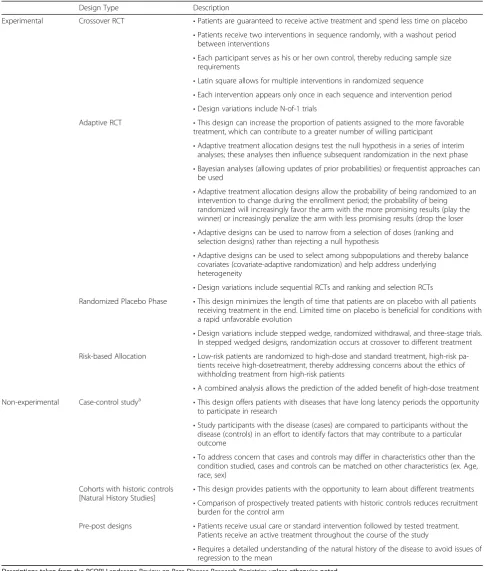
Table 2 is an overview of experimental and non-experimental designs that might be used to address the research challenges posed by rare diseases. Within the literature reviewed, crossover RCTs and adaptive RCTs
were discussed most frequently [8, 9, 12–22]. The
ad-vantages of a crossover RCT design are that participants are guaranteed to be exposed to the active treatment, enhancing recruitment, and each participant serves as both in the intervention and control group, which may reduce variance and the likelihood of confounding [8]. Because participants serve as their own control, cross-over designs require fewer participants when compared to traditional RCTs. The advantages of adaptive RCTs include a reduced number of participants who are re-cruited to inferior treatment arms and the ability to compare multiple treatment options with constrained sample sizes [8].
In addition to the study designs described in Table 2, other experimental designs include repeated
measure-ment designs, factorial designs, and “early escape” in
RCT. In a repeated measurement study, multiple obser-vations of response variables are taken from each partici-pant, allowing for within-subject comparisons and increasing the number of data points [23]. In what is es-sentially a four arm RCT, factorial design involves double randomization in which two comparisons are made concurrently as if conducting two simultaneous studies in the same patient population with the assump-tion that there is no interacassump-tion between the two treat-ments (i.e. the biologic effect of the first intervention is not mediated or modified by the second intervention) [22]. The benefit of a factorial design is that it allows in-vestigators to answer two research questions within the
same trial. Applicable to various trial designs, in “early
escape” designs patients can withdraw from the trial
ei-ther by choice or if they meet a priori criteria listed in the protocol, possibly leading to enhanced retention and power [24]. A prospective inception cohort is another
relevant study design of interest but is
non-experimental. In this design, cohort inception takes place at the time of medical diagnosis or start of treatment, allowing researchers to establish temporality among study variables, such as baseline confounders and
exposures, and to capture outcomes that occur shortly after a participant enters the cohort [8].
The research challenges posed by the characteristics of rare diseases also impact analytic methods. In the litera-ture reviewed on analytic methods in rare disease re-search, Bayesian analysis was by far the most frequently
discussed technique [8, 9, 14–18, 25]. Bayesian analysis
provides formal incorporation of prior information or external evidence into the analysis, allowing a greater amount of information to be gained from a smaller number of subjects. A central component of Bayesian analysis is prior probability distribution of the variable of interest from the external data. This distribution is inte-grated with the distribution of the internal data, yielding the posterior probability distribution [25]. Because of the impact that the prior information has on the analyses, it is important that investigators using Bayesian methods carefully consider the appropriateness of that informa-tion before formally incorporating it into the prior distri-bution or before deciding to use a Bayesian approach [20]. Bayesian methods impact not only the analytic process but also provide a framework that guides the en-tire research process in both study design and execution.
Objective 2: Contributions of research communities and infrastructure to the efficiency of research on the treatment and management of rare diseases
Research infrastructure such as registries and research networks might promote the efficiency and success of rare disease research. The literature most frequently discussed the benefits of existing infrastructure, such as contact registries, in order to support recruitment and retention efforts. Several authors describe the es-tablishment of contact registries that store informa-tion on individuals who have indicated that they are willing to be contacted about clinical research that
they may be eligible for [26–28]. Of these articles that
describe research and contact registries, several de-scribe the benefits of having an established infrastruc-ture in terms of facilitating the rapid implementation
of studies by expediting enrollment [27–31]. One
art-icle described how the research team leveraged their registry to support patient and family engagement in designing research studies [26].
Other potential uses of research infrastructure that were not described in the literature identified through the search but that were identified by the authors of this paper include research prioritization agenda setting, exe-cuting a research agenda, and stopping poorly perform-ing studies. A 2010 report by the National Academies of
Sciences entitled Rare Diseases and Orphan Products:
currently “no uniform, accepted standards govern the collection, organization, or availability of these data. The result is sometimes wasteful duplication and sometimes
underuse of information or samples contributed by
pa-tients or research participants” [32]. To remedy this
issue, the report suggests that there is a need to move
Table 2Possible Study Designs for Rare Disease Research
Design Type Description
Experimental Crossover RCT •Patients are guaranteed to receive active treatment and spend less time on placebo
•Patients receive two interventions in sequence randomly, with a washout period between interventions
•Each participant serves as his or her own control, thereby reducing sample size requirements
•Latin square allows for multiple interventions in randomized sequence
•Each intervention appears only once in each sequence and intervention period
•Design variations include N-of-1 trials
Adaptive RCT •This design can increase the proportion of patients assigned to the more favorable treatment, which can contribute to a greater number of willing participant
•Adaptive treatment allocation designs test the null hypothesis in a series of interim analyses; these analyses then influence subsequent randomization in the next phase
•Bayesian analyses (allowing updates of prior probabilities) or frequentist approaches can be used
•Adaptive treatment allocation designs allow the probability of being randomized to an intervention to change during the enrollment period; the probability of being randomized will increasingly favor the arm with the more promising results (play the winner) or increasingly penalize the arm with less promising results (drop the loser
•Adaptive designs can be used to narrow from a selection of doses (ranking and selection designs) rather than rejecting a null hypothesis
•Adaptive designs can be used to select among subpopulations and thereby balance covariates (covariate-adaptive randomization) and help address underlying heterogeneity
•Design variations include sequential RCTs and ranking and selection RCTs
Randomized Placebo Phase •This design minimizes the length of time that patients are on placebo with all patients receiving treatment in the end. Limited time on placebo is beneficial for conditions with a rapid unfavorable evolution
•Design variations include stepped wedge, randomized withdrawal, and three-stage trials. In stepped wedged designs, randomization occurs at crossover to different treatment
Risk-based Allocation •Low-risk patients are randomized to high-dose and standard treatment, high-risk pa-tients receive high-dosetreatment, thereby addressing concerns about the ethics of withholding treatment from high-risk patients
•A combined analysis allows the prediction of the added benefit of high-dose treatment Non-experimental Case-control studya •This design offers patients with diseases that have long latency periods the opportunity
to participate in research
•Study participants with the disease (cases) are compared to participants without the disease (controls) in an effort to identify factors that may contribute to a particular outcome
•To address concern that cases and controls may differ in characteristics other than the condition studied, cases and controls can be matched on other characteristics (ex. Age, race, sex)
Cohorts with historic controls [Natural History Studies]
•This design provides patients with the opportunity to learn about different treatments
•Comparison of prospectively treated patients with historic controls reduces recruitment burden for the control arm
Pre-post designs •Patients receive usual care or standard intervention followed by tested treatment. Patients receive an active treatment throughout the course of the study
•Requires a detailed understanding of the natural history of the disease to avoid issues of regression to the mean
Descriptions taken from thePCORI Landscape Review on Rare Disease Research Registriesunless otherwise noted
a
toward common standards and a “freely available plat-form for creating or restructuring patient registries and biorepositories for rare diseases and for sharing
de-identified data” [32]. One such initiative that aims to
accomplish these objectives is CONNECT. RD-CONNECT was funded in 2012 by the European
Union’s Seventh Framework Program under the
Inter-national Rare Diseases Research Consortium (IRDiRC). Two of the stated goals of this initiative are to develop
“an integrated platform to host and analyze genomic and
clinical data from research projects”and“common
infra-structures and data elements for rare disease patient
registries”[33].
Objective 3: Description of approaches in the PCORI rare disease research and infrastructure portfolio
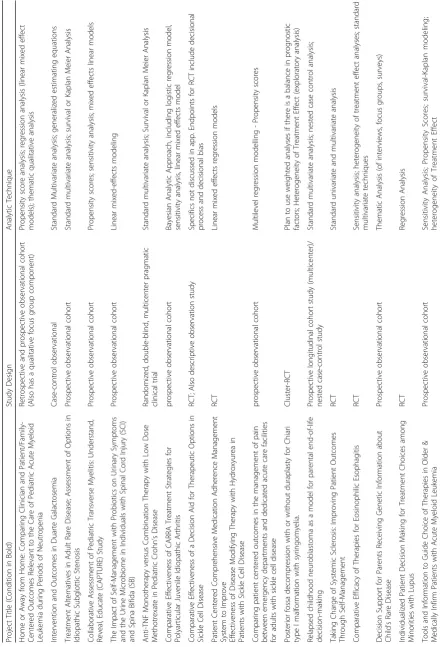
Tables 3 and 4 are an overview of the rare disease pro-jects within the PCORI portfolio. Table 3 describes funded research on rare diseases as of June 20, 2017, showing both the study design and analytic technique used. The most common study designs used in projects within the PCORI research portfolio are standard RCTs and observational designs. Of the 24 rare disease pro-jects, 11 are RCTs and 13 are observational. One of the RCTs indicated that a Bayesian framework. The observa-tional studies are case-control designs and prospective observational cohorts; 5 are using propensity score ana-lysis. Among both experimental and non-experimental designs, 6 projects are using survival or Kaplan-Meier analysis.
Two of the projects illustrate how infrastructure can support rare disease research. The first study, which compares the outcomes of different entry sites for shunt insertion surgeries to treat hydrocephalus, leveraged the existing Hydrocephalus Clinical Research Network to prioritize the study question, to design the study, and to accelerate enrollment. The second study, which com-pares a combination therapy to monotherapy anti-TNF
in the pediatric Crohn’s Disease, leverages the
Improve-CareNow network to recruit participants who are start-ing anti-TNF treatment.
Table 4 summarizes the focus and goal of each of the 9 rare disease PCORNet patient-powered research net-works (PPRNs). The PPRNs currently support 16
stud-ies. The network infrastructure supports both
identification of potential participants and patient en-gagement in the development of research questions and study design. In addition, some PPRNs have undertaken projects to improve methods of data collection. For ex-ample, the DuchenneConnect Patient-Report Registry Infrastructure Project has as its goal to reduce the burden of data collection, evaluate the accuracy of
patient-reported outcomes, improve coding, and
standardize information exchange. The NephCure
Kidney Network for Patients with Nephrotic Syndrome aims to improve the interoperability of data collection across networks.
Discussion
Our landscape review of the literature describes available methodological and analytic approaches that could be used to address the challenges of conducting research in rare diseases, especially the challenge of conducting re-search with small patient populations. We identified three frameworks that attempted to tie attributes of in-terventions and rare diseases to specific methodological approaches. As displayed in Table 1, specific features of diseases, interventions, and outcomes have implications for study design choices. In some case, these attributes are limitations and exclude certain designs. In other cases, variations on the standard randomized controlled trial can ameliorate such barriers. For example, as shown in Table 2, both crossover and adaptive RCTs can minimize the time that patients spend on placebo or suboptimal treatments. In any disease, especially those that are serious or life threatening, minimizing exposure to placebo or suboptimal interventions can increase
pa-tients’willingness to be recruited into and be retained in
a trial. While the literature we identified focuses pre-dominantly on pharmacologic research, many of the principles that apply to pharmacologic studies also apply to device studies. The exception is that in device studies, blinding of participants and research staff is more diffi-cult and may require, for example, independent outcome assessment.
A central problem of rare disease research is how to avoid conducting underpowered studies. Underpowered
studies are“waste in research” [34–36]. While we found
limited analysis of the benefits of existing infrastructure in the literature we reviewed, we were able to draw in-ferences about the benefits of leveraging the capabilities of a research community. A prominent use of networks and registries was to promote contact databases for identifying and recruiting eligible participants. In a
well-organized research community, effective research
prioritization and agenda setting can reduce waste in re-search. If a research network or registry engages the spe-cialist community for a particular rare disease, that community can collectively determine which research questions are most critical. For example, the Hydroceph-alus Clinical Research Network (hcrn.org) lays out a re-search agenda on its website and the investigators collaborate to complete research initiatives that fulfill the agenda, thus ensuring that there are not multiple studies competing for the same small patient population. Moreover, defining core outcome sets to be used in registries and studies of rare diseases facilitates
interventions and subpopulations. A corollary role for a research network is to terminate poorly performing studies. If it is clear early on that a study will not be suc-cessful, those resources can be redirected to more fruit-ful avenues. However, while disease registries and the communities that maintain them can be critical to ad-vancing rare disease research, propriety data arrange-ments can complicate the creation and sustainability of a robust registry.
Our review of the PCORI-funded research portfolio shows 11 RCTs in progress, most using standard RCT approaches, which demonstrates that it is pos-sible to conduct randomized comparative trials in rare diseases. Use of a broader array of methodo-logical approaches could expand the range of dis-eases feasible to study under PCORI funding. Work
underway by the PPRNs shows how a network of en-gaged patients and researchers might make durable improvements to the research infrastructure, as is demonstrated by the examples we provided of the DuchenneConnect Patient-Report Registry Infrastruc-ture Project and the NephCure Kidney Network for Patients with Nephrotic Syndrome.
Opportunities for methods development that were be-yond the scope of this review are designs for studying complex interventions and health system-level interven-tions in rare diseases. Healthcare delivery and behavioral interventions that seek to improve health care manage-ment may improve the quality of care delivered to pa-tients with a variety of rare diseases and may therefore have a cross-cutting impact on patient outcomes. How-ever, these interventions are often complex, involving
Table 4PCORnet Patient Powered Research Networks focusing on Rare Diseases
Project Title Condition Project Goal
Collaborative Patient-Centered Rare Epilepsy Network
Rare Epilepsy Goal of the network is to build patient/
caregiver-centered database designed to increase research opportunities for patients and caregivers
ALD Connect X-linked adrenoleukodystrophy Inventory and collect information from
existing patient registries, advocacy groups and design common elements; create a social network platform that enables
communication between patients and researchers
The Vasculitis Patient Powered Research Network
Vasculitis Directly engages patients in order to explore
research questions that matter most to patients–involve patients in study design, increase study eligibility
Phelan-McDermid Syndrome Data Network Phelan-McDermid Syndrome Encourage active participation from patient families; develop multiple data feeds to extract and link data from patient cohorts
Empowering Patients and Families for Community-Driven Research: The DuchenneConnect Patient-Report Registry Infrastructure Project
Duchenne and Becker Muscular Dystrophies Balance robust data collection with reducing burden and increasing benefits for registrants; integrate EHRs; evaluate patient-reported outcome accuracy; improve coding and standardize information exchange
NephCure Kidney Network for Patients with Nephrotic Syndrome
Nephrotic Syndrome Change nature of NKN from static
cross-sectional data to patient-reported outcomes database; establish network governance with active patient participation; collect data that are interoperable across research networks
The Patients, Advocates and Rheumatology Teams Network for Research and Service (PARTNERS) Consortium
Juvenile Rheumatic Disease Extend current registry; create patient-centered learning health system; patients involved in governance structure
PI Patient Research Connection: PI-CONNECT Primary Immunodeficiency Diseases Create venue for researcher and patients to communicate about proposed research; use mobile apps to engage population; integrate existing medical records into the network; identify potential markers for risk stratification
Community Engaged Netowrk for All (CENA) Alström syndrome; Dyskeratosis congenital; Gaucher disease; Hepatitis; Inflammatory breast cancer; Joubert syndrome; Klinefelter syndrome and associated conditions; Metachromatic leukodystrophy; Pseudoxanthoma elasticum (PXE); Psoriasis
multiple components, and their success is often dependent on the environment in which they are imple-mented. Presently, the PCORI Methodology Committee is developing standards on comparative effectiveness re-search on complex interventions [37].
Conclusion
Improving the ability to conduct research on rare dis-eases would have a significant impact on population health. While each rare disease affects a relatively small population, collectively a large number of indi-viduals are affected by these conditions. Disease
het-erogeneity and geographic dispersion further
contribute to the difficulty of completing robust stud-ies in small populations. To raise awareness among key stakeholders of methodological and analytic ap-proaches to these challenges we reviewed algorithms for matching study design to rare disease characteris-tics and summarized applicable methodological and analytic approaches. Use of these approaches can fa-cilitate the completion of RCTs that are adequately powered. From this literature we were also able to draw inferences on how an effective research infra-structure can set an agenda, prioritize studies, accel-erate accrual, catalyze patient engagement, and avoid waste in research. Reviewing the Patient Centered Outcomes Research Institute portfolio of funded stud-ies on rare disease, there were 11 RCTs, most using standard designs. This suggests that use of broader
array of methodological approaches to RCTs– such as
adaptive trials, cross-over trials, and early escape de-signs can improve the productivity of robust research in rare diseases.
Appendix
Acknowledgements
The authors would like to acknowledge the following groups and individuals for their review of this manuscript: the PCORI Rare Disease Advisory Panel, the PCORI Methodology Committee, Dr. David Hickam, Dr. Bryan Luce, Dr. Lea Drye, and Gwendolyn Claybourne.
The views, statements, and opinions in this work are solely the responsibility of the authors and do not necessarily represent the views of the Patient-Centered Outcomes Research Institute (PCORI), its Board of Governors or Methodology Committee. While Danielle Whicher is now employed by the National Academy of Medicine, her work on this paper was primarily completed while she was employed at PCORI. The views expressed in this paper do not represent the views of the NAM or the National Academies of Sciences, Engineering, and Medicine.
Funding Not applicable.
Availability of data and materials
Data sharing not applicable to this article as no datasets were generated or analysed during the current study.
Authors’contributions
DW and SP reviewed the literature search results on methodological approaches for rare disease research and the role of infrastructure in supporting rare disease research. DW was a major contributor in writing the manuscript, especially the results section on existing algorithms for selecting appropriate study designs. SP was a major contributor in writing the manuscript, especially the application to the PCORI Rare Disease portfolio. NA provided extensive input on the framing and direction of the manuscript and was a major contributor in writing the manuscript. All authors read and approved the final manuscript.
Ethics approval and consent to participate Not applicable.
Consent for publication Not applicable.
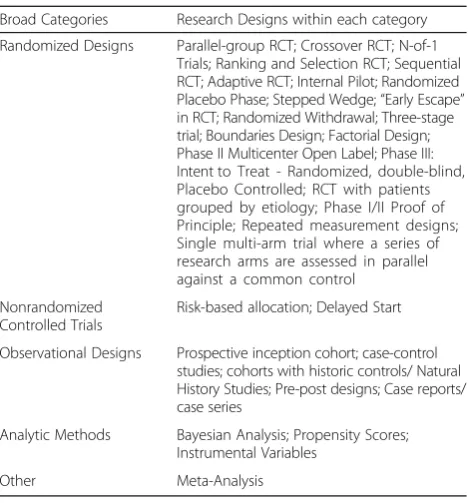
Table 6Categories Used to Review Articles Identified Through Search on Rare Disease Methods
Broad Categories Research Designs within each category
Randomized Designs Parallel-group RCT; Crossover RCT; N-of-1 Trials; Ranking and Selection RCT; Sequential RCT; Adaptive RCT; Internal Pilot; Randomized Placebo Phase; Stepped Wedge;“Early Escape” in RCT; Randomized Withdrawal; Three-stage trial; Boundaries Design; Factorial Design; Phase II Multicenter Open Label; Phase III: Intent to Treat - Randomized, double-blind, Placebo Controlled; RCT with patients grouped by etiology; Phase I/II Proof of Principle; Repeated measurement designs; Single multi-arm trial where a series of research arms are assessed in parallel against a common control
Nonrandomized Controlled Trials
Risk-based allocation; Delayed Start
Observational Designs Prospective inception cohort; case-control studies; cohorts with historic controls/ Natural History Studies; Pre-post designs; Case reports/ case series
Analytic Methods Bayesian Analysis; Propensity Scores; Instrumental Variables
Other Meta-Analysis
Table 5Search Strategy for Identifying Peer Reviewed Literature on Rare Disease Methods and Infrastructure
Search String Number
of Articles Date Performed
“Rare Diseases”[Mesh] AND (“clinical trials as topic”[Mesh] OR“research
design”[Mesh]) AND ((“2003/01/01”[PDAT]:
“3000/12/31”[PDAT]) AND“humans”[MeSH Terms] AND English[lang])
191 1/2016
(“method”[ti] OR“methods”[ti] OR
“methodology”[ti] OR“methodologies”[ti] OR“design”[ti] OR“designs”[ti]) AND (“rare diseases”[tw] OR“rare disease”[tw] OR“rare disorders”[tw] OR“rare disorder”[tw] OR
“rare conditions”[tw] OR“rare
condition”[tw] OR“orphan disease”[tw] OR
“orphan diseases”[tw]) AND ((“2003/01/ 01”[PDAT]:“3000/12/31”[PDAT]) AND English[lang])
Competing interests
The authors declare that they have no competing interests
Publisher’s Note
Springer Nature remains neutral with regard to jurisdictional claims in published maps and institutional affiliations.
Author details
1National Academy of Medicine, 500 5th Street NW, Washington, DC 20001, USA.2Patient-Centered Outcomes Research Institute (PCORI), 1919 M Street NW, Washington, DC 20036, USA.3Blue Cross Blue Shield Association, 300 E Randolph Street, Chicago, IL 60601, USA.
Received: 13 September 2017 Accepted: 29 December 2017
References
1. Rare Disease Act of 2002, Pub. L. No. 107–280, 116 Stat. 1988 (2002). 2. U.S. Department of Health & Human Services National Center for Advancing
Translational Sciences. Genetic and Rare Diseases Information Center FAQs About Rare Diseases. 2010. Retrieved from: https://rarediseases.info.nih.gov/ diseases/pages/31/faqs-about-rare-diseases.
3. Selby JV, Beal AC, Frank L. The Patient-Centered Outcomes Research Institute (PCORI) National Priorities for research and initial research agenda. JAMA. 2012;307(15):1583–4.
4. The National Patient-Centered Clinical Research Network. About PCORNet. 2017. Retrieved from: http://www.pcornet.org/about-pcornet/.
5. Patient-Centered Outcomes Research Institute. Advisory panel on rare disease. 2017. Retrieved from: https://www.pcori.org/engagement/engage-us/join-advisory-panel/advisory-panel-rare-disease.
6. Lynn, K. Difference between a systematic review and a literature review. (2013). Retrieved from: https://libguides.sjsu.edu/c.php?g=230370&p= 1528399
7. Academy Health. Evaluating complex health interventions: challenges, goals, and proposals for progress. June 2016. Retrieved from: http://www. academyhealth.org/files/phsr/AH_Report_Evaluating_Complex_HSI_ June2016_FINAL.pdf
8. Gagne JJ, Thompson L, O’Keefe K, Kesselheim AS. Innovative research methods for studying treatment for rare diseases: methodological review. BMJ. 2014;349:g6802.
9. Gupta S, Faughnan ME, Tomlinson GA, Bayoumi AMA. Framework for applying unfamiliar trial designs in studies of rare diseases. J Clin Epidemiol. 2011;64(10):1085–94.
10. Cornu C, Kassai B, Fisch R, et al. Experimental designs for small randomised clinical trials: an algorithm for choice. Orphet JRare Dis. 2012;8:48. 11. Detry MA. Analyzing repeated measurements using mixed models. JAMA.
2016;315(4)
12. Bogaerts J, Sydes MR, Keat N, McConnell A, Benson A, Ho A, Seymour M. Clinical trial designs for rare diseases: studies developed and discussed by the international rare cancers initiative. Eur J Cancer. 2015;51(3):271–81. 13. Chow SC, Chang M. Adaptive design methods in clinical trials - a review.
Orphanet J Rare Dis. 2008;3:11.
14. Facey K, Granados A, Guyatt G, Kent A, Shah N, van der Wilt GJ, Wong-Rieger D. Generating health technology assessment evidence for rare diseases. Int J Technol Assess Health Care. 2014;30(4):416–22. 15. Gerss JW, Kopcke W. Clinical trials and rare diseases. Adv Exp Med Biol.
2010;686:173–90.
16. Johnson SR, Feldman BM, Pope JE, Tomlinson GA. Shifting our thinking about uncommon disease trials: the case of methotrexate in scleroderma. J Rheumatol. 2009;36(2):323–9.
17. Kesselheim AS, Gagne JJ. Strategies for postmarketing surveillance of drugs for rare diseases. Clin Pharmacol Ther. 2014;95(3):265–8.
18. Prasad V, Oseran A. Do we need randomised trials for rare cancers? Eur J Cancer. 2015;51(11):1355–7.
19. Tudur Smith C, Williamson PR, Beresford MW. Methodology of clinical trials for rare diseases. Best Pract Res Clin Rheumatol. 2014;28(2):247–62. 20. van der Lee JH, Wesseling J, Tanck MW, Offringa M. Efficient ways exist to
obtain the optimal sample size in clinical trials in rare diseases. J Clin Epidemiol. 2008;61(4):324–30.
21. Kinder B, McCormack FX. Clinical trials for rare lung diseases: lessons from Lymphangioleiomyomatosis. Lymphat Res Biol. 2010;8(1):71–9.
22. Lagakos SW. Clinical trials and rare diseases. N Engl J Med. 2003;348(24): 2455–6.
23. Gerß, J. W. O., & Köpcke, W. (2010). Clinical Trials and Rare Diseases. In M. Posada de la Paz & C. S. Groft (Eds.), Rare Diseases Epidemiology. Dordrecht: Springer Netherlands. 2010. (pp. 173–190).
24. Adams, M., Berkman, N., Bishop, E., Lohr, K., Pan, H., Ringer, D., Viswanathan, M., & Whithead, N. Landscape review on rare disease research registries: final report. 2015. Retrieved from: http://www.pcori.org/sites/default/files/ PCORI-Report-Landscape-Review-On-Rare-Disease-May-2015.pdf 25. Abrahamyan L, Diamond IR, Johnson SR, Feldman BM. A new toolkit for
conducting clinical trials in rare disorders. J Popul Ther Clin Pharmacol. 2014;21(1):e66–78.
26. de Blieck EA, Augustine EF, Marshall FJ, et al. Methodology of clinical research in rare diseases: development of a research program in juvenile neuronal ceroid lipofuscinosis (JNCL) via creation of a patient registry and collaboration with patient advocates. Contemporary Clinical Trials. 2013; 35(2):48–54.
27. Richesson RL, Cuthbertson HSL, Lloyd J, Young K, Krischer JP. An automated communication system in a contact registry for persons with rare diseases: scalable tools for identifying and recruiting clinical research participants. Contemporary Clinical Trials. 2009;30(1):55–62.
28. Richesson R, Sutphen R, Shereff D, Kischer J. The rare diseases clinical research network contact registry update: features and functionality. Contemporary Clinical Trials. 2012;33(4):647–56.
29. Hilbert JE, Kissel JT, Luebbe EA, et al. If you build a rare disease registry, will they enroll and will they enroll? Methods and data from the National Registry of Myotonic dystrophy (DM) and Facioscapulohumeral muscular dystrophy (FSHD). Contemporary Clinical Trials. 2012;33(2):302–11. 30. Bellgard MI, Macgregor A, Janon F, et al. A modular approach to disease
registry design: successful adoption of an internet-based rare disease registry. Human Mutation, Brief. 2012;33:E2356–66.
31. Krischer JP, Gopal-Srivastava R, Groft SC, et al. The rare diseases clinical research Network’s organization and approach to observational research and health outcomes research. J Gen Intern Med. 2014;29(Suppl 3):S739–44. 32. Institute of Medicine. Rare diseases and orphan products: accelerating
Research and Development. 2010. Washington, DC: the: National Academies Press; 2010.
33. Thompson R, Johnston L, Taruscio D, et al. RD-Connect: an integrated platform connecting databases, registries, biobanks and clinical
bioinformatics for rare disease research. J Gen Intern Med. 2014;29(Suppl 3): 780–7. https://doi.org/10.1007/s11606-014-2908-8.
34. Chalmers I, Glasziou P. Avoidable waste in the production and reporting of research evidence. Lancet. 2009;374(9683):86–9.
35. Chalmers I, Bracken MB, Djulbegovic B, Garattini S, Grant J, Gülmezoglu AM, Oliver S. How to increase value and reduce waste when research priorities are set. Lancet. 2014;383(9912):156–65.
36. Ioannidis JPA, Greenland S, Hlatky MA, Khoury MJ, Macleod MR, Moher D, et al. Increasing value and reducing waste in research design, conduct, and analysis. Lancet. 2014;383(9912):166–75.
37. Patient-Centered Outcomes Research Institute. Methodology Committee. 2017. Retrieved from: https://www.pcori.org/about-us/governance/ methodology-committee.
• We accept pre-submission inquiries
• Our selector tool helps you to find the most relevant journal
• We provide round the clock customer support
• Convenient online submission
• Thorough peer review
• Inclusion in PubMed and all major indexing services
• Maximum visibility for your research
Submit your manuscript at www.biomedcentral.com/submit
![Table 1 Features of Rare Diseases, Interventions, or Outcomes Measures that Could Impact Study Design Decisions [8–10]](https://thumb-us.123doks.com/thumbv2/123dok_us/784140.1575453/3.595.52.536.369.717/features-diseases-interventions-outcomes-measures-impact-design-decisions.webp)