Original Research Article
Study on disability limitation, rehabilitation and social needs of persons
affected by leprosy in Kurnool division of Kurnool district
Visweswara Rao Guthi
1*, A. Sreedevi
2INTRODUCTION
Leprosy (Hansen’s disease) is a chronic infectious disease caused by Mycobacterium leprae. It affects mainly the peripheral nerves. It also affects the skin, muscles, eyes, bones, testes and internal organs. The signs of advanced disease are striking: presence of nodules or lumps especially in the skin of the face and ears, plantar ulcers, loss of fingers or toes, nasal depression, foot drop, claw toes and other deformities.1 Since 1985 to date, the prevalence of leprosy has been
reduced globally by >90%. Worldwide prevalence in 2014 is 0.32/10000 Population. The global leprosy cases reduced from >10 million in 1985 to <1 million by the year 2000 and to <0.2 million in 2013.2 Grade 2 disability rate in the WHO region is 0.23/100000 in 2013. As on March 2014, the Regional leprosy prevalence rate (PR) was 0.63 per 10,000 population, with 125,167 registered cases under treatment. The PR has steadily declined from 4.6/10,000 population in 1996 to 0.63/10,000 in March 2014.2
ABSTRACT
Background: Leprosy is a chronic infectious disease caused by Mycobacterium leprae. It affects mainly peripheral nerves. There is very little data on the types of problems faced by people with leprosy-related disabilities (PLD) and the resulting needs. So this study made an attempt to study the disability limitation, rehabilitation needs of persons affected by leprosy and to assess their dehabilitation status.
Methods: This is a community based cross–sectional study conducted in Kurnool district. There were 296 registered persons affected by leprosy between May 2012 to October 2013 out of which 276 registered persons affected by leprosy were available for the study. Information collected was to assess the disability limitation, rehabilitation needs, social needs and to assess their dehabilitation status of the registered cases.
Results: This study shown that out of 276 patients affected by leprosy, 65/276 (23.56%) of the study subjects had disabilities. Out of which 9.06% had only Grade 1 and 14.50% had Grade 2 disability. 65 (100%) of the subjects having deformity needed skin care, 14 (21.53%) needed wound care, 31 (47.69%) needed joint care, 7 (10.76%) needed swelling care, 10 (15.38%) needed nerve care and 2 (3.07%) needed eye care.
Conclusions: Knowledge and practice among those needing self-care practices were grossly deficient. The general health staff had not informed in most circumstances to persons affected by leprosy about self-care practices in leprosy. High level of dehabilitation in the study population was present only in patients having visible deformity.
Keywords: Leprosy, Disabilty limitation, Rehabilitation, Dehabilitation, Social needs, Self care
Assistant Professor, Department of Community Medicine, 1SVIMS-Sri Padmavathi Medical College for Women, Tirupati, 2Kurnool Medical College, Kurnool, Andhra Pradesh, India
Received: 16 May 2018
Revised: 26 June 2018
Accepted: 27 June 2018
*Correspondence:
Dr. Visweswara Rao Guthi, E-mail: [email protected]
Copyright: © the author(s), publisher and licensee Medip Academy. This is an open-access article distributed under the terms of the Creative Commons Attribution Non-Commercial License, which permits unrestricted non-commercial use, distribution, and reproduction in any medium, provided the original work is properly cited.
A total of 1.27 lakh new cases were detected during the year 2013-14, which gives Annual New Case Detection Rate (ANCDR) of 9.98 per 100,000 Population. This shows decrease in ANCDR by 7.4% from 2012-13 (10.78). A total of 0.86 lakh cases are on record as on 1st April 2014, giving a Prevalence rate (PR) of 0.68 per 10,000 Population. This shows decrease in PR by 12.8% from 2012-13 (0.78).3 During the year 2013-14, a total of 7108 cases were detected with ANCDR of 8.13/100,000 and a prevalence rate of 0.55/10,000.
Deformities in leprosy have a profound effect on a person individually, his/her family and the community. There are two types of impairments in leprosy. Primary: occur as a result of direct nerve damage (neuritis, reactions): e.g. loss of sensation, Lagophthalmos. Secondary: occur as a result of neglected primary disabilities e.g. plantar ulcer, resorption of toes, fingers.4
Leprosy exerts a strong influence on the behaviour of leprosy sufferers and they must receive support as soon as possible. It is not simply a physiological dysfunction, it is a complex psycho-social phenomenon with profound consequences for the affected person, his/ her family and the community.
Dehabilitation: refers to the reduction in the social function of the individual which is reflected in the overall quality of life, attitudes and actions.5
There is very little data on the types of problems faced by people with leprosy-related disabilities (PLD) and the resulting needs.6 Though much progress has been made in reducing the number of leprosy patients registered for MDT globally, relatively little is known about disability after release from treatment. Therefore there is an urgent need for data on leprosy-related disability to assess the need for prevention of disabilities (POD) and rehabilitation services. Such data is also needed for programme monitoring, evaluation and for advocacy.7 Thus to address the problem of leprosy and disability in the population and to study, minimize the socioeconomic impact of the disease, we require primarily to assess their disability status and needs. There are many studies available which have shown insights into the needs of leprosy affected individuals living in leprosarium’s and leprosy colonies but not many studies have attempted to assess the needs of leprosy affected individuals (under treatment or release from treatment) living in the community. So this study made an attempt to study the disability limitation, rehabilitation needs of persons affected by leprosy and to assess their dehabilitation status respectively.
METHODS
This is a community based cross–sectional study conducted in administrative limits of Kurnool division of Kurnool district from November 2013 – May 2014. Kurnool district is divided into Kurnool, Adoni and
Nandyal revenue divisions. Among these Kurnool division was selected by simple random sampling. Study population includes all persons affected by leprosy who were registered between 1st May 2012 to 31st October 2013 and utilized/utilizing the services from the leprosy treatment units. (As per the data available at the District Leprosy Office, Kurnool). There were 296 registered persons affected by leprosy between May 2012 to October 2013 out of which 276 registered persons affected by leprosy were available for the study (20 cases were not available due to migration for work, not able to contact, left area permanently). The study was taken up after the approval of the Ethical committee of the Kurnool medical college, Kurnool.
During the study, purpose of the study was explained to all study subjects in his/her own language and informed verbal consent was taken. A pilot study was conducted in Kallur PHC area with the objective of standardizing the questionnaire and to know the feasibility of study. Permission was obtained from the District Leprosy Officer, Kurnool District to carry out the study. The District Leprosy Office maintains a register of all leprosy patients in the district. For the study purpose, information and address of all registered patients between 1st May 2012 to 31st October 2013 was obtained from the register. Each of the available registered case was contacted in person by the investigator and interviewed using a pretested, semi structured questionnaire. In case of patients living in hilly and remote areas and those missed during visit to their houses, the medical officers of the respective PHCs were contacted and requested to pool the cases in their administrative limits and intimate the same to the investigator for the study purpose.
Information was collected from these patients by interview method and examination using a pre tested, semi structured questionnaire. Information collected was to assess the disability limitation, rehabilitation needs, social needs and to assess their dehabilitation status of the registered cases by obtaining information about the following parameters: Disability status, Grading of disability, self care practices, Extent of dehabilitation. To assess the extent of disability for disability Limitation and rehabilitation needs, WHO Guidelines for Assessment and Grading for Disability in Leprosy 8 was used. The WHO Grading is of three Grades: 0, 1 and 2. Grade 0 means no deformity. Grade 1 means loss of sensation but no visible deformity. Grade 2 means presence of visible deformity.
To assess the extent of dehabilitation for psychosocial need assessment “Dehabilitation Scale” developed by H. Anandaraj in study “Measurement of dehabilitation in patients of leprosy-A scale” was used.5 It is a 52 structured item scale covering four areas related to stigma, 1. Family relationships, 2. Vocational condition, 3. Social relationships, 4. Self esteem. Each item consists of positive or negative statements with 5 point Likert type response scales (strongly agree to strongly disagree). The results are summed and divided by maximum possible scores and multiplied by 100 to get the “Score quotient”. Patients got score quotient below 75, 76-86 and 87-100 graded as high, medium and low level of dehabilitation.
RESULTS
It was observed from the study that most of the study population were in the age group of 15-59 years. Among study population males (63.4%) were more compared to females (36.96%). Majority of study subjects were illiterates and doing unskilled work (daily wage labourers). More than half of study subjects were Hindus by religion.
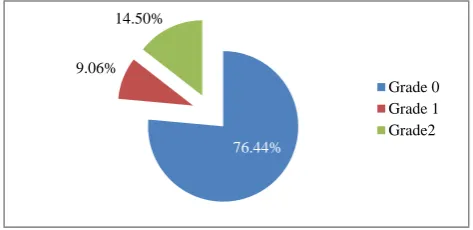
Figure 1: Distribution of study population according to WHO grading of disability.
This study shown that out of 276 patients affected by leprosy, 65/276 (23.56%) of the study subjects had disabilities. Out of which 9.06% had only Grade 1 and 14.50% had Grade 2 disability. (Figure 1)Among 25 patients with grade 1 deformity 10.14% of study subjects had sensory impairment in hands, 5.79% had sensory impairment in feet and 2.90% had sensory impairment in both hands and feet.
It was observed from the Table 1 that among 40 persons affected by leprosy having Grade 2 deformity, 28 (70%) had claw hand, 8 (20%) had plantar ulcers, 6 (15%) had scars/cracks in hands and ulcers in hands each, 3 (7.5%) had scars /cracks in feet and foot drop each, and 2 (5%) had Lagophthalmos.
Among the 65 persons affected by leprosy having deformity (both Grade 1 and 2), it was observed from the table-2 that 65 (100%) of the subjects having deformity needed skin care, 14 (21.53%) needed wound care, 31 (47.69%) needed joint care, 7 (10.76%) needed swelling
care, 10 (15.38%) needed nerve care and 2 (3.07%) needed eye care.
Table 1: Pattern of visible deformities among study population with Grade 2 disability.
Visible deformity type* Number# Percentage
(%)
Scars/cracks in hand 6 15
Ulcers in hand 6 15
Claw hand 28 70
Scars/cracks in feet 3 7.5
Plantar ulcers 8 20
Lagophthalmos 2 5
Foot drop 3 7.5
*Above table includes individuals with multiple deformities. #N=40 (Total number of persons affected by leprosy with Grade 2 deformity)
Table 2: Distribution of study population with deformities (both Grade 1 and Grade 2) according to
type of care needed.
Type of care needed* Number # Percentage
(%)
Skin care 65 100
Wound care 14 21.53
Joint care 31 47.69
Swelling care 7 10.76
Eye care 2 3.07
Nerve care 10 15.38
*above table includes individuals with multiple care requirements, #N=65 (Total number of persons affected by leprosy with deformities)
It was observed from the Table 3 that 39/65 (60%) requiring skin care reported that they had been taught about SSOD by health staff. 34/65 (52.30%) had the requisite equipment for SSOD. Only 21/65 (32.30%) needing skin care were practising SSOD (Soaking, Scraping, Oiling and Dressing). Only 45/65 (69.23%) reported that they had been advised to use protective devices by health staff and 29/65 (44.61%) reported that they were using protective devices. Only 20/65 (30.76%) had been provided with protective devices. It was observed that 12/14 (85.71%) were informed about wound care and 6/14 (42.85%) are practising wound care and 10/14 (71.43%) had requisite tools. 20/31 (64.51%) were advised regarding joint care and 9/31 (29.03%) practising it.
It was observed from the Table 4 that only 15/254 (5.90%) suffered from high level of dehabilitation i.e. having scores less than 75 in the dehabilitation scale and 43/254 (16.93%) suffered from medium level of dehabilitation. 39.47% and 34.21% of the study subjects having Grade 2 disability suffered high and medium level of dehabilitation respectively. 44% of the study subjects with Grade 1 disability, 9.95% of Grade 0 study subjects
76.44%
9.06% 14.50%
suffered medium level of dehabilitation. This shows high level of dehabilitation was present only in patients with
visible deformity.
Table 3: Distribution of study population according to training received, practice and requisite tools for self-care.
S.
no Activity
Trained/advised by health personnel
Practice the same
Have the necessary items/tools required
Yes No Yes No Yes No 1 Soaking, scrubbing and smearing oil and
dressing (SSOD) 39 26 21 44 34 31
2 Use of protective devices 45 20 29 36 20 45
3 Clean and dress the wound/ulcer/crack 12 2 6 8 10 4
4 Rest the part 12 2 10 4 - -
5 Oil massage 20 11 9 22 - -
6 Exercise(Physiotherapy) 20 11 9 22 - -
Table 4: Distribution of study population of ≥ 15 years age according to WHO grading of disability and level of dehabilitation.
Level of dehabilitation High
No (%)
Medium No (%)
Low No (%)
Total No (%)
Grade 0 0 (0) 19 (9.95) 172 (90.05) 191 (100)
Grade 1 0 (0) 11 (44) 14 (56) 25 (100)
Grade 2 15 (39.47) 13 (34.21) 10 (26.32) 38 (100)
Total 15 (5.90) 43 (16.93) 196 (77.17) 254 (100)
Kruskal-Wallis test statistic (H) =54.1917, df-2, p<0.000001.
Psychosocial impact of disease in study population Some highlights of psychosocial impact on the study subjects observed in the process of grading the level of dehabilitation are presented below:
Family relationship: 14 persons affected by leprosy felt there has been a change in family relationship, 2 persons affected by leprosy was thrown out of their house, 10 persons affected by leprosy felt that their families considered them as burden, 20 persons affected by leprosy stopped attending family functions, 7 persons affected by leprosy felt that their children’s future will be affected because of the disease, 21 persons affected by Leprosy said that their family members did not touch them.
Vocational condition: 10 persons affected by leprosy said that they did not have occupation because of leprosy
Social interaction: 7 persons affected by leprosy said that their friends stopped inviting them to their homes, 13 persons affected by leprosy felt that they have no one to share their feelings. 20 persons affected by leprosy felt that they are no more useful members to the society, 5 persons affected by leprosy felt that the society has discarded them, 3 persons affected by leprosy felt that people are afraid of touching them, 3 persons affected by leprosy said that they were not able to get married because of the disease.
Self-esteem: 53 persons affected by leprosy said that they worry about their problem (disease) most of the time, 6 persons affected by leprosy have also felt like ending their life, 4 persons affected by leprosy felt that they cannot do anything useful.
DISCUSSION
This study shows that out of 276 persons affected by leprosy, 65 (23.56%) of the study subjects had disabilities. Out of which 25 (9.06%) had Grade 1 and 40 (14.50%) had Grade 2 disability. Similar results observed in a study done by Sukumar et al in Chamrajnagar,
reported that out of 259 persons affected by leprosy 79.9% had no disability, 8.5% had grade 1 and 11.6% had grade 2 disability.10 Similar results observed in a study done by Kumar et al reported that 83.7% had no deformity, 7.79% had Grade 1 deformity and 8.44% had Grade 2 deformity.11 In a study conducted by Chatterji et alin 2012 it was observed that 60% of LAPs belongs to Grade 0 followed by 25% belongs to Grade 1 and 15% belongs to Grade 2.12 In a study by Sarkar et al in west Bengal in 2012 in India it was observed that 79.9% belongs to Grade 0 followed by 11.5% belongs to Grade 1 and 8.6% belongs to Grade 2.13
in eyes was 2.9%.13 In a study conducted by Van Brakal et alreported that sensory impairment in feet was 47% and hands was 31%.14
In this study among 40 persons affected by leprosy having Grade 2 disability, 28 (70%) had claw hand and 6 (15%) had ulcers in hands and 8 (20%) had ulcers in feet, 6 (15%) had scars / cracks in hands, 3 (7.5%) had scars/ cracks in feet. Lagophthalmos and foot drop were present in 2 (5%) and 3 (7.5%) persons respectively. Study done byGautham et al in Chamrajnagar, reported that among 30 LAPs with grade 2 disability, ulcers in hands present in 17 (56.7%), claw hand 18 (60%), scars/cracks in hand 17 (56.7%), scars/cracks in feet 13 (43.33%), plantar ulcers 6 (20%) and wrist drop 1 (3.3%).15 In a study conducted by Sarkar et al in west Bengal, India, it was observed that cracks and wounds were greater in feet than in hands (i. e 7.1% v/s 2.9%). 1.2% had lagophthalmos.13 Among the 65 persons affected by leprosy having deformity (both Grade 1 and 2), 65 (100%) of the subjects having deformity needed skin care, 14 (21.53%) needed wound care, 31 (47.69%) needed joint care, 7 (10.76%) needed swelling care, 10 (15.38%) needed nerve care and 2 (3.07%) needed eye care. Similar results observed in a study done by Sukumar et al in Chamrajnagar, reported that 52 (100%) needed skin care, 23 (44.23%) needed wound care, 19 (36.53%) needed joint care, 4 (7.6%) needed swelling care, 1 (0.19%) needed eye care and 9 (17.3%) needed nerve care. 10 In a study conducted by Shrivastava to assess the needs of disabled persons affected by leprosy in Gwalior it was concluded that MCR shoes (skin care) was needed for 194 cases and 50 cases required corrective surgeries. 16 Among 65 deformed individuals all needed skin care, 14 (21.53%) needed wound care, 31 (47.69%) needed joint care and 10 (15.38%) needed nerve care. 39/65 (60%) requiring skin care reported that they had been taught about SSOD (Soaking, Scraping, Oiling and Dressing) by health staff. 34/65 (52.30%) had the required equipments for SSOD. Only 21/65 (32.30%) needing skin care was practising SSOD (Soaking, Scraping, Oiling and Dressing). 12/14 (85.71%) were informed about wound care and 6/14 (42.85%) were practising the same. 20/31 (64.51%) were advised regarding joint care and 9/31 (29.03%) were practising it. Similar results observed in a study done by Sukumar et alin Chamrajnagar, reported that 13/52 (25%) requiring skin care reported that they had been taught about SSOD by health staff. 10/52 (19%) had the require equipments for SSOD. Only 8/52 (15%) needing skin care were practicing SSOD. Only 28/52 (53.8%) reported that they had been advised to use protective devices by health staff and 16/52 (30.7%) reported that they are using protective devices. Only 14/52 had been provided with protective devices. It was observed that 6/23 (26%) were informed about wound care and 2/23(8%) were practicing wound care. 5/19 were advised regarding joint care and 3/19 practiced it.10 In a study conducted by Shrivastava in Gwalior it was seen
that among the persons affected by leprosy needing knowledge of self care was satisfactory in 46% of cases.16 In a study done by Lustosa et alshowed that 27.1% of the persons affected by leprosy reported that they had suffered discrimination.17
CONCLUSION
From the above findings it can be concluded that knowledge and practice among those needing self care practices were grossly deficient. The general health staff had not informed in most circumstances to persons affected by leprosy about self care practices in leprosy. These are very essential and important needs of the patients that have to be addressed. It is recommended to organize prevention of deformity (POD) training camps for the capacity building and motivation of the health staff. To conduct prevention of deformity (POD) sessions for all leprosy cases having Grade 1 and 2 disabilities with monthly monitoring of patients. To follow up of patients during routine field visits and record the extent of deformity.
Procurement, distribution of tools and training to use the tools for self-care of patients having deformity, with the support of disability prevention and medical rehabilitation (DPMR) under NLEP. Provide MCR footwear, buckets, oil / dress material to all patients needing the same and asses them periodically whether they are practising them are not. Stigma reduction activities and socioeconomic rehabilitation are urgently needed, in addition to strategies to reduce the development of further disabilities after release from treatment.
Counselling of patients by trained counsellor especially for those with deformities. High level of dehabilitation in the study population was present only in patients having visible deformity. Stigma has become associated with visible deformities which are preventable in most instances. Networking with NGOs for training, surveillance and management of deformities in leprosy.
Funding: No funding sources Conflict of interest: None declared
Ethical approval: The study was approved by the
Institutional Ethics Committee of Kurnool Medical
College, Kurnool
REFERENCES
1. K Park. Park’s Text book of preventive and social medicine. 22nd edition. Jabalpur India: Banarsidas Bhanot Publishers; 2013:287.
2. World Health Organization. Weekly Epidemiological Record, No. 36. 2014;89:389-400. 3. Central Leprosy Division, Directorate General of
4. Central Leprosy Division, DGHS, New Delhi. National Leprosy Eradication Programme (NLEP) Training Manual for Medical Officer, 2013:22-24. Accessed on 10 October 2013.
5. Anandaraj H. Measurement of Dehabilitation in patients for Leprosy- A scale” Indian J Leprosy. 1995;67-2:153-60.
6. Wilder-Smith EP, Van Brakel WH. Nerve damage in leprosy and its management. Nat Clin Pract Neurol. 2008;4:656-63.
7. Van Brakel WH, Officer A. Approaches and tools for measuring disability in low and middle income countries. Lepr Rev. 2008;79:50-64.
8. Central Leprosy Division, Directorate General of Health Services,New Delhi. NLEP Disability Prevention & Medical Rehabilitation, pdf. Accessed on 10 October 2013.
9. Srinivasan H. Guidelines for implementing a disability prevention programme in the field. Indian J Leprosy. 1999;71(4):539-612.
10. Sukumar GM, Shivaraj NS, Dayananda M. Proportion, Pattern and Need Assessment of deformities among registered leprosy affected individuals in Chamrajanagar district. Indian J Community Med. 2010;35(2):347–9.
11. Kumar A, Girdhar A, Girdhar BK. Risk of developing disability in pre and post Multi drug therapy treatment among Multi bacillary Leprosy: Agra MB cohort study. Br Med J. 2012;2:1-7.
12. Chatterjee T. Study of certain social correlates in Leprosy Cases. 2001;26(4):189-91.
13. Sarkar J, Dasgupta A, Dutt D. Disability among new leprosy patients; An institution based study in an endemic district for leprosy in the state of West Bengal, India. Indian J Dermatol Venereol Leprol. 2012;78(3):328-34.
14. Wim H. van Brakel, Sihombing B, Djarir H, Beisek, Kusumawardani L, Yulihane R et al. Disability in people affected by leprosy: the role of impairment, activity, social participation, stigma and discrimination. Glob Health Action. 2012;5:183-94. 15. Gautham MS, Dayananda M, Gopinath D, Somanna
Shivraj N, Riyaz B, Pruthvish S. Community-based needs assessment of Leprosy patients in Chamrajanagar District, Karnataka, India. Lepr Rev. 2011;82:286-95.
16. Shrivastava AP. Disability Prevention: progress in urban Gwalior. Indian J Leprosy. 2002;74(1):79-80. 17. Anselmo Alves Lustosa et al. The impact of leprosy on health-related quality of life, Revista da Sociedade Brasileira de Medicina Tropical, 2011;44(5):621-6.