Page 271
TEAMWORK AS EXPERIENCE BASED LEARNING AT UNIVERSITY OF BANJA LUKA: A LONG AND WINDING ROAD
Danijela Kardaš1, Goran Janjić1, Petar Gvero1, Vojislav Novaković2, Martha Marie Kalvig Anderson2, Tamara Pribišev Beleslin3
1University of Banja Luka, Faculty of Mechanical Engineering, Stepe Stepanovića 71, 78000 Banja Luka, Bosnia and Herzegovina
2Norwegian University of Science and Technology, Høgskoleringen 1, 7491 Trondheim, Norway 3University of Banja Luka, Faculty of Philosophy, Petra Bojovića 1A, 78000 Banja Luka, Bosnia and Herzegovina
Abstract
According to the "NMC Horizon Report", higher education continues to move away from traditional lecture-based programs to more hands-on scenarios, where University classrooms will start to resemble real-world work and social environments that facilitate organic interactions and cross-disciplinary problem-solving. Modern labor market and modern society need people who are capable to work together solving multidisciplinary problems with or without technology. Teamwork has become a central issue for many corporations, and self- managing teams are often viewed as the goal of teamwork development programs. This paper analyses introduction of a course "Team Project" at University in Banja Luka, Faculty of Mechanical Engineering. The introduction of this course came as a transfer of the knowledge, experience and technology from NTNU (Norwegian University of Science and Technology) to the Faculty of Mechanical Engineering within the project HERD QIMSEE (HERD Quality Improvement of Master Programs in Sustainable Energy and Environment).
Key words: teamwork, experts, skills, interdisciplinary, education
1. INTRODUCTION
Page 272 1.1. Definition of team work
A team refers to two or more people assigned to particular roles in order to complete a common goal (Salas et al, 1992). It can be “defined as any formal and permanent whole of at least two interdependent individuals who are collectively in charge of the achievement of one or several tasks defined by the organization” (Rousseau & Aube & Savoie, 2006, p. 540-1). Team members should have complementary competences, share common and interdependent goals, mission, tasks, and norms (Mikan & Rodger, 2000), as well as the cognitive/mental models (Lim & Klein, 2006). Besides, almost all models of teams share an "input-process-outcome framework", where the input is connected with members, team as a whole, and organizational factors, process is a flow of input factors into the output, and outputs are the results and the products of the team (Mathieu et al, 2000, p. 273). Many organizations have successfully applied team approaches to solve ill-structured or complex problems, to complete tasks that are too difficult to be managed individually, and to benefit from the collective experience, skills, and knowledge of team members (Yalın, 2016). The traditional approach of teaching engineering subjects is efficient in presenting a large amount of information to large numbers of students. However, the downside of this approach is that it fosters passive learning where students expect to be told what to learn and how to learn it (Felder, 2012), without developing the skills and enthusiasm for the course. Therefore, there are increase demands toward universities to introduce and set the team-based, problem-based, experiences-based, and collaborative learning as the more natural and effective learning strategies for their students (Kember & McNaught, 2007), (Svinicki & Schallert, 2016). They basically lay on an idea of placing the student at the center of the university program (student-centered programs) where the needs and future competencies of experts shape objectives and outcomes of the process and development of a university curriculum. Accordingly, problem-oriented learning in authentic work-like environments, learning that occurs in a social context as a kind of a group collaborative process that does not exclude individual development, contribute to students’ deep approach to learning (Kember & McNaught, 2007), and on the process of construction of their systems of knowledge, skills, values, and a general professional competence. Development of strong teamwork capabilities are highly required by employers in engineering sectors since engineering graduates are increasingly expected to work in team-based product and process design projects (Natishan & Schmidt & Mead, 2000). Thus, team-based learning, if used effectively, helps improve communication, discussion, problem-solving, decision-making, and creativity skills, as well as increasing the ability to work with others, an essential part of being in a social community (Yalın, 2016).
1.2. Life-cycle phases of a team
Teams in the process of their development pass through the following phases (there are the following phases of a life-cycle of a team) (Tuckman & Jenson, 1977):
Forming. The phase of getting to know the team members, testing and orientation in the course of which the team is being formed. According to the majority of authors it lasts from 5% to 60% of a team's existence.
Storming. When the team starts working different opinions occur and that results in conflicts. In order for the team to move into the next phase it is necessary for communication channels to be opened and to solve the existing conflicts. The duration of this phase depends on the intensity of existing conflicts and the capacities of the team members to overcome the conflicts.
Norming. The identity of the team is formed in this phase and the team becomes an organized and structured whole.
Performing. The members work as a team in achieving set common goals.
problem-Page 273
solving as a basic team orientation, can be appeared as an important outcome for the university curriculum.
Table 1. Characteristics of life-cycle phases of a team
Form
ing team members introduce themselves with a certain level of cautiousness and distrust; they perceive their own strengths and weaknesses; they try to evaluate attitudes and expectations of
others; they try to define common goals and behaviour rules formal an informal leadership testing
Stor
m
ing conflicts regarding goals, plans, tasks, competencies and responsibilities; communication weakening, distrust growth, disunity, tension increase, jealousy, non-acceptance of the rules set in the previous phase; possible group forming within teams or a walkout of individual members
N
or
m
ing consensus on the goals is reached; work mode is defined; management is accepted; the value of each individual is understood and recognized; cooperation and cohesion is established; friendly atmosphere and compassion regarding team members’ personal problems; trust and readiness to accept common responsibilities increase
Per
fo
rm
ing
all members focus on tasks completion and acceptance of common responsibilities; members connect on a professional level showing strong mutual trust and fellowship; mutual support between members, information and ideas exchange; team roles, interpersonal relations, efficiency of previously defined norms and rules are tested through joint action; high productivity and efficiency – great deal of work regarding set common goals achievement is done
Tuckman in collaboration with Mary Ann Jensen added a fifth stage adjourning in paper “Stages of small group development revisited, 1977” (Tuckman, 1965). This phase appears with temporary teams that break after the task they were formed to complete is done, such as in case of student teams. The team breaking is emotionally colored because team members on the one hand feel satisfaction because of successful task completion but they feel regret as well due to forthcoming joint work and developed relations termination.
1.3. Synergistic effect of a team
Page 274
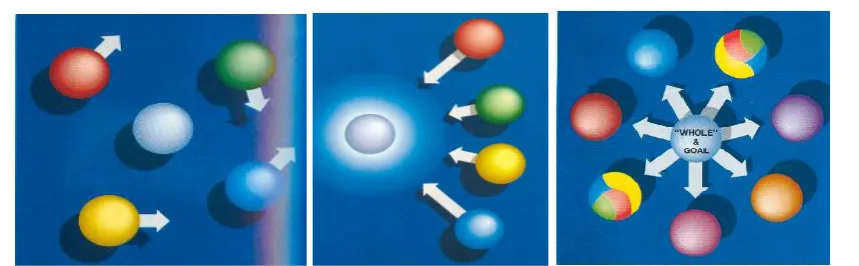
Fig. 1. Holistic approach to team functioning (Savory, 1988)
The team which possesses knowledge in different scientific disciplines cannot make synergistic effect if its members have individual goals and action directions which do not contribute to the goals of the whole (Fig. 1a) or which are via communication focused on the goals of the whole (Fig. 1b). The synergic effect occurs only in teams which have their own goals that they achieve through systemic approach and the ones which develop the team through the process of permanent learning (Fig. 1c).
2. HERD QIMSEE PROJECT AT FACULTY OF MECHANICAL ENGINEERING BANJA LUKA
The Norwegian Ministry of Foreign Affairs is financing a program in Higher Education, Research and Development in the Western Balkans 2010-2016 (HERD). A sub program within HERD focuses on the energy sector. This paper refers to a project within the energy sector called: Quality Improvements of Master Programs in Sustainable Energy and Environment (QIMSEE). The projects members in QIMSEE are eight universities (Trondheim, Belgrade, East Sarajevo, Tuzla, Sarajevo, Banja Luka, Podgorica and Skopje). The main goal of the project is to improve the quality of education at Master's programs. A milestone in this project process was to enhance interconnections between universities, industry and the public. The project has had a set of specific objectives: (i) Develop and establish three new internationally recognized master study programs for the field of “Sustainable Energy and Environment”, at University of Banja Luka, University of Skopje and University of Montenegro, (ii) Increase the quality of the newly established master programs at the other four WB Universities in order to enable international transparency, recognition of qualifications and international mobility of learners and graduates. The tree new network members will also participate in all quality improvement processes, (iii) Establish close cooperation between WB participants for mutual support in achieving better quality of master studies, iv) Contribute to the development of outstanding and innovative master thesis projects that solves problems of industry and public sector in achieving energy and resource efficiency and/or zero emissions, application or research on new materials and new technologies for renewable energy, (v) Increase institutional quality and capacity of the WB Universities in the field of teaching staff improvement, laboratory organization and logistics, networking and supplementing expertise to match closer to the Norwegian partners, (vi) Establish and support interconnection of the WB Universities with industry and public sector in the WB region. To obtain some of the goals in the QIMSEE project listed above, Multifunctional Room (MFR) was established and a new course “Team project” was introduced at Faculty of Mechanical Engineering, University of Banja Luka.
3. “EXPERTS IN TEAMWORK” AT NORWEGIAN UNIVERSITY OF SCIENCE AND TECHNOLOGY
Page 275
competencies (www.ntnu.edu/eit). By virtue of being mandatory for almost all master level students, EiT is NTNU’s largest course with more than 2100 students each year. The development of EiT represents a shift away from conventional lecture-based courses in the direction of more experience-based and student-active learning methods such as project work in self-managing teams, and it came in response to the call for increased quality of the higher education in Norway, issued by the Norwegian Ministry of Education in the 1990’s. In particular, the industry called for engineers who had developed communicative and social skills in addition to their acquired discipline-specific knowledge. In order to be able to meet the ill-structured dilemmas and multifaceted problems of today’s society, the students needed to be trained in teamwork. EiT was established as a course mainly for the engineering students in 2001, however, the University board soon decided that EiT should be mandatory for all master’s students across disciplines at NTNU. It took several years of planning and gradual implementation before almost every master’s program included EiT in the 8th semester by 2007. The desired learning outcomes in EiT are strongly focused around the students’ ability to become aware, reflect upon, and improve their interdisciplinary group work, dynamics, and processes. Throughout the project work, the students develop these teamwork skills by analyzing, on their own and together, the situations that arise as the team works on their interdisciplinary project. The students reflect on how they communicate, plan, make decisions, solve tasks, handle disagreements and relate to academic, social and personal differences, and write down their reflections. Through individual and team reflection activities, as well as the application of relevant concepts and fundamental group theory, the student teams can become aware of their group dynamics and learn how to collaborate in interdisciplinary teams by taking actions to improve their teamwork if necessary. The structure in EiT is that a teacher provides a general theme suitable for an interdisciplinary working approach that up to 30 students can select. These “villages” each have a teacher who is responsible for structuring and guiding the teams’ work process, as well as providing the necessary thematic content that the students need. In addition to the teachers, every village is accompanied by two learning assistants who support the teachers and focus particularly on facilitating the group dynamics and team processes, with the aim of supporting the students’ development of teamwork skills. The learning assistants receive training in observing team behavior and asking open-ended questions, and conducting reflection and feedback exercises. The course is coordinated centrally by EiT’s academic section who organize and administer the villages in cooperation with the faculties.
Page 276
Engineering and Management and Mechatronic will have this course on the fourth year (last year of studies). The course takes 3 ECTS. The aim of EiT is to teach students to work together and navigate effectively in interdisciplinary settings, to identify opportunities, and to transform ideas into practical activities. This course brought one totally different approach to teaching methods and models which enable professors and teaching assistants growth on professional level. Figure 3 represents results of a students’ survey from ongoing combined study program Energy Efficiency in Buildings. The survey was made with the aim to see what students think about this kind of course and to see what could be improved in teaching methods. The first data collection, named ‘Survey 1’ was done in the middle of semester (22 students were involved), and the second one, ‘Survey 2’ was done at the end of the semester (18 students were involved). The survey was voluntary and anonymous.
Fig. 3. Results of survey at UNIBL
Page 277
experience. But, it could be assumed that, after went through this phase, teams faced with characteristics of storming phase, but also, altogether with characteristics of other phases, so, they had to concentrate on the task (project work), to negotiate and adjust to team challenges and requests (team processes), but also, to outputs and results, which is more demand environment for learning and working together. On the other hand, we can see that, experience in team-based learning could affect students’ attitude towards positive evaluation on developing their team work competencies on the university level as a value-added skill, what is shown in graph (Do you think that characteristic “good team player ”is important in the labor market?). Students had slightly positive answers on the question at the end of the course. Nevertheless, students’ attitudes towards the way how to model a future university course on supporting the experts in different professions to become experts in team work, inform us about the necessity to introduce more interdisciplinary approach to team-based learning, what is shown in graph Do you think that the course ‘Project Team’ should be implemented on the University level?.
Thermal Department at Faculty of Mechanical Engineering is the initiator of this course. Idea is to establish this course at University level. This will connect students from different studies areas to work together on the interdisciplinary issues. Due to University organizational model, every decision or change in study programs has to be approved by the University Senate. That means that faculties as University’s organizational units can’t take any decision or change without Senate. Regarding Experts in teamwork, it means long and difficult process. The high education system in Republic of Srpska does not have developed mechanisms to support this kind of approach pushing students into the interdisciplinary and closer contact with the practice. This approach makes UNIBL‘s students less competitive on the labor market, particularly out of the region. According to the concept of EiT, the full effects and real interdisciplinary can be achieved with the full involvement of the other technical faculties as well as other faculties belongs to the University in some other phases.
5. CONCLUSION
Teamwork is creating a working culture that values collaboration. In a teamwork environment, people understand and believe that thinking, planning, decisions and actions are better when done cooperatively. People recognize, and even assimilate, the belief that "none of us is as good as all of us." “Experts in Teamwork” is a unique university course because students get learning, training and practice in cooperation. Introducing this course first time on UNIBL provides knowledge and tools that will enable students to deal with the most challenging problems faced by the modern world of work and make them more competitive on labor market.
REFERENCES
Felder, R. M., 2012. , Engineering education: a tale of two paradigms. In: McCabe, Bryan, Pantazidou, Marina, Phillips, Declan (Eds.), Shaking the Foundations of Geo-Engineering Education, CRC Press, 9–14.
Kember, D., & McNaught, C., 2007, Enhancing university teaching. Lessons from research into award-winning teachers, Routledge, London and New York
Lim, B., & Klein, K. J., 2006, “Team mental models and team performance: A field study of the effects of team mental model similarity and accuracy”, Journal of Organizational Behavior, 27, 403-418.
Mathieu, J. E., Goodwin, G. F., Heffner, T. S., Salas, E., Cannon-Bowers, J. A., 2000, “The influence of shared mental models on team process and performance”, Journal of Applied Psychology, 85(2), 273-283
Page 278
Mikan, S., & Rodger, S., 2000, “Characteristics of effective teams: A literature review”, Australian Health Review, 23(3), 201-208
Michaelsen, L. K., Watson, W. E., Cragin, J. P., Fink, L. D., 1982, “Team-based learning: a potential solution to the problems of large classes”, Exchange, 7, 18–33
Michaelsen, L. K., Knight, A. B., Fink, L. D., 2004, Team-Based Learning: A Transformative Use of Small Groups in Higher Education, Stylus, Sterling, VA
Natishan, M. E., Schmidt, L. C., Mead, P., 2000, Student focus group results on student team performance issues, J. Eng. Educ., 89, 269–272.
Rousseau, V., Aube, C., & Savoie, A., 2006, “Teamwork behaviors: A review and an integration of frameworks”, Small Group Research, 37, 540 –570. doi:10.1177/1046496406293125
Safizadeh, M., 1991, “The case of workgroups in manufacturing operations”, Management Review, 33(4): 61 -82, California
Salas, E., Dickinson, T. L., Converse, S., & Tannenbaum, S. I., 1992, Toward an understanding of team performance and training. In R.W. Swezey, & E. Salas (Eds.), Teams: Their training and performance (pp. 3–29), Norwood, NJ: Ablex
Savory, A., 1988, Holistic Resource Management, Island Press, Washington, 30-34
Svinicki, M. D., & Schallert, D. L., 2016, “Learning through group work in the college classroom: Evaluating the evidence from an instructional goal perspective”, In: Michael B. Paulsen, (Ed.), Higher education: Handbook of theory and research, Springer, 513-558
Tuckman, B., Jenson, M.A., 1977, Stages of small group development revisited, Group and Organizational Studies, 2, 419-427