Marshall University
Marshall Digital Scholar
Theses, Dissertations and Capstones2017
Effectiveness of Essentials for College Math as a
High School Transitional Course
Jennifer S. Riggleman [email protected]
Follow this and additional works at:https://mds.marshall.edu/etd
Part of theEducational Assessment, Evaluation, and Research Commons,Educational Leadership Commons,Higher Education Commons,Science and Mathematics Education Commons, and theSecondary Education Commons
This Dissertation is brought to you for free and open access by Marshall Digital Scholar. It has been accepted for inclusion in Theses, Dissertations and Capstones by an authorized administrator of Marshall Digital Scholar. For more information, please [email protected],
Recommended Citation
Riggleman, Jennifer S., "Effectiveness of Essentials for College Math as a High School Transitional Course" (2017).Theses, Dissertations and Capstones. 1123.
EFFECTIVENESS OF Essentials for College Math AS A HIGH SCHOOL TRANSITIONAL COURSE
A dissertation Submitted to the Graduate College of
Marshall University In partial fulfillment of the requirements for the degree of
Doctor of Education in Educational Leadership By Jennifer S. Riggleman Approved by
Dr. Tom Hisiro, Committee Chairperson Dr. Cynthia Kolsun
Dr. Lisa A. Heaton Dr. Mary Ann DeLuca
Marshall University August 2017
iii
DEDICATION
Proverbs 16:3- “Commit your works to the Lord and your plans will be established.”
To my heavenly Father, I committed this process to you from the beginning. Thank you for being true to Your word and being faithful to see me through to completion.
To my loving and wonderful husband Phil, you told me in the beginning of this program you had my back, and you have done just that. You have loved and encouraged me when I needed it most. I love you with all of my heart!
To my children Catie, Isaac, Caleb, Adam, and Susan, who have put up with my absence at events, many nights typing late, and have supported me all the way through – thank you. You are very special children and I have been bountifully blessed to be called your mom.
To my committee, I cannot thank you enough. Dr. Tom Hisiro, when I first met you at a
conference, I knew you would be a source of support throughout this entire process and you have been just that. Dr. Lisa Heaton, and Dr. Cindy Kolsun, you have been great and solid instructors to give quality feedback, and point me in the right direction so that I could complete my goal. Dr. Mary Ann DeLuca, you have been not only supportive, but a mentor to me for many years now and I am more grateful than I can tell you for your influence in my life on multiple levels.
To the two men in administration at Davis and Elkins who gave me a nudge to start the process toward this goal, thank you.
iv
TABLE OF CONTENTS
Dedication ... iii
List of Tables ... vii
List of Figures ... viii
Abstract ... ix
Chapter 1: Introduction ... 1
Statement of the Problem ... 5
Purpose of the Study ... 5
Research Questions ... 6
Definition of Terms... 7
Significance of the Study ... 8
Method ... 9
Limitations ... 9
Delimitations ... 10
Summary ... 10
Chapter 2: Literature Review ... 11
Rigor ... 12
College Readiness ... 22
v Mississippi ... 27 Kentucky ... 27 Wisconsin ... 28 West Virginia ... 29 Content Organization ... 31
College Readiness Programs... 40
Collegiate Approach ... 44 Workplace Readiness ... 49 College Remediation ... 50 Chapter 3: Method ... 54 Research Questions ... 55 Research Design... 56 Sample... 58 Procedures ... 60 Summary ... 60 Chapter 4: Results ... 61 Purpose Statement ... 61 Research Questions ... 63 Population ... 63
vi Conclusion ... 72 Chapter 5: Discussion ... 73 Problem Statement ... 73 Research Questions ... 74 Limitations ... 74
Discussion and Related Literature ... 75
Research Question 1: Difference in Pre- and Post-Test Scores ... 76
Research Question 2: Does Initial Placement Dictate Level of Improvement ... 78
Research Question 3: Level of Proficiency ... 80
Implications for Action ... 81
Recommendations for Future Research ... 82
Summary ... 84
References ... 86
Appendix A ... 98
vii
LIST OF TABLES
Table 1 Assigns NC EMPT levels with corresponding number of correct answers ... 577
Table 2 Describes assigned levels through NC EMPT. ... 58
Table 3 Statistical table for mean of pre- and post-levels ... 65
Table 4 Assigned groups of change in level from pre- to post-test for recognition by SPSS ... 67
Table 5 Frequency and percentage of change in each assigned group ... 69
Table 6 Frequency and percentage of students at each pre-test level ... 71
viii
LIST OF FIGURES
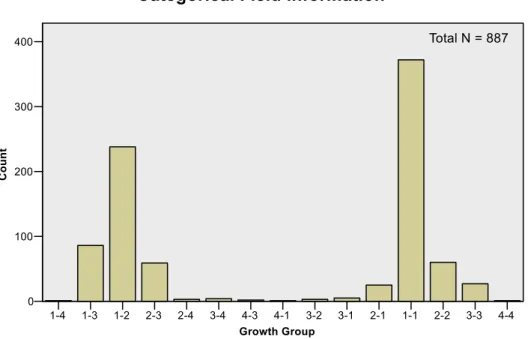
Figure 1 Formula for t-test ... 64 Figure 2 Formula for Chi-Square ... 65 Figure 3 Graphical representation of change in level from pre- to post-test level ... 68
ix ABSTRACT
Statistics on the number of students who leave high school underprepared for
postsecondary education, and have to take remedial coursework upon entrance to college vary, but, unfortunately, for at least the last 10 years, these statistics have remained high. This study examined the effectiveness of one transitional high school math curriculum called Essentials for College Math and its impact on 887 students in the state of North Carolina for the 2014-2015 academic year. The results of the study showed that there was a statistically significant
improvement seen in pre- and post-test scores of students that completed the course. There was also a statistically significant difference that existed on post-test scores depending on where students scored on a pre-test. A statistically significant improvement, additionally, was seen among students who achieved the proficiency level following the Essentials for College Math course compared to those who were already at the proficiency level prior to taking the course. This study will add to an emerging body of literature surrounding the topic of effectiveness of transitional coursework in high schools.
1
CHAPTER 1: INTRODUCTION
The number of incoming college freshmen who need to take remedial or
preparatory coursework prior to being admitted to a standard college math or English course is as high as 40% of all students according to Attewell, Lavin, Domina, and Levey (2006). They further assert that this percentage is even higher among non-traditional students returning to the classroom. Mangan (2012) states the number of incoming freshmen taking remedial coursework is as high as 50% of all undergraduates and is as high as 70% of students entering community colleges nationwide. The results of these remedial courses leading to successful degree completion are mixed. Magnan (2012) further explains results in his “Core Principles for Transforming Remedial Education: A Joint Statement,” which is comprised of findings from four different national higher education groups. The findings of this group, as presented in its report, are that fewer students should be placed in remedial courses, and should instead be placed in actual courses for college credit with support built-in to the coursework. When these courses are designed and carried out properly with the correct support structure in place, students are more likely to be successful not just in these courses, but are also more likely to complete a degree when they are not discouraged in the beginning of the process. City College in California has found that 90% of its new students who take the placement test are underprepared for traditional college English courses, and 70% are underprepared in math (Pogash, 2010). In his New York Times article Pogash (2010) quotes Katie Hern, an English instructor at Chabot College who concurs with the Joint Statement previously discussed: students who take her intensive one semester remediation course pass college
2
level English at twice the rate of those who spread the remedial coursework out over two semesters.
The importance of success in college cannot be overstated. The Georgetown University Center on Education and the Workforce claims that by 2018, 22 million jobs requiring college degrees will be needed, but the number of available people holding those degrees will fall short by 3 million. In addition, there will be a need for 4.7 million new workers with postsecondary degrees. Carnevale, Smith, and Strohl (2010), authors of the Georgetown report, state that this lack of graduates amounts to a deficit of 300,000 graduates every year between 2008 and 2018. The need for increasing levels of
education in the U.S. culture is evident. Twenty-eight percent of jobs required the
worker to have postsecondary education in 1973 compared to 59% in 2008. Carnevale et. al. (2010) predicted that by 2018 this percentage will continue to increase to 63%.
Similarly, in 1973 there were 25 million jobs available to people with at least some college training, and that number skyrocketed to 91 million in 2007.
Success in post-secondary education is a requirement in order to meet the changing needs of the workforce in the United States. The increase in the number of students across the U.S. needing remedial coursework upon entering college makes accomplishing the task of acquiring a bachelor’s degree more difficult. However, the U.S. Department of Education National Center for Educational Statistics (2014), report titled, “Remedial Coursetaking at U.S. Public 2- and 4-year Institutions: Scope, Experience, and Outcomes Statistical Analysis Report,” shows a continued increase in average reading scale scores when comparing these statistics for years 1990, 2011, and 2013 among all ethnicities. The same report shows several other relevant facts including an increase from only 62% of
3
students in fourth-eighth grade being at or above basic in reading scores in 1992 compared to 78% at or above basic in 2013 . The US Department of Education report shows a decrease in students below the basic level in English starting at 38% in 1992, and dropping to 22% in 2013. In the area of mathematics, the US Department of Education reported a similar decline, just as it did with English in the number of students below basic dropping from 50% in 1990 to 26% in 2013. It also showed an increase in average mathematics scale scores from 1990 through 2013 across all ethnicities.
These statistics suggest that students are being better prepared in high school, although their success rate in college remedial coursework indicates the opposite. The need for these better prepared high school graduates in the areas of math and English is clear. The focus of this research will be on the high school math curriculum that the Southern Regional Education Board (SREB) created specifically to prepare students for college level math. SREB is a nonpartisan and non-profit organization that has been in existence for 67 years with the desire to improve public education in the 16 states who are associated with the Board. The 16 states include Alabama, Arkansas, Delaware, Florida, Georgia, Kentucky, Louisiana, Maryland, Mississippi, North Carolina, Oklahoma, South Carolina, Tennessee, Texas, Virginia, and West Virginia. The organization receives funding from the continued support of the member states and from grants and contracts at the local, state, and federal levels (About SREB, 2015).
SREB recognized the need for improving high school graduation rates and for increasing the number of students who were prepared for college level work upon graduation from high school. SREB utilized a six-step model action agenda to develop policies relating to transitional coursework in order to achieve these goals:
4
1. Implement statewide college and career readiness standards.
2. Assess high school students for college readiness no later than the junior year. 3. Develop a high school curriculum of transitional courses to assist juniors and
seniors who are underprepared for credit-bearing, college-level work.
4. Provide targeted teacher development for teachers in these transitional courses. 5. Ensure that postsecondary education recognizes and applies the state readiness
standards to placement tests (not college acceptance).
6. Adjust school and college accountability systems to include meeting measures that prove an increase in student’s college readiness.
Not only are a large percentage of students underprepared for college-level credit-bearing classes, but many are also lacking reading, writing, and math skills required to be successful in entry-level jobs (Essential Elements, 2013). The Bill and Melinda Gates Foundation (2016), recognized the need for remedial coursework and a change in curriculum for high school students. The Gates Foundation seeks to support K-12 schools in the U.S. to ensure high school graduates are adequately prepared for college. The Gates Foundation also works to increase the number of students who have the opportunity to obtain post-secondary education. In order to move these objectives forward, the Gates Foundation desires to better align K-12 standards with those in higher education. One part of the Gates Foundation effort to achieve these goals in education is to collaborate with existing organizations and schools designing programs toward the same outcome. One group they chose to collaborate with was SREB. This partnership identified the eagerness of the Gates Foundation to design remedial programs to identify gaps in high school education for students in states involved with SREB. The Gates
5
Foundation partnered with SREB to further this initiative as it aligned their standards and desired to improve education for all students in the U.S.
Statement of the Problem
The tremendous number of students who need to begin college by taking remedial coursework suggests a need for scrutiny of the high school curricula. Adams (2014) presents statistics from the State of Tennessee on the issue of high school transitional courses. Adams (2014) declares that 70% of students attending college after high school require remedial coursework in college, and of those who enter the remedial pathway in college, only 5% are graduating from community colleges in a 3-year time span according to Tennessee Board of Regents. This statistic shows the need for transitional coursework prior to entrance into college. Many states are looking into this type of structure for those students who seek a post-secondary degree at institutions of higher education. Adams (2014) states that there are many ways to combat the problem, and the Southern Regional Education Board (SREB) has developed one such curriculum. This new curriculum developed by SREB has been piloted in seven states in 20 different schools. SREB is aiming to close the “readiness gap” and states that over 50% of students admitted to 2-year public colleges require remedial coursework in math, English, or both (Essential Elements, 2013).
Purpose of the Study
SREB has created a transitional high school course for literacy and for math called Literacy Ready and Math Ready respectively. SREB identified the issue of high school students needing remedial classes in math and English and realized those numbers would continue to increase. They believed this readiness gap would continue to widen with more
6
stringent standards coming from new assessments, such as Common Core Standards. SREB developed new curricula in both areas to be used as a transitional course in a student’s junior or senior year in high school. These programs have been designed to specifically target the lack of preparation for college level courses in math and English. These courses were field tested in seven different states in 2014, and since then have been piloted in four states in the 2015-2016 academic year. The piloted states include North Carolina, West Virginia, Arkansas, and Mississippi. North Carolina is only piloting Math Ready at this time. The programs have been adopted in these four states, although in West Virginia, transitional coursework must be offered, and the SREB curriculum is just one of the options the counties or individual schools could choose to implement in their classrooms (Math Ready, 2015). This study will examine the results of the Math Ready pilot in the state of North Carolina. The study is significant because of the staggering statistics of remedial coursework needed by high school students when they enter college, while showing a need for curricular change at the high school level.
Research Questions
The overarching question for this study is : Does a transitional math curricula exist that will decrease a student’s need for remedial coursework in college? In order to answer that question, data were collected by the North Carolina Early Mathemathics Placement Testing program (NC EMPT) based on the implementation of SREB’s Math Ready transitional course in the state of North Carolina in 2014-2015 academic year. These data were analyzed to evaluate the significance of the program in better preparing students for college level math. Research questions for this study include:
7
1. What difference, if any, exists in pre and post-test NC EMPT scores of students taking the transitional Math course called Essentials for College Math?
2. What relationship, if any, exists in post-testing levels for students who have completed the Essentials for College Math course compared to the level students tested during the pre-test?
3. What difference, if any, exists between the percentage of students who were at the proficiency level as identified in the NC EMPT pre-test (not needing remedial coursework upon entrance to college), compared to the percentage of students at the proficiency level following the Essentials for College Math on the post-test?
Definition of Terms
Career readiness – Effectively navigating pathways that connect education and employment to achieve a fulfilling, financially secure and successful career (Career Readiness Partner Council, 2012).
Classroom rigor - learning environments that are not intended to be harsh, rigid, or overly prescriptive, but that are stimulating, engaging, and supportive (Glossary of Educational Reform, 2014).
College readiness - College readiness can be defined operationally as the level of preparation a student needs to enroll and succeed—without remediation—in a credit-bearing general education course at a postsecondary institution that offers a baccalaureate degree or transfer to a baccalaureate program (Conley, 2007).
Common Core Standards- is a set of high-quality academic standards in mathematics and English language arts/literacy (ELA). These learning goals outline what a student
8
should know and be able to do at the end of each grade(Common Core State Standards Initiative, 2017).
Remedial coursework - Remedial education courses are defined as courses in reading, writing, or mathematics for college-level students lacking the skills to perform work at the level required by the institution (Basmat & Lewis, 2003).
Transitional coursework - Called transition courses, they are designed to help students avoid postsecondary remediation in math and English and become better prepared for the challenges of college(Barnett, Fay, & Pheatt, 2016).
Significance of the Study
This study seeks to increase the knowledge base of those involved in
administering high school curricula for math, including teachers and administrators at the county and state level, and for those involved in designing and carrying out college level credit bearing courses in math at institutions of higher learning. Barnett, Fay, and Pheatt (2016) state that transitional coursework in high school has the potential to reshape a student’s transition to college, which could increase their likelihood of completing a degree, and could also teach nonacademic aspects of college further promoting a positive transition to secondary education.
Statistics vary in the exact number of students currently requiring remedial coursework at the time they enter college, but each one contributes to a compelling narrative about the current state of high school students from an academic perspective. The workforce continues to need college graduates for existing careers with a trend toward increasing those numbers. This study guaged the effective preparation of high school students in the category of math for entrance to college by the SREB Math Ready course. The findings from this study can facilitate and support future research.
9
Additional parties who may gain insight from this study include organizations such as SREB, the Gates Foundation, and colleges who are designing and implementing similar high school programs.
Method
This study was a quantitative analysis of NC EMPT data conducted electronically using Excel and SPSS programming for three assessments of the information. The first analysis included a t-test comparing pre- and post-test data on students enrolled in the Essentials of College Math course. In North Carolina, by way of an agreement between NC EMPT and the NC Department of Public Instruction, the SREB Math Ready course was renamed with a more descriptive title, Essentials for College Math. The second analysis included a Chi Square, comparing post-testing scores dependent on the initial pre-test scores of subjects. The third analysis was a Chi-Square for pre- and post-testing to assess students using the scores for the number of students initially at the proficiency level compared to those who had completed the course being at the proficiency level. Limitations
There were several limitations to this study. The researcher received guidance from experts in the field of statistical research in order to minimize these limitations. The findings are limited to 26 high schools all located in the state of North Carolina. The study was limited by its focus on only one transitional math course. This study utilized the data set from the 2014-2015 academic year collected by NC EMPT. The data set does not include demographic information on students, population of the school, or setting for each of the 26 schools. Limitations to the statistical analysis include how students were assigned to the group taking the course and those that were not assigned to
10
take the course. The pedagogical style of the teachers was unknown. Due to these limitations, it is difficult to generalize the findings.
Delimitations
The purpose of this study was to examine the effectiveness of the SREB Math Ready curriculum utilizing NC EMPT’s data from its implementation during the 2014-2015 academic year. This study did not intend to cover the other primary category for transitional coursework in the high school curricula which is English. It is not directly relevant to this study. This study was limited to 26 high schools in North Carolina and did not take into consideration the other states where SREB piloted their Math Ready program.
Summary
This chapter serves as an introduction to the problem among high school
graduates entering college not being prepared for college level, credit-bearing courses in the area of math. Chapter 2 examines the current literature including lack of preparation, which reviews rigor in the classroom, college readiness and transitional coursework in other states, curricular content organization, collegiate approach to the issue, workplace readiness, and college remediation. Chapter 3 describes the research method and procedures utilized in examining the data. Chapter 4 discusses the results of the data analysis. Chapter 5 includes the conclusion and discussion of the findings from the study, and offer recommendations for further research.
11
CHAPTER 2: LITERATURE REVIEW
According to the ACT, Condition of College and Career Readiness Report
(2015), 31% of students taking the ACT failed to meet any of the benchmarks in English, math, reading, or science. Eighty-six percent of those who took the test stated they were aspiring to seek post-secondary education. The ACT identified the following areas as being important factors that contribute to student success for future educational pursuits in addition to academic benchmarks. These factors include:
1. Core academic skills – in the areas of math, English and science. 2. Crosscutting capabilities – performing essential tasks across academic
disciplines.
3. Behavior skills – behaviors important for adapting and successful performance in a variety of settings.
4. Educational and career navigational skills – making informed decisions that are personally relevant and achievable.
Only 42% of students that took the ACT benchmark in 2015, met the math benchmark. Accordingly, during that time, 28% of students met the benchmark in all four areas. ACT’s The Forgotten middle: Ensuring that all students are on target for college and career readiness before high school (2008) states that students who are not on the path to college readiness in eighth grade will very likely never be ready for college level courses. Royster, Gross, and Hochbein (2015) found in their study that students were in fact able to be successful in college level courses even if they had not met these benchmarks in eighth grade. However, Royster et.al. emphasizes that students must be
12
guided into rigorous college preparatory work from eighth grade through high school. Guidance counselors are key to this process and must encourage and guide students’ aspirations, encourage enrollment in rigorous coursework, and make support services available, as needed.
This review of the literature examined preparation of each student in order to be adequately prepared for college level courses prior to their entrance to college. Attewall, Lavin, Domina, and Levey (2006) state 40% of all incoming freshman must take a remedial math or English course. Mangan (2012) states the number of incoming
freshman taking remedial courses is as high as 50% and for students entering community colleges, the percentage is as high as 70%. These statistics are staggering and attempts to reduce these numbers need to be included in the body of research.
Rigor
Sparks (2013) found varying levels of rigor in high schools’ college readiness math classes such as algebra 1 and geometry. Sparks discussed the National Assessment of Educational Progress (NAEP) report of 2005, and stated that more students than ever before are taking an average of 3.8 math credits while in high school. This has helped to close the gap between racial and ethnic groups. However, the rigor involved in those courses varied greatly. Twenty-one percent of black and 17% of Hispanic students were in rigorous math courses compared to 37% of their white counterparts taking similar courses. Sparks (2013) quoted J. Michael Shaughnessy who cautions readers to examine the study because it failed to take into consideration teacher pedagogy, supplemental materials used, or implementation of textbook content. Shaughnessy is a math professor at Portland State University and former President of the National Council of Teachers of Mathematics.
13
Sparks (2013) pointed out that in a federal study, the National Assessment of Educational Progress, released by the National Center for Educational Statistics, the drive to get all high school students to take gateway courses such as algebra I and geometry has been successful, with most of the graduating class completing algebra I. The findings of this study indicate large gaps in the amount of rigor for these courses as depicted in their course materials. Less than one in four of these students studied topics rigorous enough to prepare them for college-level courses. Sparks quoted J. Michael Shaughnessy, “That’s really one of the goals put out by the Common Core Standards, to balance across states the mathematical experience that students will get.” The study did not take into consideration how teachers teach the material, how materials are being used, or how faithfully materials are being followed. Sparks (2013) gave statistics from The National Assessment of Educational Progress that found 32% of graduates who had completed algebra I had rigorous coursework, and 14% had beginner-level material. In geometry, 21% had vigorous coursework and 12% covered beginner-level material. The study identified a need for teachers to have more instructional support in order to properly teach new Common Core Standards, and recognized that they are harder to teach. Embedded in rigorous algebra I and geometry classes, students must learn to problem-solve and make sense of problems. The study did not take into consideration students who completed algebra I in middle school even though 20% of all 2005 graduates took the course as a middle school student, which was not a focus population of the study. In addition to the encouragement from Sparks (2013) for students to take academically rigorous courses, Shernoff and Hoogstra (2001) claimed that intrinsic motivation and enjoyment of high school math and particularly science courses, can help predict college
14
success even two years after high school. This was true even when other factors were taken into account such as student life experiences,and high school grades. Students who reported low engagement were concerned with performance and grades. Students reporting low engagement were not underachieving or indifferent according to Shernoff and Hoogstra (2001), they were actually highly ambitious and concerned with their performance.
Padilla-Vigil and Mieliwocki (2015) stated that in today’s culture of rigor,
students should have learning experiences that address Bloom’s taxonomy to the creation and sharing level. Students will be able to do this better when they can make
connections between content and real-world applications. Padilla-Vigil and Mieliwocki (2015) explain the “Genius Hour” as education’s adaptation of an idea implemented by Google, where 20% of the developer’s workday at Google is used to pursue any project of interest to the employee, as long as it could benefit the company. Teachers adopting this process have modified the thinking behind it and have implemented the Genius Hour into their classrooms. These teachers allowed students this time of exploration and separated it into three phases of learning while the students selected a topic of interest that included the following:
Phase 1 – Posing a Research Question
Phase 2 – The Knowledge Quest
Phase 3 – Sharing Knowledge
As students engaged in their quest for this knowledge, teachers became
15
must show creativity and innovation, which increased rigor in the classroom, and ultimately better prepared them for the real world.
The Center for Public Education report titled, Is High School Tough Enough, by O’Brien and Dervarcis (2012) states that high schools should prepare students for college and career readiness by offering a rigorous curriculum. The report cites several key criteria to developing this rigorous curriculum including:
1. High school core courses focused on essential knowledge and skills essential to post-secondary education.
2. Demanding curriculum that encourages critical thinking and content. 3. Students in rigorous courses should think, reason, and problem-solve. 4. Rigorous curriculum is focused, coherent, and appropriately challenging. The report stated that almost 40% of high school graduates are not adequately
prepared for entry-level jobs or college-level courses, and some low income schools lack rigorous coursework, and do not have course offerings for college-preparatory work. Four examples of rigorous coursework are noted in the report. The first is Advanced Placement (AP) courses. O’Brien and Devarcis (2012) asserted that students taking AP courses are twice as likely to graduate from college in five years compared to those not taking AP courses. The second example of rigor for students is dual credit courses. Dual credit options happen when colleges collaborate with high schools to offer courses that count as college credit. AP and dual credit courses are not, unfortunately, offered at every high school nationwide. Students taking dual credit courses in high school have more academic success in college than those who do not take them (O’Brien & Devarcis, 2012). The third option of rigorous coursework high school students can take are early
16
college programs. Early college programs offer high school students an opportunity to take college coursework while in high school. Students enrolling in early college programs have higher graduation rates than students not enrolled. The fourth option mentioned in the report for rigor in high school is high-level math. They specifically define high-level math as math beyond algebra II. When students take high-level math, it doubles the students’ odds of completing a bachelor’s degree. All the strategies proposed in the report focus on high school courses that have a rigorous curriculum (O’Brien & Devarcis, 2012).
A study done by Speilhagen (2006) on the effects of placing students into algebra in the eighth grade compared to ninth grade yielded the following results. The school district that participated in the study had a desire to move its students from simply having basic proficiency in mathematics, to more rigorous coursework. Standards prior to the study dictated that only students who qualified would take algebra in the eighth grade. The qualifications included three criteria:
1. Prior performance in seventh grade math class
2. Scores on the Stanford 9 Mathematics test administered in the seventh grade
3. Teacher nomination
Spielhagen (2006) found a group of students who qualified to take algebra in eighth grade according to their grades, but were not placed in the eighth grade algebra class. She classified the group as the overlap group. Forty-five percent of the students in the study completed algebra in the eighth grade and 54% completed algebra in the ninth grade. Demographically, more girls than boys took eighth grade algebra. Caucasians took eighth grade algebra at substantially higher percentages than any other ethnic group, and
17
students qualifying for free and reduced lunch took algebra at a lower percentage than those students who did not-qualify for free and reduced lunch. Speilhagen (2006) found that students who took eighth grade algebra stayed in the math “pipeline” longer and took higher-level math courses than those students who took algebra in ninth grade. Those same students in eighth grade algebra also attended college at higher rates than those in ninth grade algebra. The group who qualified to take algebra in the eighth grade but did not, also fell behind in college attendance when compared to those taking algebra in the eighth grade. The rigorous experiences this particular school district desired, according to this study, suggests that the increased rigor of placing students into eighth grade algebra has the potential to increase math literacy, which will increase the number of math courses taken by students and could positively impact their attendance in college.
A different perspective on rigor comes from Dunn (2008), who stated her fear of focusing solely on rigor in the classroom at the expense of vigor, or experiential learning in the classroom. Dunn (2008) maintained that as scholarship of teaching and learning encourages scientific learning, based on data and verifiable results, the potential exists for creativity and encouraging student engagement to decrease, and education would then lose an entire form of pedagogy. Dunn agreed with empirically driven validation of pedagogical processes, but also saw that proving validity of a pedagogical style is not always possible or necessary. She discussed four reasons why barriers exist in the validation process and why classroom demonstrations can still be effective. The first is that a particular classroom teacher’s class is not randomly assigned. Secondly, there is no control group unless two classrooms are treated differently and have students sign an informed consent. The informed consent would need to state that participation is
18
voluntary, with the use of institutional review board approval. The third criterion is class size, where the statistical significance has been lacking with a small sample size. Dunn’s fourth argument is spontaneous pedagogy, meaning a teacher may take a particular
moment in time of teaching to do a simple demonstration where data collection would not be possible. Dunn further stated that there should be a forum in scientific journals for publication of these demonstration techniques, which may be useful to others in the profession. Dunn suggested vigor and rigor are not either-or propositions, but they both exist along an empirical continuum.
According to the Rennie Center for Education Research and Policy (2009) 43% of community college incoming freshman and 30% of incoming freshman at 4-year institutions are enrolled in remedial coursework. Sixty-three percent of students enrolled in remedial coursework do not earn a 2-year or a 4-year degree and only 3 or 4 out of 10 even complete their remedial sequence. In the current math pathway in Massachusetts, the push for more rigor in the classroom has become a push for “further, faster,” through this pathway. The Rennie Center suggests a new pathway through high school math is needed to better “motivate, educate, and prepare students as they master mathematics through the level of Algebra II and beyond” (p. 3).
The Rennie Center for Education Research and Policy (2009) discusses the ACCUPLACER test and its hopeful administration in Massachusetts. The
ACCUPLACER test is administered in 1,300 high schools nationwide and in 30 countries. It is a computer-based test given to high school students to show areas of strengths and weaknesses for college preparation. Once students receive tests results,
19
they have time to effectively prepare before having to take a remedial math course in college.
Five states and their approaches to reducing the need for remedial coursework in college are given by the Rennie Center for Education Research and Policy (2009) as examples. The first of these states is California. California administers the Early Assessment Program (EAP) test. Students take this test to see if they can score well enough to take credit-bearing courses in college. Those who pass can automatically take a credit-bearing course at any Cal State campus. Students who do not pass can take courses to better prepare them for college in their junior and senior year. The second state example given was Florida. Florida is seeking to offer the ACCUPLACER test to more high school juniors who are interested in attending college. Students that score above a certain cut-score can take a dual-credit course in high school. Texas is the third state used as an example in the Rennie report. Texas is looking to develop a course to follow Algebra II that is rigorous and relevant. This course will be designed for non Science, Technology, Engineering, and Math (STEM) students or for workforce training programs to improve student skills. Washington state is the last of five states used as an example. Washington is beginning their Transition Math Project (TMP). The TMP is helping students identify math skills that high school graduates need in order to meet minimum requirements for college enrollment.
Massachusetts is adopting a five step approach toward the goal of reducing the need for remediation according the Rennie Center for Education Research and Policy (2009). The five steps include:
20
2. Focus on mastery and application of algebraic concepts.
3. Offer ACCUPLACER test to high school juniors.
4. Provide guidance based on Elementary Algebra ACCUPLACER score.
5. Encourage all students to take mathematics during their first college semester (pp. 7-10).
Even with the total cost of implementation of these five steps to reduce remediation, there is still a savings to students. This savings came in direct tuition cost as well as a
reduction in cost and fees for students if there is a 30% reduction in remediation necessary for the state of Massachusetts.
Loveless (2013) discussed the weakening of integrity and rigor in Algebra II courses nationwide. He stated that students have been pushed to take more advanced coursework for several decades in the U.S. and this push has increased enrollment in advanced courses in middle school and high school. In 1986, 44% of 17 year-olds had completed Algebra II and that number has increased to roughly two-thirds of 17 year-olds taking Algebra II. In 1986 the rate of 17 year-olds taking Algebra II for black and
Hispanic students was less than one-third and now that ethnic disparity gap has narrowed significantly. However, even as more students took advanced courses, test scores went down. One possibility given by Loveless for this phenomenon is that students are
underprepared for these advanced courses. Loveless (2013) stated that there is nothing in the research that indicated a decline in the quality of Algebra II textbooks or quality of teachers from 1986-2012. More unprepared students are being placed into Algebra I in middle school. Loveless discussed a finding from California where students who took Algebra I as ninth graders instead of eighth graders were 69% more likely to pass the
21
algebra end-of-the-course exam than their ninth grade peers who took the course for the second time after failing the end-of-the-course exam in eighth grade. Loveless stated that these advanced math classes have lost their credentialing power as a result of pushing unprepared students into advanced courses. Students are taking the courses and making good grades but do not know the advanced subject matter they should. The evidence of this lack of preparedness shows up in the transition to college. One example given for the state of California was that 30% of incoming freshman had to take remedial classes despite having a high school GPA of 3.15. Loveless suggested that legitimacy needs to be restored to advanced high school math courses so students who pass these courses have learned what they think they have and what they are supposed to.
Kim, Kim, DesJardins, and McCall (2015) attested to the fact that the U.S. continues to rank low among Organization for Economic Cooperation and Development (OECD) countries for math literacy. This has placed the high school curriculum under scrutiny. The No Child Left Behind (NCLB) Act of 2001 requirements prompted many states to increase the number and type of math that students must complete to graduate. Kim et. al. (2015) looked at whether or not completion of Algebra II predicted college success. This study found that for students graduating from Florida high schools in 1996-1997 and 2001-2002, completion of Algebra II only mattered for 2-year college
attendance, and not 4-year college attendance and degree completion. The level of rigor in different school systems is not guaranteed even though requirements are the same. For this reason, the impact of Algebra II is diminishing. Kim et. al. (2015) also found that African Americans, Hispanics, and students with low socio-economic status tend to be localized in schools with lower levels of resources. In these schools, even when students
22
complete the required coursework, the level of knowledge they obtain from the class may be less overall than students who attend schools with more resources.
College Readiness SAILS Program.
Squires (2013) stated that in May 2012, Chattanooga State Community College received funding from the Tennessee Board of Regents for the Seamless Alignment and Learning Support (SAILS) program. This program is a bridge math course for seniors in high school who are identified as being at high risk of having to take remedial math in college. The program uses Pearson Education, MyMathLab, software that was donated by Pearson to the program. Teachers provided individual instruction and students access online material at their own pace.
Squires (2013) stated that 200 high school students enrolled in SAILS in the fall of 2012. Eighty percent of these students completed at least half of the developmental math program and 20% took advantage of enrolling in a college level math course. These data put 20% of students at least one semester ahead of their peers, with the possibility of taking two college level math courses while in high school. Squires further stated that by introducing this program to high school seniors, it gave these students a chance to start their college career before graduating from high school.
Miller (2014) stated that when John Squires was a math instructor at Cleveland State Community College and used Pearson’s MyMathLab, remedial students’ success rates increased from 50-69%. Squires (2013) moved to Chattanooga State Community College and used MyMathLab where remedial student success rates rose from 48-65%. Squires (2013) desired to take this success to the high schools and developed the SAILS program for students scoring below 19 in math on the ACT test. SAILS uses
23
MyMathLab in a blended learning format where students complete modules at their own pace. Squires and others at Chattanooga State presented a proposal to the Tennessee Higher Education Commission about the SAILS program. The proposal was approved and funded to be implemented in the fall of 2013. The original pilot of one classroom was expanded to 200 students. Eighty-three percent of those students who had used MyMathLab were deemed college-ready at the time of graduation. Twenty-five percent of those students completed a bridge math class and were able to take a college level math class in the spring of their senior year to be able to enter college with a completed math credit. Bill Haslam, Governor of Tennessee, committed state funds to the SAILS program for his “Drive to 55” initiative. The “Drive to 55” initiative is an attempt to raise the rate of Tennessee residents with post-secondary credentials to 55% by 2025 (Squires, 2013).
Chattanooga State Community College developed and implemented a program in 2013 designed to help high school students save money by not having to enroll in
remedial math courses in college (Jett, 2013). Students who scored lower than a 19 in math on the ACT as juniors were identified as being on track to take remedial math in college. Chattanooga State involved three other community colleges during the 2012-2013 academic year and worked with 500 students to administer a course to them while in high school to allow them to begin college without needing a remedial math course. Eighty-two percent of those students completed the course. Chattanooga State
cooperated with 200 of the 500 students by offering a rigorous course, and 50% of those 200 completed the high school course in one semester and were able to take a college-level, credit-bearing math class in the spring of their senior year. This placed them a
24
semester ahead of other incoming college freshman. Jett said the SAILS program was being supported by the state with $117,000 in taxpayer money initially being allocated to the program. The SAILS program creates a different learning environment for students. The instructor teaches for approximately 30 minutes then students work on computers to practice the lesson. Students cannot move to the next unit until they receive an 85% pass score. Students work at their own pace. The value of a program like SAILS cannot be overstated. Jett cited the Chattanooga State Institutional Research Department as finding that, of students taking remedial math as freshman, only 5% earn their associates degree within 3 years, and about half of them do not even return for their sophomore year.
Governor Bill Haslam designated $1.1 million dollars in 2013 for the SAILS program. These finances have enabled 6,500 high school students at 114 high schools and all 13 community colleges in the state to participate in a transitional math class while in high school. These students were identified as being on track to need remedial
coursework after high school according to Fain (2013). Fain stated that remediation is the largest barrier to improving college graduation rates across the country.
Two other states have implemented new legislation addressing remediation in different ways according to Fain. Connecticut eliminated remedial courses and instead encouraged a co-requisite model of remedial students receiving extra help while working alongside students deemed college-ready. In Florida, community colleges were given the option to have students skip remediation even if an advisor or placement tests showed that the student had remedial needs. In addition, Florida has stated that all high school graduates are college-ready and do not have to take a placement exam when they enroll in college. The effectiveness of these initiatives in Connecticut and Florida have yet to
25
be seen. Mangan (2015) stated that pass rates in some introductory courses in Florida have declined, as students are unprepared for college level courses. Mangan (2015) further stated that there are concerning misconceptions taking hold nationwide about remedial education and the reform taking place in the area. The National Association for Developmental Education (NADE) addresses some of these myths in Mangan’s article. The first is the belief that if a student graduates from high school you are ready for college. For some students this is true, according to the NADE, but for others, this false-belief only serves to create frustration. Another myth according to Mangan (2015) is that co-requisite courses are the viable option for all students. Mangan (2015) quotes Robin Ozz, who has been teaching co-requisite courses for seven years. According to Ozz, these co-requisite courses do not work well for the students with the greatest need. These students falsely believe they will complete a course in one semester, and when they are unable to do that they lose their motivation and often drop out.
In Tennessee, the commitment to offset the remediation is real. The SAILS program began with high school math teacher, Deborah Weiss at Red Bank High School. Fain (2013) stated that Weiss implemented Pearson’s MyMathLab online software in one classroom. There were no lectures used in this system and students worked at their own pace to master content with teachers providing one-on-one feedback and instruction. This approach showed very promising results and was then implemented with other high schools and community colleges. The community colleges provided field coordinators to visit high schools and assist high school teachers where necessary.
Squires (2014) stated there are four critical ideas that need to be considered in reforming developmental education. Squires, along with Angela Boatman, Assistant
26
Professor of public policy and higher education at Vanderbilt University developed the following criteria:
1. Focus on closing opportunity gaps for students. 2. Focus on closing achievement gaps for students.
3. Provide comprehensive examples and disaggregated data to show how proposed
solutions will address gaps in opportunity and achievement. 4. Look for examples of other successful models.
Squires (2014) believed that by utilizing the SAILS program, with its disrupted lecture model, these four ideals will be achieved.
Roughly one in four high school graduates have to take remedial coursework in math or English upon entrance to community college according to Williams (2017). Forty percent of students in remedial courses drop out before graduation day due to frustration and lack of progress in the remedial sequence. Tennessee has implemented a possible solution to this problem by using self-paced learning programs, enhancing classroom support, and adding technology to aid students in high school classrooms. Tennessee created a bridge course so students would get dual credit for a course while also receiving the remedial help they require. The results of this approach in Tennessee and similar programs in Colorado, Indiana, and West Virginia have doubled student success rates in English and have improved math by up to six times the rate. This
program in Tennessee started in 2012 with a partnership between Red Bank High School and Chattanooga State Community College and then the SAILS program began. Prior to the SAILS program, students would have had to complete up to three semesters of math to meet requirements to finally be eligible to take a credit-bearing course. Through this
27
new program, students can avoid the entire remedial process and the needs of students who were underprepared are then fully met (Williams, 2017).
Mississippi.
Fifteen community colleges in Mississippi are restructuring remedial coursework to help students graduate more quickly (Amy, 2014). Amy (2014) indicates that 27% of students entering community colleges in 2012 took at least one remedial course at a cost of $25 million to universities. This change in philosophy for these community colleges comes after studies found students taking remedial coursework fared no better than students taking a credit-bearing course. Students attending these 15 community colleges will now be required to take math and reading placement tests. Students who test into a remedial level math or English course will still potentially be placed in those or perhaps a credit-bearing course with an additional lab including computer programs and tutors. The goal is to assist students in being successful by removing the barrier of remedial education.
Kentucky.
The Kentucky Early Mathematics Testing Program (KEMTP) is similar to NC EMPT in set-up. The program was created after Bill 178 was passed by the General Assembly in Kentucky in 2000. It is a voluntary online or paper math test targeting high school sophomores and juniors in the state of Kentucky. The purpose of the test is to assess the student’s level of math preparation for college while still in high school, which is early enough to improve their math skills in order to avoid being placed in a remedial math course at the collegiate level. The KEMTP was designed by a statewide
28
In an attempt to improve overall education and specifically math education, the Developmental Educational Task Force and Science, Technology, Engineering, and Mathematics Task Force recommended several changes to education. To respond to those changes, the Council on Postsecondary Education (CPE) suggested an increase in ACT score from an 18 to a 19 in math to indicate readiness and 18 to 21 ACT score in reading starting in 2009. One other recommendation from CPE was to create a common online placement test to be given statewide in order to ultimately improve placement decision to increase student success. KEMTP is that test and encourages high school counselors, administrators, and math teachers to become familiar with college placement policies so they can better advise their students. Student feedback from the KEMTP testing comes in the form of a letter where students are given their score and the
mathematical preparation for college based on that score. Students are placed into one of four categories.
1. Well-prepared for entry-level college math courses: 17-15 answers correct. 2. Possible need for a remedial course in college: 13-16 answers correct. 3. Probable need for one, possibly two remedial courses: 9-12 answers correct. 4. Probable need for at least two remedial courses: 0-8 answers correct.
Students are told whether they answered correctly or incorrectly on a specific topic to be able to identify more specifically any problem areas (Kentucky Early Mathematics Testing Program, 2007).
Wisconsin.
The Early Mathematics Placement Testing Tool Program (EMPT) in Wisconsin is designed to improve math readiness for high school students who desire to continue their
29
education in college. EMPT testing motives include reducing the need for remedial college math classes by 50% for participants compared to non-participants, motivating students to take appropriate math classes as a senior, and increasing readiness for calculus by 10% for participants over non-participants. The EMPT program is a sponsored
program of the University of Wisconsin Technical System and the Department of Public Instruction, as they collaborate with Wisconsin high schools. The program is funded by the state of Wisconsin, and offered free for all students. The test can be administered online or in paper and pencil format. Students receive a report informing them of their level of math placement at University of Wisconsin and the Wisconsin Technical Center campuses, and receive information about math requirements for various majors in the Wisconsin University System (Early Mathematics Placement Tool Program, 2011).
West Virginia.
The transitional Mathematics course for high school seniors in the state of West Virginia is designed to prepare students for entry-level credit-bearing courses at the post-secondary level. The transitions course is available as an option for a fourth math credit for all students. State policy 2510 states: “Transitions Mathematics for seniors focuses on a set of prioritized mathematics standards for students who have not met the college and career readiness benchmark on the West Virginia General Summative Assessment or a college admission assessment (e.g. SAT or ACT)” (C. Burke, personal communication June 14, 2017). This correlates to a 19 in Math on the ACT and a 460 on the quantitative portion of the SAT. There is no required or even suggested curriculum for teachers of transitional math in WV, although they are given access to free materials of the SREB Math Ready course online.
30
The West Virginia Department of Education (2016) released the Mathematics in West Virginia Annual Review report from 2015 and stated in the report that 17,020, 11th grade students in the state of West Virginia took the West Virginia General Summative Assessment (WVGSA). Students that scored at a proficiency level or higher accounted for 19% of these students taking the WVGSA who did not need to take a transitional math course or 3,341 students. Of those students that took the WVGSA, 5,708 took transitional math for seniors. This accounted for 33% of the total students who took the WVGSA entered a transitional math course. The other option for students is to take higher level math instead of transitional math, and 2,620 or 15% of students who took WVGSA took higher levels of math instead. Another 15% of students who did not score at the proficiency level took some other math course, not transitional or higher level math, but did take a math course. Eight percent of students who did not score high enough to be proficient on the WVGSA did not have a course entered into their schedule that held a math code (West Virginia Department of Education, 2016).
Pheatt, Trimble, and Barnett (2016), completed a study on the effectiveness of a transitions math course titled Transition Mathematics for Seniors which was
implemented by the state of West Virginia in 2010. The study covered 2011-2013 implementation of the course. The course has since changed to a new format. Students in the study were administered the COMPASS college placement test at the end of the course. “The curriculum included five modules: the real and complex number system, algebra, functions, geometry, and statistics and probability” (p. 5). The greatest emphasis in the course was on algebra. Students were placed into the course if they scored lower than the “mastery” level on the state standardized WESTEST 2. Not all students in this
31
category, however, were placed into the transitions course. Students may have self-selected the course thinking it was less rigorous than other courses, or guidance
counselors may have placed students into the course who they felt needed more help even if their WESTEST 2 score did not put them at a level requiring the transitions course.
Pheatt, et. al., (2016) state that their results showed that students in the transitions course were less academically successful and less advantaged than their average peers. The study also found that the transitions course did not improve academic outcomes for students in the course. Students in the course saw a 5% reduction in passing entry-level college math within the first year, and they fared worse in total credits earned and in enrollment of gatekeeper math courses. Pheatt, et. al. discussed possible reasons for the negative findings including students in the transitions courses were separated from their higher ability peers in higher-level math courses. Also, most students in West Virginia did not immediately attend college which may have limited the effectiveness of the transitions courses. Additionally, students who take higher level math may fare better than those in transitions math because they are grouped with higher-ability peers. The researchers state that more studies are needed on transitional courses and reiterate that the transitions course taught in West Virginia has already changed to a new format.
Content Organization
Algebra I is viewed by secondary students as a gateway to post-secondary success according to Laby, West, and Voloch (2015). Research is showing that many eighth and ninth graders that are required to take algebra I are underprepared. These underprepared students then require additional support because they did not grasp foundational concepts in the Algebra I course. Schools then have to remedy the lack of math skill for these
32
underprepared Algebra I students and teach a very tight high school math curriculum. Laby et. al. suggest a different approach called Accessing Algebra through Inquiry (a2i). This is a federally funded program to improve student achievement in Algebra I,
geometry, and Algebra II. Accessing Algebra through Inquiry uses illustrative mathematics and provides opportunities for mathematical conversation with their teachers and peers. Accessing Algebra through Inquiry also provides in-school support and professional development for teachers. Laby et. al. also discussed piloting a
program developed by the Education Development Center called Transition to Algebra. This course uses logic puzzles, problems, and explorations so teachers can aid student’s abilities to understand mathematical concepts. Combining algebraic thinking and non-traditional teaching methods offers the best resources to students who struggle with Algebra I and then often with more advanced math.
Tarr, Chavez, and Soria (2013) state that public awareness and scrutiny of school mathematics, will continue if the historical trend does not change where United States students underperform compared to their international counterparts in the category of math. Tarr et. al. reference the National Science Foundation (NSF) in the 1990s investing significant funding into high school math curricula redesign. This redesign changed the focus in mathematics from skills and symbol manipulation to problem-solving and mathematical thinking. The No Child Left Behind (NCLB) federal policy that was enacted in 2002 instructed schools to use scientific research-based programs such as the one designed by NSF.
In order to meet the NCLB criteria, some educational reformers believe a curriculum that is integrated provides a deeper, more meaningful understanding of
33
mathematics compared to traditional ways of teaching. Traditionalists believe a standards-based curriculum is too superficial and undermines classical mathematics values. Some school systems, in an attempt to appease both pathways of belief, have run a parallel curriculum offering an integrated and a traditional pathway. Tarr et. al. (2013) cite Designing High School Mathematics Courses Based on the Common Core State Standards as defining these two pathways as the following:
(1) An approach typically seen in the United States (Traditional) that consists of two algebra courses, and a geometry course, with some data, probability, and statistics included in each course; and (2) An approach typically seen internationally (Integrated) that consists of a sequence of three courses, each of which includes number, algebra, geometry, probability and statistics (p. 3)
Tarr et. al. (2013) based on these definitions, researched the discrepancy in differential mathematics learning effect when students study from a traditional subject-specific and an integrated textbook. They also researched the relationship between curriculum type, implementation, and student learning in a second-year high school mathematics course. In the study, they found that students did not learn more when studying math in the traditionally organized subject specific design. Students in the integrated pathway scored higher than students in the traditional pathway on a nationally normed test assessing problem solving and concepts. The study further determined that curriculum
organization and implementation are key elements to increase students’ learning in first and second year high school math.
34
As stated by Will (2014), Common Core Standards are challenging the high school sequence in math of algebra I, geometry, and algebra II. Integrated math would combine topics from these three courses in an integrated sequence and teach students how to bridge connections among topics. Three states have instructed all school districts to teach integrated math: West Virginia, North Carolina, and Utah. Most other states have left the decision of teaching integrated math, or the traditional sequence up to the individual school districts. Georgia has been using integrated math since 2008, although now uses a hybrid approach of traditional and integrated math. Proponents of integrated math argue that real-world application of math is seen in combination, as taught by integrated math, not in “silos” as taught by tradition math sequence. Will stated 85% of Georgia teachers, however, say that they would prefer to teach math using the traditional method. One county superintendent stated that the integrated approach makes sense theoretically but teachers have not been adequately prepared for the transition from the traditional to the integrated method in order for implementation to be successful. Teachers also cite a lack of existing curricular resources to aid in the transition to integrated math. Another issue with integrated math is a lack of adequate assessment. State assessments are designed only to assess traditional math pathways. A few
integrated math assessments do exist, but have been underutilized. A complete change in the curriculum design of mathematics in the United States does present challenges. Will (2002) states many educators believe the time has come for this change in the United States.
Adelman (2006) in The Toolbox Revisited, writes a follow-up data essay to his previous writing, Answers in the Toolbox (1999). Adelman (2006) looked at a cohort of
35
eighth grade students who were supposed to graduate in 1992. There were over 12,000 students in this cohort, and they were followed or tracked until 2000. The students who counted in the study graduated from high school and attended a post-secondary institution by the age of 26. Adelman’s (2006) focus was on student persistence to identify
characteristics to explain completion of a bachelor’s degree. Adelman (2006) developed an academic intensity index based on the number of Carnegie units taken by students in high school. Adelman (2006) stated that the following are minimum requirements for the academic index to have a positive impact on bachelor’s degree completion. The
academic index includes English-3.75 units, math-3.75 units with the highest being pre-calculus or trigonometry, science-2.5 units, foreign language-2.0 units, history and social studies-2.0 units, more than one AP (Advanced Placement) course, and no remedial math or English courses. The academic index Adelman (2006) found has the potential to increase bachelor’s degree completion among African-American students by 28%, Latino students by 18%, and white students by 10%.
Adelman (2006) also found twice as many students in the 1992 cohort anticipated earning at least a bachelor’s degree compared to the 1982 cohort. Statistically, he found the strongest correlation using a multivariate analysis, between high school curriculum and completion of a bachelor’s degree. This correlation was more significant than class rank, GPA, or test scores. Examining math curriculum, specifically students who completed at least algebra II showed that these students had stable bachelor’s degree attainment rates, but this rate declined for every level below algebra II. The first year of attendance in college Adelman (2006) stated is where student preparation is most sorely tested and that remediation stalls a student’s momentum toward success. Remedial
36
courses caused students to earn a bachelor’s degree at a 48.7% rate compared to 69.9% rate for those who did not have to take remedial courses. Adelman (2006) also found that students who successfully completed remedial coursework did gain energy toward degree completion. Adelman (2006) addressed the concept of rigor explaining, “Secondary schools must provide maximum opportunity to learn, by which we mean not merely course titles, but course substance” (p. 108). This study supports Adelman’s (2006) original research from Answers in the Toolbox (1999) and the Trusty and Niles (2003) study.
Trusty and Niles (2003) investigated the effects of background variables and high school math curricula on completion of a bachelor’s degree. Their study followed
students for 12 years from eighth grade to eight years after high school. The math course variables Trusty and Niles (2003) counted were algebra II, trigonometry, pre-calculus, and calculus. They also looked at background variables of gender, socioeconomic status, racial/ethnic group and eighth grade cognitive ability. The variable most strongly related to bachelor’s degree completion was high school intensive math courses. Finishing one unit of algebra II, trigonometry, pre-calculus, or calculus more than doubled the odds of receiving a bachelor’s degree. Trusty and Niles (2003) asserted that this increase in likelihood of attaining a bachelor’s degree when taking higher level math courses in high school was independent of influences of eighth grade reading and math ability, gender, socioeconomic class, and racial/ethnic group. Their findings were in agreement with Adelman (1999). Trusty and Niles (2003) state five specific findings for teachers, students, parents, and counselors to guide course-taking decisions: