Examining Gender and Age as Predictors of Personal
Development in a Summer Camp Setting as Mediated
by Social Capital and Social Support
byRebecca Lichti
A thesis
presented to the University of Waterloo in fulfilment of the
thesis requirement for the degree of Master of Arts
in
Recreation and Leisure Studies
Waterloo, Ontario, Canada, 2014
AUTHOR’S DECLARATION
I hereby declare that I am the sole author of this thesis. This is a true copy of the thesis, including any required final revisions, as accepted by my examiners.
Abstract
Youth require opportunities to master and demonstrate new skills, make
independent choices, and form positive social relationships to encourage positive youth development. Camps provide a unique setting that fosters the development of new sources of social capital and social support. Current literature examining positive youth development in camps has been able to identify some demographic differences in camper experiences at camp, but has not yielded statistically significant relationships and no consensus as to the explanations for those relationships. Using a longitudinal dataset gathered in a camp setting, this study examined the relationships between gender and age and personal development. Social capital and social support were found to have
significant roles as mediating variables in the development of personal development at camp. This study enhances the understanding of the benefits to children from attending camp, and why females and older children may benefit the most from these experiences.
Acknowledgements
I would like to acknowledge Troy Glover for sharing his knowledge and insights, for finding a balance between respecting my goals and aspirations and knowing when to lead me towards more fruitful endeavors. I appreciate his unwavering commitment and support during this busy time in our lives and for his determination to see me through this process.
I would like to thank both Troy Glover and Steve Mock for providing the
opportunity to work with the Phase 2 dataset from the Canadian Summer Camp Research Project conducted by the Healthy Communities Network at the University of Waterloo partnered with the Canadian Camping Association. I would like to thank Steve in
particular for his constructive feedback and for sharing his expertise for the data analysis. I could not have done this without you.
Thank you to all of my peers for your friendship and support throughout this process. This achievement would not have been as rewarding without sharing the trials and triumphs with you all. You were a constant source of support and motivation to forge forward.
Finally, to my friends and family, thank you for believing in me, for supporting my choice to pursue this degree, and for picking me up when I had lost faith. Mom, you are my inspiration. I have always looked up to you for your strength, incredible
intelligence and personal drive. I never would have attempted this feat without you. All’s well that ends well.
Table of Contents
Author’s Declaration ……… ii
Abstract ……… iii
Acknowledgements ……… iv
List of Figures ……… vi
List of Tables ………vii
CHAPTER ONE: INTRODUCTION ……… 1
CHAPTER TWO: REVIEW OF LITERATURE ……… 4
Defining Key Terms ……… 4
Youth Development ……… 4
The Camp Setting ……… 9
Social Capital and Social Support ……… 10
Peer Network Structures ……… 14
CHAPTER THREE: RESEARCH METHODS ……… 19
Quantitative Method ……… 19
Secondary Data Analysis ……… 19
The Survey ……… 21 Survey Sample ……… 22 Survey Variables ……… 23 Independent Variable ……… 24 Dependent Variable ……… 24 Mediating Variables ……… 25 Data Analysis ……… 26
CHAPTER FOUR: RESULTS ……… 28
Gender Differences ……… 29
Age Differences ……… 31
CHAPTER FIVE: DISCUSSION ……… 34
Social Capital, Social Support and Personal Development ……… 34
Gender Differences……….... 37
Age Differences ……… 40
Strengths and Limitations ……… 44
Implications for Future Research ……… 45
References ……… 48
Appendix A: Survey Instrument ……… 53
Appendix B: Instructions ……… 60
Appendix C: Information Letter for Staff ……… 66
List of Figures
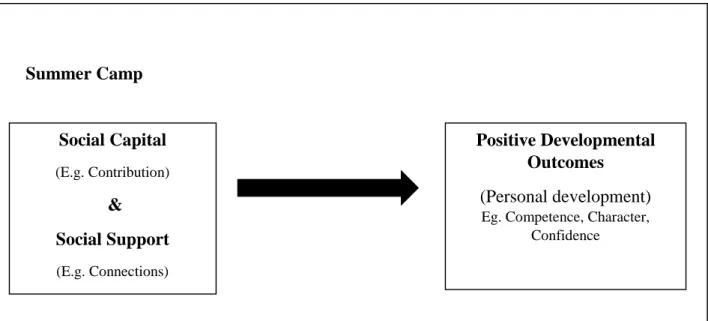
Figure 1. Positive Youth Development Model in a Summer Camp Setting ………… 8 Figure 2. The Influence of Gender and Age on Personal Development as
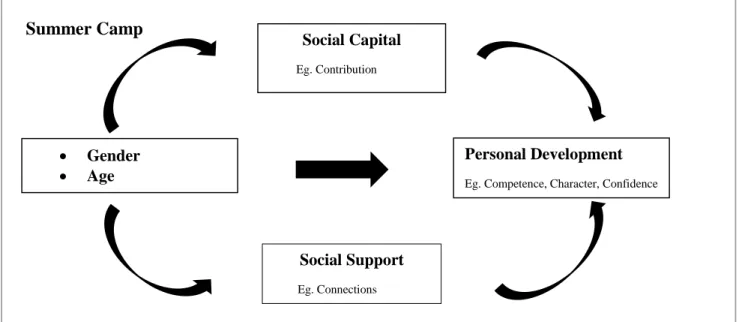
Mediated by Social Capital and Social Support ……… 12 Figure 3. Association of Gender and Personal Development Mediated by Social Capital and Social Support ……… 30 Figure 4. Association of Age and Personal Development Mediated by Social Capital and
List of Tables
Table 1. Means and Frequencies for Demographics, Personal Development, Social Capital, and Social Support ……… 28 Table 2. Unstandardized Cooefficients for Regression Models Showing Association of Demographics, Social Capital, Social Support, and Interaction Terms with Personal Development ……… 29
CHAPTER ONE: INTRODUCTION
To encourage positive developmental outcomes, youth need access to positive
opportunities to master and demonstrate new skills, make independent choices, and form positive social relationships with both their peers and adults outside of their family (Eccles, 1999).
Though many youth rely on school to facilitate these experiences, Eccles (1999) noted the significance of out-of-school programs, such as summer camps, in enabling such opportunities. With a focus on summer camps, she argued these out-of-school experiences give youth access to unique settings that foster growth experiences for adolescents to make autonomous decisions, expand peer relationships, and practice leadership. Camp activities aim to challenge individuals to push themselves beyond their comfort zone, embrace diversity, and appreciate individual strengths and weaknesses. Summer camps may serve as therapeutic landscapes (Gesler, 1992), as they help “put in place the kind of safety net needed to support healthy, positive passage through early and middle adolescence” (Eccles, 1999, p. 36). In my thesis research, I position social capital and social support as particularly important features of this safety net.
Social capital has a significant impact on individual well-being (Coleman, 1990; Kim, Subramanian & Kawachi, 2008; Glover & Parry, 2008). Social capital refers to “the
consequence of investment in and cultivation of social relationships allowing an individual access to resources that would otherwise be unavailable to him or her” (Glover, Shinew & Parry, 2005, p. 87). Social capital facilitates expressive (e.g., emotional support) and instrumental (e.g., favors) action (Lin, 2001 as cited in Glover & Parry, 2008), which makes it particularly valuable to youth. Summer camps provide opportunities for new relationships to be formed increasing the potential for social capital to be developed (Thurber, Scanlin, Scheuler & Henderson, 2007;
Henderson, Whitaker, Bialeschki, Scanlin, & Thurber, 2007; Van Ingen & Van Eijck, 2009; Carruthers, 2013).
Thurber et al., (2007) conducted the first study to use a nationally representative sample to demonstrate that accredited summer camps of a minimum of 1-week in duration provide positive youth development to some degree for most children. They observed growth within four domains: (1) positive identity, (2) social skills, (3) physical and thinking skills, and (4) positive values and spirituality. Positive identity represented self-esteem and independence. Social skills summarized leadership, friendship skills, social comfort, and peer relationships. Physical and thinking skills represented adventure/exploration and environmental. Finally positive values and spirituality referred to values/decisions and spirituality. The study determined that the most gains campers experienced were independence, leadership, social comfort and peer relationships. They highlighted the importance of a sustained and engaging experience in an environment of supports and opportunities.
Similarly Henderson et al. (2007) focused on parental perceptions of the positive
developmental outcomes of the camp experience. Their study also demonstrated the ability of the camp experience to contribute to positive developmental gains within youth, particularly in the areas of independence, making friends, peer relationships, and leadership. The positive
development outcomes identified by Thurber et al., (2007) and Henderson et al., (2007) are consistent with the Five Cs of youth development (Hamilton & Hamilton, 2004).
The literature examining the positive developmental benefits of attending summer camp is growing (Thurber et al., 2007; Henderson et al., 2007; Carruthers, 2013). Much of it speaks to the value of the social aspect of these camps. However, these studies fail to provide any
that not all of the Five Cs of youth development have equal value. I position the social aspects of contribution (social capital) and connections (social support), as holding particular importance and influence the development of the other areas. This thesis will examine how and why social capital and social support may explain positive development outcomes (personal development) at camp, and how the relationship may differ according to gender and age. Service providers for youth are increasingly required to demonstrate that their programs result in positive growth, and the results of this study will help provide insight for the development of new beneficial
interventions and provide the rationale for their use in future programs. The research questions to be addressed are as follows:
1. Do females experience greater increases in personal development as explained by their social capital and social support?
2. Do older children experience greater increases in personal development as explained by their social capital and social support?
3. Do social capital and social support influence personal development within a camp setting?
CHAPTER TWO: REVIEW OF LITERATURE
This section defines concepts relevant to my thesis research, including youth
development, social capital and social support. In this chapter, I examine the “Five Cs” of youth development and the role social capital (contribution) and social support (connections) may play in development of the remaining outcomes. Moreover, in consultation with the literature, I attempt to explain through a constructed theoretical model of Positive Youth Development the interplay among these constructs by providing an overview of (1) how and why social capital and social support may explain positive development outcomes (personal development), and (2) how the relationship may differ according to gender and age.
Defining Key Terms
Youth Development
Youth development is comprised of a number of positive developmental goals/outcomes. One of the main goals of youth development is to focus on assets, as opposed to weaknesses:
Youth development is more than helping one young person at a time; it entails the creation of a range of contexts or settings, including people and activities that promote youth development (Hamilton & Hamilton, 2004, p. 17).
Positive youth development programs aim to use individual assets to help develop areas that may not be as strong. Henderson et al. (2007) identified two types of assets: internal and external. In their words,
The internal assets include commitment to learning, positive values, social competencies, and positive identity, whereas the external assets include support, empowerment,
boundaries and expectations, and constructive use of time (p.992)
Similarly, Hamilton and Hamilton (2004) summarize the five main goals of youth development: 1) competence, 2) character, 3) connections, 4) confidence, and 5) contribution. These “Five Cs”
coincide with the internal and external assets that serve as the foundation for positive youth development (Henderson, et al., 2007). The “Five Cs” will be discussed in more detail in the next section as components of positive youth development.
First, competence refers to the knowledge and skills a person possesses that allows him or her to function effectively in a variety of circumstances (Hamilton & Hamilton, 2004). A
competent individual will be able to understand, adapt, and act on the environment in order to accomplish what they intend, or at least achieve as much as possible. Deci and Ryan (2008) also identify competence as a necessary component of self-determination theory, along with
autonomy and relatedness. Autonomy relates to an individual’s ability to make decisions for one’s self and relatedness pertains to social connections and relationships that reinforce norms and beliefs, provide support and allow a person to feel connected to others (Deci & Ryan, 2008). A person’s character is influenced by these social connections, and in turn that affects their development.
Second, character, (Hamilton & Hamilton, 2004), is what makes a person intend to do what is just, right, and good. In other words, the distinctive mental and moral qualities one possesses. As mentioned briefly above, social networks and relationships can have an enormous impact on the choices a person makes. These relationships can have both positive and negative effects on an individual’s character.
Third, connections refers to “positive bonds with people and institutions that are reflected in exchanges between the individual and his or her peers, family, school, and community in which both parties contribute to the relationship”(Zarrett & Lerner, 2008, p.2). They have both positive and negative impacts on an individual. Positive social relationships with high morals and standards will influence an individual to make better choices, as opposed to delinquent peers that
may influence more destructive decisions (Prinstein, Boergers & Spirito, 2001). These positive social relations occur most frequently with adults, but can also be with peers and younger children (Hamilton & Hamilton, 2004). Young people gain competence and character by being connected with others, especially caring adults (Hamilton & Hamilton, 2004). Furthermore their competence and character leads to new connections. These connections also help develop
confidence, which is the fourth goal of youth development.
Fourth, confidence pertains to the assuredness a person requires to act effectively. It enables an individual to demonstrate competence and character in challenging situations
(Hamilton & Hamilton, 2004). Self-esteem and self-confidence are often confused as thought of as interchangeable. They are quite similar and connected, but there is a distinct difference. Self-esteem is generally the evaluation one makes about themselves that indicate a self-judgment of personal worth or value (Zimmerman, Copeland, Shope & Dielman, 1997). Self-confidence in comparison relates to the sense of trust in one’s abilities and competencies and perceived capability to deal effectively with various situations (Cheng & Furnham, 2002). If one has self-confidence they believe they have worth. Knowledge, skills and abilities can be viewed as valuable resources for other individuals, leading to potential social capital gains when resources can be shared within a social network.
Fifth, contribution pertains to one’s ability to give to others, and to not simply act for self-centered purposes (Hamilton & Hamilton, 2004). This relates to Putnam’s (2001)
requirements for social capital of trust and reciprocity. If one is to benefit from membership in a social network, they must be able to contribute and provide other assets to the social group. It is clear that each youth developmental goal is impacted by social relationships. These
developmental goals/outcomes are treated as having equal value in youth development. Is this the case? Or do the social aspects have a greater influence on positive developmental outcomes?
The sociometer theory helps to further explain the impact of these relationships on individual well-being and development (Leary, 1999). This theory proposes that the self-esteem system evolved as a monitor of social acceptance. The self-esteem motive is not simply to maintain self-esteem, but to avoid rejection and social devaluation (Leary, 1999). This theory suggests self-esteem serves as a psychological meter or gauge that monitors the quality of relationships with others to determine the degree that people value and accept them.
If one observes cues that one’s value is decreasing according to others, the decrease in self-esteem will motivate behaviours aimed at enhancing the relational evaluation. In other words, if an individual feels that a friend no longer sees the relationship being of value, the individual will behave in such a way to try and restore or increase the value of the friendship. Similarly, if the individual observes cues that suggest an increase in value according to others, he or she will experience an increase in self-esteem. This theory suggests that people must be responsive to others perceptions and reactions to protect interpersonal relationships versus
internal integrity. The sociometer theory highlights the importance of social acceptance to human well-being (Leary, 1999). Baumeister and Leary (1995) also highlight the importance of social connections. Their review of the literature showed multiple links between the need to belong, emotional patterns, behavioural responses, and health and well-being. This literature provides theoretical justification supporting the selection of social capital and social support as key factors in the examination of personal development at camp.
An adopted theoretical model of positive youth development within the context of summer camp is outlined in Figure 1. Social Capital (good citizen) and Social support (social
integration) and Personal Development were selected from the five themes identified in phase two of the Canadian Summer Camp Research Project (CSCRP) (Glover, Chapeskie, Mock, Mannell & Feldberg., 2011). The main youth development goals (Five Cs) were incorporated from Hamilton and Hamilton (2004): competence, character, connections, confidence, and contribution.
Individual character is often shaped by membership in social relationships. Character can be influenced by social relationships in a number of ways. Pressure experienced from friends participating in risky and negative health behaviours such as binge drinking and smoking, can lead to an individual making similar choices, despite the negative impact on their health and well-being. Likewise, social groups that value traits such as regular physical activity and good nutrition habits can influence individuals to make similar choices and form a positive value
Summer Camp Social Capital (E.g. Contribution) & Social Support (E.g. Connections) Positive Developmental Outcomes (Personal development)
Eg. Competence, Character, Confidence
system impacting their individual character. These values and norms are established and reinforced by various social groups, in various social settings.
This reinforcement experienced through peer groups can lead to increases in confidence. Social groups can provide support and encouragement to members in challenging times when confidence has been diminished (Resnick & Rosenheck, 2008). Competence and confidence seemingly go hand in hand. One requires confidence to put one’s skills and abilities to good use, and one acquires competence when others acknowledge those skills and abilities.
Current research on one’s ability to give selflessly others, states that both males and females experience greater developmental outcomes when they contribute and do things for others (Schwartz, Keyl, Marcum & Bode, 2009). This helping behavior can also lead to more social capital gains. Van Ingen and Van Eijck (2009) found that in the leisure context,
individuals who are already gifted in high levels of civic engagement and helping behaviours experience greater social capital gains.
Given that each of the Five Cs may be influenced both positively and negatively by their connections and contribution, I believe that these two variables have a significant impact on positive youth development. Thus they should be examined in detail particularly with respect to their role in personal development in a camp setting. This study will demonstrate that individual connections and contribution have an impact on the development experienced at camp, and potentially other settings.
The Camp Setting
The camp setting itself may also have a significant impact on the personal development experienced. Individuals are grouped together in tents or cabin settings and often eat and
opportunity to make new connections, develop social competencies, and acquire social capital. The nature of the activities experienced at camp and the opportunities for choice and skill development make camps a particularly valuable setting. There is extensive literature examining the use of camps for their therapeutic benefits with different groups such as chronic mental patients, cancer patients, children with autism, and youth with disabilities.
Much of this literature examines changes in social status and the ability of camps to facilitate social interactions. Gesler (1992) defines these as therapeutic landscapes. He defines therapeutic landscapes as those that have restorative qualities for environmental, individual, and societal reasons. Gesler (1992) expanded the traditional definition of geography to include the social structures within those settings, rather than simply the interaction of physical and human processes. He notes that these settings instill a strong sense of place, which can be attributed to the physical surroundings, historical context, and release from the routines and demands of daily life (Gesler, 1992). Although this study will not make a comparison between the camp setting and other settings, the potential therapeutic value of the camp setting reinforces the potential for personal development as a result of a camp experience and should be acknowledged and
considered for future research.
Social Capital and Social Support
Most definitions of social capital speak to the value of membership in social networks in the form of gaining access to resources that would be otherwise unavailable without such
membership (Glover et al., 2005). Portes, as cited in Lesser (2000), states that “to possess social capital, a person must be related to others, and it is those others, not himself, who are the actual source of his or her advantage”(p. 48). Members within a social group must feel a sense of trust and reciprocity within the relationships or social capital cannot exist (Glover & Parry, 2008).
Friendships have been found to play a particularly important role in managing stressful life events. Glover and Parry’s (2008) study of friendships developed subsequent of a stressful life event is an example of the impact of social capital on health. Specifically, they examined women coping with infertility and the friendships they formed with other women experiencing the same life challenge. In Taylor et al’s (2002) words,
Friendship has been identified as a potential contributor to health and well-being, in large part, because of its links to social support, which has long been associated with health benefits of all kinds, including improved physical, psychological, emotional, and spiritual health [as cited in Glover & Parry, 2008, p. 209].
Individual health and well-being is influenced by social capital developed between friends as it can facilitate both expressive (e.g., emotional support) and instrumental (e.g., favours) action (Lin, 2001 as cited in Glover & Parry, 2008). Glover and Parry (2008) identified three themes pertaining to the development of social capital. They identified both positive and negative impacts. Social capital allowed participants to (1) get by, (2) get ahead, and (3) fall behind. Youth development literature similarly aims to develop necessary skills for youth to get by and get ahead. Social capital and social support hold clear relevance when examining positive development outcomes.
There are a number of factors that may influence one’s ability to develop social capital and social support. Similarly the outcomes influenced by their development will be modified by multiple other factors. The next section will identify the variables expected to have an impact on personal development experienced at camp. Social capital and social support are depicted as potential mediators (Figure 2).
Gender and Age
Previous studies examining youth development outcomes at camp failed to reach any conclusive findings related to gender and age differences at camp (Thurber et al., 2007; Henderson et al., 2007). Thurber et al. (2007) selected campers aged 8-14. They chose to
examine if longer camp stays contributed to greater changes, if intentionally focusing on spiritual development led to greater development in that area, if campers with greater development
deficits or room for growth would show the greatest gains and finally if children who enjoyed camp the most experienced the greatest developmental gains. Thurber et al. (2007) expected that longer durations at camp would lead to greater development gains. However, this dosage effect was not supported. They speculated that longer durations at camp might strain peer relationships.
Summer Camp
Gender
Age Age
Personal Development
Eg. Competence, Character, Confidence
Social Capital
Eg. Contribution
Social Support
Eg. Connections
Figure 2. The Influence of Gender and Age on Personal Development as Mediated by Social Capital and Social Support
There were inconclusive findings related to age, although unsurprisingly a slight relationship between age and development in a few constructs was found. This outcome suggests there may be younger campers who did not make gains during a longer camp stay, but they were offset by others where the optimal point was surpassed and negative effects resulted. No gender
differences were found. The data were collected from both the parents and campers. It would be difficult to examine gender differences unless each parent had both a male and a female child to compare. This analysis was not feasible in their study. Despite these gaps, the findings of the study support theories pertaining to positive youth development that predict multidimensional growth at camp.
Henderson et al. (2007) did not examine gender or age differences at all. They examined if parental perceptions of the developmental benefits of camp were aligned with actual
development at camp. Due to the nature of the research questions and the data collected, comparisons could not be made, which further highlights the importance of future research examining these differences.
Despite the lack of research examining these important differences at camp, it is not difficult to make the argument that males and females have very different experiences in most situations. Much of these differences are due to socially constructed norms and expectations for each gender. For example, girls are typically expected to be caring, nurturing and emotional, and boys are to be strong, competitive and not ruled by emotions (Eagly, 2013). From a very young age these expectations are reinforced through such things as the types of toys they are expected to play with and the behaviours they are to demonstrate. Girls are taught to be polite, helpful, and kind, whereas there tends to be more leniency towards boys that is influenced by a “boys will be boys” attitude. For girls, these skills and attributes are developed and reinforced very early and
may be further developed than boys (Eagly, 2013). Schwartz et al., (2009) identified such gender differences in altruistic practices. These gender and age differences may also appear in the structure of peer networks.
Peer Network Structures
Gender differences in friendships may also play in important role in how girls and boys experience summer camp differently. Urberg, Değirmencioğlu, Tolson, and Halliday-Scher (1995) examined differences in the structure of adolescent peer networks. They identified both gender and age differences. Girls were more integrated in school social networks than boys. Girls were also found to make and receive more friendship choices than boys. Girls had an advantage over boys in terms of developing more friendships, but by also focusing their friendship choices on other girls, they were also more likely to have more mutual choices.
Duck and Wright (1993) completed two studies related to gender differences in friendships. The first compared gender differences in the purpose of friendships. The second compared how they reported on the strength or quality of the friendships. Previous
developmental psychology research on friendships explained them as having either an expressive or instrumental purpose. Females had previously been associated with expressive relationships and males with instrumental. Duck and Wright (1993) found that instead, males and females have similar purposes for friendships, both instrumental and expressive, but that females are more likely to overtly demonstrate those expressive characteristics. Females also tended to respond more positively about friendship strength and value in regard to levels of emotional expression and permanence. Their findings suggest that females will have an overall advantage over boys by how they view friendships as well as their more overt expressive nature.
Urberg et al. (1995) identified some interesting findings on diversity within friendship groups. Girls were more likely to identify a best friend and hold membership in a clique, but had less diversity within their friend groups. Boys, having less intimacy in their friendships, allows for more diversity, which can be disruptive in friendships with girls where intimacy is higher. When considering these structural differences in a camp setting, it is possible that the camp setting and duration may alleviate potential diversity challenges with girls, but may not address lower levels of intimacy in male friendships.
When examining grade (age) effects, it was determined that, as adolescents progressed through grades (6-12), they became more selective and experienced fewer offers (Urberg et al., 1995). This increase in selectivity is likely due to increases in social cognitive skills, as well as an increase in the value of reciprocity and intimacy between friends (Urberg et al., 1995). In this study, I suggest that older campers will experience greater development largely due to increases in social cognitive skills and general developmental readiness prior to the camp experience.
Some significant gender differences exist as well in general relationships outside of friendships. In particular, there are significant gender differences in helping behaviours. Schwartz et al., (2009) suggest that future interventions aimed at teaching altruistic practices should have different content for males and females. Interventions for males should focus on enhancing helpfulness around the family home. Females require the opposite, and need to be provided opportunities to get them out of the family home. Females could benefit as well from programs that teach a balance between helping others and setting limits as they often over-identify and believe that “their problems are my problems” (Schwartz et al., 2009). As a result it is to be expected that their social experiences and potential positive outcomes within a camp
setting will vary. In particular, I suggest that females will experience greater increases in personal development at camp as a result of more developed social skills, social capital and social support.
Social status can also have a significant impact on the formation of social capital and resulting benefits. “Lin (2001) proposed social structures tend to be hierarchical and
relationships within the structure are rank-ordered usually in terms of class, authority, and/or status. Devine and Parr (2008) identified three main assumptions of social capital and hierarchy in social structures. The first assumption is that a member who holds a significant number of resources/benefits can expect to be “borrowed from” more frequently than other members. The second assumption is that some resources are valued more than others, and that individuals with higher ranked resources will in turn be ranked higher in social status. The final assumption identified by Devine and Parr (2008) is that these social structures tend to be shaped like a pyramid, with more members near the bottom of the structure and fewer at the top. An
individual’s ability to form new relationships seems to play a significant role in the development of social capital as well as increasing their overall rank within the social network.
The literature examining the developmental benefits of attending camps during your youth is growing. However, these studies do not generally provide explanations for this
development or bring insight to important gender and age differences (Mahoney, Larson, Eccles, & Lord, 2005; Bouffard, Wimer, Caronongan, Little, Dearing, & Simpkins, 2006; Henderson et al., 2007; Thurber et al., 2007). This research is required to inform service providers of
appropriate and beneficial interventions for youth of different genders and age groups.
Hamilton and Hamilton (2004) acknowledge that when designing youth development programs, one cannot assume that each of the domains are developed the same way for each
individual. Gender is a challenge because in some situations boys and girls require different opportunities (Hamilton & Hamilton, 2004; Schwartz et al., 2009). Hamilton and Hamilton (2004) note the sometimes “gender is less important than race or class or age or simply interests and aspirations”(p. 12). These distinctions or potential modifiers ought to be considered when examining social capital and youth development in any setting.
Youth programs and organizations affect participants differently. Outcomes will never be uniform regardless of how good programs and organizations are. Such inescapable differences reinforce the importance of both variety and choice. One activity is not
developmentally appropriate and enhancing for all”(Hamilton & Hamilton, 2004, p. 14).
In summary, positive youth development is dependent on maintaining a balance in the five areas of competence, character, connections, confidence, and contribution (Hamilton & Hamilton, 2004). The two areas most likely to get out of balance are connections (social health) and confidence (mental health). These two areas are sometimes dangerously connected as they each have an impact on the other. One’s connections can help develop confidence, and high levels of confidence can lead to the development of new connections. If there is a decrease in either, both will likely be negatively affected. The literature examined in this section has demonstrated that the main developmental goals of youth development and social relationships are inextricably aligned. In relation to youth camps and the benefits associated with participation, several areas of concern and gaps in the literature were identified. Gender and age have been identified as important variables that warrant closer attention. The current literature examining youth development and camps does not look at the impact of these variables or how these relationships may be mediated by social capital and social support. This study hopes to address these gaps. The purpose of this study is to examine how gender and age impact the development
of personal development in a camp setting. This relationship will also be examined as mediated by social capital and social support. Listed below are the primary research questions:
1. Do females experience greater increases in personal development as explained by their social capital and social support?
2. Do older children experience greater increases in personal development explained by their social capital and social support?
3. Do social capital and social support influence personal development within a camp setting?
CHAPTER 3: RESEARCH METHODS
This section will outline the research methods for this study, including a description of the survey and the survey sample. A brief description of quantitative methods and secondary data analysis will be included, followed by information related to how the data was collected, and the specific variables that will be analyzed.
Quantitative Method
Due to the nature of the data collected, quantitative analysis will be utilized in this study. Quantitative research is a means for testing theories by examining relationships between
variables (Creswell, 2009). Furthermore, after a series of tests are completed to examine these relationships, the hope is that generalizations can be made about the relationships in a variety of contexts. For this study, the data was collected within the context of multiple Canadian summer camps. The goal of this study is to explore how and why social capital and social support may contribute to personal development at camp, and how the relationship may differ by gender and age. The intent is to extend the relevance of its findings to other youth development settings, such as school programs and sports teams.
Secondary Data Analysis
Secondary data analysis involves the analysis of a previously collected data set in a separate study, usually examining a different research question (Miller & Brewer, 2003). There are many advantages to completing secondary data analysis. Advantages as identified by Hofferth (2005) are cost and access, sample size, timeliness and availability. There are limited costs when using secondary data analysis as a research method because all of the data collection costs have been incurred in the initial study. An existing data set with a sample size of over 1,000
participants allows for the examination of cause and effect relationships. Obtaining data that is readily available with such an extensive sample is rare for a masters thesis.
Hofferth (2005) also offers some words of caution pertaining to secondary data analysis. Researchers must be careful to ensure that their research question is a good fit with the data set (Hofferth, 2005). Another complication of using secondary data analysis is having to learn and accurately understand how the data was collected, measured, and analyzed. This can take time, but is a necessary step to ensure that the new research is valid and accurately represents the data (Hofferth, 2005).
The existing national dataset from Phase 2 of the Canadian Summer Camp Research Project (CSCRP2) was utilized in this study. The CSCRP2 aimed to examine changes in camper behaviours, attitudes and values in camp settings across Canada. Five themes were constructed during Phase 1 of the CSCRP to represent these changes (social integration and citizenship, environmental awareness, self-confidence and personal development, emotional intelligence, and attitudes towards physical activity). The themes were examined separately against age, gender and new/returning campers. This thesis examines gender and age as predictors of personal
development at camp. Social capital and social support are used as mediators of this relationship. The CSCRP2 data set includes repeated measures, as data was collected at two time points. The first, 48 hours after arriving at camp and the second within the last 48 hours.
Accordingly, cause and effect relationships can be examined. Longitudinal analysis is something few Master’s theses are able to do. There should be some caution when interpreting the causal nature of this relationship as additional time points would further strengthen the findings of this study.
The Survey
This thesis uses secondary data from CSCRP2, which examined the potential developmental benefits gained through a Canadian summer camp experience. Healthy
Communities Research Network designed and administered the CSCRP2, which was funded by the Canadian Camping Association (CCA), the University of Waterloo/Social Sciences and Humanities Research Council of Canada seed grant program, and the University of Waterloo Robert Harding Humanities and Social Science Endowment Fund (Glover et al., 2011). The study received ethics clearance from the University of Waterloo.
There were two main goals of the CSCRP. They were: 1) to understand in what areas campers experience positive outcomes based on their camp experiences, 2) to measure the degree of developmental change in these areas experienced over the course of a camp experience. Five themes were constructed in Phase 1 of the CSCRP2 study: (1) Social integration and citizenship; (2) environmental awareness; (3) self-confidence and personal development; (4) emotional intelligence; and (5) attitudes towards physical activity. Camper behaviours, attitudes and values were examined according to these five themes. Counselors were surveyed to document their observations of the campers at the beginning of the camp session. Comparisons were made at the end of the camp experience as counselors were surveyed again to note the changes they observed in the campers.
This study was limited to observing changes in personal development. Social capital, using the good citizen scale, and social support, using the social integration scale, were examined as mediators of the changes in personal development for this research.
Canadian summer camps that hold membership with CCA were invited to participate in the study. Study materials were sent via email to camps that volunteered their participation. The
package included the following items: (1) the survey instrument; (2) complete detailed
instructions for conducting the study; and (3) letters that were to be given to participants (e.g., counselors, staff, campers and their legal guardians) that provided information about the study (Appendix A,B,C,D). Previous summer camp studies influenced the survey components used (American Camp Association, 2005 a,b). The researchers developed additional questions based upon personal insights and through the adopted use of existing scales. The construct of social capital was assessed using 6 items. These questions were developed by Troy Glover, the principal investigator, whose main area of expertise is social capital. Social support (social integration) was constructed through 4 items related to camper’s ability to make new friend and support received from others. This thesis examined gender and age as predictors of personal development gains at camp. Social capital and social support were used as mediators of this relationship.
Survey Sample
Surveys were completed at 16 camps across Canada. There were 8 camps from Ontario, 3 from Quebec, 3 from Nova Scotia, and 2 from British Columbia. A total of 1, 288 campers were observed. Participants were obtained through convenience sampling method. A relatively
representative breakdown of almost every demographic area was achieved. The majority of camps identified themselves as being co-ed. Only 2 camps were exclusively female, and 1 was exclusively male. There was an almost even split between residential camps (9) and day camps (7). The ages of campers ranged from 3-18 years with an even split in genders. The mean age = 10.44 (SD= 3.05). Age group frequencies were as follows: 4-6 yrs = 14%; 7-9 yrs = 22%; 10-12 yrs = 37%; and 13-18yrs = 27%.
The survey used repeated measures evaluation design. Data was collected by camp staff/counselors (no demographics available). No formal training was provided to the counselors, but set-by-step instructions were included in the survey (Appendix B). Counselors were required to observe their campers at two time points: The first observations were to be made within the first 48 hours, and the second observations within the last 48 hours of the camp experience. They were to reflect on camper behaviours and attitudes as they fit under the 5 categories previously identified in Phase 1 of the CSCRP: (1) Social integration and citizenship; (2) environmental awareness; (3) self-confidence and personal development; (4) emotional intelligence; and (5) attitudes towards physical activity. The CSCRP2 revealed significant changes in attitudes and behaviours over the course of the camp experience.
Survey Variables
The following section will provide descriptions for the independent, dependent and control variables. The independent variables are gender and age and the dependent variable is personal development. Social capital and social support are the mediating variables of these relationships.
Independent Variable
The independent variables for this study are gender and age. Gender was found to be a significant main effect for all 6 outcome variables in the original study (Glover et al., 2011). Girls were found to have higher mean scores in good citizen (Girls, M = 5.20, Boys, M = 4.79), social integration (Girls, M = 4.94, Boys, M = 4.57), personal development (Girls, M = 5.15; Boys, M = 4.90), environmental awareness (Girls, M = 4.60, Boys, M = 4.34), and emotional intelligence (Girls, M = 4.83, Boys, M = 4.42). In contrast, boys scored higher in physical
activity attitudes (Girls, M = 4.99, Boys, M = 5.14) (Glover et al., 2011)1. Gender differences were examined in this study. This variable was coded as female = 1, male = 0.
Age was found to have a significant impact on the degree of change experienced by campers in Phase 2 of the CSCRP with all six of the outcome variables. According to their findings, older campers appeared to experience the greatest increases in their scores, particularly in four areas: good citizen, social integration, personal development, and physical activity attitudes. This study also observed the impact of age. Age was operationalized as a ratio level measurement using codes identical to the number provided (E.g. 5 = 5 years old).
Dependent Variable
The dependent variable for this study is personal development. The personal development measure was the mean score of 8 questions relating to self-confidence and personal development (α= .87). The questions found in Section C are as follows: “The camper appears to be confident in him/herself”; “This camper needs help with most things he/she does”; “This camper appears to do fine without his/her parents”; “This camper is good at doing things on his/her own”; “ This camper makes good decisions”; “This camper likes to try new things”; “This camper has an accurate understanding of his/her personal limits”; “This camper appears to feel good about him/herself”. A 7 point scale was used to rank responses (1= very strongly disagree and 7= very strongly agree). Responses were taken at two time points (First 48 hours and Last 48 hours). The 8 items were individually factor analyzed with varimax rotation. The items were deemed reliable and internally consistent by the original research team. The survey containing sections A and C can be found in Appendix A.
1 Access to the standard deviations was not obtained, thereby explaining the absence of this
Mediating Variables
Social capital (good citizen) and social support (social integration) were used in this study as mediating variables. Mediation suggests that the independent variable influences the mediator, which influences the dependent variable. The good citizen scale was the mean score of 6 questions (α= .88). These questions were located in Section A: Social connections at camp. A 7 point scale was used to answer questions pertaining to camper contribution to the group, ability to get along with others and sense of pride of membership in the camp community (1= very strongly disagree and 7= very strongly agree). Responses were given at Time 1 (First 48 hours) and Time 2 (Last 48 hours). The six questions for the good citizen scale are as follows: “This camper gives to other campers as much as he/she receives from them”; “This camper exhibits a sense of pride about being a member of his/her counselor group”; “This camper exhibits a sense of pride about being a member of his/her camp”; “This camper resolves personal conflicts in a positive manner”; “This camper gets along with other campers”; and “This camper gets along with camp staff” (Appendix A). The 6 items were deemed reliable and internally consistent by the original research team through individual factor analysis using varimax rotation. The mean of the standardized deviations for the 6 items were used to represent social capital.
Social support (social integration) is the other mediating variable for this study. The social integration scale was the mean score of 4 items regarding making friends at camp and the support a camper receives from others (α = .82). The questions for the social integration scale are as follows: “ The camper has a group of closer friends at camps from which he/she can draw support”; “The camper has friends at camp besides those in his/her counselor group”; “When needed the camper receives emotional support from his/her fellow campers”; “When needed, the camper receives other kinds of support from his/her fellow campers”. The 4 items were
individually analyzed through factor analysis using varimax rotation. They were deemed reliable and internally consistent by the original research team. All 12 questions from Section A: Social Connections at camp were factor analyzed. Two of the questions were outliers in the factor analyses and were omitted. The two questions were “This camper befriends other campers different from him/herself” and “This camper befriends other campers similar to him/herself”. Research by Van Ingen and Van Eijck (2009) found that individuals that are already gifted in high levels of civic engagement (social capital) and helping behaviours (social support) experience greater social capital gains. These findings in particular led to examining this
relationship within the context of a camp setting. Data Analysis
Statistical analysis was performed using SPSS software to observe social capital and social support prior to the camp experience as a predictor for change in personal development over the course of a camp experience. Descriptive statistics (means and frequencies) were used to achieve an understanding of the sample and demographic characteristics that were controlled for in the analysis. Three linear regression models were constructed to examine the association of social capital and social support prior to the camp experience and personal development, and the impact that social capital and social support gained during the camp experience may have on this association. The first model included the demographic characteristics/control variables and the following models introduced social capital and social support and the mediating variables. Preacher and Hayes (2008) developed a method called bootstrapping, which was used to test multiple mediators simultaneously. A mediator acts as another variable, which “represents the generative mechanism through which the focal independent variable is able to influence the dependent variable of interest” (Baron & Kenny, 1986, p. 1173). This study explored how social
capital and social support mediate the relationship between gender and personal development and age and personal development. The method of bootstrapping allowed for the examination of how two mediators independently impact the relationship between the independent and
dependent variable, as well as a statistical comparison between mediators (Preacher & Hayes, 2008).
CHAPTER FOUR: RESULTS
This study was conducted to examine the relationship between age and gender and personal development and the mediating impact of social capital and social support. A
conceptual model has been identified (Figure 2), and in this chapter it will be used to report the findings. The average age group for the sample was 10.44 (SD = 3.05). The sample was
approximately half female (49.06%). Only 8% of the sample was identified as coming from a minority language background, and therefore ethnicity was removed from the initial study as an independent variable. Personal development, social capital, and social support scores all
increased from Time 1 to Time 2 as represented by Means. (See Table 1)
Table 1. Means and Frequencies for Demographics, Personal development, Social capital, and Social support variables.
Campers Variables M/Percent SD Demographics Age 10.44 3.05 Female 49.06 -- Personal Development Time 1 4.87 0.76 Time 2 5.17 0.90 Social Capital Time 1 4.81 0.87 Time 2 5.15 1.00 Social Support Time 1 4.50 0.90 Time 2 4.99 0.99
Participants also experienced increases from Time 1 to Time 2 in both Social Capital and Social Support scores (Table 1). Regression analysis was used to determine if the control variables were significantly associated with social capital and social support. Bootstrapping followed to reveal the association of the mediators with the relationship between both gender
and personal development and age and personal development. Each was examined separately. (See Table 2)
Table 2. Unstandardized Coefficients for Regression Models Showing Association of Demographics, Social Capital, Social Support, and Interaction terms with Personal Development.
Variables Model 1 Model 2
B SE B SE Constant .49 *** .11 .03 .08 Age .01 * .01 .01 * .00 Female .12 *** .03 .01 .02 Pers. Dev. T1 .92 *** .02 .72 *** .02 Soc. Cap. T1 -- -.22 *** .03 Soc. Cap. T2 -- .46 *** .02 Soc. Supp. T1 -- -.08 *** .02 Soc. Supp. T2 -- .11 *** .02 Adjusted R2 .66 .81 Note. n=1179; *p < .05, ** p < .01, *** p < .001 Gender Differences
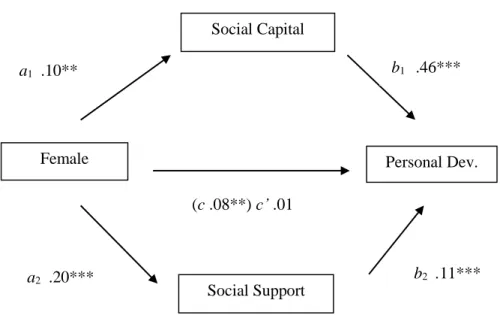
Regression analysis revealed that gender was associated with increases in personal development. Age was also associated with increases in personal development. In the test for mediation for Model 1 (Preacher & Hayes, 2008), the total effect (c) of gender on personal development was significant (B = .08, p < .01). Females experienced more significant increases in personal development than males. Compared to the total effect, the direct effect (c’) of female gender and personal development was significantly reduced (B = .01) with the addition of social
social support explain a significant portion of the association between gender and personal development gains in a camp setting.
The indirect effects (a1b1and a2b2paths) for both mediators were statistically significant (social capital, point estimate = .05, SE = .02, upper confidence interval = .09, lower confidence interval = .01; social support, point estimate = .22, SE = .01, upper confidence interval = .04, lower confidence interval = .01). When the two mediators were compared, there was minimal contrast, thus they equally explain the relationship (point estimate = .03, SE = .02, upper confidence interval = .0645, lower confidence interval = -.0035).
Figure 3. Association of Gender and Personal Development Mediated by Social Capital and Social Support
Note: The value in parentheses is the unstandardized regression coefficient for the association between female gender and personal development before the addition of social capital and social support to the model.
n=1179; *p < .05, ** p < .01, *** p < .001 Female Social Capital Personal Dev. a1 .10** b1 .46*** (c .08**) c’ .01 Social Support a2 .20*** b2 .11***
Age Differences
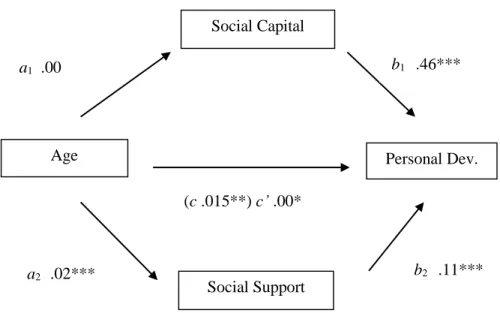
A similar approach was used to examine the relationship between age and change in personal development and the mediating impact of social capital and social support within those associations. Regression analysis in Model 2 revealed that age was associated with personal development (Figure 4). In the test for mediation (Preacher & Hayes, 2008) it was found that the total effect (c) of age on personal development was significant (B = .015, p < .01). The direct effect (c’) of age and personal development was reduced (B = .00, p < .05) with the addition of social capital and social support to the model (See Figure 4).
The indirect effects (a1b1and a2b2paths) revealed that social capital and social support were statistically significant mediators (social capital, point estimate = .003, SE = .0027, upper confidence interval = .0086, lower confidence interval = -.0020; social support, point estimate = .0023, SE = .0009, upper confidence interval = .0045, lower confidence interval = .0008). When the two mediators were compared, only social support was found to be significant (point estimate = .00, SE = .00, upper confidence interval = .0062, lower confidence interval = -.0036). The relationship between age and personal development is partially explained by social support, but there are other factors not identified in this model. A small but significant association exists between age and personal development.
Figure 4. Association of Age and Personal Development Mediated by Social Capital and Social Support
Note: The value in parentheses is the unstandardized coefficient for the association between age and personal development before the addition of social capital and social support to the model. n=1179; *p < .05, ** p < .01, *** p < .001
The major results of this study are that both gender and age are significantly associated with increases in personal development, although the direct effects are lower than expected. Social capital and social support have significant associations with personal development gains. In other words, neither age or gender account for a strong relationship to changes in personal development as measured in this study. Social capital and social support are important factors in the change in personal development.
Age Social Capital Personal Dev. a1 .00 b1 .46*** (c .015**) c’ .00* Social Support a2 .02*** b2 .11***
Social capital as a mediating influence on personal development is much stronger than the direct relationship between gender and personal development. This suggests that the level of and ability to acquire social capital is an important influence on gains in personal development. In contrast the relationship between gender and social support is significant, but when examined as a mediating influence on personal development yields a significant but weaker association.
The model 2 findings show a moderate and significant relationship between social capital and personal development and a weaker but significant relationship between social support and personal development. This suggests there are other factors contributing to the variation in personal development than age. Older children do not consistently experience advances in personal development. A far more important element explaining changes in personal development from a camp experience is social capital.
It is possible that children more confident in new settings and more well-developed social tools may be represented in a camp setting at a higher level than the general population.
Additionally, older children that may already have significant social capital and social support may be at or near an optimal level, and thereby lower increases in personal development possible over a short period of time at camp.
CHAPTER FIVE: DISCUSSION
This study was conducted to examine the effect of gender and age on personal
development at the completion of a camp experience. It also investigated the impact of two mediators, social capital and social support. Mediators may clarify the nature of the relationship between two other variables. Social Capital is measured using a good citizen scale developed by Glover et al., (2011). It consisted of camper contribution to the group, their ability to get along with others, and their pride of membership within the camp community (Appendix A). Social support is measured in this research by the social integration scale used by Glover et al., (2011). It focuses on the making of friends at camp and the support they receive from others (Appendix A).
This chapter will explore the findings of the study with respect to personal development, gender and age. This is followed by a discussion of strengths and weaknesses of the study, and the implications for future research and camp programming.
Social Capital, Social Support, and Personal Development
This study sought to answer three primary research questions and each is discussed below:
1. Do female campers experience greater increases in personal development as explained by their social capital and social support?
2. Do older campers experience greater increases in personal development as explained by their social capital and social support?
3. Do social capital and social support explain personal development within a camp setting?
Social capital and social support have been the subject of many studies. In this research, they are explored with respect to their mediating influence on personal development at camp. Other researchers have looked at positive development outcomes in youth. Hamilton and Hamilton (2004) highlighted multiple ways that social relations influenced positive developmental outcomes. They identified five concepts they believe to be important:
competence, character, connections, confidence, and contribution. The conceptual framework for this research incorporated all of the Five Cs (See Figure 2). Instead of all of the developmental goals having equal importance, this research posits that contribution, in the form of social capital, and connections, in the form of social support, are particularly influential.
Eccles (1999) argued that out-of-school experiences give youth access to unique settings that foster growth experiences for adolescents to make autonomous decisions, expand peer relationships, and practice leadership. Research by Thurber et al. (2007) and Henderson et al. (2007) examined developmental outcomes, and focused on those developed at summer camp. They found that there are developmental gains from a camp experience. They highlighted significant increases in leadership, positive identity, and peer relationships. The literature suggests that camp is an important venue for the development of several positive development outcomes (Gesler, 1992), but little was known about the important factors and relationships among them before the work of Henderson et al. (2007).
Gesler (1992) suggests that camp serves as a unique therapeutic landscape that allows individuals to attempt new things, develop new skills, and explore new social roles. It may also be a temporary forum that allows for the acquisition of new sources of social capital and social support, which are shown to have a positive impact on personal development. To test this relationship, the model would need to be applied in school and out of school settings, but is
outside the parameters of this study. The common feature in the literature is that personal development can occur in many places and that there are many factors, which could enhance or interfere with this process. These findings are not surprising as one could anticipate that
individuals with more developed social skills would experience greater opportunities for development as they have the social tools to make the most of this opportunity (Demaray, Malecki, Jenkins, & Cunningham, 2010).
The studies by Thurber et al. (2007) and Henderson et al. (2007) looked at developmental outcomes within the camp experience. They did not find any significant gender or age
differences, but suggested they may be relevant to consider. The results of the current study suggests that there are both gender and age differences in personal development. These relationships were explored using the mediating variables of social capital and social support. The developmental levels of individuals examined prior to the camp experience are relevant factors to consider.
Camp is a unique setting that provides children more opportunities to develop skills that are not possible in a school setting. There are fewer strict time constraints and more opportunities for developing new social networks. The summer camp environment appears to be a setting particularly adept at nurturing social capital. It allows for shared experiences that contribute to stronger social bonds around a common interest (Gesler, 1992). These gains in personal development were observed for both genders and all ages. This research illustrated that both social capital and social support are important factors to consider when assessing the impact of camp on personal growth.
Gender Differences
The literature for most social research often notes gender and age differences. These differences were explored in the first research question: Do female campers experience greater increases in personal development in a camp setting? This research identified significant gender differences in developmental outcomes. Females were found to experience the greatest increases in personal development during their time at camp. Research by Eagly (2013) supports this finding. She notes that gender role socialization appears to have a significant impact on the behaviours and traits each gender is expected to uphold. In the words of Eagly (2013):
The power of expectancies to determine behaviours has been displayed in research on the behavioural confirmation of stereotypes (e.g. Snyder, 1981), including gender
stereotypes. This research has provided impressive evidence that, at least under some circumstances, people act to confirm the stereotypic expectations that other people hold about their behavior. Stereotypes about women and men have yielded some of the most striking demonstrations of behavioural confirmation (p. 15).
Girls are generally expected to be kind and nurturing, leading to the formation of meaningful friendships and social support networks. Girls are also expected to be helpful and contribute to tasks around the household typically more so than boys (Schwartz et al., 2009). These behaviours and skills are developed quite early on, and seem to place girls at an advantage over boys in terms of their development of meaningful relationships. Van Ingen and Van Eijck (2009) found that individuals already gifted in altruistic and helping behaviours tend to
experience greater social capital gains, particularly in leisure settings. Schwartz et al. (2009) identified important gender differences that should be addressed in future interventions. These gender differences were demonstrated in this study. Females were found to have significant increases in personal development as explained by social capital and social support. This may be attributed to social skills developed early on, a sense of the importance of social support in their
of care” in girls may also contribute to these differences. Skoe and Gooden (1993) found gender differences using the Ethic of Care Interview (ECI), which is a care-based morality measure. They found that girls tend to be more concerned about hurting others and the maintenance of friendships than boys. Boys were found to be more concerned about leisure activities and avoiding trouble. In Skoe and Gooden’s (1993, p. 163) words, “Girls grow up with greater relational capacities and greater abilities to empathize and identify with others’ feelings.” For girls, these tools, developed early on for nurturing and friendship, would be expected to accelerate the positive outcomes of a camp experience.
These differences in relationships and relational capacities may impact upon multiple other settings: future employment opportunities, personal relationships and family bonds. The social capital literature identifies the importance of membership in social networks and gaining access to resources that would be otherwise unavailable (Glover et al., 2005). Two additional concepts include capital deficit, the process whereby subordinates receive worse outcomes, and return deficit, when similar social ties and networks lead to different outcomes (McDonald & Day, 2010). These explanations suggest that there are important interactional factors that must be considered. These include age, gender, race and other minorities. Within the social capital
literature, Caucasian males have observed advantages over females and minorities (McDonald & Day, 2010).
Social capital literature that discusses capital deficit and return deficit highlights these significant gender differences. Comparing this literature suggest that although boys may not experience as much developmental benefits as girls at camp, camp still provides opportunities for new connections, which boys may make better use of than females. Capital deficit occurs when subordinate group members, such as females and minorities receive worse employment
outcomes than dominant groups members (McDonald & Day, 2010). McDonald and Day (2010) found that women and minorities tend to have smaller social networks, resulting in less social capital to draw upon. They therefore lack access to as many informative, influential, and status conferring ties. As supported by the literature on gender differences in friendships, girls have a heavier reliance on strong ties with close friends and family, and have less diversity in their relationships (Duck & Wright, 1993; Urberg et al., 1995). McDonald and Day (2010) found that when women and minorities have contact with people that are different from themselves, they receive more promotional opportunities. Perhaps camp is a unique setting in that it is more accepting of diversity. Placing value on diversity in relationships may contribute to campers benefiting more from the connections made at camp and lead to lower levels of capital deficit. Future research should examine relationships made at camp and their impact on future
employment opportunities and other long-term impacts.
Return deficit is another term used in the social capital literature. It occurs when similar types of social ties and networks leads to different outcomes (McDonald & Day, 2010).
McDonald and Day (2010) found differences in how women and minorities utilize certain kinds of ties than men. They also note that various contacts may exert less effort for women and minorities than for males, particularly Caucasian males. In terms of specific camp programming, perhaps camps should also teach girls about the instrumental benefits of certain relationships and encourage them to stay in touch with the people they meet at camp. Future research should examine if camp connections help to narrow the gap in unequal access to social capital benefits such as those demonstrated by capital deficit and return deficit.
When social capital and social support were added into the model for this study examining the relationship between gender and personal development, there was a significant