Report to the Alcohol Education & Research Council
on research carried out under Grant R11/94
TEST OF A NEW
MODERATION TREATMENT
FOR PROBLEM DRINKING
Nick Heather Ph.D. & Jennifer Brodie B.Sc.
Centre for Alcohol & Drug Studies,
Newcastle City Health NHS Trust, Newcastle upon Tyne;
Centre for Clinical Psychology Research,
RESEARCH TEAM………...i
EXECUTIVE SUMMARY……….………ii
INTRODUCTION……….………….1
Role of the moderation goal in treatment of alcohol problems --- 1
Theoretical background of alcohol cue exposure--- 4
Clinical trials of cue exposure--- 6
Development of Moderation-oriented Cue Exposure --- 7
Control condition: Behavioural Self-control Training--- 10
Hypotheses --- 11 METHOD……….13 CLIENTS--- 13 DESIGN--- 15 TREATMENTS--- 16 THERAPISTS--- 25 PROCEDURE--- 26 RESULTS………..…………..36 SAMPLE CHARACTERISTICS--- 35 Alcohol dependence--- 35
Comparisons between treatment sample and non-participants --- 35
Comparisons between “self” and other referrals--- 36
Comparisons between treatment groups at initial assessment --- 38
Treatment attendance--- 38
CHANGES DURING TREATMENT--- 39
Alcohol consumption --- 39
Psychopathology --- 41
Expectancies --- 41
TREATMENT OUTCOME--- 42
CATEGORICAL OUTCOME MEASURES---44
CONTINUOUS OUTCOME MEASURES---47
Drinks per drinking day (DDD)--- 47
Alcohol-related problems (APQ score)--- 52
Percent Days Abstinent (PDA) --- 54
Changes in GGT --- 56
Effects of treatment attendance --- 57
Changes in psychopathology --- 57
Changes in impaired control --- 58
Changes in readiness to change--- 58
Changes in alcohol expectancies---60
Differences between therapists--- 60
Confirmation of self-reports--- 60
HEALTH-CARE UTILISATION--- 61
Non-alcohol-related health care--- 61
Alcohol-related health care --- 64
Cost-benefits of treatment --- 65
OUTCOME AMONG CLIENTS WITH HIGH DEPENDENCE AT INTAKE--- 67
DISCUSSION……….…....71
THE TREATMENT SAMPLE--- 70
OUTCOME OF MODERATION-ORIENTED TREATMENT--- 72
HEALTH CARE UTILISATION AND COST-BENEFITS OF MODERATION-ORIENTED TREATMENT--- 76
OUTCOME AMONG CLIENTS HIGHER IN DEPENDENCE--- 77
EFFECTIVENESS OF MOCE VERSUS BSCT--- 78
COMPARISONS BETWEEN SELF- AND OTHER-REFERRALS--- 83
VALIDITY OF CLIENT SELF-REPORTS--- 84
ACKNOWLEDGEMENTS………...89
REFERENCES……….89
Page
Table 1 Summary of research questionnaire battery 28
Table 2 Baseline characteristics of clients in the overall treatment sample
and by treatment group 38
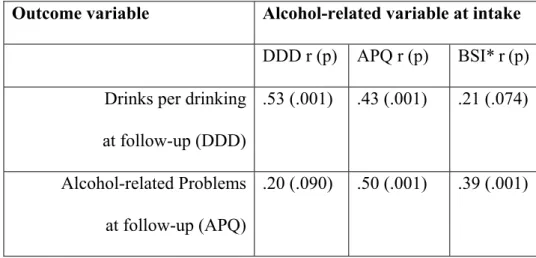
Table 3 Correlations between alcohol-related variables differing between treatment groups at intake (APQ, BSI & DDD) and outcome measures
(DDD & APQ) 40
Table 4 Outcome categories 45
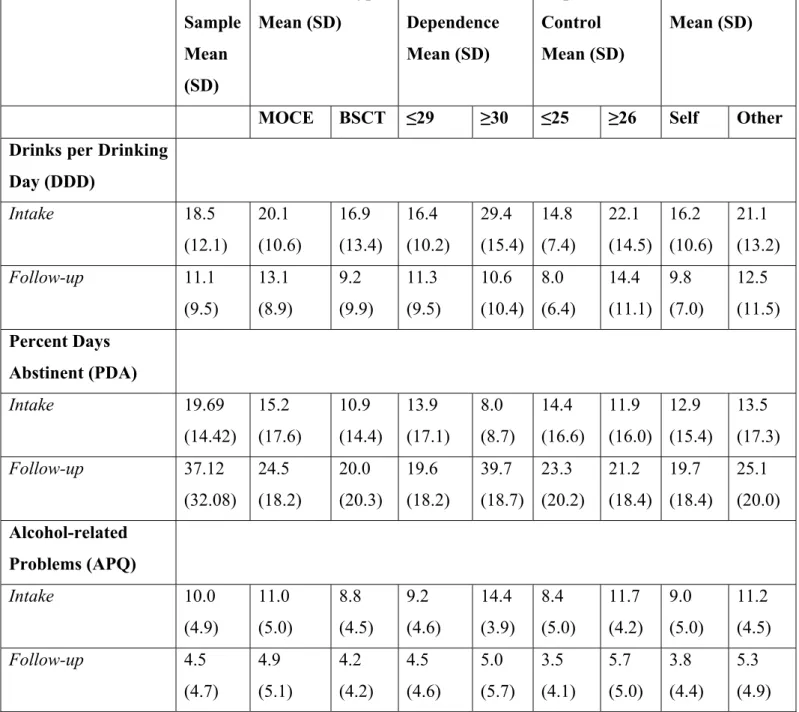
Table 5 Means and standard deviations of outcome variables (by whole sample, treatment group, level of impaired control, level of dependence and
referral source) 49
Table 6 Comparisons of treatment outcome (DDD) between treatment groups
for high/low dependence and high/low impaired control over drinking 50 Table 7 Comparisons of treatment outcome (APQ score) between treatment groups
for high/low dependence and high/low impaired control over drinking 54 Table 8 Reasons for visits to accident and emergency units at intake and follow-up 64 Table 9 Health care utilisation associated costs at intake and follow-up
by treatment 67
Table 10 Characteristics of those in the high alcohol-dependence group 70
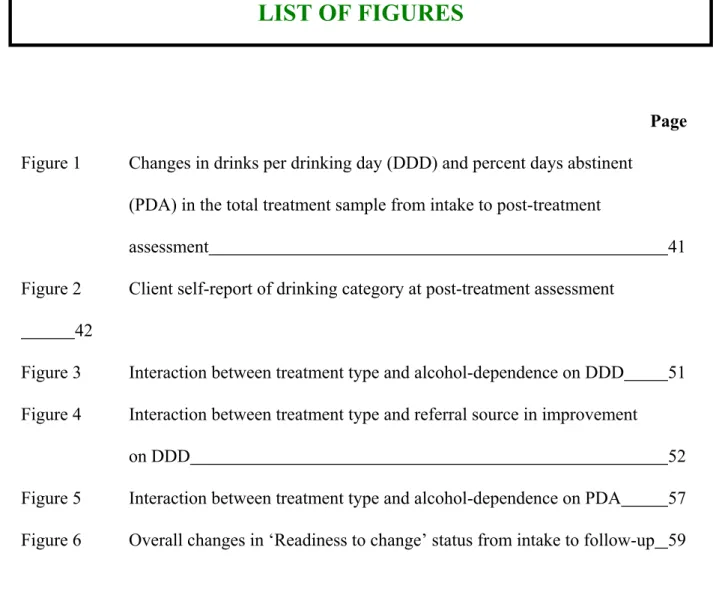
Page Figure 1 Changes in drinks per drinking day (DDD) and percent days abstinent
(PDA) in the total treatment sample from intake to post-treatment
assessment 41
Figure 2 Client self-report of drinking category at post-treatment assessment 42
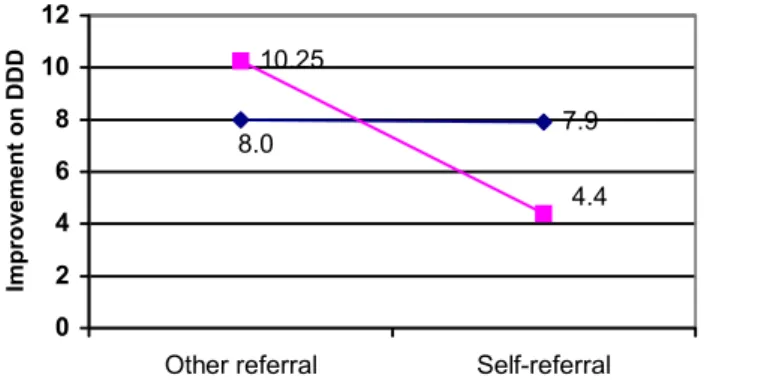
Figure 3 Interaction between treatment type and alcohol-dependence on DDD 51 Figure 4 Interaction between treatment type and referral source in improvement
on DDD 52
Figure 5 Interaction between treatment type and alcohol-dependence on PDA 57 Figure 6 Overall changes in ‘Readiness to change’ status from intake to follow-up 59
Professor Nick Heather: Chief Investigator Centre for Alcohol & Drug Studies (CADS),
Newcastle City Health NHS Trust; Centre for Clinical Psychology Research,
University of Northumbria at Newcastle. Mr Steve McCarthy: Co-investigator
Centre for Alcohol & Drug Studies, Newcastle City Health NHS Trust. Ms Jenny Brodie: Project Co-ordinator
Centre for Alcohol & Drug Studies, Newcastle City Health NHS Trust.
Mr Simon Wale: Trial Therapist Formerly CADS;
Now Chartered Clinical Psychologist Churchtown Day Hospital
County Limerick.
Mr Gerard Wilkinson: Trial Therapist Formerly CADS;
Now Clinical Manager The Tunstall Unit
Sunderland Ms Elspeth Webb
Formerly CADS; Trainee Clinical Psychologist Tees and North-east Yorkshire NHS Trust. Ms Anna Luce: Research Assistant – Follow-up
Formerly CADS; Now Research Psychologist Newcastle City Health Trust
Prof. Christine Godfrey: Consultant on Health Economics Centre for Health Economics,
University of York.
Mr Steven Parrott: Research Assistant – Health Economics Centre for Health Economics,
University of York.
1) A randomised controlled trial was carried out to examine the effectiveness and cost-effectiveness of Moderation-oriented Cue Exposure (MOCE), a novel form of “controlled drinking” treatment for alcohol problems based on previous reports in the literature. MOCE was compared with Behavioural Self-control Training (BSCT), the standard form of moderation-oriented treatment in countries, like the UK, where the goal is an accepted part of treatment services.
2) The main hypothesis tested was that MOCE would be more effective than BSCT among a sample of problem drinkers aiming at a goal of moderate drinking. Two subsidiary hypotheses were also tested: (a) that MOCE would be relatively more effective than BSCT among problem drinkers with higher levels of alcohol dependence (defined as a score of 30 or above on the Severity of Alcohol Dependence Questionnaire- Community Version); and b) that MOCE would be relatively more effective than BSCT among problem drinkers with higher levels of impaired control over drinking (defined as those above the median on the Failed Control score of the Impaired Control Scale.)
3) From a total of 171 individuals screened, 91 clients who preferred a moderation goal to total abstinence, and who were not unsuitable for the moderation goal on other grounds, were randomly allocated to either MOCE or BSCT. These clients were either self-referred via newspaper advertisements (64%) or self-referred from general medical practitioners and other sources (36%). The self-referred clients were more likely to be women and to be in employment than those referred from general practitioners or other agencies, showed lower alcohol dependence and alcohol-related problem scores and were less likely to have received treatment in the past. Thus the majority of clients in the trial were problem drinkers with relatively mild problems who may have been deterred from seeking treatment through conventional channels.
4) Although the average level of alcohol dependence in the treatment sample was low, it included 14 clients with levels of alcohol dependence above the commonly-accepted cut-point for a moderation goal (SADQ-C ≥ 30) and who would not normally be offered a moderation-oriented treatment programme in conventional treatment practice in the UK.
5) The treatment sample was, nevertheless, less impaired in terms of alcohol consumption and problems than a typical sample of problem drinkers who would normally be offered abstinence-oriented treatment in British treatment services. The sample was also higher in social stability and socio-economic status then the typical population of individuals in treatment for alcohol problems in specialist services.
6) In a nested, cross-over design, treatment was delivered by two therapists who had received special training. Treatment integrity was maintained by the selection of well-qualified and experienced therapists, by the use of treatment manuals and by formal assessment of a 10% random sample of tape-recorded treatment sessions. No differences in the effectiveness of the two therapists were detected in the outcome data.
7) Mean treatment attendance for MOCE was 7.1 sessions with a range of one to 16 sessions, while for BSCT it was 6.6 sessions with a range of one to 16 sessions. There was no statistically significant difference in the number of sessions attended between the two treatments. However, each MOCE session normally took 90 minutes compared with 60 minutes for BSCT.
8) At follow-up six months after the termination of treatment, a total of 77 clients were successfully contacted, giving a follow-up rate of 85%. In the analysis of treatment outcome, 39 clients who had received MOCE were compared with 38 who had received BSCT. Values for gamma-glutamyl transferase (GGT) were available at both pre-treatment assessment and follow-up for 68% of the follow-up sample and collateral reports of progress from “significant others” from 43%.
9) Although in the total treatment sample MOCE resulted in significantly greater improvements in global psychopathology at follow-up, differences between the treatment groups in alcohol-related outcome measures were not statistically significant. Thus the main hypothesis of the study was not confirmed. The results also suggested that BSCT was a more cost-effective treatment than MOCE. It is concluded that the trial provides no support for the replacement of BSCT by MOCE in routine treatment delivery.
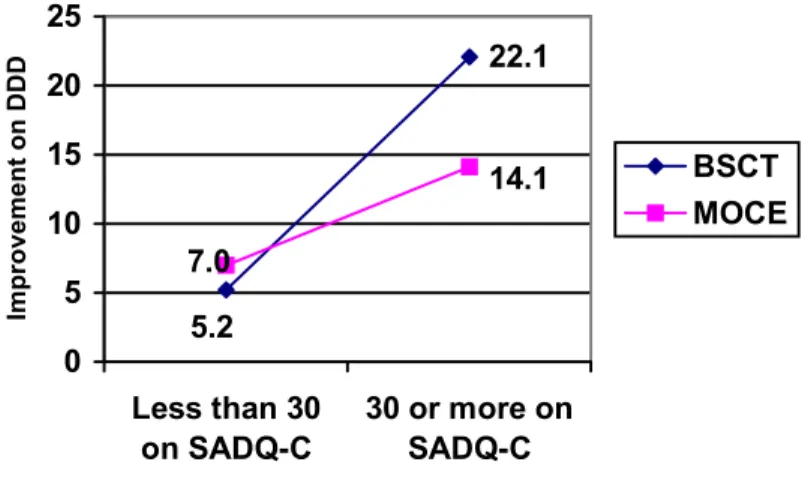
10) Clients with higher dependence at baseline (SADQ > 29) showed a much larger reduction in drinks per drinking day if they had received BSCT than if they had received MOCE, while those with lower dependence appeared to benefit equally from both types of treatment. In addition, clients higher in dependence showed a significantly greater increase in percentage days abstinent if they had received BSCT than if they had received MOCE, while those in the lower dependence group showed a significantly larger increase in percentage days abstinent if they had received MOCE than if they had received BSCT. These findings directly contradict predictions from subsidiary hypothesis (a) above which is therefore not confirmed.
11) The possibility that problem drinkers showing dependence below a score of 30 on the SADQ-C can benefit more from cue exposure treatment than from cognitive-behavioural therapy (including BSCT) is strengthened by the results of a recent Australian study. A tentative explanation is also available for why those higher in dependence might benefit more from BSCT than MOCE. However, the small numbers in some of the cells of the relevant analysis in the present study suggest that these unexpected findings should be regarded very cautiously.
12) Also not confirmed was subsidiary hypothesis (b) above regarding the interaction between level of impaired control over drinking and the relative effectiveness of the two treatments. Considering moderation-oriented treatment as a whole, however, a significantly greater proportion of those showing low impaired control at intake achieved a full recovery (34%) than those showing high impaired control (15%) and there were also non-significant tendencies for the low impaired control group to show more “improved” outcomes and greater reductions in drinks per drinking day. This suggests that a measure of impaired control over drinking, such as the Impaired Control Scale,
would be a better indicator of the advisability of moderation-oriented treatment than a measure of alcohol dependence.
13) Self-referred clients showed greater reductions in drinks per drinking day if they had received MOCE than if they had received BSCT, whereas those referred from general practitioners or other agencies showed better outcomes in this respect if they had
received BSCT. Given that self-referrals showed a lower average level of alcohol dependence at baseline, this finding may be due to the interaction between treatment modality and level of dependence noted at 10) above.
14) Considering the effects of both forms of treatment together, the moderation-oriented treatment delivered in the trial produced clear benefits to clients. Immediately after receiving either type of treatment, clients showed substantial decreases in alcohol consumption; average drinks per drinking day nearly halved and the average percentage of days abstinent in the previous two months was more than doubled. After treatment, 44% of clients described themselves as regular moderate drinkers and 11% saw themselves as non-drinkers. Decreases in alcohol consumption and problems were accompanied by marked improvements in psychopathology and confidence in the ability to control drinking.
15) The gains observed immediately after treatment had clearly been maintained at follow-up six months later. A total of 24% of clients followed-up reported a full recovery, defined either as total abstinence or as drinking without any alcohol-related problems in the previous two months. A further 23% were classified as much improved and 16% as somewhat improved, making a total of 63% with evidence of some improvement in drinking status from pre-treatment to follow-up. Significantly more clients were classified as in the “action” stage of change at follow-up than at pre-treatment. Significant changes in self-reported drinks per drinking day and percentage days abstinent from baseline to follow-up were validated by a significant decrease in levels of GGT. Outcomes from the present trial compare favourably with those from studies of moderation-oriented treatment previously reported in the literature even though the present study was conducted among a relatively more impaired sample of problem drinkers.
16) Again considering moderation-oriented treatment as a whole, it was found that, compared to those initially low in dependence, the higher dependence group of 14 clients showed a significantly larger reduction in drinks per drinking day and a significantly greater increase in percentage days abstinent from pre-treatment assessment to follow-up. It is
argued that this finding is unlikely to have been due to “regression towards the mean”. A conservative and cautious conclusion from the present data is that there is no evidence that clients showing higher levels of dependence at baseline, at least within the range of “high” dependence included here (SADQ-C = 30-45), benefit any less from moderation-oriented treatment than clients lower in dependence.
17) When attention was focussed on outcomes for the 14 clients with scores on the SADQ-C above the conventional cut-point for a moderation goal, it was found that positive outcomes were not restricted to total abstinence and that in four cases out of seven self-reports of improvements in drinking were supported by reductions in GGT from baseline to follow-up.
18) The validity of self-reports of drinking at follow-up was supported by statistically significant correlations between GGT levels and both drinks per drinking day and severity of alcohol problems. Despite the low number of collateral reports, there was a highly significant correlation between significant others’ reports of the extent of the client’s drinking problems at follow-up and those of the clients themselves. Both sources of confirmatory data strongly suggest that self-reports of drinking behaviour at follow-up were generally valid.
19) When “health care utilisation” was compared from before to after treatment, highly significant reductions were found in non-alcohol-related GP consultations. There were also significant reductions in alcohol-related GP consultations and alcohol-related inpatient stays in hospital. When health-care utilisation of all kinds was costed, highly significant reductions in costs per client were observed. The mean total reduction in costs was nearly £240 per client. This evidence suggests that moderation-oriented treatment produces substantial cost-benefits for the health care system.
Role of the moderation goal in treatment of alcohol problems
Following the fierce controversy in the alcohol problems field regarding the legitimacy of the “controlled drinking” treatment goal (Heather & Robertson, 1981; Marlatt, 1983; Miller, 1983; Sobell & Sobell, 1984; Roizen, 1987), this goal is now an accepted part of treatment services in some countries of the world. In the UK, as early as 1979, Robertson and Heather (1982) found that over two-thirds of the 70 treatment agencies they surveyed endorsed a controlled drinking (or “moderation”) goal for some of their clients. Ten years later, Rosenberg et al. (1992), using a more comprehensive sample, reported a broadly similar use of the moderation goal in the UK. The moderation goal also appears to be in common use in Australia (Donovan & Heather, 1997) and Norway (Duckert, 1989) and, from anecdotal evidence, in several other countries in Europe and elsewhere.
The situation is very different in North America. In the USA, Perkins et al. (1981) found that only 37% of treatment providers they surveyed endorsed moderation for any of their clients and a similar proportion was reported by Rush and Ogborne (1986) from their survey of treatment agencies in Ontario, Canada. More recently, Rosenberg and Davis (1994) surveyed a random sample of treatment agencies in the USA using the questionnaire developed by Rosenberg et al.
(1992). Three-quarters of respondents stated that any non-abstinence treatment goal was unacceptable.
In summarising “the great debate” on controlled drinking after 25 years, Sobell and Sobell (1995) reached the following two conclusions from research: 1) recoveries of individuals who have been severely dependent on alcohol predominantly involve abstinence; 2) recoveries of individuals who have not been severely dependent on alcohol predominantly involve reduced drinking. These conclusions appear to be reflected in treatment practice. In the Robertson and Heather (1982) survey of UK agencies, it was found that the majority of services allocated less than 20% of their clients to a moderation goal and that the main factor determining this allocation was a low level of alcohol dependence. Similar findings were reported by Rosenberg
et al. (1992) for the UK and by Donovan and Heather (1997) for New South Wales, Australia.
A commonly accepted cut-point for use of the moderation goal is a score of 30 on the Severity of Alcohol Dependence Questionnaire (SADQ: Stockwell et al., 1979), with clients at or above this score being advised to become totally abstinent. Support for the use of this cut-point comes from the original validation study of the SADQ when scores below 30 corresponded with a psychiatrist’s rating of “none or minimal” and “mild to moderate” alcohol dependence (Stockwell et al., 1979). Subsequently, in a 10-12 year follow-up of problem drinkers who had received abstinence-oriented treatment, Edwards et al. (1983) found that 7 out of 8 subjects who had achieved “social drinking” showed a maximum degree of dependence ever experienced of less than 30 on the SADQ. Although Heather (1995a) has warned that choice of treatment goal is an essentially clinical decision that should depend on unique characteristics and circumstances of the individual client, it is clear that conventional treatment practice favours the virtual restriction of the moderation goal to clients with low (i.e., SADQ < 30) levels of dependence.
Sobell and Sobell (1995) went on to argue that the major contribution of the moderation goal had been to the public health approach to alcohol problems. In particular, the use of the goal in brief
interventions by general practitioners and in other primary care settings (e.g. Wallace et al., 1988; Babor & Grant, 1991), in which excessive drinkers are advised and assisted to cut down drinking to below recommended levels, had been largely non-controversial and had been fully consistent with an emphasis on early identification and intervention for alcohol problems in the non-treatment seeking population at large. In a commentary on the Sobells’ editorial, Heather (1995b) accepted that the major role for moderation approaches had been in the public health arena and that there was a de facto consensus that the moderation goal should be largely confined to drinkers with low levels of dependence. However, Heather also argued that this consensus might be premature for the following reasons.
First, there is convincing evidence that some severely dependent problem drinkers do in fact succeed in controlling their drinking, despite having been directed towards total abstinence or having received no treatment at all, and are able to maintain a moderate pattern of drinking over extended periods of time (Shea, 1954; Kendell, 1965; Hyman, 1976; Polich et al., 1980; Vaillant & Milofsky, 1982; Nordström & Berglund, 1987). Secondly, reasons why severely dependent individuals usually find the reinstatement of control over drinking very difficult are far from clear but may include modifiable beliefs about the nature of alcohol problems in addition to neurophysiological factors (Elal-Lawrence et al., 1986; Orford & Keddie, 1986). Thirdly, some severely dependent drinkers simply refuse to countenance abstinence and it is not acceptable that such individuals should be turned away from treatment because they refuse to accept the policy of the agency in question. This raises the issue of the harm reduction goal in treatment (Heather, 1993), where the aim is not to eliminate alcohol problems but to reduce them to a less harmful level in association with improvements in other areas of life functioning. Fourthly, many severely dependent problem drinkers have failed many times, either with or without the assistance of treatment, to maintain abstinence over any substantial period. It seems sensible to
suggest that a moderation goal should be tried for problem drinkers of this kind, again with the implication that it is a significant reduction in alcohol-related harm that is being sought. Fifthly and finally, it is possible that new forms of moderation training could be developed, based perhaps on novel theoretical leads, that could increase the likelihood of successful moderation among severely dependent drinkers. The research to be described here concerns the effectiveness of a new form of treatment aimed at “controlled drinking”.
Theoretical background of alcohol cue exposure
The new treatment tested in this study is Moderation-oriented Cue Exposure (MOCE). This is based on the general treatment method of “cue exposure” which has proved highly successful in the treatment of anxiety disorders (Marks, 1978) and obsessive-compulsive disorders (Rachman & Hodgson, 1980). Applied to alcohol dependence, the assumption is that craving for alcohol is, partly at least, a classically conditioned response to alcohol-related stimuli (or “cues”) that have been frequently encountered during a drinking career. Such conditioned responses are thought to play an important role in the maintenance of excessive drinking and to persist after extended periods of abstinence. In this way, conditioned craving responses are seen as making a crucial contribution to relapse following treatment (Heather & Greeley, 1990; Drummond et al., 1995).
Cue exposure treatment for alcohol problems is based on the classical conditioning (i.e., Pavlovian) account of the extinction process, the aim being to expose the alcohol dependent person to alcohol-related cues that are associated with excessive drinking in the individual case in the absence of the reinforcing effects of the unconditioned stimulus (i.e., drinking). It is assumed that this will lead to the extinction of the conditioned craving response. Thus, for
example, the sight and smell of the client’s preferred alcoholic beverage would be presented without allowing drinking to take place (i.e. response prevention). In this way, the visual and olfactory cues associated with drinking would be extinguished, or at least weakened, thus reducing the probability of craving and relapse when such cues are encountered in the natural environment.
These principles are supported by a great deal of research with both animal (Mackintosh, 1983) and human (Drummond et al., 1995) subjects, using both laboratory and naturalistic settings. Although theoretical accounts of the conditioning process with respect to alcohol and drug dependence vary sharply (Wikler, 1980; Siegel, 1979; Stewart et al., 1980; Robinson & Berridge, 1993), these differences seem to have no implications at present for cue exposure practice. Moreover, while many questions remain to be resolved regarding relationships between physiological, behavioural and subjective components of craving (Drummond et al., 1995), there is no reason why this uncertainty should delay the evaluation of practical cue exposure methods (Heather & Bradley, 1990).
It is also possible that cue exposure methods chiefly work, for all disorders in which they are used, not by extinguishing classically conditioned responses but by increasing the client’s self-efficacy in coping with high-risk situations without resorting to the maladaptive response that constitutes the disorder (Bandura, 1977). While a basic assumption of self-efficacy theory is that performance-based methods leading to “mastery experiences” are superior to purely verbally-based methods, it is clearly changes in cognitions rather than in conditioned responses that represent the effective ingredients of therapy here. This kind of account of successful cue exposure in the addictions field has been provided by Wilson (1987). Again, however, this hypothesis does not invalidate a test of cue exposure in practical settings, although it does
suggest that some elements of “cognitive restructuring” might usefully be added to cue exposure procedures. It may be that both conditioning and self-efficacy elements contribute to successful cue exposure.
For alcohol dependence, a particularly important class of cue for excessive drinking is the interoceptive effects of low or moderate doses of alcohol. Clinical experience suggests that, for many problem drinkers, impaired control over consumption sets in following the ingestion of a few drinks and this led Glatt (1976) to propose the existence of a critical blood alcohol level at which “loss of control” is elicited. The idea of a threshold at which the alcohol dependent individual begins to “feel” the effects of alcohol and crave for more is embedded in clinical wisdom on the topic (Kjolstad, 1963). In support of this hypothesis, animal research indicates that the interoceptive effects of low doses of alcohol can become conditional stimuli for the ingestion of higher doses (Greeley et al., 1984). This suggests a form of extinction procedure in which alcohol dependent clients are given a “priming dose” of alcohol and are then asked to resist further drinking despite the craving for more alcohol that they will probably experience, with the expectation that craving will gradually diminish over successive exposures of this kind. This is essentially the method used in the MOCE procedure. Moreover, following the development of a specific measure of impaired control over alcohol consumption (Heather et al.,
1993a; 1998), it is possible to test the hypothesis that clients showing higher degrees of impaired control would benefit most from a priming dose cue exposure treatment method.
Clinical trials of cue exposure
There have been two randomised trials of cue exposure treatment in the alcohol field, both with positive results. Monti et al. (1993) compared cue exposure integrated with coping skills training
with standard inpatient treatment and found better drinking outcomes among clients receiving cue exposure during the second three months after treatment. Similarly, Drummond and Glautier (1994) compared cue exposure with relaxation training and found more favourable outcomes for cue exposure in terms of length of time to relapse to heavy drinking and total alcohol consumption at six months follow-up. However, both these trials used an abstinence treatment goal and did not give clients priming doses of alcohol before cue exposure. Their results are therefore not directly relevant to the present study.
Development of Moderation-oriented Cue Exposure
The first use of a priming dose of alcohol in a cue exposure paradigm was reported in a case study by Hodgson and Rankin (1976). This involved a middle-aged, male client showing a high level of alcohol dependence and serious alcohol-related problems. A strong priming dose of the client’s preferred drink was used to elicit craving and an expectation of withdrawal symptoms on further presentation of the beverage without consumption. Over repeated presentations of this cue, the client’s reported desire for a drink decreased markedly, as did his expectation of withdrawal symptoms. At a six-month follow-up, the client reported a much-decreased level of drinking combined with improvements in the relationship with his wife and in work performance. Both the client and his wife believed that the cue exposure treatment had increased his control over drinking. At a five-year follow-up, the client continued to show an improvement over his pre-treatment condition (Hodgson & Rankin, 1982).
It is noteworthy that this treatment was formally directed at abstinence, the authors suggesting that the cue exposure procedure could serve as a kind of “fire-drill” experience in the event of relapse. It seems more logical, however, to use the priming dose method in conjunction with a
controlled drinking goal; certainly, the gains demonstrated in this case were in terms of continued but reduced and less harmful drinking. Another case study by Rankin (1982) was directed expressly at a moderation goal and reported similar improvements to those of the earlier study.
Rankin et al. (1983) pursued these early findings in a controlled comparison of cue exposure with response prevention and a control condition involving a form of imaginal cue exposure. In the experimental group, after receiving 1.2g/kg ethanol in their preferred alcoholic beverage, subjects were asked to look at, hold and sniff a glass of the same beverage for 15 minutes periods while actively resisting the temptation to drink. In the control group, subjects were asked simply to imagine scenes that normally involved drinking for similar periods of time. Results showed that the experimental condition produced significantly greater decreases on behavioural and subjective measures of craving. Although supportive of the use of cue exposure methods, this study was not a clinical trial and subjects were not followed up.
Heather (1989) complained that the promising lead for improved treatment in the case studies and laboratory research reported by Hodgson and colleagues had not been followed up in a clinical trial and suggested that it was the controlled drinking controversy that had prevented this obvious development from taking place. The present report concerns a clinical trial of the kind called for by Heather (1989). No limit was set on the level of alcohol dependence that permitted entry to the trial, provided that clients were suitable for a controlled drinking goal on other grounds (see below).
The priming dose version of cue exposure was further developed in a case study carried out in Australia by Heather et al. (1993b). The client was a 24 year-old man with a medium level of
alcohol dependence and alcohol-related problems. He had attended meetings of Alcoholics Anonymous but had been put off by what he described as its “religious overtones”. He also believed that total abstinence would interfere with his work as a journalist and wished to try to drink in a controlled fashion. In addition to other areas of assessment, the client’s craving for alcohol was periodically assessed by an analogue measure of “desire to drink” in which he rated his desire for a further drink following the presentation of small amounts of alcohol every five minutes over a 90 minutes period (see Heather et al., 1993b). Improvements on a range of outcome measures were found at 3-, 6- and 12-month follow-ups and were supported by the results of the analogue measure.
The cue exposure method used in this case study was based on the method described by Rankin
et al. (1983) but also included an adaptation of a method described in a series of case studies by Blakey and Baker (1980) in an abstinence-oriented approach to cue exposure. In this method, clients and relatives were interviewed to establish salient “triggers” or cues for drinking in the individual case (e.g. walking along the local high street past a familiar public house). These situations were then rated in terms of how tempting they were to the client from the least to the most salient cue. Clients were then exposed to the cues in a graded manner while not being permitted to drink. Practice supervised by the therapist was usually followed by unsupervised practice. At follow-ups ranging from 0 to 9 months, most clients reported a good outcome with decreased desire to drink. Again, however, despite these encouraging results, the effectiveness of this procedure has not been examined in a clinical trial. The MOCE method to be described in more detail below is based on that used by Heather et al. (1993b), with some refinements to cue exposure procedures.
Control condition: Behavioural Self-control Training
In the study reported here, the control condition against which the effectiveness of MOCE is tested is Behavioural Self-control Training (BSCT). This treatment modality was developed by W.R. Miller and colleagues in a series of studies carried out in the late 1970s (Miller, 1978; Miller & Taylor, 1980; Miller et al., 1980,1981) and was based on the “self-management” principles described by Thoresen and Mahoney (1974). According to Hester (1995), BSCT can be directed either at an abstinence or a moderation goal but it is clear that it has been used mainly with the latter. It can be carried out either in therapist-directed format or in the form of a self-help manual. In the case of therapist-directed intervention, BSCT can be delivered either in a group setting or on an individual basis, as in the current study. The contents of BSCT as used in this study will be described below.
BSCT is probably the most researched single treatment modality in the alcohol problems field, with over 30 controlled trials devoted to it (Hester, 1995). Further, in a meta-analysis of research on treatment effectiveness by Miller and colleagues (1995), BSCT was the second best supported treatment modality in the literature. Follow-ups of self-referred, low dependence problem drinkers treated by BSCT and contacted between 3 and 12 months post-treatment have revealed impressive success rates in the region of 60% to 70% (Miller & Taylor, 1980; Miller et al., 1980). A two-year follow-up of clients in these studies (Miller & Baca, 1983) reported a success rate of 67%. Longer-term follow at 3 to 8 years post-treatment (Miller et al., 1992) found an increasing proportion of clients becoming total abstinent but a consistent 10-15% of all treated clients sustaining moderate and problem-free drinking.
Given this impressive evidence of effectiveness, BSCT has become the standard moderation-oriented treatment in all countries where the goal is an accepted part of treatment services. Therefore, any new treatment that is hypothesised to improve the effectiveness of moderation training, for all clients aiming at moderation or for a section of them, must show itself to be superior to BSCT before it can be considered for a place in routine practice. Thus a comparison with BSCT represents a stringent test of the effectiveness of MOCE.
Hypotheses
To summarise the foregoing discussion, the study was designed to test two linked hypotheses, a main hypothesis and two alternative versions of a subsidiary hypothesis:
1) MOCE will be more effective than BSCT among a sample of problem drinkers aiming at a goal of moderate drinking;
2a) MOCE will be relatively more effective than BSCT among problem drinkers with higher levels of alcohol dependence (defined as a score of 30 or above on the Severity of Alcohol Dependence Questionnaire-Community Version.)
2b) MOCE will be relatively more effective than BSCT among problem drinkers with higher levels of impaired control over drinking (defined as those above the median on the Failed Control score of the Impaired Control Scale.)
The general superiority of MOCE to BSCT is hypothesised on the basis of its theoretical foundations in the explanation of conditioned craving and impaired control over alcohol consumption, constructs which are central to an understanding of alcohol dependence itself.
Thus, because it is believed to address the basic processes involved in the development of alcohol dependence, it is reasoned that MOCE will be a more powerful form of treatment than BSCT, which does not directly address dependence processes.
By the same token, it is hypothesised that MOCE will be of relatively greater effectiveness among clients with higher levels of dependence who would not conventionally be offered moderation training. Alternatively, since a priming dose cue exposure method is directly relevant to the phenomenon of impaired control, it is hypothesised that MOCE will be of relatively greater effectiveness among clients with higher scores on a measure of impaired control over alcohol consumption.
Clients
Clients were recruited for the trial within Tyneside and surrounding areas over a period of approximately one-year from April 1996 to April 1997. A total of 173 individuals actively seeking help for alcohol problems were screened for inclusion in the trial, of whom 108 entered the trial and were randomised to treatment conditions. Referral sources included the Northern Regional Drug and Alcohol Service (NORDAS) (n=13), general practitioners (GPs) (n=33), a voluntary alcohol agency (n=1), a mental health unit (n=2), a general hospital physician (n=1) and self-referral via local media advertising (n=58). Forty referrals (40) failed to attend the screening interview and a further 16 attended screening but failed to attend the pre-treatment assessment.
Inclusion/exclusion criteria
To be included in the trial it was necessary for clients to express a preference for a treatment goal of moderate drinking over total abstinence. Given such a preference, clients were excluded in the following circumstances:
(i) values of alanine transferase (ALT). If ALT was recorded as above 60, clients were asked to attend an examination by a physician who advised whether or not the client should be excluded from the trial on health grounds, taking into account the results of liver function tests. Four referrals were excluded by this rule.
(ii) continued alcohol consumption at any level contraindicated on medical grounds. This was determined by contact with the client’s GP or, if the client did not wish the GP to be contacted, by a specially arranged medical examination. This resulted in two exclusions.
(iii) severe psychiatric disturbance. Clients at screening who scored 63+ on the Global Psychopathology scale of the Brief Symptom Inventory (Derogatis & Mesilaratos, 1982) were referred to an experienced clinician and were excluded if they were thought to be unsuitable for the trial for this reason. Only one referral was excluded in this way.
(iv) severe cognitive impairment. If cognitive impairment was suspected at screening, the protocol called for the client to be given tests of cognitive functioning. This contingency never arose.
(v) current dependence on other substances, excluding cannabis and nicotine. Two clients were excluded because of evidence of current dependence on heroin. However, poly-drug users were included provided alcohol was the main source of current problems.
(vi) pregnancy or client planning to become pregnant during the lifetime of the trial. Again, this exclusion criterion was not invoked.
Further conditions of participation in the trial were: written consent to random allocation to one of the two treatment modalities, physical ability to attend NORDAS for treatment sessions, a
willingness to suspend involvement with any other therapeutic intervention for the duration of the trial treatment and a willingness to have all sessions tape-recorded.
Design
Following pre-treatment assessment and signing of informed consent, clients were randomly allocated to one of the two treatment conditions, with 58 randomised to MOCE and 50 to BSCT. Two therapists (see below) were used in the trial in a nested, crossover design. Therapist A delivered MOCE and therapist B delivered BSCT for roughly half the trial and they then switched to the other form of treatment for the second half of the trial.
Seventeen (17) clients completed pre-treatment assessment and were randomised to treatment groups but failed to attend the first treatment session (10 from the MOCE group and 7 from the BSCT group). Owing to resource limitations, these clients were not followed up and were excluded from further analysis. This left 91 clients in the treatment sample, 48 in the MOCE group and 43 in the BSCT control group. These clients were followed-up approximately six months after the end of treatment. Six-month follow-up assessments were carried out by a research assistant blind to the treatment condition of the client who was asked not to reveal what kind of treatment he or she had received.
The design and procedures of the trial were approved by the Joint Newcastle Health Authority/ University of Newcastle upon Tyne Ethics Committee.
Treatments
Moderation-oriented Cue Exposure. The delivery of MOCE in this study was based on the treatment method described by Heather et al. (1993) with two main modifications. First, in the method described by Heather et al., taken from that developed by Rankin et al. (1983), the length of exposure to each type of cue (i.e., visual, tactile, olfactory) was set at three minutes and progressive exposure to the three types of cue was conducted in blocks, of which there were normally three in a treatment session. In the present study, however, and in line with advances in cue exposure practice (Dawe & Powell, 1995), exposure to each cue was prolonged until the client’s self-reported desire to drink had returned for two consecutive ratings to within 10% of the baseline reading taken before the priming dose was poured. Throughout exposures, the client was encouraged to verbalise his/her thoughts and the therapist attempted to ensure that thoughts remain alcohol-focussed.
The other modification to procedures entailed the inclusion of therapist scripts and client exercises aimed at restructuring expectations and beliefs relevant to control over drinking. This restructuring process mainly involved (i) challenging beliefs about the disease of alcoholism and the inevitability of "loss of control", and (ii) training in cognitive techniques for coping with craving. It took place mainly during intervals in the cue exposure procedures (e.g. during the ingestion of the priming dose, the absorption period etc.).
A detailed description of MOCE principles, methods and procedures is contained in a Therapists’ Manual (Heather & Wale, unpublished) available from the authors. In brief, the structure and contents of the MOCE treatment programme were as follows:
Introductory session. This had six aims: (i) to provide a brief introduction to the main features of MOCE treatment; (ii) to place the client's problem in the context of his or her life history and present circumstances; (iii) using principles and techniques of “motivational interviewing” (Miller & Rollnick, 1991), to raise the client's general level of motivation to cut down drinking; (iv) to offer a comprehensible rationale for the MOCE method; (v) to negotiate a level of drinking that would serve as a limit on consumption on any particular occasion and also as an amount of alcohol for the priming dose in cue exposure sessions; and (vi) to set out ground rules for the conduct of treatment, including the rule that the client should be totally abstinent during Phase I of treatment (see below), and obtain the client's agreement to these. No cue exposure took place during the Introductory Session.
Phase I: clinic-based cue exposure. Phase I sessions began with the recording of Breath Alcohol Concentration (BAC). If this was above 20mg%, the session was re-scheduled following a discussion of why drinking had taken place and encouragement to continue attending treatment. A baseline measure of subjective Desire to Drink (DD) was then taken on an 11-point scale ranging in intervals of 10 from 0 ("No desire to drink whatever") to 100 ("The greatest desire to drink I can imagine"). Events occurring since the last session were reviewed but breach of the rule of total abstinence during Phase I of treatment did not result in discharge. Instead, the client was asked about the circumstances of the drinking episode and the importance of abstinence during Phase I was re-emphasised.
Following this review, clients consumed the agreed amount of their preferred alcoholic beverage (PAB) which was normally completed within 20 minutes. Ratings of DD and Subjective Intoxication (SI) were taken at the end of the priming dose period. If during the consumption of the priming dose the client wished to discuss his or her problems, including alcohol-related
problems, this was not discouraged but the therapist responded by using motivational interviewing techniques. Direct advice and problem-solving suggestions were not given to avoid overlap with BSCT.
When the client had finished the priming dose, a period of 15 minutes was allowed for maximum absorption of alcohol before the commencement of formal cue exposure. At the end of the absorption period, pre-exposure measures of BAC, DD and SI were taken. The therapist then removed the empty beverage container from the table and poured another drink that was placed within easy reach of the client. Clients were reminded that the idea of the treatment was that they should resist the temptation to drink but would not be physically prevented from doing so and that it was therefore their own decision not to drink.
After habituation to the visual cue (see above), clients were presented with the tactile cue (i.e., asked to hold or cradle the glass or can in their hands) until the criterion for habituation to this cue had been reached. The client was then presented with the olfactory cue which involved holding the beverage container to the nose and sniffing the contents for approximately 30 seconds, repeated roughly every 60 seconds until the usual habituation criterion was reached. Further recordings of DD and SI were taken immediately after the start of each cue presentation and then every five minutes until criterion had been reached. In a few cases, clients did not report sufficiently high levels of DD for the MOCE method to be effective, despite self-reports of intense craving and impaired control after moderate amounts of alcohol in the natural environment. In such cases, the therapist attempted to increase craving by eliciting scenes from the client that were associated with high desire to drink.
After habituation had been achieved to the last cue presentation, the therapist re-administered the Mood Checklist, collected money from the client for the alcohol consumed as the priming dose
(if funds were available) and took a further BAC reading. At the end of each session, the client was asked to sign a disclaimer form. If the client's BAC was at or above 70mg%, she/he was strongly encouraged to remain at the treatment centre until BAC had subsided to below this level and a suitable relaxation area was provided for this purpose. If the client insisted on leaving against this advice, she/he was asked to sign a form acknowledging this fact. These matters had been agreed with the client during the Introductory Session.
The criterion for terminating the clinic-based phase of treatment and moving on to the next phase concerned across-session habituation. The principle on which this was based was that DD at the commencement of a session should start low and continue low until the end of the session. In practice, this meant that DD to the first presentation of the visual cue was 20 or lower and that DD did not increase to more than twice this initial level at any time during the session. Only one occurrence of these conditions was needed for the across-session habituation criterion to be reached and for Phase I to be terminated.
Phase II: supervised “in vivo” exposure. The second phase of the MOCE method was based on the work of Blakey and Baker (1980) and represented an attempt to increase generalisation of new responses acquired in the clinic-based phase to the client's normal environment. The specific objectives were to provide a relatively safe transition from the clinic situation to the outside environment, to prepare for unsupervised practice in Phase III by giving the client supervised experience in monitoring desire to drink and ability to resist in realistic situations; and to give the therapist some insight into the client's behaviour and attitudes to drinking in realistic drinking settings, thus assisting communication between therapist and client in Phase III of the programme.
The initial task in Phase II was the drawing-up of a Hierarchy of Tempting Situations associated with increasing temptation to drink heavily and exceed the agreed drinking limit. This usually commenced towards the end of Phase I and proceeded in three steps: (i) The Controlled Drinking Self-efficacy Scale (CDSEQ - see below), which had been completed at baseline assessment, was re-administered to help the client think about generalised drinking circumstances associated with increased temptation to drink heavily or lack of confidence in the ability to resist drinking heavily; (ii) following the more general review of issues related to drinking temptation at Step 1, the therapist and client next developed a list of specific drinking situations with different degrees of risk attached to them; (iii) after the Hierarchy of Tempting Situations had been completed and checked with the client, it was typed out and made ready for use at subsequent therapy sessions. The therapist and client then agreed on two or three situations from the hierarchy that could be used for supervised drinking practice, taking into account the need for a range of degrees of temptation, the avoidance of situations with a very high degree of temptation and the selection of situations that were feasible to visit and would not cause the client embarrassment or disrupt the treatment process.
All treatment sessions in Phase II began at the clinic and started with a BAC reading, with the same rule for rescheduling sessions as in Phase I. Brief notes were made of drinking episodes and related issues since the last meeting. Any problems experienced with keeping to the drinking limit were noted and discussed. This discussion was continued during supervised practice in the drinking situation. The client and therapist then proceeded by the most convenient method of transport to the selected drinking situation.
In the drinking setting, the client was asked to drink the agreed priming dose (drinking limit) and then consume one or more non-alcoholic drinks until desire to drink had subsided to within one
10% point above baseline recorded at the beginning of the session in the clinic (i.e., the same criterion for the termination of a cue exposure segment in Phase I). As before, it was considered essential that the session should not be terminated before the client had reached this criterion. If the priming dose consisted of more than one drink, the therapist bought the first round of drinks and then suggested that the client bought subsequent rounds.
It sometimes happened that a loss of acquired tolerance to alcohol resulted in the client experiencing a greater than anticipated degree of intoxication after the priming dose. If this occurred, the client was asked to agree to a lowering of the priming dose and therefore of the moderation drinking limit.
Conversation between client and therapist was regularly interspersed with requests as to the current level of DD. This always occurred just before the first sip of each drink. A careful but unobtrusive note was made of these ratings and the time they were taken. In addition to ratings, interaction between client and therapist followed the guidelines given for Phase I. When the criterion for terminating the session had been reached, therapist and client left the drinking situation together and, if appropriate, the client was driven home or to some other place she/he requested. During all Phase II sessions, the therapist’s drinking was confined to non-alcoholic beverages.
Phase II was normally terminated after two or three sessions. Only when the client specifically requested further supervised drinking sessions was Phase II prolonged beyond this and then for only a few sessions more.
Phase III: unsupervised drinking practice. The final phase of MOCE treatment aimed to complete the generalisation of the learning experience by having the client practice moderate
drinking on his or her own, accompanied by regular discussion of progress with the therapist. Phase III sessions had two objectives: 1) a review of drinking behaviour and related matters since the client was last seen; 2) a formulation of plans for drinking "experiments" during the period until the next therapy session.
In practice, the conduct of Phase III merged with that of Phase II. After the first session of supervised drinking practice, the client had been encouraged to begin experimenting with unsupervised drinking episodes and the results of these experiments were discussed at the beginning of the next session. Thus, Phase III could be said to have begun while Phase II was still in progress.
Each Phase III session started with a review of events since the client was last seen. The client was asked for a detailed account of any drinking episode that had taken place, including precise time, location, social situation, exact quantities of alcoholic beverages consumed, and associated behaviour and emotions. The client had been encouraged to continue making occasional DD ratings and to make a careful note of these ratings for later feedback to the therapist. If the client had kept to the drinking limit, the therapist attempted to reinforce this success by praising the client's achievement and emphasised that each successful experience of this kind made it easier for moderate drinking to be maintained in future. However, any discomfort, temptation or difficulties the client reported as accompanying the successful drinking episode were discussed.
If the client had failed to keep to the agreed limit, the therapist initiated a careful analysis of the reasons for this failure. The therapist was vigilant for the presence of the "rule violation effect", i.e., a tendency on the client's part to see the failure to moderate drinking on one occasion as evidence that all such attempts were hopeless and that she/he may as well abandon efforts to
control drinking. Rather, the client was encouraged to see the episode as a temporary lapse from which valuable lessons could be drawn for avoiding similar lapses in future (Marlatt & Gordon, 1985).
After the discussion of past events had concluded, the therapist guided the discussion towards a consideration of plans for drinking in the period until the client was next due to be seen. The Hierarchy of Tempting Situations was used to identify the next task in the client's progress towards stable moderate drinking. Unless there were practical reasons for not doing so, items in the hierarchy were taken one by one in ascending order. Clients were asked to describe any special difficulties they anticipated in being able to keep to the drinking limit in that particular situation and to devise a specific plan for dealing with these difficulties. Role play and imagery rehearsal were sometimes used to prepare for the situation in question.
In certain circumstances, the Hierarchy of Tempting Situations was abandoned, on either a temporary or permanent basis. For example, the client may have been confronted with a special event, such as a wedding, banquet or some other kind of celebration, that was not on the hierarchy because it was not a regular drinking situation. Such an event called for unique preparations and, if the event was regarded as so threatening that the client had very little confidence about resisting the temptation to drink heavily, it was permissible simply to avoid the situation, at least until the client had built up confidence in dealing with very high risk situations. In either case, the normal hierarchy could be re-introduced after the special event had passed. Another possible reason for revising the original hierarchy was that, as treatment progressed, clients may have come to put an entirely different interpretation on drinking behaviour and the nature of the temptation to which they felt exposed. In such cases, the hierarchy was reconstructed to suit the client's new perception of risk.
An important part of the therapist's advice to the client concerned the issue of habituation of the desire to drink. A fundamental principle of the MOCE method is that DD should return to baseline level before the drinker leaves the drinking situation. If this does not occur, it is possible that desire to drink in that situation will be strengthened. Thus the client was urged, if possible, to conduct unsupervised drinking practice sessions in the same way as the supervised and clinic-based sessions were conducted, i.e., to remain in the situation, having soft drinks if necessary, until DD had returned to baseline.
The most essential aspect of Phase III drinking practice was the attempt to persuade the client always to make careful plans for any drinking episode that occurred. It was aimed to convince them that going for a drink on an impulse, without the necessary thought and preparation, should be strictly avoided.
The mean length of MOCE sessions was 88 minutes (sd=7.5) and the modal value was 90 minutes.
Behavioural Self-control Training. BSCT was based on the guidelines provided by Hester and Miller (1989) and was also described in manual form. Treatment began with an Introductory Session similar to that in the MOCE treatment programme and containing a similar motivational emphasis. Subsequent sessions covered the following areas: behavioural techniques of limit-setting; self-monitoring; consumption management; drink refusal skills; self-reinforcement of goal attainments; functional analysis of drinking situations; and learning alternative behaviours for coping with high-risk drinking situations. Depending on the results of the functional analysis, clients were offered optional sessions in anxiety management, social skills and assertiveness training, and anger management.
Mean length of BSCT sessions was 63.5 minutes (sd=9.7). The modal value was 60 minutes.
Therapists
Two male clinicians delivered the trial treatments, one an A-grade Clinical Psychologist and the other an G-grade Psychiatric Nurse with extensive experience in the treatment of alcohol problems.
The Chief Investigator (NH) carried out therapist training over a 8-week period before the commencement of the trial. General training in the cognitive-behavioural approach to treatment of alcohol problems was followed by intensive training in each of the specific therapeutic modalities. The cross-over of therapists occurred after 40 (20 clients per therapist) of the 91 clients in the treatment sample had been seen and entailed a two-week re-training period.
Treatment integrity
The integrity of the delivery of the two treatments was addressed in the following ways: selection of well-qualified and experienced clinicians; thorough, manual-led training for therapists in both treatments; and weekly or fortnightly supervision sessions concerned with clinical issues throughout the treatment phase of the trial. In addition, treatment integrity was formally assessed by the analysis of a 10% random sample of tape-recorded treatment sessions conducted by two of the investigators (NH & SM). No evidence for therapist drift became apparent during these assessments.
Procedure
Potential clients were referred (or referred themselves) by telephone, in person or by post. In all cases, a referral form was completed to facilitate the early screening-out of clients who clearly did not meet eligibility criteria (e.g., where alcohol was not the main problem or the referred person was pregnant). Referrals who appeared to be potentially suitable for the trial were asked to attend NORDAS for a more in-depth screening interview. This took from 30 to 60 minutes and consisted of a checklist of eligibility criteria, including a finger-prick blood sample for measurement of ALT and gamma-glutamyl transferase (GGT) using the Reflotron device (Boehringer Mannheim Diagnostics, 1989). Clients eligible for the trial after screening were invited to attend a pre-treatment assessment session and those ineligible were offered alternative treatment or advice outside the trial.
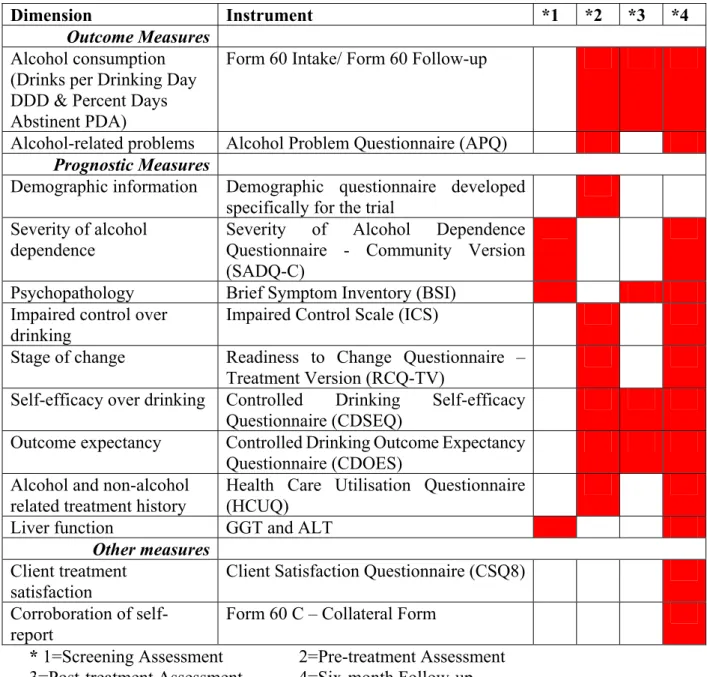
Pre-treatment assessment. The pre-treatment assessment session lasted about 60 minutes and was usually scheduled for one week after the screening interview. The session comprised demographic information, alcohol consumption over the past two months and alcohol/non-alcohol-related treatment experiences over the previous six months. It also included a self-report battery of questionnaires including measures of alcohol-related problems, impaired control over drinking, stage of change, self-efficacy over drinking and perceived costs and benefits of reduced drinking. A summary of research questionnaires is provided in Table 1.
Table 1. Summary of Research Questionnaire Battery
Dimension Instrument *1 *2 *3 *4
Outcome Measures
Alcohol consumption (Drinks per Drinking Day DDD & Percent Days Abstinent PDA)
Form 60 Intake/ Form 60 Follow-up
Alcohol-related problems Alcohol Problem Questionnaire (APQ)
Prognostic Measures
Demographic information Demographic questionnaire developed specifically for the trial
Severity of alcohol dependence
Severity of Alcohol Dependence Questionnaire - Community Version (SADQ-C)
Psychopathology Brief Symptom Inventory (BSI) Impaired control over
drinking
Impaired Control Scale (ICS)
Stage of change Readiness to Change Questionnaire – Treatment Version (RCQ-TV)
Self-efficacy over drinking Controlled Drinking Self-efficacy Questionnaire (CDSEQ)
Outcome expectancy Controlled Drinking Outcome Expectancy Questionnaire (CDOES)
Alcohol and non-alcohol related treatment history
Health Care Utilisation Questionnaire (HCUQ)
Liver function GGT and ALT
Other measures
Client treatment satisfaction
Client Satisfaction Questionnaire (CSQ8) Corroboration of
self-report
Form 60 C – Collateral Form
* 1=Screening Assessment 2=Pre-treatment Assessment 3=Post-treatment Assessment 4=Six-month Follow-up
At the end of the pre-treatment assessment session, all eligible clients were provided with information on the trial and the randomisation procedure and were asked to sign informed consent. There were no refusals. In cases where medical confirmation of eligibility for the trial was necessary, randomisation and informed consent were postponed until this had been received. An appointment for the first treatment session, usually one week following the assessment, was made directly after randomisation.
A post-treatment assessment took place at the end of the final treatment session or as soon as possible thereafter. The assessment comprised details of alcohol consumption over the previous 2 months and a self-report battery of questionnaires (see Table 1). It also included a question related to the client’s own characterisation of his or her drinking at the post-treatment point. (This question was introduced after the study had started and applied only to a proportion [n=63] of the treatment sample.) The post-treatment assessment took about 30 minutes.
Follow-up
Follow-up in this study was carried out six months after the date of the post-treatment assessment. Due dates for the six-month follow-ups were tagged on a computer data-base and clients were sent out an appointment ten days before this due date. If neither of two assessment appointments were attended, a more rigorous search was carried out. This included tracing the client through contact names provided at intake or through other agencies, e.g., GPs or social workers. If there was no response from the client after a period of one month from the assessment due date, the questionnaire battery was posted to them with a return stamped-addressed envelope. If no response had been received after a period of two months, six-month follow-up data were regarded as missing.
At six month follow-up, baseline and post-treatment self-report questionnaires were repeated. Alcohol consumption levels over the previous two months and alcohol/non-alcohol-related treatment experiences over the prior six months were recorded. A further fingerprick blood sample was taken for measurement of ALT and GGT. The session lasted approximately 60 minutes.
Postal questionnaires were used when the client was found to have left the region and a forwarding address was available. Also, if all attempts to make personal contact with the client had failed, a postal questionnaire was sent. The postal questionnaire contained the same self-report measures as used in the in-person follow-up assessments together with the Steady Pattern Chart and Episodic Drinking Chart from Form 60 with instructions on how to complete whichever form was more appropriate. Clients were also asked for any other information (e.g. number of days of abstinence) that was relevant to the evaluation of their drinking pattern during the previous 60 days. The Health Care Utilisation Questionnaire was also converted to a self-report instrument for the purposes of the postal questionnaire.
Collateral information
Collateral information was collected as soon as possible after the six month follow-up. A short telephone questionnaire (5-15 minutes) based on the collateral questionnaire in the Form 90 battery (Miller, unpublished) asked about the client’s alcohol consumption, number of days abstinent, alcohol-related problems and alcohol-/non-alcohol-related treatment. Collateral informants were mainly spouses or partners (58%), together with friends/work colleagues (18%), parents (15%), other family members (6%) and one sibling (3%).
Measures
The trial assessment battery employed measures from a variety of sources (self-report, interviewer-led and biological measures) in order to provide baseline, outcome and corroborative data. Table 1 summarises the main variables measured, the specific instruments used and at which assessment point they were given.
In more detail, measures and instruments were as follows:
Form 60. This was an adaptation of Form 90 as used in Project MATCH (Project MATCH Research Group, 1997) but based on Miller’s (unpublished) version. Using the Time-line Follow-back method (Sobell et al., 1988), alcohol consumption over the two months prior to assessment was reconstructed. Additional questions in Form 60 related to other treatment experiences, work, housing and other activities in the assessment period.
Alcohol Problems Questionnaire (APQ) (Drummond, 1990). This self-report questionnaire consists of 44 items divided into five subscales measuring the perceived costs of drinking in terms of financial, legal, physical, social and psychological problems. Further subscales that may not be applicable to all clients measure the impact of drinking on relationships with a spouse or co-habiting partner, on relationships with children and on work. The APQ provides an indication of the impact of problem drinking within these domains over the previous six months and norms are based on a clinical population.
Severity of Alcohol Dependence Questionnaire – Community Version (SADQ-C) (Stockwell et al., 1994). This questionnaire consists of 20 items each scored on a 4-point scale resulting in a score of 0 to 60. The community version of the SADQ described by Stockwell et al. (1994)
differs from the original version (Stockwell et al., 1979) in various aspects of instructions to subjects and response categories but also in asking subjects to focus on the last three months rather than “a recent period of heavy drinking”. In the present study, clients were asked to focus on the six months prior to the follow-up assessment.
Health Care Utilisation Questionnaire (HCUQ). The HCUQ is an interviewer-administered questionnaire comprising two sections - non-alcohol-related treatment and alcohol-related treatment. This unpublished questionnaire was developed specifically for the current study in order to undertake an economic analysis of treatment. Information recorded includes details on the level of contact with residential, outpatient, daypatient, accident and emergency, and GP services.
Brief Symptom Inventory (BSI) (Derogatis & Mesilaratos, 1982). The BSI is a 53-item self-report questionnaire designed to identify problematic psychological symptoms. The Inventory is scored 0-4 on a five-point scale and comprises the following nine dimensions: somatisation, hostility, obsessive-compulsivity, phobic anxiety, interpersonal sensitivity, paranoid ideation, depression, psychoticism, and anxiety. Scores equal to or above 63 on each dimension are indicative of caseness. The inventory also includes three global scores reflecting overall psychological distress (most commonly used as a global indicator of psychopathology), intensity of symptoms and the number of symptoms reported. Scores are based on a 7-day period prior to assessment and norms are provided for both non-treatment and clinical populations.
Impaired Control Scale (ICS) (Heather et al., 1993b; 1998). This self-report instrument consists of three sections measuring the degree to which control over drinking has been attempted, failed