Deployment Guide
This guide contains proprietary information protected by copyright. The software described in this guide is furnished under a software license or nondisclosure agreement. This software may be used or copied only in accordance with the terms of the applicable agreement. No part of this guide may be reproduced or transmitted in any form or by any means, electronic or mechanical, including photocopying and recording for any purpose other than the purchaser's personal use without the written permission of Quest Software, Inc.
If you have any questions regarding your potential use of this material, please contact: Quest Software World Headquarters
LEGAL Dept 5 Polaris Way Aliso Viejo, CA 92656 USA www.quest.com email: [email protected] telephone: 949.754.8000
Please refer to our Web site for regional and international office information.
TRADEMARKS
Quest, Quest Software, the Quest Software logo, Aelita, Fastlane, Spotlight, and Vintela Single Sign-on for Java are trademarks and registered trademarks of Quest Software, Inc. Adobe® Reader® is a registered trademark of Adobe Systems Incorporated in the United States and/or other countries. Other trademarks and registered trademarks used in this guide are property of their respective owners.
Vintela Single Sign-on for Java from Quest Software Standard Edition Deployment Guide Updated - September 2007
C
ONTENTS
PREFACE. . . .VII
WHO SHOULD READ THIS GUIDE? . . . VIII WHAT’S IN THIS GUIDE? . . . VIII CONVENTIONS. . . IX
CHAPTER 1: INTRODUCTIONTO VSJ . . . 1
OVERVIEW . . . 2
ABOUT VSJ . . . 2
ABOUT KERBEROS . . . 3
ABOUT ACTIVE DIRECTORY . . . 5
ACTIVE DIRECTORY GROUPS . . . 6
ACTIVE DIRECTORY SITES. . . 9
PRINCIPALS, COMPUTER AND USER OBJECTS . . . 9
VSJ AND ACTIVE DIRECTORY. . . .10
SPNEGO AND INTERNET EXPLORER. . . .11
HOW DOES VSJ WORK? . . . .11
CHAPTER 2: PREPARING YOUR DEPLOYMENT ENVIRONMENT FOR VSJ. . . .15
OVERVIEW . . . .16
PRE-INSTALLATION. . . .16
DOMAIN NAME SERVICE (DNS) . . . .16
TIME SYNCHRONIZATION SERVICE. . . .17
ACTIVE DIRECTORY. . . .18 APPLICATION SERVER . . . .18 CLIENT MACHINE . . . .18 DEPLOYMENT RISKS . . . .20 SERVICE UNAVAILABILITY . . . .20 TIME SYNCHRONIZATION . . . .20 REPLICATION INTERRUPTIONS. . . .21 RESOURCE SECURITY. . . .21
SETTING UP ACTIVE DIRECTORY ACCOUNTS FOR VSJ . . . .21
STEP 1: CREATE A USER ACCOUNT . . . .21
SETTING UP ACTIVE DIRECTORY ACCOUNTS
ON A VAS-ENABLED HOST . . . .24
VINTELA AUTHENTICATION SERVICES (VAS) . . . .24
USING THE VAS HOST SERVICE PRINCIPAL NAME TO INSTALL VSJ . . . .25
CREATING A HTTP SERVICE PRINCIPAL USING VASTOOL . . . .26
SETTING UP INTERNET EXPLORER FOR SSO . . . .27
WINDOWS INTEGRATED AUTHENTICATION . . . .27
NTLM AUTHENTICATION. . . .28
TROUBLESHOOTING YOUR INTERNET EXPLORER CONFIGURATION . . . .29
CREATING KEYTAB FILES . . . .30
CHAPTER 3: DEPLOYING VSJ. . . .33
OVERVIEW . . . .34
INSTALLING VSJ . . . .34
DEPLOYMENT OPTIONS. . . .35
CONFIGURING THE VSJ EXAMPLES. . . .37
DEPLOYING WEB COMPONENTS USING VSJ . . . .38
CREATING A DEPLOYMENT DESCRIPTOR FOR SSO . . . .38
CONFIGURING THE VSJ PARAMETERS. . . .40
BUILDING A WEB APPLICATION ARCHIVE (WAR) FOR SSO . .41 SETTING UP LOGGING . . . .41
USING SSO CREDENTIAL DELEGATION. . . .42
DELEGATING TO ANOTHER WEB RESOURCE USING SPNEGO .43 CROSS-DOMAIN ISSUES. . . .45
CLIENT-SIDE CONFIGURATION . . . .45
BASIC FALLBACK . . . .46
CONTROLLING ACCESS TO RESOURCES . . . .46
SETTING UP AUTHORIZATION USING ACTIVE DIRECTORY GROUPS . . . .46
WRITING ACCESS POLICY FILES . . . .55
CHAPTER 4: VSJ FEDERATION . . . .67 OVERVIEW . . . .68 FEATURES . . . .68 PREREQUISITES . . . .69 INSTALLATION. . . .69 XML LIBRARIES. . . .69 DEPLOYMENT. . . .70 CONFIGURATION. . . .71 KNOWN ISSUES. . . .72
CHAPTER 5: USINGTHE JKTOOLS. . . .73
OVERVIEW . . . .74 THE JKTOOLS. . . .74 JKINIT. . . .74 JKLIST. . . .74 JKTUTIL. . . .75 EXAMPLES . . . .75
CHAPTER 6: SECURITY ISSUES . . . .77
OVERVIEW . . . .78
SUMMARY OF BASIC RECOMMENDATIONS. . . .78
CLIENT ISSUES . . . .78
COOKIES. . . .78
CACHING OF PASSWORDS FOR BASIC FALLBACK . . . .79
SPNEGO/WINDOWS INTEGRATED AUTHENTICATION. . . .79
LIFETIME OF AUTHENTICATION . . . .80
SESSION IDS . . . .80
ACTIVE DIRECTORY PERMISSIONS . . . .81
BASIC FALLBACK . . . .83
KEYTABS AND PASSWORDS . . . .84
AUTHORIZATION. . . .85
DO YOU NEED AUTHORIZATION? . . . .85
SECURING LDAP . . . .85
DENIAL OF SERVICE . . . .86 BASIC FALLBACK . . . .86 SESSION STATE. . . .86 AUDITING . . . .87 NTLM AUTHENTICATION. . . .87 WHAT IS NTLM? . . . .87 DIFFERENT VERSIONS OF NTLM . . . .88
NTLM AND INTERNET EXPLORER. . . .88
CHAPTER 7: MAINTENANCEAND TROUBLESHOOTING. . . .91
OVERVIEW . . . .92
MAINTENANCE. . . .92
LOGGING. . . .92
NEW USERS / GROUPS . . . .92
ACCOUNT SETTINGS . . . .92
NETWORK TOPOLOGY CHANGES . . . .93
TROUBLESHOOTING. . . .93 GENERAL. . . .93 ACTIVE DIRECTORY. . . .95 BROWSERS. . . .95 AUTHENTICATION. . . .97 KEYTABS . . . 100 NETWORK CONNECTIONS . . . 100 CREDENTIAL DELEGATION. . . 101 DEBUGGING . . . 101
APPENDIX A: VSJ CONFIGURATION PARAMETERS. . . 103
GLOSSARY . . . 111
Preface
As the use of distributed systems increases, users need to access resources that are remotely located. Traditionally users have had to sign-on to multiple systems, many requiring different usernames, passwords and authentication techniques. With single sign-on (SSO), users need only authenticate once and the authenticated identity is securely carried across the network to access resources on behalf of the user.
The Java™ Platform, Enterprise Edition (Java EE™) is an excellent platform for developing Internet, intranet and extranet applications. It provides a
standardized architecture that makes reuse possible, and provides tight integration with databases and legacy applications through the JDBC and JCA interfaces. Many enterprises have deployed, or are in the process of deploying Java EE applications.
In addition, many enterprises are moving to support a standardized authentication infrastructure. In particular, Microsoft®'s Active Directory® provides an environment based on Kerberos and LDAP which provide Identity Management services including SSO, a centralized store for identity information. It makes a lot of sense to reuse this infrastructure where possible.
Unfortunately, tight integration with Kerberos, and in particular the
infrastructure provided by Microsoft’s Active Directory which is already deployed or being deployed in many organizations, is simply not available for Java EE. Vintela Single Sign-on for Java from Quest Software fills this gap, providing SSO and access management for Java EE applications using Active Directory as their identity store. It provides an enterprise-wide method of identification and authorization that can be administered in a consistent and transparent manner and allows users to access information systems to which they are authorized.
Who Should Read This Guide?
The VSJ (Standard Edition) Deployment Guide is intended for developers of VSJ solutions for enterprise SSO applications. You should have a good knowledge of Java programming, and a sound understanding of how Active Directory works in your environment.
What’s in This Guide?
This guide describes how to deploy VSJ and includes a number of examples designed to accelerate the implementation of your VSJ solution.
The VSJ (Standard Edition) Deployment Guide includes: • Chapter 1: Introduction to VSJ
This chapter introduces VSJ as well as covering underlying
technologies, such as Kerberos, Active Directory and SPNEGO, and includes an outline of VSJ’s operations from the point of initialization through to exit.
• Chapter 2: Preparing Your Deployment Environment for VSJ
This chapter discusses the environment needed for a VSJ deployment, including the DNS implementation, time synchronization service issues, Active Directory installation, and your application server and client machine software requirements.
• Chapter 3: Deploying VSJ
This chapter describes how to install VSJ Standard Edition and then build SSO solutions using VSJ-protected Servlets and JSPs.
• Chapter 4: VSJ Federation
This chapter describes VSJ Federation, which is a servlet filter that provides single sign-on for Web Applications in a Microsoft ADFS (Active Directory Federation Services) environment.
• Chapter 5: Using the JKTools
This chapter describes how to use the jkinit, jklist and jktutil tools which are included with VSJ.
• Chapter 6: Security Issues
This chapter outlines the mechanisms in VSJ used to achieve secure operation, and outlines some areas that may need attention.This chapter discusses the common maintenance issues relating to a VSJ deployment and provides solutions to some common problems which may be experienced when configuring and deploying applications using VSJ.
• Chapter 7: Maintenance and Troubleshooting
This chapter discusses the common maintenance issues relating to a VSJ deployment and provides solutions to some common problems which may be experienced when configuring and deploying
applications using VSJ.
• Appendix A: VSJ Configuration Parameters
This appendix provides a complete list of the VSJ configuration parameters.
• Glossary
The Glossary provides definitions of the terminology used in this guide.
Conventions
Conventions used in this guide are shown below.
Convention Use
Code Highlights commands and coding
Code italic
Highlights code variablesSansSerif Highlights file names and paths SansSerif italics Highlights file name and path variables
Introduction to VSJ
• Overview
• About VSJ
• About Kerberos
• About Active Directory
• SPNEGO and Internet Explorer
• How Does VSJ Work?
Overview
This chapter introduces VSJ as well as covering underlying technologies, such as Kerberos, Active Directory and SPNEGO, and includes an outline of VSJ’s operations from the point of initialization through to exit.
About VSJ
VSJ provides a mechanism for integrating Java EE applications into an enterprise SSO infrastructure based on Active Directory. It supports authentication and authorization with Active Directory and in particular supports the SPNEGO protocol with Internet Explorer and Firefox/Mozilla. This allows Java EE Servlets and JSPs to authenticate users using Kerberos, and to use delegated credentials to access other Kerberized services within an enterprise domain.
VSJ utilizes a number of other Active Directory features such as Active Directory groups and Active Directory sites. VSJ supports the authorization of users using Active Directory groups. By specifying which Active Directory groups are allowed to access an application, you can control access by managing group
membership.
Active Directory sites represent the physical topology of an Active
Directory-based network infrastructure, and allow for replication, redundancy and load balancing across the network. VSJ uses Active Directory sites to support replication and failover.
By using the VSJ solution you will be able to provide:
• End-to-end authentication between users and backend services • Authorization of users by using Active Directory groups
• Integration of Java EE applications in an Active Directory/Kerberos-based SSO environment
• A cross-platform solution which supports most operating systems and Java application servers
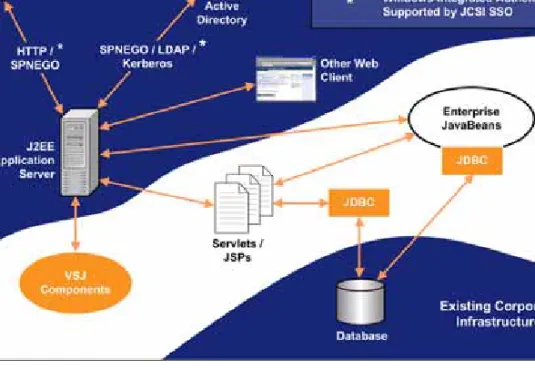
Figure 1 shows a conceptual view of a typical VSJ deployment.
Figure 1: Conceptual View of a Typical VSJ Deployment
About Kerberos
Kerberos is a network authentication protocol developed at the Massachusetts Institute of Technology (MIT). It is designed to provide strong authentication for client/server applications across insecure network connections by using secret-key cryptography. It allows entities communicating over networks to prove their identity to each other while preventing eavesdropping or replay attacks. It also provides for data stream integrity (detection of modification) and secrecy (preventing unauthorized reading) using cryptographic ciphers such as DES.
Kerberos works by providing principals (users or services) with tickets that they can use to identify themselves, and secret cryptographic keys for secure communication with other principals. A ticket is a sequence of a few hundred bytes.
The ticket can then be used to secure virtually any other network protocol, thereby allowing the processes implementing that protocol to be sure about the identity of the principals involved.
Kerberos provides for mutual authentication and secure communication between principals on an open network by manufacturing secret keys for any requester and providing a mechanism for these secret keys to be safely propagated through the network. Kerberos does not, strictly speaking, provide for
authorization or accounting, although applications may use their secret keys to perform those functions securely.
There are several versions and distributions of Kerberos. Most of them are based on the MIT distributions. Some of the distributions are freely available, some are standalone commercial products, and others are part of larger free or proprietary systems. MIT Kerberos versions 4 and 5 are freely available. Versions 4 and 5 are based on completely different protocols, however version 5 contains some compatibility code.
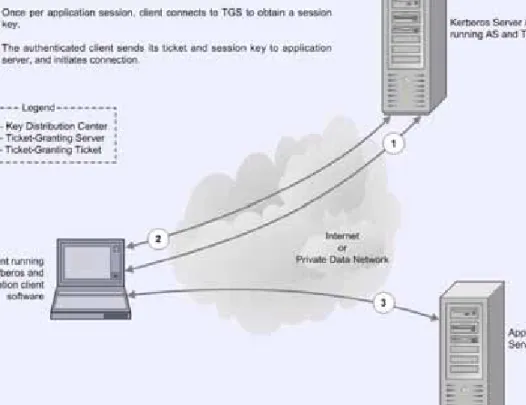
Figure 2 shows how the Kerberos protocol works. A principal authenticates itself in Kerberos by using a principal name of the form principal-name@realm and a password. This is typically used to send an encrypted message to the
Authentication Service (AS), which can then authenticate the principal and send back a session key and Ticket Granting Ticket (TGT). The TGT is like a certificate of identity which allows the principal to gain later access to one or more services. Once the user has supplied their password and obtained the TGT from the AS, authentication to any other service can happen automatically without the user having to resupply their password. For this reason, Kerberos is sometimes called a Single Sign-On (SSO) service.
A ticket is a credential that enables a principal to gain access to a service. A principal obtains tickets from the Ticket Granting Service (TGS) using the TGT obtained from the AS as described above. The ticket is used to create an authenticator, which is then sent to the service being requested to authenticate the user. The authenticator is used to establish a session key for secure communication. Optionally, the user can also request to authenticate the server. If this happens, the server uses information in the user's authenticator to send back a server authenticator, which the user can use to verify the server's authenticity.
The Kerberos protocol has been widely analyzed and is supported by many vendors including Sun, Microsoft and Oracle to name a few. It forms the basis of the authentication system used by Active Directory in Windows operating systems.
About Active Directory
The Active Directory service is a core component of the Microsoft Windows operating system. It provides a directory service supporting the Lightweight Directory Access Protocol (LDAP), and a Kerberos KDC to authenticate users. It allows organizations to share and manage information about network resources and users and provides an SSO environment that integrates with the standard Windows desktop login. In addition, it acts as a single point of management for Windows-based user accounts, clients, servers and applications.
The directory is arranged hierarchically, allowing the division of enterprise resources into different domains. Each resource (i.e., user, application), is represented as an object with a number of attributes (for example, the organizational group to which the resource belongs). The directory may be browsed hierarchically for resources, or each resource can be individually addressed by providing its Distinguished Name. The Distinguished Name is simply a group of attributes that uniquely identify an object within the Active Directory hierarchy (for example, “CN=John Doe, DC=example, DC=com”).
The directory also provides fine-grained security mechanisms to allow
administrators to determine exactly what information may be accessed. Users can be restricted to specific objects, or even specific attributes within the directory.
The main benefits of using Active Directory are that it simplifies the management of user accounts, and provides an SSO infrastructure to users. Its support for standard protocols such as LDAP and Kerberos means that it can be used as, or with, a cross-platform solution. The Kerberos support in Active Directory has been tested to ensure interoperability with the MIT Kerberos implementation used by many UNIX vendors. However, it is worth noting some differences between the Microsoft and MIT implementations:
• Support for Privilege Attribute Certificates (PACs)
Microsoft's Kerberos implementation uses the AuthorizationData field of the Kerberos ticket to pass Privilege Attribute Certificates (PACs) to Kerberized applications. Applications that support Microsoft's PAC format can use this information to provide fine-grained access control to services.
• Integration with LDAP
Active Directory's Kerberos features are tightly integrated with its LDAP server. This means that user information, such as groups, can be retrieved using standard tools and APIs.
• Windows Native Credential Cache
Unlike the MIT implementation, the Windows Kerberos implementation uses an in-memory credential cache to store Kerberos tickets and TGTs (the MIT implementation uses a disk file). The implementation is stored in non-paged memory so it is never written to disk. Microsoft provides routines to obtain credentials from this cache through their Local Security Authority API (LSA API).
• Smartcard / PKI Support
Microsoft supports a version of the PKINIT protocol which allows the initial authentication to the directory to be performed using a private key or smartcard.
Active Directory Groups
In large organizations, managing the authorization permissions of hundreds or even thousands of users creates a significant problem. One way that Active Directory addresses this issue is through the use of groups. These groups provide a way to classify users according to their roles or activities, and can be used as the basis for authorization permissions.
Group Types
Active Directory defines two types of groups: security groups and distribution groups. Distribution groups are mainly used for activities such as sending bulk email, and do not allow permissions and audit settings to be associated with them. Security groups on the other hand are primarily designed for
authorization, so are most interesting for VSJ. Microsoft Windows does not use distribution groups internally, although they are available for use by other directory-enabled applications.
Group Scopes
Each group has a scope which describes both its visibility to other users and applications throughout the enterprise, and the types of principals that can be included in the group. The three group scopes are listed below:
• Domain Local—visible only within a domain, and to sub-domains.
Domain local groups can include any other type of group, but cannot be included in any of the other groups. Commonly, Domain local groups are used to define the groups and users allowed to access a given local resource.
• Global—visible throughout the enterprise, but can only include other
users and groups within the same domain (or a parent domain). Global groups should be used to divide users within a domain into categories according to their roles or job functions.
• Universal—visible throughout the entire enterprise. Universal groups
may include both other Universal groups, and global groups from any domain in the enterprise. For reasons described below, Universal groups are expensive to use, so try to limit the number of these groups. You should use a Universal group wherever it is necessary to create a group that spans one or more domains.
Active Directory allows nested groups (groups that contain other groups), which can be nested to arbitrary levels. This is convenient, as it provides a way to hierarchically manage users, for example you can have a group for each type of manager in a department, and then create a group called Managers that includes all of these sub-groups.
If you are using Active Directory in mixed mode (that is, with both Active Directory and Windows NT domains) the rules for scoping are more restrictive, and you cannot use Universal groups. See your Active Directory documentation for more details.
Groups and the Logon Process
When a Microsoft Windows user logs on to an Active Directory domain, Active Directory builds a token called a Privilege Attribute Certificate (PAC). The PAC contains the list of all the groups the user is a member of, and that are visible in the login domain. This list is the "transitive closure", meaning it includes any groups which the user is a member of due to nesting of other groups. For example, supposing we have the following global groups which contain the users "Alice" and "Bob":
• Group1 : contains Alice, Bob • Group2 : contains Group1 • Group3 : contains Group2
Then the PAC for Alice will contain Group1, Group2 and Group3.
Computing this group membership can take some time and Active Directory may have to query several LDAP servers to determine membership. In addition, Universal groups require a full search of the global catalog, which stores information about every Active Directory object. For this reason, the number of Universal groups should be limited to ensure that logon times do not become too long.
The PAC exists for the lifetime of the initial TGT obtained at logon time (typically 10 hours). For this reason, if a user is added to a new group, the user must log off and then log back on for this group to be used.
Groups and VSJ
When a user accesses an application protected with VSJ, Internet Explorer will contact Active Directory to obtain a service ticket for the server which it needs to contact, or retrieve it from the cache if available. This service ticket will contain a PAC containing all the Universal and Global groups from the user's existing PAC, plus any Domain Local groups defined in the servers domain. VSJ will then use the groups defined in the PAC to authorize access to a particular resource. Because the group membership is securely authenticated in the PAC, VSJ can trust this information. Using the PAC also saves time associated with the LDAP lookups needed to recursively resolve group membership, resulting in a more scalable solution.
Active Directory Sites
Sites represent the physical topology of your Active Directory infrastructure based on subnets of TCP/IP addresses, and allow for replication, redundancy and load balancing across your Active Directory deployment. By defining sites in Active Directory, you effectively tell Active Directory what your underlying physical network looks like. This allows domain controllers to utilize the underlying network in the most efficient manner possible and allows Active Directory to conserve bandwidth that is required for other applications within your organization. However, sites are not related to the structure of the domain, nor must they maintain the same namespace—a site may span multiple domains and, conversely, a domain may span multiple sites. While no formal relationship exists between a site and a domain, a site may be given the same boundaries as a domain.
To ensure rapid and reliable network communication, Active Directory offers methods of regulating intersubnet, or intersite, traffic. The Active Directory physical structure governs when and how replication takes place. As users log on to the network, they are able to reach the closest domain controller site through the previous assignment of subnet information. The system
administrator uses the Active Directory Sites and Services snap-in to manage the topology of replication services.
VSJ supports replication and failover using Active Directory sites.
Principals, Computer and User Objects
Active Directory uses a number of different names to refer to objects that are used by VSJ. These are discussed below.User Principal Name (UPN)
The fully qualified name used as the Kerberos client principal name. It consists of an RFC822/Email style name and domain separated by an '@'. The UPN must be unique throughout the Active Directory forest.
The UPN is the name that will appear in the Kerberos Ticket Granting Ticket (TGT) for a client returned by Active Directory.
Service Principal Name (SPN)
The fully qualified name of a Kerberos service principal. The SPN is of the form
<service>
/<host>
@domain
, for example:HTTP/[email protected]
The SPN is used when requesting a Kerberos ticket for a particular service. You will typically need to map an SPN to an Active Directory user or computer object using either the setspn or ktpass utilties with Microsoft Windows.
Computer/User Objects
SPN/UPNs may be mapped to two different types of object in Active Directory. Computer objects refer to computers which have been joined to a given Active Directory domain (for example, a Microsoft Windows machine joined using the Network Identification Wizard, or a Unix machine joined using VAS). When the computer object is created a corresponding HOST/
<machine name>
@<domain>
SPN will be mapped to that computer object. It is also possible to map additional SPNs to the computer object.
An Active Directory User object may refer to an actual physical person, or a Service Account which is an object created for the purposes of running a particular service. In the latter case you would map the SPN to the service account using the setspn or ktpass utilities with Microsoft Windows.
Use of Principal Names in VSJ
When running VSJ on Microsoft Windows it is only possible to configure VSJ to use the HTTP SPN mapped to a Service Account User Object. This is because it is not possible for VSJ to access the key material for the Computer account stored in the LSA database. For more details on setting up VSJ to use a Service Account, see Setting Up Active Directory Accounts for VSJ).
However, when VSJ is used with Vintela Authentication Services (VAS), either the HOST/ or HTTP/ mechanisms can be used (see Setting Up Active Directory Accounts on a VAS-Enabled Host for more details).
VSJ and Active Directory
VSJ has been specifically designed to work optimally with Microsoft's Active Directory. It will use the default configuration to discover the services, hosts and port numbers necessary to integrate with Active Directory. To finetune your deployment you can configure VSJ to use Active Directory configuration such as sites and services, KDC servers, etc.
SPNEGO and Internet Explorer
In addition to support for Kerberos through its Active Directory service, Microsoft has also provided extensions to Internet Explorer that allow it to participate in a Kerberos-based SSO environment. When a Web server receives a request from an Internet Explorer browser, it can request that the browser use the SPNEGO protocol to authenticate itself. This protocol performs a Kerberos authentication which is tunneled over HTTP, and allows Internet Explorer to pass a delegated credential so that a Web application can log in to subsequent Kerberized services on the user's behalf.
When an HTTP server wishes to perform SPNEGO, it returns a "401
Unauthorized" response to the HTTP request with the "WWW-Authorization: Negotiate" header. Internet Explorer then contacts the Ticket Granting Service (TGS) to obtain a service ticket. It chooses a special Service Principal Name for the ticket request, which is:
HTTP/
webserver
@REALM
The returned ticket is then used to construct an SPNEGO token which is encoded and sent back to the server in the HTTP headers. The token is unwrapped and the ticket is authenticated. If mutual authentication is required, then the Web server can return an additional SPNEGO token for the client to verify. Once authenticated, the page corresponding to the requested URL is returned. SPNEGO provides a useful mechanism for extending an SSO environment to Web applications. It is already supported in Microsoft IIS for authentication to ASP or Web pages. In addition, the ability to delegate credentials means that a Web application can log in to further services transparently on the user's behalf, providing full end-to-end authentication. Lastly, SPNEGO and HTTP can be used for authentication with Microsoft .NET SOAP clients, providing SSO for Web services.
How Does VSJ Work?
This section provides an outline of VSJ’s operations, from the point of initialization through to exit.
On startup:
1. On initialization, the VSJ-enabled filter/servlet calls initAuthenticator, which:
• Examines the deployment descriptor web.xml to determine the default realm, default Key Distribution Center (KDC), security options, etc. • Gets a server Ticket-Granting Ticket (TGT).
• Loads the access policy, if specified, and queries Active Directory using LDAP to obtain security identifiers (SIDs) for the groups/users specified in the policy.
For each request:
2. The VSJ-enabled filter/servlet calls checkAuthentication(req, resp).
3. If the channel is unsecured and options (idm.allowUnsecured, see
Appendix A: VSJ Configuration Parameters for the complete set of VSJ configuration paramters) do not allow for unsecured channels, an error is presented.
4. If the request is not yet authenticated:
VSJ performs the appropriate authentication for the mechanism specified in the request (specified in the 'Authorization' header of the request):
• Basic fallback (if configured):
Mechanism name is "Basic", and mechanism token is a base64-encoded username and password.
Converts username and password to a Kerberos principal and Kerberos password, and requests a TGT from the KDC. Requests a service ticket from the KDC.
Stores credentials in session state for future authentication requests.
• NTLM (if configured):
Mechanism name is "NTLM" or "NEGOTIATE", and mechanism token is an NTLM token.
An NTLM handshake occurs, where messages are exchanged between the client and server including negotiate, challenge and authenticate packets.
Once authentication occurs, a credential is obtained and stored in the session state for future authentication requests.
• SPNEGO
Mechanism name is "Negotiate", and mechanism token is an SPNEGO token.
SPNEGO handshake occurs, whereby the SPNEGO token in the request is processed, and SPNEGO tokens may be returned to the browser in the "WWW-Authenticate' field of the response.
Eventually, authentication succeeds, and credentials are obtained. The session state is updated with the obtained credentials and other user information.
5. Once the request is authenticated, access to the specified resource is checked:
If no access policy has been set, access is automatically granted. If an access policy has been set:
• Account information (such as group membership, last login, etc.) about the authenticated user is obtained.
• If such information is not already available, then it is obtained via LDAP queries on the domain controller and/or information in the service ticket:
If NTLM is used, all information is obtained via LDAP queries on the account of the user@domain.
Otherwise, the service ticket will contain Microsoft authorization data (a Privilege Attribute Certificate or PAC). The PAC contains information such as last login time, group membership, etc. Active Directory may be queried via LDAP to convert information in the PAC to other forms (specifically, to convert a SID in the PAC to a name or vice-versa).
• The access policy is examined to verify that the authenticated user has been granted access to the specified resource.
• Once authentication has occurred and access permitted, the original request is wrapped in a NegotiateRequest object and passed to
other filters in the chain.
On exit:
Preparing Your
Deployment Environment
for VSJ
• Overview
• Pre-Installation
• Deployment Risks
• Setting Up Active Directory Accounts for VSJ
• Setting Up Active Directory Accounts on a
VAS-Enabled Host
• Setting Up Internet Explorer for SSO
• Creating Keytab Files
Overview
This chapter discusses the environment needed for a VSJ deployment, including the DNS implementation, time synchronization service issues, Active Directory installation, and your application server and client machine software
requirements.
If you are not already familiar with Active Directory and other concepts related to VSJ, refer to Introduction to VSJ.
Pre-Installation
Domain Name Service (DNS)
VSJ requires a DNS implementation to discover the location of: • KDCs for a given realm
• Domain controllers and global catalogs for a given domain (and optionally for a given site)
The DNS implementation must support SRV resource records as follows: • For locating the domain controller(s) for a given domain:
_ldap._tcp.
domain
where
domain
is the given domain. For example:_ldap._tcp.TESTSSO.EXAMPLE.COM
would represent the SRV query for finding domain controllers representing the domain TESTSSO.EXAMPLE.COM.
• For locating the domain controller(s) for a given domain in a given site:
_ldap._tcp.
site
._sites.domain
where
site
is the given site anddomain
is the given domain. Forexample:
_ldap._tcp.Brisbane._sites.TESTSSO.EXAMPLE.COM
would represent the SRV query for finding domain controllers representing the domain TESTSSO.EXAMPLE.COM for the site Brisbane.
• For locating the global catalog(s) for a given domain:
_ldap._tcp.gc._msdcs.
domain
where
domain
is the given domain. For example:_ldap._tcp.gc._msdcs.TESTSSO.EXAMPLE.COM
would represent the SRV query for finding global catalogs representing the domain TESTSSO.EXAMPLE.COM.
• For locating the global catalog(s) for a given domain in a given site:
_ldap._tcp.
site
._sites.gc._msdcs.domain
where
site
is the given site anddomain
is the given domain. Forexample:
_ldap._tcp.Brisbane._sites.gc._msdcs.TESTSSO.EXAMPLE.COM
would represent the SRV query for finding global catalogs representing the domain TESTSSO.EXAMPLE.COM for the site Brisbane.
DNS services may be provided by using a Windows DNS server, or by using a Unix BIND DNS server. All DNS servers must be physically and logically secure. For information on configuring DNS for Microsoft Windows, see:
• The Microsoft Windows Server 2003 Deployment Kit
(http://www.microsoft.com/resources/documentation/WindowsServ/20 03/all/deployguide/en-us/Default.asp)
• Using BIND DNS Servers with Windows 2000—Detailed Instructions
(http://research.microsoft.com/programs/up_content/bind.doc)
For information on configuring DNS for Unix, see the BIND 9 Administrator Reference Manual (http://www.nominum.com/content/documents/bind9arm.pdf).
Time Synchronization Service
The Kerberos protocol requires synchronization of internal clocks within Kerberos domains, to ensure that ticket lifetimes may be calculated and compared correctly. A time service may be configured to provide the necessary synchronization.
Time services may be provided by the Unix Network Time Protocol (NTP) service, or the compatible Simple Network Time Protocol (SNTP) service available with Microsoft Windows.
For information on configuring time services for Microsoft Windows, see: • How to Configure an Authoritative Time Server in Windows XP
(http://support.microsoft.com/?kbid=314054)
• How to Configure an Authoritative Time Server in Windows 2000
(http://support.microsoft.com/default.aspx?scid=216734)
For information on configuring time services for Unix, seeNTP: The Network Time Protocol (http://www.ntp.org/).
Active Directory
A Microsoft Windows 2000 Server or Windows Server 2003 Active Directory is required. The default installation is sufficient.
1. Install Microsoft Windows 2000 Server or Windows Server 2003. 2. Add the Active Directory role to the server.
3. You will be asked if you also want to install the DNS Role. If you do, click OK.
Application Server
See the release notes (HTML) for a comprehensive list of servers supported by VSJ.
Client Machine
Operating System
To support Windows Integrated Authentication, the client must be part of the Active Directory domain and must have one of the following operating systems installed:
• Windows 2000 Professional • Windows 2000 Server
• Windows 2000 Advanced Server
You will need an Administrator account and password for the Active Directory domain.
• Windows XP Professional • Windows Server 2003 • Windows Vista
To support NTLM authentication, one of the following operating systems must be installed on the client:
• Windows 95 • Windows 98
• Windows Millennium Edition (ME) • Windows NT
• Windows XP Home
For more information on NTLM, see Security Issues.
Basic fallback is supported on most platforms and browsers, such as Mozilla® and Konqueror™.
Browser
To support Windows Integrated Authentication, you will need one of the following browsers:
• Internet Explorer 5.5 or higher • Mozilla Firefox
These are the only operating systems that incorporate Active Directory.
If Microsoft Windows 2000 is installed on the client, Internet Explorer 5.5 or higher is also needed.
These operating systems do not incorporate Active Directory, but do support NTLM authentication.
When using a browser that is not configured for Windows Integrated
Authentication, VSJ provides both an NTLM mechanism that allows NTLM SSO, and a fallback mechanism that allows a user to log in with their Kerberos password using standard HTTP basic authentication.
However, the basic feature is disabled by default for security reasons. For more details on the consequences of enabling basic fallback see Security Issues.
Deployment Risks
This section discusses some of the deployment risks associated with the implementation of a VSJ-based solution. These risks are not inherent to VSJ, but may impact on VSJ’s service availability or result in false positive/negative authentication.
Service Unavailability
If a host (for example, the domain controller indicated by a DNS SRV query) becomes unavailable, then VSJ processing may be suspended until a timeout expires. Note that VSJ maintains an internal database of unavailable hosts, and subsequent requests will ignore (for a time) any hosts that are known to be unavailable. If no hosts are available for a given service, VSJ will indicate an error. Any subsequent VSJ operations that must communicate with the host will timeout until such time as the host becomes available.
If a service (such as DNS) becomes unavailable, VSJ processing may be suspended until a timeout expires. After this, VSJ will indicate an error. Any subsequent VSJ operations that rely on the service will timeout until such time as the service becomes available.
Time Synchronization
If the internal clocks of two machines or services are sufficiently out of skew, then a Kerberos ticket which is valid on one machine may not be valid on the other machine. Thus, unsynchronized time services may lead to denial of service for otherwise valid Kerberos tickets.
Replication Interruptions
VSJ supports replicated domain controllers and global catalogs, and assumes that information is replicated across the network topology in a timely and consistent manner. Failure to replicate security information (such as group membership, SIDs, etc.) accurately may result in authentication or authorization failures.
Resource Security
VSJ relies on sensitive data (such as Kerberos keytabs, passwords, and Active Directory account information). Such data must be physically and logically secure. Typically, only the Active Directory administrator should have access to Active Directory configuration, and a keytab should be readable only by the principal represented by that keytab.
Setting Up Active Directory
Accounts for VSJ
The following sections describe the procedures for setting up Active Directory for VSJ.
1. Create a User Account
2. Map a Service Principal Name (SPN) 3. Final Steps
Step 1: Create a User Account
To set up user authentication for a service you must register the service as a user in Active Directory on the Domain Controller. This can be done using the following steps:
1. On the Domain Controller with Active Directory installed, click the Start menu, point to Programs, point to Administrative Tools, and then click Active Directory Users and Computers.
If you are installing VSJ on Windows, before you begin, make sure that IIS is not being used on the same machine. The steps below will add a service principal name (SPN), which will clash with IIS's, causing IIS to no longer be able to decrypt Kerberos tickets. This will cause IIS's Windows Integrated Authentication to fail.
2. Click the Users folder to display a list of users, on the Action menu, point to New, and then click User. Enter a name and logon name for the new service, and click Next. The username should consist of standard alphanumeric characters and no whitespace, as it needs to be entered in a command prompt later. On the next screen, enter a password for the service. Ensure that User must change password at next logon is not selected, and Password Never Expires is selected. Click Next, and then Finish.
3. Right-click the user you just entered in the User folder list, and then click Properties. A dialog box will display.
4. Select the Account tab. Select the Password never expires check box. This prevents the service account from ever expiring, which would cause Kerberos errors.
5. Click OK.
Step 2: Map a Service Principal Name
(SPN)
For Internet Explorer to be able to authenticate to VSJ, it needs to know the user account created in Create a User Account above. It does this by looking up a Service Principal Name (SPN) of the form HTTP/host.domain@REALM. The following describes how to create a mapping between a user account and an SPN:
1. Obtain the ktpass utility.
This is available from the Windows 2000 resource kit. For more information on this tool, go to:
http://www.microsoft.com/windows2000/techinfo/planning/security/kerb steps.asp
ktpass is included on the Windows Server 2003 installation CD under /Support/Tools/.
2. Launch a command prompt and run ktpass with the following arguments:
Where:
•
host.domain
is the fully-qualified domain name of the server where VSJ will be installed. (for example, server.example.com)•
REALM
is the Active Directory realm in which the server is located (for example, EXAMPLE.COM). Note thatREALM
needs to be entered inuppercase characters.
•
user
is the logon name of the user account you created above.Step 3: Final Steps
To prevent Kerberos integrity-check failures later on, ensure that you perform the following steps:
1. On the Domain Controller with Active Directory installed, click the Start menu, point to Programs, point to Administrative Tools, and then click Active Directory Users and Computers.
2. Right-click on the user account that you created previously, and click Reset Password.... A login dialog box will display.
3. Enter and confirm the same password that you entered previously. Ensure that User must change password at next logon is not selected. 4. Click OK to finish.
5. Right-click the user account you created previously, and then click Properties. A dialog box will display.
If you want to use ktpass under Microsoft Windows 2003, the user must be the user account's full-name and must be enclosed by quotes (" ").
Ensure that the principal name (SPN) you are entering at this step does not already exist in Active Directory, otherwise the installation will not work. The most common reason for this is if IIS has been installed on the host. Removal of IIS does not remove the principal name. This has to be done manually using the setspn.exe utility.
6. Enable delegation for this account if you wish to allow the service to use delegated credentials to access other services on the users' behalf. This is significant when your service depends on data from other secure services for which you don't want users to have to enter credentials manually. Depending on the functional level of your domain, either:
—Select the Account tab and tick the "Account is trusted for delegation" check box.
—Select the Delegation tab and select "Trust this user for delegation to any service (Kerberos only)
Setting Up Active Directory
Accounts on a VAS-Enabled Host
VSJ supports integration with Vintela Authentication Services (VAS) to allow you to simplify installation on VAS-enabled Unix hosts. The following sections describe how to perform this setup.
Vintela Authentication Services (VAS)
Vintela Authentication Services (VAS) allows Unix and Linux users to be authenticated using Active Directory. It provides integration with the Unix Pluggable Authentication Modules (PAM) and Name Service Switch (NSS) systems. A system administrator will enable VAS on a Unix host by joining it to the Active Directory domain using the vastool utility. This creates a computer account object in Active Directory along with a HOST principal and keytab that can be used to authenticate service tickets that are presented toKerberos/VAS-enabled applications.
VAS Configuration
The VAS Configuration file is usually installed in /etc/opt/vas/vas.conf. The configuration is in the form of an MIT krb5.conf file, for example:
[libdefaults] default_realm = EXAMPLE.COM dns_lookup_kdc = true ticket_lifetime = 36000 default_keytab_name = /etc/opt/vas/host.keytab default_etypes = arcfour-hmac-md5 default_etypes_des = des-cbc-crc
default_tkt_enctypes = arcfour-hmac-md5 des-cbc-crc default_tgs_enctypes = arcfour-hmac-md5 des-cbc-crc [domain.realm]
j2ee.example.com = EXAMPLE.COM
The configuration file defines information such as the default realm, and the location of the server keytab.
VAS Keytabs
VAS keytab files are created in the /etc/opt/vas directory. Each keytab file is named according to the service that uses it. For example, the host principal keys are stored in the /etc/opt/vas/vintela/host.keytab file. VAS keytab files are stored using the standard MIT-style and may be used by third party applications including VSJ.
vastool
vastool is a command line program that allows you to configure various components of VAS, access information stored in Active Directory; and to perform a variety of tasks such as the creation of user accounts and keytabs. vastool is located at /opt/vas/bin/vastool. It has been designed to be script-friendly and to allow administrators to easily manage users, groups, and other
information stored in Active Directory from Unix/Linux workstations. In order to run vastool, you must specify the options for vastool, a command to run, and the options for that specific command.
While vastool supports a wide variety of commands, the following will be of most use when installing VSJ with VAS:
• create—create a user, group, or computer object in Active Directory • delete—delete users, groups, computer objects, or NIS Map objects
in Active Directory
• service—manage service accounts in Active Directory
Using the VAS HOST Service Principal
Name to Install VSJ
One of the simplest ways to configure VSJ to run on a VAS enabled host is to set up your configuration so that the Application Server can authenticate using the HOST principal installed when you join a VAS enabled machine to the Active Directory domain.
To do this, you will need to perform the following steps:
1. Run the application server with sufficient permissions to access the host keytab /etc/opt/vas/host.keytab (usually root).
2. Configure the realm used by VSJ to be the same as the realm/domain to which the VAS enabled host has been joined. This can be determined by running the command:
/opt/vas/bin/vastool info domain
3. Configure VSJ to use the host keytab (located in /etc/opt/vas/host.keytab).
4. If you are using Active Directory sites, configure VSJ to use the correct site for this server. You can discover this by using the command:
/opt/vas/bin/vastool info site
5. Configure VSJ to use the HOST principal. This should be set to: HOST/fully.qualified.host.name
Creating a HTTP Service Principal Using
vastool
It is also possible to use vastool to add a service account for VSJ rather than using the HOST principal. The major benefit of this approach is allows you to run the application server as an unprivileged user. To do this you will require VAS 2.6.24 or later.
1. To create the service, run the following command:
$ vastool -u <Administrative User> service create HTTP/fully.qualified.host.name
Where
<Administrative User>
is a domain user with sufficientpermissions to create accounts. This will generate output similar to the following:
Successfully created service
HTTP/[email protected]
Update the permissions on the service keytab for the application using the service.
and generate a keytab /etc/opt/vas/HTTP.keytab.
2. Modify the permissions on /etc/opt/vas/http.keytab so it is readable by the process running the application server. For example:
3. Configure the realm used by VSJ to be the same as the
realm/domain to which the VAS-enabled host has been joined. This can be determined by running the command:
$ /opt/vas/bin/vastool info domain
4. If you are using Active Directory sites you should configure VSJ to use the correct site for this server. You can discover this by using the command:
$ /opt/vas/bin/vastool info site
5. Configure VSJ to use the HTTP principal above
(HTTP/fully.qualified.host.name). See Appendix A: VSJ Configuration Parameters.
Setting Up Internet Explorer for
SSO
This section describes how to set up Internet Explorer for SSO. This includes: • Windows Integrated Authentication
• NTLM authentication
• Troubleshooting your Internet Explorer configuration
Windows Integrated Authentication
To take full advantage of VSJ, you must enable Windows Integrated Authentication. To use Windows Integrated Authentication, clients must be running Internet Explorer 5.5 or higher on Windows 2000/2003/XP. You should also ensure that the “High Encryption Pack” (seehttp://www.microsoft.com/windows/
ie/downloads/recommended/128bit/default.mspx) is installed. You can confirm
that the High Encryption Pack is installed by selecting About Internet Explorer from the Help menu in Internet Explorer.
If it is installed, “Cipher Strength: 128-bit” will be shown on the About Internet Explorer dialog box.
You will probably need to ensure that the Java EE server on which you installed VSJ is in the Intranet Zone. See Troubleshooting Your Internet Explorer Configuration for more information.
Windows Integrated Authentication is enabled by default on Internet Explorer 5.5. If you are using Internet Explorer 6.0 or higher you will also need to do the following:
1. In Internet Explorer, on the Tools menu, click Internet Options. 2. Click the Advanced tab.
3. Scroll down to the Security section, and select the Enable Integrated Windows Authentication (requires restart) setting.
4. Click OK.
5. Restart Internet Explorer.
NTLM Authentication
Windows Integrated Authentication provides a greater degree of security than NTLM authentication, so we recommend that users should attempt to use Windows Integrated Authentication unless it is unsupported by their client operating system or browser. To use NTLM for SSO, you will need a version of Windows that supports NTLM challenge/response (see Operating System). To set up Internet Explorer for NTLM authentication:
1. Configure the intranet for authentication:
a. In Internet Explorer, on the Tools menu, click Internet Options. b. Click the Security tab.
c. Click the Local intranet icon and then click Custom Level....
d. Scroll down the Security Settings list to the User Authentication section, and select the Automatic logon only in Intranet zone option. This will configure the intranet for SSO.
e. Click OK.
2. If you are using Internet Explorer 6.0 or higher, you will also need to perform the following steps:
a. In Internet Explorer, on the Tools menu, click Internet Options. b. Click the Advanced tab.
c. Scroll down to the Security section, and ensure that the Enable Integrated Windows Authentication (requires restart) setting is not selected. d. Click OK.
Troubleshooting Your Internet Explorer
Configuration
To use Internet Explorer for Windows Integrated Authentication you must ensure that the Java EE server on which you installed VSJ is in the Intranet Zone (on the Internet Explorer Security tab). This should be the case for most default setups, but may not be if one of the following is true:
• The domain name of the Java EE server on which VSJ is installed is different from the domain name of your desktop machine.
• You have modified the Intranet Zone settings.
If your server is not part of the Intranet Zone then Windows Integrated Authentication will fail and a login dialog box will display.
If this occurs, perform the following steps:
1. In Internet Explorer, on the Tools menu, click Internet Options. 2. Click the Security tab.
3. Click the Local intranet icon and then click Sites. 4. Click Advanced.
5. Enter the name of your server, and then click Add. 6. Click OK.
If you are sure that your server is part of the Intranet Zone, but a login dialog box is still displayed, do the following to check that Windows Integrated Authentication is being used in the Intranet Zone.
1. In Internet Explorer, on the Tools menu, click Internet Options. 2. Click the Security tab.
3. Click the Local intranet icon, and then click Custom Level....
4. Scroll down the Security Settings to the User Authentication section, and then select the Automatic logon only in Intranet Zone option. If Windows Integrated Authentication is still failing then you may have incorrectly set up the SPN for VSJ.
Creating Keytab Files
VSJ supports two mechanisms for storing key information required to
authenticate users - setting a password and using keytab files. See Keytabs and Passwords for more information on each method.
To create a keytab file and use this with VSJ:
1. Generate keytab files for each service that requires authentication. This can be done with the tools included with the VSJ release. The following examples show how to create a keytab using the tools on Windows and Unix.
The keytab will contain two keys, one RC4 and one DES for the SPN of HTTP/
host
.domain
@realm
with a key version number of -1 (a valuewhich acts as a wildcard).
• Example of creating a keytab on Unix:
/opt/vsj-3.0/bin $ ./jkutil.sh
jktutil (type '?' for help): add_entry -password -p HTTP/host.domain@REALM
-k 255 -e rc4-hmac
Password for HTTP/host.domain@REALM:
jktutil (type '?' for help): add_entry -password -p HTTP/host.domain@REALM
-k 255 -e des-cbc-crc
Password for HTTP/host.domain@REALM: jktutil (type '?' for help): list Slot KVNO Principal
---- ---- 1 255 HTTP/host.domain@REALM 2 255 HTTP/host.domain@REALM
jktutil (type '?' for help): write_kt -o http_host.keytab
jktutil (type '?' for help): quit
/opt/vsj-3.0/bin $ ./jklist.sh -e -k http_host.keytab Keytab name: FILE:http_host.keytab
KVNO Principal EncType ---- ---
-1 HTTP/host.domain@REALM rc4-hmac -1 HTTP/host.domain@REALM des-cbc-crc /opt/vsj-3.0/bin $
• Example of creating a keytab on Windows:
C:\VSJ_3.0\bin> set JAVA_HOME=C:\jdk-1.4 C:\VSJ_3.0\bin> jktutil.bat
jktutil (type '?' for help): addent -password -p HTTP/host.domain@REALM
-k 255 -e rc4-hmac
Password for HTTP/host.domain@REALM:
jktutil (type '?' for help): addent -password -p HTTP/host.domain@REALM
-k 255 -e des-cbc-crc
Password for HTTP/host.domain@REALM: jktutil (type '?' for help): list Slot KVNO Principal
---- ---- 1 255 HTTP/host.domain@REALM 2 255 HTTP/host.domain@REALM
jktutil (type '?' for help): wkt http_host.keytab jktutil (type '?' for help): quit
C:\VSJ_3.0\bin> jklist.bat -e -k http_host.keytab Keytab name: FILE:http_host.keytab
KVNO Principal EncType ---- --- -1 HTTP/host.domain@REALM rc4-hmac -1 HTTP/host.domain@REALM des-cbc-crc V:\VSJ_3.0\bin>
2. When configuring an application for VSJ you will need to set the idm.keytab parameter (See Appendix A: VSJ Configuration Parameters).
The idm.keytab parameter value should point to the keytab file you generated for this service when you set up the application server. 3. Copy the generated keytab from Step 1 to the location specified by
the idm.keytab parameter.
The new keytab contains sensitive information that could be used to subvert the security of your VSJ installation so make sure that you set appropriate access permissions on this file, and do not send it over unsecured networks
Deploying VSJ
• Overview
• Installing VSJ
• Configuring the VSJ Examples
• Deploying Web Components Using VSJ
• Setting Up Logging
• Using SSO Credential Delegation
• Cross-Domain Issues
• Controlling Access to Resources
Overview
This chapter describes how to build SSO solutions using VSJ-protected Servlets and JSPs. It also shows how to extend a Servlet/JSP to support credential delegation for authenticating to other services such as ASP applications on an IIS Web server, as well as how to set up audit logging.
“Cross-Domain Issues” on page 45 describes some of the issues that should be considered when clients reside in a different Active Directory domain from the application server where VSJ is installed.
Installing VSJ
To obtain a license for VSJThis distribution requires a VSJ license and does not include one; you must supply one, as described below. The license is packaged as a JAR file so that it can be installed the same way VSJ's other JAR files are installed.
Evaluation licenses are available by filling out the VSJ evaluation download form. You will receive an E-mail message that includes the license jar file as an attachment. Some E-mail clients rename the attachment to vsj-license.zip; in this case you may have to re-rename the saved file to vsj-license.jar.
Once you have a current license jar, add it to the lib/ directory alongside the other VSJ libraries.
If running VSJ on Apache Tomcat or JBoss AS
JBoss and certain versions of Tomcat (4.1.32 or higher) have a parameter for configuring the maximum size of an HTTP header. The default value is too small for some HTTP Negotiate auth headers generated by Internet Explorer/Active Directory, especially those for users with a large number of group memberships. The configuration parameter maxHttpHeaderSize should be changed in
server.xml to (at least) the recommended value for VSJ, which is 16384. eg.
server.xml can be found in following locations: Apache Tomcat ${tomcat.home}/conf JBoss AS 4.0.2-4.0.5 ${jboss.home}/server/${jboss.server}/deploy/jbossweb-tomcat55.sar Jboss AS 4.2 ${jboss.home}/server/${jboss.server}/deploy/jboss-web.deployer
Deployment Options
To set up Web applications for Kerberos authentication using VSJ, you must set up your application server so that it can use the required VSJ libraries.
There are several options to consider when deploying VSJ: • Deploying in a web application
• Deploying on the CLASSPATH
• Deploying in application server specific path
The recommended approach for development and testing is to deploy VSJ into the web application itself.
Deploying in a Web Application
If you are deploying just a single web application it is possible to deploy all the necessary libraries in the WEB-INF/lib directory of the Web application.
This method has the benefit of being compact. All the necessary libraries are contained in the web applications distribution or war file and no special access to the Web Container and filesystem are necessary.
A drawback of this deployment method is that this makes the war file large and that other applications cannot share these libraries, so to deploy a second application the libraries must be copied into the WEB-INF/lib of this application too.
If you are using JDK 1.3 (for example, WLS 7 or Oracle9iAS), then you must also copy jcsi_jce.jar from the lib directory to the deployment location. This file is not needed otherwise.
The libraries are loaded for each application which increases the memory footprint of the Web Container and using more resources such as file descriptors, etc.
Deploying on the CLASSPATH
Another deployment method is to set the required jars into the CLASSPATH variable before starting the Web Container. This allows the Web Container to take control of the specified jars without changing the JDK.
C:\> set CLASSPATH=file1.jar;file2.jar;... C:\> startWebContainer.bat
This method is dependent on the Web Container that you are using and therefore may not be available.
A drawback of this method is that you must remember to set the variable before starting the Web Container. On the other hand, one benefit is the ability to switch between versions of libraries quickly by resetting the CLASSPATH variable and restarting the Web Container.
Some Web Containers also allow you set additional options for the JDK or JRE by including the JAVA_OPTIONS variable in the start command. The following example shows the VSJ Kerberos debugging being enabled under Windows.
C:\> set JAVA_OPTIONS=-Djcsi.kerberos.debug=true C:\> startWebContainer.bat
Deploying in Application Server Specific Path
Some Web Containers have their own deployment methods for common library jars. For example the Apache Tomcat servlet container allows additional libraries to be placed in the common/lib directory.
Refer to your Web Container documentation for more information on the installation and deployment of common libraries and the different variables that can be used to set options.
Configuring the VSJ Examples
The distribution contains a number of examples demonstrating how to use VSJ. To configure the examples, edit the sample vsj.properties file in the examples/ directory and configure the following parameters. This properties file is used as the configuration for all examples.
idm.princ, idm.realm
These parameters should be set to the Kerberos service principal name and the Active Directory domain to be used for authentication respectively. The combination of [email protected] should match the value that you set as the primary SPN when preparing your deployment environment. For example: For Primary SPN: HTTP/[email protected] Use values: idm.princ: HTTP/host.domain.com idm.realm: DOMAIN.COM idm.password / idm.keytab
The idm.password parameter should be set to the password of the Kerberos service principal specified by idm.princ and created when setting up your VSJ deployment environment. VSJ will create an in-memory keytab using this password. Alternatively, idm.keytab can be used to specify a file keytab containing the key for the service principal.
idm.allowUnsecured
Specifies whether to allow authentication over HTTP (rather than requiring HTTPS). This option can be set to true for development and testing but it is strongly recommended that it is not set in a production environment unless there is a very low risk of an attacker accessing the communication channel between the client and server. The default is false.
idm.ad.qualifyUserPrincipal
Fully qualify the authenticated user name returned by VSJ. For example, append the Active Directory domain name. The default is false.
idm.ad.site
The Active Directory site in which this server should be placed. idm.allowNTLM
Specifies whether to allow fallback to NTLM authentication. This is required if you want to use VSJ with pre-Windows 2000/XP Internet Explorer browsers which do not support SPNEGO. The default is false. Once these parameters are configured, you can build and deploy the examples. See the README files in each example’s individual directory for more specific details. The recommended example for getting started is the 'simple' example.
Deploying Web Components Using
VSJ
VSJ is designed to bring SSO capabilities to Java EE Web components. These supported components are Servlets and Java Server Pages (JSP) conforming to Servlet 2.3 specification. This section details the application of VSJ to both Servlets and JSPs, and the different approaches required depending on the Servlet specification.
Creating a Deployment Descriptor for SSO
This section describes how to build deployment descriptors to take advantage of VSJ.Deploying SSO Web Components On an Application
Server
The procedure for deploying Web components on an application server requires no programming, and is the same for both Servlets and JSPs. This is because it uses the concept of filters. These filters are used to filter incoming requests for data which they can use before forwarding the request to the intended recipient.
VSJ provides a filter called AuthFilter which is responsible for filtering authentication data from requests, and then authenticating the sender before forwarding the request onto Servlets and JSPs. The first step in adding the filter is to declare a mapping of it to the Servlet/JSP for which it will authenticate:
<filter-mapping>
<filter-name>authFilter</filter-name> <servlet-name>SimpleServlet</servlet-name> </filter-mapping>
This addition to the deployment descriptor creates a new mapping of a filter called authFilter to an ordinary Servlet named SimpleServlet (the Simple example is included in the example/simple/ directory of your installation). The authFilter (as yet undefined) will now be responsible for filtering any incoming HTTP requests to the SimpleServlet. This same mapping can be done for JSPs as well:
<filter-mapping>
<filter-name>authFilter</filter-name> <url-pattern>/test/index.jsp</url-pattern> </filter-mapping>
Now that the filter mapping has been set up to intercept the HTTP requests to your Web component, you can expand the filter to perform the authentication. To define the new filter you must add the following XML fragment:
<filter>
<filter-name>authFilter</filter-name>
<filter-class>com.wedgetail.idm.sso.AuthFilter</filter-class> </filter>
This addition declares a new filter called authFilter which is an instance of the VSJ filter com.wedgetail.idm.sso.AuthFilter. Now all requests to a Web component to which authFilter is mapped will pass through the VSJ
AuthFilter. This filter, as it currently stands, will fail as it does not have enough information with which to validate the authentication of the client. To let the AuthFilter perform the authentication, you must either add a number of initialization parameters to the filter definition, or add them as global context parameters. For more information, see Configuring the VSJ Parameters. If you were now to start the application server with these changes to the deployment descriptor, your Servlet would be protected by VSJ authentication. For an example of how to put this all together, view the deployment descriptor (web.xml) for the simple example in the distribution.